WORKING THE HARD YARDS: in conversation with Adam Bell

Following on from an interview with Artist, Bob Olley (8 November 2021) where he talked about his latest work – Tyneside Shipyards, I met up with Adam Bell, Assistant Keeper of Social History in South Shields Museum & Art Gallery who revealed the theme for next year’s main exhibition.

A lot of people have said that when you left school there was two opportunities for work – the pits or the yards.

A few years ago we done an exhibition about the coal mines that was very popular, and I think we need to complete the picture, it’s high time we done an exhibition about ship building and ship repair on South Tyneside.

Launch of the Turkistan at Readheads, South Shields, 1962.

When are you opening the exhibition to the public ?

It begins in May next year and runs until November so it’s going to be our big, main exhibition right through summer 2022. We have started now because it takes a long time to do all the research, make contacts, meet former shipyard workers and listen to stories about their time in the yards.

It’s a fascinating process I really enjoy this aspect of the job. I really enjoy the history that is within living memory. You get to meet people who have actually lived through that history and they can tell you in their own words just what it was like.

So far there has been around thirty oral histories and I’m still looking for people to come forward to share memories and tell their stories about what it was really like to work in the docks.

What topics have the dockers talked about ?

The Health and Safety, or lack of, has appeared – they were eventually given hard hat’s and ear defenders. A lot of people talk about how quiet it is on the Tyne now compared to back then when it was constant noise.

One thing that always comes over is pride – they all talk about how proud they were to take part in building a ship from scratch. Or how it was repaired in double quick time with everyone pulling together to get the ship refitted and out on the seas again.

People were working night shift to dock ships as they were at the mercy of the tides, and there was sometimes three ships lashed to each other stretching across the river. They paint such an evocative picture of their time in the yards.

Tracers at Hawthorn Leslies, Hebburn, approx. 1950. Image courtesy of Irene Hills

You think of shipyards being a men only occupation but a woman called Irene Hills told her story of serving her apprenticeship in Hawthorn Leslie’s as a Tracer. This was before you could just run off copies – they had to make full size traces of the plans for all departments.

We’ve had someone from Australia get in touch about his Grandfather who was managing director of T.D.E and inventor of the quick release lifeboat.

Apparently, he donated the patent to the British Government, and they rewarded him with a C.B.E. – who knows we might get that on loan!

The cross over from the mining exhibition and this one is the humour, practical jokes and one particular welcome to the yards.

Many dockers tell of just leaving school, starting in the yards and being sent to the stores for a ‘long stand’. The young docker though it was a tool – after half an hour the storeman would tell him to clear off as ‘you’ve had your long stand!’

A retirement presentation in the blacksmiths shop at Middle Docks, South Shields, 1970s. Image courtesy of John Embleton.

This exhibition is special for me because my Grandfather worked as a plumber in the Harland & Wolff shipyard in Belfast and I loved hearing his stories of life in the yards.

My Granda passed away a few years ago but the stories are very much fresh in my mind. I wish he was around, and I could share with him what I’ve been told by the Tyneside shipbuilders.

It was his stories of the past that got me interested in history and ended up working where I am today in the museum. It’s very important to do this exhibition now when people are still around and memories are still there, we want them to share their stories.

Anyone who worked in the South Tyneside’s yards, or individuals with something they could lend for display, should contact Adam Bell

adam.bell@twmuseums.org.uk or (0191) 211 5599 during museum opening hours. 

Interview by Alikivi  November 2021.

WHEN THE SHIP COMES IN: in conversation with artist Bob Olley

After leaving school Bob worked in Whitburn Colliery from 1957 until he left in 1968, his love of everything Geordie inspired him to capture on canvas the heart and humour of the North East.

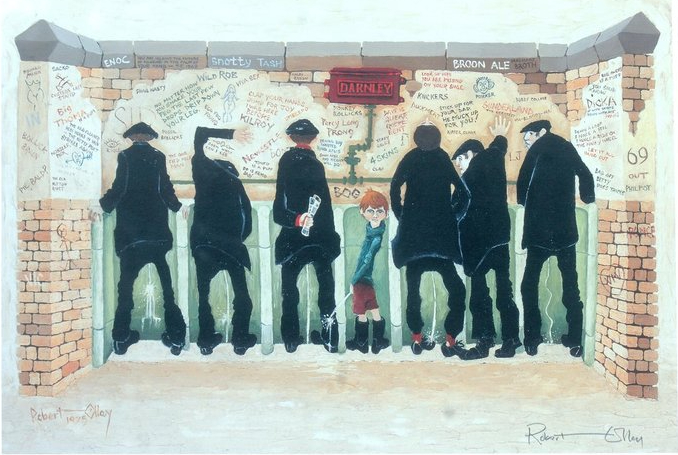
His first gallery showing was in Bede Gallery, Jarrow in 1971, he sold his first oil painting in Gosforth’s Novo Gallery and in South Shields Library in 1972 the painting Westoe Netty featured, it almost closed the exhibition down due to ‘indecency’ – amongst all of his work this has been the most popular.

Westoe Netty.

Somebody told me a few years ago they had been in America and were filling up at a petrol station. He was talking to his partner when the petrol attendant recognised the accent ‘Hey whereabouts in England are you from ?’  ‘We’re from the North East, South Shields’. ‘Do you know Westoe Netty?’ he replied. ‘I have a print from there’.

By the ‘70s Bob was a full time artist and sculptor and received commissions from a number of organisations including Tyne Tees programme What Fettle.

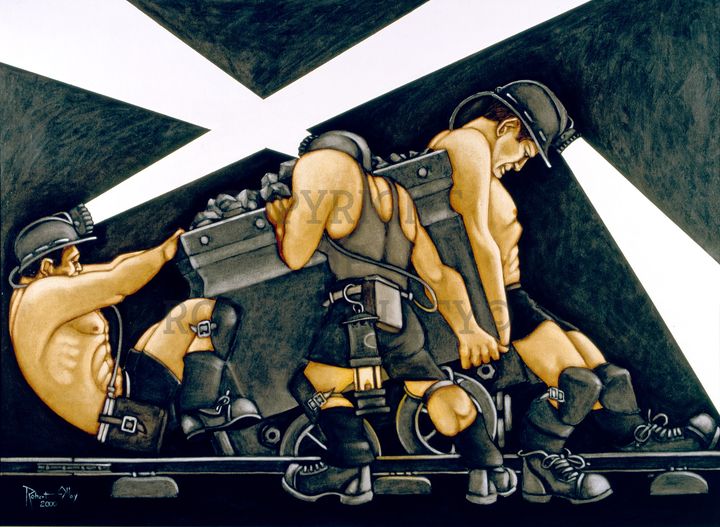
He also held a number of exhibitions around the North East displaying his oil paintings of the coalmining industry.

In the seventies all my work was about North East culture and I knew there were Geordies scattered all over the world but trying to contact this potential market by letter or telephone was impossible, that is until the internet came about.

But when I first kicked off I discovered the open air art market on the Armstrong Bridge at Newcastle where I sold my work every Sunday for almost 25 years. I was one of the first with prints which gave you the freedom to get on with new work as the prints sold.

The bridge was where I learnt how to handle people, you got good comments and some not so good. There was one guy who was looking at a painting, they’re all framed with glass in, he was staring closely at it and I was thinking I’m getting a sale here. ‘Can I help you?’ ‘No’ he replied. ‘I’m just combing my hair’ (laughs).

Along with a number of statues around Tyneside – war hero John Kirkpatrick in South Shields and film actor Stan Laurel in North Shields – Olley drew caricatures of celebrity guest speakers including Tony Blair, Jo Brand, David Walliams and Alan Bennett at the David Miliband lectures in South Shields – David was former MP of the town.

What are you doing now ?

I’ve lived in the town most of my life but never took much interest in the shipyards although I knew a few people who worked there when I was a pitman at Whitburn Colliery.

So lately I’ve been working on paintings about the shipbuilding industry because I’ve moved away from the coalmining subject which I’ve done for many years plus I’ve been through a dry period where I was struggling to do something new which is rare for me.

I done a lot of research about the industry, photographs, old black and white film footage, and found it extremely interesting. What really caught my interest was how many trades there was in shipbuilding and finding the safety aspect was virtually non-existent. It was fascinating watching how they work.

Men were walking on a seven inch wide plank 80 feet in the air without a safety harness, or a rivet catcher armed with only a ladle to catch white hot rivets hurled at him from 15 or 20 meters. They’d have a flat cap on – not a hard hat, and clothes that look like they wear in the pub.

In the coal industry we were lucky because we had showers, they just walked straight out of the shipyard and went home. Loss of limbs and the mortality rate might have been higher than the coal industry, it’ll be interesting to find out.

It’s a fascinating subject for me, a totally new direction and I’m enjoying the challenge.

When I was in Whitburn Colliery we stayed with the same set of blokes working an area, you never went off and worked anywhere else in the pit, but in the shipyards once the ship had been built the workers split off into different areas of the yard.

As a coal miner you usually work with the same work mate or “Marrer” within a group of say twenty men on the same coal face in the same district for years at the same colliery.

But as one ship was launched many moved to another yard, the industry didn’t appear to have the same bonding that coal mining had.

In research the word oakum came to light. I found that the prison service in Victorian times used to buy miles of old rope from the shipyards and part of the prisoners punishment was to unravel it and then put it together with oakum.

They would then roll it up and sell it back to the shipyards – that’s where the saying ‘money for old rope’ came from. The yards would then use it to seal the joints on the deck planks.

You could have five trades working to get the deck laid – could you imagine the noise they made.

These paintings I’m working on now have a greater depth than the coalmining just because you are working in a smaller space down in the pit.

You have a much bigger background for shipbuilding, and I enjoy putting in the cranes and seagulls. The paintings become much busier.

In South Shields the yards around Commercial Road, Holborn and Laygate areas had a few pubs and small cafes for the workers. It’s amazing how an area of the town can change its use once the area gets taken over by new technology or housing.

In a matter of thirty years the industry and all the people who worked there were gone.

I’ve been working on these paintings around four months and for one of them it’s the longest I’ve worked on any one piece of work. There was a point you can get to where it isn’t working and to get over that I just push through, then it’s a downhill cruise to the finish of the painting.

The Museum and Art Gallery in South Shields got in touch about contributing to their new exhibition about Tyneside shipyards next year.

I’ll put in about half a dozen paintings and the museum staff are also on the hunt for items to display such as photographs, certificates, tools, workwear and any associated memorabilia. 

Anyone who worked in South Tyneside’s yards, or individuals with something they could lend for display, should contact Adam Bell, adam.bell@twmuseums.org.uk or (0191) 211 5599 during museum opening hours. 

For more information on the work of Bob Olley check the official website:

Welcome to the home of North East Artist Robert Olley

Interview by Alikivi  October 2021.

ROCK ‘N’ ROLL FEVER: with ex-Sergeant & Tyger of Pan Tang, Tony Liddle 2/2

Tony featured on the Mystical album in 2001 but his first contact with the Tygers was when they were auditioning a new vocalist after the departure of Jess Cox.

In the late ’70s TV producers Malcolm Gerrie and Chris Cowey were acting as my managers when they got me an audition with The Tygers Of Pan Tang from Whitley Bay, but John Deverill got the job over me – more from them later.

Sergeant: left to right – Robb Weir, Anthony Curran, Tony Liddle & Brian Dick.

Then came heavy rock band Sergeant around ’83. Anthony Curran (bass) and former Tygers members Brian Dick (drums) and Rob Weir (guitar) were in the original line up. Brian and Robb had left the Tygers after The Cage album and tour in the early ‘80s.

As for gigging I remember a show case at Mingles rock night in Whitley Bay for Carling Publishing, we done a television promo for ‘How Dare You’, as part of the show the audience threw custard pies at us. We also toured the UK supporting German metallers Accept.

Sergeant drummer Brian Dick remembers more from the Accept gig at Newcastle City Hall than I can – for some reason I was always on a self-destruct mission, alcohol mainly to blame.

I have a memory that before I went on stage, I was having a long friendly chat with Fish from Marillion in a dark corner of the City Hall bar. 

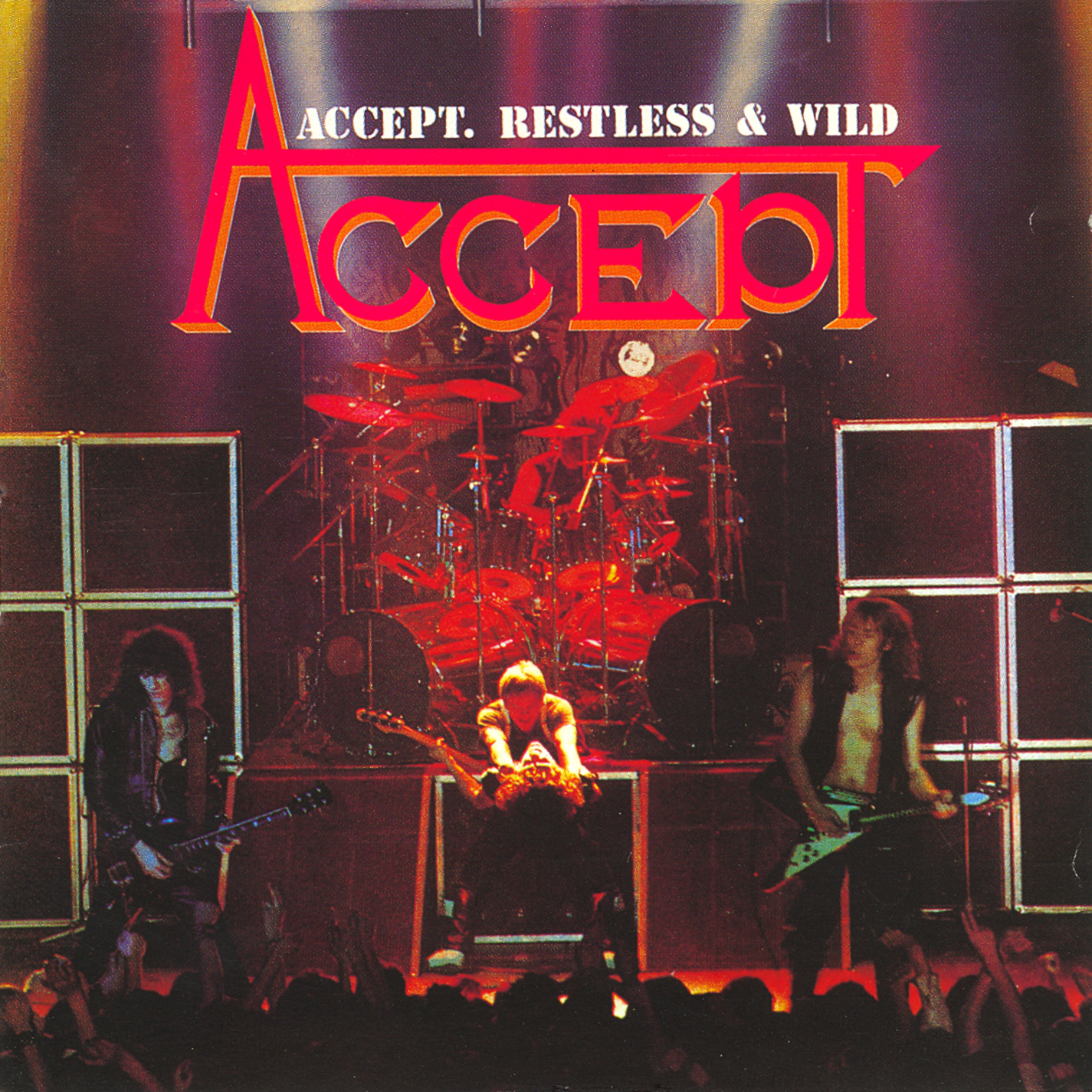
Accept album cover for ‘Restless & Wild’.

The whole tour was like going on a battlefield – every gig was like that for me. I used to wind myself up to an alcoholic frenzy then with all guns blazing attack the stage. I was like a mad dog. 

That type of attitude I could muster up – that’s why I turned down doing backing vocals for Cliff Richard!

We got to London’s Hammersmith Odeon and I ended up vomiting all over the Kerrang photographers and music journalist’s at the front of the stage!

I don’t think the Accept stage manager was too happy bringing out the mop and sick bucket where a lot of people found my stage antics funny – looking back I was a stupid ass. 

When I told Pat Thrall (guitarist, Asia/Pat Travers) the story about puking on the music journalist’s, he burst into laughter, I stared with a vacant expression as his giggled and laughed for some time.

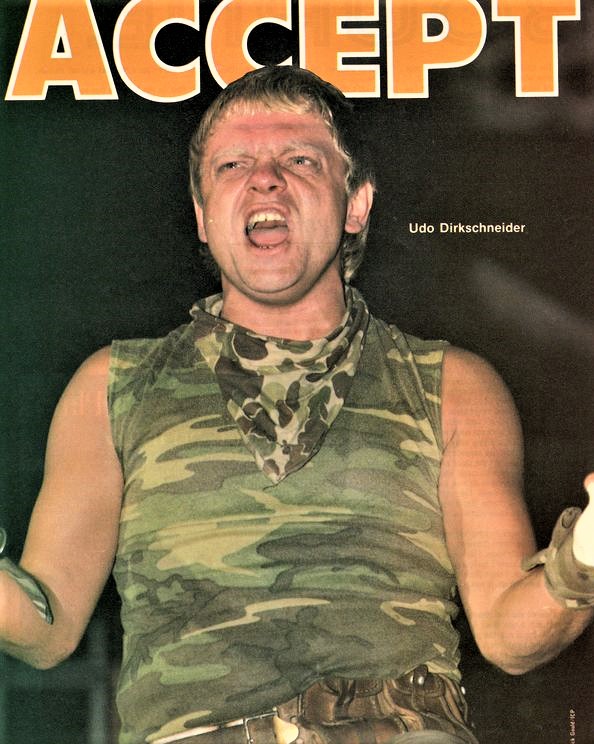
Accept were an amazing band and as a frontman Udo Dirkschneider had an amazing stage presence. Udo was the nicest bloke I’ve met – we all loved Udo.

How did working with the Tygers come about ?

During the period of touring with The Animals in 1999-2003 (story in part one) I was commissioned by Z records to co-write new material with Rob Weir, re-form The Tygers Of Pan Tang, then produce an album at my studio, Strange Street in Durham. Rob was founding member and guitarist with the Tygers when they started in the late ‘70s.

This new Tygers Of Pan Tang line up were fished from a North East club band called Grand Slam, I sang covers with them for a short period. Craig Ellis (drums) and Brian West (bass) were in Grand Slam, I called them up and introduced them to Rob. 

Deano Robertson (guitar & vocals) also came in. I did suggest naming them The Tygers of Grand Slam!

Album cover for ‘Mystical’ 2001.

The Mystical album was recorded in three months at my studio where I had a new Soundcraft Ghost 32 channel into a Tascam 8 track half inch hooked up by code to two Alesis Digital 8 tracks.

That gave me seven tracks analogue tape – one for code – and 16 on digital tape. Plus, a Tascam two track analogue 1/4 inch, then all those tracks went into two Apple Macs for massive editing giving me limitless tracks.

When I was home from touring with The Animals I got the Tygers over to the studio, then those recordings went on tour with me on an Apple lap top and headphones.

Sometimes we had up to fifteen hours travel between gigs, so I had lots of time to edit and make songs from the recordings and sound samples.

Once the song had taken shape from my editing and screaming the lyrics into the lap top mic in hotel rooms, I returned from touring and the band met at the studio again and listened to the demo. Not forgetting that Rob would bring over new ideas on a mini track recorder – riffs, bass and drum machine.

Next day the band recorded the instruments into my analogue/digital 24 track hybrid. 

Again that went out with me on my lap top on the next tour with the process repeated until the deadline release date – corners were cut but nobody was hurt. That’s how the whole album was created, written, recorded and released in only three months.

Are you proud of the album ?

The first tracks Rob and myself wrote for the album were Secret Agent and Detonator and a re-recording of The Story So Far an old Tygers track. They were released on a compilation album including Journey and Ted Nugent and a track by Liddle, Rush & Thrall was re-mixed for it.

That song was taken from the album I recorded with Billy Rush (guitarist/producer, Southside Johnny & Asbury Jukes) and Pat Thrall 15 years previous.

I wrote lyrics for Secret Agent about being on a Russian tour with The Animals. Standing in Moscow’s Red Square I felt like a secret agent – Ian Fleming or Bond, such an amazing experience. We got lots of attention, TV cameras were in my face – I felt like Eric Burdon.

I liked the lyrics for Keep this Rock Alive, one of my personal best and don’t know how I did it in such a short time. In Detonator I wrote about the rise of terrorism which was escalating back then. I was once asked ‘why have you wrote a song for terrorists’ ?  I said ‘I think you got it mixed up mate. I’m just highlighting the rise of terrorism in the world today.’

They wouldn’t let it go so I sarcastically replied ‘Well you know I was looking for a market territory for CD sales that hadn’t been tapped yet and there are a lot of terrorist’s out there – that’s a big market’ !

When I listen to Mystical I beat myself up about some of the final editing and some of the lyrics – but not a bad job overall. 

Read more Tygers stories on: About | ALIKIVI : NORTH EAST UK (garyalikivi.com)

Interview with Tygers & Sergeant drummer Brian Dick at: 

RAISED ON ROCK – with Tygers of Pan Tang former drummer, Brian Dick | ALIKIVI : NORTH EAST UK (garyalikivi.com)

Interview by Alikivi   October 2021

ROCK ‘N’ ROLL FEVER: with Durham musician Tony Liddle part 1/2

For over 50 years Tony Liddle has been in the music business recording and playing with bands including The Animals, Tygers of Pan Tang, Sargeant and AOR band Strangeways.

I don’t think there’s enough space to mention all the bands I’ve been in but I’ll try.

The fact is after 50 years of fighting the world as hard as I could and eventually achieving my personal goals, when I start looking back through my memories, I’m worn out thinking about it – with hotel room after hotel room, airport after airport and alcohol abuse. Many times, on my road to success I wondered why I was doing what I was.

I’m pulling some memories out now like working on the road with Steve Lukather (Toto) Larry Carlton (Steely Dan), jamming with Cozy Powell and John Sykes for Screaming Blue Murder, radio interviews and live TV in Russia, tours with stars including Roy Wood of Wizard. Las Vegas gigs with Jefferson Airplane – yes we went to the desert on a horse with no name !

Going further back there was all those Northern working men’s clubs and bands. I was in Six of the Best for five years covering Boston’s More than a Feeling, Juke Box Hero…up and down the motorway till 6am five nights a week.

Not forgetting Innocent Elephant from South Shields, we went to record company in London and ended up living a year in luxury – also went to Liechtenstein with a Swiss bank account!

Where did it all start ?

I only joined a school band in 1975 cos I might get a girlfriend – LAB 9 they were called, and they didn’t even want a third guitarist.

A year earlier at 14 years old I was playing guitar in The Lance Brown Big Band, those were the days of bands with a brass section, drummer, bass, piano and a conductor at the front waving a stick.

We were playing dance/Jazz post war Glen Miller music in North East dance halls. Along with a paper round on a Sunday morning it was how I made my pocket money.

Lance Brown Big Band was a great introduction into Jazz when I was doing an HND course in Jazz and popular music at Newcastle College. I studied and achieved Grade 5 Classical guitar with the Royal School of Music – then I started writing original, unpopular, rock music.

During a studio recording session in 1978 the singer didn’t show up so I sang the songs Final Rewards and Mr X and was elected the singer, a lot of doors opened for me after that demo.

In the late ’70s TV producers Malcolm Gerrie and Chris Cowey were acting as my managers when they got me an audition with the Tygers of Pan Tang from Whitley Bay – but Jon Deverill got the job.

Line up for music TV programme The Tube December 1982.

From then on my career turned professional and I played a solo spot on the live music show The Tube broadcast from Tyne Tees studio in Newcastle.

I don’t want to name drop but hung out with David Coverdale, Brian Johnson, Phil Lynott, Herman Rarebell (Scorpions) and Leo Sayer…the list is endless.

At The Tube I was hanging with Lemmy and Brian Robertson from Motorhead after they had just finished an interview with Paula Yates. From the off I seemed to just get along with Lemmy and before I went on stage he waved me off and gave me a tall glass of bubbling dry ice.

The song I played was called Cold Mourning but titled wrong as Cold Morning on the credits but in fairness my spelling was bad and that’s what I probably wrote on the Channel 4 pink slip for royalties.

It’s about a narcistic view of death of your own confidence and self-worth – mental illness they call it today. Sounds clever but really it was about the time I found my pet tortoise dead.

Iggy Pop was resting on a big sofa keeping his energy for the TV gig as you know he really goes for it on stage, full on. He is excellent and was, still is an idol of mine and my stage show copied him sometimes.

Lemmy is still one of my favourite lyricists and I loved his voice and attitude. I met him again few times in London at an exclusive club for ‘them in the know’.

A lot of recording artists used to hang out at Frank’s Funny Farm – a secret bar open all night where I used to bump into Terry Slesser (Beckett/Back Street Crawler).

After that I got a free invite to all shows at The Tube, I remember standing next to Michael Hutchins from INXS when Paula Yates interviewed him.

You can spot me on the playbacks and when Paula passed away and Michael passed away that interview clip was shown many times as it was the time they met and started an affair.

Then came heavy rock band Sergeant with Robb Weir, Anthony Curran and Brian Dick touring the UK supporting German metallers Accept and recording with Tygers of Pan Tang (covered in part two).

Tony second from left in AOR band Strangeways.

I wrote songs in a band called Frontier and when I went to London and formed AOR band Strangeways, I took the Frontier tape down and tried to get a few tracks published. In 1985 our first self-titled album and single was released with Kevin Elson as producer.

I also fronted Oliver Dawson’s Saxon before completing a new line up of Newcastle’s finest band The Animals  including three original members who had recorded their hit records.  

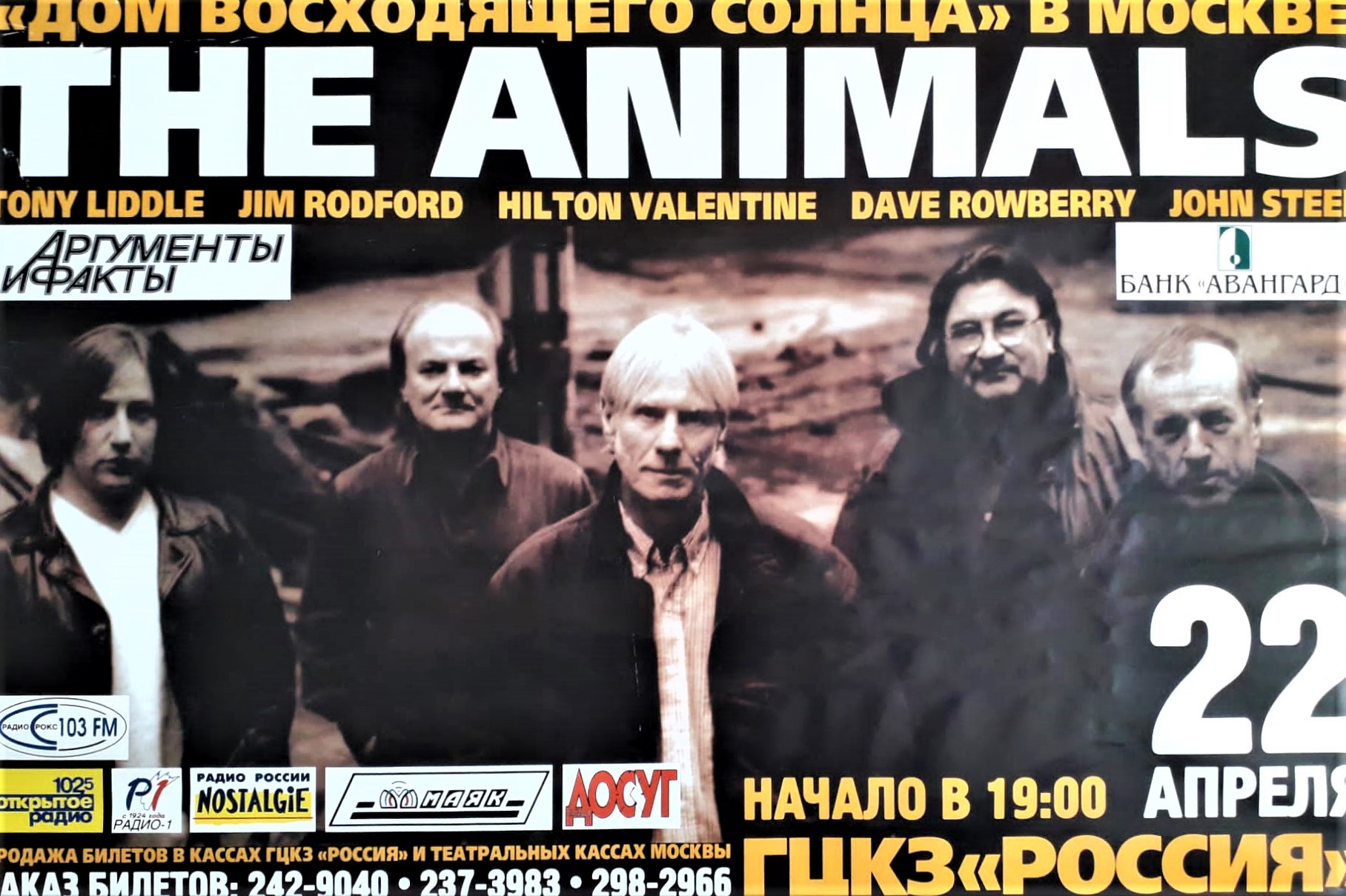
They were a great band worthy of Eric Burdon’s great talent and reputation – Hilton Valentine (guitar), John Steel (drums), Dave Rowberry (keys) joined on bass by Jim Rodford (bass) ex-Zombies/Argent /Kinks, replacing the late Chas Chandler.

It couldn’t have been a better line up than that, I’d previously met and worked in my studio with the legend Chas Chandler.

There was stretch limos for many gigs when I toured America with The Animals, Coachman Park was an amazing gig in Florida and we toured all over Europe, Ukraine and Scandinavia. Most gigs in Russia were excellent and sponsored by Vodka companies.

Each tour was from two weeks to two month long. I got home from an Animals tour from Hungary and the next day The Tygers of Pan Tang tour bus picked me up outside my house for a two day drive to Germany and the bus had three other bands on it – Vaughn, Blow Up and Danny Danzi I think.

It was all way too confusing and the main toilet was blocked – piled up over onto the floor with sausages, well it looked like sausages…hundreds of them! Never cook another sausage.

The promotors laid a huge BBQ party for us when we arrived in Mannheim, and I opted for the cheeseburgers.

What are you doing now?

I’m currently fronting a local North East hard rock band playing two hour shows  – Zeppelin/AC-DC/Ozzy/Nazareth – a proper old school rocking band.

On the original side I’ve been busy building a new recording studio and can’t wait to get the band in to record. I’ve wrote some great new original songs but as yet no idea what we’ll call the band.

I’ve just put a huge Swim Spar in my house – think I’ll go for a swim now, just chill out and leave the past behind. I only live in the present and look to the future.

I’m lucky to still be alive and enjoy today, and through music have thankfully received escapism, purpose and the gift of wisdom.

Next up on the blog is part two of the interview with Tony and his time as a member of Tygers of Pan Tang.

Interview by Alikivi   October 2021

SOUNDS CLIPS : PENETRATION

I’ve come across some grand postings on social media by archivist Stig Chivers. He’s added articles from Sounds music paper 1975-80 some featuring bands from the North East.

Penetration & Lindisfarne at Reading Festival 1978.

In issue dated 18 June 1977 music writer Phil Sutcliffe met County Durham punks Penetration. In a favourable interview he asked are the Northern outsiders ready to walk the same path as the London based crew of Clash, Damned and Stranglers ? In a recent interview (October 2021) Phil told me…

‘Penetration, were a quite brilliant sophistopunk band from Ferryhill, dazzling in every way with a natural star singer, Pauline Murray. Great ideas men in Gary Chaplin and Robert Blamire, plus drummer Gary Smallman and out-there’ish guitarist Fred Purser. They almost made it’.

When I interviewed Fred Purser back in December 2018 he told me…

‘When I met Penetration they had a real chemistry, the atmosphere was good so I gave it a go and we played The Marquee. It was really exciting, loved it and Virgin signed us that night on an album deal’.

Penetration in Sounds 18 June 77

A live review of a Penetration gig in Manchester appeared in 18 June 1977 issue, notable for the support band Stiff Kittens who changed name to Warsaw then changed up again and produced two great albums securing a place in rock immortality. They are widely known for their classic ‘Love Will Tear Us Apart’ – yes we’re talking about Joy Division.

Next on the bill was John Cooper Clarke reviewer Ian Wood labels him ‘a genius’, Wood warms up – or necks a few more beers – and calls for ‘A&R men to take note’ of Penetration as this band ‘are killers’. Buzzcocks close the (New Wave) show.

The review is illustrated by a great Penetration pic by Rik Walton – who else! In a previously mentioned interview with Phil Sutcliffe… Rik was a good friend and the photographer of the Newcastle scene, one who worked via mild manner rather than being pushy and sharp-elbowed’.

‘You wanted Newcastle music pix, Rik was the man – except when the weeklies sent up one of the big names from London. But Rik’s pix are still valuable in every sense and he’s still the man for images of that time and place’.

For more articles from Sounds Magazine 1975-80 by archivist, Steve ‘Stig’ Chivers check twitter:  @SoundsClips.

For further posts about Sounds type in ‘Raw Meat in the Sonic Mincer’ in the blog search bar.

Read ‘Square One’ the full Fred Purser interview at:

SQUARE ONE in conversation with songwriter & producer Fred Purser | ALIKIVI : NORTH EAST UK (garyalikivi.com)

Alikivi  September 2021

SOUNDS CLIPS : ANGELIC UPSTARTS

I’ve come across some grand postings on social media by archivist Stig Chivers. He’s added articles from Sounds music paper 1975-80, some featuring bands from the North East.

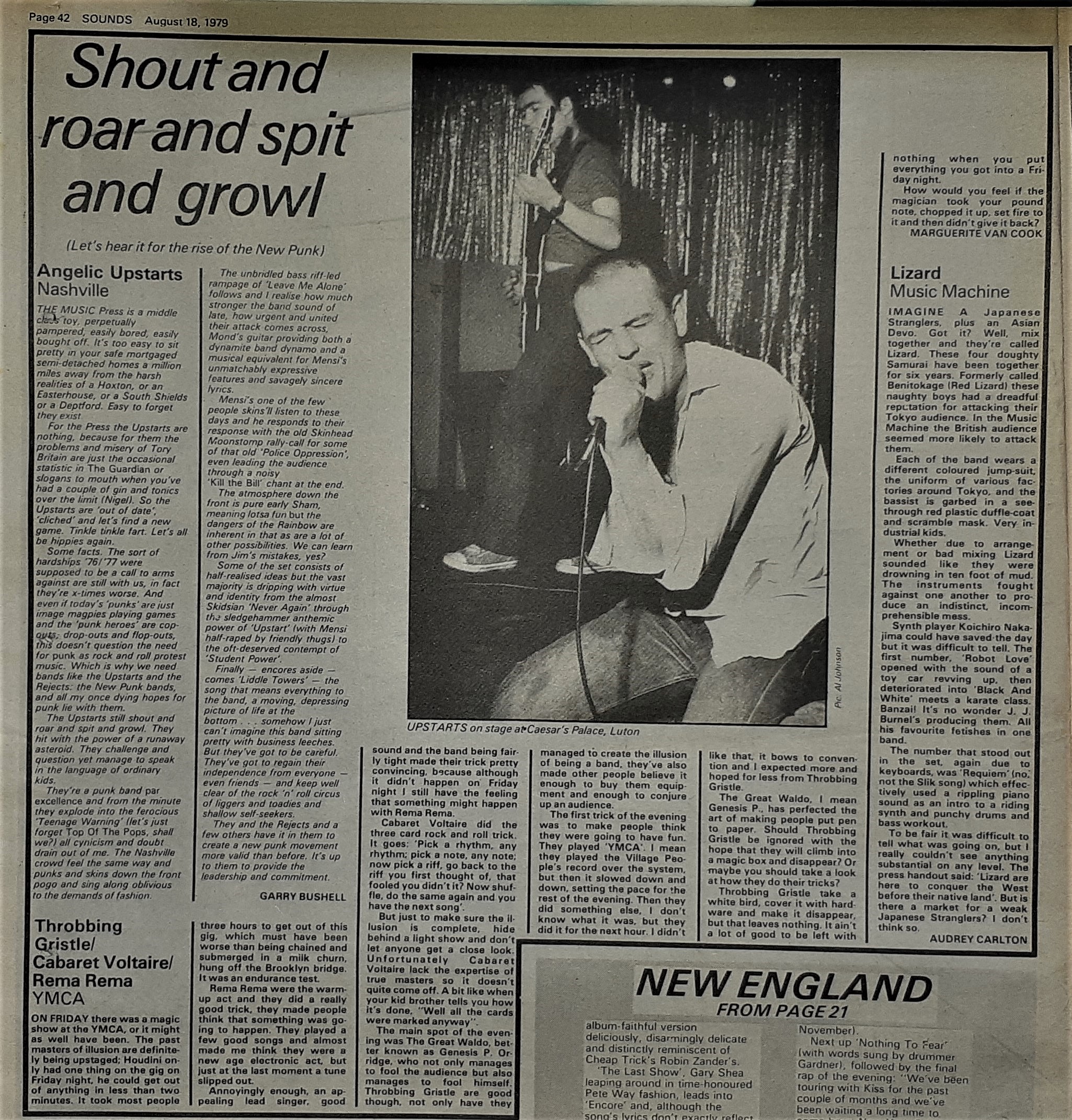
In the 18 August 1979 edition is a Garry Bushell live review of the Angelic Upstarts gig at the Nashville in London.

Angelic Upstarts in Sounds 18 August 79

In a recent interview with music journalist Phil Sutcliffe, Phil talked about the Upstarts and remembers a gig in Newcastle which was a spin off from the Bedrock programme broadcast by BBC radio Newcastle.

‘Putting the Angelic Upstarts on before North East band Neon at the Bedrock festival proved to be a mis-judgment as a huge fight ensued, a rather one-sided affair given Neon fans were student’ish and Upstarts fans were from South Shields’.

Brian Rapkin from Punishment of Luxury remembers that infamous gig…

‘We were bottom of the bill and during our set someone lobbed a can at the stage. I caught the can and put it in my pocket. Later the Upstarts charged the stage. There was carnage, people beaten up, blood everywhere, the police came and made the rioters walk home to South Shields without their shoes’.

For more articles from Sounds Magazine 1975-80 by archivist, Steve ‘Stig’ Chivers check twitter:  @SoundsClips.

For further posts about Sounds type in: ‘Raw Meat in the Sonic Mincer’ in the blog search bar.

Read about the Angelic Upstarts in ‘The Butchers of Bolingbroke’ here:

THE BUTCHERS OF BOLINGBROKE – Pigs, Gigs and Prisons with Angelic Upstarts | ALIKIVI : NORTH EAST UK (garyalikivi.com)

Alikivi  September 2021