MEAT IS MURDER – with North East Animal Rights founder Anna Malia

The title of this post is taken from the song and album by The Smiths released in 1985. In the title track songwriter and vocalist Morrisey delivers some powerful lyrics –

‘Kitchen aromas aren’t very homely. It’s not comforting, cheery or kind. 

It’s sizzling blood and the unholy stench 

Of murder

It’s not natural, normal or kind. The flesh you so fancifully fry 

The meat in your mouth. As you savour the flavour 

Of murder’.

In interviews Morrisey is outspoken about a number of topics including politics, royalty and animal rights.

‘Yes I’m aware of the song and Morrisey but I’m not a Smiths fan.’

said South Shields born Anna who worked in education for 32 years and in a secondary school for over 20.

‘I was lucky to be able to leave my paid work a few years ago and now do this full time. No one day is the same, I can be in the middle of typing up an article when a call comes in and have to drop everything. I wouldn’t have it any other way as I feel fulfilled with my work – but wish we didn’t have to do it as that would mean a world where animals are not used.’
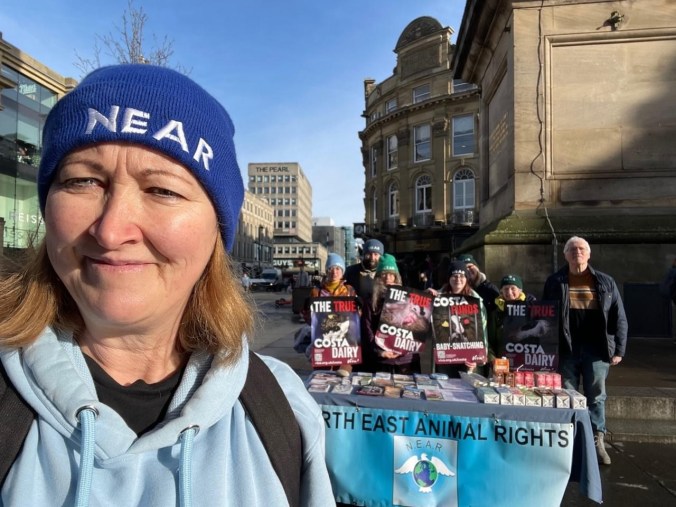
Anna set up North East Animal Rights who campaign and educate about veganism and animal rights. They have around 30 members with branches in Newcastle and Teesside.

‘It’s quite large for an independent regional Animal Rights group. Some of the group also volunteer for a local wildlife rescue. It’s hard to work out how much of a difference you actually make. But when you rescue an animal, that animal becomes the most important person in front of you and you know you definitely have made a difference.’

When did you become aware of how we treat animals?

‘I was 14 in a biology lesson in school when I was expected to dissect fertilised eggs with chickens at different stages of development. I was absolutely horrified seeing these dead baby chicks who had been deliberately bred and then killed. My parents were equally horrified when I told them I wanted to be vegetarian. I hadn’t even heard of veganism then and didn’t understand that I was still contributing to the suffering of cows and hens.’ 

‘I was already considered different in school before I went vegetarian so just made my school life a whole lot worse. I didn’t know what else I could do to help animals. Then I saw an article in a newspaper about people trying to stop a bull run in Spain. So, I sent a postcard and letter to the Mayor of Pamplona where the bull run takes place.’

What is the hardest part of being a vegan?

‘One of the hardest things is other people, the lifestyle is easy – it just becomes something which everyone seems to have an opinion on regardless of whether we want it or not. And families and close friends are the worst!’

‘It’s all water off a duck’s back now, but it’s amazing how many people suddenly become obsessed with your health when they didn’t care before you told them you are vegan!’

‘A lot of people think being vegan is just about the food, but it’s about so much more – it’s a whole lifestyle – and you look at things in a different light when you become vegan.’ 

‘You walk down a street you see adverts for meat – we see the process and the animal. You look forward to Christmas – we dread it because we see an increase in animal slaughter. You see an advert for a reindeer event and don’t flicker – we see captive animals who shouldn’t be there. You look forward to Easter and we see rabbits and chickens used. You see cute chicks in egg hatching programmes, we see and deal with what happens and the casual disregard for them.’

‘We got told to stop ‘forcing our views on others’ but others views are constantly forced on us in most aspects of our lives. You look forward to going on holiday, we do too, but we are always conscious of how vegans are perceived abroad and also have to deal with cultural issues where animals are used differently to in the UK.

‘For most of my adult life I thought being vegetarian was enough then I came across some graphic footage on TV and photos in a magazine of what happens in an average UK farm – I realised I was still part of the problem. I essentially went vegan overnight and signed up to Animal Aid’s November vegan pledge and never went back.’ 
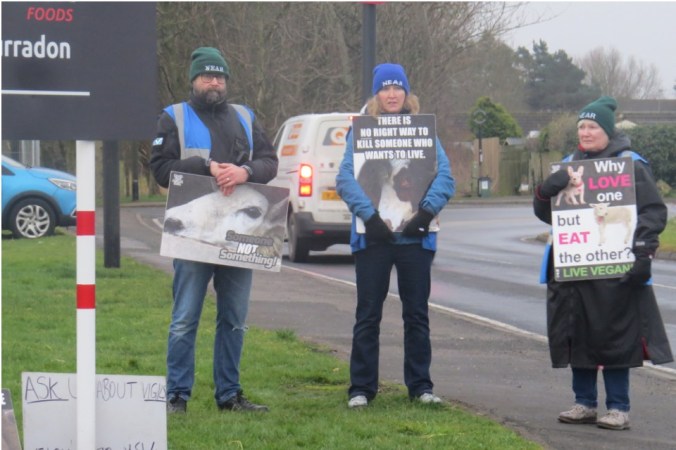
What are the group currently working on?

‘We get a lot of contacts about animal related issues and it’s great to be able to help. We rely on the public quite a lot to be our eyes and ears.’

‘We get people asking about who to speak to about dog cruelty or breeding animals. They contact us in relation to mobile zoos in schools or about their vegan child in school. A lot of issues are those which the RSPCA should investigate but cannot always due to lack of resources and having to prioritise.’

‘At any one time we have two or three investigations going on. They are complex and time consuming but we learn a lot from them. One of the biggest pieces of ongoing work is the South Tyneside Councils Animal Protection Charter.’

‘This came about because of a local issue we had with camels being used in a Christmas parade along King Street, South Shields. It had been going for around 6 years. After meeting with the leadership we eventually convinced them to drop the camels in 2020.’

‘We continued working with them afterwards and created a charter which is available for use in other councils across the UK. The council do an amazing job promoting the work within it and really work hard to engage residents with local animal-related issues, like those around seabirds.’ 

What does the future hold for North East Animal Rights?

‘I speak at a variety of schools and events and this year I’ve been invited to speak at the National Animal Rights March in London and a local event in Saltburn. I don’t find public speaking easy but it’s easier when you are passionate about your subject.’

‘I’m a deputy co-ordinator for North East Animal Save who are a group who run vigils at slaughterhouses – yes, it is as grim as it sounds, but unfortunately while people continue to eat animals it’s a necessary part of our work.’

‘My work is very full on my poor husband sees me fleetingly most days but understands the importance of what I do and is very supportive – he’s also a member of NEAR.’

‘But I’m a positive person – rather than looking at how far we still have to go, I look at how far we have come. When I was a child I had no idea what being vegan meant but I know from going into schools not only do children know what it means now but there are also vegan children there – that’s progress.’

For further information contact the group at >>>

Facebook @northeastanimalrights

Instagram @northeastanimalrights

TikTok @northeastanimalrights 

Bluesky @neanimalrights.bsky.social

Threads @northeastanimalrights

North East Animal Rights – YouTube

Alikivi    June 2025 

THE HUNTER BECOMES THE HUNTED in conversation with South Shields born Lynne Graham from Northumberland Hunt Watch

In April this year the work of hunt saboteurs featured on this site, this latest post again looks at tackling illegal foxhunting but this time using a different approach.

‘First time I witnessed a hunt I was shocked by its enormity. It was a deeply emotional experience nothing could have prepared me for it. The following week I witnessed a fox killed by hounds. That day I made a promise – I vowed to get justice for that fox. It’s his memory that drives me on.’

To find out more about the work of the Northumberland Hunt Watch I sat down with Lynne in the Littlehaven Hotel, South Shields where she started off by telling me she has always loved animals.

‘Since I was a child. My earliest memory, of being anti-hunt, dates back to school I was 10 year old. During an English class debate the teacher asked me to argue in favour of foxhunting. I was horrified and refused point-blank. Despite never having witnessed a hunt in my life I always felt an empathy for the hunted fox.’

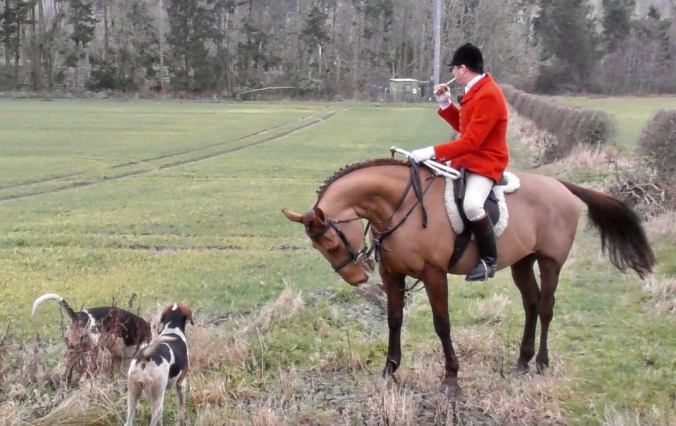
Tynedale hunt near Corbridge, Northumberland.

In 2002 Scotland banned foxhunting, England and Wales followed in 2004.

‘I thought that was the end of it. However, just because an activity is criminalised doesn’t mean it ceases to exist. Through social media I realised it was still happening on a massive scale. I was aware of the foxes out there alone with nobody to help them. I felt compelled to take action.’

‘I founded Northumberland Hunt Watch in 2020. Prior to this, I already had 5 years experience monitoring hunts. There wasn’t an anti-hunt presence in Northumberland at that time, leaving all the hunts in the area unchecked. There are some pockets of deeply engrained hunt culture in Northumberland, operating in some very rural and isolated locations.’

‘For these hunts it’s very much a way of life. They have a cultural pride in hunting, and strongly resist any attempts at criminalisation. The hunt community is a very tight community. They hunt together, socialise together, conduct business together and support one another.’ 

‘There are many different reasons why people foxhunt. Foxhunting has nothing to do with pest control or managing fox numbers. The hunts want foxes in the area to hunt which conflicts with the pest control argument. For some hunters it’s for the thrill of the hunt or the thrill of the kill. That is very difficult to understand.’

‘There are farmers and landowners involved in the hunt, who grant permission to access the land. Without this land there would be no foxhunting. For the riders who subscribe to the hunt, following hounds provides the freedom to ride over land that would otherwise be out of bounds. The fox is not restricted to boundary lines, so the hounds and riders are free to ride where the fox goes.’ 

‘The car support who follow the hunt mainly consist of elderly men. To them it’s a day out to socialise. They turn up with their binoculars, sandwiches and flasks having a good natter, they enjoy watching the hound’s work. I often talk to the members of the hunt to gain a better understanding of why they do what they do. We can’t expect to change something unless we fully understand it.’

‘We’ve talked about what we call ‘clean boot hunting’ a humane and lawful activity, which follows the scent of a human runner rather than a fox. With clean boot hunting they can still have everything they have now. The jobs will still be there, they can still have their socials and get together, their balls, their meets so they can still have their sherry and a bit hokey cokey, just don’t kill a fox. I think they fear their way of life will fall apart without hunting the fox.’

‘But humane hunting would be far more sustainable. Currently hunts claim to be trail hunting, which would involve hounds following a trail of artificial scent instead of a live fox. Unfortunately, trail hunting in my experience is just a cover for foxhunting.’

Have you a vision of what you want the group to be?

‘Yes, when I set the group up I thought I’m going to do this my way, I’m not going to war with them. I’m going to win hearts and minds. For me it was all about a love of wildlife, and a hatred of foxhunting and not a hatred of the people. I strive to end foxhunting for good so I knew that we needed to be taken seriously by the hunts and the police.’

‘I aimed to create a professional group with a credible image, as far removed from the negative stereotype as possible. We refer to ourselves as volunteers or wildlife guardians, rather than sabs, protesters, or activists.  We don’t wear masks and we have a dress code. We’re conscious of how we come across to all the people we meet.’

‘Some people are just out for a dog walk in the countryside, families with kids, older people. Last thing we want to do is scare people, we want to be approachable. We’re always polite and respectful and get on with the farmers.’

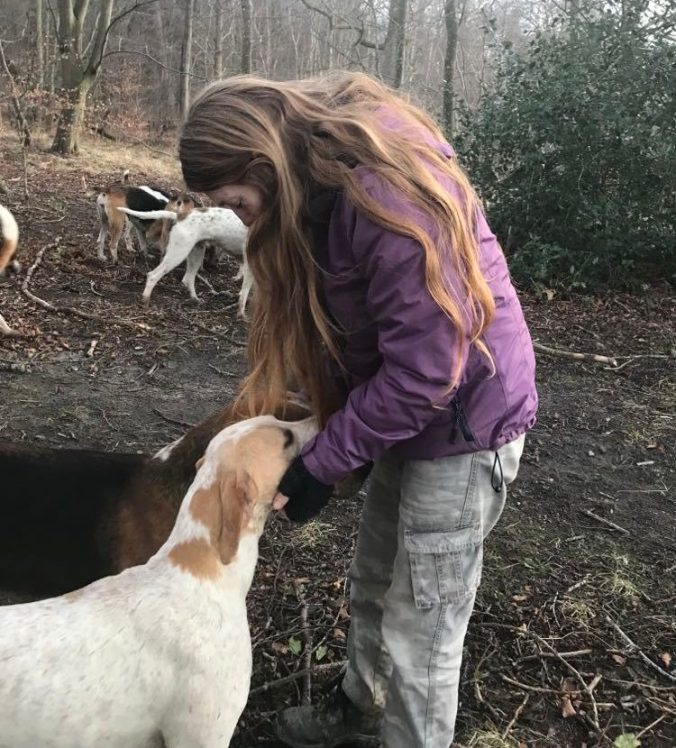
Lynn with the West Percy hounds.

‘We absolutely love the hounds they are such lovely sweet animals, we would never do anything to put them at risk, and our hunts know that. We often pop along to their hound shows in the summer some we are made more welcome than others.’

‘We aimed to build relationships and establish trust in the community and we have. All of our hunts know who we are and they know our names. We engage in polite conversations, some team members live in hunt areas, so it’s not uncommon to exchange waves. Our approach has earnt us respect and fear in equal measures!’

‘Our overall aim is to make the countryside a safer place for wildlife. On a day to day basis we aim to be a visible deterrent, to prevent hunting and on most occasions we are. We rarely need to intervene as our presence is often enough of a deterrent. Our hunts will often try to avoid hunting when we are there, and certainly avoid hunting in front of us.’

‘Last year at a hunt I was filming when the hounds picked up a scent and chased a fox toward me. The whip panicked and stopped them all “Lynne, can you see me stopping the hounds? Have you got it on video that I’m stopping the hounds?” I replied, “Yes, I have, thank you.” The fox made his way to safety.’  

‘In the long term we aim for prosecutions as this is the only way to end foxhunting for good. To achieve prosecutions then we need to be professional and credible.’

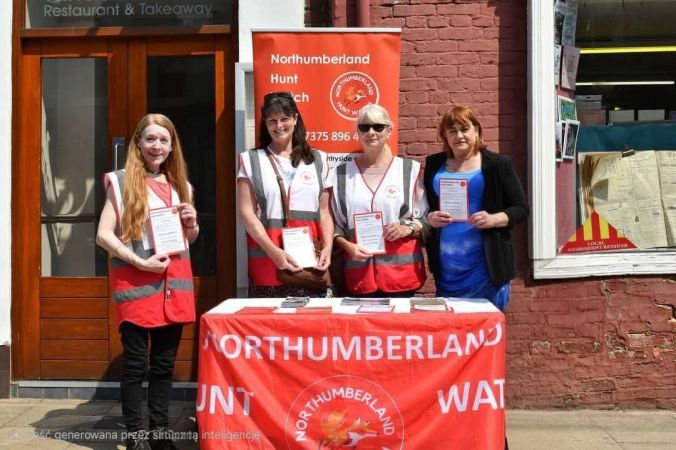
Outreach stall in Morpeth with Lynn, Judy, Amanda & Lynne

How much work is involved in the group?

‘A lot. We work very hard and put a lot of work in. I take this very seriously and am very committed to what I do. During the season we are out 2-3 times a week, despite working and other commitments. I would be out every day if I could. The fieldwork we do is just the tip of the iceberg. We do much more behind the scenes. Personally, I work on foxhunting every day of the week.’

‘I have taught myself a great deal over the years and always have my nose in a foxhunting book. I am also concluding a PhD in Criminology specialising in foxhunting with hounds. I have invested significant effort into this because I want to bring the issue of foxhunting criminality to a wider audience.’

Lynne & Judy leaving a successful Tynedale meet.

‘The lady who assists me in running the group, Judy, is a former police officer, so between us we have an in-depth knowledge of hunting and the law. We both work very hard on this, preparing cases and evidence for the police especially.’ 

‘Out of season we hold outreach stalls in hunt towns where we talk to the local community about our work. This has enabled us to lay the foundations for a positive brand identity while building up good relationships, trust, and respect within the community. We want the community to feel comfortable having us in their area trusting us to perform our job professionally.’

Have you experienced any threatening situations?

Violence and aggression from any of our hunts is exceptionally rare. We have had very few minor incidents in 5 years, most of which were dealt with swiftly, either by the police or the hunt themselves.’

‘Following one minor incident at one of our hunts I reported it to the chairman, he dealt with it, and we received an apology, so it was resolved sensibly and that was the end of it.  There were no more incidents.’

‘We cover all the Northumberland Hunts from the Scottish border down to the Durham border, although Tynedale is our main hunt who we monitor regularly and have done for 5 years. They were a bit of a nightmare at first but they soon leant that it didn’t get them anywhere. They are very polite towards us now and we have built a good relationship with them. We are there to do a job which we do well and without getting into altercations.’

‘With all of our hunts we established clear expectations for behaviour from the outset ensuring that our conduct was respectful and polite. Over the years we have built a good rapport with most of them exchanging polite greetings “good morning, gentlemen” and in return “good morning, ladies.”

We never engage in name-calling or squabbles because throwing insults is not a stepping stone to positive change. This means that we can focus on what is truly important—the foxes. It might make someone feel better after calling someone names but it doesn’t achieve anything for the fox.’

‘The hunts also have a code of conduct regarding their behaviour towards us too. We have an unwritten rule between us we don’t call them ‘hunt scum’ and they don’t ride their horses at us, so this works well. This mutual respect means any of our team can be monitoring a hunt alone, in some isolated locations without any problems. Our approach saves lives.’

‘At one of our hunts we intervened between the fox and hounds, rating the hounds back so the fox could escape. This was in front of the hunt master and he said “thank you for helping” so we replied “no problem we’ll come back and help again next week.”

‘When we monitor hunts we focus on listening and observing, avoiding verbal confrontations is for creating a safe environment for the foxes allowing them a safe passage to escape. Foxes don’t know we are there to help them so we need to create a safe environment otherwise they would just see us as part of the pack. If there is chaos they could easily be scared back toward the hounds, we are very conscious of that. We often see foxes fleeing past us to safety. Silence is golden. It saves lives.’

How frustrating is it knowing fox hunting is illegal and it still goes on?

‘Very frustrating but there is a wide range of reasons why it continues. Weaknesses in the Hunting Act is a key issue, and also how it has been interpreted. This has provided loopholes for foxhunts to circumnavigate the law. There are so many issues that we will need an entire article to discus that alone. In a nutshell trail hunting has ensured that it is extremely difficult to prove them guilty and beyond all reasonable doubt. Consequently, trail hunting operates exactly as it was intended.’

‘We are committed to ensure that we have the best chance possible. Our behaviour will also come into question so we always act lawfully. Foxhunting is a low-level offence so if we break the law we lose the moral high ground and cannot expect the police to enforce one law while ignoring another. We have to be seen to be credible witnesses to make any progress.’  

‘Because of how we operate we have built a good relationship with the rural crime team who we submit our footage to. We have had several incidents sent to the Crown Prosecution Service for review, and the police have acted swiftly in gathering the evidence.‘

Drone footage was captured of the Tyndale Hunt hunting a fox on 3 October 2024. This was submitted to the police. More information about this case can be found on the Northumberland Hunt Watch Facebook and You Tube pages.

TYNEDALE DRONE FOOTAGE 3RD OCTOBER 2024

How important are anti-hunt groups?

‘There are some excellent groups across the country that have worked hard to end foxhunting, bring hunts in court or raise awareness, such as Beds and Bucks Sabs, 3 Counties Sabs, Cheshire Monitors, and West Midlands Sabs, to name a few.’

‘However, not everyone who joins a cause has genuine motivations, and the less credible groups can undermine the work of those who are genuinely committed and doing good work. It’s about quality rather than quantity, so finding people with the right attitude can be difficult.’

Lynne recording West Percy Hunt at Ingram Valley.

What have you found out about yourself since starting this group five years ago?

‘I have found that I am stronger and more resilient than I ever thought possible. If you have genuine intentions and committed to doing your best job for wildlife then you can make a difference. A middle-aged woman with a vision took on ten hunts, most of which were untouched and located in some of the most isolated rural areas of the country. I was subsequently joined by other middle-aged women to create a hardworking and professional group that has made a significant impact on hunting in this area. Never underestimate the power of middle-aged women on a mission!’

If you are interested in the work of NHW or would like to volunteer contact >>>

Tel: 07375 896 463

Northumberlandhuntwatch@gmail.com

Facebook : Northumberland Hunt Watch

www.northumberlandhuntwatch.co.uk

Alikivi   June 2025

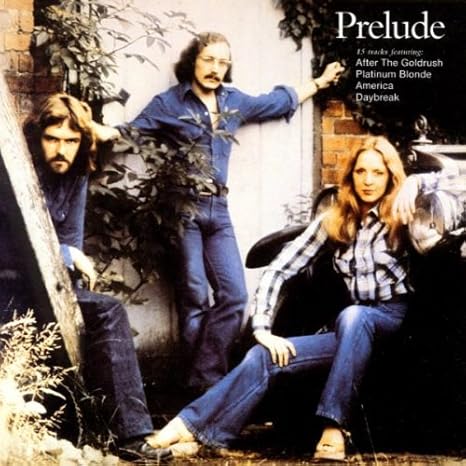
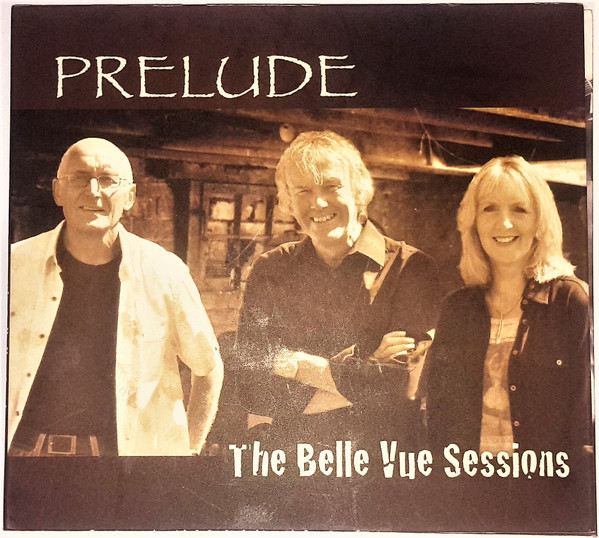
SPELLBOUND – in conversation with Prelude singer & songwriter Brian Hume

Ian Vardy, Brian & Irene Hume.

I met up with Gateshead born Brian Hume and he talked about his life in music and what it means to him now.

‘Music dominates your life. It can often exclude things that you should pay attention to. Personal relationships can suffer cos it takes over your life. All you wanna do is make that sound, make that music, at first you don’t care if you make any money you just do it for the love of it.’

‘Unless you’re all on the same page there’s always tension within bands. You’re living permanently on the idea that it will all come to an end tomorrow. If you’re a guitar player you could break a finger or get arthritis. Somebody might leave and your left high and dry. You might have an argument and everybody falls out, it’s a miracle they stay together. But it can be exciting not knowing what’s round the corner’.

78 year old Brian looks back to when and where he was first inspired.

‘Me mother was very musical she’d knock out a tune on the piano and a four string guitar – all self taught, amazing. That’s where I learnt to pick out a few tunes. Lot of houses had a room where no one went very often, that’s where the piano was.’

It was in Grammer school where Brian first met up with Ian Vardy, forming a duo to sing in Tyneside pubs and clubs.

‘One of the first gigs we played was the 99 club in Barrow in Furness. After two songs the chairman came up to the front of the stage “You’re not really right for this kind of environment”. He was nice about it but, yeah, we were paid off.’

‘The Everley Brothers songs were the go to sound, when we heard their two part harmonies we thought we could do that.  We used to play the Bridge Hotel in Newcastle. The folk scene then was vibrant, clubs were always packed out people were singing sea shanties then Paul Simon came along.’

‘Then we’d try writing our own stuff. Our publisher wanted us to be called The Cobblers. You could see the first review – what a load of! We settled on The Carnival – a very 60s hippy name. We lasted for one record – a Paul Simon song called The Big Bright Green Pleasure Machine. The review in the NME read ‘social comment at breakneck speed!

‘Ian and I were singing in our flat in Gateshead. We had just bought the Crosby, Stills and Nash album trying out different songs like Sweet Judy Blue Eyes. My wife, Irene was singing in the kitchen with the door open. She was singing the third harmony. We were totally surprised as we didn’t know she could sing. We turned and said ‘sing that again’. It wsan’t long before we went out to folk clubs and started going down really well.’

‘We lived in School Street, Gateshead and nearby at the end of the Tyne bridge is an old toll booth. A big granite structure. It had a lovely echo. Some nights we’d go in there and sing. One night a policeman came in. He thought we were up to no good. Very officious. But he stuck around listening to a few songs then as he was leaving said “Carry on”.

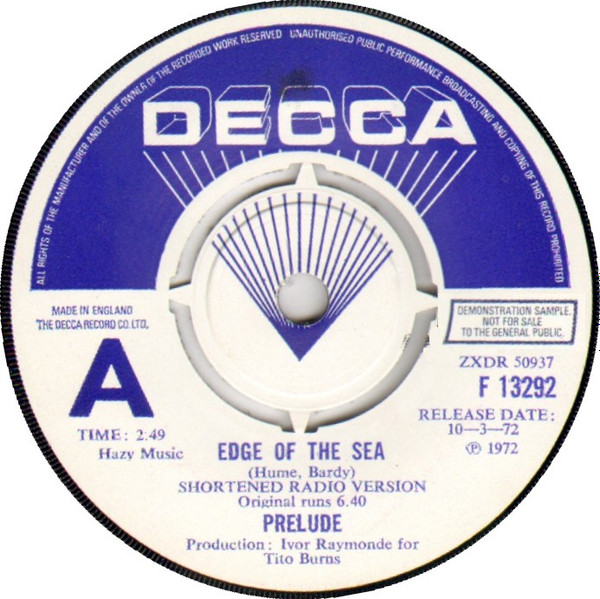
‘We got a deal with Decca Records and recorded a single The Edge of the Sea which had a strong hippy vibe to it. All during that period we were recording in Impulse Studio making demos courtesy of the owner, Dave Woods who soon after ‘discovered’ Alan Hull.’

‘We were called Trilogy for a while but had to change it because there was an American band with the same name. It’s not easy choosing a name as any band will tell you. I came up with Prelude and that stuck. That was 1972.’

‘Three part harmonies had a big effect on musicians. A lot of bands had done it like The Lettermen and The Platters from way back, but Crosby, Stills and Nash were different, this was whack right in your face. Yeah, a big influence on us and many other bands including fellow Tyneside band, The Caffreys.’

‘Different members have come and gone but the band were Ian Vardy, me and my wife Irene. Ian and I got a song writing contract with ATV music which worked for us financially. We decided to put both our names on everything we wrote irrespective of who wrote it.’

‘We had a brilliant guitarist called Frank Usher. We parted company and and he went on to play guitar with Fish from Marillion as well as being a fine guitar maker.’ 

‘We played the North East club scene for a while and in between we’d do Durham College where we’d support artists like Gerry Rafferty, Mott the Hoople, Shaking Stevens and the Sunsets – that band were amazing. There was a hippy commune type band called Principle Edwards Magic Theatre who all dressed in white which looked cool so we copied that – it was a cheap uniform.’

‘Our manager George Carr got us a record deal with Pye who back then were dominated by Max Bygraves selling boatloads of Sing-a-Long-a-Max records. We were the token folk band, although we were never folk they just called us that cos we had acoustic guitars! You couldn’t say that Pye were part of the cultural vibe.’

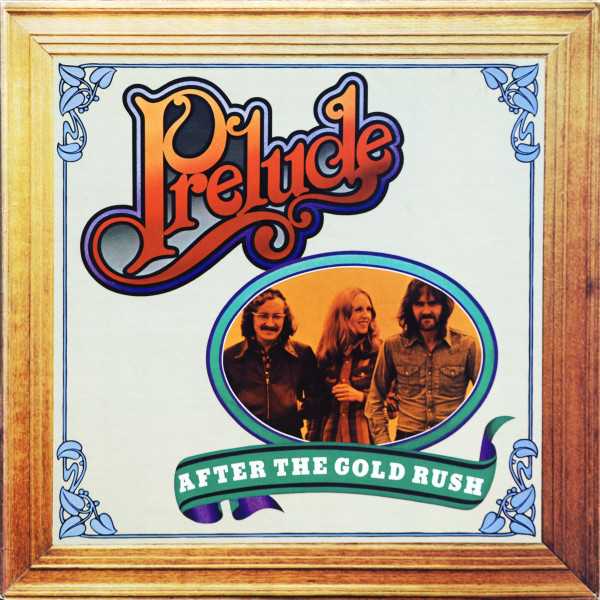
‘In 1973 we went to Rockfield Studio in Monmouth to record our first album How Long is Forever? produced by Fritz Fryer who was in a group called The Four Pennies. They had a number one with Juliet. A wistful ballad. On the final studio day Fritz asked if there was anything else we had. We used to sing a Neil Young song just for our own pleasure. That was After the Gold Rush.’

‘We recorded it and it sounded pretty good so we double tracked it. Overdubbed it fifteen times and it sounded massive. We never thought for a minute anyone would pick up on it. But John Peel at Capitol radio did. He got loads of calls ‘Who is this band?’ ‘Where can we buy the record’.

‘Next thing we know Pye put it out as a single and we’re on Top of the Pops. That was 1974. We ended up appearing twice the first time was with Marc Bolan. There was a succession of TV appearances. You had to do television because you are reaching a massive audience. We did a show for Tyne Tees called the Geordie Scene. We did the Basil Brush show for Pete’s sake.’

‘Most notably we went on the Vera Lynn show. During rehearsals she referred to us as The Prelude. Later she was walking towards us along the corridor when Ian stopped her and said “By the way Vera it’s not The Prelude it’s just Prelude”. Not skipping a beat she turned to him and said “If you don’t mind it’s not Vera…it’s Miss Lynn”.

Prelude were always based in their hometown Gateshead this meant constantly travelling up and down the M1 to television and recording studios in London.

‘It was every other week. We should have moved down there. But 1974 was a big year for us. We did the background vocals on Streets of London which was a hit for Ralph McTell. He asked us to go out on a UK tour with him.’

‘Ralph wanted to put our names on the record but our company wouldn’t allow it. For the next best thing Ralph put ‘background vocals by ‘The Gold Rushers’. It would have been a great advert for Prelude to have their name on the single but Pye were stupid on that.’

‘Ralph was so talented and generous to a fault. It was a big tour around the country then we played a venue where we’d seen Paul Simon, Crosby, Stills and Nash – here we were on the stage of the Royal Albert Hall. Amazing.’

‘After the McTell tour we went back to playing smaller venues but I’m getting the timeline mixed here because I remember before touring with Ralph was a UK tour with a singer and songwriter called Mike Chapman. He had a devoted following and used to live up the Tyne Valley in Haltwhistle.’

‘Then we went on the road with a great piano player called Peter Skellern who had a big hit with You’re a Lady. Meeting him he was rather quiet and reserved – he later became a priest. Then there was talk of America.’

‘This was 1976. What happened was Lindisfarne played the States. When Alun Hull came back, he’d tell us to get over there ‘Cos all ya’ hear is your bloody record ‘After the Gold Rush’ on the radio all the time.’

‘I always read the NME and Melody Maker, looking at American charts where like the Holy grail of music to me. To see Neil Sadaka, Beach Boys and bands like that we thought wouldn’t it be great to get in there. Our manager George Carr said ‘You’re in the American top 100’. We thought this is a dream come true.’ Then it went towards the top 20.’

‘We wanted to capitalise on the success but the record company didn’t want to pay for us to go to America they sent us to Amsterdam. We played the clubs and had a good time but we should have been in the States where we wouldn’t have even needed guitars as the song was acapella. We could have done the Johnny Carson show and the like and knocked that record up the charts.’

‘It wasn’t until 18 months later we got to the States. There were a few gigs on the West Coast in San Francisco where we supported Jerry Garcia in Berkley and met Nicky Hopkins who played piano on all Rolling Stones records. Then over to the East Coast and played The Bitter End in New York. When we came back to the UK Irene took a break when we had our second boy, Joel.’

‘Things moved on quickly until 1979 when our manager got us a deal with a new company called After Hours who were very forward thinking. We made an album at Abbey Road with The Hollies producer Ron Richards. His style was more towards lush strings and stuff like that. It didn’t really work for us.’

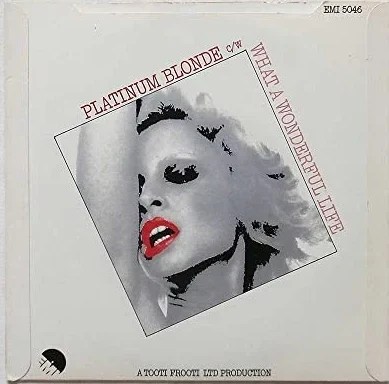
‘We also signed to EMI in 1980 and made an album in Portland Studios owned by Chas Chandler, charming fella. We had some great players on there but the only track that came out of it was Platinum Blonde. Our principal guys were Ian Green de facto producer of Platinum Blonde and Dave Wintour who was Neil Sadaka’s bass player. It was a minor hit which got to number 45 in the charts.’

‘We did a video for it in the old Battersea Power Station in London arranged by the head honcho at our record label, Richard Jacobowski. He was really on the ball, a hip guy. We crashed in his three storey flat in Hampstead and shared it with a band called The Regents who were very talented, like a proto-punk band. They had a hit song on Top of the Pops with Seventeen.’

‘For the single we did Top of the Pops and I remember on the same programme were Bay City Rollers. Platinum Blonde was good for us but afterwards we came back up North and played the folk clubs again.’

‘Ian Vardy was looking at doing something different so left the band around 1985 and became a social worker. We continued and got in ace guitar player Jim Hornsby who had been with a lot of country bands. Jim was very much in demand for session work.’

‘Country was labelled as redneck music then, it wasn’t cool – but it is now. Gram Parsons did a hell of a job making country hip. He influenced The Byrds and Keith Richards. Some clubs turned their nose up at country stuff but we had a great time doing clubs then. Unfortunately, as happens in bands Jim left.’

What did the new millennium bring?

‘From 2001 it was Irene, me and Chris Ringer who we brought in on bass and vocals and took Prelude on the circuit of country clubs and the whole scene. Through the years we have performed with countless numbers of musicians and loved every minute of it.’

‘Our latest album The Belle Vue Sessions (2012) is all acoustic. It started in 2010 when Ian came round to our house, he had an appointment at his dentist round the corner. We got the guitars out, as you do,and it all went well so we asked him to do a gig with us. One turned into many.’

‘It was our manager Sue Brind who originally said ‘Why don’t you make a new Prelude album? We thought ‘why not?’ so we wrote some new songs and recorded them in Broadwater studios, Gateshead. Two lovely guys engineered, Gavin and Paul. We recruited Paul Hooper who was drummer for The Fortunes and again Chris Ringer played bass. We are very proud of the album.’

What does the future hold for Prelude?

‘We’re busy meeting with David Wood who used to run Impulse Studio in Wallsend. Impulse was a gateway for a lot of acts. He released a lot of Heavy Metal stuff like Venom and Raven from the North East, it was a big scene for him.’

‘David recently put out a CD box set of Alan Hull demos, he recognised Alan’s talent early on. Now he wants to do the same with us because he’s got a lot of tapes that have never seen the light of day. We’re looking to release something soon.’

After recalling a life spent with a multitude of musicians and the memories it triggers, Brian reveals that his ‘obsession’ holds a deeper meaning than just getting on stage and banging out a tune.

‘Your friends tend to be musicians and you share a common language which is almost secret amongst you. You know and experience things that nobody else has. There’s a bond between musicians which is friendship but sort of deeper. You know what the other is going to do, what they’re going to sing, – what they can and can’t do. Every successful band has to have that. It’s like brotherly love. It’s a wonderful feeling. It’s why people do music instead of opting for a ‘safer’ life.’

Alikivi   June 2025

LOOKING FOR LUCIFER #7 – The continuing search for Italian born author & artist Baron Avro Manhattan (1914-90).

Avro Manhattan

Since 2012 I’ve been researching the life of this fascinating character who was originally named Theophile Lucifer Gardini. He spent his last years living in a terraced house round the corner from where I live in South Shields.

In 2018 I produced a short documentary ‘Secrets & Lies’ based on what I found about his life so far, a link is at the end of the post.

I often mention him to neighbours and hear the odd story about Avro and his wife Anne. Recently an old friend got in touch and remembers the couple who lived at 45 Henry Nelson Street.

‘We moved into 32 Henry Nelson first week of June 1990, I think Avro died in the November so it was only a short time. I remember his wife used to have a little furry dog. She used to walk it out all the time.’ Recalled 60 year old Jeff Anderson now living in Washington, County Durham.

Jeff Anderson

‘I’d see them in the street. Always well dressed. Always smiling. I don’t think local people were aware of who he was to be honest.’

‘Actually, very first time I came across him and his wife was prior to moving into the same street. I saw them on the corner of King Street in the town centre. They really stood out, there was a real glow about them. They had a big smile on their faces. You couldn’t help but notice them’.

‘What they were wearing was very classy – not the type of clothes the everyday person of Shields would wear on a Saturday afternoon. They really stood out of the crowd just by their whole demeanour.’

‘But when Avro died I remember his wife was absolutely devastated. From the initial sighting in King Street and other times in Henry Nelson they had this glow about them but after Avro died that seemed to vanish from her. From what I can remember she was never quite the same’.

‘A strange thing happened to me on the night he died. I went to pick my wife up from work in the town centre but there was nowhere to park so I had to go back round the block. I went past St Hilda’s Church and as I went round the corner I had like a paranormal occurrence – the only way to describe it. I actually saw a vision of Avro on the ground reaching up to me. I was shocked, I thought what’s going on. This is a bit weird.’

‘I continued on and as I came back round the block again there was no sign of him. Gone. It really freaked me out as you can imagine. It wasn’t until a few days later that I learned he had died that night. So, you know what was going on there?’

‘I didn’t know anything about him having any health problems. He died at 76 you say? Doesn’t seem that old now does it?’

If you have any information about Italian born author & artist Baron Avro Manhattan (1914-90) please don’t hesitate to get in touch.

Alikivi   June 2025

SECRETS & LIES – script of the film based on the life of Baron Avro Manhattan | ALIKIVI : NORTH EAST UK CULTURE

COMIC STRIP PRESENTS Northumberland cartoonist David Haldane

A series of talks by cartoonist David Haldane have been booked into venues this September including the Civic Theatre, Gosforth and The Word in South Shields.

‘I started work at the Shields Gazette in 1977. It was a great job really enjoyed it. It was my first real wage packet. We used to get paid weekly. In cash!’ recalls David.

Born in Blyth in 1954 David last featured in April this year talking about his work at national newspapers including the Mirror, the Guardian and The Times (link below). In a recent phone call he looked back to his early days and what inspired him.

‘I noticed cartoons when I was young. At the age of 7 I got scarlet fever which then was quite serious, luckily there were anti biotics. I remember I was isolated in my bedroom at home and couldn’t touch any of my books or they would have to be destroyed’.

‘There was a guy who lived in the street who was a Merchant seaman, he brought back some papers like the Chicago Tribune. I had a pile of papers on my bed with loads of full colour comic strips inside like Popeye and Prince Valiant.’

‘Me mam bought me a jotter from Woolworths, I just sat and copied them when I was ill. From then on I drew regularly, in particular funny stuff.  When I was studying for my ‘O’ levels in Blyth library I noticed a whole series of Punch annuals which I started to read and from then on fell in love with the cartoons.’

‘People have heroes – rock stars, singers, guitarists, my heroes were cartoonists. I was 15 year old sitting in Blyth library thinking I wanna do this – never thinking I actually could or meet these people.’

‘There was a magazine called The North which featured walks and the like in places like Berwick. The art teacher put me in touch with the editor. That magazine is where I done my first published strip. I was still at school at the time and did it for a couple of years. Did I get paid? Put it this way I gave up my paper round for it.’

‘When I enrolled on a Design course at Newcastle Polytechnic I was doing a few cartoons on the side sending them in to magazines like Punch. When I got my first cartoon published in Punch it was when I was at the Gazette in 1977.’

‘The Shields Gazette were building up the art department working on advertising, editorial and illustration and four of us got a job at the same time. The newspaper then was absolutely thriving they used to do three or four editions a day. Other papers were published in the area – Whitley Bay, Chronicle and others it was a real Fleet Street on the Tyne.’

‘I remember local punk band the Angelic Upstarts came in to be interviewed by the editor, they were big, like the North East Sex Pistols. There were many wild rumours about them – the pigs head on stage was one!’

‘We were mainly advertising stuff like a pull out of Ocean Road which would feature all the shops. They would pay for adverts and we used to draw them up. This was before computers so it was all hand drawn. It was like a little factory in there we used to churn the stuff out on a daily basis.’

‘Working there was experienced journalists like Janis Blower, John Landells the waterfront reporter, his son Steve joined later. Mike Blackah was the editor. There was a huge room with a lot of sub-editors. It was a very busy, thriving newspaper office. When I started working at the real Fleet Street in London, I realised how similar they were.’

‘In the early 80s I worked on a short run of TV show Spitting Image. This was during the Thatcher years – the real hardcore political stuff. Ian Hislop and Nick Newman were writing short sketches which played before and after the commercial breaks. They wanted cartoonists to fill in the bits without puppets. Newman asked cartoonists who were working on Punch and Private Eye. Four or five of us worked on them and subsequently I got a few sketches on.’

‘I remember going to a script meeting in London. It was great meeting the scriptwriters who went on to produce a lot of shows. One of them told me to stick to drawing cartoons as you’ll make a lot more money. I took his advice. They still release box set DVDs of the show, I’m grateful to still receive the odd royalty payment.’

‘When I’m drawing I listen to film soundtracks – Japanese, Korean, quite niche, also Italian horror movies, spaghetti western, jazz sometimes. I have some Michael Nyman here as well, beautiful stuff. The music is on in the background but not when I’m thinking of ideas. I tend to sit in silence to work out ideas.’

To find out more of the life and work of David Haldane he will be appearing at ‘An Evening With’ at The Word, South Shields on September 24th & Gosforth Civic Theatre September 30th 2025.

Alikivi   May 2025

Link to previous post >>>

DRAWING NEWCASTLE’S LIT & PHIL – with Blyth born cartoonist David Haldane | ALIKIVI : NORTH EAST UK CULTURE