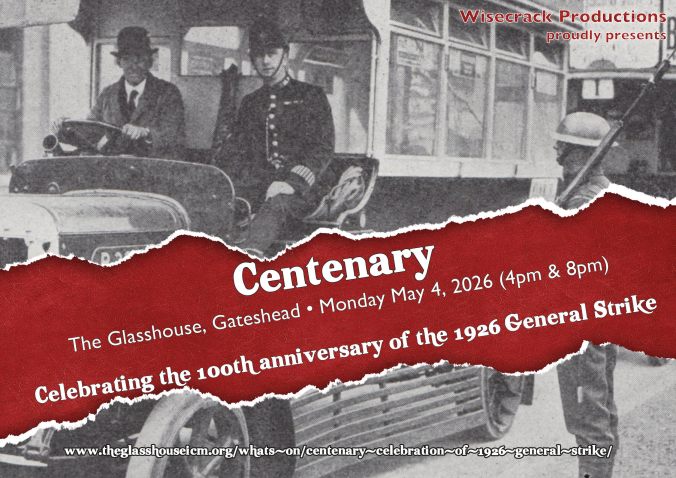
May 4, 2026, marks the centenary of the first full day of the 1926 General Strike where millions of British workers withdrew their labour and challenged the establishment. They believed a better world was possible.
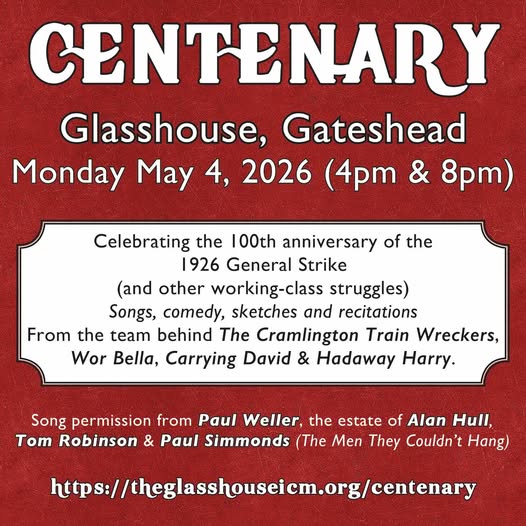
To mark this historical event the same team that brought successful plays Wor Bella, Carrying David and Hadaway Harry are staging Centenary at the Glasshouse.
“We have a great team and the show will be fantastic. We did a very popular show about four years ago called ‘Boris Out’, and look what happened to him!” said playwright and Theatre producer Ed Waugh
“One hundred years ago millions of workers and their families went on strike. A General Strike poses the question of state power, the 1 per cent – the privileged Establishment or the working class – those who actually create the wealth in society.”
“Despite the heroism and sacrifice of the trade union rank and file, the union leaders in the TUC realised the question of state power was at stake – the Russian Revolution nine years earlier had sent shockwaves throughout the world. These TUC cowards sold out the strike unconditionally after only nine days.”
Ed added “Their pusillanimity led to a carnival of reaction against the trade unions and workers by the Tory government. The miners continued their strike for another six months but were starved back to work. We haven’t had a general strike in this country since. But we’ve been close”.
“We have to learn the lessons of 1926 for the next time, which is on the horizon. The 1926 General Strike was a hugely important period in working class history.”
‘Centenary’ will include songs, comedy, stand up and recitations to celebrate the nine day strike. A big addition are musicians Paul Weller (The Jam) Alan Hull (Lindisfarne), Tom Robinson and Paul Simmonds (The Men They Couldn’t Hang) have personally given permission for their music to be played at the show.
“We are delighted to have been given personal permission from these great songwriters. It will be an evening of brilliant musical and comedic entertainment and inspiration.”added Ed.
Tickets are available for ‘Centenary’ at The Glasshouse, Gateshead at 4pm or 8pm on Monday May 4th 2026.
Neville’s music has attracted attention from the BBC and the specialist music press. Stuart Maconie featured him on BBC 6 Music’s Freak Zone, Electronic Sound magazine praised his debut album The Edge of Destruction which established Consett born Neville (53) as a distinctive voice in contemporary British music. The critically acclaimed debut featured on this site in July 2023.
“I’m hoping to build upon the success of the previous two albums, which certainly found an audience, at the same time this album has a different approach. I like the idea of doing something slightly out of the ordinary each time” explained Foster.
What or who was your inspiration when you were young?“As a child I’d a neighbour who had an old 78 gramophone. I still remember the smell of the thorn needles. That was my first musical experience, it seemed like another world with its own smells and sounds. My dad who like a lot of other men in the 1970s took up guitar so I recall him playing.”
“My first record I bought from Woolworths in Durham as a child was Mike Oldfield’s Blue Peter. My dad played Tubular Bells around the house so I’d have heard that and Oxygène by Jean-Michel Jarre. So, Oldfield and Jarre would be my earliest exposure to modern music.”
“Having played guitar myself for many years when I began making this kind of music I remembered Jarre and Oldfield but also discovered I had in my record collection the likes of Terry Riley, Hans-Joachim Roedelius and Michael Rother without really having ever joined up the dots of who these people were or what they were doing.”
Is music in your family? “Not at all. My grandfather was in the navy and played the accordian, he always told me as a child that if I wanted to be popular at parties I should learn to play the piano. My father had a few attempts at playing the guitar which didn’t work out, but it did mean there was a guitar around the house when I was growing up.”
“It’s important to remember, this period in time and in the north east, most families were not affluent enough to have the luxury of a musical instrument in the house let alone a musical education.”
Are you planning any live dates? “The nature of this album makes live dates challenging, I’m against the electronic approach that works with pre-recorded loops and is effectively only live mixing rather than a live show. In the case of this album a live show would mean running several old Windows 98 computers at once, working over the top of them and hoping the results resembled the album, but would in fact be a re-creation.”
“There’s certainly a half way house and I’ve done a few small scale live experiments with other material to test the waters which proved effective musically – which is the main thing, so you can expect more live works in the future.”
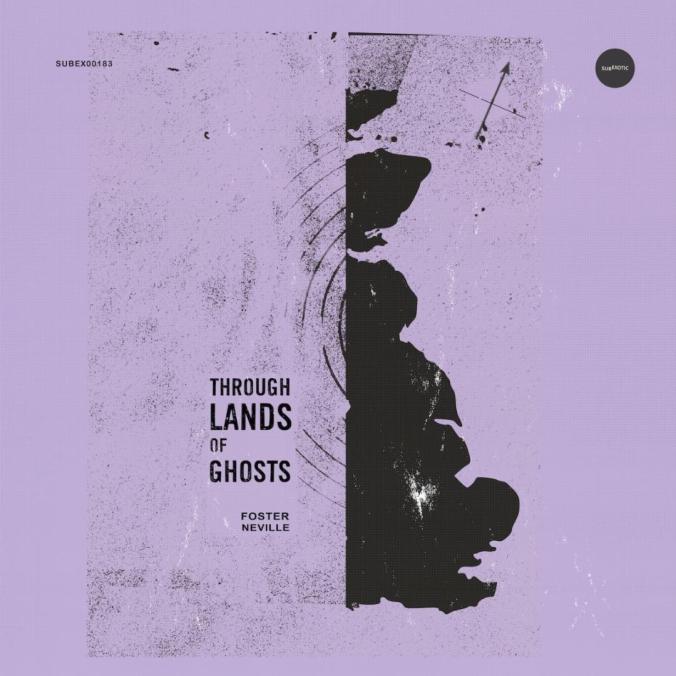
Produced by Ciarán Cahill (Van Morrison, Elvis Costello) and John Pilgrim and featuring an appreciation by writer and filmmaker Iain Sinclair ‘Through Lands of Ghosts’ will be released 16th January 2026 on Subexotic.
A lot is made of being in the right place at the right time to help bring success. But you can’t get past the sheer amount of hard work put in, every time giving 100% and never complaining. There is no substitute for rehearsal and when the opportunity presents itself you’ve got to be ready to take it. A snapshot of a story taken from Sting’s autobiography Broken Music hits the mark. This all happened within a few heady months during 1978.
The Police went out on a UK tour to open for Spirit led by guitarist Randy California. They won over a hippy audience and released their single Roxanne. Their record company A&M fully supported the record but money wasn’t rolling in yet.
To pay rent on his London flat Wallsend born Sting was still filming a few adverts and bit part in films. The Great Rock n Roll Swindle was one, although his scene ended up on the cutting room floor. ‘I was grateful, however, for the 125 quid at the end of the day’ said Sting.
He also went for a part in Quadrophenia filmed in Brighton. ‘I know that they’re seeing half of London for this role, but somehow I know it’s mine’.
After finishing on the film set in Brighton the record company hired a private car to whisk Sting off to Gatwick airport and jump on a flight to Manchester, finally arriving at the BBC TV studios where The Police were due to appear on the Old Grey Whistle Test. Sting remembers ‘It’s still raining when we land in Manchester. Yet another car and driver waiting to take me to the studio, where we have a sound check. The performance tonight is live’.
After a successful TV appearance a tour of the east coast of America was booked. Second night of the tour The Police are in Poughkeepsie theatre with only six people in the audience. Do they cancel? No. Sting brings the audience down to the front and introduces each other. Then ‘give a blistering set we will ever manage, encore after encore’.
The audience are invited back stage where it turns out three of them are DJ’s. The next day Roxanne makes its debut on USA radio. Within a couple years The Police are one of the biggest bands in the world. Now how did fellow Tynesider Mark Knopfler and Dire Straits knock them off their perch?
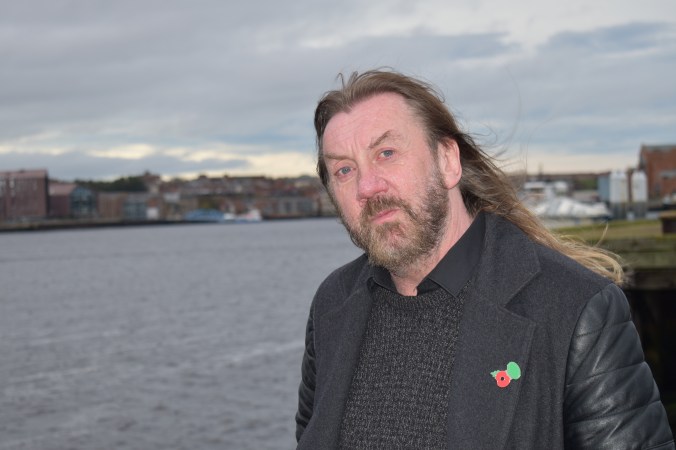
Singer/songwriter Terry Gorman Nov.25 pic. Alikivi
Now based in North Shields, Terry Gorman was born in Colne, Lancashire and has been playing guitar for over 50 years. Music has taken the 66 year old around the UK and Europe including Ireland, Amsterdam and Lanzarote.
I’ve done thousands of gigs maybe more than anyone you’ve met! said Terry after he had taken a short ferry journey over the river Tyne from North Shields to South Shields. We met in The Customs House for a cuppa and talked about music.
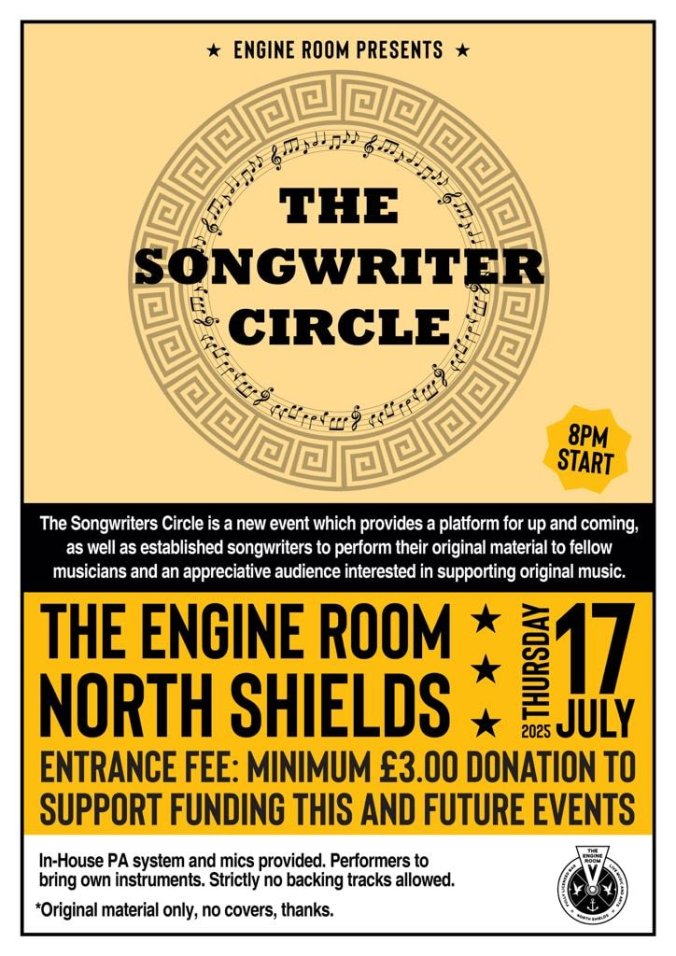
In North Shields there’s a nice music scene going on. We currently run a monthly ‘Songwriter Circle’ event every month in The Engine Room on Tanners Bank. It’s ran by myself and a few friends Steve McVay, Larry Page, Steve Rudd and Lyndon Phyliskirk.
You see live performance of singer songwriters all playing original songs. We encourage all levels of talent leading to paid gigs and possible festival spots. It’s been very successful so far and has been going since June said Terry.
Have I ever held down a proper job? I tried working 20 hours a week but found it hard working for idiotic managers. I thought I could earn enough money playing guitar and singing. I wasn’t interested in chasing fame.
I liked Ralph McTell, Alan Hull, James Taylor people like that telling a story. I watched Lindisfarne who were ordinary blokes, really down to earth but well known at the same time – that was for me. It was all about the music.
My introduction to music was my grandparents who had a piano in the front room. A lot of people did. I was around 10 year old when I picked up a guitar. It was a Hofner with a scratch plate. A Catholic priest who was a friend of the family knew I loved singing and writing poetry so he gave me his acoustic as he was off to the missions in Africa.
I lived in Brampton, Cumbria until I was 8 year old that’s where I saw the first singer who made an impact on me. It was Elvis when he sang on our black and white TV although I couldn’t make out the words or what he was singing about. The Beatles and Stones were good but I really liked storytellers, folk music where you could hear the words. I love lyrics.
Then I heard Lindisfarne and Isaac Guillory who made a G chord sound interesting. My first public gig performing was as a teenager in Durham I think, I was nervous and pretended to be confident.
Terry supporting the Devan Allman band at Newcastle Cluny.
North East venues Terry has played over the years include Bents Park and Amphitheatre in South Shields, Sunderland Empire, in Newcastle he performed at the Live Theatre, Journal Tyne Theatre and The Cluny. He also played in Durham City Hall and Gala Theatre, Washington Arts Centre and Darlington Arts Centre.
I won a songwriting competition in 1990 and thought it would lead to bigger things. A lot of radio play came off the back of that and a slot at the Cambridge Folk Festival and a headline at Dungeon Ghylls Music Festival in Cumbria. Again, I thought that would lead to more so I kept plodding along.
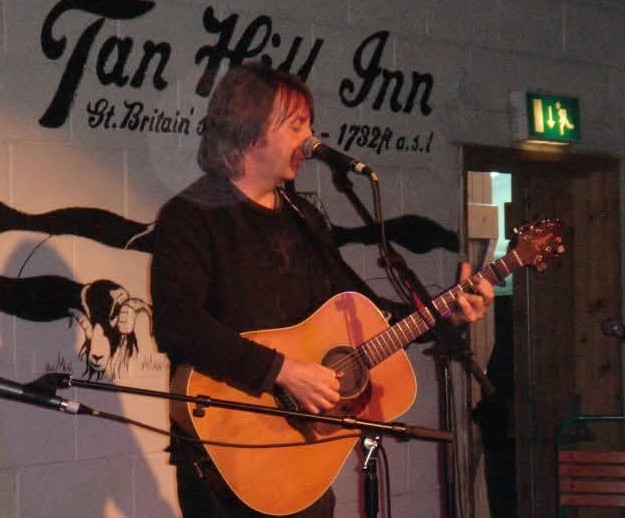
I played support to the Levellers at Tan Hill, Yorkshire, the highest venue in England. It went great playing my own songs, really grabbed the crowd by the scruff of the neck and went down well with an encore. The Levellers didn’t like that so I wasn’t asked back! Opening for Ralph McTell was a good gig and I’ve worked with Prelude a lot, I liked your interview with the singer Brian Hume earlier this year.
Terry supporting The Levellers at Tan Hill, Yorkshire.
I remember I played at a festival on the Isle of Bute, Scotland. I was the only one who wasn’t signed to a record company or connected to a famous band. There was Steve Daggett from Lindisfarne, Baz Warne out of the Stranglers, Martin Stephenson who was popular in the 1980s and others out of bands like The Pogues. I thought what am I doing here? I didn’t get signed but really, I never felt out of my depth.
I’ve wrote a few songs about getting knocked down and fighting back. When on stage I wouldn’t introduce the songs as if they were about depression or mental health. They are more about the power inside of you. It’s about dusting yourself off and going again.
I’ve recorded in Newcastle studios like The Cluny. Archie Brown from the Young Bucks was sound engineer. Then I went to Trinity Heights ran by Fred Purser. He was great, a really good lad, he used to be in North East bands Penetration and Tygers of Pan Tang.
What am I doing now? Well, it’s keeping the work rate up. In the last 12 months I released a single, ‘Only News Today,’ two albums and six professional music videos.
For 2026 I’ve got a folk album ready. One of the songs is ‘The Silent Shipyard’ about the closing of the shipyards and mines, all of the industry we have lost. I want a male voice choir on that one with a brass band and violins. Another song is ‘Beacon in the Dark’ about the whaling ships we had on the Tyne.
An idea floating about is a rock opera about John Lennon who was shot and killed in New York in 1980. In ‘Sgt Pepper Survived’ John Lennon gets shot and survives, lies in a coma for many years, wakes up and reveals his thoughts about world events today.
One scene is him sitting in a bar talking to Eric Clapton and Jimi Hendrix – yes, he lives as well. Lennon is also interviewed on stage where he is asked what he thinks about today’s shows like X-Factor, bands like Oasis and social media Spotify, Facebook and Instagram. I’m always thinking of these ideas.
If I have any advice to young musicians, it’s that if you enjoy your music, you’ve made it. If you don’t best just pack in and go do something else.
Sadly, some schools are still using egg-hatching programmes as a misguided way to educate children on life cycles of animals or using them as a treat to the children in their care explained Anna.
As more and more schools realise the problems these awful programmes cause, the companies who exploit these live young animals have extended their business model to include care homes where they aim to use them in so-called enrichment activities for residents.
Anna added…Despite the companies saying they will take back and home all unwanted chicks and ducklings produced from these programmes, the reality is very different. Even in the small print of the contracts they say that hirers have to be realistic about the fact that ‘some’ will end up as food and males will be culled.
Male chicks turn into very noisy cockerels and every year rescues are swamped with both male and female chicks and ducklings who are abandoned once they grow out of their useful ‘cute’ stage.
Our local wildlife and domestic animal rescue centre ‘Pawz For Thought’ who are based in Sunderland, are inundated every year with abandoned chicks from egg-hatching programmes.
A spokesperson for Pawz said“Every year we are inundated with calls from concerned parents of pupils who aredoing hatching projects. School hatching projects are often presented as education, but the reality is far from kind.”
“Chicks are hatched in the name of learning, yet the process has become a form of lazy teaching. For a few weeks, children view these animals as entertainment—then the chicks are handed away, this teaches young people that living beings are disposable and exist for our pleasure.”
“Every year, we are asked to take in chicks to save them from being culled. Around half of all chicks hatched are cockerels, and there are simply no homes for them. They face a terrible fate.”
“Schools often believe they are rehoming them to willing parents, but with no follow-up, many unwanted cockerels eventually end up dumped once they mature. This cycle of suffering must stop.”
Anna said…As part of their Animal Protection Charter, South Tyneside Council have contacted all of their schools and asked them not to use these programmes. They confirmed recently that none of their primary schools will book these programmes again making them an ‘egg-hatching programme free borough’!
Cllr Judith Taylor Chair of the Animal Protection Charter Working Group at South Tyneside Council said“South Tyneside Council is committed to the highest standards of animal welfare. We have taken decisive action by contacting all our schools to urge them not to use egg-hatching programmes.”
“We believe there are far more compassionate and educational ways to teach children about life cycles, and we encourage all educational settings to consider the welfare of animals in their care.”
Anna added…These programmes bear no resemblance to the actual life cycle of chicks and ducklings – they are not hatched in sterile metal and plastic incubators for a start. They do not have the warmth and love from their mother and of course they don’t show students where the birds end up and how they are slaughtered for food.
What are we doing now? We are currently campaigning across the North East and also have a group working in the North West and a group in the West Midlands coming on board. We want schools and care homes to know the misery these programmes cause.
We are also encouraging people to contact their MP and the Education Secretary to ask them to update the curriculum to remove the suggestion of egg-hatching programmes as an educational tool.
Thank you to South Shields artist Sheila Graber for the animation.
For further information about the work of North East Animal Rights contact >>>
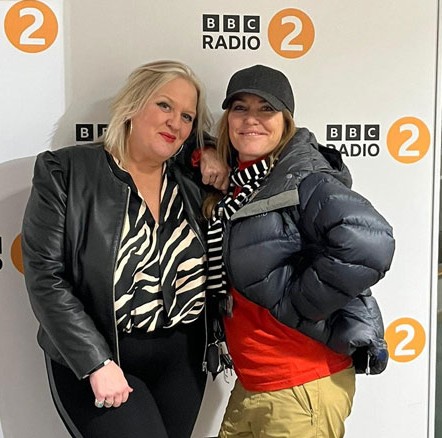
Emma at BBC Radio 2 with Cerys Mathews December 2023
Magazine front covers, BBC Radio 2, awards, tours, record releases – this past few year Emma has been prolific. In 2023 she released ‘Memphis Calling’ recorded in Sam Phillips studio in Memphis, USA, earlier this year she talked about her third album ‘A Spoonful of Willie Dixon’. Recently she got in touch about her latest single…
I’m stablemates with American band Chris Wyze and the Tellers. We’re both signed for distribution with ‘Select-O-Hits’ in Memphis. Chris found out I was in Tennessee for a few days in September so asked me to co-write and sing a duet with him. We recorded ‘Hearts Blue Christmas’ at Royal Studios in Memphis with the Hi Rhythm Section.
At the end of the recording session producer Boo Mitchell said ‘We have an hour left“. Chris turned to me and said ‘Do you want to do anything?’ I’ve previously recorded with pianist Charles Hodges (who is part of the Hi Rhythm Section) on my record ‘Memphis Calling’ and we have a good friendship and work well together.
I asked Charles if he knew the song “What are you doing New Years Eve”? The track was written by Frank Loesser in 1947. I think I must have first heard the Lena Horne’s 1966 version as my Mum played a lot of her music when I was little.
Charles strolled over and started playing it so beautifully on the grand piano. That piano has been in the same position at Royal studios for decades. Goodness knows how many iconic songs it has featured on!
Charles and I spent about ten minutes getting a key to suit and having a run through, then he called Steve Potts to play some lovely light drums and then we taped it.
L to R – Charles Hodges, Steve Potts, Hubbie Turner, Emma Wilson, BooMitchell, Lina Beach, Chris Wyze and Leroy Hodges at Royal Studio, Willie Mitchell Boulevard, Memphis on 25 September 2025.
Along with promoting the singlenowEmma is already looking forward to 2026…Recently I won the UK Blues Challenge at Marshall Studios which means I go to Memphis in January to represent the UK in the International Blues Challenge and for the European Blues Challenge I go to Poland.
‘What Are You Doing New Years Eve’ is out on 21st November 2025 as digital download and a very limited run of CDs which are available from the official website >>>
As requested, readers of this site have contributed stories featuring supernatural phenomena. Researcher & Historian, and regular contributor to the site Dan Green, got in touch to pass on an interesting story he came across.
Report in The Shields Gazette 2013.
A visit to South Shields by three unexplained lights in the sky in October 1967 seemed to be very convincing as it was witnessed and recorded by policemen. But what occurred the previous year might be an even better UFO episode.
It began when a Shields resident agreed to tell her story to local newspaper The Shields Gazette in 2013 on the proviso that her identity was kept anonymous.
It was a cold night in late autumn, a black starless sky between 10-10.30pm when she and half a dozen of her girlfriends, all teens, were walking home from Harton village past Harton cemetery when they noticed a huge circular ‘flying saucer’ hovering approximately 20’ above the ground, coloured lights pulsated underneath with a humming noise.
It suddenly shot up into the air to a height of about 60-70’ staying stationary for a while then swooping down over the cemetery. Three times it repeated this climbing and ascending motion until it finally shot up into the sky disappearing in an instant.
The shaken girls stood there motionless and speechless and never said a word as they continued home. Little did they know that it appears that on the same night the unidentified aerial phenomena was also seen and witnessed by a Mr Alton, then aged 20, and his wife.
The object was first spotted as they were walking to their home near the old Westoe Colliery. It wandered slowly around the sky towards Tyne Dock where the following year the three lights above the flats were witnessed.
Disappearing from their view it was next seen 10 minutes later suddenly flying almost directly over Mr Alton. They could hear a soft humming sound as the black circular shaped craft blocked out the stars. A circular white light was centrally located on the underbelly of the craft, around the circumference was an aurora of soft, colourful light. It then flew off towards South Shields Town Hall nearby.
Mr Alton estimated it to be travelling at about 15mph and was at least 40’ diameter. They watched for about two minutes as it skimmed above the Westoe Road rooftops.
I recently contacted Mr Alton now 79 and living in Whitburn, to see if he was still clear with his story and indeed he is – there is no doubt in my mind that he is telling the absolute truth and in accurate detail.
Was this the same UFO witnessed on the same night as seen by the girls in Harton? Two remarkable close encounters begging the question, why was South Shields being visited by UFO’s during 1966 and 1967?
More revelations of supernatural phenomena will feature on this site. If you want to share your experience don’t hesitate to get in touch.
As requested, readers of this site have contributed stories featuring supernatural phenomena. 60 year old Jeff Anderson from Washington, County Durham, talked of his experiences.
The paranormal equates to something or some activity that is unknown now but is likely to be known and possibly understood in the future. So, a good example of paranormal activity would include ghost sightings and other spiritual activity of that nature.
It’s the stuff of sixth sense, which we are all aware of in situations when somebody is staring at us from behind, we look around and sure enough someone is. And vice-versa when we stare at someone suddenly they become aware of our stare.
I have over the last few years been equally fortunate and unfortunate to have been exposed to very real paranormal activity.
It was the very height of the Covid-19 pandemic I had been to Lidl one Saturday morning, nothing unusual there. Bonnie my German Shepherd was eagerly awaiting my return to the car. No sooner had I done so when quite inexplicably the car radio started playing and this despite being most definitely being switched off. I had the presence of mind to video the occurrence for future reference.
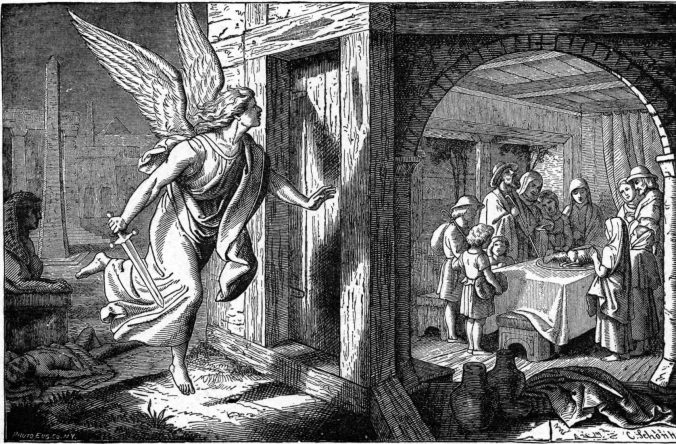
It sounded like Metallica playing but I wasn’t sure of the song. It turned out to be Creeping Death. I learned later it’s a song about the Biblical pass over featuring the Angel of Death. Creepy right?
On my weekly visit to my elderly parents house I explained to them the car radio occurrence and showed them the video I made that day. I felt someone somewhere was trying to communicate something.
In an instant a powerful gust of wind blew in through the upstairs front bedroom window, it came down the stairs twisting and turning and blew into the living room with such force that it actually blasted open the living room doors. It then turned back on itself and blew out of a small living room window. I mentioned it to my parents but they didn’t want to discuss it.
Unfortunately, my mother suffered a stroke a few year later. One afternoon I visited her in hospital with my Auntie. My mother occupied a room with three other stroke patients. There were just the six of us in the room on this occasion with no medical staff in attendance.
Of the four stroke patients three were asleep including my mam. The other patient was awake lying on her back, staring at the ceiling and occasionally crying out for her mother every few minutes or so, even though she was in her 70s herself. She was unaware of anything going on around her due to a possible dementia diagnosis.
The next thing it started raining mixed with hail and with such force and intensity I thought the window nearest to her might be blown in. After a short while things settled down.
However, the woman in the bed nearest the window was like someone possessed, she no longer cried out for her mother and was now fully aware. She turned her head and looked directly at me in the eye, diverting her gaze away from the ceiling. She even attempted to get out of bed at one point and come over to me. It was then I decided it was a goodtime to leave.
Sadly, my mother died a few months later. Two nights before her funeral I had left my bedroom window open only to be awoken at 3am by a strong gust of wind, so powerful it took every ounce of my physical strength to slam the window shut. Before I managed to close it the wind blasted me directly in the face, at which point an image of mother’s face unexpectedly appeared in my mind’s eye.
More revelations of supernatural phenomena will feature on this site. If you want to share your experience don’t hesitate to get in touch.
As requested, readers of this site have contributed stories featuring supernatural phenomena. A regular reader from South Shields shares her experience.
My ghostly event, and I can call it an event, happened thirty years ago at my late husband’s private memorial service. This account of the super natural happening is not only true it’s also factual. There are still people alive who witnessed the spectacle to tell the tale. There were other remarkable incidents before and after my late husband’s death but I have chosen to share with your readers ‘The Falling Angel’ episode.
Before the service I had spent some hours at the local church arranging floral displays. Andrew, the Reverend, popped in to admire the colourful stage set. There were several pedestals of white roses amongst autumn foliage, all linked with strings of white simulated pearls. A complete stranger had run her fingers along the strings remarking they were many tears of love.
The Reverend had asked me why the central pedestal was standing empty. I let him know I was intending to place my late husband’s photograph on top of it. It was the last one taken of him only weeks ago when we were touring the eastern seaboard of Canada. However, the Reverend offered me an alternative to the pedestal.
Hours later, a congregation of about thirty people sat in church in total silence with their heads bowed as the coffin was respectfully placed in front of the altar draped with a purple velvet cloth.
The Reverend began the service of love by welcoming the rows of tearful mourners. Then he walked over and took the photograph of my late husband from me and placed it firmly on the brass eagle lectern. Tears filled my eyes as I looked at my late husband’s image smiling back at me, resting on the eagle’s outstretched wings. The romantic scene was complete.
As he started to speak something unexpected happened causing a murmuring from the congregation. The photo fell to the floor. The Reverend returned it to the stand. He continued his soliloquy but not for long as the photo fell from the stand again. Visibly shaken he returned it for a second time.
As he replaced it, he mumbled some inaudible words before turning towards the shocked mourners. Everyone watched as the photograph moved forward and crashed to the floor for a third time. The glass in the frame shattered.
The service of love came to an abrupt end. I felt a deep urge to walk across and rescue the mischievous culprits image announcing with a smile ‘My husband is determined that he doesn’t want to be put on a pedestal’.
More revelations of supernatural phenomena will feature on this site. If you want to share your experience don’t hesitate to get in touch.
As requested, readers of this site have contributed stories featuring supernatural phenomena. Actor and theatre producer Alison Stanley talked of her experiences. Featured in this story is a medieval castle in Chillingham, Northumberland which is reported to be one of the UK’s most haunted castles.
In the past I’ve been a celebrant at funerals and enjoy doing it. I’ve always been interested in spiritualism. I believe in a next life. We’ve talked about what happens when you die and we’ve mentioned ghosts, spirituality and the like people believe different things explained Alison.
Some say when you die you just die and there is no afterlife. But how do they know for sure? And by the laws of science we are a ball of energy and by those laws it doesn’t die so where does that energy go? The physical body dies and is buried or cremated but what happens to the energy? It’s an interesting subject.
A few years ago we went to Chillingham Castle on a day trip. There was me, my mother, my youngest son and my step dad. It was a grey dark day lashing down with rain. We were driving along the country roads getting near the castle. We turned a corner and saw an old woman in a red coat standing at the side of the road. She wasn’t old as somebody from the 1800s but there was something about her that didn’t look right. We all remarked about this woman who was in the middle of nowhere really.
I looked in my rear view mirror and she was standing looking at the car. Where did she come from as there were no houses around maybe she has dementia? I just wasn’t sure I couldn’t put my finger on it. What really was wrong was she didn’t look wet she was bone dry. But it was lashing down?
We get in to Chillingham Castle and looked at all the artefacts and stuff it’s quite cluttered. On one of the clothes dummies was a lady with a red coat and she had a hat on. It was from one of the women who had worked there as a housekeeper. I swear it was the same coat we had seen.
Another time was 10 years ago. We were sitting in a bar called the Pig & Whistle in Hollywood which is a very theatrical, grand sort of place. I went through a red velvet curtain to the toilet downstairs and after four steps I couldn’t go any further, I stopped because I froze and the hairs on the back of my neck stood up. There was no way I could go any further down the stairs.
I came straight back up and told my husband we’re going to another bar for a drink because there is no way on God’s earth I’m going to the toilet here. Later we found out there had been a fire there and there was strong spiritual activity in the pub.
I think if someone is in the next life and they visit you I think it’s a bit of an honour really. They might have plenty to do and they have taken time out of their day to see you – so yes, it’s an honour.
More revelations of supernatural phenomena will feature on this site. If you want to share your experience don’t hesitate to get in touch.






 ALIKIVI UK : NORTH EAST MUSIC & CULTURE