The poem ‘Mask of Anarchy’ by Percy Shelly inspired Writer and Theatre producer Ed Waugh to write lyrics for a new song ‘For the Many, Not the Few’.
Ed recently got in touch… ‘We are delighted to launch our new song and you can watch it on You Tube, it can also be downloaded from various platforms – Facebook, Spotify and Amazon (link below)’.
‘The song is to launch Boris Out! A show of socialist comedy and entertainment – comedy sketches, satire, stand up, songs and poetry written and performed by some of the region’s top writers and actors.
It is also a precursor to the political earthquake that is about to engulf the world’.
‘If you like it please share the song and the Boris Out!leaflet on social media.
If you don’t like it, still share it but say it’s by Duran Duran……
See you all at Boris Out! at the Tyneside Irish Centre on November 14’.
Due to demand, only tickets for the 3pm show are available.
The 7pm show is sold out (returns only) – only 50 remain for the 3pm show.
Buy your tickets for only £10 from:borisout.eventbrite.com
In this second post with music journalist and author Phil Sutcliffe, he talks about working with some of the biggest bands on the planet.
I knew AC/DC somewhat when they’d just come to London. Bon was the best storyteller and his narration of the Whole Lotta Rosie legend was a treat – 19 stone, Bon the 32nd bloke she’d had that month, the ‘Climb on top’ – although I don’t think it was her who’d got the jack.
AC/DC interview in Sounds August 1976.
The Police had a famous story of one of those early career gigs that Sting told me about, I mean famous once they were getting interviewed.
They were in Poughkeepsie, upstate New York, their first US gig after their CBGBs debut, and the story goes that six people showed up.
The band played full-on regardless, broke off to introduce the ‘crowd’ to one another, all had a good time despite circumstances and one of the six was a DJ who played, Roxanne, and world conquest began right there!
The Police book I did in ’81 with Hugh Fielder was the real thing, mid-story right-there excitement, the Springsteen biography will be the best I can do, skill and enthusiasm on a long creative life – his I mean, though mine will be in there too.
From that English and American Lit degree to the old retired music journo, exploring still – not necessarily getting anywhere.
In the Springsteen biography have you found anything you were surprised at ?
My approach is connections and that makes for a wide reach and the surprises you ask about. For months I’ve been reading about Elvis, racism and the south, and that has extended to books on MLK, Mahalia Jackson, Gospel, plus infinite circles around Elvis, Woody Guthrie, Pete Seeger, Odetta, Dylan, Stax – all occurring when Bruce was 8-20 year old.
So the title might be a sonorous BS and The Great Tradition, if I ever get there, fun en route though. Regardless, it all interests me and other fans, beyond that probably no readers.
Phil second from right at a Sounds reunion 2011.
Throughout your career who were your memorable interviews with ?
That’s the question very old music writers don’t want. My disappointing answer is they were more or less all enjoyable, including Lemmy for Sounds. Flying to France in a bigger-than-small plane his manager Gerry Bron owned.
He was remarkably direct and engaged with anyone who looked him in the eye, so another different-planet interview that worked very well.
AC/DC for Sounds, my first and favourite being at the house they rented in London. The Youngs and Bon Scott being nothing but their down-to-earth – with a touch of python-round-the-neck – selves and storytelling till the teabags ran out.
Springsteen in Mojo, my lifetime fave, who I first heard through Bedrock (BBC Newcastle radio programme). To interview, no one I met has ever combined such clarity, such heart, such ideas, such grasp of the sweat-and-blood inner lives – well, we’ve been travelling over rocky ground you know.
In sum though, through all these blessings, I’d just state musicians all have a lot to say and I’m happy to take notes and tell the story. Never met a stupid musician, never.
Vocabularies vary according to background, but the ability to express themselves verbally seems pretty consistent to me, whether or not they’re wordsmith lyricists by trade – the creative, artistic instinct and inclination carry over into speech – fortunately for us music writers.
What are you doing now?
Meandering through semi-retirement writing a much-needed Springsteen biography which pleases me – if the Bruce book counts as professional work.
Still very active in my union the National Union Of Journalists, whereof I’m a Member Of Honour. My only honour! But a good one.
Lived with my wife Gayle in the same south London flat since we left Newcastle in 1979. No reason to move, never saw the ladder. Lucky, lucky, lucky as the lovely Kylie said.
Thanks to ‘Soundclips’ on twitter for articles from Sounds 1975-80, archivist Steve ‘Stig’ Chivers.
The blog has featured some people who stuck a flag in the ground for the North East – Chris Phipps, Chris Cowey, David Wood, Colin Rowell, Ian Penman and Rik Walton for the pix.
The latest addition to the squad is a man who used words to create a colourful landscape and painted pictures in the minds of thousands of teenage music lovers.
London born Phil Sutcliffe, looks back on 40 years of music journalism for Sounds, Q, Mojo and The Face.
He interviewed a world of musicians including Stewart Copeland, Joni Mitchell, Nick Cave, Sheryl Crow, Eric Clapton…
Thom Yorke for Los Angeles Times and for Mojo, 15 minutes on the phone with Dolly Parton, truly that can set you up for a year or two.
Where did Sutcliffe find his love for words, and what’s his connection to the North East ?
I always wanted to be a journalist so in 1969 when I finished my A-levels and had a degree in English & American Literature from Manchester University, I applied for journo jobs and got a training course followed by an apprenticeship at Newcastle Evening Chronicle.
That was in the new training centre in an office above the Bigg Market doing just about everything – local councils, sports desk, feature writing, a spell as a columnist, the subs desk, and in court where the 15-year-old kid who pleaded guilty to burglary and asked for 153 other offences to be taken into account.
There was stints in district offices – Gateshead, Consett and North Shields – ah, the morning fishing report of how much, by weight and type of fish each boat had landed! From the outset writing heaps, hard, fast and fascinating all the time.
How did the job with Sounds come about ?
I’d always said I wanted to work freelance but it happened sooner than intended. After three years mainly on the Chronicle I did the usual thing of trying to get my second job, 175 rejections later I went freelance.
September 1974 I was 27 my first marriage had just broken up, a bit late to start writing about rock’n’pop so not much in the way of a plan, but thought maybe I could earn part of a living on one of the five weekly rock/pop papers – as ‘our man in the North East’.
While still doing a bit of local news for Newcastle papers and Radio Newcastle, plus a couple of non-musical feature items for Woman’s Hour! I wrote off to NME, Melody Maker, Sounds and Record Mirror.
With so many band tours starting in the North East you could get the first review in, and I got a sniff from Melody Maker, but really hit it off with Sounds.
Within the next year I started doing feature interviews and making a slightly more decent living – Gentle Giant might have been the first as I tended to get ecstatic about their wild prog adventures.
But my first rock interview I think was Sparks backstage at Newcastle City Hall for Radio Newcastle’s late-night programme, Bedrock.
The show was DJ’d by my friend Dick Godfrey with a strictly non-rowdy zoo of other voices – Ian Penman/Ravendale, Arthur Hills, the Out Now fanzine team, me, and other enthusiasts, all of us unpaid but enjoying ourselves meeting stars.
Also dozens of local bands from Sting’s Last Exit to Bob Smeaton’s White Heat, the veteran Junco Partners, Southbound, Gale Force Ten (with singer-saxist Joy Askew) and Wavis O’Shave.
There was a lot of local stuff about and loads of it good in what might well have been a culture – Tyneside pub rock. Very diverse, and not what Londoners called pub rock – Ducks Deluxe, Chilli Willy and such, Brit R&B-rooted – but it did happen in pubs quite a bit.
The Cooperage, The Bridge, The Gosforth – Last Exit every Weds if I recall. That one out in Heaton, Andy Hudson’s wine bar for a bit, a cellar near the Civic Centre – he played trumpet for the Grimethorpe Colliery Band when he were a lad you know, and then the more obviously culture-centred Jesmond Theatre.
We met on a Saturday lunchtime in a pub near the Tyne River and chatted and plotted, me and Dick Godfrey, promoter-musos like Chris Murtagh and Angus, er, sorry lost his surname but nice bloke with a moustache.
Even the odd sympathetic older star like Hilton Valentine from The Animals who could show us all a thing or two, though I can’t remember what. It was good.
Angelic Upstarts pic. Rik Walton.
Once in a while the Guildhall down by the Tyne River, scene of the Bedrock festival that spun off from the radio programme – all of this encouraged by a loose collective of bands and fans.
Putting the Angelic Upstarts on before Neon at the Bedrock festival proved to be a misjudgment as a huge fight ensued, a rather one-sided affair given Neon fans were student’ish and Upstarts fans were from South Shields.
I jest in retrospect, but it was a shame and in part my fault thinking in a hippie way that music brought us all together. We didn’t do that again.
However, the Upstarts – and their fans – were fine on their own territory, which is where I met them generally, starting with a gig at Jarrow Town Hall when punk had reached the North East and they’d released their single, Who Killed Liddle Towers?
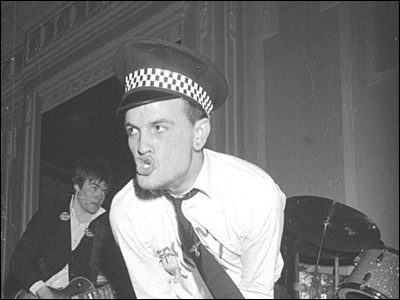
Which was a drama and a campaign in itself, with police brutality played out by cop-hatted singer Mensi, going at a real pig’s head fresh from the butcher with a bloody great axe. That was a night.
Also, a double page spread in Sounds, Mensi and Mond had plenty to say for themselves and we got on, up to some point where me coming from another planet got unfeasibly less brotherly. I always liked them.
My Sounds colleague Dave McCullough didn’t though, and he invented a great word for the rolling profanity Mensi deployed – fuckverballing.
What came in between worked pretty well though, speaking for a life much harder that most rock writers knew anything about.
I did cover heavy metal/hard rock quite a lot, but missed the North East bands, but pretty sure Ian Penman did a feature.
(Penman writing as Ian Ravendale in Sounds, May 1980, featured the North East New Wave of British Heavy Metal with interviews from Mythra, Fist, Raven, White Spirit, Tygers of Pan Tang).
Penetration feature in Sounds 18/6/77
My other ‘discoveries’, as we used to say were Penetration, a quite brilliant sophistopunk band from Ferryhill, dazzling in every way with a natural star singer, Pauline Murray.
Great ideas men in Gary Chaplin and Robert Blamire, plus drummer Gary Smallman and out-there’ish guitarist Fred Purser. They almost made it.
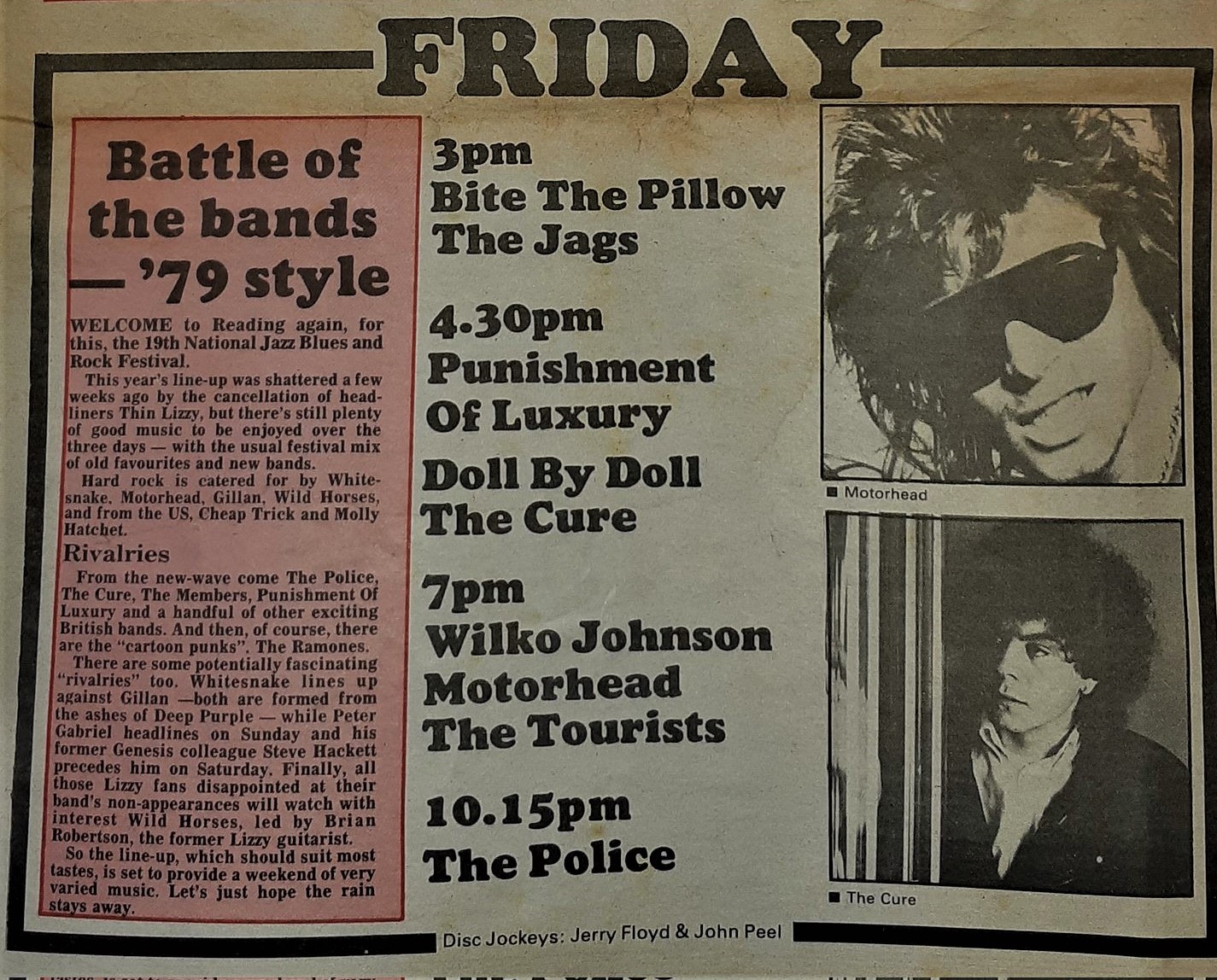
As did the rude theatricals, Punishment Of Luxury, with their panto villain frontman Brian Rapkin and his small band of wild-witty anarchs.
Reading festival 1979 line-up with Punishment of Luxury and headliners, The Police.
Meanwhile, I loved Last Exit to bits, jazz-rock and soul and their own stuff, often saw them twice a week, and eventually got them in Sounds.
A big feature on Geordie boys trying the London move – and this despite editor Alan Lewis saying “God that singer’s awful” when I played him a cassette.
But this was just after I happened to introduce Sting to Stewart Copeland, passing through as Curved Air played the Poly in ’76 – he had a lightbulb moment all right and somehow persuaded Sting to give up the music he loved, come to London and play the music he hated – punk – until it freed him to find reggae and write, Roxanne onwards.
Stewart and Andy Summers played to their optimum pop potential, and they become the biggest band in the world for quite a while.
A potion of Velvets/Stooges/Morricone/Springfield with two self-produced albums behind them, and a third on its way – Lowfeye are a perfect antidote to pop gunk blocking the airwaves.
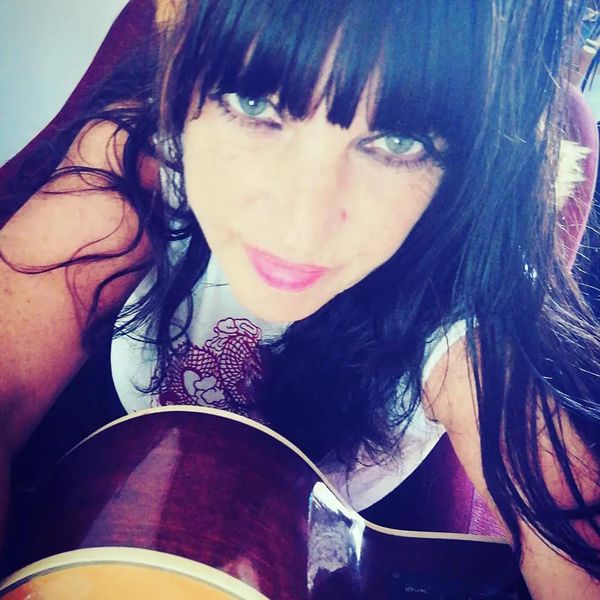
Durham’s deadly duo are musician & producer Alan Rowland, and vocalist & songwriter Carol Nichol who I arranged to meet in Newcastle’s Centurion bar.
Before 12 noon it’s quiet as travellers with their cabin cases wait in anticipation to board trains and whisk them off around the country.
But today it’s a Friday, and there’s a stag do on heat, one bloke dressed as a crocodile and another in a silky white wedding dress. We search for a quiet corner.
What came out the blue was we had done a Ennio Morricone type track. I love his soundtracks on the Spaghetti Western films with Clint Eastwood.
We shared it on a Quentin Tarantino website (Reservoir Dogs/ Jackie Brown/Inglorious Basterds) and a label in Europe picked it up.
They said a Swedish director is making a five part drama for TV called The Partisan, he’s looking for analogue sounding, quirky stuff and really like’s your track. We got in contact and a year later he signed it up and added it to the programme.
In The Partisan the leading actor is an undercover cop (played by Fares Fares) living in an idyllic part of Sweden. Some dramas are very grey and set in the city, but he wanted to capture how beautiful the country was with the darkness lying beneath the cornfields. The actor reflected that with a lot of skeletons in his cupboard.
The track was played around his character and had that spaghetti western feel, that was great because I’m obsessed with The Good, The Bad & the Ugly type films.
Since I was young I‘ve been obsessed with Ennio Morricone. Forget your Mama bloody Mia I’m into cowboys and old films.
Afterwards, the Director got in touch and personally thanked me for the track saying it was very Sergio Leonne (A Fistfull of Dollars/Once Upon a Time in America).
It’s been shown in Sweden, France, Australia and America but not the UK yet. I got some footage and watched it, I’ve been in music since I was 14 and it was surreal hearing your track on something as good as this. One of the best days of my life.
WHATEVER HAPPENED TO
I love the sound and films from the ‘60s and ‘70s and had an overload of pictures and music when I was young. Written on the back of my biker jacket was Black Sabbath and underneath The Stranglers, people would say how do they go together ?
But I also like tracks by Chic, the bass playing is excellent. Then the Russian classical composers, and Sabbath who have a really heavy sound that I love, the riffs from Toni Iommi were very original for their time.
I also loved punk, Pistols, Damned then got into Joy Division and Magazine.
I saw The Stranglers, Smiths then Nirvana with Cobain at the Newcastle Riverside, who were really good but unheard of at the time. They ended up giving the ‘90s a kick up the arse.
I remember I wasn’t allowed to go see Ozzy with his wild reputation, but I did see AC/DC with Bon Scott. I’ve seen lots of local bands at Fowlers Yard in Durham and small venues in Newcastle.
HOME GROWN
I fronted a punk band and got some good gigs and support slots but didn’t want to keep on playing live so decided to concentrate more on working at home in a studio. We’ve got a good little set up now. We work from an eight track, a computer and instruments.
I’m a melody writer and bring up the ideas, Alan’s a great arranger and musician. The melodies just pop in really, anytime of the day, I play guitar or keyboard and record them on my phone. It comes quickly we never slog at it.
We love the old analogue stuff, as Lowfeye we try to get that warmer analogue sound. We experiment a lot with the soundtracks we are doing and get away from the digital sound.
MAGIC NUMBER
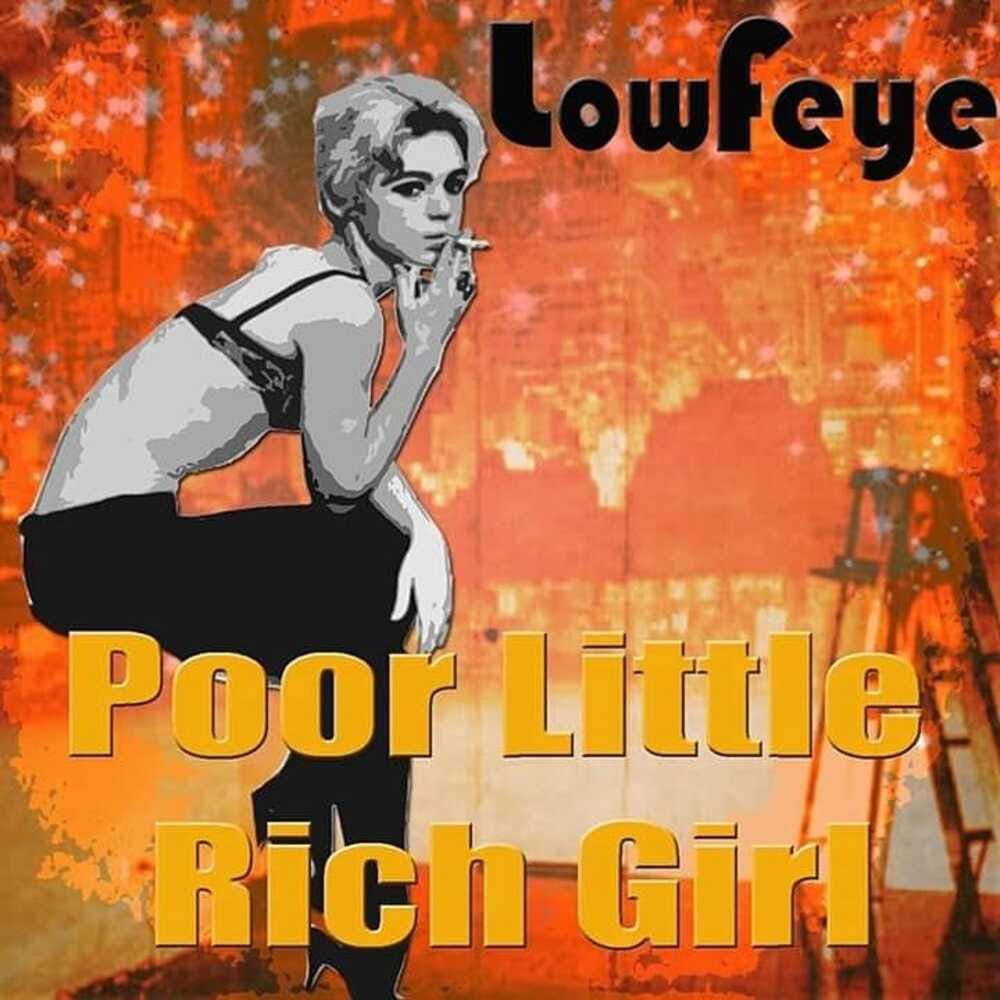
We’ve recorded our third album, just need to mix it. I love Raw on the second album (Poor Little Rich Girl) it’s a really heavy song and we’re looking at getting heavy tracks on the new one.
The last three month we’ve also been working on soundtracks and The Partisan are doing a second series. the Director gave us a brief about what it is about, so we sent him six soundtracks and he said there is two he might use in the new series.
Poor Little Rich Girl is available from Lowfeye via Facebook
In this second part Drew talks about recording with Forgodsake and Automatic, plus bringing his story up to date with new band Dawn after Dark.
At the same time as Shotgun Brides was ending, I was doing a few gigs with our former singer Kev Wilkinson’s new band – Drill. They were a wall of sound. Three guitars, bass and a drum machine. All on full volume.
Very entertaining and great fun, but I like having a drummer to bounce off so after a while I backed out and made way for Simon Moore to take up the reins and I left to concentrate on the new band I was in.
The new one had a different sound and feel to The Shotgun Brides, more rock focused with everyone’s influences coming to the fore, so we decide to leave the past behind and changed the name to Forgodsake.
We started writing songs and quickly went into the studio. The early demos got picked up by the rock press and independent radio stations and we got good coverage across Europe.
With influences that spanned punk, heavy rock, rock ‘n’ roll and the new grunge bands, Forgodsake played a load of styles all blended into one, it worked well.
We toured with Skyclad, Dogs D’Amour and Mr Big among others, and headlining shows in various places around the country.
Also one-offs with the likes of Neds Automic Dustbin, Honeycrack and The Wildhearts. An eclectic mix, but some great bands and some really sound people. We also did a Marquee show with Johnny Thunders to close the circle.
As well as gigs out of town we played lots of local gigs, two of which were the pre- and opening nights at Trillians.
The first night was for the brewery staff and we put the vocals through the CD PA – the Public Address system the pub played their Compact Discs through.
We were asked to advise the pub on what PA to get in to make it a viable gig for touring bands and we gave them the PA specs, but they decided to save money and put the band through their CD player. Luckily the free alcohol got us through the night.
The Vaux management were there, and we told them it was utterly shit, so we got them to hire in Don Morton’s rig for the first public night and pinned everyone to the back wall. It was loud as.
They then upgraded the in-house spec immediately so there was a decent PA there.
Forgodsake made two albums for Bleeding Heartsrecord label managed by Venom’s management company Bear Dawn. It was a subsidiary of Music for Nations I think, or was it licensed through them?
They owned Lynx Studios in Shieldfield, Newcastle which had previously been owned by AC/DC’s Brian Johnson.
Both albums were self-produced as our vocalist Kev Ridley was their studio engineer. The first with the original five-piece line up of Wallace/Binns/Gallon/ Ridley/McCormack on guitar. And the second record with me, Gary Binns and Kev Ridley singing and on guitar.
They got great reviews and I think both stand up after all this time. I was, and am, proud of the two albums, but we didn’t have that bit of luck you need, so nothing sold in great quantities.
I also recorded a few tracks on a Venom tribute album around this time, adding the bass to the tracks recorded to Abaddon’s (Antony Bray) original drum tracks by Kreator, Nuclear Assault, Candlemass and Paradise Lost.
The album was called In The Name Of Satan. I enjoyed giving my mum a copy of that one.
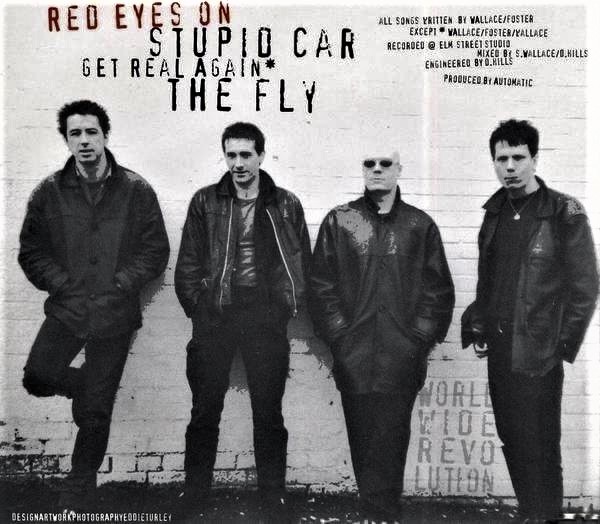
And then that was it for Forgodsake. Kev Ridley went on to sing for Skyclad, Chris McCormack formed 3 Colours Red, Steve Wallace put a new band together, Automatic, with his brother Mal on drums and a guy called Weeb on vocals.
Steve asked me to join Automatic, around ‘96, and we were back to our earliest roots. A high energy punk influenced band, with nods to the Clash and Compulsion.
Part way through my time in the band we got in Billy Gilbert as a second guitarist. The gigs were great, and the audiences seemed to take to it well.
We didn’t tour as such but played gigs around the country with a couple of Marquee shows thrown in and did local gigs with China Drum, Feeder and A, and a few with Stiff Little Fingers, including two Riverside shows and one at Newcastle Mayfair.
Automatic released one four track ep for Dental Records which Dave Hills, who manages Newcastle Trillians, may have recorded – not sure. We certainly recorded some stuff with him. Another album which unfortunately didn’t get released.
In 1999 I called it a day, but Automatic kept going for a while after. I headed south, working in Indonesia as a diving instructor for a while, then going to London and then Brighton where I now live.
Although I did do some recording with a group of musicians who came together for a week and hired a studio to see what we could come up with – Jef Streatfield from the Wildhearts, Paul Bate from Plan A, and Nathan Maddison from Hydra Vein. And that should have been it.
But earlier this year I was approached by Howard Johnson from Dawn After Dark, the ’80’s goth/groove/rock band who I saw back in the dim and distant past.
Howard is a journalist and had written one of the first Forgodsake reviews and we had become good mates after I moved down to London. So I’m now playing in a band again.
The first single came out on 27 August. We’ve got an album, headlining gigs and a short tour withBalaam And The Angel all before the end of the year with more planned for 2022.
I go to as many gigs as I can. Once you’re hooked its always part of your being, I just love live music. I tried to get bands together in Brighton, but it never seemed quite the same without Steve and Gary.
Steve is in Penetration and Gary is working with Pauline Murray and Rob Blamire in The Invisible Girls.Maybe we will get up on a stage together one day – never say never.
To get a free download of the new single Maximum Overdrive join the mailing list atwww.thedawners.com
Now based in Brighton, Gallon originally lived in Newcastle playing on the music scene during ‘80/90s. This first part features his time in glam punk bands Sweet Trash and Shotgun Brides.
A group of mates from Walbottle High School in the west end formed a band in 1982. We were young and punk influenced, and briefly toyed with the name Razor Cuts after the last line of a Buzzcocks song.
My dad wanted us to call ourselves Luke Puke and the Sickeners ?He’d obviously read the wrong press when he formed his opinion on punk rock. But it was never going to last because we had four guitarists and a synth player.
Eventually everyone went their own way leaving just me and Steve Wallace to soldier on, Steve now plays guitar for Penetration. We were in most bands together and he thinks I’ve got a crap memory so he’ll no doubt tell me I’ve got the timeline wrong and bands muddled up.
I decided to swap a guitar for bass, and Steve and I looked around for other kindred spirits and found a lad in our local pub, Mickey Parris. We also found a local drummer called Gary Binns.
He was playing in a heavy rock band but as soon as we heard him, we knew we had to have him in the band, so we convinced him that his future lay with us.
We were listening to New York Dolls, Johnny Thunders Heartbreakers, Hollywood Brats, and that’s where the band name stemmed from. English glam, The Sweet, and a term used for American glam, Trash Rock.
Drew and guitarist Steve Wallace.
So the first band I was in was Sweet Trash who rehearsed at a place called The Scout Hut. It was a lonely building in the middle of a field. An old two-storey house which had the rooms downstairs knocked into one.
We could play as loud as we wanted for as long as we wanted without disturbing anyone – it was perfect.
We started off playing covers. Some never made it to a gig, like Time Warped Garden Of Love by Cuddly Toys, but others did. First gig we played The Stones Get Off My Cloud, The Pistols No Feelings and Bodies.
Over time we played stuff by New York Dolls, Hanoi Rocks, and in later bands R.E.M. and The Clash.
Towards the end of Shotgun Brides we played one that Sounds magazine referred to as our ‘rapidly becoming famous encore’ which was one of our songs – Stop Looking – into bits of Whole Lotta Love, Babylon’s Burning, Silver Machine and Bomber, then back to Stop Looking to finish off. It was quite long.
We did a couple of gigs then Mickey departed and was soon replaced by a singer called Carl Smith who I spotted on the #73 bus. He looked right for the band, but unfortunately only lasted for a little while then left.
We played as a three-piece for a gig or two around this period, which would have been mid-’84, then we got a lad called Keith ‘Cosmic’ Forster in as second guitarist and he and Steve shared vocal duties. The jigsaw was finally completed when we got Kev Wilkinson in as singer.
We played loads of gigs in pubs around the area. The Mitre in Benwell, The Cyprus in South Shields, Talk of the Tyne in Gateshead.
We played the opening nights of Edwards Bar at the Crest Hotel and that started things moving for the band as it used to get packed.
We also played at Sunderland Mayfair and did a few gigs at Newcastle Tiffanys with The Vibrators and one with Guana Batz, as well as headlining gigs.
We were managed at the time by Tony Fiddes who ran The Monday Club in Tiffanys and The Drum Club in Sunderland Mayfair and I think it was him who got some of the North East TV crew Malcolm Gerrie and – I think – Chris Cowey to come down to see us play in Newcastle’s Edwards Bar.
Our gigs were always raucous affairs with a load of weirdly dressed overly enthusiastic northerners going for it in the audience, with the band very much the same.
So that was how we got the slot on TX45, the local show filmed in The Tube studios at Tyne Tees.
Looking back on it now we calmed down a bit for the programme and it looks quite tame compared to how I remember the gigs, but they did get a great shot of Kev diving into the audience at the end of the two-song set to close the show.
With Tony managing we did a self-financed single called Burn It Down which was recorded at Steve Daggett’s (ex Lindisfarne) studio in Gosforth.
I think it might have been the first single cover designed by the lads at Viz records, but unfortunately, they took a sensible approach and there aren’t any Viz characters lurking in the background.
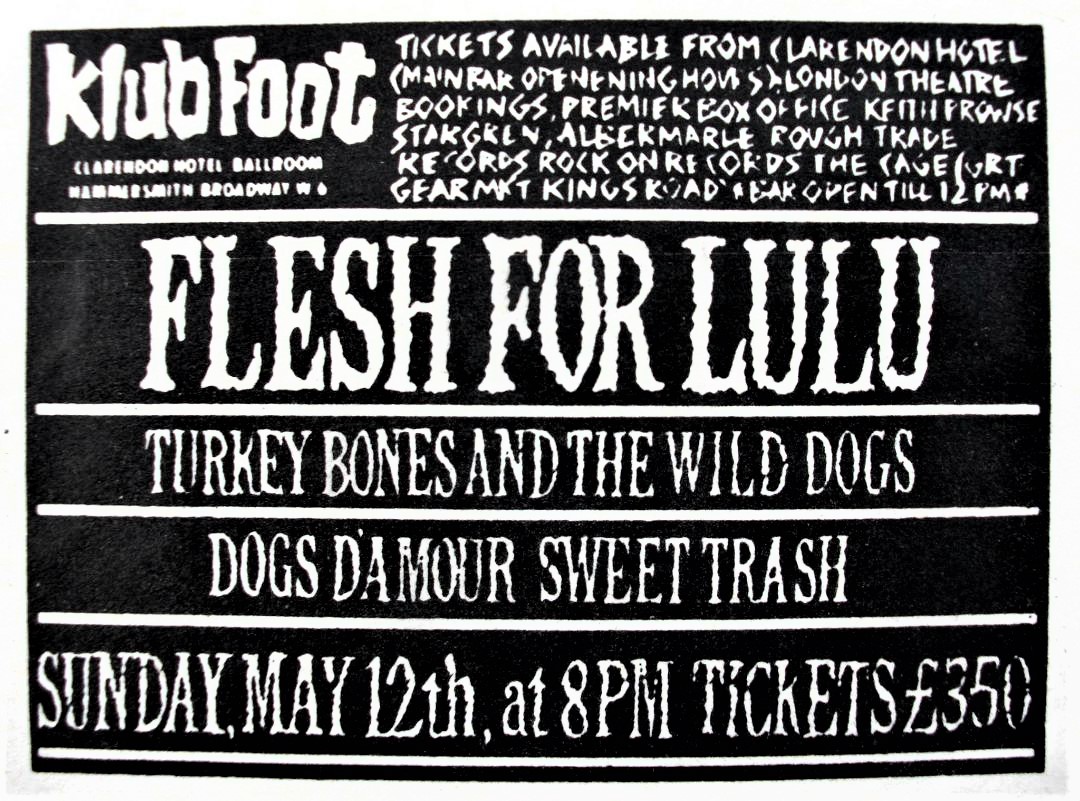
We also played out of the area, about the time of TX45 we did our first decent London gig, on the same bill as Flesh for Lulu, Turkey Bones and the Wild Dogs, and Dogs D’Amour.
But Sweet Trash had ran its course and we were getting into other types of music. So, one October night in 1985 we went on stage as Sweet Trash and then changed our name to The Shotgun Brides for the encore.
The Shotgun Brides played quite a few gigs around Bradford and Leeds playing with the likes of Salvation and Loud and ended up being managed by Andy Farrow at Far North Music.
We signed to Neat Records and did an album that was never released, and a single called Restless, both with Keith Nichol at the controls.
We lasted about three or four years with various line-ups, playing gigs around the North East and further afield, but eventually the usual musical differences raised its head and The Shotgun Brides played their last gig at the end of the ‘80s.
It was still me, Steve and Gary, but with Kev Ridley on vocals and Chris McCormack on guitar.We thought that keeping the name would attract some people in, and we still had some t-shirts left over to sell.
I’m not sure where Shotgun Brides last Shields gig was. Some social club I think. We probably did play The Venue in South Shields, and I’m sure Forgodsake did too.
Read the second part of the interview where Drew talks about recording with Forgodsake and Automatic, plus bringing his story up to date with Dawn after Dark.
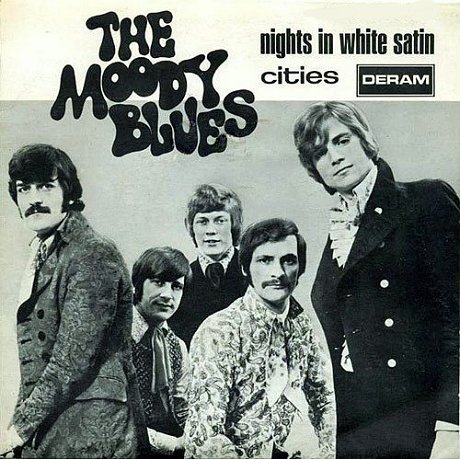
Sky Arts has screened some great documentaries including ZZ Top, Go Go’s, Lynyrd Skynyrd and latest programme about Birmingham band The Moody Blues.
Early in their career the Moody’s toured with Chuck Berry and Sonny Boy Williamson while signed to a London management company who in turn had a deal with Decca records.
The first recording was Steal Your Heart Away in 1964, then after sprinkling some magic on an already great song by Bessie Banks, they released Go Now, landing at number one in the UK charts.
The profits were paid from the record company to the management who – you guessed it – never passed a cut onto the band and done a runner with all the dosh.
After this set back the band signed directly to Decca and produced a hit album ‘The Magnificent Moodys’, but unfortunately didn’t follow it up.
By this time Denny Laine had departed, and John Lodge and Justin Heywood stepped in, Heywood was recommended to the Moodys by Eric Burdon of The Animals.
The Stockton Fiesta club.
With the coffers running low The Moodys went out on their first tour with the new line up on the Northern cabaret circuit played by TV stars Dusty Springfield, Morecambe & Wise, Shirley Bassey and Tom Jones – leading to one memorable night at Stockton’s Fiesta Club.
Justin Heywood: We had finished our second set and their was a knock on the dressing room door.
John Lodge: We thought ok they want autographs or photographs.
JH: A guy said ‘You’re the worst band I’ve seen in my life, you’re f’ing crap’. My bottom lip trembled, we were in silence.
We packed our gear up and, on our way, home we got to Scotch Corner, when from the back of the transit a little voice from our drummer said ‘That blokes right. We are crap’.
JL: We looked at each other and said ‘I agree completely’.
JH: Next morning we went to rehearsals threw away the blue suits and wrote new material.
A completely new set was written ‘more powerful songs with melodies’, and in 1967 the Moodys released Days of Future Passed reported to be one of the first successful concept albums.
The record featured the classic Nights in White Satin which became the biggest selling single of their career with a re-release in 1972 reaching UK and USA top ten.
Who knows what would have happened if the gadgie from Stockton never knocked on their dressing room door.
For his new project looking at the connection between the Tyne and the Thames, former South Shields lad Garry, now based in London, was inspired by a poem written by English poet and writer, John Masefield – you’ll find a Masefield Drive in Biddick Hall where Hunter grew up.
The poem Cargoes is all about sea trade and it starts with the romance of travel by ship, the second verse is of a Portugese war ship full of gold coins, with the third about a collier travelling between the Tyne and Thames full of coal. It’s a beautiful poem.
The main aim of the project is to engage with young people to learn about trade in the late 19th century and we look at innovation and technology from the 1800’s and compare it to now.
Plus highlighting the type of work that William George Armstrong was doing here in the North East producing hydraulic machinery, cranes, bridges, then artillery.
At the eastern end of the Thames River in London are the high-rise buildings of Canary Wharf, in their shadow is Cody Dock, which was operational until the mid-60s.
A lot of colliers from the North East would take coal down there for the coal powered gas stations which are now being redeveloped into housing estates.
I set up a community pub in Poplar in 2018, to honour locally born engineer Tommy Flowers who designed the world’s first computer for Bletchley Park in 1943 and was given an honorary doctorate by Newcastle University in 1977.
THE TOMMY FLOWERS Community Pub, with Colossus operator veterans Betty and Rene in front of Tommy Flowers portrait created by Jimmy C who made the famous Bowie mural in Brixton.
Berkeley Homes have a partnership with the National Grid including Beckton which is where Stanley Kubrick shot scenes for his film about the Vietnam war, Full Metal Jacket. Kubrick didn’t want to go to Vietnam so they changed the east London gas works into Saigon (laughs).
We also look at tin plate photography of the 1850s used by Edward Sheriff Curtis who photographed Native American Indians, to glass plate techniques when Sunderland born inventor Joseph Swan brought his process into photography.
Wet Collodian 10 x 8 inch tinplates using mid 19thC technology.
The different techniques used are really interesting and young people can compare them to today’s mobile phone camera which basically does all the thinking for you.
SNAP HAPPY
When I was about 12 year old I started messing around with a camera taking pictures of street scenes, snap shots, stuff like that. I didn’t get a decent camera with a good lens until ’82 and started taking pictures of bands.
Around this time I went on a year’s course studying Marine Engineering at South Shields Marine & Technical College.
Then a job came up for processing and printing photographs at Tynecolour, South Shields, at the same time a letter arrived from Charles Taylor Foundry offering me a job, but that was for £1 a week less (laughs).
So I was at Tynecolour for over four years which was a great grounding on all the technical side of processing film and using colour, and when nobody was looking I would print my own photos.
PRINT IT
As well as bands I photographed live comedy. I was at Sunderland Empire in ‘83 and had a front row ticket for The Young Ones.
With six frames left on my camera I had to be careful because I didn’t have much money for new film. But ended up with three good shots which I printed.
The next year Rik Mayall was supported by a young Ben Elton, and I got in the soundcheck. I took a few pictures, Rik was really great ‘You gotta come to London’ he said.
So off I went he introduced me to a few people, and I got my first pictures published – £25 for an hours work really, this was when I was only getting £30 a week at Tynecolour.
To be honest that’s when I was looking to get out I didn’t want to be here for the rest of my life. My Dad had gone round the world which gave me a sense of wanderlust.
1985 was a bad time in Shields, the pits had been on strike for a year, shipyards were closing, it was all grey and miserable I just had to get away. I felt it was important to try something new.
PICTURE THIS
So I moved down south and ended in The Lodge recording studio in Suffolk as in house photographer. Basically it was a farm house in the middle of nowhere run by semi classical musicians.
The studio was all analogue with quarter inch tape, and during my time there was a lot of recording done, one time in the studio was a French experimental band Orchestra Rouge, who were really interesting.
But bands were getting into synthesisers and some of them should’ve stuck with what they were doing and not try to be trendy.
I remember coming down to breakfast one morning and punk band The Anti Nowhere League were moaning about their mortgages – even anarchists need a roof over their head (laughs).
At the studio Mal Tootill who designed all the record sleeves and tour merchandise was a lecturer at Swansea University and asked me if I’ve thought of going to art college.
He phoned ahead to check it out while I hitch hiked from Suffolk to Bristol then on to Swansea and saw the head of the Art Department. The course was a really good move for me.
After that about 25 ex-students all moved to London so we weren’t alone there, and these were days when you could still squat and get along without much money, that saved me.
WRITING ON THE WALL
Fast forward to over 30 years later and after a successful career in professional photography, I came back up North in 2013 and started working on a project called Street Art Heroes supported by Cultural Spring for public engagement inspired by the street names of Biddick and Whiteleas.
There was a lot of work bringing international artists over from Brazil, Canada and New Zealand, to create murals in north Sunderland and Shields, when we all stayed at Hillhead Farm on Lizard Lane in Marsden.
They created artworks in the area, one of which is a mural on the side of Chuter Ede training centre, it’s still there now. Chuter Ede used to be the school where I attended and it was great going back because when I was a teenager there I got caned for doing some graffiti (laughs).
Alice at Chuter Ede nearby Carroll Walk on Biddick Hall, South Shields commissioned by Garry Hunter for Cultural Spring mural artist Irony.
SAND DANCER
Next year is the International Year of Glass, that’s an interesting link to the collier ships going down to London and sand being used for ballast on the return journeys.
It is reported that was a different sand from the beaches, it was better for glass making and used in the North East glass factories.
Nearby to where we are now (The Alum House pub, South Shields) was Cookson’s glass factory, half of the chimney is still standing next to The Custom’s House. In the latter part of the 19th century some people from the North East would go down to London and work in the glass works.
I’m really interested in all those industrial innovations and how people have used technology to progress trade and industry and with a successful Heritage funding bid we’ve been given the go ahead for a project.
We’re in the early stages of planning now, I’m working with Graham Carrick, a fine artist from Gateshead who is Director of Digital in our Community Interest Company, Fitzrovia Noir.
Plus, we’re bringing in two other organisations to work alongside us. I find it all very exciting and interesting – we’re making innovations in industry sound sexy (laughs).
The fantastic four of Tommy Hearns, Roberto Duran, Marvin Hagler and Sugar Ray Leonard were my era and I loved them. I’ve met Roberto Duran and Marvin Hagler and went to see Tommy Hearns box as he was my favourite.
He was a great boxer, very skilful.
His fight with Marvin Hagler in 1985 is the most exciting three rounds of boxing. If Hearns boxed he would of won, but they both went at it hammer and tong and Hagler knocked him out in the third round remembers Preston.
Then every now and then you get a freak of nature like a Mike Tyson, he was powerful, had agility, and skill yes, but he was a fighter knocking people out. Boxing matches bring a clash of styles.
Today in the ring you have Anthony Joshua, Tyson Fury, Billy Joe Saunders who just fought for a world title, there’s still good boxers out there.
They came from amateur boxing but it’s not as popular as it used to be as there are more distractions now, kids can be in their bedrooms on their computers where parents can keep an eye on them.
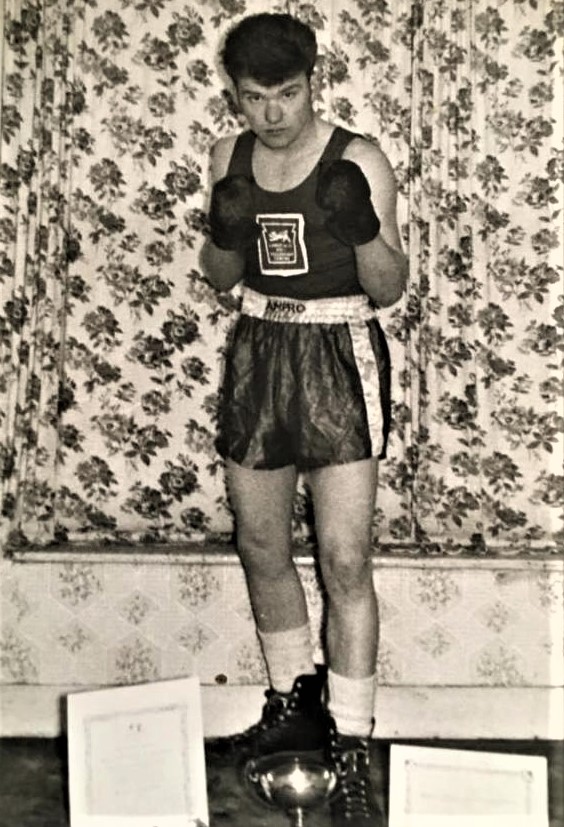
17 year old John ‘Pasty’ Brown.
FIRST ROUND
I was born and brought up in Hendon in the east end of Sunderland and my Dad, John, was a boxer. In the ‘60s a boxing club was opened and my Dad ended up coaching.
Through boxing he helped a lot of kids and hopefully I can do the same. Boxing can learn you discipline and respect – it can do a lot of good.
When I was young I was out in the street, bird nesting, playing on railway lines. But I drifted over to the boxing club with the other lads and my Dad was in there. I wasn’t forced into it. I’d sit ring side and took an interest in it.
What I’m doing now is a continuation of what my Dad did. Some kids when they first come in to the gym are not sure about it, but about 90% of them end up respecting the place, have determination and dedication to turn up training each week, and learn discipline. You’ve got to put the time in. It’s a tough game you can get hurt.
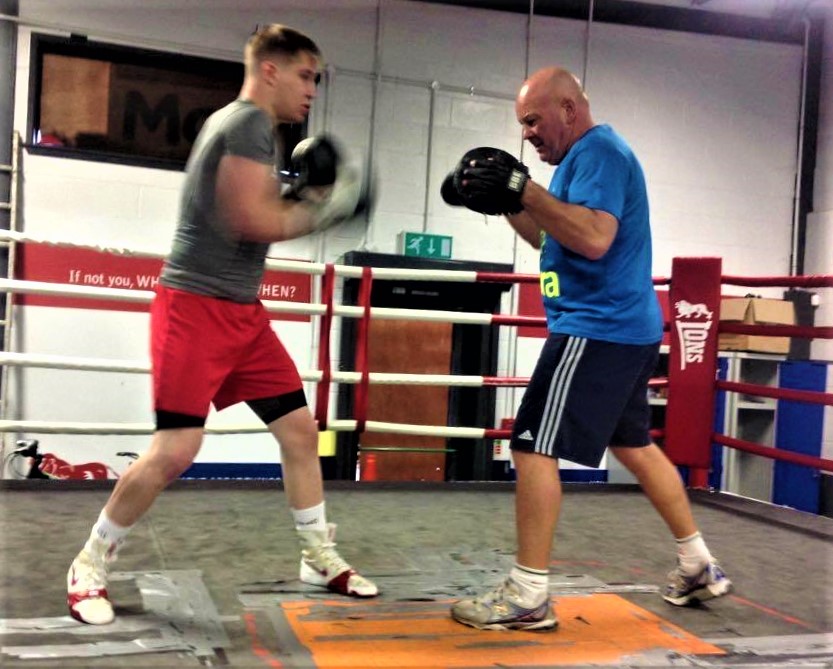
Preston in the gym.
IN THE RING
When I became a member of Sunderland Amateur Boxing Club I started boxing competitively through the ‘70s and ‘80s. I slowly progressed from boxing to coaching and become official through the A.B.A. (Amateur Boxing Association).
Sunderland lad Tony Jeffries was one of the gym’s proteges, he represented GB in the 2008 Beijing Olympics and won a Bronze medal.
At the gym with Tony was a kid called Stuart Kennedy, I thought he was a very good boxer, but just like in life, you’ve got to have a bit of luck. Stuart glided around the ring with his footwork but didn’t get the lucky breaks.
A kid called Anthony Wilkinson boxed with me, he won three British titles two years in a row and at 17 turned professional. I thought he was a bit young for it but he was making money. I think he could have been the best boxer we produced.
ALL FIRED UP
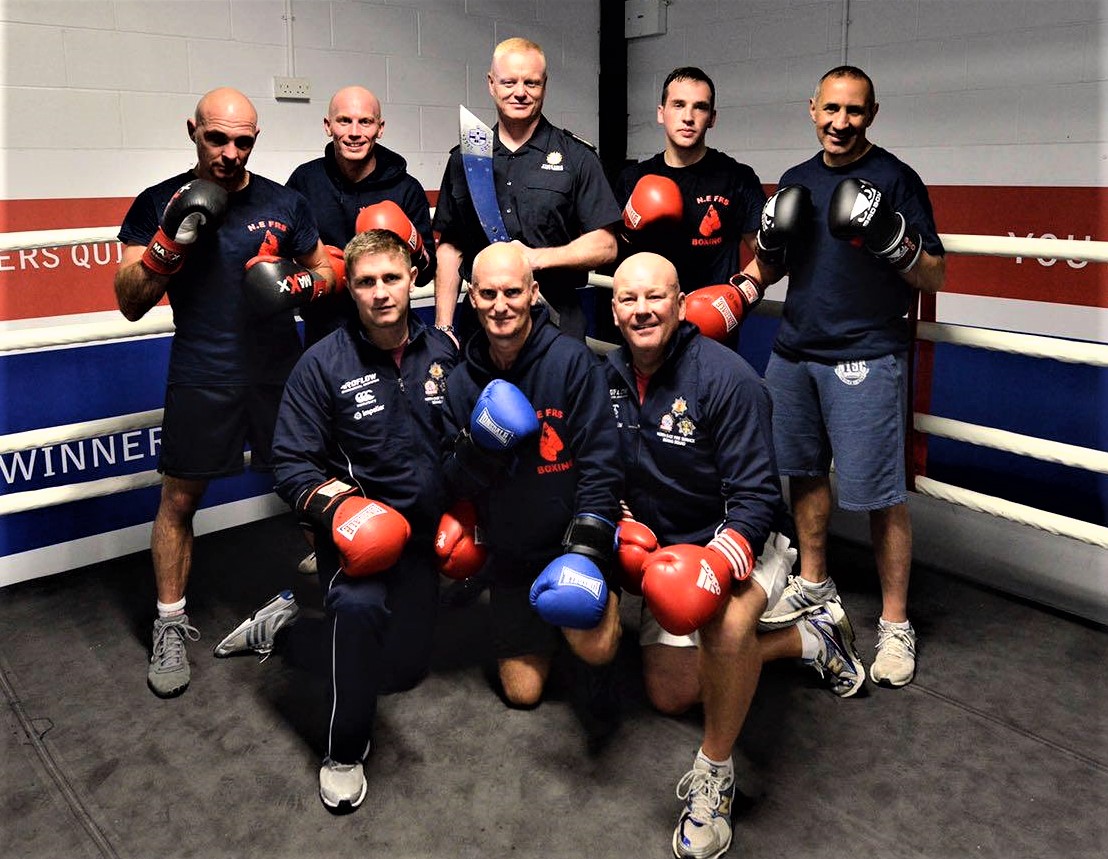
I got a job in the fire brigade, 22 year I’ve been in now, and there was a couple of firefighters who were boxers, they knew I had coaching badges so asked me to help out with some training.
We got on for a couple of year arranged a few charity matches with the police and then got invited to go over to Boston and Denver plus a small club in Ireland where we go annually.
The firefighters loved the boxing training and after using other gyms, with the total backing and support of Chief Fire Officer Chris Lowther, I set up our own in an old storage building in the Sunderland fire station grounds.
We got help with funds for equipment from the local council who said ok as long as you open it up to the community. We kitted the gym out with the best because the council were totally onboard with the whole idea and we had a big opening night in April 2019.
When we first opened the doors to the kids we were only getting a handful but that quickly grew to 35 a night so we extended to two hourly sessions. We got loads of kids off the streets.
The youngest is 9 year old when they train, you can’t box until you’re 11. From 11 to 15 you’re a schoolboy, 15 to 17 classed as a junior, at 17 you can box men. My first senior fight was at 17 the other lad was 34. I got beat but we’re still good friends (laughs).
I was classed as a boxer not a fighter, I had boxing skills with my feet, hand speed and technical ability. I boxed him in the first round, dancing round him you know.
Second round he thought it was time to slow me down and hit me with a body shot and knocked me down I had a standing count of eight to compose myself. That’s the difference between a boy and a man.
Kids start off at three rounds of a minute and a half, as you get older you go to two minute rounds and seniors box three minute rounds.
Our gym aims to channel the energy of young kids, it gets them interacting with people, better than them playing on their phones.
CREATING CHAMPIONS
We’d love to produce Olympians or World Champions but if they come out just feeling better about themselves we’ve won. In the gym we’ve had police officers mixing with criminals, different people who wouldn’t normally get on but who’ve got a love of the sport.
The atmosphere is fantastic everybody loves it and you can forget about what is happening outside – like being in a bubble.
There’s no better feeling in the world when the referee holds up your hands to say ‘and the winner is’. In the same breath if you get beat by the better man you think ‘I’ll do better next time’.
The fire lads and the kids have a thing where they say, ‘I didn’t win that fight, but we learnt from it’. And that’s important because it’s all about competing. The gym’s motto is creating champions in the ring, creating champions in life.
Anyone that can step in the ring has my total respect. You’re stepping into the unknown, the man across from you might be better. So, have you done enough training ? Have you worked with the coach enough ?
You will be put in the ring against someone with similar experience.
Although our club has fought against a team that’s put in ringers – fighters with a lot of fights – matched against someone with only two or three. That’s not on really, it’s about giving the lads a proper fight, they’ve got to be matched up correctly.
Preston coaching in the gym.
HEADS UP
Head guards were brought in a few years ago and the kids and females need to wear them but the bigger lads can agree to wear them or not. I’m a big believer in them when you are training but they are uncomfortable to wear when competing.
I will insist on everyone wearing one when sparring and training. The women may not be big and powerful as the lads but they are very skillful and I appreciate that, it’s an art.
PROGRESS
Britain has produced some good boxers over the years who have come through amateur gym’s but in the past year covid has restricted that so it’s a problem, we’ve got to work something out to go forward and make progress.
For more information contact Preston on: 07740 285 966
Sunderland Central Fire station, Tyne & Wear Fire & Rescue Service,
Phoenix building, Railway Row, Sunderland SR1 3HE
Gym address: Unit One, Westbourne Road, Sunderland SR 1 3SQ
Before acting, Cochrane’s game was fronting a Newcastle band from 2008-13.
It was great being in front of a live audience and the buzz you get off it. We had interest from an American label who said we had to change our name because ‘We can’t sell you over here called The Soviets’(laughs).
We done a single launch and one review said the ground was moving so we changed our name from The Soviets to This Ground Moves. We shot a couple of video’s and our track ‘Soldiers of Fortune’ got played on American TV series CSI New York.
All of a sudden we had some fans from the States and released an album in 2011. But unfortunately we split up six month later.
Fast forward to 2019 with Cochrane signing up for a new show ‘Carrying David’. North East writer & theatre producer Ed Waugh scripted a play about the McCrory brothers from County Durham.
One severely disabled and the other became boxing’s Cruiserweight Champion of the world.Former Eastenders actor Russell Floyd was drafted in to direct the one man show.
I totally believe in the piece and think it’s a really important story to tell. Glenn was interviewed by Ed and he asked him just tell me everything what you remember about the fight. Glenn recalled what happened in each round and I do my best to perform that on stage.
First out was a short tour around the North East in 2019 and then we took it to Northern Ireland for a week. The very first night was in the Newcastle Tyneside Irish Centre.
I really wanted the ground to swallow me up, but after that every show got a standing ovation. The responses we got were overwhelming and it’s a lovely feeling knowing the audience have enjoyed the show.
2020 was cancelled for obvious reasons. I was in such good shape for Newcastle Theatre Royal but then Covid hit and I was gutted more so for my family who didn’t get to see me there.
Ed was saying to keep in shape cos we don’t know how long this will go on. Two month later I was eating chips and drinking beer (laughs).
But I was really upset it was cancelled. Glenn rang me and said it’ll be fine because it’s an inspirational story, it’s about not giving up, triumph over adversity.
BROTHERS IN ARMS
When I first read the script I couldn’t believe it had happened, it’s remarkable. The defeats, the times he got ripped off, he was really rock bottom with nowhere to go.
Glenn’s disabled brother David was told he wouldn’t live beyond he was 15, yet he lived long enough to see his brother win a boxing World Championship.
It was his brothers bravery and courage to keep on living with a smile on his face that helped Glenn to come back. He put his head down and worked hard.
The final scene is the set piece with Glenn fighting for the boxing world title. I enter the ring as Glenn with boxing gloves and shorts on recreating all the moves talking about the fight as it happens.
STAGE SET
I’ve been going to the gym cos if you walk on stage and you’re out of shape it won’t look good. I actually trained with Glenn at first getting his style right and how he threw punches. Added to that I had personal trainers for the weights.
Ed has a few other projects on so I took over the production and rang a few theatres to see what’s available. They were all keen to put something on so I got in touch with a few contacts who stepped up to help finance the show.
My sisters company, Sunhealth, a Swedish business owner who saw the play in Belfast, plus the conservatory company that Glenn does a TV advert for came onboard. It’s all come together.
During North East dates in September we are visiting excellent venues in Newcastle, Blyth, Durham, Barnard Castle, Hexham and Alnwick.
Plus the London dates in the Canal Café where we are looking to get a few producers along to hopefully take it on a national tour maybe this time next year.
SEND IN THE CROWDS
I was in panto in June at Newcastle’s Tyne Theatre that had been rearranged from last Christmas, I enjoyed it but there was still a few restrictions like the bar being closed and you couldn’t congregate near the stage. It was nice to be back on stage but it was a bit surreal.
This one man show is a test of endurance, it’s a challenge keeping fit and being able to bring the audience along with the story. It’s very energetic, there’s no lull, there is sad moments – I just want to do the story justice.
There is still a little uncertainty out there with audiences thinking should they go to the theatre, is it safe enough ? It’s a hard time and people will have it in the back of their mind what has happened – but now is the time for Carrying David to take off the shackles. I’m in shape for this tour and ready to go.















 ALIKIVI UK : NORTH EAST MUSIC & CULTURE