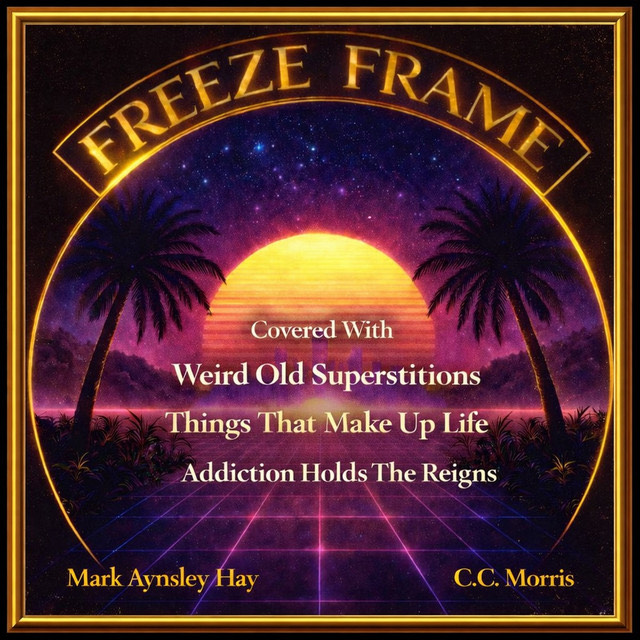
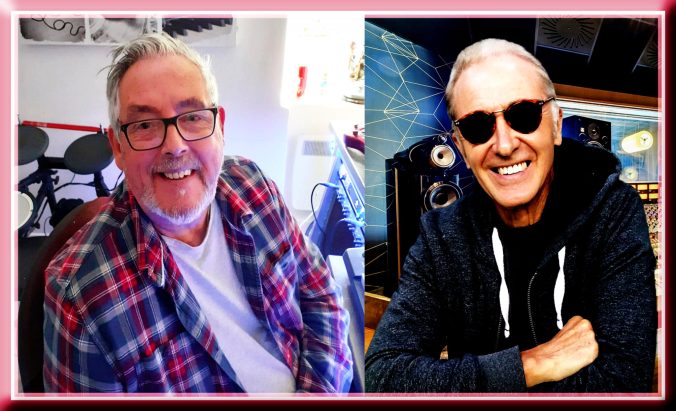
‘Freeze Frame’ is the new four-track album and first official release in 2026 by Mark Aynsley Hay and songwriting partner Chris Morris (ex Paper Lace guitarist). Both have featured on this site – Chris in May 2025 and Mark in March that year.
Chris Morris
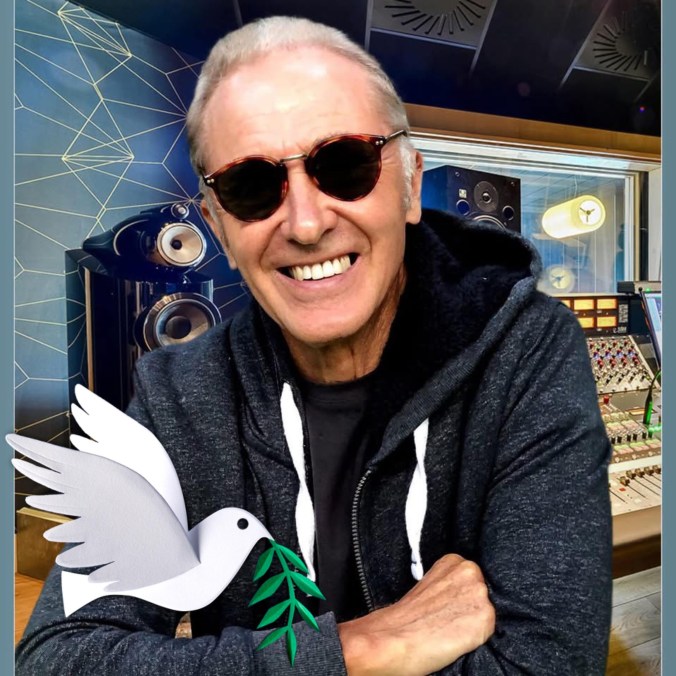
‘Chris will be 72 this year and I recently reached the grand old age of 80. In my head I’m still 21, but a few health issues persuaded me I am really 80. I was diagnosed with osteoarthritis in my back and neck which – excuse the pun – can quite literally be a pain in the neck. Still, c’est la vie as they say in France.’
Explained former Teessider Mark who for the past 14 years has lived in the French town Pays De La Loire with his wife Alison.
‘We’ll have been together 50 years this June. We first met in 1976 in Aberdeen, Scotland, when I was performing in a cabaret club called Jay Jays. ‘76 was the height of the oil boom in Aberdeen and the nightclubs were thriving. Jay Jays had been the Gaiety Theatre and like many venues then was converted into a nightclub to suit the changing market particularly with the large number of American oil workers in the city.’
‘For album ideas my songwriting partner Chris suggested that we write a romantic ballad built around a theme called ‘Freeze Frame.’ Bringing those two ideas together gave us a broad and flexible creative direction.’
‘My thoughts immediately turned to early relationships and those first, overwhelming impressions—the wow! The one moment when I responded to attraction and sexuality. That realisation inspired the lyric “Love is not what we first see.”
‘The song centres on a couple navigating midlife crises that affect them in different ways. Although their love for each other remains strong, they decide to separate temporarily to give themselves space to breathe. The man longs to reunite, while the woman feels the timing isn’t right.’
‘In essence, he is writing a love letter in song expressing his devotion and vulnerability, yet at times he feels stuck—trapped in a kind of ‘Freeze Frame’, facing it alone.’
‘Things That Make Up Life was born from a conversation between Chris and myself. Chris mentioned he had an idea for a theme designed to embrace a wide range of life’s moments. That idea quickly sparked a flurry of rhymes and melody.’
‘As the lyrics evolved, so did the chord structure, and the song began to take shape. While the initial version showed promise, a change in tempo and a pop rock feel brought it fully to life — delivering the sound and feel we were aiming for.’
‘I delved into the myth of the three rabbits, a quest that led me to a very interesting discovery of facts on Google. I found fascinating facts about old folklore, superstitions, and myths, each with origins rooted in ancient beliefs, observations of nature, and attempts to explain the unexplainable.’
‘I mentioned to Chris that with such lot of material, we have enough to write another new song titled Weird Old Superstitions.’
‘Attentive observation of our everyday habits and dependencies became the inspiration for Addiction Holds the Reins. I’m referring to our daily reliance on laptops, tablets, and mobile phones.’
‘A few weeks ago, Alison and I were socialising with a group of friends. One of the younger people jokingly commented, “Older people are always criticising the young for constantly being on their phones—but look around. There are five older people here scrolling through their screens, completely unaware of what’s happening in this room.” Unfortunately, he was absolutely right—and I was one of the guilty ones.’
‘I became increasingly observant of how often people browse their phones—in hospitals, doctors’ surgeries, waiting rooms and even while walking down the street.’
‘We don’t converse to each other just text or message mainly irrelevant topics that have no real significance to personal or worldwide situations. This isn’t meant as criticism – I’m equally at fault.’
‘Recently the British government have been discussing whether schools should be mobile-phone-free by default, including the possibility of a complete ban for children under sixteen. This policy has already been implemented in Australia and is currently under consideration in Sweden.’
‘I also came across a report from the United States in which primary school teachers noted that many children are starting school unable to read or write their names, yet are already able to swipe on a phone. I’ve incorporated that observation into the song.’
‘While working on this song, I became more aware of my online habits and tried to scale them back, a difficult task when research plays such a big role in songwriting.’
‘As for our hopes for the album, they’re much the same as they’ve always been with our original music. We’d love for it to be picked up by a producer, a publishing company, or perhaps a well known artist who doesn’t write their own material. It’s not really about the financial side although a bit of extra income never hurts.’
‘More than anything it’s about having your work recognised and valued. I often find myself reading your North East Culture site and thinking that’s interesting or I’d never have considered that before – that kind of acknowledgement means a great deal.’
The four tracks are available to stream and download on most major online music platforms.
Now living in Ulm southern Germany, Vinny Edwards (Back Where We Started From, Love Hit Me, I Can’t Turn Back Time) spends time watching the sunset over the river Danube while recalling his youth living in South Shields.
In the music video for his song Hands Off are photographs of Vinny and his mates heading home after a night out at local club The Majestic, South Shields.
“They were fun nights listening to great dance music. We’d also pop in for a couple of pints in The Marine pub on Ocean Road near to where I was born. Most of the lads in the picture were around 17 year old and worked in the shipyards.” recalls Vinny.
The single was recorded by Vinny and the Survivors however a previous band he was in called The Invictors are pictured in the video playing in La Strada club, South Shields in 1963.
“The Invictors played every Sunday lunchtime. The atmosphere was like a posh workingmen’s club”.
Hands Off is a change from Vinny Edwards usual output of pop and Northern soul.
“It was a sort of protest song – the Government, war, politics, the same rubbish news as people are protesting about today really. I wrote and recorded the song in the late 70s at PYE studios. The single was released in the UK on PYE records. It also got a European release on the Hans label and was in Germany, Belgium and Holland. Yeh happy days, loved that time. I’ve still got roots in South Shields. My brother has an allotment in Westoe. He sends me photos. They have great sunsets as well”.
South Shields born Vinny Edwards has featured on this site a few times. Type his name in the search bar for previous write ups about his time in the music biz including international chart hit Back Where We Started From which reached #2 in the USA and #8 in the UK. Recently he got in touch and told me another story about one of his songs.
I was living in a flat in Wandsworth in London when I wrote and recorded I Can’t Turn Back Time in 1967. It was my second solo single for United Artists after The Answers broke up. We recorded the A and B side The Lively One at Olympic studios within three hours can you believe!
The B side was used for a commercial for Texaco petrol in the UK and USA. I Can’t Turn Back Time was played mostly on the pirate radio stations London and Caroline. I believe it charted on both stations it also broke into some Northern Soul charts.
In America it was released under the name Tim Love on the Ascot label so I would not be confused with the American actor Vince Edwards who played Dr Ben Casey in the TV series. It was just after this I changed my name to J Vincent Edwards. The ‘J’ I took from Jarra or Jarrow if you were posh.
Later there were two more records on United Artists – County Durham Dream and Aquarius then along came the musical ‘Hair’ and a new record company CBS. They were crazy happy days for a 22year old lad from South Shields’ Ocean Road school.
Link to the American release on the Ascot record label of‘I Can’t Turn Back Time’
I met up with Gateshead born Brian Hume and he talked about his life in music and what it means to him now.
‘Music dominates your life. It can often exclude things that you should pay attention to. Personal relationships can suffer cos it takes over your life. All you wanna do is make that sound, make that music, at first you don’t care if you make any money you just do it for the love of it.’
‘Unless you’re all on the same page there’s always tension within bands. You’re living permanently on the idea that it will all come to an end tomorrow. If you’re a guitar player you could break a finger or get arthritis. Somebody might leave and your left high and dry. You might have an argument and everybody falls out, it’s a miracle they stay together. But it can be exciting not knowing what’s round the corner’.
78 year old Brian looks back to when and where he was first inspired.
‘Me mother was very musical she’d knock out a tune on the piano and a four string guitar – all self taught, amazing. That’s where I learnt to pick out a few tunes. Lot of houses had a room where no one went very often, that’s where the piano was.’
It was in Grammer school where Brian first met up with Ian Vardy, forming a duo to sing in Tyneside pubs and clubs.
‘One of the first gigs we played was the 99 club in Barrow in Furness. After two songs the chairman came up to the front of the stage “You’re not really right for this kind of environment”. He was nice about it but, yeah, we were paid off.’
‘The Everley Brothers songs were the go to sound, when we heard their two part harmonies we thought we could do that. We used to play the Bridge Hotel in Newcastle. The folk scene then was vibrant, clubs were always packed out people were singing sea shanties then Paul Simon came along.’
‘Then we’d try writing our own stuff. Our publisher wanted us to be called The Cobblers. You could see the first review – what a load of! We settled on The Carnival – a very 60s hippy name. We lasted for one record – a Paul Simon song called The Big Bright Green Pleasure Machine. The review in the NME read ‘social comment at breakneck speed!
‘Ian and I were singing in our flat in Gateshead. We had just bought the Crosby, Stills and Nash album trying out different songs like Sweet Judy Blue Eyes. My wife, Irene was singing in the kitchen with the door open. She was singing the third harmony. We were totally surprised as we didn’t know she could sing. We turned and said ‘sing that again’. It wsan’t long before we went out to folk clubs and started going down really well.’
‘We lived in School Street, Gateshead and nearby at the end of the Tyne bridge is an old toll booth. A big granite structure. It had a lovely echo. Some nights we’d go in there and sing. One night a policeman came in. He thought we were up to no good. Very officious. But he stuck around listening to a few songs then as he was leaving said “Carry on”.
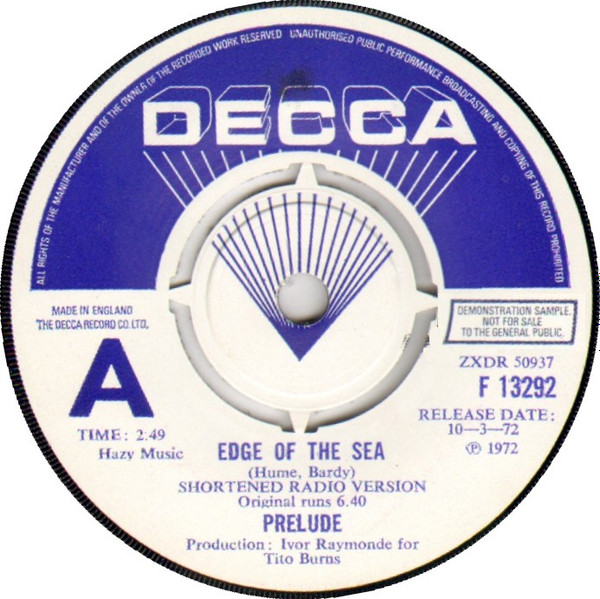
‘We got a deal with Decca Records and recorded a single The Edge of the Sea which had a strong hippy vibe to it. All during that period we were recording in Impulse Studio making demos courtesy of the owner, Dave Woods who soon after ‘discovered’ Alan Hull.’
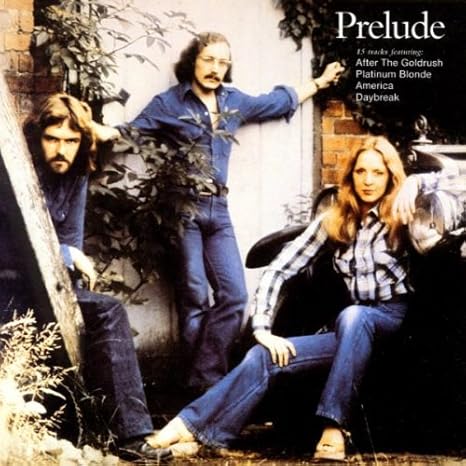
‘We were called Trilogy for a while but had to change it because there was an American band with the same name. It’s not easy choosing a name as any band will tell you. I came up with Prelude and that stuck. That was 1972.’
‘Three part harmonies had a big effect on musicians. A lot of bands had done it like The Lettermen and The Platters from way back, but Crosby, Stills and Nash were different, this was whack right in your face. Yeah, a big influence on us and many other bands including fellow Tyneside band, The Caffreys.’
‘Different members have come and gone but the band were Ian Vardy, me and my wife Irene. Ian and I got a song writing contract with ATV music which worked for us financially. We decided to put both our names on everything we wrote irrespective of who wrote it.’
‘We had a brilliant guitarist called Frank Usher. We parted company and and he went on to play guitar with Fish from Marillion as well as being a fine guitar maker.’
‘We played the North East club scene for a while and in between we’d do Durham College where we’d support artists like Gerry Rafferty, Mott the Hoople, Shaking Stevens and the Sunsets – that band were amazing. There was a hippy commune type band called Principle Edwards Magic Theatre who all dressed in white which looked cool so we copied that – it was a cheap uniform.’
‘Our manager George Carr got us a record deal with Pye who back then were dominated by Max Bygraves selling boatloads of Sing-a-Long-a-Max records. We were the token folk band, although we were never folk they just called us that cos we had acoustic guitars! You couldn’t say that Pye were part of the cultural vibe.’
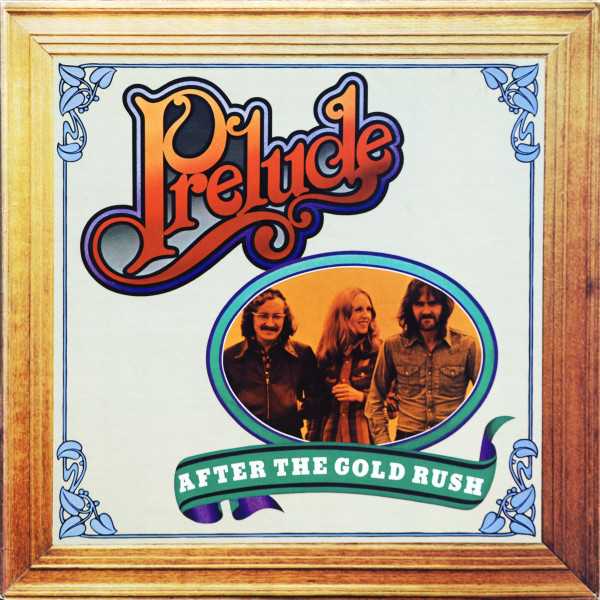
‘In 1973 we went to Rockfield Studio in Monmouth to record our first album How Long is Forever? produced by Fritz Fryer who was in a group called The Four Pennies. They had a number one with Juliet. A wistful ballad. On the final studio day Fritz asked if there was anything else we had. We used to sing a Neil Young song just for our own pleasure. That was After the Gold Rush.’
‘We recorded it and it sounded pretty good so we double tracked it. Overdubbed it fifteen times and it sounded massive. We never thought for a minute anyone would pick up on it. But John Peel at Capitol radio did. He got loads of calls ‘Who is this band?’ ‘Where can we buy the record’.
‘Next thing we know Pye put it out as a single and we’re on Top of the Pops. That was 1974. We ended up appearing twice the first time was with Marc Bolan. There was a succession of TV appearances. You had to do television because you are reaching a massive audience. We did a show for Tyne Tees called the Geordie Scene. We did the Basil Brush show for Pete’s sake.’
‘Most notably we went on the Vera Lynn show. During rehearsals she referred to us as The Prelude. Later she was walking towards us along the corridor when Ian stopped her and said “By the way Vera it’s not The Prelude it’s just Prelude”. Not skipping a beat she turned to him and said “If you don’t mind it’s not Vera…it’s Miss Lynn”.
Prelude were always based in their hometown Gateshead this meant constantly travelling up and down the M1 to television and recording studios in London.
‘It was every other week. We should have moved down there. But 1974 was a big year for us. We did the background vocals on Streets of London which was a hit for Ralph McTell. He asked us to go out on a UK tour with him.’
‘Ralph wanted to put our names on the record but our company wouldn’t allow it. For the next best thing Ralph put ‘background vocals by ‘The Gold Rushers’. It would have been a great advert for Prelude to have their name on the single but Pye were stupid on that.’
‘Ralph was so talented and generous to a fault. It was a big tour around the country then we played a venue where we’d seen Paul Simon, Crosby, Stills and Nash – here we were on the stage of the Royal Albert Hall. Amazing.’
‘After the McTell tour we went back to playing smaller venues but I’m getting the timeline mixed here because I remember before touring with Ralph was a UK tour with a singer and songwriter called Mike Chapman. He had a devoted following and used to live up the Tyne Valley in Haltwhistle.’
‘Then we went on the road with a great piano player called Peter Skellern who had a big hit with You’re a Lady. Meeting him he was rather quiet and reserved – he later became a priest. Then there was talk of America.’
‘This was 1976. What happened was Lindisfarne played the States. When Alun Hull came back, he’d tell us to get over there ‘Cos all ya’ hear is your bloody record ‘After the Gold Rush’ on the radio all the time.’
‘I always read the NME and Melody Maker, looking at American charts where like the Holy grail of music to me. To see Neil Sadaka, Beach Boys and bands like that we thought wouldn’t it be great to get in there. Our manager George Carr said ‘You’re in the American top 100’. We thought this is a dream come true.’ Then it went towards the top 20.’
‘We wanted to capitalise on the success but the record company didn’t want to pay for us to go to America they sent us to Amsterdam. We played the clubs and had a good time but we should have been in the States where we wouldn’t have even needed guitars as the song was acapella. We could have done the Johnny Carson show and the like and knocked that record up the charts.’
‘It wasn’t until 18 months later we got to the States. There were a few gigs on the West Coast in San Francisco where we supported Jerry Garcia in Berkley and met Nicky Hopkins who played piano on all Rolling Stones records. Then over to the East Coast and played The Bitter End in New York. When we came back to the UK Irene took a break when we had our second boy, Joel.’
‘Things moved on quickly until 1979 when our manager got us a deal with a new company called After Hours who were very forward thinking. We made an album at Abbey Road with The Hollies producer Ron Richards. His style was more towards lush strings and stuff like that. It didn’t really work for us.’
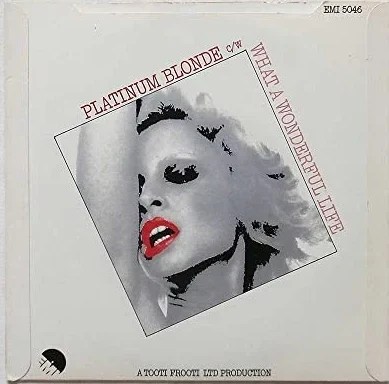
‘We also signed to EMI in 1980 and made an album in Portland Studios owned by Chas Chandler, charming fella. We had some great players on there but the only track that came out of it was Platinum Blonde. Our principal guys were Ian Green de facto producer of Platinum Blonde and Dave Wintour who was Neil Sadaka’s bass player. It was a minor hit which got to number 45 in the charts.’
‘We did a video for it in the old Battersea Power Station in London arranged by the head honcho at our record label, Richard Jacobowski. He was really on the ball, a hip guy. We crashed in his three storey flat in Hampstead and shared it with a band called The Regents who were very talented, like a proto-punk band. They had a hit song on Top of the Pops with Seventeen.’
‘For the single we did Top of the Pops and I remember on the same programme were Bay City Rollers. Platinum Blonde was good for us but afterwards we came back up North and played the folk clubs again.’
‘Ian Vardy was looking at doing something different so left the band around 1985 and became a social worker. We continued and got in ace guitar player Jim Hornsby who had been with a lot of country bands. Jim was very much in demand for session work.’
‘Country was labelled as redneck music then, it wasn’t cool – but it is now. Gram Parsons did a hell of a job making country hip. He influenced The Byrds and Keith Richards. Some clubs turned their nose up at country stuff but we had a great time doing clubs then. Unfortunately, as happens in bands Jim left.’
What did the new millennium bring?
‘From 2001 it was Irene, me and Chris Ringer who we brought in on bass and vocals and took Prelude on the circuit of country clubs and the whole scene. Through the years we have performed with countless numbers of musicians and loved every minute of it.’
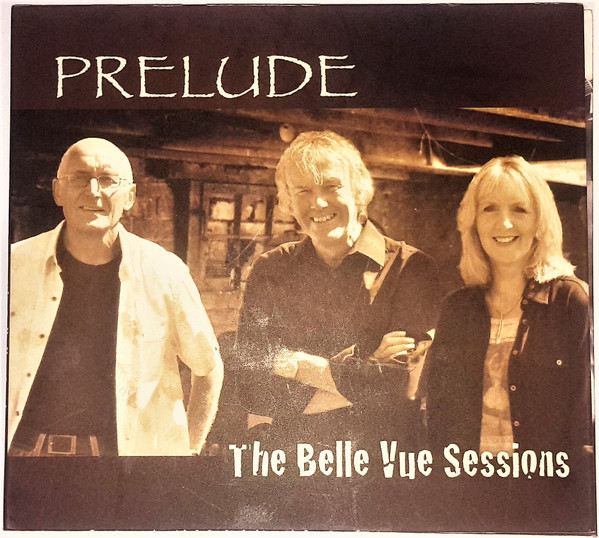
‘Our latest album The Belle Vue Sessions (2012) is all acoustic. It started in 2010 when Ian came round to our house, he had an appointment at his dentist round the corner. We got the guitars out, as you do,and it all went well so we asked him to do a gig with us. One turned into many.’
‘It was our manager Sue Brind who originally said ‘Why don’t you make a new Prelude album? We thought ‘why not?’ so we wrote some new songs and recorded them in Broadwater studios, Gateshead. Two lovely guys engineered, Gavin and Paul. We recruited Paul Hooper who was drummer for The Fortunes and again Chris Ringer played bass. We are very proud of the album.’
What does the future hold for Prelude?
‘We’re busy meeting with David Wood who used to run Impulse Studio in Wallsend. Impulse was a gateway for a lot of acts. He released a lot of Heavy Metal stuff like Venom and Raven from the North East, it was a big scene for him.’
‘David recently put out a CD box set of Alan Hull demos, he recognised Alan’s talent early on. Now he wants to do the same with us because he’s got a lot of tapes that have never seen the light of day. We’re looking to release something soon.’
After recalling a life spent with a multitude of musicians and the memories it triggers, Brian reveals that his ‘obsession’ holds a deeper meaning than just getting on stage and banging out a tune.
‘Your friends tend to be musicians and you share a common language which is almost secret amongst you. You know and experience things that nobody else has. There’s a bond between musicians which is friendship but sort of deeper. You know what the other is going to do, what they’re going to sing, – what they can and can’t do. Every successful band has to have that. It’s like brotherly love. It’s a wonderful feeling. It’s why people do music instead of opting for a ‘safer’ life.’
There is a saying that you make your own luck, I’ve found that to be true and this story underlines that. Throughout his life Chris Morris made the most of his opportunities and still is today. He still has a passion for music.
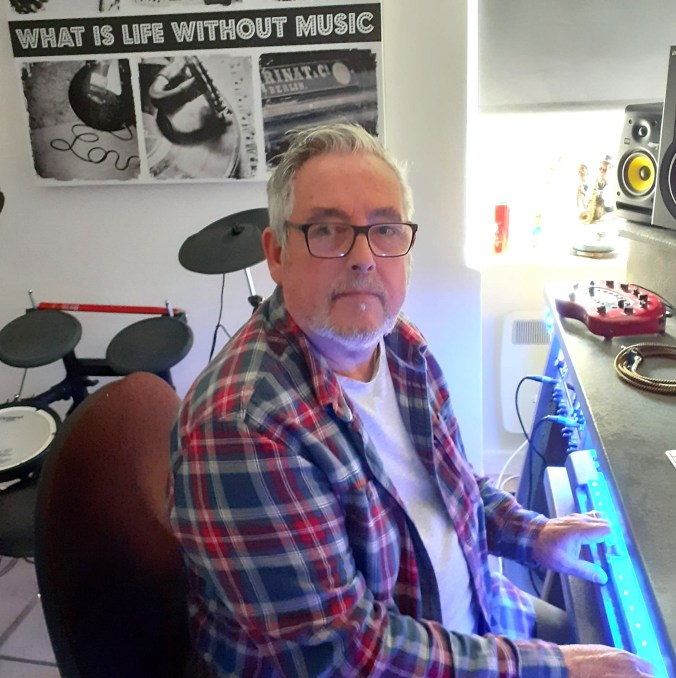
From the 70s to the early 90s Chris was playing in various line up’s of pop band Paper Lace. “However, in the new millennium I decided it was time to concentrate on writing and pursue a solo career.In 2020, I teamed up with fellow songwriter and singer Mark Aynsley Hay – together we have written over thirty new songs”.
Chris Morris & Mark Aynsley Hay
When growing up in Nottingham Chris’ only ambition was to be a musician and his mother fully supported him by buying him a guitar and encouraging him to enter into talent competitions, but his father had other ideas. Chris remembers him asking ‘when are you going to get a proper job?’
A young Chris focused on forming a three-piece band and worked the pubs and clubs around the Nottingham area. One of the first bands was ‘Infant’, the name reflected the fact that the members were so young.
His reputation as a guitarist and singer spread throughout the music industry and opportunities were presented that were too good to turn down. First, he was asked to play guitar and sing backing vocals for 60’s pop legend Billy Fury – then by 1973 he had joined Paper Lace. His mother’s enthusiasm and encouragement had paid off.
Paper Lace
The original line-up was Philip Wright on drums/lead vocals, Mick Vaughan on lead and rhythm guitar, Cliff Fish on bass and Chris Morris on guitar and vocals. In the 70s a few bands had drummers who were also lead vocalists and programmes like Top of the Pops positioned them at the front of the stage.
Their big break came when Paper Lace won TV talent show ‘Opportunity Knocks’ broadcast on ITV with regular audience figures of 7 million. The entertainment show was the forerunner of today’s X Factor and Britain’s Got Talent.
Based on their television success the band released ‘Billy Don’t Be A Hero’ in March 1974.The single spent three weeks at number 1 in the UK charts.
Chris recalls“I was 18 years old still very naive when Paper Lace had their first number one record in the charts. I’d never been on a tour bus never mind on an aeroplane and the band were booked for a six week tour of Australia – the plane journey seemed to take forever”.
“During the flight I had no concept of time and distance. Two members of the band seemed to be very worldly and connoisseur in cuisine compared to myself and bassist Cliff Fish. We were two boys who preferred our mothers home made Yorkshire pudding, meat, potato and two veg.”
“The inflight menu offered a choice between salad and curry and other dishes that I’d never heard of. I didn’t like lettuce and tomato so I asked the stewardess for the curry. The flight was long possibly 22 hours with one refuelling stop”.
“After dozing off all I remember is that every time I opened my eyes it seemed to be time for food again. I was very reluctant to try anything else on the menu so I just asked for curry again. I’m not exaggerating when I say that during that flight I must have had at least four curries”.
“We finally landed, were picked up at the airport in pop star style and taken to a luxurious hotel. A porter took our bags and we followed him in the elevator. That’s when nature took over”.
“I sneezed and the worst happened which needs no description. I’ll leave that to the imagination of the readers. Let’s just say it was an incident that would never be used by our publicity team”.
Chris & Phil Wright on Top of the Pops.
Following on from the success of ‘Billy Don’t Be A Hero’ was ‘The Night Chicago Died’. A song about a shoot out between American gangster Al Capone and the Chicago police. The single reached number 3 in the UK charts. In America it reached number 1 – the single was awarded a gold disc.
Later that year a third release ‘The Black-Eyed Boys’, took Paper Lace to number 11 in the UK and number 37 in the American charts.
Chris pulls out more memories from his time in Paper Lace ”During our Australian tour the band were flown to different venues in an aircraft which could only now be described as vintage. It had two side propellers and looked like something from the 1960’s TV program the Australian Flying Doctor”.
“This was 1974, and although I was a smoker in those days I’d never seen anyone smoking or using soft drugs. We noticed the pilot was rolling his own cigarettes which carried a distinctive smell. He was obviously smoking cannabis or marijuana or as the Aussies would say “that funny French stuff”.
“Needless to say, I was nervous every time we flew and considering the flights were always very close to the ground, I was a little worried that the curry syndrome could happen again”.
“One good thing about flying close to the ground is that I saw lots of beautiful wild animals that I would never have seen had the plane flew at the normal altitude”.
“To finish on a lighter note, in the hotel we all had our own room with a balcony overlooking the pool. There was a beautiful looking parrot which would fly around the pool every day”.
“Each morning it would land on our balconies expecting food. I would give the parrot some food and sing ‘Billy Don’t Be Hero’ in the hope it might repeat our hit to following guests. It never did, or maybe I never heard it, I’ll never know”.
“Looking back one of my proudest career moments was when I invited my parents to see me perform at the Royal Variety performance in front of her Majesty the Queen Mother in 1975”.
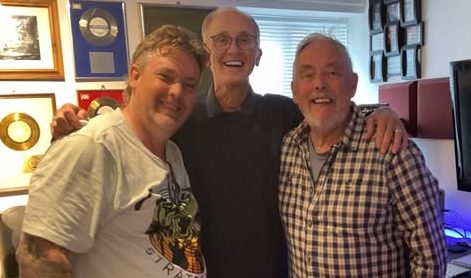
R to L. Chris Morris, Mark Aynsley Hay and Malcolm Rescorle just finished a recording session.
Final words from Chris “I’m a very fortunate man, but if you’re listening Dad, I’ve still not found a proper job!”
For further information or listen to a compilation of music by Chris Morris & Mark Aynsley Hay plus family, friends and associates check out the official website >>>







 ALIKIVI UK : NORTH EAST MUSIC & CULTURE