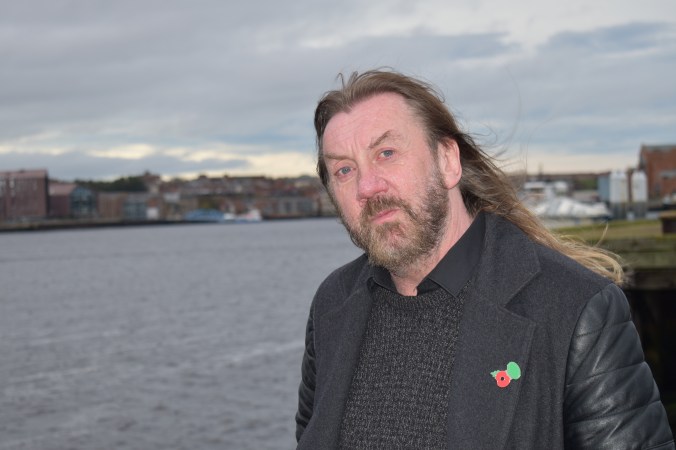
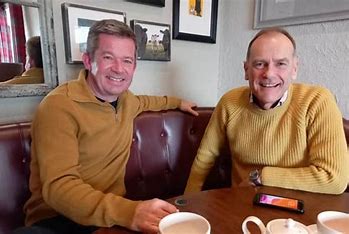
Singer/songwriter Terry Gorman Nov.25 pic. Alikivi
Now based in North Shields, Terry Gorman was born in Colne, Lancashire and has been playing guitar for over 50 years. Music has taken the 66 year old around the UK and Europe including Ireland, Amsterdam and Lanzarote.
I’ve done thousands of gigs maybe more than anyone you’ve met! said Terry after he had taken a short ferry journey over the river Tyne from North Shields to South Shields. We met in The Customs House for a cuppa and talked about music.
In North Shields there’s a nice music scene going on. We currently run a monthly ‘Songwriter Circle’ event every month in The Engine Room on Tanners Bank. It’s ran by myself and a few friends Steve McVay, Larry Page, Steve Rudd and Lyndon Phyliskirk.
You see live performance of singer songwriters all playing original songs. We encourage all levels of talent leading to paid gigs and possible festival spots. It’s been very successful so far and has been going since June said Terry.
Have I ever held down a proper job? I tried working 20 hours a week but found it hard working for idiotic managers. I thought I could earn enough money playing guitar and singing. I wasn’t interested in chasing fame.
I liked Ralph McTell, Alan Hull, James Taylor people like that telling a story. I watched Lindisfarne who were ordinary blokes, really down to earth but well known at the same time – that was for me. It was all about the music.
My introduction to music was my grandparents who had a piano in the front room. A lot of people did. I was around 10 year old when I picked up a guitar. It was a Hofner with a scratch plate. A Catholic priest who was a friend of the family knew I loved singing and writing poetry so he gave me his acoustic as he was off to the missions in Africa.
I lived in Brampton, Cumbria until I was 8 year old that’s where I saw the first singer who made an impact on me. It was Elvis when he sang on our black and white TV although I couldn’t make out the words or what he was singing about. The Beatles and Stones were good but I really liked storytellers, folk music where you could hear the words. I love lyrics.
Then I heard Lindisfarne and Isaac Guillory who made a G chord sound interesting. My first public gig performing was as a teenager in Durham I think, I was nervous and pretended to be confident.
Terry supporting the Devan Allman band at Newcastle Cluny.
North East venues Terry has played over the years include Bents Park and Amphitheatre in South Shields, Sunderland Empire, in Newcastle he performed at the Live Theatre, Journal Tyne Theatre and The Cluny. He also played in Durham City Hall and Gala Theatre, Washington Arts Centre and Darlington Arts Centre.
I won a songwriting competition in 1990 and thought it would lead to bigger things. A lot of radio play came off the back of that and a slot at the Cambridge Folk Festival and a headline at Dungeon Ghylls Music Festival in Cumbria. Again, I thought that would lead to more so I kept plodding along.
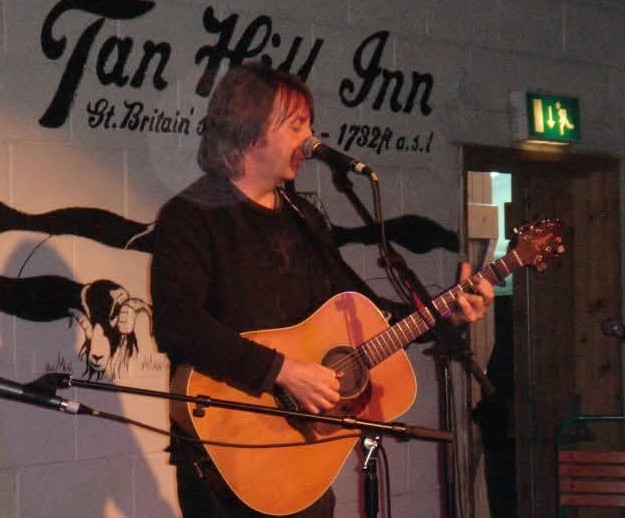
I played support to the Levellers at Tan Hill, Yorkshire, the highest venue in England. It went great playing my own songs, really grabbed the crowd by the scruff of the neck and went down well with an encore. The Levellers didn’t like that so I wasn’t asked back! Opening for Ralph McTell was a good gig and I’ve worked with Prelude a lot, I liked your interview with the singer Brian Hume earlier this year.
Terry supporting The Levellers at Tan Hill, Yorkshire.
I remember I played at a festival on the Isle of Bute, Scotland. I was the only one who wasn’t signed to a record company or connected to a famous band. There was Steve Daggett from Lindisfarne, Baz Warne out of the Stranglers, Martin Stephenson who was popular in the 1980s and others out of bands like The Pogues. I thought what am I doing here? I didn’t get signed but really, I never felt out of my depth.
I’ve wrote a few songs about getting knocked down and fighting back. When on stage I wouldn’t introduce the songs as if they were about depression or mental health. They are more about the power inside of you. It’s about dusting yourself off and going again.
I’ve recorded in Newcastle studios like The Cluny. Archie Brown from the Young Bucks was sound engineer. Then I went to Trinity Heights ran by Fred Purser. He was great, a really good lad, he used to be in North East bands Penetration and Tygers of Pan Tang.
What am I doing now? Well, it’s keeping the work rate up. In the last 12 months I released a single, ‘Only News Today,’ two albums and six professional music videos.
For 2026 I’ve got a folk album ready. One of the songs is ‘The Silent Shipyard’ about the closing of the shipyards and mines, all of the industry we have lost. I want a male voice choir on that one with a brass band and violins. Another song is ‘Beacon in the Dark’ about the whaling ships we had on the Tyne.
An idea floating about is a rock opera about John Lennon who was shot and killed in New York in 1980. In ‘Sgt Pepper Survived’ John Lennon gets shot and survives, lies in a coma for many years, wakes up and reveals his thoughts about world events today.
One scene is him sitting in a bar talking to Eric Clapton and Jimi Hendrix – yes, he lives as well. Lennon is also interviewed on stage where he is asked what he thinks about today’s shows like X-Factor, bands like Oasis and social media Spotify, Facebook and Instagram. I’m always thinking of these ideas.
If I have any advice to young musicians, it’s that if you enjoy your music, you’ve made it. If you don’t best just pack in and go do something else.
Sadly, some schools are still using egg-hatching programmes as a misguided way to educate children on life cycles of animals or using them as a treat to the children in their care explained Anna.
As more and more schools realise the problems these awful programmes cause, the companies who exploit these live young animals have extended their business model to include care homes where they aim to use them in so-called enrichment activities for residents.
Anna added…Despite the companies saying they will take back and home all unwanted chicks and ducklings produced from these programmes, the reality is very different. Even in the small print of the contracts they say that hirers have to be realistic about the fact that ‘some’ will end up as food and males will be culled.
Male chicks turn into very noisy cockerels and every year rescues are swamped with both male and female chicks and ducklings who are abandoned once they grow out of their useful ‘cute’ stage.
Our local wildlife and domestic animal rescue centre ‘Pawz For Thought’ who are based in Sunderland, are inundated every year with abandoned chicks from egg-hatching programmes.
A spokesperson for Pawz said“Every year we are inundated with calls from concerned parents of pupils who aredoing hatching projects. School hatching projects are often presented as education, but the reality is far from kind.”
“Chicks are hatched in the name of learning, yet the process has become a form of lazy teaching. For a few weeks, children view these animals as entertainment—then the chicks are handed away, this teaches young people that living beings are disposable and exist for our pleasure.”
“Every year, we are asked to take in chicks to save them from being culled. Around half of all chicks hatched are cockerels, and there are simply no homes for them. They face a terrible fate.”
“Schools often believe they are rehoming them to willing parents, but with no follow-up, many unwanted cockerels eventually end up dumped once they mature. This cycle of suffering must stop.”
Anna said…As part of their Animal Protection Charter, South Tyneside Council have contacted all of their schools and asked them not to use these programmes. They confirmed recently that none of their primary schools will book these programmes again making them an ‘egg-hatching programme free borough’!
Cllr Judith Taylor Chair of the Animal Protection Charter Working Group at South Tyneside Council said“South Tyneside Council is committed to the highest standards of animal welfare. We have taken decisive action by contacting all our schools to urge them not to use egg-hatching programmes.”
“We believe there are far more compassionate and educational ways to teach children about life cycles, and we encourage all educational settings to consider the welfare of animals in their care.”
Anna added…These programmes bear no resemblance to the actual life cycle of chicks and ducklings – they are not hatched in sterile metal and plastic incubators for a start. They do not have the warmth and love from their mother and of course they don’t show students where the birds end up and how they are slaughtered for food.
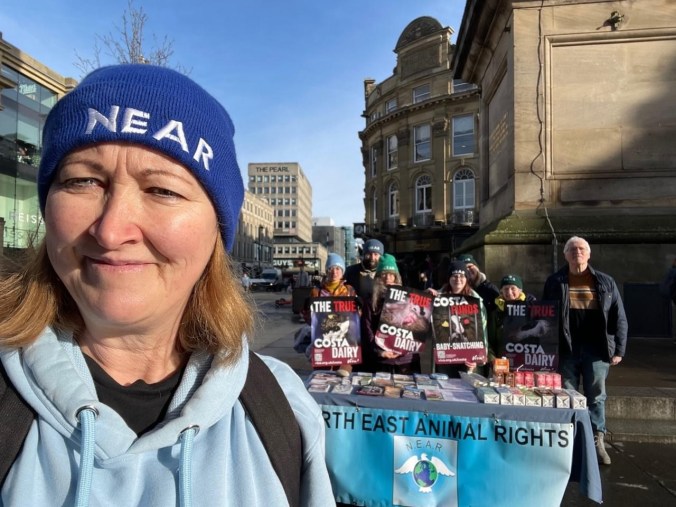
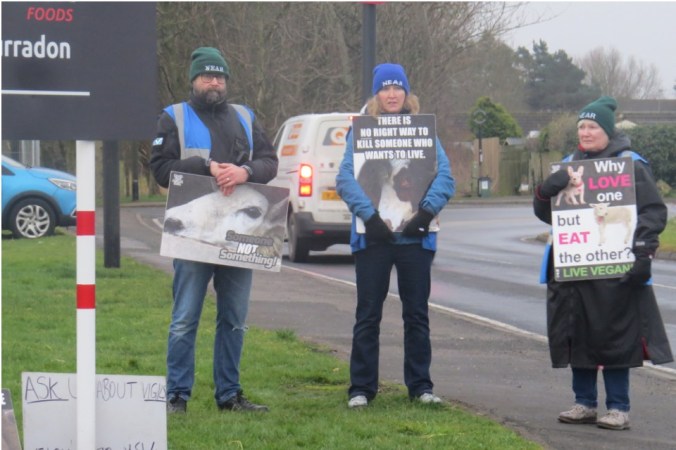
What are we doing now? We are currently campaigning across the North East and also have a group working in the North West and a group in the West Midlands coming on board. We want schools and care homes to know the misery these programmes cause.
We are also encouraging people to contact their MP and the Education Secretary to ask them to update the curriculum to remove the suggestion of egg-hatching programmes as an educational tool.
Thank you to South Shields artist Sheila Graber for the animation.
For further information about the work of North East Animal Rights contact >>>
Have you ever wondered how working class people survive in the arts and creative industry? From my own experience I can tell you it’s hard. Very hard.
In the early days of the 1990s I had a weekly diet of baked tatties. I’d go to me ma’s for me Sunda’ dinna. I got by.
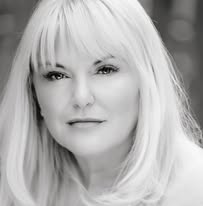
It’s surprisingly full for a Tuesday morning in Newcastle’s Central Station bar The Centurion when I spot Alison. Looking resplendent in her beret while finishing off a bacon sarnie we find a quieter place to talk. She throws back her head and laugh’s out loud when I ask her have you ever had a proper job?
Yes, I was at the Inland Revenue for years. When I was there, I thought of myself as a resting writer, a resting actor but really found it soul destroying.
Sometimes you have to take jobs that you wouldn’t choose to do to survive in the creative industry. You have to get by. I’ve been lucky that my husband who doesn’t work in the arts, has a full time job and supports me fully as do all my family.
An opportunity to work as a library assistant in North Tyneside Council came up. I love the smell of books so the idea of being surrounded by them was great. I loved being involved when schools came in, I would read stories for the kids and put on various events.
The job was part time so it gave me more time to focus on what I should be doing – writing. I became busier in my creative work and was being offered jobs that I couldn’t turn down so had to decide if I was working in a library or an actor. You have to take the leap, you have to believe in what you are.
I’ve been acting now for about ten years. A freelance creative has always been my career choice that’s in all of my disciplines that I’ve worked in from actor to writer to theatre producer now film making.
I decided years ago to go out and make my own work rather than wait for someone to knock on the door and offer something – that doesn’t happen. You’ve got to get your name out there to increase your network. That would be my advice to anyone starting in this business. You’ve got to take chances. This is what I do. It’s a mind set.
I consider myself as a socio-economic playwrite. I write about subjects that are relatable to people, quite pertinent and pushing boundaries seeing how far you can go. If it makes people laugh, cry or squirm I’ve done my job. It’s important to me to be challenging and turn a spotlight on real issues.
I’ve got a few projects that I’m working on now. Lately we’ve been touring ‘Living the Life of Riley’ around the North East which was great and that is going out again in February 2026. ‘Life of Riley’ has been in the works since 2016.
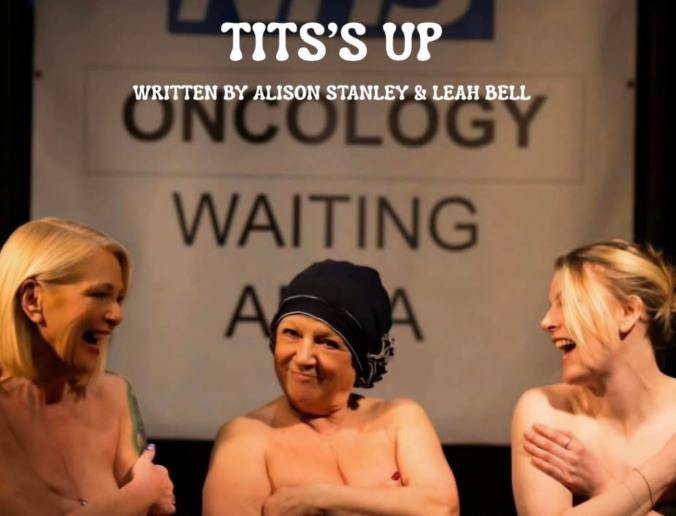
And another short North East tour for ‘Tits Up’ co-written with Leah Bell. That’s planned for another tour next year. Really pleased with that as it’s sold out now.
That’s a play about three women who meet when they are diagnosed with cancer and how it impacts on them and how they deal with it. Unfortunately, we live through a time where if it’s not breast cancer it’s some form of cancer that lives are touched by. The play is both heartwarming and heartbreaking.
In ‘Tits Up’ there is someone who is diagnosed with cancer and there is the carer who she couldn’t manage without. That is real stress. You’re worried about the situation and the endgame that might be coming.
Of course, we all fall off our seats laughing with the actor Leah Bell but there is a serious side which comes through. There is a balance we have to get right.
My ambition is to produce more plays outside the North East and tour nationally, which ‘Living the Life of Riley’ is already doing and we are working towards that with ‘Tits Up’. We have taken ‘Hard’ to London and it’s definitely something we want to pursue more.
Screenwriting is something else that I’m starting to do. I filmed a scene from ‘Hard’ over two days on a shoestring budget and I loved it plus it has been awarded three times in UK film festivals so that spurs you on.
I’m interested in using latest phone technology for film making and being creative with it, keeping it fresh. I roped in Leah Bell and Tony Hodge (Byker Grove) to be involved. Really looking forward to more. I’m excited about it.
Have I got time for anything else? Me mother Rose was a talented writer but didn’t have anything published. When she passed away last year, I started a writing competition for Working Class Women Over 35. The first winner is announced in October this year and next year the play is produced at Laurels in Whitley Bay.
Also, it’s early stages at the minute but I’m writing a few fictional stories about events that happen in a town. That’s maybe for a book. I’m really enjoying it there is no deadline so it’s sort of like a hobby but we’ll see where it goes. Owt really that stops me getting a proper job!
The title of this post is taken from the song and album by The Smiths released in 1985. In the title track songwriter and vocalist Morrisey delivers some powerful lyrics –
‘Kitchen aromas aren’t very homely. It’s not comforting, cheery or kind.
It’s sizzling blood and the unholy stench
Of murder
It’s not natural, normal or kind. The flesh you so fancifully fry
The meat in your mouth. As you savour the flavour
Of murder’.
In interviews Morrisey is outspoken about a number of topics including politics, royalty and animal rights.
‘Yes I’m aware of the song and Morrisey but I’m not a Smiths fan.’
saidSouth Shields born Anna who worked in education for 32 years and in a secondary school for over 20.
‘I was lucky to be able to leave my paid work a few years ago and now do this full time. No one day is the same, I can be in the middle of typing up an article when a call comes in and have to drop everything. I wouldn’t have it any other way as I feel fulfilled with my work – but wish we didn’t have to do it as that would mean a world where animals are not used.’
Anna set up North East Animal Rights who campaign and educate about veganism and animal rights. They have around 30 members with branches in Newcastle and Teesside.
‘It’s quite large for an independent regional Animal Rights group. Some of the group also volunteer for a local wildlife rescue. It’s hard to work out how much of a difference you actually make. But when you rescue an animal, that animal becomes the most important person in front of you and you know you definitely have made a difference.’
When did you become aware of how we treat animals?
‘I was 14 in a biology lesson in school when I was expected to dissect fertilised eggs with chickens at different stages of development. I was absolutely horrified seeing these dead baby chicks who had been deliberately bred and then killed. My parents were equally horrified when I told them I wanted to be vegetarian. I hadn’t even heard of veganism then and didn’t understand that I was still contributing to the suffering of cows and hens.’
‘I was already considered different in school before I went vegetarian so just made my school life a whole lot worse. I didn’t know what else I could do to help animals. Then I saw an article in a newspaper about people trying to stop a bull run in Spain. So, I sent a postcard and letter to the Mayor of Pamplona where the bull run takes place.’
What is the hardest part of being a vegan?
‘One of the hardest things is other people, the lifestyle is easy – it just becomes something which everyone seems to have an opinion on regardless of whether we want it or not. And families and close friends are the worst!’
‘It’s all water off a duck’s back now, but it’s amazing how many people suddenly become obsessed with your health when they didn’t care before you told them you are vegan!’
‘A lot of people think being vegan is just about the food, but it’s about so much more – it’s a whole lifestyle – and you look at things in a different light when you become vegan.’
‘You walk down a street you see adverts for meat – we see the process and the animal. You look forward to Christmas – we dread it because we see an increase in animal slaughter. You see an advert for a reindeer event and don’t flicker – we see captive animals who shouldn’t be there. You look forward to Easter and we see rabbits and chickens used. You see cute chicks in egg hatching programmes, we see and deal with what happens and the casual disregard for them.’
‘We got told to stop ‘forcing our views on others’ but others views are constantly forced on us in most aspects of our lives. You look forward to going on holiday, we do too, but we are always conscious of how vegans are perceived abroad and also have to deal with cultural issues where animals are used differently to in the UK.
‘For most of my adult life I thought being vegetarian was enough then I came across some graphic footage on TV and photos in a magazine of what happens in an average UK farm – I realised I was still part of the problem. I essentially went vegan overnight and signed up to Animal Aid’s November vegan pledge and never went back.’
What are the group currently working on?
‘We get a lot of contacts about animal related issues and it’s great to be able to help. We rely on the public quite a lot to be our eyes and ears.’
‘We get people asking about who to speak to about dog cruelty or breeding animals. They contact us in relation to mobile zoos in schools or about their vegan child in school. A lot of issues are those which the RSPCA should investigate but cannot always due to lack of resources and having to prioritise.’
‘At any one time we have two or three investigations going on. They are complex and time consuming but we learn a lot from them. One of the biggest pieces of ongoing work is the South Tyneside Councils Animal Protection Charter.’
‘This came about because of a local issue we had with camels being used in a Christmas parade along King Street, South Shields. It had been going for around 6 years. After meeting with the leadership we eventually convinced them to drop the camels in 2020.’
‘We continued working with them afterwards and created a charter which is available for use in other councils across the UK. The council do an amazing job promoting the work within it and really work hard to engage residents with local animal-related issues, like those around seabirds.’
What does the future hold for North East Animal Rights?
‘I speak at a variety of schools and events and this year I’ve been invited to speak at the National Animal Rights March in London and a local event in Saltburn. I don’t find public speaking easy but it’s easier when you are passionate about your subject.’
‘I’m a deputy co-ordinator for North East Animal Save who are a group who run vigils at slaughterhouses – yes, it is as grim as it sounds, but unfortunately while people continue to eat animals it’s a necessary part of our work.’
‘My work is very full on my poor husband sees me fleetingly most days but understands the importance of what I do and is very supportive – he’s also a member of NEAR.’
‘But I’m a positive person – rather than looking at how far we still have to go, I look at how far we have come. When I was a child I had no idea what being vegan meant but I know from going into schools not only do children know what it means now but there are also vegan children there – that’s progress.’
In April this year the work of hunt saboteurs featured on this site, this latest post again looks at tackling illegal foxhunting but this time using a different approach.
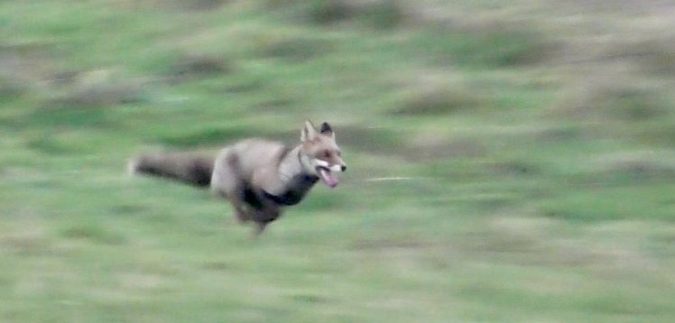
‘First time I witnessed a hunt I was shocked by its enormity. It was a deeply emotional experience nothing could have prepared me for it. The following week I witnessed a fox killed by hounds. That day I made a promise – I vowed to get justice for that fox. It’s his memory that drives me on.’
To find out more about the work of the Northumberland Hunt Watch I sat down with Lynne in the Littlehaven Hotel, South Shields where she started off by telling me she has always loved animals.
‘Since I was a child. My earliest memory, of being anti-hunt, dates back to school I was 10 year old. During an English class debate the teacher asked me to argue in favour of foxhunting. I was horrified and refused point-blank. Despite never having witnessed a hunt in my life I always felt an empathy for the hunted fox.’
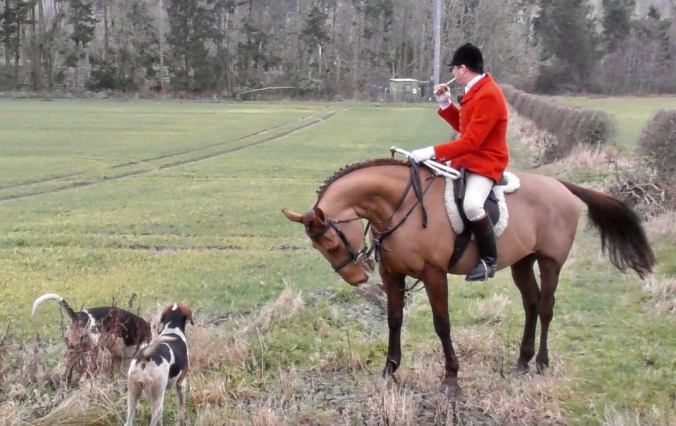
Tynedale hunt near Corbridge, Northumberland.
In 2002 Scotland banned foxhunting, England and Wales followed in 2004.
‘I thought that was the end of it. However, just because an activity is criminalised doesn’t mean it ceases to exist. Through social media I realised it was still happening on a massive scale. I was aware of the foxes out there alone with nobody to help them. I felt compelled to take action.’
‘I founded Northumberland Hunt Watch in 2020. Prior to this, I already had 5 years experience monitoring hunts. There wasn’t an anti-hunt presence in Northumberland at that time, leaving all the hunts in the area unchecked. There are some pockets of deeply engrained hunt culture in Northumberland, operating in some very rural and isolated locations.’
‘For these hunts it’s very much a way of life. They have a cultural pride in hunting, and strongly resist any attempts at criminalisation. The hunt community is a very tight community. They hunt together, socialise together, conduct business together and support one another.’
‘There are many different reasons why people foxhunt. Foxhunting has nothing to do with pest control or managing fox numbers. The hunts want foxes in the area to hunt which conflicts with the pest control argument. For some hunters it’s for the thrill of the hunt or the thrill of the kill. That is very difficult to understand.’
‘There are farmers and landowners involved in the hunt, who grant permission to access the land. Without this land there would be no foxhunting. For the riders who subscribe to the hunt, following hounds provides the freedom to ride over land that would otherwise be out of bounds. The fox is not restricted to boundary lines, so the hounds and riders are free to ride where the fox goes.’
‘The car support who follow the hunt mainly consist of elderly men. To them it’s a day out to socialise. They turn up with their binoculars, sandwiches and flasks having a good natter, they enjoy watching the hound’s work. I often talk to the members of the hunt to gain a better understanding of why they do what they do. We can’t expect to change something unless we fully understand it.’
‘We’ve talked about what we call ‘clean boot hunting’ a humane and lawful activity, which follows the scent of a human runner rather than a fox. With clean boot hunting they can still have everything they have now. The jobs will still be there, they can still have their socials and get together, their balls, their meets so they can still have their sherry and a bit hokey cokey, just don’t kill a fox. I think they fear their way of life will fall apart without hunting the fox.’
‘But humane hunting would be far more sustainable. Currently hunts claim to be trail hunting, which would involve hounds following a trail of artificial scent instead of a live fox. Unfortunately, trail hunting in my experience is just a cover for foxhunting.’
Have you a vision of what you want the group to be?
‘Yes, when I set the group up I thought I’m going to do this my way, I’m not going to war with them. I’m going to win hearts and minds. For me it was all about a love of wildlife, and a hatred of foxhunting and not a hatred of the people. I strive to end foxhunting for good so I knew that we needed to be taken seriously by the hunts and the police.’
‘I aimed to create a professional group with a credible image, as far removed from the negative stereotype as possible. We refer to ourselves as volunteers or wildlife guardians, rather than sabs, protesters, or activists. We don’t wear masks and we have a dress code. We’re conscious of how we come across to all the people we meet.’
‘Some people are just out for a dog walk in the countryside, families with kids, older people. Last thing we want to do is scare people, we want to be approachable. We’re always polite and respectful and get on with the farmers.’
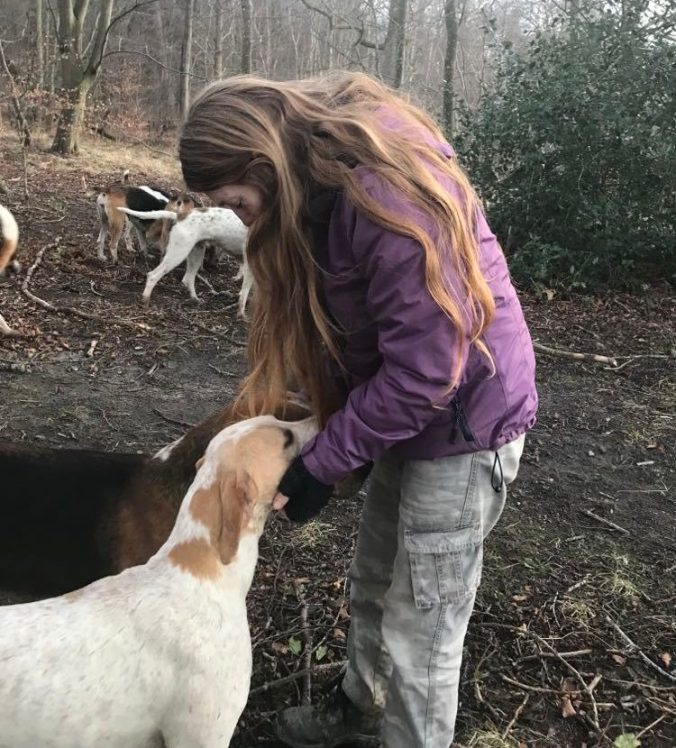
Lynn with the West Percy hounds.
‘We absolutely love the hounds they are such lovely sweet animals, we would never do anything to put them at risk, and our hunts know that. We often pop along to their hound shows in the summer some we are made more welcome than others.’
‘We aimed to build relationships and establish trust in the community and we have. All of our hunts know who we are and they know our names. We engage in polite conversations, some team members live in hunt areas, so it’s not uncommon to exchange waves. Our approach has earnt us respect and fear in equal measures!’
‘Our overall aim is to make the countryside a safer place for wildlife. On a day to day basis we aim to be a visible deterrent, to prevent hunting and on most occasions we are. We rarely need to intervene as our presence is often enough of a deterrent. Our hunts will often try to avoid hunting when we are there, and certainly avoid hunting in front of us.’
‘Last year at a hunt I was filming when the hounds picked up a scent and chased a fox toward me. The whip panicked and stopped them all “Lynne, can you see me stopping the hounds? Have you got it on video that I’m stopping the hounds?” I replied, “Yes, I have, thank you.” The fox made his way to safety.’
‘In the long term we aim for prosecutions as this is the only way to end foxhunting for good. To achieve prosecutions then we need to be professional and credible.’
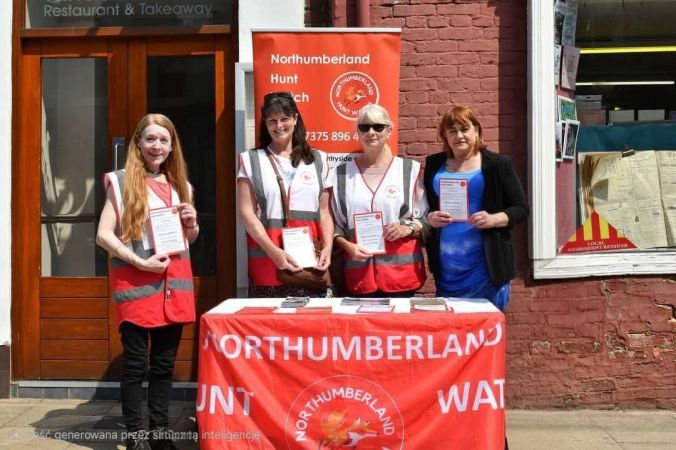
Outreach stall in Morpeth with Lynn, Judy, Amanda & Lynne
How much work is involved in the group?
‘A lot. We work very hard and put a lot of work in. I take this very seriously and am very committed to what I do. During the season we are out 2-3 times a week, despite working and other commitments. I would be out every day if I could. The fieldwork we do is just the tip of the iceberg. We do much more behind the scenes. Personally, I work on foxhunting every day of the week.’
‘I have taught myself a great deal over the years and always have my nose in a foxhunting book. I am also concluding a PhD in Criminology specialising in foxhunting with hounds. I have invested significant effort into this because I want to bring the issue of foxhunting criminality to a wider audience.’
Lynne & Judy leaving a successful Tynedale meet.
‘The lady who assists me in running the group, Judy, is a former police officer, so between us we have an in-depth knowledge of hunting and the law. We both work very hard on this, preparing cases and evidence for the police especially.’
‘Out of season we hold outreach stalls in hunt towns where we talk to the local community about our work. This has enabled us to lay the foundations for a positive brand identity while building up good relationships, trust, and respect within the community. We want the community to feel comfortable having us in their area trusting us to perform our job professionally.’
Have you experienced any threatening situations?
‘Violence and aggression from any of our hunts is exceptionally rare. We have had very few minor incidents in 5 years, most of which were dealt with swiftly, either by the police or the hunt themselves.’
‘Following one minor incident at one of our hunts I reported it to the chairman, he dealt with it, and we received an apology, so it was resolved sensibly and that was the end of it. There were no more incidents.’
‘We cover all the Northumberland Hunts from the Scottish border down to the Durham border, although Tynedale is our main hunt who we monitor regularly and have done for 5 years. They were a bit of a nightmare at first but they soon leant that it didn’t get them anywhere. They are very polite towards us now and we have built a good relationship with them. We are there to do a job which we do well and without getting into altercations.’
‘With all of our hunts we established clear expectations for behaviour from the outset ensuring that our conduct was respectful and polite. Over the years we have built a good rapport with most of them exchanging polite greetings “good morning, gentlemen” and in return “good morning, ladies.”
‘We never engage in name-calling or squabbles because throwing insults is not a stepping stone to positive change. This means that we can focus on what is truly important—the foxes. It might make someone feel better after calling someone names but it doesn’t achieve anything for the fox.’
‘The hunts also have a code of conduct regarding their behaviour towards us too. We have an unwritten rule between us we don’t call them ‘hunt scum’ and they don’t ride their horses at us, so this works well. This mutual respect means any of our team can be monitoring a hunt alone, in some isolated locations without any problems. Our approach saves lives.’
‘At one of our hunts we intervened between the fox and hounds, rating the hounds back so the fox could escape. This was in front of the hunt master and he said “thank you for helping” so we replied “no problem we’ll come back and help again next week.”
‘When we monitor hunts we focus on listening and observing, avoiding verbal confrontations is for creating a safe environment for the foxes allowing them a safe passage to escape. Foxes don’t know we are there to help them so we need to create a safe environment otherwise they would just see us as part of the pack. If there is chaos they could easily be scared back toward the hounds, we are very conscious of that. We often see foxes fleeing past us to safety. Silence is golden. It saves lives.’
How frustrating is it knowing fox hunting is illegal and it still goes on?
‘Very frustrating but there is a wide range of reasons why it continues. Weaknesses in the Hunting Act is a key issue, and also how it has been interpreted. This has provided loopholes for foxhunts to circumnavigate the law. There are so many issues that we will need an entire article to discus that alone. In a nutshell trail hunting has ensured that it is extremely difficult to prove them guilty and beyond all reasonable doubt. Consequently, trail hunting operates exactly as it was intended.’
‘We are committed to ensure that we have the best chance possible. Our behaviour will also come into question so we always act lawfully. Foxhunting is a low-level offence so if we break the law we lose the moral high ground and cannot expect the police to enforce one law while ignoring another. We have to be seen to be credible witnesses to make any progress.’
‘Because of how we operate we have built a good relationship with the rural crime team who we submit our footage to. We have had several incidents sent to the Crown Prosecution Service for review, and the police have acted swiftly in gathering the evidence.‘
Drone footage was captured of the Tyndale Hunt hunting a fox on 3 October 2024. This was submitted to the police. More information about this case can be found on the Northumberland Hunt Watch Facebook and You Tube pages.
‘There are some excellent groups across the country that have worked hard to end foxhunting, bring hunts in court or raise awareness, such as Beds and Bucks Sabs, 3 Counties Sabs, Cheshire Monitors, and West Midlands Sabs, to name a few.’
‘However, not everyone who joins a cause has genuine motivations, and the less credible groups can undermine the work of those who are genuinely committed and doing good work. It’s about quality rather than quantity, so finding people with the right attitude can be difficult.’
Lynne recording West Percy Hunt at Ingram Valley.
What have you found out about yourself since starting this group five years ago?
‘I have found that I am stronger and more resilient than I ever thought possible. If you have genuine intentions and committed to doing your best job for wildlife then you can make a difference. A middle-aged woman with a vision took on ten hunts, most of which were untouched and located in some of the most isolated rural areas of the country. I was subsequently joined by other middle-aged women to create a hardworking and professional group that has made a significant impact on hunting in this area. Never underestimate the power of middle-aged women on a mission!’
If you are interested in the work of NHW or would like to volunteer contact >>>
‘Chasing the Rainbow’ is my debut solo album and at the age of 72 I feel a real sense of achievement to have done this explained Phil. I first made music in 1959 when I was 7 year old with my two brothers Pete who was 10 and Paul who was 5. We’d give concerts in our parent’s garden, we loved singing in harmony. I’ve been so fortunate to make music with my brothers.
Arbre were signed to DJM records in 1975 and released two albums and four singles in the mid to late 70’s. By the 2000s The Caffrey Brothers formed and released four CD’s.
Phil added Lately I’ve worked with a number of musicians and recorded a new album in Stuart Emerson’s studio. The first track Rollin Thunder is about how life can be frantic and not having time to take stock. It can also be about how the weather is changing and we need to do something before it is too late.
The Lion Share is about someone who wants and takes more out of a relationship and Measure asks questions as somethings are not always easy to work out or see. There are things that are difficult to measure, love being one of them.
Meet Me in Heaven is about meeting someone somewhere at sometime, maybe in the future. Final track Chasing the Rainbow is about striving to reach a goal in life. I think we are all chasing a rainbow of some description.
Musicians on the album are Phil Caffrey – lead vocal, backing vocals and acoustic guitar. Stuart Emerson – acoustic and electric guitars, bass, piano, keyboards and backing vocals. Paul Smith – drums, percussion and congas. Michael Bailey – bass guitar, Rachael Bailey – accordion and violin.
For more information contact The Caffreys on social media/facebook. The CD is also available on all music platforms to download or stream.
GHS (Group for Hunt Sabotage) has been active since October 2023 currently with a team of 8 active sabs. However, for the past 5 years Rosie Brock and her loyal sab dog Pogo have been monitoring the Braes hunt, often solo or with a small crew.
“In August young hounds are trained to chase and kill foxes. These cruel sessions take place before dawn meaning sabs are up at 4am for 4-6 weeks. This rolls straight into the main hunting season which stretches through to March ending with the traditional hunt celebration – the hunt ball” explained Rosie.
GHS continue through spring and summer with animal rights work including fundraising and direct action. Recently the GHS received some great news – from February this year they are officially approved and affiliated with the Hunt Saboteurs Association.
“After hard work and close monitoring of our actions, we’ve been recognised for our dedication and commitment to protecting wildlife and taking direct action against bloodsports. We’re proud to stand alongside other HSA groups in the UK”.
“Massive thanks to everyone who has supported us so far – whether in the field or just cheered us on – we see you. But now is the time to get involved.Whether you’re a seasoned sab or brand new to the scene there’s a role for you in the Geordie Hunt Saboteurs. Essentially, we‘re looking for people to stand up, speak out and save wildlife”.
Can you fit into the GHS?“We need boots on the ground, foot soldiers who are willing and ready to hit the fields and get muddy. We need drivers to get us there safely. We need sharp eyed quick thinking map readers and fundraisers to help keep us mobile and moving. We have a number of on-line platforms so we’re after media savvy folk to take the reins and grow our voice” added Rosie.
“We’ll show you the ropes and provide full training but most of it is really just good old fashioned common sense. You’ll see the countryside in all its glory – or inglory, and you’ll be part of something real. Get stuck in. Be part of the resistance. Join today”.
If ya like ya lists these make for interesting reading. There’s been a new welcome addition to the back office stats from owners WordPress. Previously they’ve counted views from each country with the total to date 422,000.
Now they have drilled down further and added the number of views from what regions and cities where the posts are being read. These are from start date February 2017 – March 2025.
Top 10 countries >>>
UK
USA
Australia
Canada
Spain
Germany
Ireland
France
Netherlands
Italy
This list includes countries with ex pats who I think will add views from countries like Australia and Canada. European countries Germany, Spain, Italy, France etc might include followers of the New Wave Of British Heavy Metal – I’ve added many posts including North East bands Fist, Raven, Tygers of Pan Tang etc.
Top 10 regions >>>
England, UK
Scotland, UK
Virginia, USA
Wales, UK
California, USA
Northern Ireland
Dublin, Ireland
Limburg, Belgium
Texas, USA
Ontario, Canada
This list is harder to summarise – USA regions Virginia, California and Texas in the top ten are a surprise. I have added a few posts with musicians based in America so maybe that’s it really. I can speculate as much as I like about why people are attracted to the site but honestly, I’m just very grateful that people enjoy reading it.
Top 10 cities >>>
North Shields, England
London, England
Newcastle upon Tyne, England
Manchester, England
Edinburgh, Scotland
Washington, USA
New Silksworth, England
Sheffield, England
York, England
Birmingham, England
Few things popped out of that list – New Silksworth is only a small suburb of the city of Sunderland so a big shout out to the Silks whoever you are! Washington, the capital of America, is not to be confused with Washington near Sunderland because when I checked on the list the stars and stripes are next to the name.
Outside the top 10 the next most international cities viewed are Menlo Park in California, USA, Maasmechelen in Belgium, then Lincoln in Nebraska, USA, next is the Australian city of Perth and then Dallas in Texas, USA.
Big thanks to all the readers it’s much appreciated that you check in to the site from wherever in the world you are. New posts have slowed up lately so why not do a quick search on the archive to see who or what is there – you might be surprised – and why not pass the link on to a friend.
If you’ve got a story to add why not get in touch.
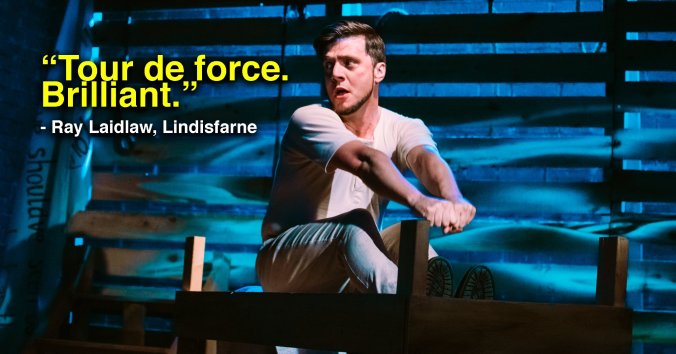
The incredible true story of Harry Clasper is set to tour the North East in February. The one man play ‘Hadaway Harry’ stars Jamie Brown who won a NE Culture Awards Performing Artist of the year.
Harry Clasper was born in 1812 in Dunston, Gateshead, at two year old he moved to Jarrow where he fell in love with the water watching ships coming up the Tyne. Education was limited for Harry, he couldn’t read or write and signed his marriage certificate with a cross. He started work at Jarrow Pit but unfortunately that didn’t work out so his next stop was an apprenticeship at Browns Boatyard.
‘That’s where he got clued up about boats. Harry revolutionized boat racing and boat design, innovations that became part of boat racing then are still employed in boat building today’ explained Jamie.
‘By shaving the boat they made a gun barrel shape instead of a square bottom and pointed the front of the boat. That increased the speed rather than drag through the water, and they made a scooped shape oar’.
‘It was like the time during the 2012 London Olympics when cycling became really popular, they had lightweight helmets, handlebars were shaped to create more speed – huge innovations just like Harry Clasper done for boating in the 1800s’.
‘Rowing was the main sport then, people would sit on the bank of the river and watch the race. Bets would be placed and there would be sponsors – even in those days. There would be stories of men employed to drill holes in the boats of opponents or tempt the oarsmen with alcohol the night before. There was even a case of someone’s food being poisoned. One of the first cases of boat tampering was with the part of the boat called the scull. The term skulduggery comes from that’.
‘The writer Ed Waugh has a desire to shine a light on people or events that have gone under the radar. We’ve done plays about North East musicians and singers Ned Corvan, Joe Wilson and Wor Bella about a ladies football team plus at the end of last year was The Cramlington Train Wreckers’.
‘These extraordinary stories about the working class, are told so they go unforgotten. There is a thirst for these stories, people responded well to them with standing ovations and sold out shows’.
pic. by Local Historian, Steve Ellwood
The Hadaway Harry shows in 2015 and 2017 eventually got Harry Clasper some recognition as a blue plaque was fixed onto the base of the High Level Bridge in Newcastle. There is also a pub called the Harry Clasper in Whickham, Gateshead.
‘He came from a big family – he was one of 14 and had 12 children himself. His ancestors are still around today, they’ve been to the shows and are very proud of his achievements’.
‘But his story wasn’t straight forward, it’s not looking back with rose tinted spectacles as he suffered personal tragedy and professional disappointments, there was plenty of hardship and personal dilemma’.
Later in life Harry became a publican in Newcastle but sadly died in 1870.
‘Over 120,000 people lined the streets for his funeral the procession was only a few miles but took over 12 hours. His coffin was put on a boat and sailed down the Tyne to Whickham where he was buried’.
The North East has stories of talented people achieving great things – we talked about the footballer Paul Gascoigne, coincidentally also born in Dunston where Harry came from.
‘Before Association football the sport of the people was rowing and Harry Clasper has been likened to the David Beckham of the day. I think, as many people do, he should have a statue next to the river Tyne. His achievements were fantastic. Do you know he won the world championship 8 times in 12 years’.
‘It’s been a privilege telling his story, but sadly this will be my last time on stage doing the Hadaway Harry show. I’ve loved doing the show but in the second half of the play it is hard rowing and narrating the story as a one man show plus I’m 40 in February so it can be a bit exhausting’.
‘So, this is me hanging up my oars but the play will go on and maybe a younger actor will take on the role. This is why on the tour schedule after about three nights we have a day or two off where there is time for rest and recovery and then for the next show I’m ready to be able to give 100%’.
For information about tour dates and venues contact the official website >>>
Working in media and entertainment can be a risky business and after Covid it only increased. Picking up a couple of jobs but then nothing for a while has been a regular pattern for me these past few years. It’s a struggle but I wouldn’t change it for the world, I’ve loved every minute of it since my first video commission in January 1997.
I remember the day well. I was in a community centre in Hetton le Hole, Durham talking to a group of former miners who were interested in making a video when someone burst into the room with tears in her eyes “You never guess what’s happened?” We all turned around thinking the pipes have burst, there’s been an accident, someone’s died, what’s happened? “Kevin Keegans left Newcastle United”!
South Shields theatre producer Ed Waugh
I was interested how others working in the creative industry have managed so I got in touch with South Shields playwright and theatre producer Ed Waugh. Ed is part of the North East based Wisecrack team who use theatre to document working class history. I asked him about his past year.
‘Where did 2024 go? The whole year passed like a whirlwind. We’d come off a busy 2023 but from January 1 we were focused on Wor Bella, which was transferring to the wonderful Newcastle Theatre Royal in April. If that wasn’t enough to organise, we did a pre-show run in London to get the production on its feet’.
‘Wor Bella is about North East women footballers in WW1 and the interest was massive. We had full pages in The Guardian and Daily Telegraph as well as tremendous coverage in other national publications. The upshot was London sold out’.
‘Coming home to the Theatre Royal was magnificent – three sold-out houses and just as in London standing ovations after every performance. It was my fifth show at the most prestigious venue in the region, a record for a local writer, so you can imagine how it swelled this Geordie’s heart with pride’.
(Link to interview with actress Catherine Dryden who starred in ‘Wor Bella’).
‘I’m just so honoured to be working with a top-class, professional and dedicated Wisecrack Productions team. We have director and actor Russell Floyd and other brilliant actors, technicians and hugely important people behind the scenes who allow us to put excellent stories on stage. It’s a true team effort’.
‘We’ve now sold around 800 Wor Bella scripts, so that’s canny. Many more thousands of people now know the story of these selfless working class women who saved the WW1 war effort’.
‘My book Geordie Plays Volume 1 has also almost sold out – the last few remaining first editions at Newcastle City Library are now officially collectors’ items’.
‘2024 ended with a triumphant tour of our play The Cramlington Train Wreckers. It’s about the General Strike of 1926 and how miners in Northumberland inadvertently derailed the Flying Scotsman during the nine-day strike before it was sold out by the TUC and Labour Party leaders. Word of mouth – the only marketing that really matters – was phenomenal and every venue sold out’.
‘We’re looking to get The Cramlington Train Wreckers out again in May 2026 to mark the centenary of the 1926 General Strike – the biggest rupture in British society since the civil war in the 1640s’.
‘In February 2025, Hadaway Harry – produced by and starring Jamie Brown – is touring the region. Hadaway Harry is about champion Tyneside rower Harry Clasper who was a forgotten Geordie legend’.
‘When he died in 1870, 130,00 lined his funeral procession in Newcastle. It will be the play’s 10th anniversary. I can’t believe a decade has gone by!’
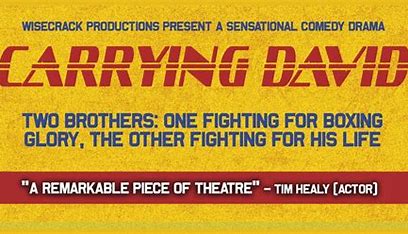
‘Then in June, Carrying David will play Newcastle Theatre Royal. My sixth show there. Carrying David is about Glenn McCrory’s rise to becoming the first North East world boxing champion. It is being produced by and stars Micky Cochrane. Don’t miss these plays, you’ll be spellbound!
(It’s worth checking out both ‘Hadaway Harry’ and ‘Carrying David’ reviews on Google).
Actress & Theatre producer Leah Bell
Dirty Dusting, of course, continues to tour nationally – and internationally – and that play is touring venues in the UK in October under the guidance of the inimitable Leah Bell’.
(Link to interview with actress & theatre producer Leah Bell from July 2021)
‘The old warhorse Waiting For Gateaux – written, like Dirty Dusting with Trevor Wood – will be performed in New Zealand this year. Having these four plays produced in 2025 by other people means I can take the year out to write. I’m working on a few new ideas that will hopefully see the light of day in 2026 and beyond’.
ITV news readerIan Payne & former BBC journalist & presenter Jeff Brown
‘I’ll also be doing my talks throughout the region, which amounted to around 40 last year, and I’m producing a series of talks with Ian Payne and Jeff Brown … “the two lads off the telly”. They are happening in April and May’.
‘We’ve done four of these ‘Evenings with’ before, and they sell out quickly. The lads are always good crack and the event is great fun. Loads of other stuff but I was only allowed 500 words for this post and I’ve used up over 600 already! Have a great 2025’.
For some it may be challenging times but Wisecrack continue rolling on. For further information, tour dates & video contact the official website >>>















 ALIKIVI UK : NORTH EAST MUSIC & CULTURE