BAD EGGS – with Anna Malia founder of North East Animal Rights

Sadly, some schools are still using egg-hatching programmes as a misguided way to educate children on life cycles of animals or using them as a treat to the children in their care explained Anna.

As more and more schools realise the problems these awful programmes cause, the companies who exploit these live young animals have extended their business model to include care homes where they aim to use them in so-called enrichment activities for residents.

Anna added…Despite the companies saying they will take back and home all unwanted chicks and ducklings produced from these programmes, the reality is very different. Even in the small print of the contracts they say that hirers have to be realistic about the fact that ‘some’ will end up as food and males will be culled.

Male chicks turn into very noisy cockerels and every year rescues are swamped with both male and female chicks and ducklings who are abandoned once they grow out of their useful ‘cute’ stage.

Our local wildlife and domestic animal rescue centre ‘Pawz For Thought’ who are based in Sunderland, are inundated every year with abandoned chicks from egg-hatching programmes.  

A spokesperson for Pawz said “Every year we are inundated with calls from concerned parents of pupils who aredoing hatching projects. School hatching projects are often presented as education, but the reality is far from kind.”

“Chicks are hatched in the name of learning, yet the process has become a form of lazy teaching. For a few weeks, children view these animals as entertainment—then the chicks are handed away, this teaches young people that living beings are disposable and exist for our pleasure.”

“Every year, we are asked to take in chicks to save them from being culled. Around half of all chicks hatched are cockerels, and there are simply no homes for them. They face a terrible fate.”

“Schools often believe they are rehoming them to willing parents, but with no follow-up, many unwanted cockerels eventually end up dumped once they mature. This cycle of suffering must stop.” 

Anna said…As part of their Animal Protection Charter, South Tyneside Council have contacted all of their schools and asked them not to use these programmes. They confirmed recently that none of their primary schools will book these programmes again making them an ‘egg-hatching programme free borough’!

Cllr Judith Taylor Chair of the Animal Protection Charter Working Group at South Tyneside Council said “South Tyneside Council is committed to the highest standards of animal welfare. We have taken decisive action by contacting all our schools to urge them not to use egg-hatching programmes.”

“We believe there are far more compassionate and educational ways to teach children about life cycles, and we encourage all educational settings to consider the welfare of animals in their care.”

Anna added…These programmes bear no resemblance to the actual life cycle of chicks and ducklings – they are not hatched in sterile metal and plastic incubators for a start. They do not have the warmth and love from their mother and of course they don’t show students where the birds end up and how they are slaughtered for food. 

What are we doing now? We are currently campaigning across the North East and also have a group working in the North West and a group in the West Midlands coming on board. We want schools and care homes to know the misery these programmes cause.

We are also encouraging people to contact their MP and the Education Secretary to ask them to update the curriculum to remove the suggestion of egg-hatching programmes as an educational tool.  

Thank you to South Shields artist Sheila Graber for the animation.

For further information about the work of North East Animal Rights contact >>>

Facebook @northeastanimalrights

Instagram @northeastanimalrights

TikTok @northeastanimalrights 

Bluesky @neanimalrights.bsky.social

Threads @northeastanimalrights

North East Animal Rights – YouTube

https://linktr.ee/northeastanimalrights

Alikivi   November 2025

AN EVENING WITH THOSE CANNY LADS OFF THE TELLY – JEFF BROWN & IAN PAYNE

Jeff Brown & Ian Payne appearing at North Shields Exchange 29 April 2025.

Two of the region’s most loved television icons will be appearing in North Shields this month on their regional tour. Jeff Brown and Ian Payne who between them presented award-winning local news on the BBC and Tyne Tees Television for more than 30 years will be sharing the stage at the Exchange Theatre.

People will get the chance to learn about the interests and lives of these TV personalities who have been welcome guests in our living rooms for decades.

Jeff, 62, joined the BBC over 20 years ago, co-presented Look North with Carol Malia until he left in May last year. Ian, 56, joined Tyne Tees in 1992 from Nova International where he worked with Brendan Foster on the Great North Run. Ian has presented with Mike Neville and the much-loved Pam Royle. He now shares news anchor duties with Amy Lea.

Despite once being on rival stations they are good mates – having worked together at Tyne Tees for six and a half years in the 1990s.

The compere for the evening will be South Shields playwright Ed Waugh (Wor BellaHadaway Harry, The Cramlington Train Wreckers) whose play Carrying David transfers to Newcastle Theatre Royal in June. Ed explained “I’ve worked with Jeff and Ian at various times, especially at Sunday for Sammy. They’re both really entertaining and interesting lads. Whenever we get together it’s one long laugh.”

He continued “We put them together a year ago at the Lit & Phil in Newcastle and the Customs House in South Shields where it sold out twice at both venues. It went down a storm. They are both cultural icons of the region, that’s why we are touring to The Exchange in North Shields, Gala Theatre Durham, Bishop Auckland Town Hall and Gosforth Civic theatre.”

Ed continued “Ian was a top trampolinist in his youth and appeared on the children’s television show Blockbusters! He’s also a creative writer, a budding artist and loves music. Likewise, Jeff is a creative writer. His excellent play – The Bench – is touring the region in June. He’s also a canny chanter. I’ve seen him sing live with a band and he rocked”

“It’s a cracking show their stories are captivating and hilarious. It’s a fantastic opportunity to get to know Jeff and Ian better.”

An Evening with Jeff Brown and Ian Payne will be at: Durham Gala April 24, North Shields Exchange April 29, Bishop Auckland Town Hall May 12, Gosforth Civic Theatre May 16. Contact the venues for details.

April 2025

FORGOTTEN WW1 FEMALE FOOTBALL STAR MARY LYONS TO GET A HEADSTONE

She died a forgotten hero in 1979, but WW1 women’s football superstar Mary Lyons is about to get the recognition she deserves when a headstone on her previously unmarked Jarrow grave is unveiled in April.

Mary was born in 1902 in Jarrow. In 1918 aged just 15 she became the youngest-ever England footballer and goal scorer when on her debut she scored in front of 20,000 people against Scotland at St James’ Park, Newcastle. It is a record that still stands today, and yet her achievements have been written out of history – until now!

Mary died in Primrose Hill hospital, Jarrow, in 1979, aged 76, and was laid to rest in an unmarked grave with three others. The Friends of Jarrow Cemetery have been at the forefront of getting recognition for the town’s forgotten football hero and, last year after discovering her final resting place, erected a 3ft wooden cross to mark the grave.

However, Mary features prominently in Wor Bella by South Tyneside-based playwright Ed Waugh (Dirty Dusting, Carrying David, Hadaway Harry). Bella Reay was played by North East actress Catherine Dryden.

Catherine Dryden (‘Wor Bella’) in Blyth football strip.

Due to the success of that play in the North East in 2022 and its hugely successful re-run in London and Newcastle Theatre Royal last year, the Friends of Jarrow Cemetery moved to get Mary a permanent headstone.

Jarrow amateur historian Stewart Hill, 73, and Tricia Vickers, 67, are members of the Friends and have led the way in getting recognition for Mary. Stewart explained “Mary was the youngest of eight siblings and she worked in Jarrow shipyard during WW1. She was a tremendous footballer by all accounts. She debuted for Jarrow Palmers when she was only 15 and quickly caught the eye. In May 1918, she was seconded to the mighty Blyth Spartans for the Munitionettes’ Cup final against Bolckow Vaughan of Middlesbrough”.

“Mary scored a goal in the 5-0 victory at Ayresome Park, in front of 22,000 spectators and was crowned ‘Player of the Match’. The following year Mary captained Jarrow Palmers to win the Munitionettes’ cup at St James’ Park, in front of 9,000 supporters.”

Stewart added “So by the age of 16, Mary had won two cup finals, scored in one, captained her team in the other and became the youngest-ever England player and goal scorer! What a brilliant achievement! Imagine what she would be like today, given the modern game and opportunities.”

Tricia, said “Our great friend George Le-Blond of Abbey Memorials in Jarrow has generously donated the beautiful marble headstone and genealogist Sam Nicol has been a great help trawling through hundreds of newspaper articles for information.”

She continued “Friends of Jarrow Cemetery work to keep the cemetery welcoming and clean, and make it safe for people and their loved ones. This is a tremendous development. Mary and the WW1 women footballers should be an inspiration to young women everywhere.”

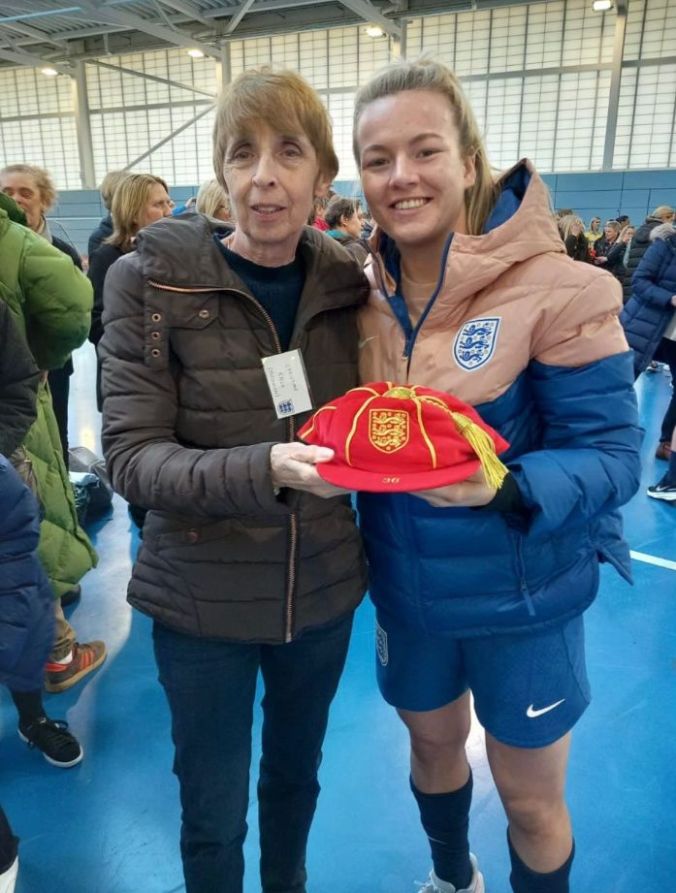
Christine Knox (on the left) being presented in 2024 with her red England Legacy Cap by Lioness Lauren Hemp. The cap is numbered 36 to mark Christine’s legacy number – the 36th women to play for England. The presentation took place at St. George’s Park, the national football centre, in Staffordshire.

The unveiling will take place at Jarrow Cemetery on Sunday, April 27, at 11.30am, everyone is welcome to attend. A brass band will lead the procession to the grave and ex-England Lionesses Christine Knox and Aran Embleton will perform the unveiling ceremony.

Christine, who won ten England caps in the 1970s and 1980s, played for Wallsend Ladies, Whitley Bay Ladies and North Shields Ladies.

Aran, the first millennial Geordie Lioness, gained four England caps and played for Blyth Spartans, Sunderland Ladies and Doncaster Belles in her illustrious career.

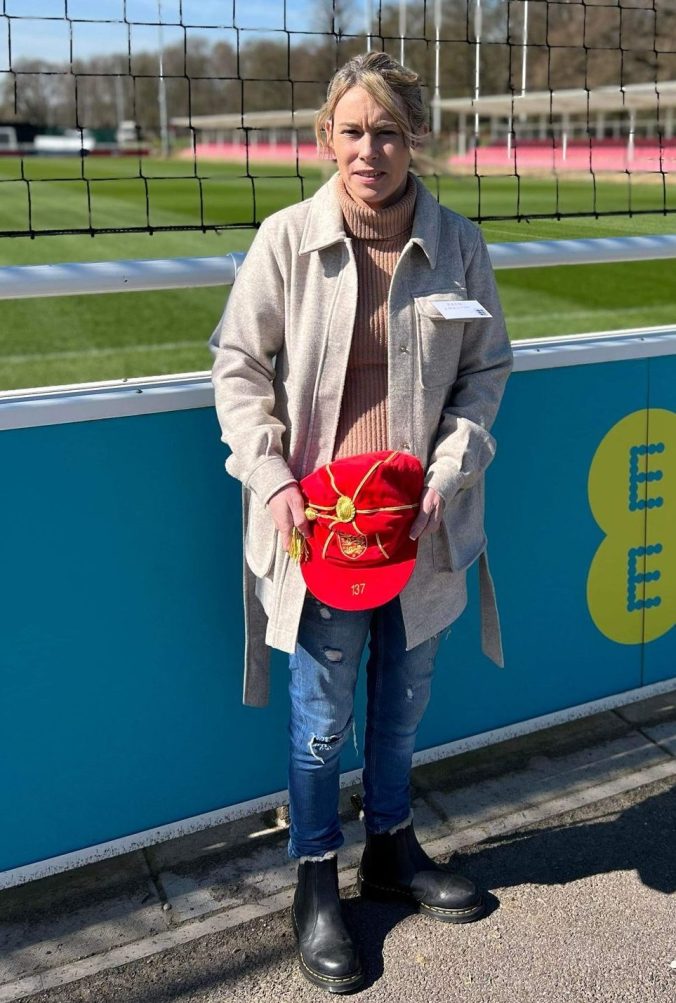
Aran Embleton holding an England cap.

Aran said “I am proud to have been invited to recognise Mary who, like the incredible Bella Reay of Blyth Spartans and other women of their generation, played women’s football until it was criminally banned by the FA in 1921. Players like Christine and I, and the current Lionesses, stand on the shoulders of these brilliant working class women from more than 100 years ago.”

Following the unveiling at Jarrow Cemetery, there will be refreshments and a celebration of Mary’s footballing achievements at the Iona Club, Hebburn. Due to start at noon, speakers at the event will be Wor Bella co-producer Jane Harker, Aran and Christine and Wor Bella actress Catherine Dryden. The event is public and entry is free.

April 2025

ALIKIVI IN CITIES

If ya like ya lists these make for interesting reading. There’s been a new welcome addition to the back office stats from owners WordPress. Previously they’ve counted views from each country with the total to date 422,000.

Now they have drilled down further and added the number of views from what regions and cities where the posts are being read. These are from start date February 2017 – March 2025.

Top 10 countries >>>

  1. UK
  2. USA
  3. Australia
  4. Canada
  5. Spain
  6. Germany
  7. Ireland
  8. France
  9. Netherlands
  10. Italy

This list includes countries with ex pats who I think will add views from countries like Australia and Canada. European countries Germany, Spain, Italy, France etc might include followers of the New Wave Of British Heavy Metal – I’ve added many posts including North East bands Fist, Raven, Tygers of Pan Tang etc.

Top 10 regions >>>

  1. England, UK
  2. Scotland, UK
  3. Virginia, USA
  4. Wales, UK
  5. California, USA
  6. Northern Ireland
  7. Dublin, Ireland
  8. Limburg, Belgium
  9. Texas, USA
  10.  Ontario, Canada

This list is harder to summarise – USA regions Virginia, California and Texas in the top ten are a surprise. I have added a few posts with musicians based in America so maybe that’s it really. I can speculate as much as I like about why people are attracted to the site but honestly, I’m just very grateful that people enjoy reading it.

Top 10 cities >>>

  1. North Shields, England
  2. London, England
  3. Newcastle upon Tyne, England
  4. Manchester, England
  5. Edinburgh, Scotland
  6. Washington, USA
  7. New Silksworth, England
  8. Sheffield, England
  9. York, England
  10. Birmingham, England

Few things popped out of that list – New Silksworth is only a small suburb of the city of Sunderland so a big shout out to the Silks whoever you are! Washington, the capital of America, is not to be confused with Washington near Sunderland because when I checked on the list the stars and stripes are next to the name.

Outside the top 10 the next most international cities viewed are Menlo Park in California, USA, Maasmechelen in Belgium, then Lincoln in Nebraska, USA, next is the Australian city of Perth and then Dallas in Texas, USA.

Big thanks to all the readers it’s much appreciated that you check in to the site from wherever in the world you are. New posts have slowed up lately so why not do a quick search on the archive to see who or what is there – you might be surprised – and why not pass the link on to a friend.

If you’ve got a story to add why not get in touch.

Keep on keepin’ on.

Alikivi   March 2025

HADAWAY HARRY – in conversation with actor Jamie Brown

Jamie Brown.

The incredible true story of Harry Clasper is set to tour the North East in February. The one man play ‘Hadaway Harry’ stars Jamie Brown who won a NE Culture Awards Performing Artist of the year.

Harry Clasper was born in 1812 in Dunston, Gateshead, at two year old he moved to Jarrow where he fell in love with the water watching ships coming up the Tyne. Education was limited for Harry, he couldn’t read or write and signed his marriage certificate with a cross. He started work at Jarrow Pit but unfortunately that didn’t work out so his next stop was an apprenticeship at Browns Boatyard.

‘That’s where he got clued up about boats. Harry revolutionized boat racing and boat design, innovations that became part of boat racing then are still employed in boat building today’ explained Jamie.

‘By shaving the boat they made a gun barrel shape instead of a square bottom and pointed the front of the boat. That increased the speed rather than drag through the water, and they made a scooped shape oar’.

‘It was like the time during the 2012 London Olympics when cycling became really popular, they had lightweight helmets, handlebars were shaped to create more speed – huge innovations just like Harry Clasper done for boating in the 1800s’.

‘Rowing was the main sport then, people would sit on the bank of the river and watch the race. Bets would be placed and there would be sponsors – even in those days. There would be stories of men employed to drill holes in the boats of opponents or tempt the oarsmen with alcohol the night before. There was even a case of someone’s food being poisoned. One of the first cases of boat tampering was with the part of the boat called the scull. The term skulduggery comes from that’.

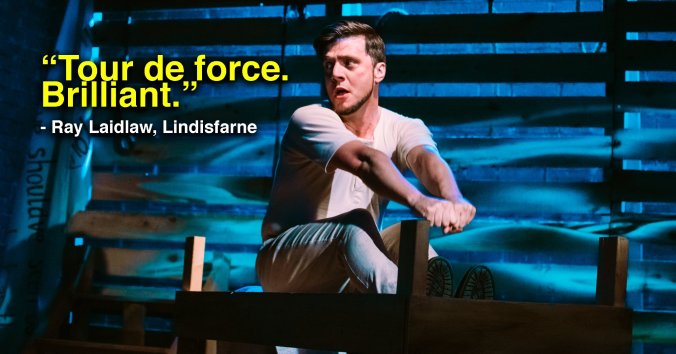
‘The writer Ed Waugh has a desire to shine a light on people or events that have gone under the radar. We’ve done plays about North East musicians and singers Ned Corvan, Joe Wilson and Wor Bella about a ladies football team plus at the end of last year was The Cramlington Train Wreckers’.

‘These extraordinary stories about the working class, are told so they go unforgotten. There is a thirst for these stories, people responded well to them with standing ovations and sold out shows’.

pic. by Local Historian, Steve Ellwood

The Hadaway Harry shows in 2015 and 2017 eventually got Harry Clasper some recognition as a blue plaque was fixed onto the base of the High Level Bridge in Newcastle. There is also a pub called the Harry Clasper in Whickham, Gateshead.

‘He came from a big family – he was one of 14 and had 12 children himself. His ancestors are still around today, they’ve been to the shows and are very proud of his achievements’.

‘But his story wasn’t straight forward, it’s not looking back with rose tinted spectacles as he suffered personal tragedy and professional disappointments, there was plenty of hardship and personal dilemma’.

Later in life Harry became a publican in Newcastle but sadly died in 1870.

‘Over 120,000 people lined the streets for his funeral the procession was only a few miles but took over 12 hours. His coffin was put on a boat and sailed down the Tyne to Whickham where he was buried’.

The North East has stories of talented people achieving great things – we talked about the footballer Paul Gascoigne, coincidentally also born in Dunston where Harry came from.

‘Before Association football the sport of the people was rowing and Harry Clasper has been likened to the David Beckham of the day. I think, as many people do, he should have a statue next to the river Tyne. His achievements were fantastic. Do you know he won the world championship 8 times in 12 years’.

‘It’s been a privilege telling his story, but sadly this will be my last time on stage doing the Hadaway Harry show. I’ve loved doing the show but in the second half of the play it is hard rowing and narrating the story as a one man show plus I’m 40 in February so it can be a bit exhausting’.

‘So, this is me hanging up my oars but the play will go on and maybe a younger actor will take on the role. This is why on the tour schedule after about three nights we have a day or two off where there is time for rest and recovery and then for the next show I’m ready to be able to give 100%’.

For information about tour dates and venues contact the official website >>>

http://www.hadawayharry.com

Thanks to Von Fox Promotions for the pix.

Alikivi   January 2025

TIME TRAVELLER – in conversation with Local Historian, Luan Hanratty

46 year old Tynemouth resident Luan Hanratty has strong Celtic roots. His father was born in Jarrow with their family connections going back to Galway in Ireland and his mother originally from Rosyth on the east coast of Scotland.

Luan at Arbeia Roman Fort, South Shields.

‘Yes, the Hanratty name is Irish, however, a brief background to my employment story is that I worked the financial sector in Prague, Czech Republic, moved to Shanghai in China where I was employed as an English teacher. I even appeared on TV there and published some books. Education is strong in my background as my father was a Drama Teacher’.

‘After Covid in 2020 I came back to the UK and based myself in South Shields. I was looking for my next adventure when I came across some local history and got obsessed with reading the stories’.

‘With my business partner Gary Holland we put together a website called Penbal – which is a Celtic name for the Tynemouth headland – the site features articles on Tyneside local history, photographs, AI art, links to Maritime Trust, Lifeboats Brigade and Fishermen’s Heritage plus local products for sale – prints, postcards, mugs, t-shirts and more’.

The latest story has recently featured on BBC News >>>

Roman Stones Missing from Mill Dam Roundabout, South Shields – Penbal

Luan’s latest post on the site is about a long lost river which flowed from the Mill Dam in South Shields.

‘Beneath the busy modern landscape of South Shields lies a forgotten natural feature – a river called the Mill Dam Creek but also known as the Branin River. This flowed from Mill Dam, next to Customs House today, out to the sea near North Marine Park and the Pier. This effectively made the Lawe an island’.

‘The channel played a vital role in the development of the town, both as a waterway and a habour, and once it was dammed with ballast, the Mill Dam formed a bridge between the north and south reaches of the early town’.

‘So important then, was the creek as a resource that it forms the base of the first industrial activity in South Shields, with coal mining also evident on the south bank where the pit wheel now stands above Asda carpark in Coronation Street’.

‘If you stand on the long sloping escalator when exiting Asda and look out across the huge carpark, you really get a feel for the valley nature of the Mill Dam Pond. Imagine what it must have looked like all those centuries ago’.

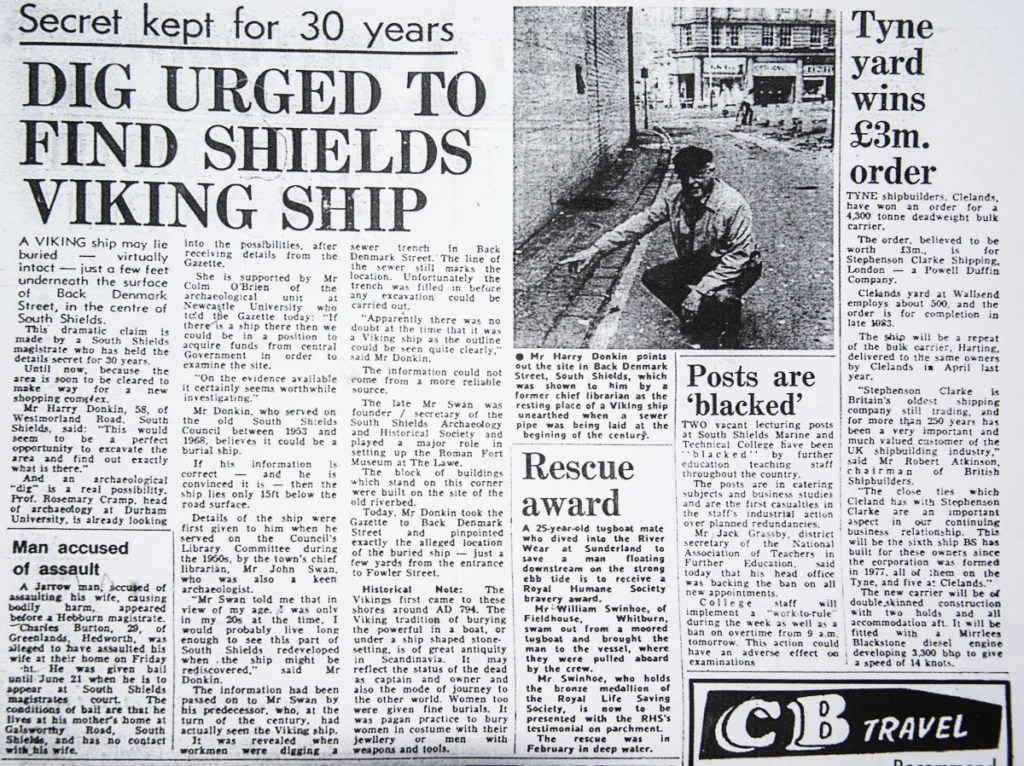
‘Another twist to the story is that in the 19th century much of the eastern end of the creek was covered by Denmark Street, where the Denmark Centre is today. In the 1830s, while building the street, a Viking longboat was discovered beside what was originally the river bed’.

‘Maybe there is someone out there who has more information about this amazing find. We know it featured in The Shields Gazette in the 1980s’.

Viking ship article in The Shields Gazette 1980s.

Full story >>> The Lost Waterway of South Shields:  Mill Dam Creek – Penbal

Luan stresses that he has no plans to research any murders or the race riots that have happened on Tyneside.

‘So far, we have over 200 local history posts and we don’t look at any taboo subjects, I just like to paint a picture of our very rich heritage here on Tyneside’.

For further information contact Luan >>>>

Penbal – Messis ab Altis

Alikivi   January 2025

LISTEN TO YOUR HEART in conversation with Tyneside songwriter Rosie Anderson

Now living in South Shields, retired teacher Rosie Anderson still feels there is work to do and more stories to tell.

‘Sometimes I feel as though I’m just getting started. I sing whenever I can. This year my musical partner Adam Holden and I have played at The Watch House in Cullercoats, The White Room in Stanley and Cockermouth Festival which were all great. I’m determined not to just bow out because I’m getting older’.

‘I grew up in Wylam in the Tyne Valley, in a house full of music. Both my Grandparents played piano. My dad listened to The Beatles, both parents loved the theatre and musicals and they took me and my brother there – I still love all that’.

‘When I was a kid I told my parents I wanted to be a performer but they were worried I wouldn’t be able to afford a home like them, they wanted me to have a ‘proper’ job. They wouldn’t let me study performing arts so I trained as a teacher’.

‘My first job was in Benwell, Newcastle. Then I went to the Middle East where I spent 10 years teaching in Kuwait and Qatar, before returning to Newcastle. I taught at Walkergate Primary School where I would do all the music shows and drama productions. Loved doing the shows there, I never gave lyric sheets out to the kids, they learned by listening and singing the songs back’.

‘When I left teaching I saw an advert for facilitators for  Singing for the Brain with the Alzheimers Society. I really loved doing that. I did that for six years until covid hit. Singing on-line with people on the screen in front of you didn’t work really’.

‘People love stories in whatever form, be it a book, a film or a song. Some people write songs about being in love, and about their feelings. My songs are mostly about people and places. I find stories present themselves to me and I take them and turn them into a song’.

‘There are two songs that I have written that stand out for me. Sally Smiths Lament was written after my husband Chris and I worked on a film about soldiers from County Durham during World War One’.

‘Sally was the wife of miner Fred Smith, who featured in our film. They lived in a tiny terraced house and every day Fred and his sons needed a bath, a clean shirt, a clean bed and a dinner. The kids needed to get to school – how did she cope with all that, especially when Fred was away at war. I wanted to give Sally, and all the women like her, a voice.’

‘When I wrote it the song just seemed to be presented to me, her whole life. I got to sing it at a celebration in West Auckland and her family came to hear it – it was very moving. It travelled well and won three competitions – the Newcastle Folk Club, Rothbury Traditional Music Festival and first prize at Morpeth Gathering’.

‘I can’t just decide to sit down and write a song – some people do and I applaud them for the discipline but I have to wait until they come. Three things happened to me in my life that I put together in a song called Breakdown’.

‘When I was a kid I lived at Chapel House Estate in the west end of Newcastle. One night me, my mother and a friend went for a walk. This woman came out of her house in her dressing gown, she wasn’t in control of herself, didn’t know what time or day it was. I had never seen that behaviour in an adult before. Now I believe she was having a nervous breakdown’.

‘That always stayed in my head and another one was when I was living in Fenham. I went to the shops with my children who were only small then, and a woman came out of her house with a letter and asked if I would read it to her as she was confused and couldn’t understand it’.

‘Then about 30 years ago I went on a blind date in Newcastle with this very nice bloke. He said I need to tell you something before we go any further ‘When I was working in Canada I had a nervous breakdown in the car park of a Burger King’. It was hard to concentrate on anything else after that’.

‘But I remembered those incidents and those three individual people are lodged in my heart for their own traumas. They gave me that song’.

‘This year we went to Kjerringoy a former trading post in the Norwegian Arctic Circle, out in the middle of nowhere, it was beautiful. A family ran it in the 19th century and had 3000 fishermen working for them, catching and processing thousands of tons of cod’.

‘The father and husband died and the wife continued to run it single-handed for many years until she eventually remarried. I asked the locals if there was a song about her and there isn’t. So that’s my next song – Annalisa from Kjerringoy. Her story needs to be told’.

‘I’m also aware we need to start telling more stories about people and their lives and jobs today otherwise in 100 years time there will be no one singing about us!‘

‘What does music mean to me? It’s hard to describe it, it’s so deeply embedded, there’s no life without it. Music is at the core of my being, there is no day without singing and because I have grandchildren now I have a new audience! We sing folk songs and songs from musicals, they’re word perfect when they sing them back’.

‘Music gives such joy, when I was singing with the Alzheimers Society the collective joy and reminiscences of songs from the past and enjoying it together was just so valuable for the families’.

‘We had people who wouldn’t sing at all but liked being there and that was fine. Once, two women brought their mother to a session and she sat between them. She didn’t communicate at all, had her head down, closed off you know. But when we started singing a song, I can’t remember which one, she lifted her head up and actually got up and started moving around in the middle of the circle’.

‘One daughter got up and started dancing with her. When we got to the end of the song the daughter turned round and said to me ‘She’s just said my name for the first time in years’.

‘Music gets right in there (pointing at heart) we’ve got to keep it going and expose our youngest children and oldest adults to music because it really does reach parts that others can’t reach. It’s like hearing the heartbeat in your mother’s womb’.

‘As a child I wanted to do music, as an adult I taught it with kids then people with dementia, despite my age I’m still committed to what I always wanted to do. Women who’ve had careers and families can still chase their dreams’.

Alikivi   September  2024

BANJO IN BOGOTA – in conversation with Tyneside storyteller & folk musician Tony Wilson

Tyne Dock in South Shields was an interesting part of the town to live, with its churches, terraced houses and huge industrial Victorian arches next to the river. It was in the early 80s when a lot of the old housing stock was being demolished and in Porchester Street I watched Ascendency being filmed. Julie Covington of hit TV show Rock Follies was the star, not long after that The Machine Gunners was set in Porchester and filmed for BBC TV.

‘Up to when I was 7 year old I lived in Porchester Street. It’s not there now but St Mary’s Church around the corner is where I used to sing in the choir and the scouts’ said Tony.

‘Now I live on the Lawe Top beside the roman fort. It’s almost aspirational for someone who comes from Tyne Dock to wind up being a skuetender’ (native to the Lawe Top).

‘I’m proud of coming from South Shields and when you were young trips to the fort were absolutely mind blowing. The area it’s in is incredible, with the whole vista of the river and parks and beach nearby – we’re lucky here’.

Being a former Tyne Docker now Skuetender he’s not wrong there. Tony featured on the site back in May 2018 talking about storytelling and songwriting and what music means to him.

‘I turned back to folk singing in 2017 after the government education cuts made it too expensive for schools to have extra-curricular practitioners, like me, to come in. Before that I was storytelling in schools for 20 years covering hundreds of issues such as the steelworks when I was in Ebbw Vale, the Romans here in South Shields, the coal industry and iron stone mining in Teesside and Northumberland. It was an extremely successful time’.

‘Storytelling is very important, its communication, social history, emotional control, drama, its use of vocabulary. For me it was learning how to be a performer and developing stamina to be able to do four hour sets a day, then drive 100 miles to go to a hotel, get up next day and do it again’.

‘Cities like Manchester, Oxford, Cambridge, all over the UK. I’d stay in these areas year after year for a fortnight at a time and, unlike a music tour where you could be in Aberdeen one day and Bournemouth the next, I’d plan easy distances to plan a route back home – loved the life.’

‘Then around 2009 I got an email. The message was ‘would you like to tell stories in Argentina?’ I wasn’t sure it was kosher at first but I received a phone call a few weeks later confirming it was. I was given contacts of previous storytellers who recommended it’.

‘Me and my wife went out and ended up over the years going to about 15 countries for six weeks at a time. They were international schools where the kids had already learnt English but mostly from American cartoon shows and they wanted them to hear colloquial language, more English. With my accent, I knew I would have to speak a bit slower – and there’s nothing worse than a posh Geordie!’

‘When we were in a Spanish speaking country, for the youngest ones, you’d have someone to explain the context of the story and then I’d still tell the story in English. Half of their lessons were in English, to make it an immersive experience’.

‘To accompany the lessons it was helpful to use British sign language, or borrow a guitar. I always took a banjo with me as it was such a different instrument for them to hear. Once the banjo was broken en-route and we found the only banjo repairman in Bogota in Colombia’.

‘It was hard work getting up at 5am, into a taxi for a two hour drive to tell stories to 3-400 children in ampitheatres – but what an experience! The last time we went over was Peru in 2016. We’d been to Uruguay, China, South Korea, all over – loved it. Sometimes I look back and think how did that happen – you’ve got to seize every opportunity’.

‘I’ve been songwriting for years and always have a songwriting project on the go. I write about 15 songs per year. Ideas can come from a book, a documentary or what someone says in a street… then I do a lot of research and add some ‘meat’ to the story. Songwriting can possess and obsess you’.

‘Recently I wrote a number of songs about Iron Stone Mining, the workers and how dangerous it was working there, although I do try to stay away from disaster. It’s not all ‘Grim up North’.

‘A friend of mine gave me a diary about his distant relation who had been captured by the Portugese and transported to Portchester Castle in Hampshire! Having lived in Porchester Street I didn’t know about this place. The songs can take you anywhere!’

‘I wrote a song with local playwright Tom Kelly about ‘the seven lads of Jarrow’ who, in the 1830s worked in the mines under diabolical conditions so tried to form a union with union organiser Tomas Hepburn. They ended up being brought up on jumped up charges – 10 were captured 3 escaped. 7 ended up in a kangaroo court and were transported to Australia never to return. It’s such an emotional subject’.

‘In 2019 I was planning to write autobiographical songs, one was about the day they tarmacked the cobbles in Porchester Street and as kids we could roller skate across the street. Another was the times walking through Tyne Dock arches with my dad and me being on his shoulders. Or another about my sister playing with her friends in the backyard in Porchester Street – then covid came along’.

‘I didn’t want to write about the pandemic or what happened around it, like being scared or having a feeling of waiting for death to come. I wrote nothing about that. I just wanted to write about the one’s I love and keep sane’.

‘All the performances I did in South America and all of the daily storytelling work I did in schools I now channel into what I present now as a musician. I still do regular open mics, folk club spots and am a paid guest in clubs and festivals throughout the UK’.

‘I love performing, it’s like an out of body experience. I’m not hippy dippy, mystical or spiritual but enjoy giving people enjoyment, sharing moments with people…and it beats the hell out of singing in the bathroom!’

Tony has placed all of the stories, CPD and instructional DVDs for parents and children on You Tube at ‘Tony Wilson Storyteller.

For further information contact the official website > http://www.tonywilsonfolksinger.co.uk

Alikivi   September 2024

THE COPS with TV actor & musician Michael McNally

Flicking through TV channels I landed on BBC police drama The Cops. I remember when it was first broadcast in the late 90’s it was like watching a Ken Loach film on steroids. No surprise when it walked away with two BAFTA awards.

Executive producer was Tony Garnett, you might not know the name, but his pedigree is second to none. He and Loach pulled off some groundbreaking, influential work on Kes, Up the Junction and Cathy Come Home.

Written by Jimmy Gardner (The Bill, This Life, Inspector George Gently), The Cops is a gritty fictional drama which deals with the chaotic lives surrounding criminals and cops. Even everyday mundane events are served up on a shovel.

The script is sharp, the pace unrelenting, the hand-held fly on the wall documentary camerawork increases tension and keeps the viewer locked in to the authentic voices. The working class voices. And they don’t shy away from difficult situations, some scenes are far from being an easy watch.

After binge watching series one and two I switched on the third and sadly the final season, I recognised one of the characters, Michael McNally, who featured on this site 28 August 2018 (link bottom of page). So I got in touch with Michael to find out his story behind The Cops.

I’d watched the first two series and it was my favourite programme on TV said Michael. When I started watching it, I thought it was a fly on the wall documentary it took me 10 minutes before I realised it was a drama. I was totally hooked.

My favourite directors are Mike Leigh and Ken Loach – The Cops is somewhere in between their methods, the way they work with actors or non-actors in some of Loach’s films. In the programme there were two of the best actors I ended up working with, and that’s including working with Gary Oldman, there was Katy Cavanagh and John Henshaw – absolutely fantastic actors and people.

Some of the stories they told, drugs, robberies and coppers beating people up – how did they get away with showing this? I found it really brave, fascinating and refreshing to watch, I never imagined I would have an opportunity to get on it. I remember watching a BAFTA awards programme and it won beating a show called This Life which was also excellent TV.

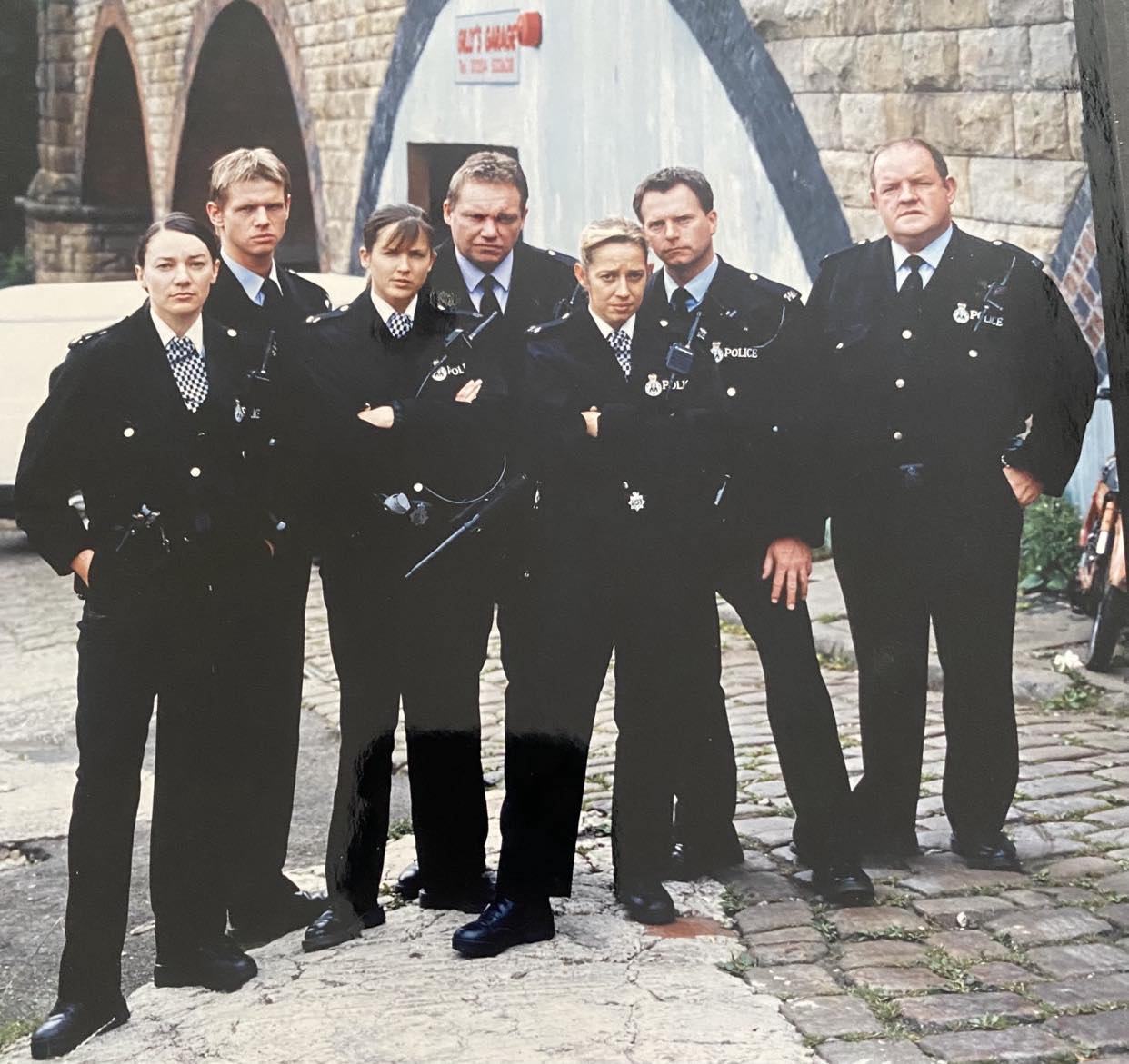
Michael in the back row behind Katy Cavanagh and next to John Henshaw.

How did I get on the show? I remember I was just about to get on a train from Durham, I was living back in the North East then, I was excited about going down to London for an interview and read for a part to play alongside Robson Green (fellow Geordie actor, Soldier Soldier, Wire in the Blood).

When my agent called me up ‘Don’t get on the train, you’ve had a recall’. Three weeks earlier I’d had one interview for The Cops, I’d met the cast and was introduced to an incredible actor called John Henshaw (Early Doors).

At the interview it was all improvisation, there was no script, we were set up in different scenarios, like an acting workshop. I was nervous but got through it and think I done alright but never heard anything so was disappointed I’d missed out on this fantastic show.

Then a few weeks later another call from my agent ‘Get in your car and drive to Bolton’ – that’s where The Cops is filmed. It was great meeting up with all the cast again, the casting session was videoed, but again after a good session a few weeks had passed and no word. I’m thinking what’s going on? I missed that reading with Robson Green for this.

Then I got a call to go back down to Bolton they said they would pay my expenses so that was fine. This time it was more specific and the actors were working well together. I went back home and a week or so later they asked me to come down for a day and that’s where they said I had the job.  

I stayed in digs in the town, one of the camera men had a small flat I rented off him. During the week I was there in my police uniform, at the weekend I was still playing in a band in working men’s clubs in the North East. That was 23 years ago, a great experience, PC John Martyns was my character.

Martyns was an ex professional footballer, based on a David Batty type player (1990s/2000s Leeds United, Newcastle United, England) an aggressive little player who made a bit money in the game then came out of it and ended up a copper – like some do in real life!

For me it was a really exhaustive process, there were lots of actors up there for the same parts. It was also one of the most exciting processes I’d been in because every time I went there it was nothing like any interview I’d had for an acting job before.

All the actors had a hunger for success, it was like they hadn’t achieved their full potential yet and they wanted to be part of something special. I went in on the back of the two series so felt a bit under pressure.

We were based in an old run-down school transformed and fitted up into a Police station. In rehearsals every Director you worked with would just give you tiny bits of information to work on then leave you to it.

They would give you a scenario like going into a bar where there are two attractive ladies, you are arrogant full of yourself, you don’t know what they are like, and you have to chat them up.

You would get three or four different situations like this which would last five or ten minutes. You’d think is anyone going to say stop – you were really out of your comfort zone. It was all about staying in the moment and it prepares you for the actual filming.

My first night filming I was given a script but told the filming might start before the script and might go on after – you just have to wait until somebody shouts ‘cut’. So, the script was just a guide, the general public were unknowingly involved in some of the scenes.

One of my first scenes was with Danny Seward, a lovely talented guy, also another singer and songwriter. I was sat in a police van on Friday night 11pm on Bolton High Street with a walkie talkie. The general public are walking up and down the street, in our scene we had to arrest someone.

Two actors were having a fight in the street and we got the message to go, so on with the blue flashing lights, pulled up and jumped out of the van – it wasn’t a closed set like on some programmes. Some of the general public were trying to defend the actors and others were encouraging us to get in there and sort it out.

We didn’t know where the cameras were we just heard someone say stop, so we got back in the van, re-set and done the scene about four or five times.

Same happened when responding to a fight in a bar, we had to pull people out and the general public in the bar didn’t know what was going on! There was an element of choreography for the fight, we didn’t want anyone to get hurt.

After that first night the cast got together afterwards for some pub grub and a karaoke. Most of us were unknown actors so mixed in with the general public without any hassle. Every member of the cast got up and sang, mine was Should I Stay or Should I Go by The Clash – it was a really good night. We were all getting in taxi’s later because it was filming the next morning.

Michael Caine’s masterclasses in acting were a real influence when they were shown on TV. Caine learnt you about film technique, camera angles and using your eyes.

I didn’t go to drama school like most actors I’ve met, I was a law student who first acted in a Channel Four film Accounts and moved to London. I remember everything Caine said, but The Cops was like chucking it all out the window.

You just had to be truthful to the moment, trust the guys who were filming and don’t be worried about their job just fully concentrate on being truthful and honest about the scene.

When the cast were socialising in a hotel bar the production team would watch who we would gel with and if there was any tension, or the one’s not making any eye contact, things like that. I’m sure they were aware of this and then put us together in scenes.

The police organisation weren’t too happy about some of the scenes because we were exposing bad behaviour inside the force. So, we had a couple of weeks training by officers from the London Met where we turned up in uniform, learnt how to read people their rights, how to deal with challenging situations, they told us loads of stories – really fascinating stuff.

The producers also sent us off to Doncaster, undercover with coppers. I remember over a weekend sitting in the back of a cop car with two uniformed officers watching how they made arrests and calmed situations down. On one occasion we spent two hours chasing a horse!

Production team and cast of The Cops.

Because it was so refreshing to do that work in The Cops, in a way everything else felt a bit of a disappointment. I thought would I be happy to do some of the jobs I’d done before?

After finishing on The Cops I got an interview for a regular place on Emmerdale. I’d already been in Crossroads, and soaps have their place rightly so, but coming off the back of a challenging show to a light fluffy programme – well I wasn’t sure about that.

After talking to my agent, I went along and done an improvised scene with an actress, but I got that feeling of I don’t want to be here. I must have given that impression because I didn’t get the job. I talked to my agent about it and sort of felt relieved.

What did I do after The Cops? Unfortunately, I went through a divorce then picked up working again, this time in education. I was a Drama teacher for young offenders in the Prison Service in Barnard Castle. I felt I was doing some really effective theatre work with the prisoners and some of them loved being involved. I done that for over 12 years.

What am I up to now? I still teach music and my next project is for PRS Inclusion Services, it’s for people with disabilities. I’ll be developing a choir from four community groups with a performance at the end, I’m looking forward to that.

I’m missing acting so I’ve been looking if I can get back into doing some again. Here in the North East I’ve been involved in a few performances and still playing music, also just been down to London and got some new photographs taken with the aim of getting a new agent. I think at my age I will be a lot better now with more life experience, and it means so much more.

You’ll find all 24 episodes, three series of The Cops on BBC iPlayer.

RUN FOR HOME with North East actor & musician Michael McNally | ALIKIVI UK : NORTH EAST CULTURE

Alikivi   July 2024

WALKING MY STREETS – New Poetry and Prose collection from Jarrow born Tom Kelly.

Tom Kelly is a short story writer, playwright and lyricist now living further up the Tyne in Blaydon. He’s written a number of musicals with the late John Miles that have been produced by The Customs House, South Shields, including the work of Tyne Dock born author Catherine Cookson.

‘Tom & Catherine had its premier at South Shields Customs House, it was really exciting. All the team were really nervous on the opening night but when the overture began, we all felt it was going to be a success. And it was. It had a ‘sold out’ run. A measure of its success was that me mam wanted to go every night! And she was not a theatre-goer. She loved ‘Tom & Catherine.’

“The play was first produced in 1999, and again 2001. In 2006 there was an outdoor performance at Bents Park, South Shields in which Jade Thirlwall (Little Mix) appeared, and most recently in 2019” said Tom.

His two football plays I Left My Heart in Roker Park (1997 & 98, 2004 & 2014) and Bobby Robson Saved My Life (2019) toured the North East and were well received by audiences and critics alike.  

I Left My Heart in Roker Park’ is a one-man play that looks at the life and football times of an avid Sunderland supporter. As more than one have said of the play, ‘it makes you laugh and cry” said Sunderland fan Tom.

His new book ‘Walking My Streets’ is his fourteenth and thirteenth published by Red Squirrel Press. Tom read at the Lit & Phil, Westgate Road, Newcastle, Cullercoats Library and The Word in South Shields to promote the book.

I’ve already read at a number of venues and thankfully it’s gone down very well. As it says on the books cover, ‘Walking My Streets’ explores in prose and poems Kelly’s life and the changing face of his native north-east of England’.

Walking My Streets is available from Red Squirrel Press.

Contact the official website >

https://www.redsquirrelpress.com/poetry?Author=Tom%2520Kelly

Alikivi   June 2024