WHITE LINES – interview with Craig Ellis, drummer with Tygers of Pan Tang

69659872_10156674697214639_2756183532928761856_n

The Tygers have just shot a music video for the new single ‘White Lines’, how did that go ?

The video shoot went well really, the location was Dynamix Extreme Skate Park in Gateshead. A fantastic place with lots of options for backgrounds to shoot in and around.

Moving a six piece drum kit into three different areas was a pain in the a**e but worth it after seeing the superb screen captures on the cameras.

How did you get the job in the Tygers ?

Robb had been working on some new material with an ex-Sergeant band member and two friends of mine were drafted in the play bass and guitar.

The initial demos were cut together using a drum machine so when it came to the recording a live drummer was needed and my two friends suggested me. The end product of that recording was ‘Mystical’ in 2000 and I’ve been here ever since!

Even though I’d written lyrics and melodies previously in other bands, it wasn’t until our vocalist Jack joined the Tygers that I started to contribute. From day one there was a chemistry that has worked ever since.

Before gigs do you have a warm up routine ?

Some stretching exercises, specifically arms and hands to loosen up and a mash-up of sticking exercises/rudiments to get comfortable. I don’t eat anything three hours before a show and if I’m going to have any alcohol, it’s after the show.

How did you start on drums and who were your early influences ?

I didn’t start playing drums until the age of fifteen, but I’d been listening seriously to music from around nine or ten year old.

My Dad had a reel-to-reel player, and I was infatuated with not only the machine itself, but also the music the spools kicked out…Hendrix, Foghat, Lynard Skynard, Blue Oyster Cult and Led Zeppelin.

Programmes on the TV like Top of the Pops, The Tube and of course The Old Grey Whistle Test were like a drug, I never missed an episode!

With the pocket money I saved, I bought vinyl. Even back then I had a varied collection of music as my tastes have always been eclectic, however, once I started playing drums, rock and metal was where I found my niche.

Drummers such as Cozy Powell, John Bonham, Ian Paice, Bill Ward and Neil Peart and the bands they played in resonated with me hugely and have never left me.

Where I’m from, we were very fortunate to have venues including The Coatham Bowl in Redcar, Middlesbrough Town Hall, Crypt and Rock Garden and Newcastle Mayfair and City Hall. So I got to see almost all my favourite drummers and favourite bands.

Who were the first band you played for and what venues did you play ?

My first cover band at around sixteen was called Overload. We played rock covers by Sabbath, Status Quo, Golden Earring, AC/DC etc in and around the Teesside/Cleveland area. There was a huge Working Men’s Club scene back then, which I played in most venues in the North East, in various cover bands.

I’ve always had a passion for original music so I took every opportunity presented to me to work alongside musicians creating original music. From very early on I learned a great deal about the recording process both at home and in studios.

Have there been many memorable gigs with the Tygers ?

There’s been quite a few Gary, in no particular order …The fact we were touring in South America and the audiences were insanely awesome was amazing but the night we played Carioca Club in São Paulo on Micky’s Birthday – the whole room sang Happy Birthday to him.

Japan Assault Festival was a humbling experience for this tub thumper from Teesside to have had the opportunity to travel to and perform in Japan to a crowd of people who were so pleased to see the Tygers. Supporting the Dead Daisies at the 02 Academy to a Newcastle home crowd who were just awesome.

The Spodek in Katowice, Poland is a venue that is an assault on the mind! Its incredible both inside and outside. We’ve been very lucky to have been invited back a few times to the incredible Bang Your Head festival in Balingen, Germany. Bully-On-Rocks Festival and Raismes Festival have been our most recent shows in France both with amazing audiences.

Belgium is a special place for the Tygers, we performed some of our very first shows there and met many wonderful people who have remained friends to this day and always do their utmost to get to the shows.

Have you any road stories you want to share ? Robb’s your man for the funny he stories, he collects them! But here goes a couple…

When on tour in South America we took an internal flight and got split up throughout the plane. As we were disembarking there were shenanigans going on at the front of the plane.

Robb and Gav were sat in the cockpit, Captains and Officers hats on, having a laugh and chat with the crew. Turns out the captain was a huge Tygers fan and invited them in!

Around twelve years ago, travelling to Belgium in what was then the bands tour bus we were badly rear-shunted by a delivery truck late at night on the A1M. We were all thrown around the cabin like rag dolls and the back end of the tour bus was a mess but, we limped on ‘because we had gigs to do!’

The rear footstep had been shoved so far down and as we went up the ramp to board the ferry, sparks were flying from it and the noise was horrendous.

At that same point we also discovered the steering was in a bad way too so we were gliding like a sail boat up the ramp. When it came to getting off the ferry the bus wouldn’t start but the ferry mechanics got us going!

With the ignition now faulty at the end of almost every gig fans would give us a push to ‘bump-us-off’! Embarrassing but a laugh and main thing was, we did the shows.

The new album ‘Ritual’, did you feel recording went well ?

Time is of the essence when it comes to Recording Studios because as the clock ticks away its costing money. But, you want to enjoy the experience and to do that it’s all about the preparation.

Although writing the material for the album had begun over a year prior, regular, concentrated writing and rehearsal sessions started in January of this year right up to going into the studio in April.

During that time we would video and record everything for reference and when a song is complete I write out the drum notation so I get it completely under my skin.

Both Jack and I write the lyrics and melodies to the majority of the songs and because of that I automatically absorb a songs structure. Because of the prior work put in, we each completed our parts in a very short time.

What also makes for a good recording session is the engineer and studio, and Fred Purser at Trinity Heights made the whole thing an absolute pleasure throughout.

Will the Tygers be promoting the album ?

Absolutely! We’ll be doing four, maybe even five, songs from the new album and featuring them in our November shows and from there on. There’ll be a selection of merchandise available supporting the release too.

I’m particularly looking forward to gigging with the Festival sized backdrop we’ll have for those shows, the Ritual Mask in giant-size taking ownership of the stage!

What does music mean to you ?

It pretty much makes my world go around Gary. I play music, I practise music, I write music and I teach music. It takes me mentally to a different state of mind and physically to many incredible places I likely wouldn’t get to see otherwise.

I’m extremely lucky to be doing what I love.

‘White Lines’ will be the first single, released on 27th September on all platforms, and a 12″ vinyl limited release of 500 copies for all you collectors will be available from:

http://targetshop.dk/…/tygers-of-pan-tang-white-lines-12vin…

For further information contact the official website:

 http://www.tygersofpantang.com/official/

Interview by Gary Alikivi     September 2019.

SLAVE TO THE RHYTHM – in conversation with Gav Gray bassist with Tygers of Pan Tang

46485680_10213150965549751_388825270502555648_n

After their last album in 2016 and touring throughout Europe, the Tygers are back and about to release their new record ‘Ritual’. The second with the line-up of Jacko Meille, Robb Weir, Micky Crystal, Craig Ellis and Gav Gray…..

Yes, it was a lot of hard work, three months of prep, writing and arranging. So when we got into the studio we were ready for it. We knew we were gonna make a great album – and we have.

The band used Trinity Heights Studio in Newcastle, former guitarist with the Tygers, Fred Purser is owner and producer…..

Yeah, lovely bloke, we got on really well, he loved my tea and morning hugs (laughs) ! He would say to me during a take,

Try and play less hard’, so I tried, and then he`d say, ‘Nah, just play the way you do’. He had a plug in to pull it back in (laughs).

Some of the lines I’d written and rehearsed with the lads sounded fine until the guitars were layered. Being in a two-guitar band sometimes requires that ‘less is more’ and most times that’s true, the bass doesn’t need to be too busy, just a really solid rhythm is all that is needed on a lot of hard rock songs.

My thing has always been for the rhythm and timing over busy, it’s all about the one. I was never a practising musician, just a frustrated drummer!

56635165_10214052636170953_4792916325305417728_n

How did it go in the studio ?

On day one we just set up, got some drum sounds, got comfortable and worked towards day two to have some drum and bass takes with guide guitars. This is how we do it. We will play the songs that have an easier approach, leaving the harder ones for later.

Craig is in the live room. Me and Mick would be in the control room with Fred. We had worked on the songs for months so when it came time to record the song’s it didn’t take long.

We were well prepared. Me and Craig (drummer) did a couple of the songs in one take as a drum n bass jam, which are on the album.

Robb added his guitar and Jackie flew in from his home in Italy on the last week of recording to do the vocals. It all worked well, everyone’s playing on the record is fantastic and because we were tight, the songs just came together as we expected.

The whole session and working with Fred was, for me, one of my best yet. It`s a great place to make a record.

How did the songs come together for the new album ?

We each work on ideas at home doing demos and then take them into rehearsal’s and work out how it`s all going to fit together. ‘This is the bridge, That’s good for a chorus’, Big riff intro`sort of thing and dissect the structures for each song until we have a rough arrangement. Then all the bit’s that make a song special, you fine tune them.

When they get into the studio, we play them through and maybe somebody makes a mistake but sometimes that’ll work within the song – a nuanced piece, a happy accident really.

When that happens, it’s a great feeling. That’s a great part of making music – just by playing, those accidents can become your favourite part of the song.

Do you write some songs just to be recorded in the studio ?

No, all songs are written to play live. Whether or not we play all of them live is another thing. I don’t know any band who plays just for the studio and to be honest you should be able to play all your songs live.

How did you join the Tygers ?

This latest run has been since 2011. But back in the ‘90s I originally met Jess Cox at a gig I was playing at the Riverside, Newcastle. He approached me after the gig, told me about owning Neat Records and having a few bands on his roster.

He was looking for a bass player for future touring and recording. This was a big deal for me cos I was just playing around local bars on Tyneside.

We met up and he mentioned Blitzkreig who I had heard of, and I said yeah sounds good, so I done that for a short while, doing a handful of shows and a festival in America.

Then Jess wanted to get the Tygers back together, this was 1999. Robb Weir was already in and me and Chris Percy the drummer came as a rhythm section cos we had bounced together from band to band.

I said to Jess he (Chris) was really solid and will kill it. And he did. Then a guy you interviewed not long ago, Glenn Howes was brought in on guitar.

We rehearsed for a couple of months in the Off Quay buildings near The Cluny in Newcastle then went off to Germany to play the Wacken Festival in front of 10,000 people. The biggest gig of my life at the time.

But when we got back to the UK there was some bitterness within the band and it ended, it’s the way it goes sometimes. But Jess had always been good to me and got me a lot of gigs. I think around that time I must have been in about three bands on his roster.

Then out of the blue I got a call from The Almighty. They were a big name so what ya gonna do eh ! I turned them down haha! I was fed up with the music scene and wanted out.

It wasn’t till a few months later I came home from a night out and my girlfriend told me that the Almighty management had been on the phone again. I thought, hell, why not, it’s what I wanted to do so jumped on a bus down to Oxford after learning five songs, talked to the band, played a bit and got the job.

Loved my time there but unfortunately only lasted about 18 months cos the band were dropped from the label.

A couple of years later Ricky ends up in Thin Lizzy, he’s a great bloke and I still keep in touch with him. In fact, he just got the Tygers the gig of supporting Saxon in the Dusseldorf Arena.

He called me up and said ‘Can the Tygers do it ? I talked with the rest of the band and our manager and agreed it would be great for us to play in front of 7,000 people just before we release our new album.

Since this interview Saxon have been forced to postpone all upcoming gigs in 2019 due to frontman Biff Byford undergoing heart surgery. Get well soon Biff.

In the Tygers live set the band play a few songs from their first album Wildcat…..

Love playing those songs from the first album, it’s my favourite, there was just something about it. It’s got a great, dirty sound – it’s got attitude, and Robb wrote song’s from the heart.

When it was released in ’79 they were just out of the punk explosion and Insanity was one of my favourite songs. Around that time I went to see local bands Fist, Hellanbach and Angelic Upstarts in South Shields.

The first single I bought was Hanging on the Telephone by Blondie, still one of my favourite ever songs. Then I saw Lemmy on Top of the Pops and thought ‘That’s what I wanna do’.

It wasn’t until I was 21 when I started playing bass in bands. Everyone wanted to be a guitar hero so I thought that if I buy a bass I might get a gig haha.

I played along to my favourite records for a year and just wanted to join some band’s, have a laugh, have a beer and just have some fun playing.

Being from South Shields I started looking around the Tyneside, Sunderland and Washington areas to get a few gigs. That’s where I joined a band called The Junkies around ‘89/90. That was my first band and first gig.

Are you looking forward to the new album release in November ?

Yeah, the record company will set the exact date. The mix is now finished by Soren Anderson he worked on our last album. Harry Hess will be mastering it again, making it as fat and big a sound as you possibly can – basically sprinkling fairy dust on it (laughs).

Finally, it goes to print so yeah, the record company will have a date soon. I’m just really looking forward to hearing the final tracks cos we worked so hard on that album. I know it’s a bit of a cliché, but we really feel it is one of the Tygers best albums.

‘White Lines’ will be the first single, released on 27th September on all platforms, and a 12″ vinyl limited release of 500 copies for all you collectors will be available from:

http://targetshop.dk/…/tygers-of-pan-tang-white-lines-12vin…

For further information contact the official website:

 http://www.tygersofpantang.com/official/

Interview by Gary Alikivi    August 2019.

NO ORDINARY JOE – in conversation with Alan Fish former guitarist with WHITE HEAT

Alan Cluny pic 2

Who was the first band you saw ?

My first band was Ten Years After in 1971/72 at Newcastle City Hall, supported by Supertramp. It was a fantastic gig with Alvin Lee ‘the fastest guitar player in the world’.

He had just come off the back of playing at Woodstock. I had an instant connection to the blues and rock music.

I used to go to the match, Newcastle United, and have that feeling of disappointment when we got beat. But going to gigs at the City Hall was a lot more positive outcome to spending my pocket money (laughs).

First game I went to was a European game against Feyenoord and we won the Fairs cup that season, I didn’t think it was going to be all downhill from there.

When did you first start playing in bands ?

I first started playing in club bands doing covers, I was still at school. We played a lot of night club gigs on the chicken in a basket scene supporting bigger bands like The Fortunes and The Casuals, who were sort of one hit wonder bands. But these were ‘60s bands on the way down really.

There were hundreds of clubs so if you were a competent musician who could put a band together, play some songs off the radio, there was plenty work out there. I ended up playing Thursday night, Friday night, two gigs on a Saturday and a Sunday night.

But your gear was expensive, a Les Paul guitar in 1979 was around £300 and I was never away from Morton’s in Newcastle having my amps repaired.

But one thing about the clubs is the more you played they more you learned a discipline and etiquette. First set not too loud and if you didn’t hit the level of acceptance, you would be paid off. And you had to dismantle your gear in full view of the audience with the Concert Chairman telling everyone ‘We’ve paid them off (laughs)’.

So by the time I was 19 I was so ready to play in an original band.

How did the job with White Heat come about ?

There was a four-piece band called Hartbraker very much a Zeppelin/Free rock sound and they were playing to young people and playing loud. They were essentially a Bry Younger band, a vehicle for his prodigious guitar playing.

I had been offered a tour of Germany playing American Army Bases with the club band, I wasn’t keen. One night we were playing at the Guildhall and Bry Younger from Hartbraker came in and asked if I would be interested in joining the band.

That was a lifeline for me really. This was time to explore my song writing abilities and the band were receptive to that.

Opportunity never comes to the front door it always comes to the side or the back door. Just always have your radar ready. It’ll be something innocuous, it’ll not be a certain thing, but it’ll lead you onto the next step.

Line up for Hartbraker was Bry Younger (guitar) Col Roberts (bass) John Miller (drums) Bob Smeaton (vocals) Alan Fish (guitar). White Heat had the same line up with Alan adding backing vocals and when John Miller took a break, George Waters stepped in on drums.

Bands like Graham Parker, Elvis Costello and The Boomtown Rats were around and for some gigs we used to throw in a Small Faces cover into the set. The sound was changing from the blues/rock of Hartbraker so we changed the name to White Heat.

Bob was a big fan of James Cagney so he took the name from his film. This was around the time of New Wave and everything fitted as we shortened the guitar breaks, sharpened everything up and Bob’s lyrics fitted great.

How were the song writing duties shared around the band ?

In White Heat it was very cut and dried. Out of the band frontman Bob Smeaton had most to say. He had a more challenging life to us and had more to shout about.

He would give me a load of lyrics I would leaf through and find bits that could be formulated into songs. I had a gift for melody and you can hear a lot of it in the instrumentation. That would leave space for Bob to have a go at what’s wrong with society (laughs).

Did you play any gigs with name bands ?

If there was a big band in Newcastle at the Mayfair or the City Hall that needed an opener we would be one of the bands who would be contacted. At the last minute we got a call to support Judas Priest at the City Hall.

We got on well with them so they asked us to stay on the tour. That was exciting playing to those audiences even though we weren’t exactly the same genre there was a crossover there.

The sound crew said ‘You’re going down really well, we know your songs next gig we’ll have it nailed’. But we didn’t get the next gig as another band from the same label as Priest were called in.

What were your highlights from being in White Heat ?

As an up-and-coming band we played the Bedrock Festival, and it was a fantastic gig people told us we were the highlight and we picked up management from that gig.

Local businessman Brian Mawson said to us ‘I’ll get you in the studio, on the radio, tv’ and he came good on these claims. He ran Rubber Records and was involved with Windows musical instrument and record shop in Newcastle.

When somebody else puts faith in you it supercharges it, it was a pivotal moment.

Back in the late ‘70s getting in a studio was a difficult thing, it was an absolute fortune but one of the best thing’s we wrote was the first thing we recorded in Impulse Studios, Wallsend. It was a precise pop song, short and snappy, it was ‘Nervous Breakdown’.

That got airplay and John Peel made it his record of the week. It started piquing the interest of record companies. Virgin finally signed us in 1980.

One of your songs ‘Bad Jokes’ has a New York Dolls feel to it. Is that a band you listened to ?

Not me. I loved The Who and The Kinks. Maybe Bob was a Johnny Thunders fan (laughs).

White Heat called it a day in 1982 and Tyne Tees TV filmed the last ever gig for a 30 minute documentary. What was the atmosphere like around the band knowing it was coming to an end ?

It was a really good atmosphere and there was a big sense of relief. For a number of years, we were fully committed and chasing the big deal, but towards the end there was an air of desperation when Virgin dropped us.

That was a big disappointment because we knew it would be very difficult to get signed again.

When you have been signed and then dropped, you still have the debt. So for a second record company to come in and sign you they have to buy you out of your previous deal. That’s not going to happen.

When we made the decision to call it a day, we all collectively breathed a sigh of relief. We had put everything into it and it was time to regroup. I remember telling the lad’s that was it for me.

They were originally a four piece before I joined so I thought they would go back to doing that. But I was surprised they were having the same thoughts about leaving and glad I jumped first.

We left in a constructive fashion because we had good support from management and Geoff Wonfor from Tyne Tees. People had put a lot of time and energy into us, and we wanted to go out with a bit of a statement.

Brian Mawson set up our last hurrah at The Mayfair and said let’s finish on a friendly basis and go forward on a friendly basis. I liked that.

I can talk calmly about it now but when you are young you think your world is falling apart. There is an amount of rage and uncertainty. So looking back it’s a good thing as a band we stepped away from it calmly.

Having a half hour programme broadcast is big exposure, was there not a thought that an agent might pop in with an offer ?

There might have been a small amount of that, but the concept of the show was a band in its final stages….but you never know (laughs).

Did you make any plans what to do after the band  ?

The time you invest and the fact you are paralysed by poverty for want of a better expression, I had to get working again. I was offered a few interesting music projects but wasn’t interested.

Fortunately, I got a job offshore as an Electrical Engineer in the Petro Chemical Industry. The money was ok and it was a chance to get back pretty even you know. I was taking my guitar offshore I learnt harmonica and we had a bit of a band out there.

Then I heard from my song writing partner in White Heat, Bob Smeaton, he had got a small deal with a spin off company from Virgin called Static. He said I need some songs so I left the rigs and we ended up in 10cc’s studio in Surrey.

I was there only as a songwriter, we didn’t have a band. I was looking for a niche in the music industry just as a songwriter and I’d be happy with that.

Unfortunately, nothing materialised but we got a call from Geoff Wonfor who was putting together a programme for Channel Four featuring up and coming acts called Famous for Fifteen Minutes. That’s what led to the formation of a band called The Loud Guitars.

Have you any road stories from your time in White Heat ?

When we recorded at Townhouse Studio in Shepherds Bush it was Virgins residential studio and there was another band there. It was the time just after Black Sabbath and Ozzy Osbourne was getting Blizzard of Oz together. Randy Rhoades was there, he was a phenomenal guitar player.

Ozzy came in the studio to listen to one of our sessions ‘I love you guys you’re great’ he said. He was with Sharon his girlfriend and manager, she was delighted that Ozzy had found someone to play with, not musically just to get him out of her hair (laughs).

We used to go out for a few drinks together, there were no airs or graces he just liked a good drink and a laugh. We’d go back to the residential and he’d be in the best suite, Sharon would be there and order in a Chinese meal cos she recognised we were skint and starving so they looked after us quite well.

We used to distract them so we could pinch their booze out of the cupboard. One morning Ozzy came into the studio and said in his Brummie accent ‘Ere lads we must have had a good session last night cos there’s no booze left in me cupboard’ (laughs).

By coincidence we met Sharon’s dad, Don Arden. Years after White Heat split up we were offered a decent amount of money to play a comeback gig at the Exhibition Park in Newcastle. Aswad, Haircut 100 were on and a few others plus us as a local band who went down a storm.

After the gig in our trailer in walks this bull like character dripping with gold and says ‘Lads I’m gonna sign you. Meet me at The Gosforth Hotel for breakfast and bring any contracts you’ve got’.

We didn’t tell him this was a one-off gig but we were interested in what he had to say.

But in the end, we didn’t get breakfast cos when he looked at the contracts, he said he would be throwing good money after bad. ‘Right Alan’ he said ‘You’re stuffed no one will buy you out of this’.

What type of record contract did the band have ?

Brian Mawson was still managing us but we obviously had Virgin representation from Richard Draper. The actual record deal was £70,000 and the publishing deal was £40,000. Virgin put a lot of money into us.

What I do know is the money went quickly (laughs). We made a lot of naïve mistakes. We spent more on recording than The Police did on their third album.

White Heat were a really good live band. That’s where we built our reputation. The chemistry between the members contributed to that. But that’s not good enough for the industry cos you are signing a recording deal.

You’ve got to make the transition from live to recording. We failed to do that. The money that went into it, it just wasn’t good enough.

Part two of this interview will be posted soon, Alan will be talking about what he is doing now and another few road stories from his time in White Heat.

Interview by Gary Alikivi   August 2019.

YOU KNOW IT’S ONLY ROCK ‘N’ ROLL – in conversation with current Geordie guitarist Steve Dawson

IMG_0539 (1)

How did the Geordie reformation come about?

Peter Barton from ‘Rock Artist Management’, who handled The Animals when I was a member during the ’90s and early 2000’s, called me and asked, ‘What are the Geordie guys up to these days?’ I told him I wasn’t sure, but said I’d have a word with Tom Hill (original bass player) to see if he was up for a reformation.

Tom was interested, but said we’ll need a singer who can handle the dynamics and range of original vocalist Brian Johnson, now of course with AC/DC. Both bands occupy the same stable and play in the same keys (laughs).

I last saw Brian Johnson on TV interviewing fellow musicians on ‘Life on the Road’. A great show including an episode with Dolly Parton who revealed she wrote ‘I Will Always Love You’ and ‘Jolene’ in the same session. Kerching. Back to Geordie. Johnna might be a bit busy for this job? 

Indeed. We went to see a few local guys but didn’t really feel we’d found a match for what we required. It’s not an easy gig to sing. Then Peter came up with this guy from Lancashire called Mark Wright, now an honorary Geordie (laughs).

He was singing in Bon, an AC/DC tribute band. Peter sent us a link to some YouTube videos. We weren’t immediately convinced.

However, Peter was and persuaded us to come down to Clitheroe, to audition Mark with four songs of our choosing, at his expense. Just to have a run through, see what we thought in the flesh as it were.

We were shocked how good it sounded, and so relieved we didn’t judge Mark on the YouTube videos alone (laughs).

So, now suitably convinced, Tom got in touch with Brian Gibson (original drummer) to see if he wanted to be part of this new venture. Brian said he was happy to step behind the drum kit once again. We did our first rehearsal and the band sounded great from the get-go.

Was original guitarist Vic Malcolm interested in the reformation?

We got in touch with Vic in Cyprus and asked, if it became practical in the future, would he be interested in joining in with live work. He declared that some annoying health issues meant he couldn’t commit to that but would be on board for any new writing and recording. That was great as he was the main songwriter. He’s still a prolific songwriter to this day.

We’ve already started writing new material because we don’t just want to keep trading on Geordie’s back catalogue alone. We want to avoid the nostalgia trap.

How did you set about working in Geordie?

I was already familiar with their music, just good old rock n roll, classic rock, simple hooks. It’s all about capturing that magical vibe. Really enjoyable to play, with some great tongue in cheek ‘70s lyrics which are of their time.

Much of today’s music can be a bit serious, sometimes people want songs to distract them from the stark reality of life.

What type of venues are you looking to play?

We’re looking at festivals, theatres and typical rock music venues. These days, package tours are very popular, so we’re looking in that direction as well. That sort of thing would be great, as getting on something like that would expose us to other bands’ fans.

In Germany they’re still very much into bands like Geordie and welcome them with open arms. It’s a shame the band stopped playing a while back, as it takes a concerted effort to get the wheels in motion again. We just need to get out there and show what we can do.

We booked a gig at The Cluny a few months ago, and we asked Dee Dowling from Ginger Music Company in Pelaw, where we were rehearsing, to come along and record it.

The intention was to put together a promo package. We had the backdrop, photographer, merch, the lot. It was a fantastic gig and the money we made from it paid for everything.

We’ve just released the promo video, because it’s very difficult to get gigs on the circuit we’re aiming for, if you don’t have any kind of professional package to sell yourself.

After only one month it’s had thousands of views on social media so it’s doing its job. We are very pleased with how it turned out.

5130cf_2cd45accd4aa4c24a7a60136b04a4249_mv2_d_4659_3106_s_4_2

Can you remember watching music programmes broadcast on Tyne Tees Television, like Alright Now and The Tube?  

Yeah, both those programmes. I think Alright Now was presented by Chris Cowey and Lynn Spencer. I remember The Geordie Scene more than Alright Now. That was around 1973-75 and I think it was the first music programme from the Tyne Tees stable.

I saw many local bands on there as well as the popular bands of the day and it was the first time I saw Dr Feelgood, who were very impressive.

What does music mean to you?  

I’ve always had a major passion for music. I lost my dad when I was 12, so throughout my teens I was on my own because my mother had to go out and work as a barmaid. Music got me through all that.

I totally immersed myself in playing the guitar. I still have a passion for playing and could quite happily do it for a living again.

Ironically, these days I seldom enjoy just listening to music. I rarely have music on the radio in the house or car and hardly ever listen to CD’s or albums at home. I’d rather just play music. I think it’s been so long since I heard anything that inspired me.

The last time I remember being affected by something I heard, was back in the early ‘90s with The Black Crowes. Their first album had just come out, it sounded really organic, what I would call a proper performance recording, not a layered production like a Def Leppard sort of thing. But yeah, nothing’s really turned my head since in terms of an epiphanic moment (laughs).

Are you looking forward to any gigs this year?

In January this year we played ‘The Giants of Rock’ in Minehead and the ‘Rock and Blues Festival’ in Skegness and we really stormed both of those, we did the business. This confirmed what we already felt about the band. There were a lot of reviews from the press and punters raving about us.

We’re currently talking to journalists in London about which venues to play down there and in particular, which ones are best for getting the band exposure. It’s hard to get gigs, you can’t just turn up and expect a crowd. You’ve got to do the groundwork first.

Contact details:

geordiebandofficial@gmail.com

https://www.facebook.com/geordiebandofficial/

https://www.youtube.com/watch?v=Y57t79VYvwc

 Interview by Gary Alikivi    August 2019.

KEEP ON ROCKIN’ – Tom Hill, bassist with reformed Newcastle band GEORDIE

It’s 1980 and do you really need to know what happened to Brian Johnson ? ‘Nutbush City Limits’ was his audition song for a band he only knew the initials of. He backed the black. And won.

Rewind to ‘72 and with a line up of Vic Malcolm (guitar) Brian Johnson (vocals) Brian Gibson (drums) and Tom Hill (bass) Geordie released their first single ‘Don’t Do That’ and broke into the UK Top 40. 

By ’73 the debut album ‘Hope You Like It’ was recorded for EMI. The same year included two UK hit’s ‘All Because of You’ and ‘Can You Do It’ with appearances on Top of the Pops. Everything’s gaan canny.

Competing with glam rockers Sweet and Slade the band went through some upheaval, Johnson left, Dave Ditchburn came in on vocals and there was a Geordie mark II performing.

By the early ‘80s a new Geordie album was released on Neat records but without any major success they changed their name to Powerhouse.

Hoping to change their fortune, they took another throw of the dice and with a new line up released an album, but eventually called it a day in 1986.

Original member Tom Hill remembers how Geordie first got together…

Well it was Vic Malcolm who approached me to join a band he was putting together, but I told him the band I was playing in at that time was better. So Vic came to a rehearsal, heard the band and agreed (laughs). 

The members in that band were me on bass, Brian Gibson on drums, Brian Johnson, vocals and Ken Brown on guitar. Not long after, Ken left, and Vic joined. We named the band USA and away we went.

We got signed and changed the name to Geordie. This was late 72. We ended up playing all over the world Australia, Europe, Scandinavia, Japan, all over.

Who were your early influences ?

That would have been The Beatles to start with then got into Zeppelin, Deep Purple and bands of that genre.

Who were your first band and what venues did you play ?

My first proper working band was with Brian Gibson on drums, we worked together since we were kids. We done the Northern circuit of working men’s clubs and night clubs.

5130cf_2cd45accd4aa4c24a7a60136b04a4249_mv2_d_4659_3106_s_4_2

How did the new version of Geordie get together ?

It all came together nicely really. Steve Dawson came in on guitar. Me and Brian Gibson wanted to work together again so that was good and Mark Wright joined on vocals.

An agent called Pete Barton pulled it all together. The band started rehearsing and it’s sounding tremendous.

What’s the plan for Geordie ? 

We are working really hard on projects with the agent trying to get bookings in Rock Clubs, Festivals and any country in the world that wants to rock.

What does music mean to you ?

Music has always played a big part in my life and has given me a great deal of pleasure. And I’m hoping it’s going to continue.

The 2019 version of Geordie is Steve Dawson (guitar) Mark Wright (vocals) with original members Brian Gibson (drums) and Tom Hill (bass).

 Contact details:

geordiebandofficial@gmail.com

https://www.facebook.com/geordiebandofficial/

https://www.youtube.com/watch?v=Y57t79VYvwc

Interview by Gary Alikivi   August 2019.


RUNNING MAN in conversation with Lindisfarne drummer, Ray Laidlaw

We’re in Tyneside Cinema Café in Newcastle and Ray asks why I write the blog ’I put it together because we all like hearing musician’s stories’. Ray fires back Do drummers count ?’

We both live on either side of the banks of the River Tyne, so does he think the river has an influence on who we are and what we do…

Oh yes, the river is a means of communication. Everything came in and out of the river. It is a barrier but also a conduit for ideas from other people from different parts of the UK and all over the world.

Geordies have always been receptive to new ideas……and if they really like them they pretend they were theirs (laughs).

Paul Irwin and I started Tyne Idols. We are big fans of the region and it’s creativity so we came up with an idea of a bus tour around Tyneside celebrating music, TV and visit film locations.

We often invite a guest on the bus, maybe an actor, comedian or musician. Last year we had Dick Clements and Ian Le Frenais, and went around locations of their show The Likely Lads. It’s a celebration of the area really.

Can you remember the music TV shows that came out of Tyne Tees studio in Newcastle ? 

Yeah we played a few, Lindisfarne were on the Geordie Scene. We also had a half hour show to ourselves on Alright Now. That was around ’78/79 when we were making our comeback.

We came up with a few ideas, in the first half we did a few songs and links in various locations then the second half was all live. Loved it. That was with producers Geoff and Andrea Wonfor. But sadly Lindisfarne never appeared on The Tube. Ray Jackson had a song on where we all backed him but not as Lindisfarne.

The Tube was great. Not just music but comedy as well. Stephen Fry, Dawn French and many others all got their breaks at The Tube. It was influenced by the 1960’s TV show Ready, Steady, Go. I’ve been working on a programme about that with Geoff Wonfor.

It tells the story of the groundbreaking programme which was one of the first that had the cameras in view. The cameramen were brought in from the sports programmes because they were used to following action. That brought up the excitement when the bands were on stage. The documentary will be on BBC4 later this year.

Lindisfarne played Top of the Pops a few times, what did you think of the show ?

It was ok, you just mimed. But the best thing was meeting other musicians. Most of the time you are touring on your own. It was like the early 1970’s festivals. We loved doing festivals because of the other bands you could meet.  Bands like The Faces, Medicine Head, The Beach Boys, Rory Gallagher, Humble Pie.

We played our first festival down in Devon in summer 1970 and on that occasion Free were top of the bill, they were just breaking then. They were supposed to close the show at 9pm with us playing just before them. At 10pm we hadn’t been on. Free had to be back in London for the next morning so they went on while we were backstage having a few drinks.

We finally got on at 11pm and opened with Lady Eleanor. It’s a song which creeps in. A guitar, mandolin bit, a bass bit, drums, then guitar harmonics at regular intervals. Waited for guitar part…. no guitar part. In those days Simon Cowe used to play sitting down so Hully had to go and kick him up the arse cos he’d fallen asleep (laughs).

Do bands have their time, maybe an album or two then come back in the spotlight years later ?

Yes there is a bit of that. But when we broke through it was the perfect time because we were so different from everybody else. Also having three great songwriters in the band, most have just one, we had three.

Lindisfarne had a number of members but when the band recorded the number one album ’Fog on the Tyne’ the personnel were the original five, Alan Hull (vocals, guitars, keyboards) Ray Jackson (vocals, mandolin, harmonica) Rod Clements (bass, violin) Simon Cowe (lead, acoustic, 12 string guitars, mandolin, vocals) and Ray Laidlaw (drums).

We had the biggest selling album of ’71 in Fog on the Tyne. Everyone had that record. We had lots of our own fans but we were also other music fans second favourite group, like Newcastle United in the Keegan era.

The Fog album was such a huge success that everything after that was going to be perceived as failure. So the third album only got to number six in the charts. Yes, only (laughs).

But we weren’t prepared for that. Management didn’t sit us down and say whatever happens it’s going to be a hard act to follow. Plus the record was put out too quick as we were the only band making money on the label. Maybe we should have taken six month off after Fog on the Tyne.

Who was your manager ?

Tony Stratton Smith who owned the record company, Charisma. It was a big mistake. Basically Tony was talking to himself (laughs). ‘Do you want an advance’…’No’ (laughs).

Charisma was a wacky label with Van Der Graf Generator, Monty Python, the poet Sir John Betjeman, us…where else would you get that ? Fantastically creative but had it’s drawbacks. So the band split in two because we couldn’t agree what to do after the third record.

The band with the same personnel, released the album ‘Dingly Dell’ and charted in the top 10. What recording studios did you use for the album ?

In the early days the majority of our records were done in Trident Studios off Wardour Street in London. We used that studio for Nicely Out of Tune and Fog on the Tyne.

We also recorded some stuff in Olympic and Island studios and then when we got back together again in 1978 we used residential studios like Gus Dudgeon’s place in Maidenhead, we also went to Rockfield, Chipping Norton and Ridge Farm.

By that time we all had young families so using residential studios worked out better as the wives and kids could visit.

Were some songs recorded just for the studio or all written to play live ?

I think everything we did we at least attempted to play live. We had a guide that if a song works with one man and a guitar or piano it’ll work with the band.

The song has to have a strength of it’s own first, almost with no supporting instrumentation. Live you try different arrangements, build it up or strip it back.

Some songs you would only do on one tour then put it back in the box. Some you have to play because the longer you survive the more material you have. It’s the early one’s that made your name. They have to be in the set list.

Do you come from a musical family ?

Me Grandad was a pub singer and could play piano. It was a good way of not buying his own beer. His daughter, my mam, was a good dancer but was a bit nervous to leave home so she never did it professionally. That’s the only bit of a showbiz background.

But it was me Granda that bought me my first drumkit. I just liked the look of drum sets, a bit like some folks like motorbikes. A couple of mates had guitars. I was getting interested in music about 1960 and it was a perfect time because there was so much great stuff about.

When I first started in a group, I was with Simon Cowe who was also in Lindisfarne with me. Our first group was a three piece, just instrumentals, we couldn’t afford a microphone. We were just learning, playing instrumentals.

We did a couple of gigs in social clubs, only during school holidays because Simon was at boarding school in Edinburgh.

Where did you rehearse ?

Simon’s family lived in a big old Georgian house, the poshest street in North Shields. His dad was an architect. There were loads of rooms and we set up in one of the spare rooms downstairs.

Music wasn’t the only thing we got up to. We also made homemade fireworks and stole fruit out of people’s gardens (laughs).

But yeah I was a bit of a show-off really but didn’t have the confidence to be a singer or guitar player. Just had an affinity with drums and was pretty good at it.

After that I was in a band called The Druids with Bob Sergeant who went on to be a producer on BBC radio for John Peel, The Clash, stuff like that. The Druids were playing all covers and gigged youth clubs for about a year.

Then I met Rod Clements who was another posh lad from North Shields. His band had just packed in and we got into the blues via the Stones and John Mayall. We loved the Yardbirds. All fast and furious – we decided to get a band together.

We used to watch The Junco Partners and they were the first band we had seen that listened to each other, didn’t all play at once, they realised they all had a part to play within the group.

We were inspired and looked for people who had to be as good as they were. It took four or five years to finally get our dream band together.

How much were Downtown Faction influenced by the folk scene on Tyneside ?

We weren’t at first, that all came later. We were into the blues, it wasn’t until we started writing our own songs that we developed that bluesy/folk and rootsy sound.

Simon was a great guitar player, finger picking style like Bert Jansch and we started listening to early Fairport Convention, Dylan, intelligent song writing.

We had a bit of arrogance about us, ambitious yes, and we looked down our noses at bands doing nothing but covers. We did play a few covers but we chose unusual tracks, Bob Dylan, Moby Grape, Frank Zappa tunes.

We were looking to be original, wanted to be better than everyone else, putting the band together was organic… we gradually found the right people, there was no speedy plan.

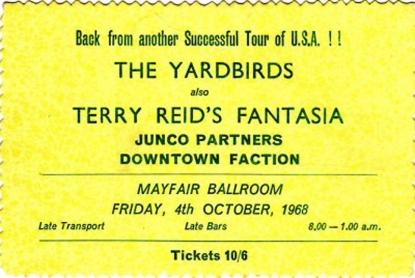
13-mayfair-4-10-68

What year was this ?

Around ‘67/68. We were the support band on Led Zeppelins first ever UK gig at Newcastle Mayfair. They were still called The New Yardbirds then and had only been going two weeks.

Can you remember much about that time ?

Well we used to be on at the Mayfair a lot then, Tuesday would be a couple of local bands and other nights would be a big band who wanted local support. I used to see a lot of bands there, I was always in the Mayfair. I remember that Yardbirds gig but it didn’t make a massive mark.

How old were you then and did you have a proper job ?

20 year old and a window dresser at Shepherds department store in Gateshead. I’d dropped out of art college and needed a job. I got on well at the store so was able to juggle my time with gigs and work.

Simon was a photographer at Turners in Newcastle so that was great for arty publicity shots that we could put up in a shop window in the Haymarket. They became a bit of a talking point, we always tried to be creative with what we did.

What else was happening on the music scene ?

We did a gig New Year’s Day 1969 at Newcastle old town hall. Somebody had the brainwave of putting on a blues and poetry day. There was no heating in the place, so it was freezing. Two bands played, four or five poets were on and about 100 people there.

The street poetry was astonishing, I’d never heard anything like it. Poets like Tom Pickard and Tony Jackson, pre cursor to today’s Benjamin Zephaniah and people like that. Very working class, very political.

After that there was a few blues evenings, all very arty, hippy, sit on the floor pay what you can sort of deal.

Did the band have a manager or agent  ?

Ivan Burchill was the main agent in Newcastle then, but we wouldn’t compromise about our music so didn’t get as many gigs as some bands. Plus at our gigs we never got the lasses you know, we’d get all the muso’s turning up.

A guy called Joe Robertson got us gigs when we changed our name from Downtown Faction to Brethren. That was when people were taking notice, we were headlining a few shows and Joe was also managing The Junco Partners.

That was when Alan Hull joined and his manager at the time Dave Woods from Impulse Studio came in on joint management with Joe. Inroads to record companies started to happen then.

Did you know Alan previously ?

He was in a band The Chosen Few who along with The Junco Partners were the big bands in Newcastle. After his band crashed and burned, he took a break then began song writing again.

He used to play in the folk clubs where the tradition was they’d let newcomers play three songs early in the night. He used to try his stuff out there and so did we because you didn’t want to try new stuff in front of a blues/rock audience.

Beginning as Downtown Faction, the band changed their name again from Brethren to Lindisfarne and were signed to Charisma records in 1970.

Was it an emerging scene then…

Yeah it was a bit of an underground song-writing scene on Tyneside that was parallel to the more pop based groups. Bit underground because there were musos coming down from Scotland – Rab Noakes and the JSD Band, there was Prelude from Low Fell, Milesy (John Miles) and his group The Influence from South Shields, many others.

Folk guys were influencing the rock guys and vice versa. We were listening to Music from Big Pink by the Band (Bob Dylan’s backing band). They were doing stuff from American roots music with a rock rhythm section and that’s what we wanted to do.

Fairport Convention were another band playing rock’n’roll versions of English folk tunes. Now here was music with a bit more history and depth, more gravitas. This is more like it. We loved that.

Our group all had different tastes but agreed on one thing. We loved The Beatles and we loved the way they treated every song as an individual piece of work. It wasn’t a problem for us to leave a guitar or drums off a track. It was all about the song.

We were a song-writing band and we had to treat each individual song right.

We could write something and if it was alright for Top of the Pops we were ok with that. We didn’t have a problem about being commercial. Some of the songs we had were great pop songs but we never set out to write singles.

Same with an album, every song had to count…no fillers. If there was a single in there, great, if not, no worries.

Have you got any road stories ?

Lindisfarne had a break from 1973-76, we had a few successful one-off gigs then made a new album in ’78. The opening night on the tour was Leeds University were The Who recorded their album Live at Leeds.

We broke their attendance record that night. Two weeks later the fire brigade came in and told the University ‘With the number of fire escapes you’ve got, you got to cut the capacity by 400’. So our record will never be beaten (laughs).

Anyway the opening night we had some pyrotechnics, we went a bit showbiz like, and they would go off at the end of the show. Balloons and confetti cannons. The big ending you know. At that point the soundman was to mute every channel – and he forgot.

So it went down every microphone, the monitors were like tissue paper, the speakers blew out as did the windows behind the stage. We weren’t invited back (laughs).

Did you play any gigs that turned out to be a nightmare ?

Some of the usual rock ‘n’ roll stories where the promoter won’t pay you. And you’ve already played the gig. One time we had to get our crew to park our truck across the path of the headliners truck so they couldn’t shift it. Then the word would go out about dodgy promoters so you would ask for half the money up front.

Some tours were great fun with other bands. Genesis were on the same label as us in the early days so we used to be on the same bill along with Van Der Graaf Generator. Depending on what city we were in and who had the biggest following we would take turns headlining. But we used to finish the gig doing a song together.

We’d play The Battle of New Orleans a Lonnie Donegan song, with Alan Hull, Ray Jackson, Phil Collins and Peter Gabriel singing a verse each. All the bands singing together. And nobody recorded it!

What does music mean to you ? 

It’s given me my life. If I hadn’t been enthusiastic about music and taken the plunge, I probably would have ended up being a not very good teacher. I’ve had a really exciting life and it still is, you never know what the next phone call is gonna be.

I’m still a music fan and that’s how I maintain my enthusiasm. So many good times with music. I’m just glad me Granda got us me first set of drums.

What are you doing now ?

We’ve been putting together Sunday for Sammy concerts. Our dear friend the actor, Sammy Johnson died in 1998 and we didn’t just want a plaque for him, we wanted to do more so we came up with a concert idea.

I’ve been involved with Sammy since the beginning in 2000 with Lindisfarne, then drummer for the house-band and from 2006 producing the show. The proceeds of the show are put towards the start of creative careers for young people. To date we’ve raised around half a million pound.

It’s fun to do and the audience laugh along with it. We had Mark Knopfler on one year and the running gag was he never got to do his song.

He comes on stage playing the opening bars of Money for Nothing and Tim Healy runs on shouting ‘No, not yet’. After repeating the gag Mark comes on later and this time Alan Shearer shouts ’Knopfler, play yer hit man’ (laughs). So, he never got to sing but eventually played ‘Local Hero’.

Yeah, we have great fun and so do the crowd seeing some well-known faces doing things they don’t normally do on stage – singers in sketches, Brian Johnson played an angel once, actors singing and TV presenters accidently swearing.

It’s a family show but we recommend 14 years plus because sometimes people forget their lines and you never know what they’re going to say.

Who scripts the shows ?

We have a few people. Dick Clements and Ian Le Frenais who wrote The Likely Lads and Auf Wiedersehen Pet, they write us a new sketch every time. Geordie comedian Jason Cook, Ed Waugh from South Shields. We also have a sketch writing competition for new writers, A Sketch for Sammy, we used two winners on the 2018 show.

Are you looking forward to the 20th Anniversary show ?

To be honest I’m terrified and excited in equal measures.

https://www.sundayforsammy.org/home/blog/sunday-for-sammy-2020-ticket-news

Interview by Gary Alikivi   August 2019.


DESTINY CALLING – in conversation with John Roach guitarist with North East metal band Mythra

On February 13th 2017 an interview with North East heavy metal band Mythra saw the first post on the Alikivi blog.

Over 75,000 views later and for the 250th post is appropriately an interview with John Roach…

Last year our vocalist Vince High left the band for personal reasons, but we’re still mates. I met Vince when I was 16 in the training school at Swan Hunters shipyard in Fisher Street, Wallsend. We liked the same music and hung around together at work.

I was in a band called Zarathustra with Maurice Bates, who was originally the singer now current bass player with Mythra. Vince was in a band called Freeway and eventually he joined us. Pete Melsom was on bass.

53719219_2164098597236599_4408484686087585792_n

Where did the name come from ?

We needed a shorter name really, one that was easier to remember so after a few ideas were thrown in the hat I came up with the name Mythra. We went with that one and around the same time Barry Hopper joined. Our original drummer Kenny Anderson wasn’t really 100% into the band so Barry stepped in.

When Barry first came to audition his brother dropped him off in his car. We took one look at his beautiful silver Tama drumkit and said ‘He’s in’ (laughs).

As the original four piece Mythra, we all went to gig’s together. Not just Purple or Sabbath at Newcastle City Hall but local bands Warbeck and Axe with Keith Satchfield, Southbound and Circus. There were some truly great rock bands around at that time.

Watching them saying ‘this is what we want to do, this is just like Top of the Pops… but real’ (laughs). Axe were probably the most influential band for us they had a huge p.a. and lights and they wrote their own songs, that’s what we wanted.

We were all learning from each other really because we knew the lads in other local bands Saracen, Hollow Ground, Hellanbach.

It was like ‘Dawsa (Steve Dawson, guitarist Saracen) has got a Marshall stack…What, really…let’s go an’ see it. Or ‘Metty (Martin Metcalf,  guitarist Hollow Ground) has got a Les Paul. What, a real one ? (laughs).

The band were all around 18-year-old, we had bought a Bedford van, our own pa and started earning money from workingmen’s clubs in the North East. Getting our own van was a milestone really instead of our dad’s dropping us off in their cars.

We gigged from Hartlepool, Teesside right up into Northumberland. Maurice got us tied up with Ivor Burchill the main agent in Newcastle. We were getting loads of gigs right through ’76-‘80.

We played Sabbath, Wishbone Ash, Humble Pie rock stuff like that. I was earning more money from playing than I was for being an apprentice fitter in the shipyard. You can’t do that anymore (laughs)!

We had a couple of roadies helping out with the gear plus Lou Taylor came along with his homemade lamps, lights, flares all sorts (laughs). He was always singing in the back of the van.

He used to do these Rob Halford screams and they were spot on. I think Vince thought he was auditioning for Mythra. Lou ended up singing in various bands like Saracen, Satan and down London with Blind Fury.

52762406_2024617097652306_4576230401973944320_n

In 1979 Def Leppard released ‘Getcha Rocks Off’, Iron Maiden the ‘Soundhouse Tapes’ and Mythra recorded the Death & Destiny ep at Guardian Studio in Durham making them one of the original NWOBHM bands.

Yes, we never said we were the best, just one of the first. The single was recorded around September or October and we released it in the November. Actually, we just wanted to record a demo at first, put it on cassette, send it around record company’s and hopefully get a deal.

The producer and owner of Guardian Records, Terry Gavaghan, said for the same money you can get it on record and it will look more professional than tape.

So, we bought 200 records at first. We sold them and went back a fortnight later to order more! We sold most of them at Second Time Around Record Shop in South Shields.

Gavaghan got us a distribution deal with Pinnacle Records so it was sold all over the country. Rod MacSween at International Talent Booking agency heard Death and Destiny on the Friday Rock Show hosted by Tommy Vance. That opened a lot of doors and got us bigger gig’s nationwide.

By the time 1980 came around we had done a lot of gigs and recorded the EP but I couldn’t see the band going any further. After five years, I felt as if I had enough, so I left in the February.

The rest of the band got a guy in called Micky Rundle to replace me and he played on the Headbangers Ball in July ’80 at Stafford Bingley Hall with Motorhead, Saxon and a few others.

Looking back on the EP, we are really proud of it because we were the first of the bands like Fist, Hellanbach, Hollow Ground and Saracen to release a record. We were at the front of all that.

Did you work with any other musicians ?

I had a break for a few months then started rehearsing with Saracen. Lou Taylor, Les Wilson, Dave Johnson – and Steve Dawson was the other guitarist. But Steve and I had different playing styles and it didn’t work out. I don’t think Saracen was destined to be a two guitar band.

Around six month after that Harry Hill (Fist drummer) got in touch and I joined them. We played the Gateshead Festival with Diamond Head, Lindisfarne, Ginger Baker and headliner Rory Gallagher.

Did you have a manager in Fist ?

Our management team were based in Manchester and were called Rhino Promotions. I think they had a clothing company making jeans – which were like Geordie Jeans here on Tyneside.

I remember a gig in Manchester when the back window of our hired car got smashed and they pinched everything from the boot including my leather trousers, cowboy boots and skimpy black t-shirt that I wore for the gig. They also took a pair of red shorts and an orange bag belonging to Harry Hill. He was livid!

And I’d only wore the leather pants once. We drove back to Tyneside with Glenn Coates, Norman Appleby and me in the back, freezing our arses off sitting on tiny bits of glass from the back window (laughs).

How long were you in Fist ?

I was in Fist for about a year and a half, originally with a singer called Colin Johnson before Glenn Coates joined. We recorded the album Back with a Vengeance and played a few gigs.

The rest of the guys decided they wanted to be a four piece so after a rehearsal in Felling – Glenn and Norman came to my house and told me I was out. It was a bit of a shock!

We had a side band going called Centrefold – Harry, Glenn, me and a great guy called Peter Scott – who sadly died very young of a brain tumour. This continued for quite a while after Fist so there were no real hard feelings.

After Peter died we were going to start Centrefold up again with another bass player but my heart wasn’t in it – I think Steve Dawson took it on – small town Shields !

61546111_10211159663346540_864351645650124800_n

Bringing your story up to date, what have Mythra planned next ?

Well, we are all just enjoying it. Earlier this year we were at the Grimm Up North festival and Negasonic in Belgium, where we showcased some new material.

We’re currently finishing pre-production on 12 new songs, and we are going to record a new album for High Roller Records with our new singer Kev McGuire later this year. Kev is a great guy with a lot of live experience on stages in the North East and he has a great rock voice.

Our next gig is in France at the South Troopers Festival in Marseille on 21st September.

Contact Mythra on the official website http://www.mythra.co.uk/

or through their Facebook page https://www.facebook.com/mythranwobhm/

 Interview by Gary Alikivi    July 2019.

DIAMOND GEEZER – with former music manager & promoter Jim Sculley

There was one particular savage night when everyone seemed to be fighting. I was worried about one lad whose face was just awash with blood. I wiped the blood with a tea towel. ‘You been knifed mate?’ I asked. ‘Nah’ he replied ‘I nutted someone and his teef stuck in me forehead’

Who said working in the music biz was a glamourous job ? Jim Sculley was born in West Hartlepool, County Durham where he had a decent education…But when I bought my first guitar, studying went out of the window (laughs).

Jim joined local band The Mariners as lead guitarist in 1962 and was working at Hartlepool Steelworks at the time…

After lots of gigs and personnel changes, the band changed its name to The Electric Plums. Then in 1964 I went for a proper job and answered an advert to train at an old established jeweller’s shop called Lamb’s.

He was a great employer who trained me well and sent me to night school in Billingham to study Gemmology, the science of precious stones.

I repaid him by doing the dirty on him by going in business with my night schoolteacher. We set up a jewellers in Billingham Town Centre in 1971.

I found out afterwards from an ex-colleague at Lambs that the boss admired my bravery for setting up our own business and bore me no malice at all!

Business boomed and they quickly gained three more jewellery shops and two more partners…

I was still dabbling in music at the same time but by then had left the Electric Plums to join a girl fronted band called The Partizans. Around ‘68 we changed name to Whisky Mack.

This band was good doing night clubs and social clubs, supporting known artistes such as Karl Denver, the Dallas Boys and Tony Christie.

The band were offered a German club tour but Jim thought it was time to call it a day…

The shops were doing well, and I couldn’t jeopardise my future for a few months gigging abroad. So around late ‘72 we trained up a new guitarist for the tour and I said goodbye.

But a few years later, I was back on the road in a couple of duos…couldn’t leave the old grease paint behind (laughs).

How did you get involved in promoting ?

I wasn’t a great follower or even an avid listener of rock music at that time. However I’d got into the habit of going to rock gigs at Thornaby Cons club and being a guitarist, started to appreciate the quality of musicianship in rock. This was around ’79.

At the club fans were telling me that there was a lack of venues in the area, and that local promoters were finding it difficult to coax new bands with any pedigree. A light lit up! Could I make any money at it, and did I fancy the challenge?

What venue did you use for the first gig’s you promoted ?

I was putting the word around for local bands to play my new weekly gig in The Swan ballroom in Billingham. Getting an agency licence wasn’t easy in those days, there were financial checks, but within a month J.S. Promotions & Agency was born.

‘Rock At The Swan’ was an instant success with local bands queuing up to play. They would take a percentage of the door take after costs were taken off for an advert in the local press and pa hire.

After a few months we were getting requests from bands from all over the country due to word of mouth. And not only from bands. Agents were wanting to send bands with newly signed record deals on the road but were having difficulty finding promoters who would take a chance on unknown bands.

Another light bulb moment hit me, and I jumped at the opportunity. Provide new blood for the fans and possibilities for local bands to support a signed band.

I asked myself I’m working with big agents who need venues to blood their bands. Why don’t I track down more venues and offer these big agents a full tour for their new bands.

It made sense because these agents didn’t really want to take time to blood these bands on the road. They would wait till when the album was out and selling, then take over and put them into major venues.

So, I set to work on the telephone and scanning through tour adverts in Sounds and Kerrang. Eventually sorting myself a good number of venues that I knew I could form into different size tours.

It helped when talking to each promoter that I was promoting a venue, same as them, and knew the score. I could be trusted and they knew that. It was a very important point.

By 1981 J.S. Promotions & Agency was well established. I was sending bands here there and everywhere. The Swan gig was bouncing, and the jewellery shop was doing great.

I often look back and wonder how the hell I kept myself going! Suppose it was because I was still young and kept quite fit. Be a different story today (laughs).

Did you book any big name bands at The Swan ?

I ran that Swan gig for about seven or eight years and some biggish names have been on that stage. It was a nice venue, being a ballroom, and a decent sized fire regulation limit of 200 plus people.

Bands like The Groundhogs featuring Tony McPhee were regulars and would always fill the place. I worked them a lot tour-wise.

And what about this for an eye opener of a gig – in 1983 aged 17, son of Led Zep’s drummer John Bonham, Jason formed his band Airrace.

I got a call from his agent asking for a Billingham Swan gig as part of the band’s first tour. Money no problem, they’d just accept percentage door-take. But on one condition – that the band be judged on their merits and not the Bonham name, no mention of Jason Bonham could be used in any advertising. Of course I agreed and the band turned up on the date…in a great big pantechnicon van!! Wow!!

I have never been so up and close to a back line like it. Wall to wall, ceiling to ceiling Marshall amps. Not for volume but for clarity.

Great sound, great gig, and a reasonably full room, rock fans aren’t stupid, they read the rock mags. And I have to say what a genial gentleman Jason was, no airs or graces, happy to chat to all the fans after the gig.

67142519_484098198831464_9212562342905118720_n

New Wave of British Heavy Metal was at its peak during the early ’80s. Did you come across any of the bands in the Teesside area like Axis or White Spirit ?

In 1982 I’d taken a shine to a rock band I’d given a few gigs to, Black Rose, they were in the Iron Maiden kind of mould at the time and wrote their own material.

They had a manager called Barry Clapp but were disappointed they weren’t making any progress. They asked me to manage them. I talked with Barry who gave me his blessing, admitting he’d had enough.

By six months we had a single out on the Teessbeat label called No Point Runnin’ coupled with Sucker For Your Love. One of the Sounds reviewers loved it and wrote a nice piece about it which propelled it to no.19 in the rock charts.

The band then appeared on two compilation EPs in the same year. One Take No Dubs on Neat Records, and the other on Guardian Records, called Roxcalibur.

The album included Battleaxe, Satan & Marauder. ‘One Take No Dubs’ had Alien, Avenger & Hellanbach.

In 1984 the Midlands rock label Bullet Records signed the band. They produced a self-titled EP, also the Boys Will Be Boys album. A single of the same name was taken off the album.

All through this studio activity the band were gigging heavily in the UK and Holland where they have a strong fan base. I went with them to a gig in the Dynamo Club in Eindhoven. Brilliant gig.

Coming back from that gig a funny thing happened at the Dover customs. Me and four band members were in my Mercedes. We were kept at least half an hour, as the officers were searching the car, under it, in the boot, under the bonnet. They couldn’t believe that a long-haired heavy metal band would not have something suspicious on them especially travelling from Holland

I had an awful time explaining to the customs officers that none of the band actually smoked, rarely drank and nobody actually bought anything from duty free (laughs).

In 1985 Bullet folded so the band returned to Neat Records and recorded a superb EP titled Nightmare. Then a year later…eureka! The band were noticed in the USA.

Neat Records engineered a deal with Dominion Records – an offshoot of the massive K-Tel Records, for a studio album recorded at Neat. Walk It How You Talk It, was pressed, packaged and ready to be distributed. We were in talks to arrange an American tour. After all the hard work since 1982 we’d made it.

Then a bombshell phone call from Neat. The powers that be in America hadn’t done their homework. There was already a band called Black Rose who’d registered their name in the States, they were threatening to sue.

Our label Dominion Records took water in and pulled the deal. Neat wouldn’t fight it, so everything was scrapped. Not long after, myself and the band parted company. Gutted to say the least.

Pauline Gillan Band

Did this disappointment put you off being a manager/promoter ?

No. I managed The Pauline Gillan Band, from about 1984. I knew two members who lived in the same town as me, Billingham. Davy Little, a great ex-Axis guitarist, and Chris Wing on bass who could play anything you gave him. He wasn’t called the Wizz for nothing.

I’d caught the band at a couple of gigs and was impressed. They asked me along to a rehearsal and I think we all knew when I left them that I’d be their manager.

I had them gigging extensively right through the UK. Including gigs at the London Marquee. We were contacted by a promoter in France who was organising a music festival at a place called Neuvic not far from the Dordogne region.

He’d heard about the band through the music press and decided we would add nicely to the festival line-up. Actually we ended up as second to the headline band.

It was a magic time both for the band and the fans. In 1985 we managed to secure an album deal with Powerstation Records based in York. The album Hearts of Fire was recorded in Fairview Studios in Willerby near Hull.

While recording the album, Gerry Marsden of the Pacemakers fame popped his head in. ‘Can I pinch 10 min’s of your recording time lads, I’m appearing locally and I need to record an advertising jingle’.

Well 10 min’s later, that was all the recording done for the day because Gerry insisted on taking all of us, our roadies, the recording technician, him, his management and entourage down to the pub in the village for the rest of the day. Booze and snacks all paid for. And what a gentleman he was, so friendly.

Gerry told us a great story about one of the pop successes of that time Frankie Goes to Hollywood, who had a number one hit with Relax. On the B side was Ferry Across the Mersey which of course was written by Gerry himself, and that he’d received thousands of pounds in PRS royalties. ‘I love that band’  he laughed.

Did you promote any punk gigs ?

There were a few gigs that were memorable for the wrong reasons. Many punk gigs, big names, but mostly trouble with a capital T.

Around 1980/82 I was approached by a guy called Don who had just bought the then defunct Rock Garden club which was one part of the Marimba night club in Middlesbrough.

Now having owned some before Don knew everything about pubs and night clubs but knew nothing about the live music scene. So, he asked me, adding a financial carrot, to book bands and run live music nights. I agreed but advised him that a new name would be a good idea. So, it was a warm welcome to The Cavern.

As part of our licence the Police made us search the punks for weapons and glue, the preferred drug of the day for punks. My missus Marg would handle the takings and tickets at the door and take the glue from them. We weren’t allowed to keep the glue but return it to them after the gig.

One night we couldn’t help laughing when this little five-foot skinhead surrendered his polythene bag from his sock, then quipped ‘Now dont forget will ye…mine’s the Evo Stick’ (laughs).

The Rock Garden had always done well with punk bands and there was still a good punk fan base in Cleveland, so I decided to alternate heavy rock with punk nights. But battling was always on the cards at punk gigs – never at rock gigs.

First night at The Cavern, if my memory serves me well but I’m not absolutely sure, was well known punks The Destructors supported by a local band.

We had a strong security crew of about 8 men, one was a friend, Ron Gray who was an ex-European kick boxing champion. As it happens on that first night, we needed them all!

We’d got word through a contact that a mob was coming down who had bad blood with another load of fans. Still I wasn’t worried, we had plenty of cover didn’t we ?

Support band had only been on about five minutes when the crowd split into two armies. A bit like the parting of that biblical sea. And then the charge!

Marg was stood on a beer crate in the corner directing our bouncers, screaming ‘over there’ and ‘side of the stage’ and then opening the emergency door for me and the lads to eject the brawlers. She was a good help on band nights.

My claim to fame was to convince the Police to allow me to book the Angelic Upstarts who’d been banned in Cleveland for over a year.

I knew the police were pleased with our record of not allowing any trouble to spill outside and that was the reason we were given permission to stage this particular show. And what a cracker it was and believe it or not hardly any crowd trouble.

Other memorable bands were GBH, Penetration and Conflict. I liked Colin the singer of Conflict. He insisted we keep the entrance fee down so that his fans could afford it, even taking a smaller purse himself.

Did you promote punk gig’s at any other venues ?

Early ’80s I was co-promoting a punk gig in the ballroom of the Park Hotel in Redcar and managed to attract a really well-known punk band from the late ’70s, UK Subs. I booked local band Dogsbody or was it Dogsflesh as support to bring a few extra punters in.

Anyway one of the Subs members copped off with the girlfriend of one of the support band and took her to a room upstairs where the band were staying for the night. The support band went upstairs, and a huge battle ensued with carpets ruined with blood and drink. It took an hour or so to restore order.

Then the Park Hotel manager presents me with a bill for a huge amount. I can’t remember how much but remember shaking in my boots.

As promoter I could have been held responsible in some ways I suppose. But I turned on the Subs road manager and threatened to get the police and the newspapers involved, which would probably curtail or cancel the rest of their tour.

Anyway, he rang the band’s manager who agreed to foot the bill. Job done. I tried hard to stick to rock gigs after all this trouble but have to admit the memories of punk will always bring a smile.

539153_504044589624993_1031774801_n

If you can choose one, what is the best gig you have promoted ?

Slade in about 1984 at Durham University’s Student Union Hall. Massive sell out, queues right down the road. Great gig but didn’t get to meet them. Went to the dressing room straight after the gig but they’d already left for the hotel.

Have you any regrets as a promoter?

Turned down a Tina Turner gig as part of her resurgence tour. Thought the fee was too high. A couple of month later Private Dancer released and the rest is history. That was my Decca/Beatles moment!

There is a regrets number two. I was in the Marquee Club with one of my bands in 1985 and took a call from Bronze Records who wanted to show me a band. I went to Camden next day to see them and basically it was a country & western star, can’t remember the name. Anyway, country wasn’t my scene so turned it down.

Then he produced a picture of Tom Petty who was coming over soon to tour. The price was reasonable, but I knew he hadn’t released anything for about three years so turned that down too. Another Decca/Beatles moment!

What does music mean to you ?

For all I was playing on stage continuously for about 17 years, and it was part of my life for so long after that -management, agency and promotions, I don’t really listen to a lot of it nowadays. Weird eh!

But after thinking a little more about it, I’ve concluded that it’s the actual making of music, the playing of it, watching other people playing it – construction really. I was never one for lyrics, it was always the tune, the riffs and chord structures that got me excited. That’s why I tend to like songs with a nice hook to them.

I played my guitar at home quite often until I had a medical problem with my finger which made it totally inflexible. I can’t even form a chord now, which actually makes me quite miserable!

My last time playing on stage was backing local singer Johnny Larkin at a Help for Heroes charity gig about seven years ago. (pic. below)

Having said that we’ve booked both days of the upcoming Hardwick Hall festival. And I do watch Fridays on BBC 4 and we went to The Sage to see Mott the Hoople a couple of months ago. Sod it … looks like music still means a lot to me.

Interview by Gary Alikivi    July 2019.

THE FLAME BURNS ON for Davy Little ex- guitarist with NWOBHM band Axis

Davy was guitarist with Axis, who along with Fist, White Spirit, Mythra, Raven and Tygers of Pan Tang were at the forefront of the North East New Wave of British Heavy Metal.

Axis released their first single in 1980 on Neat Records and appeared on various Heavy Metal compilations. He also played with The Pauline Gillan Band, Kashka and now his latest project Lies of Smiles….

I bumped into former Axis guitarist Mick Tucker at Crash Crallans funeral in 2008. Mick worked with Crash when he was drummer for White Spirit plus working together on Tank’s Honour and Blood album (released 1984).

It was a terribly sad occasion, but we chatted about old times and new. In fact it was Mick who kick-started the Lies of Smiles project, he suggested bringing in his nephew Pat O’Neill (Black Rose guitarist) and Tony Thurlow (vocals, Berlyn, Panama). He said he would contribute to the album as well.

The opportunity to work with him and the other guys was certainly an incentive. So, I got in Chris Wing on bass and keyboards and Keith Naylor on drums from my Pauline Gillan days and we started writing.

Pat O’Neill already had the basis of four tracks. We then completed the other songs, which became Cross and Claw released 2010. Absolutely brilliant that I got to play with these great players. Mick guests on a track called Fallen, a beautifully crafted solo.

Pat is an outstanding guitarist as is his Uncle Mick, but Mick trained us both, while I am not in any way in that category of guitar player, I was trained well, and I know how to get the job done.  

The album was produced by Fred Purser at Trinity Heights studio. Fred used to be guitarist with Tygers of Pan Tang so we knew each other from back in the ’80s. He is a great producer, great musician, a joy to work with.

Do you look back on your time in Axis ?

Well back in 2011 Jaap Wagemaker and the MD Steffen Boehm from High Roller Records got in touch with Mick Tucker about an Axis album. I believe their thing is releasing stuff from the NWOBHM era.

They already acquired the rights to the single Lady/Messiah and asked if we had any old recordings. I gave them three live and three studio recordings.

What a job they did of the vinyl and cd Flame Burns On, with an eight page booklet and the original Axis poster for Lady.  They were a great company to deal with, no arsing around, just did the job in spectacular fashion.

What is the story behind Axis getting involved with Neat records ?

After a year of gigging, we had some interest from Neat Records. They had seen us twice in Sunderland, and then Newcastle Mayfair. I say interest but I always got the impression they weren’t interested at all.

I can’t say it was great working with them. Everything was an information fog, if you didn’t see it, it wasn’t true. So my first impressions of record companies wasn’t a good one.

They didn’t think we were heavy enough for the Neat label so put us on a subsidiary label Metal Minded – go figure. Anyway, I didn’t really care, it was a way to get something out.

The single Lady did really well. Although it seems to be the B side Messiah that gets the more favourable press.

We did go back in the studio later with a couple of changes to the line-up. This time Sam Blue was vocalist (Emerson, Samson, Ya Ya) and on bass was Phil Brady (White Spirit). We recorded Flame Burns on, You Got It and One Step Ahead, they have appeared on various compilations.

I’ve only two good memories of Neat. Meeting Chronos from Venom, before he was Chronos of Venom. He worked there and was friendly, articulate, mad on drawing, and he did tell me his band were going to be the heaviest ever!

I also met Fist guitarist Keith Satchfield and had seen him play with Warbeck, Axe and then Fist. Great player and writer.

When I was in the studio and keeping to the Neat sound of tinny reverby guitar, he told us how to set our amps up, so we didn’t get the tinny reverby guitar! Rather kind I thought.

When did you first get interested in music ?

I was 15 when I started listening to the first Sabbath and Uriah Heep albums. When I was 16, I started work at the shipyard so had some money. We would go to Redcar Jazz Club and see Mott the Hoople, Atomic Rooster, Hawkwind and Curved Air.

I also met a great blues player in the shipyard, Kenny Relton. He had a band that did clubs, the White Folks Show band, he used to let me go to gigs with them.

They covered some great tracks, Mountain, Cream, Fleetwood Mac. I think that is really the point I thought this was a good idea.

Ken would give me pointers and let me play his Gibson SGs, and L6S guitars. Ken is a great player still, I think he despairs that I play heavy metal (laughs). So, I had a basic lesson in all the good things, work ethic, presentation, he was a ‘get it right’ sort of lad.

I also caught UFO and Priest early on at Sunderland Locarno. I actually saw the classic Schenker/Chapman line up. Plus of course one of my great loves Blue Oyster Cult. They influence me lyrically.

I don’t think many British bands have the humour, the satire, razor sharp observations, the out there poetry. So my paltry attempts at conjuring images of Sci-Fi wastelands and Starscapes usually falls a bit short of the mark (laughs).

Can you remember your first band ?

I had seen Axis live with their original line up. They were great musicians. I always thought Axis were principally a good blues band, lots of Hendrix, Robin Trower, Wishbone Ash.

In 1979 I was looking for a band to join, I was 23 so late as a guitar player. I went to audition as second guitarist and I remember having to learn a couple of Scorpions, Deep Purple and UFO tracks.

However, it must be pointed out that I did arrive with a fair amount of cash from my welding job. There were probably better guitar players than me that applied, but I was older and had a decent job.

I suspect I bought my way in. You know, give me the job please and I will buy this massive PA (laughs).

The chemistry was good, and I got the job and Axis were the first band I was in. Mick Tucker was and is a ferocious guitar player. I knew I could work and learn from him, try to create something different. We had a darker design for Axis.

Who else was in the band ?

I was surrounded by great musicians. Mick already had the line-up he wanted. Marty Day (drums) Paul McGuire (keyboards) John Cunningham (bass) Neil Grafton (vocals). They were all very patient with me as I had a pretty steep learning curve.

Initially we did lots of covers, Blue Oyster Cult, Scorpions, UFO, Montrose, but our main aim was to have our own stuff as the main part of the set, it just took time.

Can you remember your first gigs ?

First gigs were Thornaby Cons club. Lots of the NWOBHM bands played there like White Spirit, Limelight, Son of a Bitch who went on to become Saxon, Tygers of Pan Tang and Vardis.

The circuit was pretty good, the Warrington Lion, Sunderland Locarno where I sat on every toilet seat in the dressing room so I could have my arse where Michael Schenker once sat (laughs).

Me and our manager John Lancaster were big pals with White Spirit’s manager Mike Sanderson, so we supported them a few times. Gigging was always fun with Axis. I was in a band that is all that mattered. We travelled the length and breadth of the country.

Any road stories from that time ?

A memorable one was when supporting former Thin Lizzy guitarist Eric Bell at a local gig. We’re in at midday to set up a huge wall of Marshalls, drum riser, lights, smoke bombs the whole nonsense. Hey we were local heroes (laughs).

Then Mr Bell and band arrived. You can imagine the headliner walking in and seeing this mountain of shit on the stage. But what a gentleman, we were young and full of it.

He was very gently spoken and just said ‘This isn’t really the way it works lads’. Then much to our relief he said ‘but it’s fine, we don’t need much room, not bothered about a sound check’.

I remember it was packed to the rafters for Eric Bell, not for us, but we did ok. His drummer set up after us. Bass player rolled his amp on, Eric Bell rolled either a Vox AC30 or a Fender Twin on to the stage and blitzed the place.

No arsing about, no demands, just played like true pros. What a lesson, what a professional.

Of course, we thought he was brilliant, his band were brilliant, his last words… ‘Pleased you enjoyed it, now you know there is no need for all that shit on stage, and don’t ever fucking set up before the main band gets there’ (laughs). 

A year later went to see him at the Redcar Bowl and he introduced us to his new band with ‘These are the cheeky bastards who set up before we even got to the gig’ (laughs).

Another time our bus had broken down, so we had to hire a Luton van to get us to a gig in Wales. We were on the road to Tonypandy when the Luton stopped, back doors opened, and we get out looking at a battered bridge over a gorge in Wales.

If you were a sparrow, you wouldn’t have landed on it! Apparently there had been a lot of storms that caused structural damage so there was a sign that read something like ‘Safe load..?’

Well, this Luton with all the kit and us in it must’ve been well over the limit. To turn back would take hours, so our manager John Lancaster and soundman Paul Cleugh said… ‘Just jump in the back lads, we’ll turn round and find another way’. So, we did, like fools.

Back door shuts, van revs like it’s in a drag race, sets off with wheels screeching and us holding on to anything. We go 200 yards then stop and the back doors open. We have just gone over the bridge of death.

Mr Lancaster and Mr Cleugh crying laughing to shouts of ‘Are you fucking mental’. I asked why they didn’t just let us walk across the death bridge. The answer was… “That would have been no fun at all”.

What happened to Axis ?

The story ends with guitarist Janik Gers leaving White Spirit to join Gillan and Mick Tucker leaving Axis to join White Spirit. We found it hard to replace a guitar player like Mr Tucker, plus we had too many line-up changes in a short time.

Axis called it a day. Mr Tucker later joined Tank and is still touring and putting great albums out now, they have a really healthy following.
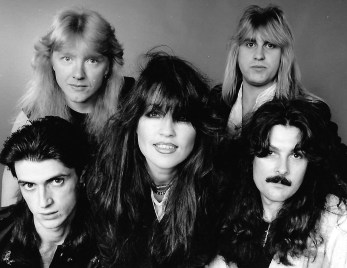
Pauline Gillan Band

Where did you go then ?

I joined the Pauline Gillan Band who were initially signed to Mausoleum Records, but then Powerstation got us out of that deal, so we signed to them. They were good people I liked them. They had Chrome Molly on their roster and later Little Angels.

A couple of singles came from the album Hearts of Fire and we took it out on the road touring extensively around the UK and Europe.

I brought John Lancaster the former Axis manager in as road manager. He was and is a great fixer. We also had decent management, a guy called Jim Sculley, also Black Rose’s manager. He worked his ass off for us and spent a lot of money.

We did a Tyne Tees TV live music show called TX45 and that was good fun.
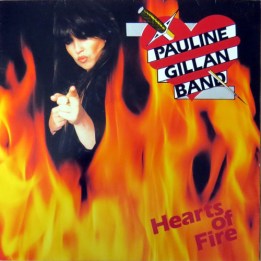
R-7630918-1454763533-1596.jpeg

What studio did the band use to record the album ?

We went into Fairview studio in Willerby near Hull. It was like Club Paradise compared to Neat. In reality we did what we could, but we weren’t great writers.

Powerstation did bring in some outside writers and we recorded some of that stuff. Not sure what happened with it, may have appeared on a compilation.

Have you any road stories from your time in the Pauline Gillan band ?

I remember playing in Watford and we had a very famous guest backstage, the drummer from The Sweet, Mick Tucker – not to be confused with Mick Tucker from Axis/White Spirit/Tank.

He was very straight with us.. ‘I’m looking for bands to produce, I want to take you into the studio and record that song you do, it has hit written all over it’.

The song in question unfortunately was Eric Martins Just Another Pretty Boy and it had been a hit for Mr Martin in the USA. We covered it in the set, and he could obviously spot a tune, but unfortunately, we couldn’t write one. He didn’t finish his beer (laughs).

Whilst on tour we had a particular Spinal Tap incident in Scotland. We stayed in a great hotel for a few days in a place called the Bridge of Allan and got to meet Jack Bruce (Cream) – he lived there. We bought the biggest bass cab you have ever seen off him. This particular night our management had got us a fill in gig, rather than sit on our arses in a nice hotel we had to get out and work.

It was a workingman’s club, and we knew we were in trouble when we looked at the juke box. All country and western, the stage had silver and gold tassels at the back.

They told us to do two 45-minute sets. Which we didn’t ever do, I mean the night before we had played Glasgow Apollo a real hard rock venue.

Anyway, we set up, sound checked and you could see the bar staff with their mouths open at the sheer volume. Lots of shuffling from the committee men. That night we emptied the place in around 5 minutes, but like troopers we carried on at full tilt.

I noticed two white haired old dears sat right at the back, drink in front of them, just staring at the stage. Between a break in a song, I said to Pauline ‘When we’re finished I’m going to buy them a beer. Who would have thought the two oldest people would stay through this’.

We came off stage, got changed and were told by the committee that our services would not be required for the second 45 minutes, fine by me.

I went to ask the two old people what they wanted to drink just as their carers arrived with their wheelchairs… they couldn’t get out if they wanted to (laughs).

But it was hard for Pauline being constantly compared to Ian (Gillan) who is one of the greatest rock singers of a generation in one of the greatest bands of a generation. But in Pauline’s defence she never wanted to call it The Pauline Gillan Band that was the record company insisting.

But it worked and we got great gigs, festivals in Europe, great hotels. Oh we also got backstage passes for some spectacular Deep Purple gigs on the Perfect Strangers tour.

We did our best as Pauline did, she was great to work with, fun, articulate and liked to party. I enjoyed that time immensely.

I only have good memories of the Pauline Gillan Band. We seemed to gig forever, that made us a tight band and we had fun wherever we went.

Did you work in any other studios ?

After Pauline Gillan I recorded with a band, Kashka. That was for Curain Records who put us in Fairview Studios, the producer was John Spence. We had Dave Bell, guitar, Chris Wing, bass/keyboards from the Pauline Gillan Band and our friend Mick King on drums.

We worked with two great girl singers Lorraine Crosby and Jackie Fox, and we really found our thing as writers.

The usual thing tons of interest. Isn’t there always? Even from the Queen management, they called and said Brian May was interested. We got a lovely letter off him saying he had crashed his car whilst listening to the tracks! He particularly liked the two girl’s voices.

So, story goes he took it to America with him. However, the view from their company in the USA was that they had factories churning out great girl singers and this type of AOR.

As it happened neither of the girls could commit to gigging. They both had decent well-paid careers as singers, we couldn’t afford them and they understandably didn’t want to do anything on a flimsy promise of stardom.

What are you doing now ?

I always think Lies of Smiles is what I wanted Axis to develop into. You know the Starscapes, Warscapes, God as an Alien, Lucifer misunderstood. Aliens as controllers of the human race and all that heavy metal bollocks in all its glory.

On both albums Cross & Claw (2010) and Dreams of the Machinoix (2015), Lies of Smiles have produced two huge granite slabs of classic ’80s hard rock enhanced by Ronnie James Dio ‘Mob Rules’ era vocals.

Both album’s benefit from slick, solid, meaty production courtesy of Fred Purser at Trinity Heights studio in Newcastle. Ticking all the boxes of any respected heavy rock/metal album.

There may be another Lies of Smiles album, three is a good number, it’s enough to tell a story! Dependant entirely on the boys in the band, we have the means to do it so it’s just time and commitment, and for no other reason than to create. Simple as that.

What does music mean to you ?

Maybe it’s mathematical, the laws of physics and mathematics apply to the planet, the Solar System, the Universe. ‘There is geometry in the humming of the strings, there is music in the spacing of the spheres’. (Pythagoras).

Thing is music is entirely intertwined with mathematics, even a basic major chord can be described mathematically.

But just listening to it is one of the most important things in life. It touches people and has a deeply profound effect on people’s emotions. It elevates people, makes them happy or sad, brings back vivid memories of times and places.

The creativity, comradeship and feeling of creating something from absolutely nothing. Looking back it was all fun, still is. I wouldn’t have had it any other way.

Contact the band on their official website:  https://www.liesofsmiles.com/home

Interview by Gary Alikivi    June 2019.

TYGER BEAT with former Tygers of Pan Tang drummer Chris Damage Percy

Previously on this blog was an interview with former Tygers of Pan Tang guitarist Glenn Howes.

As I’m tracking down former members of the Tygers, Glenn put me in touch with Chris Percy. Chris was drummer around the same time Glenn was in the band….

1930228_41742241320_2901_n

I joined the Tygers in 1999. I was asked by bassist Gav Gray, as by then we’d played in a few bands together often joining as the rhythm section. I was with the band up until the time just after the Wacken Festival.

We only played the one gig, Jess Cox had been asked to do something as it was the 20th anniversary of Don’t Touch Me There so that was the focus at the time.

Don’t Touch Me There was their first single released in 1979 on NEAT record label and produced by Steve Thompson at Impulse Studio, Wallsend.

What are your memories of the gig ? (pics above)

The Wacken gig for me was fantastic. I had my birthday out there so we had a little celebration. It was great as there was a shuttle of cars every half hour that went from the hotel to the gig so you just got in and travelled to and from the gig whenever you wanted.

I think at the time, the biggest gig I’d played was the bikers festival Stormin’ the Castle with a Guns n Roses tribute band. Now here I am being flown to Germany to play a gig attended by tens of thousands of people!

When did you get interested in music and who were your influences ?

I’ve always been interested in music from as far back as I remember. I started drumming from a very early age. My earliest memory is from when I was 5 years old, mimicking drummers I’d watched on the tv.

I was 8 years old when I started getting lessons from a guy called Bill Tennant who was a jazz drummer around the North East. I didn’t enjoy it very much until I was 11 or 12 when I was introduced to The Meteors, and I was hooked. I joined my first band at 14 called The Dead Travel Fast but we never played any gigs.

When did you play your first gigs ?

I was 18 and my first gig was at a pub called Images in South Shields with a covers band called Van Goghs Ear. The band featured guitarist Dave Burn, a very good local guitarist who has released loads of solo stuff. He recently played guitar for Paul Raymond of UFO fame who sadly passed away not long ago.

On the night we supported a band called Frenzy and I think Gunslinger might have been there. I was so nervous I drank six pints of snakebite before I went on and could hardly remember the songs!

Did you record any of your music ?

I ended up in the studio with a few bands. The first time was with my first originals band around ‘93 called FND with Dave Hills (guitar) Gav Gray (bass) Paul Nesbitt (vocals) and myself. It was completely free as Hilly had his studio in his house and we would just stay at his and drink and record songs.

Have you any stories from the Wacken Festival gig ?

The first day we get there and I was sharing a room with Gav Gray. Well this bloke turns up at the door, he asked us in this Brummie accent if we had a cigarette so we replied ‘Aye, whey aye, mate’. Which as we all know means ‘yes’ in Newcastle.

He looked at us puzzled and asked very slowly ‘Do you speak English?’  He turned out to be the singer from metal band Jaguar (laughs).

When we were setting up for our slot, I was working with the drum tech on my set up which literally took 5 mins as I just played a five-piece kit, unlike some of the bands who’d had double kits with cymbals and drums all over.

I started playing this kit and someone from out front came running back and started shouting ‘Stop playing, we can hear you out front’. Saxon were on stage at the time!

Why did you leave the Tygers ?

We only planned to play the one gig. Jess had no intentions of doing anything after that. Rob mentioned doing something but I don’t think anyone took it serious. We just went back to what we were doing, our day jobs, bands and waited for the release of the Live album.

 Check the official Tygers website for set list and album http://www.tygersofpantang.com/official/discography.html

holliemcmillan

What are you doing now ?

I’m playing in a fantastic ‘50s rock n roll band called Ruby & The Mystery Cats with Ruby Soho (vocals) Ray Vegas (upright bass) and G-Man (guitar). I absolutely love it.

Interview by Gary Alikivi    May 2019.