Sadly, some schools are still using egg-hatching programmes as a misguided way to educate children on life cycles of animals or using them as a treat to the children in their care explained Anna.
As more and more schools realise the problems these awful programmes cause, the companies who exploit these live young animals have extended their business model to include care homes where they aim to use them in so-called enrichment activities for residents.
Anna added…Despite the companies saying they will take back and home all unwanted chicks and ducklings produced from these programmes, the reality is very different. Even in the small print of the contracts they say that hirers have to be realistic about the fact that ‘some’ will end up as food and males will be culled.
Male chicks turn into very noisy cockerels and every year rescues are swamped with both male and female chicks and ducklings who are abandoned once they grow out of their useful ‘cute’ stage.
Our local wildlife and domestic animal rescue centre ‘Pawz For Thought’ who are based in Sunderland, are inundated every year with abandoned chicks from egg-hatching programmes.
A spokesperson for Pawz said“Every year we are inundated with calls from concerned parents of pupils who aredoing hatching projects. School hatching projects are often presented as education, but the reality is far from kind.”
“Chicks are hatched in the name of learning, yet the process has become a form of lazy teaching. For a few weeks, children view these animals as entertainment—then the chicks are handed away, this teaches young people that living beings are disposable and exist for our pleasure.”
“Every year, we are asked to take in chicks to save them from being culled. Around half of all chicks hatched are cockerels, and there are simply no homes for them. They face a terrible fate.”
“Schools often believe they are rehoming them to willing parents, but with no follow-up, many unwanted cockerels eventually end up dumped once they mature. This cycle of suffering must stop.”
Anna said…As part of their Animal Protection Charter, South Tyneside Council have contacted all of their schools and asked them not to use these programmes. They confirmed recently that none of their primary schools will book these programmes again making them an ‘egg-hatching programme free borough’!
Cllr Judith Taylor Chair of the Animal Protection Charter Working Group at South Tyneside Council said“South Tyneside Council is committed to the highest standards of animal welfare. We have taken decisive action by contacting all our schools to urge them not to use egg-hatching programmes.”
“We believe there are far more compassionate and educational ways to teach children about life cycles, and we encourage all educational settings to consider the welfare of animals in their care.”
Anna added…These programmes bear no resemblance to the actual life cycle of chicks and ducklings – they are not hatched in sterile metal and plastic incubators for a start. They do not have the warmth and love from their mother and of course they don’t show students where the birds end up and how they are slaughtered for food.
What are we doing now? We are currently campaigning across the North East and also have a group working in the North West and a group in the West Midlands coming on board. We want schools and care homes to know the misery these programmes cause.
We are also encouraging people to contact their MP and the Education Secretary to ask them to update the curriculum to remove the suggestion of egg-hatching programmes as an educational tool.
Thank you to South Shields artist Sheila Graber for the animation.
For further information about the work of North East Animal Rights contact >>>
As requested, readers of this site have contributed stories featuring supernatural phenomena. Researcher & Historian, and regular contributor to the site Dan Green, got in touch to pass on an interesting story he came across.
Report in The Shields Gazette 2013.
A visit to South Shields by three unexplained lights in the sky in October 1967 seemed to be very convincing as it was witnessed and recorded by policemen. But what occurred the previous year might be an even better UFO episode.
It began when a Shields resident agreed to tell her story to local newspaper The Shields Gazette in 2013 on the proviso that her identity was kept anonymous.
It was a cold night in late autumn, a black starless sky between 10-10.30pm when she and half a dozen of her girlfriends, all teens, were walking home from Harton village past Harton cemetery when they noticed a huge circular ‘flying saucer’ hovering approximately 20’ above the ground, coloured lights pulsated underneath with a humming noise.
It suddenly shot up into the air to a height of about 60-70’ staying stationary for a while then swooping down over the cemetery. Three times it repeated this climbing and ascending motion until it finally shot up into the sky disappearing in an instant.
The shaken girls stood there motionless and speechless and never said a word as they continued home. Little did they know that it appears that on the same night the unidentified aerial phenomena was also seen and witnessed by a Mr Alton, then aged 20, and his wife.
The object was first spotted as they were walking to their home near the old Westoe Colliery. It wandered slowly around the sky towards Tyne Dock where the following year the three lights above the flats were witnessed.
Disappearing from their view it was next seen 10 minutes later suddenly flying almost directly over Mr Alton. They could hear a soft humming sound as the black circular shaped craft blocked out the stars. A circular white light was centrally located on the underbelly of the craft, around the circumference was an aurora of soft, colourful light. It then flew off towards South Shields Town Hall nearby.
Mr Alton estimated it to be travelling at about 15mph and was at least 40’ diameter. They watched for about two minutes as it skimmed above the Westoe Road rooftops.
I recently contacted Mr Alton now 79 and living in Whitburn, to see if he was still clear with his story and indeed he is – there is no doubt in my mind that he is telling the absolute truth and in accurate detail.
Was this the same UFO witnessed on the same night as seen by the girls in Harton? Two remarkable close encounters begging the question, why was South Shields being visited by UFO’s during 1966 and 1967?
More revelations of supernatural phenomena will feature on this site. If you want to share your experience don’t hesitate to get in touch.
As requested, readers of this site have contributed stories featuring supernatural phenomena. 60 year old Jeff Anderson from Washington, County Durham, talked of his experiences.
The paranormal equates to something or some activity that is unknown now but is likely to be known and possibly understood in the future. So, a good example of paranormal activity would include ghost sightings and other spiritual activity of that nature.
It’s the stuff of sixth sense, which we are all aware of in situations when somebody is staring at us from behind, we look around and sure enough someone is. And vice-versa when we stare at someone suddenly they become aware of our stare.
I have over the last few years been equally fortunate and unfortunate to have been exposed to very real paranormal activity.
It was the very height of the Covid-19 pandemic I had been to Lidl one Saturday morning, nothing unusual there. Bonnie my German Shepherd was eagerly awaiting my return to the car. No sooner had I done so when quite inexplicably the car radio started playing and this despite being most definitely being switched off. I had the presence of mind to video the occurrence for future reference.
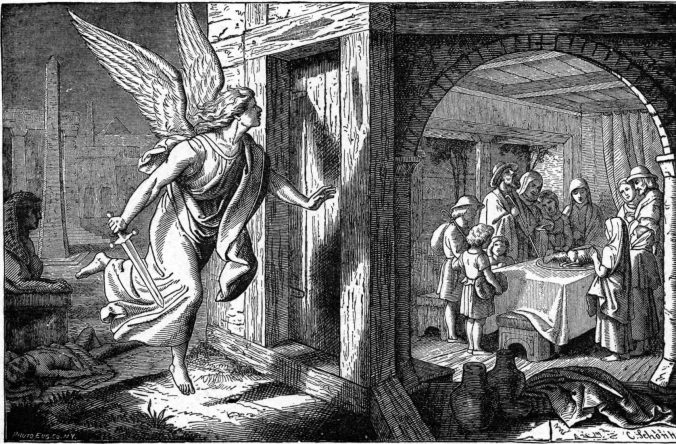
It sounded like Metallica playing but I wasn’t sure of the song. It turned out to be Creeping Death. I learned later it’s a song about the Biblical pass over featuring the Angel of Death. Creepy right?
On my weekly visit to my elderly parents house I explained to them the car radio occurrence and showed them the video I made that day. I felt someone somewhere was trying to communicate something.
In an instant a powerful gust of wind blew in through the upstairs front bedroom window, it came down the stairs twisting and turning and blew into the living room with such force that it actually blasted open the living room doors. It then turned back on itself and blew out of a small living room window. I mentioned it to my parents but they didn’t want to discuss it.
Unfortunately, my mother suffered a stroke a few year later. One afternoon I visited her in hospital with my Auntie. My mother occupied a room with three other stroke patients. There were just the six of us in the room on this occasion with no medical staff in attendance.
Of the four stroke patients three were asleep including my mam. The other patient was awake lying on her back, staring at the ceiling and occasionally crying out for her mother every few minutes or so, even though she was in her 70s herself. She was unaware of anything going on around her due to a possible dementia diagnosis.
The next thing it started raining mixed with hail and with such force and intensity I thought the window nearest to her might be blown in. After a short while things settled down.
However, the woman in the bed nearest the window was like someone possessed, she no longer cried out for her mother and was now fully aware. She turned her head and looked directly at me in the eye, diverting her gaze away from the ceiling. She even attempted to get out of bed at one point and come over to me. It was then I decided it was a goodtime to leave.
Sadly, my mother died a few months later. Two nights before her funeral I had left my bedroom window open only to be awoken at 3am by a strong gust of wind, so powerful it took every ounce of my physical strength to slam the window shut. Before I managed to close it the wind blasted me directly in the face, at which point an image of mother’s face unexpectedly appeared in my mind’s eye.
More revelations of supernatural phenomena will feature on this site. If you want to share your experience don’t hesitate to get in touch.
As requested, readers of this site have contributed stories featuring supernatural phenomena. A regular reader from South Shields shares her experience.
My ghostly event, and I can call it an event, happened thirty years ago at my late husband’s private memorial service. This account of the super natural happening is not only true it’s also factual. There are still people alive who witnessed the spectacle to tell the tale. There were other remarkable incidents before and after my late husband’s death but I have chosen to share with your readers ‘The Falling Angel’ episode.
Before the service I had spent some hours at the local church arranging floral displays. Andrew, the Reverend, popped in to admire the colourful stage set. There were several pedestals of white roses amongst autumn foliage, all linked with strings of white simulated pearls. A complete stranger had run her fingers along the strings remarking they were many tears of love.
The Reverend had asked me why the central pedestal was standing empty. I let him know I was intending to place my late husband’s photograph on top of it. It was the last one taken of him only weeks ago when we were touring the eastern seaboard of Canada. However, the Reverend offered me an alternative to the pedestal.
Hours later, a congregation of about thirty people sat in church in total silence with their heads bowed as the coffin was respectfully placed in front of the altar draped with a purple velvet cloth.
The Reverend began the service of love by welcoming the rows of tearful mourners. Then he walked over and took the photograph of my late husband from me and placed it firmly on the brass eagle lectern. Tears filled my eyes as I looked at my late husband’s image smiling back at me, resting on the eagle’s outstretched wings. The romantic scene was complete.
As he started to speak something unexpected happened causing a murmuring from the congregation. The photo fell to the floor. The Reverend returned it to the stand. He continued his soliloquy but not for long as the photo fell from the stand again. Visibly shaken he returned it for a second time.
As he replaced it, he mumbled some inaudible words before turning towards the shocked mourners. Everyone watched as the photograph moved forward and crashed to the floor for a third time. The glass in the frame shattered.
The service of love came to an abrupt end. I felt a deep urge to walk across and rescue the mischievous culprits image announcing with a smile ‘My husband is determined that he doesn’t want to be put on a pedestal’.
More revelations of supernatural phenomena will feature on this site. If you want to share your experience don’t hesitate to get in touch.
As requested, readers of this site have contributed stories featuring supernatural phenomena. Actor and theatre producer Alison Stanley talked of her experiences. Featured in this story is a medieval castle in Chillingham, Northumberland which is reported to be one of the UK’s most haunted castles.
In the past I’ve been a celebrant at funerals and enjoy doing it. I’ve always been interested in spiritualism. I believe in a next life. We’ve talked about what happens when you die and we’ve mentioned ghosts, spirituality and the like people believe different things explained Alison.
Some say when you die you just die and there is no afterlife. But how do they know for sure? And by the laws of science we are a ball of energy and by those laws it doesn’t die so where does that energy go? The physical body dies and is buried or cremated but what happens to the energy? It’s an interesting subject.
A few years ago we went to Chillingham Castle on a day trip. There was me, my mother, my youngest son and my step dad. It was a grey dark day lashing down with rain. We were driving along the country roads getting near the castle. We turned a corner and saw an old woman in a red coat standing at the side of the road. She wasn’t old as somebody from the 1800s but there was something about her that didn’t look right. We all remarked about this woman who was in the middle of nowhere really.
I looked in my rear view mirror and she was standing looking at the car. Where did she come from as there were no houses around maybe she has dementia? I just wasn’t sure I couldn’t put my finger on it. What really was wrong was she didn’t look wet she was bone dry. But it was lashing down?
We get in to Chillingham Castle and looked at all the artefacts and stuff it’s quite cluttered. On one of the clothes dummies was a lady with a red coat and she had a hat on. It was from one of the women who had worked there as a housekeeper. I swear it was the same coat we had seen.
Another time was 10 years ago. We were sitting in a bar called the Pig & Whistle in Hollywood which is a very theatrical, grand sort of place. I went through a red velvet curtain to the toilet downstairs and after four steps I couldn’t go any further, I stopped because I froze and the hairs on the back of my neck stood up. There was no way I could go any further down the stairs.
I came straight back up and told my husband we’re going to another bar for a drink because there is no way on God’s earth I’m going to the toilet here. Later we found out there had been a fire there and there was strong spiritual activity in the pub.
I think if someone is in the next life and they visit you I think it’s a bit of an honour really. They might have plenty to do and they have taken time out of their day to see you – so yes, it’s an honour.
More revelations of supernatural phenomena will feature on this site. If you want to share your experience don’t hesitate to get in touch.
55 year old artist and stonemason Rob MacDonald originally from Rugby in the Midlands has lived in Catalonia, Spain for the last 15 years working on community art installations. His latest project is in Sunderland.
About 10 years ago I came across a story about International Brigades in the Spanish Civil War (1936-39) who came from the UK. It was really interesting especially finding a guy who was on a ship coming from the UK with the same name as me. It piqued my interest so at first I decided I was going to make a sculpture of this guy explained Rob.
Rob in Sunderland City Hall with brochure of the monument in Catalonia, Spain. (pic. Alikivi Sept 2025)
I’d already worked on a few projects and exhibitions in Barcelona so I met with local contacts Alan Warren and Sonia Garangou, teachers and lead historian on the Ciudad de Barcelona. Together we developed a community art history project in the coastal town of Malgrat de mar 40 miles north of Barcelona.
As we talked about the history it became obvious that this wasn’t just about Rob McDonald on that ship it was about all of the International Brigade volunteers and how it related to politics and fascism today. We agreed that it needed to be a community led project because the memory of the Spanish Civil War is a sensitive issue. We didn’t want to go off and just make something ourselves.
The big question about it in Spain is the historic memory, the political left want to talk about it, republicans want to talk about it, but there are questions remaining like where are the unmarked graves? In Catalonia they realise how important the International Brigade volunteers were. In the end the backbone of the idea was to build a monument.
The first monument was opened on May 30th 2022 at Malgrat de mar. It is actively being added to every year, it’s a living monument. When working on it the figures were made in a series of workshops with local people. Some worked on them for 2 minutes others stayed for over an hour as I told them about the stories. I also went into schools and the students took away the information and learned more about the International Brigades.
There are loads of levels to the project – art projects, exhibitions and performances. It’s been really successful. Also, every year in May there is an event held at the monument where the Mayor and all the dignitaries of the town attend. All political parties support the project. There is a broad support, the first 30,000 euros for this monument were crowd funded.
Now we are based in Sunderland college. I have found a lot of pride here, people get behind the area, not just the football team but the shipbuilding history.
Normally around towns you see monuments of kings and queens and people you don’t know. But it isn’t working class history the sculpture is not done by the people and the community are never asked. It gets decided by someone in an office somewhere. The community don’t engage with it. The participation living monument is about community engagement. That is what we are interested in.
I’ve talked to people about working class struggle and the arts. We built up this idea that monuments and public spaces are part of the struggle for working class people’s dignity, history and rights – it’s all tied together. And the symbolism of sculpture is important because it talks to the community about who they are and who they are not.
Sunderland City Hall (pic Alikivi Sept 2025)
There are amazing stories of Sunderland being involved in the International Brigades. One ship bound for Spain in the civil war had on board two unemployed shipworkers from the city. Some of the ships were built here and the captains were from the city. There were men from here who risked their lives to help feed people in a foreign conflict.
Part of the project is not only to expose the history but find it as well because people from the city will be related to some of the Brigade volunteers. We need to build up those connections.
We are at a critical point in the project we are networking with people to make this monument happen. It’s important that people are involved in the process of making it. We are in talks with Culture and local Council – organisations we are looking to partner with and make links to get support.
There are a couple of areas where we would like for a monument – Mowbray and Barnes Park are nice and this new development down here (we are in City Hall) but there may be other suggestions.
The history of the Brigades might be tucked away in a cupboard here in the City Hall when really it should be in an exhibition for the community to see. You know they were brave people, heroes really, and this is an important part of social history that needs to be told.
Have you ever wondered how working class people survive in the arts and creative industry? From my own experience I can tell you it’s hard. Very hard.
In the early days of the 1990s I had a weekly diet of baked tatties. I’d go to me ma’s for me Sunda’ dinna. I got by.
It’s surprisingly full for a Tuesday morning in Newcastle’s Central Station bar The Centurion when I spot Alison. Looking resplendent in her beret while finishing off a bacon sarnie we find a quieter place to talk. She throws back her head and laugh’s out loud when I ask her have you ever had a proper job?
Yes, I was at the Inland Revenue for years. When I was there, I thought of myself as a resting writer, a resting actor but really found it soul destroying.
Sometimes you have to take jobs that you wouldn’t choose to do to survive in the creative industry. You have to get by. I’ve been lucky that my husband who doesn’t work in the arts, has a full time job and supports me fully as do all my family.
An opportunity to work as a library assistant in North Tyneside Council came up. I love the smell of books so the idea of being surrounded by them was great. I loved being involved when schools came in, I would read stories for the kids and put on various events.
The job was part time so it gave me more time to focus on what I should be doing – writing. I became busier in my creative work and was being offered jobs that I couldn’t turn down so had to decide if I was working in a library or an actor. You have to take the leap, you have to believe in what you are.
I’ve been acting now for about ten years. A freelance creative has always been my career choice that’s in all of my disciplines that I’ve worked in from actor to writer to theatre producer now film making.
I decided years ago to go out and make my own work rather than wait for someone to knock on the door and offer something – that doesn’t happen. You’ve got to get your name out there to increase your network. That would be my advice to anyone starting in this business. You’ve got to take chances. This is what I do. It’s a mind set.
I consider myself as a socio-economic playwrite. I write about subjects that are relatable to people, quite pertinent and pushing boundaries seeing how far you can go. If it makes people laugh, cry or squirm I’ve done my job. It’s important to me to be challenging and turn a spotlight on real issues.
I’ve got a few projects that I’m working on now. Lately we’ve been touring ‘Living the Life of Riley’ around the North East which was great and that is going out again in February 2026. ‘Life of Riley’ has been in the works since 2016.
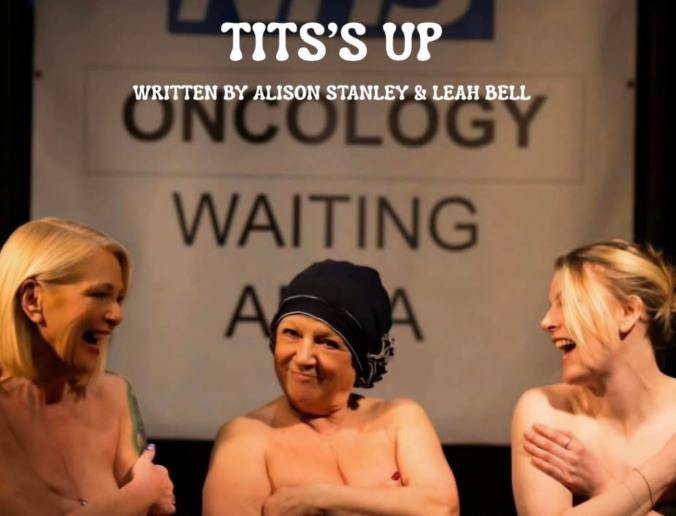
And another short North East tour for ‘Tits Up’ co-written with Leah Bell. That’s planned for another tour next year. Really pleased with that as it’s sold out now.
That’s a play about three women who meet when they are diagnosed with cancer and how it impacts on them and how they deal with it. Unfortunately, we live through a time where if it’s not breast cancer it’s some form of cancer that lives are touched by. The play is both heartwarming and heartbreaking.
In ‘Tits Up’ there is someone who is diagnosed with cancer and there is the carer who she couldn’t manage without. That is real stress. You’re worried about the situation and the endgame that might be coming.
Of course, we all fall off our seats laughing with the actor Leah Bell but there is a serious side which comes through. There is a balance we have to get right.
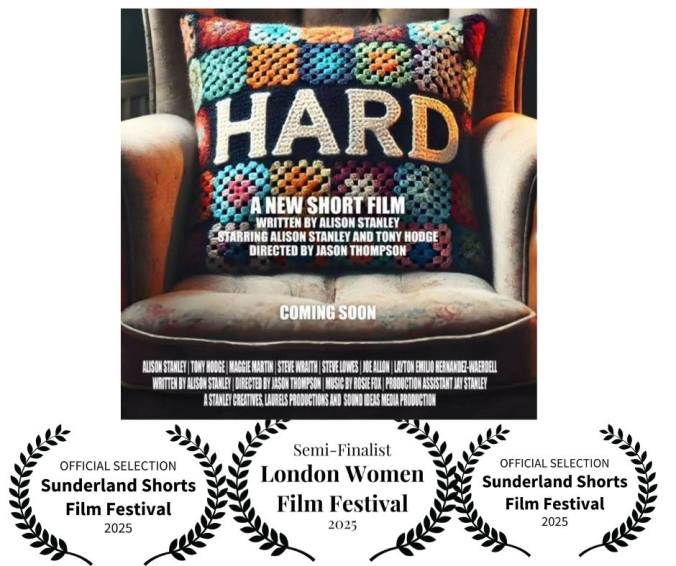
My ambition is to produce more plays outside the North East and tour nationally, which ‘Living the Life of Riley’ is already doing and we are working towards that with ‘Tits Up’. We have taken ‘Hard’ to London and it’s definitely something we want to pursue more.
Screenwriting is something else that I’m starting to do. I filmed a scene from ‘Hard’ over two days on a shoestring budget and I loved it plus it has been awarded three times in UK film festivals so that spurs you on.
I’m interested in using latest phone technology for film making and being creative with it, keeping it fresh. I roped in Leah Bell and Tony Hodge (Byker Grove) to be involved. Really looking forward to more. I’m excited about it.
Have I got time for anything else? Me mother Rose was a talented writer but didn’t have anything published. When she passed away last year, I started a writing competition for Working Class Women Over 35. The first winner is announced in October this year and next year the play is produced at Laurels in Whitley Bay.
Also, it’s early stages at the minute but I’m writing a few fictional stories about events that happen in a town. That’s maybe for a book. I’m really enjoying it there is no deadline so it’s sort of like a hobby but we’ll see where it goes. Owt really that stops me getting a proper job!
Meeting up with contributors to this site I’ve asked how they survive in the arts. Some talk of persistence and others simply being obsessed by it. I think to give yourself a good chance you’ve got to be prepared to work on it day in day out basically 24/7/365 days a year.
85 year old Sheila featured on this site in June 2018 where she talked about spending her life in art – so she was the perfect person to ask.
Surviving in the arts is for me going with the flow. I believe in my Mam’s saying ‘Every day in every way in everyday I’m getting better and better’ particularly when you are feeling crap or when things have gone wrong. In the arts you need this saying because there are times when things just don’t happen for you. Tempered with that my Dad used to say ‘worse things happen at sea’! So never, never, give up. Keep positive and keep going.
After attending Art College Sheila then went to Birmingham School for Training Art Teachers in 1961.
That was the best thing to happen to me. I was shown that everyone is an artist in their own way and it’s your job as an art teacher to bring it out. It’s about giving something positive to people in their lives.
I first taught art in comprehensive schools in South Shields and by 1970 I was divorced and had time to play so bought a super 8 cine camera. Play is very important plus having a messy room or studio where no one tidies up after you!
My first messy place was at home in South Shields working at a desk looking out onto our little garden. Later it was a studio in the Pilot Office overlooking the river Tyne. Then by the mid 70s I got a break in animation.
I was contacted by an agent for World TV who sold the short films I made globally. She later commissioned me to animate 10×10 minute ‘Just So Stories’. The actual process of animation can take a long time to produce minutes on video so the only way I could produce this was to give up teaching – which I did in 1980.
Sheila animating Frame by Frame for World TV and her Mam crocheting for a local shop – a true cottage industry.
Sheila also works with various charities, the last post features Anna Malia and North East Animal Rights, how did you get involved with them?
When I lived in Ireland I saw an incident, not to go into it here too much as it’s really upsetting, but there was a field of cows and a calf that broke free from the herd. It was about how it was dealt with by the farmer that really affected me. I thought if I get the chance I would do something for you – for that calf.
I heard a song by North East musician Jen Stevens, loved it, and thought that would really work with images. I asked Jen if I could use it and she said yes. We put it out and Anna Malia from North East Animal Rights got in touch and we took it from there.
Sheila is currently working on a book about George McVay, a little known artist who lived from 1902-1967. Former Shields Gazette journalist Janis Blower is in the process of editing it.
George was a very good photographer which accounts for the very large detail in his pictures. His style of painting was very photographic. When I was 8 my mam bought a set of his prints that the Gazette had commissioned and I loved looking at them like kids look at ipads now. For a long time I done plasticene models of them.
All his life he drew some amazing illustrations of Shields and surrounding areas. Some people may recognise his black and white drawings, very clear, very precise everything from the old Town Hall to the piers, the river and the Groyne. In the book Janis Blower will be adding underneath a description and history of George’s picture.
In his early days I gather he worked at Readhead Shipyard, he was studying planning, design and engineering. His Dad was mayors secretary at South Shields Town Hall and was a good photographer. It’s thought he said to his son that he should work in the Town Hall and he eventually did, he was employed in the ratings department.
Out of the goodness of his heart he’s done drawings for presentations at the town hall. There are some amazing manuscripts, whatever was required he could do it even when people leave. He also done commissions for the Shields Gazette.
The Shields museum have some in their store. He has stuff in the Hancock and Discovery museum, Newcastle. He did a showing at the Laing Art Gallery and down in London but all track of that is lost. Unfortunately, nobody has given him the recognition that he deserves.
What I’ve found over the years is that he and I have followed parallel tracks. We have both done a lot of work for charity and both drawn the most popular buildings and views in Shields because we love the place.
To contact Sheila check out her official site at >>>
In April this year the work of hunt saboteurs featured on this site, this latest post again looks at tackling illegal foxhunting but this time using a different approach.
‘First time I witnessed a hunt I was shocked by its enormity. It was a deeply emotional experience nothing could have prepared me for it. The following week I witnessed a fox killed by hounds. That day I made a promise – I vowed to get justice for that fox. It’s his memory that drives me on.’
To find out more about the work of the Northumberland Hunt Watch I sat down with Lynne in the Littlehaven Hotel, South Shields where she started off by telling me she has always loved animals.
‘Since I was a child. My earliest memory, of being anti-hunt, dates back to school I was 10 year old. During an English class debate the teacher asked me to argue in favour of foxhunting. I was horrified and refused point-blank. Despite never having witnessed a hunt in my life I always felt an empathy for the hunted fox.’
Tynedale hunt near Corbridge, Northumberland.
In 2002 Scotland banned foxhunting, England and Wales followed in 2004.
‘I thought that was the end of it. However, just because an activity is criminalised doesn’t mean it ceases to exist. Through social media I realised it was still happening on a massive scale. I was aware of the foxes out there alone with nobody to help them. I felt compelled to take action.’
‘I founded Northumberland Hunt Watch in 2020. Prior to this, I already had 5 years experience monitoring hunts. There wasn’t an anti-hunt presence in Northumberland at that time, leaving all the hunts in the area unchecked. There are some pockets of deeply engrained hunt culture in Northumberland, operating in some very rural and isolated locations.’
‘For these hunts it’s very much a way of life. They have a cultural pride in hunting, and strongly resist any attempts at criminalisation. The hunt community is a very tight community. They hunt together, socialise together, conduct business together and support one another.’
‘There are many different reasons why people foxhunt. Foxhunting has nothing to do with pest control or managing fox numbers. The hunts want foxes in the area to hunt which conflicts with the pest control argument. For some hunters it’s for the thrill of the hunt or the thrill of the kill. That is very difficult to understand.’
‘There are farmers and landowners involved in the hunt, who grant permission to access the land. Without this land there would be no foxhunting. For the riders who subscribe to the hunt, following hounds provides the freedom to ride over land that would otherwise be out of bounds. The fox is not restricted to boundary lines, so the hounds and riders are free to ride where the fox goes.’
‘The car support who follow the hunt mainly consist of elderly men. To them it’s a day out to socialise. They turn up with their binoculars, sandwiches and flasks having a good natter, they enjoy watching the hound’s work. I often talk to the members of the hunt to gain a better understanding of why they do what they do. We can’t expect to change something unless we fully understand it.’
‘We’ve talked about what we call ‘clean boot hunting’ a humane and lawful activity, which follows the scent of a human runner rather than a fox. With clean boot hunting they can still have everything they have now. The jobs will still be there, they can still have their socials and get together, their balls, their meets so they can still have their sherry and a bit hokey cokey, just don’t kill a fox. I think they fear their way of life will fall apart without hunting the fox.’
‘But humane hunting would be far more sustainable. Currently hunts claim to be trail hunting, which would involve hounds following a trail of artificial scent instead of a live fox. Unfortunately, trail hunting in my experience is just a cover for foxhunting.’
Have you a vision of what you want the group to be?
‘Yes, when I set the group up I thought I’m going to do this my way, I’m not going to war with them. I’m going to win hearts and minds. For me it was all about a love of wildlife, and a hatred of foxhunting and not a hatred of the people. I strive to end foxhunting for good so I knew that we needed to be taken seriously by the hunts and the police.’
‘I aimed to create a professional group with a credible image, as far removed from the negative stereotype as possible. We refer to ourselves as volunteers or wildlife guardians, rather than sabs, protesters, or activists. We don’t wear masks and we have a dress code. We’re conscious of how we come across to all the people we meet.’
‘Some people are just out for a dog walk in the countryside, families with kids, older people. Last thing we want to do is scare people, we want to be approachable. We’re always polite and respectful and get on with the farmers.’
Lynn with the West Percy hounds.
‘We absolutely love the hounds they are such lovely sweet animals, we would never do anything to put them at risk, and our hunts know that. We often pop along to their hound shows in the summer some we are made more welcome than others.’
‘We aimed to build relationships and establish trust in the community and we have. All of our hunts know who we are and they know our names. We engage in polite conversations, some team members live in hunt areas, so it’s not uncommon to exchange waves. Our approach has earnt us respect and fear in equal measures!’
‘Our overall aim is to make the countryside a safer place for wildlife. On a day to day basis we aim to be a visible deterrent, to prevent hunting and on most occasions we are. We rarely need to intervene as our presence is often enough of a deterrent. Our hunts will often try to avoid hunting when we are there, and certainly avoid hunting in front of us.’
‘Last year at a hunt I was filming when the hounds picked up a scent and chased a fox toward me. The whip panicked and stopped them all “Lynne, can you see me stopping the hounds? Have you got it on video that I’m stopping the hounds?” I replied, “Yes, I have, thank you.” The fox made his way to safety.’
‘In the long term we aim for prosecutions as this is the only way to end foxhunting for good. To achieve prosecutions then we need to be professional and credible.’
Outreach stall in Morpeth with Lynn, Judy, Amanda & Lynne
How much work is involved in the group?
‘A lot. We work very hard and put a lot of work in. I take this very seriously and am very committed to what I do. During the season we are out 2-3 times a week, despite working and other commitments. I would be out every day if I could. The fieldwork we do is just the tip of the iceberg. We do much more behind the scenes. Personally, I work on foxhunting every day of the week.’
‘I have taught myself a great deal over the years and always have my nose in a foxhunting book. I am also concluding a PhD in Criminology specialising in foxhunting with hounds. I have invested significant effort into this because I want to bring the issue of foxhunting criminality to a wider audience.’
Lynne & Judy leaving a successful Tynedale meet.
‘The lady who assists me in running the group, Judy, is a former police officer, so between us we have an in-depth knowledge of hunting and the law. We both work very hard on this, preparing cases and evidence for the police especially.’
‘Out of season we hold outreach stalls in hunt towns where we talk to the local community about our work. This has enabled us to lay the foundations for a positive brand identity while building up good relationships, trust, and respect within the community. We want the community to feel comfortable having us in their area trusting us to perform our job professionally.’
Have you experienced any threatening situations?
‘Violence and aggression from any of our hunts is exceptionally rare. We have had very few minor incidents in 5 years, most of which were dealt with swiftly, either by the police or the hunt themselves.’
‘Following one minor incident at one of our hunts I reported it to the chairman, he dealt with it, and we received an apology, so it was resolved sensibly and that was the end of it. There were no more incidents.’
‘We cover all the Northumberland Hunts from the Scottish border down to the Durham border, although Tynedale is our main hunt who we monitor regularly and have done for 5 years. They were a bit of a nightmare at first but they soon leant that it didn’t get them anywhere. They are very polite towards us now and we have built a good relationship with them. We are there to do a job which we do well and without getting into altercations.’
‘With all of our hunts we established clear expectations for behaviour from the outset ensuring that our conduct was respectful and polite. Over the years we have built a good rapport with most of them exchanging polite greetings “good morning, gentlemen” and in return “good morning, ladies.”
‘We never engage in name-calling or squabbles because throwing insults is not a stepping stone to positive change. This means that we can focus on what is truly important—the foxes. It might make someone feel better after calling someone names but it doesn’t achieve anything for the fox.’
‘The hunts also have a code of conduct regarding their behaviour towards us too. We have an unwritten rule between us we don’t call them ‘hunt scum’ and they don’t ride their horses at us, so this works well. This mutual respect means any of our team can be monitoring a hunt alone, in some isolated locations without any problems. Our approach saves lives.’
‘At one of our hunts we intervened between the fox and hounds, rating the hounds back so the fox could escape. This was in front of the hunt master and he said “thank you for helping” so we replied “no problem we’ll come back and help again next week.”
‘When we monitor hunts we focus on listening and observing, avoiding verbal confrontations is for creating a safe environment for the foxes allowing them a safe passage to escape. Foxes don’t know we are there to help them so we need to create a safe environment otherwise they would just see us as part of the pack. If there is chaos they could easily be scared back toward the hounds, we are very conscious of that. We often see foxes fleeing past us to safety. Silence is golden. It saves lives.’
How frustrating is it knowing fox hunting is illegal and it still goes on?
‘Very frustrating but there is a wide range of reasons why it continues. Weaknesses in the Hunting Act is a key issue, and also how it has been interpreted. This has provided loopholes for foxhunts to circumnavigate the law. There are so many issues that we will need an entire article to discus that alone. In a nutshell trail hunting has ensured that it is extremely difficult to prove them guilty and beyond all reasonable doubt. Consequently, trail hunting operates exactly as it was intended.’
‘We are committed to ensure that we have the best chance possible. Our behaviour will also come into question so we always act lawfully. Foxhunting is a low-level offence so if we break the law we lose the moral high ground and cannot expect the police to enforce one law while ignoring another. We have to be seen to be credible witnesses to make any progress.’
‘Because of how we operate we have built a good relationship with the rural crime team who we submit our footage to. We have had several incidents sent to the Crown Prosecution Service for review, and the police have acted swiftly in gathering the evidence.‘
Drone footage was captured of the Tyndale Hunt hunting a fox on 3 October 2024. This was submitted to the police. More information about this case can be found on the Northumberland Hunt Watch Facebook and You Tube pages.
‘There are some excellent groups across the country that have worked hard to end foxhunting, bring hunts in court or raise awareness, such as Beds and Bucks Sabs, 3 Counties Sabs, Cheshire Monitors, and West Midlands Sabs, to name a few.’
‘However, not everyone who joins a cause has genuine motivations, and the less credible groups can undermine the work of those who are genuinely committed and doing good work. It’s about quality rather than quantity, so finding people with the right attitude can be difficult.’
Lynne recording West Percy Hunt at Ingram Valley.
What have you found out about yourself since starting this group five years ago?
‘I have found that I am stronger and more resilient than I ever thought possible. If you have genuine intentions and committed to doing your best job for wildlife then you can make a difference. A middle-aged woman with a vision took on ten hunts, most of which were untouched and located in some of the most isolated rural areas of the country. I was subsequently joined by other middle-aged women to create a hardworking and professional group that has made a significant impact on hunting in this area. Never underestimate the power of middle-aged women on a mission!’
If you are interested in the work of NHW or would like to volunteer contact >>>
Since 2012 I’ve been researching the life of this fascinating character who was originally named Theophile Lucifer Gardini. He spent his last years living in a terraced house round the corner from where I live in South Shields.
In 2018 I produced a short documentary ‘Secrets & Lies’ based on what I found about his life so far, a link is at the end of the post.
I often mention him to neighbours and hear the odd story about Avro and his wife Anne. Recently an old friend got in touch and remembers the couple who lived at 45 Henry Nelson Street.
‘We moved into 32 Henry Nelson first week of June 1990, I think Avro died in the November so it was only a short time. I remember his wife used to have a little furry dog. She used to walk it out all the time.’ Recalled 60 year old Jeff Anderson now living in Washington, County Durham.
Jeff Anderson
‘I’d see them in the street. Always well dressed. Always smiling. I don’t think local people were aware of who he was to be honest.’
‘Actually, very first time I came across him and his wife was prior to moving into the same street. I saw them on the corner of King Street in the town centre. They really stood out, there was a real glow about them. They had a big smile on their faces. You couldn’t help but notice them’.
‘What they were wearing was very classy – not the type of clothes the everyday person of Shields would wear on a Saturday afternoon. They really stood out of the crowd just by their whole demeanour.’
‘But when Avro died I remember his wife was absolutely devastated. From the initial sighting in King Street and other times in Henry Nelson they had this glow about them but after Avro died that seemed to vanish from her. From what I can remember she was never quite the same’.
‘A strange thing happened to me on the night he died. I went to pick my wife up from work in the town centre but there was nowhere to park so I had to go back round the block. I went past St Hilda’s Church and as I went round the corner I had like a paranormal occurrence – the only way to describe it. I actually saw a vision of Avro on the ground reaching up to me. I was shocked, I thought what’s going on. This is a bit weird.’
‘I continued on and as I came back round the block again there was no sign of him. Gone. It really freaked me out as you can imagine. It wasn’t until a few days later that I learned he had died that night. So, you know what was going on there?’
‘I didn’t know anything about him having any health problems. He died at 76 you say? Doesn’t seem that old now does it?’
If you have any information about Italian born author & artist Baron Avro Manhattan (1914-90) please don’t hesitate to get in touch.