‘The Sound of a Landscape’ is a new book by artist, author and sound recordist Mie Fielding, who co-authored ‘Closest Thing to Heaven’ about the Newcastle music scene, which featured on this site in December 2020.
In ‘Sound of a Landscape’ Fielding pictures the Northumberland coast in all its wild splendour. His unique artwork is complimented by Cullercoats poet Harry Gallagher.
“I got to know Harry as he played the late Tom Hadaway (My wife’s uncle) in a theatre production. As I’ve recorded bird sounds and produced avant-garde music for over 30 years, it was a natural idea to put these artistic elements together” explained Mie Fielding.
MiE Fielding
The book is further enhanced with sound recordings by scanning the accompanying QR code, bringing ‘The Sound of a landscape’.
“The book also gave me a chance to produce two specially written pieces of sound art. One portraying Storm Arwen and the other lamenting the demise of a way of life, once a common sight along the Northumberland coast – the Cullercoats Ghosts” addedFielding.
“As for the sounds in the book, they took nearly a year to capture using an ‘Ambisonic, microphone and other technical equipment”.
An exhibition about the book featuring its poetry, art and sound is held at Newcastle Central Library from 14 -20 December 2023.
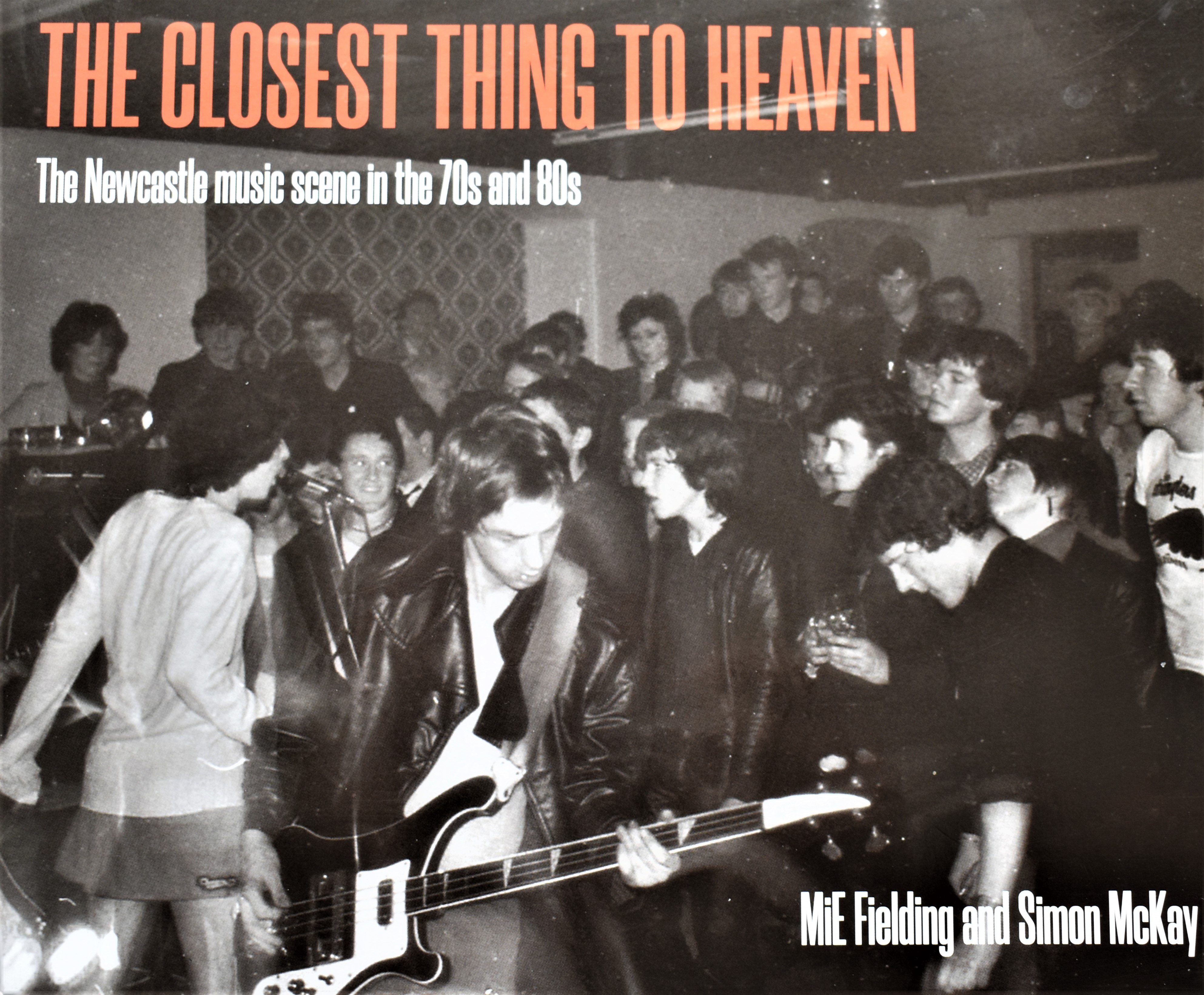
A book about the Newcastle music scene in the 70s & 80s ‘Closest Thing to Heaven’ featured in a post back in December 2020 (link below).
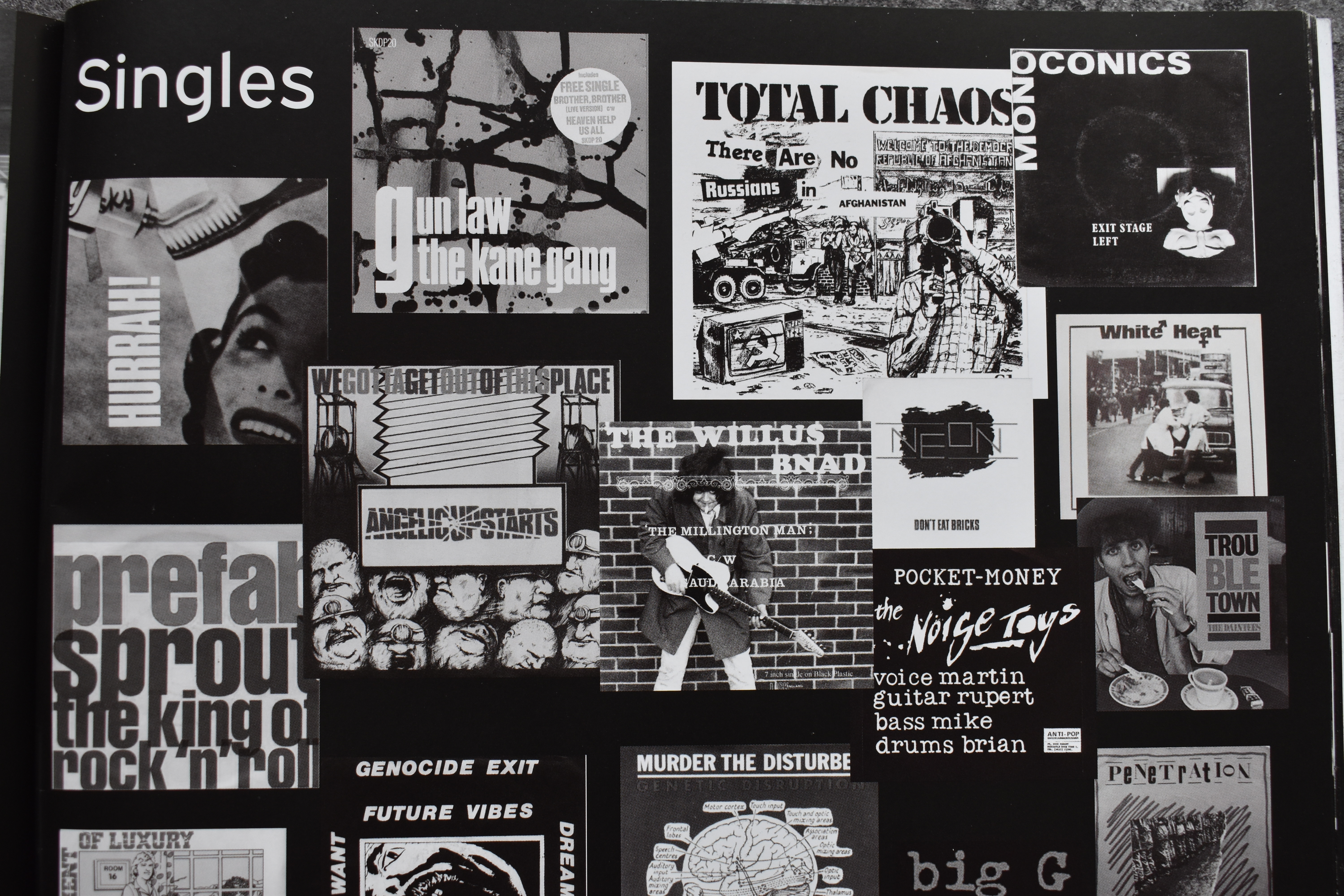
Pages full of black and white photos of bands, venues, posters and flyers were put together by Mick Fielding and Simon McKay. I got in touch with Simon and asked him about working on the book.
“Working on this book took me back to my most enjoyed gigs in 1980-81 at Newcastle University, Polytechnic Union Buildings, Spectro Arts and the Guildhall. It was wonderful to be reminded of all that. Hopefully, it will stir some good memories for readers too”.
“Closest Thing to Heaven’ is a book evoking simpler times. I thought all I saw then was lost, but Mick and I did find photos of that time”.
“I was reminded that these bands, these times, seemed to come and go in an instant. It was fascinating to revisit it all and reconnect with the excitement of a glorious era and, of course, the hungry optimism of my own youth”.
“The bands that I loved; the bands that I thought would be huge. Sobering, that few got further than Stockton. But those nights spent waiting for bands to come on, watching them play, just being there and connecting with people was such a pleasure”.
Some North East musicians who featured in the book got in touch and talked about their memories of the photos.
‘My old band Sneeze (1969-1971) is pictured – at least the lead vocalist Rod Foggon is. Sneeze were regular performers at the Mayfair in the lifetime of the band supporting some top bands of the era’ saidRoger Smith, author of music blog ‘Ready Steady Gone’.
‘A young Jimmy Nail was a Sneeze fan back then and mentions the band and one of its popular covers in his autobiography. He also refers to the ‘mighty Sneeze’ in a post on Ready Steady Gone. Coincidentally a picture of Jimmy Nail’s band The Prize Guys is next to the Sneeze pic in the book’.
Dance Class frontman Dave Taggart looks back at their picture…
’This is a still from the eponymous Tyne Tees Television’s live music show The Tube. When? I would say 1983 as we played a new song from the forthcoming second album’.
‘On that show were Steve Strange, Southern Death Cult – who later became The Cult – and The Stranglers. We finished the show and had our own fan base in the audience which created a great buzz’.
‘We were green as grass. For instance, every act had to supply their own PA system. We faced our speakers out to the audience which was totally unnecessary as it was for TV and The Stranglers just had a massive monitor system for themselves as they were seasoned performers and knew the score! But what an experience’.
‘We had a gig that night at one of the University Hall’s in Newcastle, Kid Jensen was DJ’ing and presenting added Dave.
He said on his radio show he had ‘just witnessed a band who performed not only on The Tube but also for a massive student audience and they are destined for great things’. What a damn shame’.
‘But that second album I was talking about, we have just got it back after all these years and its being remastered and we are thinking about putting it out on vinyl, CD and Apple tunes’.
The book is available direct from Tyne Bridge Publishing:
Part two of the interview with Lighting Tech & Stagehand Par Can.Any other venues you worked at stand out?
Madison Square Gardens – oh Lord above. I did the arena upstairs and downstairs was the Felt Forum. Both times the New York State Circus had cages in the building where they kept animals when they weren’t on the road. The smell…you could imagine!
The Manchester Belle Vue had a similar animal circus thing, I saw Peter Frampton and Parliament there and you got this faint whiff of dung. Like the person in front having really bad B.O.
Wembley Arena was easy enough to get in and out off but back in the day it had a reputation for rubber rigging. I remember putting Queen in there in 1980.
When the ‘fly swat’ lighting pods with follow spots went up and down they weren’t smooth like they should be, they bounced…up, up, up. Same when they came down…boing, boing, boing. Yeah that was rubber rigging.
Philadelphia Spectrum was bad, a lot of iconic venues you read about as a kid it’s disheartening when you find they are horrible places. It was always known as the RECTUM !
There was an arena that The Tubes were doing, might have been Minneapolis? No it was Duluth. Next door was a car museum and next to that was a freezer plant because the place was also an ice rink.
Now they used ammonia to pump under the ice rink to freeze it, it was a whole complex – America is all bigger and better apparently!
After the gig during load out warning lights started flashing, horns started screaming. Next thing everyone’s choking there had been an ammonia leak “Everybody out”.
Fire brigade made it safe but your eyes were burning, you’re choking, felt as if you were gonna throw up from your feet. Not gonna forget that one in a hurry.
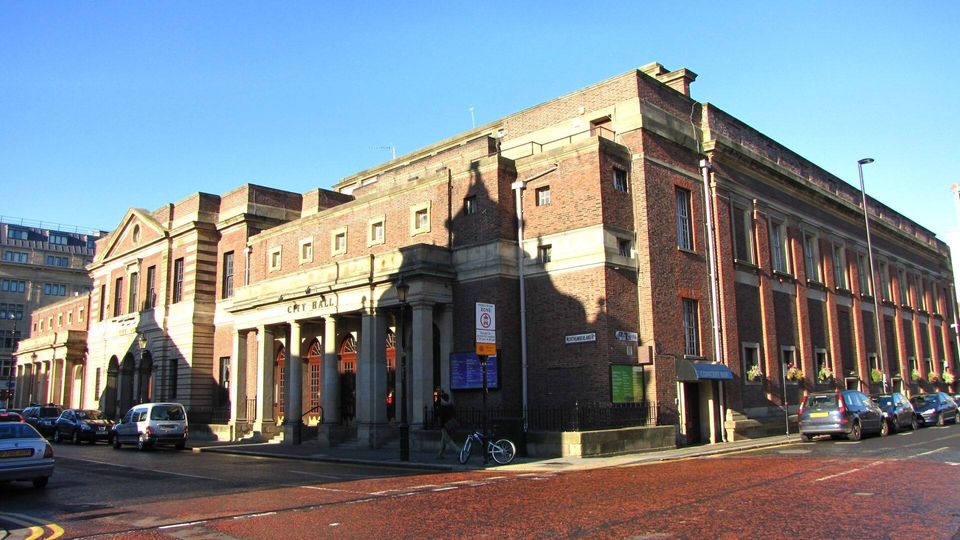
Newcastle City Hall
I started at Newcastle City Hall in October 1977 and it was all the older guys who’d been there a while. Then slowly but surely, the Sheelz (South Shields) Mafia landed – Dave Ainsley, Dave Linney, Ian Rylance, Gary Lilley, Alan Armstrong and Kev Charlton who once tried on Phil Lynott’s leather pants and he couldn’t get them past his thighs.
Kev was thin himself in those days. We were rolling around in hysterics it was so funny. It showed how skinny Phil Lynott was.
Colin Rowell was the manager and it was rare for him to just leave us overnight to crack on with stuff – but he knew we’d get up to no good. Rush in 1979 comes to mind.
There was a big plastic bin full of ice cubes lying around so we took it up through the roof into the rigging points which looks onto the stage.
One of the lads was looking for us, Dave Ainsley, he was walking across Rush’s stage which was covered in a lovely white shag pile carpet, he shouted “Where are you” as the ice cubes went flying down on him… never thinking ice cubes from 45 feet up could have knocked out… or worse !
When Thin Lizzy played the City Hall me and Kev Charlton ‘acquired’ some pyro and at 6am went up in the old empty projection room on the roof.
We set alight to the pyro, a white mushroom cloud went up and started drifting towards John Dobson street. We ran downstairs when there was a bang on the stage door.
“Morning officer” we said “Never heard nothing we’ve just been asleep”. Somehow we got away with that one.
Another night Mr Plod visited again about 2am “What’s going on in there?” We’d been on the stage and turned on the City Hall organ thinking we were playing Phantom of the Opera.
Looking down on the stage from the balcony to the ‘Biggest production in the City Hall’ Van Halen 17 June 1980.
One night we found a small tunnel on the side wall panels near the seats. We all crawled along on our hands and knees to see where it went. We ended up in next door’s building – the City Baths.
So obviously we got our kit off and swam about – well what else would ya’ do? Unfortunately we must have triggered an alarm so we scurried back to the hall with our clothes under our arms!
The tunnel led to a number of turning points and they went on for a fair distance, some were blocked off by a fence. I’m sure they led all over the city. Once we ended up at a fenced off exit all the way in the Ouseburn Valley ! Took almost an hour to crawl each way !!
Back then it was great, so much fun. Nowadays after spending hours putting them together they don’t let the crews watch the show.
We didn’t do it because we were Meccano freaks, we did it because we were hanging around with the gear, the musicians, to see bands we would never dream of paying to see – Weather Report at Newcastle City Hall was one such band.
Me and Kev Charlton were sitting on the drum riser before soundcheck, Jaco Pastorius came in and sat at the drums. Thwack, thwack, leading with the left, leading with the right, giving it six nowt. We were astounded.
Then he gets up and another guy comes in on drums, believe it was Pete Henderson. Then Jaco Pastorius picks up a fretless bass and starts playing. The sounds they created were amazing. Kev and I were mesmerised.
We did follow spots for the comedian Billy Connolly and one joke had me and Kev laughing so much that we couldn’t keep the follow spot steady. Billy said “Geordies, pissed again”! The whole audience turned to look up at us.
What impact did the road have on your life today?
Until 1990 I never saw that career ending, I came back to the UK got married and had a beautiful daughter. But touring for months at a time isn’t compatible to a home life. So eventually got my hair cut and got a proper job – boy have I regretted that ever since.
How did it affect my life? It got me around a lot of the world several times, lived in America, and to this day I’ve still got an amazing amount of friends I met and worked with because of that time. Some of them, not many, are still on the road today.
During the 1926 General Strike miners in Cramlington derailed a train of Flying Scotsman carriages pulled by the Merry Hampton engine.
The miners thought the train on the Edinburgh to London mainline was full of blacklegs undermining the strike, unfortunately for them it was a passenger train, no one was killed with only one person injured.
Was it workers defending their jobs and communities, or terrorists? Eight Northumberland miners were sentenced to 48 years for their involvement.
To explain the near 100 year old story an event is booked on Tuesday, October 24 @ 2pm & 7pm, Tyneside Irish Centre, Newcastle.
This will include an illustrated talk by playwright Ed Waugh (Wor Bella, Hadaway Harry, Carrying David), recitations and songs plus a showing of the brilliant 30-minute BBC film (1970) The Cramlington Train Wreckers which features interviews with the surviving four “train wreckers”. It is a historical document and anyone interested in Geordie social history should not miss this.
The joint production between Westoe Miners Banner Group and Wisecrack Productions aims to tell the incredible story of The Cramlington Train Wreckers.
Gordon was born in Newcastle in 1940 ‘But I spent 22 years in Blyth before moving to Seaton Delaval’.
He was a big sci fi fan in his teenage years ‘I devoured any sci fi books or short stories. Time travel always fascinated me and astronomy was my fanatical hobby’.
‘My favourite novels of all time are ‘One Flew Over the Cuckoos Nest’ by Ken Kesey, ‘Catch 22’ by Joseph Heller which I’ve read about seven times, and met him a few months before he died’.
What drew you towards writing?
‘I always had an ambition to write but kept dismissing it as an unachievable pipe dream. I remember ‘Lassie’ films in the 1950’s and was envious of the people who wrote the scripts and could influence the feeling of the audience. I can never remember wanting to be an actor, just to write the words’.
‘Later I struggled with writers like F Scott Fitzgerald and Salinger but admired their ability with words and characters and plot’.
‘I enjoyed the short stories of Ambrose Bierce especially ‘An Occurrence at Owl Creek Bridge’. It has an amazing twist at the end, something I love’.
What do you consider your best work?
‘I think my first novel ‘The Darkness of the Morning’ gave me the greatest satisfaction and became a best seller. I now live a couple of miles from the site of the Hartley pit disaster that occurred in 1862 when 204 men and boys perished. The oldest was 70, the youngest 7’.
‘An old saying came to mind ‘It’s an ill wind that blows nobody any good’. I wanted to bring to life a host of fictional characters so the readers might be familiar with their lives, and their deaths would be all the more poignant. Also a smattering of good that came out of all the sorrow’.
What are you working on now?
‘My choice of subject is pretty eclectic. It depends on what suddenly fizzes in my mind. My latest novel, just published in softback and Kindle is called ‘The Priest and the Whistleblower’ and involves a Newcastle based detective sergeant, Jack Shaftoe – far removed from Vera!’
‘Having just finished my latest I’m back to searching for a subject and a plot. There’s a hint in me to write another historical novel, again based locally involving an armaments magnate and stretching from Victoria’s jubilee to about 1920 and takes in WW1’.
The Crack is a free culture magazine and website providing a valuable service to the North East. Reviews of books, film, stage and music are packed into each monthly edition.
To find out more about the people behind the magazine I got in touch with one of the writers, Rob Meddes.
‘Reading takes up a lot of my spare time now. I review between two and three new novels each month for The Crack. I also love old films, particularly black and white film noirs made between the 1940s and mid-1950s – The Maltese Falcon, The Postman Always Rings Twice, Double Indemnity’.
‘I never set out to be a writer, but stumbled into it through luck more than anything else. I was born in Newcastle and lived here all my life. I’m now 57. I didn’t go to university but on leaving school I did a Youth Training Scheme on computer programming’.
‘I got a job as a programmer but the company I worked for went bust – hopefully not because of my efforts. Then got a job as a civil servant, working at the big site at Longbenton for around four years. I became frustrated at having to do the same thing every day so thought I’d leave and go back to college. The aim? To become an artist’.
‘I did ‘A’ level art and then the Art Foundation course. I was accepted on the Fine Art course at Northumbria University but figured I didn’t want to do another three or more years of that because I really needed a job’.
‘I wrote to loads of different companies to ask if they would take me on, maybe in an admin capacity. The one company that got back to me was The Crack. I did a bit of everything at first – including selling adverts – before moving more onto the writing side of things. That was in 1994 and I’ve been here ever since’.
What changes have you seen since you started at The Crack?
‘What has actually changed most for me is how the magazine is put together. When I started there was no internet, certainly not in our office. Every image in the magazine had to be physically scanned in. Now they’re all digital’.
Have you seem many cultural changes in Newcastle since joining the team?
It’s Gateshead not Newcastle that has seen some of the most compelling big ticket items – Baltic, Sage Gateshead, Angel of the North, The Millennium Bridge. But Tyneside as a whole seems to have become more of a destination for people outside the area who want to sample cultural life in the region’.
What can you see for the cultural future of Tyneside?
‘After 13 years of Tory backed austerity, particularly for the arts, many of our cultural icons are struggling. We’ve already seen The Side Gallery close and The Tyneside Cinema has started to crowdfund. And they’re just the tip of the iceberg’.
‘But often in straightened times, art – in its myriad forms – manages to find a way to bubble to the fore. What hasn’t changed is people’s capacity to get out of the house and go and see stuff, whatever that stuff might be’.
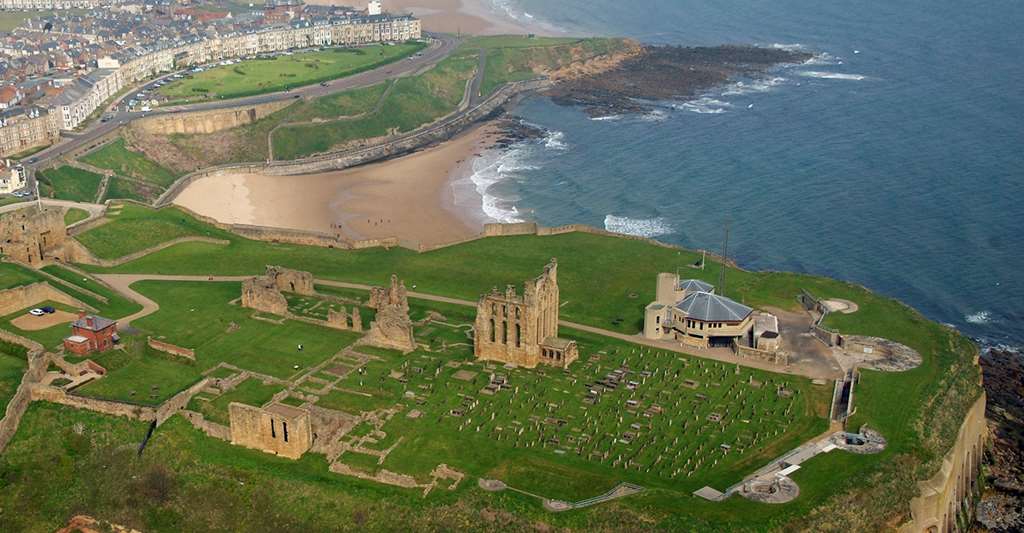
Just back after four days filming at the Mouth of the Tyne festival. The stage for the concert is fantastic, set in the grounds of Tynemouth Priory & Castle where the North Sea meets the river Tyne.
From Thursday 6th to Sunday 9th July headliners were The Proclaimers, Siouxsie, ex Housemartins/Beautiful South vocalist Paul Heaton, and on Sunday Gabrielle was on with Tyneside band Big Red & the Grinners. New post soon about the festival.
In September the prestigious Lit & Phil in Newcastle city centre will host two of the region’s most loved television icons for an evening of fun and laughter.
Jeff Brown and Ian Payne are well known North East newsreaders from BBC Look North and ITV Tyne Tees. Despite being on rival stations, Jeff and Ian are good mates.
They have been guests in our living rooms presenting award-winning local news for years – but how much do we really know of them?
Ian & Jeff (pic March 2023)
Ian, 55, originally from Ipswich, came to study in Newcastle in 1986 and never left! He joined Tyne Tees in 1992 and has shared news presenting duties with Mike Neville and the much-loved Pam Royle.
Jeff, 61, who hails from Roker, was a journalist on local newspapers and joined Tyne Tees in 1996 where he worked with the legendary Mike Neville. He has just celebrated 20 years at the BBC.
“Me and Ian spend most of our lives reading out other people’s words, so it’ll be a nice change to tell folk a bit more about ourselves. It’s not just a talk show, though – there’ll be music and all sorts going on”.
Jeff added “We’re hoping it’ll be fun. We’ll certainly enjoy ourselves!”
Both TV personalities agreed to do the talks after being approached by playwright and producer Ed Waugh.
“They are cultural icons of the region, that’s why I suggested this event, so people can get to know them better” explained Ed.
Ed, whose hit plays include Wor Bella and Hadaway Harry, explained “I’ve worked with Jeff and Ian at various times, especially at Sunday for Sammy and the Laffalang. They’re both great lads, really entertaining. Whenever we get together it’s one long laugh. Their stories are captivating and hilarious”.
Ed continued “Ian was a top trampolinist in his youth and appeared on children’s tv show Blockbusters! He’s also a creative writer, a budding artist and loves music”.
“Likewise, Jeff is a creative writer, with a new play on at the Customs House in September. He’s also a canny chanter. I’ve seen him sing live with a band and he rocked!
We’ve already had to add an afternoon talk because of popular demand. It’ll be a cracking show with those canny lads off the telly!”
The event organised by Wisecrack productions will take place on Wednesday, September 6, at 2pm and 6.30pm. Tickets cost £6 and are limited to 80 per performance.
They can be purchased via Eventbrite or available to buy direct from the Lit & Phil or telephone (0191) 232 0192.
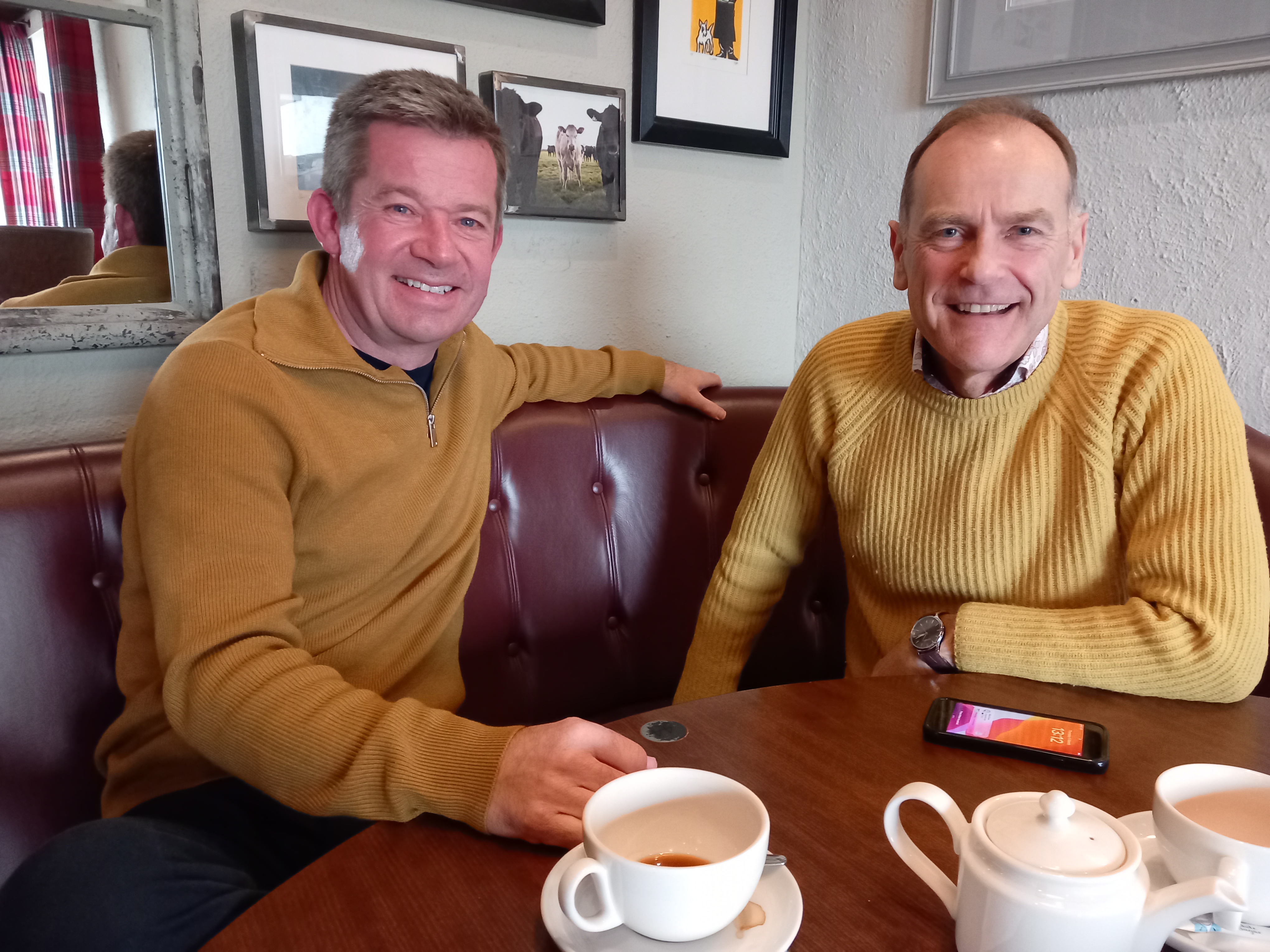
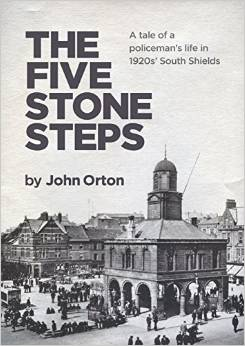
It’s been nearly ten years since John Orton wrote ‘The Five Stone Steps, A Tale of a policeman’s life in 1920s South Shields.(Link below to interview with John in 2018).
I caught up with him recently and asked about his development as a writer over the last decade.
As a young boy I loved hearing my Nan’s tales of Auld Sheelz – you couldn’t shut Gertie up once she got started. When I was given a dog eared copy of Sergeant Tom Gordon’s Memories, which told as much about the folk of Shields in the 20s and 30s as about the job of the polis, it just inspired me to write.
The Five Stone Steps was well received, particularly in Shields with tales of the polis on night-watch having their little pot of whisky tied to the back door of pubs, back street bookies, and the unlucky prisoners turning up in court with black eyes and broken ribs – ‘an unfortunate accident when he accidentally fell down the five stone steps which led into the cells.’
I started writing a sequel and needed a last chapter set during the Second World War and the blitz on South Shields. First I discovered Amy Flagg’s photographs of the ruins after the raids which are held in South Tyneside Libraries photographic archive https://southtynesidehistory.co.uk/
1930s Holborn, South Shields. pic courtesy of South Tyneside Libraries.
Then I read about the Police Auxiliary Messengers (PAMS) – when phone lines were down during an air raid, lads of 16 and over would be sent out on bikes to deliver urgent messages with bombs flying round their ears.
Mossy Hamed tells the story of the ‘Blitz PAMS’. He’s a lad of mixed race – Arab Da’ and South Shields Ma’ – who rides his grocery delivery bike with his six marras as they live through the first years of the blitz.
Mossy falls for one of the other lads, Jackie – but this is not a modern day story! Jackie is really a girl who was turned away by the Polis for being a lass so dressed as a lad and got the job.
I really enjoyed writing Blitz PAMs and got straight into my next book ‘A Chill Wind off the Tyne’ whichis about life on the riverside pubs and streets of Holborn, a neighbourhood of South Shields next to the shipyards.
The book highlights the struggle for work of Yemeni and British seamen, the miners strike in ‘26, the burning down of the Casino on the sea front, and the police raid on the pitch and toss schools at Trow Rocks.
After a good break from writing, having the odd bottle of Newcastle Brown and watching the grass grow, I happened upon a press report of Scottish prisoners captured at the battle of Dunbar in 1650.
The survivors of the brutal death march from Dunbar to Durham were sold off as indentured servants, mainly to the colonies, but I was startled to read that forty were sent to work in the salt pans of Shields.
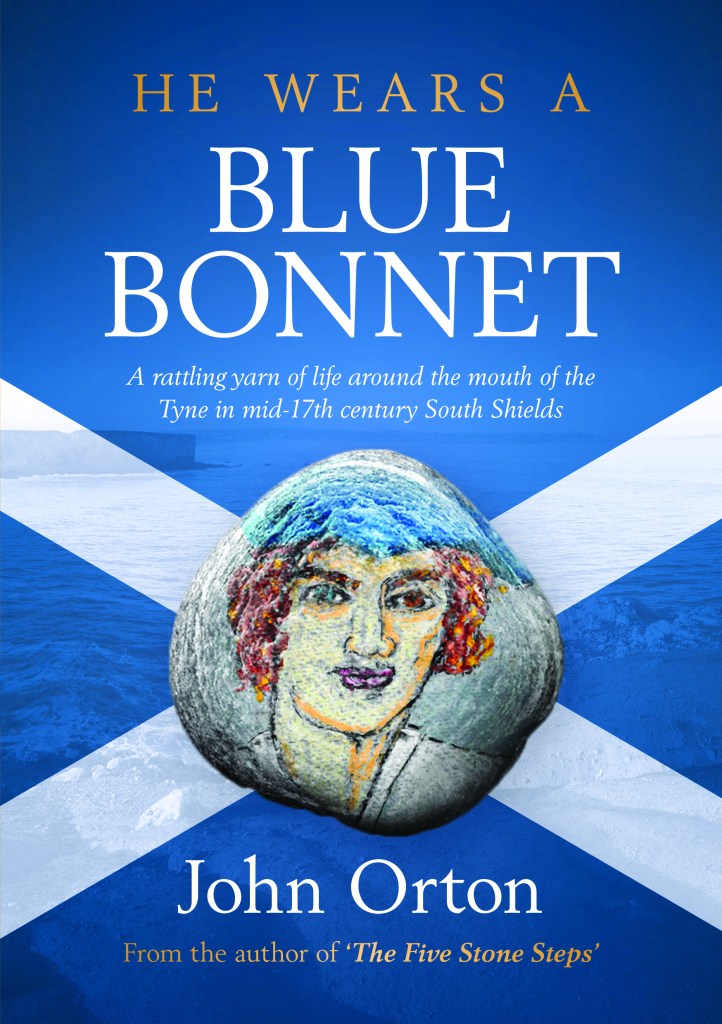
This set me off again and ‘He Wears a Blue Bonnet’ tells of the experiences of six highland Scots who discover life in Shields under Cromwell’s Commonwealth.
It’s been described as ‘a rattling yarn that takes on the life of poor Tyneside fishers, fish wives, keel-men and panners. A salty tale – love in the sand dunes, sweat in the salt houses and dodging the press gang.’
To check out books by John Orton they are available from The Word, South Shields. They can also be bought on Amazon as paperback or Kindle.
In an earlier post about L.S. Lowry (1887-1976) I talked about the artist frequently visiting the North East, especially Seaburn near Sunderland.
In later life did Lowry look upon the small coastal town as his sanctuary to sooth his aching bones?
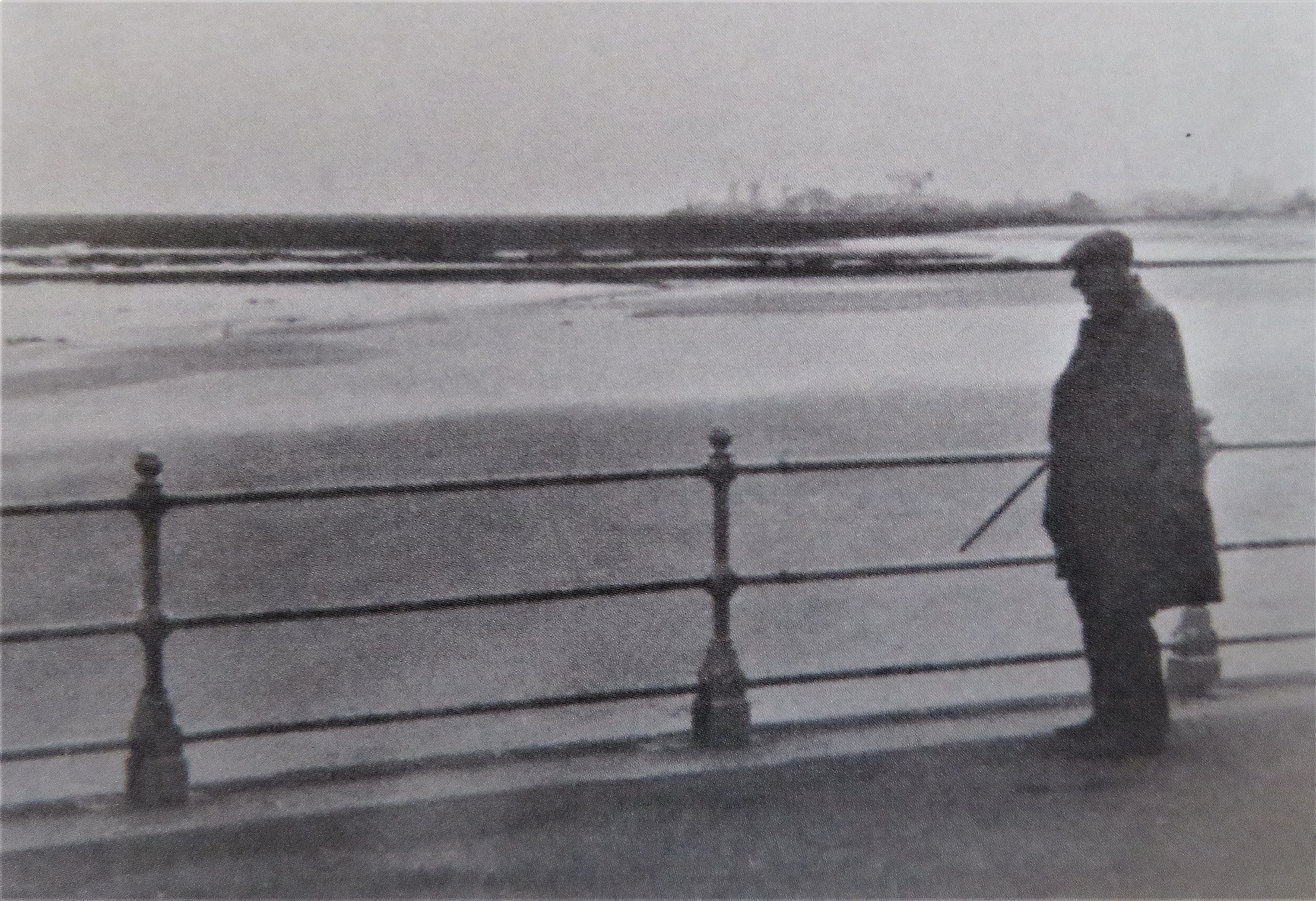
Lowry at Seaburn on the North East coast.
Day by day the big fella walked along the beach pausing every few moments to gaze at the sea as if the tide would reveal the answers he searched for. He tried hard to understand but received no answers ‘All I know is that I know nothing’.
He would say to friends ‘It’s all there. It’s all in the sea. The Battle of Life is there. And fate. And the inevitability of it all. And the purpose’.
He would watch the tide coming in ‘What if it doesn’t stop? What if it doesn’t turn? What if it goes on coming in and coming in and coming in’.
Sitting on the beach stirring gravel with his walking stick he would ask ‘We are like these pebbles. Each as important as each other. We all have a place in the pattern of things. What is it for? Why are we here? What is the purpose of it all?’
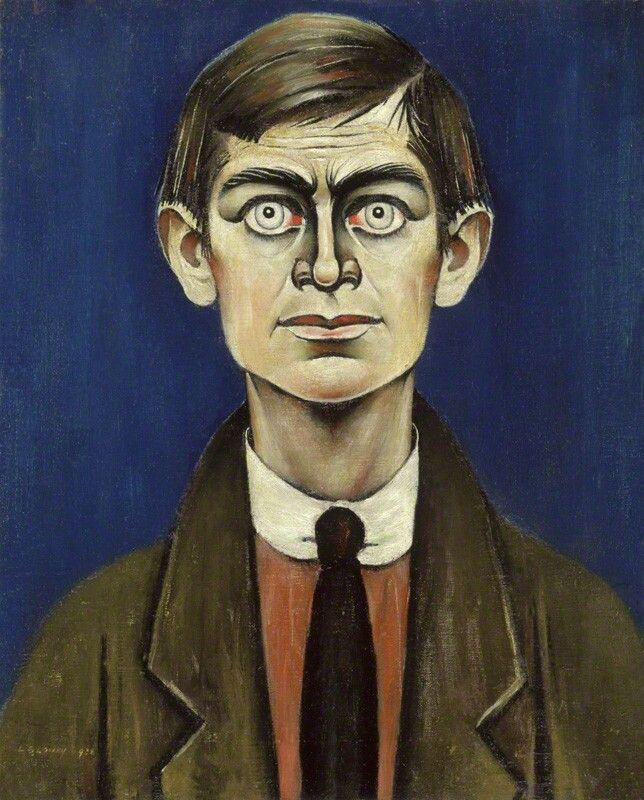
Self portrait 1938.
At nearly 80 years old Lowry was becoming frail and prone to suffer from shingles. Ironically a touring exhibition that put him on the artistic map was one which ‘nearly finished me off’.
More than 100 pictures were shown in the 1966 Arts Council Lowry Retrospective starting in Sunderland and taking in Northumberland, Manchester, Bristol, with London the closing venue.
The work was Lowry in all his glory, from a 1906 still life to a seascape drawn from the window of his room in Seaburn Hotel in 1966, he wrote to a friend about the opening in Sunderland.
‘I went in on the Saturday afternoon and a good many people were there and a gentleman wore his hat all the time who I thought was the man who comes in to see about the electricity lights but who proved to be the Lord Mayor. He was very interesting and did say they never had a show like this one before and my expressive face flushed with pleasure at that and we parted great friends’.
Far from being the shy recluse he was at home, at times on tour Lowry retained a sense of humour and played the celebrity, some friends were heard to remark on his character and particular his contrariness. But he still worried about the exhibition.
‘This show has put years on me. It is not painting so much as the thousand and one things attached to the job that is the awful thing’.
‘It takes a long time to paint a picture I get £360 for. After the taxman, dealers commission and framing costs I get £107. Like The Beatles what do they get net? Won’t be very fabulous when everyone’s had their shots at it’.
‘Now I’m alright I can sell the stuff. And the blighters won’t stop buying them, that’s the annoying thing. I will have the Official Receiver “To what do you attribute your failure Mr Lowry?” “The fact I’ve sold too many pictures your honour”. And he’d say “Give him twenty years for foolishness”.
Lowry in the 1960s.
Near the end of the exhibition he fled from his home in Cheshire to the Seaburn Hotel ‘to restore my shattered nerves’. Another journey North leading some journalists to speculate about a permanent move to the North East.
‘Journalists are queer creatures’ said Lowry. ‘At no time have I ever said I was going to give up my house in Mottram and migrate here to the North East’.
‘Mottram is getting uglier and uglier if that is possible, but from my point of view it is a convenient place to live in as any other’.
There had also been rumours of his retirement, in an interview with a Sunday Times journalist at home Lowry said ‘I might do the odd seascape or a little sketch but I’ll never hold another exhibition’.
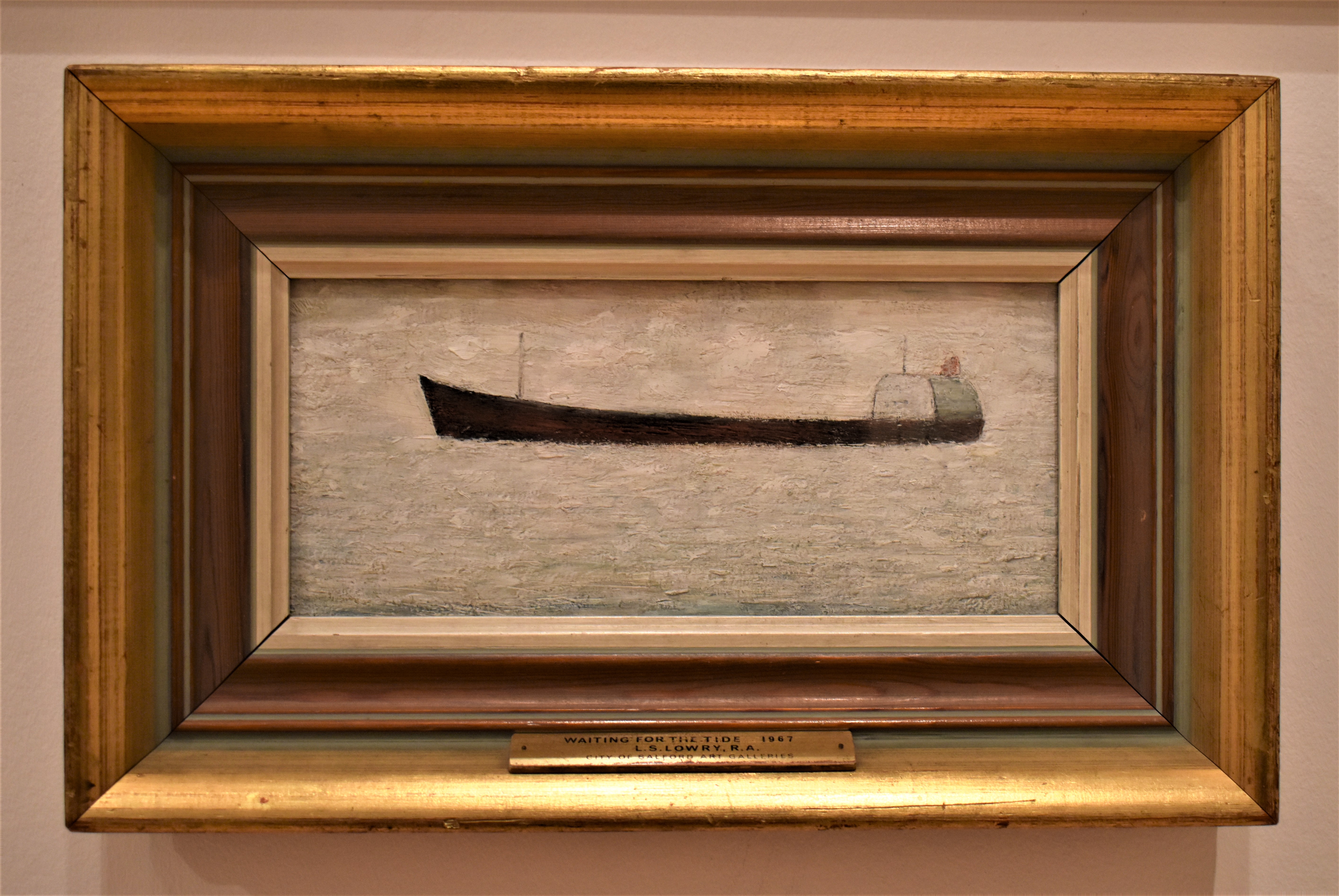
Waiting for the Tide, South Shields 1967. pic taken by Alikivi in The Lowry gallery, Salford.
The reporter was sceptical ‘He says he’s not going to paint, but in his back room there were some painted sketches which looked suspiciously like South Shields harbour and the stone piers. There’s also a white sea with a white sky, and a tanker waiting to come into harbour. Perhaps in his retirement Lowry will do for South Shields what Gaugin did for Tahiti’.
Another close North East link was Mick and Tilly Marshall who ran the Stone gallery in St Mary’s Place, Newcastle.
‘I have got used to this area – there is a very good gallery and they have some good shows. The Tyne is a very alive river with a lot of shipping on it and to watch the ships come in and go out keeps me out of mischief’.
In his later years he was quite happy making frequent visits along the North East coast and found a lot of comfort staring out to sea, again questioning himself ‘Will my pictures live after I am gone?’
Sadly, following a stroke at his home, Lowry died of pneumonia on 23rd February 1976 in Glossop hospital.
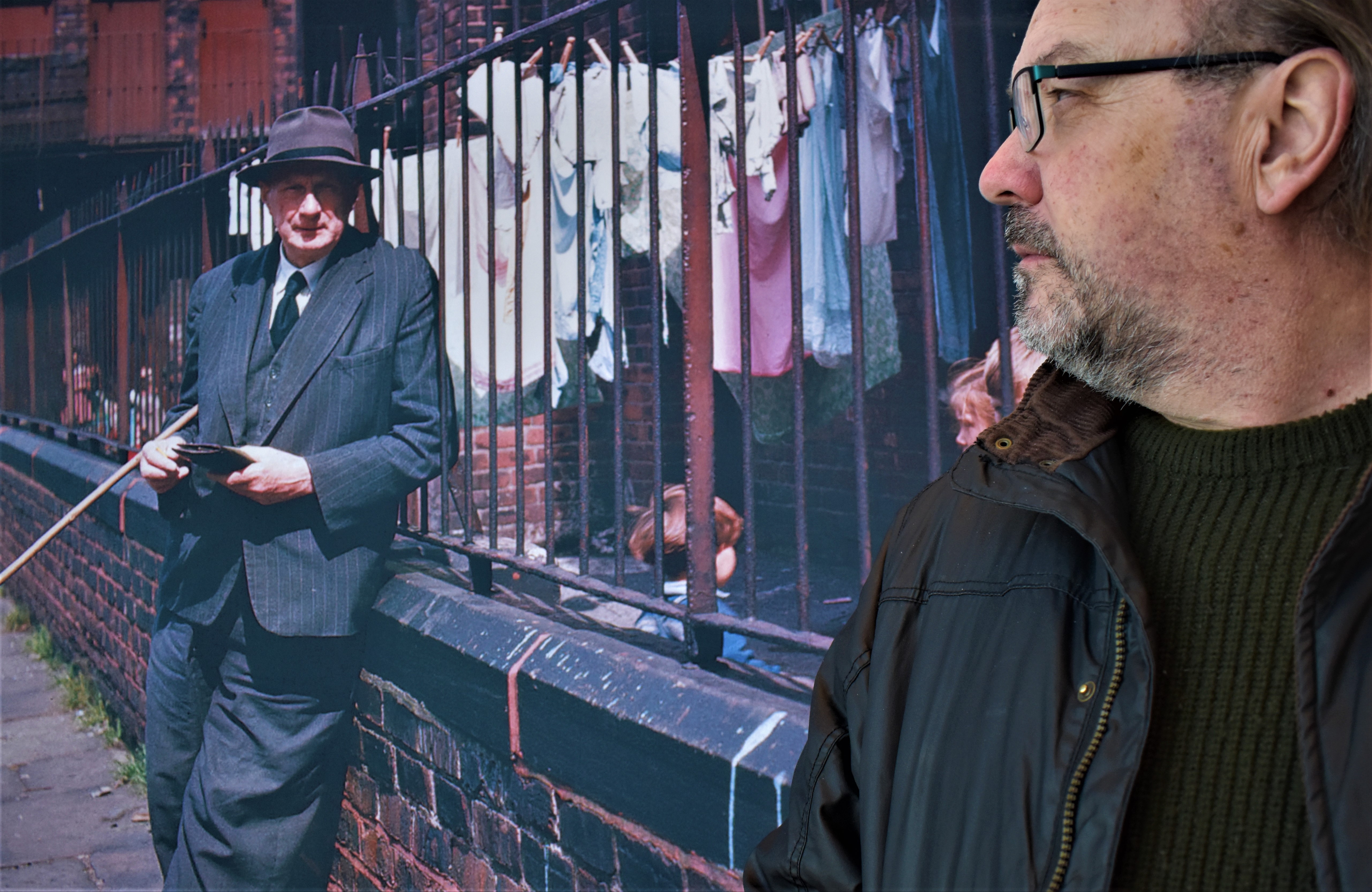
Looking for Lowry in Salford Quays 2022.
In the UK there are many opportunities to see the big fella’s work. Here in the North East you can find his pictures hanging in Newcastle’s Laing Art Gallery and Sunderland Museum. On the border with Scotland, Berwick has its picture boards on the Lowry Trail, which I visited a few year ago.
Last year I went to the excellent Lowry in Salford and the Manchester Art Gallery, both well worth a visit, and yes he certainly lives on, and on and on. What was he worried about.
The Battery has stood guard at the mouth of the river Blyth in Northumberland for more than a century. It’s an impressive array of buildings that acted as a lookout, armaments, storage and an assembly point during World War 1, the Battery also boasted two six-inch guns for coastal defense.
This weekend, May 20 & 21, the Battery is hosting two days of exciting historical activities when it presents Blyth Battery Goes to War.
Lindsay Durward, secretary of Blyth Battery Volunteers, explained “We are delighted to announce our exciting activities for the weekend. There is something for people of all ages, from children to the older generation.”
Run by dedicated volunteers the weekend will involve a full programme of music, comedy, song and dance and re-enactments from 10am to 4pm each day. Top Northumberland folk combo Beeswing will close the weekend at 3pm on Sunday.
“We take the history of the battery very seriously. One of the main aims of Blyth Battery Goes to War is to put the battery plus Blyth on the map as well as enjoy ourselves.”
“It’s a free event but we would ask everyone to put a few coins in our donation buckets, buy a cuppa in our cafe, tell their friends to come back after the event and talkto us. We are always looking for volunteers to come along and see what we do”.
For further details about the Blyth Battery Goes to War weekend and summer visits, visit the Blyth Battery Facebook page, BlythBattery.org.uk or contact











 ALIKIVI UK : NORTH EAST MUSIC & CULTURE