THE RISE & FALL OF BOBBY THOMPSON

When it’s finally time to leave the stage all entertainers would love to go out at the top and Sunderland born comedian Bobby Thompson was no exception.

At his peak performing in North East clubs, punters were packed in like sardines and in 1985 Bobby was interviewed on BBC TV’s Wogan Show.

But is there a reminder of his achievements anywhere in the North East, and what happened to Bobby? There is a story that he had a statue given to him by The Little Waster pub in Wallsend after it closed down.

One night Bobby was broken into, cash, jewellery, and gold records were bagged, but after opening a cupboard and seeing his statue the burglars fled empty handed after realising who the house belonged to.

The life of Bobby, aka The Little Waster, features in A Private Audience by Dave Nicolson. The book is packed with interviews from fellow performers, managers and family members, with a foreword by comedian Ken Dodd…

‘To have an audience in uproar, to help them forget their everyday problems and worries, if only for an evening, is an experience to treasure’.

Former manager Brian Shelley remembers…

At the height of popularity his fee in the clubs was between £300-£500 a night. He did theatres for £1,000 for an eighteen minute slot. He was riding the crest of a wave. Bobby had it all going for him in 1978 with his record out’.

Some people interviewed on this site have mentioned seeing Bobby’s act or working with him. Back in October 2019, David Wood, boss of Wallsend’s Impulse studio, told me a story with a surprising ending.

I knew his manager Brian Shelley, he said Bobby is doing really well around the clubs do you fancy recording him ? I thought yeah we’ll give it a go.

We recorded him in Rhyope Club and Newcastle Mayfair around 1978. It was around an hours recording we put out and got Vaux breweries to sponsor it. Ironically Bobby didn’t drink then and there he was on a promo poster with a pint of beer.

Soon as we put the record out it took off, straight to number one in the local charts. Every shop was selling bucket loads, they couldn’t get enough off it. It was phenomenal.

With the profit from Bobby’s album the studio came on in leaps and bounds. We started the Neat heavy metal record label as an alternative to what we were doing.

We released a couple of singles then the Tygers of Pan Tang, Raven and Fist came along and suddenly we’ve got what became a New Wave of British Heavy Metal. Venom added to that and before we knew it we’ve built up a library of heavy metal singles. So yeah we’ve got to thank Bobby for Neat records.

Actor & musician Pete Peverly

In September 2019 I talked to actor and musician Pete Peverly who performs as Bobby in a tribute show. If he had a posh accent would he have appeared a lot more on TV and topped the bill on UK tours ?

His accent wasn‘t just Geordie it was Pitmatic, that’s very strong, and yes it was a barrier but one of the reasons why he didn’t make it outside the region was because I think he didn’t want to, he had everything up here.

He might have had more ambition in the early part of his career when he was doing Wot Cheor Geordie for the BBC. Maybe he thought about pushing it further but certainly not during the ‘70s.

All the other regional comics and entertainers who made it nationally were all-rounders, actors, comedians, song and dance men, Bobby wasn’t. He was a pit comedian from the Durham coalfields talking specifically to that community.

Actor, writer & theatre producer Leah Bell

One performer who worked with Bobby was actor, writer and theatre producer Leah Bell. I talked to Leah back in July 2021 and asked her what was he like to work with?

I worked with Bobby Thompson a lot, he was a nice man. His act was of its time, the poverty, the war – very funny.

We done a panto in Newcastle Theatre Royal with David Jason (Only Fools and Horses). David didn’t know Bobby Thompson at all, Bobby never rehearsed with us, there was no interaction.

So Bobby done his cabaret piece at the start of act two, and afterwards backstage would shuffle around saying hello to people.

David used to say to me ‘What a shame for that old fella, fancy having to work at his age, I’ve just given him some money for a cup of tea’. I said ‘What ! He gets dropped off in a limousine (laughs)’. 

One night David said ‘He’s never in the finale, it’s nice of the theatre to let him go early, he must be tired’. Really, Bobby was doubling up and playing the late spot at Newcastle Mayfair.

Bobby had great delivery, clear, distinctive and not draggy. It can sound like he’s just talking along but it’s not, it’s very precise. He was a one off.

Comedian, Bobby Pattinson

Another North East comedian, Bobby Pattinson, is interviewed in the book.

‘Over the years I gave him bookings at my club. I never saw him as a rival, but regarded him as a friend even though people told me he didn’t have a good word for me’.

‘Most North East comics were content to go on stage in any order, Bobby always wanted to be last, he interpreted that as top of the bill. But he wasn’t as successful as I hoped when I booked him in December 1981 and had to cancel sixteen shows’.

In his detailed introduction, author Dave Nicolson tells us…

‘Bobby had success and money through the golden years, but he also had loneliness. The last few years were embarrassing for him, empty tables and chairs told him the harsh truth. Even the examiner at his bankruptcy hearing in 1986 was kind and considerate’.

‘Having lost the company of an audience his feeling of loneliness and isolation intensified. Spending late nights at Newcastle’s Casino Royale and the roulette wheel provided his nightly stage’.

Sadly, Bobby died on Saturday 16th April 1988 in Preston Hospital, North Shields. Family and friends attended his funeral with a fellow comedian adding a one liner that summed up Bobby Thompson…

’He’s late because he’s found out there’s another funeral after this and he wants to go on last!’

Alikivi   May 2023

Research: Bobby Thompson, A Private Audience by Dave Nicholson.

Printed & published by TUPS books 1994.

Links to full interviews:

‘Take a Bow’ with Leah Bell 21st July 2021.

TAKE A BOW – writer, actress & theatre producer, Leah Bell | ALIKIVI : NORTH EAST UK (garyalikivi.com)

‘Centre Stage’ with Pete Peverly 16th September 2019.

CENTRE STAGE in conversation with North East entertainer Pete Peverly | ALIKIVI : NORTH EAST UK (garyalikivi.com)

‘The Fixer’ with David Wood 13th October 2019.
RADICAL ROOTS in conversation with Local Historian and Teacher, Peter Sagar

Peter is employed by Gateshead Council teaching one to one lessons with pupils who don’t go to school. 

He also goes into primary schools to teach aspects of local and regional history.

It’s a great feeling when a kid you have helped returns to school. One of the mothers got in touch saying two years after I stopped teaching her daughter to say that she had gone on to do A levels at Gateshead College.

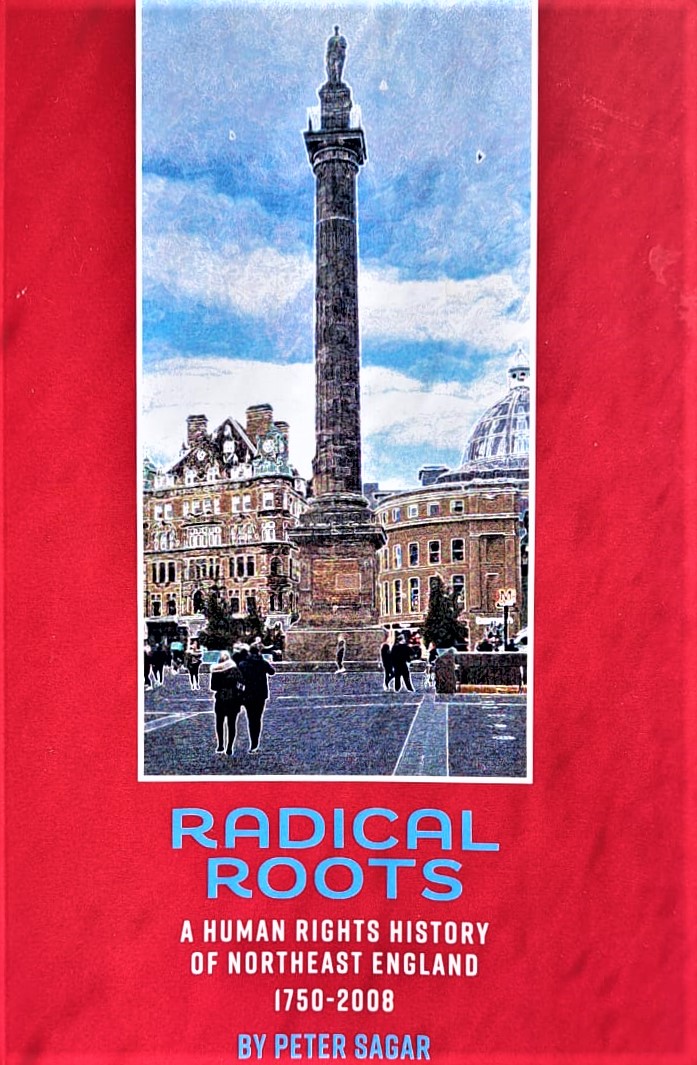
From his North East history research, Peter has collected many stories and compiled them together for a new book – Radical Roots – the Human Rights History in the North East.

There are many interesting, positive stories of how people struggled for their own rights and fought for the rights of others too.

On the front cover is a picture of the Earl Grey monument in Newcastle city centre….

The writing on it is not about tea! It signifies people getting more rights to vote and the abolition of slavery because North East people have always campaigned for their own rights and worked for people across the world to get their human rights.

The fight against slavery was strong, for example in 1792 down at Newcastle Guildhall there was a petition of 3,000 signatures against slavery, which was quite a large percentage of the people living in Newcastle at the time.

We can protest about what is happening thousands of miles away or about our neighbours having to use a food bank. I don’t see a division there, it’s about human dignity and decency, where ever the person lives and whoever they are.

We can’t just fight for the rights of one group and not the other, it’s about everybody having the same rights.

My mum brought me up right, she taught me about Human Rights and in Newcastle there is an Amnesty book shop that I helped set up on Westgate Road in 2002.

We talk about women’s rights but how many Northumberland kids are taken to see the suffragette Emily Davison’s grave in Morpeth? I think it should be mandatory to learn about our history.

Kids are taught art and music from around the world which is great don’t get me wrong, but if they don’t know culture and history from their own area first, how can they relate art and music from around the world to everyday life?

In Radical Roots there are stories I think we should all know, and I’m still learning about our North East history.

We teach pupils about the Holocaust, Anne Frank and what she wrote in her diaries. But we don’t teach about the connection to the Durham Light Infantry and their role in the Relief of the Belsen camp.

I went to Hartlepool and interviewed the son of a DLI soldier whose father was there at the time of the relief and just after Anne Frank’s passing.

During the First World War, footballer and munitions factory worker Bella Reay played for Blyth Spartans, her story also features in the book.

(Bella Reay features in a play by South Shields playwright Ed Waugh, post 3rd December 2021).

I also took the presentation to a school in Cramlington. The teacher linked in the work by the Pitmen Painters, who aren’t in the National Curriculum, but linked them to the work by the artist L.S. Lowry – who is in the National Curriculum, which I thought was great that they saw the connection.

Also featured in the book is the Yemeni community in South Shields and the riot that happened in August 1930, and we discover why it happened. It also mentions over a number of years the eventual assimilation of the Yeminis into South Shields, some through inter-marriages.

I have worked with the Roma community on Tyneside. There are around 6,000 in Newcastle. If you’re a community coming into a place you have to have something to offer, rightly so, and it’s usually through their music or food.

Look at the Chinese or Indian. Bringing something goes down well because they don’t have the language.

The Irish came over to Tyneside as early as the 1850s after the famine. Jarrow has a big population of Irish. I think the Roma can look at what the Irish did with their music, while keeping their own identity.

Some of the Roma musicians that we have on Tyneside today are amazing. Perhaps one day there will be a Roma centre on Tyneside like the Irish Centre in Newcastle.

When I do a presentation about the Roma in schools, I finish with a power point picture of TV entertainers Ant and Dec. I ask people how many of you would describe them as Irish superstars? No hands. Then I ask how many would describe them as Geordie superstars? All hands go up!

But both their surnames and background are Irish and who is to say that kids from Newcastle in thirty to forty year time with a Roma background won’t be doing the same on TV?

Now I’m working in schools talking about the North East mining heritage which I think is important to remember. It is important to remember the community spirit and the great innovations, but we’ve got to keep fossil fuels in the ground now and work towards green energy and get the kids to understand that.

Hopefully we can get them to stand up in the future and shout for the North East to get more green investment, after all 20,000 County Durham miners lost their lives providing energy in the past.

It’s quite moving talking about the mining heritage, and in County Durham it’s all documented about 8 or 9 year old kids losing their life down the pit and that brings it home to kids of the same age.

I’ll also be at the Durham Miners Gala talking about this, that there was a lot to be proud of, but certainly not pointing the finger saying you caused all the problems of Climate Change.

Although we know now we need to develop green energy,  without coal in the past we might still be stuck with the same lifestyles as the 18th century.

To contact Peter and buy copies of Radical Roots – the Human Rights History in the North East

send email to: peter0462@gmail.com.

Alikivi    April 2023.

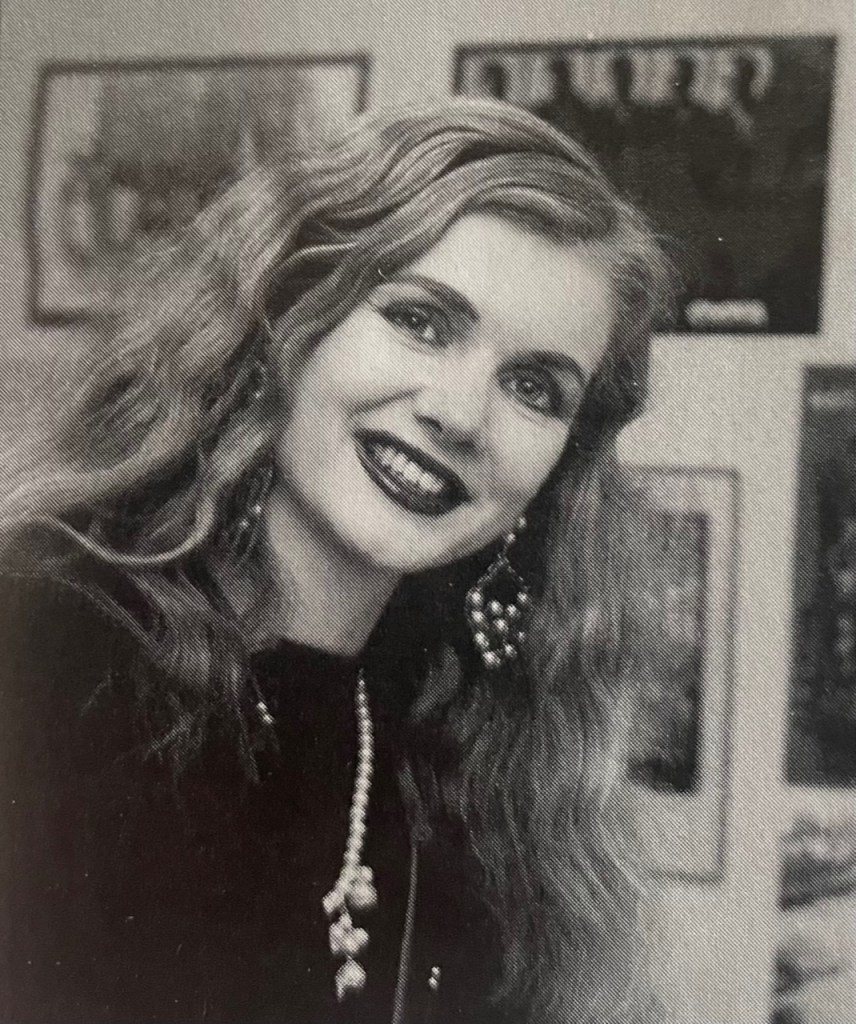
MAKING PLANS in conversation with former BBC/Generator/Evolution & Honorary Geordie, Sue Wilkinson

Having taken voluntary redundancy from the BBC after 25 years, Sue’s last job was as TV Development Producer, she is now semi-retired and working freelance.

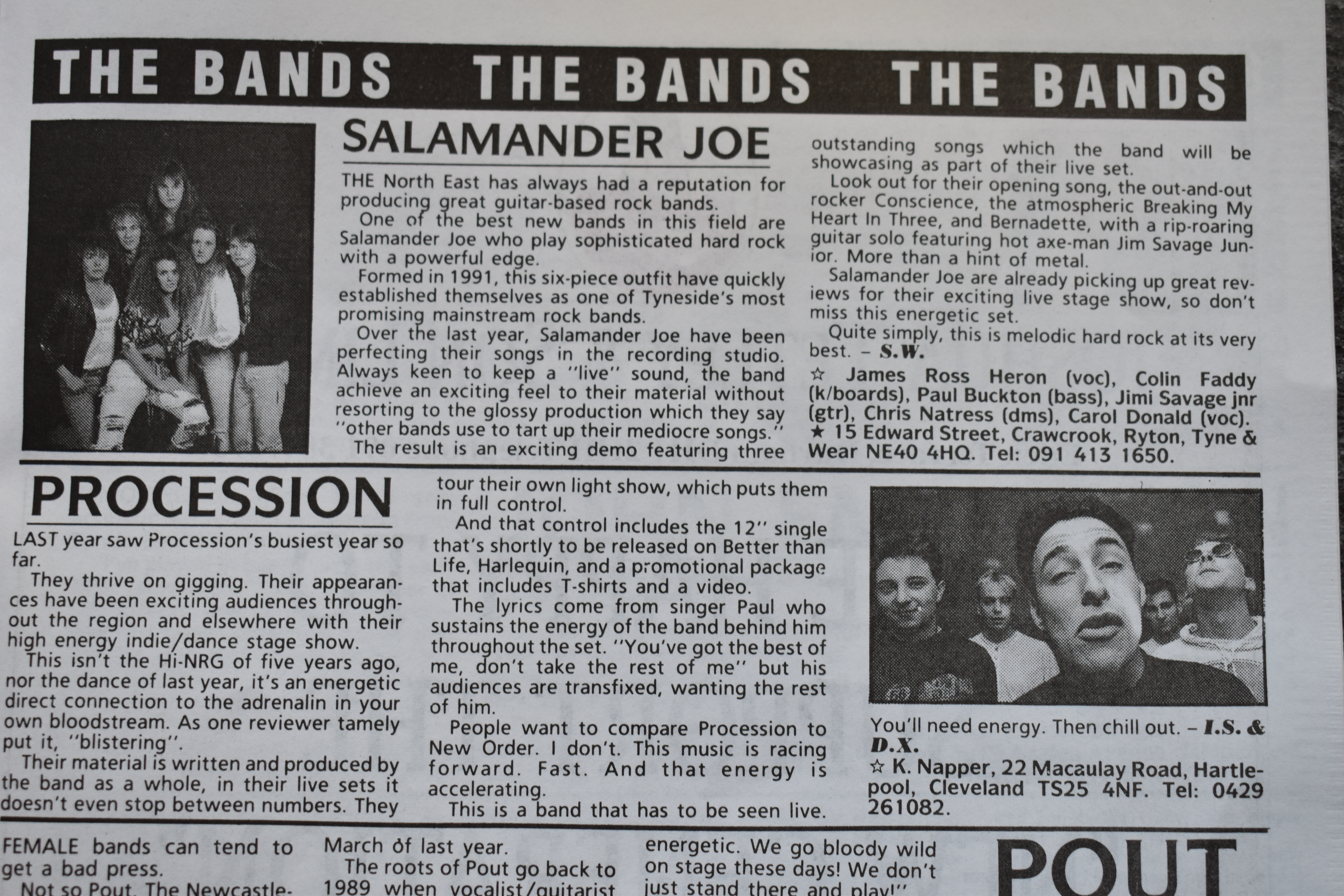
But during the 90s Sue was involved with the North East music scene working at Generator and managing bands in Newcastle.

‘I guess I’m a bit of a career chameleon’ said Sue.

Originally born in Liverpool, the family then moved to Manchester where her father was a Graphic Artist.

‘I picked up my creative side from him. At school there was a group of us reading the music press, I went from listening to poppier sounds of Cat Stevens to serious stuff like Led Zeppelin.

When I completed my A levels punk was just on the cusp and we went to see bands like Buzzcocks and The Adverts at sweaty clubs like Eric’s. I was really into the whole punk thing listening to the Pistols and The Clash.

After University I started work as a Graduate Town Planner with North Tyneside Council. I didn’t have long term plans to stay in the North East but I loved the vibe of Newcastle. Now I’m an honorary Geordie!

My patch was North Shields, Whitley Bay and Tynemouth, things have changed dramatically down the riverfront area, it was fascinating working there.

I also worked at Sunderland Civic Centre and Newcastle on the planning team – this is a weird way of starting to talk about the North East music industry. But I wanted to make a difference in terms of helping communities, living in a better environment, helping people make a better life, and hopefully did that through music.

When I left planning, I started work at Newcastle University in the Centre for Urban and Regional Development, a research unit rather than teaching. Northern Arts funded a project there called Cultural Industries Research Unit, helping communities through the arts.

My colleague James Cornford and I were asked to look at a new project and we chose popular music. Sheffield had been flying the flag providing rehearsal space and studios so we thought we could give that a go as James had been in bands and I loved music.

Plus, I had already written a published article around culture in the North East and done a lot of research around the subject. We spoke to a few hundred musicians and people who ran recording studios and record labels – small or large.

We found there wasn’t enough venues or rehearsal space for bands, they couldn’t get out on tour it would cost an arm and a leg and there weren’t any showcase gigs. Investment was needed to support DIY musicians – they needed a leg up.

We put the findings together and put forward a plan called Sound of the City. This was three events across Tyneside, hundreds of people attended which created more ideas. One was for an umbrella organisation to pull it all together, a one stop shop for support, advice and help – that’s how Generator came about’.

‘The name was perfect because the aim was to generate a profile of the North East music scene which had been non- existent up till then – apart from big names like Sting and Mark Knopfler.

As well as Generator Management Committee meetings, Dave Cross and I met several times weekly to do behind the scenes work at the Riverside live music venue. What came from our meetings was a need for showcase gigs and working with promoters to develop a venue in their area, we covered the North East and Cumbria.

Generator was there to help musicians kick start their career, we wanted to be central in supporting emerging talent and artists, or just be creative and have better facilities to enjoy what they were doing’.

The first event billed as Generator Live Music Explosion was at the Riverside in Newcastle on Saturday 25th January 1992 included Candleman Summer from South Shields, The Hangarounds from Gateshead, Procession from Teesside, Greedsville and This Is This from Newcastle.

‘The event went on all day generating a lot of press, many thanks to all the sponsors who came onboard donating time, money and facilities.

All of the bands were original not tributes, and although some didn’t get record deals the members went on to do other stuff. Dave Denholm from This Is This ended up in Lindisfarne’.

‘Around 1992 Greedsville fell in my lap (interview with  guitarist Clive Jackson on 22 Feb 2023). I loved them, very creative in their outfits especially Pete Turner the singer. One outfit was a Chinese mandarin hat and shoes with curly toes.

They had their own way of doing things and were always good on publicity and presentation getting a review in Kerrang and local mag Paint it Red. They also had the idea of slotting their cd album into tiger print bags and sending them to press and media.

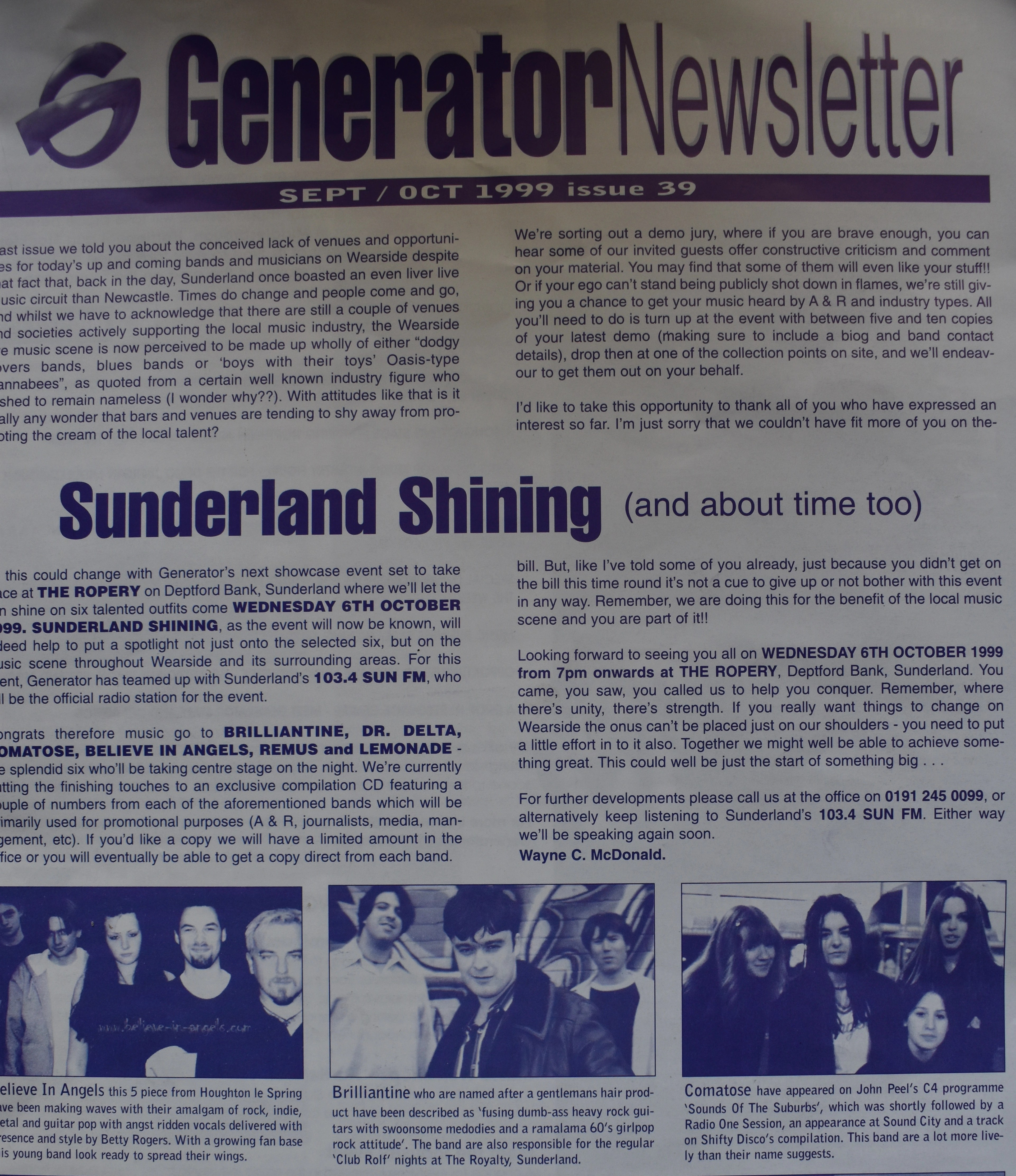
By now we had been working on Generator a few years and were based in the Black Swan Arts Centre on Westgate Road. We’d publish regular newsletters promoting bands and events including tips for how to plaster your name across the media, developing a press strategy, even make sure you arrive on time for an interview on radio or TV. Basically, how to get on in the music industry.’

‘Bands would submit demo tapes and we’d choose from them what bands to have on the showcase gig, and we were becoming more ambitious adding art, design, films and music seminars.

The more events we put on the more interest we created with label scouts popping into gigs to see what we had. Rather than a regular weekly gig, we spread out the dates of gigs to make them an event’.

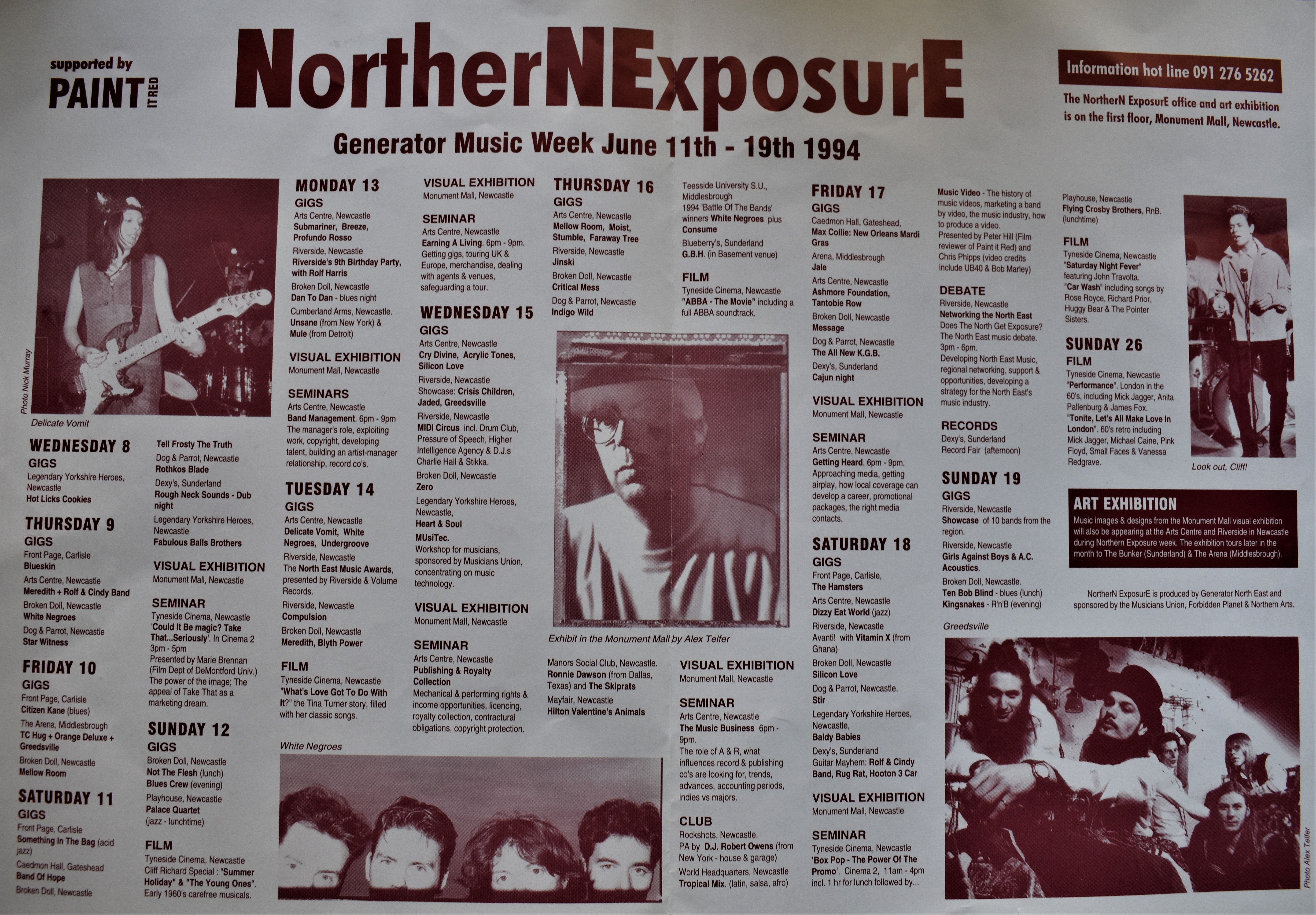
Northern Exposure was held 11th-19th June 1994 including Profundo Rosso, Crisis Children, Blyth Power and the wonderfully named Delicate Vomit.

The MPS and Musicians Union were involved in the seminars dealing with publicity, royalties and copyright.

‘We became good at publicity. North East music journalist Ian Penman who sadly is no longer with us, worked for Sounds and other music papers and magazines, he gave us good advice about publicity and how it needed to be spot on.

Generator were really ramping it up and had demonstrated that we were capable of delivering stuff. In 1998 the peak was Sound City, around then Jim Mawdsley came onboard.

When we became a funded organisation, Wayne C. McDonald joined Jim Mawdsley and I on the professional team. A week later we were awarded £250,000 from the National Lottery’.

Generator’s successful National Lottery bid was given massive national profile on BBC One TV’s National Lottery Show when Sue and her Generator colleague, Wayne C McDonald, appeared live in front of 16 million people. Their cause was championed by none other than The Spice Girls.


‘Wayne thought I was joking when I told him we were going to be live on stage – and thought we were just going to be sitting in the audience. When it came to the crunch, we were called on stage and he hadn’t prepared a speech – so he performed a completely improvised rap which everyone loved! 

We had spent three years talking to BBC Radio One about bringing an event to Newcastle. We worked with the Council to put a document together which included main stage, a number of venues and a Fringe festival, the BBC accepted it.

After my work at the University on the Cultural Industries project, I got some part time work as a researcher at the BBC which I combined with the Generator work.

Looking back, it was around 1999 when I left Generator, I had just run out of steam. After Sound City I went on to work on various music festivals in Newcastle attracting bigger, signed names and by the 2000’s I was at Evolution sponsored by Orange telecommunications’.

Paloma Faith (pic Sue Wilkinson).

‘Iggy Pop was on a bill, we had Amy Winehouse, Paloma Faith, Maximo Park and one year we had Public Enemy on. I remember for their rider we were sent to KFC for forty boxes of chicken – we weren’t very popular with the rest of the customers.

We ended up with expensive headliners with Generator running alongside with showcase gigs for North East bands and arranging music seminars. Evolution went on for years but our riverfront site on the Tyne was earmarked for redevelopment and we decided to take a break which became permanent. We had a great time seeing the audiences enjoying the event.  

Generator still exists today, it embraced the new digital agenda and pushed it really hard. It’s helped create long lasting partnerships and connections across the music sector.

It’s now the UK’s leading music development agency and a beacon for those looking for help with their musical ventures. Something we’re really proud of because it’s made a huge impact on musicians in the region and shone a light on the North East through showcases and events.

It’s been involved in national initiatives, helping influence arts and government policy. Has it been important? You bet’.

More information about the work of Generator at the official website:  

Generator: Business Support in music, creative, and tech

Alikivi     March 2023.

WHO WERE THE CRAMLINGTON TRAIN WRECKERS?

South Shields-based playwright Ed Waugh is appealing for anyone to contact him if they have any information on the Cramlington Train Wreckers.

Ed, whose latest play was the hugely successful Wor Bella, said

“The story is one of high dramatic tension and has become an important part of British history, although largely forgotten”.

“The event happened on March 10, seven days into the 1926 General Strike when striking miners uncoupled a rail on the mainline Edinburgh to London railway” explained Ed.

“The intention was to derail a blackleg coal train they felt was undermining the strike. Unfortunately for the perpetrators, they derailed a passenger train.”

With 281passengers onboard, the volunteer driver had been warned of trouble and slowed down, meaning when the engine and five carriages were derailed, no-one was killed.

“The only injury was minor, most people were treated for shock and bruises” said Ed.

“Were the Cramlington Train Wreckers terrorists or workers trying to defend their livelihoods, family and community against an economic onslaught that took place after the General Strike ended?”

In the magistrate courts eight Cramlington miners were each sentenced for up to eight years, but were released early due to pressure from the trade union rank and file, politicians and the judiciary itself who saw the original sentences as too harsh.

Ed continued “The leader of the wreckers was Bill Muckle who was born in Westoe in December 1900. His father looked after the pit ponies. They lived here until 1902 when they moved to Cramlington. I’d be interested to know if older generation Muckles worked at Westoe”.

A crane lifting the Merry Hampton engine back on track. Photo courtesy of Brian Godfrey.

Such is the interest in the subject, Ed and historian Marie Dooley will address more than 120 people at a public meeting on March 30. Top North East actor/folk singer Jamie Brown will perform songs and recite from Ed’s new play.

The Cramlington Train Wreckers’ meet at The Hub, Manor Walks Shopping Centre, Cramlington, Thursday, March 30, at 2pm and 6.30pm. Info and tickets only £2 via Eventbrite.

For more information contact Ed at the official website: ww.wisecrackproductions.co.uk

Alikivi    March 2023.

WHERE WERE YOU IN THE SIXTIES ? with Jools & Paul Donnelly

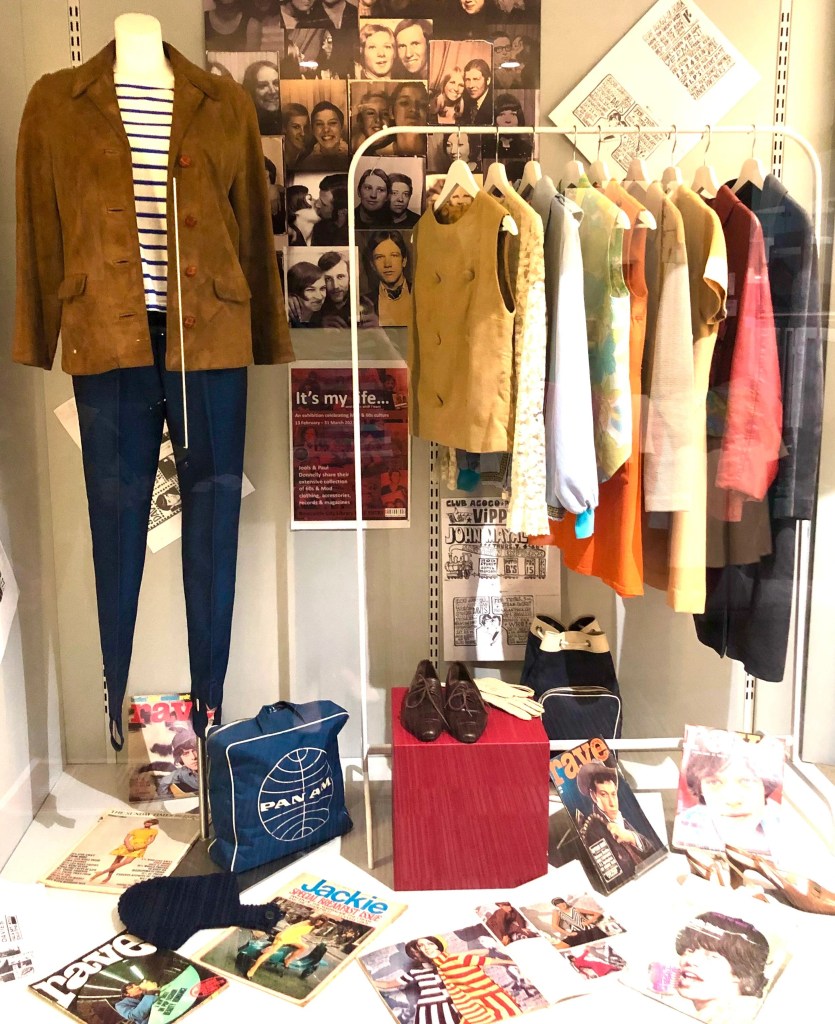
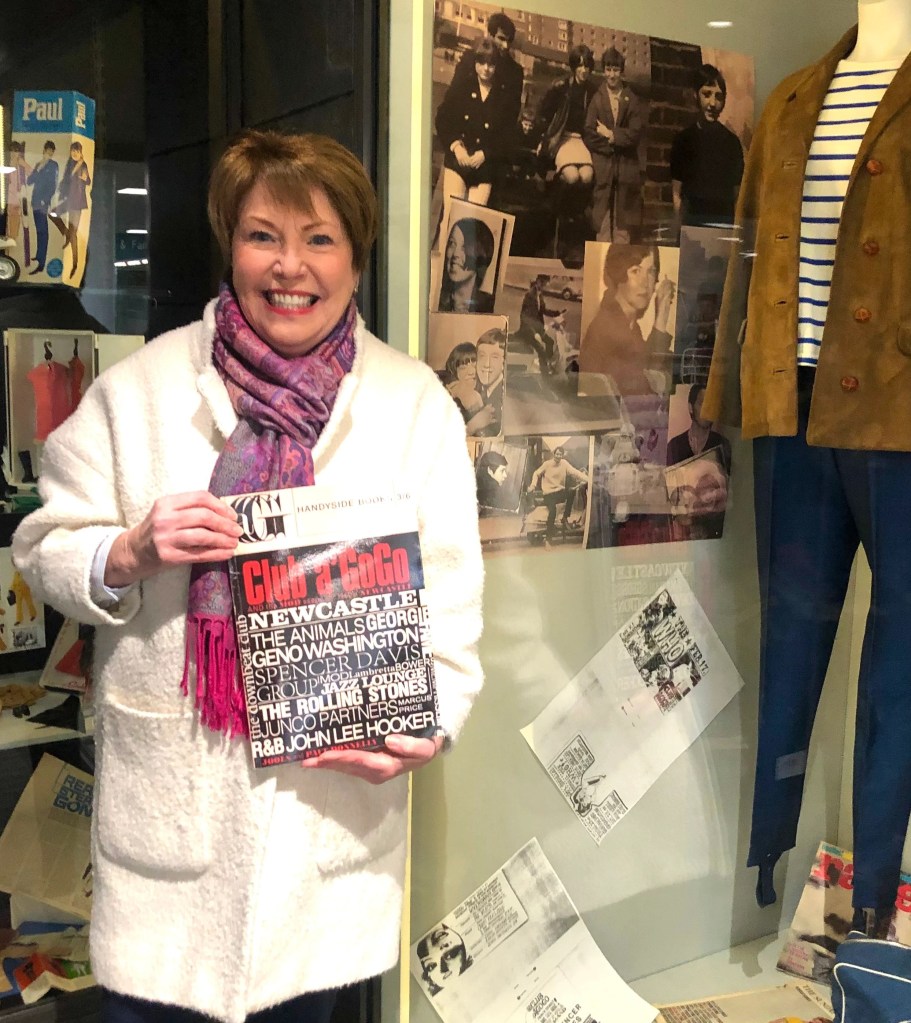
North East couple Jools and Paul Donnelly have a huge passion for promoting the North East’s recent cultural heritage, they also run the Handyside Arcade publishing company, and the Club A’Gogo dance events named after the famous Newcastle venue.

From 1962-68 Club a’Gogo hosted a number of amazing gigs from legendary bands The Who, The Animals, Rolling Stones, Eric Clapton, plus from America – Jimi Hendrix, Sonny Boy Williamson and John Lee Hooker.

‘We successfully lobbied Newcastle Council for a heritage plaque at the site of Club a’Gogo – we are incredibly proud of this. We’ve also published our first book ‘Club a’Gogo & The Mod Scene of 1960s Newcastle’ which is on sale now, more books are planned’.

Both Jools and Paul are passionate collectors of 60s mod culture which includes vintage clothing, shoes, magazines, records and books, now the couple have combined their extensive collection for an exhibition held in Newcastle City Library.  

I asked Jools what was the catalyst for the exhibition?

It actually came from two sources, last year we visited the Punk No.1 exhibition at Newcastle City Library and this year we were in London for a private viewing of Contemporary Wardrobe, a supplier of costumes to the film and music industry.

This huge collection of vintage clothing is owned by former mod and stylist Roger K Burton. Roger has done a number of exhibitions and we were so inspired we thought we could do that.

I asked Paul what’s the response been to the exhibition?

Amazing, and to be honest far better than we expected. We’ve done regular ‘meet and greet’ events at the library – next one is Saturday March 11th from 2-4pm, where people can chat with us about the exhibition and share their memories of those glory days.  

People have brought their own memorabilia to show us, it’s been a fantastic experience. We’ve also had a good turn out from a younger generation who have been fascinated by how cool the youths of the North East were back then.

Lots of original mods and Club a’Gogo members have turned up to see the exhibition, they’ve shared their stories of seeing the likes of Jimi Hendrix, The Who and of course The Animals.

We’ve encouraged them to come along to our monthly Club a’Gogo Dance Party events where I play the Club a’Gogo sounds on vinyl.

What next for the exhibition?

This ends on 31 March 2023 and we are aiming for more exhibitions. Our next one is early 2024 that will celebrate the history of the Handyside Arcade.

(The sorely missed Arcade was a glass roofed horseshoe shaped building which housed a number of independent and alternative shops including Kard Bar. It was also the place where tribes of young people – mods, hippies, punks – would meet and hang out on weekends).

Jools added….We want to highlight the Arcades importance and promote the North East’s sub cult heritage.

For more info check the official website:

It’s my life… An exhibition of Mod & 60s culture FREE ENTRY | Club a’Gogo (clubagogo.co.uk)

To buy the Club a’Gogo book visit:

Club a’Gogo & The Mod Scene of 1960s Newcastle | Club a’Gogo (clubagogo.co.uk)

For more information about Club a’Gogo events visit

Mod club | Club a’Gogo (clubagogo.co.uk)

Alikivi   March 2023.

TYNE DOCK ON THE TELLY

The first post of 2023 looks at TV and Film productions using South Shields locations. The latest being TV cop drama series Vera, starring Brenda Blethyn with her fake Geordie accent. Gateshead born Jill Halfpenny shudda’ been a shoo-in for that role.

And not forgetting an episode of Inspector George Gently with Martin Shaw filmed in the Rose & Crown pub at Holborn docks. Back in the ‘90s Catherine Cookson films were shot along the riverside and scenes from an episode of Spender starring Jimmy Nail were set up on the South pier.

Rewind further to the 1970’s and BBC TV series When the Boat Comes In, created by local Shields lad James Mitchell, they used The Customs House building at the Mill Dam as a backdrop.

But I remember in 1982 when a convoy of film trucks landed in South Shields. To be precise, Devonshire and Porchester Street in the Tyne Dock area of the town, and there was not one, but two projects filmed there. Those days I lived just two minutes away so took the chance to see the action.

There was BBC TV series Machine Gunners and a film called Ascendancy starring Julie Covington, who alongside Rula Lenska, had featured in popular ITV series, Rock Follies.

In March 2021 I interviewed Punishment of Luxury vocalist & actor Brian Rapkin, where he talked about his music and acting career on North East productions. So I recently got in touch and asked him about it…

‘Yes it was 1982 when I had a part as a Polish officer in Machine Gunners for the BBC. I was acting in a speaking part for the first time ever, and I remember being very nervous and excited.’

Brian was in demand during the ‘90s, as well as the aforementioned Catherine Cookson films, he worked in Newcastle on the TV series Byker Grove with Jill Halfpenny and Ant and Dec ‘They were just kids then’. He also featured in Spender starring Amanda Redman and Jimmy Nail ‘Mr Nail knew the actors were on tenterhooks so he chivied the crew along, that helped my nerves’.

I remember a few nights nipping over to Porchy watching Ascendency being filmed. I have a hazy memory of huge lights shining on a scene where a family were dragged out of a house in pyjamas and nighties and put up against the wall by armed soldiers. I haven’t been able to find any copies of the film to check the scene, or if it made the final cut.

Unfortunately I was still at school so a bit busy during the day, but straight after the bell I went to Porchy to see what was happening in Machine Gunners. I remember where one scene a milkman with his horse and cart was delivering bottles, and shouting at a group of kids ‘Where you going now’. Funny what sticks isn’t it?

Other locations in South Shields were used in the Gunners, one of them was Westoe School. I can’t remember exact details – wey it was over 40 years ago – but at the time of filming half the houses in Porchy were empty, and not long after the crew left, the street was knocked down. Devonshire is still there today.

Alikivi   January 2023.

FIDDLERS GREEN – Ray Lonsdale’s North Shields Sculpture

For an interview in October this year with seventies rock band Fogg, I met North East musicians Dave Robson and Bob Porteous in North Shields Heritage Centre near the fish quay  – hey its al’ rock n roll my friends!

Afterwards I went over to see Fiddlers Green, the sculpture by Durham artist Ray Lonsdale which was unveiled in 2017. I was reminded of Seaham’s ‘Tommy’, who featured in the last blog, as Lonsdale again presents us with a lone figure deep in thought.

Fiddlers Green, North Shields by Ray Lonsdale (pic. Alikivi 2022)

The fisherman, at ten foot tall and weighing in at two ton of steel – have the locals named him yet? Sits guard over the entrance to the River Tyne and the fish quay with its fishing boats, row of cafes, restaurants, fresh fishmongers and the aforementioned Heritage Centre.

I was interested where the name Fiddlers Green came from, so got in touch with Joyce Marti who is team leader at Discover, the Local Studies Department, North Tyneside.

I first met Joyce in 2014 when researching a documentary I made looking at the connection between North and South Shields.

‘Shiels’ 14 min film, 2014

Joyce explained “The memorial site was given the name Fiddler’s Green, a term that originated in 19th century maritime folklore. It was a mythical afterlife location for sailors and mariners who served their time at sea. There is said to be a fiddle that never stops playing, dancers who never tire, and drink which flows freely”.

“The sculpture was funded by North Shields Fishermen’s Heritage Project and North Tyneside Council who wanted to see a permanent memorial to North Shields fishermen lost at sea”.

On the back of the sculpture the plaque reads…

Fiddlers Green, North Shields by Ray Lonsdale (pic. Alikivi 2022)

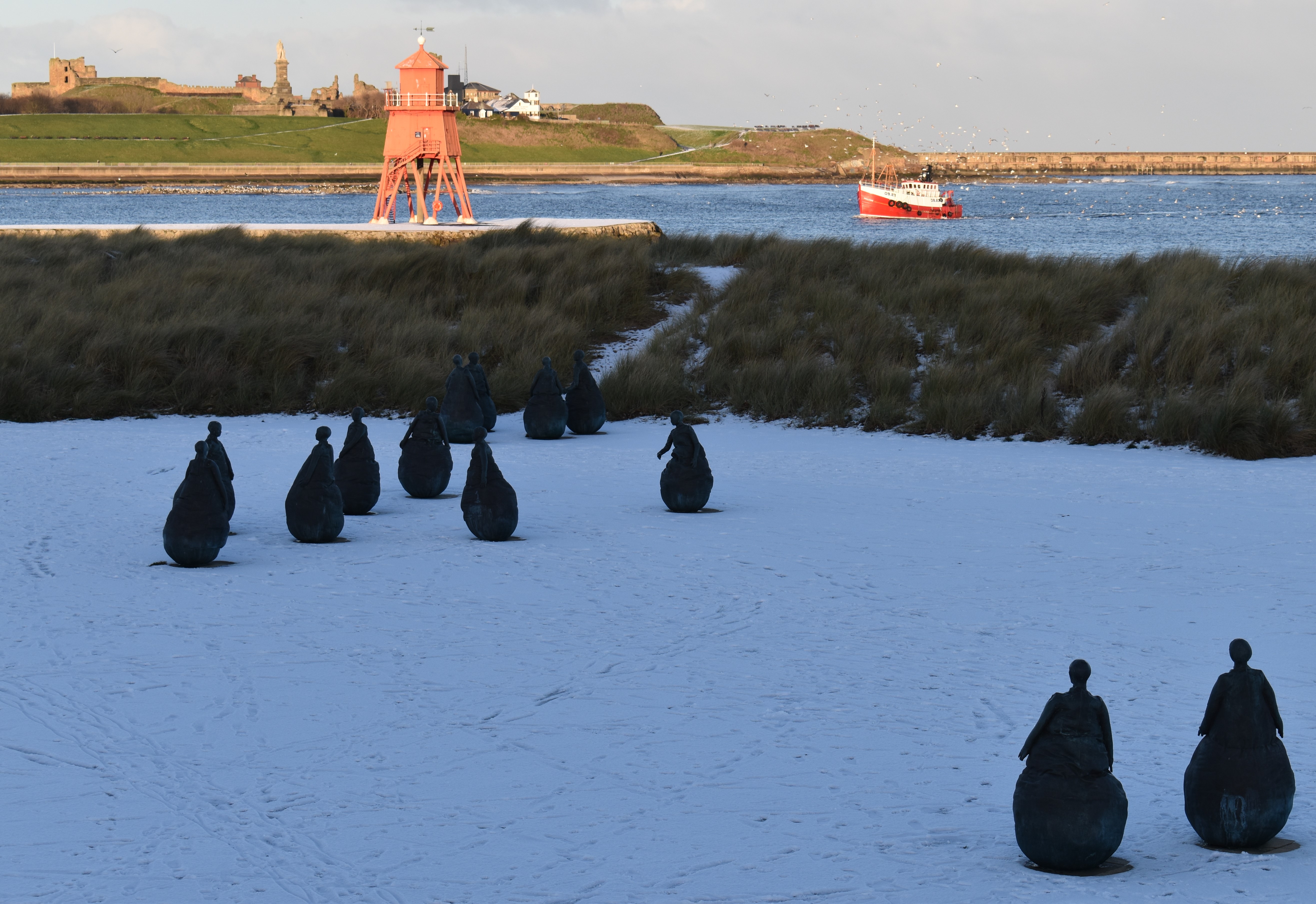
Directly across the river, South Shields has its own sculptures connected to the sea with the Conversation Piece.

Placed near the Groyne pier at the entrance to the River, are a large group of ‘weebles’ – the local name for the 22 bronze figures, which are in small groups talking to each other and checking the time waiting for their men to return home from sea.

In the shade and snow, the Conversation Piece/Weebles in South Shields by Juan Munoz. The red Groyne in the background. (pic Alikivi 2022)

The figures were unveiled in 1999 from an idea by Spanish artist Juan Munoz. He must have created a number of these pieces as a couple of years ago I saw some fenced in behind a cage near the beach in Barcelona.

Word is, another sculpture is planned near Fiddlers Green, that’ll be one more pinned to Lonsdale’s map of the North.

Joyce Marti added “The group who raised the initial funds for Fiddlers Green have now commissioned Ray to start a ‘Herring Girl’ statue to be placed on the Western Fish Quay, North Shields”.

A list of locations can be seen on the official website at:  Two Red Rubber Things – Home   

Alikivi    December 2022

GEORDIE PLAYS book launch at Newcastle City Library

Held on Saturday November 26th by North East playwright & theatre producer Ed Waugh (Dirty Dusting, Hadaway Harry, Sunday for Sammy), the event in Bewick Hall will be a celebration of fantastic stories about working class heroes from Tyneside.

“I’m really excited about this. It’ll rock. There’ll be Geordie songs, stories, and a video link – it’ll be great crack” said Ed

The Harry Clasper, David & Glenn McCrory and The Great Joe Wilson stories were successful stage plays in their own right, now the scripts have been compiled together and released into one book – Geordie Plays.

Harry Clasper’s story follows his journey from working class pitman in Jarrow to rowing Champion of the World.

North East singer and song writer Joe Wilson chronicled working class life in song including the Geordie classic Keep Yor Feet Still Geordie Hinny.

“North East actor Jamie Brown who starred in both plays Hadaway Harry and the Great Joe Wilson will be singing some Geordie songs at the event”.

“We have the top journalist and sportswriter John Gibson coming along, he will regale us with stories about Glenn McCrory’s rise to boxing world champion stardom and the inspiration he got from his severely disabled brother David”.

“We’ll also have a video link to the three plays’ director Russell Floyd” explained Ed.

Some may know of Russell from his time acting in UK theatres and TV shows including Eastenders and The Bill.

“There’s also a special 5-minute video by Canadian, Kas Wilson, talking about what it means to be Joe Wilson’s great-grand-daughter”.

“I would like to give my thanks for continued support to all audiences, supporters, organisers – everyone involved in making this happen”.

The launch is on Saturday, November 26th 6pm, Bewick Hall, Newcastle City Library.

Tickets only £4 available from:

 Alikivi   November 2022

MASTER OF PUPPETS with WAVIS O’SHAVE ON THE TUBE

Ground breaking ‘80s live music show The Tube was broadcast from Tyne Tees studios in Newcastle for Channel Four from 1982 to 1987. The last post featured Wavis O’Shave who appeared regularly on the programme.

For one of the shows some filming was scheduled at the South Marine Park, South Shields and Wavis asked his mate Phil Whale to accompany him. Phil was a miner who lived on the Whiteleas council estate, South Shields.

Wavis: ‘I took Phil with me because he was the leader of the Whiteleas Massive and as a miner pissed off being involved in the Miners Strike. Thought I’d cheer him up!’

Phil Whale: ‘If there is one thing having a mate like Wavis has taught me is to always expect the unexpected. I’ve had hilarious times in his presence and witnessed surreal bizarre events’.

‘At that time Wavis was a regular on the show with his character The Hard who in essence was a delightfully exaggerated alpha male tough guy who was on a quest to demonstrate that he was the hardest guy on the planet’.

The Hard in his Hard backyard, South Shields.

‘I remember feeling excited at the prospect of watching him undertake his TV work, yet also feeling nervous at what he may do to challenge the norms and expectations of those in attendance because that is one of the things that he’s about.

Funnily enough I do remember him having a glint in his eyes’.

‘We met a camera crew all wearing Barbour jackets and talking in middle class accents. Wavis politely explained to them that he was going to present new characters to the cameras such as Mr Ordinary Powder, Mr Starey Oot and a hand puppet scene called the Non Sweary Puppet Show’.

The Tube crew were expecting The Hard to turn up as that character was starting to make a big impression on their viewers. Even the staff in production meetings used to do impersonations of The Hard. But on the day Wavis had other ideas.

Filming Mr Ordinary Powder in the South Marine Park, South Shields.

Phil remembers ‘The director begged him to do The Hard and asked him if he would consider doing six episodes for Channel 4, but Wavey was having none of it stating that the Hard was now consigned to the past and as an artist he wanted to move on’. 

‘It was just mental watching Wavis perform these new surreal characters in a public park with Mr Ordinary Powder who was naked apart from a loin cloth, carrying a shopping basket containing a talking loaf of bread, and Mr Starey Oot just staring everyone and everything out – in a manner that the Hard would be proud of’.

‘Mind you the best part of the day had to go to the Non Sweary Puppet Show which involved Wavis hiding behind a wall then up popped glove puppets arguing and screaming at each other that included loud explicit references to sex and constant use of the F word – all in Geordie!

The crew and gathering members of the public stood in a stunned silence at what was happening.

‘Wavis maintained a rock steady face in between takes which added to the surreal nature. I remember experiencing a wide range of thoughts ranging from ‘what the feck this is brilliant’ to ‘Get in Wavis’. 

‘At the end of the day payment was discussed with the director, at first Wavis refused money but after haggling was pleased to get a brand new Scotland football strip.’

Phil wraps up his feelings about the day… ‘To cap it all off Wavis asked if I would accompany him to the Tube Studio for the editing. Was he valuing my comedic opinion or was he sticking two fingers up to the producers expectations?’

‘I suppose I will never know but it didn’t matter to me as the experience was priceless. Oh and by the way you won’t be surprised to hear that The Non Sweary Puppet Show didn’t survive the cuts which was a shame but not unexpected’.

It’s reported on good authority that while the Non-Swearies Puppet Show was unsuitable for terrestrial TV broadcast it was a huge favourite in The Tube Office.

‘The Non-Swearies…even I’ve lost the original demo VHS performance’ remembers Wavis.

Alikivi   October 2022

GAN CANNY – created by North East sculptor, Ray Lonsdale

Gan Canny sculpture by Ray Lonsdale. pic Alikivi 2022

For non-Geordies reading this post ‘Gan Canny’ is a phrase meaning take it easy. It can be said after yakking with yer marra and putting the world to rights – which means talking to your friend and solving all our problems.

Av’ yer got that reet? Champion. I went into Sunderland city centre to check out the new Fire Station music and theatre venue and stayed for a canny bit o’ scran. If non Geordies are still following that means ‘some nice food’.

Also on my list was to see the new sculpture just around the corner in Keel Square.

I visit galleries and museums where fantastic paintings and great skill is on show like in Madrid’s Prado, Scotland’s National and Newcastle’s Laing, unlike the contemporary art in Gateshead’s Baltic which leaves me cold.

Don’t get me wrong I’ve seen good contemporary stuff in New York’s MOMA and the Pompidou in Paris but the Tracey Emin tent and unmade bed in Tate London some years ago looked like a sixth form art project.

An outside location is a different challenge, the position is all important. Gateshead got it spot on with The Angel of the North placed at the top of a hill on a former colliery next to the A1 motorway and seen by thousands of cars daily.

The artist Antony Gormley originally made small models of the design but it was Hartlepool Steel Fabrications who produced what you see now.

Gan Canny sculpture by Ray Lonsdale. pic Alikivi 2022

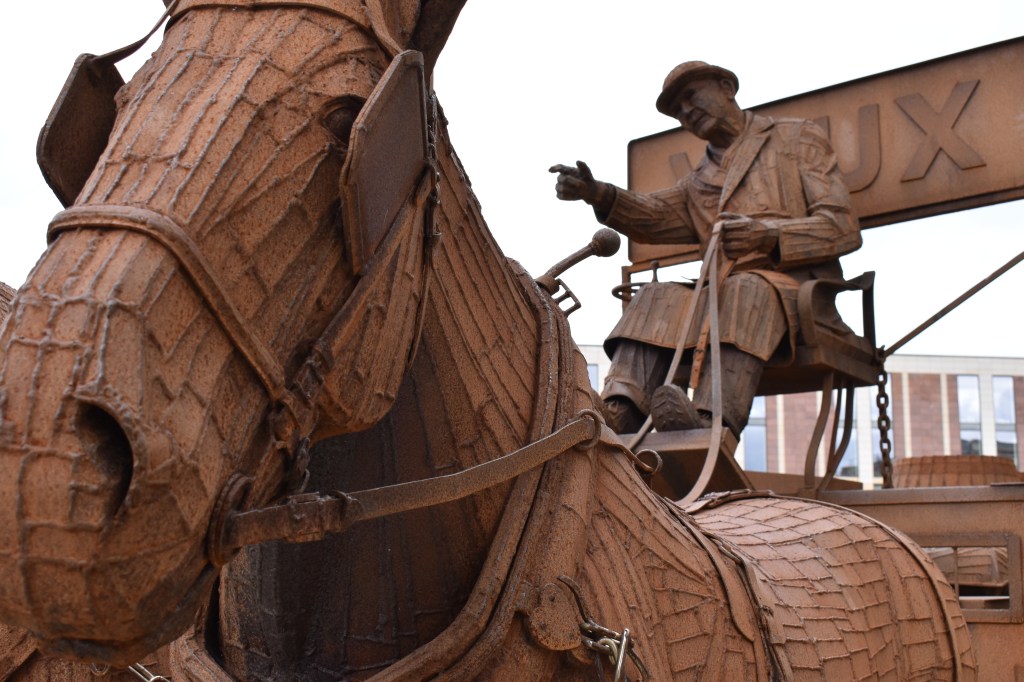
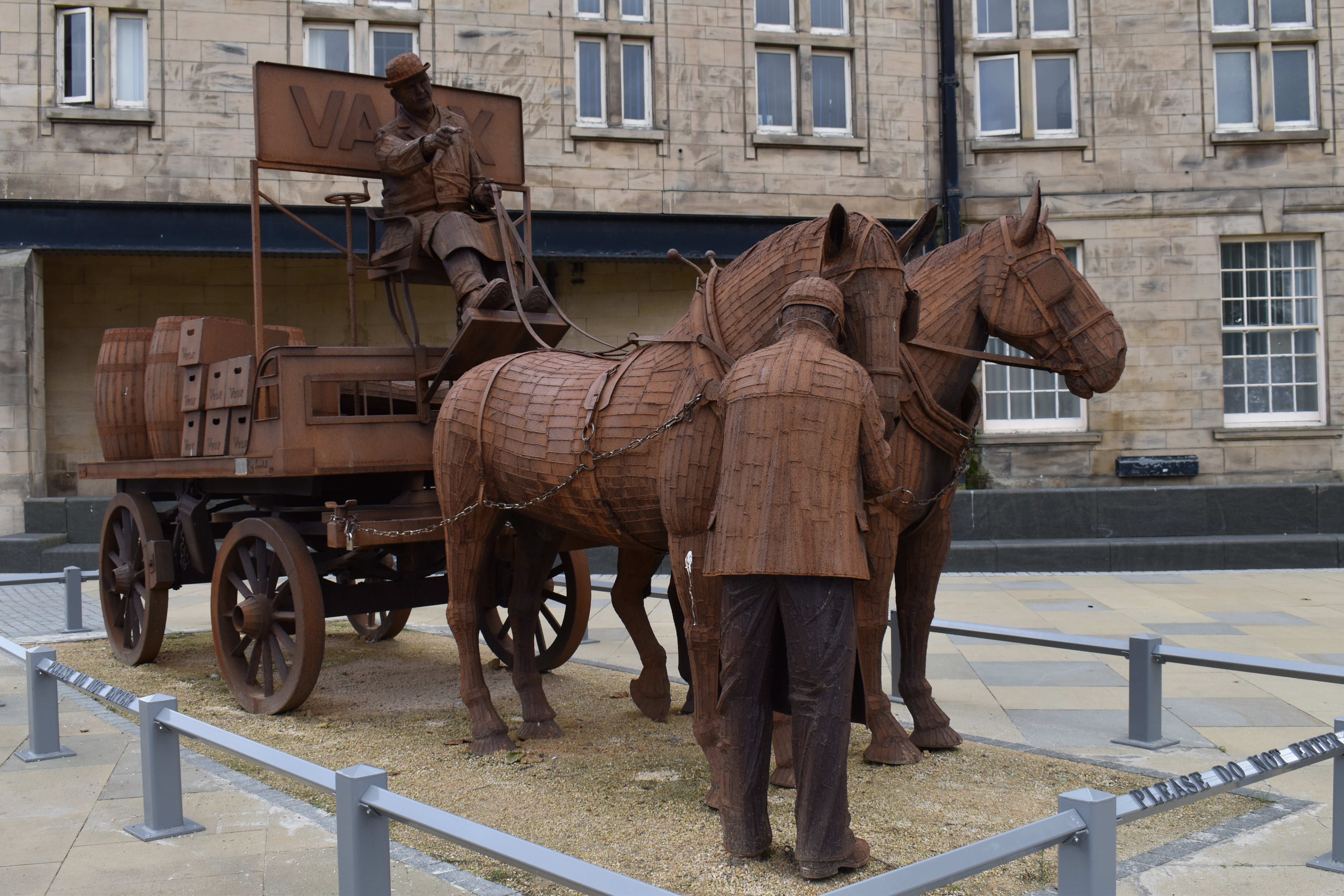
Gan Canny installed in December 2021,  is the latest work by Ray Lonsdale and is placed a stone’s throw away from where the Vaux Breweries were in Sunderland.

Gan Canny is a life sized sculpture of a driver and his assistant and two horses pulling a cart loaded with barrels and crates of Vaux beer. The detail is fantastic with a bucket and shovel for the horse muck – three balls of it – and the assistant feeding the horse lumps of sugar – no doubt the driver’s gesture is ‘gan canny with that sugar’.

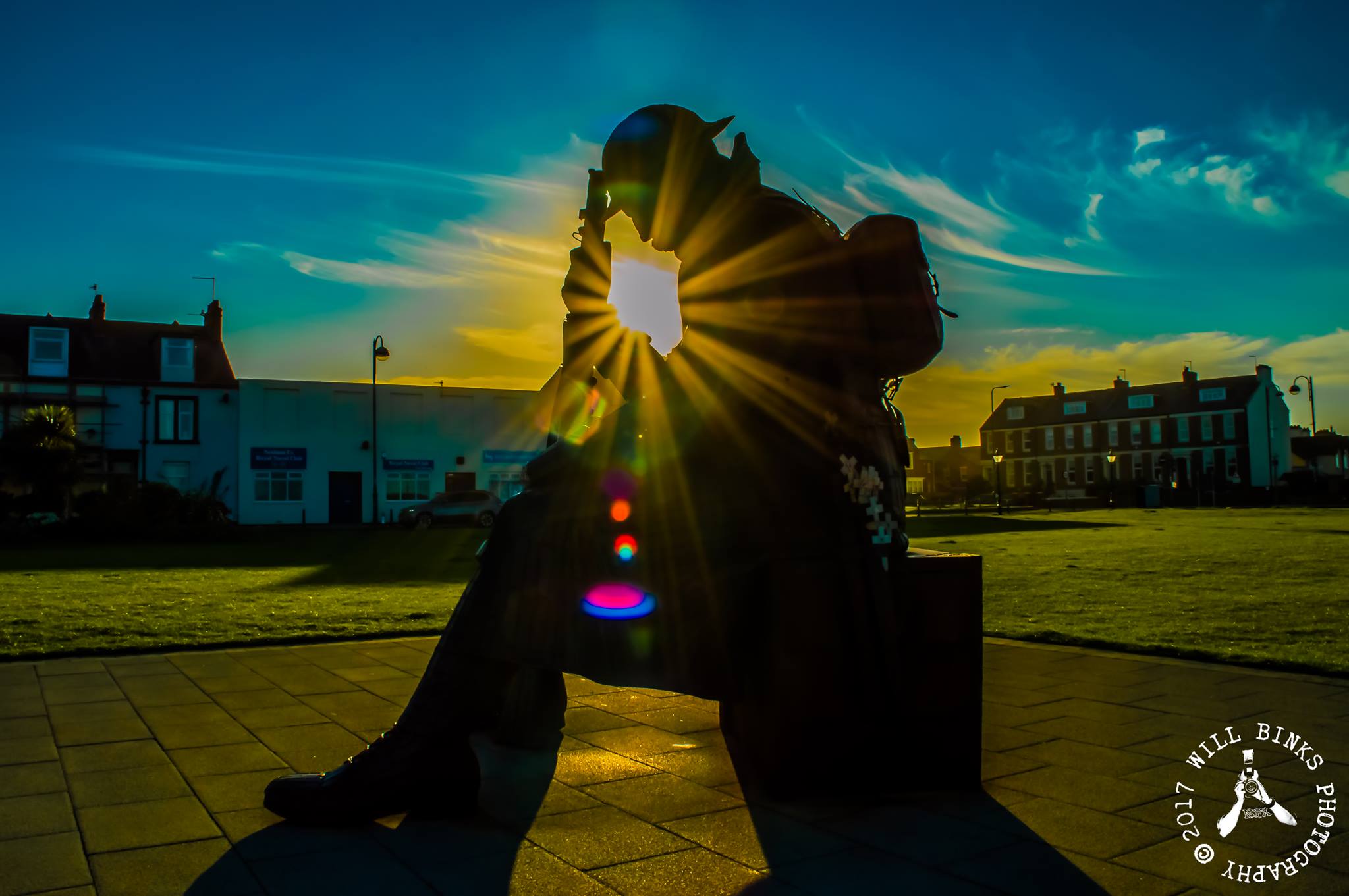
Ray also produced 11.01 the nine foot tall soldier at Seaham, 11.01 refers to the first minute of peace, as the First World War armistice started at 11am on the 11th November 1918.

The red steel sculpture now known affectionately as Tommy, is sitting with his helmet on, holding his gun and looking down – is he weary from a day’s fighting and seeing some of his marras being injured or killed ? Or catching his breath and preparing himself to go over the top ?

11.01 – Tommy by Ray Lonsdale. pic Will Binks 2017.

Each time I’ve visited there’s been a quiet reverence shown by people of all ages, paying respects, laying a flower or small wooden cross, maybe reflecting on how wars have impacted the lives of friends, relatives, or their own lives.

I experienced a similar atmosphere the other week when I visited The Commando Memorial at Spean Bridge in the Scottish Highlands.

Lonsdale also created Fiddlers Green at North Shields – a memorial to lost fishermen off the North East coast. Loss is a major theme running through here and the Gan Canny sculpture reminds me of the loss of a slower pace of life.

I’m old enough to remember a time when the rag an’ bone man with his horse and cart trotted down the back lane shouting ‘any ole rags’.

But this new sculpture by Ray is to celebrate Sunderland’s connection with Vaux Breweries, who for over 150 year were major employers in the city. Although not the emotional heft of Tommy, Gan Canny is worth going back for.

More works by Ray Lonsdale can be seen right across the North from Gretna Green in Dumfries down to Middlesborough on Teesside.

Alikivi   September 2022