NORTHERN DIAMOND in conversation with performer Lorraine Crosby

‘Through Thick and Thin’ is the new single released today by Bonnie Tyler and Lorraine Crosby in aid of Teenage Cancer Trust…By releasing the record and helping to raise money we hope it makes a huge difference to teenagers with cancer.

I worked with Bonnie on another recording a few years ago in a studio down in Battle where Def Leppard recorded Hysteria. We get on really well, she’s fantastic, one day I went to her house and we had the same clothes on! She’s another one in the business who really works her socks off.  

The North East has a pedigree for strong woman, do you think you fit into that ?

We had a hard upbringing living in sheer poverty, so there was a fight to get out of that. My father died when I was only two so my mother was a young widow with four kids to bring up.

On a Friday we’d have a box of food arrive from the shop and that would have to last a week, when all that was gone, and we were starving literally we went in the garden as we had a rhubarb patch at the bottom.

I used to break off sticks of it and dip them in a bag of sugar…..diarrhea for the weekend (laughs).

We’re laughing about this but really, I used to walk into the kitchen and clap my hands to scare the mice off. That was my youth. We had absolutely nothing.

Yes, they were hard times, and you had to be strong to get through it, but through sheer determination I dragged myself out of it, it makes you very resilient.

What does music mean to you ?

I think music saved my life. It was pure escapism. I remember being at school and sneaking off to the hall to put classical music on the record player then dancing around like Margo Fonteyn,

I got caught and given the belt. These days they would suggest drama class or dance class to embrace the passion not reprimand you !

I played clarinet and violin but got bullied because of it so I bullied back as a form of self-protection, I only realise that now and how wrong it was but when you’re young and don’t really have any parental guidance you just survive the best you can.

Was music in your family ?

No don’t think so, New Year’s Eve you’d have the family and friends getting out the banjos and accordion, singing along and it was a magical time I so looked forward to going there and singing

I was in the church choir at Walker school, so I think my desire to be a singer came from there. I’ve been told that I was an outgoing kid and at my dad’s funeral I got up singing and dancing to cheer everyone up because they were all crying, so yeah something triggered in me then at just two years old !

When I left school in Newcastle I trained as a hairdresser, but when I found the stage I didn’t stay for long, yeah always been a performer.

Lorraine on stage with Spike from The Quireboys.

Is that where you feel most comfortable ?

Yes, and as long as people are coming to see me, I won’t retire. I’m still rockin’, Tina Turner did till she was 77 so why can’t I ? I’ve even done panto.

Five year ago I was asked and told them ‘Yes but don’t let me make a fool of myself’. Only a small role they told me, turned out to be the Queen in Snow White (laughs). But I embraced it and loved my time there.

I thank my mentor Leah Bell for turning me into a West End Wendy.

We’ve supported Status Quo many times and I’ve been on stage with Spike from The Quireboys. I’ve just been on an album with Elton John, Rod Stewart, Paul Carrack, Willie Nelson to name a few.

I’ve sang on cruise ships and have done shows on American Military bases when I lived out in Japan in the early ‘80s, that was a real culture shock. We did four 45-minute sets, on a weekend it was six shows, I retain thousands of songs up here (points to head).

Japan was hard going but the alcohol afterwards might not have helped as we drank the local hooch, it was wild. After Japan I came back to the UK that’s when I met my husband Stu Emerson, formed a band and ended up in America recording with Meatloaf.

First time I saw Lorraine Crosby was on a Meatloaf documentary I watched a few weeks ago. Meatloaf and musician Jim Steinman told stories about the first album Bat Out of Hell but it was the second album where Lorraine appeared.

A single ‘I’d Do Anything for Love’ was released in 1993 and was a massive hit, would you say that was a magic moment in your career ?

Just getting to do the Meatloaf song was great. What happened was Stu my husband and songwriter, knew a guy called Dan Priest in London and he sent our tape to Jim Steinman – he loved us and wanted to be our manager, so we moved to New York to work with him.

Jim was recording Bat Out of Hell 2 and one day he called me up ‘Lorraine can you come along to the studio and sing this part?’

Well Meatloaf is like a method actor he wanted to hear the female voice so he can react off it, so originally, I sang on just a demo of the song that’s why I wasn’t credited on the track.

We recorded some more songs and he played it to the record company who gave me a deal off the back of them.

Then a phone call came in saying what I’d recorded on the demo they were putting on the record and releasing it as a single. Originally, they were going to get someone else in to sing the part, but yeah that was a defining moment for me.

Not long after, we were driving down to Venice Beach and the song came on the radio it was just like, wow, crazy ! We knew it was gonna be big.

Then walking on stage at Whitley Bay Ice Rink singing it live with Meatloaf was a great moment, like scoring a goal at St James’ Park. I also appeared on Broadway with him, so yeah, a couple of really big moments. Great memories.

Does that story follow you around ?

Number 1 in 28 countries, sold 15 million records, won a Grammy…It’s a hell of a claim to fame isn’t it ? You gotta shout about it. As I said when we were in America we signed as a song writing duo Emerson/Crosby and Jim Steinman got us a big deal with MCA.

We went in Power Station studio in New York city with Bernard Edwards from Chic, there was the Bon Jovi bass player, keyboard player with Bowie, you know they were all in there when recording our album.

My husband Stu has always been my backbone, he has supported me and is a great songwriter.

His early band back on Tyneside were called Emerson, they were part of the New Wave of British Heavy Metal and recorded a single on Neat records and were on the brink of getting somewhere but split as some of the band joined Samson just before their big break.

We thought we were really getting on and putting things together over there. Steinman was mentoring and helping us with our writing and as he was based in Los Angeles we ended up moving to L.A. living in his house in the Hollywood Hills at first and recording in Ocean Way studio.

The record company then paid for apartments in Hollywood and San Fernando valley, that house had a studio in it where Earth, Wind and Fire recorded, Harry Neilson had been there, it was a real old ‘70s studio.

Jim is one of the most incredible genius’ I’ve ever met. I remember we didn’t see him much during the day, he was very nocturnal with his silver foil at the windows to stop the light coming in.

But he had his own career and it had really taken off so he couldn’t devote the time to us.

Meanwhile the second Meatloaf album which I sang on, went over budget so the record company sacked the guy who we were dealing with, and every band on his roster including us, went with him.

So, no manager, being dropped by the label and no money left, we reluctantly moved back to the UK. We heard three month later the last house we were in was destroyed in an earthquake.

What state of mind were you in when you returned to the North East ?

I was gutted, there was a number One album I was on and everyone thinking I was earning millions!

So, looking for a new manager I found Smallwood and Taylor, Rod Smallwood was Iron Maiden’s manager. I was with him for a couple of years, and he got me a couple of development deals with Chrysalis, Hansa and some others but unfortunately nothing seemed to gel with the songwriters I worked with.

I was based in the North East and travelling down to London to try and get things going.

One time I went out to L.A and worked with Andy Taylor from Duran Duran, we recorded a few songs, but they weren’t pop enough for the label, I’m more rock and blues.

So that time with Rod Smallwood ran out, no hard feelings involved, he had exhausted all the avenues and we parted.

Looking back, it was a daft decision to start back in cabaret and clubland, but you know you live an’ learn. Thing was I needed to pay the bills because I didn’t have anything then, but I’ve never stopped working, my voice gets better and my range has gone through the roof.

Did you have a wow moment listening to a song when you said ‘I want to do that’ ?

Yeah Lene Lovich. I heard her song Lucky Number on the radio and thought it was so bad anybody can be a singer. My mam said ‘Well why don’t ya’.

There was a music shop in town called Rock City and it had a notice board with adverts on for bands looking for singers. Me and a friend chose a country and western band first then left them to join a group called Time Out.

We played the working men’s club circuit for a year, but I was only backing and not developing my voice so with a couple of other guys I formed my own band, Foxy.

This was the early ‘80s and with a few agents working for us we did American Military bases all over the world.

Who else have you worked with ?

I’ve sang on albums featuring Rod Stewart, Kid Rock, done some backing vocals on the new album by John Parr, he’s a lovely man. I’ve worked with great musicians who have retained their skill, they aren’t like a lot in the charts now who just want to be famous, they have music in them and they still love what they do.

What’s next Lorraine ?

I was at the same charity event as Producer Geoff Wonfor and we got chatting and he said why not do Sunday for Sammy ?

This year it’s the 20th Anniversary of the popular live entertainment show featuring North East actors and performers.

Not long after I got a call asking me to do a duet with Tim Healey (Benidorm, Auf Weidersehen Pet) and we did Anything for Love. So that was my first time, then I became a member of the house band and I love it.

Where else would you see a show that’s had AC/DC’s Brian Johnson (He was in a sketch rebuilding the roman wall when I was at the show at Newcastle City Hall 2004) or Brenda Blethyn (Vera) Johnny Vegas, Trevor Horn, Joe McElderry all these people who wouldn’t normally perform together, it’s just magical.

The show is a charity that helps people in the arts and it’s very important now as funding for the arts is being cut. So yeah, it’s really special and the whole show has adapted to the size of the Arena, it hasn’t lost its feel from the City Hall.

After Sunday for Sammy, we are recording my new album, very rock and blues stuff I’m sounding Jimmy Barnes meets Bonnie Tyler. It’s very rocky and a bit like Vintage Trouble who I’m a huge fan of.

I was also asked by Spotlight TV to present a music video show called On Demand Country, people request songs from artists like Dolly Parton and we play the video.

The studio is Jam Jar Studios in Gateshead where we film it with a green screen behind me so we can project the video onto that. The techies do a great job behind the camera.

First time I’ve done it and really love it, so looking forward to doing more shows.

 Interview by Alikivi  2020.

THE DAY I WAS TOLD OFF BY FREDDIE F***ING MERCURY with singer & songwriter Sam Blue

When I was in Ya Ya we recorded some of the album at Maison Rouge in Fulham. Next door Roger Taylor was recording The Cross album. So we used to regularly meet the Queen guys.

There was a bar in Maison Rouge – part of its appeal – and one night I was sitting there on my own with a drink and Freddie Mercury plonks himself down on the stool next to me.

He asks how it’s going, Brian and Rog said it was sounding great. I didn’t know what to say…it was Freddie ‘F***ing’ Mercury! So, I just said I was a bit bored…’They’re working on guitar amp and bass sounds, so I had nothing to do’.

Freddie looked at me and said quietly, ‘Never ever say you’re bored, there’s always something to do and there are people out there who would give there left arm to do what you’re doing’.

I didn’t know what to say. I was being told off by Freddie Mercury.

You know what, I’ve never said I was bored since, because he was right. We had a drink and chatted about all things singing, which singers love to do, what a wonderful person.

Turns out, he knew lots of people I knew and worked with, some of them part of Freddie’s inner circle – funny old world isn’t it.

Now living on a houseboat in Twickenham, London, Tyneside born Sam Blewitt has great stories from his life in music – Ultravox, Dizzee Rascal at Glastonbury, hitting number One with Mike Skinner & the Streets and not forgetting his formative years singing in rock bands in the North East.

But first I asked him what got you interested in music and are you from a musical family ?

I’m not really from a musical family, but my Dad played the guitar, he’s pretty handy on the keyboard now. What got me interested was my mates in Gosforth, where I grew up, we talked about music the majority of the time.

Also, my Aunty Lily worked for a company who changed all the singles on the jukeboxes around Newcastle and Gateshead, she would drop by in her mini-van and drop off piles of singles.

This would have been around ‘68 or ‘69. Me and my sister would pile them up on the record player and listen to every song day after day. I loved the Beatles, Little Richard, Sam Cooke, Rolling Stones, Small Faces, The Animals.

We also used to watch all the Saturday night shows on TV, like Cilla, Lulu – I even remember the famous one where Jimi Hendrix starts Sunshine of your Love in the middle of Hey Joe.

There was music everywhere – or so I thought.

Can you remember your first gig ?

My first proper gig was at the Cooperage near the Quayside in Newcastle with my first band Moulin Rouge. It was just a party for a friend of one of the band members. We had been rehearsing for a while and it was an ideal way of us starting out properly.

Moulin Rouge gigged anywhere we could to be honest – The Newton Park Hotel with Newcastle band White Heat, The Mayfair, the Old 69 and the Locarno in Sunderland and some workingmen’s clubs.

I remember playing a few times in Whitley Bay sharing headline slots with The Tygers of Pan Tang and supporting Geordie at the Mayfair. The line-up changed a few times and we eventually recruited Rob Hunter on drums, who was also a great singer and songwriter. He left to join Raven.

I left Moulin Rouge to join Fastbreeder with Fred Purvis, Dave Drury and Andy Taylor – who later moved on to Duran Duran. They were a great little rock band, and we did the Mayfair a couple of times and some workingmen’s clubs, but after Andy left it sort of fell apart.

 Did you travel out of Tyneside ?

I joined a band in Cleveland called Axis, they were set up like a proper professional band, and we played a few gigs around the country. Once again a guitarist left, that was Mick Tucker he joined White Spirit.

I then joined Emerson, which included brothers Stu and Bri Emerson, Dru Irving on keys and Jon Sellers on drums, later replaced by Charlie McKenzie. We worked hard with writing sessions and rehearsals every weekend.

Once again, we picked up gigs wherever we could like the Whitley Bay Esplanade and some cool ones supporting bands like Nazareth, Budgie, Robin George and Heavy Pettin’.

We got quite a few slots in the capital at the Royal Standard, Dingwalls and the Marquee, this led to a lot of interest from the industry in London.

But the band started to break up after a year or two, Bri left and I started getting offers from bands in London. We kept the band going for a while with Norman Appleby replacing Bri Emerson.

I eventually left and joined LA Secrets, after a short stint with them I joined Paul Samson’s Empire, that was fun but again only lasted a few months before I joined a band called Ya Ya.

I spent four years with them, and we were signed to Warner Brothers and released an album called Ya Ya, it got rave reviews. But unfortunately, it failed to sell in great numbers. We released a few singles from the album which were fun to promote.

By this time it was 1989 and the band broke up. Looking back on my time in Ya Ya we had toured a fair bit and recorded with some great producers. We supported Roger Taylor’s band The Cross, for a whole tour of the UK, which was fun and got to meet all the Queen guys.   

Where there any offers after Ya Ya ?

I worked as a session singer and songwriter for a few years, working with some amazing writers and producers, trying to form new projects.

Then in 1992 I joined Ultravox and stayed with them until 1996. In that time we released one studio album Ingenuity, and one live album.

I then worked with Vinny Burns – who was the guitarist in Ultravox at that time – on his solo album The Journey. We then joined forces as Burns Blue, to write and record our own album What if.

Then came my time as a ‘hired gun’ session singer, I sang the Phat Beach/Naughty Boy version of The Baywatch theme I’ll Be Ready, which reached the top 30.

Plus I sang for Mike Skinner & the Streets on ‘Dry Your Eyes’ which went to number 1 in the UK. This attracted the interest of many hip hop/grime artists and producers.

I sang with The Young Punx on their albums who were recruited to become Dizzee Rascal’s backing band for his 2009/10 tours and TV performances.

I was brought in to sing ‘fix up look sharpbut ended up joining in with the band singing on most of the songs. We had Guthrie Govan on guitar, Hal Ritson on bass and keys, Alex Reeves on drums, Vula Malinga on vocals and a whole brass section – not too shabby.

I still collaborate with producers Hal Ritson and Richard Adlam on Young Punx, Avicci, Urban Myth and various other releases.

What was your first recording experience ?

My first recording experience would have been with Moulin Rouge at Impulse studios in Wallsend. The line-up of the band was Me, Matty Rocks and Ian Wood on guitars, Ian Drury on bass and I forget the drummer’s name – it was a long time ago.

We done a two track recording for EMI records. They had seen us at a Melody Maker rock competition in Durham, and much to our surprise – we won, but they didn’t follow up their initial interest.

We were so naive, we didn’t really know what a demo was. The next time I recorded properly would have been with Paul Samson’s Empire, we had a day at the BBC Maida Vale studios in London, which was awesome.

Did you have a manager ?

My first proper manager was Diane Wagg, when I first moved to London – we’re still mates now. Then Ira Blacker managed Ya Ya. When I joined Ultravox our managers were Simon Napier Bell and Sir Harry Cowell – a couple of real characters.

At the Jools Holland Hootenanny TV show in 2010 with Dizzee Rascal & the Young Punx.

What were your high points on stage – any magic moments ?

My high points have been, playing on the Glastonbury Pyramid stage with Dizzee Rascal in 2010. I was his rock singer with his amazing band The Young Punx. We have no idea how many people were there, but something around 70,000.

In Ultravox we played some cool festivals too, one in particular in Bielefeld, Germany on the same bill as Roger Chapman, one of my musical heroes.

One festival we played we were given a one-hour slot to play, this was cut short, but we weren’t told, and we hadn’t played any of the big songs like Vienna and Dancing with Tears in My Eyes, then we were pulled off stage by the promoter and stage manager after about 45 minutes. I don’t think the audience were too happy, we made the promoter explain the situation – still don’t know if he did or not. It happens.

Have you any road stories ?

One of my favourites was myself and Vinny Burns getting a bit merry after a gig, we went back to watch Asia who were headlining, they had lots of dry ice, so we took it upon ourselves to crawl across the stage under the dry ice without being seen.

It was all going well until we ended up behind Geoff Downs (the keyboard player) and couldn’t see where we were going but we managed to get back across the stage without being seen. It’s an old UFO trick, great fun.

When Ya Ya was in LA to shoot our video for When the World Cried with Nigel Dick, who also filmed Toto and Guns n Roses, we agreed to meet him at our hotel to have a chat.

Ray the guitarist fancied a dip in the hot tub on the roof, we had put a whole bottle of shampoo in the hot tub, we switched on the jacuzzi and he got in just for a laugh.

Nigel pulled up and looked up at the roof, all you could see was foam sliding down the side of the building. He said you could see it about a mile away. The hotel weren’t too happy – it was only soap !

There was a time I was backstage at Glastonbury when Bobby Womack walks up to me and says, ‘You remind me of that mutherfucker used to sing with Slade!’

Before I could answer his trumpet player declared…’No man, he remind me of that mutherfucker used to sing with Led Zeppelin!’….then they both walked of, it was hilarious.

Post soundcheck in Barcelona with The Project band in 2019.

Bringing your story up to date what are you doing now ?

I’m currently singing with The Project Band, basically the guys from the Alan Parsons Project featuring Lenny Zakatek joint vocals, Stuart Elliot on drums, Laurence Cottle on bass, Richard Cottle on keys and Dave Bainbridge on guitar.

They’re great people and amazing players, just waiting for this pandemic to clear up and we can get back out on the road. I didn’t know much about the Alan Parsons Project, but local boy John Miles was heavily involved, and I rate him very highly indeed.

I’m still working as a session singer, which I really like, you never know what they’ll throw at you next.

Finally, what does music mean to you ?

Music has meant everything really. Hard work, fun, and a living. It’s a cruel mistress sometimes, some wonderful moments you never forget, days when you wonder what you’re doing there.

I’ve met some fantastic people over the years, many great friends, lots of people to look up to. There’s always a challenge to look forward to.

Interview by Alikivi   May 2020.

For more info contact the official website:

http://www.samblue.co.uk

LONDON CALLING: Nights at the Marquee Club

The heart of London’s music industry was the legendary live music club the Marquee, along with CBGB’S in New York, the club has been defined as one of the most important music venues in the world.

It provided the catalyst to launch the career of many bands – The Rolling Stones, The Who, Led Zeppelin – the list is endless.

A&R men used to regularly visit the club to watch out for the next big thing and with plenty of bands looking to make it, the best way was to be seen on stage of the Marquee.

Graeme Thomson wrote in his biog about Phil Lynott –

‘It was do or die. Thin Lizzy were £30,000 in debt. Money was borrowed for their showcase gig for Phonogram at the Marquee on 9th July 1974. It was so hot that night that all the guitars went out of tune, but they played well enough to confirm the deal, even if the advance for a two album contract only cleared what they owed’.

Mick Wall’s biog of Lemmy featured the time Motorhead stormed the capital, guitarist Fast Eddie Clark remembers…

‘The Marquee gig was one of the best we ever did. Lemmy said the sweat was climbing up the walls trying to get out’.

Bands from the North East of England – White Heat, Angelic Upstarts, Fist, The Showbiz Kids, Punishment of Luxury, Raven and Tygers of Pan Tang all travelled south down the M1.

Was playing London the catalyst for a life in music, or just a road too far for some ?

John Gallagher from Chief Headbangers, Raven  ‘The running joke was – c-mon lets git in a van and gaan doon t’London ! We did quite a few one off support gigs. It was in the back of the truck, drive down to London, play the Marquee with Iron Maiden and drive back straight after the gig’.

Harry Hill, drummer with Fist remembers…’We played the Marquee for two nights supporting Iron Maiden. We were going down an absolute storm, the place was packed. I’m not sure what the band thought about it but their manager was kicking off “You’re just the support band, you’re not supposed to go down like that” 

We won him over in the end and he came into the dressing room with a crate of beer. Yep we gave them a run for their money’.

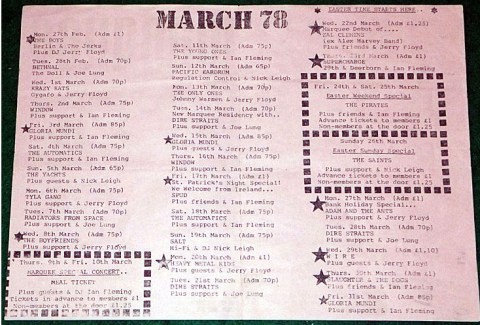
Residencies were part of the scene and a few North East bands got on the list including Dire Straits. This advert from March ’78 with admission fee only 70p.

Select dates for North East bands listed as playing the Marquee:

1976:   Halfbreed 15 & 29th January & 3rd March.  Arbre 4th April.

Back Street Crawler 11 & 12th May with AC/DC as support. Cirkus 15th May.

1977:  Penetration 29th June opening for Heron also 30th July & 1st August opening for The Vibrators.

1978:  Penetration 21st June. Punishment of Luxury 3rd October.

1979:  Showbiz Kids 3rd February. Punishment of Luxury 13th February.

Showbiz Kidz 21st April. Punishment of Luxury 7th May.

Showbiz Kids 19th May & 14th June & 14th July.

Punishment of Luxury 23rd August & 31st October.

1980:  Raven 5th, 6th, or 7th November with Taurus or Diamond Head opening for Gary Moore.

1981:  White Heat 29th April.

1982:  Angelic Upstarts 18th February & 12th August.

The Marquee at Charing Cross Road finally closed it’s doors in 1996 after first establishing the club in Oxford Street, then it’s heyday in Wardour Street.

Alikivi  May 2020.

FORTUNE FAVOURS THE BRAVE with recently departed Tyger, Micky Crystal

After seven years, two albums and playing numerous tours a statement was released by guitarist Micky Crystal on 23rd April 2020 which left fans of the Tygers of Pan Tang in shock as it came at a time when the Tygers were, after rescheduling lockdown dates, gearing up to going out on the road with new album Ritual…..

’I officially announce that I have left Tygers of Pan Tang and want to thank you the fans for all your love and support. I am proud of the music we have created and the things this line-up has achieved.

I have developed and grown both as a musician and as a person and I feel this is the perfect time to open the door to a new chapter and new goals. I wish the band all the best for the future. Micky’

Only so much can be said in a statement so for more detail I got in touch and asked Micky if he has made the right decision…. Absolutely, you know I had a great time for the first few years but to be honest I think I cared too much and was starting to drive myself crazy really wanting it to be something that it wasn’t going to be.

At the same time I feel fortunate that I’ve met some true friends within the band and been able to visit some of the wonderful places I have through playing music.

But unfortunately, cracks started to appear and gradually got worse particularly around making the Ritual album.

What were the problems for you ?

I began to find things incredibly frustrating. The manager and the original member have been friends since the Sykes/Deverill days and while he did do some good things early on, it gradually had a very negative effect on the decision making.

It became less of the democratic brotherhood that it was sold as when they asked me to join.

Increasingly towards the end, big decisions were made without everyone’s approval or in some cases we were deliberately not being told, there’s too many examples to individually list.

The original member made it clear to me on numerous occasions that it was their way or the highway which only added to my growing frustrations after he had very little involvement in the writing or recording of Ritual.

That wasn’t a problem in itself, but it became painfully apparent that there was no appreciation for the extra work and hours put in by myself.

I started to feel more like a hired hand who was expected to write albums and do the hard work but have very little say or input regarding anything else – that just didn’t work for me.

In the end it was actually an old interview quote from John Sykes (former Tyger guitarist) that made me realise things would never change and it was time to walk away.

“What happened with the Tygers was that I was getting fed up with them. Everything was a five-way split, yet I was doing most of the work and not getting the credit I should have done. They didn’t wanna listen to what I had to say – I told them to get rid of the manager”.

(Interview with Killerwatt in Kerrang magazine 1984) 

Micky with Soren Andersen.

What are your plans now ?

I’ve been working on a home studio and have been getting more into the production side of music which I’m really enjoying. It’s something I’ve been wanting to do for a long time.

I was fortunate enough to spend a week with Soren Andersen last year and I learnt a lot from him so I’m putting a lot of the stuff I learnt into practice now.

I’ve also got some online content for some guitar companies that I’m working on. Plus some online collaborations and a prog project that I’m pretty excited about too.

Have you been listening to any new music ?

I’m listening to a lot of trap and pop music at the moment. People like Machine Gun Kelly and Post Malone in particular. I’m listening to a lot of Big Wreck too as well as all the usual rock stuff like Led Zeppelin and Ozzy.

It really depends on the day to be honest, one day it could be Chick Corea the next day it could be Bring Me The Horizon.

What were your highlights in the Tygers ?

Writing closely with Gav and Jack was a highlight, they both work fast and they’re very open minded when it comes to creative ideas. Finding out that both the self-titled album and Ritual had charted was awesome combined with various magazine front covers for the first time in the bands history.

Spending my 28th birthday on stage in São Paulo, plus I’d always wanted to play in Japan so getting to play there and go sightseeing round Tokyo was certainly a highlight.

The Lockdown – how are you dealing with it ?

I’m still teaching from home via Skype and playing a lot and recording too so I’m keeping busy. Just trying to make sure I’m learning new things so it’s been ok.

Who knows what the future holds. I’m totally open to new projects and bands. I hope it involves a lot of music, recording, teaching, playing live. I love it all.

For more information contact Micky on his social media acoounts:

https://facebook.com/MickyCrystalOfficial/

https://www.instagram.com/mickycrystal/

https://youtube.com/MickyCrystal

https://jtcguitar.com/store/artist/micky-crystal/

Interview by  Alikivi  April 2020

FOLK N’ COAL with North East musician John Wrightson

When did you first get interested in music and who were your influences ?

My influences go back to 1956. Lonnie Donegan, Elvis, Buddy Holly, Everly Brothers, Cliff & the Shadows, then later The Beatles to The Eagles.

At 14 I used to plonk on my older brothers guitar when he was out. I was the youngest of four and I wouldn’t say my family were musical like, although my oldest brother had a disco.

I left school Easter ’61, shortly after that I bought my first guitar, a Rosetti Solid 7. It cost 18 guineas, a fortune those days. Bought on HP (hire purchase) of course.

Can you remember your first gig ?

My first gig was in the summer of ‘61 at Ryhope Welfare Hall, County Durham. It was more of a dance than an audience, in a band called The Rustlers, four of us were 15 and one 14. The band went on for another three years.

What venues were you playing then ?

Most venues were welfare and village halls, and the odd workingmen’s clubs. Workie clubs seemed to take over from about 1962 onwards. I think the Mersey Sound had something to do with it. They seemed to be the main venues throughout the ‘60s to the ‘90s and beyond.

What type of songs do you write ?

Contemporary folk or poppy folk. I like good melodies and good lyrics. Quite a number of well-known artists have recorded my songs. Some of which play all over the world – Vin Garbutt (now deceased) Flossie Malavialle, and Manchester band Other Roads.

Do you record any of your music ?

The last two year has been a bit of a nightmare health wise with open heart surgery, so I never had much chance to write a lot of new material. But I record my own songs in my home studio and record a new CD every year to 18 month.

Tell me about your new CD…

The new CD is called All the Fields are Green Again. This song is about when back in the mid ‘50s, a beautiful piece of countryside between Murton and South Hetton in County Durham was obliterated to make way for the massive Hawthorn combined mine, it was there for over 50 years.

Wildlife and everything else was destroyed and a grey layer of dust and slurry covered everything and the smell of burning coke was terrible. I know I lived near it. I suppose the only good thing was there were lots of jobs.

When it closed in 1991 a huge tidying up procedure began. Although it was better, it was never the same. Hardly anyone has jobs now but all the fields are green again.

There is a song called Living on a Widows Pension. In 1960 the Northern counties and G.C.E. exams were introduced to East County Durham modern schools. It was 5 shilling (25p) a subject, you had to sit five subjects.

Of course, this was a fortune those days, and some couldn’t afford it, including me as my mother was a widow.

The headmaster kept telling us we’d never get a job without these exams. A week after I left school I filled a form in for an apprentice electrician at the coal board. Within a month I had an interview, a medical, then started work.

Remain is a song about the Brexit row that went on all last year and after. Gift of Life is about how precious life is. Being an ex-miner I tend to write lots of true to life songs about the pits. I was there for 21 years. Life in a Pit Village is one such song.

Brave Young Soldiers was especially written to commemorate 100 years since World War One ended. True Friendship is a song about a mate I’d never seen for 53 years and just by chance saw him on the internet.

Now he is living in Reading and making his own guitars. His customers were all fantastic musicians. I contacted him thinking he may not remember me, but how wrong I was.

He even remembered chords to songs I showed him when we were teenagers. To show his gratitude, he offered to make me an acoustic guitar for the cost of materials, which I accepted.

Have you any gigs planned for 2020 ?

The John Wrightson band don’t do as many gigs now but when we do it’s nearly always in the folk and live music scene, with a small quality PA. We are a contemporary folk band with one or two covers thrown in.

Sadly like many others we had to cancel a number of gigs through the coronavirus. We’ll wait and see what happens.

 Interview by Alikivi   April 2020.

IT WASN’T ABOUT BECOMING ROCK STARS – in conversation with songwriter & producer Steve Thompson

An interview with Steve is on the blog (The Godfather of North East New Wave of British Heavy Metal, 27th June 2017 link below) where he talks about his song writing and production work with Rodger Bain, Pete Waterman, Venom, Tygers of Pan Tang, The Hollies, Neat Records, Sheena Easton (!) and more.

But before that he started out as bassist in North East rock band Bullfrog, who were active during the early ‘70s. I wanted to know more about his early days in music to add to his story.

In November 2019 as chance happened, he was in a recording studio in my hometown South Shields, so I arranged to drop in.

Before recording with engineer Martin Trollope, we had a half hour chat an’ a cuppa where I asked Steve was he looking to ‘make it’ at being a musician, getting a record deal and moving to London ?

When I left school I was working at Consett steelworks, and I learnt more there on how to be a record producer. I learnt how to communicate and in particular using humour.

So, I don’t regret going into the steelworks. But I think not having to work there might have been the motivator.

It’s interesting to look back because we saw everything through a lot younger eyes. If I’d been armed then with what I know now I would have been invincible – but we were young and naïve.

Really my motivation and maybe not the other guys in the band who were all older than me, I just wanted to get into this making music thing and I figured I just had to get into a band.

It wasn’t about becoming rock stars it was all about getting the first gig. Then get more gigs and to just do it.

How old were you then ?

I was 16/17 year old and had a couple of stabs at rehearsing with people but it was going nowhere. There was another apprentice a year above me that had been at the same school so we sort of knew each other – a lad called Robin Hird.

The first year you are in the training centre and the second year that Robin was in, you go out onto the plant.

We made contact and got talking about music, guitars and bands we liked such as Cream and Hendrix, then he sold me an amp. When I got it home the speaker cabinet was a drawer from a chest of drawers with some foam backing and a circular hole cut in with a speaker fixed in.

Robin said let’s form a band, I have a guitar and a bass which I’ll give to you. I agreed and then he brought a drummer, Mick Symons, to my parent’s house. I played them a few songs I’d been working on and Robin said ‘I told you he’s got talent’. I was in.

Where did you rehearse ?

We got a room where the local brass band rehearsed, we shared the place for years. We started to live and breathe the band. I’m not sure that we thought about a record deal then because that was just a distant dream.

The dream that was closer was to get gigging on the local circuit. So for us this was The Freemasons Arms in Consett.

We’d go there every Saturday night and watch who was on and say how much better we were. Then the obligatory fight would break loose, the glasses would fly, bodies, tables and chairs all over – that was Saturday night.

Can you remember your first gig ?

We went to see a Mrs Eiley and she gave us a date for The Freemasons, it was her only gig. The week beforehand we went to the pub and got up to play with the band who were on, that was my first time on stage.

I remember one of the songs we played was Sunshine of Your Love by Cream. The following week on our own show we stormed it. Afterwards I went home and told me mam, it was a life changing moment for me.

We got loads of shows after then, but we always returned now and then to The Freemasons Arms. We once done a sort of homecoming gig there and the punters were queuing down the side street, along the alley – we got such a following.

Did the band talk about what you were going to wear on stage ?

No, it just didn’t enter our imagination. Although we were doing some clubs, we were doing them on our terms and not in sparkly suits. I suppose we would have dressed like Free, Sabbath, Deep Purple you know.

The perception was that they were wearing the same clothes that they had just walked in off the street.

In those days we never played any pop stuff it was all rock, then we started introducing our own stuff and got away with it. Although when we had two sets of 45 minutes each to fill we never done a gig with just all our songs.

You had to play The Hunter or Child in Time and you’d be stupid not to do them, the audience wanted to hear those songs.

Did you have a manager ?

We had a few but looking back I was doing a lot of the organizing, I wasn’t in charge but was doing a lot of stuff.

This whole thing of a bunch of young guys going out on the circuit attracting the attention of some guy who might be a plumber but has more money than you and fancies a dabble in management, well we had a few of them who had no background in the music industry.

We had one guy called Skippy who said we need to have one of those moments like The Beatles on the rooftop. So, one Saturday afternoon, it was reported in the Sunday Sun, we went down to Old Eldon Square in Newcastle broke into an office and ran a cable up to the monument in the middle and performed.

It was the first time anybody had played there, and it hit the papers. It didn’t end well for Skippy, he got arrested and deported back to Australia.

What venues were you playing ?

The North East agent Ivan Birchall got us masses of gigs supporting name bands. Venues like Newcastle Mayfair, The Viking in Seahouses and the thing was I never drove the van so I just got picked up and we drove out into the wilds.

At The Viking we loved that gig it was a big trek to get there. There was Bellingham Village Hall and a really good one was St Johns Chapel in Weardale. I can only imagine that the populous was starved of entertainment because they went crackers when a decent band turned up.

I remember we supported Suzi Quatro at the Mayfair and this was just before she cracked it, and everybody was gobsmacked at not only a girl playing the bass, but she was really rocking it out.

We nearly always got booked into the right places but eventually got a gig where we ended up in a place where no matter how quiet you turned down, they were going to hate you. We really should have seen it coming and not got up to play.

The concert chairman came up to us and said I’ll give you half your money lads and off you go. The thing I remember was the shame of carrying yer kit out from a packed club.

Every now and then you would do a gig where there would be two bands. One night we played The Rex Hotel in Whitley Bay and there are two stages there.

Now this was a sign of our ambition cos we used to try and arrive later than the other band so we could headline the gig – we were top of the bill at The Rex (laughs).

The other bands would do it as well cos we saw them driving slowly along the back lanes. Beckett were one of the bands cos I recognised their posh Merc – we only had a van.

We done a gig with a band called Jasper Hart. The singer was Brian Johnson, the band must have been the forerunner to Geordie, and of course he ended up in AC/DC.

Most times we’d be out gigging and finish around 2am in the morning and coming back we’d go to a cafe near Central Station in Newcastle that was open all night. All the bands would go there, we discovered we didn’t need sleep

I remember visiting Ivan Birchall one day and up on the wall he had lists of the bands he had on his books. There was an A list and a B list. We were on the B list and I wasn’t happy.

He said the A list are his priority bands, if a show comes in at short notice, I go to my A list and as priority they pay me 15%, and the B list pay me 10%.‘Do you wanna be on the A list ?’

I replied, ‘I insist’. In one fell swoop I gave him 50% more commission (laughs).

Did you meet with any record companies ?

Well it was a struggle. We had some demos, and we were going to set the world alight, so we went down to London, our first time there. To save money Robin and I booked return rail tickets travelling on a weekend cos it was cheaper then.

But as we found out it was the day’s when record companies were shut (laughs). So, we just had a weekend in London, the closest we got was Orange had a music store selling amplifiers and they also had a record label, so we gave them a tape.

I remember typing hundreds of letters sending them out one at a time cos there was no photocopiers them days, I must have been a mug and the rest of the band were having a life !

I have some of the responses and out of the blue got a nice letter from Brian Auger, he was organ player with Julie Driscoll (Wheels on Fire). So clearly, I wasn’t just sending to record companies.

I think I went through the Melody Maker yearbook getting address’ and pitching stuff left, right and centre. It was a tape I sent out that finally got us a deal.

How did that come about ?

Cube Records who were formerly the Fly record label based in Soho, London with Joan Armatrading, T.Rex, Procul Harem on their roster, so they had a big track record, then we came along (laughs).

They ran an advertising campaign looking for bands, so I sent them a tape about the same time we had won third prize in a competition run by EMI.

We went to a recording studio in Manchester Square, EMI’s headquarters in London, yes, we had two record companies chasing us. Cube told us that at EMI we would only be a small part of a big machine.

But on the day of going to the EMI reception we thought we couldn’t make it cos we had a gig in Durham on the same night, but they organised a flight for us to get to London and make it back to Durham for the gig.

Our roadies had set the gear up and just as we were going on stage we saw the concert chairman and told him we’d just made it here as we have flown up from London. I don’t think he believed us (laughs).

Cube Records were really keen, and they came up to Durham to watch us live and we couldn’t have arranged it better. The punters were swinging from the rafters going ape shit, after our first set Cube came into the dressing room and they were gobsmacked. They signed us there and then.

Now we signed everything, publishing, recording, management to that one company and the one gig that came from that was for the Newcastle Odeon supporting Wishbone Ash.

What did you record on Cube Records ?

I remember taking a guitar lick into the rehearsal room it was a jazz sort of thing and Pete the singer said it sounded like riddly, tiddly, tum. So, we wrote a joke song called that.

Cube were looking for the first single and we had done some recordings with Rodger Bain (Black Sabbath) and Hugh Murphy who done a lot of Gerry Rafferty stuff but when they heard Riddly, Tiddly, Tum they said that’s the single.

We were mortified, it was only done as a joke. No it’ll be a hit they said. They allowed us to change the title to Glancy, Mick Glancy was our original singer who had been replaced by Pete McDonald.

To promote it we pulled a stunt with Tyne Tees TV where we were driven around Newcastle in an open topped car, but we promoted the B side of the record, In the City, we were embarrassed about the A side. That put a nail in our coffin as far as the record company were concerned.

Unfortunately, that was when the dream became muddied by what the music business is about. They had the means to get our songs out there, but they weren’t as clever as they thought they were.

Maybe releasing a novelty song was going to be a good idea but I’m glad I’m not saddled with it – and having to do a follow up (laughs).

About ten years ago Glancy ended up on a compilation album called 20 Powerglam Incendiaries and went to the lower regions of the album charts.

How long did Bullfrog last ?

Initially we started out as Mandrake until we found another band was going out under that name, so we changed it fairly quickly. It got to the point where it became our lives.

We were gigging every Friday and Saturday plus some mid-week nights. I’ve still got my diaries from then and we were going out for £15-£20. It was really exciting to be out there.

Our first gig was in 1969 and we were at it until ’74. We sort of got a taste of the big-time making demo recordings and sending them out to the record companies, we did have a burning ambition. There were other local bands getting record deals and the scene was really vibrant.

Eventually we took to drugs, our drummer introduced us, there was a certain brand of cough medicine and if you drank the whole bottle it would send you crackers, we all done it bar the singer.

I remember doing a show in the Amble Ballroom and that was a strange one cos the stage sloped to the front so the vibrations off my bass amp pushed it towards the edge.

Anyway, we finished what we thought was a great gig and when we got off stage the singer said, ‘Guy’s lay off that cough medicine cos I can’t sing those songs at that speed’. Apparently, we played all the songs at double speed (laughs).

When did you know the dream was over ?

I remember doing TV show The Geordie Scene twice. One live and the other miming, and I felt really silly miming. I always hated seeing bands giving it what fettle and not even being plugged in. So I plugged mine in to make it look at least legit.

But I was embarrassed, and you’re not rock star material if you are embarrassed flaunting yersel in front of TV cameras. We almost cracked it, but I wonder if I was cut out for it cos I went on to become more of a backroom boy – song writing and producing.

But there was also another North East band, Kestrel, who signed to the label and the label put their guitarist Dave Black together with our singer Pete McDonald essentially destroying two bands.

We reformed as Bullfrog 2 adding keyboards and a female singer, but my heart wasn’t in it. I had lived this thing from being a kid, it was all consuming, but now at 22 after working with producers Hugh Murphy and Rodger Bain, who also introduced me to Gus Dudgeon, I thought I’m gonna pull back from this thing.

I could have kept going at it but wanted to switch to song writing which led me to production. And that is where I was meant to be because here we are today in a recording studio talking about it and I’m getting ready to record some of my new stuff.

New album ‘The Long Fade’ is available here:    http://thelongfade.xyz/

Read the first interview here:

https://garyalikivi.com/2017/06/27/the-godfather-of-the-north-east-new-wave-of-british-heavy-metal/

Alikivi   November 2019.

FUNK OFF – The Punishment of Luxury & further tales of musical adventures.

Avery, Thwaite, Red Helmet, Liquid Les and Malacabala all signed up to an adventure with Newcastle based post punk band, Punishment of Luxury.

From 1979-83 the line-up of Brian Bond, keyboard/vocals, Jimi Giro, bass, Steve Sekrit, drums and Nev, guitar/vocals settled into a very creative recording and live unit signed to United Artists.  

I got in touch with Nev to find out exactly who were Punishment of Luxury and where did the name come from ?

A friend, Rob Meek visited Liverpool and sent me a postcard from the Walker gallery. It was a picture of Giovanni Segantini’s ‘Punishment of Luxury’. I thought this was a perfect title for a wonderful adventure.

How did the band first get together ?

It all began in Walker Terrace, Gateshead. I’d just returned from studying music in India and Afghanistan and was sharing a house with Rob Meek.

Rob created the first independent Gateshead street press, and the radical theatre company ‘Hour Glass’, which we performed with in local pubs.

This was 1975 when I met Brian Rapkin, an actor, singer and songwriter who was working with the Mad Bongo Theatre group. I had previously formed a band called Kitch 22 who experimented in a combination of theatre and music and Brian said he saw me play at the Newcastle Guildhall and liked the rendition of Wild Thing and Little Red Rooster delivered up from my tuned Hofner Galaxie and kitchen quilted Vox AC30.

One night Rob and I had a party and invited the Mad Bongo Theatre group where we offered them Garibaldi biscuits, Old Jamaica chocolate curious wine and Alien cake.

We played and shared songs with electric exhilaration, the seed was planted for future ventures. We were visionary collisionaries occurring in the same space.

We rehearsed in a basement in Gateshead at Rawling Road, where our songs Jellyfish and Blood of Love were created. Eventually we rehearsed in a church hall in Tynemouth which I believe was also used by Lindisfarne.

What was the process for writing songs ?

The writing was both a collision and collaboration of different musical styles and approaches which were amalgamated with some visual and dramatic opinions.

For example I would offer a song such as Puppet Life, All White Jack, and Brian would embellish keyboard and add lyrics. Alternatively Brian would write the main body of a song such as Obsession and we would combine musical structures and lyrics.

But commonly we would come together from two very different views and styles. This is evident in writing Brain Bomb which developed from a ballad Brian had written where I proposed the musical opposite and the idea worked, so some strange and interesting combinations were successfully created.

Jellyfish was another example of the unity of opposites whereas I would suggest a structure and some lyric or theme and Brian would apply some great lyrics, musical variations and ideas to make them unique.

I think humour somehow connected us along with our range of various theatrical and visual ideas.

The Message and Laughing Academy are other examples of creative unions. I think we had a very open approach which worked so well.

I remember in Tynemouth, writing the riff for Radar Bug and Jimi applied a great rhythmic phrase which lifted the idea into what it is. His bass playing offers excellent precision and very creative phrasing with invention.

Stephen created some brilliant percussive pieces to compliment songs such as Secrets, he also offered massive drive and energy. While I offered many structures and concepts.

Brian also created words, images and imaginings, Jimi laid ululating foundations then Stephen wove it together. It was of course more than this and everyone was essential in creating the sound and spirit of that time.

It is worth mentioning that a great friend called Vicki who was a wonderful support to us from the Laughing Academy period, always offered us space to rehearse and develop ideas when writing new songs.  

Punishment of Luxury played their first gig at the Blue Bell in Gateshead in 1978, not long afterwards the band went to Impulse recording studio, Wallsend. How did you fund your early recordings ?

We funded initial demos from our own back pockets. We recorded, Blood of Love, Let’s Get Married and Puppet Life. Rob Meek also enabled us to record and rehearse at Spectro Arts centre in Newcastle.

Signing a record deal – how did that come about, and was it successful ?

After a long and tiring tour of record companies who displayed a range of disinterest, curiosity and admiration we decided in the end that we had to find a label who had some idea of what we were trying to do.

We therefore embarked on our excursion to Walthamstow in London and a meeting with the owner of Small Wonder Records, Pete Stennett. Immediately after he played the tape of our first demo recording of Puppet Life, he offered us a deal.

He was certainly a visionary person who signed other bands and performers from that post punk period and gave them that all important first break to express their music.

The label was small but created wonders for us in as much as our first single Puppet Life/Demon (1978) was recorded in London’s Berry Street Studio and our recording journey began.

We were pursued by a few larger record companies who after they had heard our first single, came to our gigs. Charisma and Virgin were certainly of interest to us but we thought United Artists were the best company as they offered much more artistic freedom.

We all warmed to their very sincere and talented A&R scout, Tim Chacksfield. In the end we signed to them and went on to record the Laughing Academy album (1979) and several singles.

Tim could see what we were trying to do and helped us be free in our musical expression and eventually introduced us to Mike Howlett. Mike was former bassist and writer with Gong and Strontium 90 – a forerunner to The Police.

Mike helped us capture all the energy of our live set with his approach of recording many straight live takes, which embellished with the required overdubs, helped create a wonderful recording experience.

Did the band have a manager ?

In the beginning a friend from Newcastle called Frank helped get us gigs and open the door to various management companies such as Quarry management and well-known management such as John Arnison.

Frank eventually connected us to the Asgard Agency in London who enabled us to put together UK tours. This is where we met Richard Hermitage who eventually became our manager.

Richard was a very positive, honest and fair person who managed to get us considered by several record companies and was instrumental in getting us introduced to United Artists.

Richard decided to stop managing the band and return to Agency work. We were introduced to Tony Fraser who tried to help develop the band’s vision and came on tour for some of the gigs, especially in Germany and Holland.

Did the band record any TV or radio sessions ?

Soon after the release of Puppet Life (1978) we discovered that John Peel was interested in our music and we were invited to perform our first live session at the BBC in Maida Vale where we played Funk Me, Let’s Get Married, You’re So Beautiful and Babalon.

We played on Tyne Tees show Alright Now, hosted by Darts singer Den Hegerty. Also on were Ian Dury & the Blockheads, Goldie and Geordie with Brian Johnson who joined AC/DC.

We also played a live version of Puppett Life for a Belgian/German TV show. Laughing Academy I believe, was doing really well in their charts.

Were there any stand out gigs ?

We played several Rock Against Racism gigs at Newcastle Guildhall and other local gigs in the area. We also enjoyed gigs at Newcastle City Hall with the Skids, then with Penetration.

The Marquee in Wardour Street, London was another gig we played several times, it was such a great venue.

In the early period of our gigging we played the London Hope and Anchor, and on one occasion we remember a huge back line, approx. 15+ AC 30’s courtesy of Status Quo (we reckon), provided by their management company who were pursuing our scribbles at that time.

It was a very full house, so the crowd absorbed all the delivered frequencies. This is where we played early versions of ‘Funk Me’ and ‘Babalon’.

The following day we were driving through London and noticed these colourful headpieces being sold by a man on a corner with a cardboard box in Oxford Street.

We grabbed several of these Peruvian ski masks and ended up subverting their use with fun, menace and madness in our live performances.

I recall the London Nashville gigs being excellent sharing the tiniest of dressing rooms with bands such as the Adverts, 999, Toyah and Siouxie and the Banshees.

On one occasion the National Front turned up and the lyrics at the end of ‘Puppet Life’ rang out, they started to climb onto the stage and attempt to destroy the show and muffle the message, but the band along with our tour manager, Sista Suzie and the Nashville staff, kicked them off stage which must have reinforced the song’s affirming lyric, ‘The Fascist always ends up on the floor’.

We toured the UK extensively then eventually travelled to Europe. Our first journey involved sharing a plane journey with Wishbone Ash and a brilliant band called Home, famous for their album The Alchemist, and apparently a favourite of the late John Lennon.

It followed that we played our first gig together in Belgium with these bands which was quite a mysterious and unusual musical mix.

Do you have any road stories or magic moments when touring ?

When our Laughing Academy album was being released endless gigging ensued and part of our excursion took us to The Milky Way and Paradiso venues in Amsterdam, and eventually via Cologne and Dusseldorf to the great city of Berlin.

The Wall was still stood and divided East and West Germany, so great things could happen here! Although our Berlin Wall encounter at Checkpoint Charlie was a bit scary.

Steve Sekrit now had long hair and a strange beard, which didn’t balance with his passport photo and only after a long exchange with an authoritarian, now in possession of a copy of our album Laughing Academy, were we able to pass across the border.

Thankfully he looked at the images on the outer sleeve cover as the inner gate fold sleeve would have offered no means of verification.

Our gig in Berlin that evening was at the Kant Kino and access to the famous venue was a long walk across a suspended structure overlooking parts of the bustling street below. It was a brilliant, receptive, bouncing crowd, full of anticipation – it was a very memorable gig.

We played the 19th Reading Festival on 24th August 1979 and John Peel introduced the band to what was a raucous gig. We were one of the first wave of bands to play an alternative style of music and many in the rock crowd were bemused at our musical approach, but they soon mutated and amalgamated to engage with this new expression.

Did the band run out of steam or money ?

The lack of record company support to develop our musical vision punctuated by them dropping the band from their label, led us speedily to impecunity. We were rejected and bemused. United Artists had died and EMI were the new victors.

This was the period when we were recording Gigantic Days and for a moment, that awful feeling of rejection descended, but our spirits were alive, and we fought on for what we believed in.

Perhaps it was because of the proposition of ‘making rockets miss’ in our songs as EMI were linked to Thorn at that time, or it could have been down to the satire ‘Money talks, money lies’. Or maybe simply that we didn’t fit into a commercial pop template.

A breakthrough came with Red Rhino, a record company based in York who liked the band.

Rob Aitch (guitar/vocals) was added to the line up during their deal with Red Rhino and for live performances, they brought in Tim Jones (guitar/vocals).

In 1983 we recorded the album 7 at Alaska and Greenhouse studios. This period marked a time when we had emerged tattered from legal lashings and management muddles with miraculously diminished funds.

What happened then ?

After the album 7, Brian and I began exploring other directions this was perhaps compounded by lack of record company support and different musical and creative visions.

Brian continued his brilliance and developed his theatrical roots with the application of excellent songs in a band called Punching Holes.

While I continued the music with the integration of visual approaches, retaining the Punishment of Luxury theme while experimenting with different players, new collaborations and experimenting with musical inventions – Alien Contact – while living in London.

What are you up to now ?

Brian will be releasing his Punching Holes album on April 17th 2020 which will be an historic record to what he was creating then along with the excellent Richard Sharpe and Tim Jones.

I am currently busy writing, and both Brian and I are exploring and assessing the possibility of creating a new album as we exchange our ideas and songs, along with Jim and Steve.

Have you any final memories from the early years of Punishment of Luxury ?

We played at an event created by the adventurous pioneer  promotor John Keenan. It was called The Worlds First Science Fiction Music Festival (aka Futurama, Leeds Queens Hall, Saturday September 8th 1979). This was where we played with Joy Division and Public Image.

Our lighting system was in London and Hawkwind, who were playing the next night, kindly let our lighting maestro Rob Meek use their laser light rig. What great people, and an excellent show followed.

After watching our first official gig for many years at the Three Tuns, Gateshead in 2008, music critic Dave Simpson wrote in The Guardian about his experience at Leeds in 1979 and said it ‘changed his life’.

I went to Futurama liking Sham 69. I came out rejecting everything I knew, having realised that music could be about power, passion, psychology, even the genuinely futuristic, and be far more than “entertainment”.

That principle colours my thoughts on music to this day. If I hadn’t gone, it’s almost certain that I wouldn’t now be writing about music for a living, never mind still experiencing the unique thrill of watching bands’.

Certainly a lasting impression on Mr Simpson, and no doubt on many others in the audience. If you were at Futurama that day get in touch and let me know your memories.  

If you haven’t heard the band check out the recordings from the gigs at Nashville, Kant Kino, Hope and Anchor and Reading Festival which are on the Punishment of Luxury box set released by Cherry Red in 2019.

Interview by Alikivi  March 2020.

SPIRIT OF RADIO with DJ Paul Kirsopp

Nova Radio North East is a community based radio station based in Newcastle, North East UK. Broadcasting 24 hours a day they launched in 2007.

One of the programmes features local music and presented by Paul Kirsopp. I got in touch with Paul and asked him, what got you interested in radio ?

Nova radio posted an advert looking for local DJ’s. I made enquiries, completed a training course and then created my own radio show and named it North East Live Music Is Alive.

I wanted the show to be inclusive regardless of age or sex, to include bands past and present and include all genres of music to satisfy all listeners.

The show would highlight original music and most importantly all singer/songwriters would have a North East connection.

Was focusing on original music a ‘must’ for the programme ?

I am very passionate about original music, especially North East music, past and present. We have a wealth of talent in the North East and it is such a shame that many of our North East artists go unnoticed and fall by the wayside without the recognition they deserve.

I feel that my show can give them a platform to be heard and recognised locally at least, I have every respect for these people stepping out and having the courage to create original music.

58 year old Paul from Dilston Hall, Northumberland recalls the first time he heard music and it’s effect on him….

As long as I can remember I have always been interested in music, listening to music, creating music and trying to sing and play an instrument.

From an early age I wanted to play the drums in a marching jazz band, however that all changed when my mother bought me an acoustic guitar for my 10th birthday.

During my teens I fancied myself as a bit of a chanter and gravitated towards local musicians trying to sing and playing a little guitar.

Did you take your passion further and join a band ?

In those days it was all about creating your own songs and taking the music to a local youth club and then when we became of age we would look for gigs in the local pubs.

At this time, I began to watch local bands like White Heat at Newcastle Polytech and The Mayfair for their farewell gig in February 1982.

Southbound at the Gosforth Hotel where they had a residency on a Monday night, Nato/Eldron at Balmbras Music Hall in the Bigg Market, these bands were all playing original music.

I began writing a few of my own songs and began to enjoy the creativity and fun during this process. But soon realised how difficult it was to write original songs, especially songs that punters would listen to and songs that people would pay to listen too.

Do you receive any support to your radio show ?

Former White Heat guitarist Alan Fish contacted me to give me some advice, contacts and cd’s by local musicians. Obviously it’s a two way thing and as Alan is a local singer/songwriter my show benefits his music and I’m very grateful for his continuing support of the show.

I also receive regular contributions from local artists from around the North East – Newcastle, Northumberland, Durham, Darlington and Teeside.

There is a hell of a lot of very talented singer/songwriter/musicians /bands out there and we need to support them.

There are regular contributions from local music promoter Steve Willis, who organises the very successful Crossing the Tyne Festival and who is very close to young up and coming artists in the North East, this benefits the show immensely.

Plus, a special thanks to Neil Owen Kipling, Dean Wears and all other staff at the station for making this show possible.

Where can musicians and bands get in touch ?

If you have a connection with the North East and you’re writing and recording original music please get in touch on the contact below, and I will play your music on the show.

Contact Paul at    https://www.facebook.com/paul.j.kirsopp 

or email      pkirsopp@blueyonder.co.uk

Listen in to ‘North East Live Music is Live’ on Mondays 2-4pm,

http://www.novaradio.co.uk 102.5fm    or    www.mixcloud.com/hoppa25

Interview by Alikivi  April 2020.

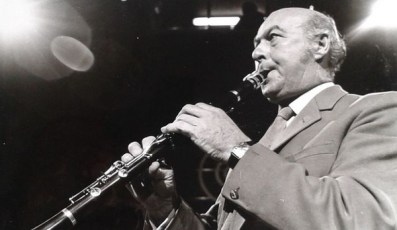
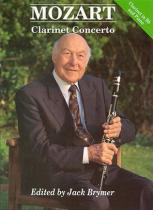
BLOWIN’ IN THE WIND – snapshot of musician & teacher Jack Brymer (1915–2003)

A post last summer featured professional jazz musician Kathy Stobart (link below).

The post highlighted her link from being born in South Shields to playing residencies in London, New York and Los Angeles to sharing a bill with Radiohead. But what about a link from South Shields to The Beatles via Dracula ?

A few weeks ago, I received a message from a friend ‘Have you heard of Jack Brymer ? He used to live in South Shields. He was a famous musician’.

I hadn’t come across the name so checked him out and was surprised to find he was a session musician who played on Hammer horror movie soundtracks starring Christopher Lee and Peter Cushing.

I got a bigger surprise to find he appeared on The Beatles track A Day in the Life.

Unfortunately, due to the Coronavirus pandemic the Local History library in South Shields is closed, and I would usually check details there, but this is what I’ve found using Ancestry, Musicians Gallery, and various BBC interviews and video clips on You Tube. Facts were checked as much as possible.

In 1911 John and Mary Brymer lived at 92 South Woodbine Street, South Shields. They had two children, then on 27th January 1915, John was born, later to be known as Jack.

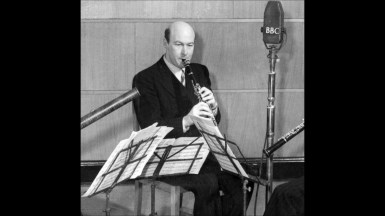
John senior was a house builder who played clarinet, and with no formal instruction, his young son attempted to play the wind instrument.

Throughout his young life Jack appreciated listening to a wide range of musical styles from jazz to brass-bands. He later insisted that all these genres had been of great value to him professionally.

In a BBC interview he saidPlaying the clarinet was a natural thing because after all I can’t remember not playing it. From the age of 5 I can’t remember life without the clarinet’.

maxresdefault

Jack trained as a teacher and joined the teaching staff at a school in Croydon. He taught the odd combination of physical education and musical appreciation. In his spare time, he played in amateur musical ensembles.

During the Second World War Jack served in the Royal Air Force. After basic training he was promoted to corporal as a physical training instructor.

After the war he returned to his teaching post, and in 1947 on the recommendation of professional musicians, Jack received a surprise telephone call from the Royal Philharmonic Orchestra inviting him to audition.

At first Jack thought it was one of his friends winding him up. But he went along and after playing, badly he recalled, a call came in next day – and a contract.

Throughout his career Jack enjoyed an interest in mainstream jazz and performed as a soloist with many of the leading British and American jazz players.

A-267768-1471122392-3984.jpeg

He said I don’t think musicians should just be musicians. I’m quite sure having a university degree in Physics is going to make you a better musician. You know more about life, it must make you a better musician. Admittedly academic knowledge is not the be all and end all, but it must have a reflection on your whole outlook on life’.

He was a frequent broadcaster, both as a player and presenter, and made recordings of solo works with orchestras.

He also played in both BBC and London Symphony Orchestra and was professor at the Royal Academy of Music, Guildhall School of Music and Drama and the Royal Military School of Music.

Now to the recording of A Day in the Life by The Beatles during January and February 1967. The song appeared on Sgt Pepper’s Lonely Hearts Club Band and was recorded in Abbey Road Studio.

I watched the music video for the song and there he was, at 13 seconds in, laughing with a colleague while putting his coat over a chair.

The song crescendo features forty musicians selected from the London and Royal Philharmonic Orchestras. Producer George Martin said that Lennon requestedA tremendous build-up, from nothing up to something like the end of the world’.

Martin addedWhen I went into the studio the sight was unbelievable. The orchestra leader, David McCallum, was sitting there in a bright red false nose. He looked up at me through paper glasses. Every member of the orchestra had a funny hat on above the evening dress, and the total effect was completely weird’.

The recording for Jack was surely a highlight from a very distinguished career, did he think it would be one of The Beatles greatest songs and still listened to over 50 years later ?

To celebrate his 70th birthday the LSO paid Brymer tribute with a special concert, and another to mark his 75th at the Barbican Hall, London. He published two volumes of memoirs and a book about the clarinet. Sadly, Jack died at the age of 88 in Redhill, Surrey.

He didn’t do too bad for a builder’s son from South Shields, who had many day’s in his life to remember.

 Link to Kathy Stobart feature:

https://garyalikivi.com/2019/06/25/all-that-jazz-snapshot-of-the-life-of-professional-musician-kathy-stobart-1925-2014/

 Alikivi   March 2020

CHANGE IS GONNA COME – with singer, actor & model Emma Wilson

Last heard from Emma in the blog ‘Song for the Siren’ (1st May 2019) where she talked about her influences and career to date. We caught up recently and I asked her how the coronavirus situation is affecting her…..

We are certainly living in strange times, gigs that I booked for April, May and June are being cancelled on an hourly basis. It is frustrating and very challenging for the wonderful venues who promote Live Music, I truly hope they survive the next few months.

hartlepool al & emma

Tell me about the British Blues scene you are a part of ?

British Blues is a thriving art, it has been recently reinvigorated by a new wave of incredible artists and an appreciation of existing legendary Blues Bands.

The DJs, photographers, journalists and promoters of Blues in the UK and throughout world are the bedrock of the industry allowing us as bands, to float over the top producing our music and performing.

We need to support each other and make sure that when we are able, we flood the venues with an audience. What we can do now is buy the magazines, tag the photographers and tell everyone about the great blues radio shows.

How are the Emma Wilson Blues Band progressing since we last talked ?

We are reaching an upward curve where we are playing slightly bigger festivals and receiving good press.

Some festivals have already been cancelled, but others are scheduled for later in the year and for 2021, so I am truly optimistic that we can pick up where we left off, so to speak.

The good news is that I have begun recording my new album. I laid some original tracks down with Italian Saxophone/Harmonica/Keyboard player Alessandro Brunetta in January and the band will be going into the Circulation Studios in Hurworth to add their parts as soon as possible.

I also have three incredible guests adding to the record, they are from the world of Funk, Jazz and Rock, frankly they are my three dream guests and legends of their genre.

Obviously, I can’t tell you who they are as that is for the big press release – sorry Gary! – but they are individually working on the album remotely in Amsterdam, New York and California.

Are you still picking up TV and modelling work ?

If the TV channels stop doing live shows, they may start re-running the classics I have been on so look out for me on Antiques shows ‘French Collection’ and ‘Make Me a Dealer’ where the BBC bleeped me for saying Sh*t.

I was also on ‘Never Mind the Buzzcocks’, ‘Toast of London’ and an advert for World Animal Protection lottery – it has bears on it.

How are you responding to the Coronavirus situation ?

I say stay, Body Confident, don’t worry if you put on a few pounds while self-isolating but do a few stretches or have a walk, be kind to yourself, sing and breathe fresh air.

Optimistically I am looking forward to giving everyone a hug…but in the meantime A BIG VIRTUAL HUG from me and keep listening out for my music !

My songs are heavily influenced by my admiration for Ann Peebles and early Aretha, with my rock edge inspired by Paul Rodgers and Terry Reid.

I can’t wait to get out playing again soon, in fact I have suggested open air gigs as soon as we are able, that might be a start ?

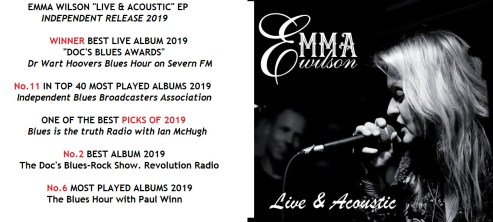
live and ac banner winner

Facebook.com/emmawilsonbluesband

Website    www.emmawilson.net

You TubeEmma Wilson Blues Band

Join Emma’s mailing list or other enquiries: emmawilsonbluesband@gmail.com

Buy the EP:  https://store.cdbaby.com/artist/EmmaWilson

Interview by Alikivi   March 2020