NAMEDROPPER – in conversation with freelance author/TV producer Chris Phipps

Being on the dole during the ‘80s had its advantages. We queued up outside Tyne Tees TV Studio every Wednesday to get free audience tickets for the following Friday’s edition of live music show The Tube.

If I was working, I wouldn’t have got the chance to be part of what became a groundbreaking TV programme and something that changed my life.

Looking back, it took a couple of years to seep through, but it was one of the magical moments I experienced that massively helped me in my work today.

In one of the programmes, I was standing on the gantry looking across the studio with the stage and drummer below, another stage was to my left, there was a bar at the back, pink and blue lighting all around, Pat Benatar at the front of the stage – a little lady with a big voice. And cameras on the studio floor catching the buzz.

Something clicked. It was the first time I thought ‘I would love to be involved in something like this’. I knew I was onto something.  

So, a chance to interview a man who was part of that show was a great opportunity and one that I wasn’t going to miss. Take it away Chris…..

It’s interesting you mentioned Pat Benatar because I booked her, the drummer was fantastic and she was incredible.

I was at the Tube from the start in ’82 till it’s full run to ’87. But I started as a journalist in ’74 with three big stories happening on my patch, the Birmingham bombings, the hunt for the Black Panther and the Carl Bridgewater murder – a baptism of fire. After that I was producer at Pebble Mill at One and did a lot of regional TV and radio then.

I was doing rock shows, reggae shows and of course in the ‘70s the Midlands was Dexys Midnight Runners, UB40, Specials, Selector coming out of Coventry. It was like a nuclear reactor in terms of the music coming out of there.

And of course you had the whole New Wave of British Heavy Metal, and I was involved with a band called Diamond Head who came out of Stourbridge.

They were touted as the next Led Zeppelin which was a big mistake. They were phenomenal but for certain reasons they just went on to implode.

How were you involved with Diamond Head ?

I did two TV shows with them, both of which are very rare now. One was on Look Hear an arts programme on BBC Midlands with Toyah Wilcox. I also had them at West Bromich Further Education college, they done a student recording that was found in a loft a couple of years ago.

That whole NWOBHM was fascinating because a lot of those bands were back in their day jobs after a couple of years, apart from Iron Maiden and Def Leppard. Finally, Diamond Head were vindicated because Metallica covered some of their numbers that contributed to their financial coffers.

What are your memories of those first days at The Tube ?

I joined in ’82 as a booker and I became Assistant Producer from ’85-’87. My brief was to find bands that we could agree on to put in the show. A band on the first show that I booked didn’t happen, The Who didn’t do it because their pa system got stuck in Mexico or somewhere.

So, the producer Malcolm Gerrie knew Paul Weller’s father and got The Jam to do it. In a way I’m glad that he did because The Jam playing their last TV gig ever, really said this is what The Tube is all about – that was then, this is now and off we go.

On one show I booked a combination of Green Gartside and his band Scritti Politti, and Robert Palmer which I thought was a good mixture. Then Gartside wouldn’t do it, didn’t want to perform live or something I can’t remember now. But he pulled.

You know my job was to convince really big names to come, particularly in the first six months of the programme because it was based in Newcastle. A lot of record companies would say ‘We’re not sending anybody up there’.

There was a show in December ’82 with Iggy Pop, Tygers of Pan Tang and Twisted Sister, who famously signed a record deal after their performance..…

Now there is a story that I discovered Twisted Sister in a bar in New York when really the truth of it was, I had seen them at Reading Festival. I was just knocked out by them because I love theatrical rock. They were on a label called Metal Blade then, which was run by a friend of Toyah Wilcox.

I was interviewing Def Leppard backstage, then spoke to Twisted Sister’s manager and told him I had a gig on a TV music channel in the UK called The Tube. He said if you can gaurantee us a booking we will finance our own trip over.

So yeah, they turned up in a van outside The Tube studio direct from New York, played the show, and in the audience was Mick Jones from Foreigner, his manager and UK supremo from Atlantic records Phil Carson. Phil signed them the next day.

Actually, I don’t think I was too popular with the Tygers because I had to cut one of their numbers. At the time they had a great album out The Cage, but they were another band that imploded.

Incidentally, first time I saw the Tygers was at JB’s club in Dudley. They were supporting Robert Plant and his rock n roll band The Honeydrippers.

Why did you ask the Tygers to cut a song from their set ?

Lemmy wanted to jam with Twisted Sister at the end. In fact the guy who directed that show and all of The Tube, Gavin Taylor, who sadly died a few year ago, said his two favourite moments he directed were U2 at Red Rocks and Twisted Sister jamming with Motorhead. And this from the guy who directed Whitney Houston, Michael Jackson, Miles Davis.

So, after that every time I saw the presenter Paula Yates she used to impersonate my Birmingham accent and go ‘Chris Phipps Twisted Sister’ (laughs). God love her. They sent me a platinum disc as a thanks which I still have, and a manhole cover with the Twisted Sister logo on it.

Also on that programme was Iggy Pop what are your memories from then ?

Yeah, he was a wild one. No one could find him just prior to his performance, he completely disappeared. I got a call from reception, and they said there was something in the reception area spinning round and looking like a mummy. He was bandaged from head to foot (laughs).

Did the show help the careers of other bands ?

Fine Young Cannibals got signed, although they already had a publishing deal. The Proclaimers got signed and there was a time when a researcher called Mick Sawyer and some of the Tube crew went to Liverpool to film Dead or Alive.

But they weren’t around, then someone in a pub told them to go round the corner to another pub where there is a band rehearsing ‘You might be interested in them’. It was Frankie Goes to Hollywood.

The Tube filmed the original version of Relax, that was shown, and Trevor Horn saw it. He did the deal and re-recorded and produced the single.

Frankie epitomised The Tube and the ‘80s, they got what it was all about. You can never bring The Tube back. It’s of its time. Chris Evans on TFI Friday in the ‘90s near enough had it. The set was just like The Tube, so yeah, it’s had an incredible influence.

Last year I was on the Antiques Roadshow with memorabilia from The Tube and I thanked the BBC for banning Relax because, it not only done Frankie a load of good but The Tube as well (laughs).

Here’s the link: https://www.bbc.co.uk/programmes/p06b19jf

Around the time of going to The Tube I was in the audience to watch a few shows called TX45 filmed in the same studios….

Yes, TX45 ran parallel to The Tube it was a regional series it didn’t go on the network. Actually, a series by Tyne Tees Television called Alright Now got them a commission for The Tube.

When I was producing in Birmingham a lot of bands would say ’We’re off to Newcastle to do Alright Now or Razzmatazz or interviewed by Alan Robson’. He had a formidable reputation.

Newcastle had a reputation for cutting edge shows really, that’s why it got the commission from Channel Four. Back to TX 45 that was co-presented by Chris Cowey who went on to produce Top of the Pops.

What happened after The Tube ?

All the talent from The Tube just dispersed in different directions. Tyne Tees didn’t continue to do any big entertainment. They did attempt to rival Top of the Pops with a show called The Roxy but that fizzled out.

Malcolm Gerrie, the main guy went on to form Initial TV in London and made things like The Pepsi Chart Show. Now he’s got a company called Whizzkid producing big award ceremonies things like that.

Geoff Wonfor who made the films for The Tube, not the studio stuff, he went on and made The Beatles Anthology.

(An interview with Bob Smeaton who worked on the Anthology is on the blog ‘The Boy from Benwell’ Nov.5th 2018)

I went into documentary, feature film making, and my bread-and-butter work for 14 years was working on a series called The Dales Diary, which covered the Yorkshire Dales for Tyne Tees and Yorkshire.

What was interesting was that I was dealing with people who had never been in front of the camera before so I went from five years of people who couldn’t wait to get in front of the bloody camera to 14 years of people who sometimes weren’t happy to do it. Yeah I had some fantastic times working in Yorkshire.

Have you any stories that stand out from interviewing people ?

From 1973-82 I’d done a lot of entertainment stuff at Pebble Mill, but I also interviewed a lot of people with some priceless historical value. Like the 100-year-old woman who made a living from making nails from the back of her cottage near Worcester.

There was a man who helped build a storm anchor for the Titanic. I’ve kept all of them interviews and in fact the storm anchor one went for research to the director James Cameron when he was making the film Titanic.

So, I was no stranger to going to people who just wanted to get on, particularly the farming community who didn’t want people buzzing around with cameras.

Did you work on any other music programmes ?

I’m the sort of person who will come across something and say that will make a fantastic programme. I worked on a series for Dutch TV, it was like your Classic Albums series but for singles. Incredible programme to work on, it was called Single Luck.

It took me all over America tracking down songwriters, producers, and for one song the backing singers were Ashford and Simpson.

Another programme was for the song Blue Moon it profiled The Marceles, who came out of Pittsburg. The song sold I don’t know how many millions and some of them are living on the breadline you know. They got nothing, old story isn’t it.

Well I thought how do I find these people who are living in Pittsburg ? One of the singers was called Cornelius Harp. There might not be too many Harps in the phone book I’ll try that.

The one I called said ‘No I’m not Cornelius Harp, but he’s my cousin, here’s his number’. The guy who was managing them had a restaurant called Blue Moon. The producer was in California and came over to Pittsburg to re-produce the song.

So yeah found all of them and suddenly you have a 30-minute programme.

What have you been working on lately ?

After releasing the book Forget Carter in 2016 which was the first comprehensive guide to North East TV and film on screen, I’ve just released another book Namedropper full of anecdotes and stories of my time in the entertainment world. I’ve hosted quite a few talks including the evenings with Roger Daltrey and Tony Iommi at the Whitley Bay Film Festival.

Currently I’m still working as freelance producer/director based in North East specialising in entertainment and music for network and regional.

Chris is appearing at Newcastle’s Waterstones to sign his latest book ‘Namedropper’ on Saturday August 17th at 12 noon.

 Interview by Gary Alikivi   August 2019.
NEVER MIND THE SEVENTIES – Book Planned on NE Punk Scene ’76-80

nepunk

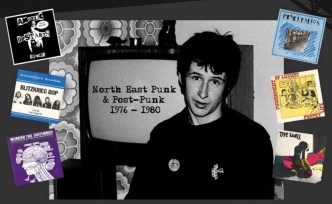
A group of music fans got together five years ago and planned to put together a book about the North East Punk/Post-Punk scene from 1976-80.

Bands featured will include not only big names like Penetration, Angelic Upstarts, Toy Dolls, Punishment of Luxury, The Wall, The Carpettes, Red Alert and Total Chaos but also bands who were only known in the North East.

‘Since we started on the book numerous folks have been involved in one way or another, with interviews and transcribing. There are approximately 300 bands on our list, and we’ve got all of them covered to one degree or another. It’s been quite a task’ said Martin Blank.

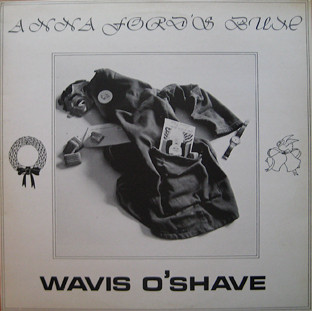
South Shields bands covered so far include Angelic Upstarts, The Fauves, The Letters, The Rigs, Next and of course, Wavis O’Shave….’Although Wavis was never a punk by any stretch of the imagination, due to his album ‘Anna Ford’s Bum’ being on the Anti-Pop label he became known as a sort of punk-cum-loonie-cum-prankster’.

Here’s an extract from Martins interview with Wavis…..

What is your first memory ? I think they told me it was only going to be a nice ride down a slide. Seriously tho’ it was ‘Who’s just kicked me out of this low flying UFO?’

What were your main interests when you were growing-up ? At my first school, the lad who sat in front of me calling Miss Bishop ‘Miss Fish Shop’. Another lad always wetting himself and having to dry his shorts on the radiators. They smelt like fish fingers.

Everybody including the bullies liked me, so I wasn’t getting my head shoved down the bogs and the toilet flushed or thrown over the high wall into the girls school or having crap shoved up my nose on a lolly stick or having ‘**** off’ written on the back of my neck. They had high hopes for me but in what way I don’t know.

Were you ever in a band ?
Yes and no. Around 1975 I formed The Borestiffers although we were never a band in the conventional meaning of the word. Our ‘instruments’ were a suitcase, a bullworker and a kitchen sink. We performed live only once, at a church hall in South Shields. The entry fee was a slice of bread, or a stick of celery. White bread by the way. Brown was a counterfeit ticket.

Kitchen sinks aside, can you play a ‘proper’ instrument ? I can only play the fool. I can play a few chords on a guitar, but who wants to listen to a bloke wearing corduroy trousers strumming his axe? Mind you, I am a dab hand at the Theremin.
annafordsbum

Do you know if Anna got to hear ‘Anna Ford’s Bum’? Yes, Anna listened to the album and she’s confirmed that she still has it safely in a cupboard. This was related back to me years ago when she was asked by Chris Donald (Viz mag.) when they all appeared on a panel show. A lovely lady, good sport and well out of my league.

Although Wavis was (and still is) well-known in the North East, did you receive much national coverage ? I was somewhat surprised when both ‘Sounds’ and ‘NME’ wanted to claim Wavis as their own and both gave him equal coverage for quite some time. There’d be the occasional mention here and there elsewhere but I was a stickler for refusing to make myself available.

The Clive Anderson show sent one of their team to my home and hauled me down for a meeting but when I found out the show was recorded  (I thought it was live) and they were telling me things that I would have to say, I left.

thehard
The Hard became a surprising overnight sensation on The Tube. How did he come about ?
The Hard was a lampoon of the North Eastern stereotypical hard man and I had to be very careful living amidst the real deal. The hardest man in the town was actually a fan of the Hard, which I can never work out especially when everybody swore I had styled The Hard on him. I’d never be that daft, unless of course I did. I do consider myself hard and I can prove it. I once lived off ten quid a week – now that’s hard. 

What was it like appearing on Stars In Their Eyes with your impression of Steve Harley ? 
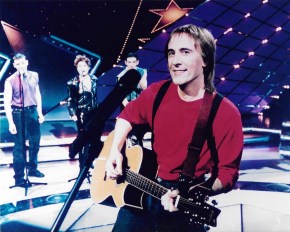
My wife tried to get me to audition for the show for years as I was both a fan and friend of Steve Harley from ‘74-‘77 and she knew I could do a good impersonation of him. I gave in one year when a bloke came on and did Benny Hill. He was atrocious and I thought, ‘Well I can’t do worse than that, pass me the phone’.
wavisstarsintheireyes

Were Wavis and The Hard really closet intellectuals merely poking fun at the absurdity of the world today ? There’s a side of me that very few people know of. One of those facets of the diamond is a very serious, and reasonably well known controversial author, broadcaster, researcher with a sizeable website and a lot of internet coverage. I doubt you’ll know him and only a very few Wavis people do. He’s a cross between a British Indie Jones and Poirot, and that’s the only clue you’ll get. I’ve/he’s been on Sky TV shows a few times, done a lot of USA radio shows and wrote for a high street national monthly mag for a few years.

The full interview with Wavis will be available in the book. The group are now planning to complete the project, but Martin told me there is still time for some bands to come forward…

‘We now have all the interviews in the can but if there are any other North East bands who were active circa 1976-80 who we don’t know about and who’d like to contribute they’re welcome to get in touch’.

Contact: gobonthetyne@hotmail.com

Gary Alikivi    August 2019.

DESTINY CALLING – in conversation with John Roach guitarist with North East metal band Mythra

On February 13th 2017 an interview with North East heavy metal band Mythra saw the first post on the Alikivi blog.

Over 75,000 views later and for the 250th post is appropriately an interview with John Roach…

Last year our vocalist Vince High left the band for personal reasons, but we’re still mates. I met Vince when I was 16 in the training school at Swan Hunters shipyard in Fisher Street, Wallsend. We liked the same music and hung around together at work.

I was in a band called Zarathustra with Maurice Bates, who was originally the singer now current bass player with Mythra. Vince was in a band called Freeway and eventually he joined us. Pete Melsom was on bass.

53719219_2164098597236599_4408484686087585792_n

Where did the name come from ?

We needed a shorter name really, one that was easier to remember so after a few ideas were thrown in the hat I came up with the name Mythra. We went with that one and around the same time Barry Hopper joined. Our original drummer Kenny Anderson wasn’t really 100% into the band so Barry stepped in.

When Barry first came to audition his brother dropped him off in his car. We took one look at his beautiful silver Tama drumkit and said ‘He’s in’ (laughs).

As the original four piece Mythra, we all went to gig’s together. Not just Purple or Sabbath at Newcastle City Hall but local bands Warbeck and Axe with Keith Satchfield, Southbound and Circus. There were some truly great rock bands around at that time.

Watching them saying ‘this is what we want to do, this is just like Top of the Pops… but real’ (laughs). Axe were probably the most influential band for us they had a huge p.a. and lights and they wrote their own songs, that’s what we wanted.

We were all learning from each other really because we knew the lads in other local bands Saracen, Hollow Ground, Hellanbach.

It was like ‘Dawsa (Steve Dawson, guitarist Saracen) has got a Marshall stack…What, really…let’s go an’ see it. Or ‘Metty (Martin Metcalf,  guitarist Hollow Ground) has got a Les Paul. What, a real one ? (laughs).

The band were all around 18-year-old, we had bought a Bedford van, our own pa and started earning money from workingmen’s clubs in the North East. Getting our own van was a milestone really instead of our dad’s dropping us off in their cars.

We gigged from Hartlepool, Teesside right up into Northumberland. Maurice got us tied up with Ivor Burchill the main agent in Newcastle. We were getting loads of gigs right through ’76-‘80.

We played Sabbath, Wishbone Ash, Humble Pie rock stuff like that. I was earning more money from playing than I was for being an apprentice fitter in the shipyard. You can’t do that anymore (laughs)!

We had a couple of roadies helping out with the gear plus Lou Taylor came along with his homemade lamps, lights, flares all sorts (laughs). He was always singing in the back of the van.

He used to do these Rob Halford screams and they were spot on. I think Vince thought he was auditioning for Mythra. Lou ended up singing in various bands like Saracen, Satan and down London with Blind Fury.

52762406_2024617097652306_4576230401973944320_n

In 1979 Def Leppard released ‘Getcha Rocks Off’, Iron Maiden the ‘Soundhouse Tapes’ and Mythra recorded the Death & Destiny ep at Guardian Studio in Durham making them one of the original NWOBHM bands.

Yes, we never said we were the best, just one of the first. The single was recorded around September or October and we released it in the November. Actually, we just wanted to record a demo at first, put it on cassette, send it around record company’s and hopefully get a deal.

The producer and owner of Guardian Records, Terry Gavaghan, said for the same money you can get it on record and it will look more professional than tape.

So, we bought 200 records at first. We sold them and went back a fortnight later to order more! We sold most of them at Second Time Around Record Shop in South Shields.

Gavaghan got us a distribution deal with Pinnacle Records so it was sold all over the country. Rod MacSween at International Talent Booking agency heard Death and Destiny on the Friday Rock Show hosted by Tommy Vance. That opened a lot of doors and got us bigger gig’s nationwide.

By the time 1980 came around we had done a lot of gigs and recorded the EP but I couldn’t see the band going any further. After five years, I felt as if I had enough, so I left in the February.

The rest of the band got a guy in called Micky Rundle to replace me and he played on the Headbangers Ball in July ’80 at Stafford Bingley Hall with Motorhead, Saxon and a few others.

Looking back on the EP, we are really proud of it because we were the first of the bands like Fist, Hellanbach, Hollow Ground and Saracen to release a record. We were at the front of all that.

Did you work with any other musicians ?

I had a break for a few months then started rehearsing with Saracen. Lou Taylor, Les Wilson, Dave Johnson – and Steve Dawson was the other guitarist. But Steve and I had different playing styles and it didn’t work out. I don’t think Saracen was destined to be a two guitar band.

Around six month after that Harry Hill (Fist drummer) got in touch and I joined them. We played the Gateshead Festival with Diamond Head, Lindisfarne, Ginger Baker and headliner Rory Gallagher.

Did you have a manager in Fist ?

Our management team were based in Manchester and were called Rhino Promotions. I think they had a clothing company making jeans – which were like Geordie Jeans here on Tyneside.

I remember a gig in Manchester when the back window of our hired car got smashed and they pinched everything from the boot including my leather trousers, cowboy boots and skimpy black t-shirt that I wore for the gig. They also took a pair of red shorts and an orange bag belonging to Harry Hill. He was livid!

And I’d only wore the leather pants once. We drove back to Tyneside with Glenn Coates, Norman Appleby and me in the back, freezing our arses off sitting on tiny bits of glass from the back window (laughs).

How long were you in Fist ?

I was in Fist for about a year and a half, originally with a singer called Colin Johnson before Glenn Coates joined. We recorded the album Back with a Vengeance and played a few gigs.

The rest of the guys decided they wanted to be a four piece so after a rehearsal in Felling – Glenn and Norman came to my house and told me I was out. It was a bit of a shock!

We had a side band going called Centrefold – Harry, Glenn, me and a great guy called Peter Scott – who sadly died very young of a brain tumour. This continued for quite a while after Fist so there were no real hard feelings.

After Peter died we were going to start Centrefold up again with another bass player but my heart wasn’t in it – I think Steve Dawson took it on – small town Shields !

61546111_10211159663346540_864351645650124800_n

Bringing your story up to date, what have Mythra planned next ?

Well, we are all just enjoying it. Earlier this year we were at the Grimm Up North festival and Negasonic in Belgium, where we showcased some new material.

We’re currently finishing pre-production on 12 new songs, and we are going to record a new album for High Roller Records with our new singer Kev McGuire later this year. Kev is a great guy with a lot of live experience on stages in the North East and he has a great rock voice.

Our next gig is in France at the South Troopers Festival in Marseille on 21st September.

Contact Mythra on the official website http://www.mythra.co.uk/

or through their Facebook page https://www.facebook.com/mythranwobhm/

 Interview by Gary Alikivi    July 2019.
DIAMOND GEEZER – with former music manager & promoter Jim Sculley

There was one particular savage night when everyone seemed to be fighting. I was worried about one lad whose face was just awash with blood. I wiped the blood with a tea towel. ‘You been knifed mate?’ I asked. ‘Nah’ he replied ‘I nutted someone and his teef stuck in me forehead’

Who said working in the music biz was a glamourous job ? Jim Sculley was born in West Hartlepool, County Durham where he had a decent education…But when I bought my first guitar, studying went out of the window (laughs).

Jim joined local band The Mariners as lead guitarist in 1962 and was working at Hartlepool Steelworks at the time…

After lots of gigs and personnel changes, the band changed its name to The Electric Plums. Then in 1964 I went for a proper job and answered an advert to train at an old established jeweller’s shop called Lamb’s.

He was a great employer who trained me well and sent me to night school in Billingham to study Gemmology, the science of precious stones.

I repaid him by doing the dirty on him by going in business with my night schoolteacher. We set up a jewellers in Billingham Town Centre in 1971.

I found out afterwards from an ex-colleague at Lambs that the boss admired my bravery for setting up our own business and bore me no malice at all!

Business boomed and they quickly gained three more jewellery shops and two more partners…

I was still dabbling in music at the same time but by then had left the Electric Plums to join a girl fronted band called The Partizans. Around ‘68 we changed name to Whisky Mack.

This band was good doing night clubs and social clubs, supporting known artistes such as Karl Denver, the Dallas Boys and Tony Christie.

The band were offered a German club tour but Jim thought it was time to call it a day…

The shops were doing well, and I couldn’t jeopardise my future for a few months gigging abroad. So around late ‘72 we trained up a new guitarist for the tour and I said goodbye.

But a few years later, I was back on the road in a couple of duos…couldn’t leave the old grease paint behind (laughs).

How did you get involved in promoting ?

I wasn’t a great follower or even an avid listener of rock music at that time. However I’d got into the habit of going to rock gigs at Thornaby Cons club and being a guitarist, started to appreciate the quality of musicianship in rock. This was around ’79.

At the club fans were telling me that there was a lack of venues in the area, and that local promoters were finding it difficult to coax new bands with any pedigree. A light lit up! Could I make any money at it, and did I fancy the challenge?

What venue did you use for the first gig’s you promoted ?

I was putting the word around for local bands to play my new weekly gig in The Swan ballroom in Billingham. Getting an agency licence wasn’t easy in those days, there were financial checks, but within a month J.S. Promotions & Agency was born.

‘Rock At The Swan’ was an instant success with local bands queuing up to play. They would take a percentage of the door take after costs were taken off for an advert in the local press and pa hire.

After a few months we were getting requests from bands from all over the country due to word of mouth. And not only from bands. Agents were wanting to send bands with newly signed record deals on the road but were having difficulty finding promoters who would take a chance on unknown bands.

Another light bulb moment hit me, and I jumped at the opportunity. Provide new blood for the fans and possibilities for local bands to support a signed band.

I asked myself I’m working with big agents who need venues to blood their bands. Why don’t I track down more venues and offer these big agents a full tour for their new bands.

It made sense because these agents didn’t really want to take time to blood these bands on the road. They would wait till when the album was out and selling, then take over and put them into major venues.

So, I set to work on the telephone and scanning through tour adverts in Sounds and Kerrang. Eventually sorting myself a good number of venues that I knew I could form into different size tours.

It helped when talking to each promoter that I was promoting a venue, same as them, and knew the score. I could be trusted and they knew that. It was a very important point.

By 1981 J.S. Promotions & Agency was well established. I was sending bands here there and everywhere. The Swan gig was bouncing, and the jewellery shop was doing great.

I often look back and wonder how the hell I kept myself going! Suppose it was because I was still young and kept quite fit. Be a different story today (laughs).

Did you book any big name bands at The Swan ?

I ran that Swan gig for about seven or eight years and some biggish names have been on that stage. It was a nice venue, being a ballroom, and a decent sized fire regulation limit of 200 plus people.

Bands like The Groundhogs featuring Tony McPhee were regulars and would always fill the place. I worked them a lot tour-wise.

And what about this for an eye opener of a gig – in 1983 aged 17, son of Led Zep’s drummer John Bonham, Jason formed his band Airrace.

I got a call from his agent asking for a Billingham Swan gig as part of the band’s first tour. Money no problem, they’d just accept percentage door-take. But on one condition – that the band be judged on their merits and not the Bonham name, no mention of Jason Bonham could be used in any advertising. Of course I agreed and the band turned up on the date…in a great big pantechnicon van!! Wow!!

I have never been so up and close to a back line like it. Wall to wall, ceiling to ceiling Marshall amps. Not for volume but for clarity.

Great sound, great gig, and a reasonably full room, rock fans aren’t stupid, they read the rock mags. And I have to say what a genial gentleman Jason was, no airs or graces, happy to chat to all the fans after the gig.

67142519_484098198831464_9212562342905118720_n

New Wave of British Heavy Metal was at its peak during the early ’80s. Did you come across any of the bands in the Teesside area like Axis or White Spirit ?

In 1982 I’d taken a shine to a rock band I’d given a few gigs to, Black Rose, they were in the Iron Maiden kind of mould at the time and wrote their own material.

They had a manager called Barry Clapp but were disappointed they weren’t making any progress. They asked me to manage them. I talked with Barry who gave me his blessing, admitting he’d had enough.

By six months we had a single out on the Teessbeat label called No Point Runnin’ coupled with Sucker For Your Love. One of the Sounds reviewers loved it and wrote a nice piece about it which propelled it to no.19 in the rock charts.

The band then appeared on two compilation EPs in the same year. One Take No Dubs on Neat Records, and the other on Guardian Records, called Roxcalibur.

The album included Battleaxe, Satan & Marauder. ‘One Take No Dubs’ had Alien, Avenger & Hellanbach.

In 1984 the Midlands rock label Bullet Records signed the band. They produced a self-titled EP, also the Boys Will Be Boys album. A single of the same name was taken off the album.

All through this studio activity the band were gigging heavily in the UK and Holland where they have a strong fan base. I went with them to a gig in the Dynamo Club in Eindhoven. Brilliant gig.

Coming back from that gig a funny thing happened at the Dover customs. Me and four band members were in my Mercedes. We were kept at least half an hour, as the officers were searching the car, under it, in the boot, under the bonnet. They couldn’t believe that a long-haired heavy metal band would not have something suspicious on them especially travelling from Holland

I had an awful time explaining to the customs officers that none of the band actually smoked, rarely drank and nobody actually bought anything from duty free (laughs).

In 1985 Bullet folded so the band returned to Neat Records and recorded a superb EP titled Nightmare. Then a year later…eureka! The band were noticed in the USA.

Neat Records engineered a deal with Dominion Records – an offshoot of the massive K-Tel Records, for a studio album recorded at Neat. Walk It How You Talk It, was pressed, packaged and ready to be distributed. We were in talks to arrange an American tour. After all the hard work since 1982 we’d made it.

Then a bombshell phone call from Neat. The powers that be in America hadn’t done their homework. There was already a band called Black Rose who’d registered their name in the States, they were threatening to sue.

Our label Dominion Records took water in and pulled the deal. Neat wouldn’t fight it, so everything was scrapped. Not long after, myself and the band parted company. Gutted to say the least.

Pauline Gillan Band

Did this disappointment put you off being a manager/promoter ?

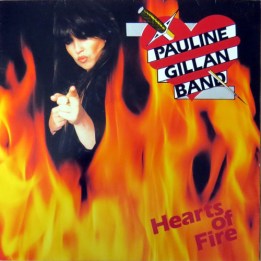
No. I managed The Pauline Gillan Band, from about 1984. I knew two members who lived in the same town as me, Billingham. Davy Little, a great ex-Axis guitarist, and Chris Wing on bass who could play anything you gave him. He wasn’t called the Wizz for nothing.

I’d caught the band at a couple of gigs and was impressed. They asked me along to a rehearsal and I think we all knew when I left them that I’d be their manager.

I had them gigging extensively right through the UK. Including gigs at the London Marquee. We were contacted by a promoter in France who was organising a music festival at a place called Neuvic not far from the Dordogne region.

He’d heard about the band through the music press and decided we would add nicely to the festival line-up. Actually we ended up as second to the headline band.

It was a magic time both for the band and the fans. In 1985 we managed to secure an album deal with Powerstation Records based in York. The album Hearts of Fire was recorded in Fairview Studios in Willerby near Hull.

While recording the album, Gerry Marsden of the Pacemakers fame popped his head in. ‘Can I pinch 10 min’s of your recording time lads, I’m appearing locally and I need to record an advertising jingle’.

Well 10 min’s later, that was all the recording done for the day because Gerry insisted on taking all of us, our roadies, the recording technician, him, his management and entourage down to the pub in the village for the rest of the day. Booze and snacks all paid for. And what a gentleman he was, so friendly.

Gerry told us a great story about one of the pop successes of that time Frankie Goes to Hollywood, who had a number one hit with Relax. On the B side was Ferry Across the Mersey which of course was written by Gerry himself, and that he’d received thousands of pounds in PRS royalties. ‘I love that band’  he laughed.

Did you promote any punk gigs ?

There were a few gigs that were memorable for the wrong reasons. Many punk gigs, big names, but mostly trouble with a capital T.

Around 1980/82 I was approached by a guy called Don who had just bought the then defunct Rock Garden club which was one part of the Marimba night club in Middlesbrough.

Now having owned some before Don knew everything about pubs and night clubs but knew nothing about the live music scene. So, he asked me, adding a financial carrot, to book bands and run live music nights. I agreed but advised him that a new name would be a good idea. So, it was a warm welcome to The Cavern.

As part of our licence the Police made us search the punks for weapons and glue, the preferred drug of the day for punks. My missus Marg would handle the takings and tickets at the door and take the glue from them. We weren’t allowed to keep the glue but return it to them after the gig.

One night we couldn’t help laughing when this little five-foot skinhead surrendered his polythene bag from his sock, then quipped ‘Now dont forget will ye…mine’s the Evo Stick’ (laughs).

The Rock Garden had always done well with punk bands and there was still a good punk fan base in Cleveland, so I decided to alternate heavy rock with punk nights. But battling was always on the cards at punk gigs – never at rock gigs.

First night at The Cavern, if my memory serves me well but I’m not absolutely sure, was well known punks The Destructors supported by a local band.

We had a strong security crew of about 8 men, one was a friend, Ron Gray who was an ex-European kick boxing champion. As it happens on that first night, we needed them all!

We’d got word through a contact that a mob was coming down who had bad blood with another load of fans. Still I wasn’t worried, we had plenty of cover didn’t we ?

Support band had only been on about five minutes when the crowd split into two armies. A bit like the parting of that biblical sea. And then the charge!

Marg was stood on a beer crate in the corner directing our bouncers, screaming ‘over there’ and ‘side of the stage’ and then opening the emergency door for me and the lads to eject the brawlers. She was a good help on band nights.

My claim to fame was to convince the Police to allow me to book the Angelic Upstarts who’d been banned in Cleveland for over a year.

I knew the police were pleased with our record of not allowing any trouble to spill outside and that was the reason we were given permission to stage this particular show. And what a cracker it was and believe it or not hardly any crowd trouble.

Other memorable bands were GBH, Penetration and Conflict. I liked Colin the singer of Conflict. He insisted we keep the entrance fee down so that his fans could afford it, even taking a smaller purse himself.

Did you promote punk gig’s at any other venues ?

Early ’80s I was co-promoting a punk gig in the ballroom of the Park Hotel in Redcar and managed to attract a really well-known punk band from the late ’70s, UK Subs. I booked local band Dogsbody or was it Dogsflesh as support to bring a few extra punters in.

Anyway one of the Subs members copped off with the girlfriend of one of the support band and took her to a room upstairs where the band were staying for the night. The support band went upstairs, and a huge battle ensued with carpets ruined with blood and drink. It took an hour or so to restore order.

Then the Park Hotel manager presents me with a bill for a huge amount. I can’t remember how much but remember shaking in my boots.

As promoter I could have been held responsible in some ways I suppose. But I turned on the Subs road manager and threatened to get the police and the newspapers involved, which would probably curtail or cancel the rest of their tour.

Anyway, he rang the band’s manager who agreed to foot the bill. Job done. I tried hard to stick to rock gigs after all this trouble but have to admit the memories of punk will always bring a smile.

539153_504044589624993_1031774801_n

If you can choose one, what is the best gig you have promoted ?

Slade in about 1984 at Durham University’s Student Union Hall. Massive sell out, queues right down the road. Great gig but didn’t get to meet them. Went to the dressing room straight after the gig but they’d already left for the hotel.

Have you any regrets as a promoter?

Turned down a Tina Turner gig as part of her resurgence tour. Thought the fee was too high. A couple of month later Private Dancer released and the rest is history. That was my Decca/Beatles moment!

There is a regrets number two. I was in the Marquee Club with one of my bands in 1985 and took a call from Bronze Records who wanted to show me a band. I went to Camden next day to see them and basically it was a country & western star, can’t remember the name. Anyway, country wasn’t my scene so turned it down.

Then he produced a picture of Tom Petty who was coming over soon to tour. The price was reasonable, but I knew he hadn’t released anything for about three years so turned that down too. Another Decca/Beatles moment!

What does music mean to you ?

For all I was playing on stage continuously for about 17 years, and it was part of my life for so long after that -management, agency and promotions, I don’t really listen to a lot of it nowadays. Weird eh!

But after thinking a little more about it, I’ve concluded that it’s the actual making of music, the playing of it, watching other people playing it – construction really. I was never one for lyrics, it was always the tune, the riffs and chord structures that got me excited. That’s why I tend to like songs with a nice hook to them.

I played my guitar at home quite often until I had a medical problem with my finger which made it totally inflexible. I can’t even form a chord now, which actually makes me quite miserable!

My last time playing on stage was backing local singer Johnny Larkin at a Help for Heroes charity gig about seven years ago. (pic. below)

Having said that we’ve booked both days of the upcoming Hardwick Hall festival. And I do watch Fridays on BBC 4 and we went to The Sage to see Mott the Hoople a couple of months ago. Sod it … looks like music still means a lot to me.

Interview by Gary Alikivi    July 2019.

HOME NEWCASTLE – snapshot from the life of musician, manager and record producer Chas Chandler 1938-96.

For many Tynesiders 1st February 1967 was a defining moment in music history. A packed New Cellar Club in South Shields saw the Jimi Hendrix Experience live on stage, a unique musician from New York who had been brought over to the UK by Chas.

An audience member told me ‘After watching Cream with Eric Clapton play the opening night at the Cellar people picked up the guitar, but after Hendrix played, loads of bands formed on Tyneside’.

Brian James Chandler was brought up in Heaton, Newcastle, and after leaving school he worked in the shipyards. His early years as a musician were spent playing bass in local bands like The Kon-Tors.

Another band on the scene were Kansas City Five, one of their member’s was Alan Price.

The Club a Go-Go in Newcastle was the venue, for bands like The Yardbirds, Rolling Stones and John Lee Hooker. Also getting regular gigs were the Alan Price Rhythm & Blues Combo formed by Chandler and Price.

They were joined by Eric Burdon on vocals. Three down two to go.

With regular gigs at The Old Vic in Whitley Bay and Club a Go-Go, Chas asked drummer John Steel to join… ‘You’ll make £14 per week’.

Next up was North Shields guitarist Hilton Valentine and finally by September ’63 the Animals line-up was complete – Burdon, Price, Chandler, Steel and Valentine.

In 1964 the band opened a UK tour for Chuck Berry and Carl Perkins. By the summer of ’66 The Animals were hugely popular after many TV appearances and hit’s including House of the Rising Sun and We Gotta Get Out of This Place.

‘We toured non-stop for three years but hardly got a penny’. But on their last American tour things were about to change.

Chas walked into a Greenwich Village club in New York to watch a young guitarist. It took one look for him to decide he wanted Jimi Hendrix to come to the UK.

After helping him arrange a passport Chas phoned the airline ‘I’d like two first class tickets to London. One way’.

The UK capital in 1966 was aptly called ‘Swinging London’ and Chas thought it was the perfect launch pad for Hendrix’ new career.

At his expense, Chas rushed the Jimi Hendrix Experience into a studio to record Hey Joe which opened the doors for them. Purple Haze followed and the rest is history.

Through the ’70s Chas bought Portland Studio in London and ran a number of record labels including Barn Records, Six of the Best and Cheapskate Records.

He was also very successful as manager and producer of ’70s chart regulars Slade who had a run of hit singles, before he briefly played in a reformed Animals.

By the 1980’s Chas was manager and producer of 21 Strangers, a North East band that had two UK singles on the Charisma label.

By the ’90s large entertainment centres were springing up around the UK where live music and sporting events were held in the same venue.

Chas and his business partner Nigel Stanger were the brains behind a new venture. They secured financial support and on the 18th November 1995 the 10,000 seater Newcastle Arena opened for business.

Sadly, on 17th July 1996 Chas died in Newcastle General Hospital. But he left behind a rich musical history including The Animals, Jimi Hendrix, Slade and Newcastle Arena.

Gary Alikivi    June 2019.

THE GREAT GEORDIE SONGBOOK – in conversation with North East playwright Ed Waugh

poster web

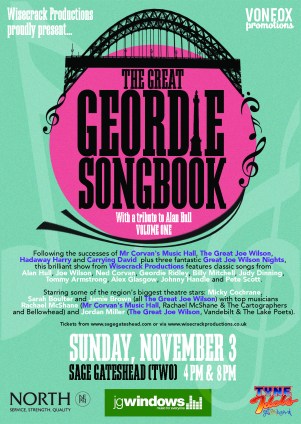
Ed’s company Wisecrack Productions have booked a November date at The Sage in Gateshead. The show features classic North East songs and comedy…

Not much working class history is documented so we try our best to help in a little way said Ed.

The Great Geordie Songbook is a celebration of local songwriters including Lindisfarne’s Alan Hull and Billy Mitchell, 19th century concert hall entertainers Joe Wilson and Ned Corvan…

Ned would have been great to talk to. I think I would of got on really well with him. In the 1800’s he had his music hall next to the old South Shields ferry landing on the river Tyne.

Apparently it was a den of iniquity and the magistrates were constantly trying to close him down (laughs). But yeah he was a fantastic singer-songwriter and it’s brilliant being in this game because you come across some great stories.

How did the songbook idea come about ?

I was approached by Ray Laidlaw of Lindisfarne and Brian Mawson boss of Windows music shop in Newcastle. Brian has a real passion for Geordie comedy and songs.

The Geordie heritage really comes across when you talk to him. He has recorded all the stand up comedians like the Little Waster himself, Bobby Thompson.

They had just seen my play Hadaway Harry about the rower Harry Clasper. After the show they asked if I’d heard of Ned Corvan and Joe Wilson, both singer-songwriters performing in the North East during Victorian times. Much to my shame I hadn’t and they asked would I write something about Ned.

How much research did you do for the project ?

For the Ned Covan play I done about 40 talk’s with Dave Harker, he’s a North East historian who wrote a book Catgut Jim. The play was based on that. I couldn’t have done it without him. His research was fantastic.

Ned’s songs had great lyrics like the Cullercoats Fish Lass and Mally by the Shore, these were testaments in the 19th century to working class women. He also wrote songs about workers on strike supporting seafarers.

Songs with lyrics about day to day working class life. The more research we done we found it was a good story and it’s all about the story isn’t it.

It was a huge success and got a fantastic response which led us onto a play about Joe Wilson. That toured last September and that also got a great response. Both Joe and Ned shows played at The Sage so after the success they asked us ‘what you got next ?’

The Great Geordie Songbook was put forward, along with a tribute to Alan Hull so there will be a few Lindisfarne songs.

The show features some of the region’s biggest theatre stars, Micky Cochrane, Sarah Boulter and Jamie Brown who all appeared in The Great Joe Wilson with Jordan Miller from Sunderland band The Lake Poets

Top musician Rachael McShane from English folk band Bellowhead who also appeared in Mr Corvan’s Music Hall plus musical comedy from Gavin Webster and Josh Daniels.

We work with top professionals, we have a really good team and work well together and enjoy it. To be fair we don’t have the time or the money to muck about. But yes it’s a laugh from start to finish.

Our last show was Carrying David about the boxer Glenn McCrory. I told him it was really good to work on a play about someone who isn’t dead (laughs).

Off the back of all this we worked with Newcastle Council and got some blue plaque’s put around Newcastle. They’re all about leaving a legacy for what was achieved.

There is one for Harry Clasper on the Guildhall over-looking the Tyne, one for Joe on Stowell Street where he was born and a plaque on the Central Station where 2,700 people came to see Ned at the Olympic Theatre. That was the venue where Joe saw Ned, where he was inspired to write about working class life.

When the chips were down they really nailed their colours to the mast. We want to keep their legacy going for young people and for the next generation to be inspired. I think for protest songs young songwriters will go and raid the songbooks of Alan Hull, Joe Wilson and Ned Corvan. And that’s what we want, we need to hear those great songs again.

Tickets for The Great Geordie Songbook are on sale now only £20. There are two performances on Sunday 3rd November 2019 with the first curtain up at 4pm and then 8pm.

Contact www.sagegateshead.com or

www.wisecrackproductions.co.uk

 Interview by Gary Alikivi July 2019.

THE FLAME BURNS ON for Davy Little ex- guitarist with NWOBHM band Axis

Davy was guitarist with Axis, who along with Fist, White Spirit, Mythra, Raven and Tygers of Pan Tang were at the forefront of the North East New Wave of British Heavy Metal.

Axis released their first single in 1980 on Neat Records and appeared on various Heavy Metal compilations. He also played with The Pauline Gillan Band, Kashka and now his latest project Lies of Smiles….

I bumped into former Axis guitarist Mick Tucker at Crash Crallans funeral in 2008. Mick worked with Crash when he was drummer for White Spirit plus working together on Tank’s Honour and Blood album (released 1984).

It was a terribly sad occasion, but we chatted about old times and new. In fact it was Mick who kick-started the Lies of Smiles project, he suggested bringing in his nephew Pat O’Neill (Black Rose guitarist) and Tony Thurlow (vocals, Berlyn, Panama). He said he would contribute to the album as well.

The opportunity to work with him and the other guys was certainly an incentive. So, I got in Chris Wing on bass and keyboards and Keith Naylor on drums from my Pauline Gillan days and we started writing.

Pat O’Neill already had the basis of four tracks. We then completed the other songs, which became Cross and Claw released 2010. Absolutely brilliant that I got to play with these great players. Mick guests on a track called Fallen, a beautifully crafted solo.

Pat is an outstanding guitarist as is his Uncle Mick, but Mick trained us both, while I am not in any way in that category of guitar player, I was trained well, and I know how to get the job done.  

The album was produced by Fred Purser at Trinity Heights studio. Fred used to be guitarist with Tygers of Pan Tang so we knew each other from back in the ’80s. He is a great producer, great musician, a joy to work with.

Do you look back on your time in Axis ?

Well back in 2011 Jaap Wagemaker and the MD Steffen Boehm from High Roller Records got in touch with Mick Tucker about an Axis album. I believe their thing is releasing stuff from the NWOBHM era.

They already acquired the rights to the single Lady/Messiah and asked if we had any old recordings. I gave them three live and three studio recordings.

What a job they did of the vinyl and cd Flame Burns On, with an eight page booklet and the original Axis poster for Lady.  They were a great company to deal with, no arsing around, just did the job in spectacular fashion.

What is the story behind Axis getting involved with Neat records ?

After a year of gigging, we had some interest from Neat Records. They had seen us twice in Sunderland, and then Newcastle Mayfair. I say interest but I always got the impression they weren’t interested at all.

I can’t say it was great working with them. Everything was an information fog, if you didn’t see it, it wasn’t true. So my first impressions of record companies wasn’t a good one.

They didn’t think we were heavy enough for the Neat label so put us on a subsidiary label Metal Minded – go figure. Anyway, I didn’t really care, it was a way to get something out.

The single Lady did really well. Although it seems to be the B side Messiah that gets the more favourable press.

We did go back in the studio later with a couple of changes to the line-up. This time Sam Blue was vocalist (Emerson, Samson, Ya Ya) and on bass was Phil Brady (White Spirit). We recorded Flame Burns on, You Got It and One Step Ahead, they have appeared on various compilations.

I’ve only two good memories of Neat. Meeting Chronos from Venom, before he was Chronos of Venom. He worked there and was friendly, articulate, mad on drawing, and he did tell me his band were going to be the heaviest ever!

I also met Fist guitarist Keith Satchfield and had seen him play with Warbeck, Axe and then Fist. Great player and writer.

When I was in the studio and keeping to the Neat sound of tinny reverby guitar, he told us how to set our amps up, so we didn’t get the tinny reverby guitar! Rather kind I thought.

When did you first get interested in music ?

I was 15 when I started listening to the first Sabbath and Uriah Heep albums. When I was 16, I started work at the shipyard so had some money. We would go to Redcar Jazz Club and see Mott the Hoople, Atomic Rooster, Hawkwind and Curved Air.

I also met a great blues player in the shipyard, Kenny Relton. He had a band that did clubs, the White Folks Show band, he used to let me go to gigs with them.

They covered some great tracks, Mountain, Cream, Fleetwood Mac. I think that is really the point I thought this was a good idea.

Ken would give me pointers and let me play his Gibson SGs, and L6S guitars. Ken is a great player still, I think he despairs that I play heavy metal (laughs). So, I had a basic lesson in all the good things, work ethic, presentation, he was a ‘get it right’ sort of lad.

I also caught UFO and Priest early on at Sunderland Locarno. I actually saw the classic Schenker/Chapman line up. Plus of course one of my great loves Blue Oyster Cult. They influence me lyrically.

I don’t think many British bands have the humour, the satire, razor sharp observations, the out there poetry. So my paltry attempts at conjuring images of Sci-Fi wastelands and Starscapes usually falls a bit short of the mark (laughs).

Can you remember your first band ?

I had seen Axis live with their original line up. They were great musicians. I always thought Axis were principally a good blues band, lots of Hendrix, Robin Trower, Wishbone Ash.

In 1979 I was looking for a band to join, I was 23 so late as a guitar player. I went to audition as second guitarist and I remember having to learn a couple of Scorpions, Deep Purple and UFO tracks.

However, it must be pointed out that I did arrive with a fair amount of cash from my welding job. There were probably better guitar players than me that applied, but I was older and had a decent job.

I suspect I bought my way in. You know, give me the job please and I will buy this massive PA (laughs).

The chemistry was good, and I got the job and Axis were the first band I was in. Mick Tucker was and is a ferocious guitar player. I knew I could work and learn from him, try to create something different. We had a darker design for Axis.

Who else was in the band ?

I was surrounded by great musicians. Mick already had the line-up he wanted. Marty Day (drums) Paul McGuire (keyboards) John Cunningham (bass) Neil Grafton (vocals). They were all very patient with me as I had a pretty steep learning curve.

Initially we did lots of covers, Blue Oyster Cult, Scorpions, UFO, Montrose, but our main aim was to have our own stuff as the main part of the set, it just took time.

Can you remember your first gigs ?

First gigs were Thornaby Cons club. Lots of the NWOBHM bands played there like White Spirit, Limelight, Son of a Bitch who went on to become Saxon, Tygers of Pan Tang and Vardis.

The circuit was pretty good, the Warrington Lion, Sunderland Locarno where I sat on every toilet seat in the dressing room so I could have my arse where Michael Schenker once sat (laughs).

Me and our manager John Lancaster were big pals with White Spirit’s manager Mike Sanderson, so we supported them a few times. Gigging was always fun with Axis. I was in a band that is all that mattered. We travelled the length and breadth of the country.

Any road stories from that time ?

A memorable one was when supporting former Thin Lizzy guitarist Eric Bell at a local gig. We’re in at midday to set up a huge wall of Marshalls, drum riser, lights, smoke bombs the whole nonsense. Hey we were local heroes (laughs).

Then Mr Bell and band arrived. You can imagine the headliner walking in and seeing this mountain of shit on the stage. But what a gentleman, we were young and full of it.

He was very gently spoken and just said ‘This isn’t really the way it works lads’. Then much to our relief he said ‘but it’s fine, we don’t need much room, not bothered about a sound check’.

I remember it was packed to the rafters for Eric Bell, not for us, but we did ok. His drummer set up after us. Bass player rolled his amp on, Eric Bell rolled either a Vox AC30 or a Fender Twin on to the stage and blitzed the place.

No arsing about, no demands, just played like true pros. What a lesson, what a professional.

Of course, we thought he was brilliant, his band were brilliant, his last words… ‘Pleased you enjoyed it, now you know there is no need for all that shit on stage, and don’t ever fucking set up before the main band gets there’ (laughs). 

A year later went to see him at the Redcar Bowl and he introduced us to his new band with ‘These are the cheeky bastards who set up before we even got to the gig’ (laughs).

Another time our bus had broken down, so we had to hire a Luton van to get us to a gig in Wales. We were on the road to Tonypandy when the Luton stopped, back doors opened, and we get out looking at a battered bridge over a gorge in Wales.

If you were a sparrow, you wouldn’t have landed on it! Apparently there had been a lot of storms that caused structural damage so there was a sign that read something like ‘Safe load..?’

Well, this Luton with all the kit and us in it must’ve been well over the limit. To turn back would take hours, so our manager John Lancaster and soundman Paul Cleugh said… ‘Just jump in the back lads, we’ll turn round and find another way’. So, we did, like fools.

Back door shuts, van revs like it’s in a drag race, sets off with wheels screeching and us holding on to anything. We go 200 yards then stop and the back doors open. We have just gone over the bridge of death.

Mr Lancaster and Mr Cleugh crying laughing to shouts of ‘Are you fucking mental’. I asked why they didn’t just let us walk across the death bridge. The answer was… “That would have been no fun at all”.

What happened to Axis ?

The story ends with guitarist Janik Gers leaving White Spirit to join Gillan and Mick Tucker leaving Axis to join White Spirit. We found it hard to replace a guitar player like Mr Tucker, plus we had too many line-up changes in a short time.

Axis called it a day. Mr Tucker later joined Tank and is still touring and putting great albums out now, they have a really healthy following.
Pauline Gillan Band

Where did you go then ?

I joined the Pauline Gillan Band who were initially signed to Mausoleum Records, but then Powerstation got us out of that deal, so we signed to them. They were good people I liked them. They had Chrome Molly on their roster and later Little Angels.

A couple of singles came from the album Hearts of Fire and we took it out on the road touring extensively around the UK and Europe.

I brought John Lancaster the former Axis manager in as road manager. He was and is a great fixer. We also had decent management, a guy called Jim Sculley, also Black Rose’s manager. He worked his ass off for us and spent a lot of money.

We did a Tyne Tees TV live music show called TX45 and that was good fun.

R-7630918-1454763533-1596.jpeg

What studio did the band use to record the album ?

We went into Fairview studio in Willerby near Hull. It was like Club Paradise compared to Neat. In reality we did what we could, but we weren’t great writers.

Powerstation did bring in some outside writers and we recorded some of that stuff. Not sure what happened with it, may have appeared on a compilation.

Have you any road stories from your time in the Pauline Gillan band ?

I remember playing in Watford and we had a very famous guest backstage, the drummer from The Sweet, Mick Tucker – not to be confused with Mick Tucker from Axis/White Spirit/Tank.

He was very straight with us.. ‘I’m looking for bands to produce, I want to take you into the studio and record that song you do, it has hit written all over it’.

The song in question unfortunately was Eric Martins Just Another Pretty Boy and it had been a hit for Mr Martin in the USA. We covered it in the set, and he could obviously spot a tune, but unfortunately, we couldn’t write one. He didn’t finish his beer (laughs).

Whilst on tour we had a particular Spinal Tap incident in Scotland. We stayed in a great hotel for a few days in a place called the Bridge of Allan and got to meet Jack Bruce (Cream) – he lived there. We bought the biggest bass cab you have ever seen off him. This particular night our management had got us a fill in gig, rather than sit on our arses in a nice hotel we had to get out and work.

It was a workingman’s club, and we knew we were in trouble when we looked at the juke box. All country and western, the stage had silver and gold tassels at the back.

They told us to do two 45-minute sets. Which we didn’t ever do, I mean the night before we had played Glasgow Apollo a real hard rock venue.

Anyway, we set up, sound checked and you could see the bar staff with their mouths open at the sheer volume. Lots of shuffling from the committee men. That night we emptied the place in around 5 minutes, but like troopers we carried on at full tilt.

I noticed two white haired old dears sat right at the back, drink in front of them, just staring at the stage. Between a break in a song, I said to Pauline ‘When we’re finished I’m going to buy them a beer. Who would have thought the two oldest people would stay through this’.

We came off stage, got changed and were told by the committee that our services would not be required for the second 45 minutes, fine by me.

I went to ask the two old people what they wanted to drink just as their carers arrived with their wheelchairs… they couldn’t get out if they wanted to (laughs).

But it was hard for Pauline being constantly compared to Ian (Gillan) who is one of the greatest rock singers of a generation in one of the greatest bands of a generation. But in Pauline’s defence she never wanted to call it The Pauline Gillan Band that was the record company insisting.

But it worked and we got great gigs, festivals in Europe, great hotels. Oh we also got backstage passes for some spectacular Deep Purple gigs on the Perfect Strangers tour.

We did our best as Pauline did, she was great to work with, fun, articulate and liked to party. I enjoyed that time immensely.

I only have good memories of the Pauline Gillan Band. We seemed to gig forever, that made us a tight band and we had fun wherever we went.

Did you work in any other studios ?

After Pauline Gillan I recorded with a band, Kashka. That was for Curain Records who put us in Fairview Studios, the producer was John Spence. We had Dave Bell, guitar, Chris Wing, bass/keyboards from the Pauline Gillan Band and our friend Mick King on drums.

We worked with two great girl singers Lorraine Crosby and Jackie Fox, and we really found our thing as writers.

The usual thing tons of interest. Isn’t there always? Even from the Queen management, they called and said Brian May was interested. We got a lovely letter off him saying he had crashed his car whilst listening to the tracks! He particularly liked the two girl’s voices.

So, story goes he took it to America with him. However, the view from their company in the USA was that they had factories churning out great girl singers and this type of AOR.

As it happened neither of the girls could commit to gigging. They both had decent well-paid careers as singers, we couldn’t afford them and they understandably didn’t want to do anything on a flimsy promise of stardom.

What are you doing now ?

I always think Lies of Smiles is what I wanted Axis to develop into. You know the Starscapes, Warscapes, God as an Alien, Lucifer misunderstood. Aliens as controllers of the human race and all that heavy metal bollocks in all its glory.

On both albums Cross & Claw (2010) and Dreams of the Machinoix (2015), Lies of Smiles have produced two huge granite slabs of classic ’80s hard rock enhanced by Ronnie James Dio ‘Mob Rules’ era vocals.

Both album’s benefit from slick, solid, meaty production courtesy of Fred Purser at Trinity Heights studio in Newcastle. Ticking all the boxes of any respected heavy rock/metal album.

There may be another Lies of Smiles album, three is a good number, it’s enough to tell a story! Dependant entirely on the boys in the band, we have the means to do it so it’s just time and commitment, and for no other reason than to create. Simple as that.

What does music mean to you ?

Maybe it’s mathematical, the laws of physics and mathematics apply to the planet, the Solar System, the Universe. ‘There is geometry in the humming of the strings, there is music in the spacing of the spheres’. (Pythagoras).

Thing is music is entirely intertwined with mathematics, even a basic major chord can be described mathematically.

But just listening to it is one of the most important things in life. It touches people and has a deeply profound effect on people’s emotions. It elevates people, makes them happy or sad, brings back vivid memories of times and places.

The creativity, comradeship and feeling of creating something from absolutely nothing. Looking back it was all fun, still is. I wouldn’t have had it any other way.

Contact the band on their official website:  https://www.liesofsmiles.com/home

Interview by Gary Alikivi    June 2019.

ALL THAT JAZZ – snapshot from the life of professional musician Kathy Stobart (1925 – 2014).

kathy-stobart-1970s

What’s the connection between Radiohead and South Shields ? In 2001 at an outdoor concert held on Radiohead’s home turf of Oxford, the South Shields born jazz musician Kathy Stobart appeared on stage with the Humphrey Littleton band.

After opening the show, they were quickly followed by Iceland’s Sigur Ros, fellow Oxford band Supergrass, California’s Beck, before headliners Radiohead closed the show. Music throwing up some strange and fantastic surprises from around the world. Now back to Tyneside.

In 1925 Florence Kathleen Stobart was born into a musical family, both her brothers were saxophonists and her mother an experienced pianist. With music in the home, Kathy studied piano and learned how to play saxophone.

At the young age of just 14, Kathy started her musical career joining the Don Rico Swing band touring UK theatres. Along with playing saxophone she added singing, dancing and impressions to her act – Gracie Fields being one of them.

The air raids and bombings of the Second World War put an end to this, resulting in the closure of many theatres. But the show must go on, so she returned to Tyneside to entertain audiences in the Oxford Galleries in Newcastle.

Through the 1940’s Kathy moved to London and got regular gigs at the Embassy Club on Old Bond Street, guests included Bob Hope, Bing Crosby and Glenn Miller. She was the only female saxophonist in Art Thompson’s Swing band.

At the end of the war Kathy travelled to America and played in jazz clubs from New York to L.A. and had a residency in Palm Springs, establishing her international reputation.

By the ’50s Kathy had moved back to London and continued playing in the capital, for many years touring the UK extensively with the Humphrey Littleton and Vic Lewis big bands.

The ’70s saw the Kathy Stobart Quartet formed and a performance at the Nice jazz festival. Along with numerous solo gig’s she found time to teach saxophone and hold Big Band workshops.

By now living in Devon, the ’90s through to the noughties saw Kathy continuing her jazz teaching and re-joining the Humphrey Littleton Band, who she first joined in 1957. A gradual move into retirement followed, but sadly on 6th July 2014 Kathy died.

Starting her musical journey from a small coastal town in the North East of England, to keeping the show going as bombs dropped on England, extensive touring throughout the UK and finally sharing a stage with one of the most influential bands of our generation, this is a snapshot of the life of professional musician Kathy Stobart.

Gary Alikivi   June 2019.

GATESHEAD GET RHYTHM with drummer Steve Laidlaw

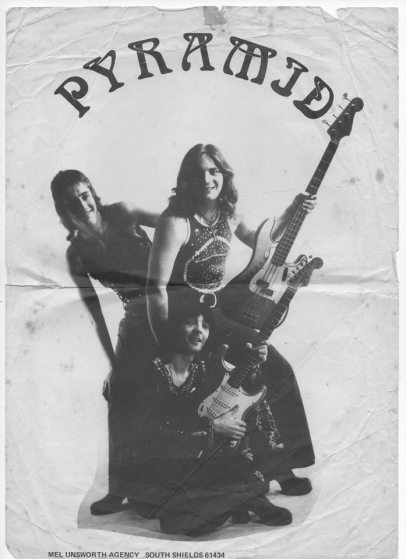
One of our strangest gigs was when Pyramid supported the Welsh heavy rock band Budgie at the Newcastle Guildhall. They and the crowd were all denim and long hair.

But we were playing Glam Rock, Bay City Rollers, Mud, that sort of stuff… but went down a bomb!

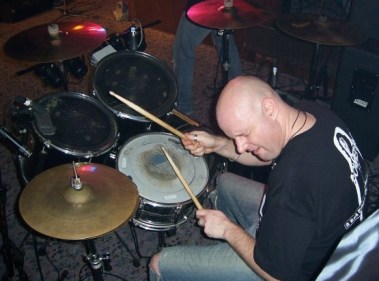
From the 1960’s to the late 80’s Steve played for many North East bands including Pyramid, Busker, Backshift, Flicks and Smokestack. Recently he has returned to the stool…

Last year I got back together with Chris Batty from one of my first band’s. We done some busker nights, got my mojo back, and we are getting a band going.

My son Andrew is a record producer and is signed to Slam Jam Records owned by Chuck D from Public Enemy. Chris and I are doing drum and bass tracks for his new album. Can you believe it. Talk about being down with the kids (laughs).

When did you first get interested in music ? 

My dad was a commercial artist who played guitar and piano at home, things like New Year parties. So, when growing up music was around the house.

When I was about 14 I got friendly with two lads who lived on the next Gateshead estate, Richie Close and Steve Davidson. Richie was already an accomplished musician playing piano and guitar. He later played with major bands such as Camel and was MD for Tony Christie.

We started messing around and Richie suggested I try drums. One day we went to his mate’s house and he had a kit. I got on and found I could separate my hands and feet and whack out a rhythm. We used to record little tapes, it was a hobby.

I remember being influenced by listening to straight four on the floor players like Mick Avory and Mick Fleetwood. No fancy complex stuff for me ! I was never technically gifted as a drummer.

I was influenced in my early days by watching the great John Woods from the Junco Partners, Ray Laidlaw (no relation) with Downtown Faction and Brian Gibson of Sneeze, later with Geordie.

Later I met a lad called Peter Chrisp who played bass. He was a blues man, and we formed a band with John Gormley (vocals), Ronnie Harris (guitar) and me on drums.

Can you remember your first gig ?

My first gig was at the Wesley Memorial Church Hall in Low Fell in 1967. Ronnie could play the John Mayall album ‘Beano’ note for note, so were ostensibly a blues band. We did The Quay Club, Bay Hotel in Sunderland loads of youth clubs and schools.

But the band sort of lost interest so I formed my own called Tycho Brahe, with my mate’s Chris Batty, George Curry and Stan Rankin. This was late 1969.

We did the Bowling Alley in Gateshead and the usual round of schools, but only lasted a few months. Then in 1970 I got a call from a guy called Jim Campbell. He was managing a club band which became The Paul Dene Set.

I got Chris Batty from my previous band in on bass, but we were only 19, and the other guys were 26/27, a lot older and very experienced. I went from playing Cream/Mayall to Tom Jones and Elvis with dickie bows and velvet jackets.

18012669_10154262986992085_2045594719_o

Did you have a manager or agent ?

Most of my time in bands we were managed by Ivan Birchall or Mel Unsworth who were always fair with us. We started getting regular work in the clubs, and had a van and good PA. We got gigs like the Airport Hotel, Top Hat, Guildhall, these were really decent clubs.

That lasted until ‘73 until I formed a band called Smokestack featuring Stu Burns and Steve Daggett. He played a blinder by stepping in at the last minute with no rehearsal, it worked out great.

Then I answered an advert in local newspaper The Chronicle, that was for a band called Pyramid who had been on the go for a while.

At first, we just rehearsed in a basement in Gateshead as one of the members was ill, so the band were off the road. At first the agents didn’t want to know but eventually we got a couple of gigs and literally tore the places apart with comedy and chart music.

Straight away we got repeat bookings and our agent Mel Unsworth started giving us work. Subsequently we started to build up what became a huge following and some people had seen us a hundred times.

15894458_10153991538337085_7274884893360001968_n

Have you any stories from the road ?

We auditioned for TV talent show New Faces in 1974 – and got on. The panel were made up of Micky Most, Tony Hatch and Clifford Davis who were not keen on us. Arthur Askey was there, and he was a lovely gentleman.

I remember the night we were on. We recorded the show in Birmingham on a Tuesday and the night it was broadcast we were booked for a club in Ashington, The Central I think, and we watched the show before we went on stage.

There were no videos in those days. We got a load of gigs after that and the work went off the Richter scale, doubling our pay from £40 to £80 a night (laughs).

The band went full time but I continued to work. I was working in sales through the day and got very little sleep. We would be doing a club then maybe The Sands which was above the bus station in Whitley Bay or the Burgundy Cobbler also in Whitley Bay.

We’d get to Palace of Varieties over in Prudhoe, then a few places in Newcastle like the Cavendish, Stage Door and the Rainbow Rooms.

I’d fall into bed around 3 or 4am, then back up at 7 (laughs). We once did 93 consecutive one nighters, but by this time we had two full time roadies, and we went in our cars.

36711030_1311155892354062_5895211650234974208_n

In 1975 I got married so left the band as my new wife wanted to see me (laughs). But re-joined a couple of year later and did a tour of Germany with the comedian Chubby Brown.

I remember being stopped at the East German Checkpoint and they got really funny with us. To get to Berlin we were told to ask for a Russian Officer, who we had to pay off to get through (laughs).

A story from one night involved Allen Mechen, who was the front man and guitarist Brian Pick. We used to start the act with me and Brian on stage and Allen used to run out of the gents.

One night we started playing and were going over and over the song with no sign of Allen. After five minutes our roadie went to find him. He was asleep on the bog with the door jammed (laughs). John poured some water over him.

Incidentally Brian used to be in well known Tyneside band The Sundowners and Allen ended up playing the character Terry in the Tudor Crisps adverts. After recording an EP I left the band again, then went back for their last gigs in 1983.

What studio did you record in ?

We recorded the EP at Soundlink in Newcastle and sold it in the clubs, but I haven’t got one cos I gave my copy away.

We also recorded a couple of tracks at Impulse Studio in Wallsend. That was for North East TV show Geordie Scene, but in the end, they decided not to put us on. We recorded a new single at Impulse, but it was scrapped at the last minute for some legal issues.

Not long after Pyramid I played in a band called Flicks. Terry, the keyboard player, was asked to join another recording band called Busker who had a huge hit with Home Newcastle. The song was a massive hit locally and is still played at St. James’ Park.

The band didn’t really exist, but songwriter Ronnie Lambert wanted to put a band on the road. He also played guitar and harmonica. He asked us if we could get a few of our old mate’s in and do a few gigs, so we did.

We also recorded a new single, and a new version of Home Newcastle with a few different lyrics but the band drifted apart. I think Ronnie just wanted to be a recording entity.

After that I joined Backshift, who became an eight-piece soul band, fronted by legendary Junco Partner, Ronnie Barker. This went on for several years, we done some good gig’s and had a great laugh but finished about ‘88.

I always meant to go back to playing but had two kids and things just drifted. I had 23 years in bands by then.

What does music mean to you ?

I always felt music should entertain and not educate. The general public are bored shitless by drum solos. As Brian Gibson from Geordie always said, get the girls dancing then you are ok (laughs).

 Interview by Gary Alikivi    June 2019.

TYGER BEAT with former Tygers of Pan Tang drummer Chris Damage Percy

Previously on this blog was an interview with former Tygers of Pan Tang guitarist Glenn Howes.

As I’m tracking down former members of the Tygers, Glenn put me in touch with Chris Percy. Chris was drummer around the same time Glenn was in the band….

1930228_41742241320_2901_n

I joined the Tygers in 1999. I was asked by bassist Gav Gray, as by then we’d played in a few bands together often joining as the rhythm section. I was with the band up until the time just after the Wacken Festival.

We only played the one gig, Jess Cox had been asked to do something as it was the 20th anniversary of Don’t Touch Me There so that was the focus at the time.

Don’t Touch Me There was their first single released in 1979 on NEAT record label and produced by Steve Thompson at Impulse Studio, Wallsend.

What are your memories of the gig ? (pics above)

The Wacken gig for me was fantastic. I had my birthday out there so we had a little celebration. It was great as there was a shuttle of cars every half hour that went from the hotel to the gig so you just got in and travelled to and from the gig whenever you wanted.

I think at the time, the biggest gig I’d played was the bikers festival Stormin’ the Castle with a Guns n Roses tribute band. Now here I am being flown to Germany to play a gig attended by tens of thousands of people!

When did you get interested in music and who were your influences ?

I’ve always been interested in music from as far back as I remember. I started drumming from a very early age. My earliest memory is from when I was 5 years old, mimicking drummers I’d watched on the tv.

I was 8 years old when I started getting lessons from a guy called Bill Tennant who was a jazz drummer around the North East. I didn’t enjoy it very much until I was 11 or 12 when I was introduced to The Meteors, and I was hooked. I joined my first band at 14 called The Dead Travel Fast but we never played any gigs.

When did you play your first gigs ?

I was 18 and my first gig was at a pub called Images in South Shields with a covers band called Van Goghs Ear. The band featured guitarist Dave Burn, a very good local guitarist who has released loads of solo stuff. He recently played guitar for Paul Raymond of UFO fame who sadly passed away not long ago.

On the night we supported a band called Frenzy and I think Gunslinger might have been there. I was so nervous I drank six pints of snakebite before I went on and could hardly remember the songs!

Did you record any of your music ?

I ended up in the studio with a few bands. The first time was with my first originals band around ‘93 called FND with Dave Hills (guitar) Gav Gray (bass) Paul Nesbitt (vocals) and myself. It was completely free as Hilly had his studio in his house and we would just stay at his and drink and record songs.

Have you any stories from the Wacken Festival gig ?

The first day we get there and I was sharing a room with Gav Gray. Well this bloke turns up at the door, he asked us in this Brummie accent if we had a cigarette so we replied ‘Aye, whey aye, mate’. Which as we all know means ‘yes’ in Newcastle.

He looked at us puzzled and asked very slowly ‘Do you speak English?’  He turned out to be the singer from metal band Jaguar (laughs).

When we were setting up for our slot, I was working with the drum tech on my set up which literally took 5 mins as I just played a five-piece kit, unlike some of the bands who’d had double kits with cymbals and drums all over.

I started playing this kit and someone from out front came running back and started shouting ‘Stop playing, we can hear you out front’. Saxon were on stage at the time!

Why did you leave the Tygers ?

We only planned to play the one gig. Jess had no intentions of doing anything after that. Rob mentioned doing something but I don’t think anyone took it serious. We just went back to what we were doing, our day jobs, bands and waited for the release of the Live album.

 Check the official Tygers website for set list and album http://www.tygersofpantang.com/official/discography.html

holliemcmillan

What are you doing now ?

I’m playing in a fantastic ‘50s rock n roll band called Ruby & The Mystery Cats with Ruby Soho (vocals) Ray Vegas (upright bass) and G-Man (guitar). I absolutely love it.

Interview by Gary Alikivi    May 2019.