NEAT BITES – Making Records in Wallsend

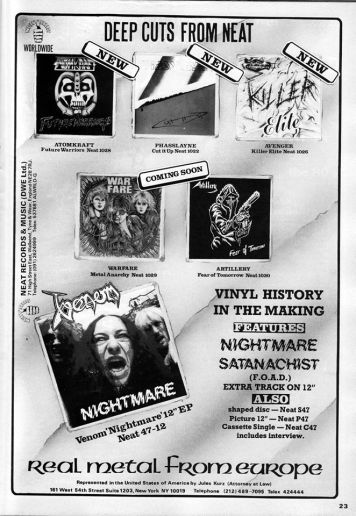
NEAT advert

Neat Records were based in Wallsend, North East England. The label was established in the late ’70s by Dave Woods, who was the owner of Impulse Studios.

It was notable for releases by Venom, Raven and Blitzkreig who are acknowledged as major influences on American bands Metallica, Megadeth and Anthrax.

Songwriter and producer Steve Thompson helped set up Neat and produced the initial recordings…

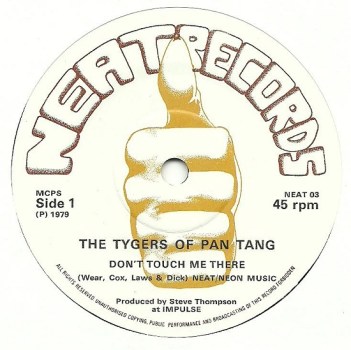
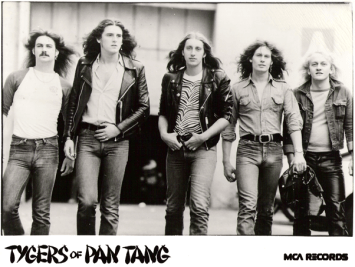
One day Dave Woods came in and said there’s a band who are making a bit of noise out there why not get them in and sell a few records? So, in came Tygers of Pan Tang to cut three tracks.

Incidentally it was to be the third single I’d produced for NEAT. Now we know it is known as the New Wave of British Heavy Metal, and the tide was coming in that very evening haha’. 

tygers-of-pan-tang-dont-touch-me-there-1980-3 copy

ROBB WEIR (Tygers of Pan Tang) ‘In 1979 we recorded, Don’t Touch Me There. It had a release number 003 so we were in at the beginning of the Neat Record label story. We were the first heavy metal band to be recorded in the studio. So, I’m very proud of the Tygers giving the Neat label a direction.

Impulse studios took a chance and pressed 1,000 copies, that was a lot for a small independent label. Don’t Touch Me There was reviewed in Sounds newspaper which made a massive difference, so the next pressing was 4,000 !

Then studio owner Dave Woods was approached by MCA record company, they wanted us! So Dave did a deal, essentially selling the Tygers to them. So MCA pressed around 50,000 copies of the single!’

BRIAN ROSS (Blitzkreig) ‘I remember the first time in Impulse Studio was great we made it feel like our second home.

It came highly recommended as Tyne Tees TV used it to record their jingles there and we recorded a jingle Hot n Heavy Express which Alan Robson used on his radio show. It went well so we extended it into a single. NEAT put it out on a compilation EP.

Now this studio was the label to be on, and I mean in the country not just the North East, I’ve recorded many tracks there as Satan, Avenger and Blitzkreig. It’s a shame it’s not there now’. 

ANTONY BRAY (Venom) Conrad was tape operator at NEAT doing a few days here and there and he bugged the owner Dave Woods about getting spare time in the studio for the band. He kept asking him ‘can my band come in on the weekend ?

Woodsy got so sick of him he just said ok, just do it, but pay for the tape. So we recorded a three track EP and we thought it might get a little review somewhere.

I was still working at Reyrolles factory then and one morning I wandered in, and someone had a copy of the Sounds. Couldn’t believe it, there’s a two page spread about our EP, f’ing hell look at this.

When Woodsy saw it he thought, I hate the band, think they are bloody awful – but kerching!’

KEITH NICHOLL (Impulse studio engineer) ‘With Raven, their playing was always intensive but there were loads of stories and quite a few laughs. I think they simply wanted to do a better album than the first and then again, the third. Any band would. Can’t remember if there was an official tour but they did loads of gigs. Good live band’.

HARRY HILL (Fist) ‘The first single we put out was Name, Rank and Serial Number and You Never Get Me Up in One of Those on the b side. We done a lot of rehearsal and prep work, so we were tight, ready to record.

When we done Name, Rank we were on Northern Life TV. The cameras came down filmed in the studio that was 1980. Strangely the only piece of vinyl I have is our single The Wanderer. We started putting it in our set so yeah, went in and recorded it.

Status Quo released a version a couple of months after us but honestly thought our version was better haha’.

GARY YOUNG (Avenger) ’I worked in the Shipyards near my hometown but for about a year before that I worked at Impulse Studios in Wallsend which was where Neat Records were based.

Due to this I was involved in a lot of recording sessions and some of them for what are now landmark albums like Venoms – Black Metal and Ravens – Wiped Out.

I had my first experiences of recording there with my own bands and helping people out on random recording sessions. They were great times’.

DAVY LITTLE (Axis) ‘I remember Fist guitarist Keith Satchfield was in when we were recording. He was always track suited up. Getting fit and going on runs in preparation for a tour.

I had met him a few times when I was younger, I used to go and see Warbeck and Axe. Always thought he was a cool musician and writer. Plus, a nice fella.

We were very inexperienced and new nothing about studios. He gave us advice on how to set up amps. Was very supportive I never forgot that.

Also, when we were in there a very young moody boy was working there. Making tea, helping get kit in. Always drawing. Asked to see some of his drawings. All dark, tombstones, skulls, flying demons…nice kid tho’ said he didn’t think we were very heavy metal. I agreed.

He said, “one day I am going to have the heaviest band ever”. I met Chronos years later in a club in Newcastle when he was fronting the mighty Venom. A nice lad’.

STEVE WALLACE (Shotgun Brides) ‘There was a kid called Richard Denton who grew up in the same area as us and he was working A&R at Impulse records in Wallsend. He persuaded the owner Dave Woods to take us on.

We went into Impulse Studio and recorded the track Restless, that was engineered and produced by Kev Ridley in 1987. The b side of the single was Eighteen.

We recorded the song bit by bit, tracking it up. Unlike a few other bands it wasn’t recorded by playing all the way through and off you go add a couple of overdubs, no it was fully tracked. It eventually ended up on a NEAT compilation album’.

PHASSLAYNE NEAT

MICHAEL MAUGHAN (Phasslayne) In the summer of ’85 Phasslayne were approached by Neat Records. Dave Woods was the main man there.

What happened was we recorded a demo at Desert Sounds in Felling which they really liked so the label asked us to record a live no dubs demo in their studio in Wallsend. On hearing that Dave Woods signed us to do an album.

But just before we got our record deal our singer left and everyone looked at me so that’s how I ended up doing the vocals. I think Keith Nichol was the engineer. For guitars I used my Strat and Maurice Bates from Mythra loaned me his Les Paul. We called the album Cut it Up, it’s on vinyl’.

KEV CHARLTON (Hellanbach) ‘We got a deal with NEAT records to record our first album. That was the best time. After rehearsing for months getting the new songs together, we recorded the album which is a very proud moment in my life. Now Hear This came out in ’83 and was produced by Keith Nichol.

I remember getting the first copy of the album, taking it into work thinking this might be me leaving the shipyards. It was one of the weirdest times of my life because it came out to amazing five-star reviews and some of the big bands weren’t even getting five stars.

I remember sitting in the toilets of Wallsend shipyard reading the reviews in Kerrang and Sounds, thinking this will be the last time I’ll be in the shipyard. But it wasn’t !’ 

51n2cdL69DL._SX347_BO1,204,203,200_

To read a comprehensive story of NEAT records get a hold of the book Neat and Tidy by John Tucker.

It examines the history of the label, its bands and their releases including interviews with many key players in the Neat Records’ story such as label boss David Wood, producer Steve Thompson, Raven’s John Gallagher and Jeff ‘Mantas’ Dunn from Venom.

https://www.johntuckeronline.co.uk/neat-and-tidy-the-story-of-neat-records.html

Interviews by Gary Alikivi     2018.

Recommended:

Brian Ross, SATAN/BLITZKREIG, Life Sentence, 20th February 2017.

Harry Hill, FIST: Turn the Hell On, 29th April 2017.

John Gallagher, RAVEN: Staring into the Fire, 3rd May 2017.

Kev Charlton, HELLANBACH/BESSIE & THE ZINC BUCKETS: The Entertainer, 23rd June 2017.

Steve Thompson (NEAT Producer) Godfather of NWOBHM, 27th June 2017.

Richard Laws TYGERS OF PAN TANG: Tyger Bay 24th August 2017.

Robb Weir TYGERS OF PAN TANG: Doctor Rock  2017

1980: The Year Metal was Forged on Tyneside, 11th February 2018.

Guardian Studio: Defender of the North 3rd May 2018.

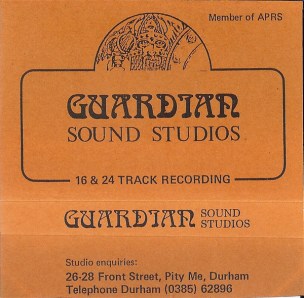
GUARDIAN RECORDING STUDIO #1 Tygers of Pan Tang

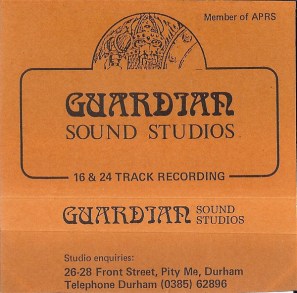
gaurdianadvert

Gaurdian Sound Studios were based in a small village called Pity Me in County Durham, North East UK.

There are various theories on the origin of the unusual name of the village – a desolate area, exposed and difficult to cultivate or a place where monks sang ‘Pity me o God’ as they were chased by the Vikings.

Whatever’s behind the name, it was what happened in two terraced houses over 30 years ago that is the focus of this blog.

From 1978 some of the bands who recorded in Guardian were: Neon, Deep Freeze and Mike Mason & the Little People. A year later The Pirahna Brothers recorded a 7” and there was also an EP released by Mythra.

1980 saw E.P’s from Hollow Ground, Hellanbach and a compilation album, Roksnax.

From 1982-85 bands including Red Alert, Toy Dolls, Prefab Sprout, Satan, Battleaxe and Spartan Warrior had made singles or albums. I caught up with a number of musicians who have memories of recording in Guardian… 

TYGERS

TYGERS OF PAN TANG – Demo’s & B sides.

ROBB WEIR: ‘When we arrived at the address for the studio, I thought we had got it totally wrong! It was a small street full of pit colliery houses. Nothing wrong in that of course, just we couldn’t see a recording studio anywhere.

We pulled up to number 32 or whatever the house number was and knocked on the door expecting to be told we were in the wrong area. The door opened and a young man with a ‘bush’ on his head greeted us. ‘Hi, I’m Terry Gavaghan, welcome to Guardian!’

As we walked in his front room it had been converted into a makeshift studio with sound proofing on the walls. Terry had also knocked a huge hole in the wall dividing the lounge to the dining room which was now the control room and fitted a large plate glass window.

I remember asking him where he lived, ‘upstairs’ he said as if I should have known.

Anyway we recorded the entire Spellbound album there as a demo for MCA our record company and Chris Tsangarides our record producer.

We also recorded the ‘Audition Tapes’ there, John Sykes and Jon Deverill’s first Tygers recordings. Which was to be a free 7 inch single to be packaged with Hellbound when it was released.

I think we were there for a few days recording and during one of the sessions I was in the studio by myself laying down a solo.

When I had finished, I put my guitar on its stand and as I made my way into the control room my foot caught the stand that John’s guitar was on, and I knocked his Gibson SG on the floor!

He was watching through the control room window and ran into the studio going ape! I of course apologised but he couldn’t forget it. In the end I told him to shut the f**k up as no damage had been done and if he didn’t some damage WOULD be done!

What did come out of Guardian were some fantastic recordings. Terry did us proud I have to say. His studio and his warmth were fantastic! The moral of the story is, ‘Don’t judge a recording studio by its colliery house appearance!’

RICHARD LAWS ‘Tygers of Pan Tang recorded at Guardian twice. Although we were usually associated with Impulse Studios home of Neat Records.

We had sort of fallen out with Impulse and Neat, so we recorded the demos for our second album Spellbound at Guardian.

We recorded about five tracks, I think. These demos were later released on various compilations. The demos for Spellbound were the first time we recorded with Jon Deveril and John Sykes in the band.

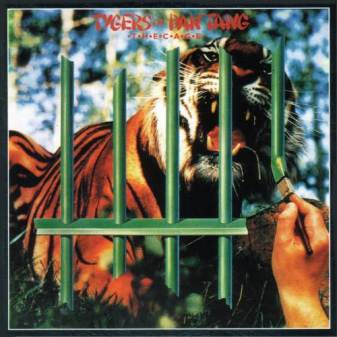
Later we recorded two B sides for singles off our fourth album, The Cage. Whilst we were there doing the B sides our record company came up and did a play through of the fully mixed album which was the first time we had heard the finished product’. 

If anyone has information or recorded in Guardian studios, it will be much appreciated if you get in touch.

Interviews Alikivi.

Recommended:

Richard Laws TYGERS OF PAN TANG: Tyger Bay 24th August 2017.

Robb Weir TYGERS OF PAN TANG: Doctor Rock  2017

1980: The Year Metal was Forged on Tyneside, 11th February 2018.

ROKSNAX: Metal on the Menu, 9th March 2018.

ROKSNAPS #2 with John Edward Spence

Roksnaps are fan photographs which captured the atmosphere of concerts on Tyneside during the late 70’s and early 80’s. It was a time when rock and metal bands ruled the city halls up and down the country.

On Tyneside we had the main venues of Mecca in Sunderland, The Mayfair and City Hall in Newcastle.

The gigs were packed with tribes of mostly young lads from different towns around the North East. T-shirts, programmes and autographs were hunted down to collect as souveniers – and some people took photographs on the night.
One fan who kept his photos and kindly shared them on this blog is John Edward Spence…

The first gig I went to I was 15. It was on the 31st of October 1977 at the Newcastle City Hall and the band was Ritchie Blackmore’s Rainbow.

The support band were called Kingfish. Rainbow came on really late and we missed our last bus home so one of friends had to phone his dad for a lift’.

‘Around October ’78 I decided to take my camera to a few gigs. I had a job, so I bought a roll of film and some flashcubes, my camera was a Kodak 126. I couldn’t take it to every gig as the film and flashcubes used to make a dent in my pay packet’.

‘I used to go to loads of gigs at the City Hall and the Mayfair of course, that was my favourite venue. I was also lucky enough to see the bands associated with the NWOBHM, just loved the music around then’.

‘I don’t go to many gigs now. I always try and watch The Tubes when they come over, in fact the last gig I went to was to see The Tubes supporting Alice Cooper at Leeds, great gig’.

Interview Alikivi 2018.

Recommended:

Pyromaniax – Bombs, Flashes & Burnt Eyebrows, December 2017.

Have You Heard This One ? December 2017.

1980 – The Year Metal was Forged on Tyneside,  February 2018.

1980 – THE YEAR METAL FORGED ON TYNESIDE

It’s one year on from the start of this blog, with over 18,000 readers, 150,000 words, 115 posts and more to come. But enough of the stats – this post rewinds the clock back to 1980.

Today skipping through Spotify or You Tube people have the choice to listen to different styles of music. Billions of songs at your fingertips. But there was a time when music lovers more than likely listened to only one genre – creating different tribes.

The ’70s brought in hard rock bands Black Sabbath, Judas Priest, Motorhead and the hairy rock tribe followed. Disco filled dancefloors with Donna Summer, ‘Le Freak’ by Chic, a real Saturday Night Fever.

But the dancefloor was ripped up by the Disco Sucks movement in America.

One night in ’79 at a baseball game in Chicago, rock radio DJ Steve Dahl took to the field with his anti-disco army and blew up thousands of disco records. A publicity stunt he thought would bring in an extra 5,000 people to the game – it brought 70,000.

Where they a tribe of fire starters, or was it the 98cents entry fee if you had a disco record under your arm ready to burn? The disco tribe never recovered.

By ’78 the Sex Pistols had played their last gig in San Francisco and at the start of ’79 Sid Vicious died in New York. By the end of the year The Clash had called out to London. Was the punk tribe dying out ? What did 1980 hold for the tribes ?

Post punk, Ska and Two Tone were heard around the country – they were all three-minute heroes. But a new tribe were gathering pace – one that followed the New Wave of British Heavy Metal. The movement started in the late ’70s in the UK and reached international attention by the early ’80s.

The DIY attitude led to self-produced recordings and new independent labels setting up. The movement spawned many bands with Iron Maiden and Def Leppard becoming international stars. Bands from the North East were also delivering the goods.

Newcastle had chief headbangers Raven, on the coast in Whitley Bay were Tygers of Pan Tang, and across the river Tyne in my hometown South Shields – Fist, Mythra, Hellanbach, Hollow Ground and Saracen were all recorded on vinyl by the early ’80s.

Neat records were based in Wallsend and close by in Durham, was Guardian Records. Venues like Sunderland Mecca, Newcastle Mayfair and the City Hall had regular visits from rock/metal bands and the tribe followed. 1980 was the year metal was forged on Tyneside.

January
Canadian rock band Rush released their 5th album Permanent Waves and UFO released their 8th album No Place To Run.

On 17th & 18th Newcastle City Hall saw a concert by UFO with support from Girl. Over at the Mayfair AC/DC had Diamond Head opening on the 25th, and at Newcastle University Def Leppard were on the 26th supported by Witchfynde.

FEB

February
This month will be remembered for the passing of Bon Scott, lead singer of AC/DC. He was only 33 when he died on the 19th. On the same night Rainbow played Newcastle City Hall. They also played on the 20th with support on both nights fom Samson.

The City Hall also had a visit from Uriah Heep with support from Girlschool on the 6th.

Newcastle Mayfair promoted Heavy Metal Fridays with Tygers of Pan Tang plus Southbound and Axe on the 15th with Saxon plus Crypt and Mythra on the 22nd. Def Leppard played on the 29th with support from Witchfynde.

March
Three rock/metal albums were in the shop’s this month – On Through the Night the debut from Def Leppard. Van Halen’s 3rd Woman and Children First and Scorpions release their 7th album Animal Magnetism.

Newcastle City Hall saw Gillan on the 6th. April Wine with support from Angelwitch on the 10th and Judas Priest with openers Iron Maiden on the 20th. On the 21st both bands play the Mayfair which has an 18+ entry.

The City Hall also saw Pat Travers supported by Diamond Head on the 30th. Over at The Castle Leazes Havelock Hall were Tygers of Pan Tang with openers Magnum on the 4th.

April
AC/DC found a replacement for the recently deceased Bon Scott, bringing in Geordie vocalist Brian Johnson. This month they enter the recording studio to work on the new album.

In this month 3 albums of note were released. The debut from Iron Maiden, Judas Priest 6th album British Steel, and Heaven and Hell from Black Sabbath. Their first with vocalist Ronnie James Dio.

Sammy Hagar with openers Riot played at Newcastle City Hall on the 12th. Def Leppard plus Magnum and Tygers of Pan Tang on the 20th then Saxon on the 21st.

20280259_10154835856767005_8162999928253549175_o

May
Saxon released Wheels of Steel their 2nd album. Whitesnake release their 3rd album, Ready n Willing and Kiss release their 8th, Unmasked.

Newcastle City Hall saw visits from Thin Lizzy on the 1st & 2nd. Scorpions with openers Tygers of Pan Tang on the 13th, Black Sabbath with support from Shakin’ Street on the 18th & 19th. Over at Newcastle Mayfair were Iron Maiden and openers Praying Mantis on the 16th. Also on the 23rd were Fist, White Spirit and Raven.

mythFISTtygers

Mythra, Fist and Tygers of Pan Tang in the Sounds charts in May 1980.

June
This month’s studio albums you could choose from I’m a Rebel – Accept, Danger Zone – Sammy Hagar, Demolition – Girlschool, Metal Rendez-vous – Krokus, Head On – Samson, Scream Dream – Ted Nugent or Tomcattin – Blackfoot.

Newcastle City Hall saw visits from Rush supported by Quartz on the 12th. Whitesnake with support from GForce on the 13th & 14th. Van Halen with openers Lucifers Friend on the 17th. Sunderland Mayfair had Iron Maiden and Praying Mantis on the 11th. Then Fist on the 20th.

11219319_1095379463854137_1935540714137821083_n copy

July
AC/DC release Back in Black the new album with Brian Johnson.

At Newcastle Mayfair was Trespass on the 18th and an all dayer at Bingley Hall in Stafford on the 26th – The Heavy Metal Barndance. Headliners Motorhead were joined by Girlschool, Angelwitch, Saxon, Vardis, Mythra and White Spirit.

August
This month saw the debut album Wild Cat released by Tygers of Pan Tang. Also records by the Michael Schenker Group and Stand Up and Fight from Quartz.

Newcastle Mayfair saw Ted Nugent supported by Wild Horses on the 7th. Fist plus Raven on the 15th with Diamond Head and openers Quartz on the 29th.
South Shields Legion welcomed hometown band Fist on the 14th.

16th of the month saw the first Monsters of Rock festival held at Donnington Raceway in Derbyshire with Rainbow, Judas Priest, Scorpions, April Wine, Saxon, Riot and Touch.

Reading festival on the 22nd-24th had headliners Rory Gallagher, UFO and Whitesnake with Gillan, Iron Maiden, Samson, Def Leppard, Ozzy Ozbourne, Angelwitch, Budgie, Samson and Tygers of Pan Tang.

September
Sadly, the Led Zeppelin drummer John Bonham dies aged only 32.

The debut from Ozzy Osbourne was released this month while Strong Arm of the Law, the 3rd studio album by Saxon and their 2nd this year was released.

Newcastle Mayfair had Angelwitch on the 5th, Tygers of Pan Tang with support from Taurus and radio DJ Alan Robson on the 12th and over at Newcastle City Hall were Ozzy Osbourne plus support band Budgie on the 17th.

OZZOCTsunderland

October
Released this month were the 3rd album by Gillan – Glory Road and Chinatown the 10th album from Thin Lizzy.

A full month of gigs at Newcastle Mayfair. Gillan with openers White Spirit and Quartz on the 1st. Scorpions supported by Blackfoot on the 10th for over 18 fans. UFO supported by Fist 15th & 16th. Ozzy Osbourne 17th with Budgie and Raven. Motorhead with support from Weapon on the 29th & 30th. AC/DC plus Starfighters on the 31st.

At Newcastle City Hall were Michael Schenker Group supported by Dedringer on the 2nd. Scorpions plus Blackfoot 7th & 8th. Over at Sunderland Mayfair UFO and Fist on the 21st and Ozzy Osbourne the 28th.

November
This month saw the release of Ace of Spades the 4th album from Motorhead, a double from Whitesnake – Live…In the Heart of the City and the debut from Fist, Turn the Hell On. There was also Roksnax on Guardian Records.

A compilation album produced at Guardian Studios in Durham, UK. The album features 4 songs each from South Shields bands Hollow Ground and Saracen and Teesside based Samurai.

Newcastle City Hall had visits from AC/DC supported by Starfighters on the 4th & 5th. Triumph with openers Praying Mantis the 12th and Iron Maiden on the 25th with support from A11Z.

December
Concerts at the Newcastle City Hall this month by Girlschool on the 5th with support from Angelwitch, also on the 16th Saxon with support from Limelight.

Led Zeppelin release a press release about the break-up of the band due to the death of drummer John Bonham.

Unfortunately, a sad end to a frantic year, but what did the 80’s have in store for the tribe ? Again from the North East there was a little band forming.

They had kept an eye on what was happening and now it was their time to strike. Venom were gathering their own tribe, but that’s a story for another day.

Gary Alikivi  2017.

Information from discogs and various websites. Thanks to everyone who supplied information, ticket stubs etc.

Recommended:

MYTHRA Still Burning 13th February 2017.

Lou Taylor SATAN/BLIND FURY: Rock the Knight, 26th February & 5th March 2017.

Steve Dawson SARACEN/THE ANIMALS: Long Live Rock n Roll, 2nd April 2017.

Harry Hill, FIST: Turn the Hell On, 29th April 2017.

When Heavy Metal Hit the Accelerator 6th May 2017.

Martin Metcalfe HOLLOW GROUND: Hungry for Rock, 18th June 2017.

Kev Charlton, HELLANBACH/BESSIE & THE ZINC BUCKETS: The Entertainer, 23rd June 2017.

Steve Thompson,( NEAT Producer) Godfather of New Wave Of British Heavy Metal, 27th June 2017.

DOCTOR ROCK – in conversation with Tygers of Pan Tang guitarist, Robb Weir

5P4A7906

How did you get involved in music and who were your influences ?

‘I was born in Ghana. My dad was working for the British Colonial Service out in West Africa as a doctor/surgeon specialising in tropical medicine.

His transport in those days was a horse, and with two saddle bags full of medical supplies. Dad travelled from village to village coming across things like black magic and cannibalism.

In 1959 my mum wanted to return home to the UK and in particular the North East of England.

When we came home Dad worked as a medical officer of health and later went into general practice in South Shields. To get to work my father had to get the ferry across the river Tyne from North Shields to South Shields.

One day he came home with a nylon strung Spanish guitar. He bought it from a junk shop I think. Dad was very musical and had trained in classical piano. To be honest he could pretty much play anything. He thought it might be fun for me to try and learn how to play.

In our house there were records by Elvis, Little Richard, The Beatles and the Stones and I used to play along with them. I didn’t have any music lessons I basically taught myself how to play, I’m still learning one day I’ll get the hang of it!’

‘I started listening to Slade, Status Quo, Black Sabbath and then around 1974 I started going to the Newcastle City Hall and Mayfair to see every band you can think of.

I became great friends with the manager of the Mayfair, Steven Lister who worked for the Mecca Association. I’d ring him up and ask who was playing and he’d leave my name on the guest list. I think it was after the first time Tygers of Pan Tang played there in ’79 that we became friends’.

The Tygers of Pan Tang formed in Whitley Bay in 1978 and by the early ’80s they had a lot of success. Can you pinpoint the time when the Tygers career took off ?

‘In 1979 we went into Impulse Recording studios in Wallsend and recorded, ‘Don’t Touch Me There.’ It had a release number 003 so we were in at the beginning of the Neat Record label story. We were the first heavy metal band to be recorded in the studio.

So I’m very proud of the Tygers launching the label and giving the Neat label a direction. Impulse studios took a chance and pressed 1,000 copies, that was a lot for a small independent label.

Our drummer’s girlfriend used to sell the single for us on the door of the venues we played like the Boilermakers in Sunderland, the Central club in Ashington and other workingmen’s clubs in the North East of England. That’s the gigs we used to play in the early days before the big time arrived.

At that time workingmen’s clubs were full of men from the shipyards and mines. Most had long hair, jeans, tattoos and listened to rock music.

All around the country the rock scene on a Friday night was huge and all the shows were packed. To see a band you had to get your arse out of the house, go to the bus stop in the pouring rain and get to the club.

You couldn’t see a concert on the internet in those days! We were definitely in the right place at the right time’.

‘Don’t Touch Me There’ was reviewed in Sounds newspaper which made a massive difference to awareness, so the next pressing was 4,000 copies! Then Dave Woods the label owner at Neat records was approached by MCA record company, they wanted us!

So Dave did a deal, essentially selling the Tygers to them. MCA pressed around 50,000 copies of the single! But our success still hadn’t really sunk in.

We were caught up in the moment I guess, you’re just in a giant musical blender getting whizzed around with all the other acts.

One of my more defining moments was when the album Wildcat came out. I got my first physical copy of it in my hand and showed my parents. They said yes that’s great, but it would be nice if you got a proper job! I guess they just wanted the best for their son.’

Were you aware of the New Wave Of British Heavy Metal ?

‘Only when I read about it in Sounds! It was a three or four page spread by Geoff Barton. He had started writing about the music – he coined the phrase NWOBHM.

Geoff wrote about four bands initially – Iron Maiden from London, Def Leppard from Sheffield, Saxon from Barnsley and the Tygers from Whitley Bay. Reading it I thought, so we’re NWOBHM eh (laughs).

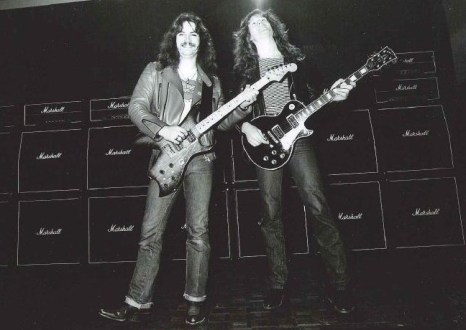
Listening back to Wildcat I didn’t realise how much punk had jumped into my head song writing wise. Well a rock voice on any song from Never Mind the Bollocks album would have turned that iconic punk album into a hard rock album. Steve Jones with his Les Paul and Marshall stack – had a great hard rock sound’.

MINGLES

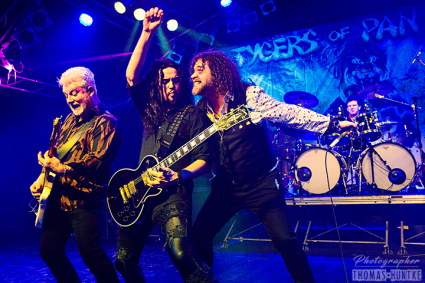
The Tygers were originally a four piece then changed to a five with the addition of guitarist John Sykes…

‘We recorded Wildcat in Morgan Studio’s in Wilsden, North London with Chris Tsangarides producing. We had just finished 11 days recording the album – which was very quick. We’d been playing those songs on Wildcat for two years on the road so we knew them inside out and for the recording process.

Chris put forward a few production ideas. For example, I played a guitar solo through a Lesley cabinet which is normally associated with keyboard players.

The top of the cabinet has horns inside and they spin when activated. So Chris had this idea of playing the guitar through it to see what it would sound like.

He was quite inventive, and it worked really well. I think we recorded the harmonic bit in Slave to Freedom that way and something else I can’t quite remember’.

‘1980 was a really busy year for us, we completed several tours supporting established bands. The Tygers went out with Magnum for three weeks in the March, they were promoting their new live album Marauder which Chris had just produced.

We then went out with the Scorpions on their Lovedrive tour, then we did the On Through the Night, tour with Def Leppard. There was three weeks with Saxon on the Wheels of Steel tour and we did shows with Iron Maiden and Whitesnake as well’.

scan0028

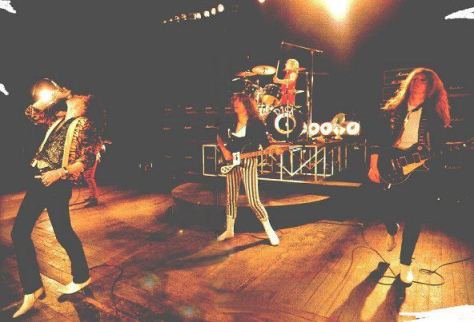
‘Apart from Magnum, all the bands we opened up for where two guitar bands. When I played a guitar solo there was no rhythm behind it so the sound would drop. It was felt that to give the band a bigger, fuller sound we needed to add another guitar player.

So our management and I.T.B (International Talent Booking) our agent down in Wardour Street, London said we think it would be better if the band added an additional guitar player. So after Wildcat was recorded we advertised and held auditions at Tower Bridge rehearsal studios, London.

About 80 guitar players were invited down. There were two that stood head and shoulders above the rest and that was John Sykes and Steve Mann, who had just come out of a band called Liar.

Steve went on to play with MSG and Lionheart who have just reformed. Steve now lives in Germany where he is a record producer. Steve played guitar and saxophone – John just played one hell of a guitar as you know.

John had everything, he was six foot tall, long blonde hair, stunningly good looking, incredible guitar player, great singer, good songwriter, although he never knew it at the time as he was just starting out – and the girls loved him, they fell at his feet.

He was so much better at playing the guitar than me I thought to myself, I’d better up my game here.’

Capture2

Was John in a band previously ?

‘He was in a covers band in Blackpool called Streetfighter, and they were fronted by bass player Merv Goldsworthy who is now in FM. Merv and I remain good friends both the Tygers and FM were on the Cambridge Rock festival bill earlier this year. Streetfighter were famed for their exceptional Thin Lizzy covers’.
(Streetfighter appear on a 1980 heavy metal compilation album New Electric Warriors).

‘John was at my house one day and I was showing him the root chords from the songs on Wildcat and he said in a cockney accent ‘Ere Robb I’m fackin’ sick of this I’ve got this fackin’ idea what do you think of this’. He played me some chords, I said ‘I really like that I’ve got something that will go with that’.

He replied ‘Fackin’ hell we got a song there, let’s go for that’. So we spent the rest of the day forgetting the set we were learning for the upcoming Wildcat tour and wrote Take It, which we recorded for the Spellbound album, unfortunately is the only song we wrote together’.

SYKES

Sykes went on to co-write and record two albums with the Tygers. ‘Spellbound’ was his first along with new vocalist Jon Deveril who had replaced Jess Cox. How did Jon Deveril get the job with the Tygers ?

‘John Sykes first gig was Reading festival, 1980 with Whitesnake headlining, there was 42,000 people there!

What happened was we had done the Wildcat tour, it was a sell out across the UK – Mayfair’s and Locarno’s and places like that, they all had a capacity of 2,000 people.

There was a big buzz in the music press about us, we were getting full page adverts in Sounds, NME, Melody Maker and Record Mirror. It was all going well, really well.

But there was a meeting with our management and Rod MacSween our agent who said ‘With the singer you have at the moment we can’t really further the career of the band outside the UK’.

So our management took the decision to change the line up even though Wildcat had been so successful. We took this forward and advertised for a singer.

We knew we were in a good position to get a great response because in the national charts Wildcat entered at number 13 and around us were the likes of Bowie, Aretha Franklin and Earth, Wind & Fire.

All those multi platinum artists and here’s the little ‘ol Tygers of Pan Tang from Whitley Bay hanging in there. We were hoping it would do well but never expected it to do that well – it was fantastic.’

‘We had a huge response for a new vocalist with well over 130 singers turning up. But again there was one who was head and shoulders above everyone else, and that was Jon Deverill.

A lad from the Welsh Valleys with a huge voice, he walked into the job really. So he moved up from Cardiff, his home city to the North East. Our management got him a place to live with John Sykes and we immediately started writing songs for Spellbound. So the Tygers story rolled on’.

‘We were living down in London and the Angelic Upstarts were down there at the same time. We were signed to MCA records and they were signed to EMI.

I remember Mensi their singer sold second hand jags to supplement his income. The drummer Decca would also make a few quid.

When the likes of Praying Mantis or Iron Maiden were playing at the Marquee he’d appear wearing one of those big long trench coats. He would walk around the punters and open up his coat like Arthur Daley and inside were all the latest EMI album releases. He’d sell them out of his coat ha-ha!

Obviously he had acquired them, ‘somehow’ from the EMI offices. It was hilarious to watch – and he always made a few quid.

They were lovely lads you know, I’ve always liked them.’

1981 was a very busy time for the band. They were still contracted to MCA and that year saw the Tygers release two albums.

‘Spellbound’ recorded in Morgan Studio’s in London produced by Chris Tsangarides and released in April. The Tygers third album ‘Crazy Nights’ was recorded at Trident Studios in London and produced by Dennis MacKay. It was released late 1981.

The more successful and commercial sounding album ‘The Cage’ was recorded in 1982. Extra songwriters were used resulting in a couple of singles that charted in the UK.

But there was another line up change. Fred Purser, formerly of fellow North Eastern band Penetration, was in on lead guitar…
‘John got the Lizzy gig because he wanted to push his career further forward. Unbeknown to us he auditioned for Ozzy first but didn’t get that job.

When he got back to the North East the news didn’t go down well with the rest of the band so we got another guitarist in.

From what I gather John’s stepfather, Ron contacted MCA and told them they shouldn’t drop John as he had great potential, which they agreed. So they set him up in a recording studio in Dublin to record a single. In the studio next door was Thin Lizzy.

Inevitably John met up and Lizzy and asked Phil if he would sing on, Don’t Leave Me This Way, John’s first single. Lizzy had just lost their guitarist Snowy White and there it was, the opening for John to join.

We’ve remained friends after everything that has happened. I’ll always have a soft spot for John’.

1328252480_l

After leaving Lizzy, Sykes went on to massive worldwide success with Whitesnake, then as a solo artist.

The Tygers played the iconic TV show The Tube, what are your memories of that day ?

‘Yes, it was Christmas ’82. I remember our crew had just loaded our full touring backline of 18 Marshall 4×12’s, stacked three high in cages and fourteen 100-watt Marshall heads onto the stage in Tyne Tees TV studio.

We were in our dressing room and in the distance heard our track Gangland playing, what’s going on here we thought it was getting louder and louder.

Then all of a sudden our dressing room door burst open and standing in the doorway was this huge, blonde, stripped to the waist, head banging monster. We were all shocked.

He had a big cassette player on his shoulder playing at full volume…’You guy’s fuckin’ rock I love you guy’s’. He turned around and walked back out. We looked at each other…‘Wasn’t that Dee Snider of Twisted Sister?

I’ll never forget that. We talked with them afterwards and they were fantastic, really brilliant. I got what they were all about, the dressing up and make up. Dee was really clever writing those songs, you know the big shouty anthems.’

TV SHOW

In 1982 Love Potion No. 9 was a hit in the UK charts, did you record many TV appearances for the promotion of the single ?
’We were at Newcastle Central Station two weeks running with our tickets in our hands ready to go down to do Top of the Pops, but both times we were told we are not being included in the show.

One show they said they had the full quota of metal bands, i.e. one! To fill the time and the other show was cut ten minutes short because of a Queens speech – and our spot was in those ten minutes.

But we did appear on TV quite a few times, I remember the Old Grey Whistle Test, The Tube, we did a programme called Something Else on BBC2, there was Tony Wilsons Pop World and we did Friday Night Live on Tyne Tees television. There were more I’m sure.’

You formed a band called Sergeant, how did that come about ?

‘Tygers came to an end for me around late ’83, I was still writing songs, I had a little recording studio to put them together. I had over an album worth of songs.

At this time I was still working with Brian Dick the drummer from the Tygers, he left the band at the same time as me. We recruited a singer and bass player, and named the band Sergeant.

We recorded a 4 track demo at Lynx studio in Newcastle, which was owned at the time by Brian Johnson from AC/DC. The manager of Sergeant, Colin Rowell and I, went down to London and hawked the demo around all the record companies.

Colin had a lot of contacts in the music business. He was working as the stage manager for The Tube music programme on Channel 4 at the time.

There was interest from a guy called Dave Novak head of A&R at CBS records. He came up to see us rehearsing in a hall near Jesmond, Newcastle. He liked us and said why not come down to London play a show with Mama’s Boys at the Marquee and I’ll bring Muff Winwood along, the CEO of CBS.

We’ll do the deal in the dressing room. The initial advance was going to be £60,000.’

‘With this good news we set up a meeting at the Egypt Cottage pub in Newcastle with the other lads. They said great but, ‘We’ve decided we don’t want Robb in the band anymore’. I never got to the bottom of why they didn’t want me in my own band!

I left the pub and Colin walked out with me telling them that ‘The record contract is walking out the door as well’. They were shocked and didn’t expect that, they thought Colin would just carry on as there manager.

They apparently replaced me with a guitar player plus a keyboard player! Nice to know it took two to replace little old me! But they only lasted four or five shows. They supported Accept in the UK, and then disbanded’.

‘Not long after that I got a call from Jess Cox. We met up and eventually ended up recording a song of mine called ‘Small Town Flirt’ which Jess released through the Neat record label as he was working with Dave Woods the label owner at the time.

He also re-released a whole load of other Tygers early demo material. But I wasn’t happy at all with the situation and I just got sick of it all so that’s when I ducked out of the music industry.

Until, out of the blue, I got a call in 1999 which resulted in the Tygers, well I say Tygers !

Jess told me he had called all the previous members and asked them if they could take part in the reformation. Apparently only Jess and I could do it as everyone else had commitments they couldn’t get out of. This is what I was told.

So we hired three fantastic musicians, Gav Gray, Glenn Howes and Chris Percy who were in Blitzkrieg at the time I think, and asked if they could help out.

We actually were the Friday night headliners at the Wacken Festival in Germany. Saxon and Dokken were on before us for goodness sake!

We played in front of 22,000 people that night. I got so badly bitten again by the rock’n’roll bug I knew I just had to put the Tygers back together again somehow.’

Fast forward and the album Ambush was released in 2012 and then in 2016 a self titled album…

’That went into the British charts at number 24, the Danish charts were the record company is based, at 13. The album has done really well.

In 2013, Dean who was our longstanding guitarist from 2000, a good friend and a great player decided he wanted to do other musical things and left so we auditioned and now we’ve got Mickey McCrystal on guitar who is a great guitar player, six foot tall, he’s got the looks and an amazing career in front of him – in the spirit of John Sykes!

Tygers are run as a family, and just like a family we all look out for each other and we get on really well. When on tour we’ve got a reputation amongst hotel managers of being a nice set of lads, we don’t tear the place up – anymore, the hotel managers tell us we can book with them again and again.

Gone are the days when we would set off fire extinguishers on hotel landings and super glue TV’s in the bath!’

Tyger 11

What is the feeling in the Tygers camp now compared to 1980’s ? 

‘Tom Noble is back managing us, he first managed the band from 1978-82. He saw us play about three years ago in Rome, we had a drink after the show and we said we were putting a new album together.

He asked if we wanted any help. Perfect timing if you ask me. So, it came at a good time for both of us life is SO much easier with Tom.

It’s much better now, back then you were constantly chasing fame and glory, the autographs, photographs, interviews were all great but having to prove yourself all the time, the competition and ego’s – you couldn’t get away from it.

Thing is, you wanted to be recognised, people buying your records meant you were doing well and you were alive. It was a double edged sword really.

However today is a totally different story, we are very pleased that people still choose to come and see the Tygers. Meet and greet is a massive part of our night and we look forward to it, say hi to the fans, sign a few things and talk to people.

The pressure and ego’s are gone it’s so much more relaxed and enjoyable.’

10264041_221452728207356_4949003640478777266_o

What does music mean to you ? 

‘I’ve loved every second of my musical career, the whole ride has been like being sitting at the front of a giant roller coaster, hands up, screaming with delight!

Music is a way of life, it’s a wonderful thing, and it can be your best friend. You can turn to music at any time of your life and it can be a great comforter. I absolutely love it.’

Tygers of Pan Tang are on a UK tour during November 2017. For further info and tour dates contact the official website http://www.tygersofpantang.com

Interview by Gary Alikivi   September 2017.

Recommended:

Brian Ross SATAN/BLITZKREIG: Life Sentence, 20th February 2017.

Lou Taylor SATAN/BLIND FURY: Rock the Knight, 26th February & 5th March 2017.

Micky McCrystal, Cat Scratch Fever, March 17th 2017.

Steve Dawson SARACEN/THE ANIMALS: Long Live Rock n Roll, 2nd April 2017.

Martin Metcalfe HOLLOW GROUND: Hungry for Rock, 18th June 2017.

Steve Thompson,( NEAT Producer) Godfather of New Wave Of British Heavy Metal, 27th June 2017.

Richard ‘Rocky’ Laws, Tyger Bay, 24th August 2017.

Dave Allison ANVIL: Still Hungry, 12th November 2017.

TYGER BAY – interview with Richard ‘Rocky’ Laws, Tygers of Pan Tang original bassist

In 2016 Tygers of Pan Tang released an album of new tracks mixed by Soren Anderson, filmed video’s for the single’s ‘Only the Brave’ and ‘Glad Rags’, completed tours around Europe, including dates in North and South America – not forgetting brewing their own beer -Tyger Blood !

This year they continue to support the album with UK dates arranged for November.

But way back in the 1970’s in the small seaside town of Whitley Bay in the North East of England…

‘I think it was about 1976 when I met Robb (Weir, guitarist) and Brian (Dick, drums). I knew Brian through some other musicians I used to hang out with. Drummers were rare beasts in those days, especially one’s as good as Brian so I made sure I jammed with him as often as possible.

I met Robb when someone gave me his telephone number as he was interested in getting a band together, actually we didn’t start playing together at first. I started to roadie for his punk band first, they were called Trick’.

READING (1)

Who were your first influences and how did you get involved in playing music. Was there a defining moment when you said ‘I want to do that’ ? 

‘I wanted to be in a band from a very young age. A live band played at a Christmas party for kids where my father worked. This would have been in the sixties so they were a bit like The Beatles and had red guitars which I was fascinated by.

I got a very cheap acoustic guitar as a Christmas present but didn’t know anyone who played guitar or could teach me and the few lessons I had only taught stuff I didn’t want to play.

It was only when I was given a copy of Space Ritual by Hawkwind and heard Lemmy play bass, especially Lord of Light, that I knew I wanted to play bass guitar.

So I got a cheap bass and started learning bass lines by ear. So yeah, as a bass player it was definitely Lemmy that got me playing’.

309384_10150369755546321_1383731983_n

When did you meet up with the Tygers, when did you start playing gigs and what venues did you play ?

‘When Brian and I decided we really wanted to get a band together I suggested we try jamming with Robb. It was an instant success!

We started writing songs and looked for a singer and a guy called Mark Butcher joined the band. We did about 25 shows with Mark.

After Mark left we had a bit of a hiatus then got back together and Jess Cox joined as singer and we started gigging regularly.

There was no real metal scene around Newcastle at the time. There were no regular venues for local metal bands but there was a metal audience for bigger bands who played the Newcastle Mayfair or City Hall.

There were three metal bands already playing locally when we started. There was Raven though they had not really hit on their athletic rock style at that time.

There was Axe, who eventually became Fist, and there was Fastbreeder who now would be most notable for having Andy Taylor on guitar, later he joined Duran Duran !’

‘What separated us from these bands was that they all predated punk rock whereas we were starting during the punk scene and were heavily influenced by it.

Although there was not a local metal scene apart from the three bands I mentioned, there was a thriving local music scene generally in Newcastle in the mid to late 70’s.

Many pubs had a room upstairs where bands could play and take money on the door. I can’t remember all the pubs we played but the Gosforth Hotel and the Bridge Hotel were ones we played regularly, as well as pubs further afield in and around the North East.

In fact the Tygers first ever gig was at the Coach and Eight in Durham. As well as pubs which didn’t pay very well we got a club agent so we could play the CIU working men’s clubs’.

‘Often these clubs, as well as serving the excellent Federation Ales would have rock nights where we could play, even playing our own material.

You had to play two one hour sets, so you had to have quite a lot of material and obviously you had to play some covers. We played AC/DC, Ted Nugent, Motorhead, Status Quo, ZZ Top among others.

One club we played was Sunderland Boilermakers, though playing in Sunderland was always an adventure for us Whitley Bay boys as of course they never clapped, something which Sunderland was famous for.

Though you were still expected to do an encore, which they called a false tap, on the basis that if you were still alive they must have liked it!’

MINGLES

One of Tygers of Pan Tang early gig’s at Mingles Bar, Whitley Bay.

How did the record deal’s come about with NEAT and MCA ?

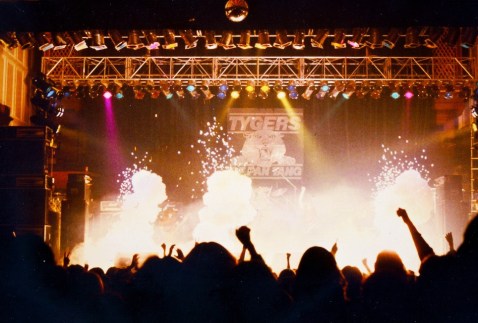
‘We invested in some pyrotechnics which always ensured a good reception in the clubs as they were a bit unusual. We played schools as that way you could play to kids who couldn’t get into the pubs and clubs.

It was at a show at Whitley Bay High School where we were seen by David Wood of Neat Records. His kids went there and I think having a fan base with school age kids was what helped our first single to sell.

A big help to our early progress was doing a residency every Wednesday night at Mingles nightclub in our home town of Whitley Bay. It was already a venue but I think even after we stopped playing there it carried on being a sort of Heavy Metal club.

Our biggest local gig before we had a record deal was when we headlined the Mayfair Ballroom in Newcastle. It was a bit of a disaster as we had loads of technical problems and probably because I was nervous I had got completely pissed and could barely stand up!

Still we attracted 1,500 people which was a lot for a local band and due to a misprint this got reported as 15,000 in the industry magazine Music Week and we got a record deal with MCA Records as a result!

15622200_1130366760410682_4321517022210206400_n copy

Did you come across other NWOBHM bands ?

’The first support we did was Iron Maiden for two nights at the Marquee in London. This was the first time we had travelled any distance to play and the first time I had ever been to London.

The venue was packed and they were amazing gigs. Maiden were unbelievably good and you could tell they were going to be big.

We did a support tour with Magnum which was our first national tour. Later they supported us on a UK tour and they weren’t very pleased about it.

We also supported Def Leppard and Saxon. Saxon were very good to us as Motorhead had been good to them in the same circumstances.

Saxon were my favourite NWOBHM band and when we toured with them we helped out in their show by doing things like operating smoke machines, dry ice generators and spotlights just for fun.

We also supported Scorpions at quite large venues and it was a steep learning curve as we were not used to big venues. They weren’t impressed by our first couple of gigs and I think we were close to being sacked off the tour but we had a storming gig in Glasgow and then everything was fine.

We learned a lot from Scorpions as they did everything very professionally’.

294227_10150369755166321_55953450_n

What were your experiences of recording ?

‘I would be a bit hazy on dates! We first recorded at Impulse Studios in Wallsend. In fact our first session was doing three tracks for which we got cheap studio time by doing them as a competition entry for the Vitavox Live Sound Awards, this was David Wood’s idea.

This would have been in 1978 I suppose. We hadn’t really thought about the Awards competition, we even put false names on the entry form. But actually found that we had to play at the competition and won it!

We did two other sessions at Impulse one of which was just to record our live set so we just set up and played the whole set live without stopping and no overdubs.

Much of this was eventually released as the First Kill album so those tracks would be a pretty good example of what we actually sounded like at the time.

We also did a session to record the Don’t Touch Me There single with two b side tracks, which was our first single and was released on Neat. All of the Neat stuff was produced by Steve Thompson’.

(Featured in an earlier blog The Godfather of North East NWOBHM in June 2017)

‘I don’t think he had worked with a band who knew so little about music, as we couldn’t have played a scale between us!

After we got the record deal with MCA, at first this was through Neat. Well Neat wanted us to record our first album in their studio at Impulse in Wallsend, but the producer Chris Tsangarides came up to look at it and said he couldn’t work there and wanted to use his usual studio which was Morgan Studios in London.

That was where we did the Wild Cat and Spellbound albums.

We actually demoed Spellbound at Guardian Studios in Durham. The demo’s were the first time we had recorded with new singer Jon Deveril and new guitarist John Sykes both albums represented an amazing leap forward for the band.

When I first listened to the demo’s at home after the sessions, I couldn’t believe how good this line up sounded’.

15977117_1826578387581662_572578293839672859_n

‘Recording Wildcat and Spellbound was a great experience but there was no time for self-indulgence and both albums were done in a couple of weeks. Guitar, bass and drums were recorded in a couple of takes, then guitar overdubs and vocals.

We did get to add a few extras like kettle drums and bass synth pedals, I was a big Rush fan at the time!

‘The next recording we did was with a mobile at a gig in Nottingham at the Rock City venue. For some reason which I still don’t know, John Sykes listened to it and said it was unusable and it got forgotten about until it was released some 20 years later.

I think it would have made a massive difference to our career had it been released at the time because instead we had to do the Crazy Nights album, and we weren’t ready.

We didn’t demo that album and quite a lot of it was written in the studio. It was recorded just bass and drums with a guide guitar and later guitars were added then vocals. It wasn’t a very good way to record because we had never actually heard the songs before we recorded the basic tracks as there were no lyrics, just a chord progression or riff.

Only a couple of songs were actually written properly before recording. There are virtually no overdubs and no backing vocals.

We hadn’t used Chris Tsangarides, partly as we just wanted a change but partly as he wanted a writing credit on a track on Spellbound which annoyed us.

Anyway we got in Dennis MacKay on Gary Moore’s recommendation but he was totally wrong for the band. He was doing a Stanley Clarke album in the States at the same time and was flying back and forwards.

It was also our own fault as we were partying too hard at that point and not taking the music seriously enough. Still there are some good tracks on the album.

Crazy Nights was partly recorded at Trident Studios in London which closed down straight after though I don’t think this was our fault. The vocals were done on the Virgin recording studio on a boat on the Thames!

303858_10150369755376321_859150606_n

After the first three albums what was the band’s approach for the fourth ?

‘After the problems with Crazy Nights we decided to get serious and get a commercial producer in and this was Peter Collins. He had never done rock before but he must have liked the experience as he went on to do Rush and various other rock bands after us.

He came to a rehearsal said he couldn’t believe his first experience of hearing loud rock guitar in a confined space!

Our first recording with Peter was Love Potion No 9 while John Sykes was still in the band. Love Potion No 9 got a lot of radio play and was our biggest single. Obviously it is a cover but it doesn’t sound much like the original.

It was suggested by Peter Collin’s manager who was Pete Waterman who later became part of Stock, Aitken and Waterman of Kylie Minogue fame.

At that point John Sykes left the band to try for the job with Ozzy after Randy Rhodes died. He didn’t get the job but when he asked to come back we said no and looked for a replacement.

At first Fred Purser was just supposed to be temporary to do a French tour we had booked but we got on so well we asked him to join full time.

Fred had been in local punk band Penetration but in fact he was quite a sophisticated musician, at least compared to the rest of us’.

Tygersofpantang-the_cage1

‘We recorded The Cage with Peter Collins at Marquee Studios in London. We had picked some cover songs to do after the success with Love Potion and there were also some co-writes with people outside the band and Fred had a few songs so it was a different pool of songs to our usual stuff.

We still didn’t get that long to record and it was the usual couple of weeks to do most of it but Peter Collins was a real slave driver so we got a lot done.

The Cage was a commercial success and was our biggest album and we went to Japan and did a big UK tour and did supports and some headlining in Europe’.

317167_10150369754521321_615293133_n

What festival’s did you play, what other bands were on and was there any stand out moments ?

‘Festivals in the UK in the late ‘70s and early ‘80s were not like they are now and were pretty rough and ready. I’d say they were a bit like the wild west and from the stage you looked out on thirty thousand people seemingly all throwing cans of piss at each other. It was pretty scary.

The only UK festival we played was Reading which we did twice. The first time was 1980 it was John Sykes first proper gig with the band. It was mega exciting to do though we were well down the bill and must have been playing early afternoon.

The second time we played Reading was in ’82 after The Cage was released and was scarier still as by this time we were well up the bill. In fact we had been given a very strange spot.

There were two stages but these were for the same audience and they were set apart so they could be setting up one bands gear whilst another played.

One stage was slightly smaller than the other so the top of the bill and second on the bill played the bigger stage and we had to play between them on the second stage. Therefore we were sandwiched between Blackfoot and Iron Maiden.

We knew how good Blackfoot were and were not keen on the idea of going on after them as they were a bigger band than us. We contemplated not doing it but a majority of the band wanted to do it so we went ahead.

Our agent said the secret was to start playing the moment that Blackfoot left the stage so that is what we did and it was a fantastic success’.

READING82 copy

‘Reading in 1982 was still a bit lawless and during the performance I did get hit by a bottle though I barely noticed it at the time and there was a large bruise afterwards.

Backstage was a bit different, before our performance we were eating strawberries and cream with Brit Ekland!

In Europe we did a few festivals and we did two in the Netherlands a week apart which left us staying in Amsterdam for a week with nothing to do but enjoy ourselves!

Festivals in Europe were different to UK festivals as they were not specific to a genre of music.

So in one festival we played with The Beat and Killing Joke, at another it was Dexy’s Midnight Runners and at a festival in Sweden we headlined one night and Simple Minds headlined the next night.

In the UK the different audiences would have killed each other but they all got on fine in the festivals in Europe’.

TV SHOW (1)

The Tygers recorded a few TV appearances notably The Old Grey Whistle Test and The Tube. How did they come about and what other bands were on ?

‘There wasn’t as much opportunity to be on the TV in those days. You had to have a hit single to get on Top of the Pops and we were one spot away from that with Love Potion but never actually made it.

Our first TV was in Manchester on a show presented by Tony Wilson who went on to start the Factory label. This was on the Wild Cat tour and is on YouTube. It is the only film of us with Jess Cox and we did Euthanasia.

We did a local North East TV show but I can’t remember the name of it. It was a kind of chat show and we were the band that played in the middle. We did Don’t Stop By off Spellbound but whilst there are some photo’s there is no surviving film.

After Crazy Nights we did a TV special about Viz magazine. The show was called Something Else and was a kind of magazine show that each week did something about a particular city. The one on Newcastle centred on Viz. The two bands on were us and Angelic Upstarts who were great’.

‘The music bit was filmed in London at BBC TV Centre and we did Raised On Rock and Love Don’t Stay these are both on YouTube. Whilst we really liked Viz, they didn’t really like us and I know that Simon Donald of Viz didn’t want the Tygers on but was told he had to have us!

We then did the Old Grey Whistle Test. The other band on was someone from Wings but I can’t remember who they were.

We did Running out of Time from Crazy Nights and Love Potion No.9 which by then I think was out as a single. This was our last TV with John Sykes on guitar.

By the time we did OGWT the format had changed a bit from the early days and there was an audience of sorts but when they applied for tickets they didn’t know who was going to be playing. It was just a generic TV audience and not fans of the band.

After filming we went out for something to eat and were stopped by the police as apparently, we fitted the description of people they were looking for in connection with criminal damage. We were able to give them an alibi !’

‘Our final TV performance was The Tube in 1982. It was one of the early episodes of The Tube and we were on with Iggy Pop and Twisted Sister.

Unfortunately Iggy Pop was a total dick and a complete diva and by the time he was happy with his sound there was no time for anyone else to sound check.

It was great meeting Twisted Sister. They were a fantastic band, great performers and we felt very reserved and British in comparison. They were all absolutely enormous as well, it was like meeting a bunch of wrestlers!

I think The Tube was the last time the version of the Tygers I was in played together. We split up shortly after. We were not in a very good state of mind but the film which is on YouTube is better than I remembered it at the time.

As to who arranged the TV appearances I suppose it was our managers or the record company. I know our managers used to badger local TV to put us on as we were a local band’.

10435136_10152515281303326_1630081682184847736_n

NWOBHM, did you realise the impact that the genre of music would have ?

‘NWOBHM was quite big at the time and had pretty much an instant impact but I certainly didn’t realise that anyone would be talking about it in thirty years time.

Or that it would directly influence the future of metal by inspiring the thrash metal bands that would come after it.

The first time we heard about NWOBHM was Geoff Barton’s piece in Sounds Magazine. At that point we were doing quite well on the local scene.

There was a local indoor music event called the Bedrock Festival at the Guildhall in Newcastle and we headlined one of the nights. There were many local band’s on so I would say we were quite a big local band.

However, the problem was how to expand outside of the North East and the NWOBHM was that opportunity’.

NWOBHM

‘When the first article about Def Leppard and the second about Maiden was in Sounds magazine our manager sent Geoff a tape saying that we were a similar sort of band but in Newcastle rather than Sheffield or London.

The next week there was a sort of round up of heavy rock and metal bands around the country and we were in that.

Our single started selling outside the North East and we started to get national attention. I don’t know if any of this would have happened without the NWOBHM.

Obviously there was a few NWOBHM bands at the start including Maiden, Saxon, Leppard, Diamond Head and Girlschool but I think we kind of stopped thinking about being part of the NWOBHM once we got to release our second album.

I was aware of Venom of course as we knew Conrad (Cronos) quite well from before Venom and in fact I went to their first gig with Cronos.

I just didn’t understand it at all though, of course they were right and I was wrong as they went on to be probably the most influential NWOBHM band other than Maiden’.

JAPAN YAMAHA GUITARS

Can you remember when the Tygers called it a day?

‘Unfortunately in the success of our fourth album The Cage lay the seed of the bands demise. MCA records wanted to do more covers and more rocked up versions of soul classics and we didn’t want to do it.

We had a four track machine on which we demo’d some songs written by Fred but this did not change MCA’s mind and whist other companies were interested in the band they were not interested in buying us out of our deal with MCA.

However the fifth album demos were interesting as we recorded live drums and everything as we would in a studio but on the four track. We turned one of the rooms in my parents’ house into a studio and put mattresses on the walls and used the next door room as a control room.

Fred was actually a pretty good producer and now owns a studio in Newcastle. Anyway, as a result of all the frustration we split up as there seemed no way forward.

Apart from Venom I was completely unware of all of the bands who came along as the kind of second wave of NWOBHM or that NEAT had become some sort of NWOBHM label.

The Tygers thing all happened between ’78 and ’82 and then it was over and I completely lost touch with the whole scene that carried on after that’.

302369_10150369753601321_1011548254_n

Mischief or Madness, have you any funny stories from being in the band ?

‘There is a rule among bands that what goes on the road stays on the road so there is a lot I could tell you about which I am not going to tell you about. But a couple of funny things come to mind.

We were always looking for practical jokes to play on people or each other and when staying in a large hotel in France, having returned from the gig Brian and I noticed that people who wanted their breakfast in their rooms hung a cardboard notice on the outside of their doors with what they wanted for breakfast, and more importantly what time they wanted it. So we went round and changed all the times to 6am.

The next morning pandemonium ensued as half the hotel were woken for breakfast several hours before they wanted to be, including our band mates and managers who were traveling with us’.

12993389_10204546594385037_8852942253348569229_n
‘Another time whilst recording at Morgan Studios we knew our manager was coming to visit the studio so we set up pyrotechnics just inside the studio door and got reception to warn us when he was coming in.

He opened the door and found himself in total darkness and then a few seconds later a whole bank of magnesium explosions went off! He didn’t know what had hit him.

We didn’t always know when was a good time for jokes and when wasn’t. Jon Deverill was doing vocals at the studio and the rest of us were at the apartment we had rented so we decided to set up a few surprises for when he got back.

What we didn’t realise was that he would actually get back at about 4 in the morning after a particularly gruelling vocal session, was exhausted and was therefore not really in the mood to have a bucket of water on his head from the top of the door, his bed sheet folded over so he couldn’t get in properly, and the legs of his bed collapse once he was in it!’

11707573_10204622138014393_5547888501852041039_n

Current Tygers bassist Gav Gray with Richard Laws.

What are you doing now and are you still involved with music ?

‘I am involved in the music business as after the band I qualified as a lawyer and started working in the music business and have been doing that for the last 30 years or so.

I tend to represent companies rather than artists and whilst I still do a lot of record company and publishing company work, the industry has changed in the time I have worked in it. There is a lot more brand related work and merchandising.

I don’t go to many gigs these days as my days in the Tygers left me with permanent hearing damage and some gigs now are so loud it is actually painful unless I wear hearing protection.

I did go to see the current line-up of the Tygers about a year ago and it was great to see them as they were really good. It was great to see Robb again as I hadn’t seen him for 30 years though I am now in touch with some of the old band on social media and speak to Robb on the phone occasionally.

I still play music though I didn’t for many years. I only started again because at one of the places I worked someone had the idea of putting a band together for the Christmas party so I dug out my bass and we ended up doing quite a few private parties just playing covers.

Now I just play for my own amusement and guitar rather than bass, though I still have my old Rickenbacker bass from the Tygers days. At least I know some scales now!’

Interview by Gary Alikivi July 2017.

Recommended:

Micky McCrystal, Cat Scratch Fever, 17th March 2017.

Steve Thompson, Godfather of New Wave Of British Heavy Metal, 27th June 2017.

Robb Weir, Doctor Rock, 5th November 2017.

LIFE’S A BLAST -Making records on Tyneside

Ged:The New York Dolls would only record on vintage equipment, so we had to do numerous trips down to London to get old drum kits, old amplifiers, old recording machines, proper vintage stuff from the 60 and 70’s.

Actually, the piano in the studio now is the one we brought in especially for them. It’s about 120 years old and they just left it there because it took eight people to bring it in, so they weren’t going to take it home with them !’

Sitting down in the boardroom with owner Ged Cook and studio manager Lisa Murphy, they introduced me to the world of BLAST recording studio in Newcastle…

IMG_2137

Ged: ‘Blast is international. We can attract bands from all over the world it’s an international brand, it’s got a reputation. We’ve had bands here from Black Star Riders and Therapy? who have recorded all their albums here from 2008. They love the place and they are coming again soon.

We had the New York Dolls here for a month. We’ve also had Take That here for a couple of days’.

Lisa: ‘We also have local bands just working on a project, we’re open to support local music as well as the bigger names’.

Ged: ‘Sometimes you can’t tell people there’s a famous band in the studio. With Take That we had a contract saying we couldn’t mention it. We had three blacked out limo’s and chauffers standing in the courtyard, but we had to shut the gates ‘cos the fans got to know’.

Lisa: ‘Mark Owen tweeted a picture of himself in the studio and people could tell it was at Blast. He was told off and sheepishly replied ‘I’m sorry guy’s, I’m sorry’. We all laughed about it really’.

Ged: ‘We are a bloody good recording studio for band’s, but we also do some voice over work like we had Aaardman Animation here a few year ago and we work closely with the broadcasters Sky, BBC, ITV and Metro radio’.

IMG_0042

What is the logistics for a band who don’t live in the area?

Ged: ‘Most of the bands who come here have record labels or management and the fee’s would be sorted out with Lisa. They might also want catering and accommodation which is strictly down to their budget.

They can go from the Premier Inn, to the Hilton or down to Seaham Hall. Some bands do it themselves and they might stay at a friends house, it just depends on what they can afford.

Maybe the band need extra equipment for the recording session, again Lisa and I can source that for them. We’ll always work around the clock, and find out what we can do for them’.

Lisa: ‘Yeah let’s face it, it’s not 9-5. We might just be working with a band for a day but we are really flexible that’s the way the industry works’.

Ged: ‘Our record label brought The New York Dolls to Newcastle. It was original members David Johannson, Sylvain Sylvain and from Blondie was Frank Infante. Really lovely people.

We hired a big gated house over in Gateshead with a swimming pool, cinema room the lot, because the budget was there for them.

We hired a bus to bring them over here each day. They started recording at 10 o’clock at night and finished at 4 or 5 in the morning, it was just the way they liked doing it’.

61ulLXwtBPL
‘The song writing process was absolutely fantastic. They had brand new material and needed to try it out. Well The Cluny bar is just near here so they put on three live shows and sold out in ten minutes. People from all over Europe came over, queues outside.

It was great, a hot summers night, they just walked out of here, onto the stage and tried the songs out asking the audience if they liked them or not, it was a great night !’

hqdefault

What sort of prices do you charge to record in the studio?

Lisa: ‘We are more expensive than some other studios around here but we justify that with the quality recording and production available to the artists who record here. The live room and the desk is quite different to anything that is available around here’.

Ged: ‘For what you get here would cost you around £1,000 per day in London. That’s the beauty of Blast being in the North East ‘cos you get the local bands wanting to use the same studio as bands like Black Star Riders. They don’t have to go to London or New York they can come to a place like Blast’.

Lisa: ‘They can also request the same engineer, to get to use the same microphones, the same cab’s, everything, it’s pretty special’.

Ged: ‘From the rock and heavy metal lad’s based in the North East we had Tygers of Pan Tang doing their latest album here so did Avenger and Tysondog who I have connections with.

Andy Taylor who produced the Power Station album and is recording another, said our live room gives the best drum sound he has ever had. And he has done Duran Duran, The Alarm and Then Jerico albums. He did the first Thunder album, a lot of rock bands.

Everyone who comes in here has their own way of recording and Andy loved recording the vocals in the toilet…yes really. But yeah what do I know, I mean he’s the one who’s sold millions of records’.

IMG_0053

A lot of musicians use home recording equipment, what do Blast offer that is different?

Lisa: ‘The way technology is moving it’s going software based but there are still people who want to use vintage gear. We do have producers who want to do parts of their recording here, maybe a drum track or a vocal track or orchestral stuff.

They need to do that in a controlled live space which you can’t replicate with a home studio.

In our studio we have some pretty special outboard gear too which is a big selling point. People still want to use these things, not just the software version, and they can hear the quality of what comes out of getting hands on in here’.

Ged: ‘The way the music industry is now is that a lot of people record in the house and that’s fine ‘cos there is a lot of great kit out there but you will never replicate brilliant microphones and our live room.

We had Luke Morley from Thunder here last year he set up his two amps and cranked off a big sound on his guitar which you can’t do in your bedroom. That’s what we do here, that’s what you pay for’.

IMG_4039

Who works in the studio?

Ged: ‘It can work a couple of ways, the Dolls brought their own guy over who has worked with The Killers or we use our own experienced engineers’.

Lisa: ‘It’s down to budgets and music genre’s where we can match the right engineer to the right job. It was one of ours who tracked up for Take That. Engineering is some times about relationships.

You’re dealing with individuals and their sound in really important to them – so having experience with developing that sound helps’.

Ged: ’Some of the younger bands have some great songs but need help from our experienced engineers to make them sound good. They need that because there is so much out there, so much content. It’s a fight to be listened to and to be heard.

Our engineers are the best in the North East and help them as much as they can’.

Lisa: ‘My background is education so I am keen on bringing in new talent. There are a number of venues in the North East training a lot of people on music courses.

We have good relationships with the colleges and Uni’s so we can bring in degree students to assist with engineering in appropriate jobs. That way we are developing home grown talent and giving them a foot on the ladder.

It’s important to add the ‘who you know’ to the ‘what you know’, the contacts are just as important as the music course qualification.

To have the experience of sitting in when a band is being recorded is vital. We also offer workshops and masterclasses to develop skills for the industry’.

IMG_4040

Sadly, music can be a throwaway object now.

Ged: ‘You’ve hit the nail on the head there, you used to buy album’s before, now you buy songs. Some people just download songs and in some cases not knowing who the bands are’.

Lisa: ‘Some of those songs haven’t been written by that artist, they’ve overlaid the vocal that’s all. The whole thing can be turned out in days and go worldwide – as you know the internet has completely revolutionised everything we do.

Sadly, some of the modern music industry is about fame rather than actual musicianship’.

Ged: ‘It’s not what it used to be in the industry, there used to be big budgets. The trend now, if a band are lucky enough to get a big advance, is try to keep as much of that themselves and record as much of the album themselves in the house, then come to places like Blast for final recordings.

There is some bigger bands who can come in from the very beginning of the recording process but it has changed a lot in the last 10 years. Not for the better because to a trained ear you can hear programmed drums and some of those bands can’t play it live’.

Lisa: ‘Some bands now are playing live to a click and a full backing track. Sometimes I look and say where’s the keyboard player? I don’t see any strings, where are the backing vocals coming from? It’s a new sort of art really which is mainly found in pop music’.

Ged: ‘Sometimes we use the modern technology to our advantage by an engineer using Skype talking to an engineer in say New York where they are working on the same recording project’.

Lisa: ‘Yes by using Pro Tool’s in the Cloud you can have numerous artists in various locations at one time working on the same project. That’s using technology in a positive way because it can be about the logistics and cost.

The band can have members living all across the UK and getting together is a total nightmare to arrange. So they will remotely rehearse and record but come together to tour for a week or so. It’s just the modern world and adapting to what works best’.

Ged: ‘Yeah but I’m old skool like ‘get in the same room’ haha. We had Therapy? in here a week before they recorded. They live all over the UK but make sure they rehearse beforehand, then come here for pre-production, just blasting through the songs for a week, then record. That’s how I would do it to be honest’.

Why would a famous songwriter, musician or band come up to the North East to record?

Ged: ‘Basically this cost a million pounds to put together. It’s the best studio in the North, not Newcastle but the North. Everybody we’ve had here from outside the area, Black Star Riders, Take That, New York Dolls were blown away by the friendliness of the place.

Andy Taylor has been all over the world but loves coming home to get the geordie back into his veins haha. Therapy? will not record anyway else, they love Newcastle’.

Lisa: ‘We’ve got amazing musicians up here who I can call upon when a band or songwriter needs a certain sound, bit of keyboards here that sort of thing, same for our engineers’.

Ged: ‘We’ve had musicians from around the country, we had a session the other year with Spike from the Quireboys on vocals, Luke Morley on guitar, Simon Kirk from Free and Bad Company on drums, and the keyboard player from Magnum. They were here for a week. Simon Kirk loved walking around Newcastle, they all loved it!’

Lisa: ’It’s like it’s a hidden gem up here and we are getting the story of Blast out there. We’re very competitive price wise and want people to come here and fall in love with the North East’.

IMG_0051

For more information and rates for recording sessions check out the website http://www.blast-recording.com

Interview by Gary Alikivi June 2017.

THE GODFATHER of the North East New Wave of British Heavy Metal, interview with songwriter/producer Steve Thompson.

Steve Thompson has had one hell of a career in the music biz, from songwriting with John Verity and Glen Ballard, to having songs recorded by artists Elkie Brooks, Sheena Easton and Celine Dion to producing heavy metal bands Venom, Raven and Tygers of Pan Tang.

Plus working with a whole load of names including Pete Waterman, Gus Dudgeon, Rodger Bain and The Hollies.

prof-hm

People say of most decades, ‘if you remember it, you weren’t there’. I remember it all right but much of it is blurred by the passage of time, the speed at which things were happening, and of course the other ‘stuff’ that renders your brain cells a little less active.

I’m afraid I have forgotten some of the songs I cut during my time as a heavy metal producer. I still get business execs in suits coming up and telling me that they were once in a band that I produced and how this happened and that happened during the sessions.

I can’t remember it all but I always tried to make things happen, mostly laughter’.
steve

Where did it all begin ?

’I started out in the real home of heavy metal, the Steel Works! Like all the kids in my town, I went straight from school into Consett Steel Works. With three other steelworkers we formed a band called Bullfrog, and served two apprenticeships.

One of them by day working in the steelworks, the other by night playing in the pubs and clubs of the North East of England. That was my first stab at the music industry.

Bullfrog put out one single with Cube Records and it didn’t do anything. But over forty years later it’s resurfaced on a compilation album called 20 Power Glam Incendiaries!’

Who were your influences ? ‘Records I was fond of in the 60’s were The Beach Boys. Brian Wilsons skill in making records was unbelievable. Later I got to work with The Hollies, The Searchers and Colin Blunstone who I admired when I was young.

I used to listen to the radio and they were so far away like gods playing this music you know. But the thing that got me into playing guitar was seeing the everyday older guys around town playing guitars, just ordinary people’.
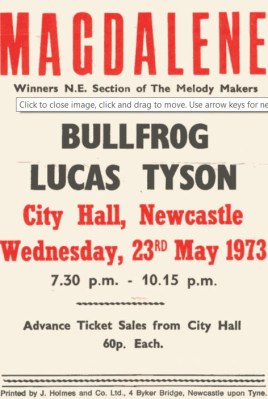
city-hall

‘Bullfrog supported a lot of bands like Wishbone Ash, Vinegar Joe, Edgar Broughton that type, we also did a lot of the same venues as Beckett. It was The Rex in Whitley Bay where I met Brian Johnson in a band called Jasper Hart.

The Rex had two stages and whatever band turned up first, went on first. So we used to drive around the venue until we saw the other band, and get there after them to make sure we headlined haha’.
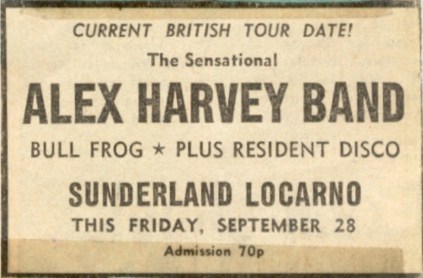
SAHB

‘On October 10th 1974 I got a call from our manager to say there was a gig going that night supporting Wishbone Ash could I get the band together for the show. I rang round everyone including the roadies and we were ready to rock.

When the call came in I had been dying my platform boots – well it was the 70’s. I fancied green but because of that call, in a rush I had turned out that night with one green boot and the other still the original cream colour.

The show was at Newcastle’s Odeon Cinema, the one and only time we ever played there’.

‘One of Bullfrogs influences was The Groundhogs and their singer/guitarist Tony McFee. They were treading the boards at the same time as us. Part of that scene with Sabbath, Free, Deep Purple all of that stuff.

When NEAT records started to happen for me Tony McPhee of The Groundhogs got in touch and said he’s gonna be in the area and he wants to do some recording. Can you get some guy’s together he said.

So I got a friend of mine to play drums, I played bass and we played some of his songs. He stayed with me and my wife for a few days but we found it difficult to feed him as he was a vegetarian!

After a few days of salads he pissed off without saying goodbye and I never saw him again’.

Unknown

How did you get involved with recording ?

‘Bullfrog were in Island Studios in London with our first producer Roger Bain, he also produced Black Sabbath. I was introduced to his friend Gus Dudgeon of Elton John fame, later on I did a lot of work as a songwriter with Dudgeon.

Gus once told me he helped Roger with the Black Sabbath stuff and said he encouraged Roger to overdub more cymbals on their first album haha.

But the whole process of studio and songwriting really intrigued me so I knew where I was headed. I went ahead and wrote a few songs put them out there and a guy called Dave Wood heard about me and found a slot at Impulse Studio in Wallsend.

I can see that Dave pretty much wanted a young guy who would work around the clock with bags of enthusiasm for next to nothing but I just saw it as a big opportunity.

I then embarked on a number of years having a ball and learning a great deal. I would produce bands and artists and in down time would cut my own demos.

The basic idea at Impulse was to have an in-house producer. Some places just had an engineer but I would be on hand to help in song construction, production and putting product out on vinyl and releasing it.

Impulse originally had stuff released by Rubber Records which was a partnership with Windows Records in Newcastle’.

Impulse Studio and NEAT Records, what was the idea behind them ?

‘We set up NEAT as a vehicle really to release stuff or if someone wanted 1,000 records released we had the set up already. I also set up a publishing company called NEAT Music and we had a sub publishing deal called Neon with Bruce Welch of The Shadows.

My early recordings gave me a start in writing and production, trying to be like Phil Spector, but failing miserably’.
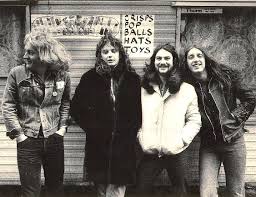
images

‘One day Dave Woods came in and said there’s a band who are making a bit of noise out there why not get them in and sell a few records? So in came The Tygers of Pan Tang to cut three tracks.

Incidentally it was to be the third single I’d produced for NEAT (the first two releases were not heavy metal). But the thing that astonished me was how retro they sounded. I had been in a rock band in the early 70’s so knew where things were.

But Dave said they are really popular let’s get them in the studio. Although now we know it is known as the New Wave of British Heavy Metal, and the tide was coming in that very evening haha’.

What was the North Eastern rock scene like at that time ?

‘Well part of the scene where the Tygers played was a club called Mingles in Whitley Bay. They had a strict dress policy, if you weren’t scruffy enough you couldn’t get in.

I went to one of their shows and walking home afterwards the Tygers thought it would be funny to wrestle me to the ground and threw my shoes on the roof !

Actually Mingles was the place where I checked out Raven, they were due in the studio so I wanted to get the feel of what they were about. I’ll never forget the first time I met the bassist John Gallagher.

I was standing at the back of the room with my back against the wall watching the band on stage which must have only been six inches high. John took his bass and pointed it at me like a javelin, he raced toward me and only stopped right at my throat. I didn’t flinch.

He gave me a wink as though to say, yeah you’ll do for us’.

How did you get on with Raven ?

‘Actually when I agreed to produce the Raven album it was only on a three-day week basis. I figured I would need time out to recover from the sessions.

Producing this album was an intense but rewarding experienced. I’ve heard these guys work described as ‘athletic rock’ and that’s just about right.

In fact they were so energetic that I was obliged to gaffa tape the headphones to their heads otherwise they were just bouncing off as their heads where banging ten to the dozen as they recorded the tracks!’

album_dnym
‘We decided we wanted a marching sound to bring in the Rock Until You Drop track so we mic’d up the toilet floor next to the studio and went in there and marched. It wasn’t right though. We needed a gravel pit or different footwear.

I took a coffee break to ponder the problem and then it struck me. The disposable plastic coffee cups had just that crunch factor we needed. We spread a hundred or so and stomped on them at the tempo that the track was to be. We then did several takes but had to keep replenishing the cups.

In the end we used the entire supply of three thousand. The next day Dave Wood was well pissed off haha’.
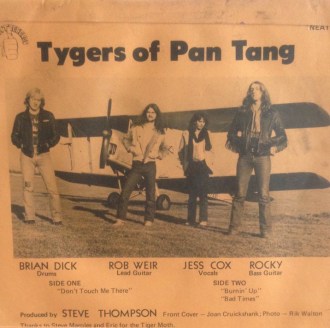
CoDg7IaWEAApLRZ

Any stories from recording with Tygers of Pan Tang ?

‘They had no sophistication but I guess they made up for that with raw energy. They listened too. I was looking at this from a songwriter’s perspective and suggested that they shorten intro’s and reduce repetition’s of dead wood and get to the hooks quicker.

I remember we recorded a track and the guitar solo in it was rather long so I cut it down. Unbeknownst to Rob the guitarist, the other three guys came and asked me to cut it. I cut a huge section out and give them the tape on a little spool. Perhaps it still exists somewhere in someone’s attic but it ain’t on the record.

Well a few weeks later I went back to mix the tracks and Dave said hurry up let’s get it out there cos they’ve just done a gig where the audience went absolutely crackers. So I went to work on the drum sound and a few other bits and pieces, we got it ready and the A side was Don’t Touch Me There’.
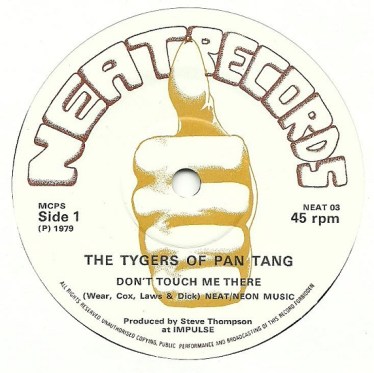
tygers-of-pan-tang-dont-touch-me-there-1980-3

‘You know some studio work is psychology, getting the best out of people. For instance the harder I pushed Raven the better the output was.

Most of the time humour was what worked best. Some people you have to be gentler with and try not to make a mistake.

With Tygers vocalist Jess Cox I just didn’t know how to handle him. As a producer my role would be to point out bit’s that were out of tune. There was a lot of pointing with Jess. I’ve since pondered that perhaps they were really a punk band.

Later on Jess was replaced, so make of that what you want. Anyway we put out Don’t Touch Me There and it started to really sell. MCA got interested so they picked it up, re-released it and went on to do their first album.

(Wild Cat produced by Chris Tsangarides 1980)

Our paths parted then, but sometime later I was looking for somewhere to live, and the Tygers had a spare room for me to move into’.
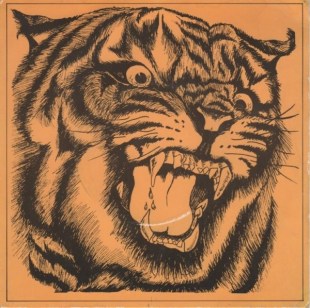
rekord.46735

What other bands came through the Impulse studio doors ?

‘As well as producing bands I was writing songs, pitching them to artists and also producing local artists with my songs. By now Roger Bain (Bullfrogs first producer) was head of A&R at Phonogram records. He was interested in signing an act I was working with, The Caffrey Brothers (formerly Arbre).

I put on a showcase gig at Impulse Studio and Roger came up with his friend Gus Dudgeon. If Gus liked what he heard and agreed to produce then Roger would give us a deal with Phonogram. Gus did indeed like what he heard and we got the deal with Phonogram’.
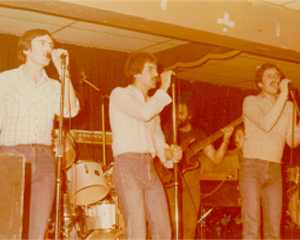
caffs

Did this lead to more work with Gus Dudgeon ?

‘We travelled to the fabulous Mill studios in Maidstone where many of the Elton John hits were recorded. I was able to learn from a master of record production.

Gus kept asking my opinion on things and I would defer to him remembering my wild youth when I would not be told anything by anybody.

One day Gus said to me, ‘you know Steve, this is your record and I am working for YOU!’. It was great to meet up with Roger Bain again and he wanted to hear all about the Neat Label.

He said, ‘Tygers Of Pan Tang  – strange name’. He told me they had just signed a band called Def Leppard. ‘Hey Roger, I said, that’s a strange name!

‘From the Phonogram sessions Gus and I became firm friends and we worked together many times over the years and he recorded many of my songs. Gus introduced me to people like Elkie Books and Colin Blunstone who also recorded my songs.

I would also like to mention that just prior to working with the Tygers I had been to Odyssey studios in London to work with 60’s band The Hollies when they cut one of my songs.

The track was unreleased and even when Colin Blunstone cut a version of it, that went unreleased too. Disappointing yes, but that’s how it goes sometimes’.
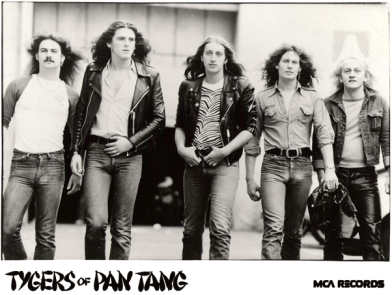
Image17

‘I recall a really enjoyable session at NEAT with a band called Southbound. They were a good rocking band with great songs. However they were not considered heavy enough for NEAT and the tapes lay unreleased in the archives. I found the tapes recently and digitised them.

I was disappointed not to get Southbound released and I started to feel it was all heading in a direction that I was uncomfortable with. I wanted a broader outlook than just one genre and I eventually quit NEAT to concentrate on songwriting’.

Where did you go after Impulse Studio ?

‘In the early 80’s I was signed to MCA Music as a songwriter. One day I got a call from my mentor there, Pete Waterman. Pete said there was a big-shot movie producer in town and I was urgently needed in London to meet up with him.

So the next day I flew down and arrived in Pete’s office around midday. Pete introduced me to an American guy who’s name now escapes me. He was one of the producers of the movie, Jaws 3D which was nearing completion.

Anyway, this guy treated me to the story of his wonderful new movie and told me all it needs is a killer song. Apparently it’s a ‘boy meets girl, boy loses girl, boy gets girl’ theme. Except in this case there are no boys and girls involved, the lovers in question are dolphins.

He says they have Barbara Streisand lined up to sing this yet to be written song. Pete has put me in the frame to write the lyrics and makes his office available to conduct my work.

Pete and the American guy went off to lunch saying they will check my progress on their return. As they were leaving the American called back over his shoulder ‘hey kid, gimme a lurve song for two dolphins’.

Alone in the office I slid the cassette into the machine. Shit! How on earth could I turn this orchestral pomp into a song. Still I had been charged with the task so I had to try. I spent the next two hours racking my brain and writing one liners and drawing doodles.

The guys arrived back and the American says ‘OK Kid, whaddyah got?’ I said,  ‘not much’ and passed over the piece of paper and waited to be well and truly spanked.

Pete (ever the bullshitter) went into overdrive. ‘What did I tell you about my boy, F***ing brilliant, just look at this, sink or swim, I will follow him, that’s a killer line’.

It was just about the only line but Pete was leaving no room for contradiction. He was already on the phone booking a studio for that evening. Then he dashed out of the office and grabbed another MCA staff writer who had a good singing voice.

This hapless guy was named Simon Jeffries and he was going to have to sing this crap. Like me, Simon was not going to say no to the guy responsible for signing his yearly salary cheque (publishers advance).

I was therefore obliged to spend the rest of the day making words fit to soaring violins and trumpets. The pain of this was nothing compared to the recording session that evening. I think we nearly killed the poor vocalist.

Unsurprisingly, I never heard another thing about my entry into the world of movie themes and as it happens, I never saw Simon again either’.
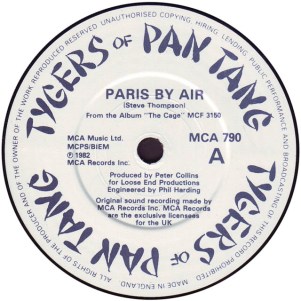
tygers-of-pan-tang-paris-by-air-mca-790

‘Songs are strange beasts they just come from anywhere. I wrote Paris By Air and it was specifically written for a girl called Toni Hallliday. I was working with her at the studio trying to get a record deal.

I introduced her to Dave Stewart from the Eurythmics and she went off and did stuff with Robert Plant. She formed a band called Curve and had a fairly good career. But I’ll tell you how the song came about.

I was having a drink in a pub in London with my publisher and he said you can get inspiration for a song from anywhere. Like that poster there that says Prince of Wales, you could write a song called that and I looked at a different one, ‘no I’ll write a song called that’ pointing at a holiday advert poster saying ‘visit Paris by Air’.

As I toyed with the song I knew what it was about. The song is about a young girl living on a housing estate in Washington, (town in Tyne & Wear, not the capital of USA) wanting to break out, but got no money and she sees the sign on the wall encouraging people to fly to places like Paris, but she can’t’.

‘Did I tell you about the three songs I wrote for the Tygers of Pan Tang that ended up on The Cage album, no ? Well here goes….as I’ve mentioned I was signed to MCA in their stable of writers and my mentor was Pete Waterman, he was crackers.

It was Pete who suggested the Tygers should do Love Potion No 9. Great idea.

Anyway at that time I was sharing a rented flat in Whitley Bay with the band, it’s a sitcom waiting to be written haha. Bizarrely the original Tygers vocalist Jess Cox and his soon to be replacement Jon Deverill both lived at the flat. Lead Guitarist John Sykes lived there as well.

So I would go off to Impulse studio in the mornings and John would stay in the house playing guitar constantly. He had this old record player. Apparently putting the guitar through the record player overdrives it and you can get a sound without being too loud.

When I’d come back from the studio he would still be playing, he’d been playing all day long. He was a really friendly guy and he’d ask what I’d been doing that day and sometimes I’d have rough mixes and I’d play him stuff.

That particular day Tygers bass player Rocky Laws was there and I played them Paris By Air and Rocky loved it, the song stayed with him a few years’.

CULXk8XWwAAtde8

‘Coming up to start recording their 4th album The Cage, there’d been a few changes in the Tygers camp. Jon Deverill (pic above) from Persian Risk had been brought in on vocals and John Sykes walked out to audition for Ozzy Osbourne.

(John wasn’t without a gig for very long. He ended up in Thin Lizzy)

So that made a big dent in the song writing team. Fred Purser from Penetration was brought in to replace John Sykes. The band were looking for some songs and Rocky suggested we should do that song I’d played to them a few year ago called Paris By Air. OK I said I’ll re-write the lyric as it was originally for a female.

I also played to their managers a brand new song called Lonely at the Top. It was unfinished and I played it on acoustic guitar, stamping my feet and vocally trying to make noise that indicated how it would become a loud rock song.

They asked me to make a full demo and I did. It was also selected for the album.

Pete Waterman, who was my mentor and manager for Pete Collins who produced The Cage, heard the rough mix of the Tygers version and said ‘where’s the guitar lick, should be a guitar lick at the top’. So they flew the new Tygers guitarist Fred Purser, from Newcastle down to London to play the identical notes.

Now I had done a few short lick’s on the demo but Fred is a far superior guitarist so it’s interesting to hear something so short but what effort it took to get it’.
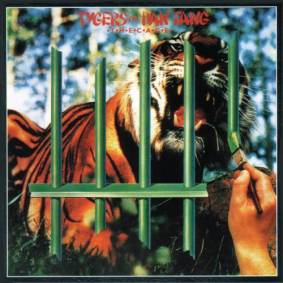
Tygersofpantang-the_cage1

‘I also asked the Tygers Management if anyone wants to come along to my gaff in Tynemouth for co-writes. Jon Deverill said yes so we knocked off a few tunes. Letter to L.A. was put together using a Casio synthesiser played through a fuzzbox haha.

That song was just prior to them going into the studio so it really was down to the wire with unfinished lyrics.

They were in the studio when I got a call from Jon Deverill he said in his lovely little Welsh accent ‘I’m having a bit difficulty with these lyrics’ I said ‘ok what you got’ well it turned out he didn’t have much at all. He said I have these lines ‘so you like the weather and the food is nice’. I said, not only do you not have much in the way of lyrics but what you have is shit.

A year later Pete Waterman sent me out to the MCA Los Angeles offices in America. I sent Jon Deverill a post card, my own ‘Letter from LA’. with my message ‘Dear Jon, I like the weather and the food is nice’ haha.

The L.A trip was quite an experience. More of that story later, now back to recording Letter to L.A.

I said to Jon I’ll put some lyrics together, how long you got Jon ? ‘Oh well, we’re having a little break then I’m going in the studio to sing it…in 20 minutes’. So phoning in a second verse in double quick time shall I say was challenging!

The Cage was a success but sadly the band broke up. I don’t know why maybe some of the guys thought we had been a touch too much in the commercial arena’.

What was your story from L.A ?

‘Pete Waterman sent me out to the MCA Los Angeles offices in America. The whole trip was quite an experience. I worked with some of their staff writers one of them being Glen Ballard.

Now if you check him out he’s huge, Jagged Pill stuff with Alynis Morrisette, Man in the Mirror with Michael Jackson and I’m sitting in their office working with them, piano’s in the rooms you know. That’s the type of company I was keeping in those days!

I suggested lyrics to them in my English accent and they’d say ‘oh man we don’t know what it means but it sounds fucking great ‘. I was there for about three months working with these incredibly talented people’.

Did you record more tracks with The Tygers ?

‘After The Cage album and the break up of the Tygers I started working with Jon Deverill on a solo album before it morphed into the fifth Tygers album, The Wreckage.

To begin with I was using a little porta studio but decided to go large with an eight track demo studio in my house in Whitley Bay. Jon and I went off to Dickens Home Improvement Hypermarket in Shiremoor to buy wood to build this thing.

Neither one of us could drive then, so we carried the wood back on the bus and it took us three trips. How rock n roll is that ?’
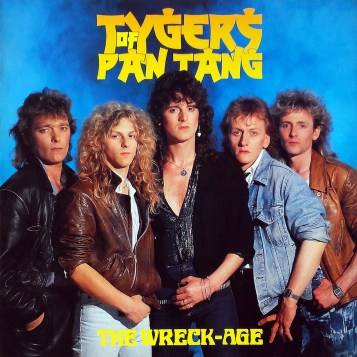
the-wreck-age-559829f6773c9

‘I met up with John Sykes again when we used his studio to record the album. He had this huge place in the middle of a housing estate in Blackpool, that’s where John was originally from. So when we were there he popped in and met everyone.

I co-wrote all the songs on that album with Jon Deverill. But at the time I was also working on an album with John Verity formerly of Argent, you know the single Hold Your Head Up, well he was always part of the rock scene as he was working with Saxon.

To get between the jobs his roadie would pick me up at the studio in Blackpool and drive me over to Bradford where his studio was.

Gus Dudgeon was once producing some stuff that I had written with John Verity. Gus said it doesn’t have the same feel, he reckoned it just wasn’t working. I said we had originally demo’d it after a few drinks.

So Gus dug out the tape and took off the harmonies and added them. Quite often the demo creates something that the pristine high production loses’.
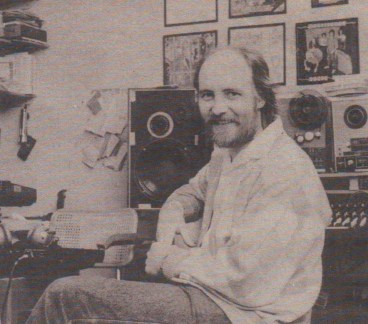
BRILLdeleval roadjpg

What other projects where you working on in your Whitley Bay studio ?
‘Eventually that studio in Whitley Bay became a bit of a ‘Brill Building’ with folks popping in and adding instrumentation or vocals.

(Brill Building is a reference to the publishing house in New York where Carol King, Gerry Goffin and all their contemporaries hung out)

One day I got a call from a management company who said they had just signed a young guy who wanted to come and work with me on some tracks. I said ‘no mate, I’m not into that’. They said ‘we’ll pay you’ and quick as a flash I said ‘cool,  send him round this afternoon’.  The young guy was Stu Emerson.

I told Stu I was looking for a good female vocalist and he introduced me to Lorraine Crosby. I recorded loads of tracks with Lorraine. She recorded all the backing vocals on some stuff I was recording with a guy called Pete Adshead.

Pete’s management company had sent him up from London to work with me in Whitley Bay. When the stuff started to get released Pete changed his name to Baby Ford.

I had a couple of hits with him in the style of Acid House and one of them Chiki Chiki Ah Ah earned a BBC ban. I’m very proud of that’.
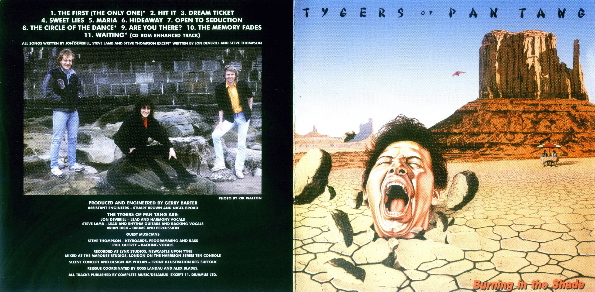
9606b4e9c06bf31bb64591831c8fa524_full

‘Later I set up a publishing company with Brian Johnson of AC/DC. The company was called De Lucca Music based at his recording studio in Newcastle, Lynx De Lucca.

We recorded the sixth Tygers of Pan Tang album Burning in The Shade there, but it was written and pre-produced in my Whitley Bay studio.

I also wrote and recorded an entire album with Alvin Stardust at Lynx. This might seem a bit lightweight but Alvin did a steaming version of a song Behind The Wheel which was originally intended for the Tygers album The Cage.

Later, Lynx studios was purchased by Eric Cook and Tony Bray of Venom. They asked me to go see them. They then offered me as much studio time as it would take to make an album or any project totally free.

Wow,’ I said, you’re in business why would you give me a load of free studio time. Tony said ‘cos you gave us a career man’.

Wow, all I did was spend about three hours in the studio with them and they got a whole career out of it’.

Have you a few more stories about The Tygers ?

‘Yeah, John Sykes was touring Japan with Whitesnake and we got a call from him saying the Tygers are huge in Japan why not get out here and tour.

Well at the same time we were about to get a record deal from Music for Nations on the songs we had written so we decided to make this the fifth Tygers album rather than a Deverill solo album.

To produce The Wreck Age we couldn’t get Pete Collins who produced The Cage so we got the guy who engineered it – Phil Harding who was by then part of the Stock Aitken and Waterman set-up.

Because it was going to be the Tygers, who had basically split by then, we needed another Tyger to validate the band, who wants to see a band with no original members ?

So we ended up with Jon Deverill on vocals, original drummer Brian Dick came back in, on guitar was a guy called Neil Sheppard who looked like John Sykes. I can’t remember the others but I was asked to play keyboards.

On the album I’m credited as guest musician but I played all the bass parts on it, all finger no plec, I thought it would take half an hour…it took two days.

I didn’t tour with them, but we did a live TV rock show called ECT where I was heavily disguised. That show also featured Gary Moore and Robin George’.

bjpg.php

Anymore stories from the NEAT days ?

‘Yeah we had a stream of bands coming through the studio and one of them I mentioned earlier was Raven. When I first heard them I thought yeah this is heavy as hell, not what I am writing at the moment but it was constructed, well thought out and clever with a huge sound for a three piece.

They have since said one of the things they remember about our time in the studio was how much they laughed.

We experimented a bit, on one of the Tygers songs put a mic at the top and the bottom of the stairs, then we kicked a bin full of metallic objects down them, recorded that and put it at the end of the record, sounded great.

At the bottom of the stairs someone can be heard declaring ‘Shit’ I’ve since seen that story applied to the Raven recordings. I can’t recall exactly, it’s all a blur to me now’.

‘There was quite a scene for a number of years with muso’s getting together in some bars on the coast of the North East of England. They also hung out in Impulse Studios.

We were working out of the studio on a few sessions putting stuff together, there was a band called Action. The line-up contained a young vocalist/guitarist called Andy Taylor. Andy was younger than the rest of us, he being 18 and the rest of us mid twenties.

Andy did several sessions for me and I cut a few tracks with Action but none were released. He was always telling us we were boring old farts and he was going to be a megastar.

One day he stuck a pin in the ‘want a musician’ adverts in Melody Maker and travelled down to Birmingham for an audition. He came home really happy and told us he got the gig. We asked him what the band was called and when he told us we laughed. ‘What kind of name is that? You’ll get nowhere, Duran Duran, ha ha !’

‘I recall once I was coaching a nervous young bass player in the studio when our tape op said to the kid, ‘hey mate, why don’t you sell your bass and have a really good night out’. That tape op didn’t last very long but we were soon joined by another young guy called Conrad. It was his job to fetch and carry, make coffee, thread the tapes onto the machines, make tape copies and cassettes.

Conrad fitted in well. He was a good tape op and got on well with everyone. He was always going on about his own band. It seemed that they saved up for about three months until they could afford enough pyrotechnics to blow up half a city, then had to save up to do another show.

Conrad said very little about the music, it was mostly about the explosions. Nearly forgot to mention, Conrads band was called Venom’.

EE3

‘Hey what about the time I gave Venom the Devil. The Devil is a nickname for a musical interlude called the Tritone. And it’s heavily discordant if you crank the volume up and play that, it is basically the sound of The Devil.

I remember Conrad in the studio saying they had lost the bass player so I loaned them my bass and he played it through a Marshall stack and a fuzz box. Apparently the loan of that bass gave birth to Black Metal. I’m responsible. Sorry.

Again they were very unrefined but absolutely bags of enthusiasm, but that was the last thing I recorded there. I never took a production royalty, just said there’s the tapes lad’s, I’m off. Eventually I sold Conrad that bass it was a Gibson EB3 and I’d had it right through my career.

I said ‘I have no use for it now but you must take care of it’. Next I saw it had an upside down effigy of Christ nailed to it and holes drilled through it. Some years later I asked him did he still have it and he replied ‘It died in L.A.

What type of chart success did you have ?

‘On quitting NEAT Records as producer I had a shed load of releases as a writer. I was working in several different genre’s but I still had a healthy grounding in rock. In 1981 I came up with a little slushy ballad which didn’t fit the NEAT stuff although I played it to Dave Wood and he said uh it’s ok. So I was determined my future lay elsewhere.

Within six month it was a Top 20 hit, that was Hurry Home and it was in the charts for three month. At roughly the same time the Tygers put out Paris By Air which was a minor hit so I had some credibility on both sides of the coin.

My publishing was with Neon and I had a hit with Sheena Easton on her Madness Money and Music album which went Top 20. Celine Dion also recorded the Sheena Easton song in French. It was a hit single in Canada going Gold. The album sold 400,000 units in Canada and 700,000 units in France.

Eventually I got to own all my own copyrights and I now publish myself with an international collection deal’.
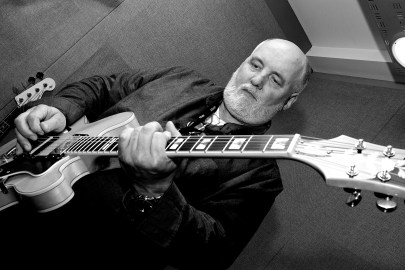
ST_01

Looking back on your career what has music given you ? ‘

Pain and pleasure ! Over the coming months I’m going to release some nuggets from my archives on a local online label http://www.stevethompson.vaingloriousUK.com

Interview by Gary Alikivi April 2017.

Recommended:

Micky McCrystal, Cat Scratch Fever, March 17th 2017.

John Gallagher, Staring into the Fire, 3rd May 2017.

Richard ‘Rocky’ Laws, Tyger Bay, 24th August 2017.

Robb Weir, Doctor Rock, 5th November 2017.

CAT SCRATCH FEVER – with Tygers of Pan Tang guitarist Micky McCrystal

One Friday night in September 1982 I was at the Newcastle Mayfair to watch Tygers of Pan Tang. Six years later Micky McCrystal was born in Durham, UK, and by 2013 landed the gig of lead guitarist with the Tygers. 

17360648_10154939300160731_1131541503_n
‘Some of the songs were recorded 30 years ago but they still sound fresh and relevant alongside the new songs, I feel that it’s a very strong set that fans of the band past and present will love.

I look at the gig as playing as a fan of the band and what would I like to hear if I was in the audience, we always try to give the fans what they want.

The songs from Wildcat, Spellbound, Crazy Nights and The Cage albums have been classics for years so fans know how they should sound. It’s amazed me the amount of new fans who are just discovering the band and like the new songs and then go back and look at the history of the Tygers’.

11024204_1030720686956227_8275740079855886317_o

‘It’s about respecting the song, doing it justice and sticking to those key Sykes solo’s and licks that people are waiting for, otherwise I feel like people aren’t getting what they’ve come to see plus there’s plenty of opportunity for me to put my own stamp on the songs’. (John Sykes former guitarist 1981-82 albums Spellbound and Crazy Nights)

17321330_10154939271550731_56588470_n

‘We’ll play songs like Paris By Air from The Cage album and I’ll do my best to add in the keyboard lines and synth parts like the original track but on guitar which it gives it a more modern edge that works great in amongst the new songs as well as the heavier tracks.

It’s great to see the crowd enjoy the song and sing a long to the chorus as much as they would Hellhound or Love Potion No.9 especially the hardcore heavy metal guys or bikers who we wouldn’t normally expect to like this AOR song, but yeah they sing every word, it’s great!’

16473128_10211166101695874_2817025824687294912_n

Who were your influences and how did you get involved in playing music ? ‘When I first started playing I listened to Stevie Ray Vaughan and Jimi Hendrix, I used to sit and jam along to those albums for hours and hours and try and figure out their licks.

Then I went back and started listening to the classic blues players like BB, Albert and Freddie King, Buddy Guy, Muddy Waters, Howlin’ Wolf.

The influence that seems to surprise most people is that I got heavily into country music especially players like Brent Mason and Brad Paisley. I try and keep an open mind so I love listening to John Scofield as much as I do Richie Kotzen or Yngwie there’s always something to pick up and learn’.

Friday_Night_in_San_Francisco
‘My Dad was a drummer and always had vinyl in the house and he had a lot of guitar albums Hendrix, Larry Carlton but the one that stuck in my mind is ‘Friday Night in San Fransisco’ by Al Di Meola, Paco De Lucia and John McLaughlin.

I found it incredible that they had that level of technique but were so musical at the same time, it’s without a doubt one of my favourite albums ever.

My parents always encouraged my interest in music from day one, they bought me my first guitar from a guitar shop in Newcastle, a Blue Aria Les Paul copy, I still have it today and it’s got a lot of sentimental value’

14055099_10153880949984639_1729126735052428435_n

What led you to joining the Tygers ? ‘Tygers bassist Gav Gray messaged me asking if i’d be interested in auditioning and of course I said yes. It turns out Satan guitarist Russ Tippins had recommended me for the gig.

In the audition we played Keeping Me Alive, Hellhound and I think Raised on Rock. I received a message that night to say I was in and I learnt the rest of the set and began rehearsing for my debut show with the band’.

SAOPOALO

Last year you played a tour around South America how did that go ? ‘It was my first time in South America and it was amazing, I loved it.

The fans are incredible, they know the songs so well, they sing every word as well as the guitar melodies, some of the fans had actually had Tygers tattoos done specifically because we were playing. They live and breathe it, it’s amazing.

Also the night we played Sao Paolo was my birthday and Jack got the band and the crowd to sing Happy Birthday to me which was really special. The centrefold sleeve of the latest album has a photograph of that gig so yeah that has special memories for me, I’d love to play there again’.

12471702_10153374625184639_2489495680514005594_o

How did the recording go for the new album ? ‘It was great, I had in my head that it would be a good idea to try and mix the flavours of the first four Tygers albums with a slightly more modern feel.

We recorded in a great studio in Newcastle Upon Tyne, Blast Studios. We practically lived there for three weeks.

The process was very organic, things changed right up to the eleventh hour. I had written the solo for Never Give In and Craig walked in and sang four notes as I was about to do the take which ended up becoming the first four notes of the solo.

The verse drum part for Devil You Know changed the day before recording it to a tom part. We trusted each others judgement and were open to constructive feedback, at the end of the day we were all there attempting to reach the same goal of making a great album’.

17357501_10154939280970731_534617955_o
‘We worked with a great tracking engineer, Mark Broughton who often works with Andy Taylor of Duran Duran. Soren Andersen mixed the album, he works with Glenn Hughes and Mike Tramp. I was very familiar with his work and was excited when I heard he was on board.

For mastering Soren recommended Harry Hess of Harem Scarem. It was a great team and we’re all happy with how the album has turned out’.

17097513_10154439791619639_7574103425489811214_o
‘We released Only the Brave as a promo single for the album along with a music video that has now had over 100,000 hits on YouTube. We’re just about to release the second music video for the song Glad Rags. The storyline is fun and a bit more lighthearted.

(In no time at all Mickey whipped out his phone and showed me a clip from the video ‘Glad Rags’. The track has a radio friendly feelgood bounce with a very catchy sing a long chorus, the video is not bad either with dancing girls, smoke and mirrors)

‘I’ve got to mention the company Flashlight Films who have done a great job on both videos, they were great to work with and we hope we get this new video well over 100 thousand hits too’.

13912587_10154415477593967_2290939721224062050_n

Where would the Tygers like to go next ? ‘We’d love to go and play for the South American fans again. It would be great to get to Canada, North America, Asia. Anywhere there’s fans hungry to see the band we would love to play.

We’re looking forward to an Italian tour in a few weeks time followed by a two week European run and then some shows on the European festival circuit. We’re super proud of the new album, so we’re excited to play the new album for people as well as the classics’.

15032274_1328890143822698_4121633844322058318_n

New album Tygers of Pan Tang available from the Official Site tygersofpantang.com also European tour dates for 2017.
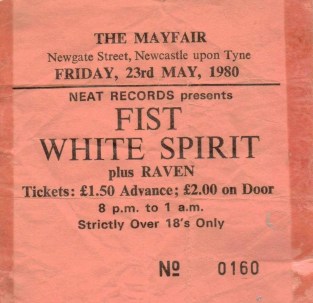
Interview by Gary Alikivi 9th March 2017.
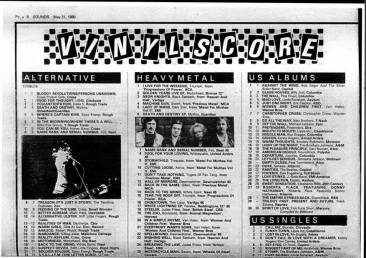
Recommended:

Steve Thompson, Godfather of New Wave Of British Heavy Metal, 27th June 2017.
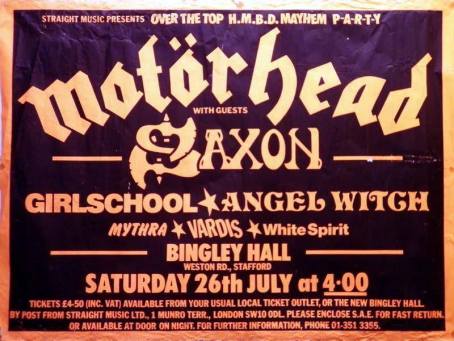
Richard ‘Rocky’ Laws, Tyger Bay, 24th August 2017.

Robb Weir, Doctor Rock, 5th November 2017.