LOOKING FOR LUCIFER #4 – The Scientist Marie Stopes & continuing search for Italian born author, artist & historian Baron Avro Manhattan (1914-90)

For a number of years I’ve researched the life of Baron Manhattan, who I first came across in 2012, he spent his last years living in a terraced house in my hometown of South Shields.

‘Secrets & Lies’ documentary was produced in 2018, a link is at the end of the post.

Avro was originally named Theophile Lucifer Gardini, the name change is looked at in post #2 (June 2021). Looking for Lucifer #4 includes research used to script a second documentary about this fascinating character.

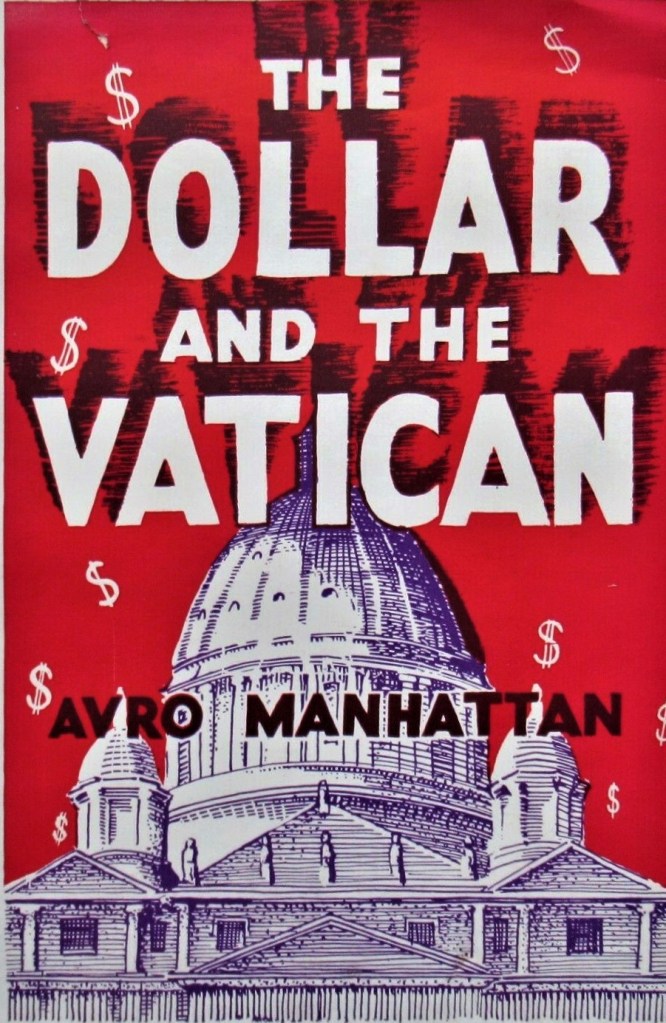
Lately I’ve come across some of his books and art being sold on EBay, Jonathan Frost Rare Books Limited of Liverpool had a book for sale ‘The Dollar & The Vatican’, inside it’s inscribed by the scientist Marie Stopes:

‘To Harry Stopes-Roe with love from his mother, Marie C. Stopes. To be published in September 1956’.

Rare Books added a description of the sale:

‘Marie Stopes formed a close friendship with Avro Manhattan during the last years of her life, and he scattered her ashes with Harry her son after she died in 1958.

Tucked into the book is a promotional leaflet, a copy of ‘The Vigilant’ from December 1956, which contains a review of the book which has been annotated by Stopes, and a two page draft letter from Avro Manhattan to ‘The Editor of The Times’ on the subject of the U.S.A.’s military and colonial ambitions, which has also been corrected and annotated by Stopes’. 

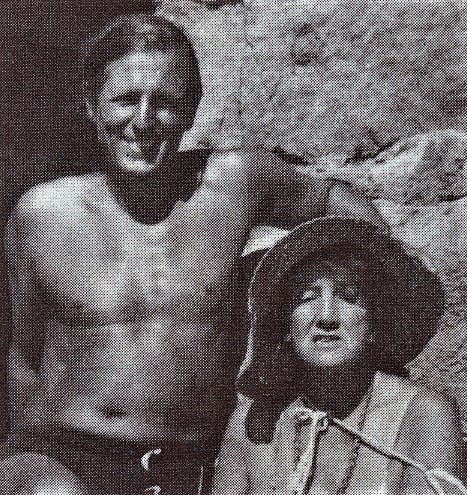
Author/Artist Avro Manhattan & the scientist Marie Stopes

Avro met Stopes in 1952 at an exhibition of his paintings in London and they got on well with strong rumours of a love affair. At the time Avro was thirty nine, Stopes was 72.

She wrote in her book…

“Truly I was afraid to see your pictures but the reality was so glorious. I’m looking forward to making a bonfire and dancing with you, could you arrive prepared for staying the night and for dancing in the house.

My heart is still beating extra hard with the joyous excitement of all the beauty you showed me……you are a genius…..dearest, most precious one, all the gods and angels guard you”.

I contacted Rare Books on Merseyside and asked if they had more information to add about the sale of the book. Jonathan Frost replied…

‘He’s quite an elusive character. Stopes and Manhattan were close for quite some years I believe, which makes sense, there was plenty of crossover in their interests’.

If you have information about Italian born artist & author Baron Avro Manhattan (1914-90) please don’t hesitate to get in touch.

Link to film:

South Shields, Italian born Baron Avro Manhattan – SECRETS & LIES – doc.film (Alikivi,12 mins 2018). – YouTube

Check the other posts about Baron Avro Manhattan :

LOOKING FOR LUCIFER #3 – Art for Sale. | ALIKIVI : NORTH EAST UK (garyalikivi.com)

LOOKING FOR LUCIFER #2 – Ciao, Avro. | ALIKIVI : NORTH EAST UK (garyalikivi.com)

LOOKING FOR LUCIFER – The continuing search for author & artist, Baron Avro Manhattan (1914-90) | ALIKIVI : NORTH EAST UK (garyalikivi.com)

Alikivi  April 2021 & updated April 2022

UNDER HER SPELL : Eileen O’Shaughnessy (1905-45)

Memories of events years ago can sometimes be sketchy but after checking my diaries and emails it was March 2012 when I was shown a South Shields birth certificate for Eileen O’Shaughnessy by the Local History Librarian Ann Sharp.

We bumped into each other near South Shields Registry Office where I was going to collect a family research certificate.

The Orwell connection peaked my interest but was more intrigued when I noticed her birth address was Park Terrace, now re-named Lawe Road – just two minutes from where I live.

I wasn’t a fan of Orwell’s writing then, I heard about him – who hasn’t? Over 20 year ago I went to see a theatre production of 1984 at Newcastle Playhouse, and have since read 1984, Homage to Catalonia, Down and Out in Paris and London plus selected essays and journalism but it was more from a local history angle that I first approached this story.

In May 2012, May being Local History month in South Tyneside, a display appeared in South Shields Library and an earlier blog from October 2018 mentions this –

‘There were three large boards. On the left was a birth certificate and census records. To the right was a photo of George Orwell and a picture of a cemetery in Newcastle.

In the middle was a large black and white photograph with about a dozen men standing near sandbags and a machine gun at the front, obviously a war image. Then I noticed a dark haired woman crouching behind the machine gun. I looked closer and got goose bumps’.

Who was this woman who was born in South Shields married to one of the most controversial writers of the 20th century, buried in Newcastle and had a photo taken on the front line of a war ?

Ann mentioned that Eileen had been to the Spanish Civil War explaining the photograph, also “an American lady has been in she is researching for a book about Eileen”.

That was Sylvia Topp and she left note looking for any help searching locations where Eileen lived.

Sylvia Topp outside The Customs House, South Shields 10 May 2012 (pic Alikivi collection)

We arranged to meet and I took Sylvia down to South Shields riverside and The Customs House where Eileen’s father worked as a Customs Collector, then into the town centre where he had an office then onto her childhood home in Beach Road.

Afterwards we had a meal in the Italian Restaurant on Winchester Street and left it where I would look into Eileen’s North East life. This proved difficult because there wasn’t much information out there about Eileen.

As the months passed the research grew and in the blog Oct. 2018 –

There wasn’t much information out there just a few bits and pieces that had been mentioned in Orwell books. So there was extensive research over the next year or so. Phone calls, letters, checking and re-checking details.

Interviews on camera were arranged around the country. One led to another, and another. It felt like being gently nudged along to find more about her. I never came across any obstacles, everybody asked wanted to be part of the documentary and were only too happy to help’.

I remember the time I was filming in Sunderland Church High School where Eileen was a pupil. I phoned reception who passed on my number to former Head of English, Sylvia Minto. Next day she rang and we arranged to meet at the school.

We filmed in the main hall where the walls were full of honours boards with names of pupils who went onto higher education. Eileen read English at St Hugh’s College, Oxford and her name was on a board. That same board is now in a room in my house.

A couple of years ago the school was closing down and the receptionist remembered me and got in touch – “of course I’ll have it” not realising the sheer weight and size of the board at 5ft x 3ft !

Someone else who was also captivated by Eileen was South Shields born Professor Robert Colls who had just published his book George Orwell – English Rebel.

pic courtesy of The Shields Gazette

Then teaching cultural history at De Montfort University, Leicester, Colls featured in an article in The Shields Gazette (25 October 2013) by local journalist Terry Kelly.

Colls said “One of the pleasures of writing about Orwell was not only getting to know him, but getting to know Eileen.

The evidence is sparse but I really like her and Orwell’s spirit was lifted after meeting her. Her letters show great fun and sharp wit. Getting to know Eileen was an unexpected treat”.

In the October 2018 blog I finished off with –

‘Who knew that a library visit in 2012 would take me and my camera, from South Shields to Sunderland, Newcastle, Stockton, Warwickshire, Oxford, London and finally Barcelona.

I remember I had the camera in my backpack walking through Barcelona Airport thinking how did I get here. It seemed so effortless, the whole process just fell into place’.

Link to a short edit of the film ‘Wildflower’  

George Orwell’s first wife, South Shields born Eileen O’Shaughnessy (Alikivi, 11mins edit) – YouTube

To find out more information or how to join the Orwell Society check the official website:  www.orwellsociety.com

Alikivi  March 2022.

LETTERS FROM JARROW (1) – The IRA on Tyneside

Recently I completed a DNA ancestry test which came back 14% Scottish and 86% Irish, a bigger percentage than I thought but not a surprise as in 2008 I had already researched the family tree through census’, birth, marriage and death records, plus visiting Ireland a few times.

My Irish family came to Tyneside in the North East of England around the late 1880’s and settled here – a long way from County Galway, Derry and Antrim.

Amongst old certificates, photos and letters, my grandfather wrote down memories of his mother and her family, plus describing where he used to live and play as a kid in Jarrow at the time of the First World War.

‘My mother’s family originated in Galway in the west of Ireland. She came from a big family, her brothers, uncles and cousins were all fishermen. I remember my mother as being a very hard-working woman.

She worked as a Stoker in the chemical works over the bridge in East Jarrow.  She worked there all through the 1914-18 war.

She was a very kind woman, strict but fair, and was very religious. The family were also involved with the IRA and Sinn Fein’.

These last remarks were very interesting because when researching my family history, I came across Donmouth, a North East local history website by Patrick Brennan (link at the bottom of the page).

In one of the sections, he covers the IRA in Jarrow which I have condensed here.

After being cruelly treated by England over the centuries – for example the Great Famine 1845-50 – Irish people were looking to create an Independent Irish Republic.

A British Volunteer force, known as ‘the Black and Tans’ landed in Dublin. The IRA operated a guerrilla campaign attacking small groups of Black and Tans and murdering informers. Out of control Tans went on an orgy of looting and arson.

By 1919 the Irish Self Determination League (ISDL) was formed, the purpose was to raise funds for Sinn Fein but some members decided to take direct action. Mainland Britain had its first arson attack in Liverpool Docks, days later, a large explosion near London Bridge.

On Tyneside, many men and women of Irish birth gave support to the Irish republican cause through membership of the ISDL or Irish Volunteers – better known as the IRA.

Since the 1880’s Jarrow had an active political organisation in the Irish National League and held an important role in the ISDL. They held political meetings, fund raisers and ceilidhs in Lockharts Cocoa Rooms and the Co Op Guild Hall in Jarrow. 

More direct action was called for resulting in more volunteers being recruited and by the end of 1920 six companies with a total of 160 men had been established:

A Company – Jarrow. B – Hebburn. C – Newcastle D – Wallsend. E – Bedlington. F – Consett.

Within a few months a further four companies were set up: Stockton, Chester-Le-Street, Thornley and Sunderland bringing the total to 480 men.

Arms, guns and explosives were either stolen from Army Drill Halls or obtained from foreign sailors. In Jarrow, baby’s prams were used as cover to transport weapons to and from an arms dump in St Pauls Road in East Jarrow.

March 1921 saw the first incendiary attack on a Newcastle warehouse and oil refinery, plus a timber yard at Tyne Dock. Largely unsuccessful, the second attack was more ambitious, 38 fires at 20 different farms were co-ordinated to be lit at 8pm throughout Durham and Northumberland. This demonstrated the extent of the I.R.A throughout the region. (Reports from the Evening Chronicle 1921).

A number of operations were planned and executed around Tyneside. Farm fires and attacks on oil works in Kenton, Wallsend, South Shields, and an aircraft shed in Gosforth was destroyed.

Also, the daring attack in Jarrow – a gas main blown up on the old Don Bridge (pics below).

This story featured in my documentary ‘Little Ireland’ (link at the bottom of the page).

Con Sheils speaking in the film said ‘They were just trying to make a point, that’s all they were trying to do. Not harm anybody, just trying to make a point that they wanted home rule for Ireland’.  

THE SINN FEIN OUTRAGES: GAS MAIN BLOWN UP  (report from the Evening Chronicle 23rd May 1921).

At 11.15pm on Saturday night there was a heavy explosion at the west end of the town, and it was discovered that a hole 18 inches by 18 had been made in the lower of two gas mains carried across the Don bridge at East Jarrow. The gas company’s workmen were soon on the spot, and the main was temporarily repaired.

The IRA on Tyneside were severely damaged when two of their top men were arrested in connection with the theft of explosives from a colliery in Blyth on the Northumberland coast.

They were sentenced to prison but released in 1922 as part of Truce arrangements made a year earlier.

But more trouble was on the horizon with pit strikes, mass unemployment and extreme poverty meant the Irish had another fight on their hands – by 1936 Jarrow was about to march onto London.

For further information:

https://garyalikivi.com/2018/08/22/little-ireland-documentary-on-irish-immigration-into-jarrow-uk/

http://www.donmouth.co.uk/

Alikivi   May 2020 

HUMANITY & COURAGE – South Shields Historian & Photographer Amy Flagg (1893–1965)

The previous post was a snapshot of the life of Victorian photographer Frank Meadow Sutcliffe. Another photographer featured on the blog is South Shields Historian Amy Flagg (links below).

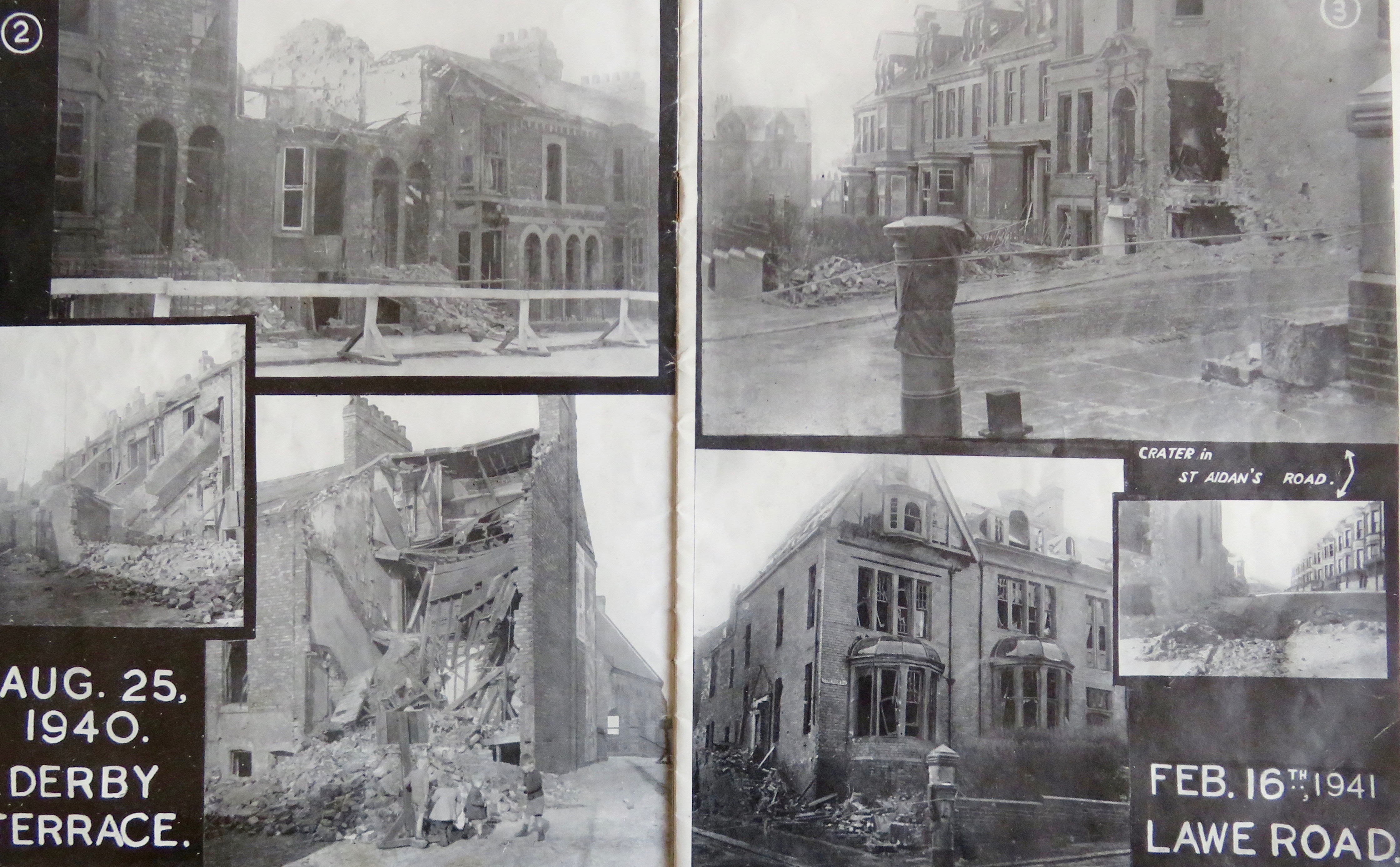
This post highlights the photograph’s Amy produced during the Second World War. She took some of the most devastating images of South Shields in the 20th century. When the bombs dropped, she captured the scars with her camera.

IMG_0979

Page from inside the pamphlet.

When researching a documentary about Amy (Westoe Rose, 2016) I came across detailed records that she had made of German air raids that revealed the amount of suffering the town endured. 

The Ministry of Information and the Chief Press Officer gave permission to produce Humanity & Courage, pamphlets featuring some photographs that Flagg had taken of war damage to her town.

IMG_0760

Detailed record of air raids over South Shields.

More images are available on the South Tyneside Library website

https://southtynesidehistory.co.uk/

Included here is a picture story from The Shields Gazette showing her friend and Librarian Rose Mary Farrell standing next to a display of Amy’s photographs.

They were shown in an exhibition at South Shields Library. The report is dated August 1968, three years after Amy died.

IMG_0693

Links to previous Amy Flagg posts:

https://garyalikivi.com/2018/07/19/westoe-rose-making-the-documentary-about-historian-and-photographer-amy-flagg/

https://garyalikivi.com/2019/07/11/westoe-rose-the-story-of-amy-flagg-south-shields-historian-photographer-1893-1965/

https://garyalikivi.com/2019/12/21/history-lives-amy-c-flagg-south-shields-historian-photographer-1893-1965/

https://garyalikivi.com/2019/12/28/amy-flagg-holborn-the-mill-dam-valley/

Alikivi   March 2020

SOUTH SHIELDS 1977 – THE KING, THE QUEEN & THE PUNK – film stories & soundbites.

1977 saw three big events happen in the small seaside town of South Shields in the North East of England. The boxer Muhammad Ali had his wedding blessed, the Queen visited on her Royal Silver Jubilee and three lads from a working-class housing estate formed a punk band – the Angelic Upstarts.

Why not put them together in a film ?

Some projects take a lot of digging around to get made but on this one each person contacted about contributing to the film lead to another and another – making the whole process easier. 

This blog features stories and soundbites from contributors to the documentary made in 2013. 

Start.

Narration: 1977 was an extraordinary year of royalty and revolution. It was the storm that followed the calm. We’d had the long hot summer of ’76 and the high-water mark of disco and glam rock.

Trevor Cajiao: The glam thing happened when I was 12/13 year old and I loved all that stuff Slade, Sweet and Mud.

Neil Newton: I remember Wizzard coming on and the bloke with the big hair his face all painted and being mesmerized by that.

Narration: Many 1970’s teenagers were enjoying their first live gigs from such established and diverse acts as Chuck Berry and Black Sabbath.

Richard Barber: My first gig was February 1977 I went to see Black Sabbath at Newcastle City Hall on the Technical Ecstasy tour. We were second row from the back and as soon as Ozzy came on he went ‘Everyone go fuckin’ wild’ and everyone piled down the front. One kid had a big wooden cross and that just got chucked somewhere.

Trevor Cajiao: When I heard rock n roll that’s what I realised that I wanted to get into. I saw Chuck Berry at the City Hall in 1976, it was fantastic, blew me away.

Narration: 1977 was a sad time for fans of Marc Bolan and Elvis Presley. Both stars died young.

Colin Smoult: The death of Elvis was a big impact on everybody, even if you were into Elvis or not because he was such an iconic figure.

Neil Newton: My mam was a big fan of Elvis I remember the day he died it didn’t really have much of an impact on us cos I wasn’t particularly a fan – but he had some canny tunes.

Narration: In the North East we saw a visit from the American president Jimmy Carter and in the same year the Queen came to South Shields on Friday 15th July as part of her Silver Jubilee. The very next day a King came to town.

Derek Cajiao: I’d been given a camera for my birthday I hadn’t had much experience using the camera, but I went down to take some photographs and I managed to catch Ali as he passed the fairground and the Sea Hotel. I got some great shots of him on the bus, and it was fairly apparent he was playing the crowd, pointing at people, threatening to jump out of the bus and chin somebody, really working the crowd.

Pat Robinson: (Her husband Sepp Robinson was Mayor). We were on the top of the bus and at one point it rained so at one of the pubs we passed I said to my husband go and get a bottle of whisky, we passed it round cos we were so cold and wet, at least it warmed us through for a few minutes. Muhammad Ali’s wedding was blessed, and we all went to the mosque and these incredibly beautiful people arrived, they were both stunning and dressed in white.

Afterwards we went to Gosforth Park for a fantastic lunch and right through the two days when the cameras were on Ali turned on the big lip but when he wasn’t doing that, he was a sensitive, pleasant, attentive man. He was absolutely charming.

Narration: But away from the glamour and celebrity a sense of frustration was taking hold. The soundtrack was one of anger, the future seemed bleak and the music was reflecting that.

Colin Smoult: I think the music change in 1977 was down to the blandness being presented in the charts, novelty singles, very middle of the road stuff. Bands appearing on Top of the Pops that were no better than a cabaret act. There was no wonder that the punk revolution came along.

Neil Newton: When punk came along I was much more aware of it because it was so direct.

Trevor Cajiao: A lot of people were saying the whole punk thing was like the rock n roll of the ‘50s as it was a rebellious type of thing but as a kid I didn’t understand that because I was just using my ears and The Clash don’t sound like the Johnny Burnett Trio, but in hindsight what they were getting at was the actual energy, the guitar music, rebelling against stuff.

Narration: In South Shields three friends from the Brockley Whins Estate started a punk band The Angelic Upstarts and little did they know where it would lead them.

Mensi: The nucleus of the band really was me, Decca and Mond.

Mond: We had known each other since we were kids, we used to hang around the shops at Brockley Whins.

Decca: They said here Decca we’re forming a band and you’re gonna be the drummer.

Mond: We found you can hire the Bolingbroke Hall and we used to get about 300 people in.

Decca: I think that’s when we started to take it serious, we all got our heads together. I mean Mensi was a prolific song writer.

Mensi: I just write about what’s happening around us.

Decca: He came out with Murder of Liddle Towers, the song that made us famous. Next you know you’re on Top of the Pops and the rest is history.

Narration: The end of the 1970’s saw people looking forward to a new decade. Would we ever see a year like 1977 again.

Closing music & credits.

The film was narrated by Alistair Robinson, music from The Panic Report and the Dipsomaniacs, with excellent photographs by South Shields photographer Freddie Mudditt (Fietscher Fotos) and Derek Cajiao.

The King, The Queen & The Punk (25 mins 2013)  watch the edited version on Alikivi You Tube channel.

Gary Alikivi   February 2020.


LADY IN RED – with author Paula Bartley talking about Ellen Wilkinson MP (1891-1947)

March 8th 2016 three of my short films were screened at an event celebrating International Women’s Day at The Customs House in South Shields.

They featured Dame Rosemary Cramp (Bedes World, Jarrow) Eileen O’Shaughnessy (‘Wildflower’ first film made about George Orwell’s South Shields born wife) and Ellen Wilkinson MP (Jarrow Crusade).

When the event was being put together I found a newly released book about Ellen’s political life, the author was Paula Bartley who I contacted and asked if she would like to come up to The Customs House and talk about her book….

The talk I enjoyed most was in South Shields. It was as if I had come home. People knew about Ellen, they knew why she was important, they loved her as much as I did.

In research did you find anything surprising about Ellen ?

I found out that Ellen had enjoyed a relationship with a communist spy, a man called Otto Katz. He was a Soviet agent who used at least 21 aliases.

If these photos below are all of the same man – two of them are of Arnold Deutsch – then he was very dangerous indeed. Arnold Deutsch, who was also known as Otto, recruited Kim Philby, Britain’s most notorious spy.

Certainly Katz – whoever he was – was a handsome man and willing to use his looks and natural magnetism to further his political cause. He even managed to charm Hollywood: Otto Katz and his wife Ilse were immortalized as Victor Lazlo and Ilse Lazlo in the film Casablanca.

M15 thought Katz the most important communist agent outside Russia and put him under surveillance. You can see a report of it below – it’s of Otto Katz staying overnight with Ellen.

It says, ‘he went with Miss Ellen Wilkinson to her flat at No 18, Guildford Street WC1 where he spent the night’. The two sometimes evaded the Secret Service by driving as fast as Ellen could in her car.

Otto Katz’s letters were opened. Below is a negative of a letter from Ellen to Otto that the Secret Services made. It says ‘WHAT a bombshell. Honestly, I am scared stiff. You simply must destroy the negatives or the worst, or send them to me, and any copies there are. PLEASE’.

I don’t know what these photographs illustrated or the result of Ellen’s plea, but Ellen and MI5 destroyed her papers.

What I do know is that Ellen became friendly with Otto Katz in the 1930s and remained so all her life – even when she became a Cabinet Minister.

He accompanied her on a number of trips to Spain during the Civil War and involved her in communist-led campaigns.

Sadly, Ellen died in 1947, and never knew that in 1952 Otto Katz was put on trial for conspiring against the Czechoslovakian communist state, was tortured, found guilty and hanged.

Spy stories are always interesting, Agent Zig Zag (Durham born Eddie Chapman) is a fascinating tale of traitor, villain and hero. Ben Macintyre made a BBC documentary about him and his exploits as a double agent during the Second World War.

On Tyneside was Russian born William Fisher and his son Heinrich, a KGB spy born in Newcastle, he worked for the British Socialist Party in South Shields.

My great uncle Alexander Allikivi, born Russia 1888, was living in South Shields at the same time. How many more Soviets were living in the town and was Allikivi a member of the party?

(‘The Kremlin’s Geordie Spy’ by Vin Arthey is a great source for research. Interview with Vin on the blog 30th July 2019).

Paula continues….

Like a lot of young people, Ellen was excited by the 1917 Russian revolution. She joined the Communist Party and planned for socialism in Britain.

The Soviet Union gave her and Harry Pollitt (later General Secretary of the British Communist Party) £500 to travel first class to Russia so that they could attend the Red Trade Union Conference in Moscow. Here she met leading revolutionaries like Leon Trotsky and Alexandra Kollontai.

Back in Britain, she helped found the Red International of Labour Unions, known as the Profintern. But there was a problem. She was also a member of the Labour Party.

In 1924 communists were banned from belonging to the Labour Party and Ellen had to make a choice. In 1924 she left the Communist Party but its ideas influenced her.

What inspired you to write about Ellen ?

I was intrigued by her, her name kept coming up in lots of books about women’s history: a photo; a mention of the Jarrow March; a bit on the first women Labour MPs. I wanted to know more.

I did an internet search, read a book about her by Betty Vernon and was gripped. Why was this 4ft 11’ bundle of dynamite not better known?

The more I read, the more I fell in love. I became a little bit obsessed – and two years later, after a lot of research I finished an introductory book about her: Ellen Wilkinson – from Red Suffragist to Government Minister.

It was challenging researching Ellen’s life as she had destroyed all her papers and I had to rely on Hansard, newspapers, archives and people who had known and written about her.

I visited lots of archives: Hull, Liverpool, London, Manchester, Newcastle, Oxford and Warwick to try and find more about her.

Why did I like her so much?  I admired her energy, her passion, her warmth, her charm and her sheer doggedness to make life better for the less well-off.

Where was Ellen born and what kind of upbringing did she have ?

She was born in Manchester to parents who didn’t have much money. Ellen, her parents, her two brothers and her sister all lived together in a tiny two-bedroomed terraced house with no bathroom or inside lavatory.

The family struggled: her father worked in a very low paid job while her mother was too ill to work outside the home.

Ellen’s future didn’t look particularly bright, yet she went to Manchester University, became a Labour MP and then first-ever female Minister of Education.

Do you think it would have been difficult being one of the first women MP’s ?

In 1924 Ellen was elected Labour MP for Middlesbrough East. She walked into a space that was both masculine and upper-class.

The Palace of Westminster was a grand building with its panelled walls, high ceilings, crystal chandeliers, vast halls and chambers, heraldic symbols and statues of dead white men.

Intimidating for those, like Ellen, who had not grown up in a big house, been to public school or Oxbridge.

The benches in the House of Commons were made for men. Ellen was so short and the benches so high that she had to sit with her feet dangling inches from the floor. In fact, she used her briefcase to rest her feet.

On her second day in Parliament Ellen made her debut speech. She looked confident but was scared stiff. Ellen had to stand up alone in the House of Commons while over 600 MPs, mostly men, looked at her.

But Ellen was a streetfighter, she had learnt how to deal with difficult crowds when she was campaigning for votes for women, had rotten fruit thrown at her and had to think of quick witty replies to hecklers.

And she knew that what she had to say was more important than her fears: she told MPs that she was determined to improve the lives of women and poor people.

Since women had not been expected to be members of Parliament there were no facilities for them in the House of Commons. It was a male space.

The first women MPs had to squash into one small dressing room which contained a washstand, a tin basin, a jug of cold water and a bucket – a situation they naturally found intolerable.

Ellen called it ‘The Tomb’. Even so they rarely complained, partly because they were just glad to be in the building.

These women soon found that they were not welcome in certain areas of the House namely the bars, the smoking rooms and the members’ cloakroom.

Either because they feared giving offence or were intimidated, they tended to stay away from these places. Ellen broke this by striding into areas that the men thought exclusive to them.

Did you come across anything unusual when researching Ellen ?

These early women MPs tended to stick together and give each other support. Ellen became friends with someone who was very different from herself: the American, Conservative and very rich Nancy Astor.

The two women worked closely together to improve women’s lives, getting better pensions for women, changing the Nationality Laws (British women lost their nationality if they married a foreigner), allowing more women to join the police force, helping to gain votes for women on the same terms as men, and trying (unsuccessfully) to improve the laws on prostitution.

Where have you publicized your book and have you any projects planned ?

I wanted to share my research about this remarkable woman, so I spoke at lots of different places, from the Ellen Wilkinson School in Ealing to Labour Party groups, to women’s groups and even at the House of Commons.

You can see one of my talks ‘The Mighty Atom’: Ellen Wilkinson and parliamentary politics on the parliamentary you tube channel (https://youtube/2bi409l621l).

My work on Ellen Wilkinson encouraged me to find out about other Cabinet Ministers and last year my book, Labour Women in Power: Cabinet Ministers in the 20th Century was published. But no-one captured my heart more than Ellen Wilkinson.

Interview by Alikivi   February 2020.
TRADING PLACES – 250 years of South Shields Market

In September 2018 I made a short documentary about South Shields market with former Shields Gazette award winning journalist Janis Blower.

Janis has a wide knowledge of local history through producing the Cookson Country feature in The Shields Gazette and working on the books ‘Aall T’githor Like Folk O’ Shields’. An interview with Janis talking about her work featured in the blog ‘Have You Heard the News’  (27th January 2020).

We had previously worked together in 2016 on a film about South Shields Photographer and Historian Amy Flagg. Janis added the voice of Amy in the short film ‘Westoe Rose’.

Included here is the full script that Janis wrote about the 250 year old South Shields market, a link to the film is at the end.

Trading Places

Author Joseph Conrad is said to have refreshed himself in its ample public houses on his voyage from life before the mast to The Heart of Darkness. It has rung to the strident tones of politics and religion. Marked the coronations and deaths of monarchs; been a centre of commerce and conviviality.

A public forum one day, a fairground the next. War almost did for it. Peace would prove no less transformative.

Over the 250 years of its existence, the fortunes of South Shields’s historic Market Place have fluctuated with those of the wider town. Both have had to adjust to social and economic change. Within the lifetime of many townsfolk, that has included the decline of the market itself.

The rise of the discount retailer has seen a corresponding fall in the numbers of bargain hunters. Gone too is the tradition for Shields folk to put on their glad rags on a Saturday afternoon and go ‘down-street,’ to stroll up one side of King Street to the Market, and down the other.

For a post-war generation, this was the era of stalls piled high with crockery, pans and nylons – to be sifted through to find a matching pair, of reconditioned boiler suits and other stalls selling goldfish and rabbits. In winter the lamps would flare in the chilly dusk.

By then, the market was no longer open until 10 o’ clock at night, as it had been before the war when, the later the hour, the more the cost of Sunday’s joint fell.

In those days visitors would also have found Harry Randall’s toffee stand where homemade toffee, with a free bag of horehound candy, could be bought for sixpence.

Also, the stall piled high with assorted tripe into which the stall holder would shove his hands, shouting: “Come on, get amongst it!”

And there was the painless dentist, who guaranteed to pull a tooth with his finger and thumb for a shilling: This was the market as part-public service, part-spectacle, like the stocks that a century earlier had once stood opposite St Hilda’s Church.

Or the fairs that would visit, in spring and autumn, with their prancing horses and shuggy boat rides or, likewise, the travelling menageries that would also descend at regular intervals.

The Friday flea market has in recent years returned the square to aspects of what it was then, at least commercially, though the old clothes stalls are no longer confined to the side nearest the church. South Shields-born poet James Kirkup immortalised these in a poem, writing:

“The old jackets rub shoulders on the rack of life and death, the crumpled trousers all undone swing in a driving wind, a boneless abandon, soft-shoe shuffle in the sands of time. Laid away, the painter’s dungarees are dingy white, stained with forgotten schemes for houses decorated out of sight…”

Gone, though, is the fresh fish market: also, the groups of men who, hands cupped round their Woodbines or Capstan Full Strength, would gather around the Old Town Hall in the hope of being tapped for work on the river.

An old Shieldsman, writing of his Victorian childhood, remembered each trade having its own beat. “While the Church side was common to most parties”.

Men milled in this way, albeit in ever-decreasing numbers, until as late as the 1960s, before the skyline increasingly ceased to be criss-crossed by cranes.

The Market Place pulsed with life, not only in the numerous pubs – of which there were at least six before the First World War and as many again in the surrounding streets – but also in the shops.

Marks and Spencer started out in the town with a Penny Bazaar here. Barbour’s with a shop on the west side of the square, specialised in weatherproof clothes that would evolve into the garb of aristocrats.

Crofton’s, the legendary department store on the corner of King Street, would survive one disastrous fire early in its existence but not a second.

That catastrophe was visited one autumn night in 1941 when the town suffered the biggest air raid of the war. In a matter of hours two sides of the square had been reduced to smoking ruins.

The then-170-year-old Town Hall – miraculously stood firm, albeit not undamaged. The ‘Old Cross,’ as it was affectionately known was left looking out over a sea of devastation.

Over the next 20 years, new buildings would grow-up around it. There would be no attempt to reconstruct a square which had once been likened to the marketplace at Bruges.

Post-war modernity won the day, in keeping with a town which, under Borough Engineer John Reid, was sweeping away much of its Victorian housing and redrawing its commercial heart.

Concrete took the place of brick, with new pubs going up on the site of the old and the building of a new tax office, Wouldhave House, with shops adjacent.

Small thoroughfares which had run in and out of the square for much of its existence, like Thrift Street and little West Street, disappeared. East Street and Union Alley, became backwaters.

Today the square continues to evolve. Words remain its currency, – not those of the fairground barker, or the radical anymore, but as the home of the town’s main library, housed within an award-winning building dedicated to writing and creativity.

The Market Place own story, meanwhile, continues to unfold….

Alikivi   January 2020

EVERYBODY’S LIFE WAS TOUCHED BY COAL with artist Bob Olley

17629889_1929753347296234_3654908554234914630_n

Between 2009 and 2016 I made over 20 films. ‘Vanished’ made in 2012 was a documentary about the lost industry of coal, shipyards and railways.

Also featured was the lost village of Marsden, once situated on the cliff top near Souter Lighthouse and Whitburn pit. (pic above courtesy of Marsden Banner Group).

This short extract is taken from an interview featured in the film with former miner now Artist, Bob Olley….

Well, I worked at Whitburn Colliery from 1957 till the colliery closed in ’68. Whitburn was a wet pit mostly and I was working in the east yard seam three miles out under the North Sea.

It took us three quarters of an hour to get in and three quarters of an hour to get out. I think it’s because it’s such an adverse industry, danger, and whatever else, a sense of humour developed.

When the colliery closed it was the push I needed to get out. When I first went into the artistic side of my life the stuff I did was very dour, mostly pen and ink work.

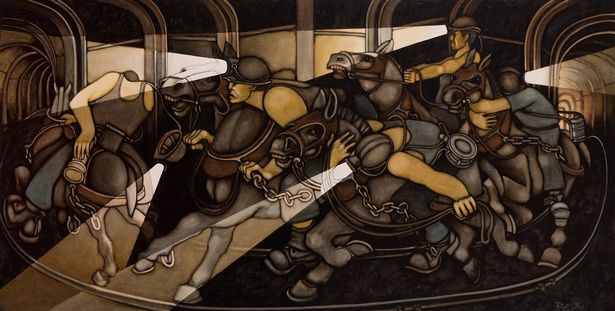
Then I moved away from coal mining for about 15 years then suddenly I got this urge to go back to the subject and this was the type of thing I was doing (points to picture next to him).

0_Mining-Art-Gallery-Bishop-Auckland

Up to about 15 years ago I would say most people in the North East their lives was influenced by the coal industry. The amount of people that were involved with the transportation of coal, the winning of the coal, the processing of the coal, everybody’s life was touched by coal.

Alikivi   January 2020.

SMOULT THE BOLT

In 2006 the idea was to make a number of short documentaries in South Shields featuring residents of the town and their hobbies, interests or passion. The first was Colin Smoult, this was his story and a link to the 4 minute film is at the end. 

South Shields has always been a rock town and even when music has faded and past like the indie culture of the late ‘80s, the big dance boom of the ‘90s then you’ve still got the rock scene.

We might be gettin’ older, greyer, fatter but I think a lot of people in this town will always have a place in their heart for rock music.

We’ve always had people from this town that’s been so fanatical for the bands that they have followed. I’ve grown up with many of them from my late teens onwards and some of them remain just as passionate about their music now as they did over 25 years ago.

My name’s Colin Smoult I’m 42 years old and I live in a town where I was born, South Shields. A small seaside town 10 miles east of Newcastle.

My occupation is a shopkeeper, its essentially what people used to refer to as a head shop. I sell things like pipes and bongs which 20 years ago might have been seen as very risqué.

But this day and age it’s all fairly acceptable. It’s only a tiny shop with a minimum amount of trade but I’m me own boss and if it pays the bills, I’m quite happy. That allows me plenty of time to pursue my other hobbies and interests – my main one is local live music.

I’ve been the singer and guitarist in a band called Shovelmouth for the past eleven years now and we play various gigs in pubs scattered right across the region.

The songs are all rock cover versions, but the pub rock scene is huge in the North East of England. On a Friday and Saturday night there are probably 100 pubs and more putting on live entertainment featuring full on rock bands.

South Shields alone has half a dozen pubs that put on live music and the largest of these is called The Office. Not only does my band get to play there but I am responsible for booking the acts every weekend.

The acts are normally small local bands playing a variety of covers but now and then we put on special events that feature tribute bands, some of these are from out the area.

I’m a rocker at heart but I find there is a lot of people who love this kind of music, so I book the bands that people want to see the most. I’m pretty passionate about live music and only book the very best from the talent that we have.

Some people may see it as a bit sad and may view it as a bunch of middle-aged folkies trying to re-live their youth, but nostalgia is a big booming industry and if people want to see songs from their youth played live in their local pub – then who am I to deny them.

Whether I’m the bloke singing the songs or the man who books the bands I’m content to know I’m doing my bit to allow people to have a good time after a long week at work.

I’m also involved with a website called Riffs which pushes and promotes local bands, and apart from news pages and gig guides I also post up my own reviews of the many bands that I get to see here.

So, I suppose my hobby is full time because as well as being directly involved every weekend, during the week I am always writing things up and arranging things for the venue and my own band.

I like to keep in touch with lots of groups out there and there’s quite a lot of time spent gob shyting with people on the internet as well.

Don’t get us wrong I get a big buzz out of being on stage and entertaining people, but if you’ve got any band up there on stage with a superb crowd watching them, for me the atmosphere in the room is just as enjoyable.

The standard of musicianship on the local circuit is extremely high and is way beyond what people would term as pub bands in other parts of the country.

The old club scene has become a lot more pop orientated in the last 20 years and a lot of the rock players that used to play that circuit have now moved into the pubs instead.

So, the end result is that we have some amazing musicians kicking around and most of the bands that you get to see are free admission too.

So, for a lot of people aged in their ‘30s, ‘40s, ‘50s watching a live band on a Saturday night is a very cheap way to have a fantastic night out. If I’m not playing with my own band, then I’m here at The Office watching them instead.

Either way for me every weekend is dominated by my love for live music. I got tons of pride in what I do. But for me there’s only one true satisfaction and that’s putting a smile on people’s faces.

If I can be involved in any way with live music that others gain a lot of pleasure from, I get immense satisfaction from doing that.

I suppose as I get older, I won’t be able to bounce around on stage in the same way, then eventually there will come a time when I’ll have to retire from live performances, but I’ll always stay involved with the local band scene even if I have to be brought in on a wheelchair.

I’ve jokingly said that when I die, I want my ashes scattered under the stage of The Office. But honestly, it’s as good a place as any and that way I’ll always be close to what I love.

Alikivi    January 2020.

HARD UP in HOLBORN – South Shields photographer James Henry Cleet 1876-1959.

During the 1930’s James Cleet was commissioned by South Shields Public Health Department to make a photographic record of ‘slum housing’ in the riverside area of the town – Holborn and Laygate.

Side Photographic Gallery in Newcastle produced a booklet in 1979 of some of the photos. Not sure if the term ‘slum’ was first used by Side Gallery or Public Health Department?

First time I came across James Cleet was when I was doing some family and history research in the Local History section of South Tyneside Library in 2007.

It gave me the idea to make a documentary highlighting Cleet’s work, and Holborn, the area once known as the industrial heartland of South Shields, plus the digitization project.

The Local History section had been awarded funding to digitize thousands of photographs they had in their archive and load them onto a new website. Volunteers were needed for this process and as I was self employed I could give a couple of hours a week to a worthwhile cause.

Spending time looking through photographs, some from the early 1900’s, of people, places and events around South Tyneside was a great way to spend a couple of hours.

It wasn’t long till I dropped in more frequently. Photographs by Emmett, Flagg and Cleet were an excellent record of the times.

Some images had familiar street names of area’s where my ancestors lived, mainly Tyne Dock, Holborn and Jarrow. Finding a family of photographers called Downey who had a studio in Eldon Street next door to where my great grandmother lived was an added bonus.

There was a small team of volunteers who recorded details of the images, scanned the photos, and uploaded them onto the website, this process features in the documentary.

Street names, buildings, shops and people were researched, as much information as possible was added. On the back of the pictures was nearly always a date or name of the photographer.

But unfortunately, some photographs were left blank and didn’t have any recognizable signs but were still uploaded.

After a few sessions I could recognize the styles of certain photographers and two of them stood out. Amy Flagg added extensive details to a lot of her work and covered some powerful subjects like the Second World War – climbing over bombed houses to get the shot won’t have been easy.

Some of her images became instantly recognisable, in her darkroom she stamped a date in Roman numerals on the bottom of the photo.

There were a load of photographs that were taken in Holborn by James Cleet, his style and composition was of a very high quality with clean, sharp images. Most of the images are taken on overcast, grey rainy days – is that a coincidence ? I doubt it.

The lighting gives the pictures a uniform look and add to the bleak, grim atmosphere of the housing clearance.

In research I found Cleet had regular work at ship launches, plus The Shields Gazette and Daily Mirror. While Flagg’s technique was more handheld, Cleet used a tripod in most if not all of his very sharp pictures. Both were passionate about their work.

Around that time an old guy used to come to the local history section and tell me a few stories about Tyne Dock and Holborn as his family lived in those areas.

Next time he brought in a booklet which he gave to me, it featured a collection of the Cleet housing clearance photographs I’d been looking at.

The booklet also included reports by the South Shields Medical Officer for Health talking about ‘rat repression’ and ‘eradication of bed bugs’. They reported….

’The women had a very hard life. They polished their steps, and the pavement was scrubbed. The backyard was washed regular. There was a question of pride. They had to keep them clean or they’d be overrun with vermin. No getting away with it. It had to be kept down’.

The report also included complaints from residents…

’A’ve seen some hard up times. Families of nine in one room. I knew a family, the father and mother had to gan ootside to do their business. Yes they used to do their courtin’ ootside. The mother used to stand at the telegraph pole on Johnsons Hill and have her love with the husband and then gan yem to bed. You couldn’t do nowt with all the family livin’ in one room’.

In a previous post I wrote about the important historical archive that Amy Flagg had left to the town: her Second World War photo’s plus the book ‘The History of Shipbuilding in South Shields’, the James Cleet housing clearance booklet is just as important a document of South Shields.

To check out the South Tyneside photographs featuring Amy Flagg and James Cleet go to :   https://www.southtynesidehistory.co.uk/

Gary Alikivi   December 2019.