WESTOE ROSE – The story of Amy Flagg, South Shields Historian & Photographer 1893-1965

STH0001974

Research and script I wrote for the 2016 documentary ‘Westoe Rose’.

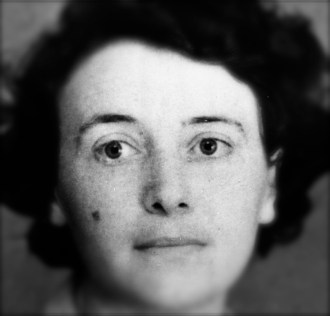
Amy Flagg is fondly remembered as the lady in a hat and trench coat, who quietly went about photographing buildings and recording the history of a town she loved. But who was Amy ?

This is a story of courage and determination of a very unique woman who captured some of the most devastating images of South Shields in the 20th century.

At the end of the nineteenth century the North East was the industrial heartland of the UK. Collieries, Shipyards and Steelworks covered the landscape. Small villages dotted around the area offered their residents some clear breathing space away from the hazy smog of the town.

Westoe Village in South Shields was home to many notable people of the town. The shipbuilding family the Readheads, Robert Ingham MP, and in Chapel House was the Flagg family. In this grand 20 roomed house was Ambrose, his wife Annie and their only child Amy who was born on 30th of September 1893.

Amy’s father originally came from South London, and was educated at Cambridge University. In 1889 he married Annie Broughton of Westoe and was appointed Headmaster of the Marine School in the town.

He was also member of the Ancient Vestry of St Hilda’s where he rubbed shoulders with influential people. He arranged for Amy’s private education.

The young Amy had a brief romance with a neighbour in the Village but sadly like many men from the town he went to fight in the First World War and never returned, throughout the rest of her life she never married.

There is no record of her being employed so what did she do with her education ? This was a time when women had just fought for the vote, was she involved in the Suffragette movement ? Reports describe Amy as a shy, quiet and gentle woman willing to help others.

There is accounts of her spending hours in the garden of Chapel House and having an active role volunteering in the local hospital and library. Whether helping someone find information about the town or reading to a patient in hospital, was Amy now becoming aware of her surroundings and her purpose in life ?

By 1930 she was a member of the local photographic society. At a time when only a few female photographers worked in the UK, a woman behind the camera was very unique.

This is the time when Amy blossomed and began to see the world around her in a different light. She was fascinated by the changing landscape of the town and photographed the housing clearances along the riverside.

But the camera techniques that she had been using were brought into sharp focus in a period that would be Amy’s defining moment in her creative life. She captured the town’s suffering through one of it’s most traumatic episodes: the Second World War.

When the bombs dropped, she captured the scars with her camera.

Amy’s father had died in 1936 and her mother died during the war, plus the town she loved was falling apart from the German air raids. Her life was crumbling around her. These were her darkest days.  

But Amy was determined that these events would not destroy her, having a purpose and remaining active helped strengthen her. She gained recognition for her work and became the town’s official photographer during the war.

After receiving permission from the Ministry of Information and the Chief Press Censor, Amy produced a series of booklets of the Air Raid Damage.

An intelligent, determined and very courageous woman, at nearly 50 years old, she was climbing into demolished houses and onto bomb sites to capture the photographs.

To accompany the photographs, she documented as much information as possible about the areas and streets which were hit by bombs. She also recorded in great detail the time of the air raids and if there were any casualties or deaths.

‘On January 11th 1940 shortly after 10.00 hours South Shields felt the first impact of warfare by the Luftwaffe. The Air Ministry announced: Enemy air craft crossed the coast near Newcastle today. No bombs were dropped. Fighter patrols were sent up and Anti-aircraft guns opened fire’.

The pictures are haunting and as time passes they take on a new meaning for a wider audience. It is as if she was aware of the effect and importance they would have in years to come.

In her dark room she printed every photograph herself of the devastation caused by air raids on the town. With the traumatic events revolving around her, Amy would go to the darkroom where she could feel warmth and security in her own home as images she had taken that day were revealed by the mix of the chemicals.

She would watch the magic happen in front of her eyes.

Even the Flagg family home didn’t escape from the German bombs.

‘At zero 45 hours on the 16th April four bombs fell in the grounds of residential property in Westoe. The first on the edge of a field at Seacroft failed to explode and was dealt with by the bomb disposal unit at a later date. The second and third fell in the gardens of Fairfield and Eastgarth respectively.

The last one on the lawn ten yards from Chapel House. No casualties were reported but considerable damage was done to a large number of houses in the neighbourhood, including over forty roofs of houses in Horsley Hill road which were penetrated by lumps of clay thrown up by the explosions’.

These incredible photographs are considered to be her most valued and precious legacy. In her very extensive diary notes of October 2nd 1941

‘At daylight on Friday morning the Market Place looked like the ruins of Ypres; nothing could be seen but broken buildings; the square was littered with debris and a tangle of fire hose; all the remaining windows in St Hilda’s Church were shattered, the roof dislodged and the old stone walls pitted and scarred with shrapnel.

The Old Town Hall suffered heavy interior harm and none of the business premises were left intact. All the overhead wires were down and it was not until the afternoon of October 9th that buses were able to pass along King Street’.

Experiencing the two world wars, a changing landscape to her town, and both parents recently deceased, creatively and emotionally events of this magnitude would have tested the resilience of most people.

But she picked herself up and threw herself into a frenzied period of her life.

Recording information from parish records, researching family tree’s from notable people in the town, collecting various reports and photographs from the local paper that she would then cut out and paste in scrap books.

She was continually surprising librarians by asking to see little known documents, and then by hand she would record facts then type them up at home.

Amy was tireless in her thirst for knowledge about the town she loved, and with a lot of buildings disappearing during the war she thought it important to record as much information as she could.

Sadly this lead her to the last piece of work which was published by South Tyneside Library Service in 1979. It took Amy eight painstaking years of research to produce the book ‘Notes on the History of Shipbuilding in South Shields 1746-1946’.

‘Shadwell Street and Pilot Street. It is very fitting that these two streets should be the first section in these notes; the eastern extremity of the old township of South Shields was the birthplace and for long the nursery of shipbuilding in our town.

John Readheads story is that of an extremely successful industrialist in South Shields, from being a practical blacksmith, he built up one of the most prosperous shipbuilding firms on Tyneside. He made his way from wood and iron tugboats to large steamers for every part of the world.

John Readhead died on the 9th March 1894 at his home Southgarth, in Westoe Village; he had been in failing health for some time but had visited the West Docks almost daily until the last few weeks’.

Amy also noted the huge effort by Readheads during the First World War. Amongst the constant procession of merchant vessels which needed repairing after being torpedoed or mined, they supplied 20 cargo vessels, 3 armoured patrol boats and one vessel which was converted into an oil tanker for the Admiralty.

Amy noted in the book that nothing better illustrates the importance of Readheads than the genuine rejoicing when local newspaper the Shields Gazette announces in large headlines ‘ANOTHER ORDER FOR READHEADS’.

In her later years it was reported that Amy put as much work into her garden as she did of her house. She spent countless hours planting unusual flowers and plants.

Family, friends and neighbours were constant visitors to it, and she delighted in showing them the statues and conservatories. Even turning the crater caused by a world war two bomb into an ornamental garden.

Amy lived in Chapel House until 1962 when she gave the house and grounds to South Shields Corporation to enable the expansion of the Marine College. This was a heart breaking decision as she lived there most of her life.

‘I have not the slightest idea about the value of the house, but I shall not leave yet. I intend to spend one more summer here’.

But it was something that would of pleased her father as he devoted his life to education in the town. The Marine and Technical College being the successor to the Marine School where he worked for most of his life.

Amy stayed in the village for another three years until her death from stomach cancer on the 22nd February 1965. Her body was cremated and the ashes buried in the family grave in Harton Cemetery.

Amy requested a quiet affair but her popularity meant her funeral was attended by over 200 people including the Mayor of South Shields, her close friend and Librarian Miss Rosemary Farrell and a contingent of medical staff and nurses from the Ingham Infirmary.

In a last generous gesture Amy left a substantial amount of money in her will to Ingham hospital. A small remembrance in the town is Flagg Court, and the local photographic society where she was a member hold a yearly competition where the winner receives the Flagg Cup.

Amy’s extensive papers, research and photographs were all placed with the local library and are still held there to this day. Amy Flagg will be remembered as one of the town’s most important photographers and local historians.

To watch the 12min film check the You Tube channel at https://www.youtube.com/watch?v=gB1a3Y-yFhM

 Gary Alikivi  2019.

WHEN MILLER MET CUNNY documentary about workingmen’s clubs

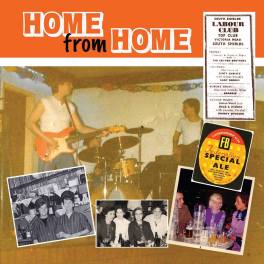
During late 2015 I made a documentary about workingmen’s clubs on South Tyneside and most of the filming took place in the Royal British Legion Club in South Shields.

After initial research I approached Club Steward Pam Carrol about filming in the club ‘What will be your best time ? I’d like to film when there is some entertainment on’.

Expecting a Friday or Saturday night she returned with ‘No son, Monday is best. We’ve got a singer on and an afternoon bingo session. The club will be packed’. It was, and musician Alan Knights provided the entertainment.

009

Wayne Miller and Iain Cunningham, still picture taken from the ‘Home from Home’ documentary 2015.

Included is a transcript of the interview with two of the contributors to the documentary, North East actor’s Wayne Miller and Iain Cunningham, both regulars on stage at The Customs House theatre, South Shields.

A couple of points (or pints) before the stories, filming had to be stopped a few times because I was laughing so hard and if you don’t speak Geordie it’s written in the Tyneside dialect.

Miller: We were part of a travelling pantomime company that did the clubs for 15 years.

Cunny: Yes 1997 we started. We were just bairns.

Miller: Yeah, just young bairns from college drafted in to do touring panto that we thought was a one-year thing ended up being 15 years. It was a great training ground for us as actors.

Cunny: Really is where you learn your trade, where you don’t know what to expect. Was always fun to do. One thing I didn’t realise was how important it was to the people at the clubs you know the whole family day out sort of thing. They saved up and it was a big deal wasn’t it. The kid’s always got a selection box, the dad always got a beer.

Miller: Mam always got a Babycham.

Cunny: Ya know no expense spared.

Miller: Yeah, you are right it was that big, massive day out all the kid’s dressed up in their Christmas outfits and Santa of course. All the club’s provided a Santa to come out after the pantomime.

Which always reminds me of the story when the concert chairman came in, he was like ‘Lad’s, lad’s, we’ve got Santa comin’ in right, so if you tell us when the panto is ending, we’ll bring out Santa, kids are gonna love it, they’ll gae crackers’.

I said alright mate it generally runs for this length of time, we’ll defeat the villain then we’re gonna sing Reach for the Stars. If you listen for that then get Santa ready to come out.

Cunny: We’ll make a big deal of it, a massive thing so all the kid’s get very excited shouting yeah Santa.

Wayne: That was the plan.

Cunny: It was.

Wayne: Lo’ and behold we defeated the villain and right boys, and girls were gonna sing Reach for the Stars now so if you’d like to get on yer feet and… where you goin’ where you goin’ !

Cunny: There was a jingle and right at the back there was Santa.

Miller: 400 kids’ just get up off the floor and run towards the back. We’re just singin’ Reach for the Stars in front of this only kid that’s scared of Santa and is cryin’ his eyeball’s out.

Cunny: Christmas Eve shows were brilliant. The excitement.

Miller: Yeah, they knew it was comin’. Santa’s on his way. But come Boxing Day it was like chalk n cheese.

Cunny: Nobody wanted to be there. Including us. To be fair me and Miller had to go on and whip the crowd up to a frenzy, get them joining in.

Remember doing one club in Gateshead and I came running on first, the music started I shouted Hiya gang. I looked out and the kids were (looking down) just playing with the new toy they had brought.

On concert chairmen…

Miller: Going in the club the concert chairman would greet ya’… ‘I’ll show ya’ round the club lad’s, show yer round the club. There’s yer stage, there’s yer stage right. See that…that’s yer organ.

Both together: Can’t move that. Nah can’t move that.

Miller: There’s the drumkit ower there.

Both together: Can’t move that. Nah can’t move that.

Miller: So, do you think yer’d get yer set on there ?

Cunny: Most of the time we couldn’t. We’d have to scale it down to one bit of scenery and a cloth. And the dressing rooms. Every dressing room ya’ can garantee some turn would have written a note on the wall.

Miller: Turn back lads. Unplug yer gear. Get in the van and get yersel away.

Cunny: Yeah, don’t bother. It’s rubbish here.

On the demise of the workingmen’s clubs…

Miller: It is quite sad, and people aren’t goin’ in and learning their craft. Like group’s, singer’s, acoustic act’s, stand-up comedians.

Cunny: There is no better place to learn.

Miller: Comedy isn’t in the club’s anymore it’s going into the theatre’s, upstairs of pubs. You are seeing now comedians don’t know how to handle a crowd. That’s what the club give ya’.

Cunny: Yeah, they don’t know how to handle the drunk man hecklin’ them (laughs).

13895586_1225372580819888_8204873674232638731_n

‘Home from Home’ 25mins (2016).

9min edit at

https://www.youtube.com/watch?v=vSBp5XD242U

 Interview by Gary Alikivi.


WHEN JOE MET MAD DOG – stories from workingmen’s clubs

In late 2015 I made a documentary about workingmen’s clubs on South Tyneside and  most of the filming took place in the Royal British Legion Club in South Shields.

After initial research I approached Club Steward Pam Carrol about filming in the club ‘What will be your best time ? I’d like to film when there is some entertainment on’.

Expecting a Friday or Saturday night she returned with ‘No son, Monday is best. We’ve got a singer on and an afternoon bingo session. The club will be packed’. It was, and musician Alan Knights provided the entertainment.

004

Michael ‘Mad Dog’ Davis and Joe Peterson in the Royal British Legion, South Shields 2015.

Included is a transcript of the interview with two contributor’s to the documentary, North East club entertainer’s Michael ‘Mad Dog’ Davis and Joe Peterson, both regulars in the club.

A couple of points -or pints – before the stories, the filming had to be stopped a few times because I was laughing so hard and it’s written in the Tyneside Geordie dialect.

 Joe: I tell yer what they used to do, they used to bring their own food.

Mad Dog: They still dae it.

Joe: They bring cheese, crackers things to eat put them out on the table and they would share.

Mad Dog: And everyone used to have their own seat. You can’t seat in that seat. You go into a strange club and sit in a seat. You can’t sit there that’s Harry’s seat. He isn’t here. Doesn’t matter. That’s Jackie’s seat. You can’t sit there. And big fight’s if yer did.

 Joe: We were in the club’s for a long time but the ‘70s were different where there was a boom  and there was money to be made an’ I remember people from mechanics to taxi drivers deciding to play instruments and do stuff on stage, to go and make a living.

Mad Dog: It was yer apprenticeship that’s what it was.

Joe: For the young ‘uns aye.

Mad Dog: You find out now that everyone who done that apprenticeship in the clubs are a different type of musician that you have now.

Joe: A lot of them in the North East, good players start in the clubs and learnt the trade. It was one of the most hardest club area’s in the country, it was renowned for it. So if you could do it here.

Mad Dog: Same with comedians, any top comedian probably started off on the club’s first. Then the good one’s went onto bigger things.

Joe: We used to have regular meeting places like The Crown at Tyne Dock which is a bingo hall but a nightclub as well. Often we’d go there after gig’s and there’d be a musician’s scene. There was so much work about people were working most nights you’d finish a gig and end up there. If yer were a bit of a distance you would hurry to get back for a couple of pints in The Crown.

Mad Dog: We’re talking Tuesday or Wednesday night you could have 10-15 people playing on stage who made it back to The Crown after their show. There used to be a resident duo of organ and drums, next thing you know there’s a guitar, bass, three singers, brass section. Everybody heading back to The Crown.

Joe: After that everybody head off to..

Mad Dog: The Shah Jan

Joe: Yeah The Shah Jan for a curry. It was renowned. The room was full of musicians.

Mad Dog: I counted once,  in a year I had a curry 7 days a week (laughs).

003

On concert chairmen…

Joe: The thing about the concert chairmen is looking back now they were down to earth solid fella’s, lot of them tradesmen.

Mad Dog: Managers in the dock’s.

Joe: Aye in the dock’s, shipyards, then they were part of an entertainment night with a microphone in front of them and Ladies and Gentlemen. Things they weren’t used to. So as musicians we used to look from the outside in and think that’s crazy. Someone with experience just wouldn’t do.

Mad Dog: They’d get a microphone, and the bingo’s on. They used to have sockets on the wall that you plug into the house system and on many occasion the microphone hasn’t worked so they actually started talking into the hole in the wall (laughs).

Joe: Once there was a whistle noise in the background from the p.a and they were trying to find out where the noise was coming from. We had a listen to our speakers it’s not our gear. Then someone in the lounge shouted up to the concert room where’s that feedback come from, what’s that whistle ? And the concert chairman put the microphone to his ear well it’s not our gear (laughs).

On the demise of the workingmen’s clubs…

Mad Dog: The cheapest place in town to drink was the social club and it still is in some of them. Don’t think the kid’s these day’s follow in their father’s footsteps like we did in our era. But it was things like the no smoking, wasn’t a community thing anymore, karaoke, all little things together. Cos it used to be a live thing, you’d go to clubs to watch a live band.

Joe: What’s different about now is people were out most nights. Now it’s once or twice but then there was things on most nights and if there wasn’t you could sit in the lounge with family.

Mad Dog: If yer travel around there used to be thousands of club’s and now there is so many boarded up and haven’t made it. They haven’t moved on, they haven’t tried to change.

13895586_1225372580819888_8204873674232638731_n

‘Home from Home’ 25mins (2016).

9min edit available at https://www.youtube.com/watch?v=vSBp5XD242U

Interview by Gary Alikivi.

WHEN NED MET JACK – stories from workingmen’s clubs

008

Ned Kelly and Jack Berry in the Royal British Legion Club, South Shields 2015.

During late 2015 I made a documentary about workingmen’s clubs on South Tyneside and most of the filming took place in the Royal British Legion Club in South Shields.

After initial research I approached Club Steward Pam Carrol about filming in the club ‘What will be your best time ? I’d like to film when there is some entertainment on’.

Expecting a Friday or Saturday night she returned with ‘No son, Monday is best. We’ve got a singer on and an afternoon bingo session. The club will be packed’. It was, and musician Alan Knights provided the entertainment.

Included is a transcript of the interview with two contributor’s to the documentary, former North East club entertainer’s Ned Kelly and Jack Berry, both regulars in the club.

A couple of points (or pints) before the stories, the filming had to be stopped a few times because I was laughing so hard and the interview is written in the Tyneside dialect. Here gaes…

Ned: There was plenty o’ work and we used t’ dae ten shows a week. Sunda’ to Sunda’ then put in a niteclub an’ that to make up to ten show’s ya knaa. It was non-stop.

I’ve seen us finish after a ten day run for one of the most famous agents in the world. A guy called Andy Green, ex Sergeant Major.

He’d put us in starting at Dalkeith just before Edinburgh, the last show was Fraserburgh right up on the coast.

Then the next day was at Swansea. Next job was Germany so we had to go to Harwich to catch a ferry to Zeebrugge then up through Holland.

Jack: Aye that bloody time we were in Wales. We were in Neath, is that right ?

Ned: Swansea.

Jack: We were in Swansea and he say’s I’m gaan to put pigeons in the piana. This is 10 o’ clock in the morning. He bought some pigeon food, coaxing the pigeons alang, took his coat off, managed to get a few of them.

Straight back to the club, lifted the lid up of the piana put the pigeons in. This is about half past eleven time. Buggered off back t’ the digs, then come back about 7 o’clock (for the show).

Aal you cud hear was coo, coo, coo. Anyway lifts the lid up the pigeons fly oot they’re shyting aal ‘ower the audience, on their claes, in their booze. The curtains are shut, they’re trying to open them to open the winda’s.

Well the mare they wu’ flappin’ the mare they wu’ shyting.

002

Ned: It was the ’70s Gary and it was one of the Giovanni’s big do’s at a restaurant. They were al’ scrap men. It was Christmas time and the scrap yards were shuttin’ for the Christmas and New Year period. There was a buffet on, a big long table full of gear.

They brought their dogs and tied them to the railings on the bar cos you can’t leave dog’s near food. There was Bulldogs, Alsations, Rottweilers al’ kinds and they’re al’ gaan for each other. Well they’re shakin’ and there’s oil an’ diesel aal ower the place, it stunk. It was like midnight at Minskys.

We had to gaan up stairs to get changed and bein’ a restaurant there was a geet big fridge where they put aal the gear ya knaa, the ducks, fillet steaks, aal kinds, and there was this great side of beef.

You’ve seen the lorries getting loaded with the beef and the two legs on the front. We said ‘what we’ll dae is nick the side of beef, chop it up at yem and share it oot’.

(Pointing at Jack) He filled his guitar case full of ducks an’ steaks but we thought How we going to get the beef out the door past the doorman ?

I said ‘what we’l dae is put an overcoat on him and if a doorman say’s owt we’ll say it’s the roadie he’s pissed’. That’s exactly what we done.

We walked a side of beef oot the door past the doorman and put it in the back of the van. Next morning everyone had choppers choppin’ chunks of beef off it was great.

He finished off aal the ducks and never shared with anyone. I shared my fillets with everyone yea never give anything.

Jack: Yea bugger I never got the chance cos the bloke phoned up and said all the meat was condemned.

005

Bingo in session at the Royal British Legion, South Shields (pic from the documentary).

Jack: A club in Darlington right. Get’s in there. Five nights. On the last night, now bearing in mind the bloke who owned the place put a new glass stage on with lights comin’ up ya knaa.

Ned: Aye. I remember it.

Jack: Aye. We asked the fella in charge can I put this piana on fire? The roadie will come on and put a sprinklin’ of lighter oil on. For wu’ encore wu’ll do Great Balls of Fire. Ya knaa ’Goodness gracious great balls of…’ then flick the lighter.

The keyboard will go up but I said the roadie will be ready with the fire extinguisher.

Well he went an’ put the whole bloody tin on it! Flicked the lighter an’ it’s a blaze. They’re all bloody killin’ themselves in the audience they think it’s part of the show. The band are standin’ like tatties, his fingers are on fire.

So I shoved the piana like that (kicks leg out). It went straight through his new glass stage. Polystyrene tiles up a height are al’ bloody comin’ doon. The cortins are alight an’ everything.

When all the flames were put oot ya’ shuda seen the state of that stage.

He (Ned) said ‘well you’re the man for the money kid gaan get paid (laughs)’.

Ned: Yeah looked like he was gonna bost yer face.

Jack: I said ‘who do I see to get paid ? Paid !’  He said.

‘Are you stupid you’ve caused £10,000 pound worth of damage (laughs)’.

On the demise of the workingmen’s clubs…

Ned: No smoking started it.

Jack: It didn’t ya knaa. In the ‘80s the debacle between Thatcher and Scargill, the miners strike God knaa’s what. You gotta remember that in Scotland there was loads of miner’s welfare clubs. A lot of them shut doon. A lot of them shut in this country.

I think that was the beginning of the end. And then is what you said kid.

Ned: In those day’s most people smoked, nearly everybody smoked. The majority of the club’s were upstairs in them ‘50s style buildings. They would come aal the way doonstairs for a couple of puffs off a tab, then aal the way back up the stairs. And gettin’ aulder they were knackered they couldn’t dae it anymore.

They started shutting concert rooms first, finish the act’s, ring the agents, not enough people in.

13895586_1225372580819888_8204873674232638731_n

‘Home from Home’ 25mins (2016).

9min edit available at  https://www.youtube.com/watch?v=vSBp5XD242U&t=8s&fbclid=IwAR2cbMn0A8aLDPe2Ps725KbTitCwmfsYVVzZLsdjkzO55WJDC-8eht8lhrQ

Interview by Gary Alikivi.

WILDFLOWER – making a documentary about George Orwell’s wife, South Shields born Eileen O’Shaughnessy

SEPT 25 1905 copy

In May 2012 I was in the Local Studies library when the librarian Anne Sharp showed me a South Shields birth certificate with the name Eileen O’Shaughnessy. She wasn’t sure but thought Eileen was the wife of author George Orwell. (real name Eric Arthur Blair).

A few weeks passed and I was doing some research in the library when I saw a display at the back of the room that Anne had put together. There were three large boards.

On the left was a birth certificate and census records. To the right was a photo of George Orwell, a newspaper cutting and a picture of a cemetery in Newcastle. This looks interesting.

In the middle was a large black and white photograph from the Spanish Civil War, featuring about a dozen men standing near sandbags and a machine gun.

Then I noticed a dark-haired woman crouching behind the gun. I looked closer. Is that Eileen ? I got goose bumps looking at the photo. What was it about the image? I needed to know more. 

close up copy

There wasn’t much information out there about O’Shaughnessy, just a few bits and pieces that had been mentioned in Orwell books.

So, there was extensive research over the next year or so. Phone calls, letters, checking and re-checking details. Interviews on camera were arranged around the country – one led to another and to another.

It felt like being gently nudged along to find more about her. Weeks and months passed, and I never come across any obstacles. Everybody who was asked wanted to be part of the documentary and were only too happy to help.

Then I put the research to one side as I was also working on another couple of projects, this helps in the film making process. Spending time on something else gives you space away from a project and then you can return to it with fresh eyes and ears.

Autumn 2013 came, and DVD sales of previous documentaries funded more time to start piecing together the film about Eileen.  

Who knew that a library visit in 2012 would take me and my camera, from South Shields to Sunderland, Newcastle, Stockton, Warwickshire, Oxford, London and finally Barcelona.

I remember with the camera in my backpack walking through Barcelona Airport thinking ‘how did I get here?’ It seemed so effortless, the whole process just fell into place.

On 26th March 2014 I screened for the first time the documentary about Eileen O’Shaughnessy in the theatre of South Shields Central Library where I first met Eileen in that photograph taken during the Spanish Civil War.

The Orwell Society, and Eileen’s son Richard Blair, who is interviewed in the documentary, came up North to South Shields to watch the film. The Society also arranged a screening of the film on the Isle of Jura where George Orwell wrote his masterpiece ‘1984’.

Gary Alikivi    June 2018.

Recommended:

Secrets & Lies, Baron Avro Manhattan documentary, 17th July 2018.

Westoe Rose, Amy Flagg documentary, 19th July 2018.

Zamyatin, Tyneside-Russia documentary, 7th August 2018.

Why not check the ALIKIVI You Tube channel for more North East stories.

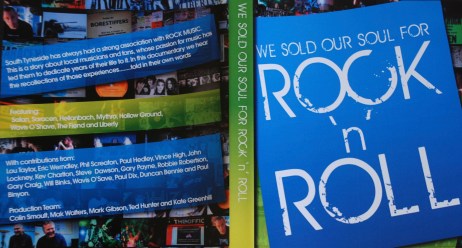
WE SOLD OUR SOUL FOR ROCK N ROLL documentary on South Tyneside rock music.

DSC_0172

In February 2017 I transcribed interviews from the documentary and decided to put them out on a blog. I added some new interviews and updated the originals. Then more musicians got in touch.

The blog has snowballed from North East bands like Beckett to worldwide musicians like John Dalton in California. To date it has reached nearly 40,000 views.

But how did I tackle this documentary and pull it all together? Firstly, I talked to a few musicians who passed over some of their archive of demo tapes, videos and photos. Plus, I already had a number of photographs I had taken through the ’90s.

Then a lot of research was done in the Local Studies Library, South Shields. I remember during the ’80s reading a feature called Young Weekender in the Saturday edition of local newspaper The Shields Gazette. It featured interviews, releases by local and national bands, plus a list of gig dates around Tyneside.

The library had all the Gazette’s on microfilm. It took a few visits but in all it was a good start.

Then during May 2007 filmed interviews were arranged at The Cave in South Shields, formerly Tyne Dock Youth Club, where in the 1970’s some of the bands had rehearsed and performed as teenagers. 

I was surprised at the amount of people who turned up to tell their story, and what excellent stories they were. The title of the documentary is from a Black Sabbath compilation album and sums up the feeling I got when people were telling their story.

Some bands even got back together after 30 odd years. After working on a few other projects, finally in 2010 a 30-minute version of the documentary was screened in South Shields, it was shown a few months later at The Cluny in Newcastle along with a film about the New York Dolls.

In September 2011 a full version was shown at the Central Library Theatre in South Shields. 

‘We Sold Our Soul for Rock n Roll’ is on the Alikivi You Tube channel.

To check out other films why not subscribe to the channel.

Gary Alikivi  2018.

NEW KIDS ON THE BLOCK in conversation with Unified Media

image

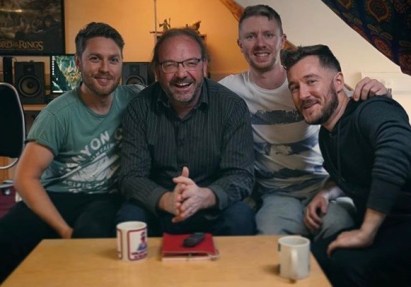
Ryan, Phil and Jon.

Sitting in the HQ of Unified Media at 7 Beach Road, South Shields I’m talking with Jon, Phil and Ryan about how I had an office downstairs in this building over 10 years ago. The stairs didn’t seem as steep then.

I first met Unified Media two years ago when I was looking for a team to help produce a DVD of folk musician Benny Graham and friends singing old Northumbrian songs.

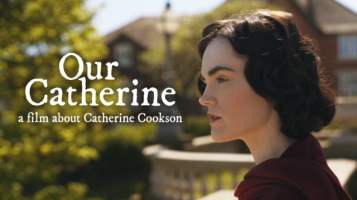
The DVD was screened in The Word, South Shields, as is their latest project about the author Catherine Cookson…

Ryan: ‘South Tyneside Council commissioned Our Catherine. They wanted a film to showcase as part of their new exhibition to commemorate the death of Catherine Cookson, which is twenty years ago this year.

We didn’t want to make a piece with just historical images in a sort of documentary style – instead, we wanted something that was more dramatic, and moving’. 

Phil: ‘Yeah, we wanted to make something that would really pull people in. We worked with playwright Tom Kelly, which he ended up co-writing with Jon in order to adapt his writing for the screen’.

Jon: ‘The intention was to inform people about Catherine but also take them on a journey that as emotional as well as educational. It was important to us that even if you didn’t know who she was, or even if you weren’t from the North East, you could watch the film and still be moved and entertained’.

Ryan: ‘We knew that if we made a historical, documentary piece it may well only appeal to people who knew her, or her existing audience. None of us had any connection to Catherine Cookson and her work when we were commissioned to make the film.

We had to discover her for ourselves when we began pre-production, because up until then we only knew her as someone our Mam’s read when we were kids.

When researching, we were taken on a journey of discovery about a very talented and resilient individual. I think we wanted to take the audience on that same journey of discovery, whilst still appealing to her fans and readers’.

1533117329616

The film has a fairly young cast….

Phil: ‘It does. Catherine left South Shields in her 20s, so we wanted the film to focus on her coming back at that age and seeing her home from a different perspective’. 

Ryan: ‘Fortunately, we found the extremely talented actress and Catherine Cookson fan, Kerry Browne, who did a phenomenal job. It was really important to her that she got it right’.

Phil: ‘She’s from Glasgow but understands how important Catherine is to the people of Tyneside. She wanted to get it right and gave 110%. It was wonderful working with her’. 

Jon: ‘We also had Rachel Adamson, who provided Catherine’s voice. She was brilliant, too. It was a labour of love for everyone. An experience none of us will forget, to be honest’.

Phil: ‘It seems to have struck a chord with a lot of people’. 

Jon: ‘The response to the film has been overwhelming. I think that’s a testament to everyone involved, and how much they gave for us’.   

How long did the whole process take? 

Ryan: ‘We did script amendments and voice overs right up to the wire. It took probably three weeks in total, if you tallied everything together.

Filmmaking is something we’re still working out, as this is the first drama we’ve done together. It’s very much a learning process’. 

You had great weather for the shoot…

Phil: We certainly did. We had scheduled those three days for filming a few weeks beforehand and were blessed with perfect weather conditions. We were very fortunate with that’.

Jon: The blue skies, the sun, swans, insects, mist, you name it – nature was working with us on those days. Nature was working in conjunction with South Shields and Jarrow on those days and showed up for us in a very big way’. 

Have you got a family background in creative work? 

Ryan: ‘Not that I know of’.

Phil: ‘I’ve never been asked that question before, but no don’t think so. Maybe I’m the first’.

Jon: ‘There is a John Burton in the family actually, late 1800 to early 1900’s, and he was a Poet. He was local, didn’t sell millions of copies of his books, but he was certainly creative. That’s the only connection I can go back to’.

banner+full+opacity+contact

Why in one of the most deprived areas of the UK for employment, education etc did you choose a creative job which is way down the list of priority for funding ?

Jon: ‘We didn’t think too much about that. You can make excuses for not taking action, and I certainly have done that before in my life.

We just thought maybe if we do what we love to do, as good as we can, it’ll work out. You could say that was naive, but the proof is in the pudding. I think we just believed in our ability to make it work, if that doesn’t sound too twee’. 

Phil: ‘I think we thought that we might as well risk failing doing the thing we love than carry on doing something we don’t enjoy for the rest of our lives.

Sometimes you can’t help what location you’re in for jobs unless you decide to move, which we couldn’t do. We just let ourselves gravitate to what we love doing and give it our all. We still are. It seems to be working’.

Ryan: ‘I think we had faith and belief that we could do what we wanted to do. There wasn’t a job out there that fit what we wanted, so we just created that job.

We started the kind of business we would want to work for. We were coming across a lot of the advice of successful entrepreneurs and business-owners who suggested as much, and it made a lot of sense’.  

Phil: ‘If it doesn’t work, I can always get a normal job and know that at least I’ve had a good go. Or maybe I’d try creating a different business.

At least then I’d know for sure, and know that I tried, instead of it always being a pipe dream I could never quite bring myself to make a real go of. It could have went that way, but it didn’t, and I like myself a lot for having the balls to do that’.

Jon: ‘It helps we didn’t have kids when we started, and nobody was financially depending on us. I felt it was my responsibility to try it for that reason among others.

I guess also that starting the business wasn’t based too much on blind faith as we observed that despite where you live, it’s a good time to be a filmmaker or a creator of video content because of the absolute surgence of social media.

There’s a huge desire for video content as a result of that. We’re riding a wave it would seem, that you don’t need to move to London to take advantage of’.  

Tell me what Unified Media is, and what the name means?

Jon: Unified Media was about coming together and doing something that would be the combined, unified vision of all of us. We’d already been creative with each other for years prior.

Phil and I made films together at University and Ryan and I were in a band together for a long time. We were always at our best and most fulfilled when creating stuff together.

We wanted to do that as a way of life instead of just something we did on a weekend, or whenever we could get away from our day jobs’. 

Phil: ‘Unified isn’t so much a job in that respect. It’s living your life the way you want to, and being supported for that, financially and otherwise, because you’re good at what you do, and you love it.

You take your work home with you because it isn’t work, it’s just what you do. It can be challenging, but the challenges are always making you better. They’re the kind of challenges that help you learn and improve, in a rapid way’. 

Jon: ‘It’s not like, ‘there’s my job over here and my life over there’ in separate places. It’s broken down the barriers between those things. It’s made them one and the same. That feels more organic and right for us’.

Ryan: ‘It’s not a cakewalk by any means, if this all sounds a little too good to be true. It’s not handed to you. You have to say yes to the responsibility of making something like that work and doing what it takes to make it work.

The challenges come thick and fast, and you’ve got to meet them head on. We’ve realised from that just how much we can take.

Starting a business like this teaches you a lot about what you can handle, what you can endure. There were months where we had no idea where the rent was coming from. We know we can handle that now. We can take the uncertainty.

It certainly chips away at how fearful you are, because you know what you can handle. We stuck together and faced it together. The name Unified came from that, too. We supported each other through those times, which were tricky, to say the least’. 

Phil: ‘We’ve also got amazing partners and family who’ve always supported what we’re doing. Choosing an adventurous, risky lifestyle like this shone a light on those things and made me more grateful in general.

People seemed to believe in what we were doing, and that was amazing. The Unified name then seems to stretch beyond the three of us’. 

Jon: ‘Yeah. There’s a Terence McKenna quote that says “hurl yourself into the abyss and discover it’s a feather bed”. It’s been something like that’.

Ryan: ‘And we’ve just built on top of that since the start. Initially it was all about the passion and creativity, all the gooey stuff – but there’s structure now, which is implied in ‘building’ a business. You can build on that passion, on that principle, on that idea’.

Jon: ‘We’re still building, and the structure is getting stronger. It makes us very proud and fulfils us more than we could have imagined. Unified Media is a dream that is becoming a reality. Let’s say that as a roundup to your question’.

Is it not crowded when you are editing a project? 

Ryan: ‘I prefer when we edit together. That’s what makes something a Unified film. It’s all very dynamic. Editing is never the same process from one job to the next, which I like because it keeps things fresh. It’s not like a factory line thing’. 

Jon: ‘Yeah, it’s very dynamic. You can’t box the process up. For example, if we’re working on something sports-related, Phil will have the initial drive to get it going, because he was inspired to and is the more sport-centric one of us, so we let him go as far as that inspiration took him, then we started co-editing together. But it’s different for every project.

Each of us is good at different things and interested more or less in different areas. The set up helps everyone play to their strengths. Though that’s not to say we never have creative differences, or even… ‘debates’.

Ryan: ‘Learning how to disagree and negotiate in a civil way is a constant challenge’. 

Phil: ‘I can get protective over my work, and I’ve had to let go of that and realise it’s not ‘my’ work, it’s our work. The lads challenge me to be better, and always push me to do the right thing for the project. Jon and I can be pretty stubborn’.

Jon: ‘No I can’t! Haha. Yeah, I absolutely can. We’re always all just trying to do the right thing, though, what the ‘right’ thing is isn’t always obvious, and you get in to the whole subjective/objective thing. Editing is a philosophical quagmire.

Think about it too much and you’ll have a brain-burnout. There are infinite variables, so you often have to learn to balance your intellect with your intuition.

Though of course, you’re balancing all those things with that of two other people! It can get tricky, so it demands that we all be our best and learn how to be more civil’.  

Ryan: ‘We’re reading some books about editing now and it turns out as much about philosophy as the technicalities of editing. In terms of our process, we’ve all got to be happy with something to sign off for the customer to see it, so getting there can be a challenge.

You don’t want a ‘too many cooks spoil the broth’ situation, but you don’t want anyone being dictatorial either. It’s a balancing act, and judging from the response to our work so far, we’re managing well enough! ‘

Phil: ‘We haven’t killed each other yet, so’.  

img_4385

What has been your most challenging project?

Phil: ‘It hasn’t been released just yet, but maybe the project for England Rugby?’

Ryan: ‘Yeah, they hired us after we made a women’s rugby promo video for the Durham County RFU. It did really well, so they approached us to make one for them, but, with a much more specific aim and outcome’. 

Jon: ‘The brief was ‘make a film that makes refereeing rugby appealing to women, and it has to be very emotionally engaging’. That’s the most specific brief we’ve had yet, and it was definitely challenging.

England Rugby wanted to use it for an event in which it had to convince women that authority and rule-keeping was not only appealing, but something they should want to involve themselves in.

In the end, it surpassed the brief and was a massive success for the client’.

Ryan: ‘One of the most fulfilling things yet was getting that right. It might have closed a lot of doors for us if we’d messed it up’. 

Jon: ‘I honestly feel like if we succeeded at that, we can succeed at anything’. 

DUgwp-7XkAAv3xG

Within the three years of Unified Media, have there been any memorable moments?

Phil: ‘Too many to name. Though, perhaps the Home Alone music video for Boy Jumps Ship? We were tasked with recreating entire scenes from the Home Alone films using the band members all within like, two weeks’.

Jon: ‘Yeah, everything miraculously fell into place for that one in such a scant timeframe. We had two weeks to plan, shoot and edit the film, and the prop/location list was massive, and the set ups were elaborate.

We accepted the job with a ‘we’ll make it work’ attitude, but really had no idea how we would. At the time, we needed a music video on our portfolio, so just bit that particular bullet’. 

Ryan: ‘Somehow, one by one, everything we needed just presented itself to us. The two weeks were an absolute whirlwind, and the universe just seemed to let us ride that wave, with each ambitious prop and location serendipitously revealed to us.

It was an absolute adventure from start to finish. People talk about the ‘flow state’, and that’s really what that was’. 

Jon: ‘It was in many a way the embodiment of why we started Unified in the first place. It was us throwing caution to the wind, doing what we love together and having a great time creating stuff as a team. Challenging, yes, but extremely rewarding, too’. 

Ryan: ‘Maybe we could also mention your involvement, Gary, if we’re talking about notable people as well as moments?’

Jon: ‘Yes! It was because of your support and help that we got our first office, and one of our first jobs, and whatever led on from there’.

Phil: ‘Get in, Gary, lad’. 

Jon: ‘Gazza, what a legend’. 

Ryan: ‘That was notable for lots of reasons, but it’s worth mentioning that all of us have worked in the industry before, and encountered a lot of ego, and vibes that almost put us off this work altogether’. 

Jon: ‘Yeah, but when we started Unified, we met people like you Gary, who showed nothing but enthusiasm, support and all-round good vibes’. 

Phil: ‘And here he is again, writing a blog about us and getting us out there!’

Jon: ‘You’d think he was on the payroll’.

 Ryan: ‘Nah, just a class lad with a heart of gold’. 

Jon: ‘What a belter’.

DlsoSo_X4AA-Dqs

To find out more go to the official website : https://www.unifiedmedia.org.uk 

Interview by Gary Alikivi   August 2018. 

TYNE DOCK BORDERS documentary about Tyne Dock in the North East of England.

Growing up in the shadow of Tyne Dock arches, bombing around the streets on my Grifter, playing football on St Mary’s field and as a teenager, a member of Tyne Dock Youth Club in South Shields.

The club had a film night every Sunday. No matter what film was screening I’d get a chair and plonk myself down at the front. The films were projected from a room at the back of the hall. The pictures, colour and sound were gripping. Three films stand out from those nights – Carrie by Stephen King, Monty Pythons Life of Brian and Duel by Stephen Spielberg.  

11741715_490181331141433_1105900592_n

On my Grifter in front of Tyne Dock Arches being demolished in October 1977.

Around 2007 I started researching my family tree with the Local Studies Library in South Shields a great resource. Putting the story together I knew of a family connection to Ireland, but never realised the full impact that the Irish had on the North East and in my case, Jarrow.

The research led to making Little Ireland. The documentary is available to watch on my You Tube channel.

Since then, I’ve filmed a lot around South Tyneside recording stories by local people recalling memories of their hometown. Skuetenders, War Stories, Home from Home, Westoe Rose and Secrets & Lies.

It’s been interesting to uncover and record stories that would have been lost or forgotten.

The documentary Tyne Dock Borders filmed late 2011, includes interviews with residents from this industrial part of South Shields. They remember the railways, arches and ‘colourful’ part of the town.

Also featured are two famous people who were born in the area – author Catherine Cookson and James Mitchell – creator of BBC tv series When the Boat Comes In.

To view the film go to the ALIKIVI You Tube channel and subscribe to watch more.

Gary Alikivi  2018.

SKUETENDERS – documentary about The Lawe, South Shields.

DSC_0165

Over seven years – 2009-2016 – I produced over 20 documentaries around South Tyneside. I never received any funding to produce the films, each DVD was sold to help fund the next one.

Little Ireland’ in 2009 sold well and was sent to ex-pat’s around Europe, Canada and Australia but ‘Skuetenders’ was the most successful. I’ve lost count the number of copies sold, it’ll be around 800. 

The length of any programme can differ from very short adverts to full length films of 100 minutes plus. It depends on the story that you are telling. An interesting documentary on tv can be turned into just a number of soundbites.

They can tell the story but rush over some really good bits with the interviewee talking for less than 10 seconds. I’ve watched a few.

When I had the idea to make a documentary around the Lawe Top in South Shields I didn’t want it to be full of soundbites. I wanted the interviewee’s to have enough time to tell their story. Not only was it important what they had to say but it was all in the Geordie accent.

The idea was to wander around The Lawe Top collecting stories from residents with a narrator explaining the history of this oldest part of South Shields, it even has a Roman fort.  

As with all documentaries made over the seven years, arrangements were made with Hildred Whale at the South Shields Heritage Club to screen the film in the library.

Downstairs had a great theatre with over 100+ raked seats, a stage, large screen, video projector hanging from the ceiling and projection room with VHS and DVD players. It also had an audio mixing desk and mic’s for invited speakers. A great set up.

A date for the first screening on 2pm 19th October 2011 was arranged and that quickly sold out. A later show at 7pm was added. That sold out. Another date was added. Same again, a quick sell out. This was repeated until the film was shown six times.

Further evidence of a thirst that people have to see and hear stories from their hometown. The documentary had a running time of 70 minutes and was repeated in the next documentary ‘Tyne Dock Borders’. Another area of the town with a long history. 

To view the edited film go to the ALIKIVI You Tube channel and subscribe to watch more.

Gary Alikivi August 2018.

LITTLE IRELAND – documentary on Irish immigration into Jarrow, UK

DSC_0313

Sarah McFadden, (7th from left) my Great Grandmother, at Haggies Rope Works, in Willington Quay, Wallsend. A long way from Derry.

Little Ireland came about after I’d been researching my family tree in late 2007. I knew I had Irish background but not sure of the exact locations where they lived.

The Local Studies Library in South Shields was a great source for information. The filing system with the old press cuttings and the brilliant photographs by Amy Flagg and James Cleet of Tyneside in the 1930’s of area’s where some of my family lived after travelling from Ireland.

The old maps were really interesting. I could see where my Great Grandfather Dawson Downey from Derry lived. Bell Street, East Jarrow, across the road was the chemical works where he worked, next door was The Alkali pub and just up the road was St Bede’s Church. I thought thousands of families would be exactly the same. Never having to go very far. Living a small life.

I never realised the full impact that the Irish had on the North East and in my case, Jarrow. The population had grown so much around the 1890’s that the village became a small town.

I started to jot down a few notes when I read an article in The Shields Gazette in 2008 about Irish immigration written by Tom Kelly (Jarrow born playwright). I got in touch and we met up at The Customs House in South Shields. Quickly, a plan was made, a structure for a documentary and interviews with Jarrovians with Irish ancestry fell into place.

It wasn’t forced, it was easy to put together. 

We started filming at St Paul’s in East Jarrow. Tripod up, camera ready, Tom reading the opening lines from the script, but it didn’t feel right. We stopped and went back to my studio. Had a cup of coffee, talked about it then went out in his car again to Jarrow.

I started filming in his car and Tom started talking as he drove. This was more like it. Hand held felt more comfortable, being part of the film. As though an old Irishman had come back and was searching for his town ‘Like driving into the past’.

Over the next few weeks, I filmed interviews with people who had Irish relatives. For one interview I arranged to talk to singer Leo Connolly at his home in Jarrow.

I turned up, knocked on the door but got no answer. I knocked again and heard someone in the house. I looked through the front window and there they were. Two blokes with acoustic guitars and Leo in the middle singing his heart out. That was Little Ireland right there.

The documentary was successful it was screened for the first time to two sell out audiences at The Customs House on St Patricks Day 2009.

The film has been shown at various venues including St Bede’s Church Hall where most of the Irish, and my family, attended when they first came to Jarrow over 100 years ago.

Link to the documentary, to check out other films on You Tube subscribe to the channel.

Gary Alikivi   August 2018.