SOUND & MEMORY – with Field Music’s David Brewis

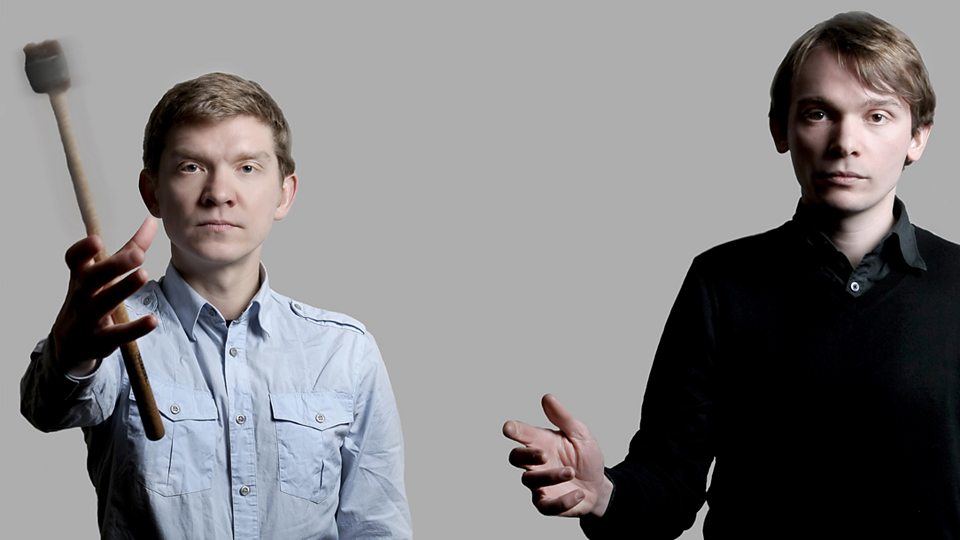
Peter & David Brewis (pic. BBC website)

On the same dial as Roxy Music and Prefab Sprout, are Sunderland bands The Futureheads and Field Music who formed during the noughties…

The music community at that time was pretty tight. I’m sure there was rivalry, but it was also really supportive. We probably shuddered at the idea of it being a “scene” – but that’s what it was.

The spine of Field Music are brothers Peter and David Brewis….

We’d been teaching at a youth music project in Sunderland where we met Barry Hyde who later joined The Futureheads, and a bunch of other young musicians including Ian Black, who’d later join Field Music and release some records as Slug.

We asked Barry to join our band, which was just what we needed really. We could share our experience with regard to getting out there and playing and arranging for a band and he opened our eyes to a lot of music we didn’t know about – Captain Beefheart and The Velvet Underground and the free-er style of jagged edge in jazz.

That was an inspiring time, we had a lot of ideas and started a lot of bands which never played a gig. It took us a while to stop flailing around and make sense of what we wanted to do.

For Barry that was The Futureheads, and for us that eventually became the first Field Music album.

What was your first experience of a recording studio ?

We recorded with Frankie Stubbs at the Bunker in Sunderland a couple of times when we were first starting out – in ‘94 and ‘95 I think. And then we did a gig at South Hylton Working Mens Club to pay for a couple of days in Frankie Gibbon’s studio in Lambton Lion Park.

But really, we felt best recording ourselves. We had a cassette four-track at home and were always working on songs and we fancied ourselves as producers as well as players.

In 1997 we applied for the first round of Lottery Arts funding and they gave us £4000 to set up and run a community studio for six months. We couldn’t afford the rent after that, so we moved it back to our parent’s spare room.

Our first proper release was an EP under the name The New Tellers, was recorded there, along with the first Futureheads demos.

In 2001 we clubbed together with The Futureheads and a couple of friends to have our own studio and practice room in a community centre and since then, we’ve always had our own studio space.

We stayed in that first space for over ten years and recorded three Field Music albums, my first solo album as School of Language, Peter’s album under the name The Week That Was, most of the first Cornshed Sisters album, one of the early Maximo Park EPs, a chunk of The Futureheads’ fourth album and their first EP.

How did you get interested in music, are you from a musical family ?

We, that’s me and my older brother Peter, don’t come from a particularly musical background but our parents were of that generation who grew up in perfect alignment with British rock music.

They were nine or ten when the Beatles came along, 16 year old and trying out rebellion when Let It Bleed (Rolling Stones) came out.

And then in the ‘80s, when they were dealing with us, the few records they bought were either sophisticated adult rock like Peter Gabriel, Kate Bush and Hall and Oates, or sophisticated adult pop like the Pet Shop Boys.

What instruments did you pick up ?

Peter was itching to play the drums after watching The Bangles on Top of the Pops. That was probably 1989. I wanted in on the action so I saved up for a twenty quid acoustic guitar from Argos.

Actually, I’d been saving my pocket money ready for a holiday in Yugoslavia, but their currency was devalued while we were there, so I ended up bringing my meagre savings back and bought the guitar.

We didn’t know what we were doing but we liked the idea of playing music and then found a Led Zeppelin track on one of our parents’ compilation albums I think it was called – ‘By Invitation Only’.

They also had Free Live – we became totally obsessed. Peter learned to play my guitar much more quickly than I did so I switched to bass after a couple of years.

Who were you listening to and who did you watch live ?

We had a brief period of going to gigs at Newcastle City Hall while we were learning to play. The first one was probably Jethro Tull, who had Dave Mattacks playing drums with them on that tour, which is odd because we’ve gotten to know Dave a bit in recent years.

We went to a couple of technical guitar-type gigs – Joe Satriani, Steve Vai – while we were learning to play but that style of music didn’t bed in with us. We bought a Black Crowes CD in about 1993 and that did make sense to us.

We travelled to Sheffield to see them play in 1995 but by then we were already gigging around the local pub circuit.

Where did you first rehearse as a band ?

We rehearsed in the spare room in our parents’ house in Cleadon Village. Our neighbours were very tolerant!

For a long time our bands revolved around me singing and playing bass or guitar, Peter playing guitar live but drumming on a lot of our demos and Andrew Moore, who was our friend from school and an incredible piano and organ player.

Our first drummer was called Paul Taylor. I’m not sure we ever saw eye to eye musically but he was a good drummer and amazing to watch.

A young metaller called David Dorward joined on bass one time, and when we went to college the pool of musicians we knew grew a lot and we played with a couple of really good local drummers – Jaimie Curle and Garry McKenna – though I think we always had a sense that we wanted to be in charge of the drums.

What was your early experiences of playing live ?

We must have played at school a couple of times but the first thing that really felt like a gig was a battle of the bands at Manor Quay called Wearstock in 1994. I think the band was called Underfoot back then.

From 1994 until 1998 we played tons of gigs on the pub circuit, doing mostly covers but gradually trying to add in our own songs. Our favourite venues were places like The Duke of Cumberland in Felling, The Turk’s Head in South Shields, Sleepers in East Boldon and The Keelboat in Fatfield.

There were tons. It was a very wholesome way for a 14/15 year old to spend their free time!

Once we retired the pub-rock band, we were playing at places like The Royalty, Pure, Ashbrooke Cricket Club and Bar 36 in Sunderland and occasionally we’d venture to The Head of Steam in Newcastle.

When did you become a professional musician and how has it worked out for you, is it what you imagined as a teenager ?

We signed a publishing deal a couple of months after I finished university in 2001 and since then I’ve mostly just been a musician. The period from 2001 until we released the first Field Music album was tricky. We didn’t really know what we were doing.

We had very supportive manager and a very supportive publisher but we didn’t understand the extent to which being independently-minded means doing things yourself.

We probably didn’t realise that in order to get a record made our way, we would have to record it and mix it ourselves.

We didn’t realise that in trying to make odd music on stage, we’d have to think very hard about how to make that work for an audience in venues which are primarily geared towards bands whose music is not odd!

Whatever dreams I had about being a musician when I was young have been stripped down to the barest elements and go along with essentially running a small business.

So, yes, I get to make the music I want to make and I spend all this heady time writing songs and being creative in the studio and working out how to play these songs on stage with my friends, but I also have to book hotels and do VAT returns and do amateurish joinery in our studio. It’s harder work than I imagined but also probably better.

What does music mean to you and what has it given you ?

I love writing songs and I love recording. If I ever have a period when I’m not doing those things I get gloomy and anxious. It’s not that it’s the only way I can express myself – I’m a wordy kind of person!

And it’s not that it’s the only thing I’m good at – I could probably have stayed in academia in some maths-related sphere.

But music is the thing which gets my synapses crackling. And in songwriting I can dive into pretty much any topic or follow any curious thought.

The last Field Music record grew out of a commission for the Imperial War Museum as part of a season about the aftermath of the First World War. We ended up researching and writing songs about planning law and sanitary towels and reparations and Tiananmen Square.

Our brains were in overdrive pulling these things together and turning it into a performance and then a record. It’s such a privilege that we get to do these things. But also I feel really proud that we can take on a challenge like that and make it work.

Interview by Alikivi October 2020.
ATLANTIC RIDGE – Steve Hall talks about The Questionnaires new album.

An earlier interview with Steve talking about his time in North East band East Side Torpedoes features on the blog in March 2019.

The Torpedoes were signed to EMI, regularly toured the UK and played the Knebworth Jazz Festival in 1982 supporting Ray Charles. After suffering bad luck in the recording studio, the band called it a day in 1986.

Steve took up a successful career in academia while playing in local bands like The Questionnaires who supported Paul Young at the North Shields Fish Quay Festival in 2003.

In the interview Steve talked about ‘not being suited to life on the road and enjoying more the writing and recording side of music’.

This brings his story up to date, as The Questionnaires have been busy in the studio with new album ‘Atlantic Ridge’.

In early 2019 guitarist and Dobro player Jim Hornsby and drummer Steve Dolder, who I’ve known for a long time, heard an earlier version of one of the songs, Hide and Seek and persuaded me to make the album.

Initial sketches of the songs were made by Jane Wade and I in my home studio, just vocal and acoustic guitar. Some of our other musicians also own home studios or small semi-commercial studios.

Over time we evolved a performing and file-sharing process that worked, recording various instruments, bouncing rough mixes back and forward and re-doing them until everyone felt it was right.

We said we wouldn’t be happy until it sounded like a band who had played together for a long time. It wasn’t easy.

By the time we were happy with the basic tracks, in effect we had played together for a long time. Atlantic Ridge was made between June 2019 and August 2020.

Steve Hall, The Questionnaires.

Who plays on the album?

Our first album Arctic Circles, released in 2002, was a touch on the esoteric side, but we wanted Atlantic Ridge to be more down-to-earth, with a country/folk flavour to most of the songs. We chose the musicians very carefully.

They all had to be good enough to handle one or two tricky arrangements but at the same time sensitive enough to interpret the songs and come up with the parts that sounded right and conveyed the mood for each song.

To be quite honest we think we found the perfect combination. Jim Hornsby (Prelude, American Echoes, Martin Stephenson) on Dobro and guitar is a legendary country/Americana player, and as well as a great player, a great listener – every part he contributed in some way complemented the melody and harmony.

Steve Dolder (Eastside Torpedoes, Prefab Sprout, Glenn Tilbrook, Sid Griffin) on drums and Stephen P. Cunningham (Lindisfarne, The Proud Ones) on bass are as solid a rhythm section as you’ll get anywhere.

Anyone who cares to listen to the album will soon find out why Connecticut-born adopted Geordie Niles Krieger (Assembly Lane, The Often Herd) is regarded as one of the very best folk/bluegrass fiddle players in the country.

That was the core of The Questionnaires’ recording band, and we drafted in some special guests to put the icing on the cake – Roy Pearson on percussion, Liam Fender on organ, Les Watts on piano and Bevan Morris on bowed bass all show why they are constantly in demand for live and recording work on the North-East music scene.

One fellow-musician and songwriter commented ‘This is the North East’s Wrecking Crew’.

They made the production of this album a real pleasure, and where Jane and I pushed them to their limits they pushed us beyond ours.

What themes do you explore through the lyrics ?

The themes that Jane’s lyrics follow vary from thumbnail portraits of interesting characters you meet in pubs and on the streets in provincial cities like Newcastle, to broader themes like the state of the world in these strange times and how it is affecting people.

General facets of modern life like addictive internet shopping and in the sadder moments, broken hearts and lost love. Some of it is quite serious, some of it is a bit tongue-in-cheek.

Lyrical influences vary from jazz, ‘60s pop, folk and music hall songs. I think the standout track is Heavy Heart.

How did you find recording the album in these uncertain times for the music industry?

I knew that recording and promoting independent music is an uphill struggle if ever there was one. The corporate music industry has so many of the promotional platforms sewn up.

They produce some great music and a lot of nicely produced crap, but they succeed because it’s their great music or their crap you hear on the radio or see on the TV every day.

The quality of independent music varies too, but it’s far harder to get airplay, so you don’t come across our great music or our crap on the airwaves every day.

Some broadcasters who support local independent musicians – such as Chris Donald, Gary Hogg, Paul Kirsopp and a handful of others – are the salt of the earth, but we knew it would be a hard road, especially in a band whose ages vary from 29 to 73.

So, we began with the intention of just knocking the songs into shape because we love doing it and always have done, and keeping the recordings for friends, family and posterity.

But we’re all pros or ex-pros, and as we got going we began to think, well, you know, this is sounding OK, so why don’t we put a bit more effort into it and try a release?

As I said, our method of working was tricky. Working in home or semi-commercial studios owned by some of our musicians, initial song sketches on vocal/acoustic guitar sent to the rhythm section, guide drums and bass put on, everything redone again, add guide guitar and fiddle, percussion, organ, backing vocals, rough mixes bouncing back and forth, nobody happy, do it all again and on and on.

Of course Covid knocked us onto the back foot for months. But we persevered – we worked out that if a record label had been paying for the time we all put into Atlantic Ridge it would have cost over a million quid.

As it all came together, we began to enjoy it more and more.

By the time we finished we all agreed that this was easily good enough for a commercial release. We ran it past some pretty hard-headed music industry people we know and they said it was one of the best albums they heard in years.

‘Atlantic Ridge’ main sales is through the site Bandcamp https://thequestionnaires.bandcamp.com/

The album is available as a limited edition CD or digital download. It’s also available on Spotify, I-Tunes and all the other digital platforms. This is a special release for our friends and social media followers.

After a promo campaign Atlantic Ridge will be released nationally on January 15th, when, hopefully, if we get past the gatekeepers, you’ll be able to read about us in the press and hear us on national radio stations.

Interview by Alikivi October 2020.

SHE ROCKS – Blast Studio manager Lisa Murphy talks about a new project for Women in Music Production.

Research has found that women make up a very small percentage of artists, songwriters and producers. I want to address this imbalance.

This project is designed to support more women into the music industry by providing them with the opportunity to develop music production skills’

said Lisa Murphy, Studio Manager for Blast Recording Studios and Production Room in Newcastle

A six month project for aspiring female music producers to further their career in the music industry is starting in November.

The application closing date for this exciting new opportunity in Newcastle is Sunday 25th October, so get in touch now.

Lisa added ‘Working as a female music producer in professional recording studios in the North East, I want to share my skills, experience and contacts to open the door to more women working as music producers.

The course will include working on projects in professional recording studios, masterclasses from professional music producers and individual time in the studio to complete your projects’.

What do you hope the course will achieve ? 

‘The aim is to enable four emerging female music producers to develop skills, knowledge and contacts in order to further their career.

This will be achieved through weekly sessions with myself and other relevant guest speakers, hands on learning in a studio environment, and individual time for each participant in the studio on a weekly basis for them to practice their skills and produce work for their portfolio.

Also built into this programme will be a number of projects developed by myself to give the participants access to other studios, recording session musicians and selected bands in a larger setting with different equipment’.

What is the aim of the project ?

The overall aim is to enable the participants to gain their first important steps into a career in music production, an industry that is heavily influenced by a producer’s portfolio of prior work and contacts.

The use of teachers and music producers such as myself and other selected professionals – local songwriters, sound engineers and musicians – female, whenever possible, will support this aim, demonstrating that there is a place for women in the music industry – specifically in technical roles in which they are currently under-represented’.

Check the website for full details and how to apply:

www.womeninmusicproduction.co.uk

Applications close: Sunday 25th October

Interview by Alikivi  October 2020.

METAL CITY – New album from Chief Headbangers, RAVEN.

With their new album Raven carry the torch, or flying V, for metal into the future.

Excuse the pun but Amazon has been flooded with orders for this new offering from Raven. Why ? Well the word is out.

The Chief Headbangers have tooled up heavy and fired an opening three track strike. Check out the Human Race sequence drop at 2 minutes in.

One of the defining moments on this album is right there. Raven are carrying the torch, or flying V, for metal into the future.

New single Metal City with a glorious big chorus is quickly followed by a ballsy, catchy Battlescarred, with a cry of ‘Raise your hands, to the sky, stand and fall, You and I’.

Added to a Gallagher trademark scream the song builds and reaches out for better times. Surely a future live favourite?

Slick, tricky guitar from Mark Gallagher with balanced precision drumming by Mike Heller rattle and crunch tracks and pound them into submission.

It’s all tightly packed like a mighty coiled spring. There’s even a Motorhead/Lemmy tribute – nice touch lads!

The wide and expansive closer, When Worlds Collide with ‘You meet your maker on the other side’ has turned a potential plod into a triumph. The trio look back over Metal City and watch the sunset. And the credits roll.

On this evidence Raven consolidate their title of Chief Headbangers.

Any contenders?

Alikivi  September 2020.

METAL TOON, METAL CITY video filmed in Newcastle for new single from Chief Headbangers, Raven.

On Tyneside during the ‘70s and ‘80s rock music was heard from Sunderland to South Shields, bounced over the river Tyne to Whitley Bay and Wallsend – the vibrations were felt in Newcastle. A North East New Wave of British Heavy Metal was coming in.

Riding the wave were Fist, Hellanbach, Mythra, Tygers of Pan Tang and Venom pushing metal to its limits and discovering a new energy. Another of those bands was Raven.

Now based Stateside, but originally formed in Newcastle in 1974, early gigs saw the trio cutting their teeth on North East live circuit of working mens clubs.

Headline gigs at Newcastle Mayfair and Dingwalls gained the band a solid live reputation. The gates were opened, and the band went onto UK support slots with Iron Maiden, Ozzy and Whitesnake.

By the early ‘80s two albums ‘Rock Until You Drop’ and ‘Wiped Out’ were recorded in Wallsend’s Impulse Studio on the Tyneside label, Neat Records. Then a call came in from America.

Raven were at the forefront of speed metal spawning the big four beasts from the United States – Megadeth, Slayer, Anthrax and dragging Metallica out on their first, and scorching, tour across the USA.

We know where they ended up. These were life changing moments. Raven knew their future was Stateside and subsequently signed to Megaforce and then major label, Atlantic.

Fast forward 40 plus years and the band are still hitting it hard with new single ‘Metal City’ from their forthcoming album. The music video was filmed on Tyneside capturing iconic structures like the Angel of the North, Tyne Bridge and even St James’ Park home of Newcastle United.

I asked bassist and vocalist John Gallagher did filming stir up any memories when you were at the locations ?

It definitely stirred up some memories especially with one part of the shoot. We were driving to one of the locations when I mentioned “I grew up down that street there” and our video guy Paul said “Then let’s check it out!”

So, the footage with me playing the bass is in the backlane in Benwell where we played football as kids.

After ‘Top of the Mountain’ this is the second track released and both are very strong opening singles, I asked John are the band putting down a marker for what the listeners can expect from the rest of the album ?

Very much so. Top was the perfect choice as the first song as it sounds like one of our early songs dragged kicking and screaming into the 21st century!! And Metal City is not only the title track but it’s a real anthem type song.

Yep, added to trademark Gallagher scream, check out the geet big chorus!

The rest of the album runs the gamut from crazy fast songs like The Power, and a tribute to Lemmy in Motorheadin’. Added to super aggressive tracks like Human Race and Break plus a bit of an epic in When Worlds Collide.

So, there’s variety, and all heavy with ‘all killer, no filler’.

How do you look at this album compared to previous releases ?

This one is a belta! We actually think this album is the best thing we’ve ever done, for a band that’s been around the block as long as we have that’s really a case of laying down the gauntlet to many of the other bands of our era who are putting out ‘ok’ albums.

The band have just released new European tour dates, when was your last gig pre – covid ?

Our last shows were on the Monsters of Rock cruise which departs from Florida. We did the pre-party show in Miami and a show on the cruise.

Always great fun, and we actually did Chainsaw for the first time in about 30 years. We can’t wait to test drive these new songs on stage!

Watch the video on You Tube: https://www.youtube.com/watch?v=jtKKmm6ibOM&list=RDjtKKmm6ibOM&start_radio=1&t=20

Check official website for tour dates and album release:  https://ravenlunatics.com/

Interview by Alikivi September 2020.

EARTH WORKS for Teeside artist Andrew McKeown.

A current photography job I’m working on is documenting the regeneration project near the seafront in the North Marine Park, South Shields – really handy because I only live two minutes away.

Within the building and restoration work pieces of public art are planned so I got in touch with the artist commissioned for the work…..

I am currently working on designs for a large contemporary steel Beacon in North Marine Park, South Shields. The Beacon takes inspiration from the Lawe Top Beacons built in 1832.

The words on the Beacon preserve maritime trade names and celebrate the character of the people of South Shields. The words and trade names have been suggested by the local community.

Do you always involve the community in a project ?

Involving local communities is an essential part of my working practice. I have over 25 years of experience and knowledge in this area.

For previous projects I have devised a wide range of community consultation programs involving local people and schoolchildren, from presentations through to hands on practical sculpture workshops and longer artist in residence programs.

This work helps me refine ideas and sometimes new ideas are formed which develop into final sculptures.

It’s also equally important that local people have an opportunity to work together and create something positive for their community, to gain a sense of pride and ownership in the process and the final artwork.

The processes involved in the engagement work is as important as the resulting artwork.

An interesting example of this approach can be seen in the sculpture ‘Breaking the Mould’ which takes the form of a giant seed which has emerged from an old industrial mould.

The mould is broken and no longer useful but the last cast to be made is a new natural life form. The symbolism creates a striking resonance with the former and future uses of many of the 21 regeneration sites across England and Wales called Changing Places.

The £60 million Changing Places program transformed 1,000 hectares of post-industrial derelict land into parks and open spaces.

Where did the idea come from ?

During dialogue with East Manchester Ladies knitting group, I distinctly remember writing some of the things they were saying to me, like ‘turning over a new leaf’, and ‘Breaking the Mould’ as we discussed their desire to move on and leave behind the scarred industrial landscape, changing it into an urban park and community facility through the Changing Places project.

What got you interested in art, was there a ‘wow’ moment when you saw something ?

Not really, my upbringing was probably the biggest influence on that. It was a very creative upbringing.

McKeown grew up in a working-class area of Middlesbrough, Teesside, UK, as the youngest in a family of four children….

We had a large garden where my father, a lifelong steelworker grew an abundance of fruit and veg. My mother was a primary school teacher and we were always building, making, cooking and exploring.

The family lived only a couple of miles away from the shipyards, coke ovens, blast furnaces and rolling mills of British Steel and the chemical plants of ICI…

If we were feeling energetic, we would walk or cycle to Redcar beach or Eston Hills where iron ore was mined to fuel the industrial revolution.

At school, art was always my favourite subject, and this inspired me to attend art college and then a Fine Art degree in sculpture at Coventry Polytechnic.

Following education, Andrew worked as a community artist delivering school and community-based workshops and small art projects…

These were low budget projects such as one-off workshop days and artist in residence projects. Gradually larger projects became available and I was able to create my own artwork with the involvement of local communities, rather than solely community generated art.

What inspires you ?

The industrial processes of casting and mould making influence my work in both a practical and conceptual way. I often create multiple cast sculptures in iron, steel, bronze, aluminium and stone – these are very durable materials for external artworks.

McKeown uses recurring themes within his work of growth, change and renewal….

I like to work within the environment, and this often means I have to build identity and add character to a space that has very little.

Often, I am working in empty fields or urban parks that only have a few shrubs and paths or working off landscape plans while looking at building sites and piles or earth.

Rather than creating one giant sculpture I often use the available budget to create a family of related sculptures that link to each other and draw your eye to the environment they are in.

Other times I create entrance features that hope to draw people into a space. I prefer that people can engage with my sculptures becoming almost part of them for a brief moment.

On average how long do you work on a project for a client ?

This is very hard to answer but the larger projects can be spread out over years to plan and develop. Then when it comes to manufacturing this can take as little as two months or if I am making patterns and moulds for casting this might take six to eight months.

Is there a satisfying moment during the art process ?

I think the most satisfying time is when I have the right idea for a project. One that I know that I like and know the client and the community are going to like and buy into.

This can often be the most draining and difficult process and it can take a lot of research and community work similar to the Breaking the Mould idea which came after maybe eight months of research and community engagement.

What else are you working on ?

I am currently finalizing designs for a Teeside Retail Park called ‘Rolled into One’. For this project I am engaging the local community to provide colloquial job or occupation names from the local iron and steel industry.

Up to one hundred of these names will be applied to the outsides of the steel box section arms of the sculpture.

There are many unique and interesting names such as Welder, Plater, Catcher, Striker, Roller, Breaker, Burner that will be used and many more. I am currently consulting the local community including my family and friends.

I’m also working on a few other projects, one called ‘Crossing Points’ for Groundwork North East River Tees Rediscovered project, another project is for Middlesbrough Council within its Creative Factory artistic interventions project – my pieces are called ‘Endless Convenience’.

Andrew lives and works in the North East of England and is available for public and private commissions throughout the U.K. and internationally.

For more information and images for previous artwork visit:

www.andrewmckeown.com

https://www.facebook.com/andrewmckeownsculptor/

Interview by Alikivi  June 2020.
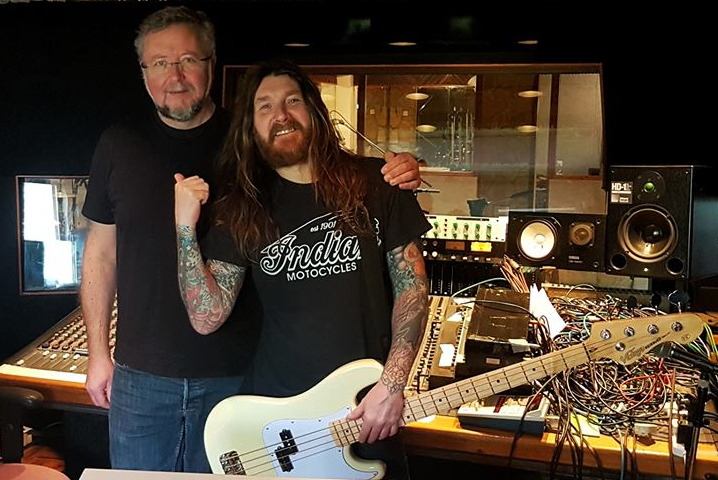
FIGHT AMONGST YOURSELVES – interview with Neil Thompson from The Carpettes

When did you first get interested in music ?

When I was a kid, I loved listening to records and watching singers like Billy Fury and Joe Brown on TV. I had my first single when I was two.

I also saw my first gig when I was two, which was Billy Fury at Sunderland Odeon in March 1962. By the time I was eleven I had about 150 singles in my collection.

I saw The Kinks at Sunderland Empire in 1969 and that was the start of me going to gigs in the North East – Led Zep at Newcastle City Hall, Queen at Sunderland Locarno, Sabbath, Genesis, Lizzy, Budgie, Nazareth, absolutely loved them all.

When was your first gig in a band ?

My first gig playing in a band was as a drummer. We were called Brown Sugar and it was on the 22nd November 1974 at Newbottle Church Hall, County Durham.

We played Chuck Berry and Rolling Stones songs to kids that wanted Led Zeppelin and Black Sabbath – we went down terrible. When we finished the vicar locked us in the back room cos they were banging on the door wanting to beat us up.

I played drums in that band for another four gigs and in the meantime started playing guitar/vocals in another band. We were doing Status Quo/Thin Lizzy covers and I played nine gigs with that band.

The last one was my first pub gig at the Sunderland Royalty in March ‘77.

By this time I was getting into the punk scene and one night I was in The White Lion in Houghton, County Durham and George was there – bassist from Brown Sugar.

We hadn’t seen each other for a good while and first thing he said was ‘Have you got the Ramones album’. I said I did, so he said ‘Well do you wanna be in a punk band then’.

The problem was that I was a drummer, but he’d seen one of the gigs where I played guitar and sang and thought I was good enough. We did our first gig as The Carpettes in June 1977.

What was your first experience in a recording studio ?

We did our first recording at Impulse in Wallsend that was in the summer of ‘77.  The demo is available on The Early Years, a CD released in 1997 on Overground Records.

Did you support any name bands ?

While we were living in the North East we gigged with Penetration, Punishment of Luxury and Angelic Upstarts. We also supported The Vibrators at Redcar Coatham Bowl.

Among all this we played one gig in London at Leytonstone Red Lion in March ‘78 supporting The Leyton Buzzards. This was the only time, thank goodness, that I was spat at during a gig.

The Carpettes released six singles and two albums from 1977 to 1980 including a 4 track EP in 1977 & ‘Small Wonder’ 7” both on the Small Wonder label.

Two albums, Frustration Paradise & Fight Amongst Yourselves on Beggars Banquet.

How did signing with those labels come about ?

We were on the Small Wonder label while we were living in the North East. That came about when we answered an advert in the Sounds music weekly for new bands and they liked us.

Me and the bassist, George, moved down to London in October 1978 and found a new drummer. But it was like starting from scratch when we moved down there but we signed to Beggar’s Banquet in June 1979.

We stayed there until 1981 then moved back up North.

Did you appear on TV or radio ?

We were on tour with The Inmates at the time and had to cancel one of the gigs at London to travel up to Manchester to record The Old Grey Whistle Test. They’d already played a track from the album on a previous show. The other band that was on was The Blues Band.

Did you have any high points in the band ?

I don’t know about high or low points – all I know is that we got better and better as we gigged. Our new drummer, Tim Wilder, was a really solid drummer, he was from Oxford but he’d been a student at Newcastle University and was the drummer in The Young Bucks while living up North.

I loved going to The Marquee to watch bands, but I didn’t really enjoy playing there to be honest. We did six supports there and they were hard work – there was always a ‘Come on then, impress us’ in the air !

We played four nights in November ‘79 with The Lurkers during their residency there. Each gig would have punks sitting on the stage with their backs to us and every now and then one would look around and stare at you – and then turn back around.

I much preferred London gigs like The Hope ‘n’ Anchor and The Nashville.

By the very last gig for The Carpettes in June 1981 we were a really tight live act with four years gigging experience – you can’t beat live experience for getting better on stage. It’s no good sitting in the bedroom playing guitar – not gonna get you anywhere.

One story to tell is that one of our first gigs was supporting Penetration at Newcastle University in November ‘77 – and we were terrible !

It was far too early to be playing gigs like that, but we supported them again at Middlesbrough Rock Garden in August ‘78 and went down a storm.

Have you any road stories ?

In 1980 we went to Italy three times and Holland once, and we also did a short UK tour supporting The Inmates. That UK tour was probably the best two weeks of my life.

I was twenty years old, travelling around the country playing music and when we arrived at the venue all the equipment would already be set up by the roadies – heaven!

What are you doing now ?

Well I’ve spent most of my life down London. I was in my own band called The Only Alternative – all my ideas and songs which was a bit selfish.

But we had some laughs for a couple of years between the summer of ‘84 to the summer of ’86. We released an album in 1985 on the Midnight Music label.

Then with the 20th anniversary of punk happening in 1996 I got both bands back together, well sort of with different line-ups. Both bands gigged on and off until the end of 2003.

During this time The Only Alternative recorded two more albums and two singles. I played drums on all of these recordings – as well as being the singer. The Carpettes released a single in 2002 and an album in 2003.

At the moment I have a three-piece band called The Alternative Carpettes which play some of my songs from The Carpettes with some Only Alternative ones thrown in.

What does music mean to you ?

Music means everything to me. All my life has revolved around music. I love all sorts of music. I love orchestral music like Tchaikovsky and Prokofiev.

Love the ‘30s and ‘40s swing bands like Basie and Ellington. Rock ‘n’ roll, country, rhythm and blues of the ‘50s. I have a radio show playing ‘50s music every day.

I also love punk, metal, indie, 78’s, cassettes, records, CD’s.  I love it all. I don’t like TV or read books – my whole life is music!

Check out The Carpettes from this 1980 episode of the Old Grey Whistle Test.

https://youtu.be/LvUt7yeAepw

Interview by Alikivi  May 2020.

LONDON CALLING: Nights at the Marquee Club

The heart of London’s music industry was the legendary live music club the Marquee, along with CBGB’S in New York, the club has been defined as one of the most important music venues in the world.

It provided the catalyst to launch the career of many bands – The Rolling Stones, The Who, Led Zeppelin – the list is endless.

A&R men used to regularly visit the club to watch out for the next big thing and with plenty of bands looking to make it, the best way was to be seen on stage of the Marquee.

Graeme Thomson wrote in his biog about Phil Lynott –

‘It was do or die. Thin Lizzy were £30,000 in debt. Money was borrowed for their showcase gig for Phonogram at the Marquee on 9th July 1974. It was so hot that night that all the guitars went out of tune, but they played well enough to confirm the deal, even if the advance for a two album contract only cleared what they owed’.

Mick Wall’s biog of Lemmy featured the time Motorhead stormed the capital, guitarist Fast Eddie Clark remembers…

‘The Marquee gig was one of the best we ever did. Lemmy said the sweat was climbing up the walls trying to get out’.

Bands from the North East of England – White Heat, Angelic Upstarts, Fist, The Showbiz Kids, Punishment of Luxury, Raven and Tygers of Pan Tang all travelled south down the M1.

Was playing London the catalyst for a life in music, or just a road too far for some ?

John Gallagher from Chief Headbangers, Raven  ‘The running joke was – c-mon lets git in a van and gaan doon t’London ! We did quite a few one off support gigs. It was in the back of the truck, drive down to London, play the Marquee with Iron Maiden and drive back straight after the gig’.

Harry Hill, drummer with Fist remembers…’We played the Marquee for two nights supporting Iron Maiden. We were going down an absolute storm, the place was packed. I’m not sure what the band thought about it but their manager was kicking off “You’re just the support band, you’re not supposed to go down like that” 

We won him over in the end and he came into the dressing room with a crate of beer. Yep we gave them a run for their money’.

Residencies were part of the scene and a few North East bands got on the list including Dire Straits. This advert from March ’78 with admission fee only 70p.

Select dates for North East bands listed as playing the Marquee:

1976:   Halfbreed 15 & 29th January & 3rd March.  Arbre 4th April.

Back Street Crawler 11 & 12th May with AC/DC as support. Cirkus 15th May.

1977:  Penetration 29th June opening for Heron also 30th July & 1st August opening for The Vibrators.

1978:  Penetration 21st June. Punishment of Luxury 3rd October.

1979:  Showbiz Kids 3rd February. Punishment of Luxury 13th February.

Showbiz Kidz 21st April. Punishment of Luxury 7th May.

Showbiz Kids 19th May & 14th June & 14th July.

Punishment of Luxury 23rd August & 31st October.

1980:  Raven 5th, 6th, or 7th November with Taurus or Diamond Head opening for Gary Moore.

1981:  White Heat 29th April.

1982:  Angelic Upstarts 18th February & 12th August.

The Marquee at Charing Cross Road finally closed it’s doors in 1996 after first establishing the club in Oxford Street, then it’s heyday in Wardour Street.

Alikivi  May 2020.

APPLE OF OUR EYES with radio presenter & author Nigel Pearce

Radio Presenter Nigel Pearce has released a book on the products of Apple, the company originally founded by The Beatles in 1966…..

The Apple group delved into Records, Films, Publishing, Electronics, Retail, Studios and until now it has been hard to find a complete listing of what actually was done under this banner.

Take a look and discover what Frank Sinatra recorded for Apple along with just about everybody from the scene at the time.

What inspired you to write the book ?

The inspiration was quite simple really apart from The Beatles recordings themselves, nobody ever mentions Apple Records, and what the company originally stood for as ‘a foundation for the arts’.

Knowing a fair bit through my own research, I started to dig a little deeper and wow the info started coming.

Also knowing musician Pete Dodds was a huge spur, because his efforts have gone very largely unrewarded, so I thought that would be a real bonus too. So, with those two reasons being central, I began my quest.

How long did it take to research and write ? 

The whole project took me about a year, due to the checking, and rechecking to quantify everything properly, then finding the correct prose and photographs and finally interesting a publisher.

It all takes time and mounts up to an astonishing degree, which then takes on a whole new ball game and becomes much more than a personal quest.

But overall, I feel satisfied as this will alert more people to what Apple did, and maybe that was the main reasons why the name was pirated, you never know.

Is this your first book ? 

I have written two previous books on Aviation, which has nothing to do with the music scene or The Beatles, both now sadly out of print. The publisher for this book The Apples of our Eyes is United p.c.

Did you find any interesting facts when researching the book ? 

There are many surprising and staggering facts uncovered, and that makes the whole scenario that much more incredible in the whole scheme of things. The vision that the fab four had was so far forward thinking for the time, that they are all the more incredible now in 2020.

Perhaps it was their united vision that caused so many problems, no-one could keep a handle on things.

What are you working on now ? 

Several very interesting projects including Pete Dodds new album, and unearthing some more unknown gems from several quarters including Splinter

1970’s North East band signed to Dark Horse, George Harrison’s label. Check out their 1974 hit song ‘Costafine Town’.

Also continuing with the radio show Groove Britain, which is now in its seventh year, all hard work.

Where is the book available ? 

The book is available on Amazon and from all good booksellers so seek it out and enjoy. Go on take a slice and see how much of those halcyon days of the ‘60s still reverberate in our lives.

After all The Beatles gave so much to lighten up all our lives, and you know that can’t be bad.

Listen to Nigel, who is based in Norwich, broadcast for Groove Britain, now in its seventh continuous year and growing.

Find Future radio at 107.8FM. The show is a two hour programme that goes out every Sunday at 3pm, also broadcasts for Swindon 105.5FM on a Tues/Wed/Thurs at 1pm with repeats in the early hours.

Also broadcast for Radio Stockton FM and UK Radio via Carol Miller in New York City Q104.3FM and on Soundcloud.

Interview by Alikivi  April 2020.

SLAVE TO THE RHYTHM – in conversation with Gav Gray bassist with Tygers of Pan Tang

46485680_10213150965549751_388825270502555648_n

After their last album in 2016 and touring throughout Europe, the Tygers are back and about to release their new record ‘Ritual’. The second with the line-up of Jacko Meille, Robb Weir, Micky Crystal, Craig Ellis and Gav Gray…..

Yes, it was a lot of hard work, three months of prep, writing and arranging. So when we got into the studio we were ready for it. We knew we were gonna make a great album – and we have.

The band used Trinity Heights Studio in Newcastle, former guitarist with the Tygers, Fred Purser is owner and producer…..

Yeah, lovely bloke, we got on really well, he loved my tea and morning hugs (laughs) ! He would say to me during a take,

Try and play less hard’, so I tried, and then he`d say, ‘Nah, just play the way you do’. He had a plug in to pull it back in (laughs).

Some of the lines I’d written and rehearsed with the lads sounded fine until the guitars were layered. Being in a two-guitar band sometimes requires that ‘less is more’ and most times that’s true, the bass doesn’t need to be too busy, just a really solid rhythm is all that is needed on a lot of hard rock songs.

My thing has always been for the rhythm and timing over busy, it’s all about the one. I was never a practising musician, just a frustrated drummer!

56635165_10214052636170953_4792916325305417728_n

How did it go in the studio ?

On day one we just set up, got some drum sounds, got comfortable and worked towards day two to have some drum and bass takes with guide guitars. This is how we do it. We will play the songs that have an easier approach, leaving the harder ones for later.

Craig is in the live room. Me and Mick would be in the control room with Fred. We had worked on the songs for months so when it came time to record the song’s it didn’t take long.

We were well prepared. Me and Craig (drummer) did a couple of the songs in one take as a drum n bass jam, which are on the album.

Robb added his guitar and Jackie flew in from his home in Italy on the last week of recording to do the vocals. It all worked well, everyone’s playing on the record is fantastic and because we were tight, the songs just came together as we expected.

The whole session and working with Fred was, for me, one of my best yet. It`s a great place to make a record.

How did the songs come together for the new album ?

We each work on ideas at home doing demos and then take them into rehearsal’s and work out how it`s all going to fit together. ‘This is the bridge, That’s good for a chorus’, Big riff intro`sort of thing and dissect the structures for each song until we have a rough arrangement. Then all the bit’s that make a song special, you fine tune them.

When they get into the studio, we play them through and maybe somebody makes a mistake but sometimes that’ll work within the song – a nuanced piece, a happy accident really.

When that happens, it’s a great feeling. That’s a great part of making music – just by playing, those accidents can become your favourite part of the song.

Do you write some songs just to be recorded in the studio ?

No, all songs are written to play live. Whether or not we play all of them live is another thing. I don’t know any band who plays just for the studio and to be honest you should be able to play all your songs live.

How did you join the Tygers ?

This latest run has been since 2011. But back in the ‘90s I originally met Jess Cox at a gig I was playing at the Riverside, Newcastle. He approached me after the gig, told me about owning Neat Records and having a few bands on his roster.

He was looking for a bass player for future touring and recording. This was a big deal for me cos I was just playing around local bars on Tyneside.

We met up and he mentioned Blitzkreig who I had heard of, and I said yeah sounds good, so I done that for a short while, doing a handful of shows and a festival in America.

Then Jess wanted to get the Tygers back together, this was 1999. Robb Weir was already in and me and Chris Percy the drummer came as a rhythm section cos we had bounced together from band to band.

I said to Jess he (Chris) was really solid and will kill it. And he did. Then a guy you interviewed not long ago, Glenn Howes was brought in on guitar.

We rehearsed for a couple of months in the Off Quay buildings near The Cluny in Newcastle then went off to Germany to play the Wacken Festival in front of 10,000 people. The biggest gig of my life at the time.

But when we got back to the UK there was some bitterness within the band and it ended, it’s the way it goes sometimes. But Jess had always been good to me and got me a lot of gigs. I think around that time I must have been in about three bands on his roster.

Then out of the blue I got a call from The Almighty. They were a big name so what ya gonna do eh ! I turned them down haha! I was fed up with the music scene and wanted out.

It wasn’t till a few months later I came home from a night out and my girlfriend told me that the Almighty management had been on the phone again. I thought, hell, why not, it’s what I wanted to do so jumped on a bus down to Oxford after learning five songs, talked to the band, played a bit and got the job.

Loved my time there but unfortunately only lasted about 18 months cos the band were dropped from the label.

A couple of years later Ricky ends up in Thin Lizzy, he’s a great bloke and I still keep in touch with him. In fact, he just got the Tygers the gig of supporting Saxon in the Dusseldorf Arena.

He called me up and said ‘Can the Tygers do it ? I talked with the rest of the band and our manager and agreed it would be great for us to play in front of 7,000 people just before we release our new album.

Since this interview Saxon have been forced to postpone all upcoming gigs in 2019 due to frontman Biff Byford undergoing heart surgery. Get well soon Biff.

In the Tygers live set the band play a few songs from their first album Wildcat…..

Love playing those songs from the first album, it’s my favourite, there was just something about it. It’s got a great, dirty sound – it’s got attitude, and Robb wrote song’s from the heart.

When it was released in ’79 they were just out of the punk explosion and Insanity was one of my favourite songs. Around that time I went to see local bands Fist, Hellanbach and Angelic Upstarts in South Shields.

The first single I bought was Hanging on the Telephone by Blondie, still one of my favourite ever songs. Then I saw Lemmy on Top of the Pops and thought ‘That’s what I wanna do’.

It wasn’t until I was 21 when I started playing bass in bands. Everyone wanted to be a guitar hero so I thought that if I buy a bass I might get a gig haha.

I played along to my favourite records for a year and just wanted to join some band’s, have a laugh, have a beer and just have some fun playing.

Being from South Shields I started looking around the Tyneside, Sunderland and Washington areas to get a few gigs. That’s where I joined a band called The Junkies around ‘89/90. That was my first band and first gig.

Are you looking forward to the new album release in November ?

Yeah, the record company will set the exact date. The mix is now finished by Soren Anderson he worked on our last album. Harry Hess will be mastering it again, making it as fat and big a sound as you possibly can – basically sprinkling fairy dust on it (laughs).

Finally, it goes to print so yeah, the record company will have a date soon. I’m just really looking forward to hearing the final tracks cos we worked so hard on that album. I know it’s a bit of a cliché, but we really feel it is one of the Tygers best albums.

‘White Lines’ will be the first single, released on 27th September on all platforms, and a 12″ vinyl limited release of 500 copies for all you collectors will be available from:

http://targetshop.dk/…/tygers-of-pan-tang-white-lines-12vin…

For further information contact the official website:

 http://www.tygersofpantang.com/official/

Interview by Gary Alikivi    August 2019.