LAST GANGS IN TOWN – South Shields ’90s Music Scene

The title reflects the original music scene in South Shields during the 1990s. The town had countless numbers of venues booking bands who played their own music.

But it isn’t the case today. Looking through some photographs I took then, I wondered what the bands thought of those times ?

Iain Cunningham, (Cripplin’ Jack) The 90s was a great time for music. In Sunny South Shields by the Sea the original music scene was thriving. There were original bands with lots of venues willing to give them a stage to hone their craft.

Whether it be a Sunday night in the Ferry Tavern, Wednesday night was spent in Porters and The Vic was a Monday night downstairs or Saturday night upstairs. There was always somewhere to watch original music.

It felt very much like a community and I’m surprised none of the bands actually cracked it and broke through to the mainstream. It was a great scene to be part of.

The nights had great crowds, a cracking atmosphere and cheap beer promotions, which usually lead to hangovers and regret.
45822212_2074535359271871_2773578816197492736_n

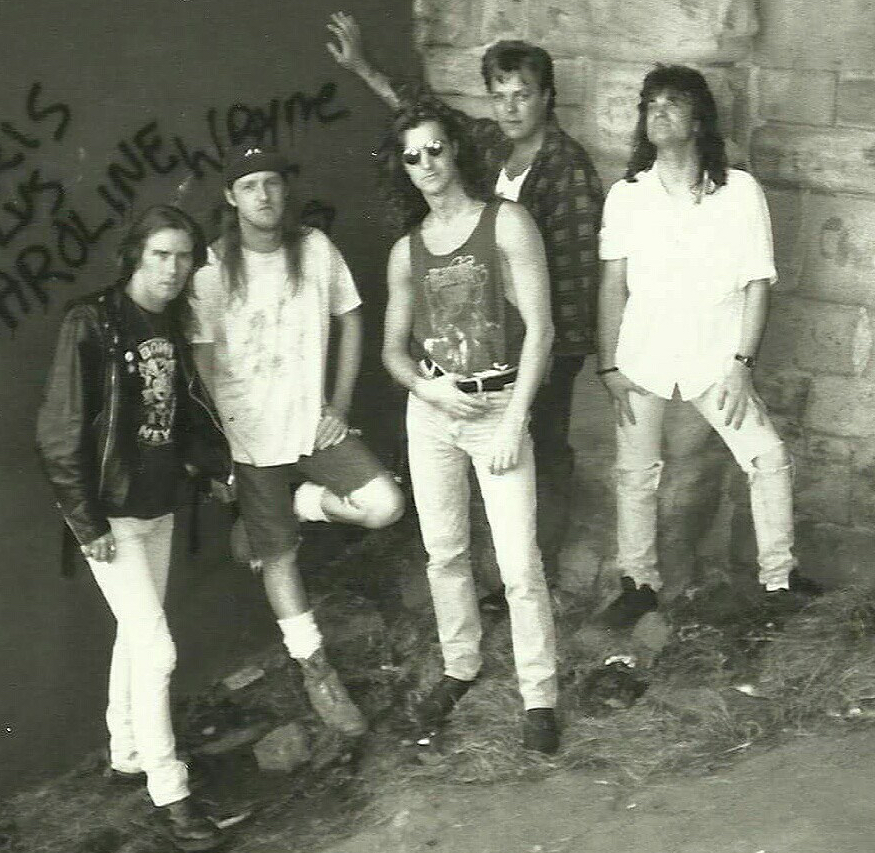
Cripplin’ Jack in 1996. Iain Cunningham on the right.

Crippling Jack were formed in 1995 by Ian Maxwell, Dean Walsh, who was later replaced by Paul Westgate, Richard Gardner, Christopher Charlton and myself.

We went on to play all over the North East and recorded our demo John Woo E.Q. in the Underfoot studios with Dave and Pete Brewis, who themselves, are enjoying a great career in music with their band Field Music.

Davey Mac was a supporter of the music scene. His rehearsal rooms were legendary and, if they could speak, would tell some stories. I think we still owe him a small fortune as we always ended the rehearsal shouting back up the stairs to him ‘We’ll pay you double next week!

Actually Crippling Jack reformed in 2009 and went on to play more gigs around the town releasing two more EPs. After nine years apart, vocalist Ian Maxwell summed up the bands feelings as he stepped up to the mic and declared… ‘It’s good to be back’.

Iain Robertson, (January Blue) This band had many incarnations, and it all started with me and vocalist Woody who were mainstays throughout January Blue and later New Rising.

We first played a gig together in April ’92 at Cleadon Village Hall with another band called Agadoo Factory. This gig featured the first song Woody ever wrote called Die Forever !

We wanted to keep going and little did we know that we’d be still playing together eight years later, frequently visiting London having gained a record deal with London records.
313387_222328291159263_1307504854_n

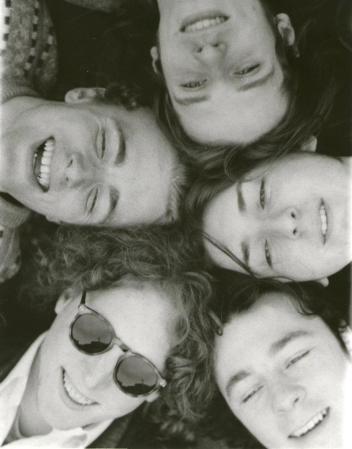
January Blue in 1994. Iain Robertson at the top.

We’d heard Pete Edmonds the manager of Porters bar in South Shields, would pay £300 a gig if you managed to pack the place out. So we hit every bin in King Street with a flyer and our piece de resistance was at 6.30am hanging a bed sheet on both sides of Westoe Bridges to catch the rush hour traffic coming in and going out of town.

We got an ear full (and rightly so) for plastering one flyer on the arse of the war hero Kirkpatricks donkey statue in King street, which in hindsight was disrespectful but hell – we had a gig to promote.

Needless to say, Porters was full, we got our £300 quid and Pete Edmonds was bouncing around and grinning like a Cheshire Cat. He booked us again and we were definitely in a good bargaining position for the next gig’.

Newts Newton, (Cloud 10) On reflection, I didn’t really enjoy the ’90s in general for many reasons but musically, I detested all that ‘mad for it’avin it’ laddish bollocks.

It seemed like every new band had curtain haircuts, walked like chimps and stood onstage like tins of milk, wearing tracker tops zipped up to their noses, all while strumming mindlessly with faces like a smacked arse. Trying to be ‘edgy’. Aye right, fuck off man.

Meanwhile, the band I was in at the time, Cloud 10, were writing kitchen sink drama style songs that moaned about all and sundry, while we marched about in overcoats and quiffs thinking we were the fucking Clash, glowering at everyone (laughs).

311185_221431381248954_98958188_n

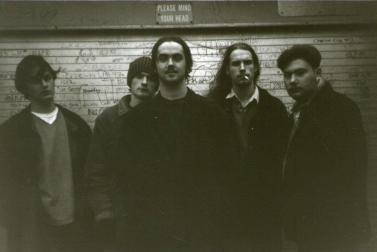
Cloud 10 in 1996. Newts on the right.

Locally, plenty bands were springing up and yeah, we in Cloud 10 pretty much sneered at them all. Not that we had much to be smug about mind, we were arrogant and nothing special really.

Looking back, being brutally honest, it was a waste of time as our band were better at talking about things, instead of actually getting up and fucking doing them.

Although one night, two of us did go out and do some promotion work with two roller brushes and 10 litres of minty buff emulsion paint. But ultimately, it was all pointless.

Interviews by Gary Alikivi    December 2018.
DANCING IN THE MOONLIGHT with Sunderland musician Ian Munro

MAIN PIC

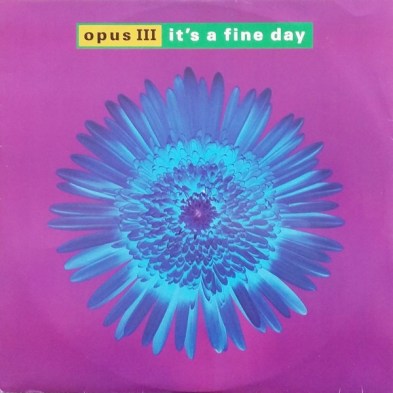
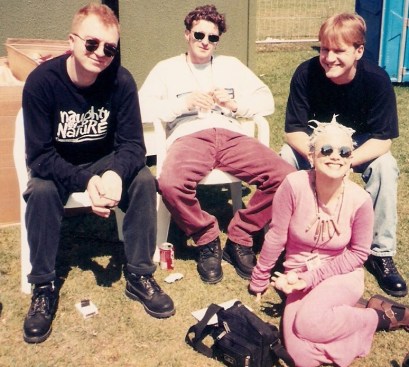
As a co-founder of the ’90s dance band Opus 3, Ian Munro (pic. on right) had a big hit in 1992 with ‘It’s a Fine Day’. But the song had an earlier beginning…

‘In the ’80s Manchester musician Edward Barton wrote and recorded ‘It’s a Fine Day’. I first saw him playing on live TV programme The Tube. The song was also played on Radio 1 but didn’t chart.

One Sunday evening at our studio in Sunderland I remembered that ‘Fine Day’ was acapella, so we sampled it and in about three hours it was basically done. We had no doubt it was going to be a hit !

The song reached number 5 in the UK and number 1 in the US dance charts with appearences on Top of the Pops, The Word, Jonathan Ross show, and performed live in Paris and Japan.

‘From ‘It’s Crucial’ a band I joined in 1984, to A.S.K. and Opus 3 my constant musical partners were Nigel Walton and Kevin Dodds.

We needed new vocals on ‘It’s a Fine Day’ so we recruited Kirsty Hawkshaw who was Kevin’s ex-girlfriend. We met Kirsty during our first stint in London.

Opus 3 was me on keyboards, Kevin was keyboards engineer, Nigel was the drum programmer, and our vocalist Kirsty was from Hertfordshire. We were signed to PWL records and Warner Brothers.

Kirsty had a good musical background. Her father Alan Hawkshaw had a long and distinguished music career. Playing with The Shadows, co-writing for Elvis, Streisand and popular TV theme tunes.

Her Mum used to run the UK Osmonds Fan Club and Alison Moyet lived next door.

During the ’90s we were in London when it was amazing. Living in the coolest city on earth heading towards a new millennium. It was a blur of musicians, clubs and parties’.

20621766_113552505972991_5440738005897992429_n

‘Our house parties at 131 Queenstown Road in Battersea had a balcony that overlooked the famous Power Station that Pink Floyd used on an album sleeve.

One very long night saw some excellent DJ’s grace the long counter in the kitchen. Those nights were magical even the police were okay with us.

The extreme was hiring a 2.5 k PA rig for a birthday party. Afterwards the system was cabbed back to my mates flat and along with a few DJs, went on till 10am when the hire company came to collect the PA.

But back then our music management were crap and contributed nothing to help our success. One was a real gangster and threatened to damage my fingers. They had offices in Soho and as their first group we were zero priority.

In a vicious meeting one of the managers who was semi-employed by PWL, sided with them and not us. After the disappointing performances of the singles and second album we were dropped.

Orbital sampled ‘It’s a Fine Day’. They spun it backwards and got co-writing credits. We only got 5k out of this. It was a bad deal.

British businessman and polo player Bryan Morrison became our publisher. He had worked with T.Rex, The Pretty Things, Pink Floyd and George Michael.

Morrison was the most arrogant man I’ve met. Part barrow boy and part Dracula actor Christopher Lee. He was financially drunk on George Michael’s huge success’.

When did you start playing gigs and what venues did you play ? 

‘Watching The Tube TV show coming from my home area made anything seem possible. At 15 I played my first gig at The Dovecot Arts Centre.

In South Shields we played at The Marsden Inn supporting a band managed by Chas Chandler.

As A.S.K we played at the South Shields nightclub Banwells. At large events we were billed with a wide range of bands like Blur, D-Ream, Ramones, dance/techno band 2Unlimited, Ace of Bass, the lovely girl group Eternal and rapper from the States – LL Cool J.

Then at a gig in the USA we were playing in a venue off Broadway in New York, where Moby was our warm up DJ !

R-43483-1396114858-7573.jpeg

What were your experiences of recording ?

‘1984 to 1985 we recorded in Desert Sounds in Felling near Gateshead and then went into Prism studio in Newcastle. We also had some home studio equipment.

By 87-90 we used various studios in London including Rooster 2, Pye studios, Matrix Maison Rouge and Mayfair. Then we built a mega home studio at The Elms, West Ashbrooke in Sunderland. Then back in London again we had our own studio in Brixton.

In 1989 ASK released ‘Kiss and Tell’ on EMI. We were signed to Capitol and MCA where we recorded Freedom We Cry in 1990. As Ashbrooke Allstars we released ‘Dubbin`up the Pieces’ in 1991 on East West records.

Opus 3 released ‘It’s a Fine Day’ and ‘I Talk to the Wind’ in 92. ‘Hand in Hand’ and ’When You Made the Mountain’ was ’94. These two from the second album were co-writes with Sunderland lad Martin Brammer of the Kane Gang.

Opus 3 released two albums. Mind Fruit in 1992 and Guru Mother 1994. In 1998 DJ Paul Oakenfolds Grace covered the Opus 3 record ’Hand in Hand’. That charted at 38 in 1997 so we weren’t a one hit wonder !

Have you any stories when you were in the band? 

Seeing Joey Ramone whilst in a health spa in a Finnish hotel or at breakfast after an all-night partying session in Pete Waterman’s studio there was a decommissioned missile in the TV room. Countless moments.

After a few early drinks in Clapham my friends and I returned to my flat before going to The West End to be met by a distressed Terrier dog. I took him home and rang the number on his collar to no avail and headed out to a club.

The next morning, I got a call from a woman with a Northern accent. She said ‘I am Vivienne Westwood (fashion designer) thanks for rescuing my dog’.

Opus 3 played The Supper Club off Times Square in 1994. Moby had remixed the second disastrous single and we all loved his single ‘Go’.

That night we got out of the limo and our singer Kirsty was dressed as a cyber Statue of Liberty. She looked amazing and upstaged onlookers the B52s and Miss Keir from Dee Lite. Madonna was invited but didn`t show’.

What does music mean to you ?

Everything, it’s my love and my torment ! I still play and write. Music to me isn’t work just complicated demanding fun that takes a while.

Would I like to change any mistakes made…Yes …Do I regret leaving a boring job as a Clerk ? No. Failing a dream is better than succeeding in a nightmare’.

Interview by Gary Alikivi November  2018.

For more Tyneside stories why not subscribe to the ALIKIVI  You Tube channel.

SOUL MAN – in conversation with North East actor Jamie Brown

Jamie Brown as Jack Ford - When The Boat Comes In

How did you get your latest role as Jack Ford in When the Boat Comes In ?

‘Ray Spencer, Director of The Customs House in South Shields had put it on my radar saying this is happening, why not put your hat in the ring? 

I had a good discussion with Katy Weir, who was lined up to direct the project – she had seen me in a few things I’d done, and we were fans of each other’s work. I suppose the rest is history.

It was a risk, there was pressure – I’d heard of the TV programme but didn’t fully anticipate how engaging and enigmatic James Bolam was when he played Jack Ford.

When I sat down and watched the show it was like, wow this is great, we’re getting working class values, women being the heads of households, supporting the miners on strike, shellshock after the war, homosexuality in the Armed Forces, all in the first episode! 

It blew my mind. The programme was made in the ’70s but his performance hasn’t aged, and the themes are still relevant today. There was a heap of expectation, but these are the types of roles that you want – the big, meaty characters – one’s that will hopefully be remembered’.

What is your background and how did you get into acting ?

‘I was born on the Leam Lane Estate in Gateshead in the mid ’80s. From 4 years old, I was stood in the street with a ball at my feet. The only religion was football, and we didn’t make ‘future plans’ – we made plans to escape.

You see, at the time, the area was seen as an underprivileged sort of place, but we were always happy and had just enough to make ends meet.

All the lads wanted to be footballers and make amounts of money they could only ever dream about, so every night after school was football.

Then at Roman Road Primary School, somebody noticed I could hold a tune in assembly.  After that, I was asked to sing in special assemblies, concerts, and by secondary school (Heworth Grange) I somehow ended up in the pantomime. It was my first ‘proper’ performance.

As well as the football, I was in the rugby team (fly-half) at the time, and the director thought it’d be a laugh to have me and the rest of the team prancing around as Robin Hood’s Merry Men...but then I somehow ended up as the dame!’

Did you watch anything on TV or did you attend any shows which inspired you ?

‘I loved the stories that were being told in films. There were certain actors, like Pacino and Day-Lewis, where you just went wow!  But they seemed to be on another planet – they didn’t seem accessible.

I never thought ‘I want to be that person,’ because they weren’t even on my radar of what was possible, you know.

Footballers looked more reachable – you could walk past St James’ Park – but Hollywood, and even London, seemed so far away. Also, because of the cost, and the culture of where I was brought up, it just didn’t seem open to someone like me. 

Music and sport were ways of expressing yourself – an escapism – and many kids were looking for that.  I was lucky, at my school we were all made to do Drama until at least Year 9.

Today, you are lucky to get to touch on it for a few lessons! But I got my G.C.S.E in Drama, A-levels in Performing Arts and, with the help of the Local Authority, I was able to afford a place at Bretton Hall in Yorkshire to train in Acting for three years’.

WTBCI-Web-Banner-1024x364 copy

What is it about drama that attracted you?

’I was fascinated at the thought of being able to step into other people’s shoes. Getting a chance to explore the decisions people make – to dive in and experience their lives as well as lead my own.

I once described it to a friend as being like collecting souls…we laughed, but it’s not as ridiculous as it first sounds really.

In my work to date, I have walked at least eight different people’s journeys through World War One, for example. It fascinates me. I quickly started to become attracted to what really matters, you know, deeper theatre over more commercial theatre – though there’s a place for both’.

What was your first professional job ?

‘I moved to London, and I got my first professional gig with Chapterhouse Theatre Company, who toured Shakespeare outdoors: castles, stately homes, National Trust sites – that sort of thing. It wasn’t well paid, but they provided accommodation, food, and travel, which is where a lot of money would go anyway I suppose.

It was a big adventure – I was a 21-year-old kid fresh out of drama school.  I hadn’t travelled much before, so I had nothing to lose.

The tour went around the UK, and we did several weeks in Ireland. It was great, everybody just mucked in. 

It was all out of the back of two vans: we threw the lights up, set the scenes, sorted the costumes, put the show on, then took it all back down the same night. Then, next night, another town.  

I remember one night, the rain was pouring down but six people still turned up to watch the show, with kagools on and brollies!

Very few shows were called off through bad weather. It was great, while some shows would have a few hundred in the audience others only a handful of people turned up – it was an education’.

How long did you stay in London ?

‘About six or seven years, though I was away touring throughout a lot of that. I kept pretty busy. One year I spent about ten months as Scooby-Doo!

Warner Brothers and A.E.G produced a feature-length episode to be performed live on stage, and we toured to around thirty #1 venues across the UK. Now, that sounds like cartoony fun, you know, but behind it all was pretty exhausting physical theatre.

It was also my first chance to perform on stages I’d dreamed of playing – Hammersmith Apollo, Sunderland Empire, Glasgow Kings, Edinburgh Playhouse, Birmingham Hippodrome, to name just a few.

I had an amazing time, and I gained financially from it – the glitz and glamour of the show was great, but I was hungry for more depth…I suppose you might call it artistic value’. 

How did you get involved with theatre at The Customs House in South Shields ?

‘Around 2010, I applied to audition for a part in The Machine Gunners musical. I was cast as Rudi, a German pilot, alongside a large cast of North-Eastern actors.

At the end of day one in rehearsal, veteran actor Donald McBride came up to me and said ‘You’ll do well, you.  Only piece of advice I can give you: just be nae bother. Be nae bother…and you’ll be reet’. 

This is a people business – I’ve been in it now for nearly 13 years and you can be as good or better than anybody else, but if you are a nightmare to work with nobody wants to know. Be nae bother…they were wise words’. 

2903226280

Jackie Fielding

I saw you in The Man and the Donkey at The Customs House, how did that come about ?

’Off the back of The Machine Gunners, I was cast in the Romeo and Juliet play staged in South Marine Park, South Shields. Director Jackie Fielding (RIP) saw it, and later she was looking for a leading man to play John Simpson Kirkpatrick in The Man and the Donkey.

Viktoria Kay, a fellow actor and good friend, may have also put me on her radar, but, either way I ended up in an audition. I knew immediately that I’d met a kindred spirit.

I loved Jackie – I still do – and I’ll will always be thankful that she took a leap of faith and handed me my first leading start at The Customs House, and in the North-East.

That show was special – it was one of the first times where I felt the heart, and depth, and regional significance, that I had been looking for. It took theatre and performance to a whole different level for me: it changed my outlook.

Shortly after that, I came home and resettled in the North-East on a permanent basis. I’ve never looked back’. 

Jamie Brown as John Simpson Kirkpatrick - The Man and The Donkey 1

What’s coming next ?

‘Well, When the Boat Comes In is having another run early next year (March) before the sequel premieres next September. People are constantly asking when Hadaway Harry is returning – and I’m told it’ll happen at some point, so we’ll see.

I’ve also started doing some directing over the past few years, and I’m currently involved in the development of something in the offing between local production company ION Productions and The Sir Bobby Robson Foundation for next year.

So, there are irons in fires – it’s an exciting time to be involved in theatre in the North-East’.

Interview by Gary Alikivi    October 2018.

Recommended:

Secrets & Lies, Baron Avro Manhattan documentary, 17th July 2018.

Westoe Rose, Amy Flagg documentary, 19th July 2018.

Zamyatin, Tyneside-Russia documentary, 7th August 2018.

Peter Mitchell, Life In a Northern Town, 9th August 2018.

Ray Spencer MBE, That’s Entertainment, 6th September 2018.

Why not check the ALIKIVI You Tube channel for more North East stories.

ROCKIN’ ALL OVER THE TOON AGAIN -Alikivi blog makes the news.

IMG_5252

On the blog in June this year, Roksnaps featured photo’s of bands playing live over 30 years ago. The rare pic’s were taken by music fan Paul White. Photo’s which capture the atmosphere and excitement at Newcastle City Hall. 

20170929_110031

Music fan Paul White

On Wednesday September 12th journalist David Morton wrote an article and featured the photo’s in The Chronicle newspaper and on it’s website.

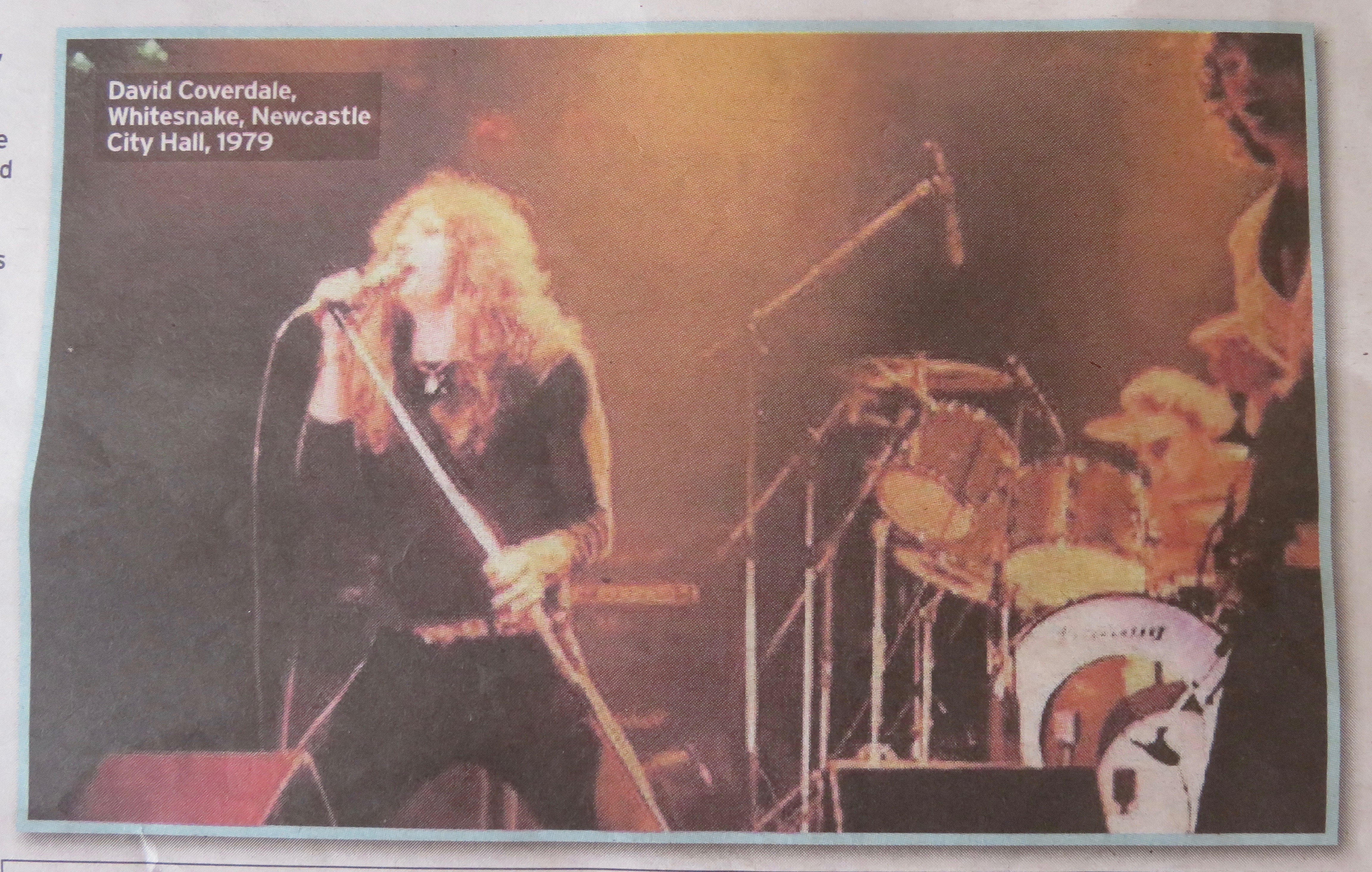
Newcastle was becoming a rock music powerhouse. Black Sabbath, Scorpions, Whitesnake, Motorhead, Thin Lizzy, UFO among others all trod the boards of Newcastle City Hall’. 

The blog is coming up to 40,000 views, plus this is the 175th post, so a great way to mark that milestone is with a double page in the local newspaper.

Gary Alikivi September 2018

Recommended:

Roksnaps #1 18th February 2018.

Roksnaps #2 22nd February 2018.

Roksnaps #3 27th February 2018.

Roksnaps #4  4th April 2018.

Roksnaps #5  20th June 2018.

1980 The Year Metal was Forged on Tyneside   11th February 2018.

Rockin’ All Over the Toon  22nd May 2018.

Don’t forget to check the ALIKIVI You Tube channel.

NORTHERN GROOVE in conversation with Garner Harris

40167820_1809884662382563_8463952021408448512_o

Tell me about the North East company ‘Creative Seed’…

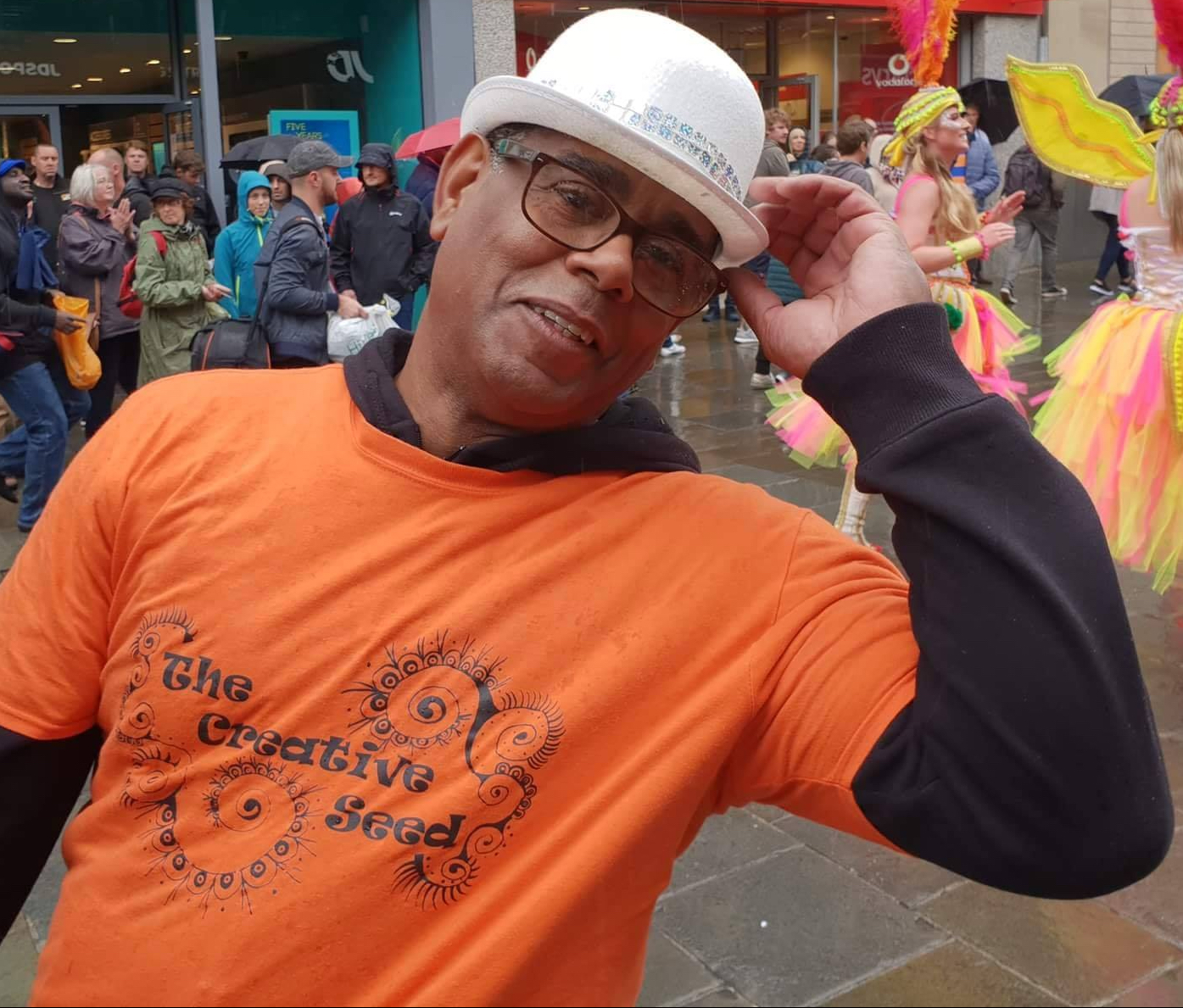
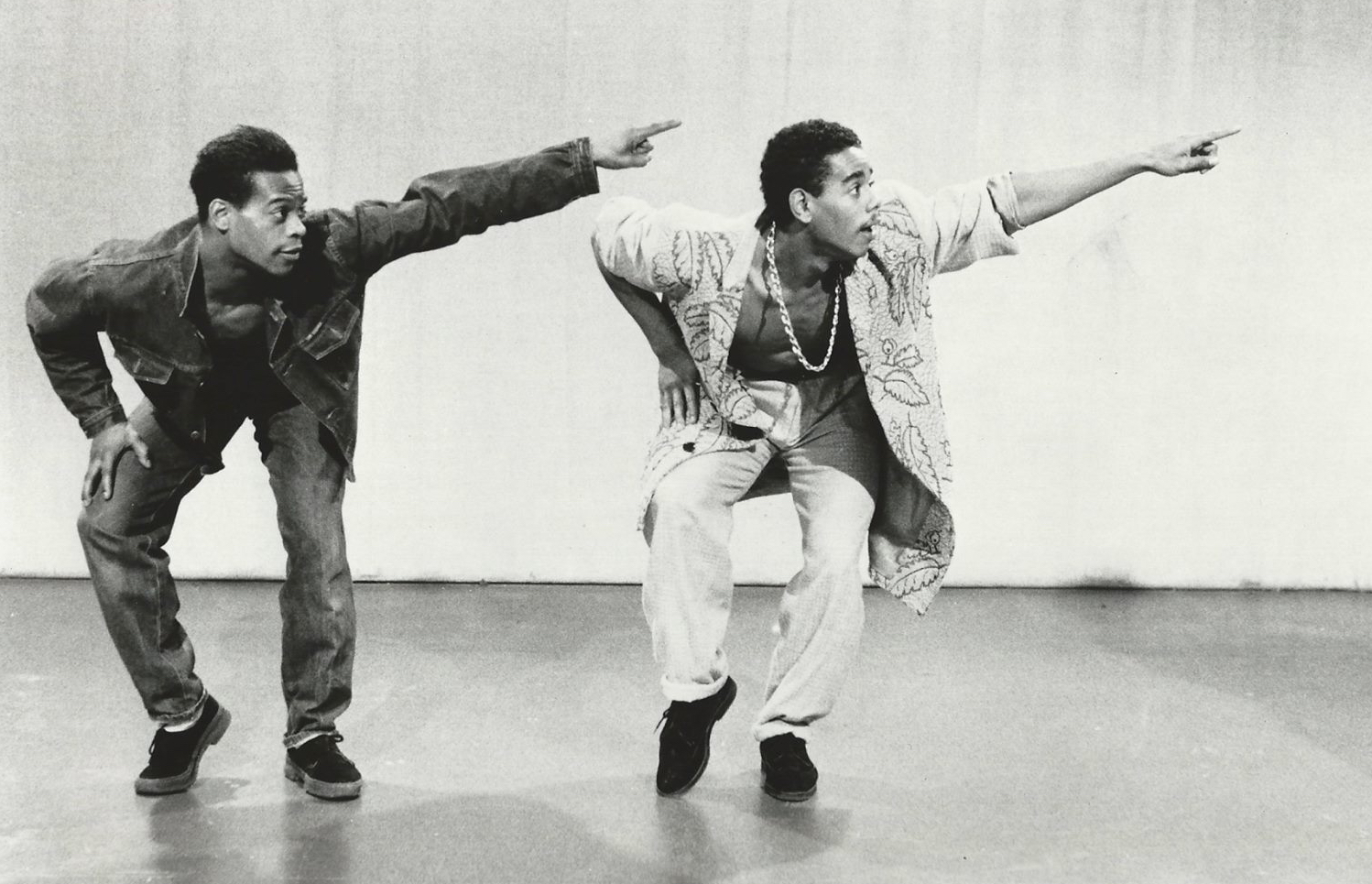
‘The Creative Seed was started as a production company and Carnival was one of the things we did. We made films, produced music and multi-media content.

To give you an idea of how diverse our work is, yesterday we were doing an event for adults with learning difficulties down in Stockton. It was a Caribbean garden party with the sound system, DJ and dancers.

We also did the Newcastle MELA, where we worked with community groups from all over the North East. For that event we worked with five professional dancers, two stilt walkers, community groups, sound systems, props and we had to manage all that.

It’s a lot so we’re going to narrow down the scope of what we currently do whilst developing the staff capacity of the company.

I find myself managing more than creating these days, especially considering that my training was originally in dance and choreography so I would be nice to do more creative work’.

Working with people who wouldn’t normally take up movement and dance do you see how important it can be ?

’Over the years we have worked with quite a lot with adults with learning disabilities. We can see the difference it makes. Sometimes with movement it’s not the only the physical exercise that people are getting out of, it can be uplifting psychologically as well.

There’s a tutor we work with, Sarah Shaw who teaches three groups of adults with learning disabilities in South Tyneside and she often comes back with stories of ’this one was doing this today and that one was doing something amazing today’ that sort of thing you know.

That makes all the difference. Not everybody can connect with people like that, on that level.

My partner and wife Sandy and I were talking about this lately, that we like working with people who have that ability to connect with a broad range of people. And it’s that openness to communicate with people.

The people we work with all have that ability with the groups we work with’. 

965187_651166134911330_865327934_o

Did any of your family do any creative work ?

’Not really but my father was a sheet metal worker, and he was always making things in the house. Like figures and sculptures. He would use everyday stuff like string and glue to bind stuff together in much the same way as we do for some of the techniques we use for making carnival costumes.

He’s always there beside me when I’m doing something creative. ‘No Garner, do it like this’ I’d hear him say’.

What is your background, how did you get involved with creative work ?

’My background is in dance. I had always danced but got really into it in the 1970’s through disco. I was listening to disco and funk from America when I was 13 and going up to the 100 Club in the West End of London. This was a daytime club.

We would get on the Bakerloo line train at Wembley Park station, up to Oxford Circus and the club was about 300 metres away. We would go as a group and meet other kids from different areas of London. It was a downstairs dive type club.

It would start 12 o’clock, the bass would be thumping, there was an old Jewish lady on the door charging 50p or something like that to get in and her hubby Ronnie L was the DJ.

At the end of the club, at 3pm, the place would be like a furnace from all the dancing, and they would have to open the doors at the back of the club, and you could just see the steam rising.

That was my first experience of dance, it was underground at the time. At 13 years old to have that amount of excitement was really stimulating and inspiring. So your imagination was allowed to just open up.

That would lead to going to places like Pineapple, the Dance Centre and being introduced to formal dance training and that sector of the entertainment.

I met my first dance mentor, an inspiring South African woman called Leoni Urdang and she took on 14 guys from that whole underground dance scene on scholarships to get a formal education in dance. That was my whole route into ballet, contemporary dance all of it’. 

What types of music do you listen to ?

‘I listen to the likes of Grooverider to Thomas Tallis to Beethoven I listen to it all. If I like it I like it. This genre of music thing has got to be out of the window by now. Something either touches you or it don’t’.

1655806_10152350722712245_5875497591713753076_o

You’ve done a lot of stage work how did that come about ?

‘Yeah, also I’ve also done a bit of TV, music videos, a British tour of a couple of musicals. We were backing dancers on Top of the Pops for Kim Symms, Shakin’ Stevens, Inner City people like that.

I was also working McDonalds, cleaning pubs in between the jobs it wasn’t a glamourous lifestyle. To be honest probably more downs than up’s’. 

How did you end up here in South Shields ?

’My wife’s family are from South Shields. Sandy and I went on our first date in ’92 at the Notting Hill Carnival after we first met in ’91 when we were working on the stage show Starlight Express.

She was head of wardrobe, and I was swing and understudy where you had to learn and know multiple roles within the show because you could be called to go on stage at any time during a performance.

Anyway, the reason we moved to South Shields was because Sandy didn’t want to bring a family up in London, so she packed up the Nissan Micra and came up North in ’94 and I followed her up shortly after’.

13012756_1095379403854143_8190621937151967488_n

I remember 2 shops in South Shields, Tribal Revival and Buggin’ Sounds that you were involved in.…

’Yeah, Sandy was making jewellery and doing parties and stall’s and I said why don’t we get a shop selling carvings and drums, all sorts. So Tribal Revival was Sandy’s passion.

When I came here I was offered Artist in Residence at Gateshead from 94-95 and at Buggin’ Sounds I was trying to develop a recording studio, a record label and we were doing club nights. We were doing Steppaz which was at Rockshots night club in Newcastle.

Looking back it was way too many things at one time but when you’re younger you have that energy don’t you. But I went into sales because my family was young then and I needed a bit of stability.

That was four years working for people like Reg Vardy, Springfield Auto’s, BT…but came out of that and started the Community Interest Company, Creative Seed, teaching dance in schools, community centres from Redcar to Berwick, all over the North East.

I kept that up for about five years. I remember doing some dance sessions in Biddick Hall, at Percy Hudson Youth Centre. And it was wild. The energy in there was electrifying. Some of the kids were doing summersaults of the walls.

If that energy could have been harnessed aww man.

You know the happiest I’ve been is doing the work I’m supposed to be doing. When I’m working with adults with learning disabilities or kids who wouldn’t normally get involved in dance and then they get it, they start to move.

We at Creative Seed work with them and we see them shine…that’s when I’m happiest.

When everyone in the room is getting on, I love that, that’s what I strive for. That’s who I am. I’ve always been happy just sometimes the opportunity isn’t there’. 

In the past 10 years there has been a number of well-known entertainers, comedians, writers who have come from South Tyneside. Can you pinpoint why that is ?

’One of my theories is because where it is geographically. You’ve got the river, the coast and the hill’s all close by. If you can escape the cities and expand your mind and things are not as bad as they could be.

You can’t move in cities, it’s all confined. At least here you can go where the world is bigger than where I am at this minute. South Shields you can do that. You can go up Cleadon Hills and be anywhere. Go to the beach. The river. Wow…anywhere and let your mind drift.

The other thing is that the North East is known for grafters. When people up here are working, they work really hard. Nobody can take that away from them.

If you’re not inspired by people who work hard up here, you’re not going to be inspired by anything. The grafting mentality from the shipyards, the miners, to the women working in the factories and making sure the kid’s get fed.

That is why I love the place so much’. 

For more information about Creative Seed contact: 

https://www.creativeseed.org

Interview by Gary Alikivi August 2018

GOOD DAY SUNSHINE with Ian Slater in Benidorm, Spain.

13435409_10153503034541237_4731348246329238404_n

How’s life treating you out on the Costa Blanca?

’We had been planting seeds for a couple of years and eventually moved here last November. I work about ten hours a week and make a decent living. No gear to carry and all my gigs are within three miles of my front door. Absolutely loving it’.

How did you get involved in playing music ?

‘Just always knew it’s what I was going to do. My first memories were jumping around singing along to The Beatles and The Stones, into a hairbrush’.

Who were your influences ?

’Everyone from the Sex Pistols and Buzzcocks to Sinatra and Tony Bennett via Alice Cooper and The Stray Cats’.

When did you start playing gigs and what venues did you play ? 

‘First started in punk bands in the very late ’70s. We played places like the British Legion Club and The Cyprus in South Shields. Also La Metro in Sunderland. Worked with Toyah, Dr and The Medics, The Rezzillos… oh and The Cheeky Girls, who were lovely and actually far better vocally than I expected’. 

What were your experiences of recording ?

‘Can’t recall the names of some of them but Lynx in Newcastle that was early ’80s and The Bunker in Sunderland stand out. I recorded with South Shields band The Letters in another Newcastle studio, the name of which escapes me – 1983 that would have been.

I don’t have any of the recordings. It was a vinyl single with three songs on Walk Away, You Girl and Hello. But the band had a few disagreements and all but a couple of the 1,000 copies were destroyed’.

21586670_10156661305780299_3493943493714930349_o

The Babysnakes

Did you record any TV appearences or film any music videos ?

’There’s a live video kicking around of a band I was in The Babysnakes at Newcastles Riverside. I think we were on with Paul D’Ianno’s Killers’. (The track is ‘Hard Lovin’ Woman’ from 1993).

Babysnakes rose from the ashes of Gods Little Devils and was initially me on vocals, Stidi (drums), Gary Heir (guitar) Roy Page (bass) and Dave Stratty Stratford (rhythm guitar).

We lasted from ’91 to ’93, when I moved to Turkey. Mark McGlauchlin took over on drums when Stidi went back to The Wildhearts.

We did a three track cassette single which Roy probably still has copies of. Before that was The Smoking Beagles who were still called The Lipstick Junkies when I first joined.

I’m not really one to hold on to the past so I don’t have any of the recordings from then, either. I live for the moment’.

Have you any funny stories from playing gigs ?  

‘We – The Smoking Beagles – were practicing in The Bunker and – as was usually the case – we had enjoyed some of mother nature’s finest Afghanistani import.

Anyway, after practicing we often went to Washington Granada Services for an all-day breakfast and a few coffees, and we did so on this particular night.

Must have been around 2am that Iain Curtis picked a sachet of sugar to go into his umpteenth cup and said, “Granada Sugar… You know why they call it that ?” and after a long pause, “They couldn’t spell granulated!

Now, under normal circumstances that wouldn’t be funny at all but when you’re wired on coffee and exceptionally good gear, it was the funniest thing we’d ever heard. We sat and cried laughing until we were eventually asked to leave at around 6am.

Everyone who came in stared at us which just made us laugh all the more. We would get to a point where we were calming down then we’d hear the door go and off we went again’.

40680706_571307296621862_3107326336629211136_n

You are using the stage name Cameron James in Benidorm…. 

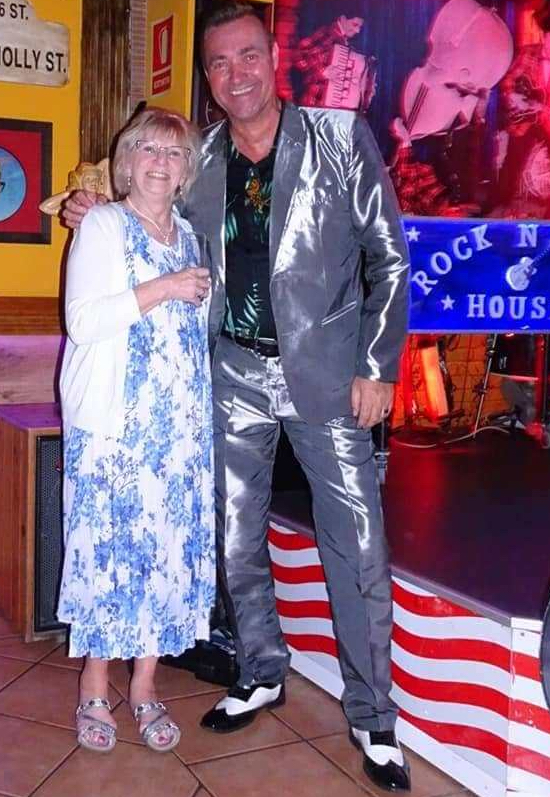
‘Yes I have several shows over here in Beni. An ’80s tribute, a rock and roll show, a tribute to Robbie Williams!, a cabaret show and a sixties show. I’m your archetypal sell-out but I’m making a decent living in the sun’.

Interview by Gary Alikivi    September 2018.

OUT OF THE DARK in conversation with Newcastle artist Aidan Doyle

IMG_4913

‘It was 1993 at Westoe Pit I was in there taking photographs. I was in there off and on over a year. The pit was ready for closure. Originally the purpose of the photo’s was to have some source material to do some paintings.

But as the closure became imminent, I began to take photos in their own right. For a record you know.

I began to develop techniques by taking photos in very little light, all the dark spaces. I must have about 10,000 negatives or there about’s.

During that time, I began to collect a lot of oral testimonials from the lads, and I realised what was being destroyed wasn’t just the pit’s themselves but the good humour amongst the lads.

The upshot of that was I was invited to do a book with Durham County Council and that led onto a PhD at Durham University’. 

I like paintings by Bacon, Goya and Valasquez, are there any artists that you admire ?

‘I tend to lean towards Caravaggio because he uses the approach called tenebrismo where a figure emerges from the darkness. I like paintings by Tintoretto from Venice and Jack Yeats from Ireland who does more like yer everyday life.

Not long ago I went to see a huge exhibition by Bacon at the Tate which left me cold, a lot was the same style’.

Do you stick to the same style ?

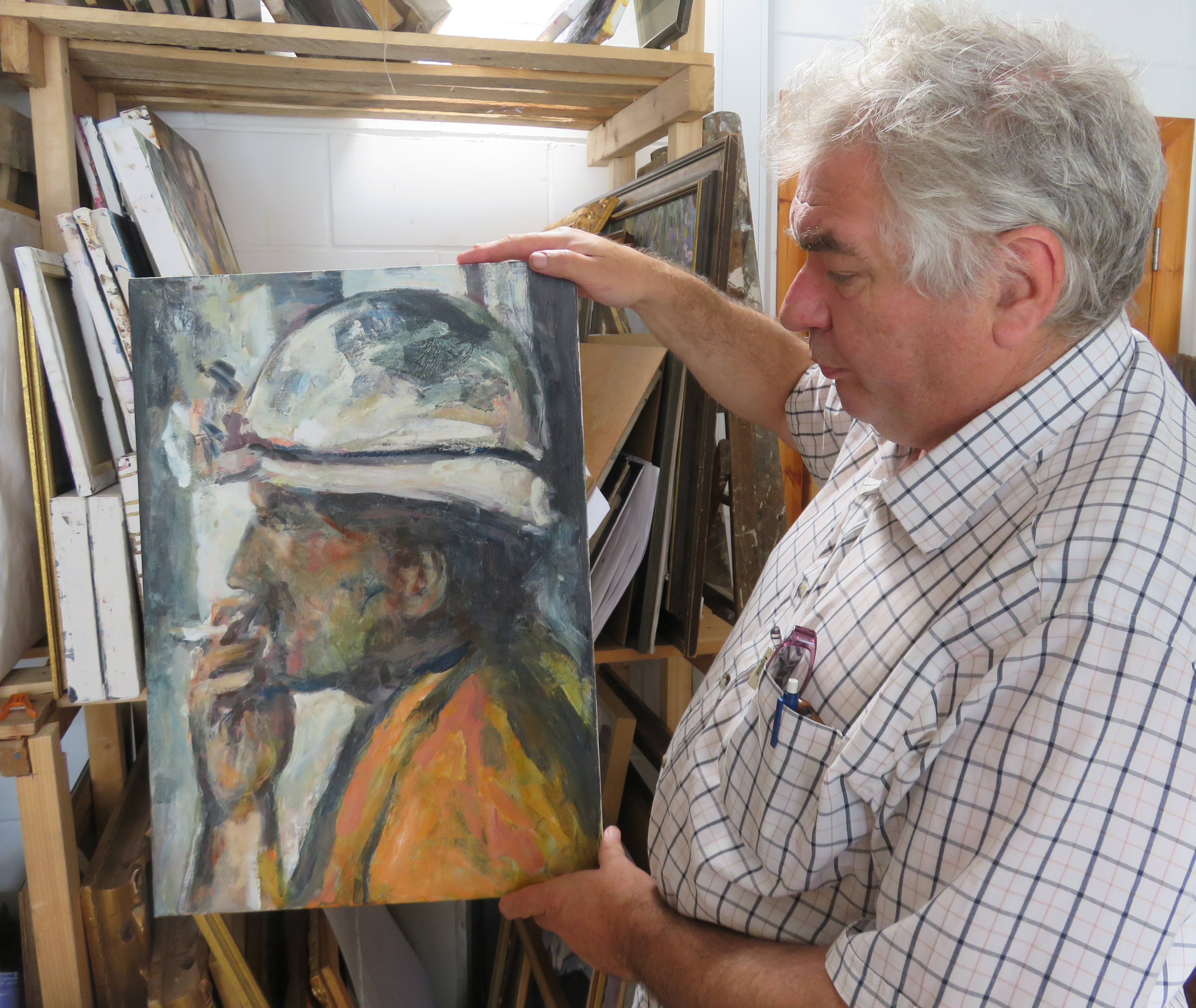
‘I try to remain faithful to what I’m trying to represent but if you look around, I’ve got figurative stuff and now becoming a little more abstract. (shows painting) Using how the light falls on the face’.

What got you interested in drawing, was it in your family ?

‘Not really, although a cousin of mine was in Detroit and painted cars on billboards. I was about 10 year old at St Albans school in Pelaw looking out the window and seen the tar works with a puffer train going in and out the factory.

The teacher sent me down the river with a great big piece of paper to draw the tar works. And for a lot of years that drawing hung on the wall in school.

Then I got into drawing people which was a challenge. I worked down Westoe pit in the 1970’s then done a degree in Fine Art. I worked as an artist and labourer a lot of the time. Also worked in theatres backstage moving the scenery around, and I used to draw the actors.

In 1986 I was working as the Artist in Residence at the Tyne Theatre. It had burned down and they invited me to document the re-building of the place – enjoyed that. I was also at the Ingham Infirmary in Shields for a year as Artist in Residence’. 

I met you a couple of years ago at The Central Library in South Shields what project were you working on ?

‘I was at the library as the building was being planned for closure. I drew some residents of the town that went there. Some notorious, others not so haha. I also collected a few testimonies from there.

They invited me back to draw and paint the building of the new library, The Word.

That was great to watch the construction of it especially during the winter. I did a bit of live drawing but worked a lot from photographs.

The men and women working there would stop and smile for the photo. It was nice they photocopied the drawings, blew them up and stuck them around the site’.

Have you got anything planned coming up soon?

‘Some of the negatives from the pit are being put in an archive at the refurbished St Hilda Pit Head in South Shields. The Heritage Lottery have funded the refurbishment. It was one of the last pits working on the Tyne.

Well I’ve done what I originally set out to do that’s make 100 or so oil paintings from my mining photographs and that’s created a body of work.

It would be great to exhibit the paintings in other mining areas around the world. Plus, I can make applications to the mining museums around the country to show the work.

I was always shown kindness from the lads in the pit, so I have to do right by them, play fair ya’ knaa’.

Interview by Gary Alikivi    August 2018.

LIFE IN A NORTHERN TOWN – in conversation with writer and TV producer Peter Mitchell

thumbnail

Peter Mitchell

‘Who shall have a fishy on a little dishy. Who shall have a fishy when the boat comes in’….lyrics to the opening tune from the TV series ‘When the Boat Comes In’ which first broadcast in January ’76.

Hearing the song it had a whiff of a twee sunda’ afternoon show playing straight after The Big Match and before Little House on the Prairie. I never saw it when it first hit our TV screens, was too busy watching The Sweeney.

But after catching it a few years ago the little twee telly show was actually a hard-hitting drama.

It deals with a soldier (Jack Ford played by James Bolam) returning from the 1st World War and his struggles with poverty and politics in the fictional town of Gallowshield in the North East of England.

The first episode ‘A Land fit for Heroes and Idiots’ sets the tone

‘In series one there were thirteen scripts in which my dad wrote seven. His creation, his characters, with other writers during the series. I was 16 and first watched it with my mother.

That first episode was quality drama. My mother turned to me and said, ‘You better go and ring your dad because he’s just done something remarkable’.

The programme was created by South Shields born James Mitchell and now his son Peter is adapting the show for theatre…

’The play is based on series one and begins with Jack returning from the war where he meets the Seaton family, Jessie and Billy trying to get him involved in politics, he falls in love with Jessie and the problems he gets into when dealing with industrial strikes’.

IMG_1667

South Shields born Writer, James Mitchell.

Is there anybody out there today in business, political or celebrity world that you could compare to Jack Ford ? 

‘Do you know nobody has asked me that before. (Slight hesitation)….Well I’m not sure I should say this but…. I would say Donald Trump. (Both laugh)…Because love him or hate him. Trump can hold an audience. Massive ambition. Massive selfishness. What other people might call focus.

Great desire for more to the extent of not really caring about the consequences. A winner, an influencer, a persuader. I would say there’s a little bit of Jack inside Donald Trump’.

7fef8d65a0a6e7801fbee3206739a0b6--susan-jameson-james-bolam

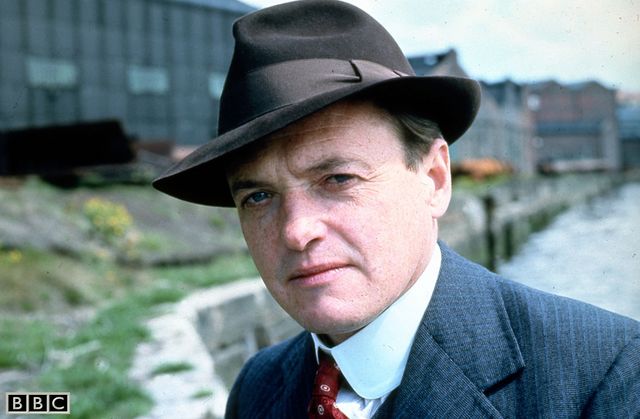
Jack Ford played by James Bolam.

Does the play reveal more about Jack ? 

‘He served all the way through the war and became staff sergeant but still didn’t have enough so signed up again. He joins the North Russia Expidiciary Force where he goes to Murmansk and does an extra year. It tells you a lot about Jack.

He’s alone the minute he comes back. All the friends he’s got are the ones he made in the army.

This is a man who has found a family in war and really the only thing he is good at, is war. He interacts with mates, union men, the upper crusts, politicians, a full spectrum of society. He has learnt to fit in with any group, but I don’t think he knows where he belongs.

All he knows is how to survive in any given circumstance. He sees a chance and takes the opportunity. You know it’s live for today and tomorrow you might die which is something you learn when you are in the trenches for four years’. 

The TV show aired on BBC1 and at its peak reached audiences of 15 million, with all four series available on DVD. Do the actors realise the enormity of what they are taking on ?

‘The cast are great, they are all young, as were the soldiers coming back from war. What is impressive is the energy and passion that they are bringing.

We had research and development, a read through, started rehearsals and in them I have seen new things brought to the play helped with Katy’s vision as director.

This is all Tyneside people, I’ve been massively impressed. There’s a great team working their socks off down there and that makes me feel good on behalf of my dad.

There will be a lot of people like you who have seen it on TV or DVD and there will be an element of expectation. But I want to go on a slightly new journey in the way it’s delivered.

What’s been lovely for me was working with Katy Weir the Director because I’ve seen some of her work before and really enjoyed it.

When we met, I was very impressed with some of her ideas, and I was very keen to have a woman direct because a woman has never directed When the Boat Comes In. In the ’70s when it was made there were no female directors in television and the series is full of very powerful women characters’.

ragklqqiwtylwebkwywe

The Seaton family with Jack in uniform.

I can confirm that. Some of the standout performances of the TV show are with women holding court.

Just check the performances from Jean Haywood playing Bella Seton, her daughter Jessie played by Susan Jameson and Rosalind Bailey who plays Sarah Headley. The writing and performances never drop pace.

In season four episode two contains an outstanding scene with Sarah and Jack where she tells him her husband and his best mate Matt has died….

’Yes, I love her character, Rosalind is a great actress. Excellent on the show. It’s been really interesting to revisit again and work out the characters with the same basic arc of the story but transform it onto the stage.

Mechanics of stage are different to what I’ve been used to as my background is in journalism and television’. 

How did you get interested in writing and eventually working in TV?

‘Well, I’m a Shields lad who went to the Grammar school. Unfortunately, my parents divorced in 1966 so I was travelling down to London on weekends to see my dad who was a published author by then.

My mam Norma was a schoolteacher in Shields and looked after me and my brother Simon. She never re-married, it was her and her boys you know.

My mam was a wonderful, devoted woman and a natural born teacher. Plus, a great actress. She performed at The Peoples Theatre in Newcastle, also at the Westovians and met my father at Cleadon Village Amateur dramatic club.

They both had a love of the arts so there was a bit of showbiz in my life from when I was young.

But I was really interested in journalism so after University I got a job at a weekly newspaper in Chesire, then an evening paper in Carlisle.

A few years later I was in London freelancing for national papers and researching for London Weekend Television. Then I saw an advert for a researcher at Tyne Tees TV, applied and got it.

Great times there and worked on screen drama, mostly documentary then promoted to Director of programmes until I left in 1997.

Then I was at Zenith North where programmes like Byker Grove and Dale’s Diaries were made – loved working on that. Then had my own production company and done a bit of media consultancy work.

My career path has always been about screen work so theatre is a new challenge finding out how it all works’. 

WTBCI-Web-Banner-1024x364

During the TV series some scenes were shot outside The Customs House in South Shields and that’s where the play is being performed…

’Yes, it’s come home in many ways, very pleased about that. Ray Spencer (Director at Customs House) and I talked about the possibility four years ago and I was going to write a treatment for it.

Then a London based production company were interested in buying the rights. While we were negotiating with them we couldn’t go forward with the theatre side.

They took out an option with a time limit but never did anything with it, never commissioned any scripts. So, when the time expired, I rang Ray back up and said how about we look at it again. The timing feels right, it’s 100 years after the war. He said great let’s do it’.

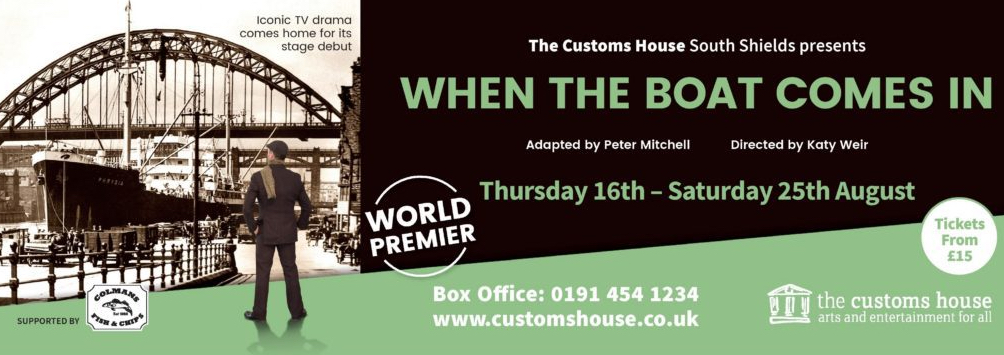
‘When the Boat Comes In’ is on from Thursday 16th – Saturday 25th August for tickets contact   https://www.customshouse.co.uk/theatre/when-the-boat-comes-in/

Interview by Gary Alikivi   July 2018.

ROLL AWAY THE STONES – interview with musician Nick Reeves

35227591_10155533533141198_3844484187960639488_n

‘During the ’80s I saw Sex Gang Children, Southern Death Cult, Play Dead….wore pan stick, took drugs, sniffed glue, learned to cut hair, got drunk, saw bands, had girlfriends, got on with it.

Randomly met Ariel Bender aka Luther Grosvenor (I cut his hair as I had become a hairdresser by then). Became mates. He lent me a guitar and showed me some chords – I took a lot of acid around this time and, sadly, one night, painted the neck board of the guitar in a series of patterns that I thought would help me play better!

Fell out with Ariel Bender. Didn’t play much better. By 1990 became friends again with Ariel. Played better. Wrote early songs’.

Any stories from your early gigs ?

‘In ’92 I formed Gorgeous Space Virus. Played The Marquee in London several times. Supported GWAR & Thin White Rope & Smashing Pumpkins first UK tour. All kinda blurry. Always on the verge of getting that elusive deal, never happened.

One night we drove to Bridlington from London to play a gig. We used to use a lot of smoke machines and this set of the smoke alarms before the end of the first song. The fire brigade and police were called and we were banned from the venue.

Drove home. Got chucked out of GSV. Late ’90s formed cassettes and supported The Fall in 2007 over a five night residency at Croydon Cartoon club. That was weird. And ACE!’

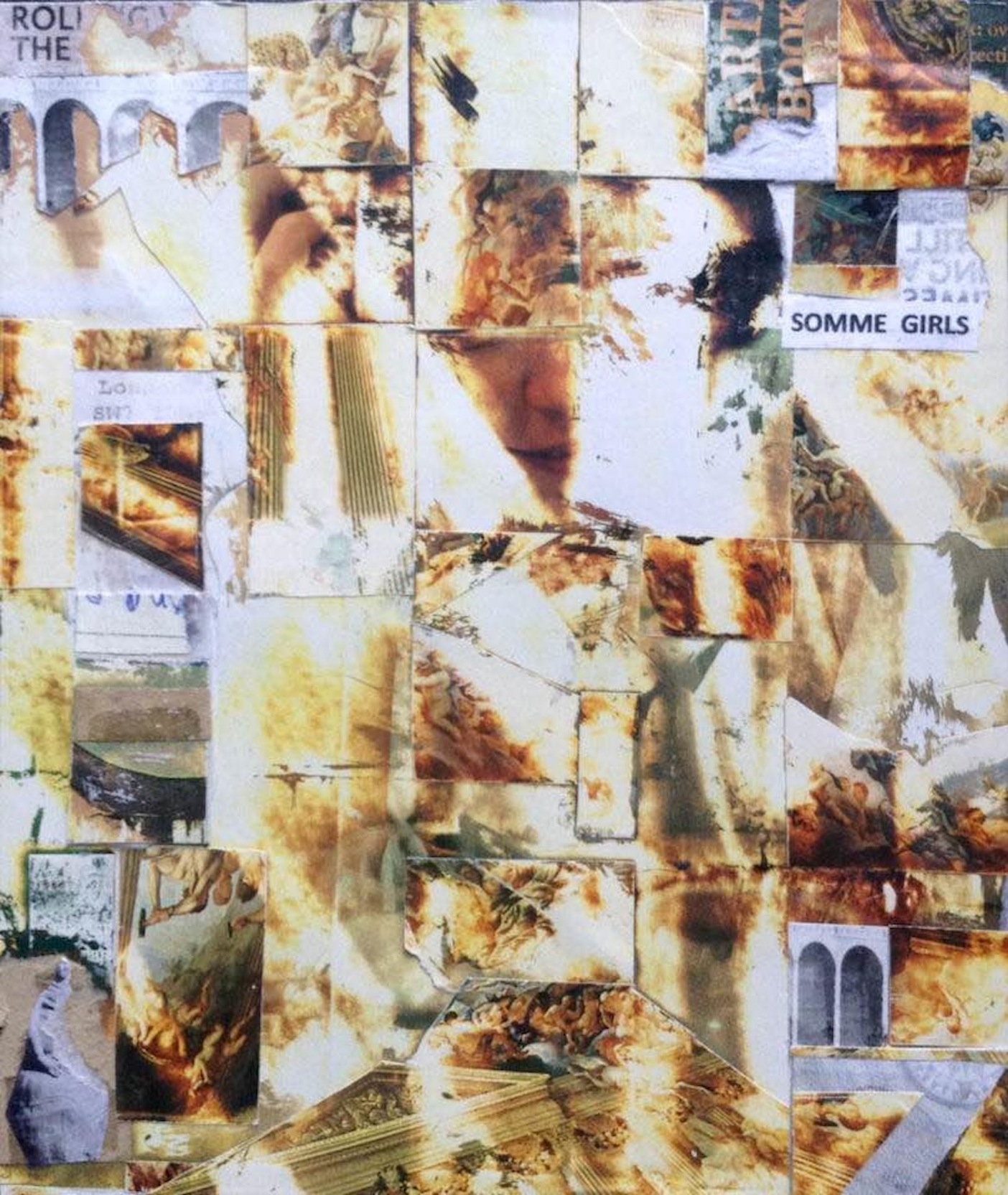
Somme Girls cover

How did cassettes come about ?

’I found myself in 2004 falling out the arse end of another love story, dossing in a mate’s garden shed. I wrote and recorded on a trusty Tascam 4 track what became cassettes (small c, no definitive) first album, Old Vinyl & UFO Kids.

It was initially a way to pass time and exorcise some ghosts.

I was living in Croydon at the time and started playing acoustic gigs with a drum machine and mini disc backing. They were quite drunken affairs.

Sat on the floor, surrounded by fairy lights and a kinda grail of old photos. Plus a three foot, brown plastic rendition of the three wise monkeys that I had bought as a joke in Norfolk some years before. The monkeys stood upon each other’s head and were a bizarre toilet roll holder – a truly hideous thing!

It’s funny the things one saves from broken relationships.

I pressed up 100 copies of Old Vinyl & UFO Kids onto cd, art worked myself and numbered the lot and gave them away at gigs. Over the summer I was offered the chance to play some gigs with noise oiks Ten Foot Nun and lo-fi troubadour Superman Revenge Squad in London so I got an early full version of cassettes together and formed a band around a nucleus of mates’.

When did you first get interested in music ?

’We lived in Dorset during the ’70s and my folks had a radiogram that sat in the front room. One day I peered inside and a whole new world opened up.

My early influences were Sgt.Pepper, Bridge Over Troubled Water, The Faces, Getz & Gilberto and Dionne Warwick.

When I was 12 I found a transistor radio on the way home from school and listened to Stuart Henry on Radio Luxemburg under the bed sheets. This would be 76/77. Ramones, Rezillos, Clash, The Flys, Dr.Feelgood, Tyla Gang, Graham Parker, Sex Pistols. This was the defining moment for me. The moment I saw a (no) future.

Hitch hiked to Exeter to see 999. Discovered John Peel…taped furiously! In 1979 the band Martian Schoolgirls’, formed by ex-roadie of The Clash, released a single Life in the 1980s. This, and mail-order music company (COBB Records) sealed the deal for me. This was what I was going to do – if I could’.

‘We moved to Croydon in 1979 after our house burned down. It was as if I’d landed in the future. We had come from a West Country village.

Saw early Killing Joke, Theatre of Hate (met Boy George, lover of Kirk Brandon before he was famous). My folks hung around (somehow…well, they were local) with Status Quo and at 16 I baby sat the Quo kids…and so was allowed to listen to Francis Rossi’s and Bob Young’s record collection (taped furiously!) – discovered Ry Cooder.

Joined some school bands none of which ever got off the ground, although a tape has turned up recently of a dreadful song’. 

Who were (are) your influences ?

‘Ray Davies, Patti Smith, Dylan, Bowie, Lowfeye, Ry Cooder, George Orwell, Vladimir Nabokov, PIL, Ian Dury, Picasso, Lou Reed, Killing Joke, Graham Greene and, yknaa, all the good folk’.

29694520_10156316939236663_481846620355730331_n

What you been up to in the last couple of years ?

‘In 2014 moved to South Shields. Recorded a complete version of Dylan’s Blood On The Tracks in the broom cupboard. Then 2017 moved over the river Tyne to Whitley Bay.

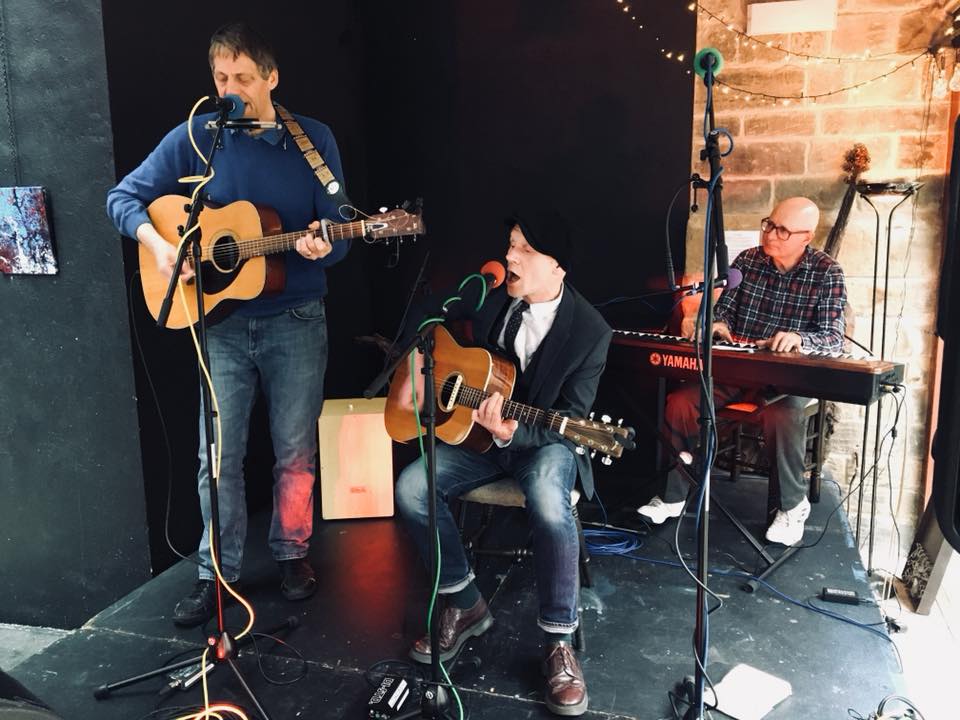
Got involved in local Busker scene. Lost my job. Met local legends Mike Waller, Alan McCulloch, Phil Mitchell, Your Casket Or Mine. Recorded Somme Girls at home. Met John E Thornton, Hannah Brown & Brad McVay and formed Clown Electrics.

We’re ganna kick it all around the Bay Area all summer 2018. Play some gigs, record an album and split up so Hannah can go back to university in the autumn, or the Fall as our American cousins would have it.

Over the years cassettes recorded albums – some as solo ventures, some as a band or whoever was around at the time. Some were recorded at home, some studio ventures if money allowed’.

And that’s the story so far…..

Interview by Gary Alikivi    July 2018.
Recommended:

Mond Cowie, Angels of the North, March 12th 2017.

Neil Newton, All the Young Punks, June 4th 2017.

Wavis O’Shave, Felt Nowt, 6th June 2017.

Lowfeye, POW (album review) December 15th 2017.

FROM PLASTICINE TO PIXELS – interview with Tyneside artist/animator/educator Sheila Graber

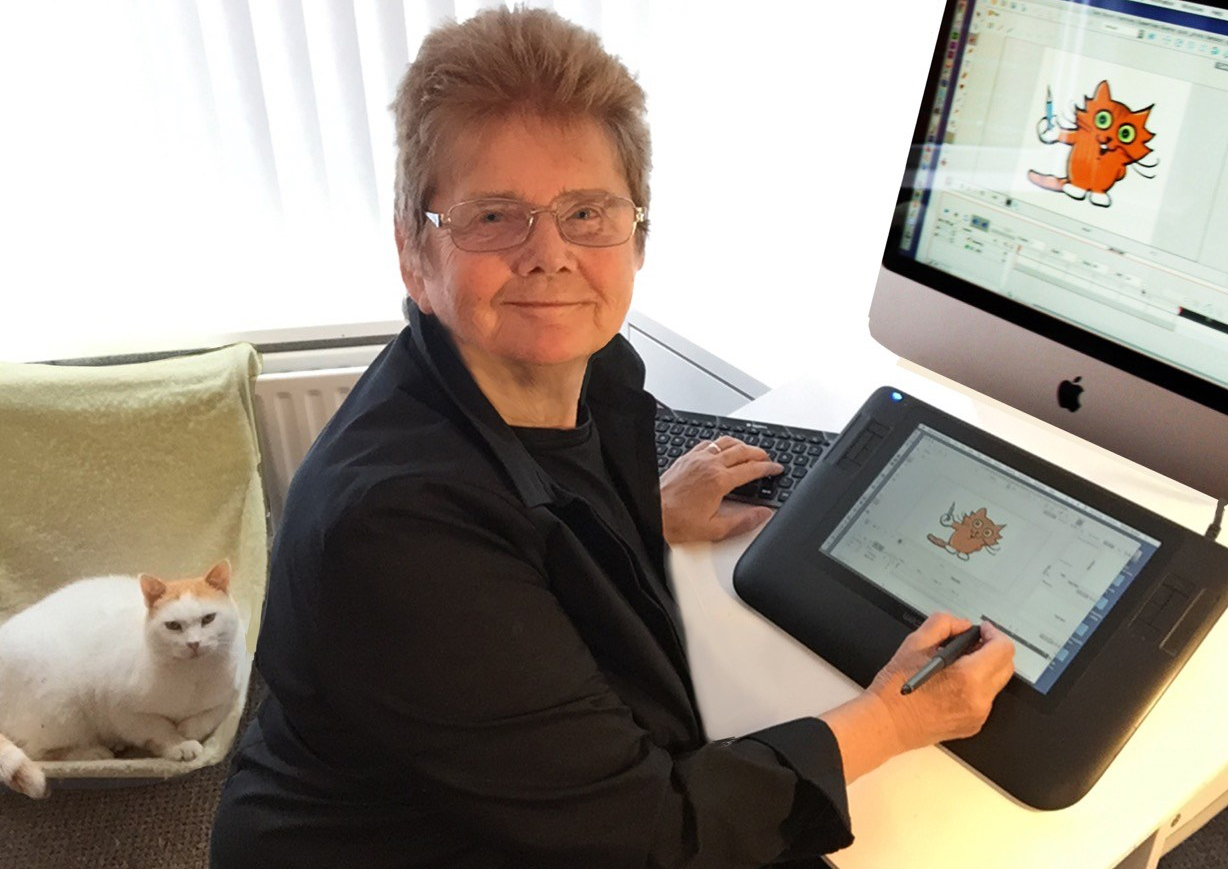
ToonBoomCat2017

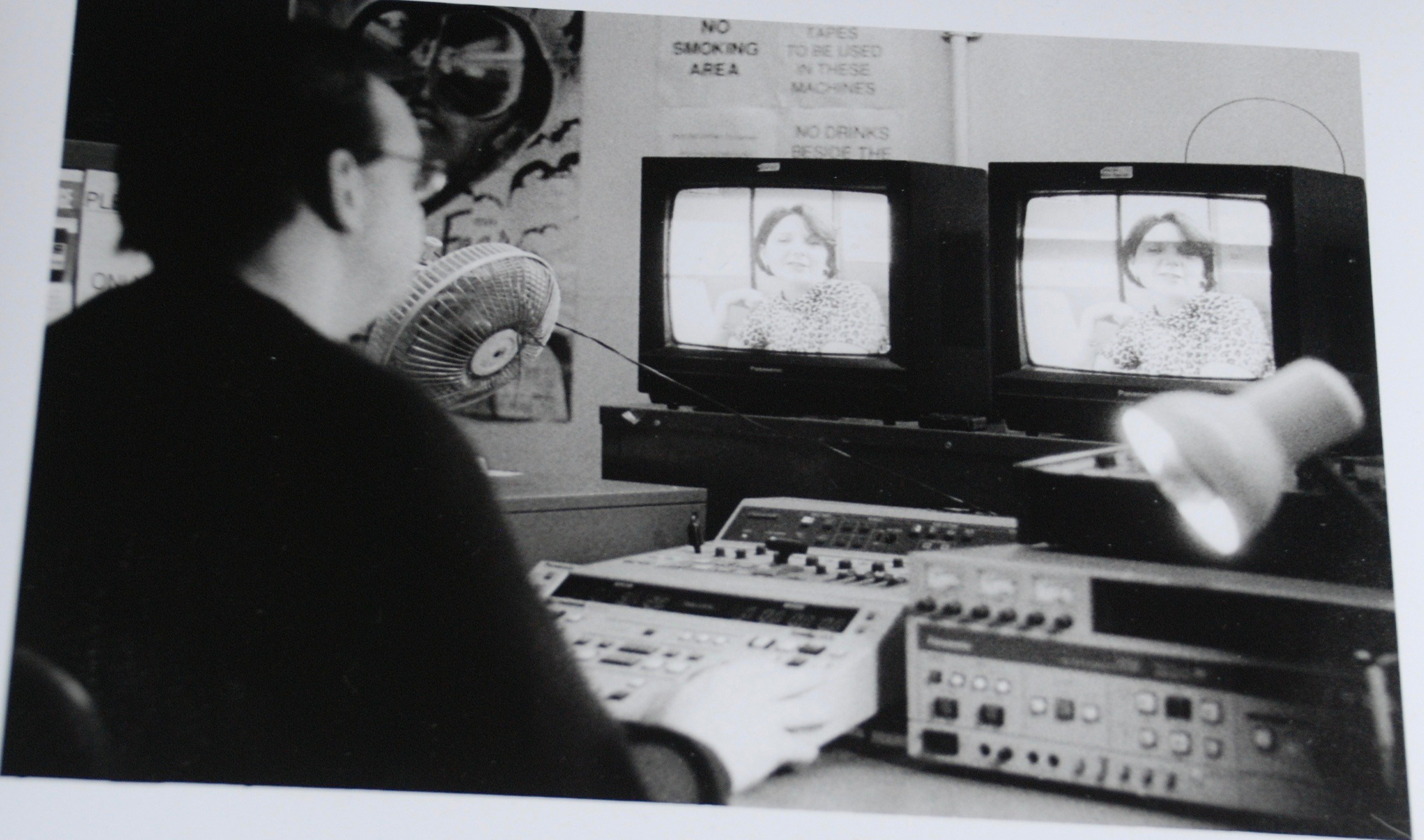
During the ’90s I was making films on tape editing machines in Stanhope Complex, South Shields. It could take hours to build a couple of minutes sequence of video, audio, narration and music – a process that takes a lot less time today. Those editing machines I used have a link to Sheila Graber….

Around 1985 I was asked by David Lumb, Chief Adviser at South Tyneside Education Authority would I like the post of Art/Media Advisor?

I agreed to a part time post as I was heavily involved in animation jobs at the time. It involved helping schools from Nursery to Secondary with any problems.

One large problem at the time – still is – is that some teenagers do no take to reading and writing that well and become bored and disruptive at school.

Knowing how my own students at King George school had responded to working with video in the 1970’s I secured a government grant to hire a a room in Chuter Ede Education Centre, South Shields with a budget for video equipment and staff to run the project. Here schools could send young people to learn video skills and apply them to their lessons.

It was very well attended for a few years  but a change of Government pulled the funding. Then  along came Community Worker Phil Charlton (RIP) who took the gear down to Stanhope Community Complex, it was like passing the baton on. Then YOU used them Gary and now, happily, here we are ! ’.

DSC_0315 2

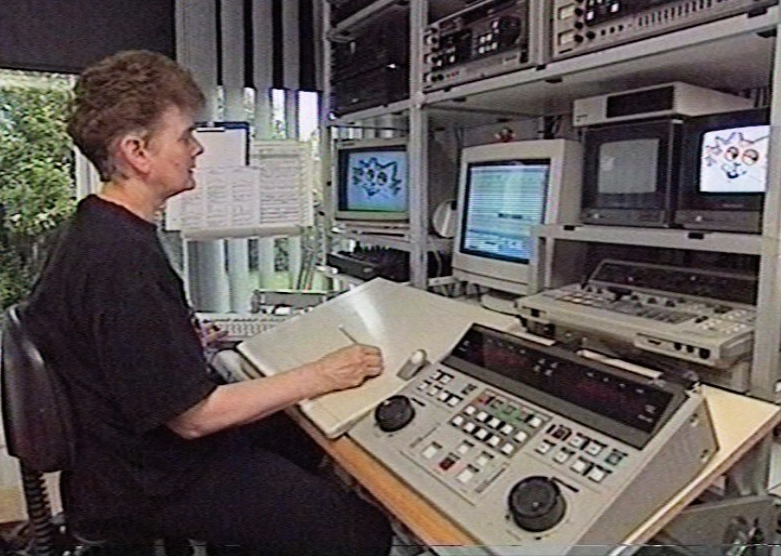
Me working on video tape machines at Stanhope Complex, South Shields. Notice the Panasonic edit controller, MX10 and edit machines. There was one play and one record machine with the controller and visual effects board in between.

Looking back to your younger days can you point to any moments which led you to where you are now ? 

I had two life changing events in 1960. My Dad, Capt. George Graber, was Pilot Master on the Tyne from 1947, and in 1960 we finally moved into the Pilot Office House on the Lawe Top.

I was lucky enough to have a small room to use as a studio. The views of the river were stunning.

Also that year I went to Birmingham School for Training Art Teachers. On the first day the tutor asked us ’Why are you here’. Somebody spoke up ’To get our Art Teacher’s Diploma’. She quickly replied ’So what is Art’.

During the rest of the course, we discovered the answer for ourselves’…I found that “Everyone is an artist in their own way.” 

It wasn’t a skill passed down from your family or something that only one or two people could do, everybody, if encouraged, could make something to express themselves and feel worthwhile whether it’s painting, knitting, cooking, writing or video making. I’ve tried to follow that all my life’.

1960viewoutsidewindow

Painting 1960. The view of the river Tyne looking over to North Shields outside Sheila’s window.

Sheila returned to Tyneside teaching Art in schools and also worked on her own projects….

‘I started teaching Art in Stanhope Road Secondary School in 1961. Then onto The Girl’s High School and finally King George Comprehensive. Divorced in 1970 I had extra time in my life.

I bought a super 8 camera for holiday films and found I could bring plasticine letters to life for titles by filming then one frame at a time. Three week later when the film came back I saw them move by themselves MAGIC!

I took the camera into school and the children’s interest was enormous. Their reaction really turned me around. Pupils who had little interest in learning suddenly came alive. Animation is a very good tool for education because everyone can learn and have fun at the same time.

Animation can also be used to show how things work. Like the short I was invited to make by BBC Inside Look North on how their program was put together in 1977. Featuring the late great Mike Neville’. (Check Inside Look North 1977 and over 100 others on “Sheila Graber YouTube” channel).

animating 1993

‘In 1974 my animation Boy and The Cat won the 10 Best film competition run by Movie Maker Magazine. So, it was screened at the National Film Theatre in London.

Later my work was spotted by Nicole Jouve an agent for World TV. She phoned me up and wanted to distribute some of the shorts I’d made.

At first, I thought it was a friend kidding around. But she went ahead and distributed the short 16mm films I’d made, from Mondrian to Evolution, worldwide.

Then Nicole (who was also the agent for The Magic Roundabout) commissioned me to Animate 10 of Rudyard Kipling’s  Just So Stories – she had gained the contract in direct competition with Disney Studios.

In 1980 I gave up my job as a full-time art teacher as the series had to be completed in one year.

Looking back, I have met people who have asked me ‘can you do this for us ? …and I’ve just jumped in and said ‘yes I’ll do that’. You’ve done that too Gary, just gone for it and most times it works out and leads onto other projects’.

What are you working on now ?

‘I still teach animation at University of Sunderland and have some of my prints, cards and DVD’s on sale in Sunderland Museum and at The Word in South Shields.

Currently I am producing more books and fun interactive animated apps. Just finished one on Van Gogh, you can play with it now online on my website. Animation is a magic process but sadly under used. Disney called it the Art of the Future. He was right.

I hope today’s computer games evolve from killing to caring and that iPads and smart phones are used to create images and animation as well as text to help folks of all ages to enjoy learning and creating their view of the world.

I’ll be featuring these ideas, work of people I’ve influenced and in turn work by folks THEY have influenced in my forthcoming exhibition at South Shields Ocean Road Museum & Customs House in 2020 – Life Begins at 80. Look forward to seeing some of YOUR video productions there Gary’. 

Contact Sheila at:

http://www.sheilagraberanimation.com

 Interview by Gary Alikivi    June 2018.

Recommended:

David G. Wilkinson: Waves upon Waves 3rd June 2018.