ACTING IS A TOUGH BUSINESS – in conversation with author & actor Steve Wraith

My ambition is to play a villain in Coronation Street, I want to be walking in Newcastle city centre where a granny with a purple rinse comes up to me and hits us with her handbag cos I’ve killed her favourite character.

Some people say to me why not be a Bond villain ? But I can’t see there being a Geordie Bond villain can you’.laughs Steve as we sat down for a chat in The Centurion bar in Newcastle Central Station.

Do you think people watching is a great tool for actors ?

Yes that’s how you get the best out of your characterisations is by watching other people.  When I wasn’t acting I was working with the general public, we ran a Post Office and I’ve worked as a bouncer on the doors of nightclubs.

I’ve seen the best and worst of people from your solicitor who can’t handle his drink to your charver who can’t get in cos he’s got tracksuit bottoms on.

I’ve met and talked to all the major criminals, the Kray Twins in prison, the train robbers, all the hard men up here in Newcastle. So I’ve got a fair knowledge about those people and as an actor I am one of the few who love being typecast.

I’ve got two agents, Sam Claypole in Darlington and in London, Shirley Lewis, both of them laugh when I get cast but I’m happy to play a gangster. Can you really see me where I’m the vicar or the loving dad ? (laughs).

You are involved in a number of films, The Krays, To Be Someone, The Middle Men, where are they at ?

They’re all at different stages, I’m involved in The Sayers project in Newcastle which is great because I wrote the book Tried and Tested at the Highest Level. An autobiography of Stephen Sayers a former criminal in the West End of Newcastle, he and his two brothers Michael and John became quite notorious.

The book has done fantastically well, and the next step is try and get a film made but we didn’t expect it to come as quickly.

We were focusing on doing another book, maybe a documentary but then we were approached by Garry Fraser from Edinburgh. He picked up a copy of the book from a friend of his who is in Stephens former line of business shall we say. He read the book in two days, loved it, so we met up.

I had done research on Garry’s background and found he had a degree of success with getting work from book to screen, he had also won two BAFTA’s, he didn’t mention that when we first sat down and talked.

One of his BAFTA’s was for a documentary he had made basically about his hard upbringing in the housing schemes of Edinburgh, getting into drugs, becoming a drug dealer then ultimately sent to prison.

In Everybody’s Child he revisited places that were very painful to him, hence it won an award in Best Documentary category. He caught interest from author Irvine Welsh, he introduced him to Danny Boyle who involved him in Trainspotting 2.

Also, the BBC have just commissioned a short series that he has written called The Grey Area, so he’s gradually turned his life around in the last six or seven years making short films and perfecting a particular genre.

With all this background and living the life and most importantly understanding it, we were interested in getting him on board with Stephen’s film, so it was great news that he liked the book and wanted to get involved.

Over the last 12 months we have met and got on well, another good thing that came from meeting up was he asked if I was interested in working behind the camera.

Now my main focus is being an actor and I’ve got a little experience of production when I worked on the Freddie Foreman documentary for Salon Pictures, so I said yeah anything to learn from that side of the camera will be beneficial.

How did the film come together ?

We held open auditions at The Tyneside Irish Club in Newcastle where 130 people turned up in this big concert room. Garry set up a few scenes, a kitchen over here, a police interview there, there was a bar and we roughly done about 3-4 hours worth of improvisation. A unique way of doing it, improv is not unique but done on a big scale was, and it worked.

He got it down to 25 people of which I was one, we got a call back with some scripts and I was cast as Stephen Sayers. I thought I was going to play the younger brother Michael but Garry saw something and asked me to play the lead role. I’ve known Stephen 20 years so it was an honour to be asked.

Do you feel any pressure to get it right ?

I don’t feel pressure from Stephen that comes from myself, always wanting to learn the craft. I’ve just come off the back of the new Quadrophenia film To Be Someone which comes out this year. Ray Burdis was directing and I was playing a villain alongside my friend from Glasgow, Scott Peden.

He was doing things on set which I loved, really playing with his villain character putting things in, taking stuff out, I learnt so much and I told him. Some things I took into the Sayers rehearsals with Garry and he said ‘Great, you made it real’.

Some writers are very precious about their words in the script….

I have worked on things where that has been the case and it has to be said because it leads to the next scene or pops up six scenes later so I can see why people work like that.

With this, Garry tends to work with non-actors, his BBC series The Grey Area includes mostly reformed drug addicts, some years ago I watched and really liked a film called  ‘Shooters’ where bouncers played bouncers, drug dealers played drug dealers you know like that, reaching for realism.
81127107_10163736554830643_4993089886090166272_n

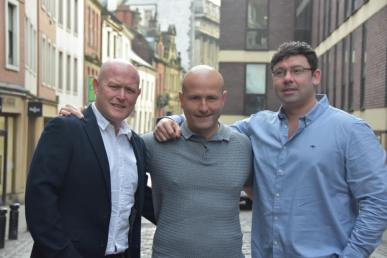
Steve with Melly Barnes and Alfie Dobson playing the Sayers brothers.

What can we expect in the film ?

Stephen is a humorous character so there is room for Northern humour in there but when you read the book it’s very graphic as regards the trauma he suffered as a child, his hard upbringing and schooling in criminal ways.

The film is a journey from Stephens early life where his Dad was a heavy drinker, had a day job and being a criminal. All fascinating stories but there is humour in there it’s not like the films The Rise of the Footsoldier, I acted in the third film of the franchise working with Shaun Ryder (The Happy Mondays).

That’s just about beating people up really but Garry’s film comes at the story from a different angle. The aim is not to glorify criminality it doesn’t make Stephen a hero.

When we received feedback from the book people felt sorry for Stephen, especially women who wanted to mother him. Some people will detest it because he was a criminal, but it doesn’t shy away from telling his story, his start in life and what he decided to do.

I’d love to do the wider story of 120 years of the Sayers family in Newcastle. It’s like Catherine Cookson meets the Goodfellas, if the film was picked up it would be like Peaky Blinders in Newcastle.

You talk about humour being in the book….

Yeah one time the Mam got a tip off that the police were coming round to the house, well the kids were well trained in what they had to do. Run around the house looking for stuff and get rid of anything that would incriminate their Dad.

Well this one day they found a suitcase and their mam told them to hide it outside. They buried it underneath a loose tombstone in Elswick Cemetery just across the way from their home.

Michael, Stephen and John hid with the suitcase and looked over to the house where they saw police leave empty handed. They looked in the suitcase and seen it absolutely stacked with cash (laughs).

Another story is about the time Stephen would be hanging outside the pub waiting for his Dad, there was always a woman there called Big Jean.

She would chat blokes up in the pub, when they were half cut get them outside and bash them over the head with her handbag, then rob them and off she’d go. Turns out she had a big brick in it (laughs).

There is little stories like that and depending on budget those scenes would be great to see in the film.

Lately I’ve watched the Italian crime drama Gomorrah and the addition of a great soundtrack help lift the story on screen. Is that something you’re looking to do ?

We’d love to be able to use music from the times we’re telling the story in, but budget restraints don’t make that possible.

There has already been North East based musicians asking about the project and putting themselves forward, we’d love to use them if it fits the text. The aim is to showcase North East talent and we’re really excited about the whole thing.

You can see the stories being dramatized and it’s exciting for me cos the stories can be put together on screen with the music and it could do the North East proud.

What next Steve ?

We’re filming a trailer for the Sayers film in March and I’m going down to London soon where I’ve been cast in the new Krays film, then working on a second draft of the new Freddie Foreman script which is close to my heart as I am very good friends with him.

To buy the book ‘Tried and Tested at the Highest Level’ go to   WWW.THESAYERS.CO.UK

Part two of this interview will be posted soon.

Interview by Alikivi  January 2020.

HAVE YOU HEARD THE NEWS ? in conversation with award winning journalist Janis Blower

A journalist for 44 years Janis’ first and only job was at The Shields Gazette…

I don’t remember having any clear idea of what I wanted to do but the only subject I was any good at in school was English and History, so it was always going to have to be something to do with writing of some sort.

My brother in law John had been a reporter at the Gazette and my sister Pam worked on the front counter reception, that’s how they met. When I left school I wrote to the editor at the Shields Gazette, Jim Sinton, asking for a job, nowadays you would need a Media degree from University but I just sent the letter in.

I fell very lucky and got taken on as trainee reporter and signed my indentures for three years. I literally learnt on the job then periodically being sent to college learning the law and shorthand, then at the end of the three years got my National Council for the Training of Journalists proficiency certificate.

What was the job of a journalist then ?

I spent a lot of time covering court cases, council meetings, area health meetings that sort of thing. Then if you were covering a story where somebody had done something or something awful had happened to them you would go out with a photographer, interview them, take some photographs, get back to the office and write your story up.

Sometimes you would get the story over a telephone interview but I liked going out and seeing people because it was the only way of getting the feel of the story plus you picked up other things as well.

In interviews I’ve found most people are open to talking not only about good times but also bad, did you find that ?

The dreaded part of the job is what is called these days, the death knock, and a lot of times you ended up getting the bums rush. It was having to go and see somebody where someone had died possibly in tragic circumstances.

You would start by saying I understand if you don’t want to talk to me but….You always had to brace yourself for being told to f off which did happen sometimes, and I totally respect that.

A lot of time people would speak to you because they wanted the story to be right, to make sure you understand what the person who had died was like. So yeah it can be a surprise to find how willing people are to talk.

Were there any deadlines that you had to work to ?

There was nothing written in stone you just knew to get your story in as soon as possible, it was more instinctive than anything else.

You’d been to the event, got your notes down then find a telephone box and hope you’ve got the right money. If you didn’t you’d reverse the charges (laughs).

You are writing it in your head as you are dictating it down the phone line. Hoping to hell you are getting it right. Terrifying at times but brilliant training.

We used to go to court in the morning and write the stories up, taking down a note from one case and writing the previous one by hand (laughs).

The messenger would come across from the office pick your story up, take it back and that would get in that night’s paper. That’s how current it was. Even covering trials in Newcastle Crown Court, you would phone your copy over after an hour or two of the trial for that night’s paper.

There were four or five copy girls who would take dictation. The early edition used to come out around 1pm and that was basically yesterday’s final edition with a bit of updating in it. But the final would come out at 4pm.

Years ago The Shields Gazette on a Monday would have a celebratory page of wedding pictures

Yes there was always certain jobs that you did before the end of the week, one was the Agoes which was snippets of what happened 25 or 50 years ago that went into the paper and the other was the wedding reports.

People would come into the office and pick up a form that had to be filled in with the details of the bride and groom, their parents, what they did for a living, what the bride and bridesmaids would be wearing, anything special about it and name of the church.

You wrote the report from that, then the photographer would go take the picture on the Saturday.

You would see them married up together on the Monday. There was a kudos of having it in the Gazette. Do people realize now just how valued the Gazette was, you had achieved something if you were in the paper.

Janis wrote a daily column called Cookson Country featuring people and places around the town it’s popularity led to the books ‘Aall Tgithor Like the Folk O’Shields’. How did that come about ?

Cookson Country in the paper started in the late 1980’s and it had been such a success with the use of the old photographs. I can’t remember who brought up the idea, it was maybe the editor or management but they said ‘Why don’t we do a book, a spin off from Cookson’.

That’s when the paper was still owned by Portsmouth and Sunderland Newspapers who had their own publishing arm, they were doing books and magazines commercially. So it was ‘Yeah I’ll give it a go by all means’.

The first one was very popular, we done that about 1993 or 4 because my son Alexander was only a baby. I look back now and wonder how I accomplished it really, working, having a small child and doing them. There’s five of them in all with the last one in 1999.

Did you find it hard work to put them together or did they fall into place ?

No, it wasn’t hard work I think for the first one, the blue one, I settled on the things around the town that were most well-known, like the Market, Old Town Hall, Comical Corner, Marsden Grotto and Marine Parks so it was easy to come up with a selection of things to do, and the Gazette did have this wonderful collection of old pictures.

For the text the Gazette had this detailed cuttings archive dating back to just before the Second World War. So no it wasn’t a chore to put it together.

Can you remember any stories or photographs that caught your attention, that stood out ?

I think what I was struck by most and this had come out of Cookson in a way was how hard people’s lives had been. I did a bit about guys gathering sea coal, you had all this coal that was washed from out of the ground seams and spilled off ships, and men would go and gather it.

I can still remember the tidal edge along the beach down there was black with all the coal washed up on the beach.

I wasn’t aware how poor parts of Shields had been, the riverside area especially, that was a learning curve. Also to see how much the place had changed, then how in some instances it had stayed the same.

There are still huge parts of Shields that are still recognizable from 100 years ago.

This photograph (above left) is at the top of Mile End Road of the old corporation staithes where all the midnight mechanics would go round and empty the ash closets, then it was all taken to the staithes put in hoppers, taken out to sea and dumped.

You could never imagine that there was something on the riverside that looked like that. God knows how old some of these buildings were.

That was the biggest revelation, coming to realise that there had been this whole riverside town parts of which probably dated back a very long time, and it’s just gone.

It used to be one street with pubs and shops along it, people now go to York for the Shambles with its little streets, we had that. But because it was so dilapidated and insanitary it was all cleared.

How important do you think local history is ?

It’s important, you’ve got to know and understand where we have come from and how the town has been shaped. But I have a profound dislike of the word nostalgia. I hated it when Cookson page was referred to as nostalgia.

There is a saying that nostalgia is a seductive liar. Nostalgia now for people can be the 1980s, when I started doing Cookson a lot of the readers memories were going back to war time.

I never tried to look at the past through rose tinted spectacles, you look at those old photographs in the books we’ve talked about, families in those houses on the riverside were living in appalling conditions, the sewage, the water supply was poor, walls of the houses full of bugs, people were hungry, they were dirty – there’s no nostalgia for that.

It is important that we know about these things so you can see what improvements we have made, how much we’ve come on in that time.

Now that you are retired do you still keep your hand in ?

Since I’ve retired I have done some work with school children and they are absolutely fascinated by things you tell them. I’ve taken some on walks along the riverside, to The Customs House and where Brighams dock was and tell them they would have been covered in coal dust sitting near The Customs House, where the old coal staithes where.

Then behind you is the top of St Hilda Colliery pit head, can you imagine 150 year ago little children your age working down that pit ?

They are fascinated about it, I tell them to go home and talk to their parents, talk to Granda and Grandma what life was like when they where children. Don’t get seduced by nostalgia for the olden days, cos they were hard…really hard.

Alikivi      Interview January 2020

EVERYBODY’S LIFE WAS TOUCHED BY COAL with artist Bob Olley

17629889_1929753347296234_3654908554234914630_n

Between 2009 and 2016 I made over 20 films. ‘Vanished’ made in 2012 was a documentary about the lost industry of coal, shipyards and railways.

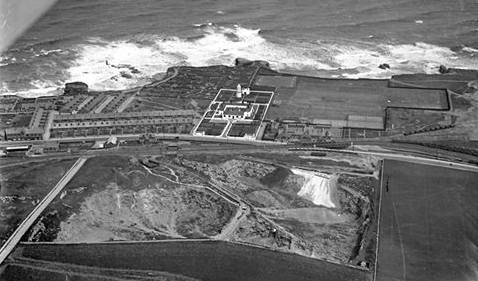
Also featured was the lost village of Marsden, once situated on the cliff top near Souter Lighthouse and Whitburn pit. (pic above courtesy of Marsden Banner Group).

This short extract is taken from an interview featured in the film with former miner now Artist, Bob Olley….

Well, I worked at Whitburn Colliery from 1957 till the colliery closed in ’68. Whitburn was a wet pit mostly and I was working in the east yard seam three miles out under the North Sea.

It took us three quarters of an hour to get in and three quarters of an hour to get out. I think it’s because it’s such an adverse industry, danger, and whatever else, a sense of humour developed.

When the colliery closed it was the push I needed to get out. When I first went into the artistic side of my life the stuff I did was very dour, mostly pen and ink work.

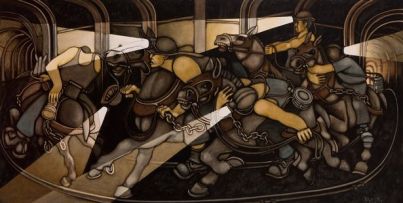
Then I moved away from coal mining for about 15 years then suddenly I got this urge to go back to the subject and this was the type of thing I was doing (points to picture next to him).

0_Mining-Art-Gallery-Bishop-Auckland

Up to about 15 years ago I would say most people in the North East their lives was influenced by the coal industry. The amount of people that were involved with the transportation of coal, the winning of the coal, the processing of the coal, everybody’s life was touched by coal.

Alikivi   January 2020.

SMOULT THE BOLT

In 2006 the idea was to make a number of short documentaries in South Shields featuring residents of the town and their hobbies, interests or passion. The first was Colin Smoult, this was his story and a link to the 4 minute film is at the end. 

South Shields has always been a rock town and even when music has faded and past like the indie culture of the late ‘80s, the big dance boom of the ‘90s then you’ve still got the rock scene.

We might be gettin’ older, greyer, fatter but I think a lot of people in this town will always have a place in their heart for rock music.

We’ve always had people from this town that’s been so fanatical for the bands that they have followed. I’ve grown up with many of them from my late teens onwards and some of them remain just as passionate about their music now as they did over 25 years ago.

My name’s Colin Smoult I’m 42 years old and I live in a town where I was born, South Shields. A small seaside town 10 miles east of Newcastle.

My occupation is a shopkeeper, its essentially what people used to refer to as a head shop. I sell things like pipes and bongs which 20 years ago might have been seen as very risqué.

But this day and age it’s all fairly acceptable. It’s only a tiny shop with a minimum amount of trade but I’m me own boss and if it pays the bills, I’m quite happy. That allows me plenty of time to pursue my other hobbies and interests – my main one is local live music.

I’ve been the singer and guitarist in a band called Shovelmouth for the past eleven years now and we play various gigs in pubs scattered right across the region.

The songs are all rock cover versions, but the pub rock scene is huge in the North East of England. On a Friday and Saturday night there are probably 100 pubs and more putting on live entertainment featuring full on rock bands.

South Shields alone has half a dozen pubs that put on live music and the largest of these is called The Office. Not only does my band get to play there but I am responsible for booking the acts every weekend.

The acts are normally small local bands playing a variety of covers but now and then we put on special events that feature tribute bands, some of these are from out the area.

I’m a rocker at heart but I find there is a lot of people who love this kind of music, so I book the bands that people want to see the most. I’m pretty passionate about live music and only book the very best from the talent that we have.

Some people may see it as a bit sad and may view it as a bunch of middle-aged folkies trying to re-live their youth, but nostalgia is a big booming industry and if people want to see songs from their youth played live in their local pub – then who am I to deny them.

Whether I’m the bloke singing the songs or the man who books the bands I’m content to know I’m doing my bit to allow people to have a good time after a long week at work.

I’m also involved with a website called Riffs which pushes and promotes local bands, and apart from news pages and gig guides I also post up my own reviews of the many bands that I get to see here.

So, I suppose my hobby is full time because as well as being directly involved every weekend, during the week I am always writing things up and arranging things for the venue and my own band.

I like to keep in touch with lots of groups out there and there’s quite a lot of time spent gob shyting with people on the internet as well.

Don’t get us wrong I get a big buzz out of being on stage and entertaining people, but if you’ve got any band up there on stage with a superb crowd watching them, for me the atmosphere in the room is just as enjoyable.

The standard of musicianship on the local circuit is extremely high and is way beyond what people would term as pub bands in other parts of the country.

The old club scene has become a lot more pop orientated in the last 20 years and a lot of the rock players that used to play that circuit have now moved into the pubs instead.

So, the end result is that we have some amazing musicians kicking around and most of the bands that you get to see are free admission too.

So, for a lot of people aged in their ‘30s, ‘40s, ‘50s watching a live band on a Saturday night is a very cheap way to have a fantastic night out. If I’m not playing with my own band, then I’m here at The Office watching them instead.

Either way for me every weekend is dominated by my love for live music. I got tons of pride in what I do. But for me there’s only one true satisfaction and that’s putting a smile on people’s faces.

If I can be involved in any way with live music that others gain a lot of pleasure from, I get immense satisfaction from doing that.

I suppose as I get older, I won’t be able to bounce around on stage in the same way, then eventually there will come a time when I’ll have to retire from live performances, but I’ll always stay involved with the local band scene even if I have to be brought in on a wheelchair.

I’ve jokingly said that when I die, I want my ashes scattered under the stage of The Office. But honestly, it’s as good a place as any and that way I’ll always be close to what I love.

Alikivi    January 2020.

BLACK CANDLE – new album by UK darkwave band Psykobilly

Psykobilly is a solo project by Bill Newton, ex-guitarist and songwriter from early 80’s North East new wave band Silent Scream who featured in November 2019 blog……

The debut album, Black Candle, has taken a year to write, record, produce and master. I’m pretty pleased with how the album has turned out Newton continued….The album’s overall sound has been described as ‘darkwave’, although there is a mix of pop, rock, ballads and synth-driven songs.

Listeners have already made comparisons with Nick Cave, The Cure, Scott Walker and Morrissey…

Obviously, I’m honoured and pretty amazed to even be mentioned in the same breath as such legends and heroes of mine.

Who were the other musicians that you worked with on the album ?

I am fortunate to have talented friends. Four of the songs were recorded with Steve ‘Smiley’ Barnard (The Alarm, Archive) at his Sunshine Corner Recording Studios in Hampshire. He drums, plays bass, sings and produces. We had Pete Kirby on keyboards and piano and James Walsh who sings on two songs.

The other 60% of the album is essentially me at home with my MacBook and Logic Pro X recording software, my Auden Chester acoustic and Yamaha SG2000 guitars.

Is there a story behind the album ‘Black Candle’ ?

The album’s title is metaphorical although essentially refers to the dark but illuminating nature of the songs. They’re all personal, I always ask people to look beyond some of the technical shortcomings and focus on the honesty and passion in the music and lyrics.

Are you looking to play the album live ?

It’s unlikely you’ll see me perform live as the songs are pretty complex arrangements. They can all be stripped back and played acoustically but to get near the sound of the album I’d need two or three guitars, piano, keyboards, strings, backing vocals and maybe a choir of angels! Give a listen to the last track on the album, Remains.

One of the sweetest things that has happened was when a friend of mine played the song Remains at one of his gigs, a very emotional lady approached him and asked if she could use the song at her mum’s funeral as she felt a personal connection with it.

Are there any plans in the pipeline for Psykobilly ?

It’s just so hard to make any breakthrough these days. It’s pretty rare that small, independent artists get any mainstream recognition, and there is very little financial reward.

My first single Leave It All Behind has been streamed 1500 times around the world in the four months since it was released and the official video has been watched over 2000 times on YouTube but I’ve only made £5 from this !

I’m not complaining though and prefer artistic praise over money anyway.

Ideally, I would like to write for other people. I’m not in any way arrogant about any ability I might have and would describe myself as humble and self-deprecating.

However, I do think that the songs are strong enough to be performed by more established and talented artists who could reach a wider audience.

I can always live in hope that a small label might offer to release my music or that Miley Cyrus comes calling!

Black Candle is available now on Bandcamp, Spotify, iTunes and all other major digital platforms.

https://psykobilly.bandcamp.com/album/black-candle

https://open.spotify.com/album/1I0IJmxNhIllIhjAnDBwoq?si=ndh570p8QNuYpknA07yuNQ

https://music.apple.com/gb/album/black-candle/1494508478

Gary Alikivi  January 2020.

FAMILY PORTRAIT – Downey photography studios in South Shields & London

As I was sorting out some books this picture card fell out of one of them. It’s something I picked up at Shields Market a few years ago.

I’m not sure who the sitter is but the photo was taken by the Downey brothers, William and Daniel, who along with older brother James, had studios in the North East then moved to London.

Commercial photography was in it’s infancy when the brothers were taking pictures of royalty and personalities like Oscar Wilde.

Looking back to photographers in South Shields there was James Cleet with his housing clearance pictures during the 1930’s, and reported to be a bit of a showman in his mac and bowler hat, especially at Tyneside ship launches he would signify when he was finished by making a large sweep of his bowler hat and take a deep bow in front of the crowds.

Amy Flagg’s unforgettable Second World War images of a scarred town after the German bombs hit, then in her own darkroom printing photographs of devastating images of a town she loved, important pictures that still have a huge impact today.

Records show the Downey brothers worked out of a studio in London but before that were based in South Shields.

William Downey was born in King Street, South Shields in 1829, with help from his older brother James and together with brother Daniel, they set up a photographic business in the Market Square in 1860.

The studio became successful resulting in branches opening across the North East in Blyth, Morpeth and old Eldon Square in Newcastle.

In 1862 Queen Victoria commissioned William Downey to take a series of photographs illustrating the Hartley Colliery disaster near Blyth.

Soon after William and his brother Daniel moved to London where they accepted commissions from dignitaries and aristocracy including the UK royal family, the Emperor of Russia and King of Norway.

The brothers also took pictures of show business personalities from their studio at 57 & 61 Ebury Street in Belgravia, while older brother James with his grocery business, kept a studio open in South Shields.

Big brother James was a huge help to William and Daniel. He was a grocer and importer of German yeast with premises in West Holborn in 1865. Ten year later he had two shops trading as a grocer and confectioner out of 17 & 19 Eldon Street in the Laygate area of the town.

By 1881 he had one shop for his grocery business and opened the other as a photography studio. There is a record of a Frederick Downey at 19 Eldon Street, I suspect that he was James’ son who carried on the family photography business.

Meanwhile in London, Daniel and William continued their work of royal sittings and portraits. Sadly, Daniel passed away in Bethnal Green in 1881 while William died in Kensington in 1915. His son, William Edward, kept on the family business as did his son, Arthur.

A lasting record of their work is an impressive set of five books called ‘The Cabinet Gallery’ printed by Cassell & Company of London, Paris and Melbourne in 1890. The volumes include 36 photographs each plus a summary of the subject.

Kings, Queens, Professors and actors all sat for a Downey portrait, the attention to detail made them stand out among other photographers and ensured customers would return. Their stamp is on the back of some pages.

Throughout the early 1900’s there is records for a Downey photography studio at 17 & 19 Eldon Street, but unfortunately by 1912 the trail goes cold. What happened to the Downeys in London and South Shields? Is there more to their story? If you have any information to add please get in touch.

Source: Census records, Burgess Rolls, Wards Directories, Wikipedia, The Word South Shields.

Gary Alikivi   December 2019

THE MAN IN THE SHADOWS – James Cleet, South Shields Photographer 1876 -1959

In a previous post I talked about coming across pictures taken by the photographer James Cleet in the Local History Department of South Shields Library around 2008, particularly the housing clearances in South Shields during the 1930’s.

I was curious who he was and what he looked like. I had only seen his shadow in some pictures that he had taken – the outline of his cloak hunched over a tripod and camera. Then one day while researching through old newspapers I came across a story about him and there he was, looking straight at me, a camera in hand half covering his face – he had the look of Spanish artist Salvadore Dali.

On his death at the age of 82, local newspaper The Shields Gazette reported…

‘Mr Jimmy Cleet, a photographer for 68 years has died at his home in Wardle Avenue, South Shields. From the day he moved into the world of cameras as a 13 year old plate boy photography was his bread and butter, his hobby and his greatest interest in life.

He never cared much for flashlights, which he thought ruined details in portraits, and until he retired last year he still used a camera which he had bought 30 years previously in preference to a modern one. But if his equipment was a little old his finished photographs were never below the standard of excellent’.

They were and had an instantly recognizable look amongst all other photographers I researched. The Gazette added… ‘James Henry Cleet, the first South Shields man to be elected a Fellow of the Royal Photographic Society (1933), served a seven year apprenticeship in commercial photography and studied art at the old South Shields High School. As a young man he went to Fleet Street and worked as press photographer for The Daily Mirror and soon established a lasting reputation that he would get pictures whatever the difficulties.

On one of his first assignments he was given 20 minutes to produce a picture of Lady Londonderry as she left Charing Cross Station. No one could get near her, but he solved this problem by carrying some of her luggage to the train’.

When researching his family history I found that in the late 1800’s James’ Grandfather was a Master Mariner, the family owned several ships and they lived in Heugh Street on the banks of the Tyne. But unfortunately a downturn in business led to his father becoming a shipwright and the family moved to Bath Street in the Lawe area of the town.

On the 26th December 1908 James married Eva Aspery, they had a son James, but sadly he died at 4 year old.

The newspaper report carried on his story…Later he concentrated on his love of old marine photography and went to sea in all weathers to get his pictures. He had a deep affection for the Tyne, tug boatmen were always ready to help him.

A small man wearing a bowler hat, he was a familiar figure in every Tyneside shipyard. When he took pictures at a launch he would photograph the ship then the launching party, then with a magnificent sweep of his bowler hat and a deep bow he would signify he had finished’.

From 1930-38 James recorded what was called the ‘slums’ of South Shields, mainly around the Holborn and riverside area of the town. The photographs were commissioned by South Shields Public Health Department and displayed in a book published by SIDE Photographic Gallery in 1979. This features in a previous blog (24th December 2019).

Sadly, James Cleet died on 2nd June 1959, the Gazette article ended by saying ‘His photographs of South Shields form a remarkable record of the town, and like many photographers he objected to having pictures taken of himself’.

Source: The Shields Gazette, Census records, Wards Directories.

Alikivi    January 2020.

AMY FLAGG: HOLBORN & THE MILL DAM VALLEY

Following on from a previous post featuring Historian & Photographer Amy C. Flagg and her book ‘The History of Shipbuilding’, further information has come from South Tyneside Libraries….

‘The book was printed in 1979 about the same time when Hodgson and the Boswell Whitaker trilogy of books were printed. A figure of 200 copies each of these books were printed’. (G.B. Hodgson – The Borough of South Shields and Boswell Whitaker –The Preservation of Life from Shipwreck Volumes 1-3).

A tributary of the Tyne called the River Branin cut into South Shields over 200 years ago and created the Mill Dam Valley. An Ordnance Survey map of 1895 has the valley clearly marked. Before that time, it possibly would have extended in an easterly direction towards the North Sea making the Lawe an island.

In his book ‘The Borough of South Shields’ Hodgson states that…

in 1748 the churchyard to the south of St Hilda’s was described as sloping down to the edge of the Mill Dam Creek or the river Branin, a fine sheet of water, up which the tide flowed as far as the modern St Catherine Street. The creek when filled with water at high tide formed a picturesque lake.

Miss Flagg describes the Mill Dam Valley in her Shipbuilding book….

’When the Chemical Works occupied most of the space near the Mill Dam Valley, then a large sheet of water at high tide, the shipbuilders were all clustered together nearer the sea because the ‘Narrows’ – the throat of the river, which led to the Harbour was shoaly and difficult to navigate’.

She talks about walking along the riverside…

‘Leaving Low Street, crossing the Market Place and over the Mill Dam bridge to the ‘High End’. Holborn, the main street, was of a much later date than the old, almost medieval Sheeles’. (I’ve come across a few different spellings of the town – Shiels, Schiels and todays Shields).

Further reading reveals…‘Filling in of the millpond or valley by Newcastle Corporation in 1816’. I think Miss Flagg was referring to the River Branin as she added ‘After the valley was filled in, the remains of the creek were used for a mooring place – it is given as Mill Dam Dock on one map. After an unsavoury history it was filled in and only a very small ‘gut’ of the river remained’.

What was the ‘unsavoury history’ ? The book reveals more about the industrial map of ‘Sheeles’.

Miss Flagg includes a section about The Holborn Landing and two shipbuilders, William Wright and John Clay. Her research found William Wright had five sons, all of whom were Master Mariners.

She adds that one son, William, left the sea and was manager for many years at both High Docks and West Docks.

Another son, Leonard, married a baker’s daughter and founded the well-known Wright’s Biscuit Factory, the bakery being somewhere near Holborn Landing.

A document stated that ‘During the Franco-Prussian war the biscuit firm worked day and night for over twelve months making 48 tons of biscuits from 400 sacks of flour every week for the French government’.

Her research on John Clay revealed in 1847 he constructed the first iron ships built in South Shields on premises where Wrights Bakery originally stood.

Clay was labelled ‘King of Shields’ as he was listed as having his finger in many pies: the son of a grocer in Nile Street, a brewer, farmer, publican and banker who ‘went down with the bank’ in 1857. Although doubt was cast on his career as a shipbuilder, Amy concludes ‘the whole question is a mystery and must be left at that’.

There are copies of ‘The History of Shipbuilding by Amy C. Flagg’ available to read in the Local and Family History section at The Word, South Shields.

Gary Alikivi   December 2019.

HARD UP in HOLBORN – South Shields photographer James Henry Cleet 1876-1959.

During the 1930’s James Cleet was commissioned by South Shields Public Health Department to make a photographic record of ‘slum housing’ in the riverside area of the town – Holborn and Laygate.

Side Photographic Gallery in Newcastle produced a booklet in 1979 of some of the photos. Not sure if the term ‘slum’ was first used by Side Gallery or Public Health Department?

First time I came across James Cleet was when I was doing some family and history research in the Local History section of South Tyneside Library in 2007.

It gave me the idea to make a documentary highlighting Cleet’s work, and Holborn, the area once known as the industrial heartland of South Shields, plus the digitization project.

The Local History section had been awarded funding to digitize thousands of photographs they had in their archive and load them onto a new website. Volunteers were needed for this process and as I was self employed I could give a couple of hours a week to a worthwhile cause.

Spending time looking through photographs, some from the early 1900’s, of people, places and events around South Tyneside was a great way to spend a couple of hours.

It wasn’t long till I dropped in more frequently. Photographs by Emmett, Flagg and Cleet were an excellent record of the times.

Some images had familiar street names of area’s where my ancestors lived, mainly Tyne Dock, Holborn and Jarrow. Finding a family of photographers called Downey who had a studio in Eldon Street next door to where my great grandmother lived was an added bonus.

There was a small team of volunteers who recorded details of the images, scanned the photos, and uploaded them onto the website, this process features in the documentary.

Street names, buildings, shops and people were researched, as much information as possible was added. On the back of the pictures was nearly always a date or name of the photographer.

But unfortunately, some photographs were left blank and didn’t have any recognizable signs but were still uploaded.

After a few sessions I could recognize the styles of certain photographers and two of them stood out. Amy Flagg added extensive details to a lot of her work and covered some powerful subjects like the Second World War – climbing over bombed houses to get the shot won’t have been easy.

Some of her images became instantly recognisable, in her darkroom she stamped a date in Roman numerals on the bottom of the photo.

There were a load of photographs that were taken in Holborn by James Cleet, his style and composition was of a very high quality with clean, sharp images. Most of the images are taken on overcast, grey rainy days – is that a coincidence ? I doubt it.

The lighting gives the pictures a uniform look and add to the bleak, grim atmosphere of the housing clearance.

In research I found Cleet had regular work at ship launches, plus The Shields Gazette and Daily Mirror. While Flagg’s technique was more handheld, Cleet used a tripod in most if not all of his very sharp pictures. Both were passionate about their work.

Around that time an old guy used to come to the local history section and tell me a few stories about Tyne Dock and Holborn as his family lived in those areas.

Next time he brought in a booklet which he gave to me, it featured a collection of the Cleet housing clearance photographs I’d been looking at.

The booklet also included reports by the South Shields Medical Officer for Health talking about ‘rat repression’ and ‘eradication of bed bugs’. They reported….

’The women had a very hard life. They polished their steps, and the pavement was scrubbed. The backyard was washed regular. There was a question of pride. They had to keep them clean or they’d be overrun with vermin. No getting away with it. It had to be kept down’.

The report also included complaints from residents…

’A’ve seen some hard up times. Families of nine in one room. I knew a family, the father and mother had to gan ootside to do their business. Yes they used to do their courtin’ ootside. The mother used to stand at the telegraph pole on Johnsons Hill and have her love with the husband and then gan yem to bed. You couldn’t do nowt with all the family livin’ in one room’.

In a previous post I wrote about the important historical archive that Amy Flagg had left to the town: her Second World War photo’s plus the book ‘The History of Shipbuilding in South Shields’, the James Cleet housing clearance booklet is just as important a document of South Shields.

To check out the South Tyneside photographs featuring Amy Flagg and James Cleet go to :   https://www.southtynesidehistory.co.uk/

Gary Alikivi   December 2019.

JARROVIANS – Vince Rae’s photographic record of Jarrow in 1978.

For 30 years Vince Rae ran the Bede Gallery in Jarrow which featured paintings, sculpture and photographs reflecting the town’s history. Included was material relating to the 1936 Jarrow March and the execution of William Jobling, the last man to be gibbeted in the North.

I knew of Vince Rae’s work as I’d read a couple of books that he had published about old Jarrow and came across his photography through the 1990’s. But first talked to him around 2001 when I was running a Community Video Project in South Shields.

He was organising an exhibition about the Jarrow Crusade and was looking for a video projector. We didn’t have one, but I went along to the Viking shopping centre in Jarrow to see the exhibition.

Then in 2008 I called him up explaining that I was making a documentary in Jarrow called Little Ireland. The film was going to look at the Irish immigration into Jarrow and could I use some of his photographs.

He agreed straight away ‘Yeah no bother son just send me a copy when it’s done’.

If we go back to around 2002 I was filming in Jarrow and in a newsagents, I saw a book called ‘Jarrovians’. Inside were some amazing black & white documentary photographs of people and places around Jarrow, all taken by Vince during 1978. I handed my tenner over.

Packed with images of drinkers and barmaids from pubs like the Royal Oak, Prince of Wales, Tunnel Tavern and the Viking Bar. There are gadgies suppin’ pints and playing domino’s, kids on the streets setting up bonfires, homeless men in Simpsons Hostal, women’s darts team in The Western pub. Dogs, horses and Joblings gibbet – all life is here in its working-class glory.

With few exceptions, the overall feel of the collection of photographs is people simply enjoying themselves, being out of the house and among friends sharing their time together.

Most people are happy to get their photograph taken but looking at some of the images Vince might not have asked first.

The Jarrovians was first published in 2001 by Vince and Willa Rae at The Bede Gallery, Jarrow.

Gary Alikivi   December 2019.