‘When I was young I watched a production of Blood Brothers and it just blew me away, I was so engrossed and moved – from that day I was hooked’.
Alex Tahnee from Newcastle has been acting since she was 11 year old…
‘I fell in love with theatre playing Young Catherine in Tom and Catherine, a musical about Catherine Cookson’s life at The Custom’s House, South Shields. I love the idea of telling stories and love the feeling of being on stage’.
‘Since then, I’ve worked with many brilliant people in the North East including various shows playing Alice in Alice in Wonderland at Northern Stage, playing a military wife in Magnolia Walls, and most recently playing a female Marc Antony in Julius Caesar, an absolute bucket list role’.
Next up for Alex is a play by South Shields writer Ed Waugh (Dirty Dusting, Wor Bella, Hadaway Harry, Carrying David). The Cramlington Train Wreckers is another forgotten story about the North East.
‘I play Erica, she’s a journalist interviewing Bill Muckle, one of the eight men imprisoned for derailing a train in the 1926 general strike. Bill has a fascinating tale to tell, and it resonates eerily with political issues we face today’.
‘Bill is played by the wonderful Micky Cochrane (I, Daniel Blake, Carrying David, Billy Elliot), and the piece is directed by Russell Floyd (The Bill, Eastenders, London’s West End), who also multiroles throughout as various characters in some glorious buffoonery’.
‘Bill tells the story of the general strike, how it came about, who was involved, the lies and propaganda that were spread and how it ended after only 9 days. Also, how it came to be that 8 young men from a mining town in Northumberland were imprisoned 100’s of miles away from their families and hailed as heroes upon their return’.
‘People are fascinating to me and theatre is like putting them under a microscope. Like Bill in this play, he was a real person who was so gregarious and engaging you can’t help but listen to him. There are incredible stories in every nook and cranny and theatre lets you explore them, what better job is out there?’
‘My hopes for this play is that this piece of local history is known by new generations for not only its regional importance but also how politics has a profound impact on individuals and communities across the world’.
‘I believe by using the first-hand account of one person in the past we can highlight the relevance of the same messages and themes still affecting us today’.
The Cramlington Train Wreckers opens on 7th November at Cramlington Learning Village and continues around the North East until 16th November 2024.
For tickets & full list of venues contact the official website >>>
Now living in South Shields, retired teacher Rosie Anderson still feels there is work to do and more stories to tell.
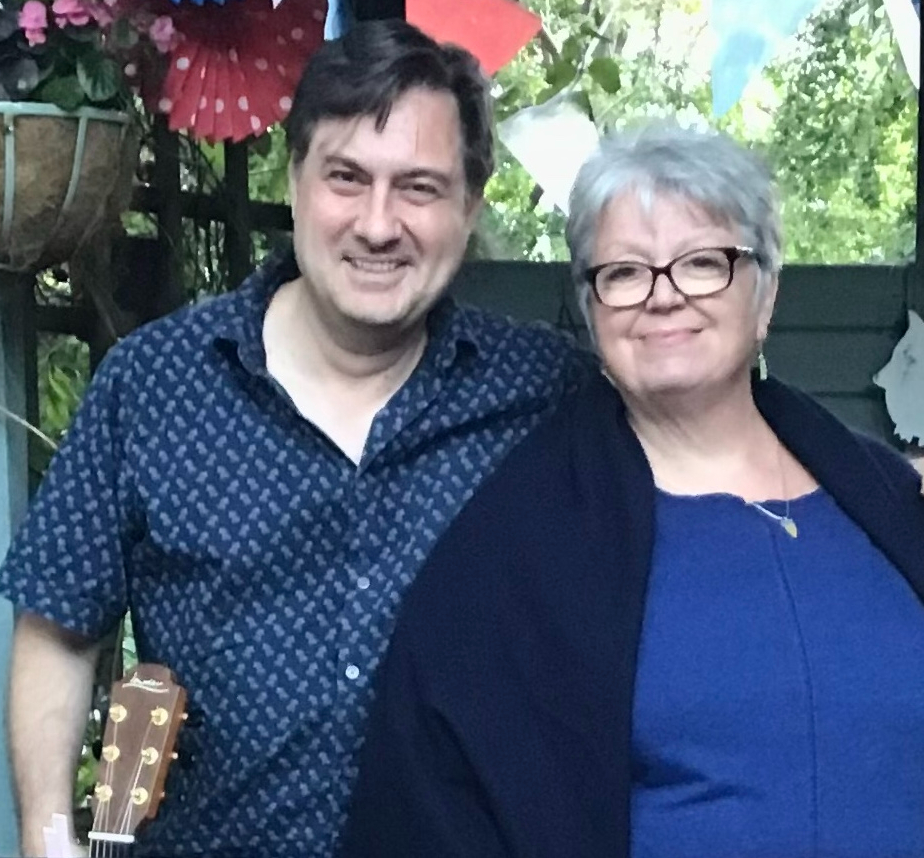
‘Sometimes I feel as though I’m just getting started. I sing whenever I can. This year my musical partner Adam Holden and I have played at The Watch House in Cullercoats, The White Room in Stanley and Cockermouth Festival which were all great. I’m determined not to just bow out because I’m getting older’.
‘I grew up in Wylam in the Tyne Valley, in a house full of music. Both my Grandparents played piano. My dad listened to The Beatles, both parents loved the theatre and musicals and they took me and my brother there – I still love all that’.
‘When I was a kid I told my parents I wanted to be a performer but they were worried I wouldn’t be able to afford a home like them, they wanted me to have a ‘proper’ job. They wouldn’t let me study performing arts so I trained as a teacher’.
‘My first job was in Benwell, Newcastle. Then I went to the Middle East where I spent 10 years teaching in Kuwait and Qatar, before returning to Newcastle. I taught at Walkergate Primary School where I would do all the music shows and drama productions. Loved doing the shows there, I never gave lyric sheets out to the kids, they learned by listening and singing the songs back’.
‘When I left teaching I saw an advert for facilitators for Singing for the Brain with the Alzheimers Society. I really loved doing that. I did that for six years until covid hit. Singing on-line with people on the screen in front of you didn’t work really’.
‘People love stories in whatever form, be it a book, a film or a song. Some people write songs about being in love, and about their feelings. My songs are mostly about people and places. I find stories present themselves to me and I take them and turn them into a song’.
‘There are two songs that I have written that stand out for me. Sally Smiths Lament was written after my husband Chris and I worked on a film about soldiers from County Durham during World War One’.
‘Sally was the wife of miner Fred Smith, who featured in our film. They lived in a tiny terraced house and every day Fred and his sons needed a bath, a clean shirt, a clean bed and a dinner. The kids needed to get to school – how did she cope with all that, especially when Fred was away at war. I wanted to give Sally, and all the women like her, a voice.’
‘When I wrote it the song just seemed to be presented to me, her whole life. I got to sing it at a celebration in West Auckland and her family came to hear it – it was very moving. It travelled well and won three competitions – the Newcastle Folk Club, Rothbury Traditional Music Festival and first prize at Morpeth Gathering’.
‘I can’t just decide to sit down and write a song – some people do and I applaud them for the discipline but I have to wait until they come. Three things happened to me in my life that I put together in a song called Breakdown’.
‘When I was a kid I lived at Chapel House Estate in the west end of Newcastle. One night me, my mother and a friend went for a walk. This woman came out of her house in her dressing gown, she wasn’t in control of herself, didn’t know what time or day it was. I had never seen that behaviour in an adult before. Now I believe she was having a nervous breakdown’.
‘That always stayed in my head and another one was when I was living in Fenham. I went to the shops with my children who were only small then, and a woman came out of her house with a letter and asked if I would read it to her as she was confused and couldn’t understand it’.
‘Then about 30 years ago I went on a blind date in Newcastle with this very nice bloke. He said I need to tell you something before we go any further ‘When I was working in Canada I had a nervous breakdown in the car park of a Burger King’. It was hard to concentrate on anything else after that’.
‘But I remembered those incidents and those three individual people are lodged in my heart for their own traumas. They gave me that song’.
‘This year we went to Kjerringoy a former trading post in the Norwegian Arctic Circle, out in the middle of nowhere, it was beautiful. A family ran it in the 19th century and had 3000 fishermen working for them, catching and processing thousands of tons of cod’.
‘The father and husband died and the wife continued to run it single-handed for many years until she eventually remarried. I asked the locals if there was a song about her and there isn’t. So that’s my next song – Annalisa from Kjerringoy. Her story needs to be told’.
‘I’m also aware we need to start telling more stories about people and their lives and jobs today otherwise in 100 years time there will be no one singing about us!‘
‘What does music mean to me? It’s hard to describe it, it’s so deeply embedded, there’s no life without it. Music is at the core of my being, there is no day without singing and because I have grandchildren now I have a new audience! We sing folk songs and songs from musicals, they’re word perfect when they sing them back’.
‘Music gives such joy, when I was singing with the Alzheimers Society the collective joy and reminiscences of songs from the past and enjoying it together was just so valuable for the families’.
‘We had people who wouldn’t sing at all but liked being there and that was fine. Once, two women brought their mother to a session and she sat between them. She didn’t communicate at all, had her head down, closed off you know. But when we started singing a song, I can’t remember which one, she lifted her head up and actually got up and started moving around in the middle of the circle’.
‘One daughter got up and started dancing with her. When we got to the end of the song the daughter turned round and said to me ‘She’s just said my name for the first time in years’.
‘Music gets right in there (pointing at heart) we’ve got to keep it going and expose our youngest children and oldest adults to music because it really does reach parts that others can’t reach. It’s like hearing the heartbeat in your mother’s womb’.
‘As a child I wanted to do music, as an adult I taught it with kids then people with dementia, despite my age I’m still committed to what I always wanted to do. Women who’ve had careers and families can still chase their dreams’.
‘There’s been nationally recognised music scenes in Liverpool, Manchester, Sheffield, Glasgow and Bristol but there hasn’t been one in the North East. So, I thought there’s a story to be told’.
Retired former Nissan worker Ian Fawdon decided to write a book about his passion. ‘Too Far North’ features over 30 interviews with musicians talking about what it means to be a musician from the North East.
‘I started talking to musicians like The Kane Gang and Lindisfarne drummer Ray Laidlaw, they were all fantastic to interview. White Heat frontman Bob Smeaton was a great storyteller and I found the Heavy Metal section really inspiring’.
‘John Gallagher from Raven and John Roach from Mythra were so enthusiastic – after all these years. When I met Robb Weir from Tygers of Pan Tang I took their first single to the interview I bought in 1980 to get autographed. Robb was more shocked than me!’
‘I start off looking at the 60s and The Animals. I talked to people from then, it was a really vibrant scene. Then I look at the folk scene and Lindisfarne, then punk and New Wave of British Heavy Metal. Then the Kitchenware record label and Sunderland bands Field Music and the Futureheads and finish off by bringing it up to date with Nadine Shah’.
‘Did I come across any unexpected stories? When putting this book together good management really stood out it really made a difference. Tom Noble at Tygers of Pan Tang went to MCA and got them a four album deal. Fist got an album deal but didn’t do as well’.
‘I talked to Keith Armstrong, owner of Kitchenware Records a really interesting guy. Until they came along there was only one choice for bands and that was to go to London. Kitchenware thought no, you don’t have to move we can do it up here. That for me was a refreshing attitude’.
‘They had four bands – Prefab Sprout, Kane Gang, Hurrah and Martin Stephenson and the Daintees. Keith got them all really good deals. Kitchenware still managed the bands but were licensed to the major companies’.
‘Prefab Sprout had already recorded a single and were selling them in HMV when Keith heard them. He went to CBS for Prefab and they asked him how much he wanted. ‘£100,000’ he replied. They made a quick phone call to their boss and agreed the price. He said he had ‘no idea where that number came from!’
‘He later went on to Editors and Jake Bugg. Keith could spot talent and he always hoped that each band recognised that he was doing his best for them’.
Lindisfarne at Newcastle City Hall.
‘Further interviews with Keith revealed that around 1982 there wasn’t much happening in Newcastle. ‘There was me and a couple of mates looking to start something. There was Viz, Trent House bar and a club called World Head Quarters. We wanted to put bands on in the town, there was plenty Heavy Metal gigs but nothing else’.
‘We got a few bands from Scotland like Aztec Camera and a few other nights started up. Our favourite band was New Order so we thought of getting them’. They phoned the manager up and he demanded cash on arrival, which they agreed to. Tickets sold quickly so they transferred the gig to Newcastle Mayfair, that sold out and set them up’.
‘The New Order gig money was enough to record singles in a London studio for Hurrah, and Martin Stephenson and the Daintees. One day Keith Armstrong, who was manager at Newcastle HMV, had Martin Stephenson’s Daintees busking outside the shop. But they were getting some grief so Keith asked them to play inside. He liked some of the tunes – that’s where he asked them about going down to London to record’.
‘Just every now and again you get people from the North East who have that drive, that ambition, and Keith was like that. He was just a young lad at the time, in his early 20s and a manager of a record shop’ said Ian.
‘Keith told me that he got hold of Malcom Gerrie who was the top boss at The Tube and said to him ‘you’re not doing much on the North East why not do something on Kitchenware?’ It wasn’t long till a segment on Kitchenware records was broadcast on The Tube. Keith was pushy with enough belief in the North East. He’s still active now and has Soul Kitchen Recordings and gets young talent from the North East to put records out’.
‘If you are looking for a sad story in the book I did an interview where I did feel sorry for those concerned. There is a lot of tales of woe. One of the bands in the punk section were from Durham, called Neon. I really liked them, they were so arty and interesting and played a lot in the North East. One of the famous gigs at the Guildhall in Newcastle was with Angelic Upstarts and Punishment of Luxury where a massive fight broke out’.
‘Punishment got signed by United Artists who were also sniffing around Neon. In an interview Tim Jones (vocals, Neon) told me there was a guy called Martin Rushent (Buzzcocks, Stranglers, Human League). He was a big name producer starting up a new label. He asked Neon to ‘come down to our independent label and we’ll put your single out give you plenty of attention’.
‘They went with them and started touring but the van was breaking down, the PA was knackered, there was just no money. They went to the studio where Martin was recording XTC and told him about the situation, he replied ‘What do you expect me to do about it?’
The band were devastated and not long after split up. Tim was shocked at the treatment and said ‘at first someone gave us the dream, then just dropped us. How could he treat a bunch of 18 year old kids like that? It seems we got picked up then they got bored of us’.
‘You want a funny story? Maybe not comical but the book has a number of incidents that occur around musicians and gigs. This one included top Hollywood film director Spike Lee’.
‘Believe it or not Spike has a brother who is a massive Prefab Sprout fan. A few year ago Spike wanted to develop a fairy tale animation based on the music of Paddy McAloon. Everything was going alright until they met in London and Spike had changed his mind because he had fallen out with his brother’.
‘Hurrah got the gig supporting U2 and found themselves in a big venue in Birmingham where they didn’t understand the scale. Their little curly guitar leads wouldn’t stretch across the huge stage’.
‘They also told me they didn’t play the game. After gigs they didn’t go in the green room to rub shoulders with other bands and music biz people. They’d stay in their dressing room turn the light off and shout at each other while throwing their rider about, which was usually fruit. At one gig The Edge and Larry from U2 opened the door to someone shouting ‘bananas’!’
‘I spoke to Brian Bond and he told me Punishment of Luxury were on a European tour and the last gig was in Holland. The stage manager said why not do something special? So, on their last song Jellyfish he got a bucket of raw fish and threw it at the audience – who threw it straight back all over the guitars and amps. Brian said it was the worst thing he had done on stage he couldn’t believe he had done it and had to apologise to the band’.
Ian adds ‘I wrote the 400 odd page book in a positive fashion, I didn’t include stories about drugs and not everyone’s favourite is in but I favoured the North East bands, always loved them and saw plenty when I was younger’.
‘Too Far North’ on Tyne Bridge Publishing is out now for further information contact >
Tyne Dock in South Shields was an interesting part of the town to live, with its churches, terraced houses and huge industrial Victorian arches next to the river. It was in the early 80s when a lot of the old housing stock was being demolished and in Porchester Street I watched Ascendency being filmed. Julie Covington of hit TV show RockFollies was the star, not long after that The Machine Gunners was set in Porchester and filmed for BBC TV.
‘Up to when I was 7 year old I lived in Porchester Street. It’s not there now but St Mary’s Church around the corner is where I used to sing in the choir and the scouts’ said Tony.
‘Now I live on the Lawe Top beside the roman fort. It’s almost aspirational for someone who comes from Tyne Dock to wind up being a skuetender’ (native to the Lawe Top).
‘I’m proud of coming from South Shields and when you were young trips to the fort were absolutely mind blowing. The area it’s in is incredible, with the whole vista of the river and parks and beach nearby – we’re lucky here’.
Being a former Tyne Docker now Skuetender he’snot wrong there. Tony featured on the site back in May 2018 talking about storytelling and songwriting and what music means to him.
‘I turned back to folk singing in 2017 after the government education cuts made it too expensive for schools to have extra-curricular practitioners, like me, to come in. Before that I was storytelling in schools for 20 years covering hundreds of issues such as the steelworks when I was in Ebbw Vale, the Romans here in South Shields, the coal industry and iron stone mining in Teesside and Northumberland. It was an extremely successful time’.
‘Storytelling is very important, its communication, social history, emotional control, drama, its use of vocabulary. For me it was learning how to be a performer and developing stamina to be able to do four hour sets a day, then drive 100 miles to go to a hotel, get up next day and do it again’.
‘Cities like Manchester, Oxford, Cambridge, all over the UK. I’d stay in these areas year after year for a fortnight at a time and, unlike a music tour where you could be in Aberdeen one day and Bournemouth the next, I’d plan easy distances to plan a route back home – loved the life.’
‘Then around 2009 I got an email. The message was ‘would you like to tell stories in Argentina?’ I wasn’t sure it was kosher at first but I received a phone call a few weeks later confirming it was. I was given contacts of previous storytellers who recommended it’.
‘Me and my wife went out and ended up over the years going to about 15 countries for six weeks at a time. They were international schools where the kids had already learnt English but mostly from American cartoon shows and they wanted them to hear colloquial language, more English. With my accent, I knew I would have to speak a bit slower – and there’s nothing worse than a posh Geordie!’
‘When we were in a Spanish speaking country, for the youngest ones, you’d have someone to explain the context of the story and then I’d still tell the story in English. Half of their lessons were in English, to make it an immersive experience’.
‘To accompany the lessons it was helpful to use British sign language, or borrow a guitar. I always took a banjo with me as it was such a different instrument for them to hear. Once the banjo was broken en-route and we found the only banjo repairman in Bogota in Colombia’.
‘It was hard work getting up at 5am, into a taxi for a two hour drive to tell stories to 3-400 children in ampitheatres – but what an experience! The last time we went over was Peru in 2016. We’d been to Uruguay, China, South Korea, all over – loved it. Sometimes I look back and think how did that happen – you’ve got to seize every opportunity’.
‘I’ve been songwriting for years and always have a songwriting project on the go. I write about 15 songs per year. Ideas can come from a book, a documentary or what someone says in a street… then I do a lot of research and add some ‘meat’ to the story. Songwriting can possess and obsess you’.
‘Recently I wrote a number of songs about Iron Stone Mining, the workers and how dangerous it was working there, although I do try to stay away from disaster. It’s not all ‘Grim up North’.
‘A friend of mine gave me a diary about his distant relation who had been captured by the Portugese and transported to Portchester Castle in Hampshire! Having lived in Porchester Street I didn’t know about this place. The songs can take you anywhere!’
‘I wrote a song with local playwright Tom Kelly about ‘the seven lads of Jarrow’ who, in the 1830s worked in the mines under diabolical conditions so tried to form a union with union organiser Tomas Hepburn. They ended up being brought up on jumped up charges – 10 were captured 3 escaped. 7 ended up in a kangaroo court and were transported to Australia never to return. It’s such an emotional subject’.
‘In 2019 I was planning to write autobiographical songs, one was about the day they tarmacked the cobbles in Porchester Street and as kids we could roller skate across the street. Another was the times walking through Tyne Dock arches with my dad and me being on his shoulders. Or another about my sister playing with her friends in the backyard in Porchester Street – then covid came along’.
‘I didn’t want to write about the pandemic or what happened around it, like being scared or having a feeling of waiting for death to come. I wrote nothing about that. I just wanted to write about the one’s I love and keep sane’.
‘All the performances I did in South America and all of the daily storytelling work I did in schools I now channel into what I present now as a musician. I still do regular open mics, folk club spots and am a paid guest in clubs and festivals throughout the UK’.
‘I love performing, it’s like an out of body experience. I’m not hippy dippy, mystical or spiritual but enjoy giving people enjoyment, sharing moments with people…and it beats the hell out of singing in the bathroom!’
Tony has placed all of the stories, CPD and instructional DVDs for parents and children on You Tube at ‘Tony Wilson Storyteller.
A wave of steel is planned this autumn as standard bearers of the New Wave of British Heavy Metal North East Division, Tygers of Pan Tang, map out a series of live European dates.
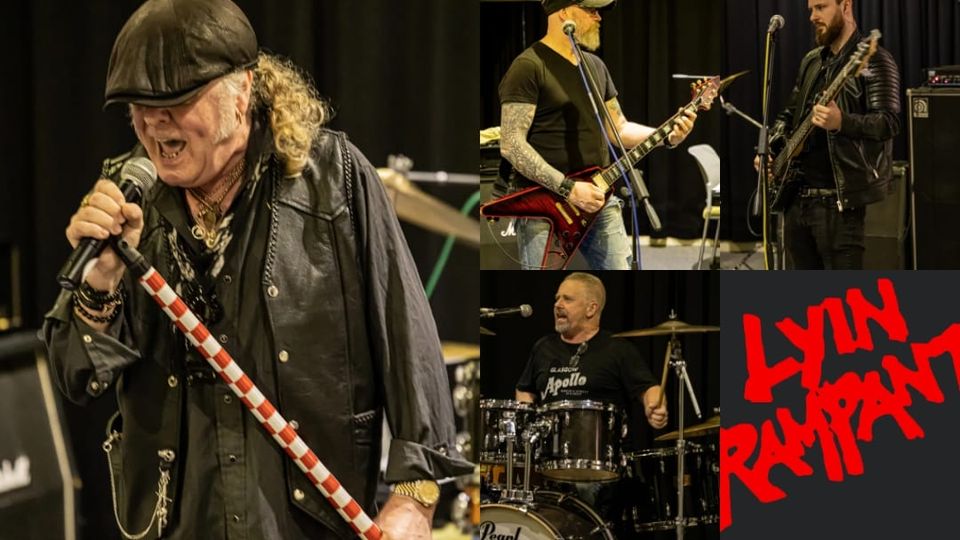
They include October – Belgium (4th), Germany (5th) and Netherlands (6th) and November – Barnsley, UK (7th) then crossing the border on Friday 8th to play the Classic Grand in Glasgow with Scotland’s very own granite plated rock band Lyin’ Rampant opening.
Rampant lead vocalist Stewartie Adams is looking forward to the gig…
“It should be a great show we’re all up for it and looking forward to a great night with the Tygers. It’s the first time opening for them.”
“We’re back in the studio in Glasgow to work on some new material to add to our set…so we’ll be ready to rock. We’ve had a much needed break after the Graham Bonnet tour. We made great friends with Graham and his band. They were a joy to work with. It was a blast”.
The legendary Tygers then march back down to Tyneside to celebrate a homecoming return in the seaside town of Whitley Bay on Saturday 9th November 2024. The show is being promoted by the local town council to celebrate over 45 years of the Tygers.
Whitley Bay was the headquarters of the original four Tygers. They had a residence at local club Mingles where they honed the tunes that would make up most of their first album ‘Wild Cat’.
The Tygers most recent album ‘Live Blood’, released on Mighty Music, features songs from across their career including tracks that were first played in Mingles.
Support on the night will come from Shannon Pearl, a North East neo-folk band that was specially chosen by the Tygers.
“I’ve lived in the area for most of my life and being invited to play at the prestigious Whitley Bay Playhouse has long been a dream of mine” guitarist Robb Weir commented.
“I think the current band will really enjoy visiting where it all started. It promises to be one helluva night”.
Wrapping up the autumn dates is a visit to Grimsby (10th) and finally Marseille, France at the South Troopers Festival (16th).
‘Being an outcast gave me more time to focus on myself, to perfect my act. I’m glad I never fitted in at school, cos this has worked out well for me in the long run’.
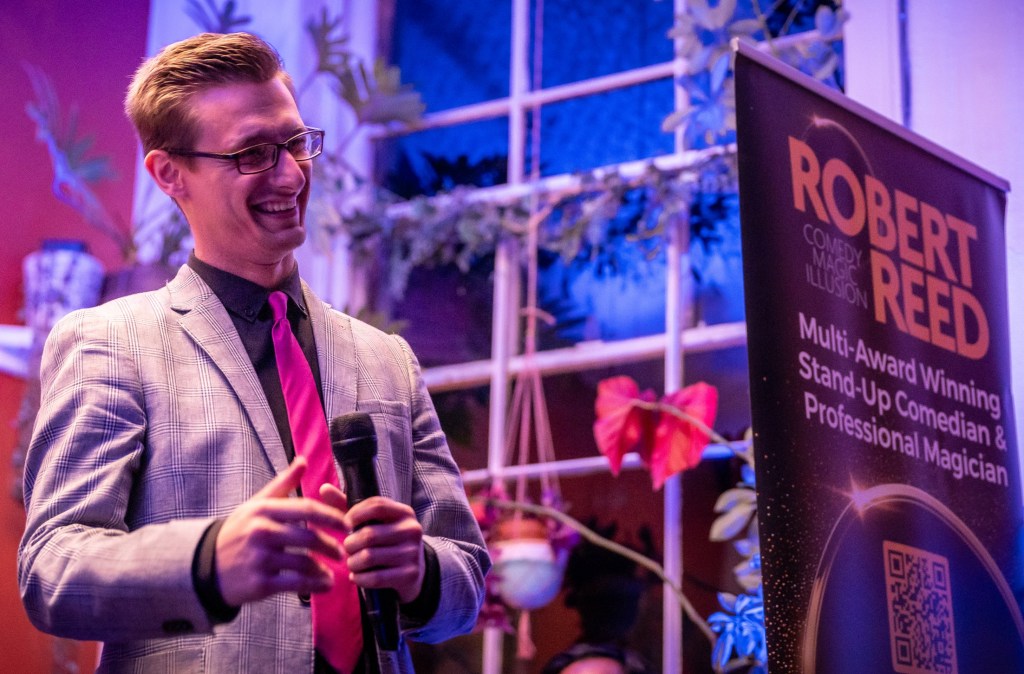
Born in South Shields, Robert Reed is a multi-award winning comedian and professional magician, at 25 I think he’s the youngest contributor to this site.
‘Well, I’m honoured (laughs). I’m a solo performer, my ego wouldn’t stand sharing the stage with anyone else. When I’m on stage I can take the mick out of myself and get the crowd on my side by exploiting my weak points, it shows my vulnerable side and the crowd give me more of a chance. Hecklers? I take them on. I use one-liners to my advantage’.
‘I can be rude but I’m not offensive as say Jimmy Carr. I do find their acts funny but to be honest I haven’t got the bollocks to go down the route of the Jimmy Carr’s or Frankie Boyles. I’m still young for this career so wouldn’t like to shorten it by rubbing people up the wrong way’.
‘I would say I’m like a modern and ruder version of Tommy Cooper (1970s comedian). My magic is more to a professional standard but it’s masked by the silliness and immaturity of the jokes’.
‘I started doing magic as a hobby when I was 10 then started in comedy when I was 17. I was always into one liners and silly dad jokes so I give it a go and came up with 30 one liners and tried them at stand-up gigs – they went down well’.
‘In rehearsal I figure out the magic trick first and the jokes come as I work it out and script the show. I’ll have hundreds of ideas but it’s finding the right seven or eight which will get the audience onside, then engaged, then the final kicker’.
‘After performing the routine around 20 times at restaurants, weddings or corporate events more jokes come along so you perfect the show. Some of the best jokes aren’t scripted they happen on the night’.
‘The end of the show there is a kicker where actually the crowd see a good magic trick. They leave the show having seen a good balance of magic and comedy – hopefully’.
(I never get a telephone call on my landline so was surprised when it started ringing at this point in the interview. We both looked at the phone then back to each other. Robert remarked ‘That’s me, good trick yeh?’)
‘I wouldn’t be around without the help of family, fellow magicians, fellow comedians and some closely trusted friends. But the hour or two on stage has got to be made all about you. There is plenty of time afterwards to thank people. I never forget who helped me get where I am. You’ve got to be respectful and I’m lucky to get assistance from many people in the industry’.
‘There were two people who inspired me – first was Uncle Joe who lived on the Whiteleas estate, South Shields. He wasn’t an entertainer but worked in the Docks. He was well known for his card tricks down the pub. When I visited with my mam he showed me how to play cards, every week would be a new coin trick or a brainteaser. Then I would go to school and show my friends’.
‘The second person to take me under his wing was a physics teacher called Mr Obee at St Joseph’s school. Every break time we would talk about magic and jokes, he would loan me magic books, then he would show me a different trick each time which I would perform for the other kids at dinner time. Now I don’t go anywhere without a deck of cards – you feel naked without one’.
‘We’re still in contact and he came to see my recent show at Durhan Fringe. His motto was ‘work hard and be nice’ which I’ve always followed. It was helpful propaganda about putting the hard work in. He told me that every hour you aren’t working on your dream someone else out there is. I’m very grateful to him’.
‘I stopped sleeping 8 hours a day and cut it to 6 so I could get extra hours at work. It became all about maximising the time I could work it out. I became obsessed with it, it’s the most important thing in my life – I want to be entertaining people’.
‘When I meet fellow professionals, I ask them about their working day and how they structure it. Get up at a certain time, start work, have a break, go back to work and repeat the next day. I recently met author Terry Deary who is noted for the Horrible Histories books and he talked about a similar structure that he was doing so I thought I’m on the right path here’.
‘For new ideas I always have a notebook and pen with me or record on the phone. They can be there for days or months. Sometimes it’s a name of a shop that I can twist around or just talking to myself in the shower and imagining being on stage that sparks off something which I then try out on friends’.
‘If you want it enough you will sacrifice holidays, relationships even sleep. Sometimes you can think of an idea and work through the night to get it. Then when you wake up you have the punchline’.
‘The toughest crowd you ever get is when you perform a new routine. In July I was at the Durham Fringe for five nights on an hour slot. All new material. Over the nights I done rewrites, shaped things, it got there. But looking back it was my first gigs that were the toughest. It was for 300 people in dickie bow ties going round the venue performing magic on tables’.
‘But then I was thrown in at the deep end and asked to perform for 10 minutes on the stage, I didn’t have a routine ready – that was sweaty and scary. Hopefully I got away with it being just a kid. The 10 minutes felt longer than the two hours going round the tables’.
‘I’m heavily involved in the South Tyneside International Magic Festival event which we hold every year at The Customs House, South Shields. This year it’s the 20th anniversary so we have an impressive bill lined up. We get magicians from around the world to come to Shields. The Customs House have been responsible for a lot of creative talent coming out of the area. Ray Spencer (former Director) was pivotal in a lot of this’.
‘After the shows the performers all meet up in the bar of the Littlehaven Hotel down at Shields beach, some stay over there as well. Are we competitive? No, we’re open and all get on really well – honest we do. We are happy to get together. We have midnight shows, plenty drinking and get in some take aways’.
‘I look forward to the socialising because it’s with people you only see a few times a year and you share the same loves, passions and interests. And you spend time with people you’ve looked up to and admired. We’ve always been the kid at school who never fit in, or was odd, or bullied, not the cool one, or never done sports, just desperate to show off their humour or talent’.
‘Don’t think any performer will truly retire, your brains still working you’ve still got the urge to do something. Once you do one gig you’re hooked it’s like a drug. I’m trying to get as many gigs under my belt as I can’.
‘I’m happy doing what I do now entertaining a crowd telling silly dirty one-liners and doing magic tricks. I’m looking to work hard for that TV break, or entertaining at bigger venues for more people where they think I’m worth spending money on a ticket for the show – that’s my measure of success’.
‘We all need money to keep going but the amount isn’t a motivator, it’s hearing the crowd laughter walking off stage, thinking they were entertained tonight – that’s my goal. This is a reason why I don’t want to slow down. I’m programmed to work every day and I love it’.
Music is a massive part of our lives. Not only do we want to listen to it, but read about it and talk about it. Tony Bengtsson is no different.
‘Music was around the house when I was growing up. My Dad was a rock n roll fan of the ‘60s, we had the sound of Creedence Clearwater Revival in common. My Mam was a massive Elvis fan and encouraged us to listen to music’.
‘My Mam worked in a news agents shop in South Shields where they had a stack of old jukebox 45’s for sale. One of them was Wages Day by Deacon Blue which I loved. I played it many times – still got it now, although it has a little chip in the record’.
‘One day I walked past Music Maker shop in South Shields with all its instruments and speakers displayed in the window and saw a set of harmonicas. I was around 13 when my parents bought me them. I was just trying to make sounds out of them, plus my Nana had a small Casio keyboard that I played little tunes on, I liked experimenting’.
When he was younger Tony had his eye on being a journalist so he went down to local newspaper, The Shields Gazette.
‘One of their top journalists, Janis Blower, looked after me when I was there on work experience. She got me searching through the microfiche with its old stories from the Gazette, the history of South Shields was all there. Loved it’.
‘I love studying local and family history, my ancestor came over from Helsingborg in Sweden around 1850. He was a merchant seaman who lived in Orange Street, South Shields. My grandfather passed on a family tree which I’ve updated with recent family additions’.
After leaving school and enrolling on a Music Production course at Newcastle College, then slogging away for hours in a factory, Tony saved up enough dosh for a set of drums.
‘I made a good living playing in club bands for a while. There was a Bryan Adams tribute and a punk band called Sound of the Suburbs. Then I played in original band Poker Face who played 80s melodic pop rock around Durham’.
Listening to a wide range of sounds and improving on his songwriting Tony made the move from the back of the stage to upfront – drums to guitar.
‘The UK had such a diverse range of music from different parts of the country, there was Liverpool, there was Manchester, and here on the Tyne we had the blues with bands like The Animals. Unashamedly I’m a bit of a country and western fan and love the Scottish/Irish folk sound, that’s why I like the acoustic music we play’.
A decision to play cover gigs helped finance Tony’s musical career. He also has the small matter of a wedding coming up in October so every little helps.
‘Yeah, at the minute I’m doing a lot of cover gigs cos that’s where the money is and this is my full-time job. At a booking I do two 45- minute sets with a break in between’.
‘Recently I played a wine bar where they talked all through the first half, so if the gig’s going bad like that, I have a shorter break between sets and get on with the second one. But the good gigs are when you get to talk to people beforehand and after’.
‘Having work organised by an agent is great, he just phones me up ‘Can you do this gig’. That’s it, I don’t have to organise anything just make sure I turn up on time’.
‘With the original band I have to decide a lot like where we are playing and how much for, organising transport if it’s outside the North East. There’s a lot of extra logistics and admin to do that people don’t see’.
The single Sometimes a Man from 2020.
‘I started writing my own songs around 2006, I’ve a recent song called These Wars which is anti-war and highlights the problems we have today. Why are we spending money on wars when people at home are struggling to eat, heat and get a job?’
‘If you do have a job like the nurses, who after all they’d done for us during covid, when they decided to strike hoping for a pay rise, they got attacked by the media for being greedy. It’s an unfair situation’.
For a hard-working full-time creative professional isn’t the saying ‘do what you love and you never work a day?’
‘Yep! I also gig with the original band. This August we supported Martin Stephenson & the Daintees at Falloden Hall near Alnwick – that was brilliant. It was a lovely sunny day, we played in a court yard with hay bales, a little festival vibe, and I sold out on cd’s’.
‘It can be hard to keep the band all together in one place. There is violinist and guitarist Niles Kreger who is living here but is originally from Connecticut, USA, and there’s Liam Fender (Sam’s brother) on keys who has his own band so there’s other stuff going on, we’re all busy’.
‘We’ve played a couple of gigs outside the North East – in London and Manchester but would love to play in Ireland. My partners family live in Waterford so when we visit them I take my guitar cos there’s plenty of places to play every day. Live music is in their culture – I love Ireland’.
‘You know I consider myself an introvert, I like staying at home but once I’m out there I love it. I’d be worried if I didn’t get nervous or anxious butterflies before a gig’.
‘I’m now at the stage where if anything goes wrong like a speaker going off well that just happens, can’t do anything about it, just sort it out and play on’.
After releasing a run of autumn gig dates on this site last week Emma got in touch with some more news…
‘I’m delighted to be nominated in two categories of the Independent Blues Awards 2024 in America.’saidEmma.
‘I’m the only UK artist to be nominated in both categories ofBest New Artist andBest New Artist Release for my album ‘Memphis Calling’. It would be great to win’.
‘You only have to click on the link below and keep scrolling until you get to Best New Artist and Best New Artist Release where you can vote in each category for me!’
All the readers are wishing you the best of luck Emma, fingers crossed!
So far this year Emma ‘Velvet Tones of Teesside’ Wilson has clocked up a lotta miles on the gigometer and this autumn adds a few more…
“It’s been great to see some of you on the road. I’m now looking for gigs in Europe and have just confirmed a date in Germany performing with the Milwaukee Band on 7th December 2024 at Messajero in Monchengladbach, Dusseldorf”.
Are you performing at any venues you haven’t played?
“There’s Diseworth Blues Club in Derby I’m really looking forward to. It’s a brilliant club run by Blues Enthusiasts. It’s these small clubs that are keeping the Blues scene alive in the UK”.
After releasing your latest album last year what has the feedback been like?
“I’m so delighted that a year after the release of ‘Memphis Calling’ it’s still being reviewed and played all over the world”.
“In May I was featured in the iconic Italian Music Magazine ‘Buscadero’, and all the songs are still being played on International Radio stations and hitting the rhythm and blues charts”
“The stand out song has to be ‘What Kind of Love’. The song written by and featuring Don Bryant has been in the top 10 iTunes blues in about 50 countries!”
Emma recently guested on an album by German band Milwaukee Music where she displays a softer jazzy side of her voice. Olaf Rappe of the band thanked Emma for her contribution.
“Milwaukee and Friends – Crossing Borders’ is twenty good friends making a special album. I’m very happy to have the wonderful Emma Wilson, the British soul and blues queen, as lead singer on two songs ‘Midnight in Harlem’ and ‘Rio de Janeiro Blue”.
Have you found time for a break this year?
“I went to the South of France in May and laid on the beach for a week. But all I could think about was music, music, music!”
Catch Emma on these confirmed dates >
Acoustic set Saturday 14 September at Claypath Deli, Durham
Seated gig on Saturday 12 October at Hutton Rudby Village Hall, North Yorkshire from 7 -11pm. Also on the bill are North East Blues Legend George Shovlin & UK Americana star Lola-Rose.
“I’ve always been fascinated with everything World War Two related and RAF in particular. My grandfather was in the Royal Flying Corps, and both my father and my son were in the RAF” explained Terry.
“I was in the Air Training Corps in South Shields but then a medic came to school to test us all for colour-blindness. I failed the test miserably and was told I would never be accepted by the RAF. I was gutted, as you can imagine”.
Terry lives in Marske on Teesside, but was born in South Shields at midnight 21st– 22nd December 1948…“My mum asked the midwife which day was my birthday. She was told it was the 21st as my head came out on that day. That crosses the Winter Solstice, so my top half is Sagittarius and my bottom half Capricorn. I think this explains why I’ve done so many different jobs in my life”joked Terry.
Throughout his school years his parents moved around the country…
”We lived above a wallpaper shop in Stockton on Tees, then moved to Billingham and later down south to Reading and Mitcham”.
Finally, the Wilkinson family moved back to South Shields where Terry was a pupil at South Shields Grammar Technical School for Boys.
“After leaving school, I worked for the Crown Agents for Overseas Governments in London, thenWise Speke stockbrokers in Newcastle where I became a Member of the London Stock Exchange”.
“From 2000 I ran a successful Theatre in Education company touring schools for 15 years. It won a Best New Business Award but I gave it up in 2015 in order to write”.
When researching his family tree and local history Terry has always been fascinated by one event.
“At midnight on 3 May 1941, the factory and Head Office of Wilkinson’s Mineral Water Manufacturers in North Shields was hit by a single German bomb. It went through the roof, descending through all three floors, taking all the heavy bottling machinery and chemicals down to the basement – which was in use as a public air raid shelter. 107 died, 43 of which were children. Whole families were wiped out.”
“It is written by my good friend, Peter Bolger, who also manages a comprehensive website on the incident”>www.northshields173.org
“Because of censorship and the government’s desire not to damage public morale, little is known beyond Tyneside. It was, however, one of the largest loss of life incidents from a single bomb during the provincial Blitz”.
“Nothing is known of the identity of the plane which dropped the bomb – type, squadron, mission etc – as German records were mostly destroyed in the closing stages of the war”.
“I wanted to write a story that answered all these questions and create a fictional alternative. Having said that, nobody could say with any conviction this is not what happened”.
Terry started on a series of five espionage novels. ‘Handler’ is set in 1941, ‘Sleeper’ in 1942 and is currently working on the third ‘Chancer’ which covers 1943.
“They’re a mix of fact and fiction and trace through the war years of an English-born German spy, Howard Wesley, and his nemesis, MI5 agent Albert Stokes”.
“Wesley is a figment of my imagination. Stokes is based on a real character. And this is the pattern for the other books in the series. I also like to plunder WW2 history for little-known incidents and people who feature against the broader background of what was taking place in the war”.
‘Handler’ won a ‘Chill With A Book’ Premier Readers’ Award just a few months after publication. This spurred Terry on to get others in the series out there as quickly as possible.
“A few of those who have given good feedback have made the point that it would make a good series. I am convinced that it would. I certainly write with a film or TV series in mind”.
“In the shorter term I am hoping to record the whole series as audible books. I recorded an extract from the book that author John Orton is currently writing (link to interview below) and he was happy with it”.
“I’ve spoken to my publisher – UK Book Publishing – and offered them my services as a narrator for others. I’m also an actor, card-holding Equity member and very good at accents and dialects”.













 ALIKIVI UK : NORTH EAST MUSIC & CULTURE