Micky Cochrane and Glenn McCrory with Tim Healy, who was ringside on the night of the world title bout in 1989 when Glenn became world cruiserweight champion. (Copyright Ed Waugh)
“Carrying David is emotional and heart-breaking. It’s about the love of two brothers. This is pure theatre. You don’t have to like boxing to be emotionally involved in this wonderful story” said actor, Micky Cochrane.
Carrying David premiered in 2019 and played to full houses gaining the actor a standing ovation for his telling of an emotive and inspiring story.
Post-Covid, the play was staged in London and toured the north of Ireland to sell-out crowds, including the prestigious Lyric theatre in Belfast.
The play tells the incredible story of Glenn McCrory’s rise to becoming the first-ever world champion boxer from the North East. It also has the further twist that Glenn’s terminally ill brother David inspired him to become the best in the world.
The play was written by Ed Waugh who brought North East working class stories to the stage Wor Bella, Hadaway Harry and more recently The Cramlington Train Wreckers which toured the region with sold out performances.
Ed explained“This play is about two lads from Stanley. Glenn McCrory played by Micky Cochrane – aiming to become world boxing champion and his brother David McCrory – fighting every day to stay alive!”
David’s muscle-wasting disease meant Glenn often physically carried his brother on his back, hence the title of this fantastic story.
“David and I were very close,”said Glenn, a former Sky television pundit. “He was my inspiration. David would say, “If I can defy death, you can become a world champion! Saying those words still brings tears to my eyes. I think of David every day.”
David was not expected to live beyond 14 but evaded death until he was 29, living to see his beloved brother win the coveted world cruiserweight title in 1989.
The fight was held at Stanley Leisure Centre and broadcast live throughout the world. It is the remarkable story of an underdog defying all the odds – a North East story that people still talk about today.
Ed added “The performance by Micky is sublime. He won a standing ovation at every venue, the reviews are all five-star.Rocky was a great film…but this County Durham Rocky story is even better…and true!”
Carrying David will be performed at Newcastle Theatre Royal on Saturday and Sunday, June 21 & 22. Tickets (including concessions) are available from the Theatre Royal or via the Theatre Royal websiteCarrying David | Newcastle Theatre Royal
Following on from the last post here’s another batch of North East stories this time featuring music, books, TV, boxing and the police. First up is former White Heat & Loud Guitars frontman Bob Smeaton.
‘If you asked me to list what gave me the biggest buzz I would say playing live top of the list, writing songs in second and recording in third. One thing I did learn is that playing songs live and recording them in a studio are two different animals’.
‘I love performing in front of an audience and felt that I was a much better frontman than I was a singer, so studio work for me back in the early days was not always an enjoyable experience. Also, the vocals were always done last, so the rest of the band were able to relax and the pressure was on me to deliver’.
‘What did I do after White Heat and Loud Guitars split? I pretty much stopped performing gigs as my career went down a different path’.
In August award-winning author & freelance journalist Terry Wilkinson talked about his new book…
‘At midnight on 3 May 1941, the factory and Head Office of Wilkinson’s Mineral Water Manufacturers in North Shields was hit by a single German bomb. It went through the roof, descending through all three floors, taking all the heavy bottling machinery and chemicals down to the basement – which was in use as a public air raid shelter. 107 died, 43 of which were children. Whole families were wiped out.’
‘Nothing is known of the identity of the plane which dropped the bomb – type, squadron, mission etc – as German records were mostly destroyed in the closing stages of the war’.
‘I wanted to write a story that answered all these questions and create a fictional alternative. Having said that, nobody could say with any conviction this is not what happened’.
Also in August former boxer Terry Patterson remembers his time boxing in the North East…
‘Over the years I fought a few Sunderland lads. Derek Nelson was a classy boxer who turned pro. I fought two ABA finalists in Gordon Pedro Philips and Willie Neil. I fought Pedro in the North Eastern Counties final but lost. Both lads were well schooled’.
‘Willie Neil’s coach asked if I’d fight him because his opponent hadn’t turned up. I weighed in at 10st 6lbs (welterweight), he was heavier than me by 6lbs. I knew his reputation for knocking people out. £50 was slipped into my hand for taking the fight’.
‘Willie could bang a bit – so could I – but he had me down three times during our bout. We set about each other unleashing all hell for three fierce rounds. I had him going at one point after landing a good left hook but the bell sounded and my chance to finish him had gone’.
‘Gordon and Willie are still good to this day – it’s been 36 years since we shared a ring but I see them at boxing dinners and club reunions’.
Former police detective & writer Arthur McKenzie talked about his work…
‘There was a police section house near Newcastle’s Exhibition Park, in it was a bait room, just a pokey little room with a table to play cards on. If you’re on night shift you’d take sandwiches and a flask of tea in. That’s where you gathered around 1am where the events of the night would unfold’.
‘You would get advice on how to deal with someone, it was a good place to sort things out like the older cops would tell you how to deal with a death, how to deliver a death message to the unfortunate family. It was a sort of meeting of minds over a game of cards. Aye the bait room was a good place to vent your spleen so to speak’.
‘So, I went away and wrote about the bait room. Tom Hadaway (writer for episodes When the Boat Comes In) read the play and was laughing at it ‘Yeah, you know how to write dialogue son’. He gave me pointers, when I finished it landed on two desks. One was the BBC in Manchester where it ended up on the Saturday Night Theatre radio show, which was a big thing’.
‘The other was the script reader for David Puttnam (producer Chariots of Fire, Local Hero, Midnight Express) who hated it at first but won her round in the end. She said she couldn’t do anything with it but put me in touch with an agent who was looking for writers for a tv show called The Bill. That’s where the writing started’.
TV actor & musician Michael McNally got in touch and talked about his time in ground breaking BBC TV drama The Cops…
‘I’d watched the first two series and it was my favourite programme on TV. When I started watching it, I thought it was a fly on the wall documentary it took me 10 minutes before I realised it was a drama. I was totally hooked’.
‘One of my first scenes was I was sat in a police van at 11pm on a Friday night on Bolton High Street. The general public were walking up and down the street they knew nothing of this, it wasn’t a closed set like on some programmes and we had to go and arrest someone’.
‘Two actors were having a fight then we got the message to go, so on with the blue flashing lights, we pulled up and jumped out of the van. Some people were trying to defend the actors and some were encouraging us to get in there and sort it out’.
‘We didn’t know where the cameras were we just heard someone say stop. We got back in the van, re-set and done the scene about four or five times’.
‘Same happened when responding to a fight in a bar, we had to pull people out and the general public in the bar didn’t know what was going on. There was an element of choreography for the fight, we didn’t want anyone to get hurt’.
‘After that first night the cast got together afterwards for some pub grub and a karaoke. Most of us were unknown actors so mixed in with the general public without any hassle. Every member of the cast got up and sang, mine was Should I Stay or Should I Go by The Clash – it was a really good night’.
Terry Patterson had one foot considerably smaller than the other so wore a calliper.
“It’s known as a clawfoot. I was bullied by school gangs so decided to fight back”.
From gutting fish, to boxing to heartfelt poetry – this is Terry Patterson’s story.
Born in North Shields in 1956 Terry attended Ralph Gardiner Secondary modern school, he left with no qualifications but was taken on as an apprentice fish filleter at North Shields fish quay.
“Working on the fish quay was hard but good fun. Weighing, icing and boxing salmon to begin with, then learning how to fillet various types of fish and how to drive a popper lorry. I tell ya’ the smell took some getting used to”.
With school bullying still fresh in his mind, Terry joined North Shields Boys Boxing Club where he was taught by ex-professional Joe Myers.
His boxing career lasted a total of 22 years, in that time he worked in the shipyards and had been a school caretaker.
A couple of years ago I interviewed ex-boxer now coach Preston Brown from Sunderland.…”Yeah I know Pasty Brown very well” said Terry. “Over the years I fought a few Sunderland lads. Derek Nelson was a classy boxer who turned pro. I fought two ABA finalists in Gordon Pedro Philips and Willie Neil. I fought Pedro in the North Eastern Counties final but lost. Both lads were well schooled”.
“Willie’s coach asked if I’d fight him one evening because his opponent hadn’t turned up. I weighed in at 10st 6lbs (welterweight), he was heavier than me by 6lbs. I knew his reputation for knocking people out. Norman Fawcett negotiated with his team and £50 was slipped into my hand for taking the fight”.
“Willie could bang a bit – so could I – but he had me down three times during our bout. We set about each other unleashing hell for three fierce rounds. I had him going at one point after landing a good left hook but the bell sounded and my chance to finish him had gone”.
“Gordon and Willie are still good to this day – it’s been 36 years since we shared a ring. I see them at boxing dinners and Boxing Club Reunions. Both of them bought my novel ‘Like Mother Like Son’.
In over 200 bouts Terry won national honours and passed the advanced ABA coaching exam plus he was involved with coaching youngsters until 1986.
After an industrial accident left him unfit to continue his love of boxing, Terry was determined to focus on another sport and won the Disabled Sport England Snooker Championship five years in a row.
“I qualified as a UK professional snooker referee and got a call up to referee the Maltese open in 1997” said Terry.
In 2002 he became North Tyneside’s first World Professional Snooker Coach. He coached at Wallsend Supa Snooker for disabled and able-bodied youngsters, but after a fall on icy roads, not only had he injured his back, he suffered from a dark depression.
Terry added “I was diagnosed as clinically depressed. It’s something I just try to get on with. A surgeon advised me to take up knitting – no I didn’t – but I was determined to excel at something.”
Throwing himself into a number of academic courses at North Tyneside College Terry volunteered at Newcastle’s Percy Hedley training centre working for clients who had cerebral palsy.
He spent over five years working in various care homes until the injuries he sustained over the years got the better of him.
“Depression is something I’ve dealt with my whole lifebutI feel life still holds challenges for me”.
With an interest in poetry and short stories he began to spend his time writing. To date Terry has produced 46 novellas and three novels ‘Like Mother like Son’, ‘He Who Rides a Tiger’ and ‘Living with Grandpa’. His writing is free to read on Movellas.com.
“I’ve also written plays – two of which have been staged in various theatres. ‘Reaping the Benefits’ and ‘The Redundant Blade’ which was written as a tribute to Tom Hadaway”.
“We were only four days from staging ‘The House Across the Road’ when covid broke and we lost cast members. Eighteen months later we tried again and two days before the production two young cast members took ill. My producer and I lost a lot of money and we decided to walk away and the group disbanded.”
Prolific North East Writer and theatre producer Alison Stanley and cast will be reading one of Terry’s plays at Laurels in Whitley Bay, at 2pm on Thursday 22nd August. ‘A Home for Willie’ raises awareness of dementia.
Terry explains “At 68 years of age I’ve never done any for personal gain, never made anything from it butwould love to have one of my books or plays made into a television programme or series”.
“I would like to follow where Catherine Cookson and Tom Hadaway left off. I hope that one day when I’m no longer around I’ll be remembered like the people who inspired me”.
The fantastic four of Tommy Hearns, Roberto Duran, Marvin Hagler and Sugar Ray Leonard were my era and I loved them. I’ve met Roberto Duran and Marvin Hagler and went to see Tommy Hearns box as he was my favourite.
He was a great boxer, very skilful.
His fight with Marvin Hagler in 1985 is the most exciting three rounds of boxing. If Hearns boxed he would of won, but they both went at it hammer and tong and Hagler knocked him out in the third round remembers Preston.
Then every now and then you get a freak of nature like a Mike Tyson, he was powerful, had agility, and skill yes, but he was a fighter knocking people out. Boxing matches bring a clash of styles.
Today in the ring you have Anthony Joshua, Tyson Fury, Billy Joe Saunders who just fought for a world title, there’s still good boxers out there.
They came from amateur boxing but it’s not as popular as it used to be as there are more distractions now, kids can be in their bedrooms on their computers where parents can keep an eye on them.
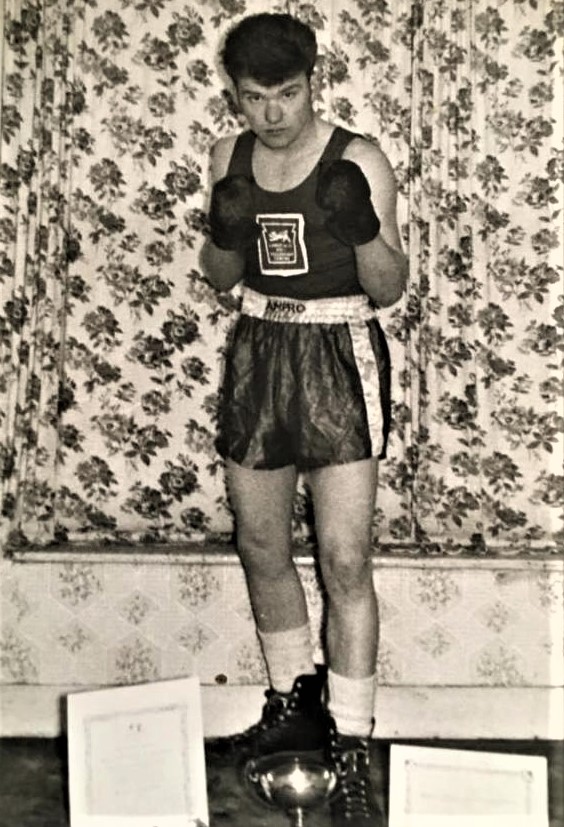
17 year old John ‘Pasty’ Brown.
FIRST ROUND
I was born and brought up in Hendon in the east end of Sunderland and my Dad, John, was a boxer. In the ‘60s a boxing club was opened and my Dad ended up coaching.
Through boxing he helped a lot of kids and hopefully I can do the same. Boxing can learn you discipline and respect – it can do a lot of good.
When I was young I was out in the street, bird nesting, playing on railway lines. But I drifted over to the boxing club with the other lads and my Dad was in there. I wasn’t forced into it. I’d sit ring side and took an interest in it.
What I’m doing now is a continuation of what my Dad did. Some kids when they first come in to the gym are not sure about it, but about 90% of them end up respecting the place, have determination and dedication to turn up training each week, and learn discipline. You’ve got to put the time in. It’s a tough game you can get hurt.
Preston in the gym.
IN THE RING
When I became a member of Sunderland Amateur Boxing Club I started boxing competitively through the ‘70s and ‘80s. I slowly progressed from boxing to coaching and become official through the A.B.A. (Amateur Boxing Association).
Sunderland lad Tony Jeffries was one of the gym’s proteges, he represented GB in the 2008 Beijing Olympics and won a Bronze medal.
At the gym with Tony was a kid called Stuart Kennedy, I thought he was a very good boxer, but just like in life, you’ve got to have a bit of luck. Stuart glided around the ring with his footwork but didn’t get the lucky breaks.
A kid called Anthony Wilkinson boxed with me, he won three British titles two years in a row and at 17 turned professional. I thought he was a bit young for it but he was making money. I think he could have been the best boxer we produced.
ALL FIRED UP
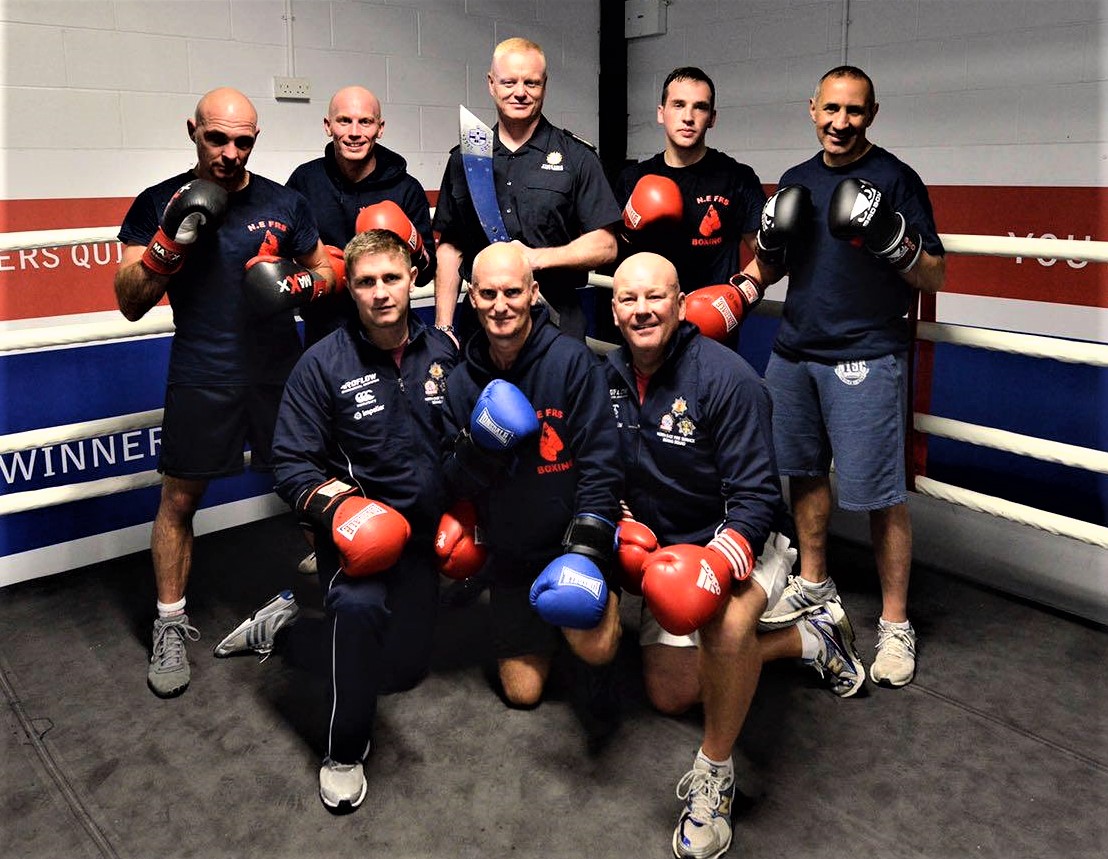
I got a job in the fire brigade, 22 year I’ve been in now, and there was a couple of firefighters who were boxers, they knew I had coaching badges so asked me to help out with some training.
We got on for a couple of year arranged a few charity matches with the police and then got invited to go over to Boston and Denver plus a small club in Ireland where we go annually.
The firefighters loved the boxing training and after using other gyms, with the total backing and support of Chief Fire Officer Chris Lowther, I set up our own in an old storage building in the Sunderland fire station grounds.
We got help with funds for equipment from the local council who said ok as long as you open it up to the community. We kitted the gym out with the best because the council were totally onboard with the whole idea and we had a big opening night in April 2019.
When we first opened the doors to the kids we were only getting a handful but that quickly grew to 35 a night so we extended to two hourly sessions. We got loads of kids off the streets.
The youngest is 9 year old when they train, you can’t box until you’re 11. From 11 to 15 you’re a schoolboy, 15 to 17 classed as a junior, at 17 you can box men. My first senior fight was at 17 the other lad was 34. I got beat but we’re still good friends (laughs).
I was classed as a boxer not a fighter, I had boxing skills with my feet, hand speed and technical ability. I boxed him in the first round, dancing round him you know.
Second round he thought it was time to slow me down and hit me with a body shot and knocked me down I had a standing count of eight to compose myself. That’s the difference between a boy and a man.
Kids start off at three rounds of a minute and a half, as you get older you go to two minute rounds and seniors box three minute rounds.
Our gym aims to channel the energy of young kids, it gets them interacting with people, better than them playing on their phones.
CREATING CHAMPIONS
We’d love to produce Olympians or World Champions but if they come out just feeling better about themselves we’ve won. In the gym we’ve had police officers mixing with criminals, different people who wouldn’t normally get on but who’ve got a love of the sport.
The atmosphere is fantastic everybody loves it and you can forget about what is happening outside – like being in a bubble.
There’s no better feeling in the world when the referee holds up your hands to say ‘and the winner is’. In the same breath if you get beat by the better man you think ‘I’ll do better next time’.
The fire lads and the kids have a thing where they say, ‘I didn’t win that fight, but we learnt from it’. And that’s important because it’s all about competing. The gym’s motto is creating champions in the ring, creating champions in life.
Anyone that can step in the ring has my total respect. You’re stepping into the unknown, the man across from you might be better. So, have you done enough training ? Have you worked with the coach enough ?
You will be put in the ring against someone with similar experience.
Although our club has fought against a team that’s put in ringers – fighters with a lot of fights – matched against someone with only two or three. That’s not on really, it’s about giving the lads a proper fight, they’ve got to be matched up correctly.
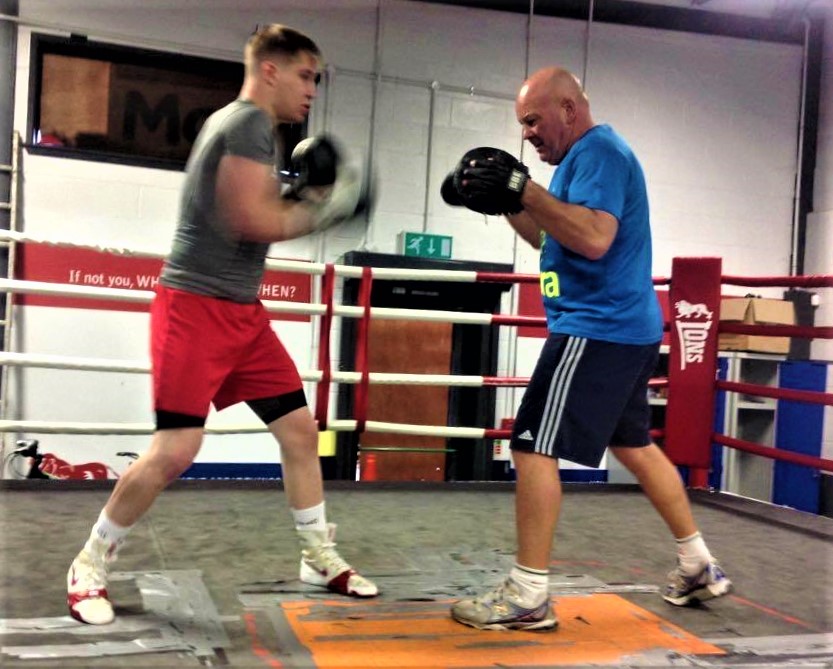
Preston coaching in the gym.
HEADS UP
Head guards were brought in a few years ago and the kids and females need to wear them but the bigger lads can agree to wear them or not. I’m a big believer in them when you are training but they are uncomfortable to wear when competing.
I will insist on everyone wearing one when sparring and training. The women may not be big and powerful as the lads but they are very skillful and I appreciate that, it’s an art.
PROGRESS
Britain has produced some good boxers over the years who have come through amateur gym’s but in the past year covid has restricted that so it’s a problem, we’ve got to work something out to go forward and make progress.
For more information contact Preston on: 07740 285 966
Sunderland Central Fire station, Tyne & Wear Fire & Rescue Service,
Phoenix building, Railway Row, Sunderland SR1 3HE
Gym address: Unit One, Westbourne Road, Sunderland SR 1 3SQ




 ALIKIVI UK : NORTH EAST MUSIC & CULTURE