SPELLBOUND – in conversation with Prelude singer & songwriter Brian Hume

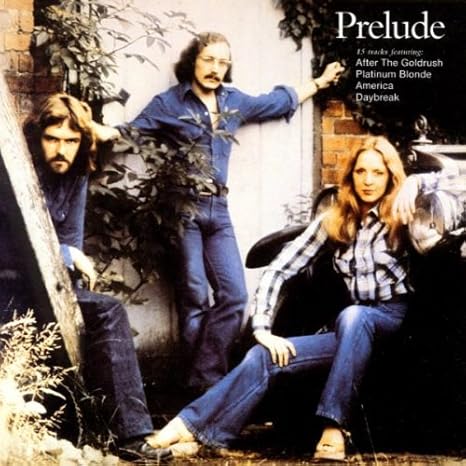
Ian Vardy, Brian & Irene Hume.

I met up with Gateshead born Brian Hume and he talked about his life in music and what it means to him now.

‘Music dominates your life. It can often exclude things that you should pay attention to. Personal relationships can suffer cos it takes over your life. All you wanna do is make that sound, make that music, at first you don’t care if you make any money you just do it for the love of it.’

‘Unless you’re all on the same page there’s always tension within bands. You’re living permanently on the idea that it will all come to an end tomorrow. If you’re a guitar player you could break a finger or get arthritis. Somebody might leave and your left high and dry. You might have an argument and everybody falls out, it’s a miracle they stay together. But it can be exciting not knowing what’s round the corner’.

78 year old Brian looks back to when and where he was first inspired.

‘Me mother was very musical she’d knock out a tune on the piano and a four string guitar – all self taught, amazing. That’s where I learnt to pick out a few tunes. Lot of houses had a room where no one went very often, that’s where the piano was.’

It was in Grammer school where Brian first met up with Ian Vardy, forming a duo to sing in Tyneside pubs and clubs.

‘One of the first gigs we played was the 99 club in Barrow in Furness. After two songs the chairman came up to the front of the stage “You’re not really right for this kind of environment”. He was nice about it but, yeah, we were paid off.’

‘The Everley Brothers songs were the go to sound, when we heard their two part harmonies we thought we could do that.  We used to play the Bridge Hotel in Newcastle. The folk scene then was vibrant, clubs were always packed out people were singing sea shanties then Paul Simon came along.’

‘Then we’d try writing our own stuff. Our publisher wanted us to be called The Cobblers. You could see the first review – what a load of! We settled on The Carnival – a very 60s hippy name. We lasted for one record – a Paul Simon song called The Big Bright Green Pleasure Machine. The review in the NME read ‘social comment at breakneck speed!

‘Ian and I were singing in our flat in Gateshead. We had just bought the Crosby, Stills and Nash album trying out different songs like Sweet Judy Blue Eyes. My wife, Irene was singing in the kitchen with the door open. She was singing the third harmony. We were totally surprised as we didn’t know she could sing. We turned and said ‘sing that again’. It wsan’t long before we went out to folk clubs and started going down really well.’

‘We lived in School Street, Gateshead and nearby at the end of the Tyne bridge is an old toll booth. A big granite structure. It had a lovely echo. Some nights we’d go in there and sing. One night a policeman came in. He thought we were up to no good. Very officious. But he stuck around listening to a few songs then as he was leaving said “Carry on”.
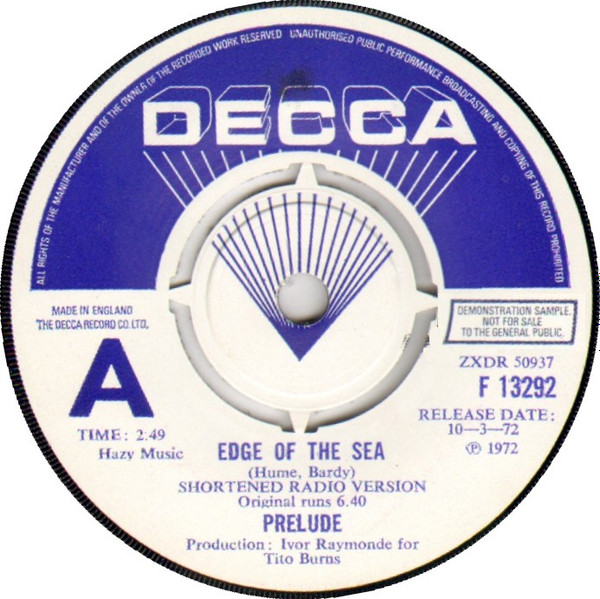
‘We got a deal with Decca Records and recorded a single The Edge of the Sea which had a strong hippy vibe to it. All during that period we were recording in Impulse Studio making demos courtesy of the owner, Dave Woods who soon after ‘discovered’ Alan Hull.’

‘We were called Trilogy for a while but had to change it because there was an American band with the same name. It’s not easy choosing a name as any band will tell you. I came up with Prelude and that stuck. That was 1972.’

‘Three part harmonies had a big effect on musicians. A lot of bands had done it like The Lettermen and The Platters from way back, but Crosby, Stills and Nash were different, this was whack right in your face. Yeah, a big influence on us and many other bands including fellow Tyneside band, The Caffreys.’

‘Different members have come and gone but the band were Ian Vardy, me and my wife Irene. Ian and I got a song writing contract with ATV music which worked for us financially. We decided to put both our names on everything we wrote irrespective of who wrote it.’

‘We had a brilliant guitarist called Frank Usher. We parted company and and he went on to play guitar with Fish from Marillion as well as being a fine guitar maker.’ 

‘We played the North East club scene for a while and in between we’d do Durham College where we’d support artists like Gerry Rafferty, Mott the Hoople, Shaking Stevens and the Sunsets – that band were amazing. There was a hippy commune type band called Principle Edwards Magic Theatre who all dressed in white which looked cool so we copied that – it was a cheap uniform.’

‘Our manager George Carr got us a record deal with Pye who back then were dominated by Max Bygraves selling boatloads of Sing-a-Long-a-Max records. We were the token folk band, although we were never folk they just called us that cos we had acoustic guitars! You couldn’t say that Pye were part of the cultural vibe.’

‘In 1973 we went to Rockfield Studio in Monmouth to record our first album How Long is Forever? produced by Fritz Fryer who was in a group called The Four Pennies. They had a number one with Juliet. A wistful ballad. On the final studio day Fritz asked if there was anything else we had. We used to sing a Neil Young song just for our own pleasure. That was After the Gold Rush.’

‘We recorded it and it sounded pretty good so we double tracked it. Overdubbed it fifteen times and it sounded massive. We never thought for a minute anyone would pick up on it. But John Peel at Capitol radio did. He got loads of calls ‘Who is this band?’ ‘Where can we buy the record’.
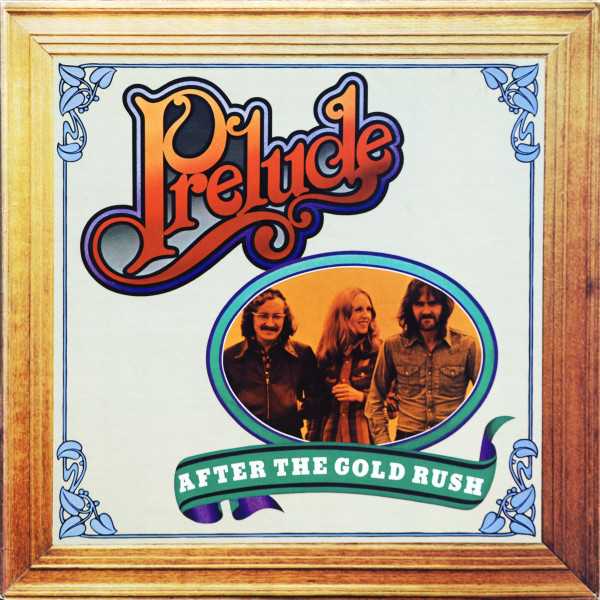
‘Next thing we know Pye put it out as a single and we’re on Top of the Pops. That was 1974. We ended up appearing twice the first time was with Marc Bolan. There was a succession of TV appearances. You had to do television because you are reaching a massive audience. We did a show for Tyne Tees called the Geordie Scene. We did the Basil Brush show for Pete’s sake.’

‘Most notably we went on the Vera Lynn show. During rehearsals she referred to us as The Prelude. Later she was walking towards us along the corridor when Ian stopped her and said “By the way Vera it’s not The Prelude it’s just Prelude”. Not skipping a beat she turned to him and said “If you don’t mind it’s not Vera…it’s Miss Lynn”.

Prelude were always based in their hometown Gateshead this meant constantly travelling up and down the M1 to television and recording studios in London.

‘It was every other week. We should have moved down there. But 1974 was a big year for us. We did the background vocals on Streets of London which was a hit for Ralph McTell. He asked us to go out on a UK tour with him.’

‘Ralph wanted to put our names on the record but our company wouldn’t allow it. For the next best thing Ralph put ‘background vocals by ‘The Gold Rushers’. It would have been a great advert for Prelude to have their name on the single but Pye were stupid on that.’

‘Ralph was so talented and generous to a fault. It was a big tour around the country then we played a venue where we’d seen Paul Simon, Crosby, Stills and Nash – here we were on the stage of the Royal Albert Hall. Amazing.’

‘After the McTell tour we went back to playing smaller venues but I’m getting the timeline mixed here because I remember before touring with Ralph was a UK tour with a singer and songwriter called Mike Chapman. He had a devoted following and used to live up the Tyne Valley in Haltwhistle.’

‘Then we went on the road with a great piano player called Peter Skellern who had a big hit with You’re a Lady. Meeting him he was rather quiet and reserved – he later became a priest. Then there was talk of America.’

‘This was 1976. What happened was Lindisfarne played the States. When Alun Hull came back, he’d tell us to get over there ‘Cos all ya’ hear is your bloody record ‘After the Gold Rush’ on the radio all the time.’

‘I always read the NME and Melody Maker, looking at American charts where like the Holy grail of music to me. To see Neil Sadaka, Beach Boys and bands like that we thought wouldn’t it be great to get in there. Our manager George Carr said ‘You’re in the American top 100’. We thought this is a dream come true.’ Then it went towards the top 20.’

‘We wanted to capitalise on the success but the record company didn’t want to pay for us to go to America they sent us to Amsterdam. We played the clubs and had a good time but we should have been in the States where we wouldn’t have even needed guitars as the song was acapella. We could have done the Johnny Carson show and the like and knocked that record up the charts.’

‘It wasn’t until 18 months later we got to the States. There were a few gigs on the West Coast in San Francisco where we supported Jerry Garcia in Berkley and met Nicky Hopkins who played piano on all Rolling Stones records. Then over to the East Coast and played The Bitter End in New York. When we came back to the UK Irene took a break when we had our second boy, Joel.’

‘Things moved on quickly until 1979 when our manager got us a deal with a new company called After Hours who were very forward thinking. We made an album at Abbey Road with The Hollies producer Ron Richards. His style was more towards lush strings and stuff like that. It didn’t really work for us.’

‘We also signed to EMI in 1980 and made an album in Portland Studios owned by Chas Chandler, charming fella. We had some great players on there but the only track that came out of it was Platinum Blonde. Our principal guys were Ian Green de facto producer of Platinum Blonde and Dave Wintour who was Neil Sadaka’s bass player. It was a minor hit which got to number 45 in the charts.’
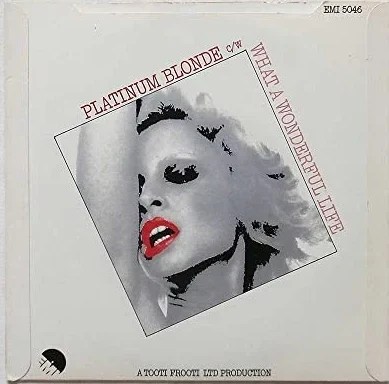
‘We did a video for it in the old Battersea Power Station in London arranged by the head honcho at our record label, Richard Jacobowski. He was really on the ball, a hip guy. We crashed in his three storey flat in Hampstead and shared it with a band called The Regents who were very talented, like a proto-punk band. They had a hit song on Top of the Pops with Seventeen.’

‘For the single we did Top of the Pops and I remember on the same programme were Bay City Rollers. Platinum Blonde was good for us but afterwards we came back up North and played the folk clubs again.’

‘Ian Vardy was looking at doing something different so left the band around 1985 and became a social worker. We continued and got in ace guitar player Jim Hornsby who had been with a lot of country bands. Jim was very much in demand for session work.’

‘Country was labelled as redneck music then, it wasn’t cool – but it is now. Gram Parsons did a hell of a job making country hip. He influenced The Byrds and Keith Richards. Some clubs turned their nose up at country stuff but we had a great time doing clubs then. Unfortunately, as happens in bands Jim left.’
What did the new millennium bring?

‘From 2001 it was Irene, me and Chris Ringer who we brought in on bass and vocals and took Prelude on the circuit of country clubs and the whole scene. Through the years we have performed with countless numbers of musicians and loved every minute of it.’

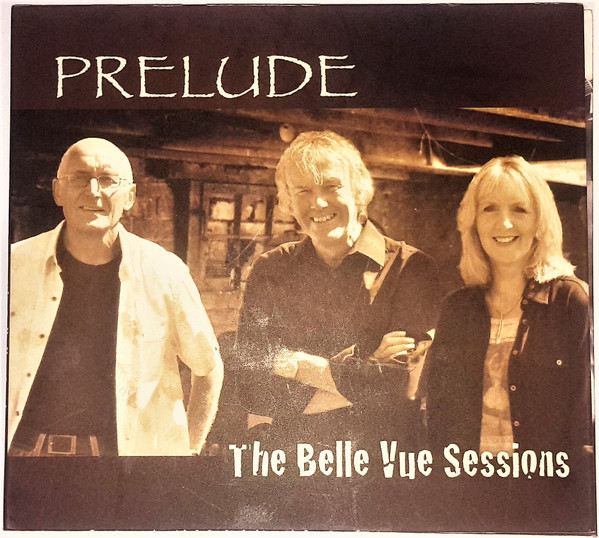
‘Our latest album The Belle Vue Sessions (2012) is all acoustic. It started in 2010 when Ian came round to our house, he had an appointment at his dentist round the corner. We got the guitars out, as you do,and it all went well so we asked him to do a gig with us. One turned into many.’

‘It was our manager Sue Brind who originally said ‘Why don’t you make a new Prelude album? We thought ‘why not?’ so we wrote some new songs and recorded them in Broadwater studios, Gateshead. Two lovely guys engineered, Gavin and Paul. We recruited Paul Hooper who was drummer for The Fortunes and again Chris Ringer played bass. We are very proud of the album.’

What does the future hold for Prelude?

‘We’re busy meeting with David Wood who used to run Impulse Studio in Wallsend. Impulse was a gateway for a lot of acts. He released a lot of Heavy Metal stuff like Venom and Raven from the North East, it was a big scene for him.’

‘David recently put out a CD box set of Alan Hull demos, he recognised Alan’s talent early on. Now he wants to do the same with us because he’s got a lot of tapes that have never seen the light of day. We’re looking to release something soon.’

After recalling a life spent with a multitude of musicians and the memories it triggers, Brian reveals that his ‘obsession’ holds a deeper meaning than just getting on stage and banging out a tune.

‘Your friends tend to be musicians and you share a common language which is almost secret amongst you. You know and experience things that nobody else has. There’s a bond between musicians which is friendship but sort of deeper. You know what the other is going to do, what they’re going to sing, – what they can and can’t do. Every successful band has to have that. It’s like brotherly love. It’s a wonderful feeling. It’s why people do music instead of opting for a ‘safer’ life.’

Alikivi   June 2025

A NIGHT WITH JETHRO TULL – with former Pirahna Brothers drummer, Tony Hodge

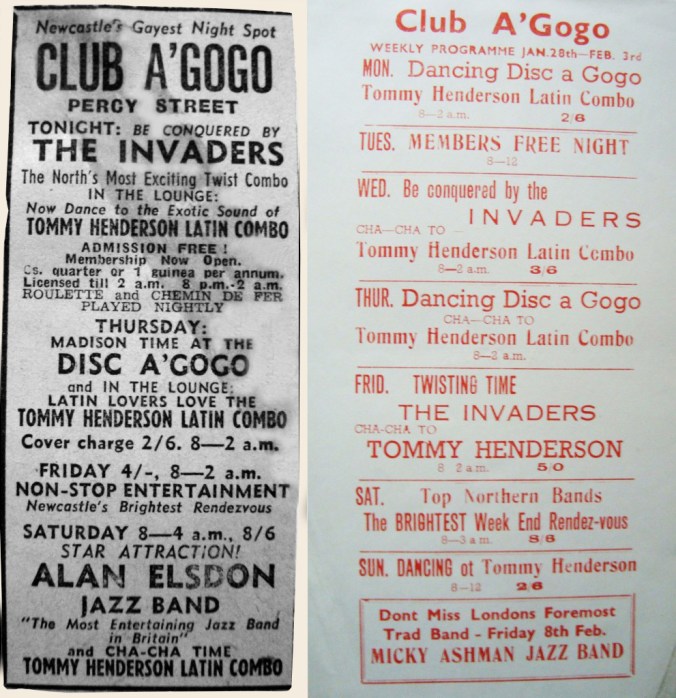
In previous posts Tony has talked about the influence Ginger Baker had on his drumming, and the many nights with friends going to watch bands like The Nice, Tina Turner, Jimi Hendrix and The Animals at Newcastle’s Club a’Gogo.

Before joining the Pirahna Brothers, Tony drummed for North East band Turm with Micky Balls (lead guitar), George Sturrock (guitar), Alf Passmore (bass) and the late John Lawton (vocals). He remembers the night they got a gig opening for Jethro Tull in a County Durham club.

‘It was an amazing experience to play on the same bill as the legendary Jethro Tull, unfortunately, the venue we were booked in was the Argus Butterfly in Peterlee. I say unfortunately because The Argus Butterfly was and still is a difficult venue for two bands to play as the stage and concert room are really small and there was an even smaller dressing room at the back of the stage’.

‘We arrived first and set our gear up  and heard that Jethro Tull and all their equipment were travelling up from London in a small Thames van’.

Turm at the Cellar Club, South Shields

Before big names including Cream, Pink Floyd, Deep Purple, Jimi Hendrix and Led Zeppelin packed out halls around the UK, they built their reputation playing smaller venues including Bay Hotel in Sunderland, Club a’Gogo in Newcastle, Cellar Club in South Shields,  Kirklevington Country Club in Yarm and Argus Butterfly in Peterlee.

‘When we got the booking I hadn’t heard of them as they were yet to hit the big time but when they entered the club, we were all fascinated by the lead singer. He was very thin, wore unusual hippy type clothes and had very long hair. This was becoming the fashion in London but was yet to be a fashion on Tyneside. Here was Micky and me wearing brightly coloured satin shirts in pale blue and fluorescent pink – so last year darling!’

‘All the guys were very friendly and were taken by our Geordie accents. They piled their equipment out of this small van, we wondered just how all their gear, four band members and a roadie got in the van – never mind drive 200 miles up the A1 dual carriageway. Note – there were no motorways yet’.

‘We were ready to play our set. Our fourth song in was a rousing number called Amen which had three or four sing along choruses with clapping to accompany it. This was a perfect song for John’s voice and the girls loved it’.

‘Each time the chorus started I would jump off the drums and go back stage clapping as I did. It sounds ridiculous, and it probably was, but it seemed to work well for the show’.

‘However, Mick Abrahams, the lead guitarist of Jethro Tull, was in the dressing room catching a well-deserved snooze on top of several amp covers. The first time I rushed in he jumped up in shock but then he saw the funny side when I ran back on stage for the opening riff after the sing along chorus. The next time I did it, Mick was laughing a lot as he had watched me returning just in time to start up after the chorus. The third time however he was ready. He grabbed me by the arms and didn’t let me return at the end of the chorus’.

‘The looks on the rest of my groups faces was a picture when they started with no drums. I can still see the vision in my mind today. Fortunately, he let go of me and it didn’t ruin the whole song, great guy, and a great laugh’.

‘After our opening set it was time for Jethro Tull to go on and they just couldn’t have been more different to us and were truly mesmerising. Their music was unlike anything I had heard before and their style was far away from anything I had seen before on the various stages in the North of England’. 

‘Another first for me was that Ian Anderson, the main vocalist and front man, played a flute that was a huge surprise. He also played harmonicas which he kept in small leather pouches around his waist and there was a funny side to this. He also kept his cigarette tobacco in these pouches and this meant he had to knock the tobacco out of each harmonica each time he was about to play them which was really very funny to watch’.

‘The visuals of the band were like nothing I had seen before and Ian sang many of his songs on one leg. This became his trademark as time went on and still is today. The drummer and bass players were very solid, had a great sound and the band was well received’.

‘Turm and Tull had a great time together as fellow musicians even if we probably looked a bit out of the current fashions in London. After this meeting they released Living in the Past a song that started my romance with my wife Jane many years later’.

‘They became rock superstars filling massive stadiums all around the world to thousands of people. I wonder if they ever thought back to the good old Argus Butterfly in Peterlee, the Turm and the 200 plus audience – somehow, I doubt it’.

Words: Tony Hodge

Edited: Alikivi   May 2025

More stories on the site from Tony Hodge including Jimi Hendrix, Cream, Tina Turner and Club a’Gogo.

Link to previous interview with Tony >>>

LUCKY MAN – part one, with North Shields actor & musician Tony Hodge. | ALIKIVI : NORTH EAST UK CULTURE

THIS CLUB’S A’GO GO with former Pirahna Brothers drummer, Tony Hodge

This second part of Tony’s memories feature his pilgrimage to Newcastle’s Club a’Gogo where he saw many bands who were on their way to a successful career in music. They included Amen Corner, The Nice and a young guitarist from the United States – Jimi Hendrix.

North East venues for the Hendrix tour in 1967 included dates at Kirklevington Country Club in North Yorkshire on January 15th. The Cellar Club, South Shields on February 1st and February 2nd at Imperial Hotel, Darlington with a gig at Club a’Gogo in Newcastle on March 10th.

‘We were right at the front and only a few feet away from the great man himself. He was tall and looked very young. His style of guitar playing was like no other I had ever seen – even playing with his teeth on some numbers. At one point Hendrix dropped a ten shilling note and the guy next to me rushed to pick it up and hand it back to him. He thanked him saying that was for the bands supper’.

‘He went on to finish the night with a long guitar solo and then thrust his guitar into the ceiling leaving it there with the feedback screaming as he left the stage. On many subsequent visits we saw the hole still in the ceiling. A great memory of a great night’.

‘Over the following months we saw many emerging London based bands play at the a’Gogo like ‘Amen Corner’ with Andy Fairweather Low, Jeff Beck with a very young Rod Stewart as his main vocalist wearing an extremely long college scarf and of course our very own local mega band ‘The Animals’

‘This club forged mine and many other local musicians’ tastes for the years to come and we got to see megastars playing only a few feet away from us’.

‘While I’m talking of being right up close to your idol musicians there are two more instances of things that could never happen today. On these occasions my brother Barry and I went to music events at the Sunderland University students Union’.

‘On one night ‘The Nice’ played and my brother was sitting on the edge on a two-foot-high stage only a foot or two from Keith Emerson and his famous Hammond Organ when he did the world renown stabbing of the keyboard. We also saw Tina Turner when she was still performing with Ike. She wore a one-piece lemon coloured jump suit and looked amazing. Once again, only feet away from us, wow!’

‘We didn’t know it at the time that only a few months after these events these bands would play in much bigger venues and stadiums so the days of being within a few feet of your idol were gone for ever’.

Plaque for Handyside Arcade and Club a’Gogo in Newcastle.

‘Sadly, the Club a’Gogo itself was only open for six years, it became a bingo hall as the game was becoming all the rage in the North East. Finally, the club and the surrounding buildings were demolished in the 1980’s making way for the Eldon Square shopping complex. The club was only open for a short time but the mark it left on the Newcastle music scene was amazing’.

‘These venues were where I started to love that different style of music, but it wasn’t until we formed bands that I got the chance to play it not just listen to it’.

Words: Tony Hodge

Edited: Alikivi  May 2025.

Link to previous interview with Tony from February 2021 >>>

LUCKY MAN – part one, with North Shields actor & musician Tony Hodge. | ALIKIVI : NORTH EAST UK CULTURE

SHORT CUTS –  Lynott v Chandler

The music world has always had its fair share of myths, legends and hell raising antics. The time Ozzy bit the head off a dove or was it a bat? Well both actually. According to reports one was in record company offices the other was live on stage. He also snorted a line of ants. The list is endless for the Oz.

I came across a gaffer tape incident involving a music journalist and Killing Joke, as I was trying to find out who where and when it happened – if it did! I read a few other short stories with North East connections.

Chas Chandler, (bass) The Animals

Following on from the last post which featured Lemmy and Jimi Hendrix is a short story about Phil Lynott and Chas Chandler. Sadly, both deceased now, Phil and Chas were two of music’s huge characters. A snapshot of their achievements featured in earlier posts on this site. (links at the bottom)

I never saw Thin Lizzy in concert the only time I caught them live was in the studio of live music show The Tube broadcast on Channel Four in 1983. Other bands booked that night were JoBoxers, Thompson Twins and Pat Benatar reflecting the shows policy of booking a diverse range of music.

Guitarist John Sykes led the charge for Lizzy’s blistering performance of Cold Sweat, they played a few more songs including The Boys are Back in Town and if my memory is not too fuzzy a track not broadcast which I think was Whiskey in the Jar?

‘The Rocker – Phil Lynott’ by writer Mark Putterford is packed with stories of Thin Lizzy’s leader and talisman. One that stood out was about the time Lynott came up against a very angry Chas Chandler.

At the time Newcastle born former Animals bassist Chandler was managing a very successful Slade. In 1972 Lizzy supported Slade on their UK tour. A contributor to the book was booking agent Chris O’Donnell who recalls that tour.

‘That Slade tour was a really important one in the development of Lizzy as a live band, and particularly in the overall development of Phil as a performer. It made Phil realise what was expected of him. Slade were huge at the time and they would go on stage and absolutely slaughter the audience night after night with incredibly powerful performances. It was far removed from what Lizzy were doing at the time’ recalls Chris.

On the 22nd November the tour landed at the Top Rank in Sunderland, tickets were £1.00, however the opening night was at Newcastle City Hall on 3rd.

Chris added ‘On the opening night at Newcastle Phil was standing there mumbling as usual, looking at the floor and being all introverted, and someone threw a bottle at him. This shocked Phil because he thought he’d done a perfectly adequate set. But then Chas Chandler came in the dressing room afterwards and really ripped into the band’.

“Either you wake your ideas up or you’re off the tour. You’re here to warm the kids up not send them to sleep! What the hell do you think you’re doing standing there looking at the floor? You haven’t even got your act together. Sort yourselves out”.

‘Phil was devastated. He’d never been criticised so directly before, and to hear it from someone as well respected as Chas – the man who discovered his hero Hendrix! – was the worst aspect of all’ added Chris. ‘At the next show the band made a big effort to improve their presentation, and performance wise I don’t think they ever looked back’.

More short stories with a NE connection will be added soon including Jimi Hendrix, The Jam and The Specials.

Alikivi   March 2025

Research >>>

The Rocker – Phil Lynott by Mark Putterford.

Links to Chas Chandler & Phil Lynott >>>

HOME NEWCASTLE – snapshot from the life of musician, manager and record producer Chas Chandler 1938-96. | ALIKIVI : NORTH EAST UK CULTURE

LOVER, FIGHTER, HELLRAISER – The Rise & Fall of Phil Lynott 1949-1986 | ALIKIVI : NORTH EAST UK CULTURE

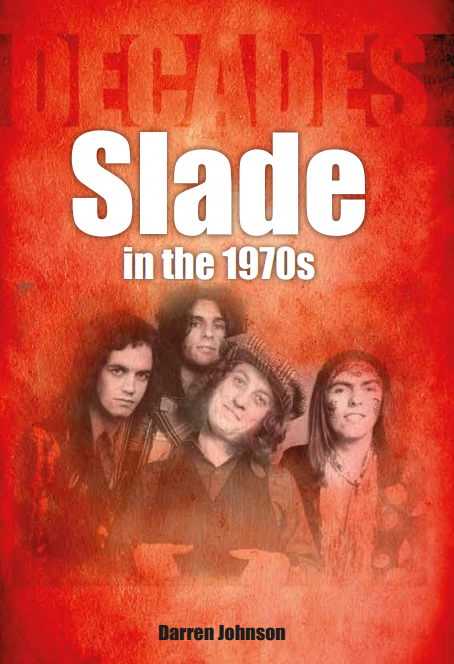
SLADE in the SEVENTIES – with author, Darren Johnson

I was encouraged by the reaction to my Sweet book and began work on one about Suzi Quatro, another big ‘70s icon that I’ve always been a huge fan of. However, the first band I truly fell in love with was Slade said author Darren Johnson.

Originally from the North West, Darren moved to London in 1990 where he spent over twenty years working full time in politics…

My professional background was in politics and campaigning so I’d written a lot about current affairs and had various articles published in the national press – from tackling climate change to building more council housing.

After stepping back from politics Darren moved out of the capital and in 2016 based himself in Hastings, East Sussex.

When I no longer had an endless cycle of meetings to attend, one of the things I was determined to do was go to more live gigs. I started writing a regular blog, reviewing gigs and albums, the music writing grew from there. You can say I came to music writing fairly late in life.

Who are you listening to now ?

I still love all my classic rock – from glam to prog to metal and everything in between. I’ve been really getting into Barclay James Harvest lately and snapping up loads of their albums on Ebay.

I also listen to a lot of folk, too. it all depends on my mood. Newer bands I’ve been impressed with include Scarlet Rebels, Buzzard Buzzard Buzzard and Toledo Steel.

What inspired you to write about SLADE ?

Early on during lockdown I woke up after dreaming that I’d written a book about glam rock band The Sweet. I felt really proud of myself for all of half a second until I realised it was just a dream.

It did plant an idea in my head though, and later that morning emailed Stephen Lambe at Sonicbond Publishing to see if he was interested – and he was.

The Sweet in the 1970s was released in 2021. In their Decades series Sonicbond Publishing have released a number of extensively researched music books from different authors, bands include Curved Air, Uriah Heep and Alice Cooper.

I was a little kid back in the early ‘70s and while I remember them from that time, it wasn’t until Slade had their comeback in the early 1980s that I really got into them.

I was a young teenager by then and the Slade revival came at the right time for me. As soon as the single ‘We’ll Bring The House Down’ came out I was hooked.

A true Geordie hero was Chas Chandler, he was enormously important to the band’s success. After he stopped working with Jimi Hendrix he became their manager and producer.

Chas Chandler was born in Newcastle in 1938 and was founder member and bassist with The Animals. He owned recording studios and labels, and was influential in bringing the 10,000 seater Arena to Newcastle.

(Link below to a snapshot of the life of Chas Chandler in Home Newcastle, posted 8th July 2019).

Unlike with Hendrix, who enjoyed almost instant success with Chandler, it was a long hard slog for Slade. They didn’t have their first hit ‘Get Down and Get With It’ until 1971, two years after Chandler began managing them.

Chas’s role in helping define not only the trademark sound of Slade but the trademark sound of glam should not be under-estimated.

When it came to recording ‘Get Down’, Chandler had the genius idea of adding foot-stomping and hand-claps to toughen up the sound.

That sound became as intrinsic to glam rock as the moment Marc Bolan put glitter on his cheeks that same year. It was a sound that other producers of the era like Phil Wainman, Mike Chapman and Mike Leander would follow.

When researching the book did you come across anything unexpected?

I was familiar with Slade’s history and was well aware of the struggles they faced in the second half of the 1970s as the glam scene faded from fashion and were no longer flavour of the month.

But until I spent time in the British Library trawling through back issues of Sounds, Melody Maker and NME, I didn’t realise how vitriolic some of the music journalists where. One Sounds reviewer wrote that if he had written songs as bad as Slade, he’d commit suicide.

But once Slade had their comeback after a spectacular performance at Reading festival in 1980 – where they stepped in at the last minute after Ozzy Osbourne pulled out – the very same papers were raving about Slade once again.

What do the members of Slade think about the book ?

I’ve interviewed both Don Powell and Jim Lea in recent years and insights from those interviews appear in the book. Along with archive material from reviews, interviews and news stories, plus reflections from individual Slade fans. I will try and make sure Noddy, Dave, Jim and Don all get a copy of the book though!

Have you any plans for another book ?

I ended up writing three books in just over two years so made a decision to wait until this one came out before thinking about any more.

Writing and researching is a hugely rewarding and enjoyable process for me but I didn’t want it to become like a conveyor belt. I thought it would be sensible to let this one come out before I started another. I’ve had various ideas but not made any firm commitments yet.

In the meantime I’ve been writing various things for my blog and doing some PR work for a number of artists. I handled the tour publicity for the recent Lust For Life Tour which brought together Glen Matlock, Clem Burke, Katie Puckrik and others to celebrate Iggy Pop’s classic album with a series of gigs, which was a brilliant thing to work on.

Are you going to any gigs soon ?

I’m seeing Francis Rossi doing one of his talk shows in Hastings soon and I’ve also got tickets for Iggy Pop and Blondie at Crystal Palace in July.

Check the Amazon official website to purchase Slade in the 1970s release date 26th May 2023.

Read Darren’s music blog at:

https://darrensmusicblog.com/

For more information about Sonicbond publishing:

https://www.sonicbondpublishing.co.uk/

Contact Darren Johnson Writing, Music PR, Campaigns & Communications Support at Crowflies Communications

@crowfliescomms 

Chas Chandler : HOME NEWCASTLE – snapshot from the life of musician, manager and record producer Chas Chandler 1938-96. | ALIKIVI : NORTH EAST UK (garyalikivi.com)

Alikivi  April 2023

LUCKY MAN – part one, with North Shields actor & musician Tony Hodge.

Leaving school and taking up a job as a Chef led Tony Hodge down a path that he couldn’t imagine

I’ve been very lucky as a chef, drummer, actor and company director plus a rocker in the famous ‘60s era of mods and rockers. Looking back they were great years, it’s been a blast. I’ve been a lucky man said 75 year old Tony.

Did you come from a musical family ?

My family weren’t musical as such, although my parents sang in the church choir and my brother plays guitar.

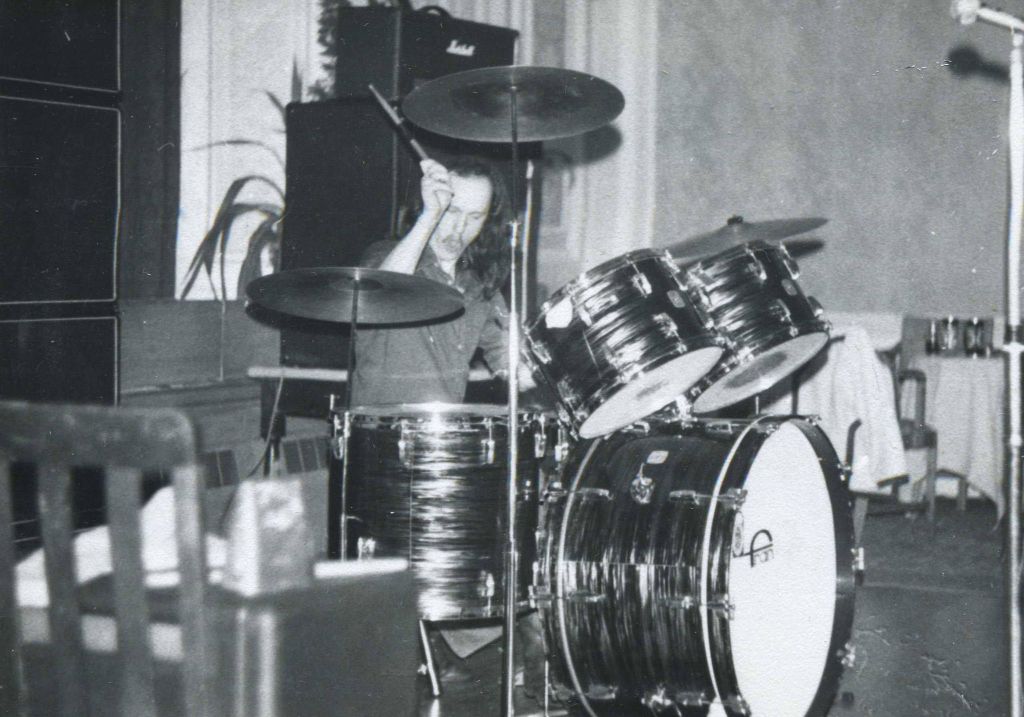
When I was a chef in 1961 at the Park Hotel in Tynemouth, the hotel had a resident band with a drum kit. I had an urge to play and that started a career that spanned over 30 years. Mind you many wouldn’t class my drumming as musical.

Then I went with Ray Laidlaw (Lindisfarne) to see Ginger Baker and Cream at the Club A Go-Go in Newcastle, that changed my style of playing – I became known as Animal.

Can you remember your first bands and gigs?

My first band, I was 16, we only played a few gigs then I joined Dominion Aces, then Turm with John Lawton singing, he later sang for Uriah Heep.

Next was Arctic Rainbow with Kenny Mountain (Beckett) and Micky Balls on guitar. Venues included the famous Rex Hotel, Whitley Bay and the Cellar Club in South Shields.

Then there was Tex Leon and the Tynesiders and finally The Piranha Brothers who had a huge following and never stopped filling clubs for the 10 years we played in the North East.

We had a four-part singing line up in many songs and some of a set at the Birtley Rex is on my You Tube page.

The Pirahna Brothers line up was two lead vocalists in Geordie Scott and Allen Matthews, lead guitar & vocals from both Paul Simmons & Mac Norris.

During their time they had three bass players – founder Bill French, then Paul Allen and finally Dave Wightman. On drums was Tony Hodge.

Where did The Piranha Brothers play ?

Venues were mainly social clubs as they were hundreds around then and all the agents used them. We weren’t a typical social club band though, as our act was largely made up from our own songs written by Paul Simmons our lead guitarist.

Most bands played covers as I had in the Tynesiders, but we had an act that worked in clubs and other venues.

One night we played Newcastle Mayfair with three other bands to a 3000 plus audience and The Piranhas played several open air concerts in the early ‘80s at Gypsies Green stadium in South Shields.

The most popular Piranhas venue was Heaton Buffs in Newcastle. Our Christmas concerts sold out the year previous. The original single night ended up as three nights, and we had guest bands playing along with the brilliant resident band Burlesque.

The Christmas nights were themed with ideas being thought up by our singers… ‘St Trinians’, ‘The Young Ones’, ‘WWII’ and the final one ‘The Nativity’ and Burlesque always joined in the game. I still wonder though how some of the guys always thought women’s nylons had to be included.

The guest bands never knew what to expect and one time a guest band was 747 with the late brilliant musician Dave Black. This band was really cool, all good looking and right up to date. We hired a topless dancer to come on stage mid set and serve drinks on a tray to the band.

Dave was singing in full swing and she was out of his eyesight. The rest of the band saw her and were laughing but Dave was oblivious. When she stood in front of him he was speechless – literally – and his face was a picture. The audience loved it though.

We often had many famous faces in the audience such as John Miles, Brian Johnston (Geordie) and Hylton Valentine (The Animals) so it must have had some appeal.

Pictured above is the Newcastle Mayfair competition final. The room was packed with over 3000 people. Two bands had the biggest following, that was Burlesque and us.

All bands were great on the night but the audience were very unhappy when neither won. A riot erupted with plastic glasses being thrown and Alan Hull (Lindisfarne) could not provide the prize.

Alan and Brian, the Mayfair manager, asked if anyone from the Piranhas or Burlesque could try and do something. Paul from Burlesque and I went on stage to try and calm the audience down and the anger turned to cheers.

Alan Hull presented the prize with a bowl on his head to everyone’s delight. One of the judges, Chas Chandler (The Animals), invited us to go to Abbey Road studios and record our songs which we did.

Have you any memories from those North East gigs ?

Piranhas were known for the two main singers in Geordie Scott and Alan Mathews, pulling many stunts like pretend fights and blood capsules. They had funny routines without in any way being a comic band.

This night to a packed room we counted four beats and the usual very loud intro to First Bite powered out. As always Geordie jumped up fists in the air and hit the deck, Alan started to dart around the stage.

This time however Geordie didn’t get up. This seemed ok, these guys were up for anything after all, however the intro was over and Alan wasn’t joined by Geordie. We played on but after a few more bars we realised something was wrong.

It was…Geordie had dislocated his knee and ended up being taken to hospital in an ambulance. In the true showbiz style of the show must go on, Alan and the rest of us finished the night.

Another night at the Birtley Rex. A guy called Liddle Towers had recently died in police custody in Birtley and the police were none too popular.

Liddle Towers was an amateur boxing coach who died in police custody, in 1978 South Shields punk band The Angelic Upstarts wrote a song about the incident The Murder of Liddle Towers.

This night our first set was our own material only, but second set we were finishing our final set with a couple of punk covers. A wedding party had been trouble through the night and a fight broke out.

The police were called and a young Police Constable plus an overweight Sergeant arrived. When they entered the whole club erupted against them, chairs, tables, glasses all went flying.

A roadie got cut and I ran from the dressing room to the stage yelling to the police to run to the dressing room. The guys dragged them in and the glasses hitting the doors sounded like a battlefield.

Suddenly there was silence and out of the tiny window was a wall of blue lights as far as you could see, police were everywhere.

Eventually, I ventured to the stage and the club was empty. Wrecked but empty. Never have I ever seen a club clear so fast.

Did you record any of your material ?

Yes I have a couple of singles they are in the attic collecting dust, unfortunately no turntable. I last heard one of them on You Tube as a fan must have uploaded it.

In 1979 The Piranha Brothers had a single on the Durham record label, Guardian. The song was called Too Much of Wanting You and studio owner Terry Gavaghan wrote that and Paul Simmons and Iwrote the b-side Dancing Time.

At one point Brian Johnston (Geordie/AC/DC) was a big fan. We recorded a single in his Newcastle studio Lynx, the song was called A Woman Like You. But it went to the USA and nothing happened. Chas Chandler (The Animals) got us recording in Abbey Road studio – but major fame alluded us.

Next time on the blog read the second part of Tony’s story, where he sees an opportunity to prolong his career in entertainment.

I didn’t think I could be playing drums in my 40s and 50s and I thought I would have a longer career in acting than music. It was a surprise because I never thought I would get as far as I did.

Interview by Alikivi   February 2021.