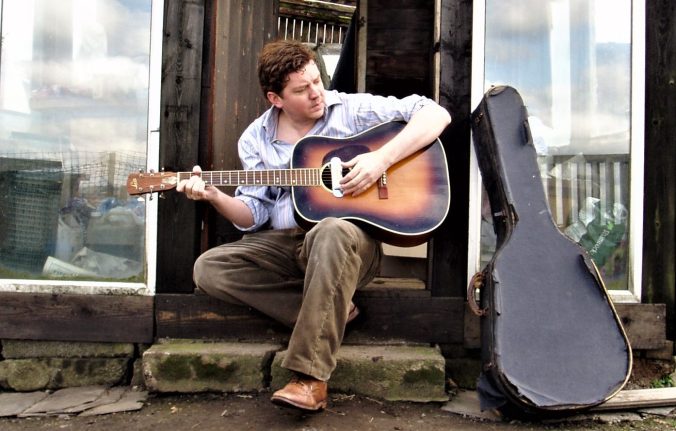
Originally from Middlesbrough, for the past 12 years 71 year old Alan has lived in Sweden with his wife Jude.
‘After school I went to train as a school teacher at Durham University then spent my first seven years in the workplace as a teacher then in business for several years in and around the Northeast.’ explained Alan.
‘The first business was an up market private health and fitness Centre in Yarm. It was called Gym and Tonic. My second business was a construction company renovating properties and building new houses’.
When did you first pick up a guitar?
‘When I was 12 year old and sang my first song at the school folk club. It was Bob Dylans Blowing in the Wind. Like everyone else at the time I joined a band at 16 and played a few gigs around the Teesside area particularly Redcar pubs. It didn’t last. We didn’t get a record deal. But I really did enjoy it.’
Was music in your family, did anyone play an instrument?
‘Yes, my mother. She played a mean piano but she had to have her arms twisted too actually do it. She was a musical one. Most family and friend’s parties ended up around the piano with her playing the hits of the day. So, I guess I got my performing bug from her and from her brother. My uncle was a professional singer all his working life.’
‘Fast forward five decades and songwriting has taken over. There was a song in me called Running Man. I wrote it quickly and we recorded it. Since then, I’ve just kept writing.’
‘Jude and I became involved with a professional football club In Sweden and formed a refugee team called The Mighty Cosmos. The original members of this team had all escaped the 2003 and still ongoing genocide with Sudan and Darfur and had an amazing story to tell.’
‘Over two years, they told me their personal stories and every line in Running Man was a part of one of those stories.
One night at the height of the refugee migration across Europe I saw the Hungarian foreign minister say we will build a fence and send them back and that became a line in the middle eight part of the song. The rest of the song came very quickly.’
Alan’s song has received radio airplay in Sweden and he has been interviewed on several radio stations across northern Sweden.
‘Songwriting came to me late, but I’ve really enjoyed it. I think the early protest singer songwriters of the 60s and 70s especially Dylan, Roy Harper, Tom Paxton, Loundon Wainright along with the amazing Leonard Cohen have influenced the way I write.’
‘There’s a rich pallet of subject matter in the world right now so plenty to go at. I have several songs on Spotify now and a whole load lined up ready to be recorded including an EP of four songs of nostalgia about my home town.’
Songs recorded in Studio 306, Ostersund, Sweden. Produced & engineered by Johan Arveli & Anders Lagroix Kronlund. Available to download on all music platforms.
Tracks include Jamtland County, Monster in the Water, War is Cancelled Today, Darfur Wind, Into the light and Lady Liberty.
Neville’s music has attracted attention from the BBC and the specialist music press. Stuart Maconie featured him on BBC 6 Music’s Freak Zone, Electronic Sound magazine praised his debut album The Edge of Destruction which established Consett born Neville (53) as a distinctive voice in contemporary British music. The critically acclaimed debut featured on this site in July 2023.
“I’m hoping to build upon the success of the previous two albums, which certainly found an audience, at the same time this album has a different approach. I like the idea of doing something slightly out of the ordinary each time” explained Foster.
What or who was your inspiration when you were young?“As a child I’d a neighbour who had an old 78 gramophone. I still remember the smell of the thorn needles. That was my first musical experience, it seemed like another world with its own smells and sounds. My dad who like a lot of other men in the 1970s took up guitar so I recall him playing.”
“My first record I bought from Woolworths in Durham as a child was Mike Oldfield’s Blue Peter. My dad played Tubular Bells around the house so I’d have heard that and Oxygène by Jean-Michel Jarre. So, Oldfield and Jarre would be my earliest exposure to modern music.”
“Having played guitar myself for many years when I began making this kind of music I remembered Jarre and Oldfield but also discovered I had in my record collection the likes of Terry Riley, Hans-Joachim Roedelius and Michael Rother without really having ever joined up the dots of who these people were or what they were doing.”
Is music in your family? “Not at all. My grandfather was in the navy and played the accordian, he always told me as a child that if I wanted to be popular at parties I should learn to play the piano. My father had a few attempts at playing the guitar which didn’t work out, but it did mean there was a guitar around the house when I was growing up.”
“It’s important to remember, this period in time and in the north east, most families were not affluent enough to have the luxury of a musical instrument in the house let alone a musical education.”
Are you planning any live dates? “The nature of this album makes live dates challenging, I’m against the electronic approach that works with pre-recorded loops and is effectively only live mixing rather than a live show. In the case of this album a live show would mean running several old Windows 98 computers at once, working over the top of them and hoping the results resembled the album, but would in fact be a re-creation.”
“There’s certainly a half way house and I’ve done a few small scale live experiments with other material to test the waters which proved effective musically – which is the main thing, so you can expect more live works in the future.”
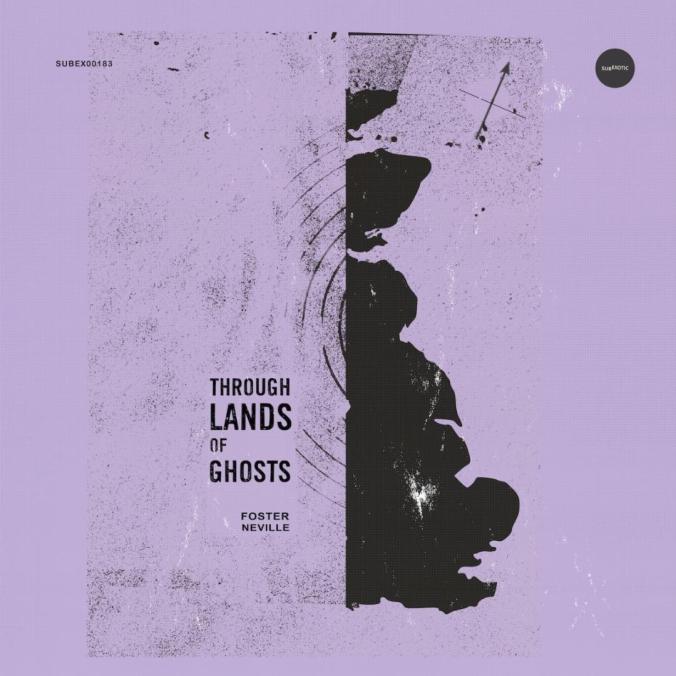
Produced by Ciarán Cahill (Van Morrison, Elvis Costello) and John Pilgrim and featuring an appreciation by writer and filmmaker Iain Sinclair ‘Through Lands of Ghosts’ will be released 16th January 2026 on Subexotic.
Sitting in the Littlehaven Hotel on a sunny autumn day in South Shields I’m listening to a familiar story which I’ve heard a lot since starting this site in 2017.
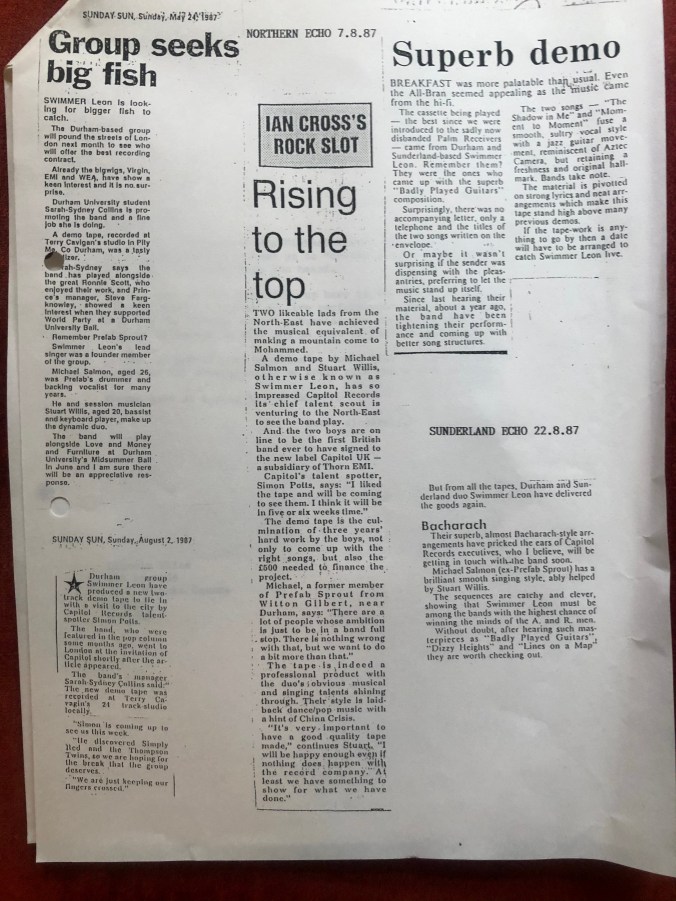
59 year old Durham musician Stuart Willis told me ‘I was in a band for a short space of time and got a taste of the music business. Although we weren’t a success commercially, we played gigs and got attention from record labels but didn’t quite get it over the line’. This is Stuart’s story.
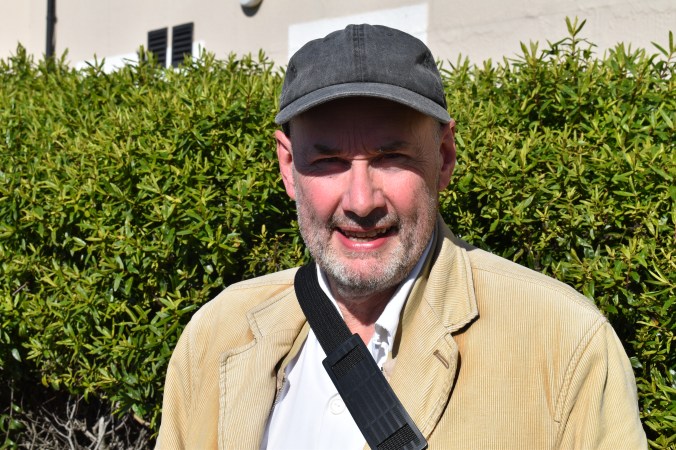
(Stuart Willis outside Littlehaven Hotel, South Shields September 2025. pic. Alikivi).
Older generations of the family originally came down from Scotland to the North East to work in chemical factories and the mines. My father was first in the family to go to grammar school and became an accountant. He was the one who bucked the trend.
I remember my mam brought a classical guitar record into the house. I absolutely loved it. I was around 11 year old when I got a cheap guitar and music book for Christmas. I picked it up very quickly. There wasn’t anyone else in the family who played and the school I went to didn’t even do music lessons.
My first influences were The Jam and Specials the whole Two-Tone and post punk scene with bands like Television, Magazine and Gang of Four who I saw at the Gateshead Festival in 1982(The Police headlined with U2, The Beat and Lords of the New Church on the bill).
On the North East music scene was a band I liked called Neon. Tim Jones was in them and he went on to play fascinating music. I first played in a punk band in the local community centre when I was 16. Then I met Michael Salmon in 1985.
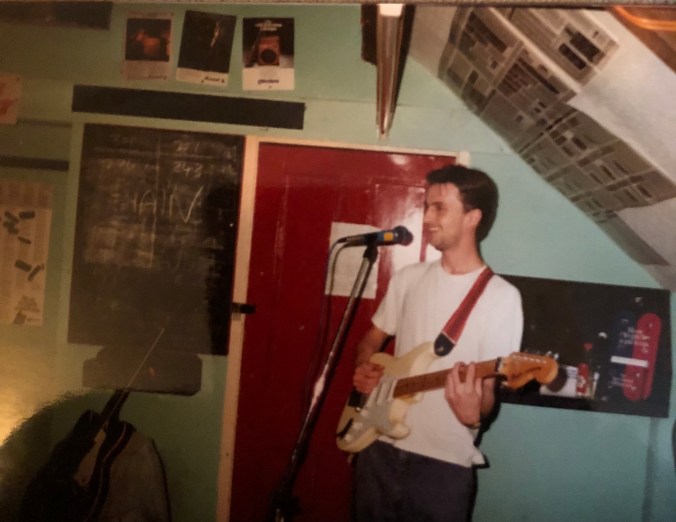
(Michael Salmon in rehearsal 1980s)
He was a drummer in Prefab Sprout with Paddy McAloon the main songwriter. When Michael left Prefab it was purely amicable. He wanted to realise his ambition of being a songwriter.
I was 18 playing in a duo in a pub in Witton Gilbert, County Durham. Michael was there that night. He liked what we were playing. I was playing classical guitar with Mark Wiles on bass.
Michael was a charismatic guy, excellent guitarist, singer and songwriter almost a teacher to me. Michael had a phenomenal record collection and I was introduced to all these amazing sounds.
We got in a drummer who was playing on the Durham scene and we called ourselves Swimmer Leon. Rehearsals were in Fowler’s Yard in Durham a lot of bands rehearsed there. We practised in there every week. The room itself almost became another member of the band. The sound was born in that room. We had about three albums worth of great songs that Michael had written.
The first place we recorded in was Consett Music project. We were all nervous. We recorded three tracks live and added a few overdubs. We took the songs out to play a few gigs.
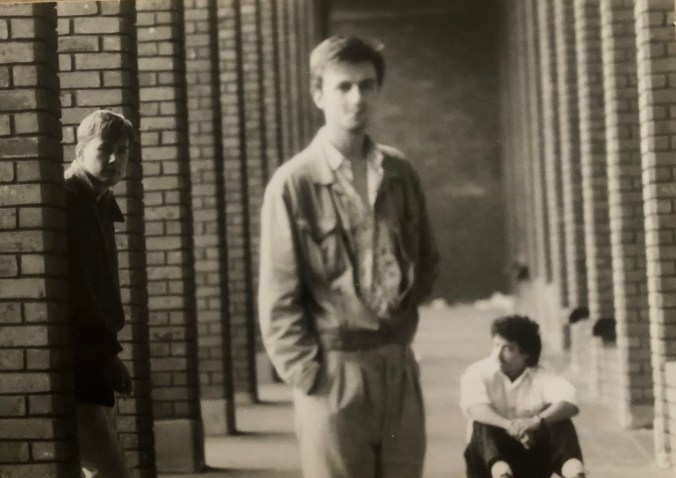
(Swimmer Leon 1985)
We were mainly playing live around 1985 we got on well and had a cracking time. We supported a few big bands mainly playing University gigs. One night we supported the Ronnie Scott Quartet, he had a jazz group who had the club in London. Then there was ex Waterboy Karl Wallinger and World Party.
There were loads of times we met different musicians at these gigs who knew Michael from his Prefab days. There was the drummer from The Ruts who gave us some insightful advice about the record industry. He told us not be in a band because you can get lumbered with huge debts. Best to play for other people and get paid. Wise words.
For me the quality of any live work or recording we done was so important. Sometimes playing smaller gigs is a cacophony of sound but when we played the Students Union in Durham that gig was recorded straight off the mixing desk and we loved that sound.
After gigs other guitar players want to speak to you. That’s really great we appreciated all the attention but we thought where’s the women! We didn’t play ordinary chords so a few times they’d ask ‘At the beginning of that song what’s that chord’? and ‘Can I look at yer Gretch’. We were a quirky band and got a lot of press.
(Swimmer Leon 1986)
We also recorded in the Cluny Warehouse in Newcastle with John Silvester. Michael’s songs had jazzy elements too them, complicated chord progressions with complicated lyrics – it was like post punk jazz. With all the obscure influences we weren’t your run of the mill band. We were an arty band. We thought yeah, we’re great we’ll get a record deal!
Did you know we ended up with a development deal with CBS? Thing was we never sent a tape to them, strangely Michael thought it should come to us! The only thing we did was send tapes with the band name and telephone number to the local press to get reviewed.
All the major labels had regional scouts who would pick up on the music section in the local papers then come to gigs and take it from there. This is what happened to us and led us to recording in Guardian studio in a little village called Pity Me in County Durham. It was a really good studio.
Guardian was two houses knocked together with a large console and a piano at the side. The owner Terry Gavaghan was very professional about the work and we got on well with him. He wanted to know the structure of the songs, so we played them through sitting near the console.
Michael played drums on that recording his first time since leaving the Sprouts. I played guitars, bass and all the keyboards. Terry recorded it separately with a guide vocal, guitar, drums, bass and put stuff on top. He produced both tracks which still sound good today.
I was working in Windows musical instruments and record shop in Newcastle so I put their telephone number on our demo tape. A local reporter wrote a review of the tape. At work I got a call telling me it was Simon Potts at Capital Records and he was phoning from L.A. Yes Los Angeles! He asked if we had many songs so I told him about three albums worth. ‘OK I’m sending someone up to see you.’
Research has found an interesting story about Simon. He was originally from Newcastle and lives in Hawaii now. With a great pedigree within the music industry he signed The Beat, Simply Red, Thompson Twins, Stray Cats, all selling in huge numbers having massive hits. Last band he reportedly signed were Radiohead.
This guy came up to Witton Gilbert from London and liked what he heard. We quickly arranged a showcase gig in Newcastle pub Slones. Actually, Brian Mawson, my manager at Windows music shop arranged the gig for us.
I loved working in Windows. It was a great place surrounded by people with aspirations to become musicians. There were new instruments on sale, latest records, local releases also a wall full of wanted musicians and bands advertising gigs – a great atmosphere. Darren Stewart who played bass for a few years in Swimmer Leon worked there. Dave Brewis also worked there he was in The Kane Gang.
The night of our gig London record label were having a promotion so a lot of artists were there and ended up at our gig. It was mad. Simon Potts from Capital flew in from L.A. We had Bananarama dancing down at the front, I think the Kane Gang were there. The head of A&R at Capital records told us ‘We’re giving you some money to record, just as long as you don’t go to Montserrat with George Martin!’ So, we went back to Pity Me and Terry Gavaghan!
We were in Guardian for three days and recorded three songs. By then GO Discs were interested in us, Warners were interested in us, Phonogram were interested in us. We were going up and down to London for meetings but we couldn’t get it over the line. It was just two kids really, me and Michael Salmon. The thing was we didn’t have a manager.
(Swimmer Leon promo shot 1987)
I remember going to CBS for a meeting. We were in a lift and there was Mick Jones from The Clash. I thought what’s going on here? From being a 16 year old punk playing gigs in Grindon Community Centre to meetings, gigs, studios and all this record label stuff without us really trying.
But life caught up with us. There was a time we thought is this gonna work? We didn’t want to move from Durham. I was from Sunderland so was Terence the drummer, Michael was from Witton Gilbert, Mark was living in Durham. The irony is when the band split up in 1989 we all moved.
I lived in London in the early 90s and worked in marketing for Virgin records. It wasn’t a glamorous lifestyle. I was living in a dingy flat in Blackheath. I saw the inner workings of the record business and couldn’t wait to leave. Richard Branson had sold the label by then to EMI and everybody was losing their jobs. I handed my car keys in went to Kings Cross train station and couldn’t wait to get back to Sunderland.
What am I doing now? My ambition was to study music properly so I done a music degree at Newcastle University from 1993-95 and ever since then I’ve been a teacher at Durham University in the music department, performer in classical guitar and specialise in historical music performance where I play the lute. I’ve also got a publishing deal for Schott, publishing guitar books.
Don’t want to come across like a moaning old bloke but young people today don’t understand what a band is. To get four or five like minded people trying to evolve a sound and make it into something special for you – that happened for us. We were lucky to be able to do what we done in the 80s. Today I still listen to all the bands I listened to back then. I’m still passionate about music.
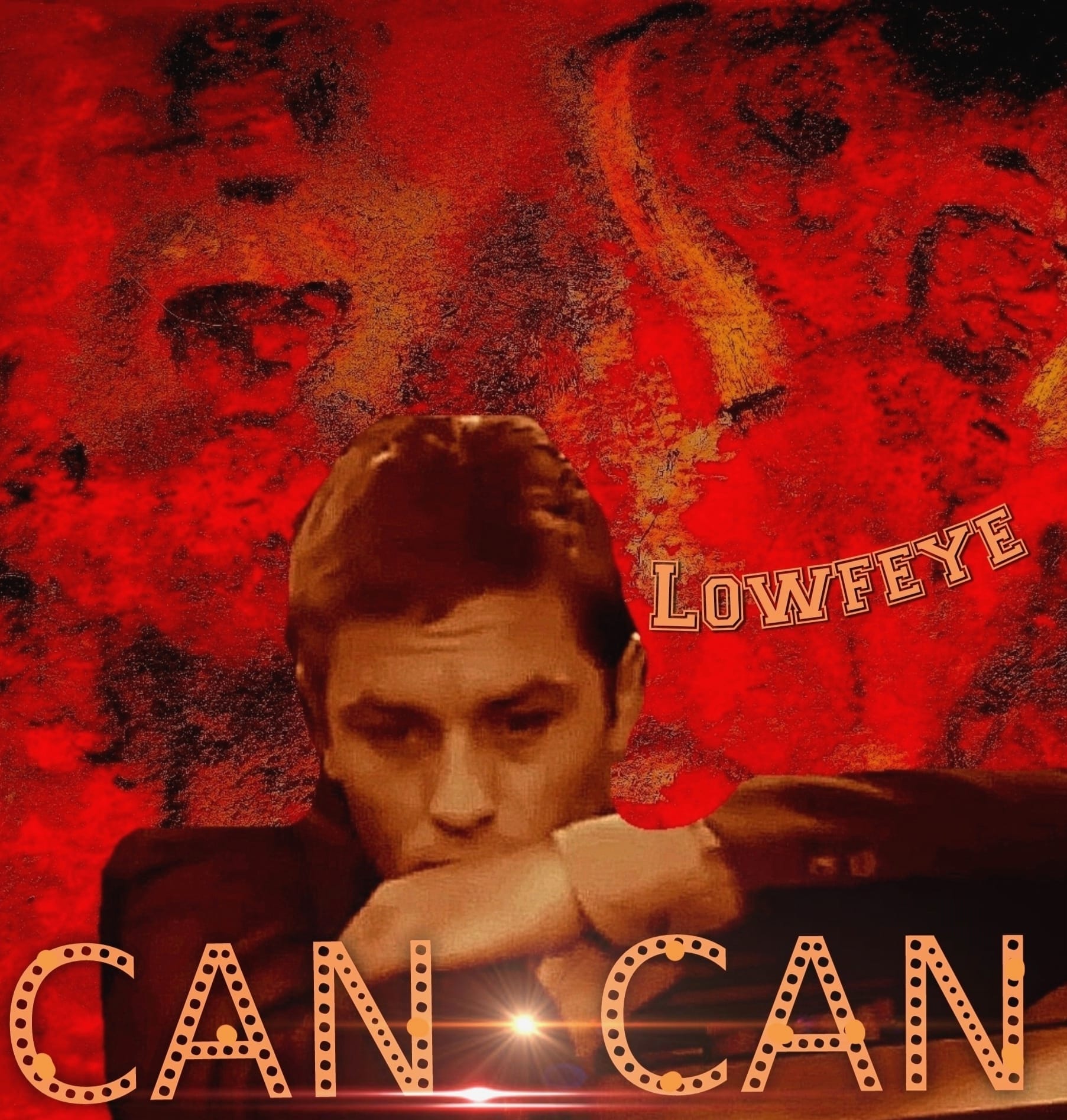
Lowfeye are Alan Rowland (musician) and Carol Nichol (singer & songwriter). They’ve just released ‘Can Can’ their fourth independently produced album. What have Lowfeye cooked up for these dark, cold, wintry nights? Carol throws a log on the fire.
‘Yeh it’s just the two of us – we have creative control which is paramount to the artistry and creativity of Lowfeye’ said Carol. ‘Songs start to evolve almost by accident. I can be in the Dakota desert composing a country rock road movie soundtrack with it all swirling around in my head while in reality I’m walking around a supermarket, buying wine, chips and beans that’s £14.70 please’.
‘Songs tend to flow fast and easy. They present themselves out of nowhere, almost as if I’m getting a brief from a film director who doesn’t exist’.
‘In the writing process they come in waves of sounds and colour all drifting out of my acoustic guitar or keyboard. Melodies, lyrics and hooks entwine with the influence of film themes, art, nostalgia, current affairs and story telling’.
Stand out songs on this 10 track album are Big Bang which bubbles around the pot, hypnotic goth rock of Babycham, dark piece Jeanne Hebuterne reveals the heartbreaking suicide story about the French artist while Dog Bite puts a vice like squeeze on before Valley of the Dolls hits the road running and Red Star rolls the credits. Lights out.
‘In terms of arrangements Alan and I concoct a cinematic landscape of colourful dreamlike worlds where rock and pop sit hand in hand with classical, folk and ambient. Anything can creep into the mix and make itself at home’.
‘Final stages of the songs reveal their identities with swirling organs rising through chiming guitars, orchestral textures battle it out with pounding drums’.
For creative artists managing and prioritising time is a daily challenge however the pay-off can be surprising and satisfying. As Carol throws another log on the fire she weighs up the benefits and snags of getting yer hands dirty.
‘Not being chained to labels does enable creative freedom, but the down side is juggling regular jobs. On that note if we were signed to a record label we would probably be dropped for not sticking to one formula or style of music’.
‘Getting the right take can involve days of stop-start hit and miss recording sessions, occasional gear malfunction, a phone ringing or the dog barking through a good vocal take, all of these things take time to iron out and finalise’.
‘On the flip side an afternoon can be sufficient to have a track in the bag all done and dusted. And all this recorded in a home studio in a box room setting on basic DIY equipment’.
From their first recording in 2017 with ‘Pow’ to their new offering ‘Can Can’ Lowfeye have produced another independent album full of ideas and imagination.
‘Like all Lowfeye albums ‘Can Can’ is like opening a chocolate box of sound with lots of different flavours. Lyrics can often go into risqué territory – you don’t know what yer going to get’.
After a career lecturing in Psychology for over 30 years, Eileen is now retired from Sunderland College. Throughout the years she has researched her ancestry and in turn became absorbed with local history.
My ancestors were Sunderland keel men in the 1600s, there were a few miners among them but mainly trades associated with the River Wear. My grandmother played the organ at her local church and her sisters sang in a local concert party. When she retired my mother went to evening classes and taught herself piano, she also wrote pantomimes and songs for the local community centre. When she was in her ‘80s she organised singing groups at her local ‘natter’ club.
About 15 years ago I started collecting Wearside folk songs from the 1800s. For me words are the most important thing. I don’t like the music overpowering what the song is about because the most important thing is what the song is telling you. I prefer unaccompanied singing and the harmonies.
I used to sing at events with the Tyneside Maritime Chorus which was run by folk singer/songwriter Benny Graham. We mainly sang songs from Tyneside like Keep Yer Feet Still Geordie Hinny and TheBlaydon Races which are widely known. This set me off wondering whether there were any equivalent songs from Wearside apart from The Lambton Worm – although that was originally written for a Tyneside pantomime.
Sunderland Antiquarian Society which has been going since 1899, has a lovely archive mostly donations from local people. I research there and the local studies library in Sunderland.
The first song I found was The Old Wife’s Lament to the Keel Men of the Wear and it was all around historical events about the keel men and it was written in dialect. That set me on the road to researching the history that went with the song and there’s a bit where it talks about them fighting the French. But did the French ever invade the North East coast?
I found an article about the Battle of Hendon in 1799 where local volunteers staged a mock invasion because they thought a French invasion was imminent. The song has historical references but some humour also.
There a lot of songs about death and tragedy, mining disasters and shipwrecks but there are songs that tell light hearted stories. The Durham Militia pokes fun at things, it’s like the 1800s version of Dad’s Army, with lyrics like ‘You’ll march away like heroes – just to make the lasses stare’ and suggesting that the only battles they will fight will be in the pub.
During covid I gave a presentation online to the Traditional Song Forum about my research and was asked to write a paper which was published in a book of folk song research in 2022 entitled Thirsty Work and Other Legacies of Folk Song.
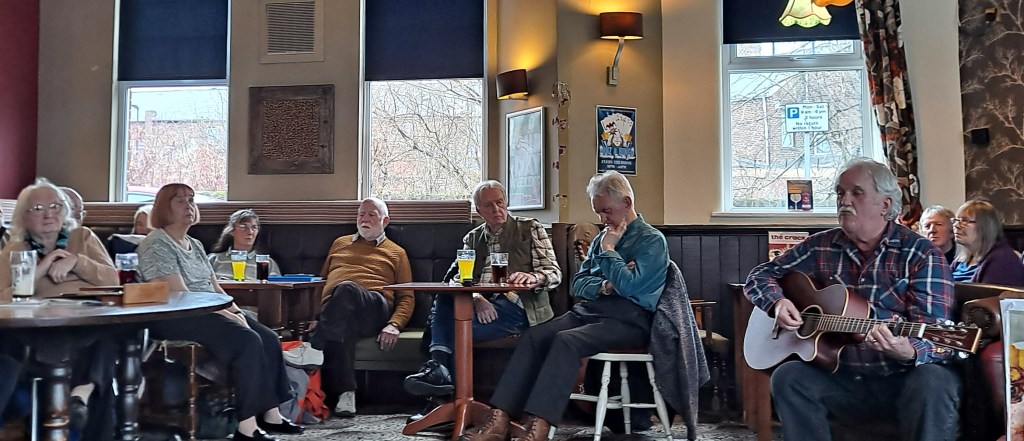
Ed Pickford, Ingrid & Barrie Temple, Tony Wilson performing at the Stumble Inn Folk & Acoustic Afternoon, Sunderland, February 2024.
The folk world is a small world, you get to see the same faces at the clubs and you get to know people from all over the North East. I first went to folk clubs in the late 60s and early 70s when virtually every pub had a folk club. I also used to go to The Bay in Seaburn to see bands like The Who, Free, Jethro Tull, there were loads coming to Sunderland then.
In about 2000 my husband and I began to go regularly to folk clubs in the area such as South Shields, Birtley, Tynefolk in Ryton and The Welly Folk Club in Wolviston.
When you say you live in the North East to other folk people they are jealous because of the amount of clubs and events up here. If you are prepared to travel half an hour you can go to a folk club most nights of the week.
There are venues like The Central Bar in Gateshead, South Shields Jack Clark Park, Croxdale in Durham, the Collingwood Arms and The Bridge in Newcastle which has been going 60 years. Saltburn, Whitby and Hartlepool also have annual folk festivals.
Keith Gregson performing at the Stumble Inn Folk & Acoustic Afternoon, March 2024
I also arrange a monthly folk afternoon at The Stumble Inn on Chester Road, Sunderland. We get around 30 – 50 people coming to our sing around and we are keeping the tradition going because in the 60s the pub was formerly The Royalty and had a very popular folk and blues club called The Glebe.
The pub is near Sunderland University metro so we have people coming in from Newcastle, Cullercoats and South Shields. Some come from further afield like Chester le Street and Teesside. Being on from 1-4pm people are happy to travel on public transport at that time – on the night they are not so keen.
Our folk gatherings at The Stumble Inn are on the 4th Tuesday of the month. All are welcome to sing a song, play a tune or just listen to the songs its very informal and free. We are based downstairs so the room is easier to access with your pints of beer and musical instruments.
We have singers from all over the region like Barrie and Ingrid Temple, Ed Pickford, Tony Wilson, Anne Lamb, Keith Gregson, Brian Hunt, Ken Hamer and others who all perform in a range of styles.
It’s an old genre but people still write songs now in the folk tradition about current events keeping the music alive. Music and song are so fundamental to our lives.
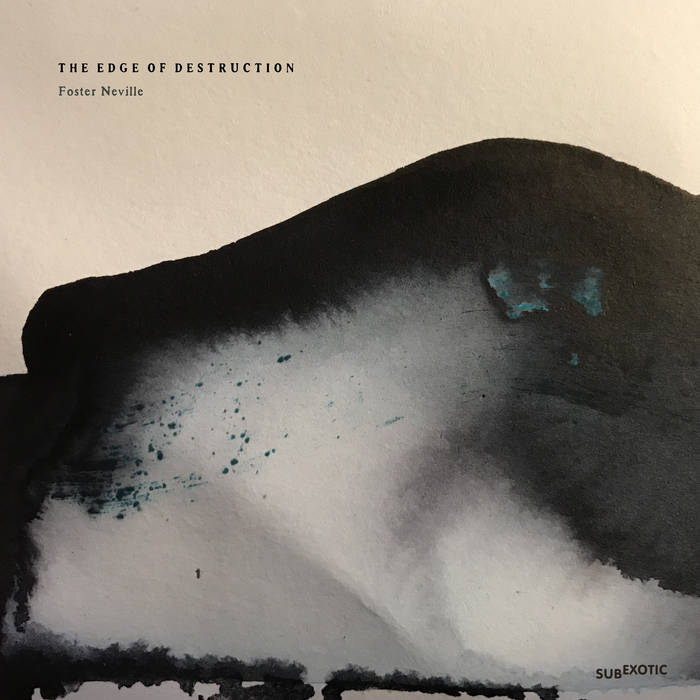
50 year old Foster Neville is catching his breath as his new double album The Edge of Destruction is making ambient sound waves in Japan via Durham, Netherlands, Hungary, Italy, Norway, Australia and the USA.
Originally from Consett, Foster has always been a big fan of German electronic band Kraftwerk, but started off as a singer/songwriter in a punk band in the 1980s.
While the music on the new album is mostly electronic, Foster’s starting point for all of the tracks was simple piano improvisation.
He explained “I manipulated these sketchy jazz-like improvisations using aural patterns taken from poetry and architecture. Once they were in the bag, I re-recorded them using electronic treatments.”
“Ambient music is about a different kind of listening, it has to be taken at another pace and is perhaps more suitable to our lives today and the problems we face”.
“I like to think of it as ‘green’ music – sound structures with plenty of space for sunlight or moonlight to percolate through. Thanks to the internet this sort of music is finding an audience everywhere in the world” added Foster whose music and lyrics are inspired by the landscape around him.
“It’s a northern landscape, often reclaimed from, and bearing the scars of, heavy industry and pollution”.
“The opening track, ‘A Change in the Air’ alerts the listener to the threats hidden in idyllic rural scenes and draws on my own childhood memories of playing out after the Chernobyl nuclear accident.”
The title track, The Edge of Destruction, features a girl’s voice counting down in Chinese to imminent disaster before safety is reached in the album’s remaining tracks.
The double vinyl also has a hidden song, which is a homage to the late electronic music pioneer Delia Derbyshire, who is best known for her version of the Doctor Who theme.
“I went from living in a former mining village to curating art in galleries in the West End of London and at Durham Uni was a founder of one of the largest collections of modern art in any UK university”.
“During this time I became friends with the Maharaja of Baroda Shrimant Ranjitsinh, who was to prove an important spiritual and musical influence. It was ultimately through Ranjit that I re-engaged with music-making on my own terms.”
On the new album Foster teamed up with producer John Pilgrim, one of the founders of the folk horror revival movement.
“The folk horror movement celebrates British movies with a connection to rural traditions and folklore, like The Wicker Man and The Blood on Satan’s Claw”.
Foster continued “As an undergraduate at Oxford, I was taught poetry by Seamus Heaney. While dropping out of academia, all of my experience in life provides the album with a literate and artistic background”.
The Edge of Destruction is released on SubExotic Records and distributed through among others, the legendary Rough Trade label. The eleven-song discs plus hidden track are on sale in major record stockists in the UK.
Mysteries of the world are fascinating subjects, and we rely on scientists, archaeologists and storytellers to bring them out of the dark. Finding a mystery closer to home can add more interest.
This was the case for former South Shields resident Dan Green. Dan is a British author, broadcaster, researcher and writer, he recently got in touch and told me some interesting stories that he researched when living in the town.
I lived in South Shields for over forty years, and this is one of my better investigations, originally introduced to the public as a centre page article in the Shields Gazette in 1989.
South Shields c. 1855
Northumbria c.700AD
I’d come across ‘The Cuthbert Code’ first told to me by a retired Benedictine monk who was living in the town. He told me how St Cuthbert was originally buried at Lindisfarne and eventually found a resting place in Durham Cathedral, only to be disturbed by Henry VIII’s marauding commissioners looting for treasure during the Reformation.
While orthodoxy tells us that he was reburied at this shrine in 1542, the Cuthbert Code records that his loyal monks looked to safeguard his body against any further attempts at sacrilege, so reburied him in a secret location.
A substitute skeleton was placed in the tomb. The secret of his reburial location is closely guarded by no more than 3 monks at any one time.
I discovered an 1895 manuscript tucked away in the safe of St Hilda’s Church in South Shields, called ‘The legend of the Fairies Kettle’. It mentioned Cuthbert and how a gold cup had been stolen from its fairy guardians at Trow Rocks on the coast at Marsden. Then it was whisked away to Westoe, then taken to Durham Cathedral to be buried alongside Cuthbert.
Knowing a bit about Freemasonry I deduced that there was a broader message here and that a treasure linked to St Cuthbert was telling us that something thought to be in Durham Cathedral was in fact at Westoe.
This ‘treasure’ being Cuthbert himself – bear in mind that during medieval times the monks of Durham owned Westoe Village.
Durham Cathedral.
I set off on the scent of the saint and a hunch led me to Westoe Village. In 1989 there stood a derelict Nunnery once owned by The Order of The Poor Sisters of Mercy. At the time of my interest the Nunnery had just started to be re-developed and the ground was disturbed.
The builders allowed me access and on the stone floor under inches of dust and grime I found a five-pointed star mosaic.
By now I had my centre page in the Shields Gazette newspaper, and they promised they would carry a follow up. I’d accumulated a lot of evidence including a curious plaque high up on a wall in the village stating, ‘Follow the Paths of the Lord and you will find him’. Was this telling us to follow some subterranean path or tunnel under the Nunnery leading to Cuthbert?
The new owner of the land was intrigued by my Gazette article and allowed us three days to nosey below the site before it would be filled in. Hurriedly I took two burly ex-Westoe miners, plus a stonemason friend of theirs and entered an accessible dark mazy passageway that led to another sealed off passage.
I hadn’t told the owner that my crew were armed with lump hammers, they smashed a hole through the passage wall.
Using plasticine we took an imprint of a Freemasonry mark on a brick in the wall. We were now under a stairwell and a hollow cavity. Our stonemason accomplice told us that there should be something below – the perfect place to hide something of value. Cuthbert?
Frustratingly, our time was up, with no chance of being able to return or continue. At least, with photos we had taken each step of the way, we had the follow up Gazette article.
But then the Editor took fright at the implications and refused to print it. I also did a short phone interview for The Sunday Times.
What happened next is a mix of comedy and tragedy. My Cuthbert Code resurfaced in 1997, just before I left South Shields when new evidence again cast doubt on the final resting place of another Catholic saint, Thomas Beckett at Canterbury Cathedral. A similar situation to mine then.
I arranged to meet up with the latest Gazette editor and try again to see if what had been my intended second article could at last be presented to the awaiting Shields’ population. I took a dossier in and after studying the work he broke his silence with, ‘Is this a wind up?‘
I found the question disappointing and assured him it wasn’t, and we continued talking for some time. He concluded he’d think about running a feature and be in contact in a few days.
He did and said that he couldn’t possibly run it. I pressed him why and here’s his reply which I still remember clearly, ‘Because I live in the flat above your location!’
What was the odds of that? I didn’t know whether to laugh or cry, but it was true, his flat was right above the location. Perhaps, if he’s still there, with lesser odds, St Cuthbert and his treasure is also there below him.
More mysterious stories from Dan will be posted soon, for further info contact:








 ALIKIVI UK : NORTH EAST MUSIC & CULTURE