SUNDERLAND SOLIDARITY in conversation with artist Rob MacDonald

55 year old artist and stonemason Rob MacDonald originally from Rugby in the Midlands has lived in Catalonia, Spain for the last 15 years working on community art installations. His latest project is in Sunderland.

About 10 years ago I came across a story about International Brigades in the Spanish Civil War (1936-39) who came from the UK. It was really interesting especially finding a guy who was on a ship coming from the UK with the same name as me. It piqued my interest so at first I decided I was going to make a sculpture of this guy explained Rob.

Rob in Sunderland City Hall with brochure of the monument in Catalonia, Spain. (pic. Alikivi Sept 2025)

I’d already worked on a few projects and exhibitions in Barcelona so I met with local contacts Alan Warren and Sonia Garangou, teachers and lead historian on the Ciudad de Barcelona. Together we developed a community art history project in the coastal town of Malgrat de mar 40 miles north of Barcelona.  

As we talked about the history it became obvious that this wasn’t just about Rob McDonald on that ship it was about all of the International Brigade volunteers and how it related to politics and fascism today. We agreed that it needed to be a community led project because the memory of the Spanish Civil War is a sensitive issue. We didn’t want to go off and just make something ourselves.

The big question about it in Spain is the historic memory, the political left want to talk about it, republicans want to talk about it, but there are questions remaining like where are the unmarked graves? In Catalonia they realise how important the International Brigade volunteers were. In the end the backbone of the idea was to build a monument.

The first monument was opened on May 30th 2022 at Malgrat de mar. It is actively being added to every year, it’s a living monument. When working on it the figures were made in a series of workshops with local people. Some worked on them for 2 minutes others stayed for over an hour as I told them about the stories. I also went into schools and the students took away the information and learned more about the International Brigades.

There are loads of levels to the project – art projects, exhibitions and performances. It’s been really successful. Also, every year in May there is an event held at the monument where the Mayor and all the dignitaries of the town attend. All political parties support the project. There is a broad support, the first 30,000 euros for this monument were crowd funded.

Now we are based in Sunderland college. I have found a lot of pride here, people get behind the area, not just the football team but the shipbuilding history.

Normally around towns you see monuments of kings and queens and people you don’t know. But it isn’t working class history the sculpture is not done by the people and the community are never asked. It gets decided by someone in an office somewhere. The community don’t engage with it. The participation living monument is about community engagement. That is what we are interested in.

I’ve talked to people about working class struggle and the arts. We built up this idea that monuments and public spaces are part of the struggle for working class people’s dignity, history and rights – it’s all tied together. And the symbolism of sculpture is important because it talks to the community about who they are and who they are not.
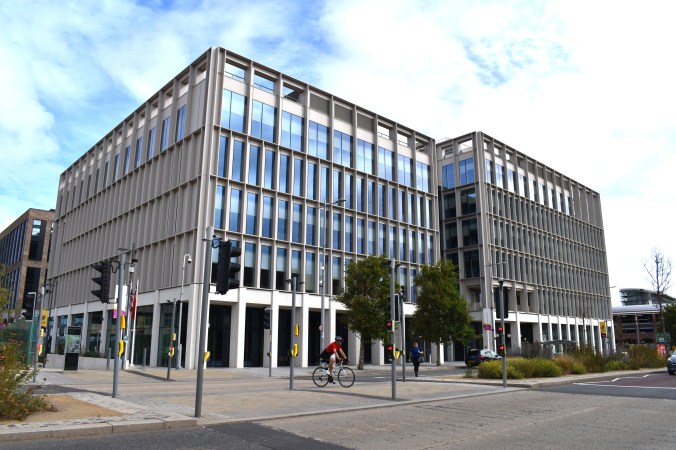
Sunderland City Hall (pic Alikivi Sept 2025)

There are amazing stories of Sunderland being involved in the International Brigades. One ship bound for Spain in the civil war had on board two unemployed shipworkers from the city. Some of the ships were built here and the captains were from the city. There were men from here who risked their lives to help feed people in a foreign conflict.

Part of the project is not only to expose the history but find it as well because people from the city will be related to some of the Brigade volunteers. We need to build up those connections.

We are at a critical point in the project we are networking with people to make this monument happen. It’s important that people are involved in the process of making it. We are in talks with Culture and local Council – organisations we are looking to partner with and make links to get support.

There are a couple of areas where we would like for a monument – Mowbray and Barnes Park are nice and this new development down here (we are in City Hall) but there may be other suggestions.

The history of the Brigades might be tucked away in a cupboard here in the City Hall when really it should be in an exhibition for the community to see. You know they were brave people, heroes really, and this is an important part of social history that needs to be told.

Alikivi    September 2025

For more information contact >>> https://solidaritypark.com/solidarity-sunderland/

LOOKING FOR ERIC – with Richard Blair, Patron of The Orwell Society

In March 2015 The Orwell Society visited South Shields to watch ‘Wildflower’ the documentary I made about South Shields born Eileen O’Shaughnessy, George Orwell’s first wife.

We also visited St Andrews’s Cemetery, Newcastle, where Eileen was buried in 1945.

In March 2020 another visit from the OS was planned but unfortunately cancelled due to the pandemic. The itinerary included another screening of ‘Wildflower’ along with unveiling a blue plaque to Eileen who was born in 1905. Hopefully we can reschedule a visit later in the year.

Richard Blair is the adopted son of Eileen O’Shaughnessy, and George Orwell – real name Eric Blair – who was author of many books including Homage to Catalonia, Animal Farm and Nineteen Eighty Four.

In 2012 I was researching the life of Eileen in the University College London where the Orwell archive is held, and through a connection there I got in touch with Richard.

He kindly invited me down to his home in Warwickshire where we filmed a piece for the documentary.

The day went well and in earlier posts (links below) I talked about the ease in which the documentary came together and how each contact led to another clue in looking for Eileen.

November 2012 I was in Barcelona Airport with a camera in my backpack thinking, what led me here ? It seemed so effortless. Eileen and George where involved in the Spanish Civil War and I wanted to film a sequence of that part of their life.

I searched for a contact who could add that piece, I found Civil War historian Alan Warren who was based in Barcelona. We arranged to meet and filming took place in Los Caracoles, a restaurant just off Las Ramblas. A place that Eileen and friends often visited.

Earlier this year I was watching a travel programme about Spain when Richard popped up on screen, I asked him how did that come about ?

Richard Blair

I was asked by Michael Portillo’s TV production company if I would appear with him out in Spain on the Aragon front between Zaragoza and Huesca where both our fathers fought in the Spanish Civil War.

For Michael this was a personal pilgrimage as his father was a Republican and so was fighting on the same side as my father and in relative close proximity to each other, so Michael was very admiring of Orwell and wanted to meet me and talk about the circumstances.

We met in the trenches overlooking Huesca and he wanted to know about my father and how he sustained his injury. It was a very personal interview and he did say that it was one of his high lights of his railway programmes.

I watched ‘Nineteen Eight Four’ at Newcastle Playhouse around 2002 – do many theatre organisations request to stage a play based on Orwell writing and have any TV companies made a similar request ?

There are always requests from theatres to do one or the other of the two ‘main books’ and I daresay they will continue, except that there will be no further copyright to contend with after 31st December.

There have also been many requests to do films and for all sorts of reason they wither on the vine. There was a very successful play by Icke and MacMillan that started in Nottingham about 2014/5 and went round the country twice including the West End.

It then went abroad and also ended up on Broadway. I had the privilege to attend the opening night. Come to think of it I and many of our Orwell Society members have seen several small productions of Nineteen Eighty Four.

How is the Orwell Society set up ?

The set-up is a member’s society with a small group of Trustees (8) to run and oversee the day to day and long-term plans. The Trustees are strictly non-political and allows members to express themselves as one would expect in a democracy.

However blatant extremism that causes offence or is illegal to the members is not tolerated and the Trustees can remove the membership from that person, should they refuse to recant.

What is the aim of The Orwell Society ?

The aim of the Orwell Society is to promote the works of George Orwell, through several ways; through the website with information; through organised events, which allows us, the members to meet up at numerous places that Orwell visited or lived (present problems not withstanding); through media channels such as Facebook and Twitter; and organised monthly ‘Orwell Talks’ via Zoom, introduced recently.

We also promote, as part of our charity obligations, contact with schools to encourage writing and hopefully (when we can start again) visits through their teachers and it is to them that we award bursaries. In other words get the word of Orwell out into the public domain.

Have you seen an uptake in the writing of George Orwell ?

There has always been an interest in Orwell and the society has been proactive in its promotion of his works. We do this in conjunction with the Orwell Foundation and Youth Prize. An organisation that has been running in its present form for some 15/20 years and was born of Bernard Cricks Orwell Awards set up in the late eighties.

It is run by Trustees but is not a membership organisation. It oversees all the Orwell Awards for writing and journalism, and it also runs the mainstream school’s youth prize (there were some 1200 entries this last year).

The OS runs in parallel with the OF and the OYP, but does not overlap, but we do cooperate wherever possible. The society membership is running at about 300 members and fluctuates up and down, but mostly up.

Since the society began, have you found anything unusual, interesting or unexpected ?

I think the outstanding feature of the Orwell Society is how friendly we all are. New members are very soon sucked into the animated flow of conversations when they meet older members.

I also think we do an enormous amount of activities (sadly curtailed) organised by Quentin Kopp, our organiser and acting Chairman.

Orwell lived in many places, which gives the opportunity to go and see them; from Scotland to London, to Paris, to Spain and many other places. Some still to be explored like Morocco and Burma.

Looking back on your father’s life what do you think about so much of it being documented and what do you feel about his work?

I suppose the short answer to that question is that over the decades he has become one of the more significant writers of the 20th century and yet his relevance has gained more and more traction and continues to resonate to this day.

Interview by Alikivi   December 2020.

For more info about the Orwell Society go to the official website:

The Orwell Society – Promoting the understanding and appreciation of the life and works of George Orwell

Links to research & documentary:

WILDFLOWER – South Shields born Eileen O’Shaughnessy 1905-45 timeline. | ALIKIVI (garyalikivi.com)

WILDFLOWER – documentary about George Orwell’s wife, South Shields born Eileen O’Shaughnessy | ALIKIVI (garyalikivi.com)   plus DVD trailer.

LADY IN RED – with author Paula Bartley talking about Ellen Wilkinson MP (1891-1947)

March 8th 2016 three of my short films were screened at an event celebrating International Women’s Day at The Customs House in South Shields.

They featured Dame Rosemary Cramp (Bedes World, Jarrow) Eileen O’Shaughnessy (‘Wildflower’ first film made about George Orwell’s South Shields born wife) and Ellen Wilkinson MP (Jarrow Crusade).

When the event was being put together I found a newly released book about Ellen’s political life, the author was Paula Bartley who I contacted and asked if she would like to come up to The Customs House and talk about her book….

The talk I enjoyed most was in South Shields. It was as if I had come home. People knew about Ellen, they knew why she was important, they loved her as much as I did.

In research did you find anything surprising about Ellen ?

I found out that Ellen had enjoyed a relationship with a communist spy, a man called Otto Katz. He was a Soviet agent who used at least 21 aliases.

If these photos below are all of the same man – two of them are of Arnold Deutsch – then he was very dangerous indeed. Arnold Deutsch, who was also known as Otto, recruited Kim Philby, Britain’s most notorious spy.

Certainly Katz – whoever he was – was a handsome man and willing to use his looks and natural magnetism to further his political cause. He even managed to charm Hollywood: Otto Katz and his wife Ilse were immortalized as Victor Lazlo and Ilse Lazlo in the film Casablanca.

M15 thought Katz the most important communist agent outside Russia and put him under surveillance. You can see a report of it below – it’s of Otto Katz staying overnight with Ellen.

It says, ‘he went with Miss Ellen Wilkinson to her flat at No 18, Guildford Street WC1 where he spent the night’. The two sometimes evaded the Secret Service by driving as fast as Ellen could in her car.

Otto Katz’s letters were opened. Below is a negative of a letter from Ellen to Otto that the Secret Services made. It says ‘WHAT a bombshell. Honestly, I am scared stiff. You simply must destroy the negatives or the worst, or send them to me, and any copies there are. PLEASE’.

I don’t know what these photographs illustrated or the result of Ellen’s plea, but Ellen and MI5 destroyed her papers.

What I do know is that Ellen became friendly with Otto Katz in the 1930s and remained so all her life – even when she became a Cabinet Minister.

He accompanied her on a number of trips to Spain during the Civil War and involved her in communist-led campaigns.

Sadly, Ellen died in 1947, and never knew that in 1952 Otto Katz was put on trial for conspiring against the Czechoslovakian communist state, was tortured, found guilty and hanged.

Spy stories are always interesting, Agent Zig Zag (Durham born Eddie Chapman) is a fascinating tale of traitor, villain and hero. Ben Macintyre made a BBC documentary about him and his exploits as a double agent during the Second World War.

On Tyneside was Russian born William Fisher and his son Heinrich, a KGB spy born in Newcastle, he worked for the British Socialist Party in South Shields.

My great uncle Alexander Allikivi, born Russia 1888, was living in South Shields at the same time. How many more Soviets were living in the town and was Allikivi a member of the party?

(‘The Kremlin’s Geordie Spy’ by Vin Arthey is a great source for research. Interview with Vin on the blog 30th July 2019).

Paula continues….

Like a lot of young people, Ellen was excited by the 1917 Russian revolution. She joined the Communist Party and planned for socialism in Britain.

The Soviet Union gave her and Harry Pollitt (later General Secretary of the British Communist Party) £500 to travel first class to Russia so that they could attend the Red Trade Union Conference in Moscow. Here she met leading revolutionaries like Leon Trotsky and Alexandra Kollontai.

Back in Britain, she helped found the Red International of Labour Unions, known as the Profintern. But there was a problem. She was also a member of the Labour Party.

In 1924 communists were banned from belonging to the Labour Party and Ellen had to make a choice. In 1924 she left the Communist Party but its ideas influenced her.

What inspired you to write about Ellen ?

I was intrigued by her, her name kept coming up in lots of books about women’s history: a photo; a mention of the Jarrow March; a bit on the first women Labour MPs. I wanted to know more.

I did an internet search, read a book about her by Betty Vernon and was gripped. Why was this 4ft 11’ bundle of dynamite not better known?

The more I read, the more I fell in love. I became a little bit obsessed – and two years later, after a lot of research I finished an introductory book about her: Ellen Wilkinson – from Red Suffragist to Government Minister.

It was challenging researching Ellen’s life as she had destroyed all her papers and I had to rely on Hansard, newspapers, archives and people who had known and written about her.

I visited lots of archives: Hull, Liverpool, London, Manchester, Newcastle, Oxford and Warwick to try and find more about her.

Why did I like her so much?  I admired her energy, her passion, her warmth, her charm and her sheer doggedness to make life better for the less well-off.

Where was Ellen born and what kind of upbringing did she have ?

She was born in Manchester to parents who didn’t have much money. Ellen, her parents, her two brothers and her sister all lived together in a tiny two-bedroomed terraced house with no bathroom or inside lavatory.

The family struggled: her father worked in a very low paid job while her mother was too ill to work outside the home.

Ellen’s future didn’t look particularly bright, yet she went to Manchester University, became a Labour MP and then first-ever female Minister of Education.

Do you think it would have been difficult being one of the first women MP’s ?

In 1924 Ellen was elected Labour MP for Middlesbrough East. She walked into a space that was both masculine and upper-class.

The Palace of Westminster was a grand building with its panelled walls, high ceilings, crystal chandeliers, vast halls and chambers, heraldic symbols and statues of dead white men.

Intimidating for those, like Ellen, who had not grown up in a big house, been to public school or Oxbridge.

The benches in the House of Commons were made for men. Ellen was so short and the benches so high that she had to sit with her feet dangling inches from the floor. In fact, she used her briefcase to rest her feet.

On her second day in Parliament Ellen made her debut speech. She looked confident but was scared stiff. Ellen had to stand up alone in the House of Commons while over 600 MPs, mostly men, looked at her.

But Ellen was a streetfighter, she had learnt how to deal with difficult crowds when she was campaigning for votes for women, had rotten fruit thrown at her and had to think of quick witty replies to hecklers.

And she knew that what she had to say was more important than her fears: she told MPs that she was determined to improve the lives of women and poor people.

Since women had not been expected to be members of Parliament there were no facilities for them in the House of Commons. It was a male space.

The first women MPs had to squash into one small dressing room which contained a washstand, a tin basin, a jug of cold water and a bucket – a situation they naturally found intolerable.

Ellen called it ‘The Tomb’. Even so they rarely complained, partly because they were just glad to be in the building.

These women soon found that they were not welcome in certain areas of the House namely the bars, the smoking rooms and the members’ cloakroom.

Either because they feared giving offence or were intimidated, they tended to stay away from these places. Ellen broke this by striding into areas that the men thought exclusive to them.

Did you come across anything unusual when researching Ellen ?

These early women MPs tended to stick together and give each other support. Ellen became friends with someone who was very different from herself: the American, Conservative and very rich Nancy Astor.

The two women worked closely together to improve women’s lives, getting better pensions for women, changing the Nationality Laws (British women lost their nationality if they married a foreigner), allowing more women to join the police force, helping to gain votes for women on the same terms as men, and trying (unsuccessfully) to improve the laws on prostitution.

Where have you publicized your book and have you any projects planned ?

I wanted to share my research about this remarkable woman, so I spoke at lots of different places, from the Ellen Wilkinson School in Ealing to Labour Party groups, to women’s groups and even at the House of Commons.

You can see one of my talks ‘The Mighty Atom’: Ellen Wilkinson and parliamentary politics on the parliamentary you tube channel (https://youtube/2bi409l621l).

My work on Ellen Wilkinson encouraged me to find out about other Cabinet Ministers and last year my book, Labour Women in Power: Cabinet Ministers in the 20th Century was published. But no-one captured my heart more than Ellen Wilkinson.

Interview by Alikivi   February 2020.