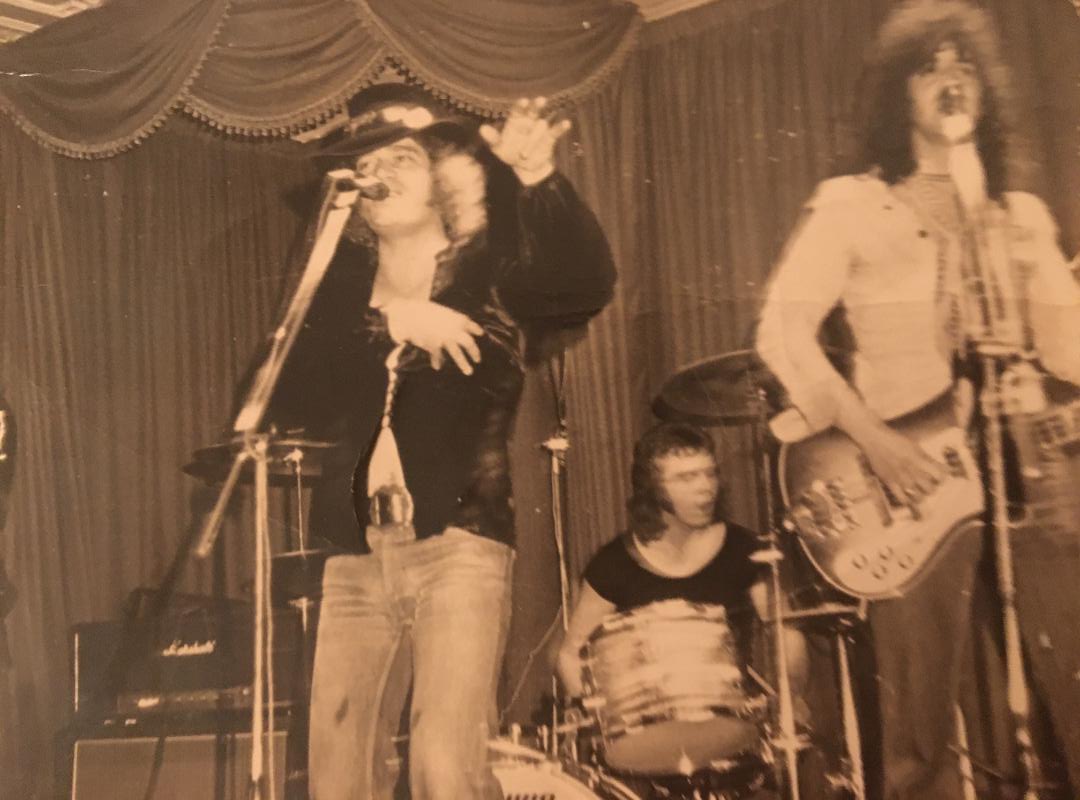
C’EST LA VIE – with musician Mark Aynsley Hay

Mark in his studio.

Retired since 2010 and now living in France, Mark was born in Teesville on the outskirts of Middlesbrough where he began playing piano at 7 year old and by 15 started working in showbusiness.

Initially, it was my older sister Margaret who influenced me, she was a brilliant pianist and suggested I start piano lessons. Most weekends the family would sing all the popular up to date songs of the fifties accompanied by my sister on piano recalls Mark.

Of all his experiences in showbusiness it’s a cliché to say but Mark really has been there, done it and worn out the t-shirt. Read on for some of his highs and lows.

For many years I ended up working as a singer and entertainer on the North East club circuit, before moving to Manchester in 1976 where I continued performing while also working as a session singer for the BBC.

Throughout my career I’ve also performed in countries like Norway, Malta and the casino circuit in Portugal plus venues like Bristol Hippodrome and Liverpool Empire. I’ve even worked seasons at Butlins holiday camp.
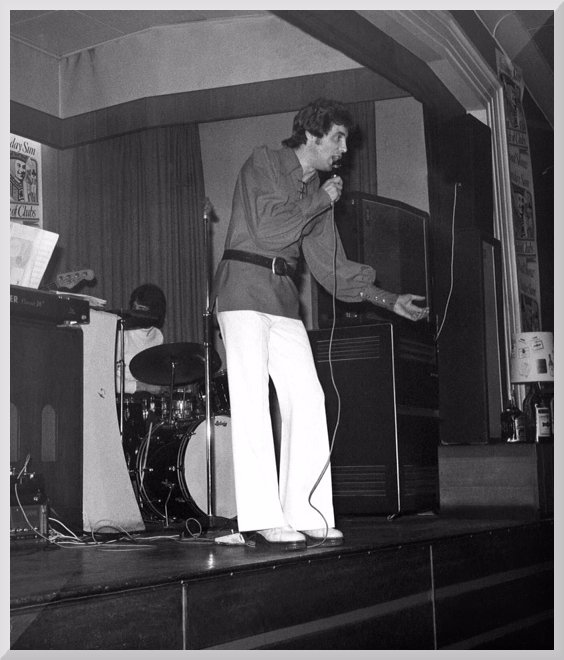
Mark performing on the North East club circuit.

When did you get your first big break?

Between 1967 to 1969 I was singing with the Bill Sowerby big band at the Top Rank suite in Sunderland. The band regularly supported big name groups who appeared there. Slade and Family come to mind.

On one occasion Radio One DJ ‘Emperor Rosco’ – real name Michael Pasternak – was appearing at the Top Rank with his road show. I happened to be in the venue rehearsing an original song with the big band.

After we finished, Roscoe introduced himself “if you ever fancy moving to London and working as a session singer, you’d be welcome”. He gave me his card and a few months later I took him up on his offer.

When I started working for Rosko he was in the process of forming his own independent record label Mother Records. He co-wrote a song ‘909’ which I recorded as a demo, which presumably was meant for a name artist.

Rosko’s management took the demo along to EMI to discuss a distribution deal for Mother Records. The feedback I received was that they were very impressed with my version and would like to distribute the song.

The song was released in 1971 and started to receive air play with favourable reviews in music magazines. From what I remember it received good reviews on Rosko’s round table and the Pete Murray show as well as other Radio One shows. The only negative review was from Tommy Vance.

Just when Mark was making headway in the music biz a scandal hit the headlines. ‘Bribes at the BBC’ the Sunday newspapers suggested that certain BBC DJs were being paid by record companies to play their records. 

Rosko was not mentioned or involved however it stopped DJs at the BBC from being involved in any third-party interests explained Mark. However, he knew he needed to keep up the momentum that he had built up so far.

Rosko’s management approached me and suggested that I should promote the record on the cabaret circuit and local radio stations. In comes Colin Hutchinson. 

Colin was based in Middlesbrough and booked the artistes who appeared at the Fiesta Cabaret club in Stockton. Subsequently I signed a five year management and agency contract.

Colin promoted me as a solo entertainer and ironically one of the first venues where I promoted the record was at the Top Rank Suite in Sunderland for a local BBC radio station.

‘You’ll Never See Julie Again’ recorded by Frankie Vaughan.

By 1974 things were looking up, management approached me and put an idea on the table. They said although Frankie Vaughan’s career was slightly waning – having been a big star in the late fifties and sixties – he still had massive pre-sales orders regarding record sales.

By this time, I’d started singing on cruise ships and when on one P&O liner I sat down and wrote ‘I’ll Never See Julie Again’. Within two weeks of being on dry land I recorded a demo version of the song at Keith Murray and Billy Hygates studio in Redcar using local musicians. The song was published with EMI and produced by Les Reed for Columbia records.

Unfortunately, 1974 was a bad year all round for record pressing due to a major shortage of plastics. The major companies gave preference to guaranteed sellers – chart bands like Paper Lace.

Coincidently, in 2020 Mark teamed up with songwriter Chris Morris who was vocalist and guitarist with 70’s pop band Paper Lace who appeared on TV talent show ‘Opportunity Knocks’ and had UK chart hits including a number 1 ‘Billy Don’t be a Hero’ in March 1974.

Regardless of negatives, the first PRS cheque I received for ‘I’ll Never See Julie Again’ noted that the song had sold well in Canada and Australia with reasonable UK sales. We appeared on at least 14 different TV shows to promote the single.

Looking back, I think I’ve had a few setbacks when it comes to recording and record releases however regardless of this, I’m really grateful for the opportunities I’ve received during my career.

On the bill with Bob Monkhouse and Harry Secombe.

What was your experience of working on cruise ships?

I started performing on cruise ships at the age of 25 and initially I was naive as to how it worked. The cruising market at that time was very old fashioned, for example the ship was split between first class and tourist.

There was a first class room on the old Canberra with decor like an old fashioned colonial Gentleman’s club. I only sang there once as after I performed the first two songs combined with topical patter, I was aware that none of the snobby gentlemen were interested. A number of them were sleeping with the Times newspaper covering their face.

After my third song I announced in a rather cheeky way that I had better places to perform, audiences normally listen and react to my show. I walked off to the sound of my own footsteps. Needless to say, I was never asked to work there again.

Fortunately, the cruise director had an idea to double me up to perform in the night club come cabaret lounge for the tourists. On that show and subsequent performances, I received standing ovations from the audience.

Some months later I was sent a P&O in house magazine with an article written by the same cruise director on the Canberra – ‘Mark Aynsley and another young entertainer called Billy Hygate were like a breath of fresh air’.

It went on to say that the future of entertainment on cruise ships was changing and both Mark and Billy had lifted the bar to a higher and modern level.

What are you doing now and can you bring your story up to date?

In 1982 my wife Alison and I established Almara Music Productions. Almara was an agency that represented vocalists, dancers, bands, comedians and magicians in varied fields of TV, entertainment, cruise ships, theatres, cabaret and summer season shows.

We retired in 2010 and permanently moved to south west France although since retiring, Almara Music Productions continues to be the platform for my songwriting promotion.

To listen to a compilation of music by Mark Aynsley Hay & Chris Morris plus family, friends & associates check out the official website: http://www.chrismarkmusic.com

Alikivi   March 2025

RHYTHM KINGS with Bob Porteous & Dave Robson from Newcastle ’70s band FOGG (part one).

I met up with rhythm players Bob and Dave to get a clear picture of the FOGG story, but first let’s find out where the name come from…

Dave: It had something to do with the book about Phileas Fogg and his travels around the world in 80 days didn’t it ?

Bob: Nah it stands for Fairly Old Grumpy Geriatrics (laughs).

Bob Porteous (drums) & Dave Robson (bass).

During the 1970s FOGG were based in Newcastle and signed for EMI and Warner Brothers. They released four singles and an album ‘THIS IS IT’ recorded at Abbey Road. Warners are now re-releasing the remastered album (links below).

Bob: I would say This is It…is really a mix of hard rock, boogie, pop stompers and even a smidge of prog. Very tight instrumentally with great vocals, harmonies and guitar. Warners have remastered and digitised the album.

To my ears it sounds quite contemporary and hasn’t dated. Ok I’m biased but I love it all over again.

Dave: The album sounds very fresh today, I really like it. I’m proud of what we did. We were just a little band playing workingmen’s clubs who were suddenly catapulted onto a higher level and suddenly recording in the world famous Abbey Road studios.

The first version of Fogg started in 1971 and was formed by guitarist Dek Rootham ex-Sect, and bassist Dave Robson ex-Toby Twirl. They played the working men’s club circuit with drummer Ronny Levey and Colin Anderson on guitar.

By 1973 Ronny and Colin had moved on and were replaced by ex-Raw Spirit drummer Bob Porteous and Chris McPherson on vocals.

Dave: I was playing bass when I first joined a band at 19, they were called Toby Twirl who were a pro band doing gigs every day and night all over the UK. The drummer was John Reed, John was also a songwriter, later he moved from Sunderland to London but we stayed in touch.

Don’t wanna get ahead of myself here but he was very influential in Fogg because he got management involved and to this day is fully committed to the band.

John called Derek McCormick from Corus Music who had pedigree because he used to manage The Moody Blues and had a lot of industry contacts.  

Bob: That was around 1973, we were playing the clubs at first then the work expanded via Derek and John and their contacts. Dek Rootham and John Reed began to write songs together.

Chris McPherson sounded like Noddy Holder from Slade, and was a  charismatic front man. He took a break for a short while so we got Davey Ditchburn in on vocals during Chris’s time out.

We did several shows on Tyne Tees TV for the Geordie Scene. A You Tube channel dedicated to North East music called VainGloriousUK has several videos of Fogg performing on the show. My personal favourites are Ask No Questions and Captain Moonshine but there are many more to choose from.

Dave: Then later on Chris re-joined the fold. I remember Chris was a great character, god bless him he passed away a number of years ago.

Bob: He owned every stage he walked on. We all loved him.

Bob: Fogg worked hard on the College circuit, did a tour of Finland and TV & Radio work. By this time the band was developing a great synergy and the competition with other pro bands on the circuit had created a highly charged performance involving great audience rapport.

Dave: Yeah yer’ had to ! It was sink or swim.

Bob: Jumping in at that level generated massive confidence and camaraderie within the band.

Dave: We also did a lot work in the Bailey Clubs run by Stan Henry, a friend of our manager.

Sadly, Stan Henry died in September this year. From their South Shields headquarters Stan and business partner John Smith ran the Bailey Organisation. They opened a number of clubs around the UK.

Notably The New Cellar Club in South Shields where Cream opened the venue on 2nd December ’66 and Hendrix played on 1st February ’67.

Chris (vocals), Bob (drums) & Dave (bass).

Bob: One night we played the Bailey club in Watford and the top act was Dana (Hugely popular Irish winner of Eurovision song contest in 1970 with ‘All Kinds of Everything’).

She was absolutely lovely and invited us to her dressing room which was a different world. She was like a beautiful Queen with her make up and wardrobe people swanning around offering drinks and even lighting up other people’s cigarettes.

This, coupled with our week long soiree at a Hampshire health farm where we met the legendary Ava Gardner gave us a little glimpse into ‘70s fame.

Dave: The Bailey clubs were great, very pro, but I remember a lot of the CIU workingmen’s clubs were also run really well, Concert Chairmen keeping things right, great audiences, yeah loved them.

Bob: They always gave you a round of applause and there was always a dressing room, no changing in the toilets. And being paid well.

Dave: I wish they were back.

Bob: Concert chairmen had a bad rep but often they were smashing guys. There was a chairman called Edgar at one of the clubs and he would like to sing the last song of the night with the band.

‘What do you want to sing Edgar?’ ‘Blaydon Races’ he replied. We found that the song had about 20 verses and he knew them all! Still shiver and feel apprehensive to this day when someone says Blaydon Races (laughs).

How did the band get signed ?

Dave: As well as song writing with Dek, John Reed was the band manager and got us a gig in a Covent Garden pub where he invited Derek McCormick and various music industry people.

Derek was very impressed and we signed a management contract with him. John arranged a session in the EMI recording studio in Manchester Square and we did a successful demo there.

Bob: This was during the late summer of ’73. Derek was friends with Joop Visser, a lovely Dutch A&R guy in EMI and this opened the door to a recording contract.

In 1974 the band went into the legendary Abbey Road studios where The Beatles had recorded. They produced several singles, one of which Water in my Wine had significant sales in Germany and Japan.

EMI then helped realise the bands ambition by recording a full album at Abbey Road. This is It…was produced by Wally Allen from the Pretty Things.

Dave: It was like ‘yeh just going into the recording studio today’, that’s just what you did in those days you know.

Bob: Back then it was the arrogance of youth! (laughs)

Deep down though, we were ecstatic to be at Abbey Road even though we were being outwardly cool and professional about it.

Dave: Now it’s revered as a holy place but don’t get me wrong it really was a fantastic place to be.

Bob: The first single was Doing the Best I Can which got a few radio plays when released in 1974 but nothing major. All the band were involved in writing for the album but it was Dek and John Reed on the majority of songs.

Our first producer was Ian McClintock who we thought was good but not entirely tuned in to our music.

Dave: We needed more direction from him as we hadn’t been in a 16 track recording studio before.

Bob: When you are new to studios and the red light goes on it can be nerve wracking but we must have done ok because if I remember rightly we only did a max of three takes on most songs .

Dave: Eventually McClintock was replaced by Wally Allen who was bassist with The Pretty Things – he was brilliant. We moved into The Beatles studio and the sounds were fabulous there. You go into the control room to hear back what you’ve recorded and it’s a genuine ‘Is that us !’

Bob: That was Studio Two where the whole thing had a different vibe.

Dave: And the harmonies had a much better sound.

Bob: I don’t believe in ghosts but you could just feel an atmosphere of all the other musicians who had passed through there.

Dave: And on the piano there was the marks where (Paul) McCartney had left his tab burning!

Bob: One day the others were laying down some overdubs so I went for a wander around the other studios. I went into the huge Studio Three where I started playing a wonderful set of timpani drums. A severe looking security guard heard this and popped his head in and asked what I was doing in there.

‘Just from the band recording in the other studio’. After hearing my accent he asked where I’m from ‘Newcastle’ I replied. He let out a delighted laugh ‘Wey I’m from Gateshead man!’

 We really felt a part of the Abbey Road family. Incidentally a couple of tracks from the album have a real North East vibe, Northern Song and Water in my Wine.

In 1975 the band moved on from EMI, signed to Warner Brothers and released two singles Dancing to the Music and Rock n Roll Star.

Next up read Rhythm Kings part two with more FOGG stories from Bob and Dave.

The remastered FOGG album ‘THIS IS IT...’ is now available in digital format from:

Amazon: https://music.amazon.com/albums/B0BGSN3Q93

Spotify: http://open.spotify.com/album/2jG2Qb7hHHFHC2hskrPPGY

Apple: https://music.apple.com/us/album/1647553016

Alikivi  October 2022