LISTEN TO THE MUSIC in conversation with North Shields singer & songwriter Terry Gorman

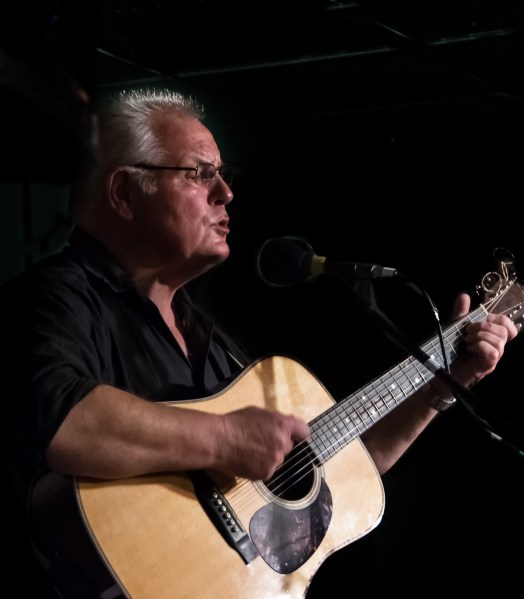
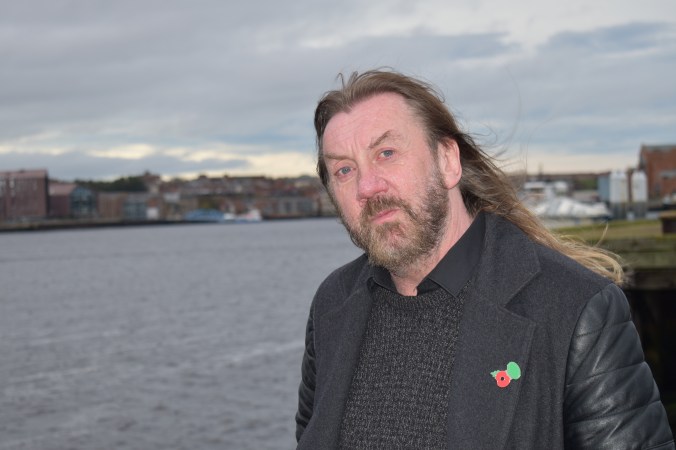
Singer/songwriter Terry Gorman Nov.25 pic. Alikivi

Now based in North Shields, Terry Gorman was born in Colne, Lancashire and has been playing guitar for over 50 years. Music has taken the 66 year old around the UK and Europe including Ireland, Amsterdam and Lanzarote.

I’ve done thousands of gigs maybe more than anyone you’ve met! said Terry after he had taken a short ferry journey over the river Tyne from North Shields to South Shields. We met in The Customs House for a cuppa and talked about music.

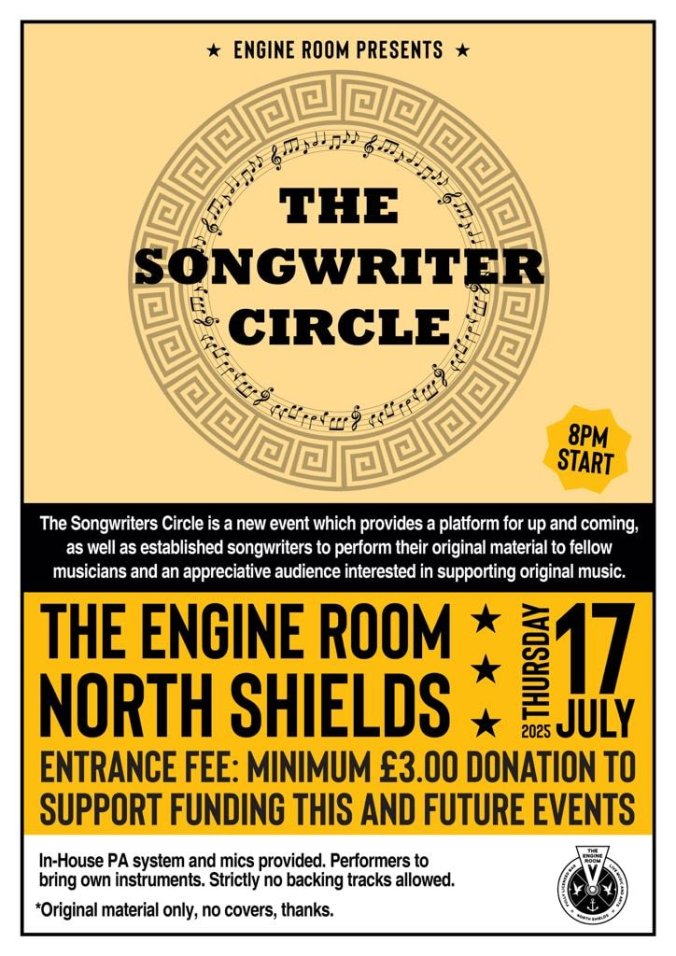
In North Shields there’s a nice music scene going on. We currently run a monthly ‘Songwriter Circle’ event every month in The Engine Room on Tanners Bank. It’s ran by myself and a few friends Steve McVay, Larry Page, Steve Rudd and Lyndon Phyliskirk.

You see live performance of singer songwriters all playing original songs. We encourage all levels of talent leading to paid gigs and possible festival spots. It’s been very successful so far and has been going since June said Terry.
Have I ever held down a proper job? I tried working 20 hours a week but found it hard working for idiotic managers. I thought I could earn enough money playing guitar and singing. I wasn’t interested in chasing fame.

I liked Ralph McTell, Alan Hull, James Taylor people like that telling a story. I watched Lindisfarne who were ordinary blokes, really down to earth but well known at the same time – that was for me. It was all about the music.

My introduction to music was my grandparents who had a piano in the front room. A lot of people did. I was around 10 year old when I picked up a guitar. It was a Hofner with a scratch plate. A Catholic priest who was a friend of the family knew I loved singing and writing poetry so he gave me his acoustic as he was off to the missions in Africa.

I lived in Brampton, Cumbria until I was 8 year old that’s where I saw the first singer who made an impact on me. It was Elvis when he sang on our black and white TV although I couldn’t make out the words or what he was singing about. The Beatles and Stones were good but I really liked storytellers, folk music where you could hear the words. I love lyrics.

Then I heard Lindisfarne and Isaac Guillory who made a G chord sound interesting. My first public gig performing was as a teenager in Durham I think, I was nervous and pretended to be confident.

Terry supporting the Devan Allman band at Newcastle Cluny.

North East venues Terry has played over the years include Bents Park and Amphitheatre in South Shields, Sunderland Empire, in Newcastle he performed at the Live Theatre, Journal Tyne Theatre and The Cluny. He also played in Durham City Hall and Gala Theatre, Washington Arts Centre and Darlington Arts Centre.

I won a songwriting competition in 1990 and thought it would lead to bigger things. A lot of radio play came off the back of that and a slot at the Cambridge Folk Festival and a headline at Dungeon Ghylls Music Festival in Cumbria. Again, I thought that would lead to more so I kept plodding along.

I played support to the Levellers at Tan Hill, Yorkshire, the highest venue in England. It went great playing my own songs, really grabbed the crowd by the scruff of the neck and went down well with an encore. The Levellers didn’t like that so I wasn’t asked back! Opening for Ralph McTell was a good gig and I’ve worked with Prelude a lot, I liked your interview with the singer Brian Hume earlier this year.
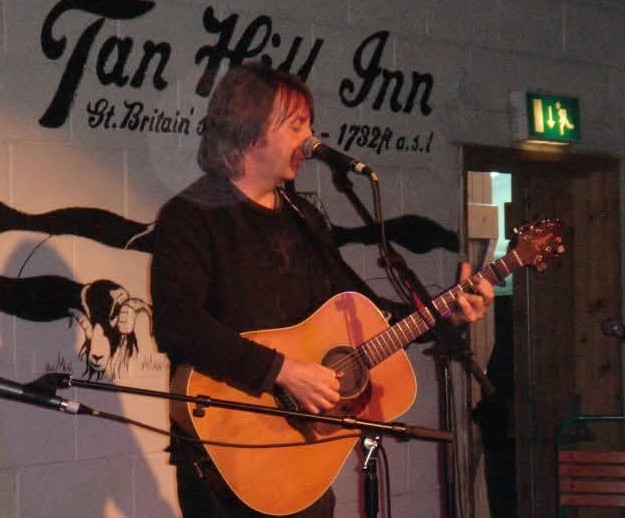
Terry supporting The Levellers at Tan Hill, Yorkshire.

I remember I played at a festival on the Isle of Bute, Scotland. I was the only one who wasn’t signed to a record company or connected to a famous band. There was Steve Daggett from Lindisfarne, Baz Warne out of the Stranglers, Martin Stephenson who was popular in the 1980s and others out of bands like The Pogues. I thought what am I doing here? I didn’t get signed but really, I never felt out of my depth.

I’ve wrote a few songs about getting knocked down and fighting back. When on stage I wouldn’t introduce the songs as if they were about depression or mental health. They are more about the power inside of you. It’s about dusting yourself off and going again.

I’ve recorded in Newcastle studios like The Cluny. Archie Brown from the Young Bucks was sound engineer. Then I went to Trinity Heights ran by Fred Purser. He was great, a really good lad, he used to be in North East bands Penetration and Tygers of Pan Tang.

What am I doing now? Well, it’s keeping the work rate up. In the last 12 months I released a single, ‘Only News Today,’ two albums and six professional music videos.

For 2026 I’ve got a folk album ready. One of the songs is ‘The Silent Shipyard’ about the closing of the shipyards and mines, all of the industry we have lost. I want a male voice choir on that one with a brass band and violins. Another song is ‘Beacon in the Dark’ about the whaling ships we had on the Tyne.

An idea floating about is a rock opera about John Lennon who was shot and killed in New York in 1980. In ‘Sgt Pepper Survived’ John Lennon gets shot and survives, lies in a coma for many years, wakes up and reveals his thoughts about world events today.

One scene is him sitting in a bar talking to Eric Clapton and Jimi Hendrix – yes, he lives as well. Lennon is also interviewed on stage where he is asked what he thinks about today’s shows like X-Factor, bands like Oasis and social media Spotify, Facebook and Instagram. I’m always thinking of these ideas.

If I have any advice to young musicians, it’s that if you enjoy your music, you’ve made it. If you don’t best just pack in and go do something else.

Listen to Terry Gorman here >>> https://www.youtube.com/watch?v=WWySntpYOxo

Alikivi   December 2025

CHASING THE RAINBOW – new album from North Tyneside musician Phil Caffrey

‘Chasing the Rainbow’ is my debut solo album and at the age of 72 I feel a real sense of achievement to have done this explained Phil. I first made music in 1959 when I was 7 year old with my two brothers Pete who was 10 and Paul who was 5. We’d give concerts in our parent’s garden, we loved singing in harmony. I’ve been so fortunate to make music with my brothers.

Arbre were signed to DJM records in 1975 and released two albums and four singles in the mid to late 70’s. By the 2000s The Caffrey Brothers formed and released four CD’s.

Phil added Lately I’ve worked with a number of musicians and recorded a new album in Stuart Emerson’s studio. The first track Rollin Thunder is about how life can be frantic and not having time to take stock. It can also be about how the weather is changing and we need to do something before it is too late.

The Lion Share is about someone who wants and takes more out of a relationship and Measure asks questions as somethings are not always easy to work out or see. There are things that are difficult to measure, love being one of them.

Meet Me in Heaven is about meeting someone somewhere at sometime, maybe in the future. Final track Chasing the Rainbow is about striving to reach a goal in life. I think we are all chasing a rainbow of some description.

Musicians on the album are Phil Caffrey – lead vocal, backing vocals and acoustic guitar. Stuart Emerson  – acoustic and electric guitars, bass, piano, keyboards and backing vocals. Paul Smith – drums, percussion and congas. Michael Bailey – bass guitar, Rachael Bailey – accordion and violin.

For more information contact The Caffreys on social media/facebook. The CD is also available on all music platforms to download or stream.

Alikivi   April 2025

HAVE YOU HEARD THIS ONE? #5

Since starting in February 2017 hundreds of stories have been posted on this site. The last few months has seen a mix from the navy, radio, folk singers and a magician. Here’s a taste.

First up is Tyneside comedian & magician Robert Reed…

‘Being an outcast gave me more time to focus on myself, to perfect my act. I’m glad I never fitted in at school, cos this has worked out well for me in the long run’.

‘A person to take me under his wing was a teacher called Mr Obee at St Joseph’s. Every break time we would talk about magic and jokes, he would loan me magic books, then he would show me a different trick each time which I would perform for the other kids’.

‘His motto was ‘work hard and be nice’ which I’ve always followed. It was helpful propaganda about putting the hard work in. He told me that every hour you aren’t working on your dream someone else out there is’.

‘I stopped sleeping 8 hours a day and cut it to 6 so I could get extra hours at work. It became all about maximising the time I could work it out. I became obsessed with it, it’s the most important thing in my life – I want to be entertaining people’.

Full interview > READ ALL ABOUT IT – in conversation with Tyneside comedian & magician Robert Reed | ALIKIVI UK : NORTH EAST CULTURE

Northumberland Radio presenter Keith Newman talked about his passion for music…

‘The show not only gives me the chance to play the music I love but to meet my heroes. The one that got me really nervous was with Marky Ramone. I first saw the Ramones in 1980 at Newcastle City Hall and bought the t-shirt from the gig which I never took off’.

‘Next day I was going to a corner shop to get me ma’s tabs – yep we could in those days – and I could see a coach outside. As I got near it pulled away. I went in the shop and the assistant said ‘eeh see those lads on your t-shirt – they’ve just been in here. They were Americans asking for milk and cookies’. I couldn’t believe it I ran outside but the coach was away up the street’.

‘For years I wondered if it really was them so when I talked to Marky I asked him about it and he told me Johnny Ramone had OCD and after every gig he had to have milk and cookies’.

Full interview >  HEY HO LETS GO RADIO – in conversation with radio presenter Keith Newman | ALIKIVI UK : NORTH EAST CULTURE

Another story came from Tyneside based Karen Taylor who remembers her time in the Royal Navy…

’The Falklands war was on when I was based at HMS Vernon in Portsmouth in 1982. I remember when the first ship was hit on 4th May. We were in a disco and everybody was up dancing when the music suddenly stopped and an announcement was made’.

‘I knew one of the chef’s whose ship was one of the first hit and sunk. He told me afterwards they were getting in the lifeboat and someone shouted ‘that’s typical, it was a really good scran tonight’. The Navy use humour to get out of any situation’.

‘The fact of not knowing who was alive or dead brought on a lot of mental health problems after that war. It must have been really scary what they went through’.

Full interview > IN THE NAVY – in conversation with former WREN Karen Taylor | ALIKIVI UK : NORTH EAST CULTURE

This from Wearside folk song collector Eileen Richardson…

‘The first song I found was The Old Wife’s Lament to the Keel Men of the Wear and it was all around historical events about the keel men and it was written in dialect. That set me on the road to researching the history that went with the song’.

‘There a lot of songs about death and tragedy, mining disasters and shipwrecks but there are songs that tell light hearted stories. The Durham Militia pokes fun at things, it’s like the 1800s version of Dad’s Army, with lyrics like ‘You’ll march away like heroes – just to make the lasses stare’ and suggesting that the only battles they will fight will be in the pub’.

Full interview > FOLK GATHERING in conversation with Wearside folk song collector Eileen Richardson | ALIKIVI UK : NORTH EAST CULTURE

Tyneside songwriter Rosie Anderson dropped in to tell a few stories. Here’s one…

‘I can’t just decide to sit down and write a song – some people do and I applaud them for the discipline but I have to wait until they come’.

‘When I was a kid I lived at Chapel House Estate in the west end of Newcastle. One night me, my mother and a friend went for a walk. This woman came out of her house in her dressing gown, she wasn’t in control of herself, didn’t know what time or day it was. I had never seen that behaviour in an adult before. Now I believe she was having a nervous breakdown’.

‘That always stayed in my head and another one was about 30 years ago I went on a blind date in Newcastle with this very nice bloke. He said I need to tell you something before we go any further… ‘When I was working in Canada I had a nervous breakdown in the car park of a Burger King’. It was hard to concentrate on anything else after that’.

‘But I remembered those incidents and those people are lodged in my heart for their own traumas. They gave me the song’.

Full interview >  LISTEN TO YOUR HEART in conversation with Tyneside songwriter Rosie Anderson | ALIKIVI UK : NORTH EAST CULTURE

Tyneside storyteller & folk singer Tony Wilson talked being a professional musician and how far it’s taken him…

‘Around 2009 I got an email. The message was ‘would you like to tell stories in Argentina?’ I wasn’t sure it was kosher at first but I received a phone call a few weeks later confirming it was. I was given contacts of previous storytellers who recommended it’.

‘Me and my wife went out and ended up over the years going to about 15 countries for six weeks at a time. They were international schools where the kids had already learnt English but mostly from American cartoon shows and they wanted them to hear colloquial language, more English. With my accent, I knew I would have to speak a bit slower – and there’s nothing worse than a posh Geordie!’

‘To accompany the lessons it was helpful to use British sign language or borrow a guitar. I always took a banjo with me as it was such a different instrument for them to hear. Once the banjo was broken en-route but we found the only banjo repairman in Bogota in Colombia’.

‘We’ve been to Uruguay, China, South Korea, all over – loved it. Sometimes I look back and think how did that happen – you’ve got to seize every opportunity’.

Full interview > BANJO IN BOGOTA – in conversation with Tyneside storyteller & folk musician Tony Wilson | ALIKIVI UK : NORTH EAST CULTURE

Got a story to add to the site? Just get in touch.

Full list of hundreds of interviews >

About | ALIKIVI UK : NORTH EAST CULTURE

Alikivi   November 2024

FOLK GATHERING in conversation with Wearside folk song collector Eileen Richardson

After a career lecturing in Psychology for over 30 years, Eileen is now retired from Sunderland College. Throughout the years she has researched her ancestry and in turn became absorbed with local history.

My ancestors were Sunderland keel men in the 1600s, there were a few miners among them but mainly trades associated with the River Wear. My grandmother played the organ at her local church and her sisters sang in a local concert party. When she retired my mother went to evening classes and taught herself piano, she also wrote pantomimes and songs for the local community centre. When she was in her ‘80s she organised singing groups at her local ‘natter’ club.

About 15 years ago I started collecting Wearside folk songs from the 1800s. For me words are the most important thing. I don’t like the music overpowering what the song is about because the most important thing is what the song is telling you. I prefer unaccompanied singing and the harmonies.

I used to sing at events with the Tyneside Maritime Chorus which was run by folk singer/songwriter Benny Graham. We mainly sang songs from Tyneside like Keep Yer Feet Still Geordie Hinny and The Blaydon Races which are widely known. This set me off wondering whether there were any equivalent songs from Wearside apart from The Lambton Worm – although that was originally written for a Tyneside pantomime.

Sunderland Antiquarian Society which has been going since 1899, has a lovely archive mostly donations from local people. I research there and the local studies library in Sunderland.

The first song I found was The Old Wife’s Lament to the Keel Men of the Wear and it was all around historical events about the keel men and it was written in dialect. That set me on the road to researching the history that went with the song and there’s a bit where it talks about them fighting the French. But did the French ever invade the North East coast?

I found an article about the Battle of Hendon in 1799 where local volunteers staged a mock invasion because they thought a French invasion was imminent. The song has historical references but some humour also.

There a lot of songs about death and tragedy, mining disasters and shipwrecks but there are songs that tell light hearted stories. The Durham Militia pokes fun at things, it’s like the 1800s version of Dad’s Army, with lyrics like ‘You’ll march away like heroes – just to make the lasses stare’ and suggesting that the only battles they will fight will be in the pub.

During covid I gave a presentation online to the Traditional Song Forum about my research and was asked to write a paper which was published in a book of folk song research in 2022 entitled Thirsty Work and Other Legacies of Folk Song.

Ed Pickford, Ingrid & Barrie Temple, Tony Wilson performing at the Stumble Inn Folk & Acoustic Afternoon, Sunderland, February 2024.

The folk world is a small world, you get to see the same faces at the clubs and you get to know people from all over the North East. I first went to folk clubs in the late 60s and early 70s when virtually every pub had a folk club. I also used to go to The Bay in Seaburn to see bands like The Who, Free, Jethro Tull, there were loads coming to Sunderland then.

In about 2000 my husband and I began to go regularly to folk clubs in the area such as South Shields, Birtley, Tynefolk in Ryton and The Welly Folk Club in Wolviston.

When you say you live in the North East to other folk people they are jealous because of the amount of clubs and events up here. If you are prepared to travel half an hour you can go to a folk club most nights of the week.

There are venues like The Central Bar in Gateshead, South Shields Jack Clark Park, Croxdale in Durham, the Collingwood Arms and The Bridge in Newcastle which has been going 60 years. Saltburn, Whitby and Hartlepool also have annual folk festivals.

Keith Gregson performing at the Stumble Inn Folk & Acoustic Afternoon, March 2024

I also arrange a monthly folk afternoon at The Stumble Inn on Chester Road, Sunderland. We get around 30 – 50 people coming to our sing around and we are keeping the tradition going because in the 60s the pub was formerly The Royalty and had a very popular folk and blues club called The Glebe.

The pub is near Sunderland University metro so we have people coming in from Newcastle, Cullercoats and South Shields. Some come from further afield like Chester le Street and Teesside. Being on from 1-4pm people are happy to travel on public transport at that time – on the night they are not so keen.

Our folk gatherings at The Stumble Inn are on the 4th Tuesday of the month. All are welcome to sing a song, play a tune or just listen to the songs its very informal and free. We are based downstairs so the room is easier to access with your pints of beer and musical instruments.

We have singers from all over the region like Barrie and Ingrid Temple, Ed Pickford, Tony Wilson, Anne Lamb, Keith Gregson, Brian Hunt, Ken Hamer and others who all perform in a range of styles.

It’s an old genre but people still write songs now in the folk tradition about current events keeping the music alive. Music and song are so fundamental to our lives.

Alikivi   October 2024

LISTEN TO YOUR HEART in conversation with Tyneside songwriter Rosie Anderson

Now living in South Shields, retired teacher Rosie Anderson still feels there is work to do and more stories to tell.

‘Sometimes I feel as though I’m just getting started. I sing whenever I can. This year my musical partner Adam Holden and I have played at The Watch House in Cullercoats, The White Room in Stanley and Cockermouth Festival which were all great. I’m determined not to just bow out because I’m getting older’.

‘I grew up in Wylam in the Tyne Valley, in a house full of music. Both my Grandparents played piano. My dad listened to The Beatles, both parents loved the theatre and musicals and they took me and my brother there – I still love all that’.

‘When I was a kid I told my parents I wanted to be a performer but they were worried I wouldn’t be able to afford a home like them, they wanted me to have a ‘proper’ job. They wouldn’t let me study performing arts so I trained as a teacher’.

‘My first job was in Benwell, Newcastle. Then I went to the Middle East where I spent 10 years teaching in Kuwait and Qatar, before returning to Newcastle. I taught at Walkergate Primary School where I would do all the music shows and drama productions. Loved doing the shows there, I never gave lyric sheets out to the kids, they learned by listening and singing the songs back’.

‘When I left teaching I saw an advert for facilitators for  Singing for the Brain with the Alzheimers Society. I really loved doing that. I did that for six years until covid hit. Singing on-line with people on the screen in front of you didn’t work really’.

‘People love stories in whatever form, be it a book, a film or a song. Some people write songs about being in love, and about their feelings. My songs are mostly about people and places. I find stories present themselves to me and I take them and turn them into a song’.

‘There are two songs that I have written that stand out for me. Sally Smiths Lament was written after my husband Chris and I worked on a film about soldiers from County Durham during World War One’.

‘Sally was the wife of miner Fred Smith, who featured in our film. They lived in a tiny terraced house and every day Fred and his sons needed a bath, a clean shirt, a clean bed and a dinner. The kids needed to get to school – how did she cope with all that, especially when Fred was away at war. I wanted to give Sally, and all the women like her, a voice.’

‘When I wrote it the song just seemed to be presented to me, her whole life. I got to sing it at a celebration in West Auckland and her family came to hear it – it was very moving. It travelled well and won three competitions – the Newcastle Folk Club, Rothbury Traditional Music Festival and first prize at Morpeth Gathering’.

‘I can’t just decide to sit down and write a song – some people do and I applaud them for the discipline but I have to wait until they come. Three things happened to me in my life that I put together in a song called Breakdown’.

‘When I was a kid I lived at Chapel House Estate in the west end of Newcastle. One night me, my mother and a friend went for a walk. This woman came out of her house in her dressing gown, she wasn’t in control of herself, didn’t know what time or day it was. I had never seen that behaviour in an adult before. Now I believe she was having a nervous breakdown’.

‘That always stayed in my head and another one was when I was living in Fenham. I went to the shops with my children who were only small then, and a woman came out of her house with a letter and asked if I would read it to her as she was confused and couldn’t understand it’.

‘Then about 30 years ago I went on a blind date in Newcastle with this very nice bloke. He said I need to tell you something before we go any further ‘When I was working in Canada I had a nervous breakdown in the car park of a Burger King’. It was hard to concentrate on anything else after that’.

‘But I remembered those incidents and those three individual people are lodged in my heart for their own traumas. They gave me that song’.

‘This year we went to Kjerringoy a former trading post in the Norwegian Arctic Circle, out in the middle of nowhere, it was beautiful. A family ran it in the 19th century and had 3000 fishermen working for them, catching and processing thousands of tons of cod’.

‘The father and husband died and the wife continued to run it single-handed for many years until she eventually remarried. I asked the locals if there was a song about her and there isn’t. So that’s my next song – Annalisa from Kjerringoy. Her story needs to be told’.

‘I’m also aware we need to start telling more stories about people and their lives and jobs today otherwise in 100 years time there will be no one singing about us!‘

‘What does music mean to me? It’s hard to describe it, it’s so deeply embedded, there’s no life without it. Music is at the core of my being, there is no day without singing and because I have grandchildren now I have a new audience! We sing folk songs and songs from musicals, they’re word perfect when they sing them back’.

‘Music gives such joy, when I was singing with the Alzheimers Society the collective joy and reminiscences of songs from the past and enjoying it together was just so valuable for the families’.

‘We had people who wouldn’t sing at all but liked being there and that was fine. Once, two women brought their mother to a session and she sat between them. She didn’t communicate at all, had her head down, closed off you know. But when we started singing a song, I can’t remember which one, she lifted her head up and actually got up and started moving around in the middle of the circle’.

‘One daughter got up and started dancing with her. When we got to the end of the song the daughter turned round and said to me ‘She’s just said my name for the first time in years’.

‘Music gets right in there (pointing at heart) we’ve got to keep it going and expose our youngest children and oldest adults to music because it really does reach parts that others can’t reach. It’s like hearing the heartbeat in your mother’s womb’.

‘As a child I wanted to do music, as an adult I taught it with kids then people with dementia, despite my age I’m still committed to what I always wanted to do. Women who’ve had careers and families can still chase their dreams’.

Alikivi   September  2024

BANJO IN BOGOTA – in conversation with Tyneside storyteller & folk musician Tony Wilson

Tyne Dock in South Shields was an interesting part of the town to live, with its churches, terraced houses and huge industrial Victorian arches next to the river. It was in the early 80s when a lot of the old housing stock was being demolished and in Porchester Street I watched Ascendency being filmed. Julie Covington of hit TV show Rock Follies was the star, not long after that The Machine Gunners was set in Porchester and filmed for BBC TV.

‘Up to when I was 7 year old I lived in Porchester Street. It’s not there now but St Mary’s Church around the corner is where I used to sing in the choir and the scouts’ said Tony.

‘Now I live on the Lawe Top beside the roman fort. It’s almost aspirational for someone who comes from Tyne Dock to wind up being a skuetender’ (native to the Lawe Top).

‘I’m proud of coming from South Shields and when you were young trips to the fort were absolutely mind blowing. The area it’s in is incredible, with the whole vista of the river and parks and beach nearby – we’re lucky here’.

Being a former Tyne Docker now Skuetender he’s not wrong there. Tony featured on the site back in May 2018 talking about storytelling and songwriting and what music means to him.

‘I turned back to folk singing in 2017 after the government education cuts made it too expensive for schools to have extra-curricular practitioners, like me, to come in. Before that I was storytelling in schools for 20 years covering hundreds of issues such as the steelworks when I was in Ebbw Vale, the Romans here in South Shields, the coal industry and iron stone mining in Teesside and Northumberland. It was an extremely successful time’.

‘Storytelling is very important, its communication, social history, emotional control, drama, its use of vocabulary. For me it was learning how to be a performer and developing stamina to be able to do four hour sets a day, then drive 100 miles to go to a hotel, get up next day and do it again’.

‘Cities like Manchester, Oxford, Cambridge, all over the UK. I’d stay in these areas year after year for a fortnight at a time and, unlike a music tour where you could be in Aberdeen one day and Bournemouth the next, I’d plan easy distances to plan a route back home – loved the life.’

‘Then around 2009 I got an email. The message was ‘would you like to tell stories in Argentina?’ I wasn’t sure it was kosher at first but I received a phone call a few weeks later confirming it was. I was given contacts of previous storytellers who recommended it’.

‘Me and my wife went out and ended up over the years going to about 15 countries for six weeks at a time. They were international schools where the kids had already learnt English but mostly from American cartoon shows and they wanted them to hear colloquial language, more English. With my accent, I knew I would have to speak a bit slower – and there’s nothing worse than a posh Geordie!’

‘When we were in a Spanish speaking country, for the youngest ones, you’d have someone to explain the context of the story and then I’d still tell the story in English. Half of their lessons were in English, to make it an immersive experience’.

‘To accompany the lessons it was helpful to use British sign language, or borrow a guitar. I always took a banjo with me as it was such a different instrument for them to hear. Once the banjo was broken en-route and we found the only banjo repairman in Bogota in Colombia’.

‘It was hard work getting up at 5am, into a taxi for a two hour drive to tell stories to 3-400 children in ampitheatres – but what an experience! The last time we went over was Peru in 2016. We’d been to Uruguay, China, South Korea, all over – loved it. Sometimes I look back and think how did that happen – you’ve got to seize every opportunity’.

‘I’ve been songwriting for years and always have a songwriting project on the go. I write about 15 songs per year. Ideas can come from a book, a documentary or what someone says in a street… then I do a lot of research and add some ‘meat’ to the story. Songwriting can possess and obsess you’.

‘Recently I wrote a number of songs about Iron Stone Mining, the workers and how dangerous it was working there, although I do try to stay away from disaster. It’s not all ‘Grim up North’.

‘A friend of mine gave me a diary about his distant relation who had been captured by the Portugese and transported to Portchester Castle in Hampshire! Having lived in Porchester Street I didn’t know about this place. The songs can take you anywhere!’

‘I wrote a song with local playwright Tom Kelly about ‘the seven lads of Jarrow’ who, in the 1830s worked in the mines under diabolical conditions so tried to form a union with union organiser Tomas Hepburn. They ended up being brought up on jumped up charges – 10 were captured 3 escaped. 7 ended up in a kangaroo court and were transported to Australia never to return. It’s such an emotional subject’.

‘In 2019 I was planning to write autobiographical songs, one was about the day they tarmacked the cobbles in Porchester Street and as kids we could roller skate across the street. Another was the times walking through Tyne Dock arches with my dad and me being on his shoulders. Or another about my sister playing with her friends in the backyard in Porchester Street – then covid came along’.

‘I didn’t want to write about the pandemic or what happened around it, like being scared or having a feeling of waiting for death to come. I wrote nothing about that. I just wanted to write about the one’s I love and keep sane’.

‘All the performances I did in South America and all of the daily storytelling work I did in schools I now channel into what I present now as a musician. I still do regular open mics, folk club spots and am a paid guest in clubs and festivals throughout the UK’.

‘I love performing, it’s like an out of body experience. I’m not hippy dippy, mystical or spiritual but enjoy giving people enjoyment, sharing moments with people…and it beats the hell out of singing in the bathroom!’

Tony has placed all of the stories, CPD and instructional DVDs for parents and children on You Tube at ‘Tony Wilson Storyteller.

For further information contact the official website > http://www.tonywilsonfolksinger.co.uk

Alikivi   September 2024

HOME GROWN with Newcastle songwriter Bill Dodds

Bill Dodds (pic. Sean O’Driscoll)

Hard working Bill spent 34 years as a railway driver and 20 years on Newcastle City Council. Being a keen cyclist, he is one of the few people to have completed an around the world bike ride.

“The highlight had to be the scenery in the Rocky Mountains, USA, the geysers, hot pools and volcanic activity in Yellowstone Park. I followed the Rockies for over 1,000 miles through Colorado, Wyoming, Montana, Idaho and Oregon with much of this being wilderness area”.

When the pandemic hit in 2020 Bill took solace in the music he loved. He attended songwriting workshops with artists he had been a fan of such as Beth Nielsen Chapman, Mary Gauthier, Gretchen Peters and Dan Whitehouse. When folk clubs opened back up after lockdown Bill stepped out to perform.

“I really enjoy playing local folk clubs where audiences are always attentive and often sing along. My favourite folk club is The Bridge Hotel in Newcastle which is the longest running folk club in England on the same premises. They’re a great crowd”.

Encouraged by this warm welcome, he spent 2023 honing his work with producer Dan Whitehouse and then recorded his debut album. ‘Closer’ is a delicate collection of heartwarming folk songs that tell political and historical stories as well as tales of love and loss.

We recorded all the foundation tracks of vocals and guitars live in my living room in Gosforth”.

As well as producing Bill’s debut album, Dan also played lead guitar and added backing vocals plus several of Bill’s friends and family contributed to this intimate collection of songs.

French speaking Christine Durand reads poetry, Kathy Wesolowsk lends operatic vocals, Bill’s grand-daughter Chloe Weston is the lead voice on a song written by Bill on a songwriting retreat lead by Gretchen Peters and Mary Gauthier.

The recordings were shared with Gustaf Lljunggren (John Grant/Eddi Reader) who added Pedal Steel, Accordion and Rhodes Electric Piano from his Copenhagen studio.

“Dan Whitehouse had worked with Gustaf before. He introduced me to Gustaf’s music and once I heard him, I knew that he was the musician I wanted to have playing on a number of my songs”.

“Gustaf is experienced in working remotely – adding delicate overdubs, without overcrowding the musical landscape of my record”.

Cover art by Ruth Bond.

Next stop on the album’s journey was London…

“I’d a longing to add strings to ‘Fools and Princes’ – with it being based on Romeo and Juliet, I had a vision of a romantic string arrangement being effective, Dan suggested Alison D’Souza (The Little Unsaid) in London as he’d worked with her previously and what she played really brought my dream into reality”.

“Harriet Harkcom’s voice I knew from Dan’s own releases as she has sung on most of his albums, I was pleased when she accepted my invitation to sing on ‘Goodnight Vin’. I’d like to think if Vin was around he would love her voice on this song too”.

With recording completed, final mixing and mastering of the album was by John Elliott.

“My hopes for the album are that it will allow me to reach a wider audience, commercial success has never been my main aim. Like any other singer-songwriter I just love sharing my songs with people”.

For the near future Bill has no plans to tour the album…

I sing in local folk clubs twice a week and I’m happy being involved in this local musical community. I prefer small intimate venues packed with friends and other singers”.


The album is available to order now on CD and digital via bandcamp >

https://billdodds.bandcamp.com/album/closer

March 15th is the release date for Spotify /Apple / Amazon.

Contact Bill on his facebook artist page >

https://www.facebook.com/people/Bill-Dodds-Music/61555902894513

Alikivi   February 2024

FOLK N’ COAL with North East musician John Wrightson

When did you first get interested in music and who were your influences ?

My influences go back to 1956. Lonnie Donegan, Elvis, Buddy Holly, Everly Brothers, Cliff & the Shadows, then later The Beatles to The Eagles.

At 14 I used to plonk on my older brothers guitar when he was out. I was the youngest of four and I wouldn’t say my family were musical like, although my oldest brother had a disco.

I left school Easter ’61, shortly after that I bought my first guitar, a Rosetti Solid 7. It cost 18 guineas, a fortune those days. Bought on HP (hire purchase) of course.

Can you remember your first gig ?

My first gig was in the summer of ‘61 at Ryhope Welfare Hall, County Durham. It was more of a dance than an audience, in a band called The Rustlers, four of us were 15 and one 14. The band went on for another three years.

What venues were you playing then ?

Most venues were welfare and village halls, and the odd workingmen’s clubs. Workie clubs seemed to take over from about 1962 onwards. I think the Mersey Sound had something to do with it. They seemed to be the main venues throughout the ‘60s to the ‘90s and beyond.

What type of songs do you write ?

Contemporary folk or poppy folk. I like good melodies and good lyrics. Quite a number of well-known artists have recorded my songs. Some of which play all over the world – Vin Garbutt (now deceased) Flossie Malavialle, and Manchester band Other Roads.

Do you record any of your music ?

The last two year has been a bit of a nightmare health wise with open heart surgery, so I never had much chance to write a lot of new material. But I record my own songs in my home studio and record a new CD every year to 18 month.

Tell me about your new CD…

The new CD is called All the Fields are Green Again. This song is about when back in the mid ‘50s, a beautiful piece of countryside between Murton and South Hetton in County Durham was obliterated to make way for the massive Hawthorn combined mine, it was there for over 50 years.

Wildlife and everything else was destroyed and a grey layer of dust and slurry covered everything and the smell of burning coke was terrible. I know I lived near it. I suppose the only good thing was there were lots of jobs.

When it closed in 1991 a huge tidying up procedure began. Although it was better, it was never the same. Hardly anyone has jobs now but all the fields are green again.

There is a song called Living on a Widows Pension. In 1960 the Northern counties and G.C.E. exams were introduced to East County Durham modern schools. It was 5 shilling (25p) a subject, you had to sit five subjects.

Of course, this was a fortune those days, and some couldn’t afford it, including me as my mother was a widow.

The headmaster kept telling us we’d never get a job without these exams. A week after I left school I filled a form in for an apprentice electrician at the coal board. Within a month I had an interview, a medical, then started work.

Remain is a song about the Brexit row that went on all last year and after. Gift of Life is about how precious life is. Being an ex-miner I tend to write lots of true to life songs about the pits. I was there for 21 years. Life in a Pit Village is one such song.

Brave Young Soldiers was especially written to commemorate 100 years since World War One ended. True Friendship is a song about a mate I’d never seen for 53 years and just by chance saw him on the internet.

Now he is living in Reading and making his own guitars. His customers were all fantastic musicians. I contacted him thinking he may not remember me, but how wrong I was.

He even remembered chords to songs I showed him when we were teenagers. To show his gratitude, he offered to make me an acoustic guitar for the cost of materials, which I accepted.

Have you any gigs planned for 2020 ?

The John Wrightson band don’t do as many gigs now but when we do it’s nearly always in the folk and live music scene, with a small quality PA. We are a contemporary folk band with one or two covers thrown in.

Sadly like many others we had to cancel a number of gigs through the coronavirus. We’ll wait and see what happens.

 Interview by Alikivi   April 2020.

SANTAS BIGGER BAG O’SWAG

If yer lookin’ for a Christmas present to buy why not take a butchers at these goodies that have appeared on the blog this year. 2019 has seen nearly 100 musicians interviewed and also featured authors and artists….

79318119_437132350300093_5999559298030501888_n

On ‘Live & Acoustic’, Blues Siren Emma Wilson sings 4 favourites from her live set plus her original blues break up song ‘Wish Her Well’. With guitar accompaniment from Al Harrington, Emma’s raw and dynamic vocals shine through

‘I used to sing sweeter soul style but learned and developed a big voice. It was get big or get off’.

The 5 track EP reached no.12 in the Independent Blues Broadcasters charts and received rave reviews from Blues Matters magazine and several American Blues stations.

For a hard copy on CD email Emma at  emmawilsonbluesband@gmail.com or contact the official website : www.emmawilson.net or via Facebook.

bloody well everything icon bandcamp

Gary Miller from folk rockers The Whisky Priests….‘Leaving school in the mid-80’s, being in a band meant having a voice and a sense of hope and purpose during the dark era of Thatcherism. So, The Whisky Priests kind of evolved out of that and initially became a vehicle for expressing all my frustrations and passion at that time’.

Get yer copy of Whisky Priests – ‘Bloody Well Everything’ 12-disc CD Box Set contact: https://whiskypriests.bandcamp.com/merch/chistmas-2019-offer-bloody-well-everything-limited-edition-box-set-only-300-numbered-copies-free-tour-t-shirt

THOMPSON

The Steve Thompson band recorded an album earlier this year…’The Long Fade really is my life’s work. After 50 years of being a backroom boy writing songs for other people I finally recorded them in my own name with a fantastic group of musicians and singers. Making the album was a fantastic adventure with lots of laughs with old friends’.

You can download and stream links at http://www.thelongfade.xyx

Gary Alikivi    December 2019.

PIPES OF PEACE with Northumberland musician Chris Ormston

I’ve recorded various compilations of Northumbrian music but my first big break if you like was when I got a phone call one night in 1990…

‘Hello it’s Peter Gabriel here’. There is a rumour going round that I told him to f*** off because I never believed it was him (laughs). But it was and he was after some piping on his next recording.

So, I agreed to go down to his studio in Bath. He wasn’t really sure what he wanted and just said ‘bring every pipe you’ve got’. We worked in the studio until he found the sound he liked, which was Highland Pipes not Northumbrian.

ORMSTON

What’s the difference ?

Highland Scottish pipes are mouth blown and mainly played outdoors. Northumbria Pipes are small, indoor instrument, blown by bellows. Not wanting to get too detailed here but you’ve got a drone going on which is a constant note playing behind so you’ve got your basic harmony going on behind the melody.

The best pipe music is actually quite simple in it’s structure so it’s always chording and dischording against the drones.

How did the recording session go with Gabriel ?

The pipes were mixed down and recorded onto the first song on the album Come Talk to Me. Sinead O’Connor sang on the track although I never saw her.

He had brought in various musicians and sounds to add to what he had already recorded. That’s the way he worked.

I got a credit and a flat fee for the work and really enjoyed the experience. Gabriel I found was very thoughtful and reserved unlike his stage performances, as a lot of musicians are don’t you think ?

Us was Gabriel’s sixth studio album, recorded in Real World Studios and released in 1992.

GABRIEL

What is your background ?

I live in Ovingham, Northumberland although I was born in Jarrow. I’ve played the pipes since I was 15 but before that I played the recorder at school which I picked up quickly and got good at, all learnt by ear.

Teachers were always trying to teach me to read music but I was making good progress by ear. They sent me to the grammar school to have lessons on the clarinet.

But in those days’ music was all about learning exercises and rehearsing not very interesting pieces, so I didn’t have much commitment to it.

What first got you interested in music ?

My dad was a music teacher, and his brother made a name for himself as a semi-professional operatic singer. So, music was always around when I was growing up.

My dad died when I was 13 and I didn’t pick up the Pipes until I was 15. Later I found that my dad and my uncle wanted to learn how to play the pipes.

He was originally a joiner and my uncle was a butcher but they were both saving up money to go to music college. They ended up in the Royal Manchester College of Music and trained as music teachers.

My dad played and taught piano, so there was classical music in the house, and it was interesting because he never pushed me into playing anything.

Sure he gave me a few lessons but never said Sit down and you must practice this. He made it sound more interesting if I would just try it out you know.

CHRIS

Where you listening to any other music ?

There was the operatic stuff from my family, but I didn’t take to it, and I started listening to Glam Rock (laughs). Slade were my thing then Prog Rock with Emerson Lake and Palmer, Yes and a band called Gryphon. Occasionally still listen to that.

You look back with affection for it, as it was part of your formative years. It’s hard to look back objectively because some of it might have been rubbish but it meant something to you then.

We talk about the moment at a concert when the lights go down, then the ‘roar’ of the crowd and the band launch into their first song. 

Yeah, my mother used to say at Newcastle City Hall there was an excellent organ at the back of the stage that was totally spoilt when all these beat groups stated to play there (laughs).

Funnily the first rock concert I went to was around 1979 when I was studying Geography at Liverpool University and I saw Lindisfarne.

It worked out really well in Liverpool because there was a good traditional music scene with lots of informal sessions most nights of the week plus the folk clubs. I sort of learned the trade there.

It was a big challenge because I’d been playing the Pipes for around three years and in order to play, I had to join in with the Irish music sessions. That was a steep learning curve to adapt to suit the Northumbrian Pipes.

I remember the first Garden Festival was held in Liverpool and I was playing with a Highland Pipe band at the time.

We got a gig there, played our set and walked off. The first person I see is the actor John Pertwee dressed as Worzel Gummidge he said ‘Ooh arr Pipes, I love the pipes especially Northumbrian’.

I ended up having a long conversation about Northumbrian Pipes with Jon Pertwee staying in his role as Worzel Gummidge (laughs).

What was the last gig you played ?

The last gig I played was at the Morpeth Gathering with Katrina Porteous. (Featured interview Some Kind of Magic, April 27th 2019). There is a folk crowd who you reguarly see at the gigs, within that there are people who like different traditions of music and dance such as Scots or Irish folk as well as Northumbrian.

The Morpeth Gathering is one place where all that comes together. People travel from all over the North East and come down from Scotland for these events. The performance with Katrina went really well. We’ve worked together on-and-off for 20 years.

Originally we were both commissioned to do something for Northumbrian Language Society and we worked on that separately first then found out when we came together it all worked in a live setting. We’ve worked a lot like that.

What have you got planned this year ?

I do a bit of teaching on the Pipes so there will be more of that. I’m off to Germany in July and Ireland in October with Newcastle Poet Keith Armstrong, that’s part of a Cultural Exchange trip. (Interview with Keith on More Than Words, April 15th 2019).

In August I’m playing on a festival down in Sidmouth, Devon. Not a part of the country that I play very often so really nice to get down there.

I’m going to Devon by train rather than plane. One time I flew over to Amsterdam and security there knew what the Pipes were and said ‘Ahh Doedelzak’ – that’s the Dutch word for Bagpipe. (laughs).

Surprisingly, it’s usually the staff at Newcastle airport that don’t know what the Northumbrian pipes are!

Interview by Gary Alikivi     April 2019.