BAD EGGS – with Anna Malia founder of North East Animal Rights

Sadly, some schools are still using egg-hatching programmes as a misguided way to educate children on life cycles of animals or using them as a treat to the children in their care explained Anna.

As more and more schools realise the problems these awful programmes cause, the companies who exploit these live young animals have extended their business model to include care homes where they aim to use them in so-called enrichment activities for residents.

Anna added…Despite the companies saying they will take back and home all unwanted chicks and ducklings produced from these programmes, the reality is very different. Even in the small print of the contracts they say that hirers have to be realistic about the fact that ‘some’ will end up as food and males will be culled.

Male chicks turn into very noisy cockerels and every year rescues are swamped with both male and female chicks and ducklings who are abandoned once they grow out of their useful ‘cute’ stage.

Our local wildlife and domestic animal rescue centre ‘Pawz For Thought’ who are based in Sunderland, are inundated every year with abandoned chicks from egg-hatching programmes.  

A spokesperson for Pawz said “Every year we are inundated with calls from concerned parents of pupils who aredoing hatching projects. School hatching projects are often presented as education, but the reality is far from kind.”

“Chicks are hatched in the name of learning, yet the process has become a form of lazy teaching. For a few weeks, children view these animals as entertainment—then the chicks are handed away, this teaches young people that living beings are disposable and exist for our pleasure.”

“Every year, we are asked to take in chicks to save them from being culled. Around half of all chicks hatched are cockerels, and there are simply no homes for them. They face a terrible fate.”

“Schools often believe they are rehoming them to willing parents, but with no follow-up, many unwanted cockerels eventually end up dumped once they mature. This cycle of suffering must stop.” 

Anna said…As part of their Animal Protection Charter, South Tyneside Council have contacted all of their schools and asked them not to use these programmes. They confirmed recently that none of their primary schools will book these programmes again making them an ‘egg-hatching programme free borough’!

Cllr Judith Taylor Chair of the Animal Protection Charter Working Group at South Tyneside Council said “South Tyneside Council is committed to the highest standards of animal welfare. We have taken decisive action by contacting all our schools to urge them not to use egg-hatching programmes.”

“We believe there are far more compassionate and educational ways to teach children about life cycles, and we encourage all educational settings to consider the welfare of animals in their care.”

Anna added…These programmes bear no resemblance to the actual life cycle of chicks and ducklings – they are not hatched in sterile metal and plastic incubators for a start. They do not have the warmth and love from their mother and of course they don’t show students where the birds end up and how they are slaughtered for food. 

What are we doing now? We are currently campaigning across the North East and also have a group working in the North West and a group in the West Midlands coming on board. We want schools and care homes to know the misery these programmes cause.

We are also encouraging people to contact their MP and the Education Secretary to ask them to update the curriculum to remove the suggestion of egg-hatching programmes as an educational tool.  

Thank you to South Shields artist Sheila Graber for the animation.

For further information about the work of North East Animal Rights contact >>>

Facebook @northeastanimalrights

Instagram @northeastanimalrights

TikTok @northeastanimalrights 

Bluesky @neanimalrights.bsky.social

Threads @northeastanimalrights

North East Animal Rights – YouTube

https://linktr.ee/northeastanimalrights

Alikivi   November 2025

MEAT IS MURDER – with North East Animal Rights founder Anna Malia

The title of this post is taken from the song and album by The Smiths released in 1985. In the title track songwriter and vocalist Morrisey delivers some powerful lyrics –

‘Kitchen aromas aren’t very homely. It’s not comforting, cheery or kind. 

It’s sizzling blood and the unholy stench 

Of murder

It’s not natural, normal or kind. The flesh you so fancifully fry 

The meat in your mouth. As you savour the flavour 

Of murder’.

In interviews Morrisey is outspoken about a number of topics including politics, royalty and animal rights.

‘Yes I’m aware of the song and Morrisey but I’m not a Smiths fan.’

said South Shields born Anna who worked in education for 32 years and in a secondary school for over 20.

‘I was lucky to be able to leave my paid work a few years ago and now do this full time. No one day is the same, I can be in the middle of typing up an article when a call comes in and have to drop everything. I wouldn’t have it any other way as I feel fulfilled with my work – but wish we didn’t have to do it as that would mean a world where animals are not used.’

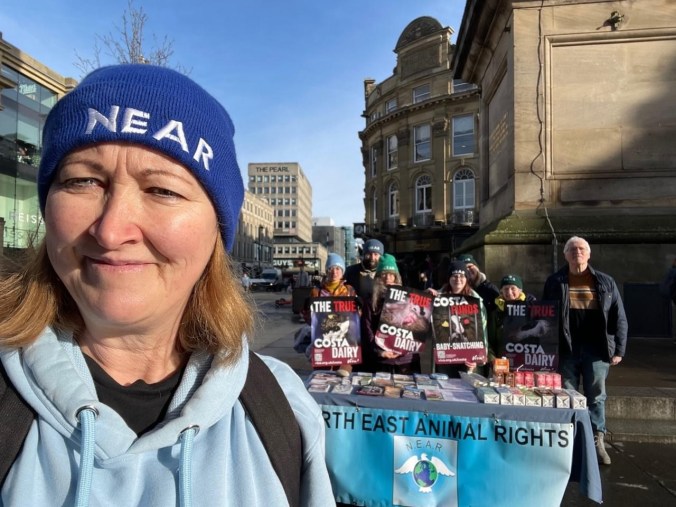
Anna set up North East Animal Rights who campaign and educate about veganism and animal rights. They have around 30 members with branches in Newcastle and Teesside.

‘It’s quite large for an independent regional Animal Rights group. Some of the group also volunteer for a local wildlife rescue. It’s hard to work out how much of a difference you actually make. But when you rescue an animal, that animal becomes the most important person in front of you and you know you definitely have made a difference.’

When did you become aware of how we treat animals?

‘I was 14 in a biology lesson in school when I was expected to dissect fertilised eggs with chickens at different stages of development. I was absolutely horrified seeing these dead baby chicks who had been deliberately bred and then killed. My parents were equally horrified when I told them I wanted to be vegetarian. I hadn’t even heard of veganism then and didn’t understand that I was still contributing to the suffering of cows and hens.’ 

‘I was already considered different in school before I went vegetarian so just made my school life a whole lot worse. I didn’t know what else I could do to help animals. Then I saw an article in a newspaper about people trying to stop a bull run in Spain. So, I sent a postcard and letter to the Mayor of Pamplona where the bull run takes place.’

What is the hardest part of being a vegan?

‘One of the hardest things is other people, the lifestyle is easy – it just becomes something which everyone seems to have an opinion on regardless of whether we want it or not. And families and close friends are the worst!’

‘It’s all water off a duck’s back now, but it’s amazing how many people suddenly become obsessed with your health when they didn’t care before you told them you are vegan!’

‘A lot of people think being vegan is just about the food, but it’s about so much more – it’s a whole lifestyle – and you look at things in a different light when you become vegan.’ 

‘You walk down a street you see adverts for meat – we see the process and the animal. You look forward to Christmas – we dread it because we see an increase in animal slaughter. You see an advert for a reindeer event and don’t flicker – we see captive animals who shouldn’t be there. You look forward to Easter and we see rabbits and chickens used. You see cute chicks in egg hatching programmes, we see and deal with what happens and the casual disregard for them.’

‘We got told to stop ‘forcing our views on others’ but others views are constantly forced on us in most aspects of our lives. You look forward to going on holiday, we do too, but we are always conscious of how vegans are perceived abroad and also have to deal with cultural issues where animals are used differently to in the UK.

‘For most of my adult life I thought being vegetarian was enough then I came across some graphic footage on TV and photos in a magazine of what happens in an average UK farm – I realised I was still part of the problem. I essentially went vegan overnight and signed up to Animal Aid’s November vegan pledge and never went back.’ 

What are the group currently working on?

‘We get a lot of contacts about animal related issues and it’s great to be able to help. We rely on the public quite a lot to be our eyes and ears.’

‘We get people asking about who to speak to about dog cruelty or breeding animals. They contact us in relation to mobile zoos in schools or about their vegan child in school. A lot of issues are those which the RSPCA should investigate but cannot always due to lack of resources and having to prioritise.’

‘At any one time we have two or three investigations going on. They are complex and time consuming but we learn a lot from them. One of the biggest pieces of ongoing work is the South Tyneside Councils Animal Protection Charter.’

‘This came about because of a local issue we had with camels being used in a Christmas parade along King Street, South Shields. It had been going for around 6 years. After meeting with the leadership we eventually convinced them to drop the camels in 2020.’

‘We continued working with them afterwards and created a charter which is available for use in other councils across the UK. The council do an amazing job promoting the work within it and really work hard to engage residents with local animal-related issues, like those around seabirds.’ 

What does the future hold for North East Animal Rights?

‘I speak at a variety of schools and events and this year I’ve been invited to speak at the National Animal Rights March in London and a local event in Saltburn. I don’t find public speaking easy but it’s easier when you are passionate about your subject.’

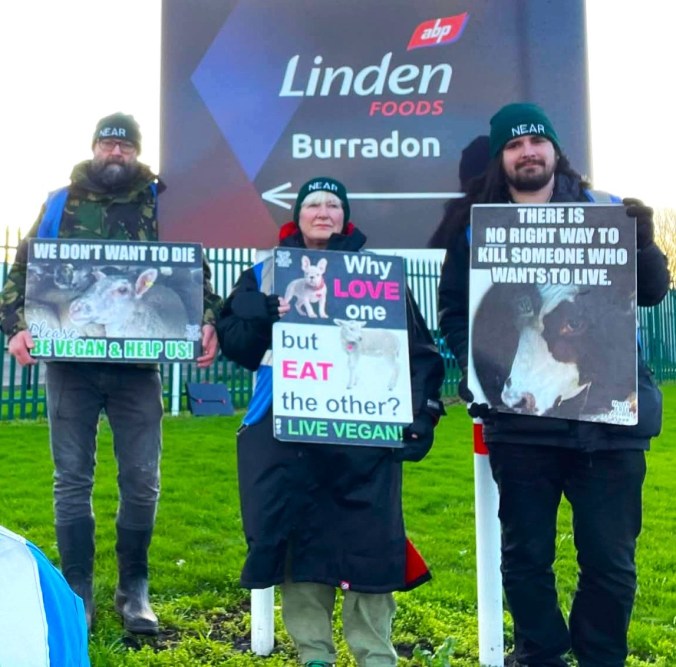
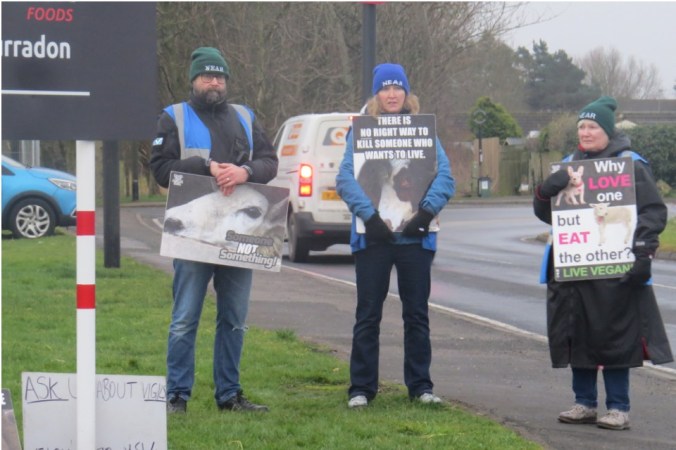
‘I’m a deputy co-ordinator for North East Animal Save who are a group who run vigils at slaughterhouses – yes, it is as grim as it sounds, but unfortunately while people continue to eat animals it’s a necessary part of our work.’

‘My work is very full on my poor husband sees me fleetingly most days but understands the importance of what I do and is very supportive – he’s also a member of NEAR.’

‘But I’m a positive person – rather than looking at how far we still have to go, I look at how far we have come. When I was a child I had no idea what being vegan meant but I know from going into schools not only do children know what it means now but there are also vegan children there – that’s progress.’

For further information contact the group at >>>

Facebook @northeastanimalrights

Instagram @northeastanimalrights

TikTok @northeastanimalrights 

Bluesky @neanimalrights.bsky.social

Threads @northeastanimalrights

North East Animal Rights – YouTube

Alikivi    June 2025