Sitting in the Littlehaven Hotel on a sunny autumn day in South Shields I’m listening to a familiar story which I’ve heard a lot since starting this site in 2017.
59 year old Durham musician Stuart Willis told me ‘I was in a band for a short space of time and got a taste of the music business. Although we weren’t a success commercially, we played gigs and got attention from record labels but didn’t quite get it over the line’. This is Stuart’s story.
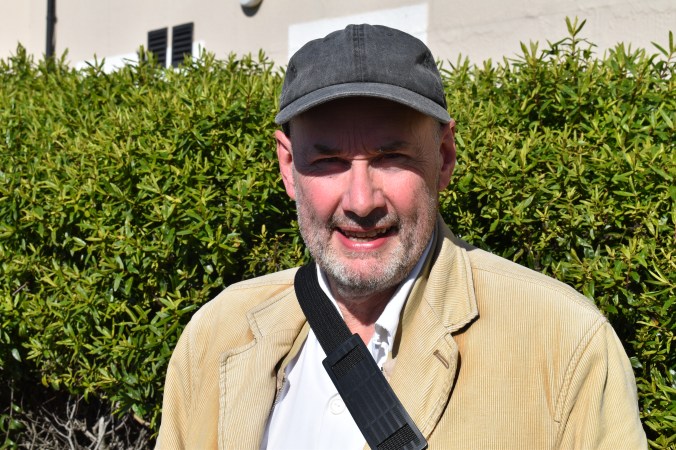
Older generations of the family originally came down from Scotland to the North East to work in chemical factories and the mines. My father was first in the family to go to grammar school and became an accountant. He was the one who bucked the trend.
I remember my mam brought a classical guitar record into the house. I absolutely loved it. I was around 11 year old when I got a cheap guitar and music book for Christmas. I picked it up very quickly. There wasn’t anyone else in the family who played and the school I went to didn’t even do music lessons.
My first influences were The Jam and Specials the whole Two-Tone and post punk scene with bands like Television, Magazine and Gang of Four who I saw at the Gateshead Festival in 1982 (The Police headlined with U2, The Beat and Lords of the New Church on the bill).
On the North East music scene was a band I liked called Neon. Tim Jones was in them and he went on to play fascinating music. I first played in a punk band in the local community centre when I was 16. Then I met Michael Salmon in 1985.
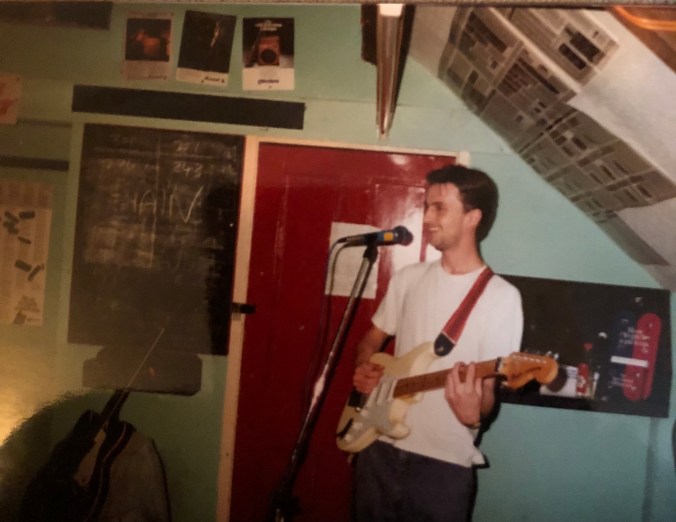
He was a drummer in Prefab Sprout with Paddy McAloon the main songwriter. When Michael left Prefab it was purely amicable. He wanted to realise his ambition of being a songwriter.
I was 18 playing in a duo in a pub in Witton Gilbert, County Durham. Michael was there that night. He liked what we were playing. I was playing classical guitar with Mark Wiles on bass.
Michael was a charismatic guy, excellent guitarist, singer and songwriter almost a teacher to me. Michael had a phenomenal record collection and I was introduced to all these amazing sounds.
We got in a drummer who was playing on the Durham scene and we called ourselves Swimmer Leon. Rehearsals were in Fowler’s Yard in Durham a lot of bands rehearsed there. We practised in there every week. The room itself almost became another member of the band. The sound was born in that room. We had about three albums worth of great songs that Michael had written.
The first place we recorded in was Consett Music project. We were all nervous. We recorded three tracks live and added a few overdubs. We took the songs out to play a few gigs.

We were mainly playing live around 1985 we got on well and had a cracking time. We supported a few big bands mainly playing University gigs. One night we supported the Ronnie Scott Quartet, he had a jazz group who had the club in London. Then there was ex Waterboy Karl Wallinger and World Party.
There were loads of times we met different musicians at these gigs who knew Michael from his Prefab days. There was the drummer from The Ruts who gave us some insightful advice about the record industry. He told us not be in a band because you can get lumbered with huge debts. Best to play for other people and get paid. Wise words.
For me the quality of any live work or recording we done was so important. Sometimes playing smaller gigs is a cacophony of sound but when we played the Students Union in Durham that gig was recorded straight off the mixing desk and we loved that sound.
After gigs other guitar players want to speak to you. That’s really great we appreciated all the attention but we thought where’s the women! We didn’t play ordinary chords so a few times they’d ask ‘At the beginning of that song what’s that chord’? and ‘Can I look at yer Gretch’. We were a quirky band and got a lot of press.

We also recorded in the Cluny Warehouse in Newcastle with John Silvester. Michael’s songs had jazzy elements too them, complicated chord progressions with complicated lyrics – it was like post punk jazz. With all the obscure influences we weren’t your run of the mill band. We were an arty band. We thought yeah, we’re great we’ll get a record deal!
Did you know we ended up with a development deal with CBS? Thing was we never sent a tape to them, strangely Michael thought it should come to us! The only thing we did was send tapes with the band name and telephone number to the local press to get reviewed.
All the major labels had regional scouts who would pick up on the music section in the local papers then come to gigs and take it from there. This is what happened to us and led us to recording in Guardian studio in a little village called Pity Me in County Durham. It was a really good studio.
Guardian was two houses knocked together with a large console and a piano at the side. The owner Terry Gavaghan was very professional about the work and we got on well with him. He wanted to know the structure of the songs, so we played them through sitting near the console.
Michael played drums on that recording his first time since leaving the Sprouts. I played guitars, bass and all the keyboards. Terry recorded it separately with a guide vocal, guitar, drums, bass and put stuff on top. He produced both tracks which still sound good today.
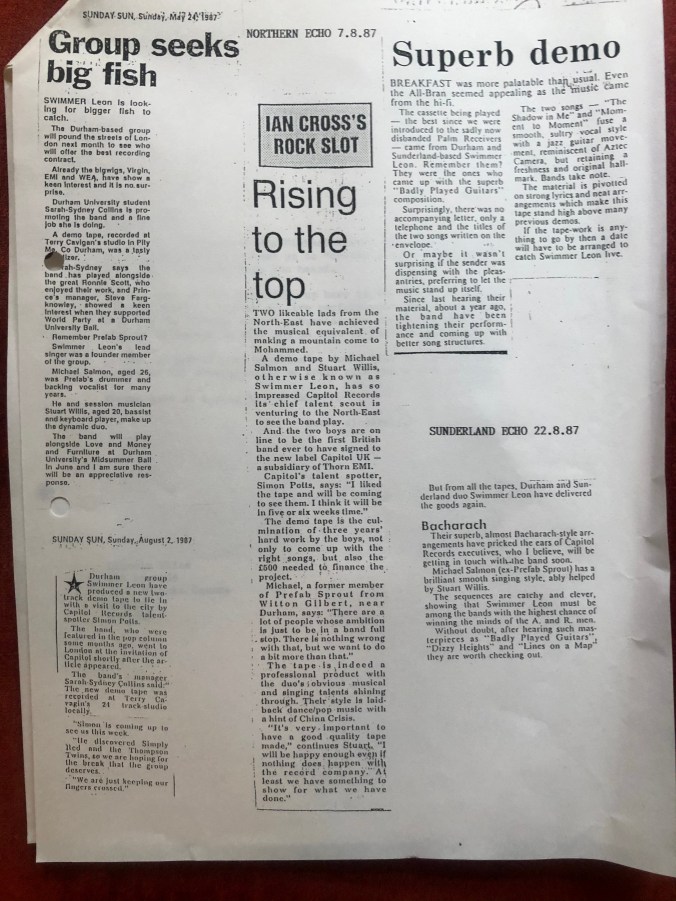
I was working in Windows musical instruments and record shop in Newcastle so I put their telephone number on our demo tape. A local reporter wrote a review of the tape. At work I got a call telling me it was Simon Potts at Capital Records and he was phoning from L.A. Yes Los Angeles! He asked if we had many songs so I told him about three albums worth. ‘OK I’m sending someone up to see you.’
Research has found an interesting story about Simon. He was originally from Newcastle and lives in Hawaii now. With a great pedigree within the music industry he signed The Beat, Simply Red, Thompson Twins, Stray Cats, all selling in huge numbers having massive hits. Last band he reportedly signed were Radiohead.
This guy came up to Witton Gilbert from London and liked what he heard. We quickly arranged a showcase gig in Newcastle pub Slones. Actually, Brian Mawson, my manager at Windows music shop arranged the gig for us.
I loved working in Windows. It was a great place surrounded by people with aspirations to become musicians. There were new instruments on sale, latest records, local releases also a wall full of wanted musicians and bands advertising gigs – a great atmosphere. Darren Stewart who played bass for a few years in Swimmer Leon worked there. Dave Brewis also worked there he was in The Kane Gang.
The night of our gig London record label were having a promotion so a lot of artists were there and ended up at our gig. It was mad. Simon Potts from Capital flew in from L.A. We had Bananarama dancing down at the front, I think the Kane Gang were there. The head of A&R at Capital records told us ‘We’re giving you some money to record, just as long as you don’t go to Montserrat with George Martin!’ So, we went back to Pity Me and Terry Gavaghan!
We were in Guardian for three days and recorded three songs. By then GO Discs were interested in us, Warners were interested in us, Phonogram were interested in us. We were going up and down to London for meetings but we couldn’t get it over the line. It was just two kids really, me and Michael Salmon. The thing was we didn’t have a manager.
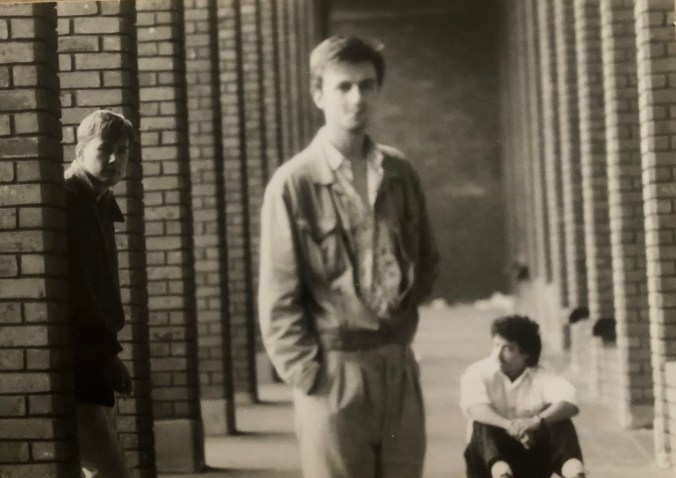
I remember going to CBS for a meeting. We were in a lift and there was Mick Jones from The Clash. I thought what’s going on here? From being a 16 year old punk playing gigs in Grindon Community Centre to meetings, gigs, studios and all this record label stuff without us really trying.
But life caught up with us. There was a time we thought is this gonna work? We didn’t want to move from Durham. I was from Sunderland so was Terence the drummer, Michael was from Witton Gilbert, Mark was living in Durham. The irony is when the band split up in 1989 we all moved.
I lived in London in the early 90s and worked in marketing for Virgin records. It wasn’t a glamorous lifestyle. I was living in a dingy flat in Blackheath. I saw the inner workings of the record business and couldn’t wait to leave. Richard Branson had sold the label by then to EMI and everybody was losing their jobs. I handed my car keys in went to Kings Cross train station and couldn’t wait to get back to Sunderland.
What am I doing now? My ambition was to study music properly so I done a music degree at Newcastle University from 1993-95 and ever since then I’ve been a teacher at Durham University in the music department, performer in classical guitar and specialise in historical music performance where I play the lute. I’ve also got a publishing deal for Schott, publishing guitar books.
Don’t want to come across like a moaning old bloke but young people today don’t understand what a band is. To get four or five like minded people trying to evolve a sound and make it into something special for you – that happened for us. We were lucky to be able to do what we done in the 80s. Today I still listen to all the bands I listened to back then. I’m still passionate about music.
Alikivi October 2025


 ALIKIVI UK : NORTH EAST MUSIC & CULTURE