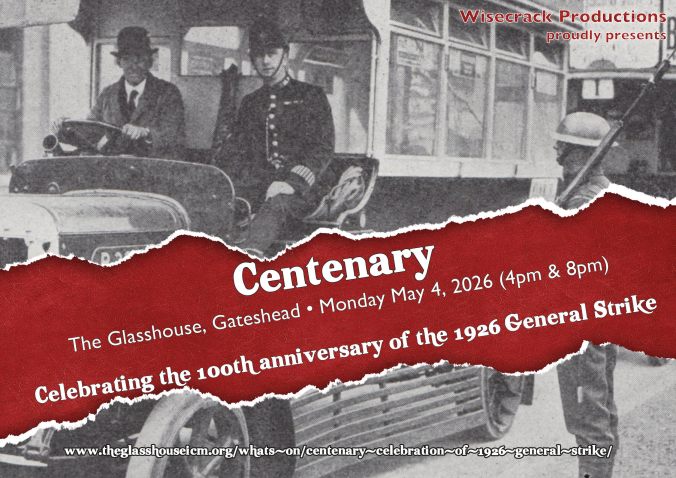
May 4, 2026, marks the centenary of the first full day of the 1926 General Strike where millions of British workers withdrew their labour and challenged the establishment. They believed a better world was possible.
To mark this historical event the same team that brought successful plays Wor Bella, Carrying David and Hadaway Harry are staging Centenary at the Glasshouse.
“We have a great team and the show will be fantastic. We did a very popular show about four years ago called ‘Boris Out’, and look what happened to him!” said playwright and Theatre producer Ed Waugh
“One hundred years ago millions of workers and their families went on strike. A General Strike poses the question of state power, the 1 per cent – the privileged Establishment or the working class – those who actually create the wealth in society.”
“Despite the heroism and sacrifice of the trade union rank and file, the union leaders in the TUC realised the question of state power was at stake – the Russian Revolution nine years earlier had sent shockwaves throughout the world. These TUC cowards sold out the strike unconditionally after only nine days.”
Ed added “Their pusillanimity led to a carnival of reaction against the trade unions and workers by the Tory government. The miners continued their strike for another six months but were starved back to work. We haven’t had a general strike in this country since. But we’ve been close”.
“We have to learn the lessons of 1926 for the next time, which is on the horizon. The 1926 General Strike was a hugely important period in working class history.”
‘Centenary’ will include songs, comedy, stand up and recitations to celebrate the nine day strike. A big addition are musicians Paul Weller (The Jam) Alan Hull (Lindisfarne), Tom Robinson and Paul Simmonds (The Men They Couldn’t Hang) have personally given permission for their music to be played at the show.
“We are delighted to have been given personal permission from these great songwriters. It will be an evening of brilliant musical and comedic entertainment and inspiration.”added Ed.
Tickets are available for ‘Centenary’ at The Glasshouse, Gateshead at 4pm or 8pm on Monday May 4th 2026.
A lot is made of being in the right place at the right time to help bring success. But you can’t get past the sheer amount of hard work put in, every time giving 100% and never complaining. There is no substitute for rehearsal and when the opportunity presents itself you’ve got to be ready to take it. A snapshot of a story taken from Sting’s autobiography Broken Music hits the mark. This all happened within a few heady months during 1978.
The Police went out on a UK tour to open for Spirit led by guitarist Randy California. They won over a hippy audience and released their single Roxanne. Their record company A&M fully supported the record but money wasn’t rolling in yet.
To pay rent on his London flat Wallsend born Sting was still filming a few adverts and bit part in films. The Great Rock n Roll Swindle was one, although his scene ended up on the cutting room floor. ‘I was grateful, however, for the 125 quid at the end of the day’ said Sting.
He also went for a part in Quadrophenia filmed in Brighton. ‘I know that they’re seeing half of London for this role, but somehow I know it’s mine’.
After finishing on the film set in Brighton the record company hired a private car to whisk Sting off to Gatwick airport and jump on a flight to Manchester, finally arriving at the BBC TV studios where The Police were due to appear on the Old Grey Whistle Test. Sting remembers ‘It’s still raining when we land in Manchester. Yet another car and driver waiting to take me to the studio, where we have a sound check. The performance tonight is live’.
After a successful TV appearance a tour of the east coast of America was booked. Second night of the tour The Police are in Poughkeepsie theatre with only six people in the audience. Do they cancel? No. Sting brings the audience down to the front and introduces each other. Then ‘give a blistering set we will ever manage, encore after encore’.
The audience are invited back stage where it turns out three of them are DJ’s. The next day Roxanne makes its debut on USA radio. Within a couple years The Police are one of the biggest bands in the world. Now how did fellow Tynesider Mark Knopfler and Dire Straits knock them off their perch?
55 year old artist and stonemason Rob MacDonald originally from Rugby in the Midlands has lived in Catalonia, Spain for the last 15 years working on community art installations. His latest project is in Sunderland.
About 10 years ago I came across a story about International Brigades in the Spanish Civil War (1936-39) who came from the UK. It was really interesting especially finding a guy who was on a ship coming from the UK with the same name as me. It piqued my interest so at first I decided I was going to make a sculpture of this guy explained Rob.
Rob in Sunderland City Hall with brochure of the monument in Catalonia, Spain. (pic. Alikivi Sept 2025)
I’d already worked on a few projects and exhibitions in Barcelona so I met with local contacts Alan Warren and Sonia Garangou, teachers and lead historian on the Ciudad de Barcelona. Together we developed a community art history project in the coastal town of Malgrat de mar 40 miles north of Barcelona.
As we talked about the history it became obvious that this wasn’t just about Rob McDonald on that ship it was about all of the International Brigade volunteers and how it related to politics and fascism today. We agreed that it needed to be a community led project because the memory of the Spanish Civil War is a sensitive issue. We didn’t want to go off and just make something ourselves.
The big question about it in Spain is the historic memory, the political left want to talk about it, republicans want to talk about it, but there are questions remaining like where are the unmarked graves? In Catalonia they realise how important the International Brigade volunteers were. In the end the backbone of the idea was to build a monument.
The first monument was opened on May 30th 2022 at Malgrat de mar. It is actively being added to every year, it’s a living monument. When working on it the figures were made in a series of workshops with local people. Some worked on them for 2 minutes others stayed for over an hour as I told them about the stories. I also went into schools and the students took away the information and learned more about the International Brigades.
There are loads of levels to the project – art projects, exhibitions and performances. It’s been really successful. Also, every year in May there is an event held at the monument where the Mayor and all the dignitaries of the town attend. All political parties support the project. There is a broad support, the first 30,000 euros for this monument were crowd funded.
Now we are based in Sunderland college. I have found a lot of pride here, people get behind the area, not just the football team but the shipbuilding history.
Normally around towns you see monuments of kings and queens and people you don’t know. But it isn’t working class history the sculpture is not done by the people and the community are never asked. It gets decided by someone in an office somewhere. The community don’t engage with it. The participation living monument is about community engagement. That is what we are interested in.
I’ve talked to people about working class struggle and the arts. We built up this idea that monuments and public spaces are part of the struggle for working class people’s dignity, history and rights – it’s all tied together. And the symbolism of sculpture is important because it talks to the community about who they are and who they are not.
Sunderland City Hall (pic Alikivi Sept 2025)
There are amazing stories of Sunderland being involved in the International Brigades. One ship bound for Spain in the civil war had on board two unemployed shipworkers from the city. Some of the ships were built here and the captains were from the city. There were men from here who risked their lives to help feed people in a foreign conflict.
Part of the project is not only to expose the history but find it as well because people from the city will be related to some of the Brigade volunteers. We need to build up those connections.
We are at a critical point in the project we are networking with people to make this monument happen. It’s important that people are involved in the process of making it. We are in talks with Culture and local Council – organisations we are looking to partner with and make links to get support.
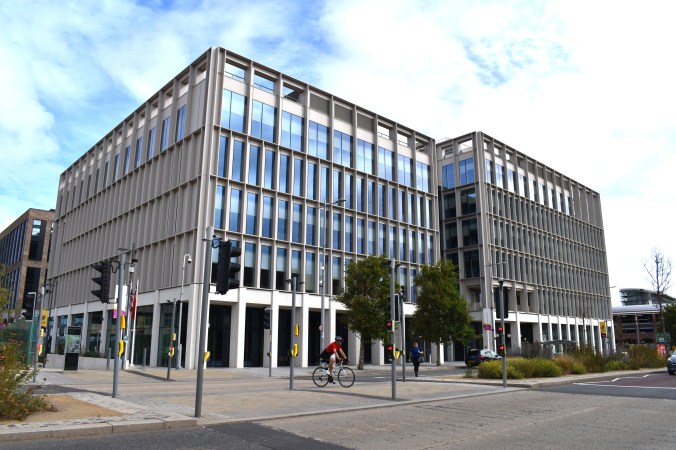
There are a couple of areas where we would like for a monument – Mowbray and Barnes Park are nice and this new development down here (we are in City Hall) but there may be other suggestions.
The history of the Brigades might be tucked away in a cupboard here in the City Hall when really it should be in an exhibition for the community to see. You know they were brave people, heroes really, and this is an important part of social history that needs to be told.
South Shields born Vinny Edwards has featured on this site a few times. Type his name in the search bar for previous write ups about his time in the music biz including international chart hit Back Where We Started From which reached #2 in the USA and #8 in the UK. Recently he got in touch and told me another story about one of his songs.
I was living in a flat in Wandsworth in London when I wrote and recorded I Can’t Turn Back Time in 1967. It was my second solo single for United Artists after The Answers broke up. We recorded the A and B side The Lively One at Olympic studios within three hours can you believe!
The B side was used for a commercial for Texaco petrol in the UK and USA. I Can’t Turn Back Time was played mostly on the pirate radio stations London and Caroline. I believe it charted on both stations it also broke into some Northern Soul charts.
In America it was released under the name Tim Love on the Ascot label so I would not be confused with the American actor Vince Edwards who played Dr Ben Casey in the TV series. It was just after this I changed my name to J Vincent Edwards. The ‘J’ I took from Jarra or Jarrow if you were posh.
Later there were two more records on United Artists – County Durham Dream and Aquarius then along came the musical ‘Hair’ and a new record company CBS. They were crazy happy days for a 22year old lad from South Shields’ Ocean Road school.
Link to the American release on the Ascot record label of‘I Can’t Turn Back Time’
Since 2012 I’ve been researching the life of this fascinating character who was originally named Theophile Lucifer Gardini. He spent his last years living in a terraced house round the corner from where I live in South Shields.
In 2018 I produced a short documentary ‘Secrets & Lies’ based on what I found about his life so far, a link is at the end of the post.
I often mention him to neighbours and hear the odd story about Avro and his wife Anne. Recently an old friend got in touch and remembers the couple who lived at 45 Henry Nelson Street.
‘We moved into 32 Henry Nelson first week of June 1990, I think Avro died in the November so it was only a short time. I remember his wife used to have a little furry dog. She used to walk it out all the time.’ Recalled 60 year old Jeff Anderson now living in Washington, County Durham.
Jeff Anderson
‘I’d see them in the street. Always well dressed. Always smiling. I don’t think local people were aware of who he was to be honest.’
‘Actually, very first time I came across him and his wife was prior to moving into the same street. I saw them on the corner of King Street in the town centre. They really stood out, there was a real glow about them. They had a big smile on their faces. You couldn’t help but notice them’.
‘What they were wearing was very classy – not the type of clothes the everyday person of Shields would wear on a Saturday afternoon. They really stood out of the crowd just by their whole demeanour.’
‘But when Avro died I remember his wife was absolutely devastated. From the initial sighting in King Street and other times in Henry Nelson they had this glow about them but after Avro died that seemed to vanish from her. From what I can remember she was never quite the same’.
‘A strange thing happened to me on the night he died. I went to pick my wife up from work in the town centre but there was nowhere to park so I had to go back round the block. I went past St Hilda’s Church and as I went round the corner I had like a paranormal occurrence – the only way to describe it. I actually saw a vision of Avro on the ground reaching up to me. I was shocked, I thought what’s going on. This is a bit weird.’
‘I continued on and as I came back round the block again there was no sign of him. Gone. It really freaked me out as you can imagine. It wasn’t until a few days later that I learned he had died that night. So, you know what was going on there?’
‘I didn’t know anything about him having any health problems. He died at 76 you say? Doesn’t seem that old now does it?’
If you have any information about Italian born author & artist Baron Avro Manhattan (1914-90) please don’t hesitate to get in touch.
Micky Cochrane and Glenn McCrory with Tim Healy, who was ringside on the night of the world title bout in 1989 when Glenn became world cruiserweight champion. (Copyright Ed Waugh)
“Carrying David is emotional and heart-breaking. It’s about the love of two brothers. This is pure theatre. You don’t have to like boxing to be emotionally involved in this wonderful story” said actor, Micky Cochrane.
Carrying David premiered in 2019 and played to full houses gaining the actor a standing ovation for his telling of an emotive and inspiring story.
Post-Covid, the play was staged in London and toured the north of Ireland to sell-out crowds, including the prestigious Lyric theatre in Belfast.
The play tells the incredible story of Glenn McCrory’s rise to becoming the first-ever world champion boxer from the North East. It also has the further twist that Glenn’s terminally ill brother David inspired him to become the best in the world.
The play was written by Ed Waugh who brought North East working class stories to the stage Wor Bella, Hadaway Harry and more recently The Cramlington Train Wreckers which toured the region with sold out performances.
Ed explained“This play is about two lads from Stanley. Glenn McCrory played by Micky Cochrane – aiming to become world boxing champion and his brother David McCrory – fighting every day to stay alive!”
David’s muscle-wasting disease meant Glenn often physically carried his brother on his back, hence the title of this fantastic story.
“David and I were very close,”said Glenn, a former Sky television pundit. “He was my inspiration. David would say, “If I can defy death, you can become a world champion! Saying those words still brings tears to my eyes. I think of David every day.”
David was not expected to live beyond 14 but evaded death until he was 29, living to see his beloved brother win the coveted world cruiserweight title in 1989.
The fight was held at Stanley Leisure Centre and broadcast live throughout the world. It is the remarkable story of an underdog defying all the odds – a North East story that people still talk about today.
Ed added “The performance by Micky is sublime. He won a standing ovation at every venue, the reviews are all five-star.Rocky was a great film…but this County Durham Rocky story is even better…and true!”
Carrying David will be performed at Newcastle Theatre Royal on Saturday and Sunday, June 21 & 22. Tickets (including concessions) are available from the Theatre Royal or via the Theatre Royal websiteCarrying David | Newcastle Theatre Royal
David Haldane appearing at the Lit & Phil, Newcastle on 23 April 2025.
David Haldane’s work has appeared in a number of national newspapers including Punch, The Express, Mirror, Guardian, Telegraph, Daily Mail and TheTimes. On Wednesday 23rd April he is booked at Newcastle’s Lit &Phil where he will be sharing stories from his life.
Now living in Morpeth he said “It’s been an incredible 50 or so years learning about drawing cartoons and then creating them for the leading newspapers and magazines in the country.”
Born in 1954, David started his career in the 70s working for the Shields Gazette“I was working for the art department at the Gazette. I received my first pay packet there, every Friday, in cash. It was so busy with three editions of the paper every day. It was like Fleet Street!”
During the 1980s David contributed sketches to the original series of Spitting Image. Now retired from The Times, his latest cartoons regularly appear in the satirical magazine Private Eye.
Playwright Ed Waugh is hosting the evening at the Lit & Phil “I’ve known David for over 20 years and he’s both very sharp and very funny. You have to be to create top-class satirical cartoons every day, often at very short notice, for national newspaper front pages”.
He continued “David’s career stories are both deep and hilarious. It will be a fantastic evening for people who want a laugh and those who want to find out about some of the stories behind the many thousands of tremendous cartoons David has created and had published.”
Tickets for the Lit & Phil are only £5 and can be bought on line
The music world has always had its fair share of myths, legends and hell raising antics. The time Ozzy bit the head off a dove or was it a bat? Well both actually. According to reports one was in record company offices the other was live on stage. He also snorted a line of ants. The list is endless for the Oz.
I came across a gaffer tape incident involving a music journalist and Killing Joke, as I was trying to find out who, where and when it happened – if it did! There were other short stories I read some with North East connections.
Sadly, both deceased now, Lemmy and Jimi Hendrix were two of music’s biggest characters – their spirit and influence live on. But what is their connection to my home town of South Shields?
In his autobiography ‘White Line Fever’ Lemmy recalls that in early 1967 “I went up north. I woke up one morning sitting on a beach in South Shields eating cold baked beans out of a can with my comb. I thought there’s got to be more to life than this.”
Was this just a random visit to the seaside town? Why not go to the main cities of Newcastle or Sunderland close by, or was there someone or something else in the town that attracted him?
Around the same time Lemmy was a roadie for Jimi Hendrix. He explained in his biography that in early 1967 he got in touch with a friend, Neville Chesters, who was a roadie for Hendrix. Lemmy ended up dossing down at Neville’s London flat that he was sharing with Hendrix’s bass player.
Lemmy recalls “They needed a spare set of hands, so about three weeks after I landed at Neville’s, I got a job working with them. I worked for Hendrix’s band for about a year on all the TV shows and tours through England. I was only a fetcher and a lifter but still it was an amazing experience”.
Even though he didn’t expand on the beach story the timeline of the visit to South Shields and a gig sort of fits, but what we do know for certain is that Jimi Hendrix played the Cellar Club, South Shields on 1st February 1967.
When Lemmy was a roadie was that when he ended up on South Shields beach and not on a random visit? Or has he been twice? We’ve got to take in account that after a full on rock n roll lifestyle with Hawkwind and Motorhead, Lemmy’s memory might have been a bit fuzzy remembering events for his biography.
Just a couple of thoughts here – the beach is only a 5 minute drive away from the club, plus to hoy a spanner in the works was Lemmy even a roadie at the Shields gig or did he join the road crew at a later date?
He explained in his biography – ‘I worked for Hendrix’s band for about a year on all the TV shows and the tours through England’. I suppose we’ll never know for certain unless a Hendrix or Lemmy aficionado can help nail down specific dates. Anyone got access to their diaries!
A post looking further into Hendrix’s South Shields gig will be added to the site soon. Where you there in the audience? Where you a member of local band The Bond who also played that night? If you have any information, much appreciated if you get in touch.
After a career in the Royal Navy which took her around the world, to managing pubs in the UK, plus running an island in the Falklands, now in her mid-60s Karen is back working on Tyneside where she fosters for people with learning disabilities.
I’ve always been in a job were your committed 24/7. When I look back the Falkland islands was a fascinating adventure but that story is for another day, this is about my time in the Royal Navy.
When I left school at 16 I didn’t have a clue what I was going to do but my parents were adamant I was going to get some kind of job and my mother knew someone who worked in an office in South Shields.
But I knew an office environment wouldn’t be any good for me because I struggled academically. I didn’t know it at the time but I was dyslexic.
I was out in Sunderland with a friend and he was talking about joining the army. This triggered a thought in the back of my mind as something maybe I could do.
I went to South Shields careers service, the only leaflet they had was about the Royal Navy. I applied and got an interview at Gunner House opposite the Central Station in Newcastle. I passed that and got offered a training place in Reading – joining on the 2nd October 1978.
It was scary travelling down south on the train but when I got there somebody was waiting and took me to HMS Dauntless where I started my provisional training.
Karen with new recruits (back row on left) at HMS Dauntless, Reading 1978.
HMS Dauntless is your basic training base. We had to prove we were physically fit, learn about teamwork, Navy values, how to respond to orders, the importance of ceremonial duties and drills then finally getting fitted for our uniform.
It was hard, I didn’t get the strictness of it all at first. When they say clean the floor with a toothbrush it really meant that and when they say get there at 10am it really means 9.55am because Navy time is always five minutes before. Once after turning up late, I had to clean every window in the dormitory using newspaper and vinegar. I shaped up after that.
I had lovely long dark hair but after they gave me all the injections my arms were really sore and I couldn’t lift them up to put my hair up in a bun. You always had to tie up your hair when on parade – so in the end I had it cut off.
After five weeks training, we had a passing out parade and I was sent to HMS Pembroke in Rochester as a WREN Catering Steward where I took more training.
HMS Pembroke was the place we went to learn how to be a good officer steward. We were shown different types of dinner service, bar work, how to clean the silverware, uniforms, shine shoes. We also learned first aid and basic fire training. We were often told ‘Leaning time is cleaning time’.
In the month when I joined there was about thirty of us and only two from the North. In the café one day some lads came in and heard I was a Geordie. They asked me to say things like motor boats and paper planes! They were fascinated with the Geordie accent.
While I was there a TV show was being made and we got to meet one of the actors. The local paper back in South Shields printed the photo with me and an actor dressed in German uniform.
For possible bomb threats we always done exercises and always warned beforehand. Late 70s the I.R.A bombing campaign was prolific and this time HMS Pembroke was threatened with a bomb.
We were in our barracks when everything went quiet and the siren went off. We were under threat. This wasn’t an exercise – it was real. We all hid under a table. Fortunately, nothing happened but it’s a scary feeling thinking we could all die here.
Then on 10th January 1979 I went to HMS Neptune the nuclear submarine base in Faslane, Scotland. It was a beautiful affluential area around Gare Loch. It was a good dorm with only four of us in, really good girls.
As a Steward we served meals to officers and guests at official receptions, operated the bar and looked after officers’ accommodation.
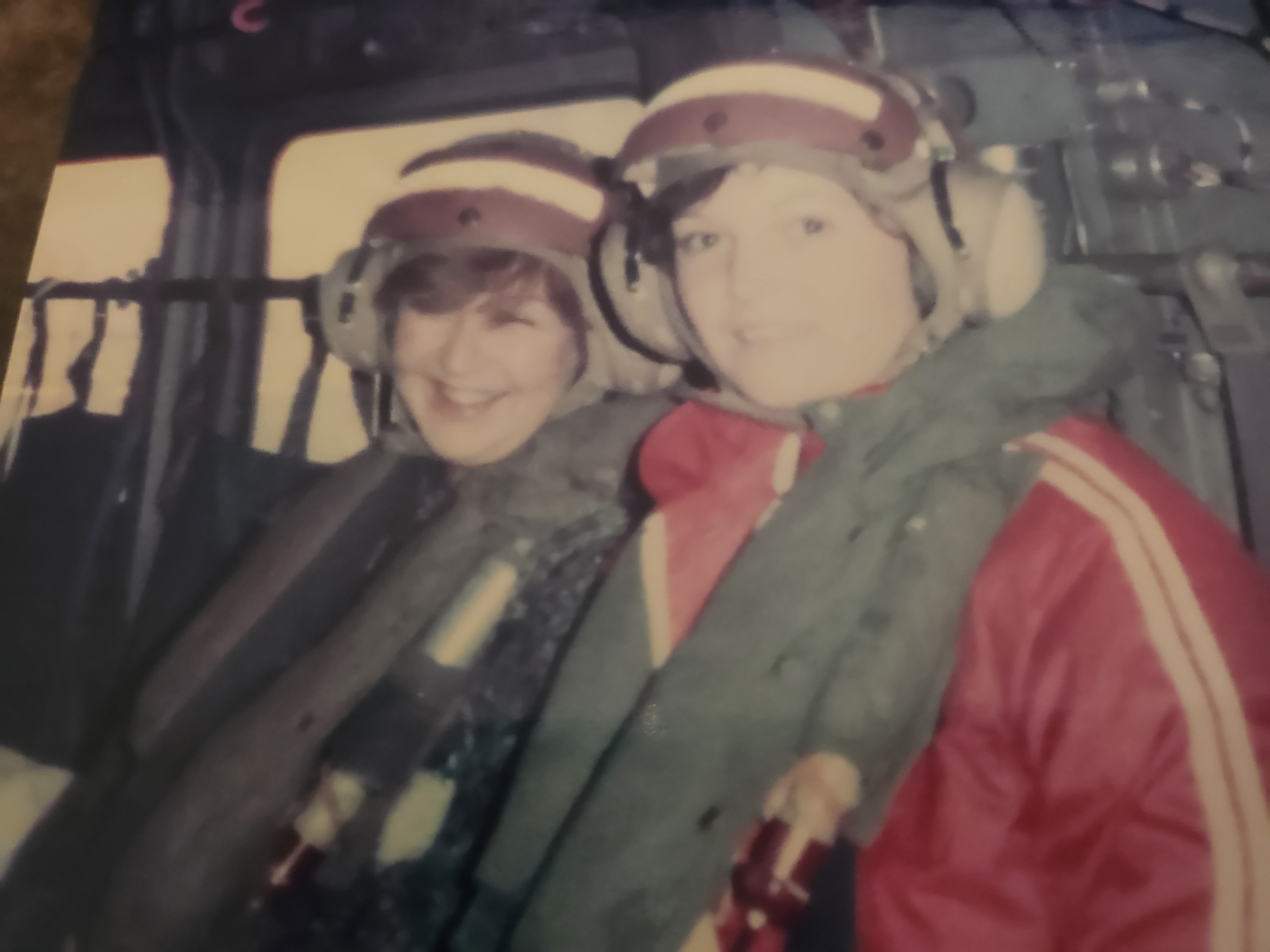
One time we went out on the submarine as it submerged in the loch it was doing angles and dangles, that’s basically moving up and down. Everything – even the tea urn had to be secured.
But this was the time of the start of nuclear protests, they were setting up camp outside the gates and chaining themselves to the fence. Before the protests it was pretty much easy going around the base we would go out on our bikes, now we couldn’t go out as much.
There was a chance of a four-month draft stewarding in the barracks in Northern Ireland. I was still 17 so the Navy had to ask my parent’s permission if I could go. ‘No chance’ they said. So that was that.
I was livid, more livid with the Navy that they had to ask. I was responsible enough to be part of their war team but had to ask me mam to go! Would love to have gone there.
The Falklands war was on when I was based at HMS Vernon in Portsmouth in 1982. I remember when the first ship was hit on 4th May. We were in a disco and everybody was dancing when the music suddenly stopped and an announcement was made about HMS Sheffield.
I knew one of the chef’s whose ship was one of the first hit and sunk. He told me afterwards they were getting in the lifeboat and someone shouted ‘that’s typical, it was a really good scran tonight’. The Navy use dark humour to get out of any situation.
The fact of not knowing who was alive or dead brought on a lot of mental health problems after that war. It must have been terrifying what they went through.
Morale during the war was to carry on as normal as you would expect. I’m sure there was a conscious effort from all ranks to keep morale up. The war lasted 74 days and when the fleet returned in 1982 huge crowds gathered on the quayside to welcome them back.
On ships they have what they call Sods Operas which is a show they put on with games, songs, jokes. Each mess has their own night like karaoke, darts or talent night. We all need to laugh to keep morale up and for letting off steam – but sometimes a laugh wasn’t enough.
The submarines would go away for three months underwater and the crew would need a release when they returned to shore. They’d choose a bar to go in all night to let off steam, get drunk and fights would break out. Some nights would get out of hand, but if you’d been cooped up after not seeing anyone else and not even being able to go for a walk to clear your head, how would you cope?
A fantastic opportunity come out of HMS Vernon. It was a four-month draft to Australia. A tri-service of Army, Navy and Air Force basically doing a swap with their forces.
It took around a week to get there – there were no commercial flights for us. First, we went out on a Hercules to Germany then stopped in Singapore for a few days. The Australians flew us into their country then down to Sydney. I went on to our accommodation near Canberra which was in the middle of nowhere.
The Australian Navy were lovely but this was a culture shock, kangaroos jumping all over when you’re going to work, a beautiful beach but couldn’t swim in it cos there’s sharks, there was no local buses, nothing to do really.
I wasn’t benefiting from being in Canberra so was fortunate with the help of an English officer to arrange a draft to Sydney. This was completely different. Accommodation was like American motels and based next to Bondi beach.
It was a lively place – I remember The Flying Pieman restaurant, the Aussies love their food – the barbies, fantastic meals. We had a week’s holiday and travelled up to the Gold Coast – I loved it there.
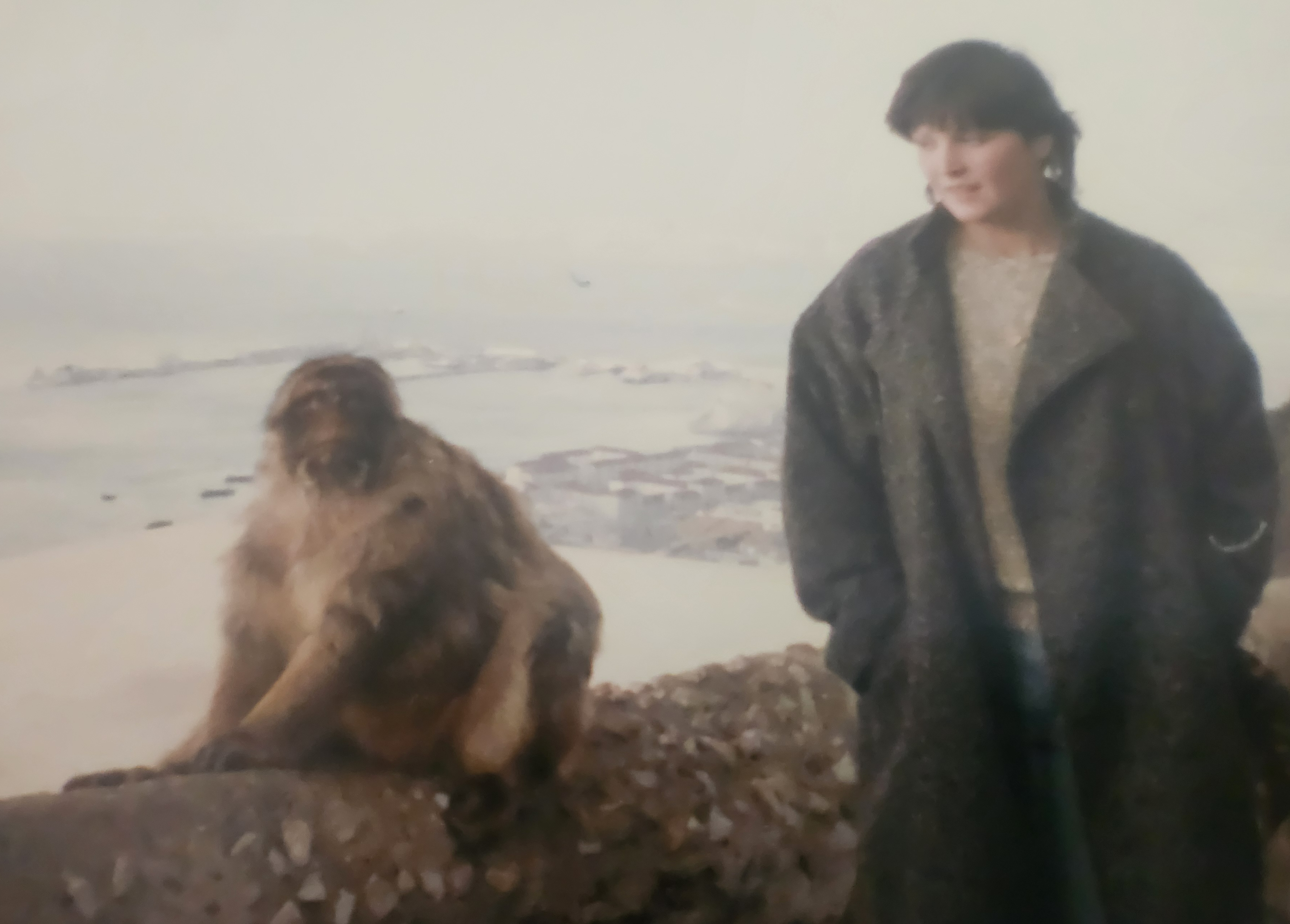
Gibraltar rock in 1985.
By 1985 I was based in Gibraltar at HMS Rooke as an Acting Leading Wren. We were contained on the rock because the border wasn’t open then. Gibraltar didn’t have much, there were dusty old streets and you couldn’t get things like fresh milk.
There was nowhere to go really. Instead of going stir crazy the Navy used to take us over to Morrocco. We’d get away for a weekend to Tangiers.
When I was there the border with Spain officially opened and we walked through to get our passports stamped, then we could go to have milky coffee or a few drinks in La Linea. With the border fully open now we went up the coast to enjoy seaside towns like Fuengirola, Marbella and Torremolinos.
Back to the UK and Portsmouth, or Pompey as it was known to the Royal Navy, the city had lively pubs and clubs used by the Navy, it was a good run ashore. Yes, we liked a drink, who doesn’t? But as I’ve said socialising was our way of letting off steam and relaxing after a hard day’s work.
At HMS Nelson we had summer and winter balls in massive marquees to organise. Big entertainers were booked, TV people and celebrities were invited. One year we had Kenny Ball and his Jazzmen playing, another Oliver Reed turned up but was kicked out for being drunk and offending people.
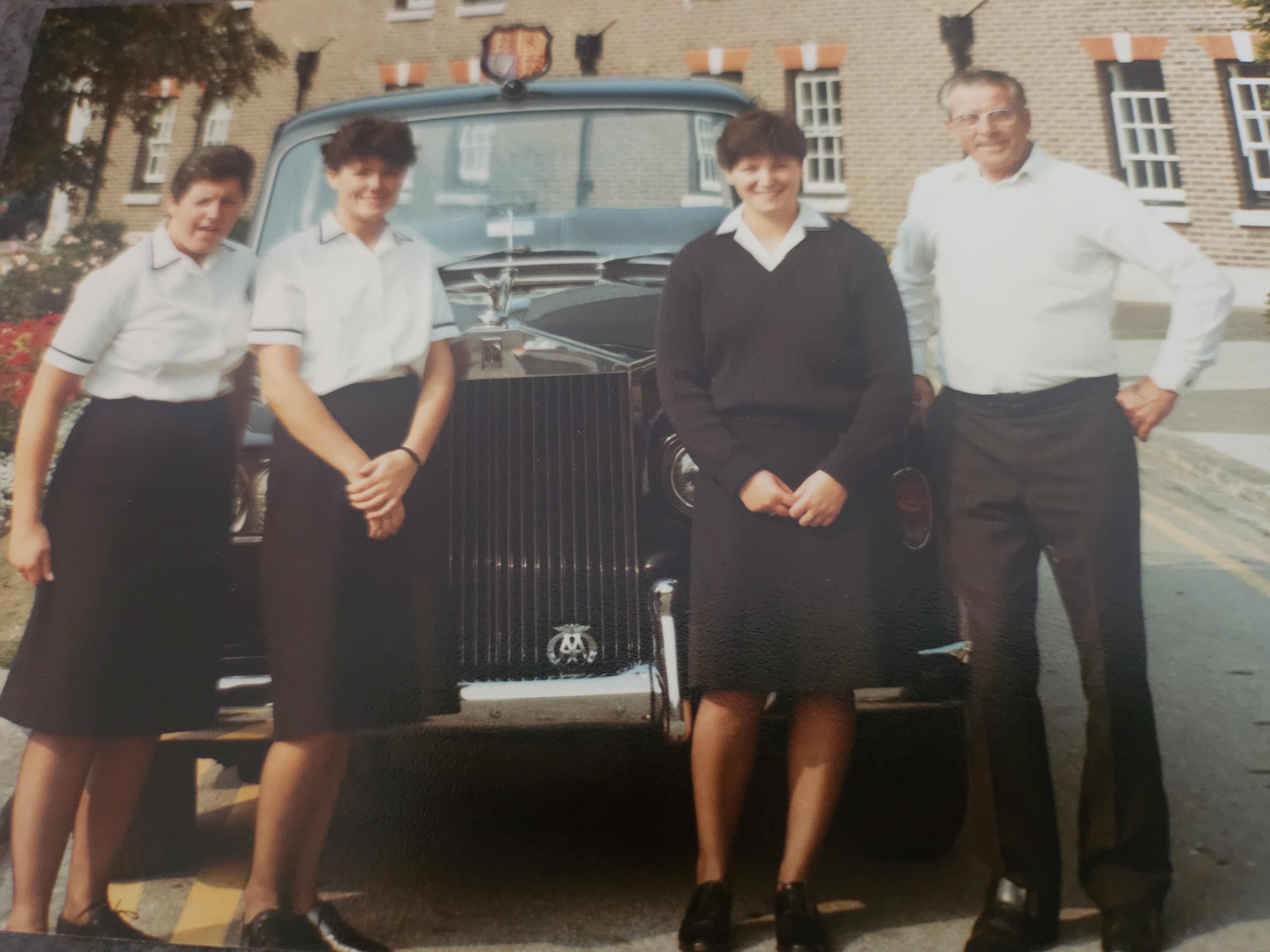
We had a really special visit one year from the Queen for a commemorative event. There were hundreds attending and sniffer dogs were brought in for security. A massive truck turned up a few days beforehand with the Royal’s own cutlery and plates.
To lay the table we had to get out a tape measure and length of string to make sure everything is straight and measured up. I’m sure she never says ‘that fork needs to be an inch over’. As I served her lunch she would say ‘Thank you for bringing that’. She was lovely, like a little nana, really nice.
From there I went to HMS Warrior in London working for the Flag officer of Submarines who worked out of a property in Rickmansworth. He had a team to look after him – chef, driver, chief steward, then me.
I wasn’t there long as I moved back to Portsmouth and HMS Dryard where I worked for the Captain. I loved my last years in Portsmouth but that’s where I finally left the Royal Navy for good on 5th March 1990.
What do I think of my time in the Navy? For someone from little South Shields not knowing much about the world and who had only been on a caravan holiday in Wales, to go to all these places, meet different people, experience different cultures and make life-long friends was fantastic.
The Navy teaches you to be self-sufficient, disciplined and learn valuable life skills like teamwork. It might be a good idea to bring back some sort of National service today, it’ll only be a good thing.
Now living in South Shields, retired teacher Rosie Anderson still feels there is work to do and more stories to tell.
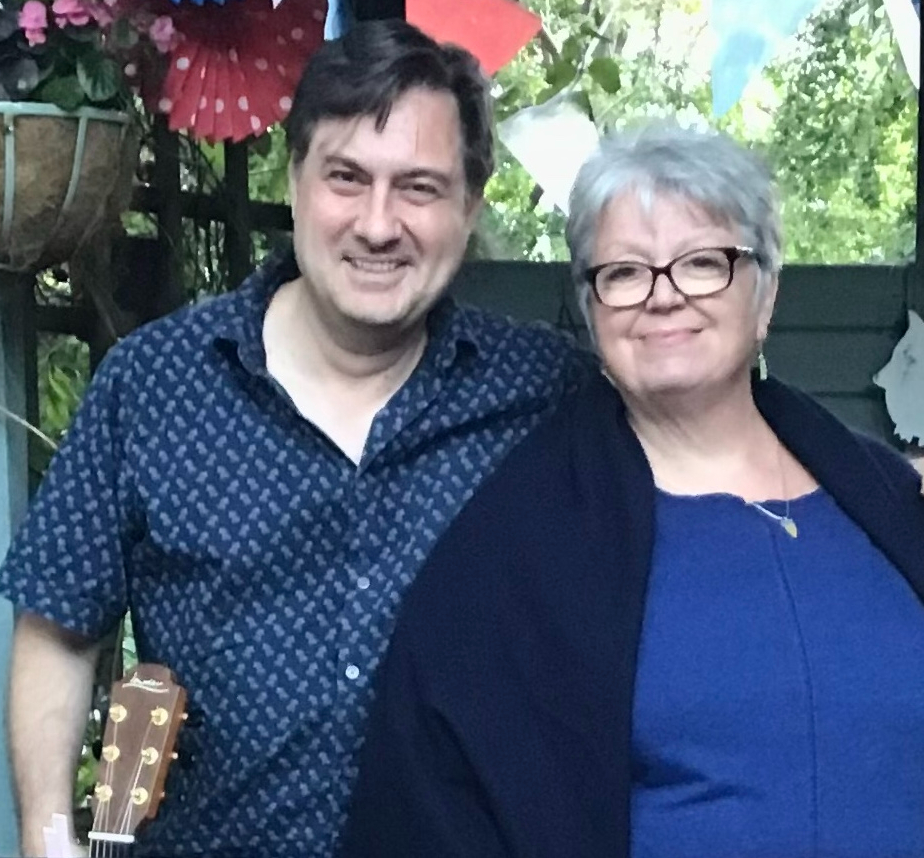
‘Sometimes I feel as though I’m just getting started. I sing whenever I can. This year my musical partner Adam Holden and I have played at The Watch House in Cullercoats, The White Room in Stanley and Cockermouth Festival which were all great. I’m determined not to just bow out because I’m getting older’.
‘I grew up in Wylam in the Tyne Valley, in a house full of music. Both my Grandparents played piano. My dad listened to The Beatles, both parents loved the theatre and musicals and they took me and my brother there – I still love all that’.
‘When I was a kid I told my parents I wanted to be a performer but they were worried I wouldn’t be able to afford a home like them, they wanted me to have a ‘proper’ job. They wouldn’t let me study performing arts so I trained as a teacher’.
‘My first job was in Benwell, Newcastle. Then I went to the Middle East where I spent 10 years teaching in Kuwait and Qatar, before returning to Newcastle. I taught at Walkergate Primary School where I would do all the music shows and drama productions. Loved doing the shows there, I never gave lyric sheets out to the kids, they learned by listening and singing the songs back’.
‘When I left teaching I saw an advert for facilitators for Singing for the Brain with the Alzheimers Society. I really loved doing that. I did that for six years until covid hit. Singing on-line with people on the screen in front of you didn’t work really’.
‘People love stories in whatever form, be it a book, a film or a song. Some people write songs about being in love, and about their feelings. My songs are mostly about people and places. I find stories present themselves to me and I take them and turn them into a song’.
‘There are two songs that I have written that stand out for me. Sally Smiths Lament was written after my husband Chris and I worked on a film about soldiers from County Durham during World War One’.
‘Sally was the wife of miner Fred Smith, who featured in our film. They lived in a tiny terraced house and every day Fred and his sons needed a bath, a clean shirt, a clean bed and a dinner. The kids needed to get to school – how did she cope with all that, especially when Fred was away at war. I wanted to give Sally, and all the women like her, a voice.’
‘When I wrote it the song just seemed to be presented to me, her whole life. I got to sing it at a celebration in West Auckland and her family came to hear it – it was very moving. It travelled well and won three competitions – the Newcastle Folk Club, Rothbury Traditional Music Festival and first prize at Morpeth Gathering’.
‘I can’t just decide to sit down and write a song – some people do and I applaud them for the discipline but I have to wait until they come. Three things happened to me in my life that I put together in a song called Breakdown’.
‘When I was a kid I lived at Chapel House Estate in the west end of Newcastle. One night me, my mother and a friend went for a walk. This woman came out of her house in her dressing gown, she wasn’t in control of herself, didn’t know what time or day it was. I had never seen that behaviour in an adult before. Now I believe she was having a nervous breakdown’.
‘That always stayed in my head and another one was when I was living in Fenham. I went to the shops with my children who were only small then, and a woman came out of her house with a letter and asked if I would read it to her as she was confused and couldn’t understand it’.
‘Then about 30 years ago I went on a blind date in Newcastle with this very nice bloke. He said I need to tell you something before we go any further ‘When I was working in Canada I had a nervous breakdown in the car park of a Burger King’. It was hard to concentrate on anything else after that’.
‘But I remembered those incidents and those three individual people are lodged in my heart for their own traumas. They gave me that song’.
‘This year we went to Kjerringoy a former trading post in the Norwegian Arctic Circle, out in the middle of nowhere, it was beautiful. A family ran it in the 19th century and had 3000 fishermen working for them, catching and processing thousands of tons of cod’.
‘The father and husband died and the wife continued to run it single-handed for many years until she eventually remarried. I asked the locals if there was a song about her and there isn’t. So that’s my next song – Annalisa from Kjerringoy. Her story needs to be told’.
‘I’m also aware we need to start telling more stories about people and their lives and jobs today otherwise in 100 years time there will be no one singing about us!‘
‘What does music mean to me? It’s hard to describe it, it’s so deeply embedded, there’s no life without it. Music is at the core of my being, there is no day without singing and because I have grandchildren now I have a new audience! We sing folk songs and songs from musicals, they’re word perfect when they sing them back’.
‘Music gives such joy, when I was singing with the Alzheimers Society the collective joy and reminiscences of songs from the past and enjoying it together was just so valuable for the families’.
‘We had people who wouldn’t sing at all but liked being there and that was fine. Once, two women brought their mother to a session and she sat between them. She didn’t communicate at all, had her head down, closed off you know. But when we started singing a song, I can’t remember which one, she lifted her head up and actually got up and started moving around in the middle of the circle’.
‘One daughter got up and started dancing with her. When we got to the end of the song the daughter turned round and said to me ‘She’s just said my name for the first time in years’.
‘Music gets right in there (pointing at heart) we’ve got to keep it going and expose our youngest children and oldest adults to music because it really does reach parts that others can’t reach. It’s like hearing the heartbeat in your mother’s womb’.
‘As a child I wanted to do music, as an adult I taught it with kids then people with dementia, despite my age I’m still committed to what I always wanted to do. Women who’ve had careers and families can still chase their dreams’.








 ALIKIVI UK : NORTH EAST MUSIC & CULTURE