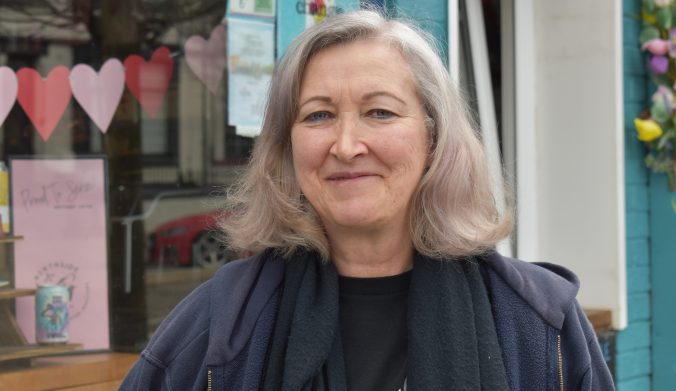
Anna Malia, Ocean Rd, South Shields. pic. Alikivi Feb 2026
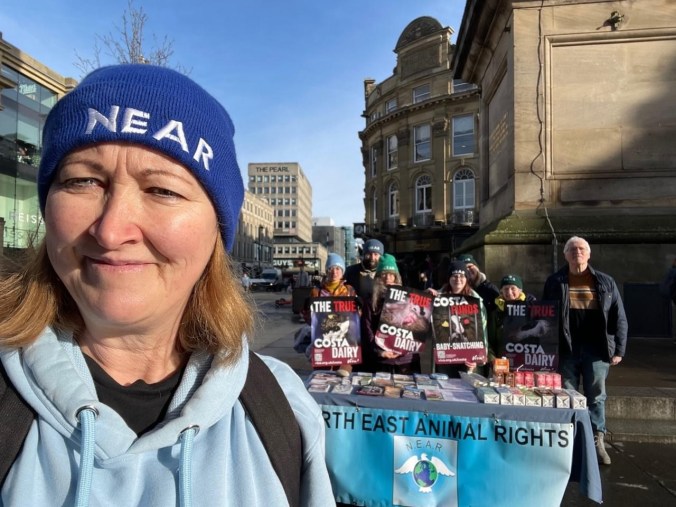
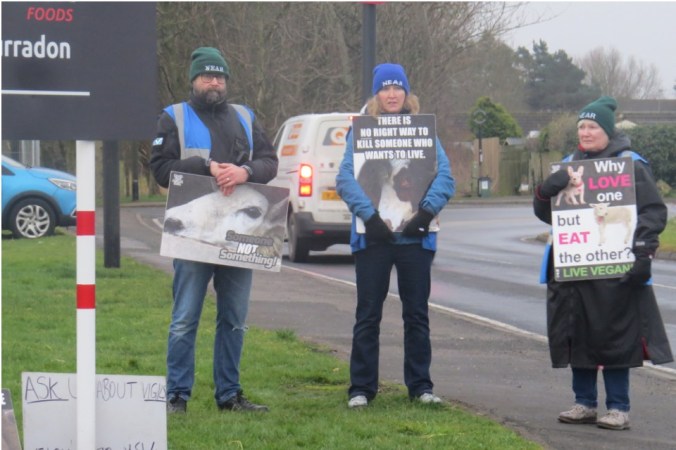
Anna set up North East Animal Rights (N.E.A.R) to campaign and educate about veganism and animal rights. They have around 30 members with branches in Newcastle and Teesside.
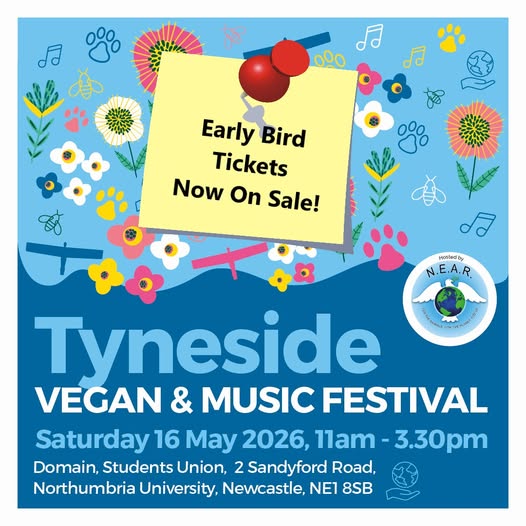
On 16th May N.E.A.R are hosting a Tyneside Vegan and Music Festival from 11am-3.30pm at Northumbria University Student Union, Newcastle.
‘We’re expecting the event to be busy. It seems the more we do the bigger and busier we get. We create a family vibe so we get all ages coming along’ explained Anna.
‘This is the seventh Tyneside Vegan festival which first started in Gateshead where the music was so popular that we decided to have live music playing as a regular feature. A lot of the music is original and it will be on through the day, all of the performers are vegan. They will be up on the stage and the main traders will be arranged around the hall.’
‘We try to offer an equal balance between food, ethical traders, music and social justice. It’s all aspects of animal rights as well as the environment – for example we have Climate Action Newcastle coming along as well as lots of charities and animal rights groups.’
‘We hope to attract new vegans who can come and meet others. It’s also a place where long term vegans like myself can safely come to and know there is going to be plant based food stalls with no animal products. Some festivals don’t offer that.’
‘People can bring their dogs have a browse of the stalls, eat some food and listen to music. A great day out. We also have a few stalls encouraging people to get involved in activism which can be scary for people if they look on-line, but we offer face to face contact which is important so they can meet the people they may end up doing activism with.’
‘I’ve been vegetarian since I was 14 and went vegan about 20 year ago. If people are interested in being vegan, I’d say research it first. Some say veganism is extreme – but there’s nothing extreme about not wanting to use or eat animals. Over the years I’ve seen a big difference in attitudes to veganism and the availability of plant based food.’
‘Veganism is a lifestyle, it’s what you wear and where you shop. A vegan wouldn’t have a leather settee or leather shoes. It’s as far as practical you can go with it – it can be hard living in a (currently) non-vegan world seeing constant adverts everywhere for animal body parts but being vegan itself is actually very easy. It’s not about eating free range this or grass fed that or buying locally. Whether you’ve bought locally or not I’m sure it doesn’t make any difference to the animal when they are on the kill floor.’
‘We actively promote veganism others might call it preaching – and they do. But when you think something is wrong you are morally obliged to do something about it. You act against it or for it. There is a lot of research which shows that if you are going to be violent towards animals you will be violent towards humans.’
‘We are an educational campaigning and pressure group so do not get involved in direct actions although we do support and attend protests and actions by other groups. We are non-violent and non-violence and peace is at the core of veganism – it’s the ultimate peace movement.’
Link to Anna’s interview (2021) with Ronnie Lee co founder of the Animal Liberation Front. Ronnie is a lifelong animal rights campaigner.
Anna explained ‘Before social media, groups were forced to take more direct action to raise awareness of cruelty to animals and sometimes this led to them being put in prison. But activists are still being criminalised for animal right actions (and social justice actions) and while we would never condone violence towards an individual, we do support challenging the laws where they need to be. And there are many current cases of where the laws should be and are being challenged.’
‘A classic example of this is the fox hunting laws which are now being reviewed again as they have not worked in the way they were intended and sabs are still being assaulted on a weekly basis. And another is the reclassification of animal testing facilities as life sciences infrastructure in an attempt to stop protests – this is currently being challenged in the courts.’
‘What is our aim? We want to end all animal use. It’s not just about not eating animals it’s about not testing on them, not wearing them, not using them for entertainment, it’s about not seeing them for our benefit.’
To join N.E.A.R contact @northeastanimalrights on social media or contact @tynesideveganandmusicfestival
The title of this post is taken from the song and album by The Smiths released in 1985. In the title track songwriter and vocalist Morrisey delivers some powerful lyrics –
‘Kitchen aromas aren’t very homely. It’s not comforting, cheery or kind.
It’s sizzling blood and the unholy stench
Of murder
It’s not natural, normal or kind. The flesh you so fancifully fry
The meat in your mouth. As you savour the flavour
Of murder’.
In interviews Morrisey is outspoken about a number of topics including politics, royalty and animal rights.
‘Yes I’m aware of the song and Morrisey but I’m not a Smiths fan.’
saidSouth Shields born Anna who worked in education for 32 years and in a secondary school for over 20.
‘I was lucky to be able to leave my paid work a few years ago and now do this full time. No one day is the same, I can be in the middle of typing up an article when a call comes in and have to drop everything. I wouldn’t have it any other way as I feel fulfilled with my work – but wish we didn’t have to do it as that would mean a world where animals are not used.’
Anna set up North East Animal Rights who campaign and educate about veganism and animal rights. They have around 30 members with branches in Newcastle and Teesside.
‘It’s quite large for an independent regional Animal Rights group. Some of the group also volunteer for a local wildlife rescue. It’s hard to work out how much of a difference you actually make. But when you rescue an animal, that animal becomes the most important person in front of you and you know you definitely have made a difference.’
When did you become aware of how we treat animals?
‘I was 14 in a biology lesson in school when I was expected to dissect fertilised eggs with chickens at different stages of development. I was absolutely horrified seeing these dead baby chicks who had been deliberately bred and then killed. My parents were equally horrified when I told them I wanted to be vegetarian. I hadn’t even heard of veganism then and didn’t understand that I was still contributing to the suffering of cows and hens.’
‘I was already considered different in school before I went vegetarian so just made my school life a whole lot worse. I didn’t know what else I could do to help animals. Then I saw an article in a newspaper about people trying to stop a bull run in Spain. So, I sent a postcard and letter to the Mayor of Pamplona where the bull run takes place.’
What is the hardest part of being a vegan?
‘One of the hardest things is other people, the lifestyle is easy – it just becomes something which everyone seems to have an opinion on regardless of whether we want it or not. And families and close friends are the worst!’
‘It’s all water off a duck’s back now, but it’s amazing how many people suddenly become obsessed with your health when they didn’t care before you told them you are vegan!’
‘A lot of people think being vegan is just about the food, but it’s about so much more – it’s a whole lifestyle – and you look at things in a different light when you become vegan.’
‘You walk down a street you see adverts for meat – we see the process and the animal. You look forward to Christmas – we dread it because we see an increase in animal slaughter. You see an advert for a reindeer event and don’t flicker – we see captive animals who shouldn’t be there. You look forward to Easter and we see rabbits and chickens used. You see cute chicks in egg hatching programmes, we see and deal with what happens and the casual disregard for them.’
‘We got told to stop ‘forcing our views on others’ but others views are constantly forced on us in most aspects of our lives. You look forward to going on holiday, we do too, but we are always conscious of how vegans are perceived abroad and also have to deal with cultural issues where animals are used differently to in the UK.
‘For most of my adult life I thought being vegetarian was enough then I came across some graphic footage on TV and photos in a magazine of what happens in an average UK farm – I realised I was still part of the problem. I essentially went vegan overnight and signed up to Animal Aid’s November vegan pledge and never went back.’
What are the group currently working on?
‘We get a lot of contacts about animal related issues and it’s great to be able to help. We rely on the public quite a lot to be our eyes and ears.’
‘We get people asking about who to speak to about dog cruelty or breeding animals. They contact us in relation to mobile zoos in schools or about their vegan child in school. A lot of issues are those which the RSPCA should investigate but cannot always due to lack of resources and having to prioritise.’
‘At any one time we have two or three investigations going on. They are complex and time consuming but we learn a lot from them. One of the biggest pieces of ongoing work is the South Tyneside Councils Animal Protection Charter.’
‘This came about because of a local issue we had with camels being used in a Christmas parade along King Street, South Shields. It had been going for around 6 years. After meeting with the leadership we eventually convinced them to drop the camels in 2020.’
‘We continued working with them afterwards and created a charter which is available for use in other councils across the UK. The council do an amazing job promoting the work within it and really work hard to engage residents with local animal-related issues, like those around seabirds.’
What does the future hold for North East Animal Rights?
‘I speak at a variety of schools and events and this year I’ve been invited to speak at the National Animal Rights March in London and a local event in Saltburn. I don’t find public speaking easy but it’s easier when you are passionate about your subject.’
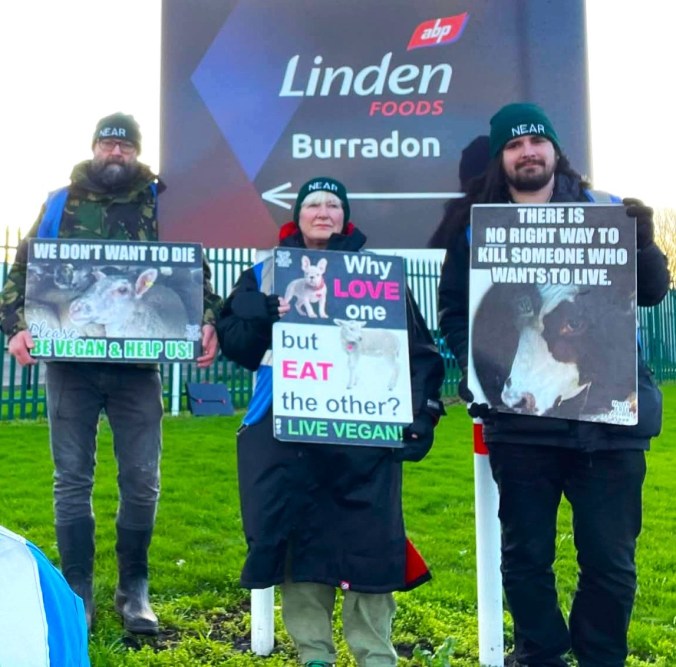
‘I’m a deputy co-ordinator for North East Animal Save who are a group who run vigils at slaughterhouses – yes, it is as grim as it sounds, but unfortunately while people continue to eat animals it’s a necessary part of our work.’
‘My work is very full on my poor husband sees me fleetingly most days but understands the importance of what I do and is very supportive – he’s also a member of NEAR.’
‘But I’m a positive person – rather than looking at how far we still have to go, I look at how far we have come. When I was a child I had no idea what being vegan meant but I know from going into schools not only do children know what it means now but there are also vegan children there – that’s progress.’
In April this year the work of hunt saboteurs featured on this site, this latest post again looks at tackling illegal foxhunting but this time using a different approach.
‘First time I witnessed a hunt I was shocked by its enormity. It was a deeply emotional experience nothing could have prepared me for it. The following week I witnessed a fox killed by hounds. That day I made a promise – I vowed to get justice for that fox. It’s his memory that drives me on.’
To find out more about the work of the Northumberland Hunt Watch I sat down with Lynne in the Littlehaven Hotel, South Shields where she started off by telling me she has always loved animals.
‘Since I was a child. My earliest memory, of being anti-hunt, dates back to school I was 10 year old. During an English class debate the teacher asked me to argue in favour of foxhunting. I was horrified and refused point-blank. Despite never having witnessed a hunt in my life I always felt an empathy for the hunted fox.’
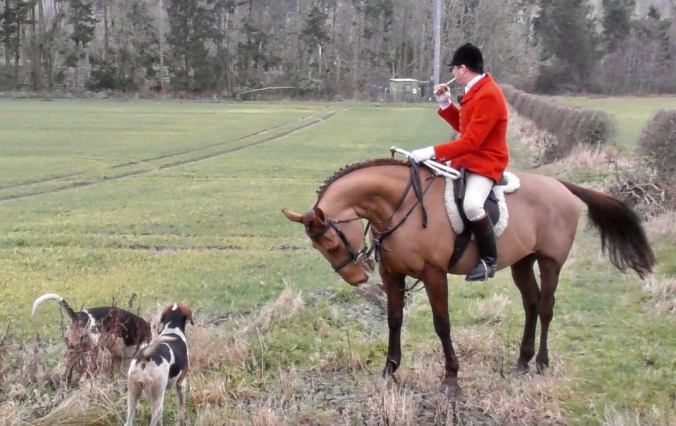
Tynedale hunt near Corbridge, Northumberland.
In 2002 Scotland banned foxhunting, England and Wales followed in 2004.
‘I thought that was the end of it. However, just because an activity is criminalised doesn’t mean it ceases to exist. Through social media I realised it was still happening on a massive scale. I was aware of the foxes out there alone with nobody to help them. I felt compelled to take action.’
‘I founded Northumberland Hunt Watch in 2020. Prior to this, I already had 5 years experience monitoring hunts. There wasn’t an anti-hunt presence in Northumberland at that time, leaving all the hunts in the area unchecked. There are some pockets of deeply engrained hunt culture in Northumberland, operating in some very rural and isolated locations.’
‘For these hunts it’s very much a way of life. They have a cultural pride in hunting, and strongly resist any attempts at criminalisation. The hunt community is a very tight community. They hunt together, socialise together, conduct business together and support one another.’
‘There are many different reasons why people foxhunt. Foxhunting has nothing to do with pest control or managing fox numbers. The hunts want foxes in the area to hunt which conflicts with the pest control argument. For some hunters it’s for the thrill of the hunt or the thrill of the kill. That is very difficult to understand.’
‘There are farmers and landowners involved in the hunt, who grant permission to access the land. Without this land there would be no foxhunting. For the riders who subscribe to the hunt, following hounds provides the freedom to ride over land that would otherwise be out of bounds. The fox is not restricted to boundary lines, so the hounds and riders are free to ride where the fox goes.’
‘The car support who follow the hunt mainly consist of elderly men. To them it’s a day out to socialise. They turn up with their binoculars, sandwiches and flasks having a good natter, they enjoy watching the hound’s work. I often talk to the members of the hunt to gain a better understanding of why they do what they do. We can’t expect to change something unless we fully understand it.’
‘We’ve talked about what we call ‘clean boot hunting’ a humane and lawful activity, which follows the scent of a human runner rather than a fox. With clean boot hunting they can still have everything they have now. The jobs will still be there, they can still have their socials and get together, their balls, their meets so they can still have their sherry and a bit hokey cokey, just don’t kill a fox. I think they fear their way of life will fall apart without hunting the fox.’
‘But humane hunting would be far more sustainable. Currently hunts claim to be trail hunting, which would involve hounds following a trail of artificial scent instead of a live fox. Unfortunately, trail hunting in my experience is just a cover for foxhunting.’
Have you a vision of what you want the group to be?
‘Yes, when I set the group up I thought I’m going to do this my way, I’m not going to war with them. I’m going to win hearts and minds. For me it was all about a love of wildlife, and a hatred of foxhunting and not a hatred of the people. I strive to end foxhunting for good so I knew that we needed to be taken seriously by the hunts and the police.’
‘I aimed to create a professional group with a credible image, as far removed from the negative stereotype as possible. We refer to ourselves as volunteers or wildlife guardians, rather than sabs, protesters, or activists. We don’t wear masks and we have a dress code. We’re conscious of how we come across to all the people we meet.’
‘Some people are just out for a dog walk in the countryside, families with kids, older people. Last thing we want to do is scare people, we want to be approachable. We’re always polite and respectful and get on with the farmers.’
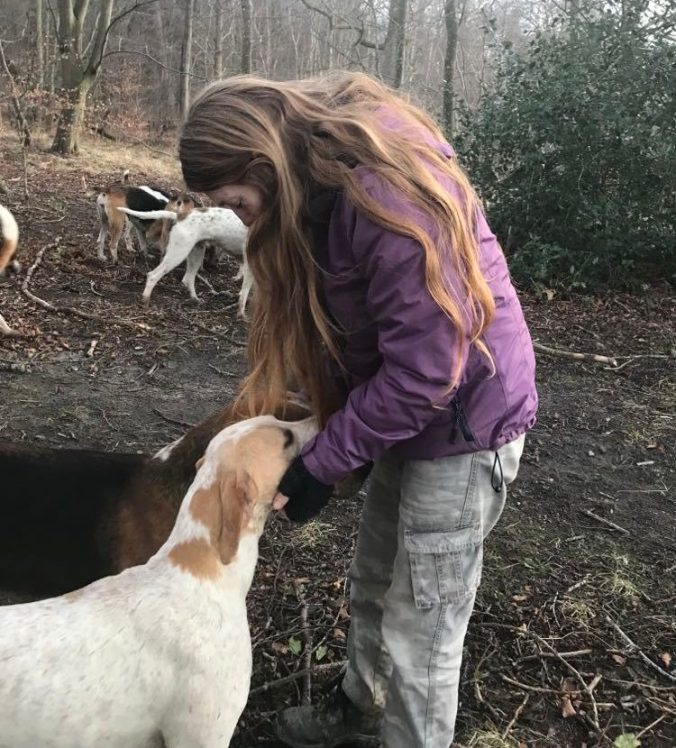
Lynn with the West Percy hounds.
‘We absolutely love the hounds they are such lovely sweet animals, we would never do anything to put them at risk, and our hunts know that. We often pop along to their hound shows in the summer some we are made more welcome than others.’
‘We aimed to build relationships and establish trust in the community and we have. All of our hunts know who we are and they know our names. We engage in polite conversations, some team members live in hunt areas, so it’s not uncommon to exchange waves. Our approach has earnt us respect and fear in equal measures!’
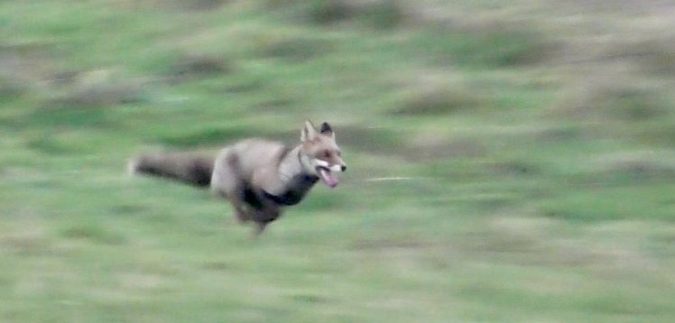
‘Our overall aim is to make the countryside a safer place for wildlife. On a day to day basis we aim to be a visible deterrent, to prevent hunting and on most occasions we are. We rarely need to intervene as our presence is often enough of a deterrent. Our hunts will often try to avoid hunting when we are there, and certainly avoid hunting in front of us.’
‘Last year at a hunt I was filming when the hounds picked up a scent and chased a fox toward me. The whip panicked and stopped them all “Lynne, can you see me stopping the hounds? Have you got it on video that I’m stopping the hounds?” I replied, “Yes, I have, thank you.” The fox made his way to safety.’
‘In the long term we aim for prosecutions as this is the only way to end foxhunting for good. To achieve prosecutions then we need to be professional and credible.’
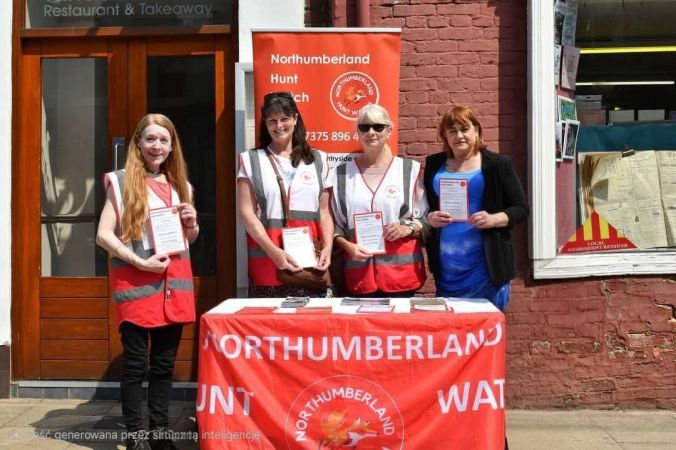
Outreach stall in Morpeth with Lynn, Judy, Amanda & Lynne
How much work is involved in the group?
‘A lot. We work very hard and put a lot of work in. I take this very seriously and am very committed to what I do. During the season we are out 2-3 times a week, despite working and other commitments. I would be out every day if I could. The fieldwork we do is just the tip of the iceberg. We do much more behind the scenes. Personally, I work on foxhunting every day of the week.’
‘I have taught myself a great deal over the years and always have my nose in a foxhunting book. I am also concluding a PhD in Criminology specialising in foxhunting with hounds. I have invested significant effort into this because I want to bring the issue of foxhunting criminality to a wider audience.’
Lynne & Judy leaving a successful Tynedale meet.
‘The lady who assists me in running the group, Judy, is a former police officer, so between us we have an in-depth knowledge of hunting and the law. We both work very hard on this, preparing cases and evidence for the police especially.’
‘Out of season we hold outreach stalls in hunt towns where we talk to the local community about our work. This has enabled us to lay the foundations for a positive brand identity while building up good relationships, trust, and respect within the community. We want the community to feel comfortable having us in their area trusting us to perform our job professionally.’
Have you experienced any threatening situations?
‘Violence and aggression from any of our hunts is exceptionally rare. We have had very few minor incidents in 5 years, most of which were dealt with swiftly, either by the police or the hunt themselves.’
‘Following one minor incident at one of our hunts I reported it to the chairman, he dealt with it, and we received an apology, so it was resolved sensibly and that was the end of it. There were no more incidents.’
‘We cover all the Northumberland Hunts from the Scottish border down to the Durham border, although Tynedale is our main hunt who we monitor regularly and have done for 5 years. They were a bit of a nightmare at first but they soon leant that it didn’t get them anywhere. They are very polite towards us now and we have built a good relationship with them. We are there to do a job which we do well and without getting into altercations.’
‘With all of our hunts we established clear expectations for behaviour from the outset ensuring that our conduct was respectful and polite. Over the years we have built a good rapport with most of them exchanging polite greetings “good morning, gentlemen” and in return “good morning, ladies.”
‘We never engage in name-calling or squabbles because throwing insults is not a stepping stone to positive change. This means that we can focus on what is truly important—the foxes. It might make someone feel better after calling someone names but it doesn’t achieve anything for the fox.’
‘The hunts also have a code of conduct regarding their behaviour towards us too. We have an unwritten rule between us we don’t call them ‘hunt scum’ and they don’t ride their horses at us, so this works well. This mutual respect means any of our team can be monitoring a hunt alone, in some isolated locations without any problems. Our approach saves lives.’
‘At one of our hunts we intervened between the fox and hounds, rating the hounds back so the fox could escape. This was in front of the hunt master and he said “thank you for helping” so we replied “no problem we’ll come back and help again next week.”
‘When we monitor hunts we focus on listening and observing, avoiding verbal confrontations is for creating a safe environment for the foxes allowing them a safe passage to escape. Foxes don’t know we are there to help them so we need to create a safe environment otherwise they would just see us as part of the pack. If there is chaos they could easily be scared back toward the hounds, we are very conscious of that. We often see foxes fleeing past us to safety. Silence is golden. It saves lives.’
How frustrating is it knowing fox hunting is illegal and it still goes on?
‘Very frustrating but there is a wide range of reasons why it continues. Weaknesses in the Hunting Act is a key issue, and also how it has been interpreted. This has provided loopholes for foxhunts to circumnavigate the law. There are so many issues that we will need an entire article to discus that alone. In a nutshell trail hunting has ensured that it is extremely difficult to prove them guilty and beyond all reasonable doubt. Consequently, trail hunting operates exactly as it was intended.’
‘We are committed to ensure that we have the best chance possible. Our behaviour will also come into question so we always act lawfully. Foxhunting is a low-level offence so if we break the law we lose the moral high ground and cannot expect the police to enforce one law while ignoring another. We have to be seen to be credible witnesses to make any progress.’
‘Because of how we operate we have built a good relationship with the rural crime team who we submit our footage to. We have had several incidents sent to the Crown Prosecution Service for review, and the police have acted swiftly in gathering the evidence.‘
Drone footage was captured of the Tyndale Hunt hunting a fox on 3 October 2024. This was submitted to the police. More information about this case can be found on the Northumberland Hunt Watch Facebook and You Tube pages.
‘There are some excellent groups across the country that have worked hard to end foxhunting, bring hunts in court or raise awareness, such as Beds and Bucks Sabs, 3 Counties Sabs, Cheshire Monitors, and West Midlands Sabs, to name a few.’
‘However, not everyone who joins a cause has genuine motivations, and the less credible groups can undermine the work of those who are genuinely committed and doing good work. It’s about quality rather than quantity, so finding people with the right attitude can be difficult.’
Lynne recording West Percy Hunt at Ingram Valley.
What have you found out about yourself since starting this group five years ago?
‘I have found that I am stronger and more resilient than I ever thought possible. If you have genuine intentions and committed to doing your best job for wildlife then you can make a difference. A middle-aged woman with a vision took on ten hunts, most of which were untouched and located in some of the most isolated rural areas of the country. I was subsequently joined by other middle-aged women to create a hardworking and professional group that has made a significant impact on hunting in this area. Never underestimate the power of middle-aged women on a mission!’
If you are interested in the work of NHW or would like to volunteer contact >>>
GHS (Group for Hunt Sabotage) has been active since October 2023 currently with a team of 8 active sabs. However, for the past 5 years Rosie Brock and her loyal sab dog Pogo have been monitoring the Braes hunt, often solo or with a small crew.
“In August young hounds are trained to chase and kill foxes. These cruel sessions take place before dawn meaning sabs are up at 4am for 4-6 weeks. This rolls straight into the main hunting season which stretches through to March ending with the traditional hunt celebration – the hunt ball” explained Rosie.
GHS continue through spring and summer with animal rights work including fundraising and direct action. Recently the GHS received some great news – from February this year they are officially approved and affiliated with the Hunt Saboteurs Association.
“After hard work and close monitoring of our actions, we’ve been recognised for our dedication and commitment to protecting wildlife and taking direct action against bloodsports. We’re proud to stand alongside other HSA groups in the UK”.
“Massive thanks to everyone who has supported us so far – whether in the field or just cheered us on – we see you. But now is the time to get involved.Whether you’re a seasoned sab or brand new to the scene there’s a role for you in the Geordie Hunt Saboteurs. Essentially, we‘re looking for people to stand up, speak out and save wildlife”.
Can you fit into the GHS?“We need boots on the ground, foot soldiers who are willing and ready to hit the fields and get muddy. We need drivers to get us there safely. We need sharp eyed quick thinking map readers and fundraisers to help keep us mobile and moving. We have a number of on-line platforms so we’re after media savvy folk to take the reins and grow our voice” added Rosie.
“We’ll show you the ropes and provide full training but most of it is really just good old fashioned common sense. You’ll see the countryside in all its glory – or inglory, and you’ll be part of something real. Get stuck in. Be part of the resistance. Join today”.
The North East has become a home from home for 57 year old Bob Campbell. In a phone call he talked about his love of music and his contribution to the punk compilation record produced in support of Hunt Saboteurs.
I love punk. You know punk to me is urban folk music – music by the people for the people. You’d have people in rural areas singing about combine harvesters then you’d have punks singing about inner city decay, the music was full of energy. After first hearing it in 1977 – I thought that’s for me.
I was born on the Isle of Lewis and grew up in Perthshire, Scotland and came down to the North East to study at Sunderland Polytechnic in 1985. I worked in Gateshead and Blyth before finally ending up working here on Teesside since 1992. My wife is local to this area and my son was born here – yeh you could say I like the North East.
I’ve been taking my son to Rebellion Festival in Blackpool’s Winter Gardens since he was 9 year old – he’s now 28. He formed The Anti septics who played the festival twice. I took the band to a lot of their gigs where I was always down the front dancing. I’m 6 foot 5 with a mohawk hair cut and wear bright colours when everyone wears dark clothes. I stand out a bit! I don’t care what people think.
I started writing songs in the late 90s then during the covid lockdown I wrote over 300 and just wanted to give them a life. I couldn’t find people to sing them as they wanted to sing their own songs so I thought I’d do it myself. I went to a few folk clubs got some ideas and formed a band in October 2022. Last August the Gutter Folk played on the Rebellion Festival – it was like holy shit!
For years on the punk scene I’ve been friends with Julian Kynaston who is a huge supporter of Hunt Sabs. He set up a gig in September 2022 in Barnsley and got me to do two songs acapella – basically my first time on stage!
At that gig headlined by UK Subs, their frontman Charlie Harper said ‘Those people who kill foxes, just remember they’ll kill you without a fucking thought’. That quote really struck a chord with Julian and inspired him to put out the compilation album ‘Give the Fox a Gun’.
Back cover of the album with Charlie Harper quote.
We recorded a couple of songs about fox hunting. As I was a countryside ranger for 20 years I know a shit load about foxes and the lies told by the fox hunting fraternity so I can articulate that into the songs.
Julian Kynaston and Alan Walton produced the album which features bands including Gutter Folk from Middlesbrough, Darlington’s In Evil Hour, Burning Flag from Halifax and punk royalty Angelic Upstarts from South Shields who contribute with their anti-hunt track ‘Give the Fox a Gun’.
Countryside wildlife was my profession for 20 years, I was a ranger around the Tees Valley so I know a lot about fox habits. Foxes are incredibly clever and smart essentially they are scavengers they would rather find something already dead than hunt for food.
When they are being hunted they will take to ground and some hunts dig them out. They’ll climb trees and follow streams so as not to leave a scent.
When sheep are worried, they huddle into a pack which is their defence mechanism. The fox will go into the middle of a flock of sheep who aren’t bothered about the fox. When the hunting dogs come along the sheep huddle tightly keeping the fox safe from the dogs.
The hunt say what they do is pest control but really they don’t catch enough to make a difference on numbers and they say it’s only the sick or old animals they hunt. It’s absolute lies. They breed and release foxes in areas they don’t know, they are completely lost so it’s an easier hunt for them.
One time they were importing foxes from France – that’s not pest control. No, the only reason they do it is for rich people to see a living animal torn to shreds in front of their eyes.
Why would they want to introduce the killing of defenceless animals to their children? They smear their kid’s faces with the fox’s blood that’s just been murdered in front of them. Hunters try to justify it as a kind way to go….no the animals are just scared, terrified.
Do you know fox hunters will pay men to protect the hunt and beat up the Sabs? Thing is fox hunting is illegal. It’s madness when you think that they are paying people to beat up people who are on the right side of the law. What we’ve had for many years is Hunt Sabs trying to break up and disturb the fox hunt – the fight goes on.
The Hunt Sabs are aiming to raise money to go towards buying equipment like a vehicle or drones to help their work. All takings from the album go toward supporting the Hunt Sabs – 90% Sheffield Hunt Sabs & 10% Gabo Wildlife.
To buy the 13 track compilation album on red vinyl contact the official website >>> www.givethefoxagun.com







 ALIKIVI UK : NORTH EAST MUSIC & CULTURE