A NIGHT WITH JETHRO TULL – with former Pirahna Brothers drummer, Tony Hodge

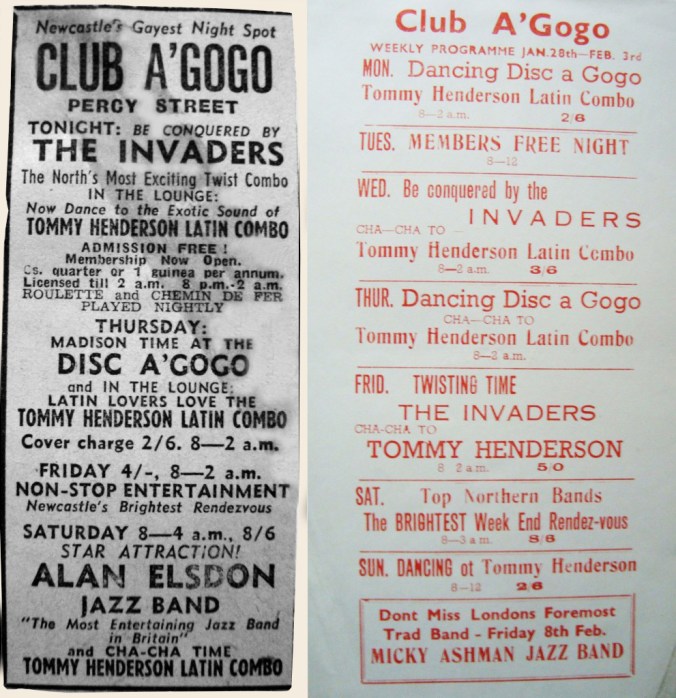
In previous posts Tony has talked about the influence Ginger Baker had on his drumming, and the many nights with friends going to watch bands like The Nice, Tina Turner, Jimi Hendrix and The Animals at Newcastle’s Club a’Gogo.

Before joining the Pirahna Brothers, Tony drummed for North East band Turm with Micky Balls (lead guitar), George Sturrock (guitar), Alf Passmore (bass) and the late John Lawton (vocals). He remembers the night they got a gig opening for Jethro Tull in a County Durham club.

‘It was an amazing experience to play on the same bill as the legendary Jethro Tull, unfortunately, the venue we were booked in was the Argus Butterfly in Peterlee. I say unfortunately because The Argus Butterfly was and still is a difficult venue for two bands to play as the stage and concert room are really small and there was an even smaller dressing room at the back of the stage’.

‘We arrived first and set our gear up  and heard that Jethro Tull and all their equipment were travelling up from London in a small Thames van’.

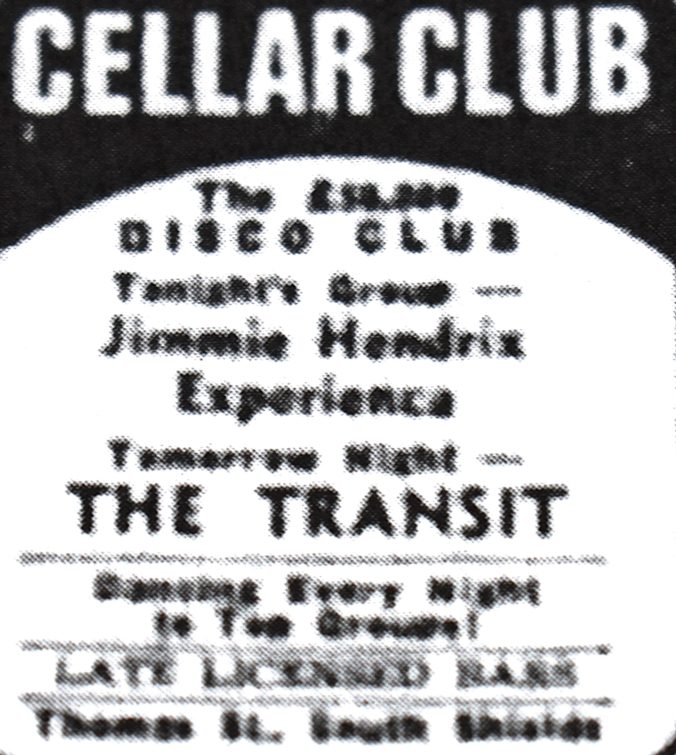
Turm at the Cellar Club, South Shields

Before big names including Cream, Pink Floyd, Deep Purple, Jimi Hendrix and Led Zeppelin packed out halls around the UK, they built their reputation playing smaller venues including Bay Hotel in Sunderland, Club a’Gogo in Newcastle, Cellar Club in South Shields,  Kirklevington Country Club in Yarm and Argus Butterfly in Peterlee.

‘When we got the booking I hadn’t heard of them as they were yet to hit the big time but when they entered the club, we were all fascinated by the lead singer. He was very thin, wore unusual hippy type clothes and had very long hair. This was becoming the fashion in London but was yet to be a fashion on Tyneside. Here was Micky and me wearing brightly coloured satin shirts in pale blue and fluorescent pink – so last year darling!’

‘All the guys were very friendly and were taken by our Geordie accents. They piled their equipment out of this small van, we wondered just how all their gear, four band members and a roadie got in the van – never mind drive 200 miles up the A1 dual carriageway. Note – there were no motorways yet’.

‘We were ready to play our set. Our fourth song in was a rousing number called Amen which had three or four sing along choruses with clapping to accompany it. This was a perfect song for John’s voice and the girls loved it’.

‘Each time the chorus started I would jump off the drums and go back stage clapping as I did. It sounds ridiculous, and it probably was, but it seemed to work well for the show’.

‘However, Mick Abrahams, the lead guitarist of Jethro Tull, was in the dressing room catching a well-deserved snooze on top of several amp covers. The first time I rushed in he jumped up in shock but then he saw the funny side when I ran back on stage for the opening riff after the sing along chorus. The next time I did it, Mick was laughing a lot as he had watched me returning just in time to start up after the chorus. The third time however he was ready. He grabbed me by the arms and didn’t let me return at the end of the chorus’.

‘The looks on the rest of my groups faces was a picture when they started with no drums. I can still see the vision in my mind today. Fortunately, he let go of me and it didn’t ruin the whole song, great guy, and a great laugh’.

‘After our opening set it was time for Jethro Tull to go on and they just couldn’t have been more different to us and were truly mesmerising. Their music was unlike anything I had heard before and their style was far away from anything I had seen before on the various stages in the North of England’. 

‘Another first for me was that Ian Anderson, the main vocalist and front man, played a flute that was a huge surprise. He also played harmonicas which he kept in small leather pouches around his waist and there was a funny side to this. He also kept his cigarette tobacco in these pouches and this meant he had to knock the tobacco out of each harmonica each time he was about to play them which was really very funny to watch’.

‘The visuals of the band were like nothing I had seen before and Ian sang many of his songs on one leg. This became his trademark as time went on and still is today. The drummer and bass players were very solid, had a great sound and the band was well received’.

‘Turm and Tull had a great time together as fellow musicians even if we probably looked a bit out of the current fashions in London. After this meeting they released Living in the Past a song that started my romance with my wife Jane many years later’.

‘They became rock superstars filling massive stadiums all around the world to thousands of people. I wonder if they ever thought back to the good old Argus Butterfly in Peterlee, the Turm and the 200 plus audience – somehow, I doubt it’.

Words: Tony Hodge

Edited: Alikivi   May 2025

More stories on the site from Tony Hodge including Jimi Hendrix, Cream, Tina Turner and Club a’Gogo.

Link to previous interview with Tony >>>

LUCKY MAN – part one, with North Shields actor & musician Tony Hodge. | ALIKIVI : NORTH EAST UK CULTURE

THIS CLUB’S A’GO GO with former Pirahna Brothers drummer, Tony Hodge

This second part of Tony’s memories feature his pilgrimage to Newcastle’s Club a’Gogo where he saw many bands who were on their way to a successful career in music. They included Amen Corner, The Nice and a young guitarist from the United States – Jimi Hendrix.

North East venues for the Hendrix tour in 1967 included dates at Kirklevington Country Club in North Yorkshire on January 15th. The Cellar Club, South Shields on February 1st and February 2nd at Imperial Hotel, Darlington with a gig at Club a’Gogo in Newcastle on March 10th.

‘We were right at the front and only a few feet away from the great man himself. He was tall and looked very young. His style of guitar playing was like no other I had ever seen – even playing with his teeth on some numbers. At one point Hendrix dropped a ten shilling note and the guy next to me rushed to pick it up and hand it back to him. He thanked him saying that was for the bands supper’.

‘He went on to finish the night with a long guitar solo and then thrust his guitar into the ceiling leaving it there with the feedback screaming as he left the stage. On many subsequent visits we saw the hole still in the ceiling. A great memory of a great night’.

‘Over the following months we saw many emerging London based bands play at the a’Gogo like ‘Amen Corner’ with Andy Fairweather Low, Jeff Beck with a very young Rod Stewart as his main vocalist wearing an extremely long college scarf and of course our very own local mega band ‘The Animals’

‘This club forged mine and many other local musicians’ tastes for the years to come and we got to see megastars playing only a few feet away from us’.

‘While I’m talking of being right up close to your idol musicians there are two more instances of things that could never happen today. On these occasions my brother Barry and I went to music events at the Sunderland University students Union’.

‘On one night ‘The Nice’ played and my brother was sitting on the edge on a two-foot-high stage only a foot or two from Keith Emerson and his famous Hammond Organ when he did the world renown stabbing of the keyboard. We also saw Tina Turner when she was still performing with Ike. She wore a one-piece lemon coloured jump suit and looked amazing. Once again, only feet away from us, wow!’

‘We didn’t know it at the time that only a few months after these events these bands would play in much bigger venues and stadiums so the days of being within a few feet of your idol were gone for ever’.

Plaque for Handyside Arcade and Club a’Gogo in Newcastle.

‘Sadly, the Club a’Gogo itself was only open for six years, it became a bingo hall as the game was becoming all the rage in the North East. Finally, the club and the surrounding buildings were demolished in the 1980’s making way for the Eldon Square shopping complex. The club was only open for a short time but the mark it left on the Newcastle music scene was amazing’.

‘These venues were where I started to love that different style of music, but it wasn’t until we formed bands that I got the chance to play it not just listen to it’.

Words: Tony Hodge

Edited: Alikivi  May 2025.

Link to previous interview with Tony from February 2021 >>>

LUCKY MAN – part one, with North Shields actor & musician Tony Hodge. | ALIKIVI : NORTH EAST UK CULTURE

AN ANIMAL IS BORN with former Piranha Brothers drummer Tony Hodge

On 1st February 1967 on his way to becoming one of the most influential guitarists of the 1960s, Jimi Hendrix played the Cellar Club in South Shields.

A previous post (19 March 2025) looked at the impact this gig had, also mentioned was the opening of the new Cellar Club in December 1966 by Cream.

Reading the article stirred up some memories for North East musician and actor Tony Hodge, he recalled the time he was introduced to the band and in particular the drummer Ginger Baker and how influential he became in his life.

‘In the sixties my good friend Ray Laidlaw played in Downtown Faction along with Rod Clements and Simon Cowe – all three became famous in the amazing band Lindisfarne. Ray and Rod had an excellent bass and drums connection, driving the band’s music with real power – I loved to hear them play’.

‘On many occasions we went to see each other’s bands play at various venues including the Briar Dene Tavern in Whitley Bay and The Nautilus Pub, a short walk from my house that became a regular haunt from 1964 onwards.’

‘I would often go with Micky Balls and meet Ray and other likeminded musicians like Billy Mitchel, Will Browell and Billy Dunn. We always had great meetups and all types of music were discussed’.

Micky Balls and Tony in Newcastle.

‘One night near Christmas 1966 Ray mentioned he had heard of a drummer that played with two bass drums. This drummer apparently could play a drum roll with his feet!’

‘A drum roll is hard enough to play with your hands using sticks, never mind with your feet using foot pedals. I found it hard to do a fast double beat that was required in some pop songs of the time never mind a full drum roll. I said I couldn’t see that it was possible and we had quite a heated discussion about how impossible it would be’.

Fortunately, the band were due to play at Newcastle Club a’Gogo and Ray saw this as a chance to convince Tony. The Club a’Gogo was a popular venue housed in two upstairs rooms above Handyside Arcade in Newcastle.

It opened in 1962 as a jazz club but broadened its musical style and became better known as a Soul, Rhythm n Blues and Rock venue attracting big stars like The Who, The Rolling Stones, Jeff Beck and local stars The Animals.

Tony explained ‘It was split into two separate rooms each with its own stage three feet up from the floor. One room was called ‘The young set’ for under eighteens and the other was called ‘The jazz lounge’ for everyone young and not so young’.

‘When the big stars played there, they would play a set in each room. This must have been a nightmare for the road crew as during the interval everything needed to be set up in one room then taken down and set up in the other’.

‘If you got in early, you could be right at the front and literally a couple of feet from the stars. That was amazing for a fan. On every visit I always got to the front and had the most amazing view of people who were to become megastars’.

‘We had come to see the band that we had discussed in the pub with this special drummer. It was a newly formed band from London. Unusually they were just a three-piece group, lead guitar, bass guitar and drums and had no separate singer as was the popular set up of the time’.

‘The club had an amazing atmosphere, it was dark and you were all packed in together. Small lights lit the stage which was only big enough for artists to play and not a lot of extra room for big theatrics. The stage was absolutely packed with equipment’.

‘To each corner were two sets of PA speakers and on the right-hand side were four Marshall 4×12 cabinets and the same on the left-hand side. In the middle was a set of Ludwig drums with two tom toms, two floor toms and two bass drums showing the name Ginger on one drum and Baker on the other. Yes, this band was Cream and the amazing drummer Ginger Baker. At this time of course, I had no idea who he was – but that was about to change’.

‘On came a man dressed in a long purple Teddy boy jacket and a ginger quiff with a half pint glass of rum (I think) in his hand. He sat down picked up his sticks and hit all four tom-toms then did an amazing roll on the two bass drums. He stood up and left through the back door of the stage, his sound check completed. This was the one and only Ginger Baker’.

‘Both Ray and I just stood and looked at each other in amazement. The speed and technique were just amazing and so different to us two young drummers, I heard nothing like it before’.

‘I was still recovering when two other guys entered the stage and came to the microphone. Ginger came through and sat down behind this huge kit. They started to play with no count in just heavy tom-tom beats, then guitar, then the man in front of me who was Jack Bruce started to sing ‘Driving in my car, smoking a cigar, the only time I’m happy is when I play my guitar’.

‘The opening to N.S.U. was like nothing I had heard or played – ever! The drums rolled around the kit the volume was deafening and when the guitar solo came in by Eric Clapton the hairs on my neck stood up. It was loud, very loud. It was something you never forget’.

‘The rest of the set was also amazing playing in a style I could never have imagined. Ginger played a drum solo that was again long and loud but it ended with him playing the two bass drums and his tom toms in a chest thumping roll that went on for several minutes.

That was the famous twin bass drum roll Ray had been talking about, it was true, a drummer could play a drum roll with his feet. I had to learn that, I had to be able to play drum rolls with my feet. I was hooked’.

‘The trip back on the bus was all about the miracle we had just seen, a drummer like no other. I was changed overnight, by this one-man, Ginger Baker. Without my friend Ray persuading me to go to the Gogo to see him I would not have become the mad drummer I became. That night ‘Animal’ was born’.

‘I had to have a double bass drum kit and if possible, a Ludwig one. Off again to the music shop and more debt but I got a lovely Ludwig drum kit with a pearl finish just like Ringo Starr. It looked and sounded fantastic’.

‘Once I got this kit my whole style changed. I was more brash and started playing a drum solo at the end of The Pirahna Brothers first half. It was long, loud and not very technical but this new style and the notoriety it brought with it opened many doors. My nickname was ‘Animal’ and people shouted it out at venues’.

More stories from Tony Hodge coming soon including Jimi Hendrix, The Nice, Jethro Tull and Tina Turner.

Edited: Alikivi   May 2025

Link to previous interview with Tony from February 2021 >>>

LUCKY MAN – part one, with North Shields actor & musician Tony Hodge. | ALIKIVI : NORTH EAST UK CULTURE

HENDRIX IN SHIELDS

In December 1966 a brand new £50,000 club in South Shields was opened by Cream featuring Eric Clapton on guitar. Back in 2007 I interviewed businessman and owner Stan Henry.

“I used to run a school of dancing with my mother in Beach Road and we wanted to expand our facilities because it was limited in size. So, we went to the local authorities and they gave us a site in Thomas Street which we built the Cellar Club on. We had the Cream on and Jimi Hendrix was there”.

In the coming months Geno Washington, The Family and the John Mayall Blues Breakers were booked to appear, however on Wednesday 1st February 1967 the Jimi Hendrix Experience played The Cellar Club.

On the same night, entertainment in the town included local stage acts at various clubs including the Latino, La Strada, Ranch House and at the ABC cinema the main feature film was ‘One Million Years B.C.’ starring Raquel Welch – wey she was in technicolour!

But the big draw at the 200 capacity Cellar Club was Hendrix. Being just a bairn I wasn’t there but I did find two punters who were regulars at the club. Local musician and regular Rod Hall remembers…

“The Cellar Club was my second home you know. I remember walking down the street near the club and this van pulled up and a bloke popped his head out and asked in a deep voice “Where’s the Cellar Club?” I looked at him and it was Eric Clapton on Fowler Street in a van!”

Another regular was music fan David Robertson “My road to Damascus moment was seeing Jimi Hendrix at the Cellar Club. At first, we thought he better be good cos we’ve paid about ten bob to get in. After watching Eric Clapton everyone wanted to be a guitarist. After Hendrix everybody wanted to be in a band”.

On the off chance the local newspaper had written a review of the gig I recently popped into the local history section of The Word (library) and searched the archives. Luckily, I found this in the Shields Gazette by reporter David Jenkins, it was printed Thursday 9th February 1967. This picture needs to be credited but I think the photograph was taken in the Cellar Club by South Shields photographer Freddie Mudditt.

(Review start) Jimi will soon be ‘leading the fleet’ (headline)

Jimi Hendrix IS an experience. Like a drop of gin in a bucket of retired tonic, heady serum for post teen starvation (which, finger shakily on my own pulse, I diagnose these days).

The actual teen scene of the Cellar Club though like Madame Tussaud’s. The 23 year old next to me gasped “Go” and people turned to stare.

Playing his guitar with his teeth, his Indian head-dress tubes of hair flailing, he fixes a glorious enraptured grin on his face. Little spouts of sweat gloop from temples.

More important, the fiery body of sound, the completely original effect he squeezes out of his guitar. “Follow that” said Les Gofton, lead singer of The Bond, who were to take over later – make Hendrix the most exciting animal in the cage at the moment.

But the Cellar is inhabited by so many? (unreadable). A Wild Thing like you never heard it raises a small cheer, small beer. What on earth do you want?

Well, wait a couple of years, when you have heard another 10,000 discs, as I have, and you too will fall about a Hendrix. (He came up specially to South Shields for this one night appearance). Some day soon he will be the admiral-in-chief. Pipe him aboard somebody, for heavens sake. (Review end)

Little did they know the impact that Jimi Hendrix and his music would have. He has been described as one of the most influential guitarists of the 1960s, but sadly he died in London on 18 September 1970 aged just 27.

After being in business as a nightclub during the 80s and 90s the Cellar was revived as a live music venue until the club was sold and renovated into a dental practice in the 2000s.

If you have a story about the Cellar Club to add to the site just get in touch.

Alikivi   March 2025

SHORT CUTS – Hendrix & Lemmy in Shields

The music world has always had its fair share of myths, legends and hell raising antics. The time Ozzy bit the head off a dove or was it a bat? Well both actually. According to reports one was in record company offices the other was live on stage. He also snorted a line of ants. The list is endless for the Oz.

I came across a gaffer tape incident involving a music journalist and Killing Joke, as I was trying to find out who, where and when it happened – if it did! There were other short stories I read some with North East connections.

Sadly, both deceased now, Lemmy and Jimi Hendrix were two of music’s biggest characters – their spirit and influence live on. But what is their connection to my home town of South Shields?

In his autobiography ‘White Line Fever’ Lemmy recalls that in early 1967 “I went up north. I woke up one morning sitting on a beach in South Shields eating cold baked beans out of a can with my comb. I thought there’s got to be more to life than this.”

Was this just a random visit to the seaside town? Why not go to the main cities of Newcastle or Sunderland close by, or was there someone or something else in the town that attracted him?

Around the same time Lemmy was a roadie for Jimi Hendrix. He explained in his biography that in early 1967 he got in touch with a friend, Neville Chesters, who was a roadie for Hendrix. Lemmy ended up dossing down at Neville’s London flat that he was sharing with Hendrix’s bass player.

Lemmy recalls “They needed a spare set of hands, so about three weeks after I landed at Neville’s, I got a job working with them. I worked for Hendrix’s band for about a year on all the TV shows and tours through England. I was only a fetcher and a lifter but still it was an amazing experience”.

Even though he didn’t expand on the beach story the timeline of the visit to South Shields and a gig sort of fits, but what we do know for certain is that Jimi Hendrix played the Cellar Club, South Shields on 1st February 1967.

When Lemmy was a roadie was that when he ended up on South Shields beach and not on a random visit? Or has he been twice? We’ve got to take in account that after a full on rock n roll lifestyle with Hawkwind and Motorhead, Lemmy’s memory might have been a bit fuzzy remembering events for his biography.

Just a couple of thoughts here – the beach is only a 5 minute drive away from the club, plus to hoy a spanner in the works was Lemmy even a roadie at the Shields gig or did he join the road crew at a later date?

He explained in his biography – ‘I worked for Hendrix’s band for about a year on all the TV shows and the tours through England’. I suppose we’ll never know for certain unless a Hendrix or Lemmy aficionado can help nail down specific dates. Anyone got access to their diaries!

A post looking further into Hendrix’s South Shields gig will be added to the site soon. Where you there in the audience? Where you a member of local band The Bond who also played that night? If you have any information, much appreciated if you get in touch.

Alikivi   March 2025

Research >>>

White Line Fever by Lemmy with Janiss Garza.

Concert Archives – Jimi Hendrix

CHAIRMAN WOOD OF WALLSEND  in conversation with ex Impulse Studio/Neat records bigwig David Wood

The last time I met David was in October 2019 he talked about starting up Impulse Studio in Wallsend and the legendary record label Neat.

David exclusively revealed how the success of North East comedian Bobby Thompson kick started the label which went on to spawn chief headbangers Raven, Venom, Blitzkreig and Tygers of Pan Tang who in turn were a huge influence on American bands Metallica, Anthrax and Megadeath. Read the interview here >>>

THE FIXER – in conversation with former Impulse Studio and Neat Records owner David Wood | ALIKIVI : NORTH EAST UK CULTURE

We’re in The Customs House, South Shields chatting over a pot of tea and David is in a talkative mood. We talk about North East music and how influential live music show The Tube was, and how it outclassed other music TV. I was lucky to be in the audience of the ground breaking show and being exposed to different genres of music that opened my eyes and ears.

I remember The Tube. I took Venom to the studio they weren’t playing they were there to highlight the type of music they were doing and getting their name out. On that occasion Madonna and Cliff Richards were also on recalls David.

I knew Geoff Wonfor and his wife Andrea who both worked there. I was surprised when it was shut down it was a beautiful studio. Andrea worked on the Lindisfarne film in our recording studio in Wallsend, that was for local news. Unfortunately, a lot of that footage and much more has been lost. Andrea done really well she ended up an executive at Channel Four.

However, my interest in music goes back to when I was 16 year old, a long time ago I’m nearly 80 now. I remember asking a bank manager for a loan to open a recording studio ‘A what?’ he replied. There was a drummer from Howdon came to see me, he looked around ‘Is this yer studio is it. A recording studio in Wallsend? Ya must be f***in’ mad’. That just gave me a push to get on with it.

Councils weren’t interested. Music wasn’t taught much in schools then. We had only one school from Blyth who had enough sense to come down and get the kids to know what it was all about. If you encourage people to find out about things it works on all parts of their life rather than trudging about.

At Impulse I ended up recording every Tom, Dick and Harry in the North East. There was John McCoy and his band. John ran the Kirklevington Country Club near Stockton on the A19. His brother was chef in the restaurant downstairs while bands played upstairs, the club booked in a lot of big acts including Jimi Hendrix.

I have the recording here that I did for them at Impulse in Wallsend, I was 21 we had just started the studio. This must be from 1967 or 68 the time they opened for Jimi Hendrix. They were some band, I tell ya the Real McCoy could really play.

John was a nice bloke, he must be in his 80’s now, he was a really good musician (I’m in touch with John his stories will be added to the site soon). I saw the band at Middlesbrough Town Hall that was always a good gig. I used to go to the Country Club because the food was amazing – charcoal grilled fillet steak in red wine sauce with all the trimmings …beautiful.

We had bands coming to Impulse like The Sect, Half Breed, John Miles – he was brilliant, a class act, a great songwriter, it’s very sad he’s not around now he was such a nice bloke. As a studio it was how basic can you get really but we were all trying to learn new things – that’s how you start.

All the stuff we were working on in the studio was original songs – folk, alternative, punk. We had The Carpettes and Penetration from down Durham way, and from your doorstep in South Shields who else but the Angelic Upstarts! Yes, they were a wild bunch! I didn’t do an LP with them at Neat records it was only the first single ‘Liddle Towers’ and ‘Police Oppression’.

Cover for Angelic Upstarts 7″ single ‘The Murder of Liddle Towers’.

I remember years later they were on Warner Brothers and I got a phone call ‘I need the tracks you did with them to put on an LP, can you mix them and send them to us’. In the archive I had the 16 or 24 track tape they had done so it was possible. ‘When do you need it for‘? ‘Tomorrow morning’. I was up all night I couldn’t get the engineer so had to set it all up but got there in the end and they paid the bill for re-mixing.

But thinking back the Upstarts were fine lads I got on with them. I went to see them at the Guildhall in Newcastle and out comes the pigs head with a helmet on which they start kicking around the stage! I could see what they were doing. People like a bit of edge to things I see it now when you watch TV. A band wouldn’t be able to do that now – probably get them locked up.

There was a lot of musicians who really worked at it and built themselves up, there was even my milkman. Well, it was his son Gordon who used to work weekends to collect the money with his brother Phil. Thing was I used to frequent the Peoples’ Theatre in Newcastle’s Haymarket, this was around 1970, ‘71. My friend Andy Hudson talked about a Newcastle Big Band, around 20 of them – there was sax, drummer, trombone all sorts and of course the bass player was Gordon Sumner or Sting as he became.

They played all this American big band stuff there were some professional players in there like Ronnie Pearson the drummer. But sometimes they weren’t taken seriously as there were members who had day jobs or on the dole – it was a real mixed bag. Andy used to lead it and it was really good, the place would get packed out, a good atmosphere.

I used to go on a Sunday and had the idea to record them at Newcastle Playhouse. I took up a portable kit, a Revox quarter inch tape recorder and made a record which we put out, just a few hundred copies pressed. We sold them at the gigs, ironically the bands do things like that now to make money which is the only way for most bands.

Andy had good contacts and one of them was the airline to Holland. He fixed up a gig for the band to play for the Mayor of Amsterdam, it was some kind of twinning town or similar. We all got on the plane with the instruments for a 7.30am flight to Amsterdam it was only a short flight. When we got to the town hall we set up and had a bit practice. The Mayor turned up and we met him and he gave us a few drinks….within an hour we had a good skinful and were bladdered.

The flight back after the show was much later in the day so Andy suggested a walk around town. Not everyone went just the hardcore were left walking around. We eventually ended up in the red light district with its little bars and clubs. There was a few of us so we negotiated a cheaper admission into a live show.

Some lads still had their instruments with them as we sat down to watch the show. A couple got on stage and started doing their act and got well ‘at it’. One of our lads got his trombone out and waited for a certain movement by the act then played a short burst – it didn’t go down well. The lass on stage gave them ‘what fettle’. ‘We are professionals, this is our job’! The lads were thrown out by the manager. You’d have to ask Sting if he was there.

Andy then arranged a visit down to Pau in France near northern Spain. I went with my recording equipment and we took the gear in a transit van down through France. Part of the road was Le Mons race track it was so smooth you couldn’t hear the tyres. In all it took about two days.

We had a member of the band with us in the van and he had an accident in his underwear, so he chucked them into the back of the van. When you went abroad you used to have a carnet which was a document listing everything in the van to make sure you brought everything back. Everything was listed down to the name of the instrument, serial number, colour, value – you had to sit down and type out pages of it. Then apply for it, then get it stamped before you go anywhere.

We get to the border and the customs officer checked the carnet. ‘So, you are a band, open the doors and just step out the van’. We open the back doors the smell hits them. Holding their noses they quickly say ‘Hurry up, close them and be on your way’! Touring at its best.

We then went to Pau municipal casino. It was like a big echo chamber in there, I remember they played ‘Hey Jude’ with everyone singing along to the chorus. That was a good recording, we spliced it with a version from a Newcastle recording, it came out great.

We sorted out digs at the university because hotels would have been expensive for all the band and crew. As we tucked in to our first meal it was ‘What’s this? – it’s a bit tough’. It was cheval – we all had horse steak for the first time.

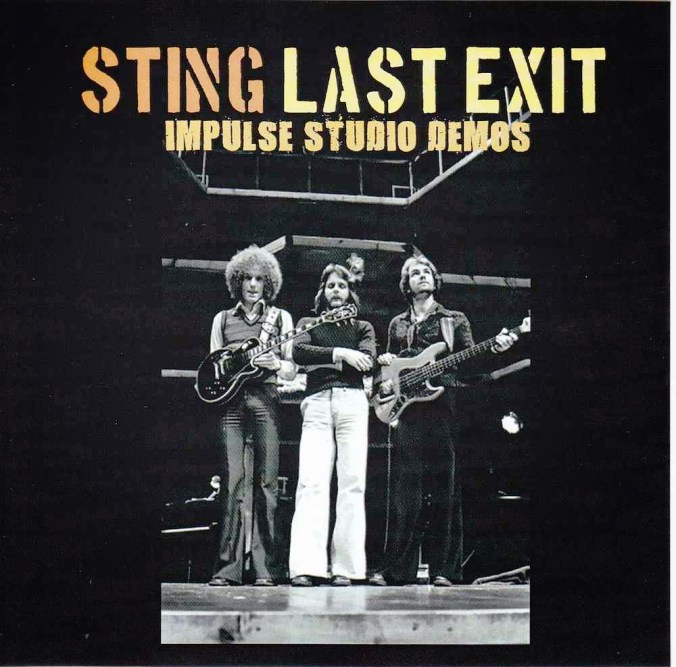
We crossed the border and travelled to San Sebastian, there was a jazz festival with big names on, Last Exit played in the town square, I don’t think the Big Band played there. I remember Sting played bass in Last Exit and other members of the Big Band were also in Last Exit.  

When it was all over, we headed to Bilboa and jumped on the ferry. The crew found out about the band travelling over to England so invited them down to the Pig and Whistle bar in the bowels of the ship.

It was a great atmosphere with jam sessions going on, laughter, food and a few drinks – well more than a few drinks. At the end of the session as we were coming into Portsmouth, I went to the bar to pay but the steward said ‘no, nothing’. I insisted ‘Come on the boss told me to sort it out you’ve been really good, we’ve enjoyed ourselves, how much do we owe?’ ‘Ok’ he replied ‘One pound’. Wasn’t that a great gesture.

You know it was 2011 when the Borough Theatre in Wallsend where Impulse studio and Neat records were based was eventually demolished, it had been lying empty for years. Looking back, it was a great time but to be honest I just wanted to hoy the keys away. I worked there from 1966 to 2001. The years since then have passed very quickly.

After I sold Neat records I ran a Theatre group which went well until Covid destroyed the numbers involved so we are building it back up again. I kept a lot of the group together through ZOOM. I was also on the local club committee at Cullercoats on the North East coast here.

Now I’m writing short comedy scripts for a podcast. I’m trying to get them on local radio. Problem I have is some of its adult humour you might laugh your socks off but not sure you’ll hear it on the radio.

What else do I do? I’m also on a committee for wine tasting because I like my wine. That’s been going for 40 years. We also like our holidays, we have a few planned this year. We look after our Grandchildren and dogs and take them out to the country each weekend, yes you just get on with things don’t ya. I’ve also been involved with a few compilation CDs with the Cherry Red label, I’ll let you know all about that when we catch up next time.

Alikivi   February 2025.

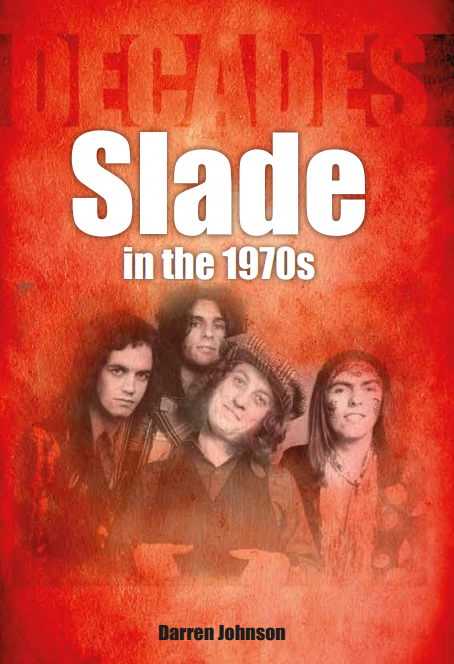
SLADE in the SEVENTIES – with author, Darren Johnson

I was encouraged by the reaction to my Sweet book and began work on one about Suzi Quatro, another big ‘70s icon that I’ve always been a huge fan of. However, the first band I truly fell in love with was Slade said author Darren Johnson.

Originally from the North West, Darren moved to London in 1990 where he spent over twenty years working full time in politics…

My professional background was in politics and campaigning so I’d written a lot about current affairs and had various articles published in the national press – from tackling climate change to building more council housing.

After stepping back from politics Darren moved out of the capital and in 2016 based himself in Hastings, East Sussex.

When I no longer had an endless cycle of meetings to attend, one of the things I was determined to do was go to more live gigs. I started writing a regular blog, reviewing gigs and albums, the music writing grew from there. You can say I came to music writing fairly late in life.

Who are you listening to now ?

I still love all my classic rock – from glam to prog to metal and everything in between. I’ve been really getting into Barclay James Harvest lately and snapping up loads of their albums on Ebay.

I also listen to a lot of folk, too. it all depends on my mood. Newer bands I’ve been impressed with include Scarlet Rebels, Buzzard Buzzard Buzzard and Toledo Steel.

What inspired you to write about SLADE ?

Early on during lockdown I woke up after dreaming that I’d written a book about glam rock band The Sweet. I felt really proud of myself for all of half a second until I realised it was just a dream.

It did plant an idea in my head though, and later that morning emailed Stephen Lambe at Sonicbond Publishing to see if he was interested – and he was.

The Sweet in the 1970s was released in 2021. In their Decades series Sonicbond Publishing have released a number of extensively researched music books from different authors, bands include Curved Air, Uriah Heep and Alice Cooper.

I was a little kid back in the early ‘70s and while I remember them from that time, it wasn’t until Slade had their comeback in the early 1980s that I really got into them.

I was a young teenager by then and the Slade revival came at the right time for me. As soon as the single ‘We’ll Bring The House Down’ came out I was hooked.

A true Geordie hero was Chas Chandler, he was enormously important to the band’s success. After he stopped working with Jimi Hendrix he became their manager and producer.

Chas Chandler was born in Newcastle in 1938 and was founder member and bassist with The Animals. He owned recording studios and labels, and was influential in bringing the 10,000 seater Arena to Newcastle.

(Link below to a snapshot of the life of Chas Chandler in Home Newcastle, posted 8th July 2019).

Unlike with Hendrix, who enjoyed almost instant success with Chandler, it was a long hard slog for Slade. They didn’t have their first hit ‘Get Down and Get With It’ until 1971, two years after Chandler began managing them.

Chas’s role in helping define not only the trademark sound of Slade but the trademark sound of glam should not be under-estimated.

When it came to recording ‘Get Down’, Chandler had the genius idea of adding foot-stomping and hand-claps to toughen up the sound.

That sound became as intrinsic to glam rock as the moment Marc Bolan put glitter on his cheeks that same year. It was a sound that other producers of the era like Phil Wainman, Mike Chapman and Mike Leander would follow.

When researching the book did you come across anything unexpected?

I was familiar with Slade’s history and was well aware of the struggles they faced in the second half of the 1970s as the glam scene faded from fashion and were no longer flavour of the month.

But until I spent time in the British Library trawling through back issues of Sounds, Melody Maker and NME, I didn’t realise how vitriolic some of the music journalists where. One Sounds reviewer wrote that if he had written songs as bad as Slade, he’d commit suicide.

But once Slade had their comeback after a spectacular performance at Reading festival in 1980 – where they stepped in at the last minute after Ozzy Osbourne pulled out – the very same papers were raving about Slade once again.

What do the members of Slade think about the book ?

I’ve interviewed both Don Powell and Jim Lea in recent years and insights from those interviews appear in the book. Along with archive material from reviews, interviews and news stories, plus reflections from individual Slade fans. I will try and make sure Noddy, Dave, Jim and Don all get a copy of the book though!

Have you any plans for another book ?

I ended up writing three books in just over two years so made a decision to wait until this one came out before thinking about any more.

Writing and researching is a hugely rewarding and enjoyable process for me but I didn’t want it to become like a conveyor belt. I thought it would be sensible to let this one come out before I started another. I’ve had various ideas but not made any firm commitments yet.

In the meantime I’ve been writing various things for my blog and doing some PR work for a number of artists. I handled the tour publicity for the recent Lust For Life Tour which brought together Glen Matlock, Clem Burke, Katie Puckrik and others to celebrate Iggy Pop’s classic album with a series of gigs, which was a brilliant thing to work on.

Are you going to any gigs soon ?

I’m seeing Francis Rossi doing one of his talk shows in Hastings soon and I’ve also got tickets for Iggy Pop and Blondie at Crystal Palace in July.

Check the Amazon official website to purchase Slade in the 1970s release date 26th May 2023.

Read Darren’s music blog at:

https://darrensmusicblog.com/

For more information about Sonicbond publishing:

https://www.sonicbondpublishing.co.uk/

Contact Darren Johnson Writing, Music PR, Campaigns & Communications Support at Crowflies Communications

@crowfliescomms 

Chas Chandler : HOME NEWCASTLE – snapshot from the life of musician, manager and record producer Chas Chandler 1938-96. | ALIKIVI : NORTH EAST UK (garyalikivi.com)

Alikivi  April 2023

TYNE & WEIRD – with author Rob Kilburn

Folklore, urban legends, strange happenings and eccentric characters from history are all brought to life in Tyne and Weird, Rob Kilburn’s first book.

I asked 27 year old Seaburn lad Rob, what inspired you to write this book ?

‘I feel it’s important to be aware of some of our own history and I think on a personal level it was about finding inspiring characters and stories from the North East’

‘I started Tyne and Weird on Facebook a couple of years ago with the aim of building up an audience. I started sharing stories from around the North East that I found interesting, exploring quirky, strange history and some darker themes’.

Did you come across any surprises when researching the stories ?

‘I think the sheer amount of history unique to the area was a bit of surprise. The more you dig into archives and connect with community you realise how much of the world is connected to our little part of England’.

Have you a favourite story in the book ?

‘One story I found particularly interesting was the two lads from Gateshead who allegedly captured the Loch Ness Monster on camera’.

Is there a story set in South Shields ?

‘Yes, there are stories from all over Tyne and Wear. South Shields has had a number of interesting visitors like Buffalo Bill, Houdini and Jimi Hendrix to name just a few’. 

Have you an idea for future projects ?

‘Yes, I am currently working on a sequel which will also look at areas in the North East outside of Tyne and Weird. There is a lot of weird out there and some of the stories in this one are fantastic’.

Where is the book available ?

The book is available on Amazon or you can get it directly from me here:
https://www.etsy.com/uk/listing/898847869/tyne-and-weird-the-book

Interview by Alikivi   March 2021.

HOME NEWCASTLE – snapshot from the life of musician, manager and record producer Chas Chandler 1938-96.

For many Tynesiders 1st February 1967 was a defining moment in music history. A packed New Cellar Club in South Shields saw the Jimi Hendrix Experience live on stage, a unique musician from New York who had been brought over to the UK by Chas.

An audience member told me ‘After watching Cream with Eric Clapton play the opening night at the Cellar people picked up the guitar, but after Hendrix played, loads of bands formed on Tyneside’.

Brian James Chandler was brought up in Heaton, Newcastle, and after leaving school he worked in the shipyards. His early years as a musician were spent playing bass in local bands like The Kon-Tors.

Another band on the scene were Kansas City Five, one of their member’s was Alan Price.

The Club a Go-Go in Newcastle was the venue, for bands like The Yardbirds, Rolling Stones and John Lee Hooker. Also getting regular gigs were the Alan Price Rhythm & Blues Combo formed by Chandler and Price.

They were joined by Eric Burdon on vocals. Three down two to go.

With regular gigs at The Old Vic in Whitley Bay and Club a Go-Go, Chas asked drummer John Steel to join… ‘You’ll make £14 per week’.

Next up was North Shields guitarist Hilton Valentine and finally by September ’63 the Animals line-up was complete – Burdon, Price, Chandler, Steel and Valentine.

In 1964 the band opened a UK tour for Chuck Berry and Carl Perkins. By the summer of ’66 The Animals were hugely popular after many TV appearances and hit’s including House of the Rising Sun and We Gotta Get Out of This Place.

‘We toured non-stop for three years but hardly got a penny’. But on their last American tour things were about to change.

Chas walked into a Greenwich Village club in New York to watch a young guitarist. It took one look for him to decide he wanted Jimi Hendrix to come to the UK.

After helping him arrange a passport Chas phoned the airline ‘I’d like two first class tickets to London. One way’.

The UK capital in 1966 was aptly called ‘Swinging London’ and Chas thought it was the perfect launch pad for Hendrix’ new career.

At his expense, Chas rushed the Jimi Hendrix Experience into a studio to record Hey Joe which opened the doors for them. Purple Haze followed and the rest is history.

Through the ’70s Chas bought Portland Studio in London and ran a number of record labels including Barn Records, Six of the Best and Cheapskate Records.

He was also very successful as manager and producer of ’70s chart regulars Slade who had a run of hit singles, before he briefly played in a reformed Animals.

By the 1980’s Chas was manager and producer of 21 Strangers, a North East band that had two UK singles on the Charisma label.

By the ’90s large entertainment centres were springing up around the UK where live music and sporting events were held in the same venue.

Chas and his business partner Nigel Stanger were the brains behind a new venture. They secured financial support and on the 18th November 1995 the 10,000 seater Newcastle Arena opened for business.

Sadly, on 17th July 1996 Chas died in Newcastle General Hospital. But he left behind a rich musical history including The Animals, Jimi Hendrix, Slade and Newcastle Arena.

Gary Alikivi    June 2019.

MOTLEY CREW – former stagehand Mark Johnson remembers the crazy Mayfair nights.

001

We all remember our first gigs. Sabbath, AC/DC, Motorhead, Ozzy and Judas Priest at Newcastle City Hall and at the Mayfair with it’s over 18 policy was Tygers of Pan Tang, Raven and Hanoi Rocks with my last one before it was demolished, were the Fun Lovin’ Criminals in ’98.

I remember the distinctive green and orange day glo posters advertising gigs at The Mayfair. Recently I talked with former stagehand Mark Johnson, who with his friends Dave Mitcheson and Steve Smith, have recently opened Bad Moon Prints and aim to reproduce those iconic posters….

Basically, we were reminiscing about all the great gigs we had seen at Newcastle Mayfair in its heyday. My first gig was the Pink Fairies in ‘76 and then I saw AC/DC, Judas Priest, Iron Maiden, Cheap Trick, there were loads. Every Friday we would be there.

We thought it would be a great idea if we could reproduce the gig posters from all the iconic acts that played the Mayfair including Zeppelin, Floyd, Sabbath, Queen, Bowie, The Who and Nirvana.

Very few, if any of the early originals are now in existence. We managed to get originals of the Led Zeppelin posters from both Sunderland and Newcastle in ’71. They were in very poor condition. But I have a few originals which I nicked off the wall from when I worked there (laughs).

When did you work at the Mayfair ?

I was on the stage crew for a couple of years. My first job was in November ‘78 when AC/DC played. Then it was every Friday with the likes of Judas Priest, The Clash, Police, Cheap Trick, Ramones and Journey to name a few.

I also worked at the Newcastle City Hall from summer ‘79 till around summer ‘81. I was in the same squad that also worked the Newcastle Polytechnic and Sunderland Mayfair which was a lot easier venue to load in.

How did you get on the crew ?

I was a student at Newcastle College and this guy I knew who already worked there just asked if I fancied earning £10, a cheeseburger, drinks tokens and seeing AC/DC ? (laughs).

We would start loading in from 11am and it ended up around ten to twelve of us long haired types unloading two articulated trucks and taking the gear down an old service lift and using the fire escape stairs.

How much gear are you talking about ?

Well, these were big bands, AC/DC, Journey, Sammy Hagar, The Police, with all their sound and lighting gear, tons really. The bands would have their own professional crew, we would just hump the gear in and out.

Their crew would be the drum and guitar techs, lighting and sound guy’s etc. Those guy’s would know where everything went while we were just a rabble of young daft music fan’s getting in the gig for nowt (laughs).

When would the band appear ?

They would rock up in the afternoon for the soundcheck, we would sit and watch them. Maybe hang around for a few drinks then go back to the hotel.

When the bands were on stage, we would either be tasked with doing follow spots, standing at the side of the stage or nicking their beer from the backstage area.

Some of them were really canny guy’s, usually the techs had more of an ego on them than the actual band members, but we had some great laughs.

After the gig we would bring all the equipment back up the stairs. The load out would take until around 4-5am. I think one night it was Molly Hatchett’s sound desk that went flying back down four flights of concrete stairs because the local crew were rather a bit too refreshed. Their tour Manager wasn’t chuffed.

We didn’t have any stage management or anything, half the time it was chaos, and we used some dodgy characters. We were on the 5am train going home once and one of the lads had nicked half a side of beef from the kitchens which raised a few eyebrows.

Are there any stand out gigs that you can remember ?

Yeah, the Two-Tone tour with The Specials, Selecter and Madness. Basically, there was a sea of skinheads, mods and punks and there was one big fight from start to finish. Tables chucked off balconies. Mayhem.

All of the stage crew had long hair, so we just stood at the side of the stage or backstage and kept out of it. Think it was the night when the police with dogs turned up – or was that The Clash ?

Can you remember your last gig working at the Mayfair ?

My last gig working there was The Clash. Around that time, I had done five or six crew gigs in a row to save money to see Pink Floyd on The Wall tour. To be honest it wasn’t the most professional set up compared to the set up at Newcastle City Hall.

They had a plan to work from, a Stage Manager for a start. No alcohol whilst working, a set time to be there. A guy called Colin Rowell ran it and it was very well run. We were the best stage crew in England.

You have to remember most of the Mayfair gigs would be on a Friday night, but there were concerts on at the City Hall every night.

One night you could be loading in Motorhead and the next night it would be The La Sagesse School Choir (laughs) and the next night it would be Queen for two nights.

By the end of the week there could have been a soul band on, an orchestra on, Shirley Bassey or someone like that and then back to a big act like the Jam or UFO.

So, you were there virtually every night. Sometimes we used to sleep on the stage or backstage for the early load in next morning –Which usually involved mischief.

Can you remember your last working gig at the City Hall ?

I think it may have been the Van Halen gig. They brought in enough gear to fill St James Park. It was ridiculous.

I think most of the Stage crew would not carry on doing it forever unless they get picked up by a band and go out on tour with them – which occasionally happened if they were crew down or get a job with a light or sound company.

Some of lads I know went on to work for various lighting or sound companies, I know other lads, and lasses who went on to work full time for Ozzy, Queen and The Tubes.

I eventually decided I needed a proper job (laughs) – with some regret later on when I heard their tales.

Now you’re involved in printing the posters of the bands that were on at The Mayfair…

Yeah, the main reason was to bring those long-forgotten nights back to life. Anyone who went to either Sunderland or Newcastle Mayfair between ‘67 and ‘97 will know where we are coming from.

These were great, great bands that defined a generation, whether you were a mod, punk, biker, rocker, hippie or whatever.

Producing these posters will hopefully keep those memories alive and the spirit of those fantastic nights going. They were great times for live music, and personally from a nostalgic point of view that variation and quality of artists will never be repeated.

I’m sure everyone has their favourite Mayfair gig…

Yes, for the folks in Sunderland it seems to be the Faces or Free, at Newcastle it seems to be one of the six or seven times when AC/DC played. Or the nights when the Specials and Selector came to town on their Two-Tone tour.

The most interesting gigs for me is finding Pink Floyd played there in 1968 and the fact that Led Zeppelin played their first ever UK gig at the Mayfair as The Yardbirds.

This was a fact unearthed by North East music historian Marshall Hall who was met with derision by the Zeppelin ‘academia’ when he first published his findings.

But they all had egg on their face once it was established as fact. This had been lost for years until Marshall’s discovery and now he has rewritten the Zeppelin history books.

Another little fact was Queen supporting Vinegar Joe in ‘73 and another piece of history was Bowie just before he hit the big time.

How do you produce the posters ?

The posters are produced to the exact original spec. It took painstaking research of the adverts in the British Newspaper Archives where we looked at dates, support acts, ticket prices and the promoters.

We also researched all of the original fonts used on the posters, a lot of them now defunct.

After a period of about six months we started to reproduce and build the original posters. We had to purchase the original fonts and source the original day-glow paper. Which wasn’t easy as it isn’t cheap and now not widely produced.

So, the whole job has become a bit of a labour of love. Some of the originals have imperfections because they were done cheaply so we’ve even reproduced them to be as authentic as possible.


How many posters have you produced ?

There is about 50 on the site with more to come. You have to remember at the time these posters were a minimal no frill affairs with only the band, date and price on. They were produced as cheaply as possible.

As it was left up to the Mecca to promote the gigs, very rarely were there any images on the posters compared to the bands that were playing at the City Hall up the road.

We really love these posters, we have enjoyed making sure they are spot on with regard to exact copies. Just great times. Great posters.

Check the official website at https://badmoonprints.com/

Interview by Gary Alikivi    May 2019.