The last time I met David was in October 2019 he talked about starting up Impulse Studio in Wallsend and the legendary record label Neat.
David exclusively revealed how the success of North East comedian Bobby Thompson kick started the label which went on to spawn chief headbangers Raven, Venom, Blitzkreig and Tygers of Pan Tang who in turn were a huge influence on American bands Metallica, Anthrax and Megadeath. Read the interview here >>>
We’re in The Customs House, South Shields chatting over a pot of tea and David is in a talkative mood. We talk about North East music and how influential live music show The Tube was, and how it outclassed other music TV. I was lucky to be in the audience of the ground breaking show and being exposed to different genres of music that opened my eyes and ears.
I remember The Tube. I took Venom to the studio they weren’t playing they were there to highlight the type of music they were doing and getting their name out. On that occasion Madonna and Cliff Richards were also on recalls David.
I knew Geoff Wonfor and his wife Andrea who both worked there. I was surprised when it was shut down it was a beautiful studio. Andrea worked on the Lindisfarne film in our recording studio in Wallsend, that was for local news. Unfortunately, a lot of that footage and much more has been lost. Andrea done really well she ended up an executive at Channel Four.
However, my interest in music goes back to when I was 16 year old, a long time ago I’m nearly 80 now. I remember asking a bank manager for a loan to open a recording studio ‘A what?’ he replied. There was a drummer from Howdon came to see me, he looked around ‘Is this yer studio is it. A recording studio in Wallsend? Ya must be f***in’ mad’. That just gave me a push to get on with it.
Councils weren’t interested. Music wasn’t taught much in schools then. We had only one school from Blyth who had enough sense to come down and get the kids to know what it was all about. If you encourage people to find out about things it works on all parts of their life rather than trudging about.
At Impulse I ended up recording every Tom, Dick and Harry in the North East. There was John McCoy and his band. John ran the Kirklevington Country Club near Stockton on the A19. His brother was chef in the restaurant downstairs while bands played upstairs, the club booked in a lot of big acts including Jimi Hendrix.

I have the recording here that I did for them at Impulse in Wallsend, I was 21 we had just started the studio. This must be from 1967 or 68 the time they opened for Jimi Hendrix. They were some band, I tell ya the Real McCoy could really play.
John was a nice bloke, he must be in his 80’s now, he was a really good musician (I’m in touch with John his stories will be added to the site soon). I saw the band at Middlesbrough Town Hall that was always a good gig. I used to go to the Country Club because the food was amazing – charcoal grilled fillet steak in red wine sauce with all the trimmings …beautiful.
We had bands coming to Impulse like The Sect, Half Breed, John Miles – he was brilliant, a class act, a great songwriter, it’s very sad he’s not around now he was such a nice bloke. As a studio it was how basic can you get really but we were all trying to learn new things – that’s how you start.
All the stuff we were working on in the studio was original songs – folk, alternative, punk. We had The Carpettes and Penetration from down Durham way, and from your doorstep in South Shields who else but the Angelic Upstarts! Yes, they were a wild bunch! I didn’t do an LP with them at Neat records it was only the first single ‘Liddle Towers’ and ‘Police Oppression’.

I remember years later they were on Warner Brothers and I got a phone call ‘I need the tracks you did with them to put on an LP, can you mix them and send them to us’. In the archive I had the 16 or 24 track tape they had done so it was possible. ‘When do you need it for‘? ‘Tomorrow morning’. I was up all night I couldn’t get the engineer so had to set it all up but got there in the end and they paid the bill for re-mixing.
But thinking back the Upstarts were fine lads I got on with them. I went to see them at the Guildhall in Newcastle and out comes the pigs head with a helmet on which they start kicking around the stage! I could see what they were doing. People like a bit of edge to things I see it now when you watch TV. A band wouldn’t be able to do that now – probably get them locked up.
There was a lot of musicians who really worked at it and built themselves up, there was even my milkman. Well, it was his son Gordon who used to work weekends to collect the money with his brother Phil. Thing was I used to frequent the Peoples’ Theatre in Newcastle’s Haymarket, this was around 1970, ‘71. My friend Andy Hudson talked about a Newcastle Big Band, around 20 of them – there was sax, drummer, trombone all sorts and of course the bass player was Gordon Sumner or Sting as he became.
They played all this American big band stuff there were some professional players in there like Ronnie Pearson the drummer. But sometimes they weren’t taken seriously as there were members who had day jobs or on the dole – it was a real mixed bag. Andy used to lead it and it was really good, the place would get packed out, a good atmosphere.
I used to go on a Sunday and had the idea to record them at Newcastle Playhouse. I took up a portable kit, a Revox quarter inch tape recorder and made a record which we put out, just a few hundred copies pressed. We sold them at the gigs, ironically the bands do things like that now to make money which is the only way for most bands.
Andy had good contacts and one of them was the airline to Holland. He fixed up a gig for the band to play for the Mayor of Amsterdam, it was some kind of twinning town or similar. We all got on the plane with the instruments for a 7.30am flight to Amsterdam it was only a short flight. When we got to the town hall we set up and had a bit practice. The Mayor turned up and we met him and he gave us a few drinks….within an hour we had a good skinful and were bladdered.
The flight back after the show was much later in the day so Andy suggested a walk around town. Not everyone went just the hardcore were left walking around. We eventually ended up in the red light district with its little bars and clubs. There was a few of us so we negotiated a cheaper admission into a live show.
Some lads still had their instruments with them as we sat down to watch the show. A couple got on stage and started doing their act and got well ‘at it’. One of our lads got his trombone out and waited for a certain movement by the act then played a short burst – it didn’t go down well. The lass on stage gave them ‘what fettle’. ‘We are professionals, this is our job’! The lads were thrown out by the manager. You’d have to ask Sting if he was there.
Andy then arranged a visit down to Pau in France near northern Spain. I went with my recording equipment and we took the gear in a transit van down through France. Part of the road was Le Mons race track it was so smooth you couldn’t hear the tyres. In all it took about two days.
We had a member of the band with us in the van and he had an accident in his underwear, so he chucked them into the back of the van. When you went abroad you used to have a carnet which was a document listing everything in the van to make sure you brought everything back. Everything was listed down to the name of the instrument, serial number, colour, value – you had to sit down and type out pages of it. Then apply for it, then get it stamped before you go anywhere.
We get to the border and the customs officer checked the carnet. ‘So, you are a band, open the doors and just step out the van’. We open the back doors the smell hits them. Holding their noses they quickly say ‘Hurry up, close them and be on your way’! Touring at its best.
We then went to Pau municipal casino. It was like a big echo chamber in there, I remember they played ‘Hey Jude’ with everyone singing along to the chorus. That was a good recording, we spliced it with a version from a Newcastle recording, it came out great.
We sorted out digs at the university because hotels would have been expensive for all the band and crew. As we tucked in to our first meal it was ‘What’s this? – it’s a bit tough’. It was cheval – we all had horse steak for the first time.
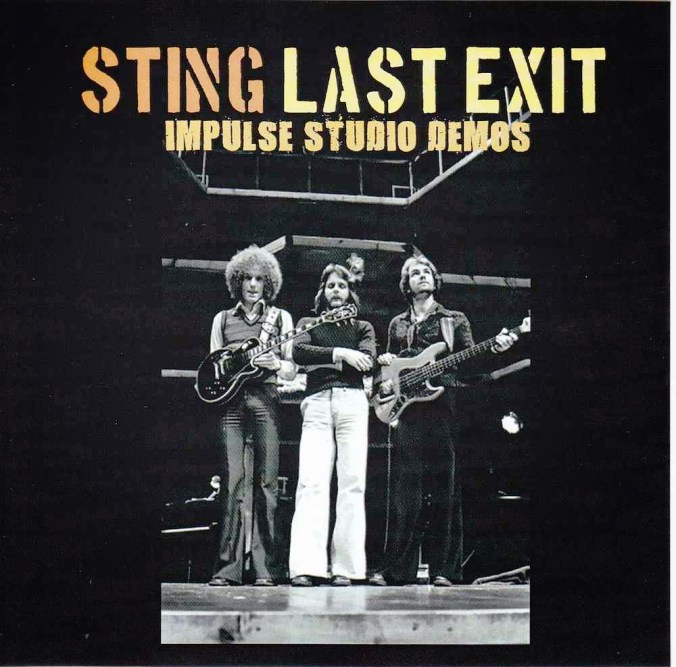
We crossed the border and travelled to San Sebastian, there was a jazz festival with big names on, Last Exit played in the town square, I don’t think the Big Band played there. I remember Sting played bass in Last Exit and other members of the Big Band were also in Last Exit.
When it was all over, we headed to Bilboa and jumped on the ferry. The crew found out about the band travelling over to England so invited them down to the Pig and Whistle bar in the bowels of the ship.
It was a great atmosphere with jam sessions going on, laughter, food and a few drinks – well more than a few drinks. At the end of the session as we were coming into Portsmouth, I went to the bar to pay but the steward said ‘no, nothing’. I insisted ‘Come on the boss told me to sort it out you’ve been really good, we’ve enjoyed ourselves, how much do we owe?’ ‘Ok’ he replied ‘One pound’. Wasn’t that a great gesture.

You know it was 2011 when the Borough Theatre in Wallsend where Impulse studio and Neat records were based was eventually demolished, it had been lying empty for years. Looking back, it was a great time but to be honest I just wanted to hoy the keys away. I worked there from 1966 to 2001. The years since then have passed very quickly.
After I sold Neat records I ran a Theatre group which went well until Covid destroyed the numbers involved so we are building it back up again. I kept a lot of the group together through ZOOM. I was also on the local club committee at Cullercoats on the North East coast here.
Now I’m writing short comedy scripts for a podcast. I’m trying to get them on local radio. Problem I have is some of its adult humour you might laugh your socks off but not sure you’ll hear it on the radio.
What else do I do? I’m also on a committee for wine tasting because I like my wine. That’s been going for 40 years. We also like our holidays, we have a few planned this year. We look after our Grandchildren and dogs and take them out to the country each weekend, yes you just get on with things don’t ya. I’ve also been involved with a few compilation CDs with the Cherry Red label, I’ll let you know all about that when we catch up next time.
Alikivi February 2025.


 ALIKIVI UK : NORTH EAST MUSIC & CULTURE