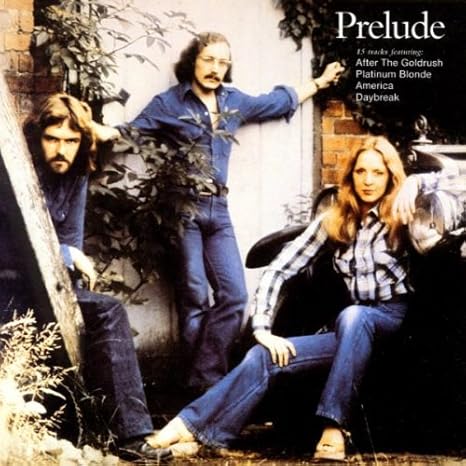
SPELLBOUND – in conversation with Prelude singer & songwriter Brian Hume

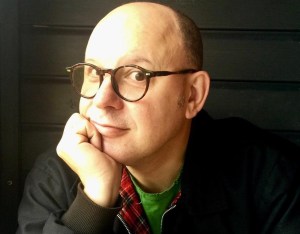
Ian Vardy, Brian & Irene Hume.

I met up with Gateshead born Brian Hume and he talked about his life in music and what it means to him now.

‘Music dominates your life. It can often exclude things that you should pay attention to. Personal relationships can suffer cos it takes over your life. All you wanna do is make that sound, make that music, at first you don’t care if you make any money you just do it for the love of it.’

‘Unless you’re all on the same page there’s always tension within bands. You’re living permanently on the idea that it will all come to an end tomorrow. If you’re a guitar player you could break a finger or get arthritis. Somebody might leave and your left high and dry. You might have an argument and everybody falls out, it’s a miracle they stay together. But it can be exciting not knowing what’s round the corner’.

78 year old Brian looks back to when and where he was first inspired.

‘Me mother was very musical she’d knock out a tune on the piano and a four string guitar – all self taught, amazing. That’s where I learnt to pick out a few tunes. Lot of houses had a room where no one went very often, that’s where the piano was.’

It was in Grammer school where Brian first met up with Ian Vardy, forming a duo to sing in Tyneside pubs and clubs.

‘One of the first gigs we played was the 99 club in Barrow in Furness. After two songs the chairman came up to the front of the stage “You’re not really right for this kind of environment”. He was nice about it but, yeah, we were paid off.’

‘The Everley Brothers songs were the go to sound, when we heard their two part harmonies we thought we could do that.  We used to play the Bridge Hotel in Newcastle. The folk scene then was vibrant, clubs were always packed out people were singing sea shanties then Paul Simon came along.’

‘Then we’d try writing our own stuff. Our publisher wanted us to be called The Cobblers. You could see the first review – what a load of! We settled on The Carnival – a very 60s hippy name. We lasted for one record – a Paul Simon song called The Big Bright Green Pleasure Machine. The review in the NME read ‘social comment at breakneck speed!

‘Ian and I were singing in our flat in Gateshead. We had just bought the Crosby, Stills and Nash album trying out different songs like Sweet Judy Blue Eyes. My wife, Irene was singing in the kitchen with the door open. She was singing the third harmony. We were totally surprised as we didn’t know she could sing. We turned and said ‘sing that again’. It wsan’t long before we went out to folk clubs and started going down really well.’

‘We lived in School Street, Gateshead and nearby at the end of the Tyne bridge is an old toll booth. A big granite structure. It had a lovely echo. Some nights we’d go in there and sing. One night a policeman came in. He thought we were up to no good. Very officious. But he stuck around listening to a few songs then as he was leaving said “Carry on”.
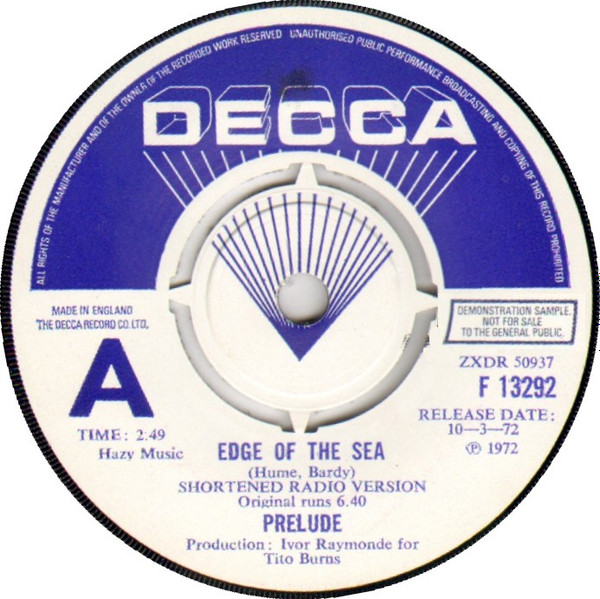
‘We got a deal with Decca Records and recorded a single The Edge of the Sea which had a strong hippy vibe to it. All during that period we were recording in Impulse Studio making demos courtesy of the owner, Dave Woods who soon after ‘discovered’ Alan Hull.’

‘We were called Trilogy for a while but had to change it because there was an American band with the same name. It’s not easy choosing a name as any band will tell you. I came up with Prelude and that stuck. That was 1972.’

‘Three part harmonies had a big effect on musicians. A lot of bands had done it like The Lettermen and The Platters from way back, but Crosby, Stills and Nash were different, this was whack right in your face. Yeah, a big influence on us and many other bands including fellow Tyneside band, The Caffreys.’

‘Different members have come and gone but the band were Ian Vardy, me and my wife Irene. Ian and I got a song writing contract with ATV music which worked for us financially. We decided to put both our names on everything we wrote irrespective of who wrote it.’

‘We had a brilliant guitarist called Frank Usher. We parted company and and he went on to play guitar with Fish from Marillion as well as being a fine guitar maker.’ 

‘We played the North East club scene for a while and in between we’d do Durham College where we’d support artists like Gerry Rafferty, Mott the Hoople, Shaking Stevens and the Sunsets – that band were amazing. There was a hippy commune type band called Principle Edwards Magic Theatre who all dressed in white which looked cool so we copied that – it was a cheap uniform.’

‘Our manager George Carr got us a record deal with Pye who back then were dominated by Max Bygraves selling boatloads of Sing-a-Long-a-Max records. We were the token folk band, although we were never folk they just called us that cos we had acoustic guitars! You couldn’t say that Pye were part of the cultural vibe.’

‘In 1973 we went to Rockfield Studio in Monmouth to record our first album How Long is Forever? produced by Fritz Fryer who was in a group called The Four Pennies. They had a number one with Juliet. A wistful ballad. On the final studio day Fritz asked if there was anything else we had. We used to sing a Neil Young song just for our own pleasure. That was After the Gold Rush.’

‘We recorded it and it sounded pretty good so we double tracked it. Overdubbed it fifteen times and it sounded massive. We never thought for a minute anyone would pick up on it. But John Peel at Capitol radio did. He got loads of calls ‘Who is this band?’ ‘Where can we buy the record’.
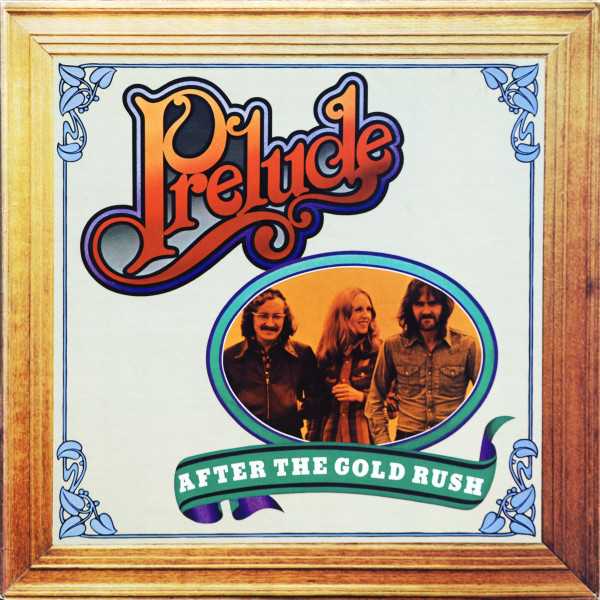
‘Next thing we know Pye put it out as a single and we’re on Top of the Pops. That was 1974. We ended up appearing twice the first time was with Marc Bolan. There was a succession of TV appearances. You had to do television because you are reaching a massive audience. We did a show for Tyne Tees called the Geordie Scene. We did the Basil Brush show for Pete’s sake.’

‘Most notably we went on the Vera Lynn show. During rehearsals she referred to us as The Prelude. Later she was walking towards us along the corridor when Ian stopped her and said “By the way Vera it’s not The Prelude it’s just Prelude”. Not skipping a beat she turned to him and said “If you don’t mind it’s not Vera…it’s Miss Lynn”.

Prelude were always based in their hometown Gateshead this meant constantly travelling up and down the M1 to television and recording studios in London.

‘It was every other week. We should have moved down there. But 1974 was a big year for us. We did the background vocals on Streets of London which was a hit for Ralph McTell. He asked us to go out on a UK tour with him.’

‘Ralph wanted to put our names on the record but our company wouldn’t allow it. For the next best thing Ralph put ‘background vocals by ‘The Gold Rushers’. It would have been a great advert for Prelude to have their name on the single but Pye were stupid on that.’

‘Ralph was so talented and generous to a fault. It was a big tour around the country then we played a venue where we’d seen Paul Simon, Crosby, Stills and Nash – here we were on the stage of the Royal Albert Hall. Amazing.’

‘After the McTell tour we went back to playing smaller venues but I’m getting the timeline mixed here because I remember before touring with Ralph was a UK tour with a singer and songwriter called Mike Chapman. He had a devoted following and used to live up the Tyne Valley in Haltwhistle.’

‘Then we went on the road with a great piano player called Peter Skellern who had a big hit with You’re a Lady. Meeting him he was rather quiet and reserved – he later became a priest. Then there was talk of America.’

‘This was 1976. What happened was Lindisfarne played the States. When Alun Hull came back, he’d tell us to get over there ‘Cos all ya’ hear is your bloody record ‘After the Gold Rush’ on the radio all the time.’

‘I always read the NME and Melody Maker, looking at American charts where like the Holy grail of music to me. To see Neil Sadaka, Beach Boys and bands like that we thought wouldn’t it be great to get in there. Our manager George Carr said ‘You’re in the American top 100’. We thought this is a dream come true.’ Then it went towards the top 20.’

‘We wanted to capitalise on the success but the record company didn’t want to pay for us to go to America they sent us to Amsterdam. We played the clubs and had a good time but we should have been in the States where we wouldn’t have even needed guitars as the song was acapella. We could have done the Johnny Carson show and the like and knocked that record up the charts.’

‘It wasn’t until 18 months later we got to the States. There were a few gigs on the West Coast in San Francisco where we supported Jerry Garcia in Berkley and met Nicky Hopkins who played piano on all Rolling Stones records. Then over to the East Coast and played The Bitter End in New York. When we came back to the UK Irene took a break when we had our second boy, Joel.’

‘Things moved on quickly until 1979 when our manager got us a deal with a new company called After Hours who were very forward thinking. We made an album at Abbey Road with The Hollies producer Ron Richards. His style was more towards lush strings and stuff like that. It didn’t really work for us.’

‘We also signed to EMI in 1980 and made an album in Portland Studios owned by Chas Chandler, charming fella. We had some great players on there but the only track that came out of it was Platinum Blonde. Our principal guys were Ian Green de facto producer of Platinum Blonde and Dave Wintour who was Neil Sadaka’s bass player. It was a minor hit which got to number 45 in the charts.’
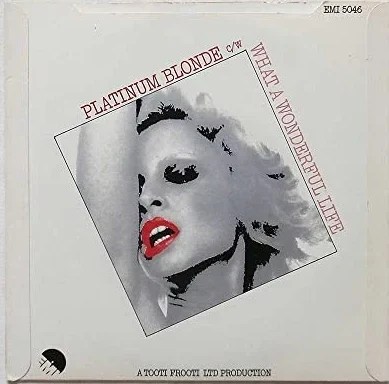
‘We did a video for it in the old Battersea Power Station in London arranged by the head honcho at our record label, Richard Jacobowski. He was really on the ball, a hip guy. We crashed in his three storey flat in Hampstead and shared it with a band called The Regents who were very talented, like a proto-punk band. They had a hit song on Top of the Pops with Seventeen.’

‘For the single we did Top of the Pops and I remember on the same programme were Bay City Rollers. Platinum Blonde was good for us but afterwards we came back up North and played the folk clubs again.’

‘Ian Vardy was looking at doing something different so left the band around 1985 and became a social worker. We continued and got in ace guitar player Jim Hornsby who had been with a lot of country bands. Jim was very much in demand for session work.’

‘Country was labelled as redneck music then, it wasn’t cool – but it is now. Gram Parsons did a hell of a job making country hip. He influenced The Byrds and Keith Richards. Some clubs turned their nose up at country stuff but we had a great time doing clubs then. Unfortunately, as happens in bands Jim left.’
What did the new millennium bring?

‘From 2001 it was Irene, me and Chris Ringer who we brought in on bass and vocals and took Prelude on the circuit of country clubs and the whole scene. Through the years we have performed with countless numbers of musicians and loved every minute of it.’

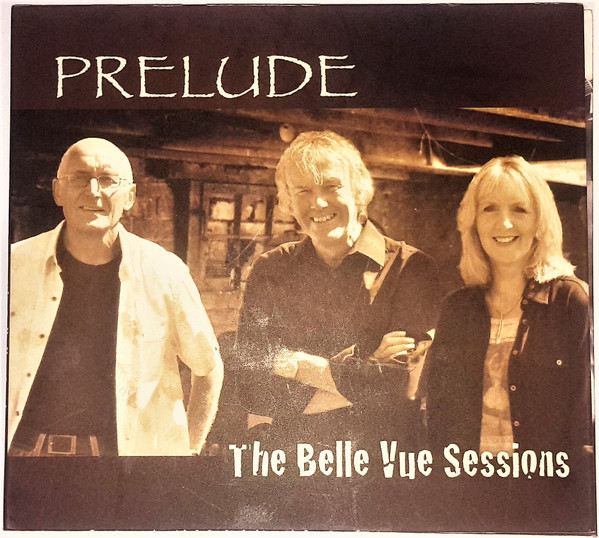
‘Our latest album The Belle Vue Sessions (2012) is all acoustic. It started in 2010 when Ian came round to our house, he had an appointment at his dentist round the corner. We got the guitars out, as you do,and it all went well so we asked him to do a gig with us. One turned into many.’

‘It was our manager Sue Brind who originally said ‘Why don’t you make a new Prelude album? We thought ‘why not?’ so we wrote some new songs and recorded them in Broadwater studios, Gateshead. Two lovely guys engineered, Gavin and Paul. We recruited Paul Hooper who was drummer for The Fortunes and again Chris Ringer played bass. We are very proud of the album.’

What does the future hold for Prelude?

‘We’re busy meeting with David Wood who used to run Impulse Studio in Wallsend. Impulse was a gateway for a lot of acts. He released a lot of Heavy Metal stuff like Venom and Raven from the North East, it was a big scene for him.’

‘David recently put out a CD box set of Alan Hull demos, he recognised Alan’s talent early on. Now he wants to do the same with us because he’s got a lot of tapes that have never seen the light of day. We’re looking to release something soon.’

After recalling a life spent with a multitude of musicians and the memories it triggers, Brian reveals that his ‘obsession’ holds a deeper meaning than just getting on stage and banging out a tune.

‘Your friends tend to be musicians and you share a common language which is almost secret amongst you. You know and experience things that nobody else has. There’s a bond between musicians which is friendship but sort of deeper. You know what the other is going to do, what they’re going to sing, – what they can and can’t do. Every successful band has to have that. It’s like brotherly love. It’s a wonderful feeling. It’s why people do music instead of opting for a ‘safer’ life.’

Alikivi   June 2025

FUNK OFF – The Punishment of Luxury & further tales of musical adventures.

Avery, Thwaite, Red Helmet, Liquid Les and Malacabala all signed up to an adventure with Newcastle based post punk band, Punishment of Luxury.

From 1979-83 the line-up of Brian Bond, keyboard/vocals, Jimi Giro, bass, Steve Sekrit, drums and Nev, guitar/vocals settled into a very creative recording and live unit signed to United Artists.  

I got in touch with Nev to find out exactly who were Punishment of Luxury and where did the name come from ?

A friend, Rob Meek visited Liverpool and sent me a postcard from the Walker gallery. It was a picture of Giovanni Segantini’s ‘Punishment of Luxury’. I thought this was a perfect title for a wonderful adventure.

How did the band first get together ?

It all began in Walker Terrace, Gateshead. I’d just returned from studying music in India and Afghanistan and was sharing a house with Rob Meek.

Rob created the first independent Gateshead street press, and the radical theatre company ‘Hour Glass’, which we performed with in local pubs.

This was 1975 when I met Brian Rapkin, an actor, singer and songwriter who was working with the Mad Bongo Theatre group. I had previously formed a band called Kitch 22 who experimented in a combination of theatre and music and Brian said he saw me play at the Newcastle Guildhall and liked the rendition of Wild Thing and Little Red Rooster delivered up from my tuned Hofner Galaxie and kitchen quilted Vox AC30.

One night Rob and I had a party and invited the Mad Bongo Theatre group where we offered them Garibaldi biscuits, Old Jamaica chocolate curious wine and Alien cake.

We played and shared songs with electric exhilaration, the seed was planted for future ventures. We were visionary collisionaries occurring in the same space.

We rehearsed in a basement in Gateshead at Rawling Road, where our songs Jellyfish and Blood of Love were created. Eventually we rehearsed in a church hall in Tynemouth which I believe was also used by Lindisfarne.

What was the process for writing songs ?

The writing was both a collision and collaboration of different musical styles and approaches which were amalgamated with some visual and dramatic opinions.

For example I would offer a song such as Puppet Life, All White Jack, and Brian would embellish keyboard and add lyrics. Alternatively Brian would write the main body of a song such as Obsession and we would combine musical structures and lyrics.

But commonly we would come together from two very different views and styles. This is evident in writing Brain Bomb which developed from a ballad Brian had written where I proposed the musical opposite and the idea worked, so some strange and interesting combinations were successfully created.

Jellyfish was another example of the unity of opposites whereas I would suggest a structure and some lyric or theme and Brian would apply some great lyrics, musical variations and ideas to make them unique.

I think humour somehow connected us along with our range of various theatrical and visual ideas.

The Message and Laughing Academy are other examples of creative unions. I think we had a very open approach which worked so well.

I remember in Tynemouth, writing the riff for Radar Bug and Jimi applied a great rhythmic phrase which lifted the idea into what it is. His bass playing offers excellent precision and very creative phrasing with invention.

Stephen created some brilliant percussive pieces to compliment songs such as Secrets, he also offered massive drive and energy. While I offered many structures and concepts.

Brian also created words, images and imaginings, Jimi laid ululating foundations then Stephen wove it together. It was of course more than this and everyone was essential in creating the sound and spirit of that time.

It is worth mentioning that a great friend called Vicki who was a wonderful support to us from the Laughing Academy period, always offered us space to rehearse and develop ideas when writing new songs.  

Punishment of Luxury played their first gig at the Blue Bell in Gateshead in 1978, not long afterwards the band went to Impulse recording studio, Wallsend. How did you fund your early recordings ?

We funded initial demos from our own back pockets. We recorded, Blood of Love, Let’s Get Married and Puppet Life. Rob Meek also enabled us to record and rehearse at Spectro Arts centre in Newcastle.

Signing a record deal – how did that come about, and was it successful ?

After a long and tiring tour of record companies who displayed a range of disinterest, curiosity and admiration we decided in the end that we had to find a label who had some idea of what we were trying to do.

We therefore embarked on our excursion to Walthamstow in London and a meeting with the owner of Small Wonder Records, Pete Stennett. Immediately after he played the tape of our first demo recording of Puppet Life, he offered us a deal.

He was certainly a visionary person who signed other bands and performers from that post punk period and gave them that all important first break to express their music.

The label was small but created wonders for us in as much as our first single Puppet Life/Demon (1978) was recorded in London’s Berry Street Studio and our recording journey began.

We were pursued by a few larger record companies who after they had heard our first single, came to our gigs. Charisma and Virgin were certainly of interest to us but we thought United Artists were the best company as they offered much more artistic freedom.

We all warmed to their very sincere and talented A&R scout, Tim Chacksfield. In the end we signed to them and went on to record the Laughing Academy album (1979) and several singles.

Tim could see what we were trying to do and helped us be free in our musical expression and eventually introduced us to Mike Howlett. Mike was former bassist and writer with Gong and Strontium 90 – a forerunner to The Police.

Mike helped us capture all the energy of our live set with his approach of recording many straight live takes, which embellished with the required overdubs, helped create a wonderful recording experience.

Did the band have a manager ?

In the beginning a friend from Newcastle called Frank helped get us gigs and open the door to various management companies such as Quarry management and well-known management such as John Arnison.

Frank eventually connected us to the Asgard Agency in London who enabled us to put together UK tours. This is where we met Richard Hermitage who eventually became our manager.

Richard was a very positive, honest and fair person who managed to get us considered by several record companies and was instrumental in getting us introduced to United Artists.

Richard decided to stop managing the band and return to Agency work. We were introduced to Tony Fraser who tried to help develop the band’s vision and came on tour for some of the gigs, especially in Germany and Holland.

Did the band record any TV or radio sessions ?

Soon after the release of Puppet Life (1978) we discovered that John Peel was interested in our music and we were invited to perform our first live session at the BBC in Maida Vale where we played Funk Me, Let’s Get Married, You’re So Beautiful and Babalon.

We played on Tyne Tees show Alright Now, hosted by Darts singer Den Hegerty. Also on were Ian Dury & the Blockheads, Goldie and Geordie with Brian Johnson who joined AC/DC.

We also played a live version of Puppett Life for a Belgian/German TV show. Laughing Academy I believe, was doing really well in their charts.

Were there any stand out gigs ?

We played several Rock Against Racism gigs at Newcastle Guildhall and other local gigs in the area. We also enjoyed gigs at Newcastle City Hall with the Skids, then with Penetration.

The Marquee in Wardour Street, London was another gig we played several times, it was such a great venue.

In the early period of our gigging we played the London Hope and Anchor, and on one occasion we remember a huge back line, approx. 15+ AC 30’s courtesy of Status Quo (we reckon), provided by their management company who were pursuing our scribbles at that time.

It was a very full house, so the crowd absorbed all the delivered frequencies. This is where we played early versions of ‘Funk Me’ and ‘Babalon’.

The following day we were driving through London and noticed these colourful headpieces being sold by a man on a corner with a cardboard box in Oxford Street.

We grabbed several of these Peruvian ski masks and ended up subverting their use with fun, menace and madness in our live performances.

I recall the London Nashville gigs being excellent sharing the tiniest of dressing rooms with bands such as the Adverts, 999, Toyah and Siouxie and the Banshees.

On one occasion the National Front turned up and the lyrics at the end of ‘Puppet Life’ rang out, they started to climb onto the stage and attempt to destroy the show and muffle the message, but the band along with our tour manager, Sista Suzie and the Nashville staff, kicked them off stage which must have reinforced the song’s affirming lyric, ‘The Fascist always ends up on the floor’.

We toured the UK extensively then eventually travelled to Europe. Our first journey involved sharing a plane journey with Wishbone Ash and a brilliant band called Home, famous for their album The Alchemist, and apparently a favourite of the late John Lennon.

It followed that we played our first gig together in Belgium with these bands which was quite a mysterious and unusual musical mix.

Do you have any road stories or magic moments when touring ?

When our Laughing Academy album was being released endless gigging ensued and part of our excursion took us to The Milky Way and Paradiso venues in Amsterdam, and eventually via Cologne and Dusseldorf to the great city of Berlin.

The Wall was still stood and divided East and West Germany, so great things could happen here! Although our Berlin Wall encounter at Checkpoint Charlie was a bit scary.

Steve Sekrit now had long hair and a strange beard, which didn’t balance with his passport photo and only after a long exchange with an authoritarian, now in possession of a copy of our album Laughing Academy, were we able to pass across the border.

Thankfully he looked at the images on the outer sleeve cover as the inner gate fold sleeve would have offered no means of verification.

Our gig in Berlin that evening was at the Kant Kino and access to the famous venue was a long walk across a suspended structure overlooking parts of the bustling street below. It was a brilliant, receptive, bouncing crowd, full of anticipation – it was a very memorable gig.

We played the 19th Reading Festival on 24th August 1979 and John Peel introduced the band to what was a raucous gig. We were one of the first wave of bands to play an alternative style of music and many in the rock crowd were bemused at our musical approach, but they soon mutated and amalgamated to engage with this new expression.

Did the band run out of steam or money ?

The lack of record company support to develop our musical vision punctuated by them dropping the band from their label, led us speedily to impecunity. We were rejected and bemused. United Artists had died and EMI were the new victors.

This was the period when we were recording Gigantic Days and for a moment, that awful feeling of rejection descended, but our spirits were alive, and we fought on for what we believed in.

Perhaps it was because of the proposition of ‘making rockets miss’ in our songs as EMI were linked to Thorn at that time, or it could have been down to the satire ‘Money talks, money lies’. Or maybe simply that we didn’t fit into a commercial pop template.

A breakthrough came with Red Rhino, a record company based in York who liked the band.

Rob Aitch (guitar/vocals) was added to the line up during their deal with Red Rhino and for live performances, they brought in Tim Jones (guitar/vocals).

In 1983 we recorded the album 7 at Alaska and Greenhouse studios. This period marked a time when we had emerged tattered from legal lashings and management muddles with miraculously diminished funds.

What happened then ?

After the album 7, Brian and I began exploring other directions this was perhaps compounded by lack of record company support and different musical and creative visions.

Brian continued his brilliance and developed his theatrical roots with the application of excellent songs in a band called Punching Holes.

While I continued the music with the integration of visual approaches, retaining the Punishment of Luxury theme while experimenting with different players, new collaborations and experimenting with musical inventions – Alien Contact – while living in London.

What are you up to now ?

Brian will be releasing his Punching Holes album on April 17th 2020 which will be an historic record to what he was creating then along with the excellent Richard Sharpe and Tim Jones.

I am currently busy writing, and both Brian and I are exploring and assessing the possibility of creating a new album as we exchange our ideas and songs, along with Jim and Steve.

Have you any final memories from the early years of Punishment of Luxury ?

We played at an event created by the adventurous pioneer  promotor John Keenan. It was called The Worlds First Science Fiction Music Festival (aka Futurama, Leeds Queens Hall, Saturday September 8th 1979). This was where we played with Joy Division and Public Image.

Our lighting system was in London and Hawkwind, who were playing the next night, kindly let our lighting maestro Rob Meek use their laser light rig. What great people, and an excellent show followed.

After watching our first official gig for many years at the Three Tuns, Gateshead in 2008, music critic Dave Simpson wrote in The Guardian about his experience at Leeds in 1979 and said it ‘changed his life’.

I went to Futurama liking Sham 69. I came out rejecting everything I knew, having realised that music could be about power, passion, psychology, even the genuinely futuristic, and be far more than “entertainment”.

That principle colours my thoughts on music to this day. If I hadn’t gone, it’s almost certain that I wouldn’t now be writing about music for a living, never mind still experiencing the unique thrill of watching bands’.

Certainly a lasting impression on Mr Simpson, and no doubt on many others in the audience. If you were at Futurama that day get in touch and let me know your memories.  

If you haven’t heard the band check out the recordings from the gigs at Nashville, Kant Kino, Hope and Anchor and Reading Festival which are on the Punishment of Luxury box set released by Cherry Red in 2019.

Interview by Alikivi  March 2020.

GET IT ON – with Gary James former presenter of Music TV’s Top Dogs, THE TUBE

None of us on the presenter side, perhaps with the exception of Jools and Paula who breezed through it all without a care in the world, could have had any idea that the show would be as seminal as it was.

We certainly knew we were part of the ‘new wave’ and that we didn’t want to be all BBC and Top of the Pops-ish.  

TRX

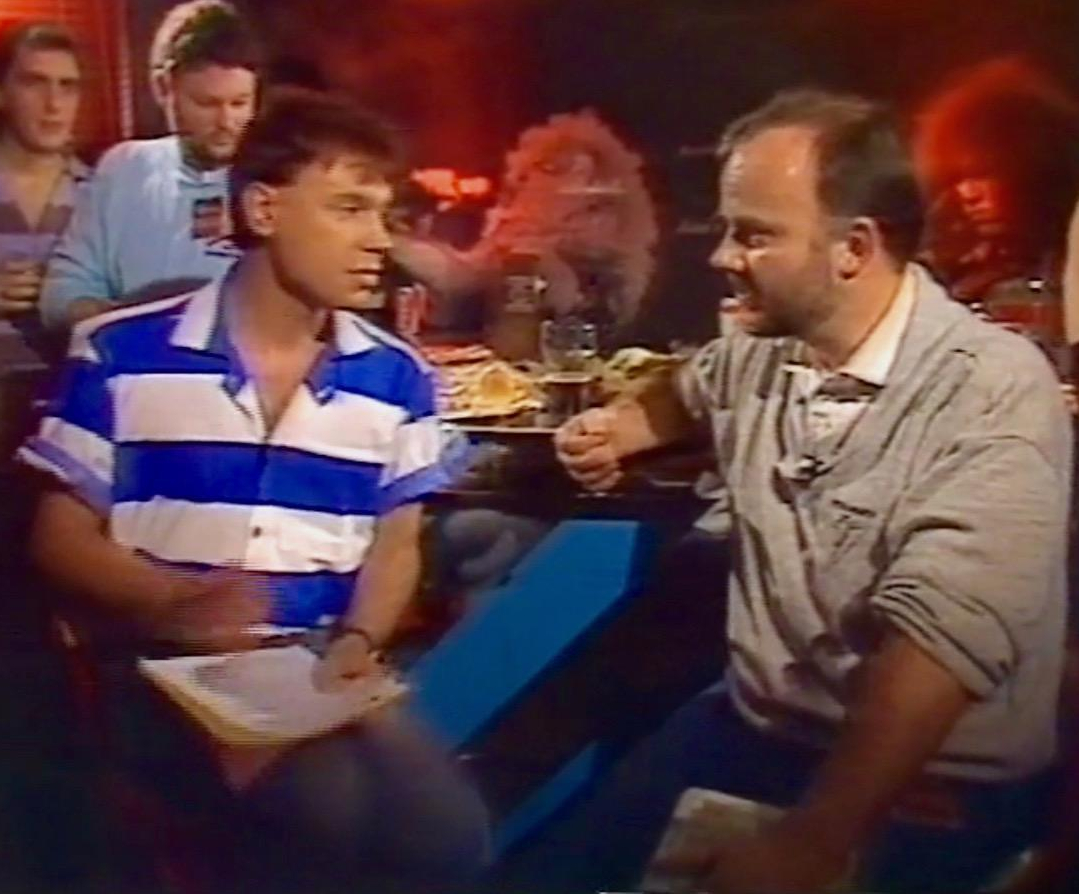
Gary interviewing John Peel on the Marc Bolan special in 1983.

When were you at The Tube and how did you get the job ?

I was one of the original co-presenters on The Tube from Series One, which started on Friday November 5th 1982.

To give it a bit of extra thrill the programme makers had wanted to put some unknown faces alongside the two main presenters Jools Holland and Paula Yates. They certainly achieved that as few of us really knew what we were doing. It was all live, pre-watershed national networked TV and no second chances.

I applied along with about 5,000 other herbert’s who all thought they were cool, hip and groovy enough to be TV presenters. Along with Muriel Gray, Nick Laird-Clowes, Michelle Cremona and Mike Everitt I got the job.

I was quite pretty and twinky back then, which might have helped. Unlike the hideous old bag I turned out to be.

Up until I arrived to do my first show, which was programme two, I had just breezed along thinking I could be wacky with impunity.

But the reality set in when I arrived at Tyne Tees TV and was faced with having to do what TV presenters do. As a consequence of that, I looked and sounded like a rather camp yobby twat until I gained confidence.

Where did that come from? I somehow managed to make that last until I left two years later after the second Midsummer Night’s Tube special in late 1984.

My only regret is not being able to have worked more with Muriel. She was my soul mate and I adored her. We fired off each other perfectly and would have made a great team.

Sadly, there was only room for one M/F team and that was Jools and Paula. Any suggestion otherwise and someone would have called the police. Probably.

thumbnail

Tube production meeting with Muriel Gray, Gary James, Mick Sawyer and Chris Phipps

Did you realise how important and influential the show would become ?

The chaos on it was quite genuine and the edginess a result of the fact that for most of the time we were left to get on with what we were doing without any strict direction or guidance to be pros.

Because it was live I only ever saw the programmes that I didn’t work on, all from the shitty council flat I was living at in North West London. No video and no internet or social media. If I didn’t catch it when it went out I didn’t see it.

As a consequence of that I was only able to watch the shows I was in when my parents told me they had recorded the shows on VHS tape and did I want them? I was just about to say no, throw them away (!) when I thought the better of it, took them in a box and stuck them in my attic.

And there they stayed for years until I came to write my book. I digitised and watched them from behind the sofa for the first time. The performances blew me away. I can now finally see what everyone was going on about – but until then I genuinely had no idea.

Who did you interview and who was your favourite booking on the show ?

My first ever interview was actually with Olympic athlete and local boy to Newcastle Steve Cram. During the production meeting that afternoon I said to Paula that as I had no interest in sport whatsoever I had no idea what to ask him. I mean, what do you ask runners for christ’s sake? How did you start running? How do you run? What’s it like running? Everything sounded ludicrous.

We started laughing and then in desperation I said to Paula ‘I suppose I could ask him how big his knob is!’‘Even better, ask him to show you!’ she trilled. I loved her then, she could be so much fun.

Next interview was with Andy Summers of The Police. That was my first interview proper really. He wasn’t responsive as I think he had no idea that The Tube wasn’t Radio 4 or The Old Grey Whistle Test.

In the interview you can see him looking at me like ‘who’s this gobby little know nothing shitehawk ?’ Not one I recall with pleasure.

I had a much better time interviewing Ringo Starr, The Weather Girls, Eartha Kitt, Tony Visconti, Malcolm Mclaren, Mickey Finn of T.Rex, John Peel, Kajagoogoo and loads more interesting people who were not big music names but who had a part to play in the industry.

Best of all I thought was video producer Tosh Ryan, who had made some wonderful stuff with one of my heroes Graham Fellowes (aka Jilted John). Great stuff!

How did you get started working in the media ?

I trained as an actor in the mid to late 1970s. Believe it or not I am not a natural presenter (as archive footage of The Tube proves!). After spending some years touring with theatre companies on some pretty controversial plays I decided to try my luck at television and the rest is history. I can’t believe I just used that cliché.

I went on in later years to work quite extensively in radio, which I loved. I was a huge fan of Kenny Everett and he was my broadcasting inspiration. Kenny was a genius. I miss him terribly.

I did a lot of work pioneering the first radio programmes made by and for gay people on a pirate radio station in London in the early ‘80s. That was called Gaywaves, and it was broadcast through an arial cunningly hidden in the washing line of my friend Phil Cox’s 13th floor flat in the City of London.

The archive of that unique broadcast is now in the sound archive of the British Library. I’m very proud of having done that you know.

I also worked legit too though, even co-presenting Midweek on Radio 4 for a couple of programmes (until it became obvious that my talents such as they were lay elsewhere).

For a long time I was also one of the contributors to ‘Malcolm Laycock’s Track Record’ programme on Friday nights at BBC Radio London. That was a hoot. I used to creep into the studios earlier in the day and record sketches for broadcast in the show that night.

It was all very spontaneous and lots of fun with my friends Gary Rae, Stopwatch Roy Alexander, Alexis Colby Carrington, Clive Bull and whoever else happened to be wandering by at the time.

The show itself was often a bit of a bacchanalian booze up and almost as chaotic as the Tube. We even had to throw out Jah Wobble, who turned up three sheets to the wind and who we had to physically get rid of before he let rip with any naughty words. Happy days.

How did you get on with the other members of the production team and what did you do after The Tube ?

To be honest, as I was brought up in the theatre, I was closer to the production crew than most of the other presenters were. I didn’t click naturally with musicians in the same way that Jools and Paula obviously did. Actors and musicians are not natural bedfellows oddly enough. We come at it from different angles.

I didn’t fancy a trombone up my jacksie so I tended to keep away from the sharp end of the choon department and preferred to hang around with the production team. Michael Metcalf, Chris Phipps, Colin Rowell and many of the rest of the Tube team are all dear friends of mine even now. How they put up with my mincing about though I don’t know.

MUR

Gary with Muriel and Malcolm McLaren in 1984.

The Tube is known for being taken off the air in 1987 after five years when Jools said the words ‘Groovy Fuckers’ and the world was so aghast that decent people everywhere had to be treated for shock. What isn’t so widely known is that I nearly beat him to it in series one !

Paula and I had been sent down to Steve Strange’s Camden Palace to do an outside broadcast. As Paula was heavily pregnant with her first child Fifi I did all the energetic stuff and at one point was put on the upstairs balcony to read out a load of local gig information.

During rehearsals it became apparent to me that being up there looking down with hundreds of clubbers around me I would be unable to see the floor manager or the cameras easily.

So I remonstrated with the crew and director pleading health and safety. Being a nobody of course I was ignored.

When the cameras cut to me on the live broadcast I was surrounded by drunken punters and trying to deliver a long list of stuff to camera while they were jostling me and making wanker hand signs in front of my face.

Normally I’d probably have joined in – but you can’t do that on live TV can you?

I just managed to get through it before the urge to turn round and tell them to fuck off overcame me. But I don’t think the director knew just how close they were to an irritated ‘fuck’ being delivered live on air – four years before Jools did it for real.

Perhaps if I had done I would be more famous? Bugger. Another missed opportunity. Oh well.

What are you doing now ?

After I finished doing The Tube I went back into theatre where my heart and talent was best displayed. Since then I have continued acting wherever jobs are available and am a proud founder member of a group in London called Actors Writers London (AWL).

This is a group established through Equity back in the late ‘70s to showcase the work of new writers and where they can hear their works performed by professional actors for the first time.

BOOK

I now live down in East Sussex as I prefer to be a country boy. It’s here that I continue with my writing. I have just published my autobiography which I charmingly called Spangles Glam Gaywaves and Tubes. It tells the story of my childhood and of growing up as a young gay man in the ‘70s and ‘80s.

Despite that disgraceful stuff it is also for everyone else that lived through those times or who might have an interest in it. My goodness me it makes a great holiday read and at a paltry £12.99 it is a must buy frankly.

You can get it from all good online booksellers or from my publishers here:

https://www.bookguild.co.uk/bookshop-collection/non-fiction/art/spangles-glam-gaywaves-tubes/

Please buy it. It’s not the principle, it’s the money.

Interview by Gary Alikivi   August 2019.