BANJO IN BOGOTA – in conversation with Tyneside storyteller & folk musician Tony Wilson

Tyne Dock in South Shields was an interesting part of the town to live, with its churches, terraced houses and huge industrial Victorian arches next to the river. It was in the early 80s when a lot of the old housing stock was being demolished and in Porchester Street I watched Ascendency being filmed. Julie Covington of hit TV show Rock Follies was the star, not long after that The Machine Gunners was set in Porchester and filmed for BBC TV.

‘Up to when I was 7 year old I lived in Porchester Street. It’s not there now but St Mary’s Church around the corner is where I used to sing in the choir and the scouts’ said Tony.

‘Now I live on the Lawe Top beside the roman fort. It’s almost aspirational for someone who comes from Tyne Dock to wind up being a skuetender’ (native to the Lawe Top).

‘I’m proud of coming from South Shields and when you were young trips to the fort were absolutely mind blowing. The area it’s in is incredible, with the whole vista of the river and parks and beach nearby – we’re lucky here’.

Being a former Tyne Docker now Skuetender he’s not wrong there. Tony featured on the site back in May 2018 talking about storytelling and songwriting and what music means to him.

‘I turned back to folk singing in 2017 after the government education cuts made it too expensive for schools to have extra-curricular practitioners, like me, to come in. Before that I was storytelling in schools for 20 years covering hundreds of issues such as the steelworks when I was in Ebbw Vale, the Romans here in South Shields, the coal industry and iron stone mining in Teesside and Northumberland. It was an extremely successful time’.

‘Storytelling is very important, its communication, social history, emotional control, drama, its use of vocabulary. For me it was learning how to be a performer and developing stamina to be able to do four hour sets a day, then drive 100 miles to go to a hotel, get up next day and do it again’.

‘Cities like Manchester, Oxford, Cambridge, all over the UK. I’d stay in these areas year after year for a fortnight at a time and, unlike a music tour where you could be in Aberdeen one day and Bournemouth the next, I’d plan easy distances to plan a route back home – loved the life.’

‘Then around 2009 I got an email. The message was ‘would you like to tell stories in Argentina?’ I wasn’t sure it was kosher at first but I received a phone call a few weeks later confirming it was. I was given contacts of previous storytellers who recommended it’.

‘Me and my wife went out and ended up over the years going to about 15 countries for six weeks at a time. They were international schools where the kids had already learnt English but mostly from American cartoon shows and they wanted them to hear colloquial language, more English. With my accent, I knew I would have to speak a bit slower – and there’s nothing worse than a posh Geordie!’

‘When we were in a Spanish speaking country, for the youngest ones, you’d have someone to explain the context of the story and then I’d still tell the story in English. Half of their lessons were in English, to make it an immersive experience’.

‘To accompany the lessons it was helpful to use British sign language, or borrow a guitar. I always took a banjo with me as it was such a different instrument for them to hear. Once the banjo was broken en-route and we found the only banjo repairman in Bogota in Colombia’.

‘It was hard work getting up at 5am, into a taxi for a two hour drive to tell stories to 3-400 children in ampitheatres – but what an experience! The last time we went over was Peru in 2016. We’d been to Uruguay, China, South Korea, all over – loved it. Sometimes I look back and think how did that happen – you’ve got to seize every opportunity’.

‘I’ve been songwriting for years and always have a songwriting project on the go. I write about 15 songs per year. Ideas can come from a book, a documentary or what someone says in a street… then I do a lot of research and add some ‘meat’ to the story. Songwriting can possess and obsess you’.

‘Recently I wrote a number of songs about Iron Stone Mining, the workers and how dangerous it was working there, although I do try to stay away from disaster. It’s not all ‘Grim up North’.

‘A friend of mine gave me a diary about his distant relation who had been captured by the Portugese and transported to Portchester Castle in Hampshire! Having lived in Porchester Street I didn’t know about this place. The songs can take you anywhere!’

‘I wrote a song with local playwright Tom Kelly about ‘the seven lads of Jarrow’ who, in the 1830s worked in the mines under diabolical conditions so tried to form a union with union organiser Tomas Hepburn. They ended up being brought up on jumped up charges – 10 were captured 3 escaped. 7 ended up in a kangaroo court and were transported to Australia never to return. It’s such an emotional subject’.

‘In 2019 I was planning to write autobiographical songs, one was about the day they tarmacked the cobbles in Porchester Street and as kids we could roller skate across the street. Another was the times walking through Tyne Dock arches with my dad and me being on his shoulders. Or another about my sister playing with her friends in the backyard in Porchester Street – then covid came along’.

‘I didn’t want to write about the pandemic or what happened around it, like being scared or having a feeling of waiting for death to come. I wrote nothing about that. I just wanted to write about the one’s I love and keep sane’.

‘All the performances I did in South America and all of the daily storytelling work I did in schools I now channel into what I present now as a musician. I still do regular open mics, folk club spots and am a paid guest in clubs and festivals throughout the UK’.

‘I love performing, it’s like an out of body experience. I’m not hippy dippy, mystical or spiritual but enjoy giving people enjoyment, sharing moments with people…and it beats the hell out of singing in the bathroom!’

Tony has placed all of the stories, CPD and instructional DVDs for parents and children on You Tube at ‘Tony Wilson Storyteller.

For further information contact the official website > http://www.tonywilsonfolksinger.co.uk

Alikivi   September 2024

SAND DANCING IN SHIELDS WITH L.S. LOWRY

‘I’m particularly fond of watching large ships coming in to the harbour, or being brought down river by tugs. I love the Tyne for that reason. It’s a wonderful river’.

From 1960 until his death in 1976 prolific artist L.S. Lowry frequently travelled from his home in Cheshire to the North East.

He used the Seaburn Hotel as a second home and a base to explore the area, but when his usual room at the front wasn’t available, he would occasionally book in at The Sea Hotel, South Shields.

Pic in the book L.S. Lowry in the North East.

The hotel is based on the seafront near the entrance to the river Tyne. He would sit for hours in the car park between the South Pier and the Groyne, sketching ships and tugs entering the river from the North Sea.

Lowry was fascinated by the relentless power of the sea and subject of one sketch was the Adelfotis cargo vessel who ran aground on the Herd Sands at South Shields in 1963. It’s exciting to think that Lowry was there sketching in the background.

Wreck at South Shields, pencil on paper 1963. The Lowry Collection, Salford.

Always Ready is a film I made in 2016 about the work of South Shields Volunteer Life Brigade, it features excellent archive footage of the Life Brigade’s brave rescue of the crew from the cargo ship. (Check the link below).

Lowry found a number of vantage points to watch the river Tyne – one was the Mill Dam where an episode was filmed of TV programme When the Boat Comes In, and today is where The Customs House theatre & arts centre stands.  

From there he walked ten minutes up River drive to the bridge which overlooked the shipyards, a different picture today as the yards have been replaced by housing. On many occasions he travelled on the Tyne ferry between North and South Shields.

Old House in South Shields, oil on canvas, 1965.

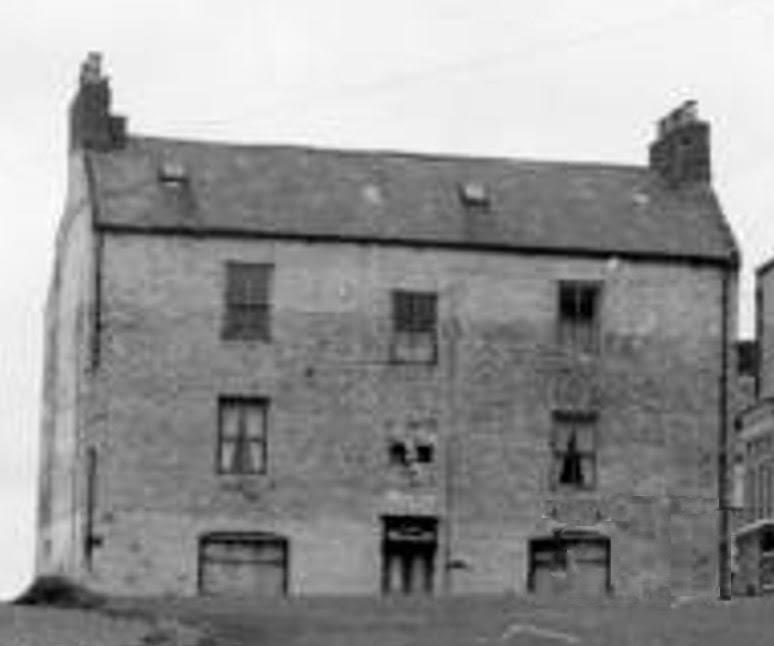
Lowry was drawn to buildings that were old, neglected or about to be pulled down, an oil from 1965 titled Old House in South Shields caught my eye as I recognised the building from a photo in South Shields Library archive. Sadly not there now, it was demolished and replaced by flats.

Old House in South Shields. Note the position of the windows and doorway.

The large house was set on The Lawe – a hill top over-looking the entrance to the Tyne. To get there Lowry would have walked from his favourite spot at the seafront up the steep bank.

With its strong connection to the sea, this area would have been attractive to Lowry, with the old Pilot steps and Watch House nearby and standing tall are two beacons – large brick pillars originally used as navigational aids for guiding ships into the river before the piers were built.

Derelict at the time Lowry was there, the house was originally a barracks for soldiers during the Napoleonic invasion scare, then used as a business man’s club and reading room by the gentlemen of the Lawe.

South Shields, oil on canvas, private collection, 1962.

At the back of Lawe House was a large Roman Remains Park – today it’s a partly re-constructed Roman Fort. Being drawn to old neglected buildings Lowry may have wandered over and sat sketching among the ruins – or was just knackered and needed to rest after walking up the steep hill.

Alikivi  December 2021

Notes:

L.S. Lowry by Michael Leber & Judith Sandling

L.S. Lowry in the North East published by Tyne & Wear Museums 2010.

Sunderland Echo

https://southtynesidehistory.co.uk

ALWAYS READY (26min) South Shields Volunteer Life Brigade 1866 – 2016. – YouTube

LIGHT UP THE LAWE with UK artist, Andrew McKeown.

Part of the renovation of the North Marine Park in South Shields is a new sculpture placed on the Lawe Top.

The artist, Andrew McKeown, specialises in Public Sculpture and has completed many large-scale commissions throughout the UK and Internationally.

In an earlier interview on the blog in June, Andrew talked about his work…..

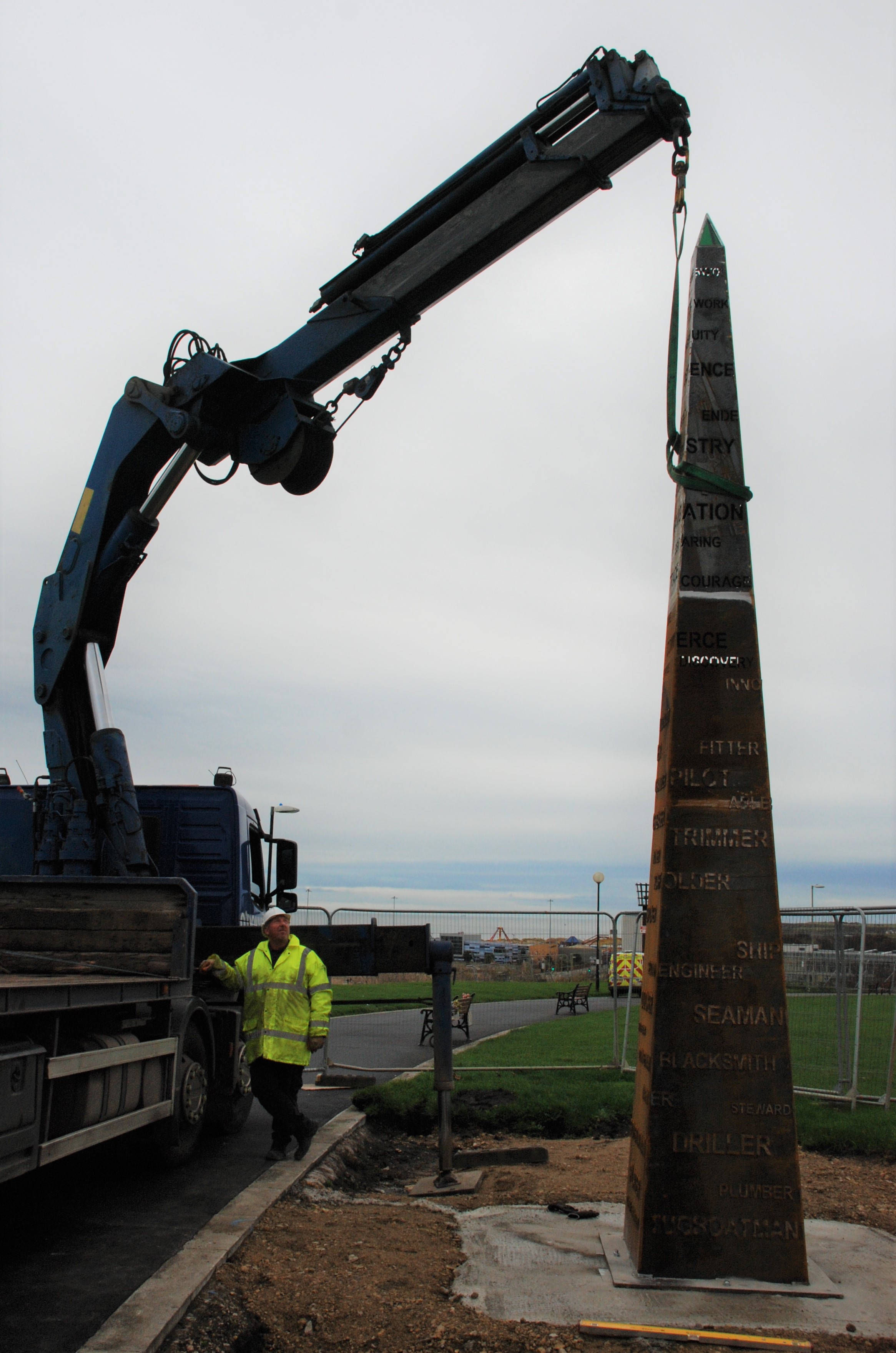
I am working on designs for a large contemporary steel Beacon in the North Marine Park. The Beacon takes its inspiration from the Lawe Top Beacons built in 1832.

The installation of his new work was on the morning of 31st October 2020, and I managed to grab a few words with Andrew….

Today I’m supervising the installation of the new Beacon sculpture. The blacksmiths are just fixing the bolts down now, it’s pretty much all installed.

Has it been a hectic day ?

Yeah, just a bit (laughs). We started at 9am, the blacksmith got loaded up earlier than expected but we got up here and got on with it.

What does it feel like seeing your work finally put in place ?

Fantastic. I’ve been working on this project since January after getting the commission. It was applying first, then getting selected then there was all the planning to do with the designs.

The brief asked for it to be between 4-6 metres high. I went for 6 metres and that feels about right.

The original Victorian Beacons were a lot taller than that so I know it’s not meant to be a navigational aid as such, it’s a decorative piece with a nod and towards the Victorian Beacons.

I think when the block paving is around, the lighting added and when it’s rusted after about 3-4 weeks it’ll develop a stronger rusty colour. It’s core ten steel and rusts so much it’s almost like a protective layer.

It’s the same steel as the Angel of the North (sculpture in Gateshead by Antony Gormley). It’s just nice to finally be the day when it all comes together, and it looks like what I wanted it to look like.

What is the idea behind the words that are on the sculpture ?

Yeah well, it’s already happened hasn’t it. This morning within half an hour of it going up a Grandad and his Grandson walked past, and the Grandson asked what is a Foyboatman? The Grandad explained and then added that his dad was a riveter.

That’s what type of conversations I really intended from the piece to happen. It keeps the sculpture alive and all those historical trades and occupations alive.

It refers to the community of South Shields and the words at the top refer to the character of the area, the history and the aspirations.

Words like exploration, wisdom, work, toil and adventure, words that make people think that yeah we have got this background as well as the shipping industry that pioneered the way for a lot of things

Can you see it being here for a long time ?

The way it has been made and the materials it has been made with, it can be there for years until someone wants to move it. Maybe in a renovation of North Marine Park in another 100 years, but I’ll be long gone by then.

Interview by Alikivi  October 2020.

SKUETENDERS – stories from South Shields.

LT16

In the North East of England, the Lawe Top is an area that runs parallel to the River Tyne and looks out to South Shields harbour and North Sea. It was once an island, and in some ways it still is.

Some residents I interviewed in summer 2011 were proud to talk about the Lawe being ‘a little village up on the hill’ away from the town of South Shields.

The documentary included narration by local historian and former museum worker Angus McDonald with music by North East musician Martin Francis Trollope.

This a short extract from some of the interview’s…

Janis Blower: It still has to a certain extent the same old identity that it had with the river and the sea, although the pilots have moved away from the area. It’s like a little village with its own unique identity.

Dave Slater: It’s an area which I’ve always liked and a lot of people living in Shields have this affinity with it. They think it’s like a special place. And the houses are nice they have their little quirks.

On Fort Street and the corner of Roman Road is Crawfords Newsagents….

Bob Crawford: (owner) I’ve been here 28 years it’s always been a newsagent’s, on the deed’s it say’s from 1920. Enjoy living on the Lawe Top. Made a lot of friends. Lot of nice people live on the Lawe Top. Hopefully be here a bit longer.

Jane Price: I’ve been working here about 10 years now and its quite handy cos I live on the street. Literally fall out the door into work. And it’s lovely living up here it’s like a village separate from Shields. Like a really close community. I also work in the pub at the end of the street. The Look Out pub. It’s really nice I enjoy it, my kid’s had a good upbringing here.

Living on The Lawe people are known as Skuetenders. But what is a Skuetender ?

Janis Blower: Well there is various theories to what a Skuetender is. One of them is that if you look down on the area from above the Lawe is in the shape of a skate. But probably the most reliable one is that this is the end of the river where the original fishing hut’s where, the fishing Shiels from which South Shields took its name. And it’s where they would salt the fish, and skuet is an old word for ‘to salt’. So if you were born at this end of the river, you were a Skuetender or it’s become Skitender over the years.

Ethne Brown: Well I’ve always lived on the Lawe Top, I was born on the Lawe Top in Trajan Avenue so I’m a Skitender born and bred.

Mel Douglas: Skitender is someone who has lived in this locality within a certain distance of the river. Yes I’ve always been one of them but not as much as Duncan Stephenson as he’s a proper Skitender.

Duncan Stephenson: A Skitender ? You’ve got to have a ring around your bottom end where you sat on a bucket when you were a kid. That’s where a proper Skitender came from, if ya’ haven’t got a ring round yer bottom end yer not a Lawe Topper.

Janis Blower: Well I was born and brought up in Woodlands Terrace so as a child you would just have to walk down Woodlands Terrace and you were straight on to the hilltop. If the weather was good, you literally spent all yer time out on the hilltop or down onto the beach. What our mothers didn’t see what we got up to was a good thing.

Mel Douglas: When I was young I lived in George Scott Street. That was my impressionable time, but we eventually moved up to this house (Lawe Road) which I’ve enjoyed. On the hilltop area when I was a boy there was the gun encampments and Trinity Towers – a sort of radar station which was all fenced off.

Janis Blower: Trinity Towers was a magical place to play because it was so much like a castle or a fort. It had been originally built in the 1830’s by Trinity House, as a pilot look out. It stayed that until the early part of last century when the new pilot house was built at the top end of the park. By the time we were playing in it, it was the radar station for the college. You couldn’t actually get in it but it had bushes around it and little nooks and crannies.

Mel Douglas: The encampment where the gun’s where for example a lot of people aren’t sure where they were. But looking out of my window if you catch the time of year when spring is starting to come through, realising that the guns and the fence had some sort of foundations, well there wasn’t much soil on top of that and the rest of the area in deep soil. So when the grass started to grow it would grow quickly where there was plenty of soil. But where the foundations of the encampment was, there was no soil to speak about.

Janis Blower: By the time I was a child playing on the hilltop the actual gun’s themselves had gone but you could still see where the gun emplacements had been the big round pits had been there. They had been fenced off originally but I’m sure that I can remember sitting on one of them dangling my leg’s inside. You were always being warned off them.

On the Lawe Top is Arbeia Roman Fort…

Dave Slater: I noticed when we moved here when we walked up Lawe Road is on the wall, name plaques of Roman emperors like Julian Street etc.. and the one round the corner is the name of his wife. So you can always learn something new as old as you are and as many times you been up here.

Janis Blower: The fort was very open in those days, and we used to play in it as children you wouldn’t think about doing that now. I don’t suppose as a child you really appreciated what a heritage monument it was.

There used to be a caretaker’s house attached to it which has been demolished long since, and when you used to play on the green between the hilltop and the pilot house, if ya dug around you could find bits of stoneware. I remember the red samian ware that you see in the fort, and we would find these bits of things and we would take them to the caretaker’s house and knock on the door ‘Is this a bit of roman pottery’ and he would say ‘Yes look’s like it is’. But I think after we had done it after the fifth or sixth time it was ‘No it’s a bit o’ brick’.

The Lawe Top used to be home to St Aidens and St Stephens Churches….

Joan Stephenson: When a lot of the houses were pulled down around this area and people moved to other parts of Shields and they want their children baptised or anything they still say St Stephen’s is their church and they come back.

Ethne Brown: I was born up here and I was christened at St Stephen’s Church and all my family and father’s brothers were in the church choir. My Grandma Whale on more than one occasion opened the fete at St Stephen’s church. It’s always been the pilot’s church and nice that they were in the choir. I was also married at St Stephen’s Church.

Mel Douglas: With respect to that I was very fortunate when sadly they pulled the church (St Aidens) down that I was in a position where I could buy the pew that I sat on as a boy and have in a room upstairs. The pew used by people getting married, my father, Grandfather, myself, all male members of the family had sat on that pew when getting married. Very proud of it.

Joan Stephenson: When St Aiden’s closed, they amalgamated with St Stephen’s, it was sad because St Aiden’s was a lovely church. In the 1970’s we decided to make this building into a multi-purpose building to make it more economic to run and it stayed up while unfortunately St Aiden’s closed. Once the chairs are put to the side we hold dances, mother and toddlers, young kids come into dance, social evenings, it’s a really good venue for anything like that.

The street that overlook’s the Tyne is Greens Place where I spoke to Karen Arthur and her father George…

Karen: When you were little what did you used to see around here ?

George: We used to go to the shop along there beside the Turks Head pub. Shrybos you called here. We nicknamed her Fanny Mossy. Everyone knew her around here. She was an eccentric, she was an old maid and owned that shop.

Karen: Did she only let one person in at a time Dad ?

George: Yes if two of you went in she would say ‘Get out one of ya’. Cos she knew if she was serving one the other one would be helpin’ themselves with the sweets an’ that.

Lenonard Smith: We moved to 23 Greens Place in 1947 and that was great because at one time 17 lived in four flats. There was one tap outside and one toilet. Me happy days of the Lawe Top was I used to go to the Corporation Quay and I spent all my school holiday’s going away with the inshore fishermen. With the net’s it was driving, then crab pots and longlines.

We used to bait up in the cabins on the Corporation Quay and the light was done by carbine. The only thing with carbine was that when you went home you had black tash’s where the smoke would get up your nostrils.

On Baring Street is the art shop Crafty Corner….

Trevor Dixon: We purchased this property eight years ago now and it used to be Crabtree’s the Bakers. Where I’m sitting now there used to be a massive oven that came right from the back of the shop. Took six months to cut it out and skip after skip. Our shop is a craft shop and ceramic studio.

It’s a very old building that we are in and it’s reckoned that we have ghosts. They’re all friendly. We’ve had a few local ghost groups bringing all their instruments in here and in the basement. They reckon we do have a lot of ghosts and we have things moved around now and then, disappear for a few days then turn up again.

I don’t think we could have picked a better place to be cos as you know The Lawe Top goes back in history as a creative place and I feel we’ve meant to be here.

Final words about The Lawe Top….

Mel Douglas: If it was up to me I would live in this house for the rest of my life. It’s a beautiful house and I love the community that I live in. Fantastic neighbours, nice people, I’d live nowhere else.

Ethne Brown: I just love living here on this Lawe Top. The house is a bit big nowadays, but I don’t know where else I would go in the town. This is the only place to live.

Janis Blower: Everybody knows everybody else, yeah, it’s a fabulous area to live. I can’t imagine to be living anywhere else to be honest.

Joan Stephenson: Just a lovely place to live.

Duncan Stephenson: Got everything here, beaches, parks. Home is where…

Joan: Your heart is.

To read more about the film go to the blog  Skuetenders Aug.25th 2018.

 Gary Alikivi   August 2019.