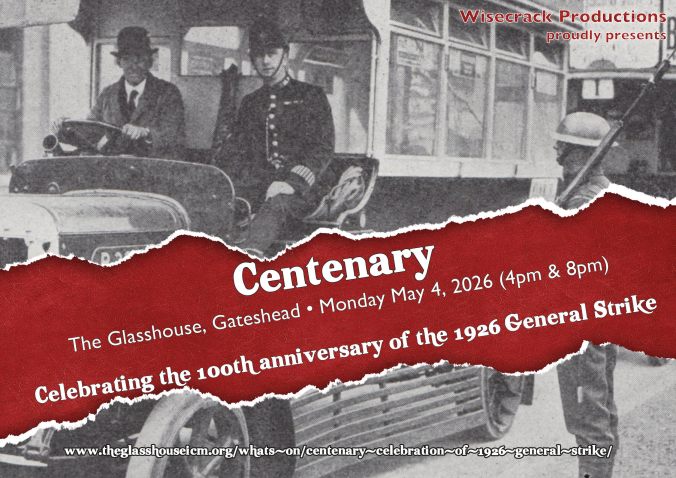
May 4, 2026, marks the centenary of the first full day of the 1926 General Strike where millions of British workers withdrew their labour and challenged the establishment. They believed a better world was possible.
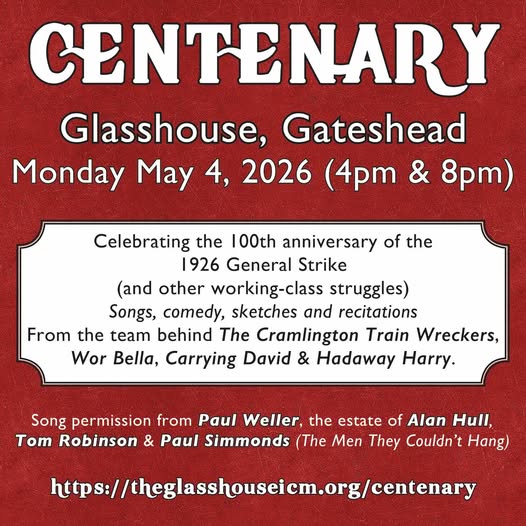
To mark this historical event the same team that brought successful plays Wor Bella, Carrying David and Hadaway Harry are staging Centenary at the Glasshouse.
“We have a great team and the show will be fantastic. We did a very popular show about four years ago called ‘Boris Out’, and look what happened to him!” said playwright and Theatre producer Ed Waugh
“One hundred years ago millions of workers and their families went on strike. A General Strike poses the question of state power, the 1 per cent – the privileged Establishment or the working class – those who actually create the wealth in society.”
“Despite the heroism and sacrifice of the trade union rank and file, the union leaders in the TUC realised the question of state power was at stake – the Russian Revolution nine years earlier had sent shockwaves throughout the world. These TUC cowards sold out the strike unconditionally after only nine days.”
Ed added “Their pusillanimity led to a carnival of reaction against the trade unions and workers by the Tory government. The miners continued their strike for another six months but were starved back to work. We haven’t had a general strike in this country since. But we’ve been close”.
“We have to learn the lessons of 1926 for the next time, which is on the horizon. The 1926 General Strike was a hugely important period in working class history.”
‘Centenary’ will include songs, comedy, stand up and recitations to celebrate the nine day strike. A big addition are musicians Paul Weller (The Jam) Alan Hull (Lindisfarne), Tom Robinson and Paul Simmonds (The Men They Couldn’t Hang) have personally given permission for their music to be played at the show.
“We are delighted to have been given personal permission from these great songwriters. It will be an evening of brilliant musical and comedic entertainment and inspiration.”added Ed.
Tickets are available for ‘Centenary’ at The Glasshouse, Gateshead at 4pm or 8pm on Monday May 4th 2026.
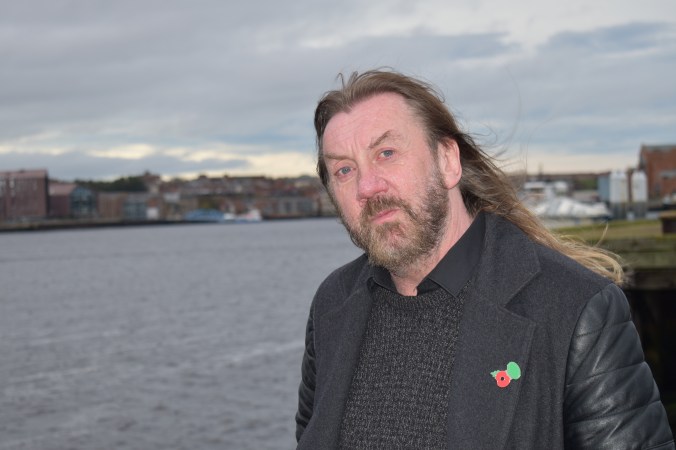
Singer/songwriter Terry Gorman Nov.25 pic. Alikivi
Now based in North Shields, Terry Gorman was born in Colne, Lancashire and has been playing guitar for over 50 years. Music has taken the 66 year old around the UK and Europe including Ireland, Amsterdam and Lanzarote.
I’ve done thousands of gigs maybe more than anyone you’ve met! said Terry after he had taken a short ferry journey over the river Tyne from North Shields to South Shields. We met in The Customs House for a cuppa and talked about music.
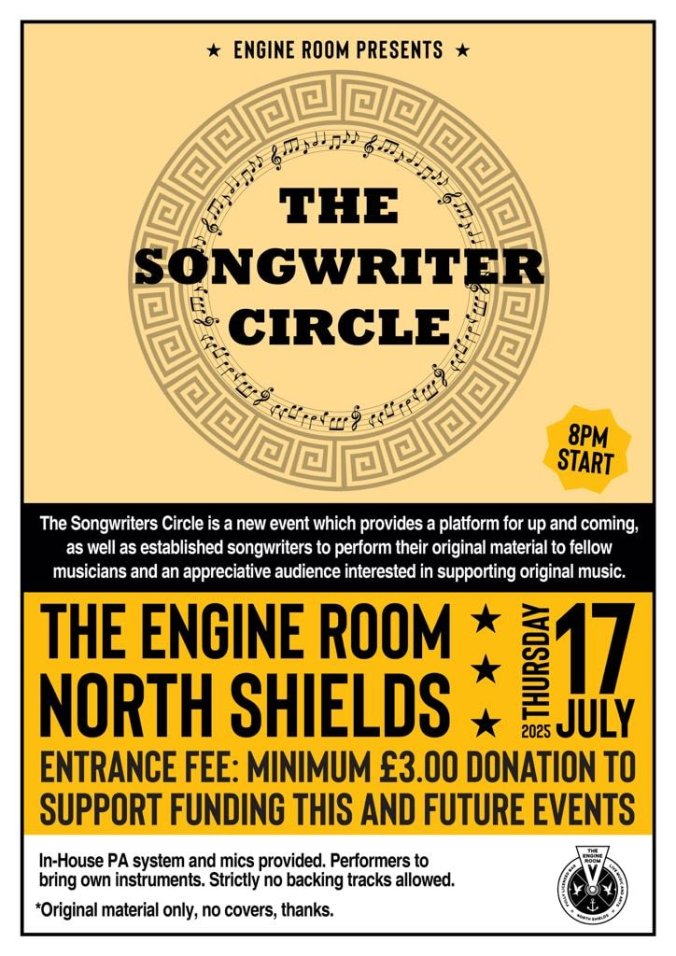
In North Shields there’s a nice music scene going on. We currently run a monthly ‘Songwriter Circle’ event every month in The Engine Room on Tanners Bank. It’s ran by myself and a few friends Steve McVay, Larry Page, Steve Rudd and Lyndon Phyliskirk.
You see live performance of singer songwriters all playing original songs. We encourage all levels of talent leading to paid gigs and possible festival spots. It’s been very successful so far and has been going since June said Terry.
Have I ever held down a proper job? I tried working 20 hours a week but found it hard working for idiotic managers. I thought I could earn enough money playing guitar and singing. I wasn’t interested in chasing fame.
I liked Ralph McTell, Alan Hull, James Taylor people like that telling a story. I watched Lindisfarne who were ordinary blokes, really down to earth but well known at the same time – that was for me. It was all about the music.
My introduction to music was my grandparents who had a piano in the front room. A lot of people did. I was around 10 year old when I picked up a guitar. It was a Hofner with a scratch plate. A Catholic priest who was a friend of the family knew I loved singing and writing poetry so he gave me his acoustic as he was off to the missions in Africa.
I lived in Brampton, Cumbria until I was 8 year old that’s where I saw the first singer who made an impact on me. It was Elvis when he sang on our black and white TV although I couldn’t make out the words or what he was singing about. The Beatles and Stones were good but I really liked storytellers, folk music where you could hear the words. I love lyrics.
Then I heard Lindisfarne and Isaac Guillory who made a G chord sound interesting. My first public gig performing was as a teenager in Durham I think, I was nervous and pretended to be confident.
Terry supporting the Devan Allman band at Newcastle Cluny.
North East venues Terry has played over the years include Bents Park and Amphitheatre in South Shields, Sunderland Empire, in Newcastle he performed at the Live Theatre, Journal Tyne Theatre and The Cluny. He also played in Durham City Hall and Gala Theatre, Washington Arts Centre and Darlington Arts Centre.
I won a songwriting competition in 1990 and thought it would lead to bigger things. A lot of radio play came off the back of that and a slot at the Cambridge Folk Festival and a headline at Dungeon Ghylls Music Festival in Cumbria. Again, I thought that would lead to more so I kept plodding along.
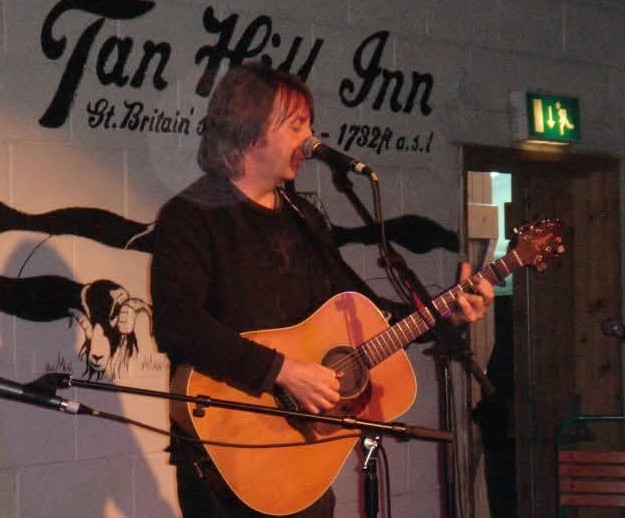
I played support to the Levellers at Tan Hill, Yorkshire, the highest venue in England. It went great playing my own songs, really grabbed the crowd by the scruff of the neck and went down well with an encore. The Levellers didn’t like that so I wasn’t asked back! Opening for Ralph McTell was a good gig and I’ve worked with Prelude a lot, I liked your interview with the singer Brian Hume earlier this year.
Terry supporting The Levellers at Tan Hill, Yorkshire.
I remember I played at a festival on the Isle of Bute, Scotland. I was the only one who wasn’t signed to a record company or connected to a famous band. There was Steve Daggett from Lindisfarne, Baz Warne out of the Stranglers, Martin Stephenson who was popular in the 1980s and others out of bands like The Pogues. I thought what am I doing here? I didn’t get signed but really, I never felt out of my depth.
I’ve wrote a few songs about getting knocked down and fighting back. When on stage I wouldn’t introduce the songs as if they were about depression or mental health. They are more about the power inside of you. It’s about dusting yourself off and going again.
I’ve recorded in Newcastle studios like The Cluny. Archie Brown from the Young Bucks was sound engineer. Then I went to Trinity Heights ran by Fred Purser. He was great, a really good lad, he used to be in North East bands Penetration and Tygers of Pan Tang.
What am I doing now? Well, it’s keeping the work rate up. In the last 12 months I released a single, ‘Only News Today,’ two albums and six professional music videos.
For 2026 I’ve got a folk album ready. One of the songs is ‘The Silent Shipyard’ about the closing of the shipyards and mines, all of the industry we have lost. I want a male voice choir on that one with a brass band and violins. Another song is ‘Beacon in the Dark’ about the whaling ships we had on the Tyne.
An idea floating about is a rock opera about John Lennon who was shot and killed in New York in 1980. In ‘Sgt Pepper Survived’ John Lennon gets shot and survives, lies in a coma for many years, wakes up and reveals his thoughts about world events today.
One scene is him sitting in a bar talking to Eric Clapton and Jimi Hendrix – yes, he lives as well. Lennon is also interviewed on stage where he is asked what he thinks about today’s shows like X-Factor, bands like Oasis and social media Spotify, Facebook and Instagram. I’m always thinking of these ideas.
If I have any advice to young musicians, it’s that if you enjoy your music, you’ve made it. If you don’t best just pack in and go do something else.
(pic. Gavin Webster, Centurion bar, Newcastle. Alikivi Sept. 2025)
I first met Gavin back in 2021 where we are today in the Centurion bar in Newcastle Central Station. He talked about being brought up in Blaydon during the 1960s and breaking into alternative comedy in the early 90s.
I missed out on the workingmen’s club circuit. But there was still a buzz for the whole comedy scene. I’ve been doing this for 33 years, I’m 56 now.
We talked about TV shows we watched as kids – Wheeltappers and Shunters Club, The Comedians and Minder.
It was great. It seemed there was chaos and a caper everyday down London. I wanted to move down there and get to know these types of people, hustling and bustling during the days, loved it.
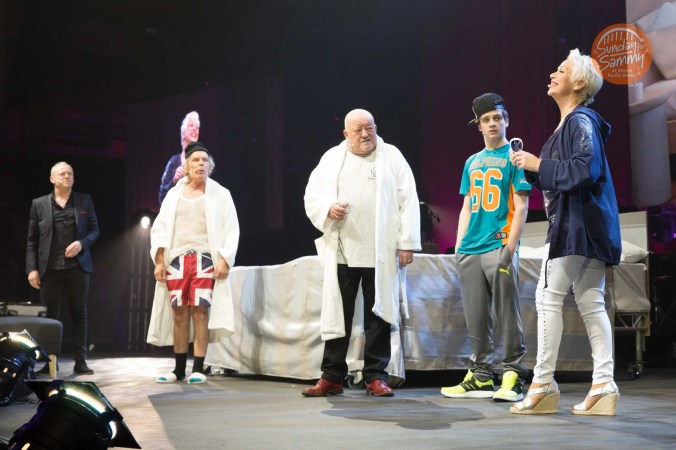
Scene from Sunday for Sammy in 2018.
In 2004 I was at Newcastle City Hall watching an afternoon of Geordie entertainment. Sunday for Sammy concert was organised by Auf Wiedersehen Pet stars Jimmy Nail, Tim Healy and Lindisfarne drummer Ray Laidlaw.
Among the TV, theatre and music talent on stage was AC/DC vocalist Brian Johnson ripping into Nutbush City Limits. A great afternoon. Played to packed houses the show returns to Newcastle every two years.
Yeah about 20 years ago I done a Sunday for Sammy show at Newcastle City Hall. Originally, I think Ray Laidlaw phoned me up about it. I really enjoyed it. In fact, I done it twice, the first time was with the lads from Viz. There was myself, Simon Donald, Simon Collier plus a couple of actors and I think the boxer Glenn McCrory done a part. We done a Sid the Sexist sketch. The next time I done my stand-up routine.
There were two shows. A matinee and a show in the evening. The matinee went well and at the later show I went on early because I had another show to do at The Stand in Newcastle. I had played the City Hall with 2,500 people there, a full house, but only about a dozen people turned up at The Stand. That has happened twice in my career.
At the Edinburgh Fringe in 2003. It was a benefit gig for an HIV/AIDS charity at the 3,000 seater Festival Theatre on Nicholson Street. It was a star studded line up and I did a 10 minute slot. My parents came up for the day. After the show I took them down to my other gig where only 11 people turned up. You get brought down to earth with a bump.
My agent at the time told me to go to the Oranji Boom Boom Club in London as it’s a good place to go, people get down there. I played the club on a Wednesday night and did a good decent job, worked hard, took it seriously. But in front of only a dozen people. However, a few year later I done some TV work on Channel Four and the producer came up to me and told me that he saw me at the Oranji Boom Boom Club.
During the past few interviews I’ve asked how do you survive in the arts?
Sometimes it’s been tough. I met a shock jock type of comedian from Australia his father was very rich. He was well supported. He would tell wild stories about how people walked out of his gigs. Now if I done that, I wouldn’t be able to pay my rent. It’s alright if you have unlimited funds coming in.
There has been times without work but I get by. I’ve done some voice over work, small comedy/drama parts. I’ve been in two Ken Loach films. I had speaking parts in I, Daniel Blake and Sorry I Missed You.
I done some of the animal voices on a children’s TV show called Walk on the Wild Side with Jason Mamford. We recorded that in a studio in Wardour Street, London. The set up is you watch the video on the big screen and read through the script. I got to write some of season three. Sarah Millican done it, Jon Richardson, Rob Gilbert, Mark Benton – loads of comics done voices on it.
I totally understand when some actors can end up working in shops and restaurants cos you need a regular income or you can end up skint. Actors need TV shows like Eastenders and Emmerdale. The films and voice overs don’t happen all the time – stand up has kept me going.
What am I doing now? I do a pod cast called Bazookaaah, small stand-up tours, regular gigs at Edinburgh Fringe and the Tyne Theatre in Newcastle. This new show on 21 November is called Glory Be its Gavin Webster. It’s stuff from Edinburgh with some new stuff that I’ve added. I always write a new show every 18 months or so.
Last time at Tyne Theatre was January 2024. For this show I arranged it and done a deal with them just for the one night so it’s not a massive commitment for them. Really looking forward to it.
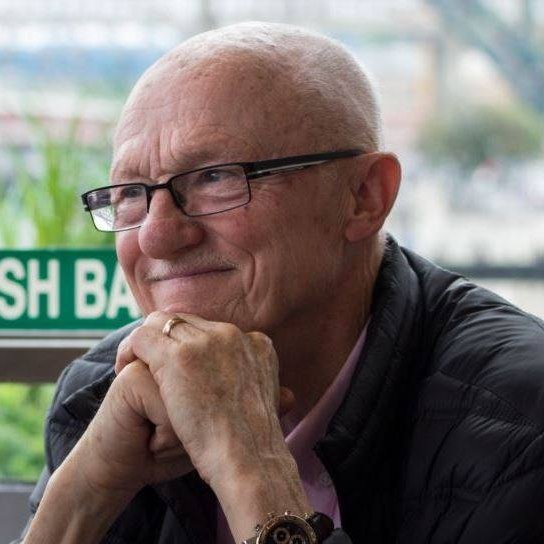
I met up with Gateshead born Brian Hume and he talked about his life in music and what it means to him now.
‘Music dominates your life. It can often exclude things that you should pay attention to. Personal relationships can suffer cos it takes over your life. All you wanna do is make that sound, make that music, at first you don’t care if you make any money you just do it for the love of it.’
‘Unless you’re all on the same page there’s always tension within bands. You’re living permanently on the idea that it will all come to an end tomorrow. If you’re a guitar player you could break a finger or get arthritis. Somebody might leave and your left high and dry. You might have an argument and everybody falls out, it’s a miracle they stay together. But it can be exciting not knowing what’s round the corner’.
78 year old Brian looks back to when and where he was first inspired.
‘Me mother was very musical she’d knock out a tune on the piano and a four string guitar – all self taught, amazing. That’s where I learnt to pick out a few tunes. Lot of houses had a room where no one went very often, that’s where the piano was.’
It was in Grammer school where Brian first met up with Ian Vardy, forming a duo to sing in Tyneside pubs and clubs.
‘One of the first gigs we played was the 99 club in Barrow in Furness. After two songs the chairman came up to the front of the stage “You’re not really right for this kind of environment”. He was nice about it but, yeah, we were paid off.’
‘The Everley Brothers songs were the go to sound, when we heard their two part harmonies we thought we could do that. We used to play the Bridge Hotel in Newcastle. The folk scene then was vibrant, clubs were always packed out people were singing sea shanties then Paul Simon came along.’
‘Then we’d try writing our own stuff. Our publisher wanted us to be called The Cobblers. You could see the first review – what a load of! We settled on The Carnival – a very 60s hippy name. We lasted for one record – a Paul Simon song called The Big Bright Green Pleasure Machine. The review in the NME read ‘social comment at breakneck speed!
‘Ian and I were singing in our flat in Gateshead. We had just bought the Crosby, Stills and Nash album trying out different songs like Sweet Judy Blue Eyes. My wife, Irene was singing in the kitchen with the door open. She was singing the third harmony. We were totally surprised as we didn’t know she could sing. We turned and said ‘sing that again’. It wsan’t long before we went out to folk clubs and started going down really well.’
‘We lived in School Street, Gateshead and nearby at the end of the Tyne bridge is an old toll booth. A big granite structure. It had a lovely echo. Some nights we’d go in there and sing. One night a policeman came in. He thought we were up to no good. Very officious. But he stuck around listening to a few songs then as he was leaving said “Carry on”.
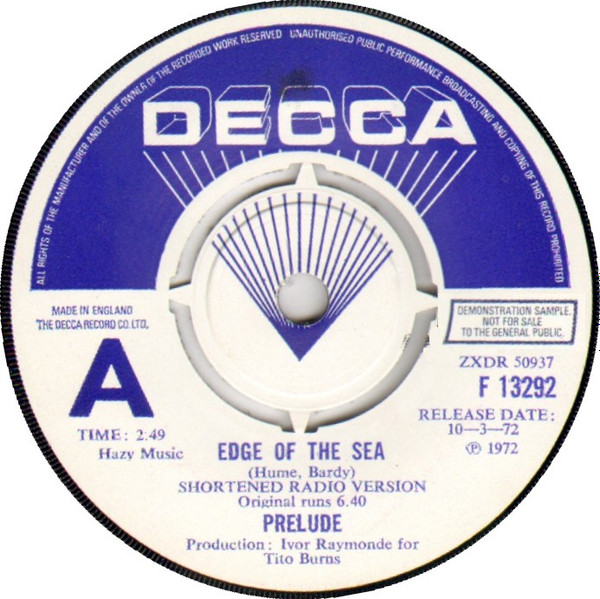
‘We got a deal with Decca Records and recorded a single The Edge of the Sea which had a strong hippy vibe to it. All during that period we were recording in Impulse Studio making demos courtesy of the owner, Dave Woods who soon after ‘discovered’ Alan Hull.’
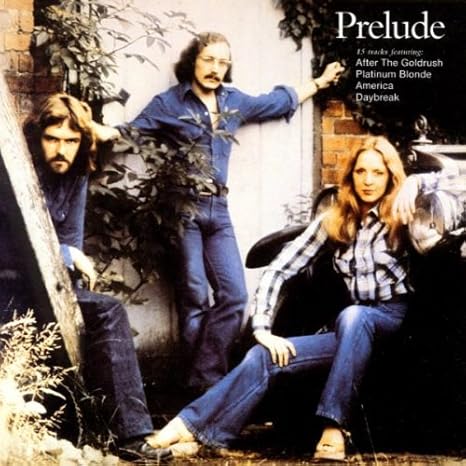
‘We were called Trilogy for a while but had to change it because there was an American band with the same name. It’s not easy choosing a name as any band will tell you. I came up with Prelude and that stuck. That was 1972.’
‘Three part harmonies had a big effect on musicians. A lot of bands had done it like The Lettermen and The Platters from way back, but Crosby, Stills and Nash were different, this was whack right in your face. Yeah, a big influence on us and many other bands including fellow Tyneside band, The Caffreys.’
‘Different members have come and gone but the band were Ian Vardy, me and my wife Irene. Ian and I got a song writing contract with ATV music which worked for us financially. We decided to put both our names on everything we wrote irrespective of who wrote it.’
‘We had a brilliant guitarist called Frank Usher. We parted company and and he went on to play guitar with Fish from Marillion as well as being a fine guitar maker.’
‘We played the North East club scene for a while and in between we’d do Durham College where we’d support artists like Gerry Rafferty, Mott the Hoople, Shaking Stevens and the Sunsets – that band were amazing. There was a hippy commune type band called Principle Edwards Magic Theatre who all dressed in white which looked cool so we copied that – it was a cheap uniform.’
‘Our manager George Carr got us a record deal with Pye who back then were dominated by Max Bygraves selling boatloads of Sing-a-Long-a-Max records. We were the token folk band, although we were never folk they just called us that cos we had acoustic guitars! You couldn’t say that Pye were part of the cultural vibe.’
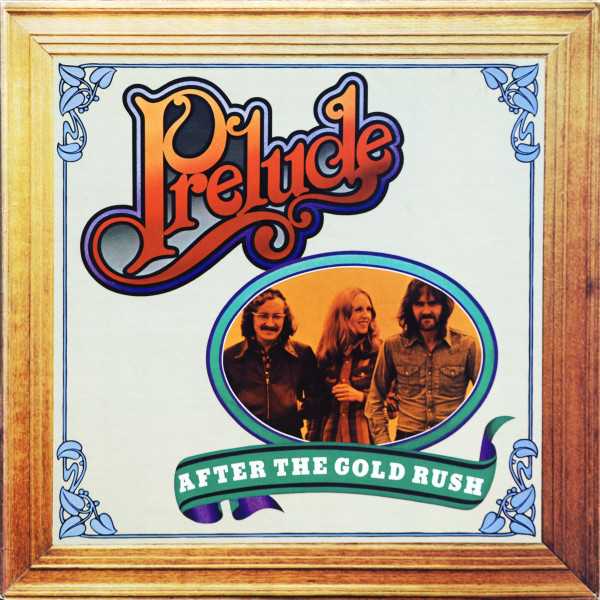
‘In 1973 we went to Rockfield Studio in Monmouth to record our first album How Long is Forever? produced by Fritz Fryer who was in a group called The Four Pennies. They had a number one with Juliet. A wistful ballad. On the final studio day Fritz asked if there was anything else we had. We used to sing a Neil Young song just for our own pleasure. That was After the Gold Rush.’
‘We recorded it and it sounded pretty good so we double tracked it. Overdubbed it fifteen times and it sounded massive. We never thought for a minute anyone would pick up on it. But John Peel at Capitol radio did. He got loads of calls ‘Who is this band?’ ‘Where can we buy the record’.
‘Next thing we know Pye put it out as a single and we’re on Top of the Pops. That was 1974. We ended up appearing twice the first time was with Marc Bolan. There was a succession of TV appearances. You had to do television because you are reaching a massive audience. We did a show for Tyne Tees called the Geordie Scene. We did the Basil Brush show for Pete’s sake.’
‘Most notably we went on the Vera Lynn show. During rehearsals she referred to us as The Prelude. Later she was walking towards us along the corridor when Ian stopped her and said “By the way Vera it’s not The Prelude it’s just Prelude”. Not skipping a beat she turned to him and said “If you don’t mind it’s not Vera…it’s Miss Lynn”.
Prelude were always based in their hometown Gateshead this meant constantly travelling up and down the M1 to television and recording studios in London.
‘It was every other week. We should have moved down there. But 1974 was a big year for us. We did the background vocals on Streets of London which was a hit for Ralph McTell. He asked us to go out on a UK tour with him.’
‘Ralph wanted to put our names on the record but our company wouldn’t allow it. For the next best thing Ralph put ‘background vocals by ‘The Gold Rushers’. It would have been a great advert for Prelude to have their name on the single but Pye were stupid on that.’
‘Ralph was so talented and generous to a fault. It was a big tour around the country then we played a venue where we’d seen Paul Simon, Crosby, Stills and Nash – here we were on the stage of the Royal Albert Hall. Amazing.’
‘After the McTell tour we went back to playing smaller venues but I’m getting the timeline mixed here because I remember before touring with Ralph was a UK tour with a singer and songwriter called Mike Chapman. He had a devoted following and used to live up the Tyne Valley in Haltwhistle.’
‘Then we went on the road with a great piano player called Peter Skellern who had a big hit with You’re a Lady. Meeting him he was rather quiet and reserved – he later became a priest. Then there was talk of America.’
‘This was 1976. What happened was Lindisfarne played the States. When Alun Hull came back, he’d tell us to get over there ‘Cos all ya’ hear is your bloody record ‘After the Gold Rush’ on the radio all the time.’
‘I always read the NME and Melody Maker, looking at American charts where like the Holy grail of music to me. To see Neil Sadaka, Beach Boys and bands like that we thought wouldn’t it be great to get in there. Our manager George Carr said ‘You’re in the American top 100’. We thought this is a dream come true.’ Then it went towards the top 20.’
‘We wanted to capitalise on the success but the record company didn’t want to pay for us to go to America they sent us to Amsterdam. We played the clubs and had a good time but we should have been in the States where we wouldn’t have even needed guitars as the song was acapella. We could have done the Johnny Carson show and the like and knocked that record up the charts.’
‘It wasn’t until 18 months later we got to the States. There were a few gigs on the West Coast in San Francisco where we supported Jerry Garcia in Berkley and met Nicky Hopkins who played piano on all Rolling Stones records. Then over to the East Coast and played The Bitter End in New York. When we came back to the UK Irene took a break when we had our second boy, Joel.’
‘Things moved on quickly until 1979 when our manager got us a deal with a new company called After Hours who were very forward thinking. We made an album at Abbey Road with The Hollies producer Ron Richards. His style was more towards lush strings and stuff like that. It didn’t really work for us.’
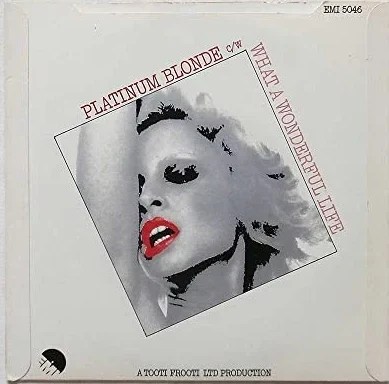
‘We also signed to EMI in 1980 and made an album in Portland Studios owned by Chas Chandler, charming fella. We had some great players on there but the only track that came out of it was Platinum Blonde. Our principal guys were Ian Green de facto producer of Platinum Blonde and Dave Wintour who was Neil Sadaka’s bass player. It was a minor hit which got to number 45 in the charts.’
‘We did a video for it in the old Battersea Power Station in London arranged by the head honcho at our record label, Richard Jacobowski. He was really on the ball, a hip guy. We crashed in his three storey flat in Hampstead and shared it with a band called The Regents who were very talented, like a proto-punk band. They had a hit song on Top of the Pops with Seventeen.’
‘For the single we did Top of the Pops and I remember on the same programme were Bay City Rollers. Platinum Blonde was good for us but afterwards we came back up North and played the folk clubs again.’
‘Ian Vardy was looking at doing something different so left the band around 1985 and became a social worker. We continued and got in ace guitar player Jim Hornsby who had been with a lot of country bands. Jim was very much in demand for session work.’
‘Country was labelled as redneck music then, it wasn’t cool – but it is now. Gram Parsons did a hell of a job making country hip. He influenced The Byrds and Keith Richards. Some clubs turned their nose up at country stuff but we had a great time doing clubs then. Unfortunately, as happens in bands Jim left.’
What did the new millennium bring?
‘From 2001 it was Irene, me and Chris Ringer who we brought in on bass and vocals and took Prelude on the circuit of country clubs and the whole scene. Through the years we have performed with countless numbers of musicians and loved every minute of it.’
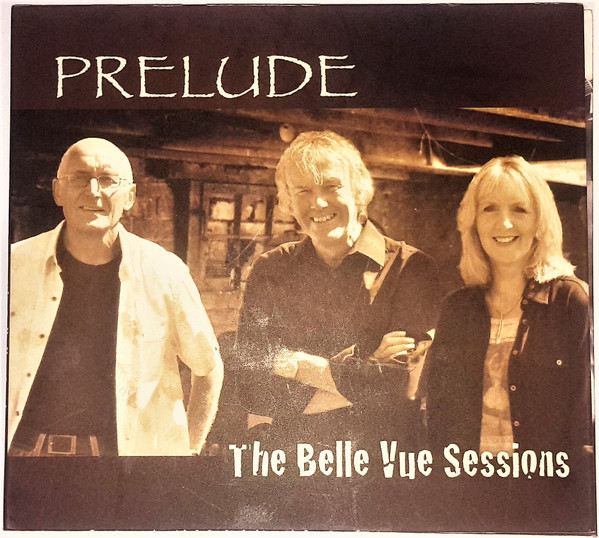
‘Our latest album The Belle Vue Sessions (2012) is all acoustic. It started in 2010 when Ian came round to our house, he had an appointment at his dentist round the corner. We got the guitars out, as you do,and it all went well so we asked him to do a gig with us. One turned into many.’
‘It was our manager Sue Brind who originally said ‘Why don’t you make a new Prelude album? We thought ‘why not?’ so we wrote some new songs and recorded them in Broadwater studios, Gateshead. Two lovely guys engineered, Gavin and Paul. We recruited Paul Hooper who was drummer for The Fortunes and again Chris Ringer played bass. We are very proud of the album.’
What does the future hold for Prelude?
‘We’re busy meeting with David Wood who used to run Impulse Studio in Wallsend. Impulse was a gateway for a lot of acts. He released a lot of Heavy Metal stuff like Venom and Raven from the North East, it was a big scene for him.’
‘David recently put out a CD box set of Alan Hull demos, he recognised Alan’s talent early on. Now he wants to do the same with us because he’s got a lot of tapes that have never seen the light of day. We’re looking to release something soon.’
After recalling a life spent with a multitude of musicians and the memories it triggers, Brian reveals that his ‘obsession’ holds a deeper meaning than just getting on stage and banging out a tune.
‘Your friends tend to be musicians and you share a common language which is almost secret amongst you. You know and experience things that nobody else has. There’s a bond between musicians which is friendship but sort of deeper. You know what the other is going to do, what they’re going to sing, – what they can and can’t do. Every successful band has to have that. It’s like brotherly love. It’s a wonderful feeling. It’s why people do music instead of opting for a ‘safer’ life.’
On 1st February 1967 on his way to becoming one of the most influential guitarists of the 1960s, Jimi Hendrix played the Cellar Club in South Shields.
A previous post (19 March 2025) looked at the impact this gig had, also mentioned was the opening of the new Cellar Club in December 1966 by Cream.
Reading the article stirred up some memories for North East musician and actor Tony Hodge, he recalled the time he was introduced to the band and in particular the drummer Ginger Baker and how influential he became in his life.
‘In the sixties my good friend Ray Laidlaw played in Downtown Faction along with Rod Clements and Simon Cowe – all three became famous in the amazing band Lindisfarne. Ray and Rod had an excellent bass and drums connection, driving the band’s music with real power – I loved to hear them play’.
‘On many occasions we went to see each other’s bands play at various venues including the Briar Dene Tavern in Whitley Bay and The Nautilus Pub, a short walk from my house that became a regular haunt from 1964 onwards.’
‘I would often go with Micky Balls and meet Ray and other likeminded musicians like Billy Mitchel, Will Browell and Billy Dunn. We always had great meetups and all types of music were discussed’.
Micky Balls and Tony in Newcastle.
‘One night near Christmas 1966 Ray mentioned he had heard of a drummer that played with two bass drums. This drummer apparently could play a drum roll with his feet!’
‘A drum roll is hard enough to play with your hands using sticks, never mind with your feet using foot pedals. I found it hard to do a fast double beat that was required in some pop songs of the time never mind a full drum roll. I said I couldn’t see that it was possible and we had quite a heated discussion about how impossible it would be’.
Fortunately, the band were due to play at Newcastle Club a’Gogo and Ray saw this as a chance to convince Tony. The Club a’Gogo was a popular venue housed in two upstairs rooms above Handyside Arcade in Newcastle.
It opened in 1962 as a jazz club but broadened its musical style and became better known as a Soul, Rhythm n Blues and Rock venue attracting big stars likeThe Who, The Rolling Stones, Jeff Beck and local stars The Animals.
Tony explained ‘It was split into two separate rooms each with its own stage three feet up from the floor. One room was called ‘The young set’ for under eighteens and the other was called ‘The jazz lounge’ for everyone young and not so young’.
‘When the big stars played there, they would play a set in each room. This must have been a nightmare for the road crew as during the interval everything needed to be set up in one room then taken down and set up in the other’.
‘If you got in early, you could be right at the front and literally a couple of feet from the stars. That was amazing for a fan. On every visit I always got to the front and had the most amazing view of people who were to become megastars’.
‘We had come to see the band that we had discussed in the pub with this special drummer. It was a newly formed band from London. Unusually they were just a three-piece group, lead guitar, bass guitar and drums and had no separate singer as was the popular set up of the time’.
‘The club had an amazing atmosphere, it was dark and you were all packed in together. Small lights lit the stage which was only big enough for artists to play and not a lot of extra room for big theatrics. The stage was absolutely packed with equipment’.
‘To each corner were two sets of PA speakers and on the right-hand side were four Marshall 4×12 cabinets and the same on the left-hand side. In the middle was a set of Ludwig drums with two tom toms, two floor toms and two bass drums showing the name Ginger on one drum and Baker on the other. Yes, this band was Cream and the amazing drummer Ginger Baker. At this time of course, I had no idea who he was – but that was about to change’.
‘On came a man dressed in a long purple Teddy boy jacket and a ginger quiff with a half pint glass of rum (I think) in his hand. He sat down picked up his sticks and hit all four tom-toms then did an amazing roll on the two bass drums. He stood up and left through the back door of the stage, his sound check completed. This was the one and only Ginger Baker’.
‘Both Ray and I just stood and looked at each other in amazement. The speed and technique were just amazing and so different to us two young drummers, I heard nothing like it before’.
‘I was still recovering when two other guys entered the stage and came to the microphone. Ginger came through and sat down behind this huge kit. They started to play with no count in just heavy tom-tom beats, then guitar, then the man in front of me who was Jack Bruce started to sing ‘Driving in my car, smoking a cigar, the only time I’m happy is when I play my guitar’.
‘The opening to N.S.U. was like nothing I had heard or played – ever! The drums rolled around the kit the volume was deafening and when the guitar solo came in by Eric Clapton the hairs on my neck stood up. It was loud, very loud. It was something you never forget’.
‘The rest of the set was also amazing playing in a style I could never have imagined. Ginger played a drum solo that was again long and loud but it ended with him playing the two bass drums and his tom toms in a chest thumping roll that went on for several minutes.
That was the famous twin bass drum roll Ray had been talking about, it was true, a drummer could play a drum roll with his feet. I had to learn that, I had to be able to play drum rolls with my feet. I was hooked’.
‘The trip back on the bus was all about the miracle we had just seen, a drummer like no other. I was changed overnight, by this one-man, Ginger Baker. Without my friend Ray persuading me to go to the Gogo to see him I would not have become the mad drummer I became. That night ‘Animal’ was born’.
‘I had to have a double bass drum kit and if possible, a Ludwig one. Off again to the music shop and more debt but I got a lovely Ludwig drum kit with a pearl finish just like Ringo Starr. It looked and sounded fantastic’.
‘Once I got this kit my whole style changed. I was more brash and started playing a drum solo at the end of The Pirahna Brothers first half. It was long, loud and not very technical but this new style and the notoriety it brought with it opened many doors. My nickname was ‘Animal’ and people shouted it out at venues’.
More stories from Tony Hodge coming soon including Jimi Hendrix, The Nice, Jethro Tull and Tina Turner.
Edited: Alikivi May 2025
Link to previous interview with Tony from February 2021 >>>
‘Chasing the Rainbow’ is my debut solo album and at the age of 72 I feel a real sense of achievement to have done this explained Phil. I first made music in 1959 when I was 7 year old with my two brothers Pete who was 10 and Paul who was 5. We’d give concerts in our parent’s garden, we loved singing in harmony. I’ve been so fortunate to make music with my brothers.
Arbre were signed to DJM records in 1975 and released two albums and four singles in the mid to late 70’s. By the 2000s The Caffrey Brothers formed and released four CD’s.
Phil added Lately I’ve worked with a number of musicians and recorded a new album in Stuart Emerson’s studio. The first track Rollin Thunder is about how life can be frantic and not having time to take stock. It can also be about how the weather is changing and we need to do something before it is too late.
The Lion Share is about someone who wants and takes more out of a relationship and Measure asks questions as somethings are not always easy to work out or see. There are things that are difficult to measure, love being one of them.
Meet Me in Heaven is about meeting someone somewhere at sometime, maybe in the future. Final track Chasing the Rainbow is about striving to reach a goal in life. I think we are all chasing a rainbow of some description.
Musicians on the album are Phil Caffrey – lead vocal, backing vocals and acoustic guitar. Stuart Emerson – acoustic and electric guitars, bass, piano, keyboards and backing vocals. Paul Smith – drums, percussion and congas. Michael Bailey – bass guitar, Rachael Bailey – accordion and violin.
For more information contact The Caffreys on social media/facebook. The CD is also available on all music platforms to download or stream.
Now living in South Shields, retired teacher Rosie Anderson still feels there is work to do and more stories to tell.
‘Sometimes I feel as though I’m just getting started. I sing whenever I can. This year my musical partner Adam Holden and I have played at The Watch House in Cullercoats, The White Room in Stanley and Cockermouth Festival which were all great. I’m determined not to just bow out because I’m getting older’.
‘I grew up in Wylam in the Tyne Valley, in a house full of music. Both my Grandparents played piano. My dad listened to The Beatles, both parents loved the theatre and musicals and they took me and my brother there – I still love all that’.
‘When I was a kid I told my parents I wanted to be a performer but they were worried I wouldn’t be able to afford a home like them, they wanted me to have a ‘proper’ job. They wouldn’t let me study performing arts so I trained as a teacher’.
‘My first job was in Benwell, Newcastle. Then I went to the Middle East where I spent 10 years teaching in Kuwait and Qatar, before returning to Newcastle. I taught at Walkergate Primary School where I would do all the music shows and drama productions. Loved doing the shows there, I never gave lyric sheets out to the kids, they learned by listening and singing the songs back’.
‘When I left teaching I saw an advert for facilitators for Singing for the Brain with the Alzheimers Society. I really loved doing that. I did that for six years until covid hit. Singing on-line with people on the screen in front of you didn’t work really’.
‘People love stories in whatever form, be it a book, a film or a song. Some people write songs about being in love, and about their feelings. My songs are mostly about people and places. I find stories present themselves to me and I take them and turn them into a song’.
‘There are two songs that I have written that stand out for me. Sally Smiths Lament was written after my husband Chris and I worked on a film about soldiers from County Durham during World War One’.
‘Sally was the wife of miner Fred Smith, who featured in our film. They lived in a tiny terraced house and every day Fred and his sons needed a bath, a clean shirt, a clean bed and a dinner. The kids needed to get to school – how did she cope with all that, especially when Fred was away at war. I wanted to give Sally, and all the women like her, a voice.’
‘When I wrote it the song just seemed to be presented to me, her whole life. I got to sing it at a celebration in West Auckland and her family came to hear it – it was very moving. It travelled well and won three competitions – the Newcastle Folk Club, Rothbury Traditional Music Festival and first prize at Morpeth Gathering’.
‘I can’t just decide to sit down and write a song – some people do and I applaud them for the discipline but I have to wait until they come. Three things happened to me in my life that I put together in a song called Breakdown’.
‘When I was a kid I lived at Chapel House Estate in the west end of Newcastle. One night me, my mother and a friend went for a walk. This woman came out of her house in her dressing gown, she wasn’t in control of herself, didn’t know what time or day it was. I had never seen that behaviour in an adult before. Now I believe she was having a nervous breakdown’.
‘That always stayed in my head and another one was when I was living in Fenham. I went to the shops with my children who were only small then, and a woman came out of her house with a letter and asked if I would read it to her as she was confused and couldn’t understand it’.
‘Then about 30 years ago I went on a blind date in Newcastle with this very nice bloke. He said I need to tell you something before we go any further ‘When I was working in Canada I had a nervous breakdown in the car park of a Burger King’. It was hard to concentrate on anything else after that’.
‘But I remembered those incidents and those three individual people are lodged in my heart for their own traumas. They gave me that song’.
‘This year we went to Kjerringoy a former trading post in the Norwegian Arctic Circle, out in the middle of nowhere, it was beautiful. A family ran it in the 19th century and had 3000 fishermen working for them, catching and processing thousands of tons of cod’.
‘The father and husband died and the wife continued to run it single-handed for many years until she eventually remarried. I asked the locals if there was a song about her and there isn’t. So that’s my next song – Annalisa from Kjerringoy. Her story needs to be told’.
‘I’m also aware we need to start telling more stories about people and their lives and jobs today otherwise in 100 years time there will be no one singing about us!‘
‘What does music mean to me? It’s hard to describe it, it’s so deeply embedded, there’s no life without it. Music is at the core of my being, there is no day without singing and because I have grandchildren now I have a new audience! We sing folk songs and songs from musicals, they’re word perfect when they sing them back’.
‘Music gives such joy, when I was singing with the Alzheimers Society the collective joy and reminiscences of songs from the past and enjoying it together was just so valuable for the families’.
‘We had people who wouldn’t sing at all but liked being there and that was fine. Once, two women brought their mother to a session and she sat between them. She didn’t communicate at all, had her head down, closed off you know. But when we started singing a song, I can’t remember which one, she lifted her head up and actually got up and started moving around in the middle of the circle’.
‘One daughter got up and started dancing with her. When we got to the end of the song the daughter turned round and said to me ‘She’s just said my name for the first time in years’.
‘Music gets right in there (pointing at heart) we’ve got to keep it going and expose our youngest children and oldest adults to music because it really does reach parts that others can’t reach. It’s like hearing the heartbeat in your mother’s womb’.
‘As a child I wanted to do music, as an adult I taught it with kids then people with dementia, despite my age I’m still committed to what I always wanted to do. Women who’ve had careers and families can still chase their dreams’.
Hard working Bill spent 34 years as a railway driver and 20 years on Newcastle City Council. Being a keen cyclist, he is one of the few people to have completed an around the world bike ride.
“The highlight had to be the scenery in the Rocky Mountains, USA, the geysers, hot pools and volcanic activity in Yellowstone Park. I followed the Rockies for over 1,000 miles through Colorado, Wyoming, Montana, Idaho and Oregon with much of this being wilderness area”.
When the pandemic hit in 2020 Bill took solace in the music he loved. He attended songwriting workshops with artists he had been a fan of such as Beth Nielsen Chapman, Mary Gauthier, Gretchen Peters and Dan Whitehouse. When folk clubs opened back up after lockdown Bill stepped out to perform.
“I really enjoy playing local folk clubs where audiences are always attentive and often sing along. My favourite folk club is The Bridge Hotel in Newcastle which is the longest running folk club in England on the same premises. They’re a great crowd”.
Encouraged by this warm welcome, he spent 2023 honing his work with producer Dan Whitehouse and then recorded his debut album. ‘Closer’ is a delicate collection of heartwarming folk songs that tell political and historical stories as well as tales of love and loss.
“We recorded all the foundation tracks of vocals and guitars live in my living room in Gosforth”.
As well as producing Bill’s debut album, Dan also played lead guitar and added backing vocals plus several of Bill’s friends and family contributed to this intimate collection of songs.
French speaking Christine Durand reads poetry, Kathy Wesolowsk lends operatic vocals, Bill’s grand-daughter Chloe Weston is the lead voice on a song written by Bill on a songwriting retreat lead by Gretchen Peters and Mary Gauthier.
The recordings were shared with Gustaf Lljunggren (John Grant/Eddi Reader) who added Pedal Steel, Accordion and Rhodes Electric Piano from his Copenhagen studio.
“Dan Whitehouse had worked with Gustaf before. He introduced me to Gustaf’s music and once I heard him, I knew that he was the musician I wanted to have playing on a number of my songs”.
“Gustaf is experienced in working remotely – adding delicate overdubs, without overcrowding the musical landscape of my record”.
Cover art by Ruth Bond.
Next stop on the album’s journey was London…
“I’d a longing to add strings to ‘Fools and Princes’ – with it being based on Romeo and Juliet, I had a vision of a romantic string arrangement being effective, Dan suggested Alison D’Souza (The Little Unsaid) in London as he’d worked with her previously and what she played really brought my dream into reality”.
“Harriet Harkcom’s voice I knew from Dan’s own releases as she has sung on most of his albums, I was pleased when she accepted my invitation to sing on ‘Goodnight Vin’. I’d like to think if Vin was around he would love her voice on this song too”.
With recording completed, final mixing and mastering of the album was by John Elliott.
“My hopes for the album are that it will allow me to reach a wider audience, commercial success has never been my main aim. Like any other singer-songwriter I just love sharing my songs with people”.
For the near future Bill has no plans to tour the album…
“I sing in local folk clubs twice a week and I’m happy being involved in this local musical community. I prefer small intimate venues packed with friends and other singers”.
The album is available to order now on CD and digital via bandcamp >
Marden High school in North Shields will host an evening of stories told by three Geordie voices. Founding member of Lindisfarne, Ray Laidlaw, BBC local news reader Carol Malia and international playwright Ed Waugh. Each have a connection to Monkhouse Primary, North Shields, so it’s fitting that all proceeds from the event go to the school.
As well as finding international fame with Lindisfarne, North Shields lad Ray Laidlaw is producer of Geordie institutions Sunday for Sammy and Christmas in the Cathedral. Ray was recently part of the creative team that won a Royal Television Society Award for the brilliant BBC 4 documentary, The Alan Hull Story.
Born in Tynemouth, Carol was a former Marden High school pupil. A regular on our TV screens since 1997, Carol has lots of funny stories to tell, a real Geordie institution.
Ed Waugh has produced 21 professional plays including Dirty Dusting (co-written with Trevor Wood). In January it’ll be performed at Whitley Bay Playhouse and his self-penned play Wor Bella will grace London and Newcastle Theatre Royal in April. Ed also writes comedy sketches for Sunday for Sammy and Christmas at the Cathedral.
Ed Waugh said“In April 2022 my lovely daughter in law Rachelle died aged 34. The school has been brilliantly supportive of my two grandchildren who have attended Monkhouse Primary. It’s an excellent school which thrives on developing the children and giving them new experiences either via extra-curricular activities like football, gardening and archery to name just a few examples, or encouraging them in school time to be active in the arts. I just wanted to do something as a thank you. Both Ray and Carol immediately said yes, which was brilliant of them. It’ll be a great night.”
The event will be held on Wednesday, February 28, 2024 @ 7.30pm at Marden High School, Hartington Road, North Shields, NE30 3RZ.
Julie has worked within the entertainment industryfor over forty years, and is a local gig promoter based in Whitley Bay.
Before the Newcastle Arena the Whitley Bay ice rink put a lot of bands on. We had Sting, Def Leppard, AC/DC – who had a massive bell and cannons on stage and when it went off all the ceiling tiles came down on the crowd.
They thought it was part of the show, but it wasn’t a stage effect, all the staff were running round collecting the polystyrene tiles off the floor (laughs).
I lived across the road from Whitley Bay ice rink. In 1986 I worked in ticket sales at the rink then went to the box office at Newcastle Theatre Royal in ’88 – I had good times there.
I was working on box office when someone phoned up and said he had lost his tickets for a show – he said he’d accidently thrown them in the fire – I asked for his name, he said ‘A.Pratt’ – yes it was his real name (laughs).
I used to love standing in the theatre gallery watching the show’s and the audience laughing along. There was school outings and I used to love knowing I had arranged tickets for them to see the shows.
It was all about helping people and going out of my way to make sure the person who is buying the group tickets is being looked after because I know how much hard work it is getting people’s money in.
When I was Duty Manager our matinees are Thursday and Saturday afternoon. The theatre is dark when they are not in use and you’re not allowed to go in them when the show isn’t on.
One day in the box office I heard a noise coming through the speakers so I went into the theatre and there was a line of mature ladies sitting in the Grand Circle with their bags of sweets waiting for the show to start.
I went over and asked them what they were doing as there was no show on until tomorrow. They showed me tickets for the matinee on that day but they were for a different venue – they had come to the wrong place, they needed to be in the Tyne Theatre.
Ray Laidlaw & the late Chris Phipps on board the Tyne Idols bus.
SUNDAY FOR SAMMY
I work with Ray Laidlaw who runs the Sunday for Sammy production and Tyne Idols, I help out backstage and in the production office – I love being part of it. I often watch the DVD’s because it’s a good Geordie show, just like the Geordie grand performance – a great laugh.
The show is in rehearsal for a week before the production, Saturday is the fit up day in Newcastle Arena and two shows on the Sunday. I think they were only going to do one but it was so successful they’ve kept going over 20 years and raised a lot of money to support young creative talent in the North East.
It was so exciting to be part of the 2018 show, I had a small walk on part and shared a dressing room with Vera the TV detective and ex-ITV newsreader Pam Royal.
The future of Sunday for Sammy is looking great with the younger generation of local artists like Jason Cook, Joe McElderry and many more keeping the Geordie Command Performance fresh and current – long may it continue!
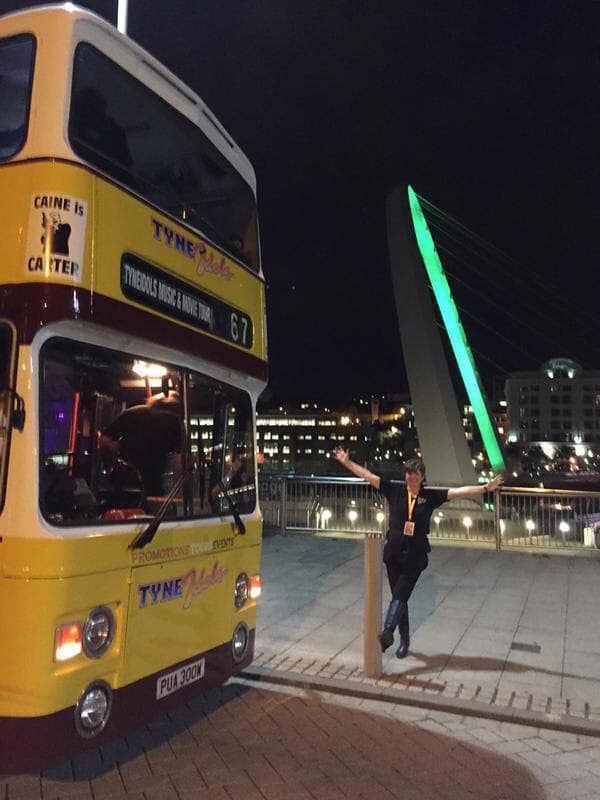
Julie outside the Tyne Idols bus. parked at the Millennium bridgeacross the river Tyne.
TYNE IDOLS
We get seventy people on a tour for our North East music, film and heritage tours. The double decker that we use is forty year old this year and now classed as a vintage bus.
With Ray Laidlaw (Lindisfarne) at the helm of most of our tours, The Coastal Heroes Tour taking us along the beautiful NE Coast, The Newcastle Tour is best at night, the lights on the river really showing the town at its best, crossing the bridges singing ‘Fog on the Tyne’ is an unforgettable experience.
The Sting Tour, Punk Tour and Viz Tour are also very popular. All tours are very different, we usually visit an iconic music venue and historic drinking dens as part of the tour It’s a very unique experience.
Have you any events planned for the rest of the year ?
Because of Covid I had gigs pencilled in last year and it took five attempts to re-book the dates. A lot of people cancelled their tickets because they didn’t want to be amongst people – now we are seeing them slowly come back.
For Dirty Dusting (Friday October 1) at Whitley Bay Playhouse it was more or less full.
We’ve a couple of events happening soon at The Crescent Club in Cullercoats, there is electric skiffle on Saturday 13 November with the Peter Donegan band – the son of Lonnie.
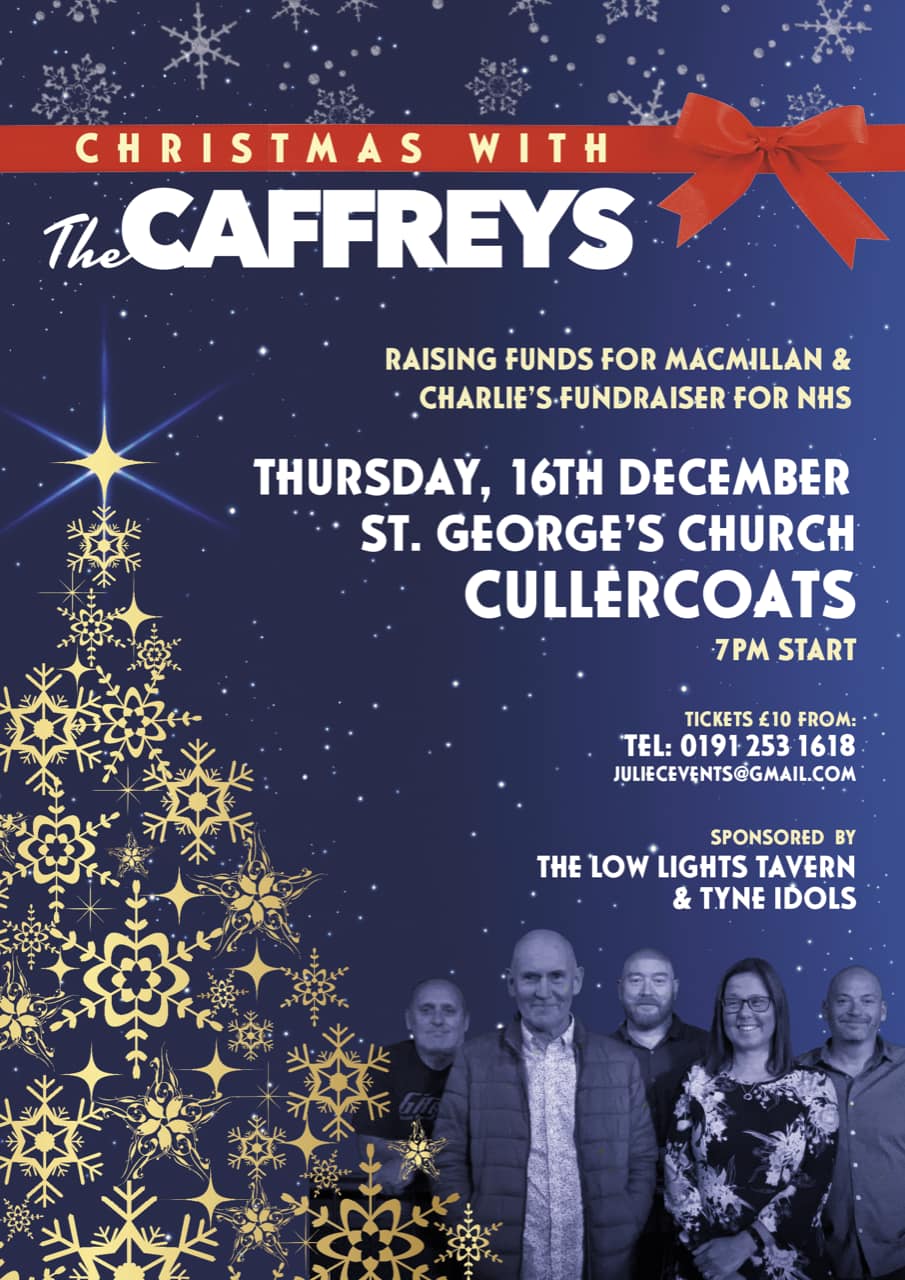
On Thursday 16 December we’ve got a Christmas event with the beautiful voice of the Caffreys and their band plus a local choir at St Georges Church in Tynemouth, we can get about 300+ people in there.
It’s raising money for MacMillan cancer support and a local charity. So slowly but surely we are looking to get music back on and people performing again.










 ALIKIVI UK : NORTH EAST MUSIC & CULTURE