PROFESSOR ROCK with Sunderland computer scientist & music blogger Peter Smith

Does a day go by without listening to music? It runs through yer veins. Addiction to music is a feeling everyone reading this site knows, and the person who this new post is about has it bad.

‘I’ve finally come clean and admitted to myself that I’m totally addicted to going to rock concerts. I’ve also realised that all attempts at treatment are futile, and anyway I don’t want to be cured!’ said Peter.

‘This blog is part of my treatment, creating a permanent record of gigs that I’ve been to. I try to remember as much as I can about them which is difficult as my memory is not good these days’.

‘It takes me back to the late 60s early 70s and includes concerts by Eric Clapton, The Rolling Stones, Pink Floyd, T Rex, Kate Bush and events such as Reading Festivals, Donnington Monsters of Rock and Live Aid. I’ve attended around 2000 gigs since 1969’ explained Peter.

The music blog started in 2011 (link below), and includes great reviews and stories as well as being illustrated with a collection of Peter’s ticket stubs.

First, a bit of background to Sunderland born Peter Smith. Peter graduated in Computing and Mathematics from Sunderland University in 1978, by 1981 he completed a PhD.

He went on to hold a number of positions at the University spending 11 years as a lecturer before being made professor in 1992. Not stopping there he became Dean of Computing and Technology from 1999 until 2007.

Peter has written hundreds of academic papers and books as well as speaking at conferences worldwide. In 2012 he retired from the University and was made Emeritus Professor.

Despite a severe spinal injury in 2016, Peter continued his life’s work and being a massive music fan, also found time to publish numerous papers and books on music venues, classic rock and punk bands.

In July 2022 Sunderland University commemorated his contribution to academia, awarding him with an Honorary Doctorate of Technology. Is that enough for ya’?

I started listening to music in the ‘70s and going to gigs in the ‘80s – they were great times and I know how lucky we were to see fantastic bands. Who do you consider your most memorable gigs?

‘Best gigs were Live Aid in Wembley Stadium 1985, I have so many great memories of that day. Queen’s performance is often rated as the greatest live performance by any band. Freddie certainly commanded the crowd that day’.

‘U2 weren’t far behind them with Bono showing how great a front man he was. For me, however, the highlights were The Who and David Bowie, as I was, and remain, a big fan of both acts’.

‘There was Led Zeppelin at Sunderland Locarno in 1971. I remember Zeppelin came on stage quite late, and the crowd immediately rose to their feet and surged to the front, forming a terrible crush’.

‘I remember a guy trying to take a photo of Robert Plant and the bouncers waded into the crowd to get his camera. Robert intervened, and told the bouncers to leave off the guy to a great cheer from the crowd’.

‘I was right down the front close to the band. I could almost touch them, the atmosphere was electric’. 

‘I also remember great gigs from the Sex Pistols at Whitby in 1975, David Bowie at Newcastle City Hall in ‘72, Rolling Stones at Newcastle in ‘71, The Who played Charlton football ground in 1974 and Abba at Stafford in 1979’.

On your blog you talk about seeing North East bands Geordie, Angelic Upstarts, Brass Alley, Lucas Tyson, Penetration and Tygers of Pan Tang.

There’s a review of a gig by Punishment of Luxury at the Dunelm House, Durham, what can you remember of that night?

‘This gig at Dunelm House came quite early in their career before they had released any recorded material, and was probably one of the first times I saw them.’

‘I do recall seeing Punishment of Luxury several times in 1978 including a packed gig at Newcastle University canteen, and supporting local punk heroes Penetration at the City Hall’.

‘Punilux as they were often called, were quite quirky and unique in their approach. Although their music undoubtedly grew out of punk, their spiky staccato art-rock had much more depth to it, and their performances were very theatrical, strange and in some ways scary, with use of masks and dance’.

What other North East bands have you seen?

‘Last Exit, Sting’s first band, were excellent, Penetration the best North East punk band, I found Prefab Sprout quirky and great, Lindisfarne always magnificent and now we have Sam Fender who is exciting, plus many others’.

What changes have you seen in the live music scene since attending your first gigs and now ?

‘The growth of custom-built arenas. Sadly fewer concerts are held in small venues. However, my hometown Sunderland now has its own great venue The Fire Station’.

For  live reviews including Slade, Queen, Genesis, The Clash, Van Halen, Sex Pistols, The Who and zillions more check out Peter’s excellent music blog at: https://myvintagerock.com/

Alikivi   September 2023
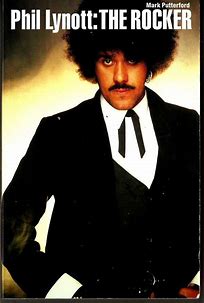
LOVER, FIGHTER, HELLRAISER The Rise & Fall of Phil Lynott 1949-1986

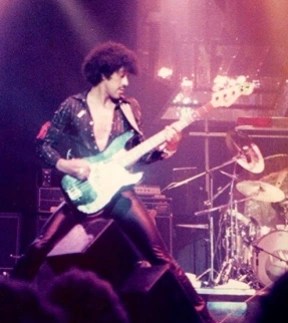
Phil Lynott, Thin Lizzy, Black Rose tour 1979 Newcastle City Hall. pic Paul White.

Phil Lynott played the cool, sexy, rock star. The hot shot gunslinger with studded wrist band and clenched fist. The Rocker. But he was dead by 36. What happened in the last few years of his life?  

Thin Lizzy had been around since the early seventies releasing a number of successful singles including Whisky in the Jar, Rosalie and Waiting for an Alibi, and top 30 chart albums including Black Rose, Renegade and the imperious, Live and Dangerous.

The double album produced by Tony Visconti (Bolan/Bowie/Morrissey) in 1978 reached number 2, staying in the UK charts for over a year. Many critics label the record as one of the greatest live albums.

Although I never saw them in concert, I was in the Newcastle audience when they appeared live on Channel Four’s music show The Tube on 28th January 1983.

I remember watching a blistering version of Cold Sweat from the Thunder and Lightning album. The boys were back in town and at the top of their game. Or so I thought.

In comparison, I later watched a videotape of the show and thought the dressing room interview with Lynott was awkward and dull, he looked fragile. Was this the beginning of the slow decline for the Irish rock legend?

The TV show was only the second appearance of new guitarist John Sykes, formerly of Whitley Bay heavy metal band, Tygers of Pan Tang. His first gig was a few days earlier on BBC’s Sight & Sound concert – talk about being hoyed in at the deep end!

Lynott was more than happy with Sykes. He could see a new future for Lizzy. Cold Sweat entered the UK charts and another TV slot was scheduled for Top of the Pops.

But the band were dropped from the running order after a drunken Lynott was reported to have told the producer to ‘fuck off’ – twice.

Morale was low and cracks appeared amongst the team. Lizzy found themselves slowly falling apart through health and personal reasons. Eventually a split was announced.

1983 UK tour dates

So what was left ? The Thunder and Lightning UK tour included two dates at Newcastle City Hall, with a night at London’s Hammersmith Odeon and a reunion of past Lizzy guitarists, Brian Robertson, Gary Moore and Eric Bell.

“It was chaos” said Bell. “A mess if you listened to what was being played. It was a turning point in my life, after that I never wanted to hear those songs again. I suppose it was a good way of burying Thin Lizzy forever”.

Roadie for the band Peter Eustace explained “On the crew we all thought Phil was scared of success. Once you’ve arrived where do you go? And all you know is that these young guns are breathing down your neck”.

The future, well the ‘80s, belonged to the new chart soundz ! from the likes of Depeche Mode and Duran Duran. While a rejuvenated Queen, and soon to be Irish legends, U2, both benefited from Live Aid. Meanwhile, Lizzy struggled to play a few more dates in Ireland and Japan.

Their last UK show was headlining the Reading festival in August ‘83. The curtain came down on their final live performance in Nuremburg, Germany on 4th September, sharing a bill with Saxon, Motorhead and Whitesnake.

Fellow Irishman and Boomtown Rat songwriter Bob Geldof said “Phil couldn’t imagine a life not in leather trousers, with a limousine taking him to work every day”.

In 1984 a zoned out Lynott appeared on ITV’s Breakfast Show talking about his new band, Grand Slam, but also about his problems as a heroin addict.

He resolved to work hard, in rehearsals he drilled the band for eight hours a day earning him the nickname ‘Sergeant Rock’. Had the thunder returned?  

The band toured extensively throughout the UK and what seemed like victory soon turned into disaster as no major label offered them a recording contract. The industry was backing off.

In 1985 old friend Huey Lewis – from the News – spent time with Lynott recording in a San Francisco studio, but the old swagger wasn’t there. A delicate and tired Lynott only managed a couple of vocal tracks.

Although he did manage a UK chart hit in June ‘85 with Out in the Fields when he paired up with another old friend and former Lizzy guitarist Gary Moore. Cutting out management, Lynott made a direct deal with the label and received £5,000 in cash for being on the record.

But his darkest days were ahead with long days and weeks spent at his London home in dressing gown and slippers not answering calls or seeing friends.

Then out of the blue a charity concert was arranged to be played in front of a world-wide TV audience, it was made for the return of Thin Lizzy.

Live Aid saw The Who, Black Sabbath and Led Zeppelin reforming for a one off gig. But Lynott wasn’t asked. Did fellow Irishman and organiser Bob Geldof stay away knowing of his problems?

Co-organiser, songwriter & former Lizzy touring guitarist, Midge Ure said…

”To our dying shame neither Bob nor I even thought about asking Phil to put Lizzy together for Live Aid. If he had been in a healthy state that could have been the Queen moment for them – ‘The Boys are Back in Town’ – at Wembley? Jesus, can you imagine?“

“Why didn’t we do it? Was it that psychologically we had already given Phil up as gone? It’s something that will stay with me for the rest of my life’.

There were rumours that Lynott was to play Jimi Hendrix in a biopic of the guitarists life, but nothing came of it. In the studio he was working on recording solo material.

Phil Lynott’s final public appearance was in December 1985 when he travelled to Tyne Tees TV studio in Newcastle to record a Christmas special for pop programme Razzmatazz, he performed his solo single Nineteen.

Ironically the presenter was David ‘Kid’ Jensen, the DJ who had championed the band in the early seventies. Also on the programme were Slade, who Lizzy had opened for back in the early days. Back when the fight was being won.

At home Lynott was visited by hangers on, pushers and gofers. He ended up surrounded by people, but very alone. In court on a drugs charge he was called ‘a drugs victim and a trajedy’ by his own solicitor. His close friends wondered where did he go? The musician, the poet, the man they loved.

Sadly, on 4th January 1986, Phil Lynott died of kidney, liver and heart failure. One of his close friends said “Phil didn’t die of a heart attack, he died of a lifestyle”.

Alikivi   July 2023

Research:

Phil Lynott: The Rocker by Mark Putterford.

Cowboy Song: The authorised biography of Philip Lynott by Graeme Thomson.

Thin Lizzy official website.