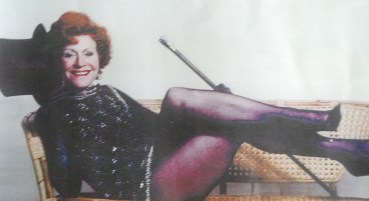
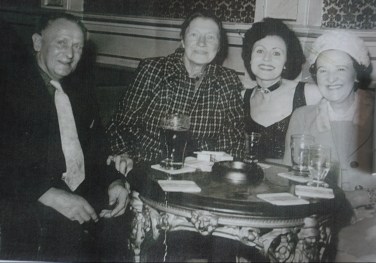
ZAMYATIN The Russia – Tyneside Connection film research & script

On the 7th & 21st August 2018 research for a short film about Yevgeny Zamyatin (1884-1937) is featured on this blog. On today’s post I’ve added the script from the film I made about his life.

The narrators were North East actor’s Iain Cunningham and Jonathan Cash. Recorded by Martin Francis Trollope at Customs Space studio in South Shields and excellent soundtrack from North East musician John Clavering.
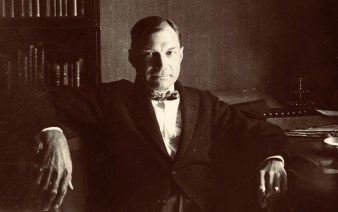
Yevgeny Ivanovich Zamyatin

Start.

Russian born Yevgeny Zamyatin lived with his wife in Paris until his death in March 1937. Their last few years were lived in poverty and only a small group of friends were present at his burial. His death was not mentioned in the Soviet press.

Zamyatin was an author of science fiction and political satire. Famous for his 1921 novel ’We’ – a story set in a dystopian future – the book was banned in Russia. In his novel ‘1984’ George Orwell acknowledged his debt to Zamyatin.

But how does Tyneside fit in this story ?

Zamyatin was born in a small town 200 miles south of Moscow on 19th January 1884. He had an educated middle-class background, his father was a teacher and his mother a musician.

Zamyatin studied Naval engineering at the St Petersburg Polytechnic Institute. He spent winters in the city and summers enjoying practical work in shipyards and at sea. The Middle East being one destination – a rich experience for the future writer.

He was a supporter of the revolution and joined the Bolsheviks, attending demonstrations and meetings. But he was arrested during the 1905 Revolution – for this he was sent to prison for several months. His time there was spent learning shorthand and writing poems.

He completed his course in Naval Engineering and was employed as a college tutor. He was also writing short stories and essays – his first published in 1908. Zamyatin immersed himself in the bohemian life of St Petersburg and was an important part of the cultural scene in Russia.

At the time of the First World War Russia were having ice breakers built in UK shipyards. Zamyatin was sent to North East England in 1916 to work as a Naval engineer for the Russian Empire.

He supervised the construction of the ships on the River Tyne. While there he lived in Jesmond near Newcastle and during his eighteen months stay, he was reported to travel around Tyneside and improve his knowledge of the language.

“In England I built icebreakers in Glasgow, Newcastle, Sunderland, South Shields, and looked at ruined castles. The Germans showered us with bombs from airplanes. I listened to the thud of bombs dropped by Zeppelins”.

ophn16w copy

Laurence O’Shaughnessy lived in South Shields and worked there as Customs Collector on the River Tyne. His daughter Eileen married the author, George Orwell. Was there a connection to Zamyatin ? Leslie Hurst from The Orwell Society looked at the possibility.

‘Would the Russian ships have been checked by customs before leaving the Tyne ? When Orwell learned of the existence of ‘We’ he might have discussed it with Eileen and heard her say that her father had met its author. When Orwell died, Eileen’s library was found mixed with his.

Might Eileen have read Orwell’s copy of ’25 Years of Soviet Russian Literature’  and mentioned the Russian engineer who visited South Shields in her childhood? It is an intriguing possibility’.

When living on Tyneside, Zamyatin wrote two short stories ’The Fisher of Men’ and ’Islanders’. After a day at the shipyards, he would sit at his desk and write about the blinkered and pretentious world of the middle class.

‘By Sunday the stone steps of the houses in Jesmond had as usual been scrubbed to a dazzling whiteness, like the Sunday gentlemen’s false teeth.

The Sunday gentlemen were of course manufactured at a factory in Jesmond, and thousands of copies appeared on the streets. Carrying identical canes and wearing identical top hats, the respectable Sunday gentlemen in their false teeth strolled down the street and greeted their doubles’.

Both stories were published on his return to Russia. But by then, the 1917 revolution was burning. He regretted not witnessing the start of it.

“I returned to Petersburg, past German submarines, in a ship with lights out, wearing a life belt the whole time. This is the same as never having been in love and waking up one morning already married for ten years or so”.

The famine, war and economic collapse of the country had a major influence on his literary career.

“If I had not returned home, if I had not spent all these years with Russia, I don’t think I would have been able to write anymore. True literature can only exist when it is created, not by diligent and reliable officials, but by madmen, hermits, heretics, dreamers, rebels and skeptics”.

In 1921, ‘We’ became the first work banned by the Soviet censorship board. In 1923, he arranged for the manuscript to be smuggled to a publisher in New York. After being translated into English the novel was published.

With his political satire, a number of essays that criticised the Communist ideology and dealing with Western publishers, Zamyatin has been referred to as one of the first Soviet dissidents. As a result, he was blacklisted from publishing anything in his homeland.

The English writer Harold Heslop had seven books published and his first was in the Soviet Union. In 1930 he was invited to the Ukraine to speak at the Revolutionary Writers Conference. While there he also travelled to Leningrad to meet Zamyatin who he wanted to help promote his latest book.

Harold was born in Durham but for many years lived in South Shields. He was a miner at Harton Colliery before winning a scholarship to Central Labour College in London.

 (Zamyatin to Heslop) “I cannot quite place you. Are you a Geordie may I ask. I catch the Tyneside dialect in your speech. Am I right ? I know Tyneside well. I liked the people very much. I also liked their strange, musical dialect.

Often, I found it most amusing. South Shields… Sooth Sheels! I never learned to sing the Tyneside speech!”

Zamyatin read lectures on Russian literature, served on boards with some of the most famous figures in Russian literature, but by 1931 he was experiencing difficulties.

Under the ever-tightening censorship and becoming unpopular with critics who branded him a traitor, he appealed directly to Joseph Stalin requesting permission to leave the Soviet Union – a voluntary exile.

“I do not wish to conceal that the basic reason for my request for permission to go abroad with my wife is my hopeless position here as a writer, the death sentence that has been pronounced upon me as a writer here at home”.

Eventually Stalin agreed to Zamyatin’s request, and he and his wife left for Paris, where there was already a small Russian community.

While there he wrote new stories, most of his earlier work was translated around Europe, but a notable piece of work was his co-writing of a film with French director Jean Renoir.

Just before his death he had told a friend…“I had to leave Soviet Russia as a dangerous counter revolutionary and abroad I hesitate to approach the Russian community, while they treat me coldly and suspiciously”.

He lived out his last years with his wife until his death from a heart attack in 1937, and a final resting place for Zamyatin can be found in a cemetery south of Paris.

End.

Research:

Zamyatin – A Soviet Heretic by D.J. Richards.

Islanders/The Fishers of Men – Salamander press Fiction.

We – Yvegney Zamyatin.

Out of the Old Earth – Harold Heslop.

 Gary Alikivi  2018.

RUSSIA’S GEORDIE SPY with author & TV researcher Vin Arthey

Searching your family history can throw up a few surprises. My Great Uncle Alexander Allikivi was born in Russia at a time of political and social unrest resulting in two revolutions, the abolition of the monarchy and the establishment of the Soviet Union by the Bolsheviks. Have you ever wondered why some awkward people are called bolshy ? Was it Bolshy Alex ? A name passed round the family so who knows. 

Little is known about the life of Allikivi pictured below. He lived in South Shields during the ‘20s married my Great Aunt Lavinia Ewart and died in 1933. We know he received two Mercantile Marine and British Medal ribbons by 1921, where these from the First World War? Did he first arrive in the UK between 1914-18 and why did he leave Russia ? Was it because of the revolution?

In the search for some clues I read the excellent book The Kremlin’s Geordie Spy the story about father and son Heinrich and William Fisher by Vin Arthey.

Heinrich was born in Russia in 1871 and William was born in 1903 in Newcastle. In 1921 the Fishers were in Moscow. The Spielberg film Bridge of Spies starring Tom Hanks features what happened to William.

Reading Vin’s book I came across this…

’He (Heinrich Fischer) maintained all his political links. He remained a member of the Russian Socialist Democratic Workers Party and in UK politics aligned himself with the Social Democratic Federation members who seceded to found the British Socialist Party, working for the party south of the Tyne, in South Shields, rather than in Newcastle’.

Was Allikivi involved in politics? Were other Russians attending the meetings in South Shields and would he be attracted to gatherings with people who spoke the same language as him? He would look forward to having conversations rather than using a few words or short phrases when meeting friends and family.

Edinburgh-based author Vin Arthey on Fri 12 January 2018.

Vin Arthey photograph by Andy Catlin.

I decided to contact Vin and asked him what was the inspiration behind writing ‘The Kremlin’s Geordie Spy’ ?

When I was freelancing in the ‘90s I was offered an Associate Producer role by Trevor Hearing who’d just had his series, Stranger Than Fiction commissioned by Tyne Tees TV.

This was a series of six half-hour dramas and drama documentaries covering true regional stories such as those of the Darlington MP who turned out to be an international outlaw and leader of an obscure Chinese cult, and the Newcastle auction mart owner and television hypnotist who was jailed for swindling his mother out of thousands of pounds.

Also, the County Durham relief bank manager who correctly foretold that his bank would be robbed and that he would be killed during the robbery.

Another story I researched was of Newcastle born William Fisher who turned out to be a KGB spy, used the name Rudolf Abel and was jailed for espionage in the United States in 1957. Five year later he was exchanged across Berlin’s Glienicke Bridge for the American U-2 pilot, Francis Gary Powers.

Fisher’s birth in Newcastle had been ascertained by Newcastle University historian David Saunders, and I had a number of meetings with David during the pre-production phase.

Trevor Hearing and I were convinced that the story was worthy of a network production, but it was turned down by BBC 2’s Timewatch and Channel 4’s Secret History. However, I kept on researching and writing, because I was absolutely hooked by the story.

You see, I could remember when I was 12 year old watching the news story on my family’s first, rented, TV set, of the KGB spy Rudolf Abel, who was arrested, tried and jailed in New York in 1957. The Cold War was very real to me as a teenager in East Anglia.

My home was close to a number of United States airbases, and there were regular sightings of USAF Sabre, Phantom and Voodoo jet fighters and fighter-bombers.

I remember well the shooting down over the Soviet Union in May 1960 of Gary Powers high flying ‘weather reconnaissance’ aircraft, the ‘U-2’.

As one of our teachers put it the day the news broke, ‘Awfully high weather we’re having these days,’.  Also I was still at school when the famous exchange of Powers and Abel took place.

You might imagine my excitement when I discovered that the Soviet spy at the centre of perhaps the greatest Cold War drama, the man who featured so strikingly in my school years, was a British subject, Newcastle born, at that. I couldn’t let the story go, and when I was approached by St Ermin’s Press to write a book I jumped at the chance.

St Ermin’s published it as a hardback with the title Like Father Like Son: A Dynasty of Spies. Later, Biteback Publishing bought the paperback rights and repackaged it as The Kremlin’s Geordie Spy: The Man They Swapped for Gary Powers.

When the Spielberg movie Bridge of Spies was released in 2015, Biteback reprinted with yet another title, Abel: The True Story of the Spy They Traded for Gary Powers.

Did you do any readings or tour with the book ?

The book or should I say books! have been well received, although I have to be realistic – Fisher was our enemy during the Cold War, a villain of the piece – a villain of the peace even!

Over the last dozen years I’ve given talks on the Fisher story in various places and at a range of venues in Newcastle, North Shields, South Shields, Middlesbrough, Edinburgh, Reading, and there has been great interest in the United States, where the books have been reviewed for the CIA’s ‘Intelligence Officer’s Bookshelf’.

I visited the USA for research and subsequently got to speak at the Brooklyn Historical Society and at the International Spy Museum in Washington DC.

What is your background Vin ?

I was born, brought up and spent my early adult years in Ipswich, and although most of my life has now been spent in the North of England and in Scotland, I still regard myself as an East Anglian.

I follow Ipswich Town football team through thick and thin – thin at the moment as we’ve just been relegated to what I still call the Third Division, and our arch rivals Norwich City have just made it back to the Premiership.

I’ve had a dual career, in education and the media, teaching in schools and a college of education then, when the birth rate dropped and the colleges were closing and merging, I was at Newcastle Polytechnic where I taught drama and media studies.

While this was happening, I started freelance scripting and reviewing for BBC Radio Newcastle and Tyne Tees. In the early ‘80s an opportunity arose to work fulltime at Tyne Tees, so I took it.

Researching and producing across the whole range of the station’s output – current affairs, religious programmes, comedy, arts and features.

I went freelance again in the mid ‘90s, but at the end of the decade went back into university teaching and to heading up the TV Production degrees at Teesside University.

Now, I’m settled in Edinburgh and supplement my pension with income from writing and speaking.

What are you working on now ?

I review books about espionage, the Cold War and Russia for newspapers The Scotsman and Scotland on Sunday. I’ve just finished a piece of ghost writing – a privately commissioned piece for a retired hydroelectric power engineer, and I’m currently clearing my desk, and my head with a view to tackling a new book – still nonfiction, but still under wraps.

To hear from Vin check this link to an interview with Spy historian Vince Houghton at Spycast

https://www.spymuseum.org/multimedia/spycast/episode/the-real-story-of-rudolph-abel-an-interview-with-vin-arthey/

As for my Great Uncle from Russia, Alexander Allikivi, I am still searching for some answers.

Interview by Gary Alikivi   July 2019

PUTTIN’ ON A SHOW – in conversation with North East entertainer Helen Russell

182

First time I worked with a stripper in the clubs. It was a Sunday morning. I walked into the club ‘Are ye’ the strippa or what ?’ said a bloke there. ‘I’m the what’ I replied (laughs).

The stripper walks into the dressing room with just a bag. I walked in with all my gear, microphone, speakers and stage costume. She did a five-minute act then taxi to her next gig. She did four clubs in a morning. Not bad work but I couldn’t do it. I’ll stick to singing.

A few week’s ago the blog featured stories from entertainer’s who performed in workingmen’s clubs. Ned Kelly, Jack Berry and a few more shared some great memories.

Carrying on that theme I spent time with Helen Russell at her home in South Shields. Helen hasn’t been feeling too well lately so I’m very grateful to her for taking the time to share her story….

As a kid I was an autograph hunter, all the stars like Laurence Olivier and John Mills. Great times. We weren’t a musical family but my dad could sing, he was in the Royal Navy.

You see I was born in the heart of London and when I was 15 I went into Entertainment National Service Association or otherwise known as Every Night Something Awful (laughs).

ENSA was an organisation set up in 1939 by Basil Dean to provide entertainment for British armed forces personnel during World War Two.

They held the auditions in the Theatre Royal on Drury Lane in London. They liked me and took me on. I toured all over the UK with ENSA. I was earning £7 per week and that was damn good money. Top act’s and names were getting £10 per week. It was a long time ago, I’m 95 now.

Where did you perform with ENSA ?

We played in the munitions factories when the workers were having their lunch breaks. We entertained in the theatres and clubs.

I sang Hey Neighbour and Sally that was a big number. I did imitations of Gracie Fields but never sang any Vera Lynn songs and I always finished my act with a tap routine.

I gave up when I got married. It was the done thing in those days. We met when I was entertaining in Belfast. Eventually we moved to England, and I got a job performing in the clubs.

The first club I played in South Shields was on Ocean Road which is long gone now.

At this time, we lived in South Frederick Street, and we had no telephone. I used to go down into the street to the telephone box and ring up the clubs to get gigs. I’d ask for the concert secretary, book the show and arrange the fee. I did that for years before the agent’s came in. Plus, we had no transport in those days.

For a show in Stanley, County Durham I’d pack my case with stage clothes, music sheets for the pianist, get the bus up from South Shields to Worswick Street in Newcastle, then carry my case across town to Marlborough Crescent bus station and go to a club in Stanley another 10 mile away. We had to be off stage and out by 10pm to get the last bus all the way back home.

A pianist joined us, he had a car. He charged us one and sixpence each for petrol. I also had to pay a babysitter seven and six a time. The first working man’s club I ever played was Windy Nook and we earned £1 each, there were seven of us.

Johnny Gaffney who wrote for The Shields Gazette, he had a great voice. No stage technique whatsoever but what a beautiful voice.

I went solo after that when agents came in and started working through the Beverly Agency. They got me lots of work around the North East and over to Carlisle a few times, lovely crowds there.

Money was coming through the clubs then, so concert chairman would only deal with agency’s. Which was great for me. No running around telephone boxes, made it much easier and as I was solo the money was much better.

181

Helen second from right. in Balmbras, Newcastle.

Can you tell me about the photo above ?

Yes, that was in Balmbras old time music hall, Newcastle. I had been performing there. Bobby Thompson has played there, also Dick Urwin who was a good writer and great comedian.

You had to put him on in the first half because by the second he had too many drinks and would insult the audience. In Newcastle I also performed on stage at the Mayfair.

Can you remember the story behind this record ?

That was recorded in 1980 over the River Tyne in Impulse Studio, Wallsend. Corrinne Wilde had written a song about Bobby Thompson and she knew I could write, so I added a chorus. It was a lovely thing to do.

But selling records is a lot harder than making them. I sold a few at gigs. Bobby Thompson paid for the photographer which was nice.

Helen starts singing the chorus…..

Bobby T, Bobby T, you’re the Geordie lad for me

With yer ganzie hangin’ doon below yer knees,

You’re as Geordie as the Tyne, and for the sake of Auld Lang Syne,

We’ll tell the world we love you, Bobby T.

Did you record anymore of your work ?

I recorded voice overs for radio and appeared on TV a number of times. I remember a part on a show with Martin Clunes, he was only 18 or 19 playing the part of a punk.

I was in a lot of productions including Emmerdale, that was in 1993, also children’s television and the latest Comedy Playhouse. I also played somebody’s wife in Spender written by Jimmy Nail. It was a nice part and I get paid repeats on some of them.

I have a book full of work and gig’s I’ve done over the years plus the fees. There’s a Spender episode written down in it as a repeat in Sweden, I got £9.56 for it (laughs).

Were you working through an agent ?

Yes Janet Plater, she represents a lot of actors in the North East. The original fee for Spender was very good I remember. The last job I did for Janet was a Tesco advert.

You have appeared at your local theatre The Customs House in South Shields…

I’ve worked on a number of plays at The Customs House where Ray Spencer is now Director and an MBE. I got to know Ray in the ’80s when he was looking for a partner to work alongside him putting on some Geordie entertainment. Somebody recommended me and we worked together for a long time.

Our first gig was the Post House Hotel, Washington in 1988. I have my book here and for the Post House there is a note next to it ‘Ray has the receipts’ (laughs).

The writer Tom Kelly put me in a few shows and that got me and the same team work on Dirty Dusting written by Ed Waugh and Trevor Wood. That was very popular, we did it in about 2002. The show still sell’s today in different countries.

Helen recalls another memory from working in the clubs…

A lot of times I was the only woman because I was entertaining there and these were men’s clubs. I couldn’t get a drink at the bar. I had to give a man the money. He paid the man behind the bar, got the change and passed it to me with my drink !

Tell you what though, I never want to see another bingo card in my life (laughs).

Finally, what has working in entertainment meant to you ?

I wouldn’t still be doing it in my 90’s if it didn’t mean anything to me. I was born to do it.

Interview by Gary Alikivi   July 2019.