
North East couple Jools and Paul Donnelly have a huge passion for promoting the North East’s recent cultural heritage, they also run the Handyside Arcade publishing company, and the Club A’Gogo dance events named after the famous Newcastle venue.
From 1962-68 Club a’Gogo hosted a number of amazing gigs from legendary bands The Who, The Animals, Rolling Stones, Eric Clapton, plus from America – Jimi Hendrix, Sonny Boy Williamson and John Lee Hooker.
‘We successfully lobbied Newcastle Council for a heritage plaque at the site of Club a’Gogo – we are incredibly proud of this. We’ve also published our first book ‘Club a’Gogo & The Mod Scene of 1960s Newcastle’ which is on sale now, more books are planned’.
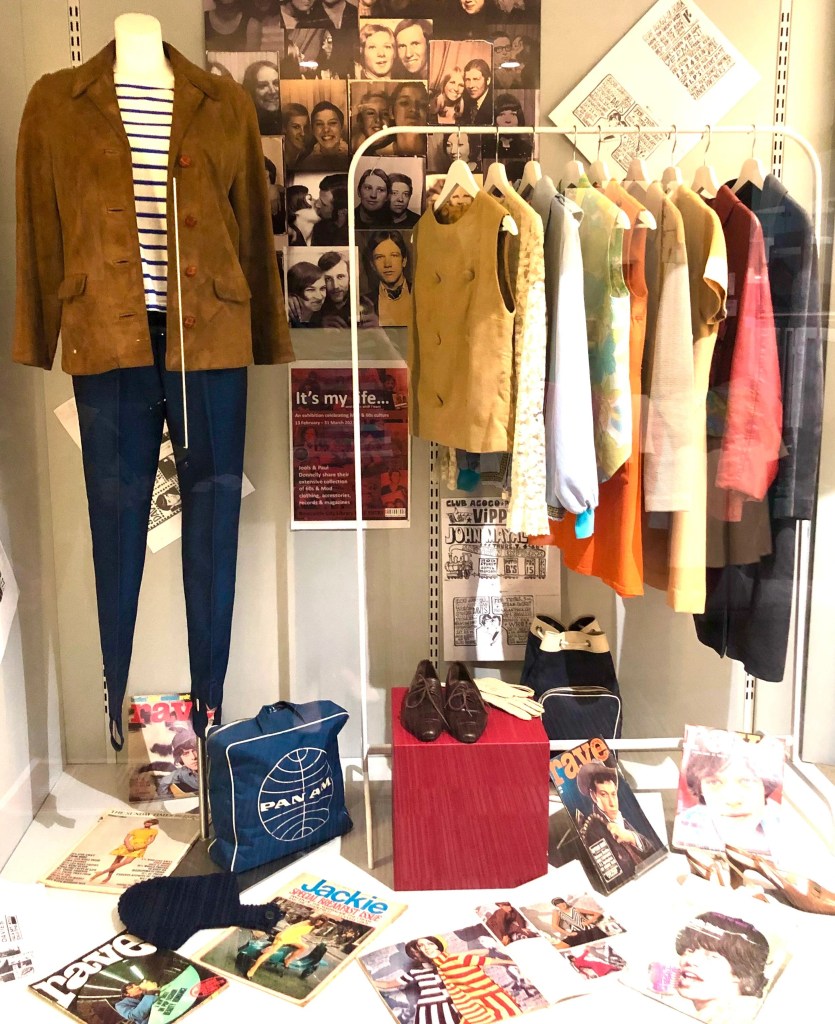
Both Jools and Paul are passionate collectors of 60s mod culture which includes vintage clothing, shoes, magazines, records and books, now the couple have combined their extensive collection for an exhibition held in Newcastle City Library.
I asked Jools what was the catalyst for the exhibition?
It actually came from two sources, last year we visited the Punk No.1 exhibition at Newcastle City Library and this year we were in London for a private viewing of Contemporary Wardrobe, a supplier of costumes to the film and music industry.
This huge collection of vintage clothing is owned by former mod and stylist Roger K Burton. Roger has done a number of exhibitions and we were so inspired we thought we could do that.
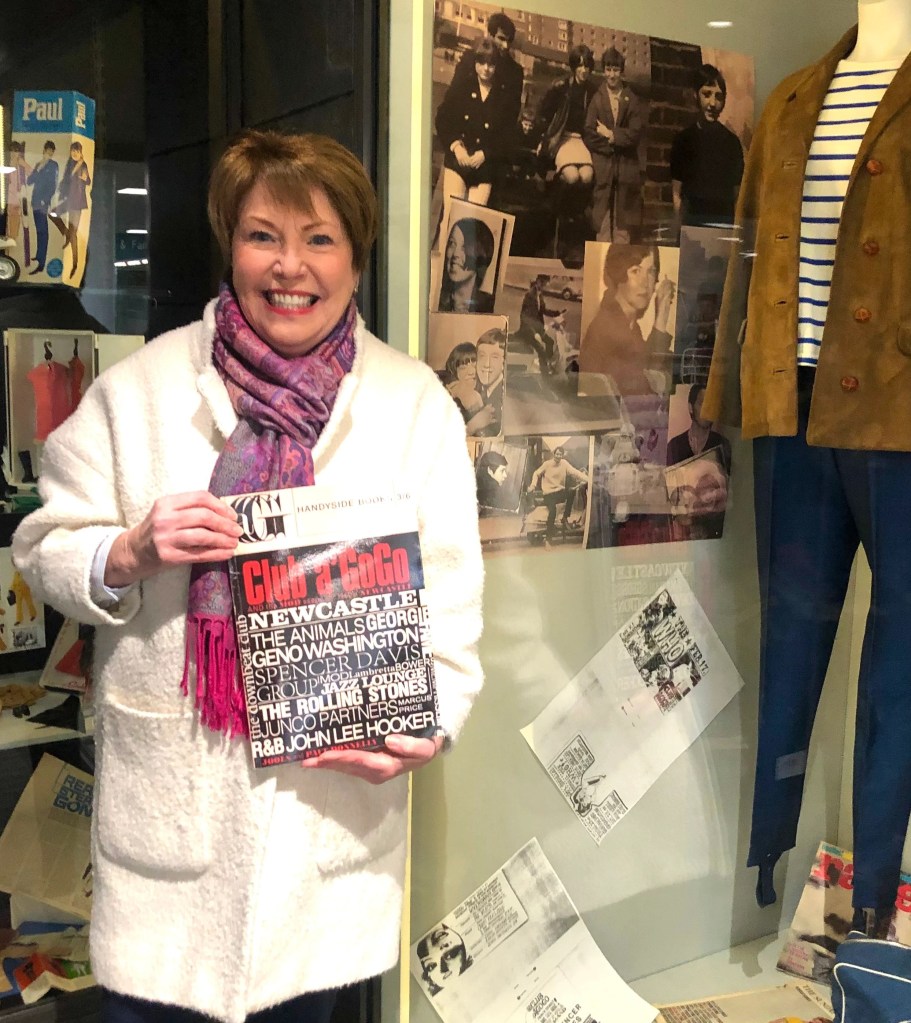
I asked Paul what’s the response been to the exhibition?
Amazing, and to be honest far better than we expected. We’ve done regular ‘meet and greet’ events at the library – next one is Saturday March 11th from 2-4pm, where people can chat with us about the exhibition and share their memories of those glory days.
People have brought their own memorabilia to show us, it’s been a fantastic experience. We’ve also had a good turn out from a younger generation who have been fascinated by how cool the youths of the North East were back then.
Lots of original mods and Club a’Gogo members have turned up to see the exhibition, they’ve shared their stories of seeing the likes of Jimi Hendrix, The Who and of course The Animals.
We’ve encouraged them to come along to our monthly Club a’Gogo Dance Party events where I play the Club a’Gogo sounds on vinyl.

What next for the exhibition?
This ends on 31 March 2023 and we are aiming for more exhibitions. Our next one is early 2024 that will celebrate the history of the Handyside Arcade.
(The sorely missed Arcade was a glass roofed horseshoe shaped building which housed a number of independent and alternative shops including Kard Bar. It was also the place where tribes of young people – mods, hippies, punks – would meet and hang out on weekends).
Jools added….We want to highlight the Arcades importance and promote the North East’s sub cult heritage.
For more info check the official website:
It’s my life… An exhibition of Mod & 60s culture FREE ENTRY | Club a’Gogo (clubagogo.co.uk)
To buy the Club a’Gogo book visit:
Club a’Gogo & The Mod Scene of 1960s Newcastle | Club a’Gogo (clubagogo.co.uk)
For more information about Club a’Gogo events visit
Mod club | Club a’Gogo (clubagogo.co.uk)
Alikivi March 2023.


 ALIKIVI UK : NORTH EAST MUSIC & CULTURE