‘When I was young I watched a production of Blood Brothers and it just blew me away, I was so engrossed and moved – from that day I was hooked’.
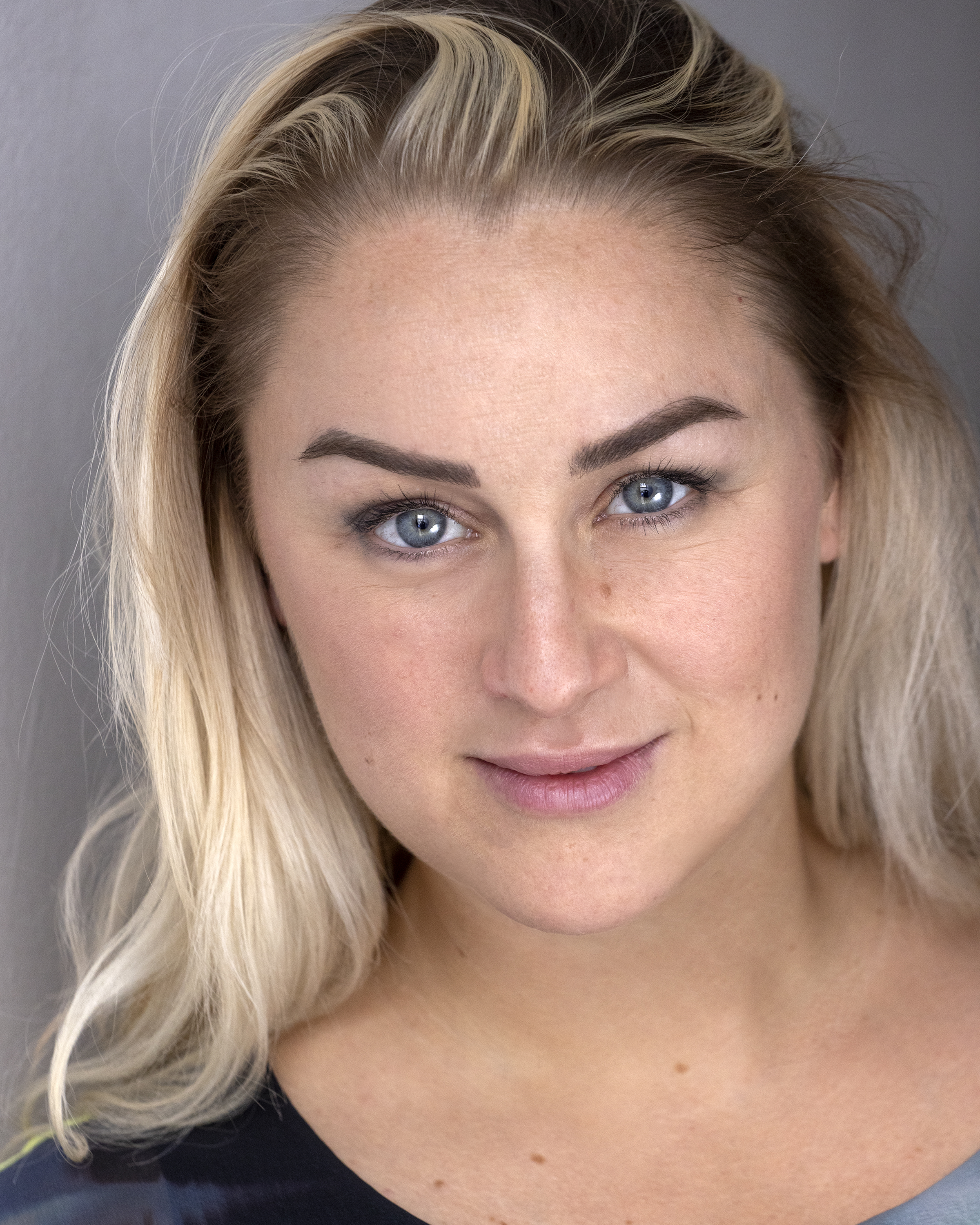
Alex Tahnee from Newcastle has been acting since she was 11 year old…
‘I fell in love with theatre playing Young Catherine in Tom and Catherine, a musical about Catherine Cookson’s life at The Custom’s House, South Shields. I love the idea of telling stories and love the feeling of being on stage’.
‘Since then, I’ve worked with many brilliant people in the North East including various shows playing Alice in Alice in Wonderland at Northern Stage, playing a military wife in Magnolia Walls, and most recently playing a female Marc Antony in Julius Caesar, an absolute bucket list role’.
Next up for Alex is a play by South Shields writer Ed Waugh (Dirty Dusting, Wor Bella, Hadaway Harry, Carrying David). The Cramlington Train Wreckers is another forgotten story about the North East.
‘I play Erica, she’s a journalist interviewing Bill Muckle, one of the eight men imprisoned for derailing a train in the 1926 general strike. Bill has a fascinating tale to tell, and it resonates eerily with political issues we face today’.
‘Bill is played by the wonderful Micky Cochrane (I, Daniel Blake, Carrying David, Billy Elliot), and the piece is directed by Russell Floyd (The Bill, Eastenders, London’s West End), who also multiroles throughout as various characters in some glorious buffoonery’.
‘Bill tells the story of the general strike, how it came about, who was involved, the lies and propaganda that were spread and how it ended after only 9 days. Also, how it came to be that 8 young men from a mining town in Northumberland were imprisoned 100’s of miles away from their families and hailed as heroes upon their return’.
‘People are fascinating to me and theatre is like putting them under a microscope. Like Bill in this play, he was a real person who was so gregarious and engaging you can’t help but listen to him. There are incredible stories in every nook and cranny and theatre lets you explore them, what better job is out there?’
‘My hopes for this play is that this piece of local history is known by new generations for not only its regional importance but also how politics has a profound impact on individuals and communities across the world’.
‘I believe by using the first-hand account of one person in the past we can highlight the relevance of the same messages and themes still affecting us today’.
The Cramlington Train Wreckers opens on 7th November at Cramlington Learning Village and continues around the North East until 16th November 2024.
For tickets & full list of venues contact the official website >>>
“I’ve always been fascinated with everything World War Two related and RAF in particular. My grandfather was in the Royal Flying Corps, and both my father and my son were in the RAF” explained Terry.
“I was in the Air Training Corps in South Shields but then a medic came to school to test us all for colour-blindness. I failed the test miserably and was told I would never be accepted by the RAF. I was gutted, as you can imagine”.
Terry lives in Marske on Teesside, but was born in South Shields at midnight 21st– 22nd December 1948…“My mum asked the midwife which day was my birthday. She was told it was the 21st as my head came out on that day. That crosses the Winter Solstice, so my top half is Sagittarius and my bottom half Capricorn. I think this explains why I’ve done so many different jobs in my life”joked Terry.
Throughout his school years his parents moved around the country…
”We lived above a wallpaper shop in Stockton on Tees, then moved to Billingham and later down south to Reading and Mitcham”.
Finally, the Wilkinson family moved back to South Shields where Terry was a pupil at South Shields Grammar Technical School for Boys.
“After leaving school, I worked for the Crown Agents for Overseas Governments in London, thenWise Speke stockbrokers in Newcastle where I became a Member of the London Stock Exchange”.
“From 2000 I ran a successful Theatre in Education company touring schools for 15 years. It won a Best New Business Award but I gave it up in 2015 in order to write”.
When researching his family tree and local history Terry has always been fascinated by one event.
“At midnight on 3 May 1941, the factory and Head Office of Wilkinson’s Mineral Water Manufacturers in North Shields was hit by a single German bomb. It went through the roof, descending through all three floors, taking all the heavy bottling machinery and chemicals down to the basement – which was in use as a public air raid shelter. 107 died, 43 of which were children. Whole families were wiped out.”
“It is written by my good friend, Peter Bolger, who also manages a comprehensive website on the incident”>www.northshields173.org
“Because of censorship and the government’s desire not to damage public morale, little is known beyond Tyneside. It was, however, one of the largest loss of life incidents from a single bomb during the provincial Blitz”.
“Nothing is known of the identity of the plane which dropped the bomb – type, squadron, mission etc – as German records were mostly destroyed in the closing stages of the war”.
“I wanted to write a story that answered all these questions and create a fictional alternative. Having said that, nobody could say with any conviction this is not what happened”.
Terry started on a series of five espionage novels. ‘Handler’ is set in 1941, ‘Sleeper’ in 1942 and is currently working on the third ‘Chancer’ which covers 1943.
“They’re a mix of fact and fiction and trace through the war years of an English-born German spy, Howard Wesley, and his nemesis, MI5 agent Albert Stokes”.
“Wesley is a figment of my imagination. Stokes is based on a real character. And this is the pattern for the other books in the series. I also like to plunder WW2 history for little-known incidents and people who feature against the broader background of what was taking place in the war”.
‘Handler’ won a ‘Chill With A Book’ Premier Readers’ Award just a few months after publication. This spurred Terry on to get others in the series out there as quickly as possible.
“A few of those who have given good feedback have made the point that it would make a good series. I am convinced that it would. I certainly write with a film or TV series in mind”.
“In the shorter term I am hoping to record the whole series as audible books. I recorded an extract from the book that author John Orton is currently writing (link to interview below) and he was happy with it”.
“I’ve spoken to my publisher – UK Book Publishing – and offered them my services as a narrator for others. I’m also an actor, card-holding Equity member and very good at accents and dialects”.
Now 85, Arthur talks about joining the police force as a cadet in 1955…
‘Yes, I was a polis in Newcastle, the city was a lot different then I’ll tell ya, it was still getting over the war to be fair. My first beat was Sandyford Road where the Civic Centre is now. That was all houses then’.
‘It was quite a tough beat, a rough area with pubs like The Lamberts Leap and another called The Sink near the Haymarket. You had to earn your corn, there were no radios or panda cars – you were just pushed out onto the beat and that was it, you had to get on with it’.
‘There was a police pillar (similar to a post box but with a telephone inside) on the corner of Sandyford Road. If you arrested anyone you hoped you could get the person to the pillar. It was difficult cos sometimes you had a couple of guys fighting…you had to get them there, it wasn’t easy’.
‘There was generally more respect for the police then, you would get more help from the public once you established yourself on the beat, which you had to do cos you were tested out straight away’.
‘Once they knew you were fair and straight you got a lot of help from them. You were on that same beat for years, you weren’t just passing through you got to know every shop keeper, every doctor, every villain…you got to know the whole community. But then the T. Dan Smith regeneration project of slum housing clearance began and the place changed completely’.
‘I always liked paper work, always took pride in my reports. A crime file for shoplifting or murder has a beginning, middle and end and you had to go to court and defend what you had written. In the end someone could go to prison so you’re under pressure, under scrutiny. That reality far exceeds any drama’.
‘I moved from department to department, CID, drug, vice, crime squad, then around 1978 I worked for the anti- corruption team in the Government based in Hong Kong. For the year I was there I would see people living in cages on roofs, people swapping babies in hospitals, it was a weird place. I wrote an article for the Police Review national magazine on what I saw, they paid me £25 for it. It was read all over the country’.
‘I didn’t start writing until I was 40 you know. When I came back to the UK, I worked in Washington Police Station, a young cop called Jeff Rudd came to see me ‘I used to be a musician in a band, I’ve still got all these tunes going round my head but can’t put words to them. I read your article and seen your reports, I wonder if you’d be interested in putting some words to my tunes?’
Well, I give it a go and then thought nothing of it until a few months later I was pleasantly surprised when he handed me a tape with the songs on. I really enjoyed my time with Jeff, he was a very accomplished guitarist. We ended up writing around 50 songs, one of them ‘Big Bren’ was about the athlete Brendan Forster, that was played on radio’.
‘That led us to doing an interview and playing some of our music on the Frank Wappat BBC Newcastle radio show, then we done a couple of gigs in Washington. Next thing my wife Irene said why not contact Tom Hadaway? (writer When the Boat Comes In, Newcastle Live Theatre).’
‘I wasn’t sure at first because I didn’t know him but as he was from North Shields we met and he told me to write a play. ‘What do I write about Tom?’ I asked ‘Write about what you know. What fires you up.’
‘So, I went away and wrote about the bait room. Tom read the play and was laughing at it ‘Yeah, you know how to write dialogue son’.
‘There was a police section house near Exhibition Park, in it was a bait room, just a pokey little room with a table to play cards on. If you’re on night shift you’d take sandwiches and a flask of tea in. That’s where you gathered around 1am where the events of the night would unfold’.
‘You would get advice on how to deal with someone, it was a good place to sort things out like the older cops would tell you how to deal with a death, how to deliver a death message to the unfortunate family. It was a sort of meeting of minds over a game of cards. Aye the bait room was a good place to vent your spleen so to speak.’
Running parallel with his police work Arthur was training in athletics at the running track at Ouseburn, Newcastle.
‘I was on shift in the Bigg Market from 5pm till 1am, that was rough, there was fighting most nights. After finishing I would grab a few hours sleep then go to court, then onto shot put training. I was in the British athletics team from 1962-71 and competed in the 1970 Commonwealth games in Edinburgh. I was very fortunate and saw the world with athletics’.
Arthur talked some more when the conversation turned to the present day and the riots that are happening this summer around England.He recalled a quieter time for the police.
‘I remember we had a huge kettle for the bait room. It was always on the stove. One day a big fish wagon went past the section house and dropped a fish out of one of the boxes. I picked it up brought it back into the station put it in the kettle and boiled it up. All day everybody was complaining about the smell from this mackerel…and no, we didn’t eat it!’
‘Another story was one night when I was up beside the Hancock Museum going to the section house at Park Terrace. Can you remember the litter bins that used to hang on a lamppost? Well, this one was upside down on the lawn outside the Hancock and it was moving around. I lifted it up and there was a hedgehog underneath it!’
‘So, I put it in my coat and took it up to the section station. Inside are lockers to put your bait in so I put the hedgehog inside one of them and waited for the copper to open it. He just about had a heart attack when he opened the locker!’
Hearing these innocent stories was a world away from watching how the police were dealing with the riots around the country, but then Arthur’s tone changed.
‘I remember it was winter time, snow piled up on the ground. I went in for my bait around 12.45am and heard a muffling sound, I opened the door and there was an older police officer trying to commit suicide with a plastic bag on his head. There was a scuffle as I grabbed hold of him but couldn’t get the bag off. I looked around found a fork and split the bag but caught his face at the same time’.
‘He was playing hell with me for saving his life ‘What right did I have’ and all the rest of it. As we were having this argument I could hear the other officers coming in for their bait so everything was put back right, we straightened up the chairs and table as if nothing had happened’.
‘That policeman only had a couple of year service left, he was very bitter, he didn’t thank me. Turned out he had a hell of a life with his wife and thing was he had seen action in the second world war’.
After writing about his experiences in The Bait Room, Arthur kept in touch with Tom Hadaway and wrote another play.
Tom looked at it and gave me pointers, when I finished it landed on two desks. One was the BBC in Manchester where I met them, it ended up on the Saturday Night Theatre radio show, which was a big thing’.
‘The other was the script reader for David Puttnam (producer Chariots of Fire, Local Hero, Midnight Express) who hated it at first but won her round in the end. She said she couldn’t do anything with it but put me in touch with an agent who was looking for writers for a tv show called The Bill. That’s where the writing started’.
Arthur being interviewed on BBC Breakfast about writing ‘Harrigan’.
In 1988 Arthur retired from the police force giving him more time to devote to his writing where over the next decade he delivered TV episodes for Wycliffe, The Bill, Casualty, Spender and Harrigan. The Bait Room was finally made in 2009.
‘I used the same discipline for writing as I did sport. Getting a focus, deciding what you want and going for it.’
‘What am I doing now? I’ve had a lot of my writing shown around the North East. ‘Pickets & Pigs’ was a story set to the background of the 1984 Miners strike’.
‘Later this year I’ve got a play on stage which I started writing in 2003 with Dave Whitaker. ‘Blackbird in the Snow’ is one of those that you leave on a shelf for a while then go back to’.
‘I worked with Dave on a musical about the Jarrow March called ‘Cuddy’s Miles’. John Miles wrote the music for it, Cuddy was a cook on the march, he was John’s relation. That was well received when it played The Customs House in 2004’.
‘Sadly, Dave passed away in 2021. He’ll be sorely missed so the new play is produced as a salute to Dave’s beautiful lasting memory’.
‘Blackbird in the Snow’ has a four night run with the premier on 5th November 2024 at Laurels, Whitley Bay. For more info and extra dates contact the official website >
New play by writer Ed Waugh (Dirty Dusting, Wor Bella) & directed by Russell Floyd (The Bill, Eastenders).
Royalties from over 20 professionally produced plays including Dirty Dusting,Wor Bella, Hadaway Harry, Carrying David and The Great Joe Wilson, plus financial support from Arts Council England allows playwright Ed Waugh to focus on what he loves best: working class history, in particular forgotten North East working class history.
South Shields-based Ed and the team behind this important work have unearthed another forgotten story about the North East.
“This is an incredible story, full of drama and tension, an almost forgotten story, despite the incident making headlines nationally and internationally.” explained Ed. The subject of the new play is The Cramlington Train Wreckers which premieres in November and tours the region.
To maintain their profits, coal owners told miners they had to take a 40 per cent cut in wages. Stanley Baldwin, Conservative prime minister in 1926, also said every other section of the working class had to take pay cuts ‘in the national interest’. A General Strike was called and Northumberland miners were ready to challenge the establishment.
Ed explained “The intention was to stop a blackleg coal train that the miners felt was undermining the strike. Unfortunately for the perpetrators, they accidentally derailed a passenger train, the carriages were part of the Flying Scotsman”.
“The upshot was eight Cramlington miners were sentenced to a total of 48 years’ imprisonment for their part in the derailment”.
Most of the 281 passengers were treated for shock and bruises with only one person slightly injured, fortunately there were no deaths.
“Although largely forgotten, the story is an important part of British history. With the centenary of the General Strike rapidly approaching I felt it was important to assess the events in an informed, dramatic and entertaining manner. Were they terrorists or workers defending their jobs and communities?”
A North East tour in November 2024 includes South Shields Westovian Theatre, Gosforth Civic Theatre, Alnwick Playhouse, Hexham Queen’s Hall, Cramlington Learning Village Theatre, The Glasshouse Gateshead, Playhouse Whitley Bay, Bishop Auckland Town Hall and Barnard Castle Witham.
The Cramlington Train Wreckers is supported by Arts Council England.
Wor Bella, a tribute to the heroic North East women who played football during World War 1 is transferring to London. The play will be staged at the Bread and Roses Theatre, Clapham, before coming back up North to the prestigious 1200-seat Newcastle Theatre Royal in April. The play features a to-camera cameo by former Newcastle United footballer Alan Shearer.
Wor Bella is named after the show’s lead character Bella Reay who played centre forward for Blyth Spartans Ladies and scored 33 goals in 30 matches. She was the “Alan Shearer of her day”.
Wor Bella will star Catherine Dryden, who is currently performing with Jimmy Nail at Newcastle’s Live Theatre. Catherine, who hails from Chester le Street, is a RADA graduate and has toured number one venues nationally with The Pitman Painters and The Play That Goes Wrong.
Catherine explained“The play is a tribute to the million-plus women who stepped into exhausting and dangerous industrial work when men were conscripted in 1916”.
“They were selfless people who not only saved the war effort but raised money to support injured soldiers, widows, orphans and other charities by playing football.”
She continued“Factory teams of munitionettes formed on Teesside, County Durham, Wearside, Tyneside and Northumberland to raise money for wartime charities. I’m delighted to be playing “Wor Bella.”
It was an incredible time for women’s football, Blyth Spartans Ladies played Bolcklow Vaughan (Middlesbrough) in front of 18,000 people at the inaugural 1918 Munitionettes Cup final at St James’ Park, Newcastle, and later 22,000 at Ayresome Park, Middlesbrough.
“Unfortunately, the FA scandalously banned women’s football in December 1921. It wasn’t unbanned until 1971!” added Catherine.
Written by Ed Waugh, (Dirty Dusting, Waiting For Gateaux and Alf Ramsay Knew My Grandfather – all co-written with Trevor Wood and the self-penned Hadaway Harry).
Ed added“We’ve had tremendous support for our talks from the likes of history societies, WI’s, U3As, libraries, football clubs and cultural groups. The response has been incredible.”
The play toured the North East in 2022 and received a number of reviews…. “A rollercoaster ride of laughter and euphoria to sadness and anger… mesmerising” said The Journal.
Kyle Crook, Blyth Phoenix Theatre Operational Manager, added “Rave reviews with both staff and customers. A must see!” and Katy Taylor, Artistic Director at Hexham Queen’s Hall Arts Centre “Brilliant…went down a storm with the audience”.
Any groups interested in hearing a talk are asked to contact Ed via the official website > http://www.worbella.co.uk
For Theatre Royal tickets google > ‘Theatre Royal Wor Bella’ for London tickets visit >www.worbella.co.uk
“This play looks at domestic violence, coercive relationships and the perils of on-line dating in older people. When computers are relatively new to you it can be difficult to negotiate the etiquette of ‘facey’ (Facebook) and ‘the gram’ (Instagram)”explained Alison.
Alison Stanley
“We live in a digital age where meeting and talking on-line is the norm. Everyone seems to have an on-line presence due to the explosion of social media. We talk to people virtually every day and this can be good in combatting social isolation but do we really know who we are talking to on-line and should we be taking information on social media as gospel?”
Alison got the idea to write the play after listening to a group of older ladies…
“They were talking about chatting to people they had never spoke to for donkey’s years – maybe there’s actually a good reason for that! I found it fascinating how they took everything at face value. This produced some great comedic results but also got me thinking about how dangerous this could actually be”.
More research revealed that older people will put up with unacceptable behaviour much longer than their younger counterparts….
“Sometimes they never complain as they have come from a ‘you make your bed, you lie in it’ era and don’t want to be seen as a failure. The production has comedic moments and that sounds quite odd given the subject matter”.
“The play starts where two main characters are having their first meeting after a spell of on-line flirtation. Their chat revolving around family and virtual situations is funny and relatable. This is in direct contrast to the darker moments we see as their relationship develops”.
Rod Glen
”The roles are being played by myself and Rod Glenn (American Assassin, Emmerdale). I’m really excited about it and Rod will do an amazing job of bringing his character to life”.
‘You Need to Say Sorry’ is on at Laurels, Whitley Bay 7.30pm 14-25 November 2023.
“Laurels is a fantastic little gem of a theatre. It’s an amazing fringe venue that brings theatre into the heart of the community and gives a platform to underrepresented voices”.
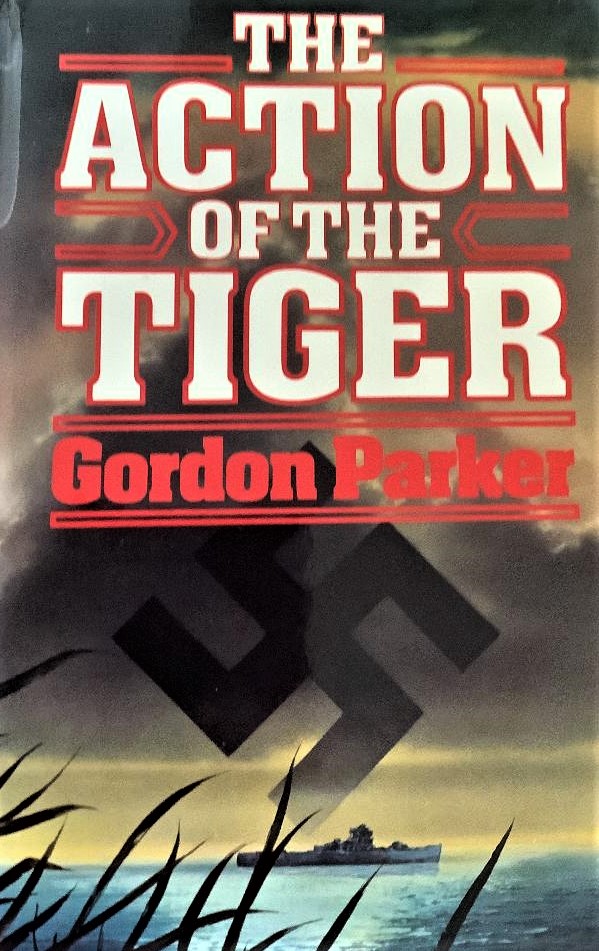
Gordon was born in Newcastle in 1940 ‘But I spent 22 years in Blyth before moving to Seaton Delaval’.
He was a big sci fi fan in his teenage years ‘I devoured any sci fi books or short stories. Time travel always fascinated me and astronomy was my fanatical hobby’.
‘My favourite novels of all time are ‘One Flew Over the Cuckoos Nest’ by Ken Kesey, ‘Catch 22’ by Joseph Heller which I’ve read about seven times, and met him a few months before he died’.
What drew you towards writing?
‘I always had an ambition to write but kept dismissing it as an unachievable pipe dream. I remember ‘Lassie’ films in the 1950’s and was envious of the people who wrote the scripts and could influence the feeling of the audience. I can never remember wanting to be an actor, just to write the words’.
‘Later I struggled with writers like F Scott Fitzgerald and Salinger but admired their ability with words and characters and plot’.
‘I enjoyed the short stories of Ambrose Bierce especially ‘An Occurrence at Owl Creek Bridge’. It has an amazing twist at the end, something I love’.
What do you consider your best work?
‘I think my first novel ‘The Darkness of the Morning’ gave me the greatest satisfaction and became a best seller. I now live a couple of miles from the site of the Hartley pit disaster that occurred in 1862 when 204 men and boys perished. The oldest was 70, the youngest 7’.
‘An old saying came to mind ‘It’s an ill wind that blows nobody any good’. I wanted to bring to life a host of fictional characters so the readers might be familiar with their lives, and their deaths would be all the more poignant. Also a smattering of good that came out of all the sorrow’.
What are you working on now?
‘My choice of subject is pretty eclectic. It depends on what suddenly fizzes in my mind. My latest novel, just published in softback and Kindle is called ‘The Priest and the Whistleblower’ and involves a Newcastle based detective sergeant, Jack Shaftoe – far removed from Vera!’
‘Having just finished my latest I’m back to searching for a subject and a plot. There’s a hint in me to write another historical novel, again based locally involving an armaments magnate and stretching from Victoria’s jubilee to about 1920 and takes in WW1’.
As well as being on a BBC Hot Housing writing programme, Alison has scripted Theatre in Education programmes for schools, written two short films for festivals, and also found time to tour the North East and played venues in London and Edinburgh with three of her full length plays – Hard,Bedsocks & Secrets and Life Of Reilly.
With all that you’d think Alison had enough on her plate, but added to her ‘to do’ list this year are another two projects.
Her play Life of Reilly is being produced by the Leah Bell theatre company. An interview with writer, actress and theatre producer Leah features on this site in Take a Bow, 1st July 2021.
We open with Reilly in May in the North East and then go on an autumn national tour. I’m really excited about this as it’s a great opportunity said Alison.
The old saying of if you love what you’re doing you never work a day in your life – that’s so true. My work is my passion and I’m passionate about telling stories of everyday people through writing and acting.
Alison has wrote about diverse subjects such as autism and sex workers, for her new play she has decided to tackle domestic abuse and control in relationships.
For research and during the writing process I had advice from Northumberland Domestic abuse services, Age Well Northumberland and also accounts of lived experience.
I’ve found that other plays on this subject tend to centre on younger people but my play is different as it looks at the relationships from the perspective of two people in their late sixties.
This play also looks at how they find their way around social media which is a relatively new thing for them as they haven’t grown up with it and they’re still finding their feet. This often leads them to be vulnerable, as they tend to take everything at face value.
The two characters, Viv and Bill, have met on-line and arrange to meet. Viv is conscious of keeping safe, so on advice from her daughter they meet during the day in a busy coffee shop. They get on well.
The male lead is to be confirmed soon, the female lead is played by Leslie Saint John. Leslie has acted in a number of TV roles including Byker Grove and Catherine Cookson film The Girl, but notable in her role as the glamorous Vicky in the classic TV series Auf Wiedersehen Pet. Interview with Lesley on this site at Talking Pictures 19 February 2020.
Throughout the play there are ‘flash forwards’ where the audience get to take a look into the future to see what life will be like should the relationship develop. During these flash forwards we get to see the real Bill.
The abuse starts as a slow burn with Viv cut off from friends and family. Bill controls her finances and becomes physically violent.
Whilst the subject matter is serious and dark, the real time conversation in the coffee shop is light and I hope in some instances hilarious. I want the audience to feel almost guilty for laughing at Bill.
In one episode in the coffee shop they both declare they’ve had a lovely time and will do it again. I want the audience to be almost shouting out ‘don’t do it!’
As a writer my work is observational and a lot of what I’ve seen and heard goes into this. I think this play will draw attention to older people in this situation and make people aware this is a problem not restricted by age.
‘You Need to Say Sorry’ opens in Laurels in Whitley Bay on June 22nd and runs till July 1st 2023, tickets are on sale now.
Find out more about Alison in an earlier interview on this site at Dream Catcher 3rd & 5th June 2021.
Held on Saturday November 26th by North East playwright & theatre producer Ed Waugh (Dirty Dusting, Hadaway Harry, Sunday for Sammy), the event in Bewick Hall will be a celebration of fantastic stories about working class heroes from Tyneside.
“I’m really excited about this. It’ll rock. There’ll be Geordie songs, stories, and a video link – it’ll be great crack” said Ed
The Harry Clasper, David & Glenn McCrory and The Great Joe Wilson stories were successful stage plays in their own right, now the scripts have been compiled together and released into one book – Geordie Plays.
Harry Clasper’s story follows his journey from working class pitman in Jarrow to rowing Champion of the World.
North East singer and song writer Joe Wilson chronicled working class life in song including the Geordie classic Keep Yor Feet Still Geordie Hinny.
“North East actor Jamie Brown who starred in both plays Hadaway Harry and the Great Joe Wilson will be singing some Geordie songs at the event”.
“We have the top journalist and sportswriter John Gibson coming along, he will regale us with stories about Glenn McCrory’s rise to boxing world champion stardom and the inspiration he got from his severely disabled brother David”.
“We’ll also have a video link to the three plays’ director Russell Floyd” explained Ed.
Some may know of Russell from his time acting in UK theatres and TV shows including Eastenders and The Bill.
“There’s also a special 5-minute video by Canadian, Kas Wilson, talking about what it means to be Joe Wilson’s great-grand-daughter”.
“I would like to give my thanks for continued support to all audiences, supporters, organisers – everyone involved in making this happen”.
The launch is on Saturday, November 26th 6pm, Bewick Hall, Newcastle City Library.
John with a photo of his Grandfather Thomas Caffery.
The last post highlighted the work of the Hive Storytellers who are based in Jarrow. It featured a story that group member John Caffery came across when he was researching his family tree.
“Thomas Caffery my Grandfather was born in Hartlepool in 1886, and I came across his army service records. They revealed he suffered leg injuries in a serious train disaster at Jarrow.
I enquired more about this and searched through old copies of the Evening Chronicle to see if there were any reports”.
”I found there was a communal grave and headstone in Harton Cemetery, South Shields for the passengers of the train who were killed in the accident, but no names for them. They were buried with three named soldiers and remembered on a Commonwealth War Grave.
My curiosity got the better of me and I uncovered full details of the accident and confirmed the identity of 17 people killed.”
Disaster at St Bede’s Junction, Jarrow.
Reports tell us that the 17th December 1915 was a cold, damp, foggy morning and a coal train was pushed out of Tyne Dock and up the steep track by a banking engine joining the South Shields to Newcastle line at St Bede’s Junction, a signal box controlled the area.
As visibility was worsening with weather conditions and heavy industrial smog, the banking engine had finished assisting the coal train and waited for the signal to let him know he can return back to Tyne Dock.
A passenger train heading for South Shields passed by as the banking engine driver waited patiently for the signal. After waiting five minutes he sent his fireman to the signal cabin to notify them of their position.
Sadly this delay proved disastrous as a Newcastle bound passenger train ploughed into the stationary banker train derailing them both, and damaging two carriages.
Shortly after, an empty goods train heading for South Shields also collided into them and was derailed. The carriage’s wooden construction and gas lighting fuelled horrific fires and damage.
Evening Chronicle newspaper report of St Bede’s Rail disaster.
John added “I found in the newspaper reports that the noise from one steam engine was deafening and carriages of the train were a mass of burning wreckage. One engine driver had a remarkable escape as he was thrown yards away from his engine which had overturned and rolled over the embankment into a field.
Men were lying on the ground receiving first aid, screaming was coming from the carriages as one train was on top of the other”.
“Despite heroic efforts of ambulance men from Palmers shipyards, soldiers from Durham Royal Engineers and Tyneside Irish, and a number of railway and policemen plus nearby residents, rescue was practically impossible”.
William Dunlop, the guard, and William Rowe, fireman of a train nearby, ran over and uncoupled the other carriages before the fire spread.
Another man who helped to recue injured passengers was Samson Tolliday. Samson was an off duty engine driver who lived near Tyne Dock station. He was travelling in the passenger train when the accident happened.
At the official enquiry in Newcastle he told the inspector that ‘the first outbreak of fire was from a gas jet. If I had been able to get saws I might have got more passengers out. All water tanks on the engine were broken and water was not available’.
The Chief Constable of South Shields made an official statement reported in the Evening Chronicle 18th December 1915 ‘It is impossible to identify the remains of any of the victims, and only a small proportion of the property found at the scene can be traced to the possession of any of the missing passengers’.
John talked about finding more newspapers reports…
“There was over 200 people on the passenger train, that early in the morning they would have been going to work, among them there was an accountant, cabinet maker, a tripe preparer, and my Grandfather was going up to Newcastle for some army training.
The people that were tragically killed were buried on Christmas Eve 1915. I felt strongly that they should have their own headstone with all their names on”.
The new headstone in Harton Cemetery with the names inscribed, the original headstone on the left.
With a combined effort from local company HVR Electrics, who are based next to Bede metro station where the accident happened, A19 Model Railway Club, Bede Memorials and South Tyneside Council Cemeteries Department, John ensured that an appropriate memorial headstone was installed in Harton Cemetery.