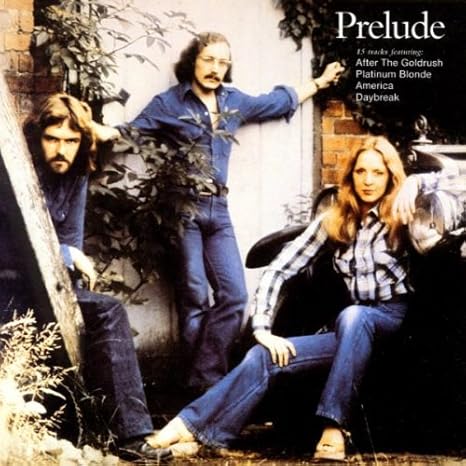
I met up with Gateshead born Brian Hume and he talked about his life in music and what it means to him now.
‘Music dominates your life. It can often exclude things that you should pay attention to. Personal relationships can suffer cos it takes over your life. All you wanna do is make that sound, make that music, at first you don’t care if you make any money you just do it for the love of it.’
‘Unless you’re all on the same page there’s always tension within bands. You’re living permanently on the idea that it will all come to an end tomorrow. If you’re a guitar player you could break a finger or get arthritis. Somebody might leave and your left high and dry. You might have an argument and everybody falls out, it’s a miracle they stay together. But it can be exciting not knowing what’s round the corner’.
78 year old Brian looks back to when and where he was first inspired.
‘Me mother was very musical she’d knock out a tune on the piano and a four string guitar – all self taught, amazing. That’s where I learnt to pick out a few tunes. Lot of houses had a room where no one went very often, that’s where the piano was.’
It was in Grammer school where Brian first met up with Ian Vardy, forming a duo to sing in Tyneside pubs and clubs.
‘One of the first gigs we played was the 99 club in Barrow in Furness. After two songs the chairman came up to the front of the stage “You’re not really right for this kind of environment”. He was nice about it but, yeah, we were paid off.’
‘The Everley Brothers songs were the go to sound, when we heard their two part harmonies we thought we could do that. We used to play the Bridge Hotel in Newcastle. The folk scene then was vibrant, clubs were always packed out people were singing sea shanties then Paul Simon came along.’
‘Then we’d try writing our own stuff. Our publisher wanted us to be called The Cobblers. You could see the first review – what a load of! We settled on The Carnival – a very 60s hippy name. We lasted for one record – a Paul Simon song called The Big Bright Green Pleasure Machine. The review in the NME read ‘social comment at breakneck speed!
‘Ian and I were singing in our flat in Gateshead. We had just bought the Crosby, Stills and Nash album trying out different songs like Sweet Judy Blue Eyes. My wife, Irene was singing in the kitchen with the door open. She was singing the third harmony. We were totally surprised as we didn’t know she could sing. We turned and said ‘sing that again’. It wsan’t long before we went out to folk clubs and started going down really well.’
‘We lived in School Street, Gateshead and nearby at the end of the Tyne bridge is an old toll booth. A big granite structure. It had a lovely echo. Some nights we’d go in there and sing. One night a policeman came in. He thought we were up to no good. Very officious. But he stuck around listening to a few songs then as he was leaving said “Carry on”.
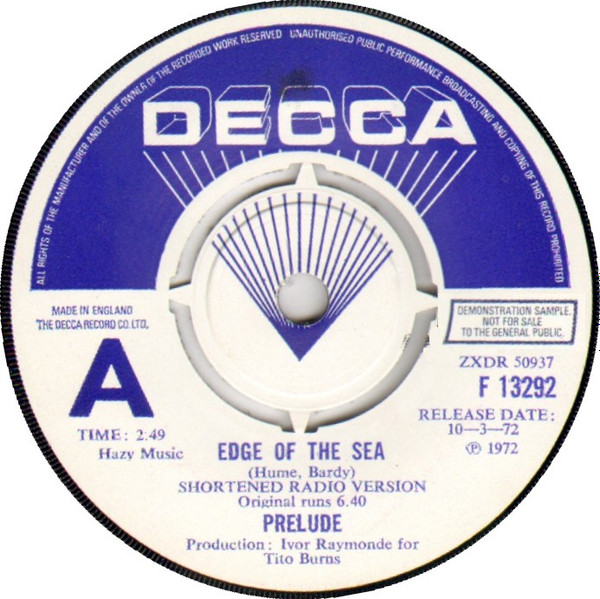
‘We got a deal with Decca Records and recorded a single The Edge of the Sea which had a strong hippy vibe to it. All during that period we were recording in Impulse Studio making demos courtesy of the owner, Dave Woods who soon after ‘discovered’ Alan Hull.’
‘We were called Trilogy for a while but had to change it because there was an American band with the same name. It’s not easy choosing a name as any band will tell you. I came up with Prelude and that stuck. That was 1972.’
‘Three part harmonies had a big effect on musicians. A lot of bands had done it like The Lettermen and The Platters from way back, but Crosby, Stills and Nash were different, this was whack right in your face. Yeah, a big influence on us and many other bands including fellow Tyneside band, The Caffreys.’
‘Different members have come and gone but the band were Ian Vardy, me and my wife Irene. Ian and I got a song writing contract with ATV music which worked for us financially. We decided to put both our names on everything we wrote irrespective of who wrote it.’
‘We had a brilliant guitarist called Frank Usher. We parted company and and he went on to play guitar with Fish from Marillion as well as being a fine guitar maker.’
‘We played the North East club scene for a while and in between we’d do Durham College where we’d support artists like Gerry Rafferty, Mott the Hoople, Shaking Stevens and the Sunsets – that band were amazing. There was a hippy commune type band called Principle Edwards Magic Theatre who all dressed in white which looked cool so we copied that – it was a cheap uniform.’

‘Our manager George Carr got us a record deal with Pye who back then were dominated by Max Bygraves selling boatloads of Sing-a-Long-a-Max records. We were the token folk band, although we were never folk they just called us that cos we had acoustic guitars! You couldn’t say that Pye were part of the cultural vibe.’
‘In 1973 we went to Rockfield Studio in Monmouth to record our first album How Long is Forever? produced by Fritz Fryer who was in a group called The Four Pennies. They had a number one with Juliet. A wistful ballad. On the final studio day Fritz asked if there was anything else we had. We used to sing a Neil Young song just for our own pleasure. That was After the Gold Rush.’
‘We recorded it and it sounded pretty good so we double tracked it. Overdubbed it fifteen times and it sounded massive. We never thought for a minute anyone would pick up on it. But John Peel at Capitol radio did. He got loads of calls ‘Who is this band?’ ‘Where can we buy the record’.
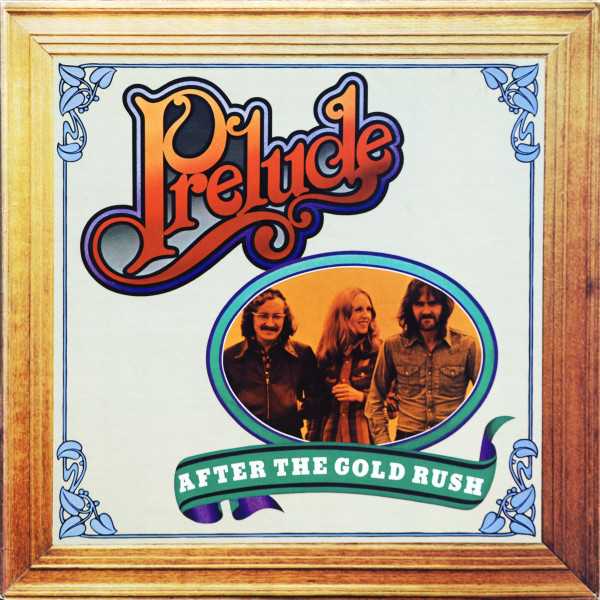
‘Next thing we know Pye put it out as a single and we’re on Top of the Pops. That was 1974. We ended up appearing twice the first time was with Marc Bolan. There was a succession of TV appearances. You had to do television because you are reaching a massive audience. We did a show for Tyne Tees called the Geordie Scene. We did the Basil Brush show for Pete’s sake.’
‘Most notably we went on the Vera Lynn show. During rehearsals she referred to us as The Prelude. Later she was walking towards us along the corridor when Ian stopped her and said “By the way Vera it’s not The Prelude it’s just Prelude”. Not skipping a beat she turned to him and said “If you don’t mind it’s not Vera…it’s Miss Lynn”.
Prelude were always based in their hometown Gateshead this meant constantly travelling up and down the M1 to television and recording studios in London.
‘It was every other week. We should have moved down there. But 1974 was a big year for us. We did the background vocals on Streets of London which was a hit for Ralph McTell. He asked us to go out on a UK tour with him.’
‘Ralph wanted to put our names on the record but our company wouldn’t allow it. For the next best thing Ralph put ‘background vocals by ‘The Gold Rushers’. It would have been a great advert for Prelude to have their name on the single but Pye were stupid on that.’
‘Ralph was so talented and generous to a fault. It was a big tour around the country then we played a venue where we’d seen Paul Simon, Crosby, Stills and Nash – here we were on the stage of the Royal Albert Hall. Amazing.’
‘After the McTell tour we went back to playing smaller venues but I’m getting the timeline mixed here because I remember before touring with Ralph was a UK tour with a singer and songwriter called Mike Chapman. He had a devoted following and used to live up the Tyne Valley in Haltwhistle.’
‘Then we went on the road with a great piano player called Peter Skellern who had a big hit with You’re a Lady. Meeting him he was rather quiet and reserved – he later became a priest. Then there was talk of America.’
‘This was 1976. What happened was Lindisfarne played the States. When Alun Hull came back, he’d tell us to get over there ‘Cos all ya’ hear is your bloody record ‘After the Gold Rush’ on the radio all the time.’
‘I always read the NME and Melody Maker, looking at American charts where like the Holy grail of music to me. To see Neil Sadaka, Beach Boys and bands like that we thought wouldn’t it be great to get in there. Our manager George Carr said ‘You’re in the American top 100’. We thought this is a dream come true.’ Then it went towards the top 20.’
‘We wanted to capitalise on the success but the record company didn’t want to pay for us to go to America they sent us to Amsterdam. We played the clubs and had a good time but we should have been in the States where we wouldn’t have even needed guitars as the song was acapella. We could have done the Johnny Carson show and the like and knocked that record up the charts.’
‘It wasn’t until 18 months later we got to the States. There were a few gigs on the West Coast in San Francisco where we supported Jerry Garcia in Berkley and met Nicky Hopkins who played piano on all Rolling Stones records. Then over to the East Coast and played The Bitter End in New York. When we came back to the UK Irene took a break when we had our second boy, Joel.’

‘Things moved on quickly until 1979 when our manager got us a deal with a new company called After Hours who were very forward thinking. We made an album at Abbey Road with The Hollies producer Ron Richards. His style was more towards lush strings and stuff like that. It didn’t really work for us.’
‘We also signed to EMI in 1980 and made an album in Portland Studios owned by Chas Chandler, charming fella. We had some great players on there but the only track that came out of it was Platinum Blonde. Our principal guys were Ian Green de facto producer of Platinum Blonde and Dave Wintour who was Neil Sadaka’s bass player. It was a minor hit which got to number 45 in the charts.’
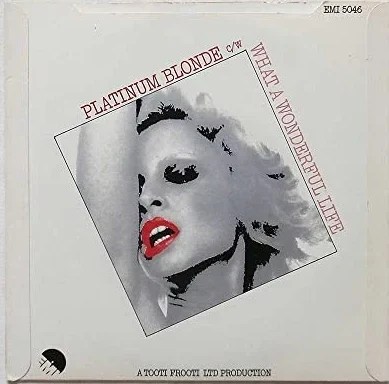
‘We did a video for it in the old Battersea Power Station in London arranged by the head honcho at our record label, Richard Jacobowski. He was really on the ball, a hip guy. We crashed in his three storey flat in Hampstead and shared it with a band called The Regents who were very talented, like a proto-punk band. They had a hit song on Top of the Pops with Seventeen.’
‘For the single we did Top of the Pops and I remember on the same programme were Bay City Rollers. Platinum Blonde was good for us but afterwards we came back up North and played the folk clubs again.’
‘Ian Vardy was looking at doing something different so left the band around 1985 and became a social worker. We continued and got in ace guitar player Jim Hornsby who had been with a lot of country bands. Jim was very much in demand for session work.’
‘Country was labelled as redneck music then, it wasn’t cool – but it is now. Gram Parsons did a hell of a job making country hip. He influenced The Byrds and Keith Richards. Some clubs turned their nose up at country stuff but we had a great time doing clubs then. Unfortunately, as happens in bands Jim left.’
What did the new millennium bring?
‘From 2001 it was Irene, me and Chris Ringer who we brought in on bass and vocals and took Prelude on the circuit of country clubs and the whole scene. Through the years we have performed with countless numbers of musicians and loved every minute of it.’
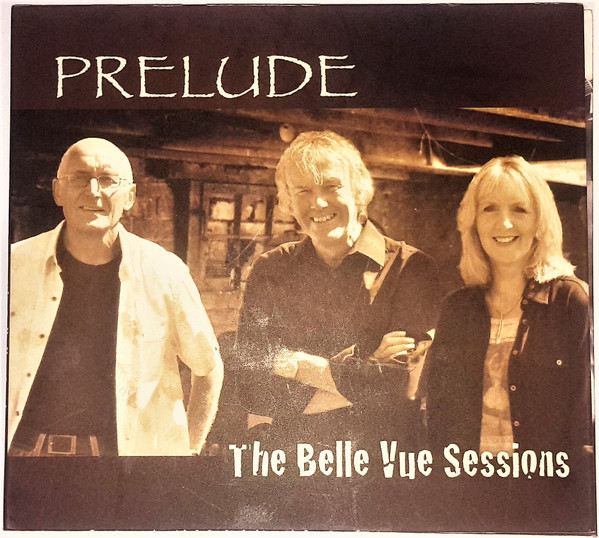
‘Our latest album The Belle Vue Sessions (2012) is all acoustic. It started in 2010 when Ian came round to our house, he had an appointment at his dentist round the corner. We got the guitars out, as you do,and it all went well so we asked him to do a gig with us. One turned into many.’
‘It was our manager Sue Brind who originally said ‘Why don’t you make a new Prelude album? We thought ‘why not?’ so we wrote some new songs and recorded them in Broadwater studios, Gateshead. Two lovely guys engineered, Gavin and Paul. We recruited Paul Hooper who was drummer for The Fortunes and again Chris Ringer played bass. We are very proud of the album.’
What does the future hold for Prelude?
‘We’re busy meeting with David Wood who used to run Impulse Studio in Wallsend. Impulse was a gateway for a lot of acts. He released a lot of Heavy Metal stuff like Venom and Raven from the North East, it was a big scene for him.’
‘David recently put out a CD box set of Alan Hull demos, he recognised Alan’s talent early on. Now he wants to do the same with us because he’s got a lot of tapes that have never seen the light of day. We’re looking to release something soon.’

After recalling a life spent with a multitude of musicians and the memories it triggers, Brian reveals that his ‘obsession’ holds a deeper meaning than just getting on stage and banging out a tune.
‘Your friends tend to be musicians and you share a common language which is almost secret amongst you. You know and experience things that nobody else has. There’s a bond between musicians which is friendship but sort of deeper. You know what the other is going to do, what they’re going to sing, – what they can and can’t do. Every successful band has to have that. It’s like brotherly love. It’s a wonderful feeling. It’s why people do music instead of opting for a ‘safer’ life.’
Alikivi June 2025


 ALIKIVI UK : NORTH EAST MUSIC & CULTURE