VILLAGE NEWS with Jean Stokes, author of a new book on Harton Village, South Shields, North East England.

What inspired you to write the book ?

I am a retired Art teacher and still live in Harton, where I was born and brought up. My father was born in Ferry Street in South Shields near the River Tyne, he took a great interest in the history of the town.

I followed in his footsteps and joined South Shields Local History Group, where I’m currently vice chair.

Harton Village 1900 was written for two reasons, firstly with the aim of raising money for St Peter’s Church in Harton and secondly to prove that Harton had been a village. Locally we hear quite a lot of other villages such as Westoe Village and Cleadon Village, but little is made of Harton Village.

My mam and dad always called the shops in Harton ‘the Village’ and someone new to the area thought that this phase was just an affectation, so I decided to prove it wasn’t.

I thought I would collect all the lovely, old, rural photos of Harton that I knew existed in the amazing archives at the South Tyneside Libraries and put them into one book.

They show just what Harton Village had been like at the beginning of the twentieth century when my parents were young and were brought on Sunday afternoon walks through the fields from South Shields town centre to enjoy the delights of the bow fronted sweet shop and the little aviary that then existed.

I believed lots of other people would be interested in discovering what the village had looked like and hoped therefore the book would make a profit which I could donate to the church.

I had a copy of the Godfrey Map of Harton from 1895, bought at the museum in Ocean Road, and knew there was a census in 1891, and another in 1901, and since the earliest photographs of the village were from the turn of the century, I decided upon 1900 as a good date to explore just who lived in the village and what happened there.  

I’m interested in maps and buildings but also people and their lives. However, unless you lived in a grand house or a pub, the 1891 census does not provide information about where this or that family lived. 


A photograph from about 1945, from the South Tyneside Libraries site showing an awning on the left which belonged to the Ship Inn off sales. The pedestrian is walking west along Marsden Road, nearly at the junction with Sunderland Road, by the smithy and the cottage where Jemima had lived, the one with the open door. The smithy and cottages were pulled down in 1964 to provide a car park.

Did you come across any unusual stories when researching?

Amazingly I found a hand drawn map of Harton Village dated 1896 among church documents, naming each family and where they lived. A truly amazing piece of luck.

With this, the census returns and the Godfrey Map I tried to bring the village to life with names and a little information about some of the individuals.  

A small example is that of widowed lady, Jemima Brown who in 1900, lived in one of the cottages next to the smithy, to the east of the Ship Inn. She was at that time the oldest inhabitant in the village.  

In 1902, when she was 89 the country celebrated the coronation of Edward VII and on Saturday 28th June Harton Village Council organised, as part of their coronation festivities, a drive for the old people of the parish in a horse drawn omnibus where she was given pride of place.

The bus was provided courtesy of the manager of the South Shields Tramways Company, Mr John Wilson, and drove from Harton to Marsden, along the coast to Whitburn, returning through the fields to Cleadon and back to Harton.  
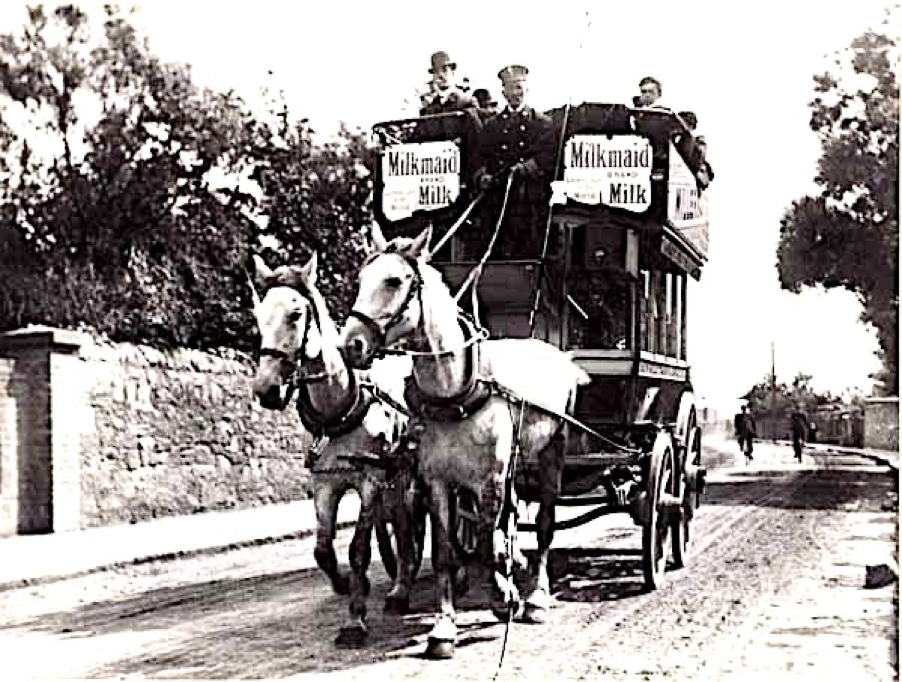
One of the omnibuses that travelled to Harton from King Street in 1900. Photograph from South Tyneside Libraries. Most probably this was one of the two buses that took Mrs Brown and the other elderly village residents on their delightful trip.

What did you use for research ?

Along with the Godfrey Map of 1895, the church warden’s handwritten plan with notes and the census returns, I also had access to some scrapbooks of the period held in the church which contain cuttings from the Shields Gazette and other printed information.

On top of this I was also fortunate to be able to contact the descendants of some of the families I was writing about and obtain family photographs.  

The South Tyneside Library history site also provided some superb photographs.

What are you doing now & have you any projects planned for the future ?

I am busy working on a second book in what is to become a series on Harton, this will be called Harton Township 1921.

The idea for this came about during my earlier research as I began to appreciate that Harton was far more than just the village and in fact was a significant area that stretched to the east along the coast from Trow Rocks to Marsden and westward as far as Simonside.  

The area in the west, which included Harton Colliery, was taken into South Shields in 1901 but it was not until 1921 that Harton was completely subsumed into The County Borough of South Shields.

This second book will aim to tell the story of Harton Township from medieval times to 1921.  

I hope to have the new book ready for November 2021 to fully mark the anniversary of the end of rural Harton and the housing boom that covered the fields of the township.

Link to South Tyneside images: https://southtynesidehistory.co.uk/

Interview by Alikivi  April 2021.

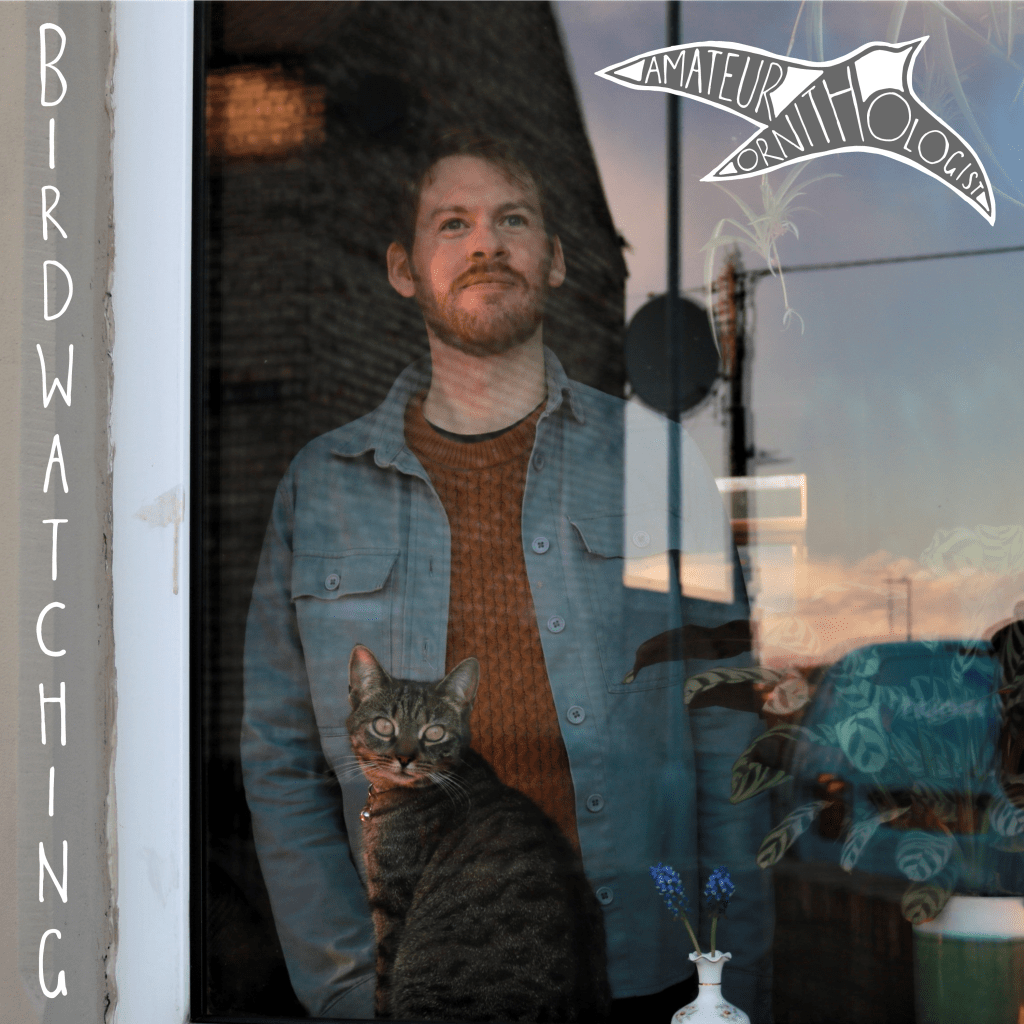
BIRDWATCHING with singer & songwriter Amateur Ornithologist

On the same dial as Wire, Teardrop Explodes and Belle and Sebastian, singer & songwriter Amateur Ornithologist is releasing a ten track debut album Birdwatching on 16 June 2021. During this past troubled year, the man behind the mask North East artist Daniel J Clifford, found solace watching birds from his window while writing songs.

I’ve had the name Amateur Ornithologist for about five or six years. I used to make comic books and did one that featured lots of bird-influenced superheroes. That meant I had to do loads of research and, at the time knew loads about different birds. Most of that knowledge has gone now but I still find solace in hearing birdsong and seeing the almost-animatronic movements of birds. So it fit.

I also like the combination of words that mean someone studious and a bit unprofessional. Because I think that sums me up very nicely – rough around the edges.

I started writing songs when looking out onto a telephone wire that birds would sit on. They nested in the eaves of the house so would fly back and forth all day. I couldn’t help but watch them really. And magpies often seem to approach me. I’m sure they do with everyone but I like to think I have a connection with them. One jumped on the windowsill and we locked eyes for a few seconds. I love things like that.

BIRDS FLY OVER ME

My first single Birds Fly Over Me is like a mission statement. It’s a sunny pop song about love, hope and confidence. But doesn’t shy away from all the doubts, fear and self-reflection that you have to go through to get there. I come up with titles first a lot of the time. I had that one a little while until the tune and lyrics for the chorus came. It’s a positive phrase and that’s where it all started, but I can’t help being aware of everything else.

I think it would fit perfectly on a BBC radio 6 music show, one that Andrew Collins would be hosting about 15 years ago. You’d have a paper review with Richard Herring first and then The Wedding Present blaring out afterwards.

BIRDWATCHING

I started writing Birdwatching around June 2020 and finished in January or February this year, it was recorded in a few places. My oldest friend, Harbourmaster, produced the album so we recorded all lead vocals, and he recorded bass, guitar and handclap parts at his recording studio in Simonside, South Shields.

Matt Hardy recorded drums and percussion at his London studio before moving to Bristol where he recorded a couple of tracks at J&J Studio which is owned by Portishead’s bass player. Brass was recorded by Lee Morris at Harbourmaster’s studio too. This was the last thing we recorded – I got a job and the budget went up on the album. But Lee works so brilliantly and quickly that it didn’t end up costing much anyway.

A lot of backing vocals were recorded at home, with a few bits done at my girlfriend’s house. I wanted to limit the amount of time I was there to be as safe as possible. Luckily Harbourmaster is doing things right – hand sanitiser, wipes, masks, fogging machines and distanced at all times.

Cover art photography by Jenny Rohde, design by Kylie Ann Ford.

CHORDS & MELODIES

Most of the songs came fairly quickly – but those were the ones that worked. There were a fair few that I started and realised weren’t going anywhere. Even when the chords and melodies were written, some of the lyrics took a long time.

A song like Dead Man Begged went through lots of drafts and directions with the words. Then it clicked. Bird imagery always gave me something to cling to and work with.

Then there’s Simple Things. The melody, chords and words came quite quickly. But the arrangement took a long time. At one point it was going to just be synths and drum machines. But as I made it simpler and simpler, it got better. Which is apt for a song called Simple Things.

Even when we thought some songs were finished, I would have new ideas. The song Matters I Know Matter To No One was done and then I had this idea for an outro guitar that Harbourmaster made really sing. Then there were other songs that he would suggest a new harmony vocal for too.

FRAME OF MIND

I’ve probably gone about this the wrong way, coming right out of the gates with an album, so I’m not expecting to set the world alight or anything. At the same time, I’m very proud of the album and think it captures my frame of mind. I’ve achieved what I was going for musically too.

I just hope people enjoy Birdwatching and it’s a good starting point for me to build on. I’m definitely going to focus on some singles and EPs before doing a second album. In terms of gigs, I want to put together a band and play live when it’s safe – although I need to find the right people first.


Check out Amateur Ornothologist and pre-order Birdwatching on bandcamp at:  https://amateurornithologist.bandcamp.com

Interview by Gary Alikivi  May 2021.

SOUL TRAIN – with South Shields born singer & songwriter Vincent Edwards

From his home in Germany, singer & songwriter Vincent Edwards has been looking back at his 1970’s chart pop singles. Recent posts have featured stories behind Right Back Where We Started From, Love Hit Me and Run for the Sun.

European audiences have been kind to Edwards with many re-releases of his records in Belgium, Italy and Germany.

Edwards was born and brought up in the seaside town of South Shields in the North East of England.

After hearing Sam Cooke on the radio, he knew what he wanted to do with his life and went for an audition at a youth club to be a singer.

I was in a band called The Invictors, who were a Shields band, and they evolved into The Answers where I played drums and was singer. We played a lot of soul and blues, our lead guitarist Tony Hill wrote the songs.

We learnt our trade working on American military bases in France, that was around ’63 to ’66. We played a lot around the UK including London and getting over to Paris, plus Shields of course.

We were living in London and recorded two records for Columbia records in the UK. Just a Fear was recorded at Central Studios in London, it was heavily played on the pirate stations in 1966.

The second single That’s What You’re Doing to Me, was recorded in a studio in Putney, South London. It’s a bit softer than the first and again it was played a lot on pirate radio.

We recorded both in three hours including the b sides. Our record producer was Jimmy Duncan, the brother of late singer Leslie Duncan.

Stockton born Leslie Duncan’s most notable work was during the 1970’s when she performed backing vocals or wrote songs for musicians including Elton John, Dusty Springfield, Scott Walker and Pink Floyd. The next post will look at the music career of Duncan more closely.

At the time we were managed by Tony Stratton-Smith who was also looking after The Kubers and Creation. As for promotion I can’t remember any TV then, that came later.

A former sports journalist, Tony Stratton-Smith is best known as founder of independent label Charisma Records in 1969. He released records by The Nice, Lindisfarne, Genesis, and Monty Python’s comedy albums.

Vincent Edwards.

Eventually we drifted apart but stayed good friends. Tony is living in south London playing in a band called Friction. Our bass player Bob Calder who became sound engineer for the musical Hair, sadly he’s passed away.

I’ve lost touch with Ron our second guitarist. I’m still writing and a track I wrote, Soul Train, you never know somebody might record it.

‘Just a Fear’  (link below) has been called a ‘bona fide freakbeat classic with incisive, driving raga-like fretwork from Tony Hill, it’s a dance floor stomper, pounding drums and frenetic finish with soulful vocals from Vincent Edwards’.

The Answers – It’s Just A Fear – 1966 45rpm – YouTube

Interview from August 2020: BACK WHERE HE STARTED FROM with singer & songwriter Vinny Edwards | ALIKIVI (garyalikivi.com)

Interview by Alikivi  May 2021.

LOVE HIT ME – with South Shields born singer & songwriter Vincent Edwards

Over a steaming hot curry Vincent Edwards recalls his days back in South Shields nipping along Ocean Road to get fish and chips at Colmans.

Yes I really miss them, I was brought up nearby in Shortridge Street and used to play in the Marine Park and the beach.

Edwards featured in August 2020 talking about his music career and living in Germany. In the last post he added another story about his European chart single Run to the Sun.

In this post he talks about another European chart hit – Love Hit Me, and its extra life with British soul singer Maxine Nightingale.

I wrote the song in 1975 in London for my beautiful late wife Angel Uschi when we lived there. It was recorded and produced at Pye Studios in London.

Later I sent it over to Maxine Nightingale who I shared a stage within the musical Hair, she also sang my top UK hit Right Back Where We Started From and done a great job. Again, she recorded a great version of Love Hit Me for release in America.

It was out in ’76 and charted all over Europe. There was a load of promo slots on TV shows in the UK and around Europe where I had hits in most countries as did darling Maxine.

In 1977, with a Top of the Pops appearance, Maxine took the song to #11 in the UK charts. It was also released in Ireland, Belgium, Germany, Canada, USA, Australia and New Zealand.

The video (link below) of the live TV appearance was a few years ago in Ostend, Belgium, I think it was number one at the time. Paul Young was also on the show, we had a few beers after.

You Tube link to TV show:

LOVE HIT ME – J. VINCENT EDWARDS – YouTube

Interview from August 2020: BACK WHERE HE STARTED FROM with singer & songwriter Vinny Edwards | ALIKIVI (garyalikivi.com)

Chart information from Discogs.

Interview by Alikivi  May 2021.

AMY FLAGG WAR DIARIES #5 BOMBS FALL ON JARROW

In 2016 when researching in South Shields Library about Historian and Photographer Amy Flagg (1893-1965), along with her photographs of damage to the town by German air attacks during the Second World War, there was a number of personal scrapbooks full of the towns history and genealogy of families in the borough.

Also included was ‘Air Raids on South Shields’, the typed notes and diary entries were a record of official statistics of enemy attacks since the first bomb dropped in 1940.

Miss Flagg also recorded incidents in the surrounding areas including Jarrow. Detail from Tyneside newspapers and maps have been added to some entries.

Amy Flagg, Historian & Photographer, 1893-1965.

Friday, 25th/Saturday, 26th April 1941: 

On Saturday morning German radio claimed the main attack of the previous night’s raid was on the Sunderland Flying Boat Works at Sunderland. In fact this was another bungled raid by the Luftwaffe, as no bombs fell there.

Home Security could only deduce that inexperienced crews were being used. They felt the large number of parachute mines exploding on Tyneside was believed explained by a strong to gale force NE wind which had blown them inland during sea mining operations.

22.08pm Five injured. Incendiary bombs fell on the Old Granary near Jarrow Staithes and at Hebburn. Fires were started but were quickly controlled. A parachute mine fell at Primrose – no damage. Another fell near the Old Staithes causing damage to houses and shops.

In great detail Miss Flagg describes this large scale attack on 10th April 1941.

23.30 – 03.00am High explosives fell on Station Street and Sheldon Street, Jarrow. Houses were destroyed and suffered a death roll of twenty-four, seven members of one family being wiped out, nine people were seriously injured and nineteen slightly injured.

A Roman Catholic Priest died from shock. A police constable was slightly injured by an incendiary bomb.

Fires were started at the Petroleum Installation at Jarrow, Jarrow Tube Works and at Mercantile Dry Dock but were quickly subdued.

High explosives fell on a colliery railway line leading to Jarrow Staithes, on a coal depot at Jarrow Railway Station and on the A185 near to Old Church, Jarrow, where the road was blocked and gas and water mains damaged.

pic Amy Flagg. courtesy of South Tyneside Council.

Published reports in Tyneside newspapers:

Tuesday, 2nd July 1940:

Newcastle and Jarrow were attacked during the late afternoon. The damage was considerable. A single German Dornier bomber passed over Blaydon, shot down a balloon and dropped bombs on Newcastle and Jarrow.

Fourteen dead and 120 injured in Jarrow. Three high explosives dropped in streets. Four houses and six flats demolished, six houses and thirty flats damaged. School partly collapsed.

Three domestic shelters and five others damaged. Four or five streets were affected but most casualties occurred in Princess Street, a search of the debris for trapped victims went on throughout the night, firemen, ARP workers and others working in relays.

It was announced that the August Bank Holiday is to be cancelled.

Monday, 7th /Tuesday 8th April 1941:  

‘HMS Manchester’, waiting in Jarrow Slake to convoy the new aircraft carrier ‘Illustrious’, may have been the objective of the two disastrous raids this week; but it proved quite ineffective so far as naval vessels were concerned, no hit being scored on either.

Considerable damage, however, resulted along the riverside from Tyne Docks to the oil tanks, as well as other parts of the town.

Immediately after the ‘Alert’, enemy aircraft became very active and there was an intense barrage from ground defences. At 23.45, 4 high explosive bombs dropped on Henry Wilson’s Timber Yard, Tyne Dock, Clayton and Armstrong’s Timber Yard, Tyne Dock, the Anglo Iron Foundry, Tyne Dock and a dwelling house and shop in Porchester Street.

Friday, 6th June 1941:

At 15.00 an enemy aircraft dropped one 500kg bomb, 20 yards West of the LNER railway line at East Jarrow. Two pigs and a number of hens were killed by blast. No other damage or casualties were reported.

Pic. Amy Flagg. Courtesy of South Tyneside Council.

Monday, 29th/Tuesday, 30th December 1941:

Two high explosives – damage to Primrose Hospital windows.

Single high explosive fell, believed to be a 1000kg, in a field 100yds East of the Pontop – Jarrow railway causing damage to a signal box, Wardens’ Post, overhead colliery electricity cables and a seed drill.

A smaller bomb also fell in this vicinity. An UXB or aircraft shell went through the roof of a house and penetrated the soft ground under the floorboards.

Thursday, 30th April/Friday, 1st May 1942:

Explosive incendiary bombs were dropped. A hut adjoining the Jarrow Tube Works was set on fire and a woman was slightly injured. No damage to the Tube works but an electricity pylon 500 yards NW of Boldon Railway Station was short circuited.

A single high explosive was believed to be dropped in the River Tyne about 50 yards from Hawthorn Leslies Shipyard and was suspected of being unexploded.

Link to Amy Flagg’s war photographs on the excellent South Tyneside History website.

https://southtynesidehistory.co.uk/

Link to Amy Flagg documentary film ‘Westoe Rose’.

WESTOE ROSE – making the documentary about South Shields Historian & Photographer Amy Flagg | ALIKIVI (garyalikivi.com)

Alikivi  April 2021

AMY FLAGG WAR DIARIES #4 AUTUMN RAIDS & RESCUES OF ‘41

In 2016 when researching in South Shields Library about Historian and Photographer Amy Flagg (1893-1965), as well as her photographs of damage to the town by German air attacks during the Second World War, there was a number of personal scrapbooks full of the towns history and genealogy of families in the borough.

Also included was ‘Air Raids on South Shields’, these typed notes and diary entries were a record of official statistics of enemy attacks since the first bomb dropped in 1940.

The next few posts feature selected pages from Amy’s war diaries. Detail from Tyneside newspapers and maps have been added to some entries.

This entry includes reports of widespread bombing, miraculous escapes and acts of heroism in South Shields.

pic Amy Flagg. King Street, South Shields.

Tuesday 30th September/Wednesday, 1st October 1941:  

At 21.20 A bomb fell near the Market Place entrance. The rear of Crofton’s premises was badly damaged, rolls of lino, carpets and other goods being flung considerable distances.

A cafe at the corner was totally obliterated and a number of people were trapped in a basement.

A Rescue Party foreman, who afterwards received the George Medal for his gallantry, was lowered head first into the cellar and succeeded in rescuing three people, despite the danger from a broken gas main and the possible collapse of heavy masonry, he continued searching for the remaining victims.

A youth and an elderly woman were found and extricated but another woman was buried up to her neck and in danger from the likely collapse of wreckage.

Without hesitation he placed himself in a position to hold up the unsafe debris and maintained this position until the casualty was removed.

The Shields Gazette Offices and Printing Works received a direct hit by heavy calibre bombs, the whole printing department and part of the offices were wrecked. There were no casualties, the only occupants of the building at the time were the firewatchers who were unhurt and a reporter who was at the head of the stairs.

He was knocked down by flying debris and nearly stepped out of a hole in the wall into space.

Another heroic deed resulted from a stick of bombs which fell at 21.21 near West Holborn. One 1,000kg bomb fell through the corrugated roof of the Electric Power Station, it hit and demolished a thick wall, twisted a steel girder and came to rest on the manhole of a boiler.

It failed to explode but there was great danger of it doing so owing to the heat of the boiler.

A Corporation employee very courageously drew the fires. At 04.30 on October 1st it was removed by the Bomb Disposal Squad and dispatched to Newcastle as, owing to its damaged state, the officer in charge was unable to remove the fuse.

About 21.30, a bomb fell in Rydal Gardens, two houses in Ambleside Avenue were destroyed, seven people were going to an Anderson shelter in the garden and were in the hall of their house when the bomb dropped.

They were trapped at the foot of the stairs, they eventually got out by a Rescue Party and Wardens, two were dead, two injured and the rest were suffering from shock.

pic Amy Flagg. courtesy of South Tyneside Council.

In 2012 I made a documentary, ‘War Stories’, in the film South Shields resident Doris Johnson talked about her memories growing up during the Second World War. She remembers this night vividly as her parents lived in the area.

Friday, 3rd October 1941:

At 21.23 Hyde Street and Wharton Street was the scene of further casualties and destruction. One bomb fell in Wharton Street, six houses were razed to the ground and many more made unsafe.

Two bombs fell in Hyde Street where twenty houses were destroyed and a large number damaged. In both streets people were trapped under the debris or in their surface shelters and some of the casualties were fatal.

Small fires broke out under the wreckage, human chains were formed and buckets of water were passed along, the fires were soon put out. Gas and water mains were affected and upwards of forty houses had to be taken down later.

Some of the many homeless were accommodated in Rest Centres.

Nearby in Anderson Street, a bomb fell in the middle of the road between Challoner Terrace East and West. It wrecked houses on both sides of the road and a number of people were trapped in the basements; some were dead when, after strenuous tunnelling and digging they were extricated.

Severe damage was done to the Synagogue, some dwellings and the service mains in Ogle and Wellington Terraces.

Throughout the remainder of the raid the whole town was without electric light and the activities of the Rescue Parties, First Aid Parties and Ambulance Service were severely impeded. The ‘All Clear’ at the end of the raid had to be sounded on police car sirens.

Alikivi  April 2021

Link to Amy Flagg’s war photographs on the excellent South Tyneside History website.

https://southtynesidehistory.co.uk/

Link to Amy Flagg documentary ‘Westoe Rose’.

WESTOE ROSE – making the documentary about South Shields Historian & Photographer Amy Flagg | ALIKIVI (garyalikivi.com)

AMY FLAGG WAR DIARIES #3 THE LUFTWAFFE EXPLOSIVE RAID ON SHIELDS

In 2016 when researching in South Shields Library about Historian and Photographer Amy Flagg (1893-1965), as well as her photographs of damage to the town by German air attacks during the Second World War, there was a number of personal scrapbooks full of the towns history and genealogy of families in the borough.

Also included was ‘Air Raids on South Shields’, these typed notes and diary entries were a record of official statistics of enemy attacks since the first bomb dropped in 1940.

The next few posts feature selected pages from Amy’s war diaries. Detail from Tyneside newspapers and maps have been added to some entries.

pic Amy Flagg. Courtesy of South Tyneside Council.

This post tells how in over two hours King Street and the Market Place were made almost derelict by high explosive bombing. This was the night when the German Luftwaffe carried out an intensive and determined air raid on South Shields.

Thursday, 2nd/Friday, 3rd October 1941:

At 20.05 the Air Raid Message ‘Red’ was received and the ‘Alert’ sounded. A large number of enemy aircraft, flying at low altitude came in over the river. One or more of these planes succeeded in cutting loose some of the barrage balloons and it was evident that a heavy attack was developing.

At 22.30 the Air Raid Message ‘White’ was received and the ‘Raiders Passed’ was sounded. In between the times Shields suffered.

The first bombs fell at 20.55. Wardle’s Timber Yard in Long Row where stacks of timber was damaged and a boundary wall was blown down blocking the road leading to Brigham and Cowan’s Shipyard. The attack was then carried, at 21.20 to the riverside and the Market Place.

Three bombs fell near the river, one on vacant land near Comical Corner, one in Shadwell Street where the road and some adjoining railway lines were torn up, and the third on the new quay near Pilot Street.

A stick of bombs fell over the Market Place causing some of the worst damage done in the raid – one fell in vacant ground between the foot of River Drive and the Tyne Dock Engineering Company’s premises in Thrift Street.

An Air Raid Warden on duty in River Drive was killed by blast and on the north side of the Market Place a messenger was seriously hurt.

Two more fell in the Market Place, one on the entrance to the shelter under the south east quarter, near East Street, the explosion fractured a gas main which burst into flame and set fire to a trolley bus standing nearby, the other fell on the shelter in the north east quarter.

The Market Place fires soon spread to adjoining buildings. Miller’s Stores caught fire and the flames crossed East Street and spread to the Tram Hotel, the Grapes Hotel, Jackson’s the Tailors at the corner of King Street and the King’s Shoe shop.

The whole of this block was soon ablaze and had it not been for the solidity of the dividing walls at Lipton’s and Mason’s shops, more fire damage would have occurred in King Street.

pics Amy Flagg. Taken from her pamphlet ‘Humanity & Courage’.

Another bomb fell on Dunn’s Paint Stores and shop, demolishing the building and starting major fires spreading to Hanlon’s shop, the Locomotive Hotel, Campbell’s Lodging House and the Union Flag public house.

Tins of burning oil and paint were hurled into the air and started fires in the City of Durham public house, the Metropole Hotel and the Imperial Hotel.

Crofton’s drapery stores at the corner of King Street was set on fire by a leaking gas main, then the fire spread to Woolworth’s next door, which was completely gutted. The side entrance to the Regal Theatre and Galt’s Fruit Store in Union Alley were also damaged by fire.

With so many fires and so much damage to the water mains, water had to be relayed from the Ferry Landing and the static water tank in North Street.

Despite many rumours at the time, the loss of life in the Market Place shelters was comparatively small – twelve killed, five were rescued, this was partly due to the fact that as the road to the Market Place from Union Alley had been blocked in the previous raid, many people from the cinema had to go in the opposite direction to the shelters in North Street.

Three men on their way to work were crossing the Market Place as the bombs began to fall, one took refuge in the shelter nearby, but was injured, the second was killed just outside the shelter and the body of the third was never found.

It was suspected that he had been blown by blast into the burning paint shop, long digging to recover his body was without result.

pic Amy Flagg. Courtesy of South Tyneside Council.

At daylight on Friday morning, the Market Place looked like the ruins of Ypres. Nothing could be seen but broken buildings the square was littered with debris and a tangle of fire hose. It was a scene of complete devastation.

In addition, all remaining windows in St Hilda’s church were shattered, the roof dislodged and old stone walls pitted and scarred with shrapnel.

The Old Town Hall suffered heavy interior harm and none of the business premises was left intact. All the overhead wires were down and it was not until the afternoon of October 9th that buses were able to pass along King Street.

Alikivi  April 2021

Link to Amy Flagg’s war photographs on the excellent South Tyneside History website.

https://southtynesidehistory.co.uk/

Link to Amy Flagg documentary ‘Westoe Rose’.

WESTOE ROSE – making the documentary about South Shields Historian & Photographer Amy Flagg | ALIKIVI (garyalikivi.com)

AMY FLAGG WAR DIARIES #2 SHIELDS BLITZ

In 2016 when researching in South Shields Library about Historian and Photographer Amy Flagg (1893-1965), as well as her photographs of damage to the town by German air attacks during the Second World War, there was a number of personal scrapbooks full of the towns history and genealogy of families in the borough.

Also included was ‘Air Raids on South Shields’, these typed notes and diary entries were a record of official statistics of enemy attacks since the first bomb dropped in 1940.

The next few posts feature selected pages from Amy’s war diaries. Detail from Tyneside newspapers and maps have been added to some entries.

In this post Miss Flagg describes in great detail a large scale enemy attack by over 70 German planes.

Water, gas and telephone lines damaged, shipyards under siege, trains flung around like toys, houses obliterated, Ingham Infirmary on full alert. An attack so severe that one of the largest bombs in the country, a ‘Satan’, was dropped on the town.

Fire brigades from across the North East were called in to help – it was a night when South Shields was caught in a ‘blitz by fire’.

Thursday 10th April 1941:

Shortly before the siren sounded, enemy aircraft were heard, ground defences became very active and two high explosive bombs were dropped. Then came a shower of incendiaries, an estimated 6,000 falling in the Tyne Dock area, Mile End Road, River Drive and Wapping Street district.

It soon became clear that a large scale attack was developing and directed on the shipbuilding, ship repairing and timber yards on the riverside.

After this, a series of flares were dropped, illuminating the whole region. Major fires were started on the west side of Tyne Dock, Redhead’s Yards, Middle Docks, Tyne Dock Engineering Company, Wardle’s Timber Yard and Brigham and Cowan’s Store Shed.

The Queen’s Theatre, the Railway Station tower and houses in Fawcett Street and Robertson Street were ablaze. Houses in Westoe Road, Tyne Dock and east Jarrow were also involved.

Pic. Amy Flagg. Taken from her pamphlet ‘Humanity & Courage’.

The resources of the Fire Services were fully extended and a call for ‘Mutual Aid’ had to be made – this was a reciprocal system that enabled a service to get help from other districts.

Fire Brigades from Durham, Gateshead, Middlesbrough, Newcastle and Sunderland arrived, each town sending their complement of Rescue and First Aid Parties.

During the progress of this blitz by fire, a large number of high explosive bombs were dropped, causing great havoc. The largest number of casualties were found in the Mile End Road area, including Empress St, Palatine St, Fort St, and William Terrace.

Two large calibre bombs fell close together in this thickly populated part of town, completely shattering a whole block of houses. Bombs also fell on the railway line near Studley Bridge and Ellesmere Street, where passenger coaches were flung about like toys.

Several bombs fell in Redhead’s Yards, doing much structural damage. Bombs also fell in Cayton and Armstrong’s Timber Yard, the TIC Docks, Middle Docks and a Fire Station in Anderson Street, and on the Battery Field at Westoe.

In King George Road, two houses were obliterated, and a bomb also fell at the Deans. Prince Edward Road West was blocked by a large crater on the embankment below Dean Terrace. A water main burst, filling the crater and burying a motor car in mud.

pic. Amy Flagg. Taken from her pamphlet ‘Humanity & Courage’.

One of the largest bombs dropped in this country to date, was found unexploded in Newton and Nicholson’s premises, Templetown. It was a 1,800kg bomb, recognised as a ‘Satan’.

The estimated number of bombs dropped was 38, but this does not include many which fell in the river, the harbour and the sea near the pier.

50 people were rendered homeless or evacuated. Two Rest and Feeding Centres were opened and maintained until all were housed elsewhere.

On the following morning a request for the help of fifty men was made under the Police Mutual Aid Scheme. Two Mobile Canteens also came to supplement local arrangements for the feeding of personnel.

Casualties – 25 killed, 11 seriously injured, 65 slightly injured. Toll in human life was also taken at the Mile End Road area where a family of four was wiped out, but their pet spaniel was rescued alive after 80 hours.

Four soldiers were injured at Marsden Battery through a shell burst from their own gun. Three suffered from head injuries and one from abdominal injury.

Alikivi  April 2021

Link to Amy Flagg’s war photographs on the excellent South Tyneside History website.

https://southtynesidehistory.co.uk/

Link to Amy Flagg documentary ‘Westoe Rose’.

WESTOE ROSE – making the documentary about South Shields Historian & Photographer Amy Flagg | ALIKIVI (garyalikivi.com)

AMY FLAGG WAR DIARIES #1 AIR RAIDS on SOUTH SHIELDS

In 2016 when researching in South Shields Library about Historian and Photographer Amy Flagg (1893-1965), along with her photographs of damage to the town by German air attacks during the Second World War, there was a number of personal scrapbooks full of the towns history and genealogy of families in the borough.

Also included was ‘Air Raids on South Shields’, the typed notes and diary entries were a record of official statistics of enemy attacks since the first bomb dropped in 1940.

The next few posts feature selected pages from Amy’s war diaries. Detail from Tyneside newspapers and maps have been added to some entries.

In one of the entries Amy recorded the night the war came to ‘Chapel House’, the Flagg family home in Westoe Village on Thursday, 16th April 1942:  

At 00.45 four bombs fell in the grounds of residential property in Westoe. The first on the edge of a field at ‘Seacroft’, failed to explode and was dealt with by the Bomb Disposal Squad.

The second and third fell in the gardens of ‘Fairfield’ and ‘Eastgarth’ respectively. The last one fell on the lawn 10 yards from ‘Chapel House’.

No casualties were reported but considerable damage was done to a large number of houses in the neighbourhood, including over 40 roofs of houses in Horsley Hill Road which were penetrated by lumps of clay thrown up by the explosions.

In her diaries Amy recorded incidents that happened on Tyneside, she would add accounts of what she had seen, descriptions of her photographs or what was in official Air Raid Precautions (ARP) reports.

Saturday 22nd June 1940: The first bombs dropped on South Shields were four high explosives dropped near the junction of Marsden Road and Centenary Avenue. Several houses were slightly damaged by shrapnel. There were no casualties.

Friday 9th August 1940: One high explosive bomb fell in a garden at the back of Lawe Road near Pearson Street. Four people in an Anderson shelter ten feet from the crater were uninjured. One Home Guard was killed by machine-gun fire. No casualties from the bomb.

Pic. Amy Flagg. Courtesy of South Tyneside Council.

A comprehensive report by Amy detailed a raid by German aircraft on Sunday 16th February 1941: 

This night will be long remembered in South Shields. 130 enemy aircraft were engaged in action on the coast from Hull to Berwick. Bombers and minelayers came over in waves and were met with intense Anti-Aircraft fire.

At 00.25 a Heinkel 111, was hit by gunfire and collided with a Barrage Balloon cable on the North Foreshore. Part of one wing was broken off and fell on the shore. The plane lost height very quickly and crashed in Beach Road.

One member of the crew bailed out but his parachute caught on the overhead wires and he hung downwards until rescued. He was badly injured and died shortly after admission to the Ingham Infirmary. The remainder of the crew perished with their plane on impact with the ground.

At 00.50 a mine, which had not been released from the bomb rack of the plane, exploded with terrific force. It was seen and heard from beyond Newcastle and windows were broken as far away as Tynemouth, North Shields, Westoe and Laygate.

The Model Yacht House in South Marine Park and a small building were completely wrecked. Parts of the plane, maps, papers and clothing were subsequently collected and dredged from the lake.

The explosion had tragic results – one officer of the Borough Police Force and one Auxiliary Fireman were killed. Two other members of the Auxiliary Fire Service died in hospital.

Seventeen more members of the Police Force, Fire Brigade and Auxiliary Fire Service were injured, some very gravely, and were admitted to the Ingham Infirmary.

Other enemy aircraft, apparently taking the flames as target, dropped bombs on Broderick Street, where an elderly couple lost their lives and several houses were demolished.

On the junction of Lawe Road and St Aidan’s Road, damage was caused to St Aidan’s church and a number of houses, ‘Sea Merge’ and ‘Tyne View’ being completely wrecked.

During the same raid six parachute mines descended on the South Sands near Trow Rocks, and on some fields near the New Marsden Inn, but caused no damage or casualties.

Many houses severely damaged and widespread breakage of windows was suffered in many parts of the town. 85 people were rendered homeless, some of whom were taken to an Emergency Centre.

Alikivi  April 2021

Link to Amy Flagg’s war photographs on the excellent South Tyneside History website.

https://southtynesidehistory.co.uk/

Link to Amy Flagg documentary ‘Westoe Rose’.

WESTOE ROSE – making the documentary about South Shields Historian & Photographer Amy Flagg | ALIKIVI (garyalikivi.com)

LOOKING FOR LUCIFER – The continuing search for author & artist, Baron Avro Manhattan (1914-90)

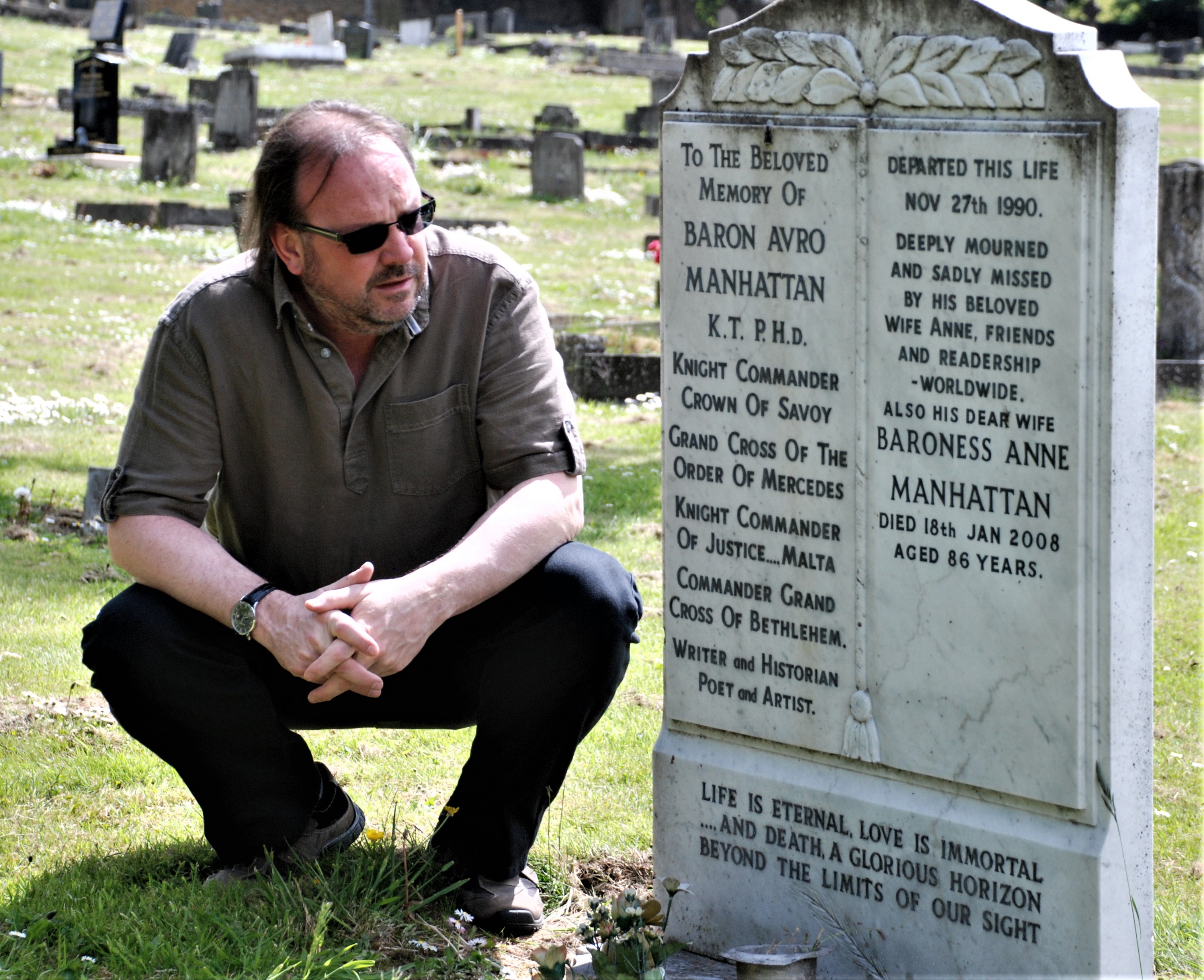
Visiting Avro’s grave in Shotley Bridge, Durham 2016

Over a number of years I’ve researched the life of Avro Manhattan, and in 2018 produced a short documentary on what I’ve found out about his life so far.

SECRETS & LIES – documentary based on The Life of Baron Avro Manhattan. | ALIKIVI (garyalikivi.com)

Recently I received a message from Yorkshire based author, Howerd Haley. He told me when promoting his new book he mentioned Avro Manhattan. In the message Howerd also mentions Subud, a secret organisation he belongs too.

Subud started in the 1930s following an ascension by its founder, and spread to the West in 1957. Subud has been described as the content of religion, in that members of any religion can receive a supernatural experience, known in Christianity as the Holy Spirit and in other religions as the Great life force. In other words a believer’s faith in God is supplemented by a supernatural spiritual experience’.

Howerd explains…I’ve been a member for over forty years. The reason the organisation is semi-secret is that we have not been allowed to promote the organisation. But are allowed to write books on Subud and I’m promoting my latest book on various podcasts.

Howerds latest book is called ‘Ascension’ in it he talks about the three secrets of Fatima, which are ‘a series of apocalyptic visions and prophecies by the Virgin Mary given to three Portuguese shepherds in 1917’.

‘I told former Subud member, Rasjid Skinner, that I intended to reveal the Third secret of Fatima when promoting my book, when Rasjid told me about Baron Manhattan and what he had said when he met him in the early ‘70s in London.

Manhattan talked about a conversation he had in a Vatican Garden with a Cardinal, about the last secret of Fatima’.

‘And that the Cardinal said the Pope had opened ‘the box’, but was not able to reveal the full secret that a man, not of the Church, would come from the East, and would bring many people closer to God’.

Howerd added… ‘This was further confirmation for me, I decided to make it a central theme so when I recorded the podcast I briefly quoted corroboration by Baron Manhattan in it’.  

It’s interesting to hear Manhattan talked about nearly 50 year later. I asked Howerd what originally inspired you to write the book ?

‘The inspiration for the book was from an ascension image of the outside of the universe. I compared this to Hubble space photographs and have proved scientifically that the ascension image came before Hubble. Therefore ascensions are real’.

‘The person who provided the ascension image is the object of the undisclosed third secret. I felt an overwhelming inner urge to find this thing which was missing. Baron Manhattan had half the secret correct – I believe that I have the missing part’.

If you are interested in hearing more listen to the podcast on the Charlie Ward show and the book Ascension by Howerd Haley is available through Amazon.

If you have had any contact or information about Italian born artist & author Baron Avro Manhattan (1914-90), please don’t hesitate to get in touch.

Alikivi  March 2021.