55 year old artist and stonemason Rob MacDonald originally from Rugby in the Midlands has lived in Catalonia, Spain for the last 15 years working on community art installations. His latest project is in Sunderland.
About 10 years ago I came across a story about International Brigades in the Spanish Civil War (1936-39) who came from the UK. It was really interesting especially finding a guy who was on a ship coming from the UK with the same name as me. It piqued my interest so at first I decided I was going to make a sculpture of this guy explained Rob.
Rob in Sunderland City Hall with brochure of the monument in Catalonia, Spain. (pic. Alikivi Sept 2025)
I’d already worked on a few projects and exhibitions in Barcelona so I met with local contacts Alan Warren and Sonia Garangou, teachers and lead historian on the Ciudad de Barcelona. Together we developed a community art history project in the coastal town of Malgrat de mar 40 miles north of Barcelona.
As we talked about the history it became obvious that this wasn’t just about Rob McDonald on that ship it was about all of the International Brigade volunteers and how it related to politics and fascism today. We agreed that it needed to be a community led project because the memory of the Spanish Civil War is a sensitive issue. We didn’t want to go off and just make something ourselves.
The big question about it in Spain is the historic memory, the political left want to talk about it, republicans want to talk about it, but there are questions remaining like where are the unmarked graves? In Catalonia they realise how important the International Brigade volunteers were. In the end the backbone of the idea was to build a monument.
The first monument was opened on May 30th 2022 at Malgrat de mar. It is actively being added to every year, it’s a living monument. When working on it the figures were made in a series of workshops with local people. Some worked on them for 2 minutes others stayed for over an hour as I told them about the stories. I also went into schools and the students took away the information and learned more about the International Brigades.
There are loads of levels to the project – art projects, exhibitions and performances. It’s been really successful. Also, every year in May there is an event held at the monument where the Mayor and all the dignitaries of the town attend. All political parties support the project. There is a broad support, the first 30,000 euros for this monument were crowd funded.
Now we are based in Sunderland college. I have found a lot of pride here, people get behind the area, not just the football team but the shipbuilding history.
Normally around towns you see monuments of kings and queens and people you don’t know. But it isn’t working class history the sculpture is not done by the people and the community are never asked. It gets decided by someone in an office somewhere. The community don’t engage with it. The participation living monument is about community engagement. That is what we are interested in.
I’ve talked to people about working class struggle and the arts. We built up this idea that monuments and public spaces are part of the struggle for working class people’s dignity, history and rights – it’s all tied together. And the symbolism of sculpture is important because it talks to the community about who they are and who they are not.
Sunderland City Hall (pic Alikivi Sept 2025)
There are amazing stories of Sunderland being involved in the International Brigades. One ship bound for Spain in the civil war had on board two unemployed shipworkers from the city. Some of the ships were built here and the captains were from the city. There were men from here who risked their lives to help feed people in a foreign conflict.
Part of the project is not only to expose the history but find it as well because people from the city will be related to some of the Brigade volunteers. We need to build up those connections.
We are at a critical point in the project we are networking with people to make this monument happen. It’s important that people are involved in the process of making it. We are in talks with Culture and local Council – organisations we are looking to partner with and make links to get support.
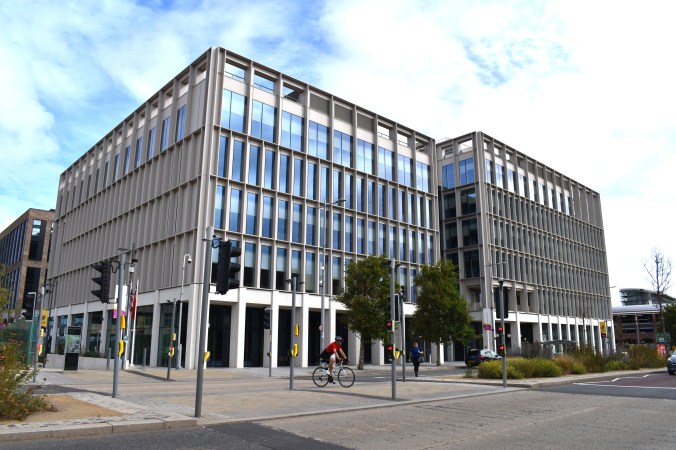
There are a couple of areas where we would like for a monument – Mowbray and Barnes Park are nice and this new development down here (we are in City Hall) but there may be other suggestions.
The history of the Brigades might be tucked away in a cupboard here in the City Hall when really it should be in an exhibition for the community to see. You know they were brave people, heroes really, and this is an important part of social history that needs to be told.
After a career in the Royal Navy which took her around the world, to managing pubs in the UK, plus running an island in the Falklands, now in her mid-60s Karen is back working on Tyneside where she fosters for people with learning disabilities.
I’ve always been in a job were your committed 24/7. When I look back the Falkland islands was a fascinating adventure but that story is for another day, this is about my time in the Royal Navy.
When I left school at 16 I didn’t have a clue what I was going to do but my parents were adamant I was going to get some kind of job and my mother knew someone who worked in an office in South Shields.
But I knew an office environment wouldn’t be any good for me because I struggled academically. I didn’t know it at the time but I was dyslexic.
I was out in Sunderland with a friend and he was talking about joining the army. This triggered a thought in the back of my mind as something maybe I could do.
I went to South Shields careers service, the only leaflet they had was about the Royal Navy. I applied and got an interview at Gunner House opposite the Central Station in Newcastle. I passed that and got offered a training place in Reading – joining on the 2nd October 1978.
It was scary travelling down south on the train but when I got there somebody was waiting and took me to HMS Dauntless where I started my provisional training.
Karen with new recruits (back row on left) at HMS Dauntless, Reading 1978.
HMS Dauntless is your basic training base. We had to prove we were physically fit, learn about teamwork, Navy values, how to respond to orders, the importance of ceremonial duties and drills then finally getting fitted for our uniform.
It was hard, I didn’t get the strictness of it all at first. When they say clean the floor with a toothbrush it really meant that and when they say get there at 10am it really means 9.55am because Navy time is always five minutes before. Once after turning up late, I had to clean every window in the dormitory using newspaper and vinegar. I shaped up after that.
I had lovely long dark hair but after they gave me all the injections my arms were really sore and I couldn’t lift them up to put my hair up in a bun. You always had to tie up your hair when on parade – so in the end I had it cut off.
After five weeks training, we had a passing out parade and I was sent to HMS Pembroke in Rochester as a WREN Catering Steward where I took more training.
HMS Pembroke was the place we went to learn how to be a good officer steward. We were shown different types of dinner service, bar work, how to clean the silverware, uniforms, shine shoes. We also learned first aid and basic fire training. We were often told ‘Leaning time is cleaning time’.
In the month when I joined there was about thirty of us and only two from the North. In the café one day some lads came in and heard I was a Geordie. They asked me to say things like motor boats and paper planes! They were fascinated with the Geordie accent.
While I was there a TV show was being made and we got to meet one of the actors. The local paper back in South Shields printed the photo with me and an actor dressed in German uniform.
For possible bomb threats we always done exercises and always warned beforehand. Late 70s the I.R.A bombing campaign was prolific and this time HMS Pembroke was threatened with a bomb.
We were in our barracks when everything went quiet and the siren went off. We were under threat. This wasn’t an exercise – it was real. We all hid under a table. Fortunately, nothing happened but it’s a scary feeling thinking we could all die here.
Then on 10th January 1979 I went to HMS Neptune the nuclear submarine base in Faslane, Scotland. It was a beautiful affluential area around Gare Loch. It was a good dorm with only four of us in, really good girls.
As a Steward we served meals to officers and guests at official receptions, operated the bar and looked after officers’ accommodation.
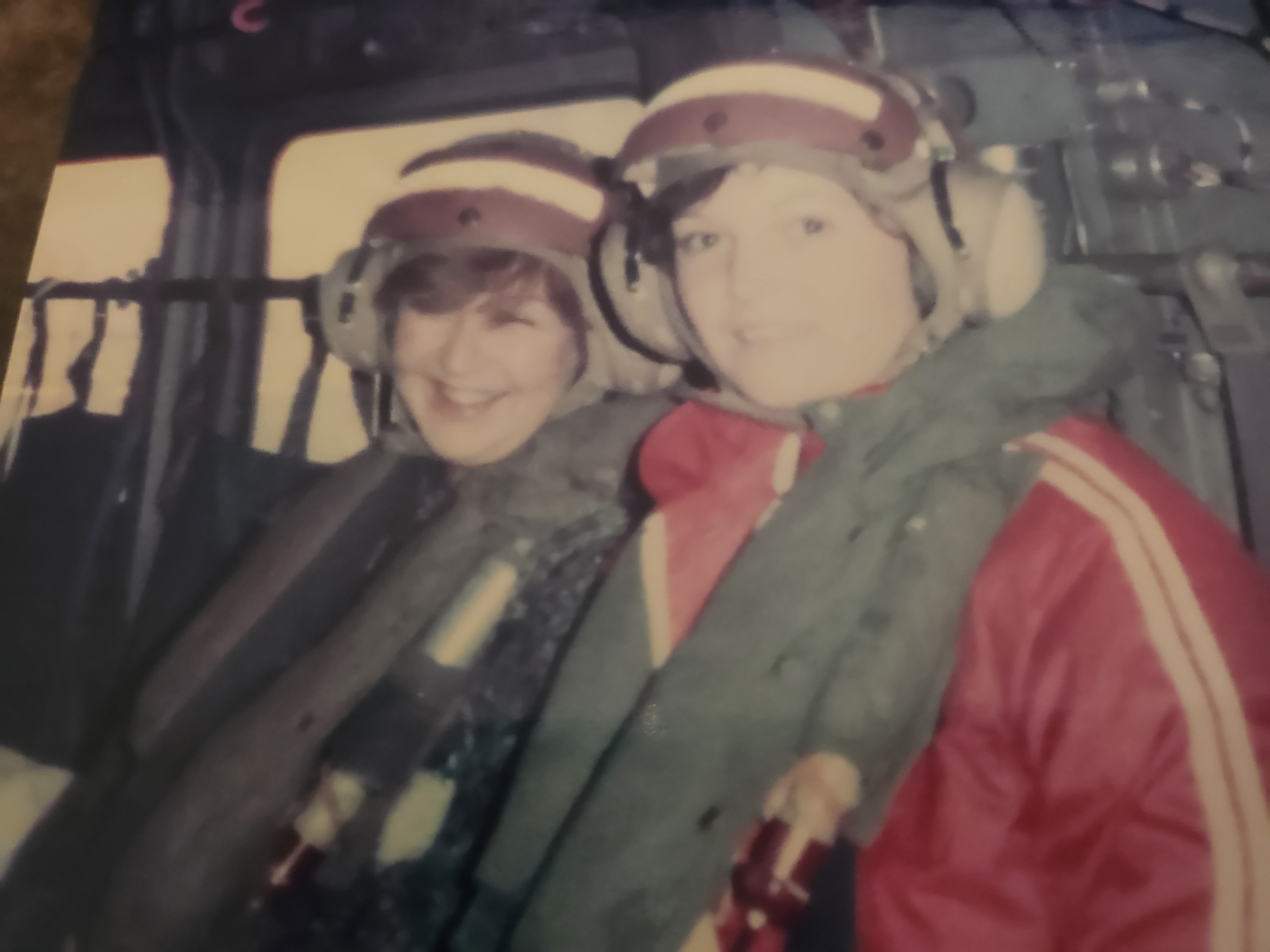
One time we went out on the submarine as it submerged in the loch it was doing angles and dangles, that’s basically moving up and down. Everything – even the tea urn had to be secured.
But this was the time of the start of nuclear protests, they were setting up camp outside the gates and chaining themselves to the fence. Before the protests it was pretty much easy going around the base we would go out on our bikes, now we couldn’t go out as much.
There was a chance of a four-month draft stewarding in the barracks in Northern Ireland. I was still 17 so the Navy had to ask my parent’s permission if I could go. ‘No chance’ they said. So that was that.
I was livid, more livid with the Navy that they had to ask. I was responsible enough to be part of their war team but had to ask me mam to go! Would love to have gone there.
The Falklands war was on when I was based at HMS Vernon in Portsmouth in 1982. I remember when the first ship was hit on 4th May. We were in a disco and everybody was dancing when the music suddenly stopped and an announcement was made about HMS Sheffield.
I knew one of the chef’s whose ship was one of the first hit and sunk. He told me afterwards they were getting in the lifeboat and someone shouted ‘that’s typical, it was a really good scran tonight’. The Navy use dark humour to get out of any situation.
The fact of not knowing who was alive or dead brought on a lot of mental health problems after that war. It must have been terrifying what they went through.
Morale during the war was to carry on as normal as you would expect. I’m sure there was a conscious effort from all ranks to keep morale up. The war lasted 74 days and when the fleet returned in 1982 huge crowds gathered on the quayside to welcome them back.
On ships they have what they call Sods Operas which is a show they put on with games, songs, jokes. Each mess has their own night like karaoke, darts or talent night. We all need to laugh to keep morale up and for letting off steam – but sometimes a laugh wasn’t enough.
The submarines would go away for three months underwater and the crew would need a release when they returned to shore. They’d choose a bar to go in all night to let off steam, get drunk and fights would break out. Some nights would get out of hand, but if you’d been cooped up after not seeing anyone else and not even being able to go for a walk to clear your head, how would you cope?
A fantastic opportunity come out of HMS Vernon. It was a four-month draft to Australia. A tri-service of Army, Navy and Air Force basically doing a swap with their forces.
It took around a week to get there – there were no commercial flights for us. First, we went out on a Hercules to Germany then stopped in Singapore for a few days. The Australians flew us into their country then down to Sydney. I went on to our accommodation near Canberra which was in the middle of nowhere.
The Australian Navy were lovely but this was a culture shock, kangaroos jumping all over when you’re going to work, a beautiful beach but couldn’t swim in it cos there’s sharks, there was no local buses, nothing to do really.
I wasn’t benefiting from being in Canberra so was fortunate with the help of an English officer to arrange a draft to Sydney. This was completely different. Accommodation was like American motels and based next to Bondi beach.
It was a lively place – I remember The Flying Pieman restaurant, the Aussies love their food – the barbies, fantastic meals. We had a week’s holiday and travelled up to the Gold Coast – I loved it there.
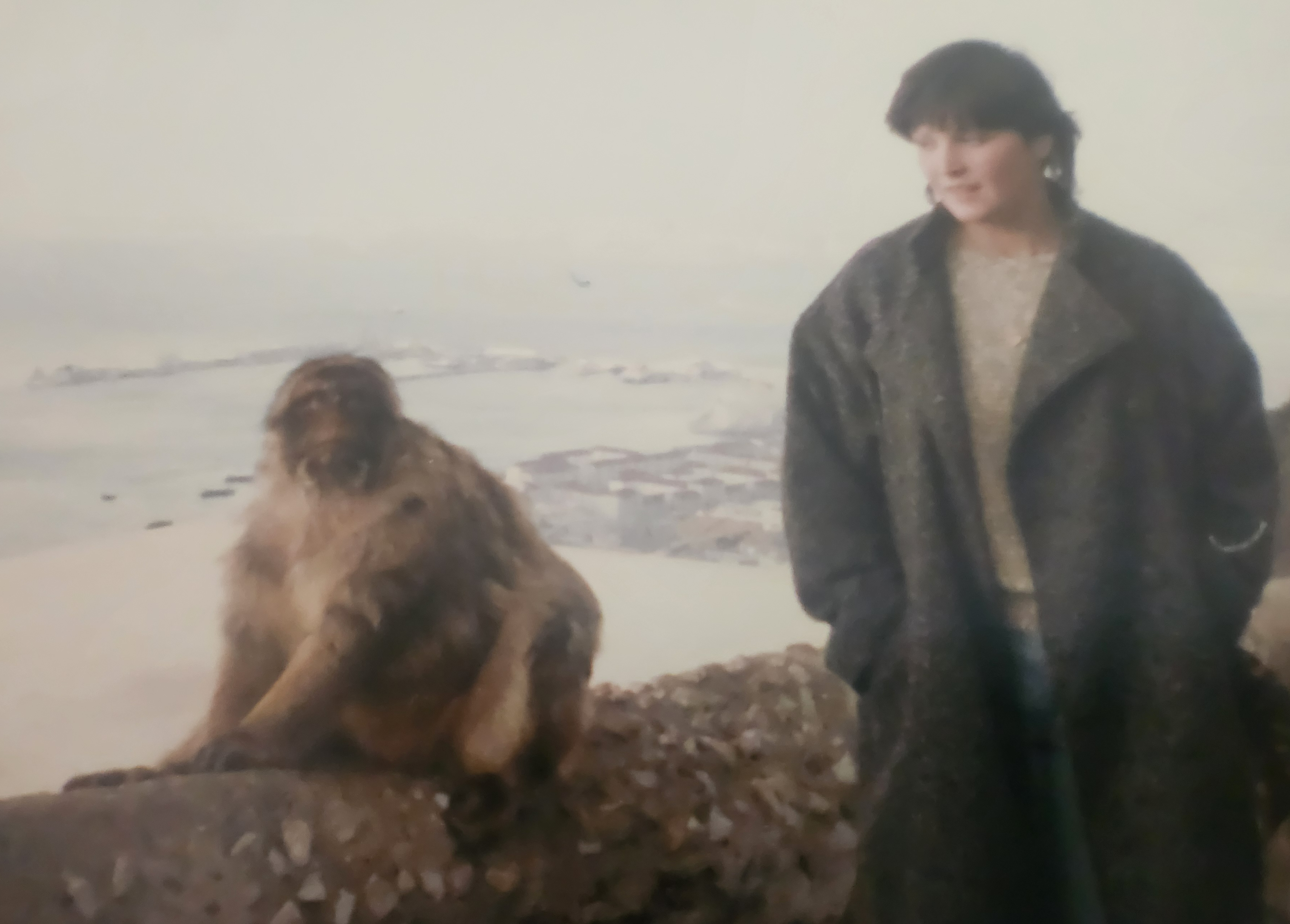
Gibraltar rock in 1985.
By 1985 I was based in Gibraltar at HMS Rooke as an Acting Leading Wren. We were contained on the rock because the border wasn’t open then. Gibraltar didn’t have much, there were dusty old streets and you couldn’t get things like fresh milk.
There was nowhere to go really. Instead of going stir crazy the Navy used to take us over to Morrocco. We’d get away for a weekend to Tangiers.
When I was there the border with Spain officially opened and we walked through to get our passports stamped, then we could go to have milky coffee or a few drinks in La Linea. With the border fully open now we went up the coast to enjoy seaside towns like Fuengirola, Marbella and Torremolinos.
Back to the UK and Portsmouth, or Pompey as it was known to the Royal Navy, the city had lively pubs and clubs used by the Navy, it was a good run ashore. Yes, we liked a drink, who doesn’t? But as I’ve said socialising was our way of letting off steam and relaxing after a hard day’s work.
At HMS Nelson we had summer and winter balls in massive marquees to organise. Big entertainers were booked, TV people and celebrities were invited. One year we had Kenny Ball and his Jazzmen playing, another Oliver Reed turned up but was kicked out for being drunk and offending people.
We had a really special visit one year from the Queen for a commemorative event. There were hundreds attending and sniffer dogs were brought in for security. A massive truck turned up a few days beforehand with the Royal’s own cutlery and plates.
To lay the table we had to get out a tape measure and length of string to make sure everything is straight and measured up. I’m sure she never says ‘that fork needs to be an inch over’. As I served her lunch she would say ‘Thank you for bringing that’. She was lovely, like a little nana, really nice.
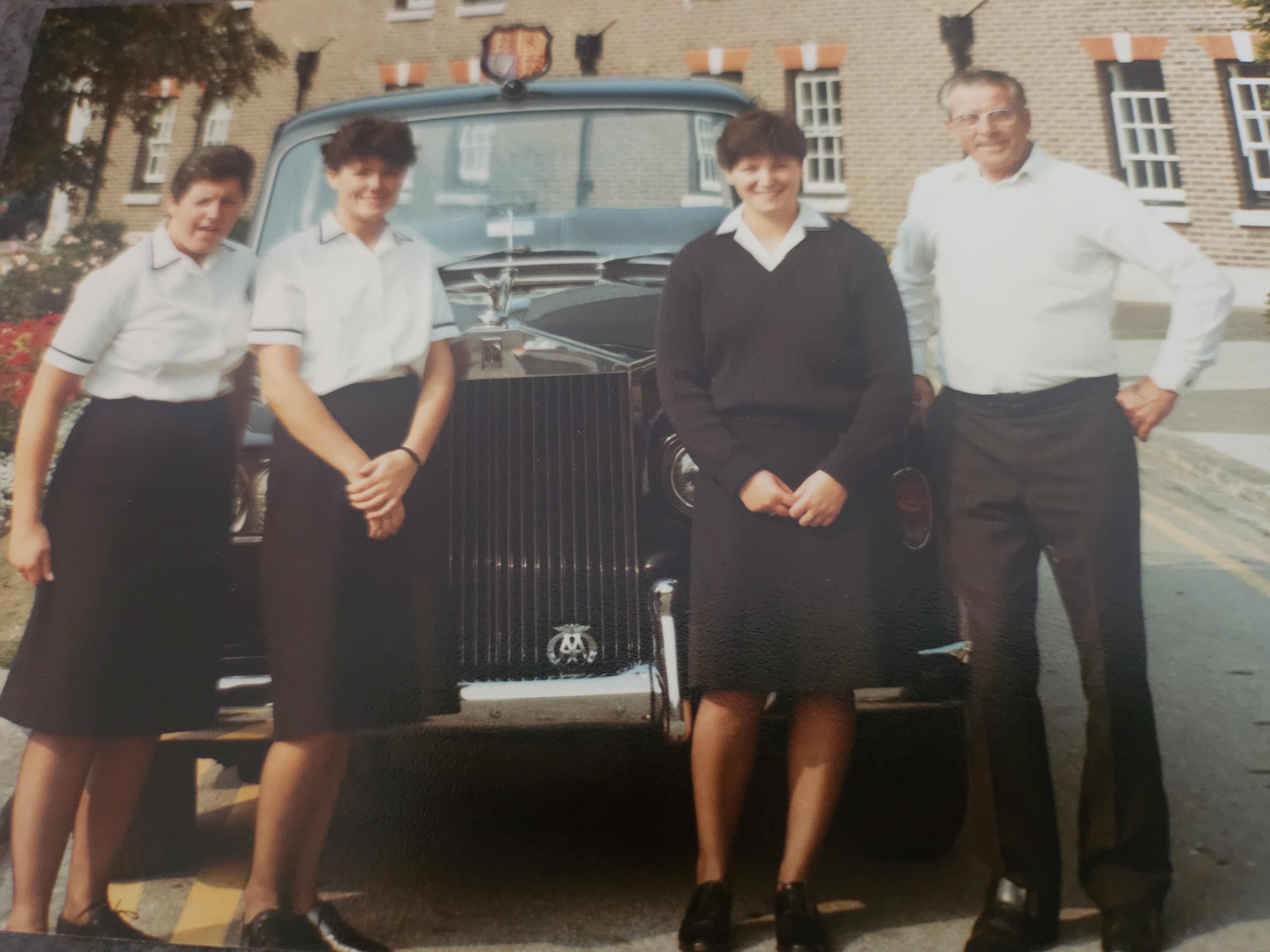
From there I went to HMS Warrior in London working for the Flag officer of Submarines who worked out of a property in Rickmansworth. He had a team to look after him – chef, driver, chief steward, then me.
I wasn’t there long as I moved back to Portsmouth and HMS Dryard where I worked for the Captain. I loved my last years in Portsmouth but that’s where I finally left the Royal Navy for good on 5th March 1990.
What do I think of my time in the Navy? For someone from little South Shields not knowing much about the world and who had only been on a caravan holiday in Wales, to go to all these places, meet different people, experience different cultures and make life-long friends was fantastic.
The Navy teaches you to be self-sufficient, disciplined and learn valuable life skills like teamwork. It might be a good idea to bring back some sort of National service today, it’ll only be a good thing.




 ALIKIVI UK : NORTH EAST MUSIC & CULTURE