RIGHT PLACE, RIGHT TIME?

A lot is made of being in the right place at the right time to help bring success. But you can’t get past the sheer amount of hard work put in, every time giving 100% and never complaining. There is no substitute for rehearsal and when the opportunity presents itself you’ve got to be ready to take it. A snapshot of a story taken from Sting’s autobiography Broken Music hits the mark. This all happened within a few heady months during 1978.

The Police went out on a UK tour to open for Spirit led by guitarist Randy California. They won over a hippy audience and released their single Roxanne. Their record company A&M fully supported the record but money wasn’t rolling in yet.

To pay rent on his London flat Wallsend born Sting was still filming a few adverts and bit part in films. The Great Rock n Roll Swindle was one, although his scene ended up on the cutting room floor. ‘I was grateful, however, for the 125 quid at the end of the day’ said Sting.

He also went for a part in Quadrophenia filmed in Brighton. ‘I know that they’re seeing half of London for this role, but somehow I know it’s mine’.

After finishing on the film set in Brighton the record company hired a private car to whisk Sting off to Gatwick airport and jump on a flight to Manchester, finally arriving at the BBC TV studios where The Police were due to appear on the Old Grey Whistle Test. Sting remembers ‘It’s still raining when we land in Manchester. Yet another car and driver waiting to take me to the studio, where we have a sound check. The performance tonight is live’.

After a successful TV appearance a tour of the east coast of America was booked. Second night of the tour The Police are in Poughkeepsie theatre with only six people in the audience. Do they cancel? No. Sting brings the audience down to the front and introduces each other. Then ‘give a blistering set we will ever manage, encore after encore’.

The audience are invited back stage where it turns out three of them are DJ’s. The next day Roxanne makes its debut on USA radio. Within a couple years The Police are one of the biggest bands in the world. Now how did fellow Tynesider Mark Knopfler and Dire Straits knock them off their perch?

Alikivi   January 2025

CHAIRMAN WOOD OF WALLSEND  in conversation with ex Impulse Studio/Neat records bigwig David Wood

The last time I met David was in October 2019 he talked about starting up Impulse Studio in Wallsend and the legendary record label Neat.

David exclusively revealed how the success of North East comedian Bobby Thompson kick started the label which went on to spawn chief headbangers Raven, Venom, Blitzkreig and Tygers of Pan Tang who in turn were a huge influence on American bands Metallica, Anthrax and Megadeath. Read the interview here >>>

THE FIXER – in conversation with former Impulse Studio and Neat Records owner David Wood | ALIKIVI : NORTH EAST UK CULTURE

We’re in The Customs House, South Shields chatting over a pot of tea and David is in a talkative mood. We talk about North East music and how influential live music show The Tube was, and how it outclassed other music TV. I was lucky to be in the audience of the ground breaking show and being exposed to different genres of music that opened my eyes and ears.

I remember The Tube. I took Venom to the studio they weren’t playing they were there to highlight the type of music they were doing and getting their name out. On that occasion Madonna and Cliff Richards were also on recalls David.

I knew Geoff Wonfor and his wife Andrea who both worked there. I was surprised when it was shut down it was a beautiful studio. Andrea worked on the Lindisfarne film in our recording studio in Wallsend, that was for local news. Unfortunately, a lot of that footage and much more has been lost. Andrea done really well she ended up an executive at Channel Four.

However, my interest in music goes back to when I was 16 year old, a long time ago I’m nearly 80 now. I remember asking a bank manager for a loan to open a recording studio ‘A what?’ he replied. There was a drummer from Howdon came to see me, he looked around ‘Is this yer studio is it. A recording studio in Wallsend? Ya must be f***in’ mad’. That just gave me a push to get on with it.

Councils weren’t interested. Music wasn’t taught much in schools then. We had only one school from Blyth who had enough sense to come down and get the kids to know what it was all about. If you encourage people to find out about things it works on all parts of their life rather than trudging about.

At Impulse I ended up recording every Tom, Dick and Harry in the North East. There was John McCoy and his band. John ran the Kirklevington Country Club near Stockton on the A19. His brother was chef in the restaurant downstairs while bands played upstairs, the club booked in a lot of big acts including Jimi Hendrix.

I have the recording here that I did for them at Impulse in Wallsend, I was 21 we had just started the studio. This must be from 1967 or 68 the time they opened for Jimi Hendrix. They were some band, I tell ya the Real McCoy could really play.

John was a nice bloke, he must be in his 80’s now, he was a really good musician (I’m in touch with John his stories will be added to the site soon). I saw the band at Middlesbrough Town Hall that was always a good gig. I used to go to the Country Club because the food was amazing – charcoal grilled fillet steak in red wine sauce with all the trimmings …beautiful.

We had bands coming to Impulse like The Sect, Half Breed, John Miles – he was brilliant, a class act, a great songwriter, it’s very sad he’s not around now he was such a nice bloke. As a studio it was how basic can you get really but we were all trying to learn new things – that’s how you start.

All the stuff we were working on in the studio was original songs – folk, alternative, punk. We had The Carpettes and Penetration from down Durham way, and from your doorstep in South Shields who else but the Angelic Upstarts! Yes, they were a wild bunch! I didn’t do an LP with them at Neat records it was only the first single ‘Liddle Towers’ and ‘Police Oppression’.

Cover for Angelic Upstarts 7″ single ‘The Murder of Liddle Towers’.

I remember years later they were on Warner Brothers and I got a phone call ‘I need the tracks you did with them to put on an LP, can you mix them and send them to us’. In the archive I had the 16 or 24 track tape they had done so it was possible. ‘When do you need it for‘? ‘Tomorrow morning’. I was up all night I couldn’t get the engineer so had to set it all up but got there in the end and they paid the bill for re-mixing.

But thinking back the Upstarts were fine lads I got on with them. I went to see them at the Guildhall in Newcastle and out comes the pigs head with a helmet on which they start kicking around the stage! I could see what they were doing. People like a bit of edge to things I see it now when you watch TV. A band wouldn’t be able to do that now – probably get them locked up.

There was a lot of musicians who really worked at it and built themselves up, there was even my milkman. Well, it was his son Gordon who used to work weekends to collect the money with his brother Phil. Thing was I used to frequent the Peoples’ Theatre in Newcastle’s Haymarket, this was around 1970, ‘71. My friend Andy Hudson talked about a Newcastle Big Band, around 20 of them – there was sax, drummer, trombone all sorts and of course the bass player was Gordon Sumner or Sting as he became.

They played all this American big band stuff there were some professional players in there like Ronnie Pearson the drummer. But sometimes they weren’t taken seriously as there were members who had day jobs or on the dole – it was a real mixed bag. Andy used to lead it and it was really good, the place would get packed out, a good atmosphere.

I used to go on a Sunday and had the idea to record them at Newcastle Playhouse. I took up a portable kit, a Revox quarter inch tape recorder and made a record which we put out, just a few hundred copies pressed. We sold them at the gigs, ironically the bands do things like that now to make money which is the only way for most bands.

Andy had good contacts and one of them was the airline to Holland. He fixed up a gig for the band to play for the Mayor of Amsterdam, it was some kind of twinning town or similar. We all got on the plane with the instruments for a 7.30am flight to Amsterdam it was only a short flight. When we got to the town hall we set up and had a bit practice. The Mayor turned up and we met him and he gave us a few drinks….within an hour we had a good skinful and were bladdered.

The flight back after the show was much later in the day so Andy suggested a walk around town. Not everyone went just the hardcore were left walking around. We eventually ended up in the red light district with its little bars and clubs. There was a few of us so we negotiated a cheaper admission into a live show.

Some lads still had their instruments with them as we sat down to watch the show. A couple got on stage and started doing their act and got well ‘at it’. One of our lads got his trombone out and waited for a certain movement by the act then played a short burst – it didn’t go down well. The lass on stage gave them ‘what fettle’. ‘We are professionals, this is our job’! The lads were thrown out by the manager. You’d have to ask Sting if he was there.

Andy then arranged a visit down to Pau in France near northern Spain. I went with my recording equipment and we took the gear in a transit van down through France. Part of the road was Le Mons race track it was so smooth you couldn’t hear the tyres. In all it took about two days.

We had a member of the band with us in the van and he had an accident in his underwear, so he chucked them into the back of the van. When you went abroad you used to have a carnet which was a document listing everything in the van to make sure you brought everything back. Everything was listed down to the name of the instrument, serial number, colour, value – you had to sit down and type out pages of it. Then apply for it, then get it stamped before you go anywhere.

We get to the border and the customs officer checked the carnet. ‘So, you are a band, open the doors and just step out the van’. We open the back doors the smell hits them. Holding their noses they quickly say ‘Hurry up, close them and be on your way’! Touring at its best.

We then went to Pau municipal casino. It was like a big echo chamber in there, I remember they played ‘Hey Jude’ with everyone singing along to the chorus. That was a good recording, we spliced it with a version from a Newcastle recording, it came out great.

We sorted out digs at the university because hotels would have been expensive for all the band and crew. As we tucked in to our first meal it was ‘What’s this? – it’s a bit tough’. It was cheval – we all had horse steak for the first time.

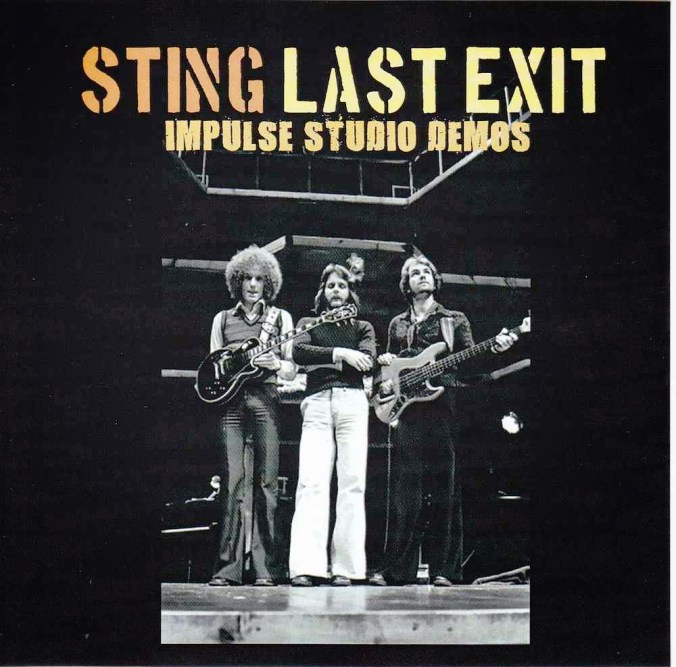
We crossed the border and travelled to San Sebastian, there was a jazz festival with big names on, Last Exit played in the town square, I don’t think the Big Band played there. I remember Sting played bass in Last Exit and other members of the Big Band were also in Last Exit.  

When it was all over, we headed to Bilboa and jumped on the ferry. The crew found out about the band travelling over to England so invited them down to the Pig and Whistle bar in the bowels of the ship.

It was a great atmosphere with jam sessions going on, laughter, food and a few drinks – well more than a few drinks. At the end of the session as we were coming into Portsmouth, I went to the bar to pay but the steward said ‘no, nothing’. I insisted ‘Come on the boss told me to sort it out you’ve been really good, we’ve enjoyed ourselves, how much do we owe?’ ‘Ok’ he replied ‘One pound’. Wasn’t that a great gesture.

You know it was 2011 when the Borough Theatre in Wallsend where Impulse studio and Neat records were based was eventually demolished, it had been lying empty for years. Looking back, it was a great time but to be honest I just wanted to hoy the keys away. I worked there from 1966 to 2001. The years since then have passed very quickly.

After I sold Neat records I ran a Theatre group which went well until Covid destroyed the numbers involved so we are building it back up again. I kept a lot of the group together through ZOOM. I was also on the local club committee at Cullercoats on the North East coast here.

Now I’m writing short comedy scripts for a podcast. I’m trying to get them on local radio. Problem I have is some of its adult humour you might laugh your socks off but not sure you’ll hear it on the radio.

What else do I do? I’m also on a committee for wine tasting because I like my wine. That’s been going for 40 years. We also like our holidays, we have a few planned this year. We look after our Grandchildren and dogs and take them out to the country each weekend, yes you just get on with things don’t ya. I’ve also been involved with a few compilation CDs with the Cherry Red label, I’ll let you know all about that when we catch up next time.

Alikivi   February 2025.

THE THRILL OF IT ALL – with former Southbound vocalist/guitarist, Alan Burke.

Back in 2019 I interviewed drummer Michael Kelly (link below). He talked about his time playing in North East bands The Virgins, Stampede and Southbound. This post features another member of that band….

I know you’ve had a comprehensive conversation with Mick Kelly so not sure how much I can add to the Southbound story but I’ve put a few things down.

To be fair Mick certainly has the best memory and was careful to record and document things – a real organiser! Anyway here goes.

When did you first pick up the guitar and play live ?

I started playing at an early age and was pushed into a first gig without any experience of playing on stage with a group called Arabesque in a club called Stormont Main in Gateshead. I was 17, and at some points I didn’t know what the hell I was doing – a real baptism of fire.

Then a band called Southbound came knocking. George Lamb (guitar) asked if I wanted to join him in a band with Keith Nicholson (bass) and Alan Gordon (drums). Mal Troughton was the singer.

After intensive rehearsals we started gigging in pubs and clubs doing covers. George and I were focused on developing strong three part harmonies and twin lead guitar which became a signature sound.

We became established quickly and George and I started to compose our own songs, a couple of the first ones being High Time and Summer Sound. Davy Giles (bass) and Mick Kelly (drums) came along and joined a little later.

We started playing more of our own songs than anything else and we’re still proud of them today. Bill Sharpe joined as singer for a short time and Richard Archibald towards the end, but there was a long period when George and I played guitar and shared lead vocals/harmonies – a time I really enjoyed. I felt it pushed me on a professional and personal level.

What other bands were around at the time ?

Bands like Junco Partners, Kip, Scratchband, Young Bucks, Eastcoast Sidekick to name but a few.

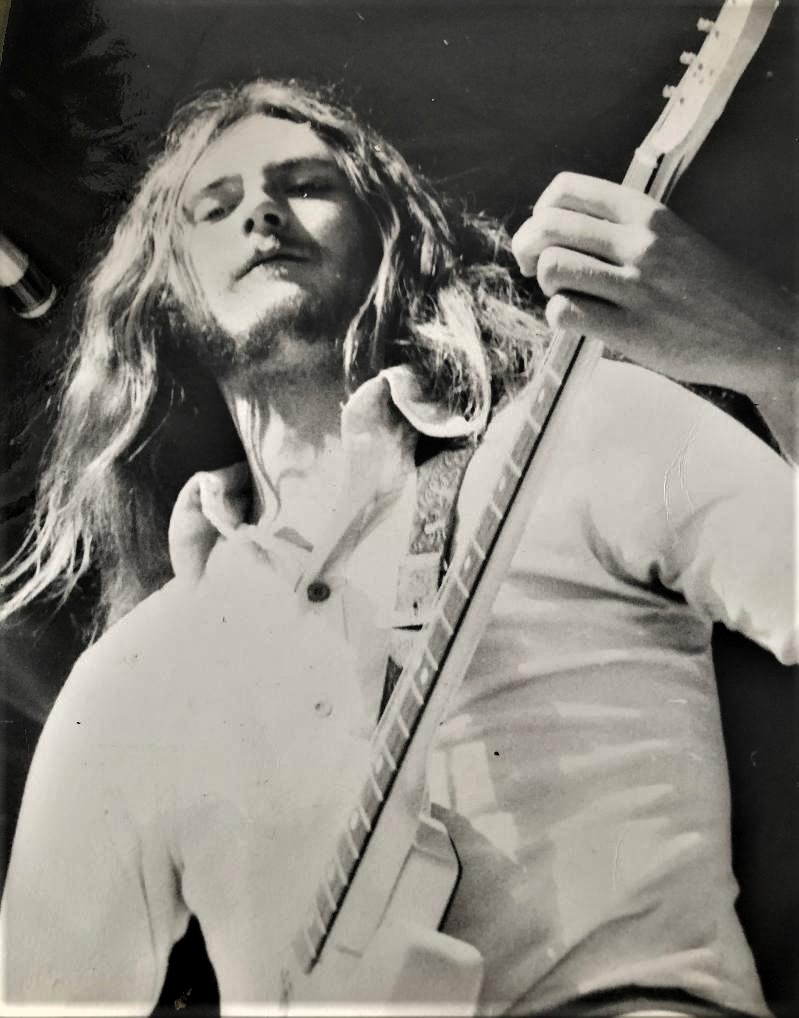
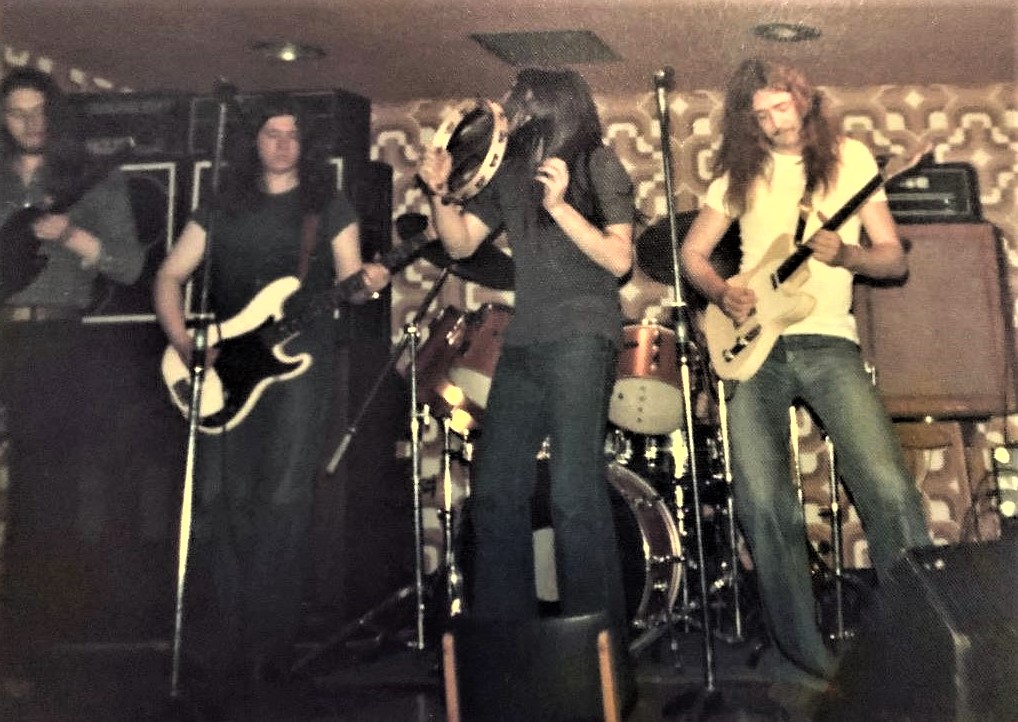
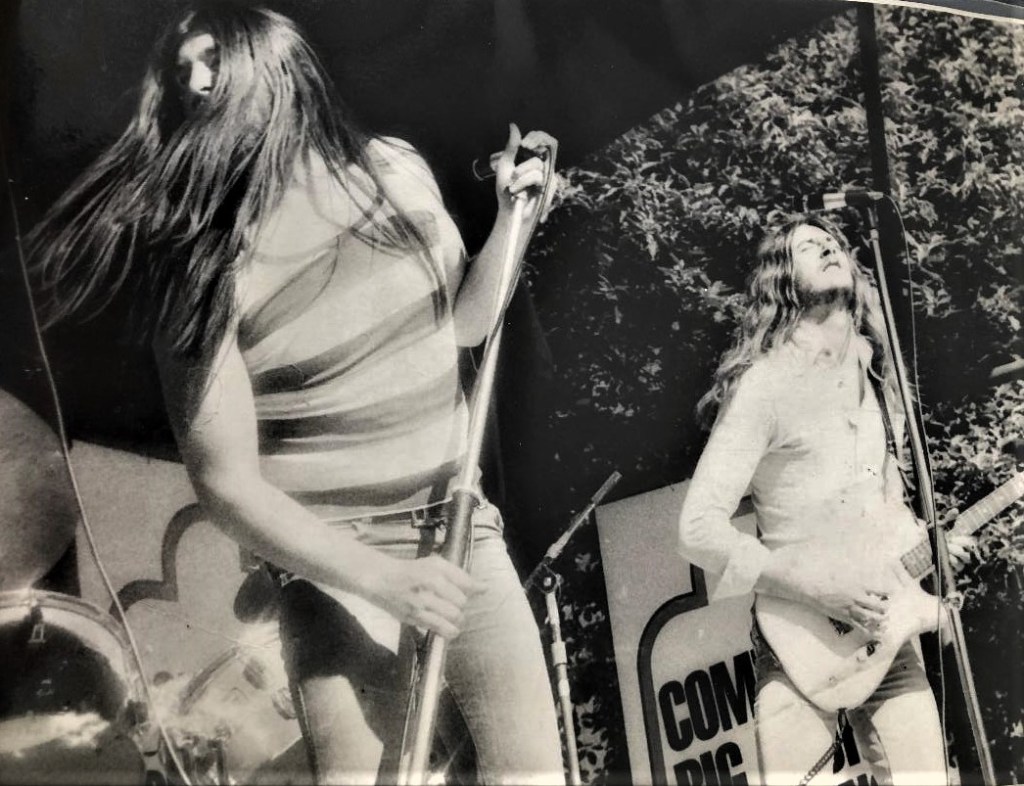
Alan in white t shirt, Malcolm Troughton with tambourine, Davy Giles on bass and George Lamb at opposite end to Alan. Can’t see Mick Kelly on drums.

Can you remember what venues you were playing ?

We played North East pubs and working men’s clubs such as Wheatley Hill, Thornley, West Cornforth, High Pit, Forest Hall and many others. We travelled across country also getting down to London.

A few stand out gigs are Sunderland Mecca, Newcastle Mayfair, Newcastle Poly (now Northumbria), Cooperage and Guild Hall in Newcastle. I remember supporting Def Leppard the night they got signed up.

We did the Durham Domefest for a few years working our way up the bill each year and I really enjoyed our weekly residency at the Gosforth Hotel in Gosforth High Street. We took over from Last Exit, Sting’s band at the time. I remember a packed house every time, they even stood on the stairs.

What I didn’t enjoy was lugging equipment up and down stairs alongside our dedicated roadies/fans. Mick was hoping to organise a get together at the Gosforth Hotel in 2020 but Covid put paid to that.

Did you record any of your songs ?

We wrote a lot of songs and Mick saved a lot of live recordings. We did a more formal recording in Impulse studio, Wallsend, which was exciting at the time.

When the studio closed down they discovered some recordings and digitally remastered them which was really unexpected. Even today I am still proud of the songs we wrote.

Mal and Alan on guitar.

Looking back to those times does it bring back any stand out memories ?

Gigging with Southbound always felt like a great night out with my mates. They were great lads and we were always laughing even though we took our music very seriously. There were no egos and we all got on well.

I remember a gig in Seahouses when we picked up a former GI from America who was hitch-hiking. He came to the gig and a big fight broke out. We had to stop playing while the GI got stuck in along with a well-known North East actor.

Alan wouldn’t say who, but my money’s on that 6 ft brickie with a chipped tooth.

One night we got snowed in during a gig in Wes Cornforth and stayed overnight at the concert chairman’s house. I remember he had crossed swords hanging on the wall. He removed one and started chasing us with it trying to jab us – I hid in the toilet.

Basically I had the time of my life. It was always a great laugh. It still surprises me today how well we got on and still do. I often think about how we would have done if we had got signed up.

Do you come from a musical family ?

My parents used to sing at ‘Go As You Please’ venues, as they were called then, but I wouldn’t say we were a musical family. They always encouraged me and I was sent to piano lessons as a child however I knew it was the guitar for me.

I used a guitar belonging to a guy who lived on my estate. He taught me the basics sitting on the steps outside his house, but I’m mostly self-taught.

I used the Fender Telecaster my Dad bought for me in 1976 from a small music store in Jarrow. I’d been searching Newcastle shops but just couldn’t find the right one.

As soon as I played the Telecaster I knew it was for me and I used it right up until I had to stop playing due to illness in 2014.

My telecaster changed appearance over the time in terms of colour, pick-ups and other additions, but for me it always gave me the wide range of guitar sound required during my career. I bought different guitars but it was always the telecaster.

What does music mean to you ?

Music has essentially been my life’s passion and allowed me to form great lasting friendships. I went on to play with musicians who are well regarded locally including Pat McMahon (Idle Hands), Ray Stubbs and the All Stars during which time I honed my ability to play blues.

The Annie Orwin Band, when we played versions of some unusual and interesting songs and with Paddy Doughty in the Rain Kings, who I consider to have a great blues voice.

At 40 I went to University to become a music teacher and worked in high schools and finally a great little school called Southlands in Tynemouth. At the same time I worked as a guitar tutor in a private school in Sunderland and got children and adults through their exams with sustained success.

What are you doing now ?

I have a rare medical disorder called Amyloidosis Polyneuropathy which means I can’t use my hands to play guitar. I did some singing but my vocal chords were affected too.

During lockdown I was encouraged to take up the harmonica which I’m loving. I use a neck rack which slows me a little but I’m working hard so you never know.

Not sure if this was any good to you but I enjoyed remembering the Southbound experience.

Interview by Alikivi  January 2021.

ALL RIGHT NOW with Michael Kelly former drummer with North East band Southbound | ALIKIVI (garyalikivi.com)

EYES WIDE OPEN – in conversation with photographer Rik Walton

rock 062

The only time I had a press pass was when David Bowie was on and only six were given out. When Paul McCartney came to the hall, I was a big fan, I phoned up his press agent and he was great, ‘See you at the stage door 7.30pm’ he said.

But anxiously I turned up two hours early and his press agent was really nice and let me in. I spent the next hour and a half in the dressing room with Paul and Linda McCartney, Henry McCulloch and Denny Laine.

I used up all my film in the dressing room. Looking back, I made very little money photographing bands at Newcastle City Hall, but I did get in for free (laughs).

How did you get interested in music ?

I saw Bob Dylan in 1965 in the City Hall when they filmed Don’t Look Now and a year later at Newcastle Odeon on his electric tour.

A friend of mine’s father was manager of the Odeon. One day he said we have this actor coming over from USA promoting his second film and I don’t know what to do with him, can you take him to a pub.

So, we did and we took Clint Eastwood to The Lord Crewe in Blanchland. He was a lovely man and was quite worried about the level of violence in the two movies – A Fistful of Dollars and A Few Dollars More.

You were involved in the earliest photo sessions with the Tygers of Pan Tang, how did that come about ?

I was involved in a show called Bedrock at Radio Newcastle. Back then the radio shut down at 10pm so Dick Godfrey, local journalist, got a remit to play local bands and interviews. It would go on for hours.

The team was Arthur Brown, Ian Penman, myself and Tom Noble who was manager of Tygers of Pan Tang. We took some of the earliest photograph’s of the band at Whitley Bay.

I went to Reading rock festival with them, I was their driver and we stayed in the Mount Pleasant Hotel or as it become known the Unpleasant.

Did you get on well with the bands or did any of them give you any grief ?

I photographed bands over a long time, and never became really friendly, I wanted to be the fly on the wall. To become too friendly made my job more difficult in a way.

I started two magazines and done a lot of interviews backstage at Newcastle City Hall with some ‘famous’ people and early on I realised you don’t gush or pretend to be their best mate.

Looking back Captain Beefheart was a really interesting guy and a good interview and to my surprise when I next met him he picked up the conversation from before, that was very interesting.

I was asked to photograph the Newcastle Jazz festival then started working for Folkworks so the music really changed for me – rock to jazz to folk.

I got to know Sting through photographing the big band in the early 70’s. I lived in Jesmond and across the road lived Andy Hudson, conductor of the Newcastle Jazz Big Band. I photographed them in The Guildhall during the first Newcastle Jazz Festival.

They used the photo for the cover of their album. I then went onto photograph Stings band, Last Exit and of course The Police.

Motorhead were playing in Newcastle, can’t remember where, but I was going to take some photographs of the soundcheck and I walked into the place and Lemmy was having a meltdown on the stage, a real strop about something. I wasn’t sure what it was about but I got out there quickly.

The first time I cried at a rock concert was when I heard Peter Gabriel sing ‘Biko’ for the first time. A couple of years later I went along with journalist Phil Sutcliffe on a Gabriel tour for a few days doing an in-depth story about him for Sounds.

I remember playing croquet with Peter at 1am outside our hotel, being a public schoolboy, he carried a croquet set around with him on tour.

He was a very nice guy I found him very shy compared to his on-stage persona. I did get to know him but always keeping a slight distance.

How did you get access to take photographs front row in Newcastle City Hall ?

One of the first bands I took photos of was Downtown Faction who were playing in the Polytechnic. Then a few year later I fell in with a guy called Joe Robertson. Joe was an entrepreneur with an office in Handyside Arcade.

He opened bars in Newcastle and was very much the man ‘in the know’. He’d seen my photos and one day said ‘I’m going to go into pirate pop posters I will give you £10 for each picture I use and here’s a ticket for the Rolling Stones in 1972’.

So, I went on the night but my seat was right at the back so I went to the front and asked the stewards if I could take pictures there and they said fine.

So, for the next 12 years I never paid to get into the City Hall and most times got in by the stage door as the stewards got to know me. When a punk band was on they even made a cordon around me to stop me getting pogoed to death.

You worked on some great early photographs of North East bands. Can you remember the sessions with Venom, Raven, Angelic Upstarts or Penetration ?

Yes, the Venom session was arranged through Dave Wood at Neat records. We went around the back of Neat where there was some wasteland. One of them had white make up and was putting it on as it started to rain so it was just dripping down his face. We hid under a bush until it stopped.

The Upstarts were doing a gig in Tynemouth and Phil Sutcliffe from Sounds was doing an interview with the band. Their manager, who had a fearsome reputation, came up to me and said very calmly ‘Rik, I like you, and I want you to know that if you have any problems me and the lads will sort it out’. I felt that he’d be true to his word.

I photographed Raven just around the corner from here – we’re in Newcastle City Library – at Spectro Arts. That is where they rehearsed, I think, I can’t remember taking any live shots of them.

Again, like a lot of the bands they were nice lads and through Neat records I would get passed from one band to another but always retaining a distance to let them get on and do what they do.

For my entire professional life, I’ve been zooming in on things and sometimes you can take away the atmosphere, you might get a great shot of someone in action but miss some surroundings.

I got a great shot of Pauline Murray and Penetration, on stage kneeling down surrounded by some punk lads, great shot. Bizarrely before I moved to Canada two years ago one of the last things I did was to photograph Penetration for the first time in 37 years.

What got you started in photography ?

After I left school I worked on a building site as a plumber, I really wanted to be an airline pilot but for various reasons that never worked out either.

My grandfather and father were interested in photography and when my father died, I was only 13, one of the things he left me was a camera. I started taking photos and my then girlfriend’s father was a chemist, so I got free developing and printing.

She also knew of a Visual Communications course at Sunderland College of Art, so I went on that. From that experience I learnt the language needed for design, typography and photography.

At this time I worked alongside another photographer, Ian Dixon, on the Newcastle Festival in 1972. That’s pretty much how it started and then I got a job as photography technician at the polytechnic where I stayed until 1988. Teaching came into it at the college after then and I really enjoyed it.

I worked as photographer at The Newcastle University Theatre, now called Northern Stage, for 15 years photographing the dress rehearsals and getting the prints on the wall for opening night.

I realised then that my job was to be in front of the stage recording what was happening. The only person who ruined that was Bob Geldof.

I was photographing The Boomtown Rats in the City Hall and you might remember they done a song called Photograph where they grab someone from the audience and pull them onstage – guess who they grabbed!

I was hauled up on stage where I froze. That’s when I realised my place is down there and they do their stuff up here.

Were there any photograph sessions that turned into a nightmare ?

No because with music photography there was never any pressure on me, I got in free at the City hall and I enjoyed doing it. Nothing unpleasant from the bands in fact it was The Beach Boys who taught me to frisbee in the Newcastle City Hall.

I was there to interview Mike Love for Out Now, a magazine I helped to start. But to my questions I only got five yes’s and two no’s because the questions were too long and basically contained the answer.

Has photography given you anything unexpected ?

I was in the West Bank in Palestine three years ago teaching photography in a refugee camp. Freedom Theatre company runs video, photography and theatre courses, it’s to take people away from the things that are happening around them, and to give them useable skills.

The founder was a lovely man, he was a half Arab half Jewish guy that wanted to give people an alternative to what was happening around them. Sadly, he was murdered outside the theatre.

Everyday going to work I had to walk across the ground where he was killed. That gives you a profound sense of where you are and who you are. I learnt an enormous amount when I was there and it was an amazing experience, would love to go back.

You know Gary there was no plan, it’s just been a series of bumping into things and one thing leading to another. You can hit a groove you know.

I started taking photographs of musicians because I loved music. I didn’t go in thinking I would have a career as a photographer.

For further information contact the official website:    http://www.rikwalton.com

Interview by Gary Alikivi   October 2019.