HAVE YOU HEARD THIS ONE? #6

Following on from the last post here’s another batch of North East stories this time featuring music, books, TV, boxing and the police. First up is former White Heat & Loud Guitars frontman Bob Smeaton.

‘If you asked me to list what gave me the biggest buzz I would say playing live top of the list, writing songs in second and recording in third. One thing I did learn is that playing songs live and recording them in a studio are two different animals’.

‘I love performing in front of an audience and felt that I was a much better frontman than I was a singer, so studio work for me back in the early days was not always an enjoyable experience. Also, the vocals were always done last, so the rest of the band were able to relax and the pressure was on me to deliver’.

What did I do after White Heat and Loud Guitars split? I pretty much stopped performing gigs as my career went down a different path’.

Full interview > ANOTHER JOURNEY UP THE RIVER – New album from ex White Heat frontman Bob Smeaton | ALIKIVI UK : NORTH EAST CULTURE

In August award-winning author & freelance journalist Terry Wilkinson talked about his new book…

‘At midnight on 3 May 1941, the factory and Head Office of Wilkinson’s Mineral Water Manufacturers in North Shields was hit by a single German bomb. It went through the roof, descending through all three floors, taking all the heavy bottling machinery and chemicals down to the basement – which was in use as a public air raid shelter. 107 died, 43 of which were children. Whole families were wiped out.’

‘Nothing is known of the identity of the plane which dropped the bomb – type, squadron, mission etc – as German records were mostly destroyed in the closing stages of the war’.

‘I wanted to write a story that answered all these questions and create a fictional alternative. Having said that, nobody could say with any conviction this is not what happened’.

Full interview > STORIES OF WAR – with award-winning author & freelance journalist Terry Wilkinson | ALIKIVI UK : NORTH EAST CULTURE

Also in August former boxer Terry Patterson remembers his time boxing in the North East…

‘Over the years I fought a few Sunderland lads. Derek Nelson was a classy boxer who turned pro. I fought two ABA finalists in Gordon Pedro Philips and Willie Neil. I fought Pedro in the North Eastern Counties final but lost. Both lads were well schooled’.

‘Willie Neil’s coach asked if I’d fight him because his opponent hadn’t turned up. I weighed in at 10st 6lbs (welterweight), he was heavier than me by 6lbs. I knew his reputation for knocking people out. £50 was slipped into my hand for taking the fight’.

‘Willie could bang a bit – so could I – but he had me down three times during our bout. We set about each other unleashing all hell for three fierce rounds. I had him going at one point after landing a good left hook but the bell sounded and my chance to finish him had gone’.

‘Gordon and Willie are still good to this day – it’s been 36 years since we shared a ring but I see them at boxing dinners and club reunions’.

Full interview > KNOCKOUT with former boxer Terry Patterson | ALIKIVI UK : NORTH EAST CULTURE

Former police detective & writer Arthur McKenzie talked about his work…

‘There was a police section house near Newcastle’s Exhibition Park, in it was a bait room, just a pokey little room with a table to play cards on. If you’re on night shift you’d take sandwiches and a flask of tea in. That’s where you gathered around 1am where the events of the night would unfold’.

‘You would get advice on how to deal with someone, it was a good place to sort things out like the older cops would tell you how to deal with a death, how to deliver a death message to the unfortunate family. It was a sort of meeting of minds over a game of cards. Aye the bait room was a good place to vent your spleen so to speak’.

‘So, I went away and wrote about the bait room. Tom Hadaway (writer for episodes When the Boat Comes In) read the play and was laughing at it ‘Yeah, you know how to write dialogue son’. He gave me pointers, when I finished it landed on two desks. One was the BBC in Manchester where it ended up on the Saturday Night Theatre radio show, which was a big thing’.

‘The other was the script reader for David Puttnam (producer Chariots of Fire, Local Hero, Midnight Express) who hated it at first but won her round in the end. She said she couldn’t do anything with it but put me in touch with an agent who was looking for writers for a tv show called The Bill. That’s where the writing started’.

Full interview > COP ON THE TYNE – in conversation with ex police detective & writer Arthur McKenzie | ALIKIVI UK : NORTH EAST CULTURE

TV actor & musician Michael McNally got in touch and talked about his time in ground breaking BBC TV drama The Cops…

‘I’d watched the first two series and it was my favourite programme on TV. When I started watching it, I thought it was a fly on the wall documentary it took me 10 minutes before I realised it was a drama. I was totally hooked’.

‘One of my first scenes was I was sat in a police van at 11pm on a Friday night on Bolton High Street. The general public were walking up and down the street they knew nothing of this, it wasn’t a closed set like on some programmes and we had to go and arrest someone’.

‘Two actors were having a fight then we got the message to go, so on with the blue flashing lights, we pulled up and jumped out of the van. Some people were trying to defend the actors and some were encouraging us to get in there and sort it out’.

‘We didn’t know where the cameras were we just heard someone say stop. We got back in the van, re-set and done the scene about four or five times’.

‘Same happened when responding to a fight in a bar, we had to pull people out and the general public in the bar didn’t know what was going on. There was an element of choreography for the fight, we didn’t want anyone to get hurt’.

‘After that first night the cast got together afterwards for some pub grub and a karaoke. Most of us were unknown actors so mixed in with the general public without any hassle. Every member of the cast got up and sang, mine was Should I Stay or Should I Go by The Clash – it was a really good night’.

Full interview > THE COPS with TV actor & musician Michael McNally | ALIKIVI UK : NORTH EAST CULTURE

Got a story to add to the site? Just get in touch.

Full list of hundreds of interviews >

About | ALIKIVI UK : NORTH EAST CULTURE

Alikivi   November 2024
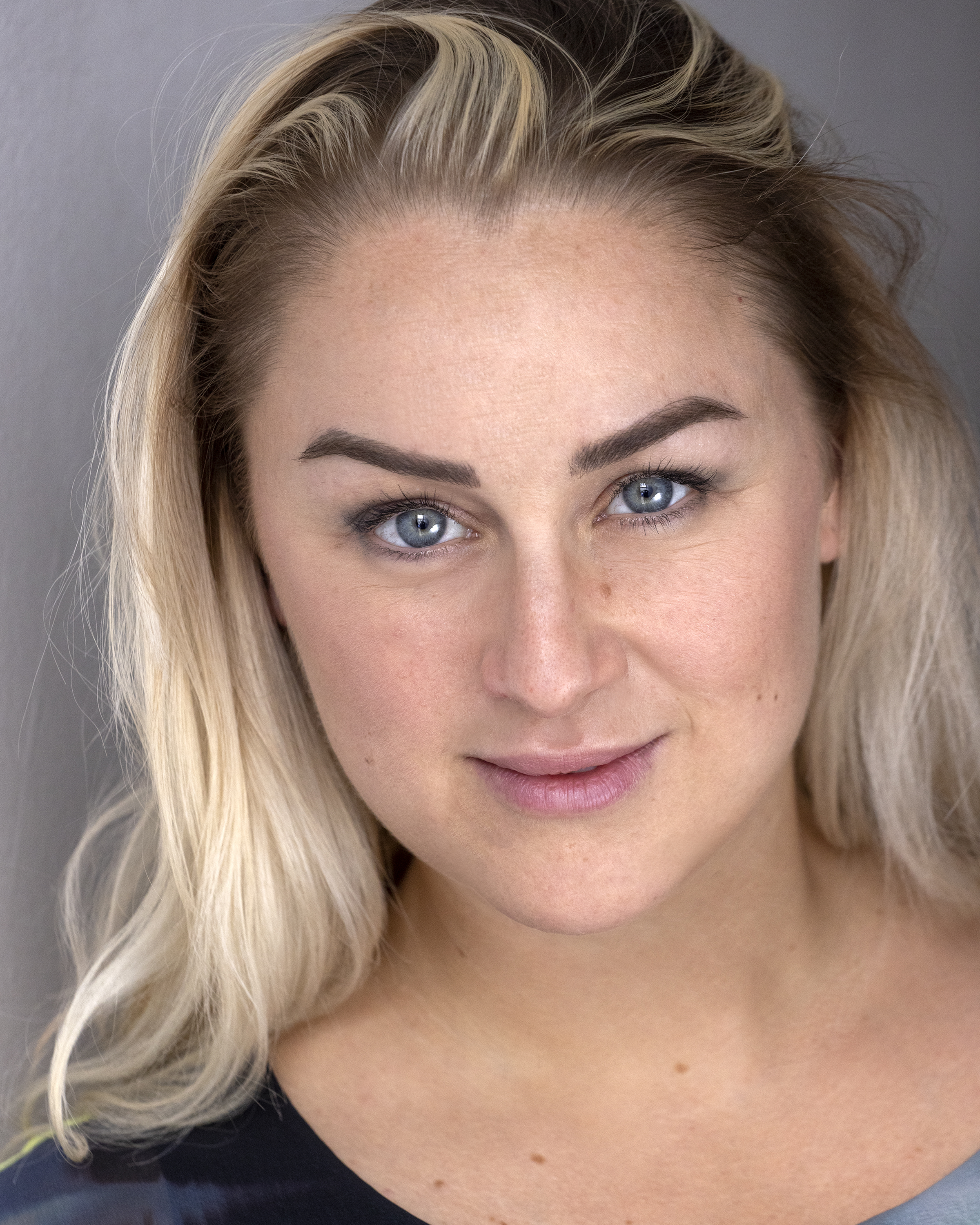
NE tour for new play – THE CRAMLINGTON TRAIN WRECKERS starring Alexandra Tahnee

‘When I was young I watched a production of Blood Brothers and it just blew me away, I was so engrossed and moved – from that day I was hooked’.

Alex Tahnee from Newcastle has been acting since she was 11 year old…

‘I fell in love with theatre playing Young Catherine in Tom and Catherine, a musical about Catherine Cookson’s life at The Custom’s House, South Shields. I love the idea of telling stories and love the feeling of being on stage’.

‘Since then, I’ve worked with many brilliant people in the North East including various shows playing Alice in Alice in Wonderland at Northern Stage, playing a military wife in Magnolia Walls, and most recently playing a female Marc Antony in Julius Caesar, an absolute bucket list role’.

Next up for Alex is a play by South Shields writer Ed Waugh (Dirty Dusting, Wor Bella, Hadaway Harry, Carrying David). The Cramlington Train Wreckers is another forgotten story about the North East.

‘I play Erica, she’s a journalist interviewing Bill Muckle, one of the eight men imprisoned for derailing a train in the 1926 general strike. Bill has a fascinating tale to tell, and it resonates eerily with political issues we face today’.

‘Bill is played by the wonderful Micky Cochrane (I, Daniel Blake, Carrying David, Billy Elliot), and the piece is directed by Russell Floyd (The Bill, Eastenders, London’s West End), who also multiroles throughout as various characters in some glorious buffoonery’.

‘Bill tells the story of the general strike, how it came about, who was involved, the lies and propaganda that were spread and how it ended after only 9 days. Also, how it came to be that 8 young men from a mining town in Northumberland were imprisoned 100’s of miles away from their families and hailed as heroes upon their return’.

‘People are fascinating to me and theatre is like putting them under a microscope. Like Bill in this play, he was a real person who was so gregarious and engaging you can’t help but listen to him. There are incredible stories in every nook and cranny and theatre lets you explore them, what better job is out there?’

‘My hopes for this play is that this piece of local history is known by new generations for not only its regional importance but also how politics has a profound impact on individuals and communities across the world’.

‘I believe by using the first-hand account of one person in the past we can highlight the relevance of the same messages and themes still affecting us today’.

The Cramlington Train Wreckers opens on 7th November at Cramlington Learning Village and continues around the North East until 16th November 2024.

For tickets & full list of venues contact the official website >>>

www.cramlingtontrainwreckers.co.uk

Interview with Ed Waugh >>>

WHO WERE THE CRAMLINGTON TRAIN WRECKERS? | ALIKIVI UK : NORTH EAST CULTURE

Alikivi   October 2024

COP ON THE TYNE – in conversation with ex police detective & writer Arthur McKenzie

Now 85, Arthur talks about joining the police force as a cadet in 1955…

‘Yes, I was a polis in Newcastle, the city was a lot different then I’ll tell ya, it was still getting over the war to be fair. My first beat was Sandyford Road where the Civic Centre is now. That was all houses then’.

‘It was quite a tough beat, a rough area with pubs like The Lamberts Leap and another called The Sink near the Haymarket. You had to earn your corn, there were no radios or panda cars – you were just pushed out onto the beat and that was it, you had to get on with it’.

‘There was a police pillar (similar to a post box but with a telephone inside) on the corner of Sandyford Road. If you arrested anyone you hoped you could get the person to the pillar. It was difficult cos sometimes you had a couple of guys fighting…you had to get them there, it wasn’t easy’.

‘There was generally more respect for the police then, you would get more help from the public once you established yourself on the beat, which you had to do cos you were tested out straight away’.

‘Once they knew you were fair and straight you got a lot of help from them. You were on that same beat for years, you weren’t just passing through you got to know every shop keeper, every doctor, every villain…you got to know the whole community. But then the T. Dan Smith regeneration project of slum housing clearance began and the place changed completely’.

‘I always liked paper work, always took pride in my reports. A crime file for shoplifting or murder has a beginning, middle and end and you had to go to court and defend what you had written. In the end someone could go to prison so you’re under pressure, under scrutiny. That reality far exceeds any drama’.

‘I moved from department to department, CID, drug, vice, crime squad, then around 1978 I worked for the anti- corruption team in the Government based in Hong Kong. For the year I was there I would see people living in cages on roofs, people swapping babies in hospitals, it was a weird place. I wrote an article for the Police Review national magazine on what I saw, they paid me £25 for it. It was read all over the country’.

‘I didn’t start writing until I was 40 you know. When I came back to the UK, I worked in Washington Police Station, a young cop called Jeff Rudd came to see me ‘I used to be a musician in a band, I’ve still got all these tunes going round my head but can’t put words to them. I read your article and seen your reports, I wonder if you’d be interested in putting some words to my tunes?’

Well, I give it a go and then thought nothing of it until a few months later I was pleasantly surprised when he handed me a tape with the songs on. I really enjoyed my time with Jeff, he was a very accomplished guitarist. We ended up writing around 50 songs, one of them ‘Big Bren’ was about the athlete Brendan Forster, that was played on radio’.

‘That led us to doing an interview and playing some of our music on the Frank Wappat BBC Newcastle radio show, then we done a couple of gigs in Washington. Next thing my wife Irene said why not contact Tom Hadaway? (writer When the Boat Comes In, Newcastle Live Theatre).’

‘I wasn’t sure at first because I didn’t know him but as he was from North Shields we met and he told me to write a play. ‘What do I write about Tom?’ I asked ‘Write about what you know. What fires you up.’

‘So, I went away and wrote about the bait room. Tom read the play and was laughing at it ‘Yeah, you know how to write dialogue son’.

‘There was a police section house near Exhibition Park, in it was a bait room, just a pokey little room with a table to play cards on. If you’re on night shift you’d take sandwiches and a flask of tea in. That’s where you gathered around 1am where the events of the night would unfold’.

‘You would get advice on how to deal with someone, it was a good place to sort things out like the older cops would tell you how to deal with a death, how to deliver a death message to the unfortunate family. It was a sort of meeting of minds over a game of cards. Aye the bait room was a good place to vent your spleen so to speak.’

Running parallel with his police work Arthur was training in athletics at the running track at Ouseburn, Newcastle.

‘I was on shift in the Bigg Market from 5pm till 1am, that was rough, there was fighting most nights. After finishing I would grab a few hours sleep then go to court, then onto shot put training. I was in the British athletics team from 1962-71 and competed in the 1970 Commonwealth games in Edinburgh. I was very fortunate and saw the world with athletics’.

Arthur talked some more when the conversation turned to the present day and the riots that are happening this summer around England. He recalled a quieter time for the police.

‘I remember we had a huge kettle for the bait room. It was always on the stove. One day a big fish wagon went past the section house and dropped a fish out of one of the boxes. I picked it up brought it back into the station put it in the kettle and boiled it up. All day everybody was complaining about the smell from this mackerel…and no, we didn’t eat it!’

‘Another story was one night when I was up beside the Hancock Museum going to the section house at Park Terrace. Can you remember the litter bins that used to hang on a lamppost? Well, this one was upside down on the lawn outside the Hancock and it was moving around. I lifted it up and there was a hedgehog underneath it!’

‘So, I put it in my coat and took it up to the section station. Inside are lockers to put your bait in so I put the hedgehog inside one of them and waited for the copper to open it. He just about had a heart attack when he opened the locker!’

Hearing these innocent stories was a world away from watching how the police were dealing with the riots around the country, but then Arthur’s tone changed.

‘I remember it was winter time, snow piled up on the ground. I went in for my bait around 12.45am and heard a muffling sound, I opened the door and there was an older police officer trying to commit suicide with a plastic bag on his head. There was a scuffle as I grabbed hold of him but couldn’t get the bag off. I looked around found a fork and split the bag but caught his face at the same time’.

‘He was playing hell with me for saving his life ‘What right did I have’ and all the rest of it. As we were having this argument I could hear the other officers coming in for their bait so everything was put back right, we straightened up the chairs and table as if nothing had happened’.

‘That policeman only had a couple of year service left, he was very bitter, he didn’t thank me. Turned out he had a hell of a life with his wife and thing was he had seen action in the second world war’.

After writing about his experiences in The Bait Room, Arthur kept in touch with Tom Hadaway and wrote another play.

Tom looked at it and gave me pointers, when I finished it landed on two desks. One was the BBC in Manchester where I met them, it ended up on the Saturday Night Theatre radio show, which was a big thing’.

‘The other was the script reader for David Puttnam (producer Chariots of Fire, Local Hero, Midnight Express) who hated it at first but won her round in the end. She said she couldn’t do anything with it but put me in touch with an agent who was looking for writers for a tv show called The Bill. That’s where the writing started’.

Arthur being interviewed on BBC Breakfast about writing ‘Harrigan’.

In 1988 Arthur retired from the police force giving him more time to devote to his writing where over the next decade he delivered TV episodes for Wycliffe, The Bill, Casualty, Spender and Harrigan. The Bait Room was finally made in 2009.

‘I used the same discipline for writing as I did sport. Getting a focus, deciding what you want and going for it.’

‘What am I doing now? I’ve had a lot of my writing shown around the North East. ‘Pickets & Pigs’ was a story set to the background of the 1984 Miners strike’.

‘Later this year I’ve got a play on stage which I started writing in 2003 with Dave Whitaker. ‘Blackbird in the Snow’ is one of those that you leave on a shelf for a while then go back to’.

‘I worked with Dave on a musical about the Jarrow March called ‘Cuddy’s Miles’. John Miles wrote the music for it, Cuddy was a cook on the march, he was John’s relation. That was well received when it played The Customs House in 2004’.

‘Sadly, Dave passed away in 2021. He’ll be sorely missed so the new play is produced as a salute to Dave’s beautiful lasting memory’.

‘Blackbird in the Snow’ has a four night run with the premier on 5th November 2024 at Laurels, Whitley Bay. For more info and extra dates contact the official website >

Blackbird in the Snow | Line-Up (lineupnow.com)

Alikivi   August 2024

WHO WERE THE CRAMLINGTON TRAIN WRECKERS?

New play by writer Ed Waugh (Dirty Dusting, Wor Bella) & directed by Russell Floyd (The Bill, Eastenders).

Royalties from over 20 professionally produced plays including Dirty Dusting, Wor Bella, Hadaway Harry, Carrying David and The Great Joe Wilson, plus financial support from Arts Council England allows playwright Ed Waugh to focus on what he loves best: working class history, in particular forgotten North East working class history.

South Shields-based Ed and the team behind this important work have unearthed another forgotten story about the North East.

“This is an incredible story, full of drama and tension, an almost forgotten story, despite the incident making headlines nationally and internationally.” explained Ed. The subject of the new play is The Cramlington Train Wreckers which premieres in November and tours the region.

To maintain their profits, coal owners told miners they had to take a 40 per cent cut in wages. Stanley Baldwin, Conservative prime minister in 1926, also said every other section of the working class had to take pay cuts ‘in the national interest’. A General Strike was called and Northumberland miners were ready to challenge the establishment.

Ed explained “The intention was to stop a blackleg coal train that the miners felt was undermining the strike. Unfortunately for the perpetrators, they accidentally derailed a passenger train, the carriages were part of the Flying Scotsman”.

“The upshot was eight Cramlington miners were sentenced to a total of 48 years’ imprisonment for their part in the derailment”.

Most of the 281 passengers were treated for shock and bruises with only one person slightly injured, fortunately there were no deaths.

“Although largely forgotten, the story is an important part of British history. With the centenary of the General Strike rapidly approaching I felt it was important to assess the events in an informed, dramatic and entertaining manner. Were they terrorists or workers defending their jobs and communities?”

A North East tour in November 2024 includes South Shields Westovian Theatre, Gosforth Civic Theatre, Alnwick Playhouse, Hexham Queen’s Hall, Cramlington Learning Village Theatre, The Glasshouse Gateshead, Playhouse Whitley Bay, Bishop Auckland Town Hall and Barnard Castle Witham.

The Cramlington Train Wreckers is supported by Arts Council England.

For further details visit http://www.cramlingtontrainwreckers.co.uk

August 2024