A lot is made of being in the right place at the right time to help bring success. But you can’t get past the sheer amount of hard work put in, every time giving 100% and never complaining. There is no substitute for rehearsal and when the opportunity presents itself you’ve got to be ready to take it. A snapshot of a story taken from Sting’s autobiography Broken Music hits the mark. This all happened within a few heady months during 1978.
The Police went out on a UK tour to open for Spirit led by guitarist Randy California. They won over a hippy audience and released their single Roxanne. Their record company A&M fully supported the record but money wasn’t rolling in yet.
To pay rent on his London flat Wallsend born Sting was still filming a few adverts and bit part in films. The Great Rock n Roll Swindle was one, although his scene ended up on the cutting room floor. ‘I was grateful, however, for the 125 quid at the end of the day’ said Sting.
He also went for a part in Quadrophenia filmed in Brighton. ‘I know that they’re seeing half of London for this role, but somehow I know it’s mine’.
After finishing on the film set in Brighton the record company hired a private car to whisk Sting off to Gatwick airport and jump on a flight to Manchester, finally arriving at the BBC TV studios where The Police were due to appear on the Old Grey Whistle Test. Sting remembers ‘It’s still raining when we land in Manchester. Yet another car and driver waiting to take me to the studio, where we have a sound check. The performance tonight is live’.
After a successful TV appearance a tour of the east coast of America was booked. Second night of the tour The Police are in Poughkeepsie theatre with only six people in the audience. Do they cancel? No. Sting brings the audience down to the front and introduces each other. Then ‘give a blistering set we will ever manage, encore after encore’.
The audience are invited back stage where it turns out three of them are DJ’s. The next day Roxanne makes its debut on USA radio. Within a couple years The Police are one of the biggest bands in the world. Now how did fellow Tynesider Mark Knopfler and Dire Straits knock them off their perch?
Southbound were active around the North East in the 1970s. The Sunderland band were regulars on the workingman’s club circuit, supported New Wave of British Heavy Metal bands Raven and Tygers of Pan Tang at Newcastle Mayfair, and had a residency at the Gosforth Hotel in Newcastle.
Southbound have already featured on this site, interviews with Mick Kelly and the late Alan Burke have proved to be popular.To discover more of the Southbound story and find out what he is up to now, I met up with George at The Littlehaven Hotel in South Shields.
Growing up it was a very musical house. Although I knew that my Dad’s voice was classically trained, I never found out till late that he went to lessons for ten years. My mother used to sing and my brothers and sisters were also into music. We had a guitar and piano in the house, I took a few piano lessons and changed to guitar when I was 11 year old.
I served my time as a sheet metal worker in Jarrow and worked for another year, but it was too much with the amount of work Southbound were getting on the North East circuit.
Southbound had three sets, one all original material, then another playing Eagles, America West Coast stuff, and then more poppy stuff to get paid in the clubs. We were out regularly every week, in fact a few times we played nine gigs in one week!
The Ivan Birchall agency had us in the clubs till 10.30pm, get your gear off stage then double up and go do a night club, then a Sunday afternoon gig.
But our stomping ground was The Gosforth Hotel where we took over the residency from Sting’s band, Last Exit. Sting went to London and joined The Police, we were fortunate to get the residency.
He came to one of our shows around the Roxanne days, he had the dyed hair, the leather jacket, he’d be stood at the bar and we had a few words with him – nice fella. Playing the Hotel was good for us, it would get packed, the queue to get in would sometimes be out onto the street.
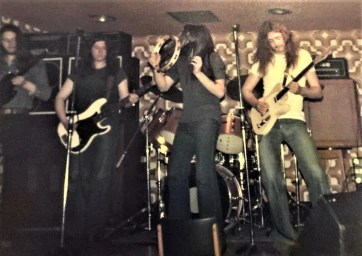
There were a few line ups of Southbound but when we were becoming popular there was myself and Alan Burke on guitars and we wrote the songs. Mick Kelly on drums, bassist was Dave Giles and Mal Troughton used to sing with the band. There is a photo of us standing against a van, this was taken around 1975 or 76.
I’m racking my brains here but Mick Kelly was great for all the names and dates, a real memory man for the venues we played. (Interview with Mick on this site – All Right Now 13th March 2019)
When punk came in 1976 the record companies saw us as old hat, they all wanted punk bands. But we still packed venues out and had a good following.
We played Newcastle Mayfair with Tygers of Pan Tang, we played with Raven and headlined there in our own right. Obviously, played the Sunderland Mecca a few times, some good gigs at Newcastle Guildhall and the Bedrock festival.
Bob Smeaton, who is a very successful film maker now and a great lad, used to be singer in Newcastle band White Heat and when they weren’t gigging he often used to jump in the van with us and help out with the gear.
Tom Noble, who manages Tygers of Pan Tang now, used to work on the Bedrock BBC North East radio programme during the 70s and 80s, he worked alongside Graeme Thomson. They managed a band I was in with Phil Caffrey called The Lions Share and then Caffrey. We got a publishing deal on the back of that band.
Graeme’s brother Steve, was engineer at Impulse Studio in those days and he recorded four songs on a Southbound demo. Actually, he released them on Cherry Red label not long ago. We also recorded at Linx studio in Newcastle.
In hindsight if we had more of our heads screwed on and business focused it might have been different, but we were just having a good time spending most of our money on brown ale and curries after gigs in the restaurants on Ocean Road in South Shields.
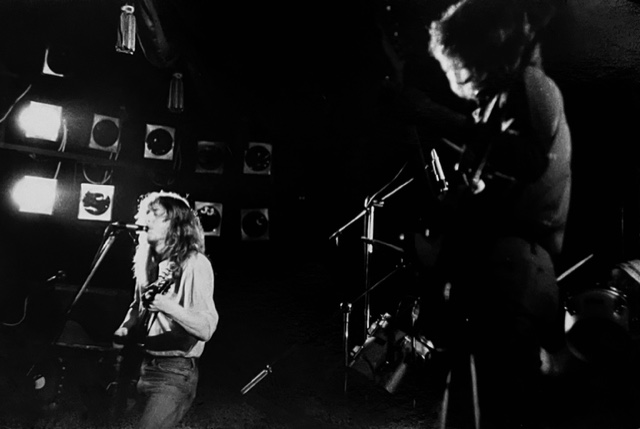
George and his musical brother Alan Burke at Newcastle Mayfair.
Looking back to those times we just took it in our stride and loved being with our mate’s playing music. You know Southbound never really fell out, we might have had an argument here or there but no, we were all good mates having a lad’s night out and getting paid for it.
After Southbound I teamed up with Phil Caffrey in a song writing partnership, we had a publishing deal with Axis music which was a subsidiary of EMI. We used to write songs and go down to London and record them. We were signed and managed by a guy called Nigel Thomas.
Nigel also managed the Heavy Metal band Saxon, Joe Cocker and Kiki Dee who recorded one of our songs and put it out as a single. This went on one of Kiki’s albums, Angel Eyes, with the likes of Dave Stewart and Daryl Hall, it was just nice to get our names to something like that. Nigel also managed Keith Emerson and Lynsey De Paul so we did some work with them.
It was late 80s when Saxon were recording a new album at Hook End Manor Studio in Berkshire, which had been Dave Gilmour’s house. It was a residential studio with horse stables in the grounds, a great facility, we were down there about a week. The Saxon lads were great.
Def Leppard had a huge album at the time (Hysteria, released 1987) with big sounds and plenty vocals on. The Saxon album (Destiny, released 1988) was nearly finished they just wanted to experiment with block harmonies using four male voices.
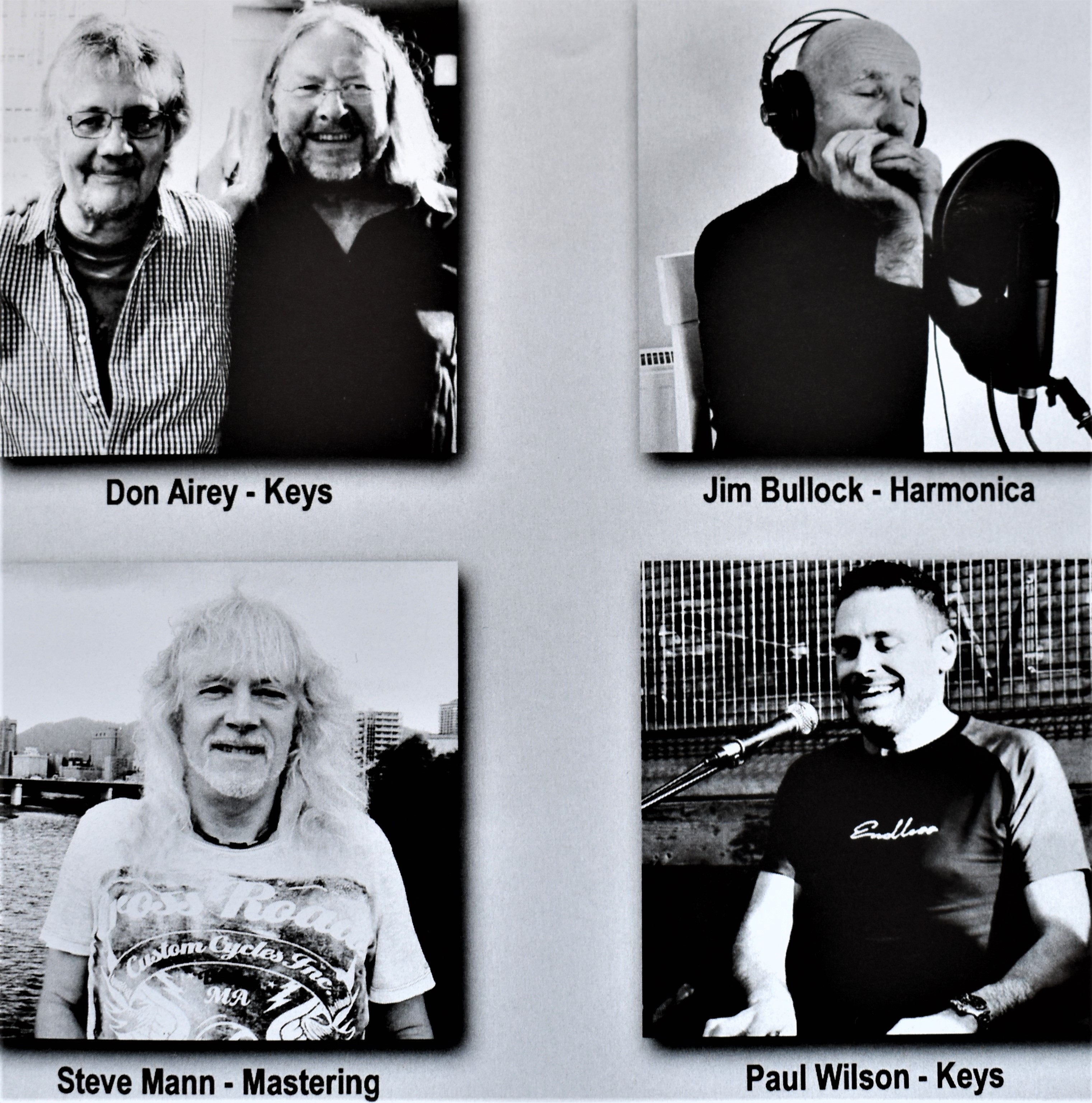
Through our manager Nigel Thomas, Phil Caffrey and I got the job, we got paid the session fee. There was another guy managed by Nigel called Steve Mann, who now plays with the Michael Schenker group.
We were waiting in the studio for the fourth male vocalist when in walked an old Sunderland friend of mine – Dave Taggart. I said ‘what you doing here?’ he said ‘what you doing here?’! I couldn’t believe it. Just a massive coincidence.
(Formerly in Danceclass, Dave now plays in the Belinda Carlisle band. An interview with Dave features on this site – Music Still Matters, 15th April 2018).
Dave told me that Stephan Galphas produced the album by Sunderland band Well, Well, Well and he had recorded some backing vocals on it. Stephan’s next project was producing the Saxon album and he asked him to come down and put some backing vocals on Destiny.
Don’t know how successful the album was but I heard the single Ride Like the Wind on national radio a few times.
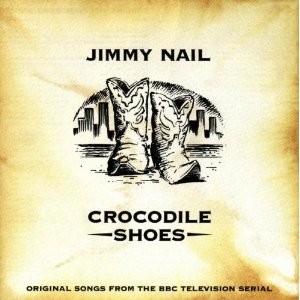
Actually, we asked Dave to join Southbound at one time but he was playing with Tony McAnaney. Later I did record some backing vocals on the Jimmy Nail album they were working on, Crocodile Shoes.
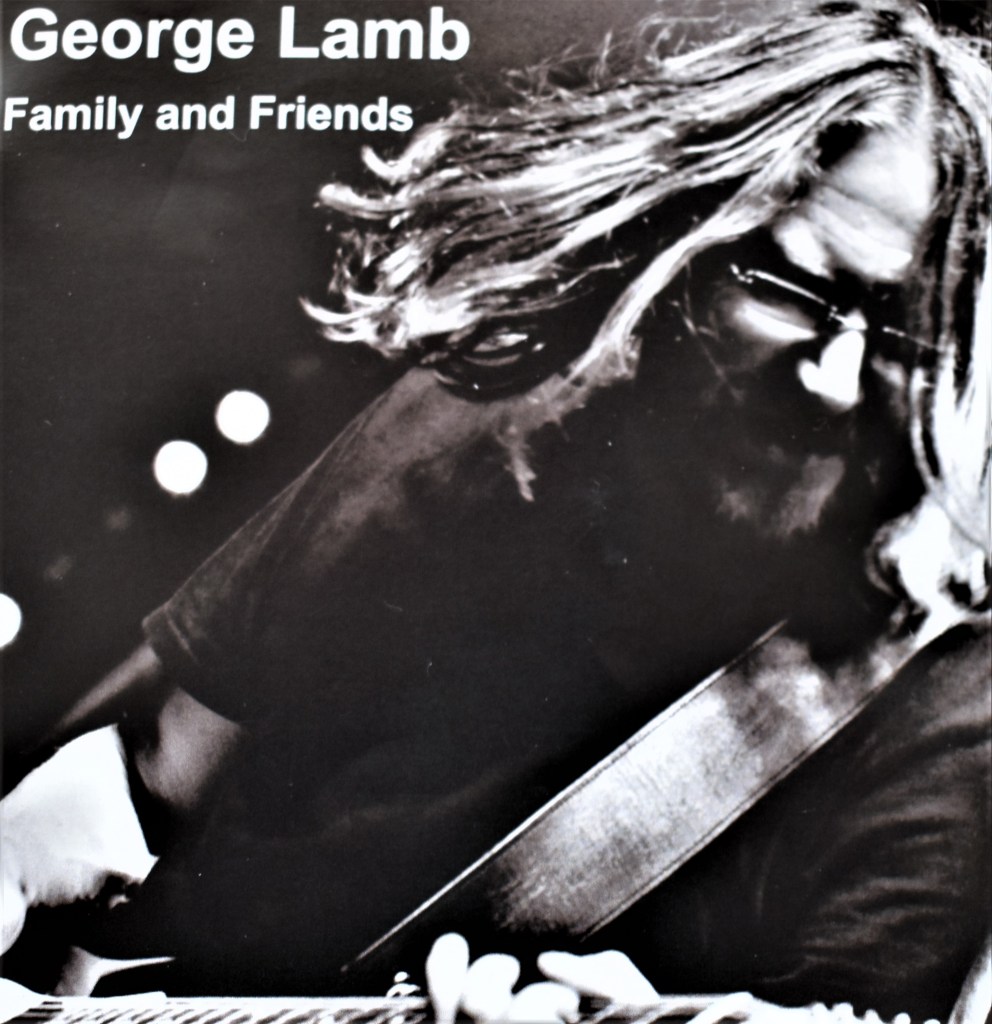
What am I doing now? Well during lockdown I invested in a home recording set up, I’ve always worked with a porta studio facility writing and recording songs, but this was an upgrade to a digital studio. So late in life I learnt how to record properly and put down a lot of songs.
I originally had 50 then whittled that down to 12, I was doing drums, guitar, vocals, all recorded solo, a one man band. I hadn’t thought about releasing them.
Then I lost two musical brothers, Alan Burke, original guitarist in Southbound and Richard Archibald, who also played in a late Southbound line up. He also played in the Big Picture, a band from Sunderland amongst others.
This made me think profoundly differently. Why not release these songs on an album and why not ask friends of mine if they want to get involved? So I did, and was absolutely blown away when they all said yes. The album is called Family and Friends because that’s who’s on it!
Family & Friends album inner sleeve.
It includes North East musicians Dave Ditchburn, Phil Caffrey, Don Airey, George Shovlin, Archie Brown, Terry Slesser, Emma Wilson and more, plus my brothers and sisters. I got some great performances.
The album got some great reviews and was in the blues charts at number two – Buddy Guy pipped me to the post!
At first I thought the logistics of playing it live would be too difficult, but after a longer think I went ahead and touch wood, after getting all our diaries synched up I’ve booked The Fire Station in Sunderland on the 10th June 2023. I’m really looking forward to it.
The Fire Station auditorium is a fabulous place. I had the tour looking on stage, checking the sound system and back stage – it’s a great place.
As a house band I’ve got ex Showbiz Kids guitarist Pat McMahon, Paul Wilson on keys, ex Circus and Lucas Tyson bassist John Taylor on bass, Jim Bullock on harmonica and not one but two drummers, Ian Hamilton and Barry Race.
Everyone on the album apart from Don Airey can make it – he’s touring with Deep Purple that night. Don’s a lovely bloke he still keeps in touch with his Sunderland roots.
Looking back at the Southbound days, we weren’t striving to make it we were just enjoying the journey, making it wasn’t the main focus. We were young kids playing in our bedrooms, wrote a few songs then took it to the next stage and it was great fun. We were just dead lucky.
I never thought in a million years that here I am 66 year old and still doing it …I still feel that I’m dead lucky!
Click here to buy tickets for The Fire Station on 10th June 2023
The blog has featured some people who stuck a flag in the ground for the North East – Chris Phipps, Chris Cowey, David Wood, Colin Rowell, Ian Penman and Rik Walton for the pix.
The latest addition to the squad is a man who used words to create a colourful landscape and painted pictures in the minds of thousands of teenage music lovers.
London born Phil Sutcliffe, looks back on 40 years of music journalism for Sounds, Q, Mojo and The Face.
He interviewed a world of musicians including Stewart Copeland, Joni Mitchell, Nick Cave, Sheryl Crow, Eric Clapton…
Thom Yorke for Los Angeles Times and for Mojo, 15 minutes on the phone with Dolly Parton, truly that can set you up for a year or two.
Where did Sutcliffe find his love for words, and what’s his connection to the North East ?
I always wanted to be a journalist so in 1969 when I finished my A-levels and had a degree in English & American Literature from Manchester University, I applied for journo jobs and got a training course followed by an apprenticeship at Newcastle Evening Chronicle.
That was in the new training centre in an office above the Bigg Market doing just about everything – local councils, sports desk, feature writing, a spell as a columnist, the subs desk, and in court where the 15-year-old kid who pleaded guilty to burglary and asked for 153 other offences to be taken into account.
There was stints in district offices – Gateshead, Consett and North Shields – ah, the morning fishing report of how much, by weight and type of fish each boat had landed! From the outset writing heaps, hard, fast and fascinating all the time.
How did the job with Sounds come about ?
I’d always said I wanted to work freelance but it happened sooner than intended. After three years mainly on the Chronicle I did the usual thing of trying to get my second job, 175 rejections later I went freelance.
September 1974 I was 27 my first marriage had just broken up, a bit late to start writing about rock’n’pop so not much in the way of a plan, but thought maybe I could earn part of a living on one of the five weekly rock/pop papers – as ‘our man in the North East’.
While still doing a bit of local news for Newcastle papers and Radio Newcastle, plus a couple of non-musical feature items for Woman’s Hour! I wrote off to NME, Melody Maker, Sounds and Record Mirror.
With so many band tours starting in the North East you could get the first review in, and I got a sniff from Melody Maker, but really hit it off with Sounds.
Within the next year I started doing feature interviews and making a slightly more decent living – Gentle Giant might have been the first as I tended to get ecstatic about their wild prog adventures.
But my first rock interview I think was Sparks backstage at Newcastle City Hall for Radio Newcastle’s late-night programme, Bedrock.
The show was DJ’d by my friend Dick Godfrey with a strictly non-rowdy zoo of other voices – Ian Penman/Ravendale, Arthur Hills, the Out Now fanzine team, me, and other enthusiasts, all of us unpaid but enjoying ourselves meeting stars.
Also dozens of local bands from Sting’s Last Exit to Bob Smeaton’s White Heat, the veteran Junco Partners, Southbound, Gale Force Ten (with singer-saxist Joy Askew) and Wavis O’Shave.
There was a lot of local stuff about and loads of it good in what might well have been a culture – Tyneside pub rock. Very diverse, and not what Londoners called pub rock – Ducks Deluxe, Chilli Willy and such, Brit R&B-rooted – but it did happen in pubs quite a bit.
The Cooperage, The Bridge, The Gosforth – Last Exit every Weds if I recall. That one out in Heaton, Andy Hudson’s wine bar for a bit, a cellar near the Civic Centre – he played trumpet for the Grimethorpe Colliery Band when he were a lad you know, and then the more obviously culture-centred Jesmond Theatre.
We met on a Saturday lunchtime in a pub near the Tyne River and chatted and plotted, me and Dick Godfrey, promoter-musos like Chris Murtagh and Angus, er, sorry lost his surname but nice bloke with a moustache.
Even the odd sympathetic older star like Hilton Valentine from The Animals who could show us all a thing or two, though I can’t remember what. It was good.
Angelic Upstarts pic. Rik Walton.
Once in a while the Guildhall down by the Tyne River, scene of the Bedrock festival that spun off from the radio programme – all of this encouraged by a loose collective of bands and fans.
Putting the Angelic Upstarts on before Neon at the Bedrock festival proved to be a misjudgment as a huge fight ensued, a rather one-sided affair given Neon fans were student’ish and Upstarts fans were from South Shields.
I jest in retrospect, but it was a shame and in part my fault thinking in a hippie way that music brought us all together. We didn’t do that again.
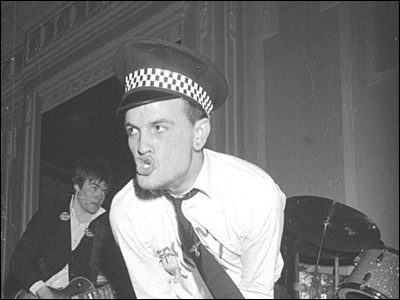
However, the Upstarts – and their fans – were fine on their own territory, which is where I met them generally, starting with a gig at Jarrow Town Hall when punk had reached the North East and they’d released their single, Who Killed Liddle Towers?
Which was a drama and a campaign in itself, with police brutality played out by cop-hatted singer Mensi, going at a real pig’s head fresh from the butcher with a bloody great axe. That was a night.
Also, a double page spread in Sounds, Mensi and Mond had plenty to say for themselves and we got on, up to some point where me coming from another planet got unfeasibly less brotherly. I always liked them.
My Sounds colleague Dave McCullough didn’t though, and he invented a great word for the rolling profanity Mensi deployed – fuckverballing.
What came in between worked pretty well though, speaking for a life much harder that most rock writers knew anything about.
I did cover heavy metal/hard rock quite a lot, but missed the North East bands, but pretty sure Ian Penman did a feature.
(Penman writing as Ian Ravendale in Sounds, May 1980, featured the North East New Wave of British Heavy Metal with interviews from Mythra, Fist, Raven, White Spirit, Tygers of Pan Tang).
Penetration feature in Sounds 18/6/77
My other ‘discoveries’, as we used to say were Penetration, a quite brilliant sophistopunk band from Ferryhill, dazzling in every way with a natural star singer, Pauline Murray.
Great ideas men in Gary Chaplin and Robert Blamire, plus drummer Gary Smallman and out-there’ish guitarist Fred Purser. They almost made it.
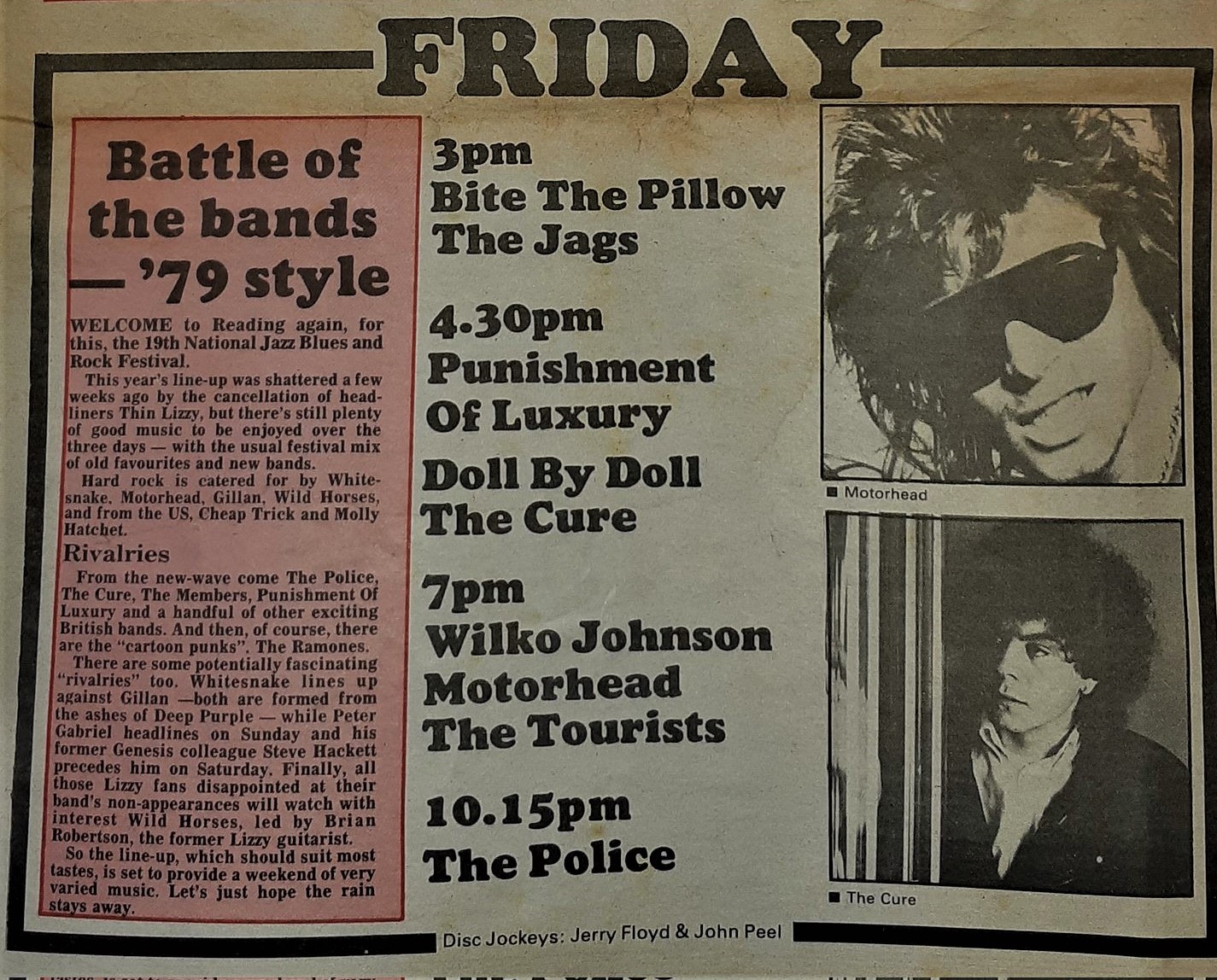
As did the rude theatricals, Punishment Of Luxury, with their panto villain frontman Brian Rapkin and his small band of wild-witty anarchs.
Reading festival 1979 line-up with Punishment of Luxury and headliners, The Police.
Meanwhile, I loved Last Exit to bits, jazz-rock and soul and their own stuff, often saw them twice a week, and eventually got them in Sounds.
A big feature on Geordie boys trying the London move – and this despite editor Alan Lewis saying “God that singer’s awful” when I played him a cassette.
But this was just after I happened to introduce Sting to Stewart Copeland, passing through as Curved Air played the Poly in ’76 – he had a lightbulb moment all right and somehow persuaded Sting to give up the music he loved, come to London and play the music he hated – punk – until it freed him to find reggae and write, Roxanne onwards.
Stewart and Andy Summers played to their optimum pop potential, and they become the biggest band in the world for quite a while.






 ALIKIVI UK : NORTH EAST MUSIC & CULTURE