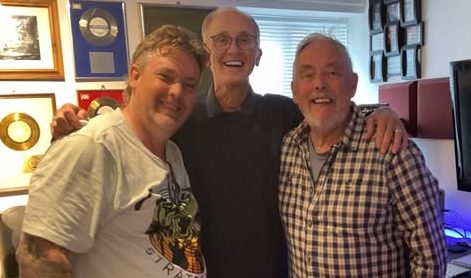
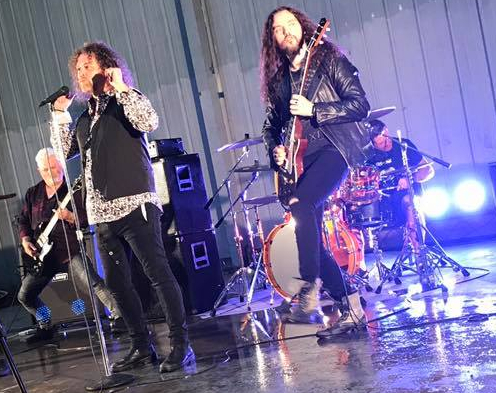
FREEZE FRAME with singer & songwriter Mark Aynsley Hay

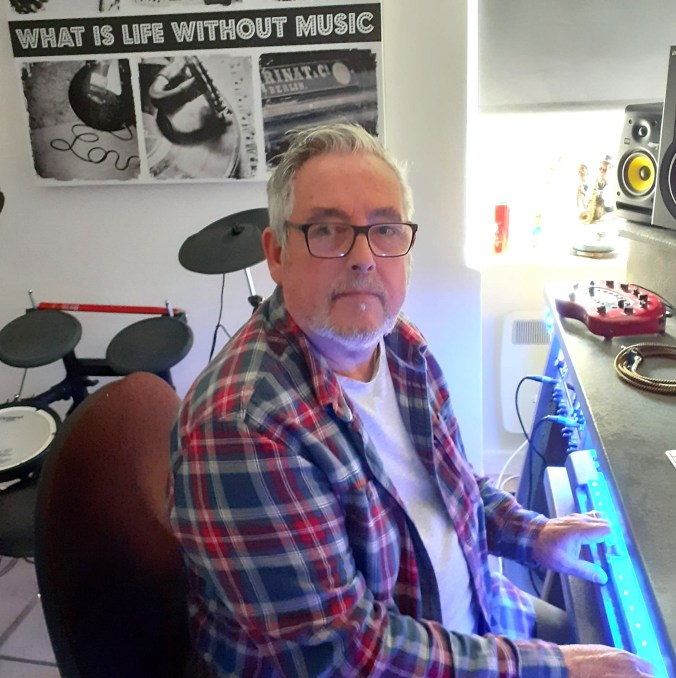
Mark Aynsley Hay

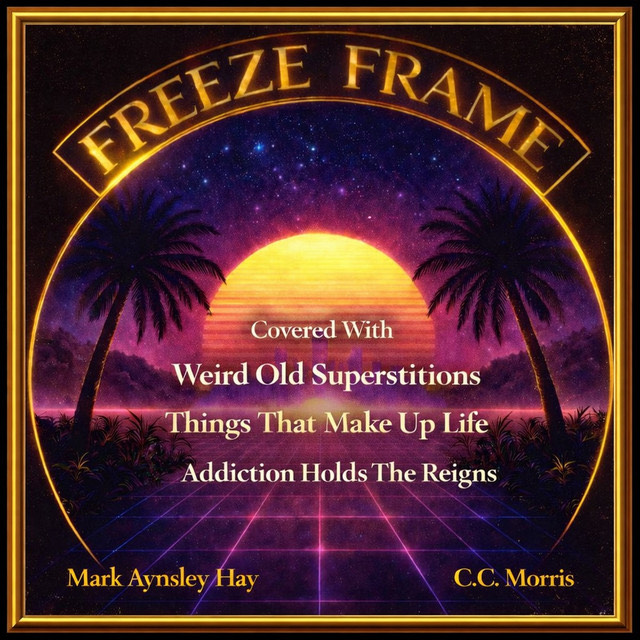
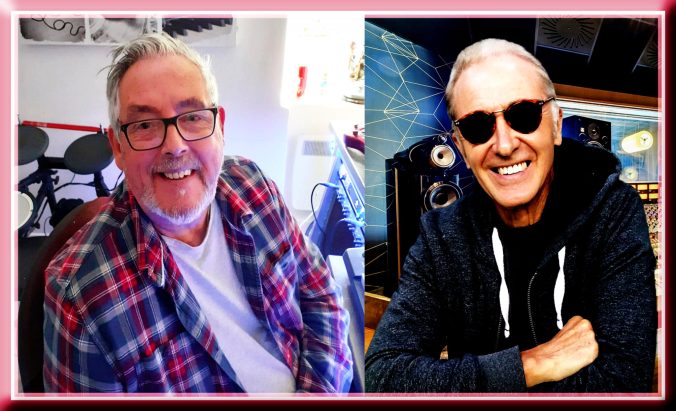
‘Freeze Frame’ is the new four-track album and first official release in 2026 by Mark Aynsley Hay and songwriting partner Chris Morris (ex Paper Lace guitarist). Both have featured on this site – Chris in May 2025 and Mark in March that year.

Chris Morris

‘Chris will be 72 this year and I recently reached the grand old age of 80. In my head I’m still 21, but a few health issues persuaded me I am really 80. I was diagnosed with osteoarthritis in my back and neck which – excuse the pun – can quite literally be a pain in the neck. Still, c’est la vie as they say in France.’

Explained former Teessider Mark who for the past 14 years  has lived in the French town Pays De La Loire with his wife Alison.

‘We’ll have been together 50 years this June. We first met in 1976 in Aberdeen, Scotland, when I was performing in a cabaret club called Jay Jays. ‘76 was the height of the oil boom in Aberdeen and the nightclubs were thriving. Jay Jays had been the Gaiety Theatre and like many venues then was converted into a nightclub to suit the changing market particularly with the large number of American oil workers in the city.’

‘For album ideas my songwriting partner Chris suggested that we write a romantic ballad built around a theme called ‘Freeze Frame.’ Bringing those two ideas together gave us a broad and flexible creative direction.’

‘My thoughts immediately turned to early relationships and those first, overwhelming impressions—the wow! The one moment when I responded to attraction and sexuality. That realisation inspired the lyric “Love is not what we first see.”

‘The song centres on a couple navigating midlife crises that affect them in different ways. Although their love for each other remains strong, they decide to separate temporarily to give themselves space to breathe. The man longs to reunite, while the woman feels the timing isn’t right.’

‘In essence, he is writing a love letter in song expressing his devotion and vulnerability, yet at times he feels stuck—trapped in a kind of ‘Freeze Frame’, facing it alone.’

‘Things That Make Up Life was born from a conversation between Chris and myself. Chris mentioned he had an idea for a theme designed to embrace a wide range of life’s moments. That idea quickly sparked a flurry of rhymes and melody.’

‘As the lyrics evolved, so did the chord structure, and the song began to take shape. While the initial version showed promise, a change in tempo and a pop rock feel brought it fully to life — delivering the sound and feel we were aiming for.’

‘I delved into the myth of the three rabbits, a quest that led me to a very interesting discovery of facts on Google. I found fascinating facts about old folklore, superstitions, and myths, each with origins rooted in ancient beliefs, observations of nature, and attempts to explain the unexplainable.’

‘I mentioned to Chris that with such lot of material, we have enough to write another new song titled Weird Old Superstitions.’

‘Attentive observation of our everyday habits and dependencies became the inspiration for Addiction Holds the Reins. I’m referring to our daily reliance on laptops, tablets, and mobile phones.’

‘A few weeks ago, Alison and I were socialising with a group of friends. One of the younger people jokingly commented, “Older people are always criticising the young for constantly being on their phones—but look around. There are five older people here scrolling through their screens, completely unaware of what’s happening in this room.” Unfortunately, he was absolutely right—and I was one of the guilty ones.’

‘I became increasingly observant of how often people browse their phones—in hospitals, doctors’ surgeries, waiting rooms and even while walking down the street.’

‘We don’t converse to each other just text or message mainly irrelevant topics that have no real significance to personal or worldwide situations. This isn’t meant as criticism – I’m equally at fault.’

‘Recently the British government have been discussing whether schools should be mobile-phone-free by default, including the possibility of a complete ban for children under sixteen. This policy has already been implemented in Australia and is currently under consideration in Sweden.’

‘I also came across a report from the United States in which primary school teachers noted that many children are starting school unable to read or write their names, yet are already able to swipe on a phone. I’ve incorporated that observation into the song.’

‘While working on this song, I became more aware of my online habits and tried to scale them back, a difficult task when research plays such a big role in songwriting.’

‘As for our hopes for the album, they’re much the same as they’ve always been with our original music. We’d love for it to be picked up by a producer, a publishing company, or perhaps a well known artist who doesn’t write their own material. It’s not really about the financial side although a bit of extra income never hurts.’

‘More than anything it’s about having your work recognised and valued. I often find myself reading your North East Culture site and thinking that’s interesting or I’d never have considered that before – that kind of acknowledgement means a great deal.’

The four tracks are available to stream and download on most major online music platforms.

Alikivi February 2026

‘Addiction Holds the Reins’

‘Weird Old Superstitions’

SPELLBOUND – in conversation with Prelude singer & songwriter Brian Hume

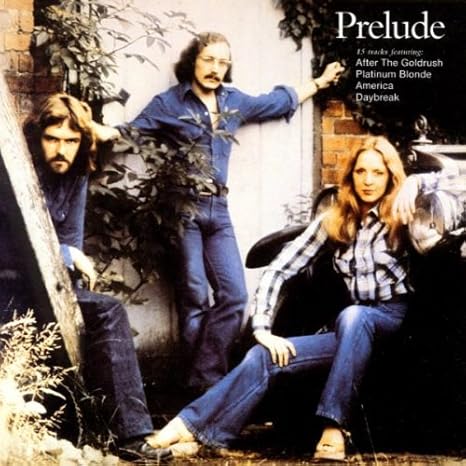
Ian Vardy, Brian & Irene Hume.

I met up with Gateshead born Brian Hume and he talked about his life in music and what it means to him now.

‘Music dominates your life. It can often exclude things that you should pay attention to. Personal relationships can suffer cos it takes over your life. All you wanna do is make that sound, make that music, at first you don’t care if you make any money you just do it for the love of it.’

‘Unless you’re all on the same page there’s always tension within bands. You’re living permanently on the idea that it will all come to an end tomorrow. If you’re a guitar player you could break a finger or get arthritis. Somebody might leave and your left high and dry. You might have an argument and everybody falls out, it’s a miracle they stay together. But it can be exciting not knowing what’s round the corner’.

78 year old Brian looks back to when and where he was first inspired.

‘Me mother was very musical she’d knock out a tune on the piano and a four string guitar – all self taught, amazing. That’s where I learnt to pick out a few tunes. Lot of houses had a room where no one went very often, that’s where the piano was.’

It was in Grammer school where Brian first met up with Ian Vardy, forming a duo to sing in Tyneside pubs and clubs.

‘One of the first gigs we played was the 99 club in Barrow in Furness. After two songs the chairman came up to the front of the stage “You’re not really right for this kind of environment”. He was nice about it but, yeah, we were paid off.’

‘The Everley Brothers songs were the go to sound, when we heard their two part harmonies we thought we could do that.  We used to play the Bridge Hotel in Newcastle. The folk scene then was vibrant, clubs were always packed out people were singing sea shanties then Paul Simon came along.’

‘Then we’d try writing our own stuff. Our publisher wanted us to be called The Cobblers. You could see the first review – what a load of! We settled on The Carnival – a very 60s hippy name. We lasted for one record – a Paul Simon song called The Big Bright Green Pleasure Machine. The review in the NME read ‘social comment at breakneck speed!

‘Ian and I were singing in our flat in Gateshead. We had just bought the Crosby, Stills and Nash album trying out different songs like Sweet Judy Blue Eyes. My wife, Irene was singing in the kitchen with the door open. She was singing the third harmony. We were totally surprised as we didn’t know she could sing. We turned and said ‘sing that again’. It wsan’t long before we went out to folk clubs and started going down really well.’

‘We lived in School Street, Gateshead and nearby at the end of the Tyne bridge is an old toll booth. A big granite structure. It had a lovely echo. Some nights we’d go in there and sing. One night a policeman came in. He thought we were up to no good. Very officious. But he stuck around listening to a few songs then as he was leaving said “Carry on”.

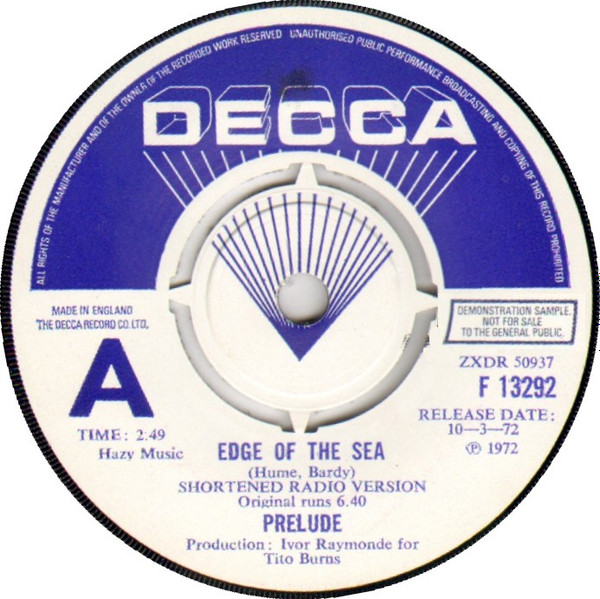
‘We got a deal with Decca Records and recorded a single The Edge of the Sea which had a strong hippy vibe to it. All during that period we were recording in Impulse Studio making demos courtesy of the owner, Dave Woods who soon after ‘discovered’ Alan Hull.’

‘We were called Trilogy for a while but had to change it because there was an American band with the same name. It’s not easy choosing a name as any band will tell you. I came up with Prelude and that stuck. That was 1972.’

‘Three part harmonies had a big effect on musicians. A lot of bands had done it like The Lettermen and The Platters from way back, but Crosby, Stills and Nash were different, this was whack right in your face. Yeah, a big influence on us and many other bands including fellow Tyneside band, The Caffreys.’

‘Different members have come and gone but the band were Ian Vardy, me and my wife Irene. Ian and I got a song writing contract with ATV music which worked for us financially. We decided to put both our names on everything we wrote irrespective of who wrote it.’

‘We had a brilliant guitarist called Frank Usher. We parted company and and he went on to play guitar with Fish from Marillion as well as being a fine guitar maker.’ 

‘We played the North East club scene for a while and in between we’d do Durham College where we’d support artists like Gerry Rafferty, Mott the Hoople, Shaking Stevens and the Sunsets – that band were amazing. There was a hippy commune type band called Principle Edwards Magic Theatre who all dressed in white which looked cool so we copied that – it was a cheap uniform.’

‘Our manager George Carr got us a record deal with Pye who back then were dominated by Max Bygraves selling boatloads of Sing-a-Long-a-Max records. We were the token folk band, although we were never folk they just called us that cos we had acoustic guitars! You couldn’t say that Pye were part of the cultural vibe.’

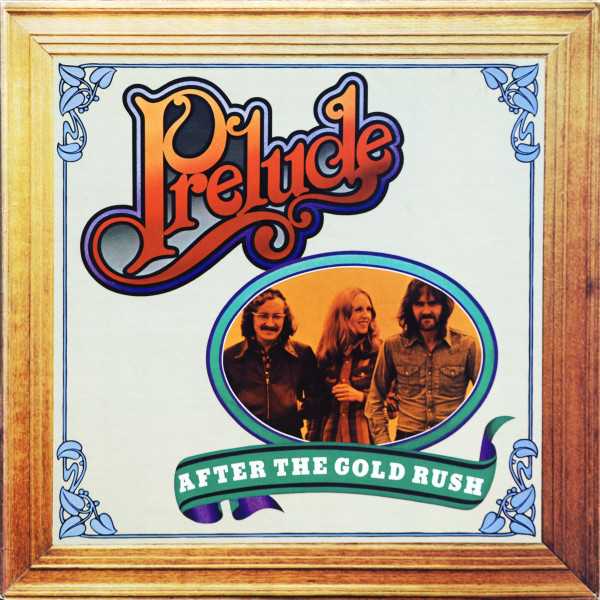
‘In 1973 we went to Rockfield Studio in Monmouth to record our first album How Long is Forever? produced by Fritz Fryer who was in a group called The Four Pennies. They had a number one with Juliet. A wistful ballad. On the final studio day Fritz asked if there was anything else we had. We used to sing a Neil Young song just for our own pleasure. That was After the Gold Rush.’

‘We recorded it and it sounded pretty good so we double tracked it. Overdubbed it fifteen times and it sounded massive. We never thought for a minute anyone would pick up on it. But John Peel at Capitol radio did. He got loads of calls ‘Who is this band?’ ‘Where can we buy the record’.

‘Next thing we know Pye put it out as a single and we’re on Top of the Pops. That was 1974. We ended up appearing twice the first time was with Marc Bolan. There was a succession of TV appearances. You had to do television because you are reaching a massive audience. We did a show for Tyne Tees called the Geordie Scene. We did the Basil Brush show for Pete’s sake.’

‘Most notably we went on the Vera Lynn show. During rehearsals she referred to us as The Prelude. Later she was walking towards us along the corridor when Ian stopped her and said “By the way Vera it’s not The Prelude it’s just Prelude”. Not skipping a beat she turned to him and said “If you don’t mind it’s not Vera…it’s Miss Lynn”.

Prelude were always based in their hometown Gateshead this meant constantly travelling up and down the M1 to television and recording studios in London.

‘It was every other week. We should have moved down there. But 1974 was a big year for us. We did the background vocals on Streets of London which was a hit for Ralph McTell. He asked us to go out on a UK tour with him.’

‘Ralph wanted to put our names on the record but our company wouldn’t allow it. For the next best thing Ralph put ‘background vocals by ‘The Gold Rushers’. It would have been a great advert for Prelude to have their name on the single but Pye were stupid on that.’

‘Ralph was so talented and generous to a fault. It was a big tour around the country then we played a venue where we’d seen Paul Simon, Crosby, Stills and Nash – here we were on the stage of the Royal Albert Hall. Amazing.’

‘After the McTell tour we went back to playing smaller venues but I’m getting the timeline mixed here because I remember before touring with Ralph was a UK tour with a singer and songwriter called Mike Chapman. He had a devoted following and used to live up the Tyne Valley in Haltwhistle.’

‘Then we went on the road with a great piano player called Peter Skellern who had a big hit with You’re a Lady. Meeting him he was rather quiet and reserved – he later became a priest. Then there was talk of America.’

‘This was 1976. What happened was Lindisfarne played the States. When Alun Hull came back, he’d tell us to get over there ‘Cos all ya’ hear is your bloody record ‘After the Gold Rush’ on the radio all the time.’

‘I always read the NME and Melody Maker, looking at American charts where like the Holy grail of music to me. To see Neil Sadaka, Beach Boys and bands like that we thought wouldn’t it be great to get in there. Our manager George Carr said ‘You’re in the American top 100’. We thought this is a dream come true.’ Then it went towards the top 20.’

‘We wanted to capitalise on the success but the record company didn’t want to pay for us to go to America they sent us to Amsterdam. We played the clubs and had a good time but we should have been in the States where we wouldn’t have even needed guitars as the song was acapella. We could have done the Johnny Carson show and the like and knocked that record up the charts.’

‘It wasn’t until 18 months later we got to the States. There were a few gigs on the West Coast in San Francisco where we supported Jerry Garcia in Berkley and met Nicky Hopkins who played piano on all Rolling Stones records. Then over to the East Coast and played The Bitter End in New York. When we came back to the UK Irene took a break when we had our second boy, Joel.’

‘Things moved on quickly until 1979 when our manager got us a deal with a new company called After Hours who were very forward thinking. We made an album at Abbey Road with The Hollies producer Ron Richards. His style was more towards lush strings and stuff like that. It didn’t really work for us.’

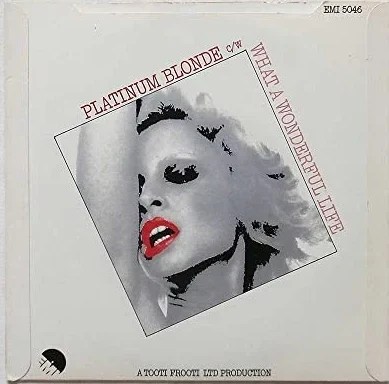
‘We also signed to EMI in 1980 and made an album in Portland Studios owned by Chas Chandler, charming fella. We had some great players on there but the only track that came out of it was Platinum Blonde. Our principal guys were Ian Green de facto producer of Platinum Blonde and Dave Wintour who was Neil Sadaka’s bass player. It was a minor hit which got to number 45 in the charts.’

‘We did a video for it in the old Battersea Power Station in London arranged by the head honcho at our record label, Richard Jacobowski. He was really on the ball, a hip guy. We crashed in his three storey flat in Hampstead and shared it with a band called The Regents who were very talented, like a proto-punk band. They had a hit song on Top of the Pops with Seventeen.’

‘For the single we did Top of the Pops and I remember on the same programme were Bay City Rollers. Platinum Blonde was good for us but afterwards we came back up North and played the folk clubs again.’

‘Ian Vardy was looking at doing something different so left the band around 1985 and became a social worker. We continued and got in ace guitar player Jim Hornsby who had been with a lot of country bands. Jim was very much in demand for session work.’

‘Country was labelled as redneck music then, it wasn’t cool – but it is now. Gram Parsons did a hell of a job making country hip. He influenced The Byrds and Keith Richards. Some clubs turned their nose up at country stuff but we had a great time doing clubs then. Unfortunately, as happens in bands Jim left.’

What did the new millennium bring?

‘From 2001 it was Irene, me and Chris Ringer who we brought in on bass and vocals and took Prelude on the circuit of country clubs and the whole scene. Through the years we have performed with countless numbers of musicians and loved every minute of it.’

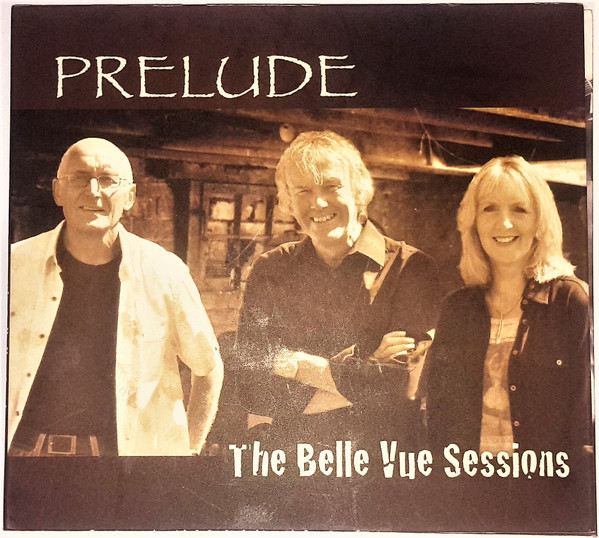
‘Our latest album The Belle Vue Sessions (2012) is all acoustic. It started in 2010 when Ian came round to our house, he had an appointment at his dentist round the corner. We got the guitars out, as you do,and it all went well so we asked him to do a gig with us. One turned into many.’

‘It was our manager Sue Brind who originally said ‘Why don’t you make a new Prelude album? We thought ‘why not?’ so we wrote some new songs and recorded them in Broadwater studios, Gateshead. Two lovely guys engineered, Gavin and Paul. We recruited Paul Hooper who was drummer for The Fortunes and again Chris Ringer played bass. We are very proud of the album.’

What does the future hold for Prelude?

‘We’re busy meeting with David Wood who used to run Impulse Studio in Wallsend. Impulse was a gateway for a lot of acts. He released a lot of Heavy Metal stuff like Venom and Raven from the North East, it was a big scene for him.’

‘David recently put out a CD box set of Alan Hull demos, he recognised Alan’s talent early on. Now he wants to do the same with us because he’s got a lot of tapes that have never seen the light of day. We’re looking to release something soon.’

After recalling a life spent with a multitude of musicians and the memories it triggers, Brian reveals that his ‘obsession’ holds a deeper meaning than just getting on stage and banging out a tune.

‘Your friends tend to be musicians and you share a common language which is almost secret amongst you. You know and experience things that nobody else has. There’s a bond between musicians which is friendship but sort of deeper. You know what the other is going to do, what they’re going to sing, – what they can and can’t do. Every successful band has to have that. It’s like brotherly love. It’s a wonderful feeling. It’s why people do music instead of opting for a ‘safer’ life.’

Alikivi   June 2025

OPPORTUNITY KNOCKED for musician Chris Morris

There is a saying that you make your own luck, I’ve found that to be true and this story underlines that. Throughout his life Chris Morris made the most of his opportunities and still is today. He still has a passion for music.

From the 70s to the early 90s Chris was playing in various line up’s of pop band Paper Lace. “However, in the new millennium I decided it was time to concentrate on writing and pursue a solo career. In 2020, I teamed up with fellow songwriter and singer Mark Aynsley Hay – together we have written over thirty new songs”.

Chris Morris & Mark Aynsley Hay

When growing up in Nottingham Chris’ only ambition was to be a musician and his mother fully supported him by buying him a guitar and encouraging him to enter into talent competitions, but his father had other ideas. Chris remembers him asking ‘when are you going to get a proper job?’

A young Chris focused on forming a three-piece band and worked the pubs and clubs around the Nottingham area. One of the first bands was ‘Infant’, the name reflected the fact that the members were so young.

His reputation as a guitarist and singer spread throughout the music industry and opportunities were presented that were too good to turn down. First, he was asked to play guitar and sing backing vocals for 60’s pop legend Billy Fury – then by 1973 he had joined Paper Lace. His mother’s enthusiasm and encouragement had paid off.

Paper Lace

The original line-up was Philip Wright on drums/lead vocals, Mick Vaughan on lead and rhythm guitar, Cliff Fish on bass and Chris Morris on guitar and vocals. In the 70s a few bands had drummers who were also lead vocalists and programmes like Top of the Pops positioned them at the front of the stage.

Their big break came when Paper Lace won TV talent show ‘Opportunity Knocks’ broadcast on ITV with regular audience figures of 7 million. The entertainment show was the forerunner of today’s X Factor and Britain’s Got Talent.

Based on their television success the band released ‘Billy Don’t Be A Hero’ in March 1974.The single spent three weeks at number 1 in the UK charts.

Chris recalls “I was 18 years old still very naive when Paper Lace had their first number one record in the charts. I’d never been on a tour bus never mind on an aeroplane and the band were booked for a six week tour of Australia – the plane journey seemed to take forever”.

“During the flight I had no concept of time and distance. Two members of the band seemed to be very worldly and connoisseur in cuisine compared to myself and bassist Cliff Fish. We were two boys who preferred our mothers home made Yorkshire pudding, meat, potato and two veg.”

“The inflight menu offered a choice between salad and curry and other dishes that I’d never heard of. I didn’t like lettuce and tomato so I asked the stewardess for the curry. The flight was long possibly 22 hours with one refuelling stop”.

“After dozing off all I remember is that every time I opened my eyes it seemed to be time for food again. I was very reluctant to try anything else on the menu so I just asked for curry again. I’m not exaggerating when I say that during that flight I must have had at least four curries”.

“We finally landed, were picked up at the airport in pop star style and taken to a luxurious hotel. A porter took our bags and we followed him in the elevator. That’s when nature took over”.

“I sneezed and the worst happened which needs no description. I’ll leave that to the imagination of the readers. Let’s just say it was an incident that would never be used by our publicity team”.

Chris & Phil Wright on Top of the Pops.

Following on from the success of ‘Billy Don’t Be A Hero’ was ‘The Night Chicago Died’. A song about a shoot out between American gangster Al Capone and the Chicago police. The single reached number 3 in the UK charts. In America it reached number 1 – the single was awarded a gold disc.

Later that year a third release ‘The Black-Eyed Boys’, took Paper Lace to number 11 in the UK and number 37 in the American charts.

Chris pulls out more memories from his time in Paper Lace ”During our Australian tour the band were flown to different venues in an aircraft which could only now be described as vintage. It had two side propellers and looked like something from the 1960’s TV program the Australian Flying Doctor”.

“This was 1974, and although I was a smoker in those days I’d never seen anyone smoking or using soft drugs. We noticed the pilot was rolling his own cigarettes which carried a distinctive smell. He was obviously smoking cannabis or marijuana or as the Aussies would say “that funny French stuff”.

“Needless to say, I was nervous every time we flew and considering the flights were always very close to the ground, I was a little worried that the curry syndrome could happen again”. 

“One good thing about flying close to the ground is that I saw lots of beautiful wild animals that I would never have seen had the plane flew at the normal altitude”.

“To finish on a lighter note, in the hotel we all had our own room with a balcony overlooking the pool. There was a beautiful looking parrot which would fly around the pool every day”.

“Each morning it would land on our balconies expecting food. I would give the parrot some food and sing ‘Billy Don’t Be Hero’ in the hope it might repeat our hit to following guests. It never did, or maybe I never heard it, I’ll never know”.

“Looking back one of my proudest career moments was when I invited my parents to see me perform at the Royal Variety performance in front of her Majesty the Queen Mother in 1975”.

R to L. Chris Morris, Mark Aynsley Hay and Malcolm Rescorle just finished a recording session.

Final words from Chris “I’m a very fortunate man, but if you’re listening Dad, I’ve still not found a proper job!”

For further information or listen to a compilation of music by Chris Morris & Mark Aynsley Hay plus family, friends and associates check out the official website >>>

chrismarkmusic.com | The joint music of Mark Aynsley Hay and Chris Morris

Check out the interview with Mark Aynsley Hay, March 2025.

Alikivi   May 2025

EURO GOES POP in conversation with David Ducasse from pop band Scooch

A previous blog made a link from South Shields born jazz musician Kathy Stobart to Radiohead. This time trying a bigger stretch from South Shields to Swedish Kings and Queens of goth pop ABBA….

Well there was two boys and two girls (laughs). We were more like STEPS than ABBA….tho’ I wish we’d won like Abba !

What happened after Scooch had been selected to represent the UK ?

Well it was just mad, I wouldn’t say it was scary, just full on. When we were chosen things were never the same. The last UK entrant to win was Katrina and the Waves in 1997 and she was brilliant. It’s almost like a Eurovision family once you’ve done it.

We’ve done quite a few gigs around the Eurovision night and you all perform on the same shows, your paths cross. It’s because you have achieved something, a milestone in your career, it was a moment in time for us or you can get unbelievable success like ABBA.
1

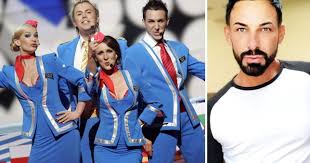
In 2007 Eurovision was held in Helsinki and the UK representatives were pop band Scooch including South Shields born David Ducasse. The song Flying the Flag reached number 5 in the UK charts, unfortunately didn’t do as well in the competition….

We came second to last, but the experience was the closest we got to huge exposure. It was something we never imagined, just to have that opportunity. Sometimes it feels like five minutes ago and other times it’s like Did that really happen ?

Not many people get to represent their country at anything…

Yeah, that was the lovely thing about it, almost having a second life with Scooch because we had done stuff in the ‘90s and the demise of the band then felt like the rug was pulled under our feet.

Our lead singer Nat got pregnant and of course needed time off, and sadly Russ and Caroline just went separate ways and we all chased very different dreams.

We thought why get back together and pursue something which was really hard work and we were at that point where it was make or break. Coming back for Eurovision ? We just didn’t see that coming.

How did the Eurovision entry first come about ?

Russ had been in the audience of Eurovision with his friend James Fox (UK representative 2004) and at the end of it they were talking to the producer Dominic who he had met years before when he was a runner on a show called Liquid TV.

Dominic told Russ he can remember Scooch and asked him what are you doing now sort of thing, well Russ being a chancer just said, ‘How do you think we’ll go down on this show ?

Scooch still gigged now and then, within a few months of that conversation we got a call saying ‘Would you like to give it a go ?

We never thought it would happen but I remember it was on a Valentines Day 2007 and we were in ! An old Scooch song which we demoed but never done anything with, was submitted but Dominic said it was too good.

Too good ? What did he mean ?

The entrants for that year were all blasts from the past, remember we hadn’t got to the actual Eurovision yet this was the selection process to find who was going to represent the UK.

It was all people who had done something before like Liz McClarnon from Atomic Kitten, you had Brian Harvey from East 17, Justin Hawkins from The Darkness was thrown in as the wild card at the end.

So you had your own niche like R&B, a ballad type of thing, rock, and for want of a better description we were the cheesy act. This was a new label for us although we had been around in the ‘90s as a pop group.

Dominic asked if we had anything else. Russ was doing some work in film at the time and he was working with two songwriters, Morton from Sweden and Paul Tarrie, they were writing a song for an animation movie featuring aeroplanes.

One idea was around the inflight announcements, they went with that, and Russ had the bap de da bap chorus, they asked for more, but it didn’t exist then !

Meanwhile we got to a studio in London where Morton and Paul were writing the rest of the song, we put it down and then left them to craft it all together for what became Flying the Flag.

Originally, how did you join Scooch ?

The manager Steve Crosby was a former DJ, he put STEP’S together and wrote their big hit 5,6,7,8 with Pete Waterman. But he was ousted from there so put together Scooch as a big two fingers up to Waterman, that’s why he went to Watermans former partner in the record business Mike Stock.

What happened was Scooch had just lost one of their members so put an advert in The Stage newspaper and I sent my cv and demo in.

Natalie, Caroline and Russ liked me so I went down and hung out with them in Surrey where they were based, just got to know each other, and got on really well. Steve said go back to Newcastle have a think about it and so will we and we’ll speak soon.

Next day the call came… ‘You’re in’. I was already in development with a boy band called Northern Line but they didn’t seem as settled, a few members came and went, so I jumped ship to Scooch.

When was this and did you move to London ?

Around late 1997 cos it wasn’t another 18 months until we got the deal. No I didn’t move straight away, every so often I would go down rehearse, record a vocal , learn a routine. I used to clean Kirkpatricks pub in South Shields to pay for my train ticket.

Then Mike Stock got involved and re-recorded one of our songs, he put his magic on it and Steve started knocking on doors of record companies or they would come round to a rehearsal.

On one day you’d have a couple of A&R from a company coming at 1 till 2pm, then another like Polydor at 2 till 3pm.

We’d sing When My Baby, Syncopated Rhythm, a cover of You to Me are Everything then When My Baby acapella to prove we could sing.

Then we’d sit down, and they’d ask a few questions, they always asked would I move to London. Which I did eventually in May 1998.

Where did you live ?

Our manager Steve had a record shop in Stoneleigh and he lived in the flat upstairs, then he moved out and Russ and I moved in. I think it’s an Italian restaurant now.

Thing was then, I was 22 years old, but I always had to remember my Scooch age in interviews. We played it a few years younger than we really were.

Who were the songwriters for Scooch ?

The majority of the songs were Mike Stock and Matt Aitkin, Morton a songwriter from Sweden also wrote some.

We had a development deal with Mike Stock and part of that agreement was that we were to write some of our own songs and Morton was the guy to help us develop those skills. It was a nice team we all knew and trusted each other.

What studio did you record in ?

For Flying the Flag it was Mortons house in Fulham but back in the day it was 100 House, the home of Love This records run by Mike Stock. It was an incredible place to be, it had the recording and dance studios, with amazing choreographers working there.

One day was Diana Ross rehearsing for Top of the Pops next day Atomic Kitten and Christmas parties with everyone turning up. Basically it was pop heaven seeing all the artists in the canteen and their records on the wall, people I had grew up listening to. Yeah it was a great experience.

What was your experience of dealing with the record company ?

Basically, the record label are like a big bank so you get a budget for whatever deal they give you. We were at EMI on their pop division label Accolade records, and they just liked us.

Our first deal was a single and they gave us x amount of thousands of pounds to promote the single. They said ‘Let’s see how it charts and then we’ll see where we go’.

We got a second single out with an option to a third and our second release More Than I Needed to Know hit number 5, a great success. The record company said ‘ok let’s do an album’.

But being four naïve youngsters we never made any money from ‘90s Scooch. Every hotel you were staying in you were spending your money, you had to make money back before seeing a penny.

I spent a lot of time with the management and asked them ‘Why are we staying in the Malmaison with four separate rooms? Why do we have four separate cars ? I cottoned on.

I went to the band and said we need to get clever here, get some endorsements, we only got an advance of around £2,000 between us. So how do you pay your rent in London ? We had to wise up a bit and find ways to cut costs.

I loved our manager Steve as a friend, but as I was spokesman for the band we would also have business conversations. One day he said he was putting his expenses in and I asked him what expenses ? He said ‘When we’ve went for a meal or I’ve paid for your train ticket to Newcastle’.

I needed to investigate further, we were learning as we were thrown into it, because with the record deal came lawyers and who was paying them ?

When we done the two singles and looked to the album we were potentially going to do more work, that was another expense, so we needed to look after our side of things.

How did you survive in the business ?

Just things like when we done Top of the Pops, this was our third time, I told Steve we had to wear something different from the music video we had filmed for the single.

Top of the Pops wanted us to film three versions for different episodes of the show, so we borrowed outfits from the All Saints girl band, then Steve got £50 off the record company to buy new outfits.

Russ and I were due to sign on the dole in Epsom on the afternoon when we were supposed to record the show. So I rang up the dole and explained why we couldn’t make the signing on time…

’Cos we’re doing Top of the Pops’. He didn’t believe us at first ‘Can you prove it and are you actually seeking work ?

I said, ‘Of course I can prove it our faces are on cd’s, it just doesn’t pay well that’s why we’re signing on’ (laughs).

They agreed we could sign early, so when we went there we signed autographs and had our pictures taken, then made our way to the TV studio. We still got our Job Seekers Allowance because we really needed the money for our rent in London.

Our biggest earners where sponsorship deals, we were paid ambassadors for the Children’s Health Authority and the Rugrats DVD things like that. Touring is the best way to make money that’s why Little Mix go out twice a year.

Looking back to your time in Scooch where there any moments that stand out ?

You can’t get better than the live Eurovision audience, knowing that for three minutes everyone will hear something you’ve worked really hard at.

Although I did have two nearly pinch myself moments. One was meeting the Prime Minister Tony Blair in the corridor at GMTV and he shouted ‘Look it’s Scooch!’ and getting to press the button on the National Lottery draw ! Yes easily pleased (laughs).

Was there a moment when you thought this is it I’ve made it ?

I don’t think I’ve ever felt that way as a performer because I’ve always viewed each job as a role or a stepping stone to where I always wanted to be – an actor. My dream job would be a six month stint on Emmerdale – so I can get home on a weekend!

What’s next David ? We have something planned but can’t tell you just yet. Watch this space.

Interview by Alikivi  January 2020.
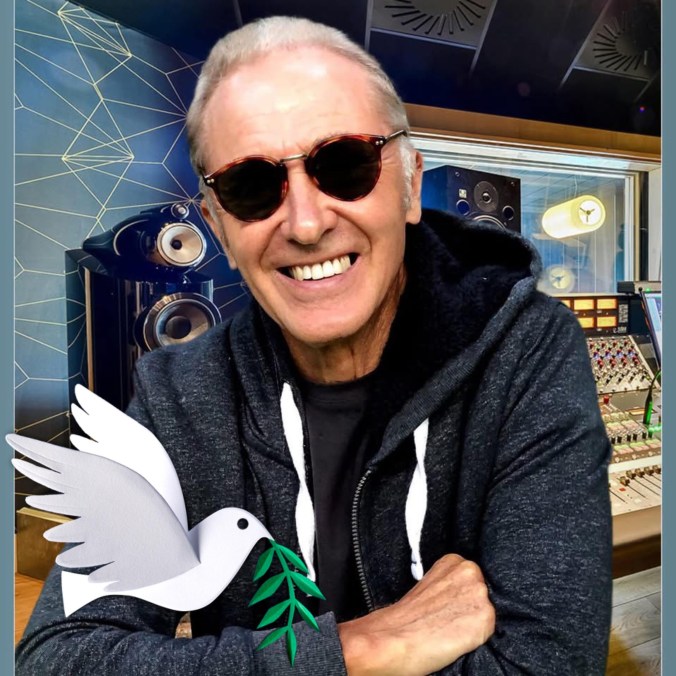
DIRECT ACTION – with TV/Media director & producer Chris Cowey.

On Tyne Tees programme ‘Check it Out’ broadcast in 1979, presenters Chris Cowey and Lynn Spencer interviewed punk band Public Image Limited featuring ex Sex Pistol Johnny Rotten (Lydon). The piece also featured Mond Cowie from Angelic Upstarts….

Firstly, Mond Cowie isn’t related to me, his name is the rich branch of the family, like Sir Tom, with an ie rather than my Durham pit yakker spelling of ey. Mond is a top bloke and a damn good guitar player. Angelic Upstarts were an underrated band I reckon.

The infamous PIL chat was my first live studio interview and a real baptism of fire. I was and remain a big fan of Lydon and his music. The whole pantomime was their way of getting themselves noticed and being in the press, which sells records.

The programme of course was instrumental, even complicit, and the interview with Mond was designed to wind them up.

I was, as you can tell from the clip, just a teenager and thought I was going to have the shortest TV career ever, but a lot of people realised that and sympathised with me.

I was kind of numbed by the whole thing. But a sort of survival instinct kicks in, the fact that viewers and press backed me made me feel better, but I still would rather have had a proper discussion, rather than a childish strop.

My memory of the show is that the band had got themselves really relaxed by the time the studio session started, and they were ready to do their usual argumentative schtick but were out manoeuvred this time.

The point of the interview, which gets lost in the aggro, was that they’d just brought out their Metal Box album, which was a set of 12-inch singles in an elaborate film-tin type of packaging.

It was hugely expensive, and very designer chic for someone who was supposed to be so street, anyway everyone won, they sold records, the Check It Out show was on the map, and I did about seven series of it.

It was a combination of Check It Out and the music show Alright Now that prompted Channel 4 to commission The Tube, which of course PIL appeared on too, and I had a fabulous five years making the show.

Alright Now, Check it Out, The Tube – why did the North East have a reputation to produce good music shows ?

Tyne-Tees already did some good old entertainment shows before my time, like Geordie Scene or What Fettle, but they were obsessed about their ‘Geordieness’. The Tube and all those shows you mentioned really wasn’t, it was all about good music, because we were music obsessed.

It also had a great blend of old school time served TV people, blended with new people with fresh ideas, and a kind of irreverence which all blended and came out in those shows.

Having said that it was really important that it came from the North-East because of the passion and the swagger and the total commitment.

It’s not just that Geordies like showing off – although they undoubtedly DO! – it’s because the history and attitude of the region can be really inspiring, creative and hugely fun.

It really breaks my heart to see what’s happened, not only to Tyne Tees, but a load of gigs and venues, clubs and pubs across the whole area. I have an unshakable belief that it will rise again though…. don’t get me started though!

When did you first get interested in music and what was your first TV break ?

I was always obsessed with music and did school discos in the hall every lunchtime. When I was 17 and doing my A-levels I lied about my age and got a couple of jobs DJ’ing in nightclubs, the biggest of which was The Mecca in Sunderland.

It was a great learning curve for me, with a vast range of music from funk to metal. There were some amazing live bands too, Ian Gillan, Tom Robinson, Crown Heights Affair – check them out if it’s before your time!

There was live music just about every night I worked, I was bitten by the live music thing. I was also into Drama/Theatre/acting which led to my TV break, I guess.

My mentor was Malcolm Gerrie, who a lot of people will remember from his Tyne-Tees days. He’d been my English and Drama teacher from my Comprehensive school, and he suggested I audition for Check It Out.

A lot of the same gang of music fans were the nucleus of Check It Out, Alright Now, The Tube, TX45. Razzmatazz, production teams.

It was a real blend of old school Tyne-Tees TV expertise and young whippersnappers like me. That’s how it worked so well, we had a good run, but I could see it was going to dry up, so I bailed just before The Tube ended, because I knew it was going to be the last series.

Is entertainment in your family ?

My family all worked down coal mines, and some in breweries! I was very lucky that I had an older sister and brother who bombarded me with pop and rock music from an early age.

Also, my school was a real proper comprehensive that did ‘Tommy’ and ‘Stardust rather than Shakespeare or Gilbert & Sullivan. My school was amazing, great teachers, a radio station, school discos, drama, music, it really helped to shape my future. Just a regular comprehensive in a little County Durham former mining village. I loved Ryhope… I still miss it.

Lately I’ve interviewed North East bands Tygers of Pan Tang and White Heat and soon will be chatting to Dave Woods (Impulse Studio/Neat records). Did you come across any of them ?

Yeah, I knew all that bunch. They really did create a strong identity for the Newcastle music landscape. The city is world renowned as a major centre for good old fashioned rock’n’roll, and there’s nowt wrong with that.

Dave Woods is a North East music legend, we made many a film and studio show with his bands….a film about Venom is a fond memory. He was a really important figure in Newcastle’s rich musical history and heritage, and should be very proud of his achievements.

What differences did you find working at Tyne Tees then going to Top of the Pops, and how did that job come about ?

The BBC came and poached me to take over Top of the Pops after I made a C4 show called The White Room, which was like a stripped-down version of The Tube in some respects.

It wasn’t trying to re-create The Tube though, it was much more how I thought Top of the Pops should be if it wasn’t so weighed down by its own traditions.

So, when I got to the BBC as Executive Producer and director of the world’s biggest music show, I gave it a massive kick up the jaxi, and it worked.

It went from a show on the verge of being axed, to a huge national and international success, and I didn’t have any of my mates with me for once, except Big Clive.

It was great fun and I’m really proud of what I achieved there. I loved working at the BBC too. Massively different in many ways from Tyne-Tees, but I put together a diverse production team again, and made it a happy show, which is critical I think.

I did it for six years, but the BBC’s ambitions for the show weren’t the same as mine, so we parted company. The show sadly died after my successor turned it into a kids show again!

Was there a magic moment during your career when you had the feeling that ‘This is where I should be’ ?

Yeah, loads of times! Doing Top of the Pops, The Brit Awards, Glastonbury, The Tube, The White Room…. when there’s an amazing talent on stage, and I’m directing a load of cameras, having booked the act and devised the whole shebang….I get huge job satisfaction from that. I get paid for doing something that it’s a privilege to be involved in. I’m a very lucky lad.

Can you think of a couple of memorable moments in your career and also a nightmare situation where things went wrong ?  Memorable moments? SO many. The Foo Fighters, working with David Bowie, particularly the banter we had in New York. Or freaking Beyoncé out by taking a Concorde trip to see her.

I could go on for hours with stories and bore you to death. Not all good though, I had a bit of a tiff with George Michael, told Ricky Martin to F**k Off with his Persian Rug, and many a drinking session that seemed like a good idea at the time.

What are you doing now Chris ?

I’m still doing the same thing really, music, events, tv. The business has changed radically in my time, and I’ve diversified into all sorts of areas.

A lot of things go straight to Facebook or YouTube these days, but I’m still keen on regular broadcast tv, both here in the UK but also around the world, and there’s always something in development.

I’ve even directed video games and London West-End theatre, hi-tech, 3-D, holograms, all sorts really.I love new challenges and to keep learning new skills.

Of course, my heaven would be to make a new music show, so watch this space!

For further information contact Chris at    http://www.chriscowey.tv

Interview by Gary Alikivi    September 2019.

WHITE LINES – interview with Craig Ellis, drummer with Tygers of Pan Tang

69659872_10156674697214639_2756183532928761856_n

The Tygers have just shot a music video for the new single ‘White Lines’, how did that go ?

The video shoot went well really, the location was Dynamix Extreme Skate Park in Gateshead. A fantastic place with lots of options for backgrounds to shoot in and around.

Moving a six piece drum kit into three different areas was a pain in the a**e but worth it after seeing the superb screen captures on the cameras.

How did you get the job in the Tygers ?

Robb had been working on some new material with an ex-Sergeant band member and two friends of mine were drafted in the play bass and guitar.

The initial demos were cut together using a drum machine so when it came to the recording a live drummer was needed and my two friends suggested me. The end product of that recording was ‘Mystical’ in 2000 and I’ve been here ever since!

Even though I’d written lyrics and melodies previously in other bands, it wasn’t until our vocalist Jack joined the Tygers that I started to contribute. From day one there was a chemistry that has worked ever since.

Before gigs do you have a warm up routine ?

Some stretching exercises, specifically arms and hands to loosen up and a mash-up of sticking exercises/rudiments to get comfortable. I don’t eat anything three hours before a show and if I’m going to have any alcohol, it’s after the show.

How did you start on drums and who were your early influences ?

I didn’t start playing drums until the age of fifteen, but I’d been listening seriously to music from around nine or ten year old.

My Dad had a reel-to-reel player, and I was infatuated with not only the machine itself, but also the music the spools kicked out…Hendrix, Foghat, Lynard Skynard, Blue Oyster Cult and Led Zeppelin.

Programmes on the TV like Top of the Pops, The Tube and of course The Old Grey Whistle Test were like a drug, I never missed an episode!

With the pocket money I saved, I bought vinyl. Even back then I had a varied collection of music as my tastes have always been eclectic, however, once I started playing drums, rock and metal was where I found my niche.

Drummers such as Cozy Powell, John Bonham, Ian Paice, Bill Ward and Neil Peart and the bands they played in resonated with me hugely and have never left me.

Where I’m from, we were very fortunate to have venues including The Coatham Bowl in Redcar, Middlesbrough Town Hall, Crypt and Rock Garden and Newcastle Mayfair and City Hall. So I got to see almost all my favourite drummers and favourite bands.

Who were the first band you played for and what venues did you play ?

My first cover band at around sixteen was called Overload. We played rock covers by Sabbath, Status Quo, Golden Earring, AC/DC etc in and around the Teesside/Cleveland area. There was a huge Working Men’s Club scene back then, which I played in most venues in the North East, in various cover bands.

I’ve always had a passion for original music so I took every opportunity presented to me to work alongside musicians creating original music. From very early on I learned a great deal about the recording process both at home and in studios.

Have there been many memorable gigs with the Tygers ?

There’s been quite a few Gary, in no particular order …The fact we were touring in South America and the audiences were insanely awesome was amazing but the night we played Carioca Club in São Paulo on Micky’s Birthday – the whole room sang Happy Birthday to him.

Japan Assault Festival was a humbling experience for this tub thumper from Teesside to have had the opportunity to travel to and perform in Japan to a crowd of people who were so pleased to see the Tygers. Supporting the Dead Daisies at the 02 Academy to a Newcastle home crowd who were just awesome.

The Spodek in Katowice, Poland is a venue that is an assault on the mind! Its incredible both inside and outside. We’ve been very lucky to have been invited back a few times to the incredible Bang Your Head festival in Balingen, Germany. Bully-On-Rocks Festival and Raismes Festival have been our most recent shows in France both with amazing audiences.

Belgium is a special place for the Tygers, we performed some of our very first shows there and met many wonderful people who have remained friends to this day and always do their utmost to get to the shows.

Have you any road stories you want to share ? Robb’s your man for the funny he stories, he collects them! But here goes a couple…

When on tour in South America we took an internal flight and got split up throughout the plane. As we were disembarking there were shenanigans going on at the front of the plane.

Robb and Gav were sat in the cockpit, Captains and Officers hats on, having a laugh and chat with the crew. Turns out the captain was a huge Tygers fan and invited them in!

Around twelve years ago, travelling to Belgium in what was then the bands tour bus we were badly rear-shunted by a delivery truck late at night on the A1M. We were all thrown around the cabin like rag dolls and the back end of the tour bus was a mess but, we limped on ‘because we had gigs to do!’

The rear footstep had been shoved so far down and as we went up the ramp to board the ferry, sparks were flying from it and the noise was horrendous.

At that same point we also discovered the steering was in a bad way too so we were gliding like a sail boat up the ramp. When it came to getting off the ferry the bus wouldn’t start but the ferry mechanics got us going!

With the ignition now faulty at the end of almost every gig fans would give us a push to ‘bump-us-off’! Embarrassing but a laugh and main thing was, we did the shows.

The new album ‘Ritual’, did you feel recording went well ?

Time is of the essence when it comes to Recording Studios because as the clock ticks away its costing money. But, you want to enjoy the experience and to do that it’s all about the preparation.

Although writing the material for the album had begun over a year prior, regular, concentrated writing and rehearsal sessions started in January of this year right up to going into the studio in April.

During that time we would video and record everything for reference and when a song is complete I write out the drum notation so I get it completely under my skin.

Both Jack and I write the lyrics and melodies to the majority of the songs and because of that I automatically absorb a songs structure. Because of the prior work put in, we each completed our parts in a very short time.

What also makes for a good recording session is the engineer and studio, and Fred Purser at Trinity Heights made the whole thing an absolute pleasure throughout.

Will the Tygers be promoting the album ?

Absolutely! We’ll be doing four, maybe even five, songs from the new album and featuring them in our November shows and from there on. There’ll be a selection of merchandise available supporting the release too.

I’m particularly looking forward to gigging with the Festival sized backdrop we’ll have for those shows, the Ritual Mask in giant-size taking ownership of the stage!

What does music mean to you ?

It pretty much makes my world go around Gary. I play music, I practise music, I write music and I teach music. It takes me mentally to a different state of mind and physically to many incredible places I likely wouldn’t get to see otherwise.

I’m extremely lucky to be doing what I love.

‘White Lines’ will be the first single, released on 27th September on all platforms, and a 12″ vinyl limited release of 500 copies for all you collectors will be available from:

http://targetshop.dk/…/tygers-of-pan-tang-white-lines-12vin…

For further information contact the official website:

 http://www.tygersofpantang.com/official/

Interview by Gary Alikivi     September 2019.