HAVE YOU HEARD THIS ONE? #6

Following on from the last post here’s another batch of North East stories this time featuring music, books, TV, boxing and the police. First up is former White Heat & Loud Guitars frontman Bob Smeaton.

‘If you asked me to list what gave me the biggest buzz I would say playing live top of the list, writing songs in second and recording in third. One thing I did learn is that playing songs live and recording them in a studio are two different animals’.

‘I love performing in front of an audience and felt that I was a much better frontman than I was a singer, so studio work for me back in the early days was not always an enjoyable experience. Also, the vocals were always done last, so the rest of the band were able to relax and the pressure was on me to deliver’.

What did I do after White Heat and Loud Guitars split? I pretty much stopped performing gigs as my career went down a different path’.

Full interview > ANOTHER JOURNEY UP THE RIVER – New album from ex White Heat frontman Bob Smeaton | ALIKIVI UK : NORTH EAST CULTURE

In August award-winning author & freelance journalist Terry Wilkinson talked about his new book…

‘At midnight on 3 May 1941, the factory and Head Office of Wilkinson’s Mineral Water Manufacturers in North Shields was hit by a single German bomb. It went through the roof, descending through all three floors, taking all the heavy bottling machinery and chemicals down to the basement – which was in use as a public air raid shelter. 107 died, 43 of which were children. Whole families were wiped out.’

‘Nothing is known of the identity of the plane which dropped the bomb – type, squadron, mission etc – as German records were mostly destroyed in the closing stages of the war’.

‘I wanted to write a story that answered all these questions and create a fictional alternative. Having said that, nobody could say with any conviction this is not what happened’.

Full interview > STORIES OF WAR – with award-winning author & freelance journalist Terry Wilkinson | ALIKIVI UK : NORTH EAST CULTURE

Also in August former boxer Terry Patterson remembers his time boxing in the North East…

‘Over the years I fought a few Sunderland lads. Derek Nelson was a classy boxer who turned pro. I fought two ABA finalists in Gordon Pedro Philips and Willie Neil. I fought Pedro in the North Eastern Counties final but lost. Both lads were well schooled’.

‘Willie Neil’s coach asked if I’d fight him because his opponent hadn’t turned up. I weighed in at 10st 6lbs (welterweight), he was heavier than me by 6lbs. I knew his reputation for knocking people out. £50 was slipped into my hand for taking the fight’.

‘Willie could bang a bit – so could I – but he had me down three times during our bout. We set about each other unleashing all hell for three fierce rounds. I had him going at one point after landing a good left hook but the bell sounded and my chance to finish him had gone’.

‘Gordon and Willie are still good to this day – it’s been 36 years since we shared a ring but I see them at boxing dinners and club reunions’.

Full interview > KNOCKOUT with former boxer Terry Patterson | ALIKIVI UK : NORTH EAST CULTURE

Former police detective & writer Arthur McKenzie talked about his work…

‘There was a police section house near Newcastle’s Exhibition Park, in it was a bait room, just a pokey little room with a table to play cards on. If you’re on night shift you’d take sandwiches and a flask of tea in. That’s where you gathered around 1am where the events of the night would unfold’.

‘You would get advice on how to deal with someone, it was a good place to sort things out like the older cops would tell you how to deal with a death, how to deliver a death message to the unfortunate family. It was a sort of meeting of minds over a game of cards. Aye the bait room was a good place to vent your spleen so to speak’.

‘So, I went away and wrote about the bait room. Tom Hadaway (writer for episodes When the Boat Comes In) read the play and was laughing at it ‘Yeah, you know how to write dialogue son’. He gave me pointers, when I finished it landed on two desks. One was the BBC in Manchester where it ended up on the Saturday Night Theatre radio show, which was a big thing’.

‘The other was the script reader for David Puttnam (producer Chariots of Fire, Local Hero, Midnight Express) who hated it at first but won her round in the end. She said she couldn’t do anything with it but put me in touch with an agent who was looking for writers for a tv show called The Bill. That’s where the writing started’.

Full interview > COP ON THE TYNE – in conversation with ex police detective & writer Arthur McKenzie | ALIKIVI UK : NORTH EAST CULTURE

TV actor & musician Michael McNally got in touch and talked about his time in ground breaking BBC TV drama The Cops…

‘I’d watched the first two series and it was my favourite programme on TV. When I started watching it, I thought it was a fly on the wall documentary it took me 10 minutes before I realised it was a drama. I was totally hooked’.

‘One of my first scenes was I was sat in a police van at 11pm on a Friday night on Bolton High Street. The general public were walking up and down the street they knew nothing of this, it wasn’t a closed set like on some programmes and we had to go and arrest someone’.

‘Two actors were having a fight then we got the message to go, so on with the blue flashing lights, we pulled up and jumped out of the van. Some people were trying to defend the actors and some were encouraging us to get in there and sort it out’.

‘We didn’t know where the cameras were we just heard someone say stop. We got back in the van, re-set and done the scene about four or five times’.

‘Same happened when responding to a fight in a bar, we had to pull people out and the general public in the bar didn’t know what was going on. There was an element of choreography for the fight, we didn’t want anyone to get hurt’.

‘After that first night the cast got together afterwards for some pub grub and a karaoke. Most of us were unknown actors so mixed in with the general public without any hassle. Every member of the cast got up and sang, mine was Should I Stay or Should I Go by The Clash – it was a really good night’.

Full interview > THE COPS with TV actor & musician Michael McNally | ALIKIVI UK : NORTH EAST CULTURE

Got a story to add to the site? Just get in touch.

Full list of hundreds of interviews >

About | ALIKIVI UK : NORTH EAST CULTURE

Alikivi   November 2024

STORIES OF WAR – with award-winning author & freelance journalist Terry Wilkinson

“I’ve always been fascinated with everything World War Two related and RAF in particular. My grandfather was in the Royal Flying Corps, and both my father and my son were in the RAF” explained Terry.

“I was in the Air Training Corps in South Shields but then a medic came to school to test us all for colour-blindness. I failed the test miserably and was told I would never be accepted by the RAF. I was gutted, as you can imagine”.

Terry lives in Marske on Teesside, but was born in South Shields at midnight 21st– 22nd December 1948…“My mum asked the midwife which day was my birthday. She was told it was the 21st as my head came out on that day. That crosses the Winter Solstice, so my top half is Sagittarius and my bottom half Capricorn. I think this explains why I’ve done so many different jobs in my life” joked Terry.

Throughout his school years his parents moved around the country…

”We lived above a wallpaper shop in Stockton on Tees, then moved to Billingham and later down south to Reading and Mitcham”.

Finally, the Wilkinson family moved back to South Shields where Terry was a pupil at South Shields Grammar Technical School for Boys.

“After leaving school, I worked for the Crown Agents for Overseas Governments in London, then Wise Speke stockbrokers in Newcastle where I became a Member of the London Stock Exchange”.

From 2000 I ran a successful Theatre in Education company touring schools for 15 years. It won a Best New Business Award but I gave it up in 2015 in order to write”. 

When researching his family tree and local history Terry has always been fascinated by one event.

“At midnight on 3 May 1941, the factory and Head Office of Wilkinson’s Mineral Water Manufacturers in North Shields was hit by a single German bomb. It went through the roof, descending through all three floors, taking all the heavy bottling machinery and chemicals down to the basement – which was in use as a public air raid shelter. 107 died, 43 of which were children. Whole families were wiped out.”

Details of the tragedy can be found in the book North Shields 173: The Wilkinson’s Lemonade Factory Air Raid Disaster (173 was the telephone number of the factory.)

“It is written by my good friend, Peter Bolger, who also manages a comprehensive website on the incident” > www.northshields173.org

“Because of censorship and the government’s desire not to damage public morale, little is known beyond Tyneside. It was, however, one of the largest loss of life incidents from a single bomb during the provincial Blitz”.

Nothing is known of the identity of the plane which dropped the bomb – type, squadron, mission etc – as German records were mostly destroyed in the closing stages of the war”.

“I wanted to write a story that answered all these questions and create a fictional alternative. Having said that, nobody could say with any conviction this is not what happened”.

Terry started on a series of five espionage novels. ‘Handler’ is set in 1941, ‘Sleeper’ in 1942 and is currently working on the third ‘Chancer’ which covers 1943. 

“They’re a mix of fact and fiction and trace through the war years of an English-born German spy, Howard Wesley, and his nemesis, MI5 agent Albert Stokes”.

“Wesley is a figment of my imagination. Stokes is based on a real character. And this is the pattern for the other books in the series. I also like to plunder WW2 history for little-known incidents and people who feature against the broader background of what was taking place in the war”. 

‘Handler’ won a ‘Chill With A Book’ Premier Readers Award just a few months after publication. This spurred Terry on to get others in the series out there as quickly as possible.

“A few of those who have given good feedback have made the point that it would make a good series. I am convinced that it would. I certainly write with a film or TV series in mind”.

“In the shorter term I am hoping to record the whole series as audible books. I recorded an extract from the book that author John Orton is currently writing (link to interview below) and he was happy with it”.

“I’ve spoken to my publisher – UK Book Publishing – and offered them my services as a narrator for others. I’m also an actor, card-holding Equity member and very good at accents and dialects”.

For further information contact Terry on his official website> www.terrywilkinson.co.uk

Social media>

Facebook – Terry Wilkinson, or Twitter – @terrydwilk

Link to John Orton May 2023 interview >

THE STORY SO FAR with author John Orton | ALIKIVI UK : NORTH EAST CULTURE

Alikivi   August 2024

LOOKING FOR LUCIFER #6

The continuing search for author, artist & historian Baron Avro Manhattan (1914-90)

For a number of years I’ve researched the life of Baron Avro Manhattan, who I first came across in 2012, he spent his last years in a terraced house in my hometown of South Shields.

‘Secrets & Lies’ documentary was produced in 2018, a link is at the end of the post.

Avro’s original name was Theophile Lucifer Gardini, the name change is looked at in post #2. This post focuses on Avro and the Second World War and includes research used to script a second documentary about this fascinating character.

In 1938 Gardini was in the UK listed as a Landscape painter living in Machynllech, Wales, and exhibiting his art in galleries including Bloomsbury Gallery in Mayfair, London.

On 10 June 1940 Italy declared war on Britain resulting in thousands of resident Italians being interned, and in Wales, the Aberystwyth police caught up with Gardini.

Added to the prisoners of war, another 4,000 Italians were known to be members of the Fascist Party and this increase led to a problem within the UK.

Following offers from Canadian and Australian governments, more than 7,500 internees were shipped overseas aboard SS Ettrick, Duchess of York, Dunera and Arandora Star. Gardini left port on 3 July 1940 onboard the Ettrick bound for an internment camp in Canada.

Record of transfers overseas of aliens and prisoners of war.

Eight month after arriving he suddenly returned to the UK aboard the S.S. Georgic, then two month after that in May 1941 he was released as a ‘special case without restrictions’. A number of questions arise about this period.

Why did he return to the UK from Canada, where was he for the two month before release and why was an Italian who was looked upon as an enemy deemed ‘a special case’ four years before the war ended ?

There is a report that Gardini worked with British intelligence during the Second World War – was he recruited in the internment camp in Canada ? Was this the ‘special case without restrictions’?

Previously Gardini was imprisoned in Italy for refusing to swear to the Fascist oath, I imagine he would have rejected his Italian citizenship and was in hiding from any fascists still living in the UK, we can only speculate until concrete evidence turns up for this period.

During research there has been reports that have been misleading, especially the number of titles on his gravestone. But one he received was confirmed by a reputable organisation.

Listed on his headstone is the title Knight of Malta, reported to be awarded by the British Government for work during the war. To check whether he received this title, I got in touch with Debretts of London – if you’ve got a gong, you will be listed with them.

Friday 7 August 2015 email from Debretts.

I’ve been able to find very little about Baron Manhattan with only the Maltese decoration accredited and recorded – quite rightly too, given his admirable behaviour during WW2.

Other than that I’m sorry not to be more help – I was hoping to discover something far more mysterious about him!’  

Debretts, 16 Charles Street, Mayfair, London.

After the war Avro didn’t return to Italy, he settled in the UK and on 3 October 1949 took an oath of allegiance and became a British National.

The certificate read – Teofilo Lucifero Gardini, also added was Avro Manhattan, born in Milan, Italy, 6th April 1910 – although on his death certificate in 1990 he was 76.

It wasn’t until December 1953 when he was living in Wimbledon, London that he officially changed his name by Deed Poll.

If you have information about Italian born artist, author & historian Baron Avro Manhattan (1914-90) please don’t hesitate to get in touch.

Link to film:

South Shields, Italian born Baron Avro Manhattan – SECRETS & LIES – doc.film (Alikivi,12 mins 2018). – YouTube

Check the other posts about Baron Avro Manhattan :

LOOKING FOR LUCIFER #3 – Art for Sale. | ALIKIVI : NORTH EAST UK (garyalikivi.com)

LOOKING FOR LUCIFER #2 – Ciao, Avro. | ALIKIVI : NORTH EAST UK (garyalikivi.com)

LOOKING FOR LUCIFER – The continuing search for author & artist, Baron Avro Manhattan (1914-90) | ALIKIVI : NORTH EAST UK (garyalikivi.com)

Alikivi  April 2021 & update April 2022

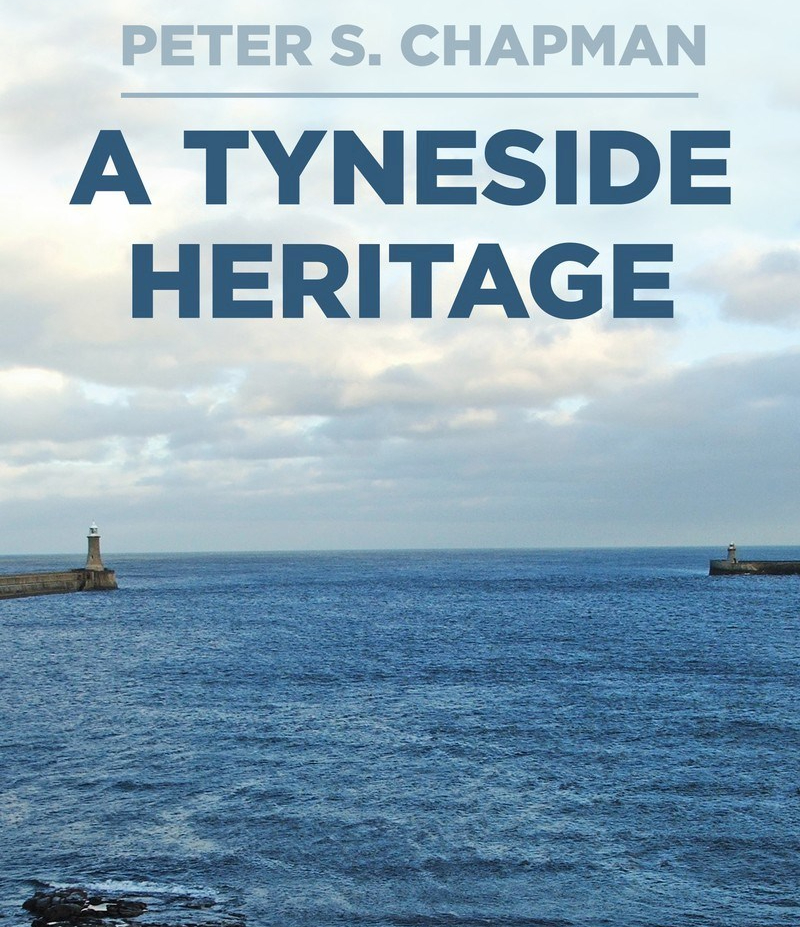
A TYNESIDE HERITAGE – new book by author, Peter S. Chapman

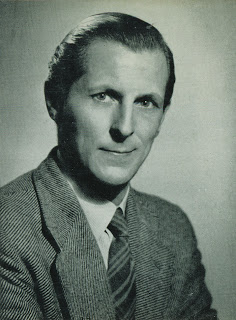
Cleadon born Chapman has enjoyed a varied career – educated to Master’s degree level leading to a housing career in London.

He’s devoted time to being chair of a number of charities – manuscript restoration in Egypt, Archaeology & Anthropology in Cambridge and even found time for a local youth football team – The Kensington Dragons.

But Chapman, who lives in London, still retains close links to the North East…

The South Shields Local History Group invited me to give a lecture on the lives and public service of my grandparents, Sir Robert and Lady Chapman. It was their lives, and their exceptional contribution to South Shields and Tyneside, which inspired me to write ‘A Tyneside Heritage’.

It was quite an undertaking and took me six years. My research into family and Tyneside history was fresh in my mind and if I didn’t write the book now it would never get written.

Summer fetes at the Chapman home, Undercliff, were popular events throughout the 1930s.

As a teenager I became fascinated by my grandparents’ collection of scrapbooks at Undercliff, their house in Cleadon where I was born.

These scrapbooks recorded family events over three decades from the 1930s, and some newspaper articles covered events in early nineteenth century Tyneside.

The 424 page book weaves the Chapman family story with local history.

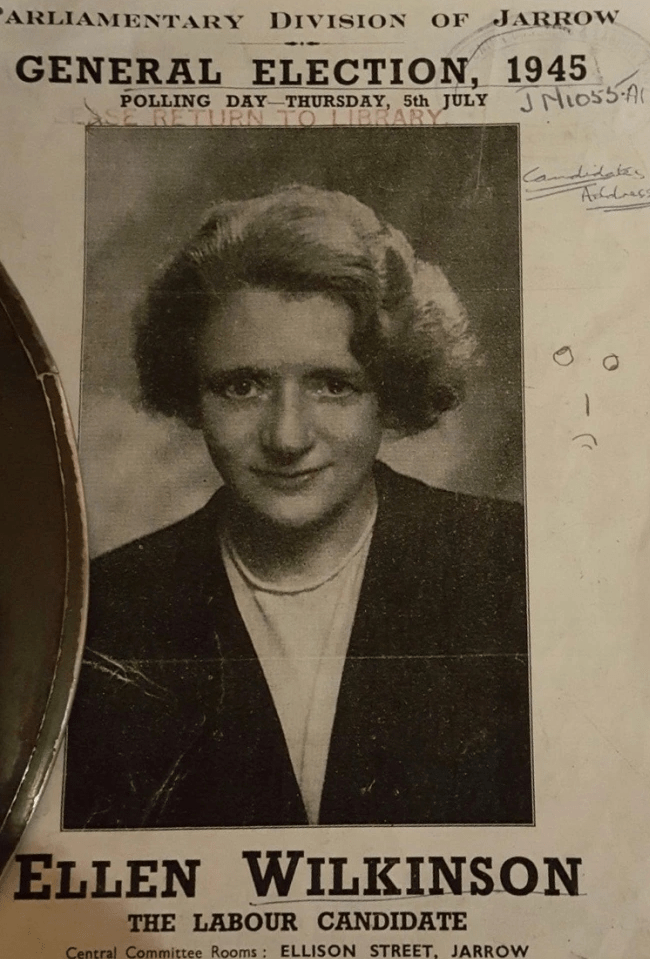
He features the boom on Tyneside of the industrial revolution and the bust that followed culminating with the Jarrow March of 1936 and Ellen Wilkinson MP taking the Jarrow platform in one of her speeches “The unemployment rate was over 80 per cent, 23,000 are on relief out of a total population of 35,000”.

With his family heavily involved in local politics I mentioned to Peter about my Great Uncle Richard Ewart who, after working at Whitburn Colliery, was Sunderland MP in 1945.

He and my grandfather would have known each other on the South Shields Borough Council in the late 1930s.
My Grandfather was Col Sir Robert Chapman (1880-1963), at the time of the First World War he was Major Robert Chapman.

He became a South Shields Borough Councillor, MP for Houghton-le-Spring 1931-1935 and Chairman of the Team Valley Trading Estate. He had numerous business and charity directorships and chairmanships.

Richard Ewart’s life, including at Parliament, was extremely interesting to read about, and there would have been numerous Parliamentary bills on which he would have brought his ‘real life’ experience to bear – no full time professional politicians in those days.

He would have been in good company in the House of Commons, with many former miners representing County Durham constituencies, including Jack (later Lord) Lawson at Chester-le-Street and Bill (later Lord) Blyton at Houghton-le-Spring. Both feature in my book, which has a good index.

Outside Undercliff July 1941, left to right: Col Robert Chapman, Major Robin Chapman & wife Barbara, Helene Chapman, Nicholas Chapman. (pic. James Cleet)

Chapman features the invaluable work of South Shields historian & photographer Miss Amy Flagg (1896-1965), who I made a documentary about in 2016.

Yes I watched it, a really good film, and Amy Flagg’s history writings and World War Two photos feature in my book I am very pleased to say.

When researching the book, I also came across some unusual stories including the one about new potatoes during the Battle of the Somme, in World War One.

Food rations were basic during the Battle of the Somme in 1916. Major Robert Chapman told his junior artillery officers that a field of potatoes had been discovered nearby.

Under the pretext of searching for a ‘forward observation post’ they dug them up and enjoyed their first new potatoes since leaving England eighteen months earlier. 

Are you working on any other projects?

I have one or two ideas for future projects. Meanwhile I am writing articles and am busy preparing for upcoming lectures and events.

I have already had what my wife Joan and I called a ‘book warming’ party for ‘A Tyneside Heritage’ in London. However, the focus of book events will be in the North East with a launch in the afternoon of October 20 at a venue to be confirmed.

A talk has been arranged in Sunderland at 2.30pm on Monday 18 October during Sunderland Libraries Literature Festival and a talk at the Lit & Phil in Newcastle at 6.00pm on Thursday 21 October. 

The cover price for the book, published by History Press, is £25. Peter Chapman is offering it to followers and their friends in the UK for £15 including package and postage (payable on delivery).

If you live overseas contact Peter for a p&p quote.

email: peterschapman@chapmanlondon.com or

write to: 53 Highlever Road, London W10 6PR.

Provide your full name and postal address. Peter will send the invoice with the book.

Interview by Alikivi  August 2021

HUMANITY & COURAGE – South Shields Historian & Photographer Amy Flagg (1893–1965)

The previous post was a snapshot of the life of Victorian photographer Frank Meadow Sutcliffe. Another photographer featured on the blog is South Shields Historian Amy Flagg (links below).

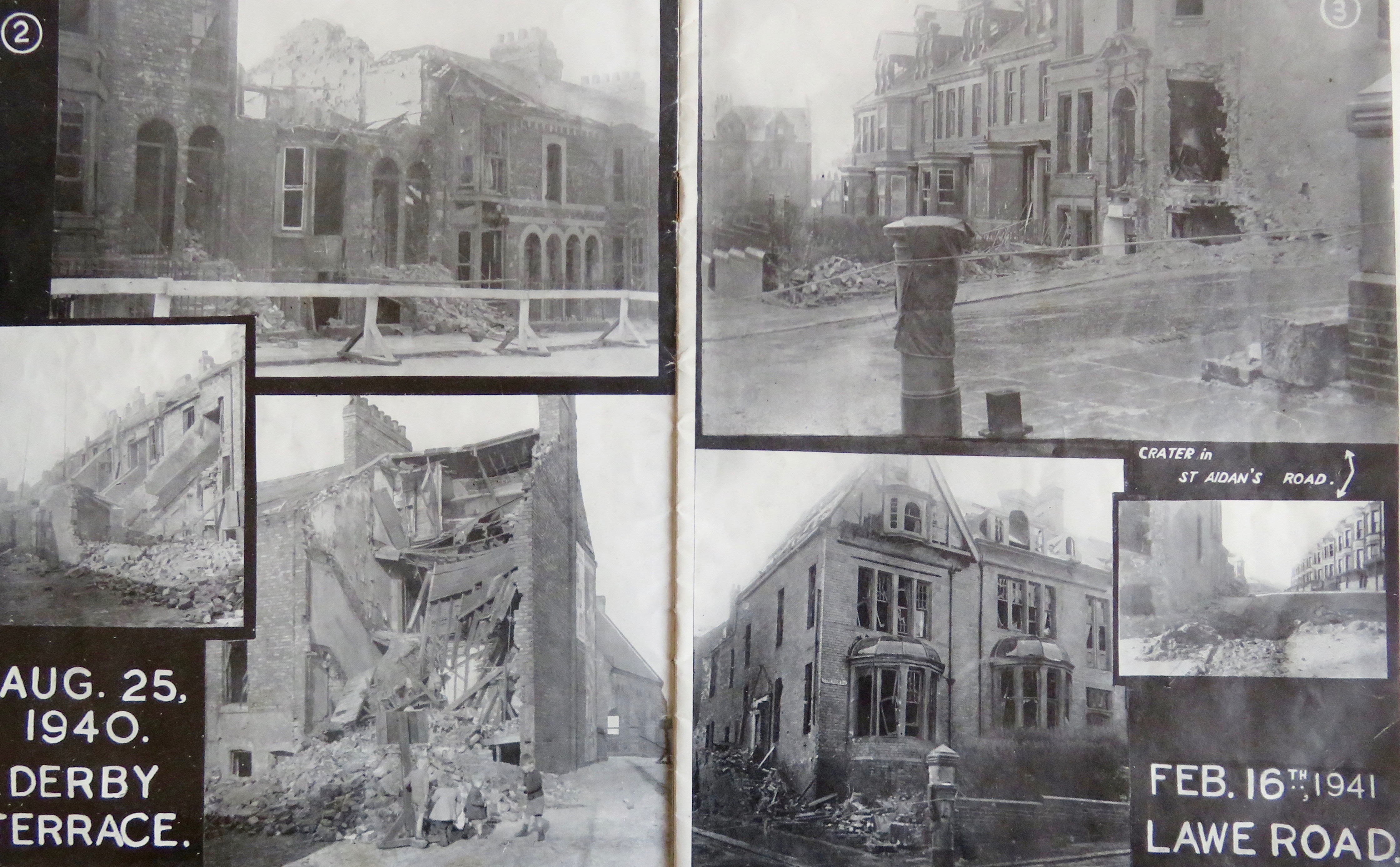
This post highlights the photograph’s Amy produced during the Second World War. She took some of the most devastating images of South Shields in the 20th century. When the bombs dropped, she captured the scars with her camera.

IMG_0979

Page from inside the pamphlet.

When researching a documentary about Amy (Westoe Rose, 2016) I came across detailed records that she had made of German air raids that revealed the amount of suffering the town endured. 

The Ministry of Information and the Chief Press Officer gave permission to produce Humanity & Courage, pamphlets featuring some photographs that Flagg had taken of war damage to her town.

IMG_0760

Detailed record of air raids over South Shields.

More images are available on the South Tyneside Library website

https://southtynesidehistory.co.uk/

Included here is a picture story from The Shields Gazette showing her friend and Librarian Rose Mary Farrell standing next to a display of Amy’s photographs.

They were shown in an exhibition at South Shields Library. The report is dated August 1968, three years after Amy died.

IMG_0693

Links to previous Amy Flagg posts:

https://garyalikivi.com/2018/07/19/westoe-rose-making-the-documentary-about-historian-and-photographer-amy-flagg/

https://garyalikivi.com/2019/07/11/westoe-rose-the-story-of-amy-flagg-south-shields-historian-photographer-1893-1965/

https://garyalikivi.com/2019/12/21/history-lives-amy-c-flagg-south-shields-historian-photographer-1893-1965/

https://garyalikivi.com/2019/12/28/amy-flagg-holborn-the-mill-dam-valley/

Alikivi   March 2020

HARD UP in HOLBORN – South Shields photographer James Henry Cleet 1876-1959.

During the 1930’s James Cleet was commissioned by South Shields Public Health Department to make a photographic record of ‘slum housing’ in the riverside area of the town – Holborn and Laygate.

Side Photographic Gallery in Newcastle produced a booklet in 1979 of some of the photos. Not sure if the term ‘slum’ was first used by Side Gallery or Public Health Department?

First time I came across James Cleet was when I was doing some family and history research in the Local History section of South Tyneside Library in 2007.

It gave me the idea to make a documentary highlighting Cleet’s work, and Holborn, the area once known as the industrial heartland of South Shields, plus the digitization project.

The Local History section had been awarded funding to digitize thousands of photographs they had in their archive and load them onto a new website. Volunteers were needed for this process and as I was self employed I could give a couple of hours a week to a worthwhile cause.

Spending time looking through photographs, some from the early 1900’s, of people, places and events around South Tyneside was a great way to spend a couple of hours.

It wasn’t long till I dropped in more frequently. Photographs by Emmett, Flagg and Cleet were an excellent record of the times.

Some images had familiar street names of area’s where my ancestors lived, mainly Tyne Dock, Holborn and Jarrow. Finding a family of photographers called Downey who had a studio in Eldon Street next door to where my great grandmother lived was an added bonus.

There was a small team of volunteers who recorded details of the images, scanned the photos, and uploaded them onto the website, this process features in the documentary.

Street names, buildings, shops and people were researched, as much information as possible was added. On the back of the pictures was nearly always a date or name of the photographer.

But unfortunately, some photographs were left blank and didn’t have any recognizable signs but were still uploaded.

After a few sessions I could recognize the styles of certain photographers and two of them stood out. Amy Flagg added extensive details to a lot of her work and covered some powerful subjects like the Second World War – climbing over bombed houses to get the shot won’t have been easy.

Some of her images became instantly recognisable, in her darkroom she stamped a date in Roman numerals on the bottom of the photo.

There were a load of photographs that were taken in Holborn by James Cleet, his style and composition was of a very high quality with clean, sharp images. Most of the images are taken on overcast, grey rainy days – is that a coincidence ? I doubt it.

The lighting gives the pictures a uniform look and add to the bleak, grim atmosphere of the housing clearance.

In research I found Cleet had regular work at ship launches, plus The Shields Gazette and Daily Mirror. While Flagg’s technique was more handheld, Cleet used a tripod in most if not all of his very sharp pictures. Both were passionate about their work.

Around that time an old guy used to come to the local history section and tell me a few stories about Tyne Dock and Holborn as his family lived in those areas.

Next time he brought in a booklet which he gave to me, it featured a collection of the Cleet housing clearance photographs I’d been looking at.

The booklet also included reports by the South Shields Medical Officer for Health talking about ‘rat repression’ and ‘eradication of bed bugs’. They reported….

’The women had a very hard life. They polished their steps, and the pavement was scrubbed. The backyard was washed regular. There was a question of pride. They had to keep them clean or they’d be overrun with vermin. No getting away with it. It had to be kept down’.

The report also included complaints from residents…

’A’ve seen some hard up times. Families of nine in one room. I knew a family, the father and mother had to gan ootside to do their business. Yes they used to do their courtin’ ootside. The mother used to stand at the telegraph pole on Johnsons Hill and have her love with the husband and then gan yem to bed. You couldn’t do nowt with all the family livin’ in one room’.

In a previous post I wrote about the important historical archive that Amy Flagg had left to the town: her Second World War photo’s plus the book ‘The History of Shipbuilding in South Shields’, the James Cleet housing clearance booklet is just as important a document of South Shields.

To check out the South Tyneside photographs featuring Amy Flagg and James Cleet go to :   https://www.southtynesidehistory.co.uk/

Gary Alikivi   December 2019.