It was late 2012 when Hive community radio station started broadcasting on-line out of Tyneside’s Jarrow Hall.
Over the years they took on a number of projects including a new audio drama group who obtained Lottery funding and found a base in Jarrow’s Perth Green Community Centre – Hive Storytellers was born in September 2019.
But when the Covid 19 pandemic hit in 2020 the on line station lost all funding and community contracts, fortunately the group managed to survive the lockdowns by meeting on zoom once a week.
With the radio station closed the Hive Storytellers continued to create new projects and produce a number of audio plays for podcasts on Spotify, Apple and other feeds.
With over 2,500 listeners worldwide, the plays covered local Tyneside stories using a mix of fact and fiction.
Rule 55 is a play based on a rail disaster at St Bede’s Junction, Jarrow in 1915. It was written by Lilly Moon from South Shields and Jarrow born Lorna Windham.
Lilly talked about the inspiration for the story…
“I was talking to fellow Hive Storyteller John Caffery one day when he mentioned that his Grandfather was involved in a train disaster at Jarrow. It peaked my interest so I done a bit of research then talked to Lorna about it and we agreed to do something about this hidden story”.
“The project gathered momentum and not only did we write an audio drama, we also put together an exhibition for Bede’s World in Jarrow.
We also spoke to A19, the local railway club about this tragic accident who ended up making a diorama model of the train crash, we were very grateful, it was totally unexpected”.
“On the opening night of the exhibition we invited the South Tyneside Mayor and Reverend of the local church St Pauls, she done a blessing. Newspapers and TV crews came and some family members of people who died in the train crash. It was lovely as they met for the first time.
We’ve worked on a number of projects now and the local history stories go down really well with the audience”.
The St Bede’s Junction Rail Disaster story will be covered in the next post.
What are you working on now?
“Lorna and I are working on a new series of stories of mystical characters, she has created the characters and we’ve recorded them. They are put on the Woodland Audio Trail at the Lady of the North, Northumberlandia in Cramlington”.
“As people go round the trail they scan a QR code onto their phones that are on the listening posts and hear the stories we’ve recorded. It’s done really well over the summer holidays and we are producing another in November. We’ve had some fantastic feedback”.
Stories are worked on for days or weeks, and some films took months. To knock it into shape there’s always a lot of pushing and pulling, but when they drag on you know it’s time to think about letting go and finding something new.
But sometimes a story just lands in your lap and quickly comes together without too much work, this is one of those rare moments.
Walking along Ocean Road I was stopped outside The Marine pub by a good friend of mine who told me an interesting story about a connection between a South Shields street and a British soldier from the town who fought in the Boer war 1899-1902.
“He is buried in Westoe Cemetery near Ladysmith Street and there’s an inscription on the headstone. Unfortunately I can’t remember his name, it was a while ago when I saw the grave, but I think it was near the main gates” said 60 year old Sand dancer (native of South Shields) and musician Rob Atkinson.
Rob had just come out of the pub and had a few sherbets so I wasn’t sure if he was pulling my chain but it was a story that peaked my interest as I didn’t know much about the Boer war.
After a quick search the name Ladysmith was revealed as a city in South Africa that was a bloody battleground between British and Boer forces, it was reported thousands of British soldiers were killed there. Also as Rob mentioned, Ladysmith Street runs parallel with Westoe Cemetery.
In further research I found Devonshire – a street in the Tyne Dock area of South Shields – is another name of an infantry regiment who not only served in the First and Second World War but also in the Boer War.
I contacted award winning journalist and local history author Janis Blower and asked if she heard about the South African connection to a soldier from the town?
“The siege of Ladysmith between late 1899 and early 1900 was one of the key events of the war.
A number of South Shields men served, mainly in the Imperial Yeomanry and Durham Light Infantry, with some 107 eventually awarded Freedom of the Borough. It’s likely veterans are buried at Westoe and Harton. Do you know his name?”
Westoe Cemetery, South Shields.
To find the headstone of the unknown soldier I took a walk over to the old Westoe Cemetery with its weather beaten headstones, many buried under a mountain of ivy and some toppled over.
Among the resting, lie famous industrial and political people from the town including Dr Thomas Winterbottom, Robert Ingham MP and members of the Readhead shipbuilding family.
Initially Rob had indicated the area where the grave was and luckily after only a few minutes searching where the headstones were still standing, I found it, as I said earlier this story just fell into place.
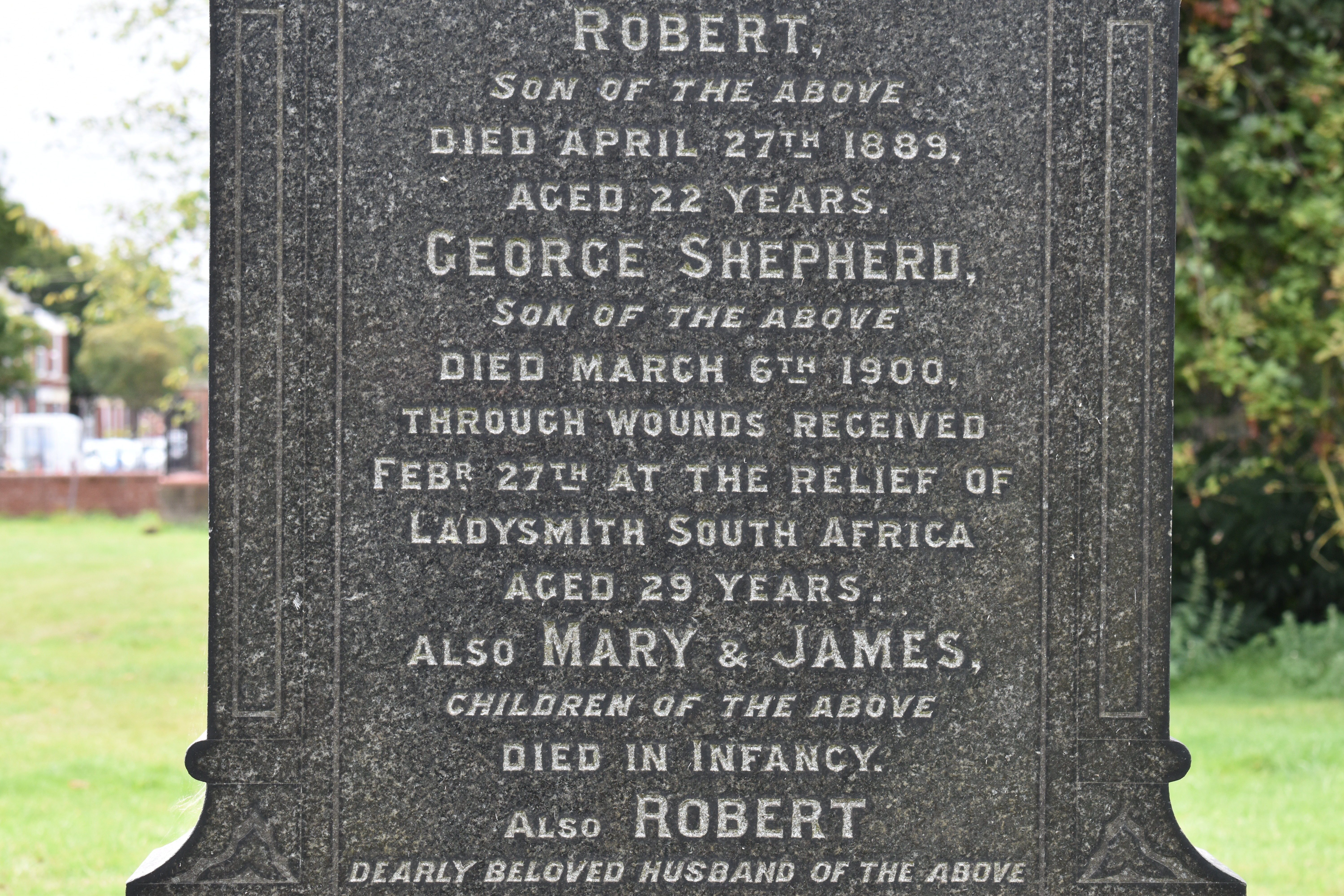
The grave was a family plot with substantial headstone including our man’s details –
George Shepherd died 6th March 1900 through wounds received Feb 27th at the relief of Ladysmith, South Africa aged 29 years.
The search for the unknown soldier ended there but when researching in the local history library I heard of someone who had been looking into his relations involvement in the Boer war, it sounded interesting so I left a contact.
A day later John Caffery got in touch and we arranged to meet. He has been researching his family tree for nearly 20 years,
“I started after our parents died, my wife Veronica also searches her side. My brother in law showed me a photo of a family member called John Robertson.
I went to the library and searched through their archives and found a few pieces of information – he was born on 28 August 1883 and lived in the Laygate area of South Shields – then it just spiralled”.
“In a loft we found a box of certificates, medals and photographs from the First World War and the Boer War, all for John, with me being interested in military stuff this was great.
I don’t think many people know about the Boer War which was a disaster for the British army. Through more research I found the Boers were backed by German artillery and officers”.
John Caffery with a framed photo of Private John Robertson who served in the 161st company of the 36th Battalion of the Imperial Yeomanry.
“Then we found something special, searching through old copies of The Shields Gazette we got to 1902 and found that he was awarded the Freedom of the Borough along with the rest of the Battalion. We’re proud of what he done”.
Returning to South Shields from South Africa, John married in 1906, lived in South Palmerston Street and found work in the coal pits. But by 1914 the First World War began and he signed up to the Royal Irish Fusiliers.
In 1918 he was wounded and discharged, and after returning home resumed pit work until retirement. Sadly in 1959 John Robertson passed away at 75 year old.
John Robertson’s medals from the First World War.
As John Caffery told me this moving story he expressed only pride and respect for a brave young man who after fighting in one war, signed up to serve in another.
John has worked on a few Tyneside history stories which he will be sharing in the coming weeks plus he told me what he is working on next.
“I’ve been looking into the rest of the soldiers who received the Freedom of the Borough, there was over one hundred, and as always you go off on a tangent and taken down another path where I’ve come across some letters from soldiers and their families from the Northumberland Fusiliers who survived the First World War – some of them break your heart to read”.
“They’ve never been published or displayed and with me being involved with Hive Radio storytellers on Tyneside, we are looking to read them out on a podcast on Remembrance Sunday, November 11, 2022. I think they would like that”.
The Roksnaps feature on this blog has photographs sent in by concert goers who captured the atmosphere of gigs at Newcastle City Hall and the Mayfair.
Among the many bands pictured were Whitesnake, Motorhead, Scorpions and North East band, Fist.
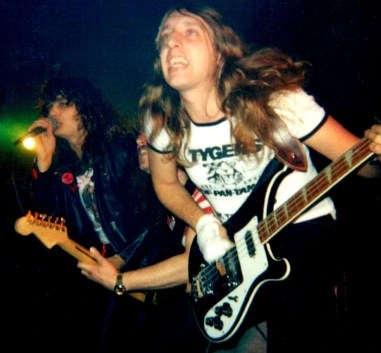
Tygers of Pan Tang at Newcastle Mayfair 1980.
Whitley Bay’s Tygers of Pan Tang were snapped by John Edward Spence who told me “I used to go to loads of gigs at the Newcastle City Hall and Mayfair. I was lucky enough to see the bands associated with the New Wave of British Heavy Metal – just loved the music around then”.
John’s pics are from 1980/81 with Jess Cox on vocals who was eventually replaced by Welsh frontman Jon Deverill, and a second guitarist John Sykes joined Thin Lizzy and was replaced by former Penetration guitarist Fred Purser.
The original Tygers engine room of guitarist Robb Weir, bassist Rocky Laws and Brian Dick on drums completed the line-up.
In 1982 the five piece band recorded one of their most successful albums, The Cage. On the subsequent tour I remember catching them live on their home patch at a packed Newcastle Mayfair on Friday 3rd September 1982.
Inner sleeve from The Cage album.
Recently the Tygers management issued a plea “40 years ago this month The Cage tour began at Newcastle’s Mayfair Ballroom. At the time it was the bands most successful outing and we visited the best venues in the country including Manchester Apollo and Hammersmith Odeon.
Support came from our old mate Kev Riddles’ Tytan. It’s a pity we have no photos from The Cage tour, unless of course anyone out there has any?”
“We realise it was 40 years ago but if you can help with the request for any pic’s – maybe they’re in the loft or in a box at the back of the garage – there’s got to be some out there”.
If you can help please don’t hesitate to get in touch. All emails will be passed onto the Tygers management or contact the official website:
In an interview Angelic Upstarts singer/songwriter/leader/chief, Mensi Mensforth (RIP) told me that ‘To be in a band you don’t have to be a prolific musician or go to art school you can just bang a dustbin lid and you’re away mate’.
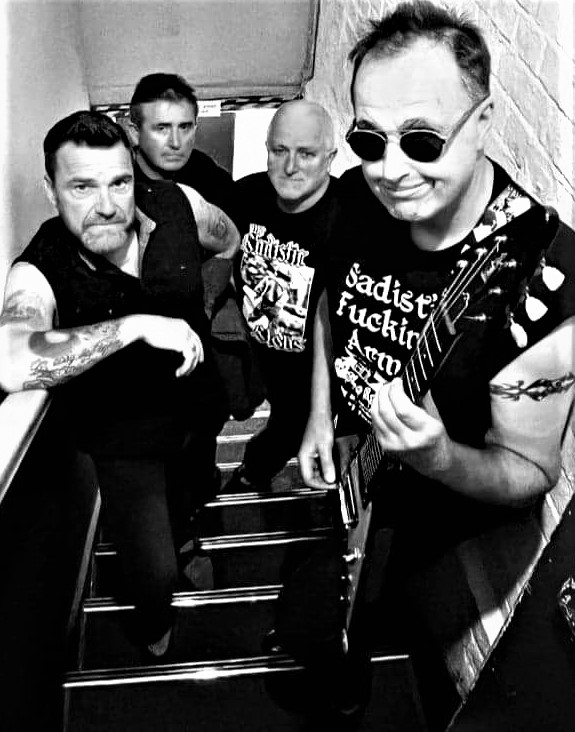
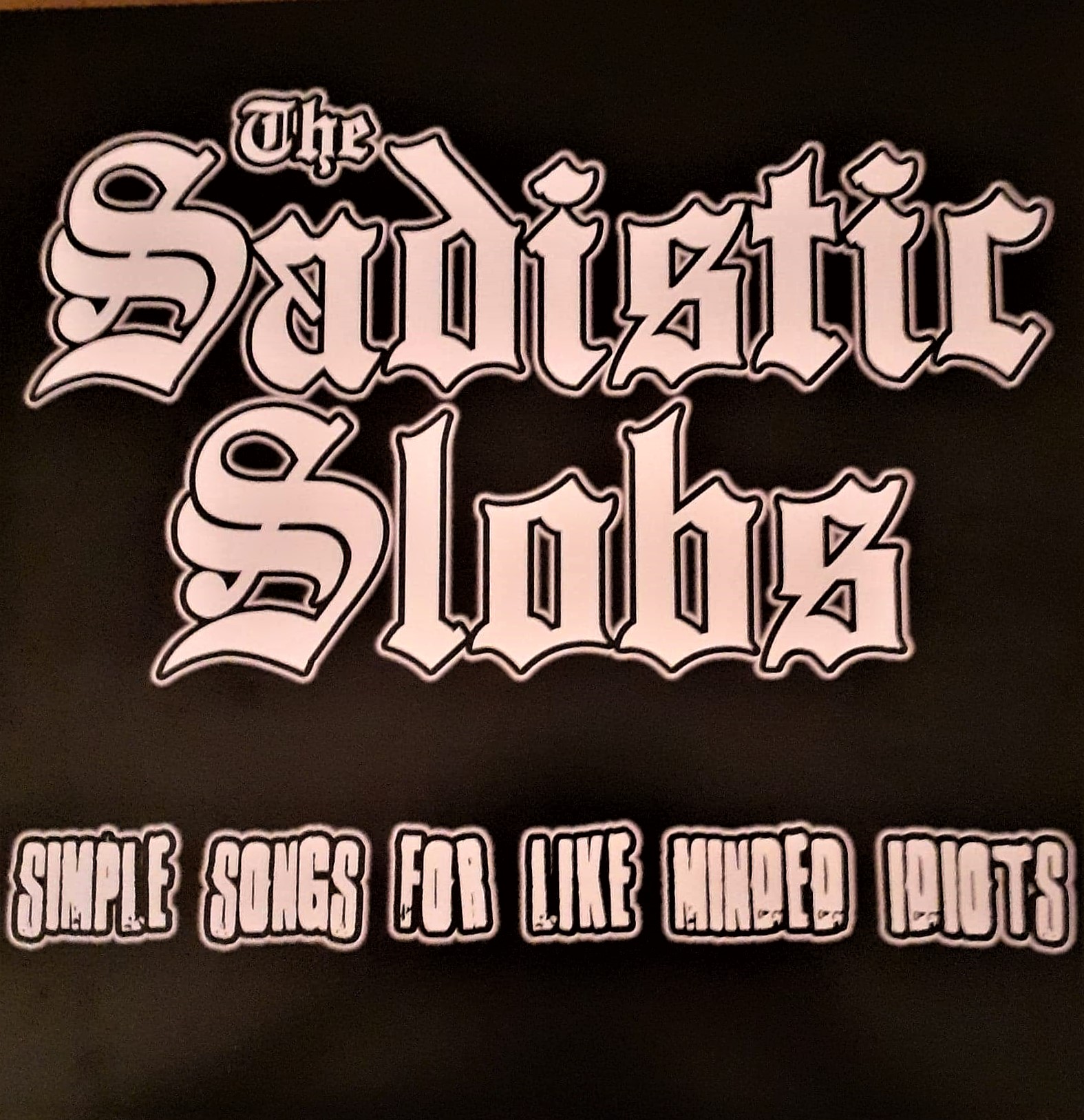
Sadistic Slobs 2022.
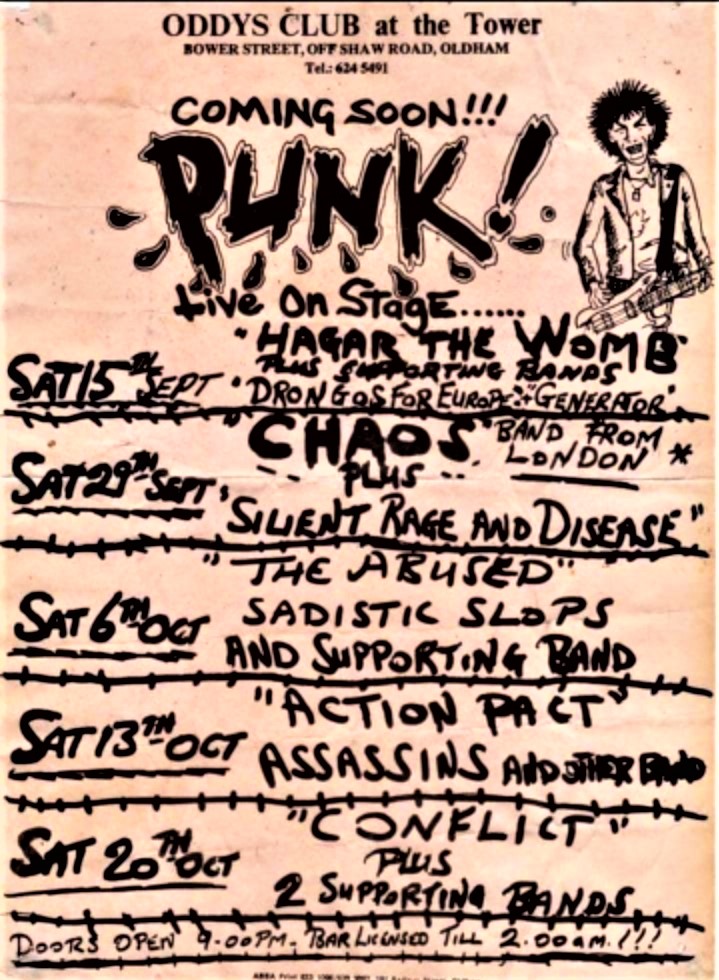
Over 40 years ago in a working class pit village in County Durham a gang of brothers crashed into each other and were named The Sadistic Slobs.
To sift through the damage I met up with Paddy (vocals) and Gran (bass) in The Littlehaven Hotel, South Shields.
Gran: Me and Paddy first met after I was locked up at Roker Park, Sunderland football ground. What happened was a lad standing next to me had a butchers knife and was banging it on the gates, he saw police coming so passed it to me.
Well I got marched around the pitch and put in a cell, and who else did I find there ? it was only Paddy’s brother. I told him my story wanting to be in a band and you know what he said ? ‘Don’t let our young ‘un sing…..he can’t’.
But he’s still here now and doing a great job.
Where did it all begin ?
Paddy: In the ‘70s we were living in Fencehouses near Sunderland and nothing much was happening. I was into glam rock first then suddenly got hit by punk.
Gran:Never Mind the Bollocks changed everything, it opened my eyes, that Pistols album cannot be beaten, then I started listening to The Clash who I still play to this day.
Paddy: Suddenly around the village it was like an institution to be in a band, everybody was wanting to start or be in a group. Bands like The Carpettes were around, The Proles had just put out a single and we all thought ‘we want to do that’. I remember buying the 7” in a record shop in Houghton le spring.
Then starting a band there was lots of comings and goings of different line ups, someone once turned up with only a cymbal and a snare drum.
Gran: We started rehearsing one song and said ‘right that’s in the set’. All the songs were like that, done very fast.
Paddy: I remember our drummer used to bring his kit in a wheelbarrow.
Gran: Yeah we had a roadie as well, and his younger brother came along and made it two roadies!
Paddy: But eventually we got a settled line up in 1982.
Gran: Unlike other punk bands we weren’t political, we don’t take ourselves too seriously.
Paddy: We did play some Rock Against Racism gigs and done stuff for Animal Charity’s. Funny enough these days we are a lot more popular than we were back then, we have a decent following and the new album is out.
Gran: Five year ago we got back together and added more catchy songs to our set and we’ve recorded an album.
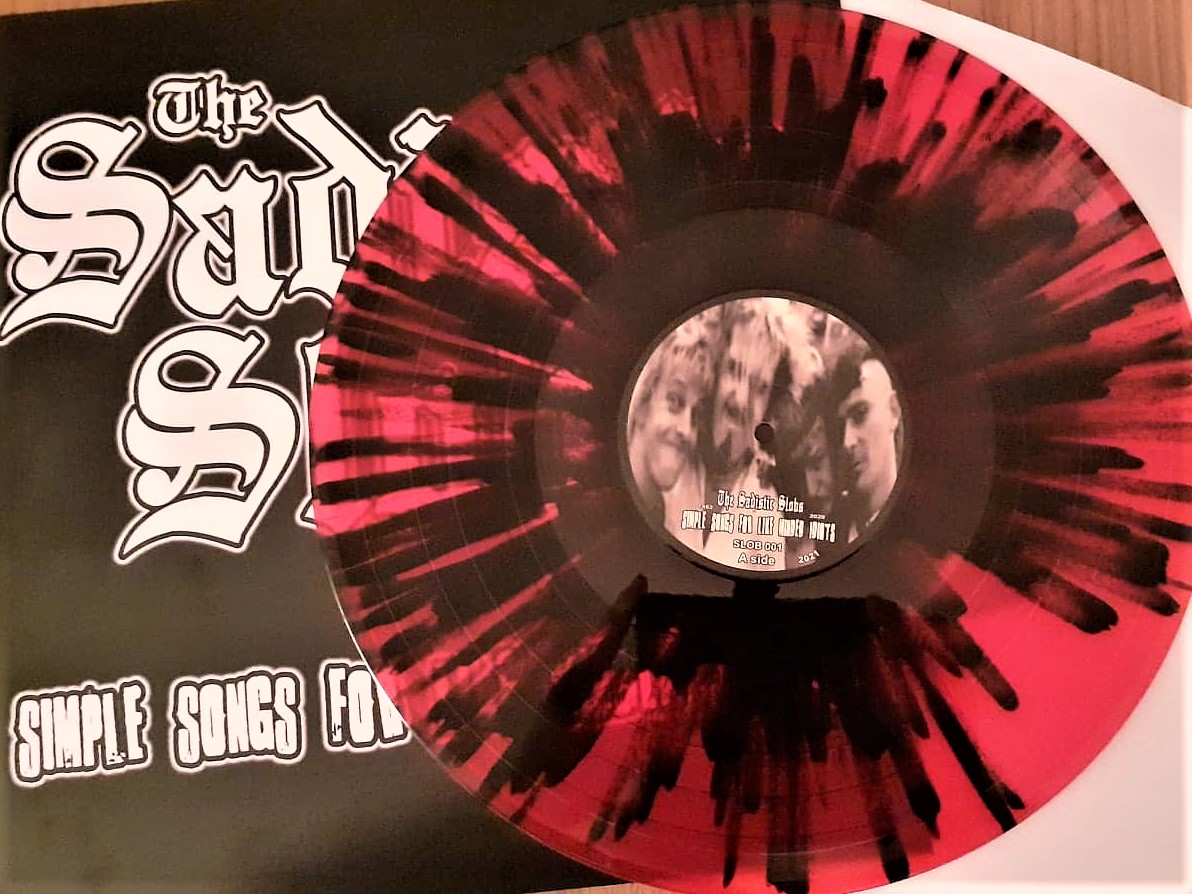
‘Simple Songs for Like Minded Idiots’ features Paddy (vocals) Rek (guitar) Rat (drums) Gran (bass).
Where did you gig in the early days ?
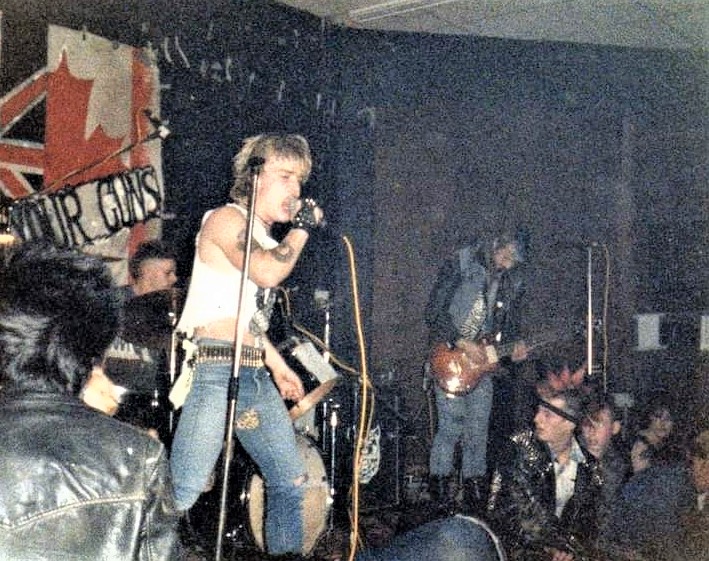
Paddy: Places like Peterlee football club, Fowlers Yard in Durham, Chester le Street and Ferryhill supporting GBH. We played in the Robin Adair pub, it was notorious as one of the roughest pubs in Newcastle and eventually got burned down. It was a sort of workingmen’s club.
Gran: On the night of the gig we went in with our mohicans and the poster on the wall advertised us as a comedy show group!
Paddy: There were only a few people there, I’m sure one of them had a dog.
Gran: Aye when we finished the committee guy popped his head around the door and said ‘you can rehearse here again next week’.
We played the famous Old 29 pub in Sunderland and a band called Animated Coathangers supported us. When we were on stage our friends were jumping about, the floor was bouncing and going to collapse.
The manager ran out threatening them with a baseball bat shouting ‘will ya’ stop pogoing’ (laughs).
Paddy: It was like walking on a sheet of glass with all the broken bottles on the floor.
Gran: Rock bands played there on a Saturday afternoon, I remember before a Sunderland match we went in and two lads were pissing on the fire – imagine the stench! But yeah saw the Toy Dolls in there and The Proles of course who are still very good friends of ours. Aye really good days.
What other bands were around at the time?
Gran: There was and still is Uproar who we played with recently.
Paddy: Red Alert, Red London and we played in a band in the early days with Steve Straughan who’s in the UK Subs now. All good lads you know.
In the North East during the early ‘80s as the shipyards and pits were being closing down and the Miners strike was boiling over did you get involved in any fund raising for the miners families ?
Gran: No but we were pinching coal from the coke works ! We didn’t play any Miners Benefit gigs or charities to be honest we were just happy being in a band. You see its all about enjoying it for us, being with mates, not taking it too seriously and definitely no egos.
Paddy: We were never a protest band and we’re keeping it light hearted even now. A lot of songs are tongue in cheek. We’re nearly 60 year old we can’t be jumping all over the place you know.
Gran: In our songs we can take the piss out of each other, it’s all about having a laugh for us.
Paddy: I joined when I was 16 and probably took myself serious then but times change, life happens.
Gran: With our roadies and followers we all get on so well it’s like a family.
Paddy: Yeah it’s called The Slob Squad and not one of us are a full shilling!
Gran: Sometimes it’s like a day out for everyone like ‘last of the summer wine’.
We played Rebellion Festival in August and went on stage 12.30pm, there was a couple of hundred people in the audience but more outside couldn’t get in, not sure why they were stuck outside might have been a problem with security on the main doors. But we just got on and done our thing on stage.
Paddy: We enjoyed it and had a great time, would love to go back and play again.
New album available on CD & record.
Where did you record the new album ?
Gran: My mate Wayne Marshall in Pelton Fell has his own digital set up at home that’s why it’s called Bedrock Studios. He was guitarist in a band I was in years ago called The Scream. It’s come out great he’s a talented lad.
Gran: We went ahead and got 500 copies printed of the album and that’s starting to sell and we are looking to record a second one. We’re not in it to make money, not that bands do anyway but to keep ticking over we’ve got a lot of merch on sale, even face masks!
Paddy: The quality is fantastic, ten songs, it’s heavy vinyl with a gatefold sleeve they’ve done a great job for us.
Gran: And on the back of the cover we’ve included a big thanks to people who’ve helped and supported us along the way.
Paddy: Yeah they’ve been with us for nearly 40 year. We done our first recording in Impulse Studio in Wallsend in 1983, I think the guy from Venom was working there then (bass & vocalist Cronos was tea maker/gofer).
What does punk mean to you ?
Both at the same time: Attitude.
Paddy: Now it’s as big as it ever was, we are getting more people at gigs than we used to. They have all grown up and their kids have grown up so they’ve time to go to gigs.
Gran: I’ve always said we are at a funny age – there’s a song in there somewhere! When we’re on stage once we stop seeing people laughing and enjoying themselves we’ll call it a day.
Paddy: In ’85 I was in The Scream we supported UK Subs at the Bunker in Sunderland there was maybe 15 people in the audience, now it’s growing because at a UK Subs gig there is easy 500 – 1,000. Always said that old punks are still punks.
Contact The Sadistic Slobs on social media for info/gigs and email gransarc@gmail.com for details how to buy the album.
Newcastle’s Lit & Phil Celebrate Anniversary of Hadrian’s Wall
Lit & Phil, Newcastle, built 1825.
Just two mins from Central Station, Newcastle’s prestigious Lit & Phil historical library are hosting an evening of comedy fun as part of their celebrations to mark the 1900th anniversary of Hadrian’s Wall upon which the library stands.
A radio sitcom pilot written by Ed Waugh (Sunday for Sammy, Christmas in the Cathedral) and Trevor Wood, which was first broadcast on BBC Cumbria in 2011, will have a script-in-hand read through in October.
Kay Easson, Lit & Phil Librarian, is responsible for bringing the laughter to the library on Westgate Road.
“Ed and Trevor have contributed to our cultural heritage with their impressive canon of professionally produced plays that include international comedy hits Dirty Dusting and Waiting for Gateaux, as well as more serious national successes Maggie’s End and The Revengers.”
Kay added “Hadrian’s Wall is an incredible part of North East history and culture so it was a no brainer staging a read-through of their excellent, irreverent but funny radio play about Hadrian cutting the tape to officially open the wall -it’s really daft!”
Jamie Brown, who recently completed a hugely successful tour as Harry Clasper in the one-man show Hadaway Harry – written by Ed – will direct the 40-minute piece that is set in AD 126 as the wall is being constructed.
“Ed and Trev have always had a distinctive voice and perspective on things and it’s wonderful they are collaborating again on this project. Their observations and humour strike a chord with audiences young and old, so I can’t wait to get It’s Grim Up North on its feet”.
“Having read the script and started to assemble an hilarious cast – audiences are in for a proper belly laugh or two”.
Tickets for It’s Grim Up North, which starts 7pm on Friday, October 28, 2022 cost £6/£8.
Mark Fleming is based in Edinburgh, his work has appeared in a number of published books and magazines including the Big Issue.
He’s run workshops across Scotland and given talks on creative writing and mental health in schools and prisons.
After spending time in a Psychiatric Care Unit, Mark rediscovered his love for creative writing and music.
As well as documenting my experiences of mental illness in my 20s, my story focuses on the cathartic power of music – said Mark.
I write regular blogs about the revitalising impact of nature and music, the blog promotes positivity through writing about mental health, wellbeing and popular culture.
What is your experience of being in bands?
My first band The Seduced, were formed in 1979 at the tail end of the first wave of punk.
We mustered about three songs, including a passable version of X-Ray-Spex’s ‘Art-I-Ficial’ – chosen because we had a female singer called Pauline, just like Penetration. We never played live but did get as far as spray painting our name on our local launderette!
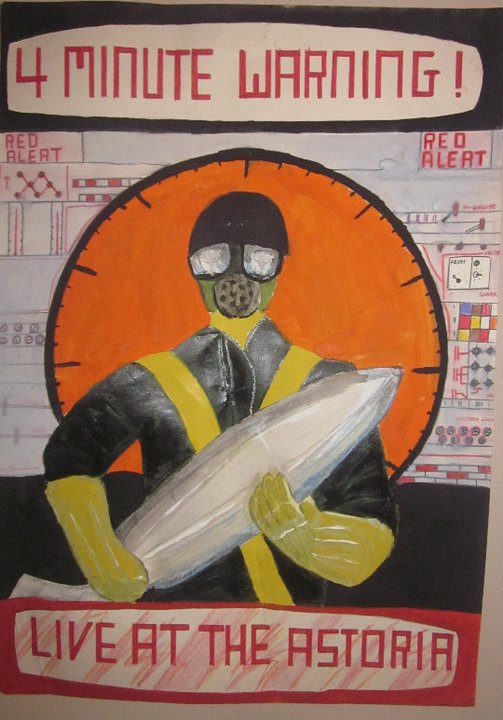
I joined my first ‘serious’ band a year later – 4 Minute Warning, named after a lyric by our biggest inspiration, Killing Joke, and outlining our anti-nuclear/pro-CND political stance.
4 Minute Warning
At the turn of the decade a far more interesting post-punk scene began emerging.
Many bands were breaking free of the three-chord, shout-along template – The Slits, Siouxsie and the Banshees, Wire, PiL, Punishment of Luxury, Gang of Four, Joy Division/New Order, Scars, A Certain Ratio, The Fall, et al – and using punk as a springboard into a whole new sonic universe.
As our music became more funk than punk we evolved into Desperation AM – named after a Gang of Four lyric. By the mid ‘80s my next band was Little Big Dig, melding post-punk, pop and Can, making it as far as a session on BBC Radio 1.
We never gigged beyond Edinburgh – and once in Glasgow, but did get a residency during the ‘85 Edinburgh Festival, in an ‘open until the wee small hours’ bar, La Sorbonne.
Gig poster for 4 Minute Warning
Mental health issues, recovery, marriage, and starting a family brought a lengthy hiatus until around 2002 when I reunited with mates from an old Edinburgh punk band, The Axidents.
We covered everyone from The Ruts to Magazine then started writing our own stuff, supporting UK Subs, 999, Eddie and the Hot Rods and Tenpole Tudor.
Desperation AM reformed and were joined by Paul Research (ex-Scars) on violin, leading to another post-punk band, Noniconic. Then Covid struck.
I’m currently mucking about with more ambient soundtracks under the moniker Giant Household Names – overheard in an interview with Wire.
Where did you grow up and what type of kid where you – playing football/in a gang/a member of a youth club ?
I grew up in Shandon on Edinburgh’s west side – traditionally the Hearts side of the capital although my dad was from Monaghan in Ireland, so I chose Hibernian. But I was always more into music than football.
In the late ‘70s uptown Edinburgh was a no-go zone, we were too young for pubs, and spiky hair/badges/ripped jeans were a red rag for ‘punk bashing’ by the far more prevalent ‘trendies’ who preferred disco music.
We’d stick to hanging around youth clubs where you could take your own records to pogo to. Youth was much more tribal back then, so if you were into punk, it was like being in a gang.
But nothing like the Edinburgh street gangs, with names like Young Leith Team and Gorgie Jungle, where the emphasis was on violent ‘turf wars’ – it was always about the music for us.
North East band Punishment of Luxury.
By the ‘80s the stubborn punks who refused to embrace post-punk did become much more aggressive. Sporting cockatoo hairstyles and studded biker jacket uniforms, the bands they were now listening to, typified by local exponents The Exploited, resembled heavy metal being played at 78 rpm.
By that time we were into Punishment of Luxury, the North East’s finest sons since Penetration, Angelic Upstarts and The Carpettes!
Check out the interviews with these bands on the Alikivi blog.
What does music mean to you?
Music means everything to me. In my 20s, I struggled with bipolar disorder, and was sectioned in 1987 spending time in intensive psychiatric care.
My wee sister Anne, bringing in cassettes of my John Peel recordings during visiting hours, was a pivotal moment in my recovery. I’ve only recently come off long-term medication (lithium) and music remains crucial to my wellbeing.
BBC Radio 6 presenters.
I’m an avid listener of BBC Radio 6 whose DJ’s include many long-standing musical heroes of mine – Iggy Pop, Marc Riley and Tom Robinson, along with a host of enthusiastic presenters like Craig Charles, Elbow’s Guy Garvey, Steve Lamacq, Mary Ann Hobbs, Stuart Maconie and others.
Although post-punk remains a major influence and I still love playing my now increasingly scratchy/jumpy 45s from 45 years ago, I prefer constructing playlists based on brand new songs introduced across the board on Radio 6.
Listening to these on headphones while strolling along the Firth of Forth on my doorstep, is wonderfully therapeutic.
Book cover for ‘1976 – Growing Up Bipolar‘.
What have you got planned for the Autumn ?
I’ve just completed a memoir that takes in my bipolar experiences of low manic depression to the high of mania and psych wards set against the backdrop of electrifying post-punk scene of the ‘80s that coaxed me back towards stable mental health.
‘1976 – Growing Up Bipolar’ is based on a novel I wrote a while back called BrainBomb. The title is a homage to the massively underrated and still out there being creative and inspirational – Punishment of Luxury.
I’m being interviewed about my book at the Portobello Book Festival on October 1st. Gig-wise, I’ve got tickets booked for Public Service Broadcasting and Pale Blue Eyes at Edinburgh’s Usher Hall in September.
I’m also making the trip down to Middlesborough to catch Punishment of Luxury in December. I never saw Punilux first time round so immensely looking forward to that.
Paperback copies of ‘1976 – Growing Up Bipolar’ are available to buy from Waterstones and most retailers. The ebook can be downloaded from Kobo, Nook, Scribd and Hoopla.
Search the Alikivi photo archive on South Tyneside History website for nearly 2,000 images including Haven Point, Mill Dam, The Word, Seafront, Holborn, Market, North Marine Park & more of the changing face of South Tyneside 2010-20.
pic. taken August 2015 of The Word library being built in the market, South Shields.
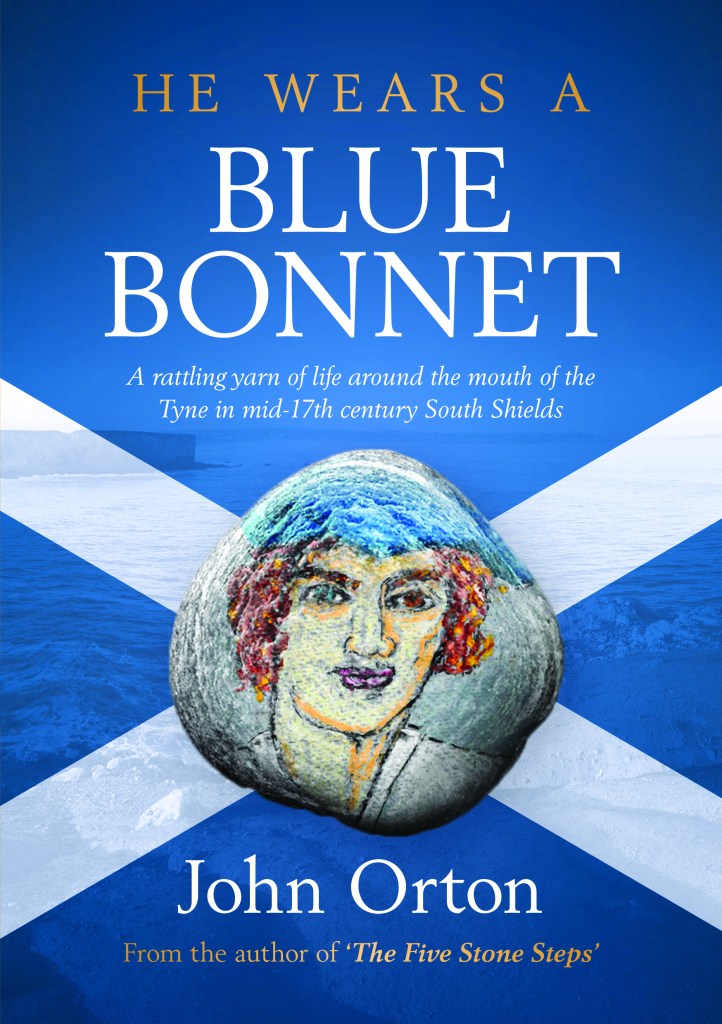
Former Tynesider John Orton is author of three previous books which have featured on this blog, The Five Stone Steps, Blitz Pams, and A Chill Wind off the Tyne which are all set in the 1900s to the 1940s, but his new book goes back further.
“Shields has a rich history, I always had an inkling that I might find some tales worth telling from way back in the mists of time. It was by chance that I read a newspaper article about the Dunbar death march”. (Dunbar is on the North East UK coast 30 mile east of Scotland’s capital, Edinburgh).
In 1650 Oliver Cromwell defeated the Scots at the battle of Dunbar but was left holding thousands of prisoners. His own troops had almost run out of supplies so he forced the Scots on a march from Dunbar to Durham with no food or water, hundreds died and some were interned in Durham Cathedral.
What caught my eye though was the 1500 that survived, most were shipped to the New World, but 40 were sent to South Shields to work in salt pans.
The new book tells of the fortunes of five highlanders taken on by two of Shields salt-pann owners who lived along the banks of the river Tyne.
Can you tell me about the plot and what happens to the five Scots lads in Shields ?
It’s a bit difficult to do without giving out any spoilers, but one of my old friends from South Shields Grammar Technical School in the 1960s Bob Colls, who went on to become a Professor of Cultural History at De Montfort University and authored a book about George Orwell, has given an excellent summary of the new book:
‘It’s a rattling yarn that takes on the life and times of poor Tyneside fishers, fish wives, keel-men and panners.
If you like a salty tale – love in the sand dunes, sweat in the salt houses, riding-the-stang and dodging the press gang, you’ll enjoy this book. If you are interested in how the poor lived in 1650 – by their wits, mainly – you’ll learn something too.’
Was salt making important to the town and what sort of life did salt workers lead?
Making salt by boiling sea water was practised in both North and South Shields form the 1300s. It probably started to help fishers to preserve their fish, by the 1600s it was a major industry.
The sea water that flowed into the Tyne at high tide passed through pipes into wells, then it was pumped into iron panns that were 20 ft long, 14 ft wide and up to 14 inches deep. Coal would be carried from keels (boats) into the salt-house where panns were heated over a furnace.
In all it was a dangerous and hard job as workers would stoke fires, pump waters, and carry newly formed salt into the sheds where the salt dried out to be weighed and measured by excise men.
A Shields pann would produce highest quality white salt that was in demand not just from local fishers, but for shipping to the rest of England. In the 1600s there were more than 150 panns producing the ‘white gold’ and pann owners made fortunes.
Keelmen Playing at Cards (reproduced by permission of Durham County Record Office, Mackenzie and Dent, Histories of Northumberland Durham and Newcastle (Newcastle vol 1 294a) – 183
‘Weel may the keel row’ is a song known to many older Tynesiders. Do the keelmen come into the story?
Wye aye they do! The City of Newcastle had a royal monopoly over trade on the Tyne, which was a dangerous river to navigate in the days of sail, so most ship’s master’s preferred to moor their vessels near to the river mouth, and transported their cargo to and from Newcastle by keels – keels were boats 42 ft long and 19 foot wide.
At the stern, the skipper steered the boat with a long oar called a swape, and two bullies (crewmen) and a boy propelled the keel with an even longer oar.
Coal was a major export, and the keels would carry coals to the colliers waiting at the mouth of the Tyne. The keelmen were mostly from Scotland and wore blue bonnets, the young lassies would fall for them – dimples and all.
In research did you come across any unusual stories ?
To be honest Gary it was all strange to me, but here are two. One-eyed seamen were a common sight in the ale-houses of Shields. To find the latitude of a ship, a device known as a Jacob’s Cross was used – a long stick with a cross piece was held to the eye with one end to the sun and one to the horizon – the markings on the stick gave the latitude.
Gazing for long periods at the sun lead to blindness.
Another I came across was the story of the Royal Navy who always laid in wait for ships returning from voyages to board the vessel and press gang the crew.
To beat this many ships would anchor a few mile away and make a swift swap and discharge their able-bodied crewmen and take on in their place boys aged under 10, plus one-legged or one-armed unfit old seamen, just enough to carry the ship to a mooring place.
When is the book released and where can people buy it?
It’s out now on Amazon as a paperback and kindle, and on sale at The Word library shop in South Shields.
Search the Alikivi photo archive on South Tyneside History website for nearly 2,000 images including Haven Point, Mill Dam, The Word, Seafront, Holborn, Market, North Marine Park & more of the changing face of South Tyneside 2010-20.
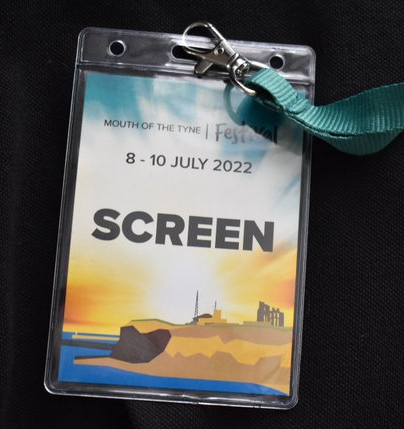
Mouth of the Tyne Festival, Tynemouth Priory 2022pic. Paul Appleby
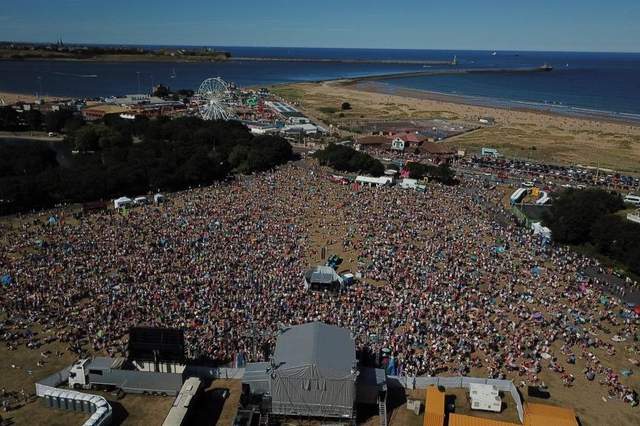
Well that wasn’t a bad place to do some filming. The past couple of years I’ve not been ‘on the tools’ doing as much camera work as I used to but this month was working on two video screen camera set up’s with the first at Mouth of the Tyne Festival at Tynemouth Priory where Keane headlined to a sell-out crowd (2019 pre covid was The Proclaimers and Rik Astley) plus at South Shields Bents Park on Sunday 10th July was Beth Macari supporting Will Young to an estimated 20,000+ crowd.
Will Young at Bent’s Park, South Shields pic. Lee Davison
Both were captured by stunning drone shots which pictured the scale of the events held next to the coastline and on the North and South of the Tyne, plus the huge audiences soaking up the music and sun on a blistering hot summer weekend.
Lee Davison was at Shields (with his pics making The Shields Gazette) and professional photographer Paul Appleby was at Tynemouth.















 ALIKIVI UK : NORTH EAST MUSIC & CULTURE