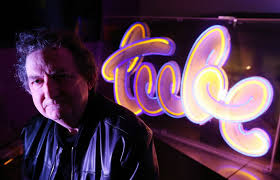
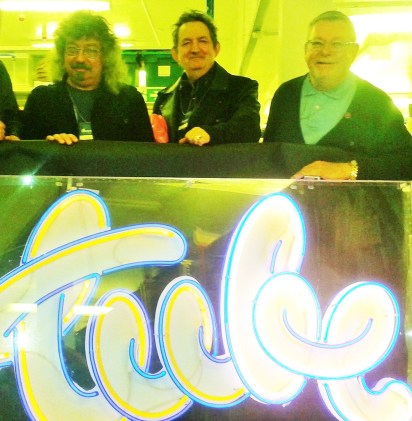
KEEP ON ROCKIN’ – Tom Hill, bassist with reformed Newcastle band GEORDIE

It’s 1980 and do you really need to know what happened to Brian Johnson ? ‘Nutbush City Limits’ was his audition song for a band he only knew the initials of. He backed the black. And won.

Rewind to ‘72 and with a line up of Vic Malcolm (guitar) Brian Johnson (vocals) Brian Gibson (drums) and Tom Hill (bass) Geordie released their first single ‘Don’t Do That’ and broke into the UK Top 40. 

By ’73 the debut album ‘Hope You Like It’ was recorded for EMI. The same year included two UK hit’s ‘All Because of You’ and ‘Can You Do It’ with appearances on Top of the Pops. Everything’s gaan canny.

Competing with glam rockers Sweet and Slade the band went through some upheaval, Johnson left, Dave Ditchburn came in on vocals and there was a Geordie mark II performing.

By the early ‘80s a new Geordie album was released on Neat records but without any major success they changed their name to Powerhouse.

Hoping to change their fortune, they took another throw of the dice and with a new line up released an album, but eventually called it a day in 1986.

Original member Tom Hill remembers how Geordie first got together…

Well it was Vic Malcolm who approached me to join a band he was putting together, but I told him the band I was playing in at that time was better. So Vic came to a rehearsal, heard the band and agreed (laughs). 

The members in that band were me on bass, Brian Gibson on drums, Brian Johnson, vocals and Ken Brown on guitar. Not long after, Ken left, and Vic joined. We named the band USA and away we went.

We got signed and changed the name to Geordie. This was late 72. We ended up playing all over the world Australia, Europe, Scandinavia, Japan, all over.

Who were your early influences ?

That would have been The Beatles to start with then got into Zeppelin, Deep Purple and bands of that genre.

Who were your first band and what venues did you play ?

My first proper working band was with Brian Gibson on drums, we worked together since we were kids. We done the Northern circuit of working men’s clubs and night clubs.

5130cf_2cd45accd4aa4c24a7a60136b04a4249_mv2_d_4659_3106_s_4_2

How did the new version of Geordie get together ?

It all came together nicely really. Steve Dawson came in on guitar. Me and Brian Gibson wanted to work together again so that was good and Mark Wright joined on vocals.

An agent called Pete Barton pulled it all together. The band started rehearsing and it’s sounding tremendous.

What’s the plan for Geordie ? 

We are working really hard on projects with the agent trying to get bookings in Rock Clubs, Festivals and any country in the world that wants to rock.

What does music mean to you ?

Music has always played a big part in my life and has given me a great deal of pleasure. And I’m hoping it’s going to continue.

The 2019 version of Geordie is Steve Dawson (guitar) Mark Wright (vocals) with original members Brian Gibson (drums) and Tom Hill (bass).

 Contact details:

geordiebandofficial@gmail.com

https://www.facebook.com/geordiebandofficial/

https://www.youtube.com/watch?v=Y57t79VYvwc

Interview by Gary Alikivi   August 2019.


RUNNING MAN in conversation with Lindisfarne drummer, Ray Laidlaw

We’re in Tyneside Cinema Café in Newcastle and Ray asks why I write the blog ’I put it together because we all like hearing musician’s stories’. Ray fires back Do drummers count ?’

We both live on either side of the banks of the River Tyne, so does he think the river has an influence on who we are and what we do…

Oh yes, the river is a means of communication. Everything came in and out of the river. It is a barrier but also a conduit for ideas from other people from different parts of the UK and all over the world.

Geordies have always been receptive to new ideas……and if they really like them they pretend they were theirs (laughs).

Paul Irwin and I started Tyne Idols. We are big fans of the region and it’s creativity so we came up with an idea of a bus tour around Tyneside celebrating music, TV and visit film locations.

We often invite a guest on the bus, maybe an actor, comedian or musician. Last year we had Dick Clements and Ian Le Frenais, and went around locations of their show The Likely Lads. It’s a celebration of the area really.

Can you remember the music TV shows that came out of Tyne Tees studio in Newcastle ? 

Yeah we played a few, Lindisfarne were on the Geordie Scene. We also had a half hour show to ourselves on Alright Now. That was around ’78/79 when we were making our comeback.

We came up with a few ideas, in the first half we did a few songs and links in various locations then the second half was all live. Loved it. That was with producers Geoff and Andrea Wonfor. But sadly Lindisfarne never appeared on The Tube. Ray Jackson had a song on where we all backed him but not as Lindisfarne.

The Tube was great. Not just music but comedy as well. Stephen Fry, Dawn French and many others all got their breaks at The Tube. It was influenced by the 1960’s TV show Ready, Steady, Go. I’ve been working on a programme about that with Geoff Wonfor.

It tells the story of the groundbreaking programme which was one of the first that had the cameras in view. The cameramen were brought in from the sports programmes because they were used to following action. That brought up the excitement when the bands were on stage. The documentary will be on BBC4 later this year.

Lindisfarne played Top of the Pops a few times, what did you think of the show ?

It was ok, you just mimed. But the best thing was meeting other musicians. Most of the time you are touring on your own. It was like the early 1970’s festivals. We loved doing festivals because of the other bands you could meet.  Bands like The Faces, Medicine Head, The Beach Boys, Rory Gallagher, Humble Pie.

We played our first festival down in Devon in summer 1970 and on that occasion Free were top of the bill, they were just breaking then. They were supposed to close the show at 9pm with us playing just before them. At 10pm we hadn’t been on. Free had to be back in London for the next morning so they went on while we were backstage having a few drinks.

We finally got on at 11pm and opened with Lady Eleanor. It’s a song which creeps in. A guitar, mandolin bit, a bass bit, drums, then guitar harmonics at regular intervals. Waited for guitar part…. no guitar part. In those days Simon Cowe used to play sitting down so Hully had to go and kick him up the arse cos he’d fallen asleep (laughs).

Do bands have their time, maybe an album or two then come back in the spotlight years later ?

Yes there is a bit of that. But when we broke through it was the perfect time because we were so different from everybody else. Also having three great songwriters in the band, most have just one, we had three.

Lindisfarne had a number of members but when the band recorded the number one album ’Fog on the Tyne’ the personnel were the original five, Alan Hull (vocals, guitars, keyboards) Ray Jackson (vocals, mandolin, harmonica) Rod Clements (bass, violin) Simon Cowe (lead, acoustic, 12 string guitars, mandolin, vocals) and Ray Laidlaw (drums).

We had the biggest selling album of ’71 in Fog on the Tyne. Everyone had that record. We had lots of our own fans but we were also other music fans second favourite group, like Newcastle United in the Keegan era.

The Fog album was such a huge success that everything after that was going to be perceived as failure. So the third album only got to number six in the charts. Yes, only (laughs).

But we weren’t prepared for that. Management didn’t sit us down and say whatever happens it’s going to be a hard act to follow. Plus the record was put out too quick as we were the only band making money on the label. Maybe we should have taken six month off after Fog on the Tyne.

Who was your manager ?

Tony Stratton Smith who owned the record company, Charisma. It was a big mistake. Basically Tony was talking to himself (laughs). ‘Do you want an advance’…’No’ (laughs).

Charisma was a wacky label with Van Der Graf Generator, Monty Python, the poet Sir John Betjeman, us…where else would you get that ? Fantastically creative but had it’s drawbacks. So the band split in two because we couldn’t agree what to do after the third record.

The band with the same personnel, released the album ‘Dingly Dell’ and charted in the top 10. What recording studios did you use for the album ?

In the early days the majority of our records were done in Trident Studios off Wardour Street in London. We used that studio for Nicely Out of Tune and Fog on the Tyne.

We also recorded some stuff in Olympic and Island studios and then when we got back together again in 1978 we used residential studios like Gus Dudgeon’s place in Maidenhead, we also went to Rockfield, Chipping Norton and Ridge Farm.

By that time we all had young families so using residential studios worked out better as the wives and kids could visit.

Were some songs recorded just for the studio or all written to play live ?

I think everything we did we at least attempted to play live. We had a guide that if a song works with one man and a guitar or piano it’ll work with the band.

The song has to have a strength of it’s own first, almost with no supporting instrumentation. Live you try different arrangements, build it up or strip it back.

Some songs you would only do on one tour then put it back in the box. Some you have to play because the longer you survive the more material you have. It’s the early one’s that made your name. They have to be in the set list.

Do you come from a musical family ?

Me Grandad was a pub singer and could play piano. It was a good way of not buying his own beer. His daughter, my mam, was a good dancer but was a bit nervous to leave home so she never did it professionally. That’s the only bit of a showbiz background.

But it was me Granda that bought me my first drumkit. I just liked the look of drum sets, a bit like some folks like motorbikes. A couple of mates had guitars. I was getting interested in music about 1960 and it was a perfect time because there was so much great stuff about.

When I first started in a group, I was with Simon Cowe who was also in Lindisfarne with me. Our first group was a three piece, just instrumentals, we couldn’t afford a microphone. We were just learning, playing instrumentals.

We did a couple of gigs in social clubs, only during school holidays because Simon was at boarding school in Edinburgh.

Where did you rehearse ?

Simon’s family lived in a big old Georgian house, the poshest street in North Shields. His dad was an architect. There were loads of rooms and we set up in one of the spare rooms downstairs.

Music wasn’t the only thing we got up to. We also made homemade fireworks and stole fruit out of people’s gardens (laughs).

But yeah I was a bit of a show-off really but didn’t have the confidence to be a singer or guitar player. Just had an affinity with drums and was pretty good at it.

After that I was in a band called The Druids with Bob Sergeant who went on to be a producer on BBC radio for John Peel, The Clash, stuff like that. The Druids were playing all covers and gigged youth clubs for about a year.

Then I met Rod Clements who was another posh lad from North Shields. His band had just packed in and we got into the blues via the Stones and John Mayall. We loved the Yardbirds. All fast and furious – we decided to get a band together.

We used to watch The Junco Partners and they were the first band we had seen that listened to each other, didn’t all play at once, they realised they all had a part to play within the group.

We were inspired and looked for people who had to be as good as they were. It took four or five years to finally get our dream band together.

How much were Downtown Faction influenced by the folk scene on Tyneside ?

We weren’t at first, that all came later. We were into the blues, it wasn’t until we started writing our own songs that we developed that bluesy/folk and rootsy sound.

Simon was a great guitar player, finger picking style like Bert Jansch and we started listening to early Fairport Convention, Dylan, intelligent song writing.

We had a bit of arrogance about us, ambitious yes, and we looked down our noses at bands doing nothing but covers. We did play a few covers but we chose unusual tracks, Bob Dylan, Moby Grape, Frank Zappa tunes.

We were looking to be original, wanted to be better than everyone else, putting the band together was organic… we gradually found the right people, there was no speedy plan.
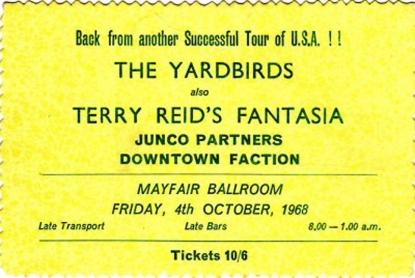
13-mayfair-4-10-68

What year was this ?

Around ‘67/68. We were the support band on Led Zeppelins first ever UK gig at Newcastle Mayfair. They were still called The New Yardbirds then and had only been going two weeks.

Can you remember much about that time ?

Well we used to be on at the Mayfair a lot then, Tuesday would be a couple of local bands and other nights would be a big band who wanted local support. I used to see a lot of bands there, I was always in the Mayfair. I remember that Yardbirds gig but it didn’t make a massive mark.

How old were you then and did you have a proper job ?

20 year old and a window dresser at Shepherds department store in Gateshead. I’d dropped out of art college and needed a job. I got on well at the store so was able to juggle my time with gigs and work.

Simon was a photographer at Turners in Newcastle so that was great for arty publicity shots that we could put up in a shop window in the Haymarket. They became a bit of a talking point, we always tried to be creative with what we did.

What else was happening on the music scene ?

We did a gig New Year’s Day 1969 at Newcastle old town hall. Somebody had the brainwave of putting on a blues and poetry day. There was no heating in the place, so it was freezing. Two bands played, four or five poets were on and about 100 people there.

The street poetry was astonishing, I’d never heard anything like it. Poets like Tom Pickard and Tony Jackson, pre cursor to today’s Benjamin Zephaniah and people like that. Very working class, very political.

After that there was a few blues evenings, all very arty, hippy, sit on the floor pay what you can sort of deal.

Did the band have a manager or agent  ?

Ivan Burchill was the main agent in Newcastle then, but we wouldn’t compromise about our music so didn’t get as many gigs as some bands. Plus at our gigs we never got the lasses you know, we’d get all the muso’s turning up.

A guy called Joe Robertson got us gigs when we changed our name from Downtown Faction to Brethren. That was when people were taking notice, we were headlining a few shows and Joe was also managing The Junco Partners.

That was when Alan Hull joined and his manager at the time Dave Woods from Impulse Studio came in on joint management with Joe. Inroads to record companies started to happen then.

Did you know Alan previously ?

He was in a band The Chosen Few who along with The Junco Partners were the big bands in Newcastle. After his band crashed and burned, he took a break then began song writing again.

He used to play in the folk clubs where the tradition was they’d let newcomers play three songs early in the night. He used to try his stuff out there and so did we because you didn’t want to try new stuff in front of a blues/rock audience.

Beginning as Downtown Faction, the band changed their name again from Brethren to Lindisfarne and were signed to Charisma records in 1970.

Was it an emerging scene then…

Yeah it was a bit of an underground song-writing scene on Tyneside that was parallel to the more pop based groups. Bit underground because there were musos coming down from Scotland – Rab Noakes and the JSD Band, there was Prelude from Low Fell, Milesy (John Miles) and his group The Influence from South Shields, many others.

Folk guys were influencing the rock guys and vice versa. We were listening to Music from Big Pink by the Band (Bob Dylan’s backing band). They were doing stuff from American roots music with a rock rhythm section and that’s what we wanted to do.

Fairport Convention were another band playing rock’n’roll versions of English folk tunes. Now here was music with a bit more history and depth, more gravitas. This is more like it. We loved that.

Our group all had different tastes but agreed on one thing. We loved The Beatles and we loved the way they treated every song as an individual piece of work. It wasn’t a problem for us to leave a guitar or drums off a track. It was all about the song.

We were a song-writing band and we had to treat each individual song right.

We could write something and if it was alright for Top of the Pops we were ok with that. We didn’t have a problem about being commercial. Some of the songs we had were great pop songs but we never set out to write singles.

Same with an album, every song had to count…no fillers. If there was a single in there, great, if not, no worries.

Have you got any road stories ?

Lindisfarne had a break from 1973-76, we had a few successful one-off gigs then made a new album in ’78. The opening night on the tour was Leeds University were The Who recorded their album Live at Leeds.

We broke their attendance record that night. Two weeks later the fire brigade came in and told the University ‘With the number of fire escapes you’ve got, you got to cut the capacity by 400’. So our record will never be beaten (laughs).

Anyway the opening night we had some pyrotechnics, we went a bit showbiz like, and they would go off at the end of the show. Balloons and confetti cannons. The big ending you know. At that point the soundman was to mute every channel – and he forgot.

So it went down every microphone, the monitors were like tissue paper, the speakers blew out as did the windows behind the stage. We weren’t invited back (laughs).

Did you play any gigs that turned out to be a nightmare ?

Some of the usual rock ‘n’ roll stories where the promoter won’t pay you. And you’ve already played the gig. One time we had to get our crew to park our truck across the path of the headliners truck so they couldn’t shift it. Then the word would go out about dodgy promoters so you would ask for half the money up front.

Some tours were great fun with other bands. Genesis were on the same label as us in the early days so we used to be on the same bill along with Van Der Graaf Generator. Depending on what city we were in and who had the biggest following we would take turns headlining. But we used to finish the gig doing a song together.

We’d play The Battle of New Orleans a Lonnie Donegan song, with Alan Hull, Ray Jackson, Phil Collins and Peter Gabriel singing a verse each. All the bands singing together. And nobody recorded it!

What does music mean to you ? 

It’s given me my life. If I hadn’t been enthusiastic about music and taken the plunge, I probably would have ended up being a not very good teacher. I’ve had a really exciting life and it still is, you never know what the next phone call is gonna be.

I’m still a music fan and that’s how I maintain my enthusiasm. So many good times with music. I’m just glad me Granda got us me first set of drums.

What are you doing now ?

We’ve been putting together Sunday for Sammy concerts. Our dear friend the actor, Sammy Johnson died in 1998 and we didn’t just want a plaque for him, we wanted to do more so we came up with a concert idea.

I’ve been involved with Sammy since the beginning in 2000 with Lindisfarne, then drummer for the house-band and from 2006 producing the show. The proceeds of the show are put towards the start of creative careers for young people. To date we’ve raised around half a million pound.

It’s fun to do and the audience laugh along with it. We had Mark Knopfler on one year and the running gag was he never got to do his song.

He comes on stage playing the opening bars of Money for Nothing and Tim Healy runs on shouting ‘No, not yet’. After repeating the gag Mark comes on later and this time Alan Shearer shouts ’Knopfler, play yer hit man’ (laughs). So, he never got to sing but eventually played ‘Local Hero’.

Yeah, we have great fun and so do the crowd seeing some well-known faces doing things they don’t normally do on stage – singers in sketches, Brian Johnson played an angel once, actors singing and TV presenters accidently swearing.

It’s a family show but we recommend 14 years plus because sometimes people forget their lines and you never know what they’re going to say.

Who scripts the shows ?

We have a few people. Dick Clements and Ian Le Frenais who wrote The Likely Lads and Auf Wiedersehen Pet, they write us a new sketch every time. Geordie comedian Jason Cook, Ed Waugh from South Shields. We also have a sketch writing competition for new writers, A Sketch for Sammy, we used two winners on the 2018 show.

Are you looking forward to the 20th Anniversary show ?

To be honest I’m terrified and excited in equal measures.

https://www.sundayforsammy.org/home/blog/sunday-for-sammy-2020-ticket-news

Interview by Gary Alikivi   August 2019.


ACCESS ALL AREAS in conversation with Stage and Production Manager, Colin Rowell

Motorhead came to the City Hall with their Bomber lighting rig. They strapped me to the cockpit and flew me round for hours.

I remember drinking Tequila with them on the hotel balcony after a gig in Berlin…but don’t ask me about Brian Robertson’s hawaiin shirt (laughs).

A few people told me ‘You gotta get Col’ he’ll tell ya loadsa stories’. A few weeks back I interviewed Chris Phipps who worked with Col’ on The Tube and he recommended I get in touch. He passed on his contact and we agreed to meet up.

This is the bit where I mention their background, what they’ve done or how they made their name. But where do I start ?

What about Stage Manager at Wembley Stadium for David Bowie, Production Manager for Genesis at Knebworth, Reading Festival stage manager. Tour manager for Hawkwind, Motorhead, Buzzcocks, Big Country. And more.

TV stage manager at The Tube, Razzamatazz, TX 45. Music shows across the BBC, ITV, CH4, USA TV. The list goes on.

What do you do to relax Colin ?

Listen to music Gary, what do ya think (laughs).

With his infectious laugh and good humour Colin recalls his time of nearly 50 years in the music business. Yep 50. Let that sink in.

You know I’m just a lad from Hebburn who got to work with some of the biggest bands in the world. It was right time, right place.

How did you spend your teenage years ?

My passion for music came in the ‘60s when me and a friend from Clegwell School were singing in North East Working men’s clubs. I was around 13 year old, still at school and earning more money than the teachers (laughs).

How did you get to be stage manager at Newcastle City Hall ?

At college in the early ‘70s I ended up running a coffee stall in the Haymarket, booking bands and promoting concerts. At the Mayfair I had Fleetwood Mac on when ‘Albatross’ was in the charts. At the City Hall I had Sweet on with their hit ‘Blockbuster’.

Another time was two days at the City Hall with Chickenshack, Savoy Brown and Tyrannosaurus Rex. The compere was John Peel.

I also done some follow spotlights and other jobs around the hall. I knew the place well and got on with all the visiting promoters who said I done a good job.

I knew Bob Brown the City Hall manager so when the opportunity came up to take over the stage management he said

‘Col you know your way around will you look after the place ?’ So yeah, I started hiring crew, getting equipment in, making sure sound checks were on time and just generally ran the venue.

I was there for several years so the bands I saw and the stories I could tell you, we’ll be here forever. So I’ll keep them for my book (laughs).

Can you pick a few out, maybe a nightmare job ?

There’s a few but maybe one that was a nightmare for others. It involves Ritchie Blackmore’s Rainbow. They were on a UK tour and stopped for their gig at Newcastle City Hall.

The singer Graham Bonnet came up to me and said ‘You don’t know any good hairdressers around here do you Colin?’

I said ‘Funnily enough my sister in law has a shop just down the road five mins away from the hall’.

She said ‘Send him down and we’ll get him in. He went, got the cut, and everything was hunky dory…until after the show.

At 4am in the dressing room you’ve got Paul Loasby from Harvey Goldsmiths office, me, Ritchie Blackmore and the drummer Cozy Powell going mad cancelling the world tour because Graham Bonnet had his hair cut (laughs).

Another Blackmore story was we used to have to take the doors off the City Hall to get the rainbow in from their stage set, it was so big. The rumour was that on their way to America, they threw it in the ocean.

I was curious about this so Ritchie called me up and said ‘There is good news and bad news. The good news is that the rainbow still exists and I’m giving it to you as a gift. The bad news is, it’s in America under your name and costing you storage (laughs)’.

Which yeah, I thought was great, my story is littered with stuff like that. And I look back on those times Gary and think, can’t be bad can it.

Have you any gigs that stand out as really good memories?

There has been loads of great times but one night we had Golden Earring on. You know they only had that one hit Radar Love. And the guest band were Lynyrd Skynyrd who were blowing them off everywhere on that tour.

When they came to Newcastle City Hall the management of Golden Earring told them they couldn’t have any lighting and only eight channels on the sound desk.

Now as it happens, I’d bought some lights off Lindisfarne and stored them in the hall. So, I set the lights up and knew the sound engineer, so we bumped them up to 16 channels. Well, Lynyrd Skynyrd were over the moon, and they blew them off. Again.

Next time they came to the City Hall on tour they were headlining, and the guys came backstage to one of the rooms which was used for guitar tune up. 4pm in the afternoon they came to me and said Colin we’ve got a huge problem.

’There seems to be water coming in the room where we’ve got the guitars. Do ya’ wanna go an’ have a look ?’

I opened the door and found there was nothing in there. Then the door gets shut behind me, a water hose gets pointed through the window and I get drenched from head to toe. I’m dragged out, put on the shoulders of the band and ran around the hall (laughs).

At the end of the night, they gave me t-shirt’s, a tour jacket and left me two cases of Jack Daniels.

That’s a great gesture from the band…

Yeah, I was the only one on that tour that made the extra effort for them. The Skynyrd would have paid a fortune to be on that tour and part of that deal is sound and lighting.

I thought it was so unprofessional of the other band, if they were getting blown off, they should of played a bit harder.

How did you get involved with TV and in particular The Tube ?

There was Geoff Brown, Chris Phipps and me sharing an office in Newcastle. What happened was they, as producers, had applied for this music television show and asked me if I was interested in joining the team as stage manager.

You see from years at City Hall I knew the acts, the crews, the managers and they were all glad when they knew a familiar face and voice was going to be there running the stages in the studio.

I had left the City Hall by the ‘80s and went and done a bit tour managing. Funny thing was I left on the Friday and by the next Thursday I was Rick Wakemans tour manager. And the gig was at you guessed it… the city hall.

What was your time like at The Tube ?

Just five years of sheer magic. First off started with two stages, ended up with four and I did the deal with ENTEC who were a big sound company. They ran Reading Festival and owned The Marquee.

It was a smooth operation with them providing all the sound and crew. It was flown in (hung from ceiling) off the stage making it easier for cameramen to have floor space and no big speakers in their way.

Also a lot of the bands had done Reading festival so they could easily organise equipment with ENTEC.

Earlier on the blog an interview with Chris Phipps talks about bands that broke on The Tube.

Can you remember any ?

Yeah, me and Geoff Brown were sent to London to check out Grandmaster Flash. It was the first time The Tube were going to have on stage a set-up of a band playing all the scratchy stuff.

We get to the venue and there was a support band on, so we went to a Steak house, but it was dreadful, we didn’t eat it and went back to the venue. The support act was still on, and it was Paul Young and the Royal Family. We listened in this time. This was good stuff.

We got back to Newcastle and in a meeting with one of the head guys at The Tube, Malcolm Gerrie, I banged the table and said, ‘let’s get him on’. And we did.

But Malcolm and I felt Paul didn’t get a good crack of the whip so we invited him back on again and the rest is history. So not only got him on twice and broke his career and in 1991/92 I was his tour manager…it all follows on.

Did you work with any North East bands while on The Tube ?

Yeah, Prefab Sprout. We used to do the Mid-Summer Specials on The Tube and unfortunately one show was cancelled on us. There was a boat parked on the River Tyne near the bridge called Tuxedo Princess. I had the boat all set up for them, but it didn’t happen. There was an electrician’s strike.

I went on and done loads of music television shows, one of them was Big World Café in the Brixton Academy and Prefab were on that. I just saw Paddy last week with his long white beard. Lovely to see him.

You seemed to be constantly in work in what can be a fragile career working in the media ?

Here in the North East in the early ‘80s I put on Rock on the Tyne festivals at Gateshead Stadium. We had three big generator trucks parked at the back of the stage and somebody had put a big sign on it saying ‘Do not switch off. Colin’s hairdryer in use’ (laughs). The crew had a laugh with me. You’ve got to get on with people.

I got invited down to Knebworth where I’ve stage managed 15 shows, last one was Genesis. I’ve been so many times there is a rumour that on the stained-glass window of Knebworth Castle there is a painting with planes on and Queen in there, plus me in the corner and a glass of red wine (laughs).

But you have to be an affable person and getting people to work for you. You get a reputation. I’ve stage managed the Brits, MTV Awards countless other shows on reputation alone.

Have you worked abroad ?

Yes, many times, once I ended up having dinner with Boris Yeltsin in the Kremlin. There was a big cultural show in Russia, orchestras were on, ballet, all sorts.

We got the TV trucks parked and set up in the heart of Moscow Red Square when some heavy looking Russian men approached. We all had walkie talkies and they asked us for them ‘Because they need to be configured’.

Three hours later they brought them back. We asked what was wrong with them. Apparently, they were interfering with their big red button below ground in their military bunkers. Right under our trucks. Cudda’ went boom !

What you up to now ?

Apart from writing my book and meeting my publisher soon, I still dabble in event production. We formed The Showblokes and worked with Sun FM, Century Radio, Newcastle Opera House, Stockton Council a load over the years. It’s my passion to still be involved.

I’ve been in more hotels than living in my house, so I don’t do any tour management but have for the last nine years managed the Carlisle Blues and Rock Festival. Yeah, still keeping my hand in.

Interview by Gary Alikivi   2019

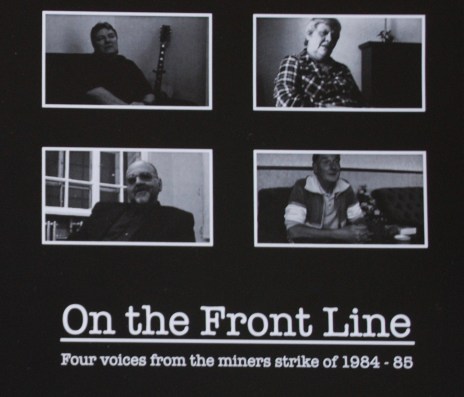
ON THE FRONT LINE stories from the Miners strike ‘84-85

In 2001 I made a documentary about South Shields miners and their families who lived through the strike of 1984-85.

Here are short extracts from those interviews, people who need to tell their stories of what it meant to be on the front line. A year that would shape and change their lives forever.

DSC_0154

Phil Screaton: In the lead up to the miners’ strike there was an air of gloom and pessimism. The writing was on the wall.

Bill Hall: We’d all be warned by Scargill months prior to that, that it was something we had to do to protect our futures.

Joan Cook: It was a whole industry, millions of men fighting for their future. It was a period of time were there was just nothing, at all, coming in. It did wreak havoc, it really did.

Phil Screaton: What I did find during the miner’s strike and since how rapidly all these pits became uneconomical all of a sudden.

Bill Hall: I think the feeling at the time was that we had to do something about it because we had been warned especially by Margaret Thatcher that she intended to deindustrialise the country. Which we had already seen done to the steel works and docks. And we knew that we were next.

Ian Wilkinson: I don’t think any of us had any idea that it was going to be so quick and so strong.

Joan Cook: Everybody was in the same boat and had the same problems so there was always somebody there to talk to. I mean nobody had any money.

Bill Hall: Being a Union Committee man I was brought on board to produce food parcels every week.

Joan Cook: We did get our parcels from the miner’s hall. A few tins of hot dogs, beans that sort of thing. You just get on with it cos you can’t not get on with it.

Phil Screaton: Mortgage was put in abeyance, bills were put to one side you just get on with it.

Bill Hall: To come down from a regular weekly wage to £11 per week is quite a drop.  As the strike wore on it caused a lot of separations and divorces.

Joan Cook: We knew one family with two boys they never got back to their marriage. We knew lads with mortgages who had to sell up. Insurances had to be cashed in.

Bill Hall: When you’re down the pit you relied on everyone around you for your safety and security, that continued through the strike. We all looked after each other.

Joan Cook: They did help each other, it was a strong bond. That industry was like that because it is a very dangerous profession.

Ian Wilkinson: Sometimes I end up dreaming about Westoe Colliery and the water is coming in as it fills up. And panic at the darkness. That’s a lasting effect it’s had on me. Other miners have lost a leg, an arm an eye which is devastating on their lives, but this still happens to me at night where I think I’m still down Westoe Colliery.

Phil Screaton: We went down to Orgreave cokeworks  picketing where the police, just local bobbies in their shirts were in line. Then the wagons would come, and we’d push them, they’d push us that sort of thing.  But one Monday we were there after doing the Great North Run the day before, and we had North Run t-shirts on, shorts, trainers and walked down the road to the police lines.

Well it was just unbelievable, Thatcher had got on to the police to step it up…they were in riot gear, on horses this was completely different. It was scary to see how it all got out of hand but also last thing you wanted to do was being chased by police horses all over town.

Bill Hall: Halfway through the strike it was quite common to get up in the morning and pick yer mail up and find a packet of bacon had been shoved through as well. You never found out what neighbour sent it, you were just pleased you got it. And It’s the only year I got a suntan. That year of being in the fresh air and taking the kids to the beach (laughs).

Phil Screaton: My son was only 6 months so spent a lot of time with him, raised a lot of money for a cause I believed in and still believe as a socialist that it was a valid point. It was one of those years when it was a turning point in yer life. You were out of work but not down and out of work.

Bill Hall:  I loved the camaraderie down the pit. We used to work hard, play hard and have a good laugh. Even with no pit’s left the mining community are a proud community. We’re still fighting for things in our community.

Watch the film ‘On the Front Line’ (17mins) narration by Tom Kelly, music by John Clavering.

Gary Alikivi    August 2019.

NAILS – world exclusive interview with The Hard.

Following on from talking with some of the team who worked on ‘80s live music show The Tube, I contacted someone who appeared on the programme. Wavis O’Shave wasn’t available.

Mrs O’Shave telt me he was on holiday so this otha bloke stood in for him.

‘Are ye hard enuff to intaview me’. He’ll put me windas in if I daint post this he sed. I telt him to wind his neck in but he wudnt listen. Here’s the world exclusive interview with The Hard.

hqdefault-2

Mee Thu Hard hear. Ah woz hard befour ah woz hard, mee lyk. Ah woz bourne wihth ah hundrud and sicks tatooz and bye thu tym ah woz fower ah hahd thaht mennie ah hadd tuh ware thum onn mee maytz bak.

Ah woz ah sizaireeun berth anhd thu hahd tuh saw uz oot ov mee hard muthaz syde. Ah slepht inn ah Pytt boote. Mee fatha wud putt broon ail inn mee hoht watta bottel. Mee kot woz ah kayj fytaz riynng.

Noo ah sleap onn ah watta bed wihth naylz innit. Onn mee forst borthdae ah hahd dinamight onn mee borthdae kake innsted ov kandlz.

Mee pairentz thort ah woz hard ov heering til thu foond oot mee hard granda hah filld mee lugz upp wihth Pollyfilla sows ah cuddnt heer mee dadd snoahrin coz hee wud putt kracs inn thu seeling.

Ah hahd mee forst harecutt onn ah frensh polisha.

Wen ah woz ah hard bairn ah yoused tuh plahy marblz yousing cannunballz and ah lornt tuh sphell yousing payvmeant slahbs tuh rite onn four Scrabl.

busking

Heerz mee hard granpappie givvn sum coppaz ah lyft

Ah used tuh plahy hopp skotch onn lhanddmynes befor ah stahrud jumpyn onn peepl frohm Skotlynd. Mee pairentz wud tek uz tuh thu beech and ahd gan roond nuttin everiewon. Thu naymd ah chuwing gum afta uz – Beach Nutt.

Ahd gan and dek everywon hoo wehr sittn doon, sow theer chairz gott carled dek chairz. Ahd mek sanned kaslz oot ov sement anddh wen ah dyd ah hard farrt thud bee ah sanhd storem.

Onn mee forst hollydae ah warked tuh thu noarth poal wihth mee sleevz roalled upp. Ah forst stahrtd swarin wen me dahd purriz inn anne armie tanc. Ah cudnt stohp swareyn.

Ah thinc ahv gohht turretz sindrum. say iht happund wen ah meetyouryte hirruz onn mee heed. Ah felt nowt. Ahm thaht hard ah kan fynd thu ehnd ov Sellataype eaven wen ahv noced meesell oot.

Ahd geht hoyed oot ov thu synmma four havin thu hardest sylhoett inn thear and ah gott nyked four thu forst tyme four shohplifftinn. Naybodie hahd eva scene ah sicks yor owld lyft ah shop owa itz heed befor.

grandadin acion

Hearz mee hard granpappie with hiz remedeez four indeejestshun

Wen ah gott olda ah ghot bahrrd frohm ahl thu pubs. Thu wud hirruz ower me heed wihth ah barr. Felt Nowt. Noo ah hav aboot nyntee pients befor ah gan oot tuh thu pub ahnd hava lok inn. Kidz sed ah woz reet hard. Orr aht leest thu carled uz a reethard.

Wen a woz ah hard bearyn ah ofton hahd ah saw throte sow ah stoppd slahsyn meesel wihth ah saw. Ah youst tuh plahy drafts. Ahd doon aboot nighntee pynts ov draft beehr.

Ah startudd deeing wayts. Ahd wayt four mee Jiro tuh cum four oors. Ah bort ah dumm behl tuh dee mee wayts and wen yu rhang itt yud heer nowt.

Ah starrtud tu doo traynin – ah gan four ah wark allongg thu trayn trak wen ah intasity tayn iz cumin heed onn.

granpappi

Hearz mee granpappie with too moar remedeez four ah saw throte.

Ah lyk tuh realacks having ah dyp in ah volkanoz lrva in mee shortz and ah lyk ah gud kurrie iff itz dun reet – boyled inn thu mikrowayve four fyftean oors in thu dezzat wihth mustad onn itt andh ah hot watta bottle onn mee heed.

Ah belleev inn thyng thaht gan headbutt inn the neet. Mee mam woz ah meedyum bhutt mee dahd tuk ah larj. Aktshooly shee woz ah sydkik meedyum and wud kik aniebodie woo stud allongsyd herr.

Shee wud tekkuz tuh thu spyritchooliszt choorch anhd wud bryng threw peepl fromm thu hard Beyond.

Shud gan intwo ah trans anhd ah arhm restl thu hard buggaz hoo kame thru. Thu wons sed ah woz ah hardvaak in ah prevyuss hard lyf. (See YouTube; ‘Dead Hard – The Hard’s animated adventures in Muvizu’)

granpaps

Hearz mee granpappie with too moar remedeez four ah saw throte.

Mee dahd styl givz uz thu bhelt iff ahm norty – ahn atey nyn thousand vholts shokk. Sumwear inn Switzalahnd ascd uzz iff ah wudd trie oot thear woshin mashyn four them. Summitz carled Sern attom krusha. It woz a bit smahrl inn thear burra felt nowt.

Ah wons tried mee heed at bean ah sayf kraka nuttin sayfz burra moovd onn tuh bean ah lone sharc. Ahd lone mee pett sharc oot uv me swimmyn pool. Ah trydah runnyn ah protekshun rakit oot ohn tennys playaz. Iff thu dydnt giz ah kwid ahd busst thear rakit.

hardsgran

Hearz me hard granmah havvin hor peeanna lessonz

Ahv fehl oot wihth mee peht hard dog coz heez started tarkin inn hyz sleap anhd hee sez ahm knot rely hard. Welll, yuh naar wot thay sahy – yuv gora let sleepyn dog lye.

Ahm gannyn ower tuh Eyeland noo. Summitz tuh dee wihth wontyn ah hard borda. Ahl tek mee dogg – heez ah hard borda colly.

Ann iff yuh edditt thys intavyoo ahl giv yee ah hed ah hit an punsh yuh innyuh besst frendz mustash anarl.

Nuff sed for now. He’s back in his box.

Gary Alikivi  August 2019.

WRITE FATHER, WRITE SON with author Peter Mitchell

ophn16w copy

Did you watch ‘When the Boat Comes In’ or catch the world premier of the play at The Customs House last year ? There are two events during September in South Shields that will interest you.

David Whale is host of Heritage Talks at The Word and he’s invited writer Peter Mitchell to be guest speaker on Wednesday 4th September…. 

‘I’m really looking forward to this event. It’s an opportunity to talk about my dad’s work and his life as an extremely successful writer as well as my own career in broadcasting. David has asked me to look at this from a very personal perspective and I’m keen to share the story.

My Dad left Shields when I was six-years-old to concentrate on a new life and career in London. I spent much of my childhood travelling between Shields and the capital on ‘access’ visits. They were very different worlds and, obviously, had a profound effect on me growing up’.

Peter will also be talking about his career in the media…

After leaving Tyne Tees I joined Zenith North – first as Director of Production and, later, as Managing Director. That company produced Byker Grove and The Dales Diary. A little while later, I formed my own production company and were able to take ‘The Diary’ with us.

We continued to produce that until the final series was aired in 2008. They were fantastic days allowing us to explore and film some of the finest locations the Northern Hill Country has to offer’.

At The Customs House is ‘When the Boat Comes In: The Hungry Years’ written by Peter as a sequel to last year’s successful play…. 

‘The first play focussed mainly on the aftermath of the Great War and a love story between two strong characters: Jack Ford, a man determined to be successful in the new Land Fit For Heroes and Jessie Seaton, a feisty, intelligent, young woman who wanted to change the world through politics.

The Hungry Years finds the two of them trying to come to terms with life without each other. The focus shifts to the politics of change but the legacy of world conflict is never far away’.

Tickets for the Wednesday Heritage Club, 4th September 2pm are £1.50 from The Word, Market Place, South Shields.

Tickets for The Customs House, South Shields 

https://www.customshouse.co.uk/theatre/when-the-boat-comes-in-part-2%3A-the-hungr/

 Interview by Gary Alikivi   August 2019.

WORD UP with Michael Metcalf, director on music TV’s Top Dog’s THE TUBE

Today’s post comes with the sad news that Chris Phipps has passed away. Amongst a host of credits on TV, Chris was part of the team that brought us The Tube.

When I interviewed him (posted Aug.12th 2019) I found him very generous with his time and encouragement ‘Yeah there is a load of stories out there, keep diggin’. 

images

Last post ‘Get It On’ was an interview with former Tube presenter Gary James, Gary put me in touch with Michael Metcalf, another team member from the music programme. This is his story…..

What is your background and how did you begin working in TV?

I had a rather strange journey into television. I left school at 15 with no qualifications. I had been offered a place in Catering and Hotel Management at Newcastle Polytechnic.

In the meantime, my brother suggested that I work with him as an apprentice baker and confectioner. I worked with him for over a year (not taking the place at College) but decided it was not the job for me.

Lacking qualifications and opportunities, I did what many people in the North East did in the ‘70s and sat an exam to work at the ‘Ministry’ at Longbenton. I was assigned to Family Allowances long before it became Child Benefit.

After several years, I realised that I was not cut out to be a civil servant and managed to get an interview at Tyne Tees Television as a Driver/Handyman. People who know me have hysterics hearing this story, as to this day I am stuck if I have to change a plug.

I was interviewed by a lady called Lydia Wilkinson and whilst we had a lovely afternoon chatting, she said that I was not the type of person they normally got for that job and felt I would be better suited to ‘Admin’. I left thinking that it was a kind way to end the interview and thought that was that.

A few weeks later, I got word they had a vacancy they thought I would be better suited for and had an interview as a ‘Schedules Officer’. I was successful, so left the Civil Service after eight years and began life at Tyne Tees TV.

God Bless Lydia Wilkinson, who was completely responsible for my career in Television.

My first week on the job I was asked if I wanted to see a programme being broadcast, so I ended up in the Control Room watching Northern Life’. It was the most exciting thing I had seen.

The next day I bored my work colleagues, telling them that is what I wanted to do. I explained some of the jobs seemed quite technical, but there is a lady in the control room who seemed to shout and count backwards, and I thought I could do that. The job was Production Assistant (PA).

I applied when a vacancy came up and became the only male PA on the ITV network. TTTV had employed another man, but he had moved on to become a Floor Manager. It was the start of my life in Production.

I loved being a PA and worked on lots of different programmes, including doing continuity on several dramas. I also worked with a lot of freelance directors, one of which was Geoff Wonfor who was the husband of Andrea Wonfor the Executive Producer on the Tube.

The Tube Crew

Colin Rowell, Chris Phipps and Michael Metcalf.

How did you get the job with The Tube and when did you work on the programme ?  

As I was already working with Geoff as his PA, when the Tube began, I continued working with him and did most of the filming for the first few years.

It is important to remember that at that time we were a bunch of Geordie guys who were suddenly flying off to work with some amazing people and having the time of our lives. I remember one trip to New York we hired a helicopter to fly around the Statue of Liberty.

I sat with my back to the front of the helicopter, alongside the pilot, Geoff was in the row behind with the camera assistant and the cameraman was strapped in but hanging out of the side of the helicopter, the door had been taken off.

I had the headset to communicate with the pilot, going down the Hudson, he asked if we wanted to go under or over the bridges, I asked if we could do both, which we ended up doing. It is hard to imagine getting away with that now, but we had the time of our life.

Eventually, I went back to working on Drama’s, so it was Series 1-2 of The Tube that I worked on as PA. During the time of working on Drama, I applied for a vacancy to become a director and got the job, so ended up going back on the Tube as the Studio Director for most of Series 4.

Tube Shot Lesley Ash _ Paul McCartney

The Tube team with Lesley Ash (presenter) and Paul McCartney.

How did you get on and work with the rest of the team ?

As I mentioned earlier, the great thing about working on the Tube was that we were a bunch of Geordie Guys, having the time of our lives. Every day the job was an adventure.

The Tube welcomed new bands and one in particular had sent a VHS and we thought they were interesting so decided to go and film them. We got to the location, The State Ballroom in Liverpool which had been used as a location for a movie A Letter to Brezhnev.

We got there and began to set up, the band were there so eventually we did a run through with them, it was ok but there wasn’t the energy or excitement that we had seen on the VHS.

Eventually being the PA, I organised some lunch, the lead singer asked me if I thought the band getting into their stage gear might help, which I said I am sure it would.

The band and the two girls they had with them went off together, when they returned, they were wearing leather bondage gear and the girls were wearing leather bikini’s and carrying leather whips. The band was ‘Frankie Goes to Hollywood’ and the rest they say, is history!

Was there a show you look back on and think ‘that was a nightmare’ ?

When I came back on the Tube as Studio Director, it was a particular turbulent time in television and there were a number of union disputes. So working under those conditions were difficult.

I remember one occasion the only band that arrived for the show was Go West. Instead of the usual 20 minutes, they ended up preforming for the whole show, so it was effectively a concert for them, which was amazing.

Working on a live show, there are always moments that are a nightmare but that is the fun of working live and getting out of any tricky situations.

And a show which went really well ?

I have such great memories of all shows I worked on. Although I have a great deal of affection for the show that featured Cameo. They were a great bunch of guys and Larry Blackmon was fantastic. We had such a great time and they were buzzing after the show.

It turned out they were one of the few bands who did not have to rush off, so asked me if there was a bar or club that I could suggest they go to. Knowing the guys at Walkers club and bar, I rang up and asked if I might bring the guys along, you can imagine the response. So after the show we all had an amazing night at Walkers.

Did any bands/artists/ performances stand out ?

The range of artists who performed on The Tube is endless and so many of those performances stand out. Obviously Tina Turner was amazing, I was lucky enough to direct the show that INXS did – which is the first time Paula met Michael Hutchence. Divine performing on stage at The Tube, so many magical performances.

What did you do after the Tube ?

After the Tube, Tyne Tees got a commission for ITV Chart Show The Roxy and I directed that for about 18 months. Eventually I decided I should move on and actually met Andrea Wonfor travelling back from London. She had left Tyne Tees by this time and had started Zenith North, so I asked if she had any jobs for me.

Her response was ‘Michael, you have said that in the past, but I am not sure you mean it’, I confirmed I did so she said leave it with me.

A few weeks later she contacted me and said she had a new Channel 4 series called Big World Cafe which would be playing World Music and was going to be based in the Brixton Academy. ‘Would I be interested ?’ The job was mine as Series Director. But that meant leaving Tyne Tees and moving to London.

Which is how I came to move to London, thinking that if things did not work out, I could come back to the North East after six months. That six months turned into 25 years!

I did go freelance and worked for many companies, directed a lot of music shows and then found myself in breakfast television, working on the Big Breakfast and then finally GMTV.

Michael’s broadcast and video credit’s included concerts by Ricky Martin, Julio Iglesias, Inspiral Carpets, Roxette, Wet Wet Wet and Bros plus loads of sport, political and current affairs programmes for Zenith, ITV and Channel 4.

What are you doing now ?

In 2008, I took voluntary redundancy from GMTV. Whilst I thought I might stay in London and work freelance, I’d been at GMTV so long and had let my freelance work stop, which is difficult to revive. So in the end I returned to the North East and concentrated on charity work.

Last thoughts…..

Was the Tube important in my life ? You bet your life it was. Working on such a successful programme which everyone in the industry knew of it becomes your calling card for the future.

The majority of people who worked on the production of the show went on to have very successful careers.

Interview by Gary Alikivi   August 2019.


GET IT ON – with Gary James former presenter of Music TV’s Top Dogs, THE TUBE

None of us on the presenter side, perhaps with the exception of Jools and Paula who breezed through it all without a care in the world, could have had any idea that the show would be as seminal as it was.

We certainly knew we were part of the ‘new wave’ and that we didn’t want to be all BBC and Top of the Pops-ish.  

TRX

Gary interviewing John Peel on the Marc Bolan special in 1983.

When were you at The Tube and how did you get the job ?

I was one of the original co-presenters on The Tube from Series One, which started on Friday November 5th 1982.

To give it a bit of extra thrill the programme makers had wanted to put some unknown faces alongside the two main presenters Jools Holland and Paula Yates. They certainly achieved that as few of us really knew what we were doing. It was all live, pre-watershed national networked TV and no second chances.

I applied along with about 5,000 other herbert’s who all thought they were cool, hip and groovy enough to be TV presenters. Along with Muriel Gray, Nick Laird-Clowes, Michelle Cremona and Mike Everitt I got the job.

I was quite pretty and twinky back then, which might have helped. Unlike the hideous old bag I turned out to be.

Up until I arrived to do my first show, which was programme two, I had just breezed along thinking I could be wacky with impunity.

But the reality set in when I arrived at Tyne Tees TV and was faced with having to do what TV presenters do. As a consequence of that, I looked and sounded like a rather camp yobby twat until I gained confidence.

Where did that come from? I somehow managed to make that last until I left two years later after the second Midsummer Night’s Tube special in late 1984.

My only regret is not being able to have worked more with Muriel. She was my soul mate and I adored her. We fired off each other perfectly and would have made a great team.

Sadly, there was only room for one M/F team and that was Jools and Paula. Any suggestion otherwise and someone would have called the police. Probably.

thumbnail

Tube production meeting with Muriel Gray, Gary James, Mick Sawyer and Chris Phipps

Did you realise how important and influential the show would become ?

The chaos on it was quite genuine and the edginess a result of the fact that for most of the time we were left to get on with what we were doing without any strict direction or guidance to be pros.

Because it was live I only ever saw the programmes that I didn’t work on, all from the shitty council flat I was living at in North West London. No video and no internet or social media. If I didn’t catch it when it went out I didn’t see it.

As a consequence of that I was only able to watch the shows I was in when my parents told me they had recorded the shows on VHS tape and did I want them? I was just about to say no, throw them away (!) when I thought the better of it, took them in a box and stuck them in my attic.

And there they stayed for years until I came to write my book. I digitised and watched them from behind the sofa for the first time. The performances blew me away. I can now finally see what everyone was going on about – but until then I genuinely had no idea.

Who did you interview and who was your favourite booking on the show ?

My first ever interview was actually with Olympic athlete and local boy to Newcastle Steve Cram. During the production meeting that afternoon I said to Paula that as I had no interest in sport whatsoever I had no idea what to ask him. I mean, what do you ask runners for christ’s sake? How did you start running? How do you run? What’s it like running? Everything sounded ludicrous.

We started laughing and then in desperation I said to Paula ‘I suppose I could ask him how big his knob is!’‘Even better, ask him to show you!’ she trilled. I loved her then, she could be so much fun.

Next interview was with Andy Summers of The Police. That was my first interview proper really. He wasn’t responsive as I think he had no idea that The Tube wasn’t Radio 4 or The Old Grey Whistle Test.

In the interview you can see him looking at me like ‘who’s this gobby little know nothing shitehawk ?’ Not one I recall with pleasure.

I had a much better time interviewing Ringo Starr, The Weather Girls, Eartha Kitt, Tony Visconti, Malcolm Mclaren, Mickey Finn of T.Rex, John Peel, Kajagoogoo and loads more interesting people who were not big music names but who had a part to play in the industry.

Best of all I thought was video producer Tosh Ryan, who had made some wonderful stuff with one of my heroes Graham Fellowes (aka Jilted John). Great stuff!

How did you get started working in the media ?

I trained as an actor in the mid to late 1970s. Believe it or not I am not a natural presenter (as archive footage of The Tube proves!). After spending some years touring with theatre companies on some pretty controversial plays I decided to try my luck at television and the rest is history. I can’t believe I just used that cliché.

I went on in later years to work quite extensively in radio, which I loved. I was a huge fan of Kenny Everett and he was my broadcasting inspiration. Kenny was a genius. I miss him terribly.

I did a lot of work pioneering the first radio programmes made by and for gay people on a pirate radio station in London in the early ‘80s. That was called Gaywaves, and it was broadcast through an arial cunningly hidden in the washing line of my friend Phil Cox’s 13th floor flat in the City of London.

The archive of that unique broadcast is now in the sound archive of the British Library. I’m very proud of having done that you know.

I also worked legit too though, even co-presenting Midweek on Radio 4 for a couple of programmes (until it became obvious that my talents such as they were lay elsewhere).

For a long time I was also one of the contributors to ‘Malcolm Laycock’s Track Record’ programme on Friday nights at BBC Radio London. That was a hoot. I used to creep into the studios earlier in the day and record sketches for broadcast in the show that night.

It was all very spontaneous and lots of fun with my friends Gary Rae, Stopwatch Roy Alexander, Alexis Colby Carrington, Clive Bull and whoever else happened to be wandering by at the time.

The show itself was often a bit of a bacchanalian booze up and almost as chaotic as the Tube. We even had to throw out Jah Wobble, who turned up three sheets to the wind and who we had to physically get rid of before he let rip with any naughty words. Happy days.

How did you get on with the other members of the production team and what did you do after The Tube ?

To be honest, as I was brought up in the theatre, I was closer to the production crew than most of the other presenters were. I didn’t click naturally with musicians in the same way that Jools and Paula obviously did. Actors and musicians are not natural bedfellows oddly enough. We come at it from different angles.

I didn’t fancy a trombone up my jacksie so I tended to keep away from the sharp end of the choon department and preferred to hang around with the production team. Michael Metcalf, Chris Phipps, Colin Rowell and many of the rest of the Tube team are all dear friends of mine even now. How they put up with my mincing about though I don’t know.

MUR

Gary with Muriel and Malcolm McLaren in 1984.

The Tube is known for being taken off the air in 1987 after five years when Jools said the words ‘Groovy Fuckers’ and the world was so aghast that decent people everywhere had to be treated for shock. What isn’t so widely known is that I nearly beat him to it in series one !

Paula and I had been sent down to Steve Strange’s Camden Palace to do an outside broadcast. As Paula was heavily pregnant with her first child Fifi I did all the energetic stuff and at one point was put on the upstairs balcony to read out a load of local gig information.

During rehearsals it became apparent to me that being up there looking down with hundreds of clubbers around me I would be unable to see the floor manager or the cameras easily.

So I remonstrated with the crew and director pleading health and safety. Being a nobody of course I was ignored.

When the cameras cut to me on the live broadcast I was surrounded by drunken punters and trying to deliver a long list of stuff to camera while they were jostling me and making wanker hand signs in front of my face.

Normally I’d probably have joined in – but you can’t do that on live TV can you?

I just managed to get through it before the urge to turn round and tell them to fuck off overcame me. But I don’t think the director knew just how close they were to an irritated ‘fuck’ being delivered live on air – four years before Jools did it for real.

Perhaps if I had done I would be more famous? Bugger. Another missed opportunity. Oh well.

What are you doing now ?

After I finished doing The Tube I went back into theatre where my heart and talent was best displayed. Since then I have continued acting wherever jobs are available and am a proud founder member of a group in London called Actors Writers London (AWL).

This is a group established through Equity back in the late ‘70s to showcase the work of new writers and where they can hear their works performed by professional actors for the first time.

BOOK

I now live down in East Sussex as I prefer to be a country boy. It’s here that I continue with my writing. I have just published my autobiography which I charmingly called Spangles Glam Gaywaves and Tubes. It tells the story of my childhood and of growing up as a young gay man in the ‘70s and ‘80s.

Despite that disgraceful stuff it is also for everyone else that lived through those times or who might have an interest in it. My goodness me it makes a great holiday read and at a paltry £12.99 it is a must buy frankly.

You can get it from all good online booksellers or from my publishers here:

https://www.bookguild.co.uk/bookshop-collection/non-fiction/art/spangles-glam-gaywaves-tubes/

Please buy it. It’s not the principle, it’s the money.

Interview by Gary Alikivi   August 2019.

SKUETENDERS – stories from South Shields.

LT16

In the North East of England, the Lawe Top is an area that runs parallel to the River Tyne and looks out to South Shields harbour and North Sea. It was once an island, and in some ways it still is.

Some residents I interviewed in summer 2011 were proud to talk about the Lawe being ‘a little village up on the hill’ away from the town of South Shields.

The documentary included narration by local historian and former museum worker Angus McDonald with music by North East musician Martin Francis Trollope.

This a short extract from some of the interview’s…

Janis Blower: It still has to a certain extent the same old identity that it had with the river and the sea, although the pilots have moved away from the area. It’s like a little village with its own unique identity.

Dave Slater: It’s an area which I’ve always liked and a lot of people living in Shields have this affinity with it. They think it’s like a special place. And the houses are nice they have their little quirks.

On Fort Street and the corner of Roman Road is Crawfords Newsagents….

Bob Crawford: (owner) I’ve been here 28 years it’s always been a newsagent’s, on the deed’s it say’s from 1920. Enjoy living on the Lawe Top. Made a lot of friends. Lot of nice people live on the Lawe Top. Hopefully be here a bit longer.

Jane Price: I’ve been working here about 10 years now and its quite handy cos I live on the street. Literally fall out the door into work. And it’s lovely living up here it’s like a village separate from Shields. Like a really close community. I also work in the pub at the end of the street. The Look Out pub. It’s really nice I enjoy it, my kid’s had a good upbringing here.

Living on The Lawe people are known as Skuetenders. But what is a Skuetender ?

Janis Blower: Well there is various theories to what a Skuetender is. One of them is that if you look down on the area from above the Lawe is in the shape of a skate. But probably the most reliable one is that this is the end of the river where the original fishing hut’s where, the fishing Shiels from which South Shields took its name. And it’s where they would salt the fish, and skuet is an old word for ‘to salt’. So if you were born at this end of the river, you were a Skuetender or it’s become Skitender over the years.

Ethne Brown: Well I’ve always lived on the Lawe Top, I was born on the Lawe Top in Trajan Avenue so I’m a Skitender born and bred.

Mel Douglas: Skitender is someone who has lived in this locality within a certain distance of the river. Yes I’ve always been one of them but not as much as Duncan Stephenson as he’s a proper Skitender.

Duncan Stephenson: A Skitender ? You’ve got to have a ring around your bottom end where you sat on a bucket when you were a kid. That’s where a proper Skitender came from, if ya’ haven’t got a ring round yer bottom end yer not a Lawe Topper.

Janis Blower: Well I was born and brought up in Woodlands Terrace so as a child you would just have to walk down Woodlands Terrace and you were straight on to the hilltop. If the weather was good, you literally spent all yer time out on the hilltop or down onto the beach. What our mothers didn’t see what we got up to was a good thing.

Mel Douglas: When I was young I lived in George Scott Street. That was my impressionable time, but we eventually moved up to this house (Lawe Road) which I’ve enjoyed. On the hilltop area when I was a boy there was the gun encampments and Trinity Towers – a sort of radar station which was all fenced off.

Janis Blower: Trinity Towers was a magical place to play because it was so much like a castle or a fort. It had been originally built in the 1830’s by Trinity House, as a pilot look out. It stayed that until the early part of last century when the new pilot house was built at the top end of the park. By the time we were playing in it, it was the radar station for the college. You couldn’t actually get in it but it had bushes around it and little nooks and crannies.

Mel Douglas: The encampment where the gun’s where for example a lot of people aren’t sure where they were. But looking out of my window if you catch the time of year when spring is starting to come through, realising that the guns and the fence had some sort of foundations, well there wasn’t much soil on top of that and the rest of the area in deep soil. So when the grass started to grow it would grow quickly where there was plenty of soil. But where the foundations of the encampment was, there was no soil to speak about.

Janis Blower: By the time I was a child playing on the hilltop the actual gun’s themselves had gone but you could still see where the gun emplacements had been the big round pits had been there. They had been fenced off originally but I’m sure that I can remember sitting on one of them dangling my leg’s inside. You were always being warned off them.

On the Lawe Top is Arbeia Roman Fort…

Dave Slater: I noticed when we moved here when we walked up Lawe Road is on the wall, name plaques of Roman emperors like Julian Street etc.. and the one round the corner is the name of his wife. So you can always learn something new as old as you are and as many times you been up here.

Janis Blower: The fort was very open in those days, and we used to play in it as children you wouldn’t think about doing that now. I don’t suppose as a child you really appreciated what a heritage monument it was.

There used to be a caretaker’s house attached to it which has been demolished long since, and when you used to play on the green between the hilltop and the pilot house, if ya dug around you could find bits of stoneware. I remember the red samian ware that you see in the fort, and we would find these bits of things and we would take them to the caretaker’s house and knock on the door ‘Is this a bit of roman pottery’ and he would say ‘Yes look’s like it is’. But I think after we had done it after the fifth or sixth time it was ‘No it’s a bit o’ brick’.

The Lawe Top used to be home to St Aidens and St Stephens Churches….

Joan Stephenson: When a lot of the houses were pulled down around this area and people moved to other parts of Shields and they want their children baptised or anything they still say St Stephen’s is their church and they come back.

Ethne Brown: I was born up here and I was christened at St Stephen’s Church and all my family and father’s brothers were in the church choir. My Grandma Whale on more than one occasion opened the fete at St Stephen’s church. It’s always been the pilot’s church and nice that they were in the choir. I was also married at St Stephen’s Church.

Mel Douglas: With respect to that I was very fortunate when sadly they pulled the church (St Aidens) down that I was in a position where I could buy the pew that I sat on as a boy and have in a room upstairs. The pew used by people getting married, my father, Grandfather, myself, all male members of the family had sat on that pew when getting married. Very proud of it.

Joan Stephenson: When St Aiden’s closed, they amalgamated with St Stephen’s, it was sad because St Aiden’s was a lovely church. In the 1970’s we decided to make this building into a multi-purpose building to make it more economic to run and it stayed up while unfortunately St Aiden’s closed. Once the chairs are put to the side we hold dances, mother and toddlers, young kids come into dance, social evenings, it’s a really good venue for anything like that.

The street that overlook’s the Tyne is Greens Place where I spoke to Karen Arthur and her father George…

Karen: When you were little what did you used to see around here ?

George: We used to go to the shop along there beside the Turks Head pub. Shrybos you called here. We nicknamed her Fanny Mossy. Everyone knew her around here. She was an eccentric, she was an old maid and owned that shop.

Karen: Did she only let one person in at a time Dad ?

George: Yes if two of you went in she would say ‘Get out one of ya’. Cos she knew if she was serving one the other one would be helpin’ themselves with the sweets an’ that.

Lenonard Smith: We moved to 23 Greens Place in 1947 and that was great because at one time 17 lived in four flats. There was one tap outside and one toilet. Me happy days of the Lawe Top was I used to go to the Corporation Quay and I spent all my school holiday’s going away with the inshore fishermen. With the net’s it was driving, then crab pots and longlines.

We used to bait up in the cabins on the Corporation Quay and the light was done by carbine. The only thing with carbine was that when you went home you had black tash’s where the smoke would get up your nostrils.

On Baring Street is the art shop Crafty Corner….

Trevor Dixon: We purchased this property eight years ago now and it used to be Crabtree’s the Bakers. Where I’m sitting now there used to be a massive oven that came right from the back of the shop. Took six months to cut it out and skip after skip. Our shop is a craft shop and ceramic studio.

It’s a very old building that we are in and it’s reckoned that we have ghosts. They’re all friendly. We’ve had a few local ghost groups bringing all their instruments in here and in the basement. They reckon we do have a lot of ghosts and we have things moved around now and then, disappear for a few days then turn up again.

I don’t think we could have picked a better place to be cos as you know The Lawe Top goes back in history as a creative place and I feel we’ve meant to be here.

Final words about The Lawe Top….

Mel Douglas: If it was up to me I would live in this house for the rest of my life. It’s a beautiful house and I love the community that I live in. Fantastic neighbours, nice people, I’d live nowhere else.

Ethne Brown: I just love living here on this Lawe Top. The house is a bit big nowadays, but I don’t know where else I would go in the town. This is the only place to live.

Janis Blower: Everybody knows everybody else, yeah, it’s a fabulous area to live. I can’t imagine to be living anywhere else to be honest.

Joan Stephenson: Just a lovely place to live.

Duncan Stephenson: Got everything here, beaches, parks. Home is where…

Joan: Your heart is.

To read more about the film go to the blog  Skuetenders Aug.25th 2018.

 Gary Alikivi   August 2019.

HOLBORN – stories from a changing town

Like many towns in the UK, South Shields is changing, and in 2010 I made a documentary to capture those changes, in particular the area of Holborn, once called the industrial heartland of South Shields. 
These short extracts are taken from interviews with workers and ex-residents of Holborn. 

41350858_1994449860613755_6815155342519828480_n

Readheads Shipbuilders docks photo by John Bage.

The shipbuilding industry was a big part of Holborn…

Alex Patterson: My very first memory was going to a ship launch. There was a massive cloud of dust and rust, and smells of oil that left an impression on me that stayed all my life. I was a Naval Architect by profession and retired about 10 years ago.

John Keightly: I started in the Middle Dock in 1959 straight from school, the boys High school in South Shields. I was a carpenter. We used to hang all the staging of the big centre tanks an’ like I say no health and safety, no harnesses, no ropes, just walking along 9 inch planks 70 foot up.

Malcolm Johnson: Well I started in Readheads Dock when I left school. The noise was tremendous, you couldn’t hear yersel speak at one time. There was no ear protection like there is now. There was about 4 or 5 guys in every riveting squad, the riveter, the holder up, the catcher, the heater, I mean you can imagine the number of people that was in the yard at the time.

As I say the noise was tremendous you just had to live with it, it was part and parcel of yer day’s work.

John Bage: I started work in Readheads August 1964 three weeks after leaving South Shields Grammar and Technical school. I always wanted to be a draughtsman so applied to Readheads and was accepted for a 5 year apprenticeship as an outfit draughtsman.

Richard Jago: Me dad went into the Middle Docks, I think in the 1940’s when Sir Laurie Edwards owned it. He was there right up until he was made redundant in the ‘80s.

Liz Brownsword: Me Grandfather he worked in Readheads from the age of 14 until he was 77. Worked there all his life. He had to go into the docks because his parents couldn’t afford for his education no more you know. Me mother had lots of cleaning job’s when we were little.

Dignitaries that used to come into Readheads Docks used to admire the dark mahogany staircase and panels. Me mother used to say ‘Well they admire them but we’ve got to keep the bloomin’ things clean, keep them dusted you know’.

John Bage: There was almost a thousand people working there at the time because we got a lot of orders for building ships and the dry docks also had a lot of work. They were almost queuing up to go into the docks for work on them.

John Keightly: Well there was British tankers, Shell tankers, Coltex, every tanker you could name was in and out of the Middle Docks. As well as cargo boats, molasses carriers, grain carriers they covered all sorts of ships.

John Bage: Readheads built quite a few ships when I was there and a few of them returned to dry docks for survey. But one in particular was the Photenia, which belonged to a local shipping company, The Stag Line of North Shields. They used to bring the ship back to dry dock for conversion to a cable layer.

The ship would then go off to New Zealand and lay power cables from North Island to South Island, and then return to the docks about a year later to have all the equipment removed which would then be stored until a year later the ship got another contract for cabling. It would come back to the dock again, and the equipment would be put back on the ship again. A lot of equipment and work for the dry docks.

John Keightly: People in the market used to know when the ferry was in with all the smoke. Well they knew when the whalers were in with the smell, it was horrendous. When you got home yer ma wouldn’t allow you in the house. Used to have to strip off in the wash house, have a rub down before you were allowed anywhere near the door. I just loved the place, (the docks) it was hard work, and they were strict, but the camaraderie was just fantastic.

Immigrants arrived from many different countries and settled in Holborn….

Hildred Whale: My Great Grandfather was Karl Johan Suderland who was born in Sweden in 1855. He came to this country I believe, in the 1870’s. He did try his hand at a number of job’s, such as ship’s chandler, mason, he was a butcher at one time but eventually all these skills came together when he decided to run a boarding house at 67 West Holborn.

Yusef Abdullah: The boarding house was run by a boarding house master who was an agent for the seaman and the shipping companies where he got them employment. Also, the Arab seaman didn’t drink so there was no kind of social life only the boarding house where they used to have a meal, play dominos, card’s, meet friend’s etc…

Photographer James Cleet captured the housing clearences in Holborn during the 1930’s..….

Ann Sharp: I work with an invaluable collection of photographs here at South Tyneside Central Library and one of the area’s we have been focusing on along the riverside area of South Shields is Holborn. Where conditions have changed considerably, industry and housing have changed over time. We are particularly looking at the photographs by Amy Flagg and James Henry Cleet.

We secured some funding from the Heritage Lottery Fund to work with the community and volunteers and they’ve been helping us to retrieve the photographs from the collection to scan the photograph’s and looking at the images to find out historical information.

From that information they are compiling, others are actually inputting that information into a database. Then liberating the photographs onto the internet so that other people can find out what life was like for people along the riverside.

Bob Overton: (Owner, Rose and Crown pub) In the mid ‘90s someone turned up in the bar with some black bag’s and asked if I was interested in some old photos of the docks. I said yes and give him some money and in the bag were photographs of warship’s that were repaired during the Second World War. All the photograph’s had been taken by James Cleet and they are all marked on the back, Top Secret not to be published.

Norma Wilson: Just after the war there was a lot of housing done and they built the Orlit houses in Laygate Street there was 24 of them and that was a new development, and my family were rehoused there. We were the first people to move in there.

Alex Patterson: I live in Canada now and moved there in 1962. Most familiar memory is moving into West Holborn. These were brand new houses, and we moved from single room houses with 4 toilets in the street with a tap at each end. So it was relative luxury moving into a house that had a bathroom, water inside and a garden.

Liz Brownsword: Me Grandfather lived in West Holborn at the top of the street it was a 2 bedroomed house with a garden, living room and a scullery at the back. He loved his garden when he retired, growing cabbages, leeks, lettuce, you name it he loved growing vegetables.

Alex Patterson: We had an avid gardener at the end of the street, Bill McLean. Who provided vegetables and flowers for a little bit of pocket money. But he had a fabulous garden and everybody who lived in the street went there.

Norma Wilson: Me mam used to send us down on a Sunday morning to buy a cabbage or a cauliflower for Sunday dinner.

At one time there was 33 pubs in Holborn, but one pub that survived was The Rose and Crown…

Bob Overton: (Owner) We had our opening night on November 30th 1983 and the guests to open it was Terry McDermott and John Miles, it was meant to be with Kevin Keegan as well, but he had some contractual difficulties with the breweries, so we ended up with just Terry and John.

Richard Jago: Probably during the ‘90s it was at its peak with music happening. There was a big roots scene and all sorts of people played here.

Bob Overton: A lot of local bands and artists would turn up and play for reasonable fees. We had Tim Rose play one month and the following month we had Chip Taylor. I suppose a claim to fame was that Tim Rose wrote Hey Joe and Chip Taylor actually wrote Purple Haze which were the first hits for Jimi Hendrix in the UK.

Richard Jago: Think I’ve drunk here since the late ‘80s so I’m an apprentice really. Great bar, friendly people from all walks of life drink here.

‘Hills of Holborn’ (30mins, 2010) are available on DVD to buy from South Shields Museum and The Word, South Shields.  There is a short version to view on the ALIKIVI You Tube channel.  

Gary Alikivi   August 2019