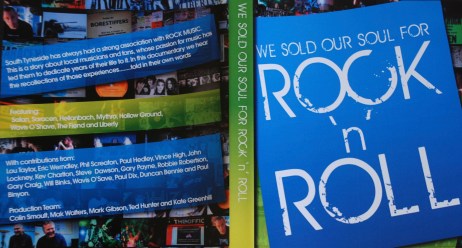
WE SOLD OUR SOUL FOR ROCK N ROLL documentary on South Tyneside rock music.

DSC_0172

In February 2017 I transcribed interviews from the documentary and decided to put them out on a blog. I added some new interviews and updated the originals. Then more musicians got in touch.

The blog has snowballed from North East bands like Beckett to worldwide musicians like John Dalton in California. To date it has reached nearly 40,000 views.

But how did I tackle this documentary and pull it all together? Firstly, I talked to a few musicians who passed over some of their archive of demo tapes, videos and photos. Plus, I already had a number of photographs I had taken through the ’90s.

Then a lot of research was done in the Local Studies Library, South Shields. I remember during the ’80s reading a feature called Young Weekender in the Saturday edition of local newspaper The Shields Gazette. It featured interviews, releases by local and national bands, plus a list of gig dates around Tyneside.

The library had all the Gazette’s on microfilm. It took a few visits but in all it was a good start.

Then during May 2007 filmed interviews were arranged at The Cave in South Shields, formerly Tyne Dock Youth Club, where in the 1970’s some of the bands had rehearsed and performed as teenagers. 

I was surprised at the amount of people who turned up to tell their story, and what excellent stories they were. The title of the documentary is from a Black Sabbath compilation album and sums up the feeling I got when people were telling their story.

Some bands even got back together after 30 odd years. After working on a few other projects, finally in 2010 a 30-minute version of the documentary was screened in South Shields, it was shown a few months later at The Cluny in Newcastle along with a film about the New York Dolls.

In September 2011 a full version was shown at the Central Library Theatre in South Shields. 

‘We Sold Our Soul for Rock n Roll’ is on the Alikivi You Tube channel.

To check out other films why not subscribe to the channel.

Gary Alikivi  2018.

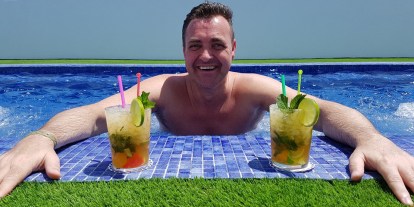
GOOD DAY SUNSHINE with Ian Slater in Benidorm, Spain.

13435409_10153503034541237_4731348246329238404_n

How’s life treating you out on the Costa Blanca?

’We had been planting seeds for a couple of years and eventually moved here last November. I work about ten hours a week and make a decent living. No gear to carry and all my gigs are within three miles of my front door. Absolutely loving it’.

How did you get involved in playing music ?

‘Just always knew it’s what I was going to do. My first memories were jumping around singing along to The Beatles and The Stones, into a hairbrush’.

Who were your influences ?

’Everyone from the Sex Pistols and Buzzcocks to Sinatra and Tony Bennett via Alice Cooper and The Stray Cats’.

When did you start playing gigs and what venues did you play ? 

‘First started in punk bands in the very late ’70s. We played places like the British Legion Club and The Cyprus in South Shields. Also La Metro in Sunderland. Worked with Toyah, Dr and The Medics, The Rezzillos… oh and The Cheeky Girls, who were lovely and actually far better vocally than I expected’. 

What were your experiences of recording ?

‘Can’t recall the names of some of them but Lynx in Newcastle that was early ’80s and The Bunker in Sunderland stand out. I recorded with South Shields band The Letters in another Newcastle studio, the name of which escapes me – 1983 that would have been.

I don’t have any of the recordings. It was a vinyl single with three songs on Walk Away, You Girl and Hello. But the band had a few disagreements and all but a couple of the 1,000 copies were destroyed’.

21586670_10156661305780299_3493943493714930349_o

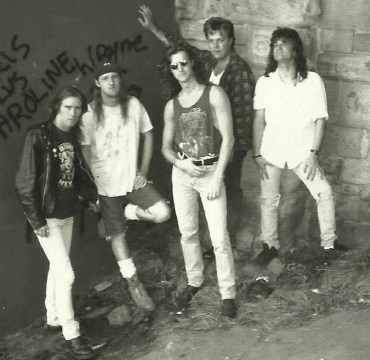
The Babysnakes

Did you record any TV appearences or film any music videos ?

’There’s a live video kicking around of a band I was in The Babysnakes at Newcastles Riverside. I think we were on with Paul D’Ianno’s Killers’. (The track is ‘Hard Lovin’ Woman’ from 1993).

Babysnakes rose from the ashes of Gods Little Devils and was initially me on vocals, Stidi (drums), Gary Heir (guitar) Roy Page (bass) and Dave Stratty Stratford (rhythm guitar).

We lasted from ’91 to ’93, when I moved to Turkey. Mark McGlauchlin took over on drums when Stidi went back to The Wildhearts.

We did a three track cassette single which Roy probably still has copies of. Before that was The Smoking Beagles who were still called The Lipstick Junkies when I first joined.

I’m not really one to hold on to the past so I don’t have any of the recordings from then, either. I live for the moment’.

Have you any funny stories from playing gigs ?  

‘We – The Smoking Beagles – were practicing in The Bunker and – as was usually the case – we had enjoyed some of mother nature’s finest Afghanistani import.

Anyway, after practicing we often went to Washington Granada Services for an all-day breakfast and a few coffees, and we did so on this particular night.

Must have been around 2am that Iain Curtis picked a sachet of sugar to go into his umpteenth cup and said, “Granada Sugar… You know why they call it that ?” and after a long pause, “They couldn’t spell granulated!

Now, under normal circumstances that wouldn’t be funny at all but when you’re wired on coffee and exceptionally good gear, it was the funniest thing we’d ever heard. We sat and cried laughing until we were eventually asked to leave at around 6am.

Everyone who came in stared at us which just made us laugh all the more. We would get to a point where we were calming down then we’d hear the door go and off we went again’.

40680706_571307296621862_3107326336629211136_n

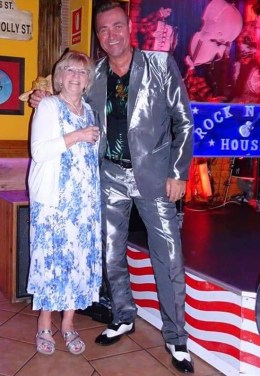
You are using the stage name Cameron James in Benidorm…. 

‘Yes I have several shows over here in Beni. An ’80s tribute, a rock and roll show, a tribute to Robbie Williams!, a cabaret show and a sixties show. I’m your archetypal sell-out but I’m making a decent living in the sun’.

Interview by Gary Alikivi    September 2018.

NEW KIDS ON THE BLOCK in conversation with Unified Media

image

Ryan, Phil and Jon.

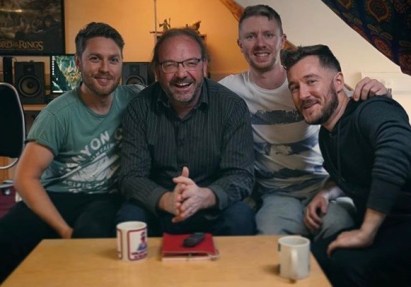
Sitting in the HQ of Unified Media at 7 Beach Road, South Shields I’m talking with Jon, Phil and Ryan about how I had an office downstairs in this building over 10 years ago. The stairs didn’t seem as steep then.

I first met Unified Media two years ago when I was looking for a team to help produce a DVD of folk musician Benny Graham and friends singing old Northumbrian songs.

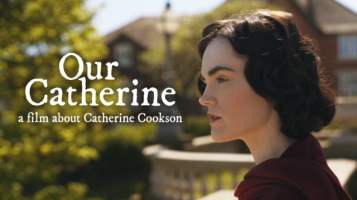
The DVD was screened in The Word, South Shields, as is their latest project about the author Catherine Cookson…

Ryan: ‘South Tyneside Council commissioned Our Catherine. They wanted a film to showcase as part of their new exhibition to commemorate the death of Catherine Cookson, which is twenty years ago this year.

We didn’t want to make a piece with just historical images in a sort of documentary style – instead, we wanted something that was more dramatic, and moving’. 

Phil: ‘Yeah, we wanted to make something that would really pull people in. We worked with playwright Tom Kelly, which he ended up co-writing with Jon in order to adapt his writing for the screen’.

Jon: ‘The intention was to inform people about Catherine but also take them on a journey that as emotional as well as educational. It was important to us that even if you didn’t know who she was, or even if you weren’t from the North East, you could watch the film and still be moved and entertained’.

Ryan: ‘We knew that if we made a historical, documentary piece it may well only appeal to people who knew her, or her existing audience. None of us had any connection to Catherine Cookson and her work when we were commissioned to make the film.

We had to discover her for ourselves when we began pre-production, because up until then we only knew her as someone our Mam’s read when we were kids.

When researching, we were taken on a journey of discovery about a very talented and resilient individual. I think we wanted to take the audience on that same journey of discovery, whilst still appealing to her fans and readers’.
1533117329616

The film has a fairly young cast….

Phil: ‘It does. Catherine left South Shields in her 20s, so we wanted the film to focus on her coming back at that age and seeing her home from a different perspective’. 

Ryan: ‘Fortunately, we found the extremely talented actress and Catherine Cookson fan, Kerry Browne, who did a phenomenal job. It was really important to her that she got it right’.

Phil: ‘She’s from Glasgow but understands how important Catherine is to the people of Tyneside. She wanted to get it right and gave 110%. It was wonderful working with her’. 

Jon: ‘We also had Rachel Adamson, who provided Catherine’s voice. She was brilliant, too. It was a labour of love for everyone. An experience none of us will forget, to be honest’.

Phil: ‘It seems to have struck a chord with a lot of people’. 

Jon: ‘The response to the film has been overwhelming. I think that’s a testament to everyone involved, and how much they gave for us’.   

How long did the whole process take? 

Ryan: ‘We did script amendments and voice overs right up to the wire. It took probably three weeks in total, if you tallied everything together.

Filmmaking is something we’re still working out, as this is the first drama we’ve done together. It’s very much a learning process’. 

You had great weather for the shoot…

Phil: We certainly did. We had scheduled those three days for filming a few weeks beforehand and were blessed with perfect weather conditions. We were very fortunate with that’.

Jon: The blue skies, the sun, swans, insects, mist, you name it – nature was working with us on those days. Nature was working in conjunction with South Shields and Jarrow on those days and showed up for us in a very big way’. 

Have you got a family background in creative work? 

Ryan: ‘Not that I know of’.

Phil: ‘I’ve never been asked that question before, but no don’t think so. Maybe I’m the first’.

Jon: ‘There is a John Burton in the family actually, late 1800 to early 1900’s, and he was a Poet. He was local, didn’t sell millions of copies of his books, but he was certainly creative. That’s the only connection I can go back to’.

banner+full+opacity+contact

Why in one of the most deprived areas of the UK for employment, education etc did you choose a creative job which is way down the list of priority for funding ?

Jon: ‘We didn’t think too much about that. You can make excuses for not taking action, and I certainly have done that before in my life.

We just thought maybe if we do what we love to do, as good as we can, it’ll work out. You could say that was naive, but the proof is in the pudding. I think we just believed in our ability to make it work, if that doesn’t sound too twee’. 

Phil: ‘I think we thought that we might as well risk failing doing the thing we love than carry on doing something we don’t enjoy for the rest of our lives.

Sometimes you can’t help what location you’re in for jobs unless you decide to move, which we couldn’t do. We just let ourselves gravitate to what we love doing and give it our all. We still are. It seems to be working’.

Ryan: ‘I think we had faith and belief that we could do what we wanted to do. There wasn’t a job out there that fit what we wanted, so we just created that job.

We started the kind of business we would want to work for. We were coming across a lot of the advice of successful entrepreneurs and business-owners who suggested as much, and it made a lot of sense’.  

Phil: ‘If it doesn’t work, I can always get a normal job and know that at least I’ve had a good go. Or maybe I’d try creating a different business.

At least then I’d know for sure, and know that I tried, instead of it always being a pipe dream I could never quite bring myself to make a real go of. It could have went that way, but it didn’t, and I like myself a lot for having the balls to do that’.

Jon: ‘It helps we didn’t have kids when we started, and nobody was financially depending on us. I felt it was my responsibility to try it for that reason among others.

I guess also that starting the business wasn’t based too much on blind faith as we observed that despite where you live, it’s a good time to be a filmmaker or a creator of video content because of the absolute surgence of social media.

There’s a huge desire for video content as a result of that. We’re riding a wave it would seem, that you don’t need to move to London to take advantage of’.  

Tell me what Unified Media is, and what the name means?

Jon: Unified Media was about coming together and doing something that would be the combined, unified vision of all of us. We’d already been creative with each other for years prior.

Phil and I made films together at University and Ryan and I were in a band together for a long time. We were always at our best and most fulfilled when creating stuff together.

We wanted to do that as a way of life instead of just something we did on a weekend, or whenever we could get away from our day jobs’. 

Phil: ‘Unified isn’t so much a job in that respect. It’s living your life the way you want to, and being supported for that, financially and otherwise, because you’re good at what you do, and you love it.

You take your work home with you because it isn’t work, it’s just what you do. It can be challenging, but the challenges are always making you better. They’re the kind of challenges that help you learn and improve, in a rapid way’. 

Jon: ‘It’s not like, ‘there’s my job over here and my life over there’ in separate places. It’s broken down the barriers between those things. It’s made them one and the same. That feels more organic and right for us’.

Ryan: ‘It’s not a cakewalk by any means, if this all sounds a little too good to be true. It’s not handed to you. You have to say yes to the responsibility of making something like that work and doing what it takes to make it work.

The challenges come thick and fast, and you’ve got to meet them head on. We’ve realised from that just how much we can take.

Starting a business like this teaches you a lot about what you can handle, what you can endure. There were months where we had no idea where the rent was coming from. We know we can handle that now. We can take the uncertainty.

It certainly chips away at how fearful you are, because you know what you can handle. We stuck together and faced it together. The name Unified came from that, too. We supported each other through those times, which were tricky, to say the least’. 

Phil: ‘We’ve also got amazing partners and family who’ve always supported what we’re doing. Choosing an adventurous, risky lifestyle like this shone a light on those things and made me more grateful in general.

People seemed to believe in what we were doing, and that was amazing. The Unified name then seems to stretch beyond the three of us’. 

Jon: ‘Yeah. There’s a Terence McKenna quote that says “hurl yourself into the abyss and discover it’s a feather bed”. It’s been something like that’.

Ryan: ‘And we’ve just built on top of that since the start. Initially it was all about the passion and creativity, all the gooey stuff – but there’s structure now, which is implied in ‘building’ a business. You can build on that passion, on that principle, on that idea’.

Jon: ‘We’re still building, and the structure is getting stronger. It makes us very proud and fulfils us more than we could have imagined. Unified Media is a dream that is becoming a reality. Let’s say that as a roundup to your question’.

Is it not crowded when you are editing a project? 

Ryan: ‘I prefer when we edit together. That’s what makes something a Unified film. It’s all very dynamic. Editing is never the same process from one job to the next, which I like because it keeps things fresh. It’s not like a factory line thing’. 

Jon: ‘Yeah, it’s very dynamic. You can’t box the process up. For example, if we’re working on something sports-related, Phil will have the initial drive to get it going, because he was inspired to and is the more sport-centric one of us, so we let him go as far as that inspiration took him, then we started co-editing together. But it’s different for every project.

Each of us is good at different things and interested more or less in different areas. The set up helps everyone play to their strengths. Though that’s not to say we never have creative differences, or even… ‘debates’.

Ryan: ‘Learning how to disagree and negotiate in a civil way is a constant challenge’. 

Phil: ‘I can get protective over my work, and I’ve had to let go of that and realise it’s not ‘my’ work, it’s our work. The lads challenge me to be better, and always push me to do the right thing for the project. Jon and I can be pretty stubborn’.

Jon: ‘No I can’t! Haha. Yeah, I absolutely can. We’re always all just trying to do the right thing, though, what the ‘right’ thing is isn’t always obvious, and you get in to the whole subjective/objective thing. Editing is a philosophical quagmire.

Think about it too much and you’ll have a brain-burnout. There are infinite variables, so you often have to learn to balance your intellect with your intuition.

Though of course, you’re balancing all those things with that of two other people! It can get tricky, so it demands that we all be our best and learn how to be more civil’.  

Ryan: ‘We’re reading some books about editing now and it turns out as much about philosophy as the technicalities of editing. In terms of our process, we’ve all got to be happy with something to sign off for the customer to see it, so getting there can be a challenge.

You don’t want a ‘too many cooks spoil the broth’ situation, but you don’t want anyone being dictatorial either. It’s a balancing act, and judging from the response to our work so far, we’re managing well enough! ‘

Phil: ‘We haven’t killed each other yet, so’.  
img_4385

What has been your most challenging project?

Phil: ‘It hasn’t been released just yet, but maybe the project for England Rugby?’

Ryan: ‘Yeah, they hired us after we made a women’s rugby promo video for the Durham County RFU. It did really well, so they approached us to make one for them, but, with a much more specific aim and outcome’. 

Jon: ‘The brief was ‘make a film that makes refereeing rugby appealing to women, and it has to be very emotionally engaging’. That’s the most specific brief we’ve had yet, and it was definitely challenging.

England Rugby wanted to use it for an event in which it had to convince women that authority and rule-keeping was not only appealing, but something they should want to involve themselves in.

In the end, it surpassed the brief and was a massive success for the client’.

Ryan: ‘One of the most fulfilling things yet was getting that right. It might have closed a lot of doors for us if we’d messed it up’. 

Jon: ‘I honestly feel like if we succeeded at that, we can succeed at anything’. 

DUgwp-7XkAAv3xG

Within the three years of Unified Media, have there been any memorable moments?

Phil: ‘Too many to name. Though, perhaps the Home Alone music video for Boy Jumps Ship? We were tasked with recreating entire scenes from the Home Alone films using the band members all within like, two weeks’.

Jon: ‘Yeah, everything miraculously fell into place for that one in such a scant timeframe. We had two weeks to plan, shoot and edit the film, and the prop/location list was massive, and the set ups were elaborate.

We accepted the job with a ‘we’ll make it work’ attitude, but really had no idea how we would. At the time, we needed a music video on our portfolio, so just bit that particular bullet’. 

Ryan: ‘Somehow, one by one, everything we needed just presented itself to us. The two weeks were an absolute whirlwind, and the universe just seemed to let us ride that wave, with each ambitious prop and location serendipitously revealed to us.

It was an absolute adventure from start to finish. People talk about the ‘flow state’, and that’s really what that was’. 

Jon: ‘It was in many a way the embodiment of why we started Unified in the first place. It was us throwing caution to the wind, doing what we love together and having a great time creating stuff as a team. Challenging, yes, but extremely rewarding, too’. 

Ryan: ‘Maybe we could also mention your involvement, Gary, if we’re talking about notable people as well as moments?’

Jon: ‘Yes! It was because of your support and help that we got our first office, and one of our first jobs, and whatever led on from there’.

Phil: ‘Get in, Gary, lad’. 

Jon: ‘Gazza, what a legend’. 

Ryan: ‘That was notable for lots of reasons, but it’s worth mentioning that all of us have worked in the industry before, and encountered a lot of ego, and vibes that almost put us off this work altogether’. 

Jon: ‘Yeah, but when we started Unified, we met people like you Gary, who showed nothing but enthusiasm, support and all-round good vibes’. 

Phil: ‘And here he is again, writing a blog about us and getting us out there!’

Jon: ‘You’d think he was on the payroll’.

 Ryan: ‘Nah, just a class lad with a heart of gold’. 

Jon: ‘What a belter’.
DlsoSo_X4AA-Dqs

To find out more go to the official website : https://www.unifiedmedia.org.uk 

Interview by Gary Alikivi   August 2018. 
TYNE DOCK BORDERS documentary about Tyne Dock in the North East of England.

Growing up in the shadow of Tyne Dock arches, bombing around the streets on my Grifter, playing football on St Mary’s field and as a teenager, a member of Tyne Dock Youth Club in South Shields.

The club had a film night every Sunday. No matter what film was screening I’d get a chair and plonk myself down at the front. The films were projected from a room at the back of the hall. The pictures, colour and sound were gripping. Three films stand out from those nights – Carrie by Stephen King, Monty Pythons Life of Brian and Duel by Stephen Spielberg.  

11741715_490181331141433_1105900592_n

On my Grifter in front of Tyne Dock Arches being demolished in October 1977.

Around 2007 I started researching my family tree with the Local Studies Library in South Shields a great resource. Putting the story together I knew of a family connection to Ireland, but never realised the full impact that the Irish had on the North East and in my case, Jarrow.

The research led to making Little Ireland. The documentary is available to watch on my You Tube channel.

Since then, I’ve filmed a lot around South Tyneside recording stories by local people recalling memories of their hometown. Skuetenders, War Stories, Home from Home, Westoe Rose and Secrets & Lies.

It’s been interesting to uncover and record stories that would have been lost or forgotten.

The documentary Tyne Dock Borders filmed late 2011, includes interviews with residents from this industrial part of South Shields. They remember the railways, arches and ‘colourful’ part of the town.

Also featured are two famous people who were born in the area – author Catherine Cookson and James Mitchell – creator of BBC tv series When the Boat Comes In.

To view the film go to the ALIKIVI You Tube channel and subscribe to watch more.

Gary Alikivi  2018.

RUN FOR HOME with North East actor & musician Michael McNally

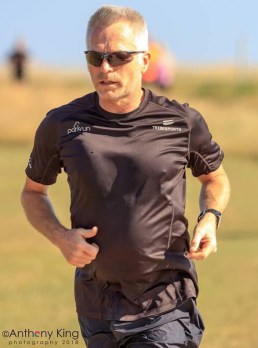
RUNNING

How important are the arts in the North East ?

’Times have changed and opportunities in the Arts seem to have become more limited. The traditional route for actors, via drama school, now favours only those whose families can afford the expense of London based education.

As a result, far less working-class actors are breaking through.

Funding for theatre in education is almost non-existent and schools are encouraged to undervalue drama and music in the mainstream. Sad times in my opinion as young people need access to the arts just as much as they need access to health and fitness.

Without an outlet for our creativity, we stifle our imaginations and become frustrated robots’.

How did you get interested in music ?

‘The first year of my life, 1963, was spent in Gateshead but I always regard myself as a ‘Jarra lad’ because the next 17 formative years were spent in Jarrow. I was surrounded by music.

My dad who had served his time at Reyrolles and become a Pattern Maker (similar to a Draughtsman), was an accomplished singer, composer and musician.

During my early childhood, I would often wake to hear him return from night shift and start playing guitar, singing softly, sometimes Vincent by Donovan or one of his own compositions.

It may seem odd, but I looked forward to being woken in the middle of the night to hear this comforting sound. I don’t even know if he realised that I could hear him.

My dad was restless and would soon leave his secure and reasonably well-paid job at Reyrolles and take the risky step of turning professional, performing in a thriving North East, working men’s club scene.

The culture of most catholic families in Jarrow was for children to perform musical party pieces at social gatherings. My younger brother, Anthony, and I would sing songs my dad had written at such events, often performing the wrong lyrics accidentally.

I recall one occasion with everyone stifling their laughter in an attempt to protect our feelings when we sang the wrong word; instead of ‘parting’, we sang ‘farting’. We were only 5 or 6 years old. So my first and major musical influence was and still is, my dad, Michael’.

moobs

Who were you listening to ?

‘As a kid, there were remnants of the ’40s and ’50s hanging around like the Inkspots who were sentimental but tongue in cheek at the same time. I still like to listen to them.

Moving from the ’50s to ’60s, lots of rock ‘n roll, particularly Elvis, Buddy Holly, Eddy Cochrane and Roy Orbison. The Beatles were brilliant, particularly John Lennon.

I also felt a buzz listening to Hendrix, Free and The Doors. The ’70s were such a clash of styles. There was all that funk from the States, The Jacksons fronted by the remarkably talented Michael Jackson, the squeaky clean, coiffured Osmond’s, the second manufactured boy band after the Monkees, the Bay City Rollers etc.

Prog rock and YES with Rick Wakeman on keys, first experienced on the Old Grey Whistle Test on BBC2 blew me away.

In the mid ’70s I heard Steely Dan for the first time and loved the albums, Can’t Buy a Thrill and the Royal Scam. Then there was Bowie!! I loved everything he did’. 

When did you play your first gigs ?

‘My first instrument was piano. I started lessons at the age of 6. I really wanted to be a drummer but my brother got the kit as he didn’t like piano lessons.

Ironically, he still ended up a better keyboard player than me! I play guitar and bass too but rarely these days.

When I was 17, I formed a band with my best mate at school, Dave Morton called Private Collection. We played school concerts and anywhere that would have us. Good times.

Between the age 10-18, I played the clubs with my dad and brother in Mike Mason and the Little People. You might wonder why the surname changed from McNally in the stage name.

Well, we toured Scotland every summer and played a lot of ‘Orange’ clubs. My dad had been advised by an agent, years before, to play safe with a name that wouldn’t arouse suspicions about our Irish heritage.

We toured as a headline act at the same time as Cannon and Ball, The Krankies and Little and Large haha!

1977 and the Sex Pistols changed everything. Popular music was being punched full in the face. Bands like the Clash, Undertones and Buzzcocks hugely impacted on young people, encouraging them to pick up an instrument and thrash it loud and hard with attitude.

Although I was performing what could be described as ‘cabaret’, this music and the emotion behind it really appealed to me. I think I found a lot of the mainstream music unctuous and superficial. Punk meant revolution and it was exciting!’

Who are you listening to now ? 

’I have continued to have an eclectic taste in music. I love classical music when I am chilling, jazz sometimes when I am travelling and hearing some of my son, Luc McNally’s Scottish Folk music.

I like the Killers, Arctic Monkeys and Vampire Weekend introduced to me by my daughter Ellen.

bobsmeatonACCOUNTS

Michael with Bob Smeaton on set of the 1983 film ‘Accounts’.

How did you get into acting ?

‘I left the family show at 18 to study. I started a Law degree in Newcastle. My plan was to be a solicitor but play in a band at the same time.

Having successfully completed my first year in 1983, I auditioned and was cast in a leading role for a Film on Four called Accounts, written by Michael Wilcox. Bob Smeaton and I played brothers in this beautifully written piece set in the Scottish Borders.

Bob has achieved some remarkable things in his career including Emmy awards for producing music documentaries. I took a sabbatical for a year to make the film but never returned to my studies.

Once the film was shown and well received, I was offered representation by London agents. I made a huge decision and moved to the Capital’.

corry

Early scene in Coronation Street.

‘I managed to survive a steep learning curve and found work in television and theatre. My first repertory experience was as the narrator in a musical version of The Piper of Hamelin at Liverpool Playhouse.

Next was Andy Capp at Newcastle Playhouse in ’85, and work at Royal Court and Royal Shakespeare Company. As soon as I finished a job there were always opportunities for the next.

Whilst playing Jacky Milburn in Wor Jacky at Newcastle Playhouse in 1989, I was invited to Tyne Tees TV to discuss a series which required a presenter. As a result, I got my first presenting job in a show called McNally.

I made 13 programmes and had a fantastic time being paid to do what I enjoyed most, meeting interesting people and having adventures’.

What does music mean to you ?

‘Music is an escape, a freedom from whatever ties us down. It can be the medicine we require to soothe or the motivation to move. Without it we are monotone, bland and sad’. 

What are you up to now ?

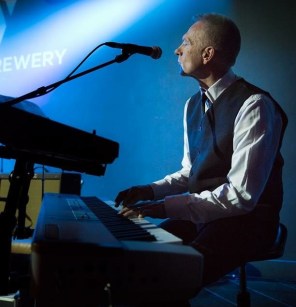
’Musically, I am playing keyboards in local band, The Moobs! We have a large following in the region and play songs that get crowds excited and on their feet.

Watch out for ‘The Running Show‘, which I will be presenting with Tony ‘The Fridge’ and others, coming soon!’ 

MOOOBS

On stage with The Moobs.

Interview by Gary Alikivi August 2018

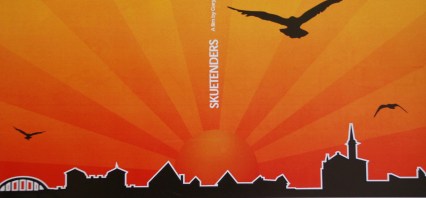
SKUETENDERS – documentary about The Lawe, South Shields.

DSC_0165

Over seven years – 2009-2016 – I produced over 20 documentaries around South Tyneside. I never received any funding to produce the films, each DVD was sold to help fund the next one.

Little Ireland’ in 2009 sold well and was sent to ex-pat’s around Europe, Canada and Australia but ‘Skuetenders’ was the most successful. I’ve lost count the number of copies sold, it’ll be around 800. 

The length of any programme can differ from very short adverts to full length films of 100 minutes plus. It depends on the story that you are telling. An interesting documentary on tv can be turned into just a number of soundbites.

They can tell the story but rush over some really good bits with the interviewee talking for less than 10 seconds. I’ve watched a few.

When I had the idea to make a documentary around the Lawe Top in South Shields I didn’t want it to be full of soundbites. I wanted the interviewee’s to have enough time to tell their story. Not only was it important what they had to say but it was all in the Geordie accent.

The idea was to wander around The Lawe Top collecting stories from residents with a narrator explaining the history of this oldest part of South Shields, it even has a Roman fort.  

As with all documentaries made over the seven years, arrangements were made with Hildred Whale at the South Shields Heritage Club to screen the film in the library.

Downstairs had a great theatre with over 100+ raked seats, a stage, large screen, video projector hanging from the ceiling and projection room with VHS and DVD players. It also had an audio mixing desk and mic’s for invited speakers. A great set up.

A date for the first screening on 2pm 19th October 2011 was arranged and that quickly sold out. A later show at 7pm was added. That sold out. Another date was added. Same again, a quick sell out. This was repeated until the film was shown six times.

Further evidence of a thirst that people have to see and hear stories from their hometown. The documentary had a running time of 70 minutes and was repeated in the next documentary ‘Tyne Dock Borders’. Another area of the town with a long history. 

To view the edited film go to the ALIKIVI You Tube channel and subscribe to watch more.

Gary Alikivi August 2018.
LITTLE IRELAND – documentary on Irish immigration into Jarrow, UK

DSC_0313

Sarah McFadden, (7th from left) my Great Grandmother, at Haggies Rope Works, in Willington Quay, Wallsend. A long way from Derry.

Little Ireland came about after I’d been researching my family tree in late 2007. I knew I had Irish background but not sure of the exact locations where they lived.

The Local Studies Library in South Shields was a great source for information. The filing system with the old press cuttings and the brilliant photographs by Amy Flagg and James Cleet of Tyneside in the 1930’s of area’s where some of my family lived after travelling from Ireland.

The old maps were really interesting. I could see where my Great Grandfather Dawson Downey from Derry lived. Bell Street, East Jarrow, across the road was the chemical works where he worked, next door was The Alkali pub and just up the road was St Bede’s Church. I thought thousands of families would be exactly the same. Never having to go very far. Living a small life.

I never realised the full impact that the Irish had on the North East and in my case, Jarrow. The population had grown so much around the 1890’s that the village became a small town.

I started to jot down a few notes when I read an article in The Shields Gazette in 2008 about Irish immigration written by Tom Kelly (Jarrow born playwright). I got in touch and we met up at The Customs House in South Shields. Quickly, a plan was made, a structure for a documentary and interviews with Jarrovians with Irish ancestry fell into place.

It wasn’t forced, it was easy to put together. 

We started filming at St Paul’s in East Jarrow. Tripod up, camera ready, Tom reading the opening lines from the script, but it didn’t feel right. We stopped and went back to my studio. Had a cup of coffee, talked about it then went out in his car again to Jarrow.

I started filming in his car and Tom started talking as he drove. This was more like it. Hand held felt more comfortable, being part of the film. As though an old Irishman had come back and was searching for his town ‘Like driving into the past’.

Over the next few weeks, I filmed interviews with people who had Irish relatives. For one interview I arranged to talk to singer Leo Connolly at his home in Jarrow.

I turned up, knocked on the door but got no answer. I knocked again and heard someone in the house. I looked through the front window and there they were. Two blokes with acoustic guitars and Leo in the middle singing his heart out. That was Little Ireland right there.

The documentary was successful it was screened for the first time to two sell out audiences at The Customs House on St Patricks Day 2009.

The film has been shown at various venues including St Bede’s Church Hall where most of the Irish, and my family, attended when they first came to Jarrow over 100 years ago.

Link to the documentary, to check out other films on You Tube subscribe to the channel.

Gary Alikivi   August 2018.
ZAMYATIN – Russian Link to Tyneside. New documentary.

IMG_5077

The Shields Gazette journalist Peter French wrote on 17th August 2018

‘It’s a long way from St Petersburg to South Shields. But it was a journey once made by a young Russian, an author, who not only upset the Communist authorities back home, but whose work may have influenced the writing of one of this country’s most influential novels – ‘1984’ by George Orwell.

His name was Yevgeny Zamyatin and his story is now told in a new video produced by local film-maker Gary Alikivi (Wilkinson). The film, which can be viewed on YouTube, may be less than 10 minutes long, but like much of Gary’s work it is informative as well as thought-provoking.

Read more at: https://www.shieldsgazette.com/lifestyle/nostalgia/the-link-between-a-russian-visitor-to-south-shields-and-george-orwell-s-1984-1-9306630

Gary Alikivi  August 2018.

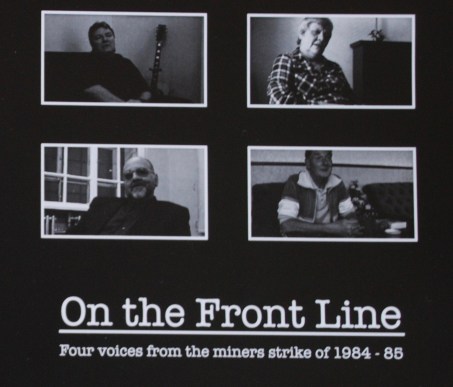
ON THE FRONT LINE – miners strike documentary

DSC_0154

I was walking down King Street in South Shields when I noticed a group of lads walking up the street laughing, joking and looking as if they didn’t have a care in the world. I wondered if any of them had jobs?

Were they killing time until their next shift at work ? Or their next giro? This led me into thinking about the unemployment problem in my hometown. 

I sat down on a bench where two old men were. I overheard them talking about how they had spent their working lives down the mines. Westoe Colliery used to be nearby. Listening to their banter, made me think back to when the strike began in March 1984.

I was 18 at the time, about the same age as those young lads who passed earlier. It was always on the telly. Scargill, Thatcher, pickets and police. TV footage of the battle of Orgreave. Explosive scenes of a class war. 

Reality was that thousands of men weren’t working. There was no money coming in to pay bills and feed kids. How did their families survive?  Whole communities were brought to their knees due to financial insecurity. Families torn apart.

I thought it would be interesting to find how people coped in that time of crisis. People who were directly involved given a voice to record their cold, hard, bitter truths. 

During research for the film the stories that I heard were laughter, sadness, courage and pride. Some people didn’t want to talk about the strike, or for any of their comments to be recorded. After all these years feelings still ran deep. Emotional scars. 

The years have rolled on and out of the ashes of the pit’s new businesses and housing developments have appeared. But the mining industry will never be forgotten.

Link to the documentary and to check out other films on You Tube subscribe to my channel: 


Gary Alikivi.

OUT OF THE DARK in conversation with Newcastle artist Aidan Doyle

IMG_4913

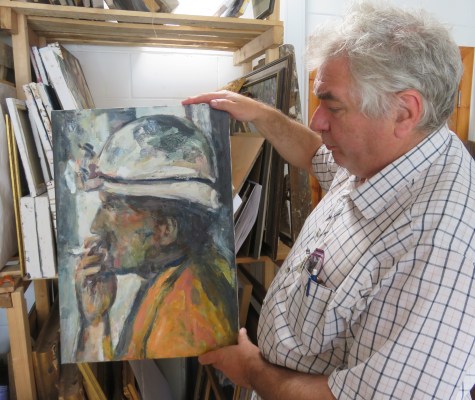
‘It was 1993 at Westoe Pit I was in there taking photographs. I was in there off and on over a year. The pit was ready for closure. Originally the purpose of the photo’s was to have some source material to do some paintings.

But as the closure became imminent, I began to take photos in their own right. For a record you know.

I began to develop techniques by taking photos in very little light, all the dark spaces. I must have about 10,000 negatives or there about’s.

During that time, I began to collect a lot of oral testimonials from the lads, and I realised what was being destroyed wasn’t just the pit’s themselves but the good humour amongst the lads.

The upshot of that was I was invited to do a book with Durham County Council and that led onto a PhD at Durham University’. 

I like paintings by Bacon, Goya and Valasquez, are there any artists that you admire ?

‘I tend to lean towards Caravaggio because he uses the approach called tenebrismo where a figure emerges from the darkness. I like paintings by Tintoretto from Venice and Jack Yeats from Ireland who does more like yer everyday life.

Not long ago I went to see a huge exhibition by Bacon at the Tate which left me cold, a lot was the same style’.

Do you stick to the same style ?

‘I try to remain faithful to what I’m trying to represent but if you look around, I’ve got figurative stuff and now becoming a little more abstract. (shows painting) Using how the light falls on the face’.

What got you interested in drawing, was it in your family ?

‘Not really, although a cousin of mine was in Detroit and painted cars on billboards. I was about 10 year old at St Albans school in Pelaw looking out the window and seen the tar works with a puffer train going in and out the factory.

The teacher sent me down the river with a great big piece of paper to draw the tar works. And for a lot of years that drawing hung on the wall in school.

Then I got into drawing people which was a challenge. I worked down Westoe pit in the 1970’s then done a degree in Fine Art. I worked as an artist and labourer a lot of the time. Also worked in theatres backstage moving the scenery around, and I used to draw the actors.

In 1986 I was working as the Artist in Residence at the Tyne Theatre. It had burned down and they invited me to document the re-building of the place – enjoyed that. I was also at the Ingham Infirmary in Shields for a year as Artist in Residence’. 

I met you a couple of years ago at The Central Library in South Shields what project were you working on ?

‘I was at the library as the building was being planned for closure. I drew some residents of the town that went there. Some notorious, others not so haha. I also collected a few testimonies from there.

They invited me back to draw and paint the building of the new library, The Word.

That was great to watch the construction of it especially during the winter. I did a bit of live drawing but worked a lot from photographs.

The men and women working there would stop and smile for the photo. It was nice they photocopied the drawings, blew them up and stuck them around the site’.

Have you got anything planned coming up soon?

‘Some of the negatives from the pit are being put in an archive at the refurbished St Hilda Pit Head in South Shields. The Heritage Lottery have funded the refurbishment. It was one of the last pits working on the Tyne.

Well I’ve done what I originally set out to do that’s make 100 or so oil paintings from my mining photographs and that’s created a body of work.

It would be great to exhibit the paintings in other mining areas around the world. Plus, I can make applications to the mining museums around the country to show the work.

I was always shown kindness from the lads in the pit, so I have to do right by them, play fair ya’ knaa’.

Interview by Gary Alikivi    August 2018.